Home Blog Page 3400

13 Killed In Washington Naval Base Attack

0

Thirteen people have been killed and several others wounded after shots were fired at the Washington Navy Yard, one of the biggest naval command buildings in the United States Monday morning.

The shootings started at around 8:20 a.m. (Eastern Time) when shots were fired at the Naval Sea Systems Command headquarters building where nearly 3,000 people work.

The suspected shooter, identified by the FBI as Aaron Alexis, was killed in a gun battle with the police.

Initially, authorities thought there were two other gunmen at large and were searching for suspected shooters wearing military style clothing.

However, D.C. Metropolitan Police chief, Cathy Lanier, later announced that investigators were confident Alexis was the only one involved in the incident.

The Sea Systems Command is the biggest of the US Navy’s five such facilities and is responsible for building, buying, and maintaining ships and submarines.

Police officers closed streets near the Navy Yard and a “shelter in place” order was issued for the personnel.

US Capitol Police, responsible for protecting the US Congress, confirmed enhanced security at Capitol Hill.

An unnamed White House official has told The Washington Post that President Barack Obama has been briefed on the situation.

“The President directed his team to stay in touch with our federal partners, including the Navy and FBI, as well as the local officials. We urge citizens to listen to the authorities and follow directions from the first responders on site,” said the administration official.

Yobe Governor Donates Rams, Clothing To Pilgrims

0

The Yobe State government has pledged to donate rams and clothings (Ihram) to pilgrims from the state participating in this year’s Hajj to Saudi Arabia.

Speaking at the inauguration of the state’s official delegation to the 2013 Hajj, the state governor, Ibrahim Gaidam, said government’s decision to support the state’s pilgrims is to reduce cost for the participants.

“Our decision to support the pilgrims is informed by the fact that if everything is left to the individual pilgrim to shoulder, the cost will be too prohibitive. Moreover, the performance of the Hajj is the only single event where the largest numbers of our citizens travel abroad as a group for a common purpose,” he said.

In addition, the governor promised that the state will provide free meals at the height of the Hajj exercise in Muna and Arafat.

He urged the pilgrims to focus on their primary duty of performing the Hajj and to use the opportunity to pray for peace and progress of the state and the nation in general.


READ ALSO:


He also charged the state’s Amirul Hajj, the speaker of the state House of Assembly, Adamu Dala Dogo, to ensure the welfare of the state’s pilgrims and also guide the pilgrims to conduct themselves with modesty as ambassadors of the state and the country while in the holy land.

In his response, Dogo assured the governor that his team will do its utmost to see to the welfare of the pilgrims.

2015 Election And The Call For National Conference

0
By Godwin Onyeacholem

For the genuinely selective compatriots as well as foreign observers who are immune to delusion, the painful hint of a far-reaching implosion is building up to its climax. All impartial submissions on Nigeria’s destiny over the past couple of years have repeatedly come up with a forecast that holds out terror and fear, instead of promise and optimism.

Of course, it has to be pointed out that a string of hopeless governments – military and civilian – which has exhibited nothing but acute leadership emptiness should be held responsible for this frightening profile.

Consequently, more than ever before, this period calls for a deep pause within the circle that is truly concerned about the fate of this rotten nation so as to re-strategise in favour of a concerted crusade against the false mantra of “things are getting better” being forced upon a hapless people by a useless ruling class and their misguided supporters.

In the envisaged campaign, no effort should be spared to discourage the gullible from embracing this fraudulent catch phrase. The victims already include our fathers and mothers, brothers and sisters, uncles and aunties, friends, colleagues and children, who may currently be doubtful of the certitude of the chorus of “things are getting better” but who, indeed, are hopeful that as the years roll by and with the status quo firmly in place, things will surely get better.

But they miss it completely. The sooner they grasp this the better for them: Nothing is ever going to get better, and the 2015 elections will likely consume Nigeria by altering its present configuration as long as those who control the levers of power revel in silly arrogance in the manner they have persistently turned down legitimate demands from well-meaning Nigerians for a national conference and a people’s constitution.

The Nigerian people are not asking for something unusual. The constitution that the National Assembly has wilfully set itself the task of amending or reviewing – as it may wish to delude itself – does not belong to the people; it’s not a people’s constitution.

To that extent, it is not democratic. Therefore, all that the people want is a chance, before any talk of elections, to convene a conference of the nationalities and ethnic groups in Nigeria so as to give them the opportunity to exercise their inherent right to determine democratically for themselves the constitution by which they wish to be governed in one united Nigeria.

In other words, for once, Nigerians are asking for a long-denied opportunity to build a new country of their dream. No more, no less.

Beginning from the mid 80s, many great concerned Nigerians like Alao Aka-Bashorun, Beko Ransome-Kuti and Gani Fawehinmi to mention just a few, shouted themselves hoarse on this matter but the mandarins in power chose to block their ears to this valid demand.

Nothing can be more condescending. In fact many would recall that at the height of the cold contempt displayed by the authorities, Beko, in the characteristic bluntness of the Ransome-Kuti family, plainly foretold a Nigeria that would “continue to go round and round,” unless a sovereign national conference was convened to spell out the terms of co-existence among the various ethnic nationalities.

The three (Aka-Bashorun, Beko and Gani) have since taken a glorious exit without seeing the functional Nigeria they had hoped to create.

In a certain realistic way, it can be argued in some quarters that it is that disappointment, the colossal frustration resulting from the crass unresponsiveness of the so-called leaders, which bred the weariness that fostered the ailments that speeded up the death of these remarkable gentlemen.

However, today Beko stands vindicated. True to his prophetic statement, the country has been going “round and round,” and so dangerously so under this fake democracy like a drunken man who cannot find his bearing after drowning himself in drums of Ogogoro.

Still, in the midst of the feasting and fiddling while the country is literally on fire, the leaders, merrymakers more appropriately, want the people to join them to sing “things are getting better” or “I can see everything turning around….” No way!

A countervailing melody of equal measure, if not more potent, has to be invented. As much as possible, true agents of change should open the ears of the people to the lie in that song.

Meanwhile, The Patriots, a group of highly credible Nigerians whose leading light is the erudite legal luminary and veteran of constitutional law, Professor Ben Nwabueze, has since 2001 been making a lot of critical moves re-echoing the imperative of a conference.

What this group is calling on this government to do now is to organise a national conference which will be convened and held under the authority of a law passed by the National Assembly and assented to by the incumbent President. Then, a referendum will be held to approve the constitution after it has been debated and agreed upon at the conference.

The process for the selection or election of delegates, quorum at the conference, conduct of proceedings and so on is contained in a National Conference and Referendum Bill dated October 14, 2001. The executive and the legislature at federal and state levels and several private organisations have copies of the bill.

Thus, the Presidency and the National Assembly are already presented with a golden opportunity to fall in line and be part of the process as the circumstances now seem right for a properly guided conference.

On no account should they be dissuaded by the fear that some rabble-rousers might use the conference to destabilise the country.

A greater risk of destabilising the country no doubt exits in refusing to hold the conference. With the right political will the conference can be concluded inside one year. Republic of Benin did it in 12 months.

Until this vital bridge is crossed, the next presidential election in Nigeria should be put in abeyance. Otherwise, the country would be courting disaster.

It is no longer news that the country is already fractured along a myriad fault lines. Make no mistake, 2015 election is bound to be governed by the same crude factors that attended previous elections except that of June 12, 1993.

The election would be decided mainly on the basis of ethnicity, religion and geo-political considerations, and there are clear signals that whatever the outcome is would be bitterly contested on all fronts by those who find themselves on the losing side.

Indeed, 2015 will make or unmake Nigeria as it has the greatest potential ever to tear the country to pieces depending on the road taken. At worst, it’s a chilling scenario. It is for this reason that a national conference is a necessity before the election to resolve some fundamental issues in a re-designed superstructure (constitution). That is the only way to save Nigeria and avoid a looming catastrophe.


Godwin Onyeacholem, a journalist based in Abuja, can be reached via gonyeacholem@gmail.com       

Rioting Inmates Burn Prison Records In Adamawa

0

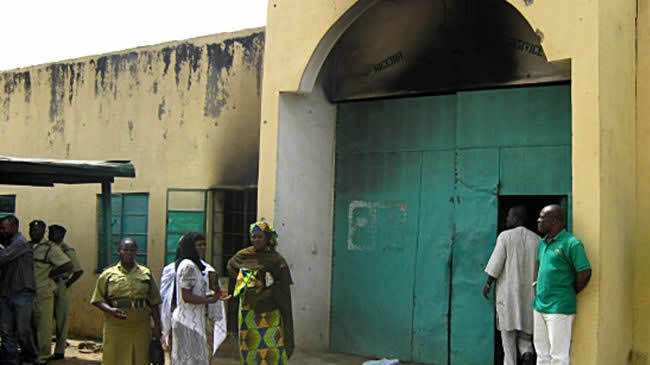
All vital documents in Numan Prison, Adamawa States were Monday set on fire by rioting inmates, the state Controller of Prisons, Ekijere Shidi, has said.

Shidi told newsmen in Yola that the rebellion was caused by the death of one of the inmates who allegedly attempted to escape on Sunday by jumping over the prison wall.

He said the deceased got access to the high wall of the prison but was sighted by officers on duty.

“He landed on a slab and was seriously injured. You know how tall the prison wall is,” Shidi said.

According to him, the inmates, using stones, overpowered prison personnel on duty and took control of the yard before the arrival of re-enforcement from other security organisations.

“They burnt the generator, record books and all other vital documents,” the comptroller said.

He added, however, that normalcy has been restored and that no major injury to any prison personnel although he was silent on whether there was any escape.

Numan Prison which has a capacity of 400 prisoners currently has 287 inmates.


Schools Reopen After Ten Weeks Of Forced Closure In Yobe

0

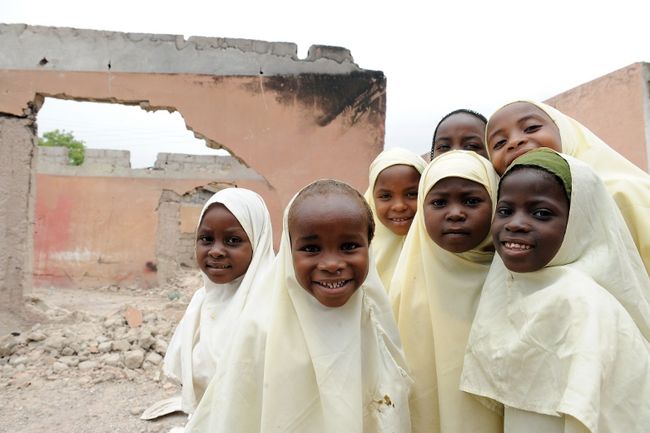
Schools in Yobe on Monday resumed normal academic activities 10 weeks after a forced closure due to the activities of the Boko Haram insurgents.

The schools were abruptly shut down after insurgents killed 29 students and three teachers in two separate incidents.

Seven students and two teachers were killed at Government Secondary School, Damaturu, while  22 students and two teachers died at Government Secondary School,  Mamudo.

As at Monday, most public and private schools in the state had reopened, with large turnout of pupils and students noticed in primary and secondary schools in Damaturu, the state capital.

Some of the students said they were excited to be back after the forced closure.

Alkali Usman, a student of Nana Aisha College, Damaturu told the News Agency of Nigeria: “We are happy that peace has returned to the state and, we are meeting our friends and class mates. We are back and prepared for the examinations that were suspended due to the security challenges and sudden closure of our schools”.

Also, a parent who would not want his name in print, said he was satisfied with the improvement in security situation in the state, adding, “this has encouraged me to send my wards back to school”.

He commended the government for dismantling some security check points in Damaturu, saying it would “facilitate easy movement especially for parents taking their children to and from school”.


Police Investigates Killing Of Vigilante Youth In Borno

0

The Police in Borno State have ordered investigation into the alleged shooting to death of a member of the youth vigilante group by a policeman last Saturday which resulted in protests in Maiduguri, the state capital.

Usman Ibrahim Jatto was reportedly killed in cold blood while he and other members of his group were returning from a mission to hunt down members of the Boko Haram terrorist group resident in an identified hideout.

Jatto was said to have died on the spot, while the policeman escaped being lynched by angry youths.

Reacting to the incident, the state police commissioner, Lawal Tanko, said the Criminal Investigation Department, CID, of the command has been instructed to investigate the matter..

Tanko claimed that the alleged killer police officer is “critically injured” and would be allowed to recuperate before he is made to face the probe panel.

He however added that officer risks being dismissed from service if found culpable of the offence.

“We have been talking to our officers to strictly adhere to the rule on when fire arms are allowed to be used. We pray for him to survive so that we can take proper action and avoid any future occurrence,” he said.

The police commissioner also commended the youth vigilante group for their selfless service to the state and called for more support for them, while also pledging the cooperation of the Police to the course.

He advised the youths to register with the District Police Officer, DPO, in their areas of operation for logistic support.

“We are happy that they have realized their civic duty and we can legitimize their activities if they come to us. It is not too good to go against someone with sophisticated weapons with sticks; we can always shield them with our arms and ammunitions,” Tanko said.

He also disclosed that the command has begun market patrol during market days in towns and villages across the state in order to reduce incidences of robbery, as hoodlums now target these days to perpetuate their crimes.


Outgunned

1

A surge in petro-piracy in West Africa’s Gulf of Guinea must be understood in the context of deep-rooted problems in the Niger Delta, as Dayo Aiyetan explains.

On 5 October 2012, men armed with AK-47s attacked Orfeas, a gasoline tanker, off Côte d’Ivoire. The pirates boarded the ship and roughed up her 24-person crew, before destroying the communications equipment. They then sailed 650 nautical miles to the Nigerian coast where they siphoned off their loot – the tanker’s oily cargo.

It was a successful raid. After just four days, the thieves returned home up to $1.6 million richer.

These ‘petro-pirates’ are part of an international criminal enterprise. What began as local-level oil sabotage now threatens the economy of several countries in West Africa.  The Gulf of Guinea is listed as the newest hotbed for piracy, comfortably taking the lead over Somalia. The latest report from the International Maritime Bureau states that pirate attacks have nearly doubled in two years,  hitting 59 in 2012, with the highest number witnessed in Nigerian waters or off its coast.

Niger Delta connection

Piracy today has its roots in the militant agitation by youths in the oil-rich Niger Delta region, in the south of the country.

In the mid-2000s, youths rebelled against decades of environmental pollution and degradation. While international firms have reaped vast profits since exploration began in the late 1950s, oil extraction has blighted the local environment. Spills have forced farmers from their farms and fishers from polluted rivers.

To make matters worse, the Nigerian government used its oil wealth to develop parts of the country outside the Niger Delta, including Lagos, the former capital, and Abuja, the new federal capital, which is even now hoovering up the nation’s petro-dollars for its development.

Politicians were accustomed to securing elections by recruiting and arming Delta youths, whom they quickly dumped after victory. Using the guns bought for them by politicians, the youths started a seemingly genuine, altruistic campaign for resource control and development of the Niger Delta, while also condemning the environmental damage wrought by oil exploration.

The militant youths soon morphed into criminal gangs. They declared war, not only on the Nigerian state but also on all oil transnationals in the region. A season of terror involving the kidnapping of expatriate oil workers, vandalizing pipelines and illegal oil bunkering ensued.

These activities reduced oil production in Nigeria from over two billion barrels of crude per day to as low as 750 million, devastating an economy that is largely dependent on oil.

A 2009 amnesty programme by the government of the late President Umaru Musa Yar’ Adua saw 26,000 former militants denounce violence and down arms. However, many were loath to give up the lucrative returns of oil theft for ‘rehabilitation’ and a shot at acquiring skills for employment.

Today these militants, emboldened by the ineptitude of security agencies, have graduated from on-shore oil theft to sea piracy. They include the Niger Delta Vigilantes, the Niger Delta People’s Volunteer Force, and leftovers from the Movement for the Emancipation of the Niger Delta (MEND), as well as a sprinkling of smaller groups. Operating first in Nigerian waters, they now spread their tentacles as far as Benin, Togo, Côte d’Ivoire and Equatorial Guinea.

Thorn in the side

With the discovery of oil in Ghana and off the coast of Côte d’Ivoire, the ever-increasing reach of Nigerian petro-pirates has become a big worry for the international community.

Pirates are getting more ferocious and sophisticated. Equipped with heavy weaponry, including rocket-propelled grenades, they are increasingly adopting the Somali crew-for-ransom model.

Unsafe waters bode ill for the regional economy.  Piracy in the Gulf of Guinea is estimated to cost the region more than $2 billion annually. Benin’s defence minister, Issifou Kogui N’Douro, told the UN Security Council that the port of Cotonou port saw a 70-per-cent drop in traffic after the hike in insurance premiums that followed a spate of pirate attacks off his country’s coast in 2011.

But dealing with piracy is easier said than done. Nigeria, for instance, makes all the right noises, but is already struggling to contain onshore oil theft, which costs it an estimated $6.8 billion every year.

Nigeria is not the only country that lacks capacity. Its neighbours face pirates with rag-tag navies and woefully inadequate communications and military equipment.

The maritime surveillance brigade in Côte d’Ivoire sends out gendarmes on leaky wooden canoes, without weapons – or even life vests, who are expected to fight ruthless, heavily armed pirates on fast boats.

‘It would be a slaughter… what can we do against that?’ Captain Augustin Dago, head of the brigade, told Reuters in May, adding, ‘We’re just hoping it doesn’t get any worse.’

Strength in numbers
At a recent G8 meeting, Nigerian President Goodluck Jonathan urged the international community to stigmatize stolen oil as ‘blood oil’, much as it did with stolen diamonds.

‘Stolen Nigerian crude oil is transported on internationally registered vessels,’ pointed out advocacy group Stop the Theft last June, ‘sold to international buyers, processed by international oil refineries and paid for using international banks.’

International military support has already been stepped up. For a number of years, the US and Britain have helped to train and kit out the Nigerian navy so as to boost patrols; the European Union is currently training coastguards.


READ ALSO:


But it is clear that regional action will be the key to wiping out piracy. In 2011, after pirate attacks increased off the coast of Benin, that country’s President, Boni Yayi, sought help from Nigeria and the resulting naval patrols brought down attacks dramatically.

More recently, in June 2013, African leaders at the Gulf of Guinea Commission meeting in Yaoundé, Cameroon, committed to sharing intelligence and undertaking joint military patrols.

But the Nigerian government must also deal with other ills at home – corruption, insecurity and environmental devastation – if it is to find long-lasting solutions to piracy on the high seas.


This article first appeared in the September edition of The New Internationalist.

 

0

….

Gov. Shettima Donates House To Family Of Youth Killed By Police

0

Caption: Governor of Borno State, Kashim Shettima

In fulfillment of his promise, the governor of Borno State, Kashim Shettima, led a delegation of state officials to the funeral of a member of the youth vigilante group, Usman Ibrahim Jatto, who was shot dead on Saturday by a trigger-happy policeman.

But the bigger news is the donation by the governor of N3.5 million, plus a three-bedroom flat at the 1,000 Housing Estate along the Maiduguri/Kano road as compensation to the family.

While also sympathising with the vigilante group popularly known as Civilian JTF, the governor urged them to be law abiding and to always channel their grievances to appropriate authorities.


READ ALSO:


The caretaker chairman of Maiduguri Metropolis Council, MMC, AbdulKadir Rahis, also donated the sum of N500,000 to the deceased’s family.

A protest that ensued after the death of the youth caused serious traffic gridlock along the major roads in Maiduguri the state’s capital which lasted for hours, as the youths barricaded roads, burning tyres and wielding dangerous weapons to scare off motorists.

It was also gathered that the governor’s convoy was detained during the protest for at least 40 minutes.


Breakaway PDP Treasurer Resigns, Returns To Ruling Party

0

PDP National Chairman, Bamanga Tukur


The national treasurer of the breakaway faction of the Peoples Democratic Party, PDP, Tanko Isiaku Gwamna, has resigned from the group’s National Working Committee, NWC.

 This resignation is contained in a press statement he issued in Abuja on Sunday.

 Gwamna said he resigned after a careful study of the unfolding events in the polity and a deep reflection of the consequences of the ongoing impasse on the party.

 “This decision was arrived at after a careful study of the unfolding events in the polity and a deep sober reflection of the consequences of the outcome of such impasse on our party,” he said.

 According to him, as a lover of democracy, he is of the belief that the impasse will not augur well for the unity, peace, progress and prosperity of the party in particular, and the nation in general.

Gwamna, who pledged his loyalty to the Bamanga Tukur-led PDP, called on all party faithful to unite and ensure the amicable resolution of the current impasse in the party.

 “I pledge my loyalty to the Bamanga Tukur leadership, while calling on all party faithful to do same,” he said, adding: “Our desire is for the PDP to continue to lead while others follow, as such, we must eschew all vices capable of unnecessarily heating up the polity”.