Home Blog Page 367

Nigerians to pay higher charges for ATM withdrawals

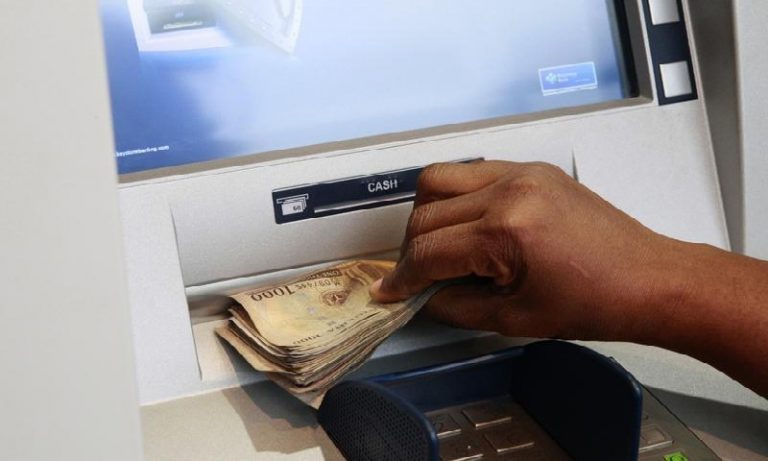
NIGERIANS will be paying higher charges starting from March 2023, for withdrawals at commercial banks’ Automated Teller Machine (ATM), the Central Bank of Nigeria (CBN) has announced.

In a circular signed, by John Onojah, the acting director of the Financial Policy and Regulation Department, on Tuesday, February 11, the apex bank confirmed that the new charges will take effect from March 1, 2025.

The increased charges, the apex bank said, were a result of a transaction fees review it conducted, wherein it observed rising operational costs and the need to enhance banking services.

This marks the first adjustment since 2019 when withdrawal fees were reduced from N65 to N35.

The regulator explained that the latest revision means customers will now pay more for cash withdrawals at ATMs, particularly for transactions involving other banks.

The apex bank emphasised that the surcharge for withdrawals at ATMs of different banks “is the income of the ATM deployer/acquirer and must be disclosed to consumers at the point of withdrawal.”

According to the new policy, customers withdrawing from their bank’s ATMs (on-us transactions) will continue to enjoy free withdrawals.

However, a N100 fee per N20,000 withdrawal will be applied at on-site ATMs (those located at bank branches).

For withdrawals at ATMs of other banks (Not-on-Us transactions), an off-site withdrawal will attract an N100 fee plus a surcharge of up to N450 per N20,000 withdrawal.

Citing further reasons that spurred the increase, CBN stated: “In response to rising costs and the need to improve the efficiency of Automated Teller Machine (ATM) services in the banking industry, the Central Bank of Nigeria (CBN) has reviewed the ATM transaction fees prescribed in Section 10.7 of the extant CBN Guide to Charges by Banks, Other Financial and Non-Bank Financial Institutions, 2020. (the Guide).”

According to the CBN, this review aims to “accelerate the deployment of ATMs and ensure that appropriate charges are applied by financial institutions to consumers of the service.”

Banks and other financial institutions have been directed to comply with the new directive ahead of its implementation on March 1.

“Accordingly, banks and other financial institutions are advised to apply the following fees with effect from March 1, 2025,” they further stated.

The ICIR has reported the rising cost of transactions witnessed specifically during the last yuletide celebrations among Point of sales operators, retail stores, and filling station outlets who were arbitrarily adding transaction costs to customers.

UCH, UNILAG, ABU, Army mortuaries, others major public institutions thrown into darkness under Tinubu

0

STUDENTS of the College of Medicine at the University College Hospital (UCH), Ibadan, staged a protest on February 10 in response to a persistent power outage that plagued the institution for over 100 days. 

The demonstration, which began at 7:00 a.m. and was supported by the Students’ Union (SU) of the University of Ibadan (UI), saw the students express outrage over the adverse effects of the blackout on their study and healthcare services at the institution.

During the protest, the students chanted aluta songs while also displaying placards with different inscriptions such as, “+100 Days of Darkness: Save UCH”; “Save ABH Hall”; “Save Falade Hall”; “Give Us Light”; “This Is Not How We Want To Live”; and “Medical School Is Hard Enough- Give Us Light,” among others.”

They demanded that the minister of power, Bayo Adelabu, who visited the protest scene, provide immediate solutions to the crisis.

This protest followed an earlier demonstration on January 22, where students also voiced their frustrations over the prolonged power outage.

Despite assurances from the authorities, the blackout persisted, prompting renewed calls for immediate action. 

Background to the crisis 

The power outage at UCH commenced in November 2024 when the Ibadan Electricity Distribution Company (IBEDC) disconnected the hospital from the national grid due to an outstanding debt of about N400 million.

The debt was part of N3.1 billion accumulated since 2019, according to a Premium Times report.

The situation at UCH is one of the disturbing incidents of power disconnection in key public institutions in Nigeria.

The situation appears to have worsened under President Bola Tinubu’s government, where electricity tariffs have been hiked and the cost of doing business has skyrocketed.

The ICIR reported that the Nigerian Electricity Regulatory Commission (NERC) in April 2024, approved a tariff hike for Band A customers, who they claimed enjoy up to 20 hours of power supply.

Many institutions and firms operating in the country were also moved to Band A despite protests on their inability to pay the bills.

The development elicited reactions from consumers and industry stakeholders who described distribution companies’ failure to meet up with power supply as structured by supply-service reflective tariffs as unfair.

Some public institutions disconnected by discos 

In 2024, a power outage left Lagos State University Teaching Hospital (LUTH) in limbo for days.

The blackout was linked to delayed payments to the electricity provider.

However, the hospital management claimed that backup generators and solar power ensured minimal disruption to the facility’s operations.

In August, the Eko Electricity Distribution Company (EKEDC) disconnected the University of Lagos (UNILAG) from the power grid over an outstanding debt of N472 million. W

The university claimed that its monthly electricity bill, previously between N150 million and N180 million, surged to nearly N300 million. it noted that the surge followed EKEDC’s decision to upgrade its tariff band from Band B to Band A in June.

Ahmadu Bello University (ABU), Zaria, was cut off from the national power grid by Kaduna Electric due to its inability to settle outstanding electricity bills in the same year. 

The disconnection, which took effect on Thursday, November 28, plunged the institution into darkness.

According to a bulletin issued by the university’s management on Friday, November 29, the institution struggled to cope with rising electricity costs.. 

It noted that despite paying over one billion naira in electricity bills to Kaduna Electric since January, the university was said to owe still owe a huge electricity debt.  

The ICIR reports that the electricity crisis has festered in Nigerian public hospitals despite the Federal Government’s pledge to subsidize their electricity bills by 50 per cent.

Corpse decomposed in Army mortuaries in 2024

Earlier, on February 23, 2024, the Nigerian Army had lamented the persistent blackouts in its barracks and cantonment across the country. 

The power outages, which it said started in January, were linked to N42 billion debt owed to electricity distribution companies (DISCOs). 

The late Chief of Army Staff Taoreed Abiodun Lagbaja stated that corpses were decomposing in Army mortuaries due to power disconnection by electricity distribution companies.

According to him, the Army couldn’t raise funds to pay the debt.

“Corpses in the Army mortuaries are decomposing and the owners of the corpses are protesting,” he said.

UCH to get light in 48 hours

Meanwhile, in response to the protest by the UCH students, the power minister held a closed-door meeting with the management of the institution and IBEDC. 

Following the meeting, Adelabu assured the students that electricity would be restored within 24 to 48 hours to the facility.

He urged the students to remain patient while the government and relevant stakeholders work towards a sustainable solution to the power crisis. 

MTN Nigeria keeps mum as data price increase hit customers

0

MTN Nigeria has kept silent on inquiries following the reflection of data price increase, which appears to be above the 50 per cent recommended by the Nigerian Communications Commission (NCC).

Following the demand for tariff hikes by the telecommunications companies (Telcos), the NCC had agreed that Internet data and other related charges be increased by 50 per cent.

The Telcos had demanded a 100 per cent increment, citing prevailing economic and market conditions.

When contacted, the investor relations contact person at MTN Nigeria, Chimaobi Nwaokoma, did not pick up.

“Sorry, I can’t talk right now,” he responded.

Also, the head of corporation communications, Funso Aina, did not respond to calls, WhatsApp, or text messages sent on the matter.

However, on Monday, February 10, MTN Nigeria raised the prices of its internet plans to implement the tariff increase approved by the NCC in January, although checks shows that some of the increase are above 50 per cent.

The revised prices check by The ICIR includes a 1.8GB monthly plan for N1,500, replacing the previous 1.5GB plan priced at 1,000.

The 20GB plan has been adjusted to N7,500, up from N5,500, while the 15GB plan now costs N6,500, a rise from N4,500.

Larger bundles have seen more significant increases, with the 90-day 1.5TB plan jumping from N150,000 to N240,000 and the 600GB 90-day plan increasing from N75,000 to N120,000.

Also, the 15GB Weekly Plan from the e-shop which was N2,000 is now N6,000.

The 15GB weekly plan, which was N2,000 as of February 7, is now N6,000 on the e-shop when checked on February 11.

The 15GB weekly plan, which was N2,000 as of February 7, is now N6,000 on the e-shop when checked on February 11.

Some plans remain unchanged, for instance, the 2.5GB daily plan at N600 has not been affected.

The ICIR further observed that the MTN *121# platform for the purchase of smart data has not been connecting.

WHO launches free cancer medicines for children in poor countries

0

THE World Health Organization (WHO) has launched a new platform to provide cost-free cancer medicines for children in low and middle-income countries (LMICs) to bridge the survival gap between high and low-income nations.

The initiative, which officially began on February 11, targets six countries – Mongolia, Uzbekistan, Ecuador, Jordan, Nepal, and Zambia – at the initial stage with plans to expand to 50 countries over the next seven years. 

The platform will deliver life-saving medications to approximately 5,000 children in 2025, addressing a critical gap in pediatric cancer treatment, according to a report by WHO.

The 2025 WHO’s report on the Global Platform for Access to Childhood Cancer Medicines, shows the disparities between high and low-income nations. While childhood cancer survival rates in high-income countries exceed 80 per cent, the rates in LMICs remain below 30 per cent. 

WHO data highlights that up to 70 per cent of children with cancer in LMICs die due to systemic barriers such as inadequate diagnosis, limited treatment facilities, and financial constraints.

This difference is largely attributed to a lack of access to essential medications, disruptions in treatment, and the prevalence of substandard drugs in poorly regulated markets.

It further noted that the organisation reviewed 42 countries and found that only one in eight low-income nations finances outpatient chemotherapy for children, with even fewer covering essential antineoplastic medicines. 

It added that in middle-income countries, fewer than 60 per cent provide funding for critical treatment​.

WHO Director-General Tedros Adhanom Ghebreyesus described the initiative as a crucial step in bridging the access gap for childhood cancer treatment.

“For too long, children with cancer have lacked access to life-saving medicines,” WHO chief Tedros Adhanom Ghebreyesus said in a statement by St. Jude Children’s Research Hospital, on Tuesday, February 11.

The global cancer medicine platform

The newly launched platform, developed in partnership with St. Jude Children’s Research Hospital, the United Nations Children Fund (UNICEF), and the Pan American Health Organization (PAHO), seeks to rectify these inequalities by ensuring the continuous supply of safe, high-quality cancer medicines. 

According to WHO, St. Jude has committed $200 million to the project, which aims to reach 120,000 children worldwide by 2030.

“A child’s chances of surviving cancer are largely determined by where they are born, making this one of the starkest disparities in global healthcare,” said the MD, president and CEO of St. Jude,  James R. Downing.

“St. Jude was founded on Danny Thomas’ dream that no child should die in the dawn of life. By developing this platform, we believe this dream can someday be achieved for children stricken by cancer, irrespective of where they live.

“The platform brings together governments, the pharmaceutical industry and non-governmental organisations in a unique collaborative model focused on creating solutions for children with cancer. The co-design approach addresses the broader needs of national stakeholders, with a focus on capacity building and long-term sustainability.

The platform provides comprehensive end-to-end support, from consolidating global demand to shaping the market, assisting countries with medicine selection and developing treatment standards. It represents a transformative model for the broader global health community working together to tackle health challenges, in particular for children and non-communicable diseases,” Downing added.

Dangote Refinery eyes full capacity operations in March

0

THE Dangote Refinery currently operating at 85 per cent capacity could begin operating at full capacity in 30 days.

The full operation will enhance its supply links to both local and international supply chains, while also influencing market pricing and control mechanism across the country.

The head of the Dangote oil refinery, Edwin Devakumar, hinted at this on Monday, February 10.

“We can go 100 per cent in 30 days,” Reuters quoted Devakumar to have said.

The 650,000-barrel-per-day refinery built by billionaire businessman, Aliko Dangote, is aimed to compete with European refiners.

However, since the commencement of operation in January 2024, the refinery has been unable to operate at full capacity and has been struggling to secure sufficient crude locally from the Nigerian National Petroleum Company Limited (NNPCL) despite a government-mediated crude-for-naira supply arrangement.

This led the Dangote refinery to turn to importing crude from the United States of America and other countries after it was unable to buy crude in the local naira currency.

The ICIR can report that the $20 billion refinery built in Lagos state, the commercial city of Nigeria, has been processing crude into products, including diesel, naphtha and jet fuel, and in September last year started processing petrol.

It has asked for 550,000 bpd of crude for January-June this year from oil producers in Nigeria according to the oil regulator, Nigerian Upstream Petroleum Regulatory Commission (NUPRC)

The NUPRC had also said it would block export permits for oil cargoes from producers who fail to meet their stipulated supply quota to local refineries, The ICIR reported.

The Dangote Oil Refinery is exploring new markets for its refined products.
Last week, the founder, Dangote, disclosed that the refinery was already exporting jet fuel to Saudi Arabia as part of its expansion plans.

“We are looking at all the markets right now,” Devakumar added.

Inibehe threatens Adeboye with lawsuit after cleric backtracked on detained Tiktoker’s release

0

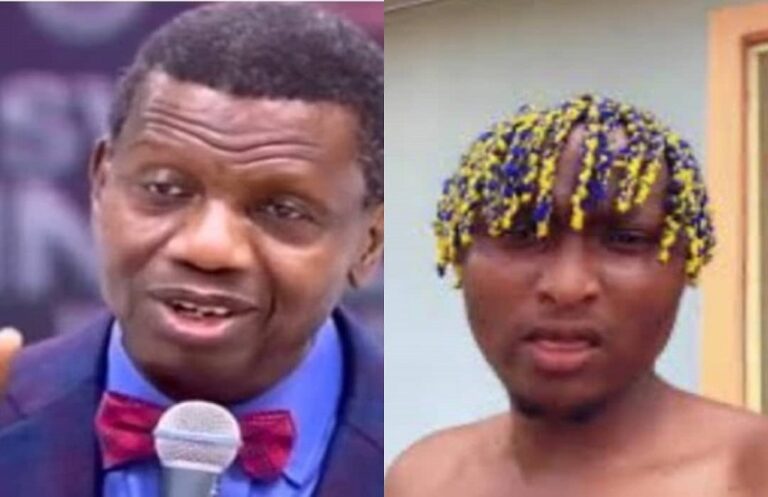
THE general overseer (GO) of the Redeemed Christian Church of God (RCCG), Enoch Adeboye, has made a U-turn on his earlier stance about the arrest and investigation of a Tiktoker Olumide Ogunsanwo, also known as Seaking.

The church, in a statement by the public relations unit, office of the principal executive assistant to the general overseer, on Monday, February 10, said after taking a closer look at the videos in which Seaking allegedly slandered the cleric, it resolved that the accused face the full wrath of the law.

The background

Seaking had allegedly lambasted Adeboye for asking his church members to fast for 100 days.

A group identified as the Concerned Christian Youth Forum petitioned the Lagos State Police Command over the Tiktoker’s action, which led to his arrest.

Lawyers and activists, including Inibehe Effiong and Omoyele Sowore swiftly demanded for the release of the accused. The calls were not immediately heeded by the police.

Speaking during a church programme on Friday, February 7, Adeboye distanced himself from Seaking arrest, stating that some people angered by the accused’s remarks took it upon themselves to file a petition that landed him in police net. He urged the police to release him.

“I heard that someone lambasted me thoroughly. What is my offence? Because I asked my people to fast for 100 days?

“I was told that some people got angry and went to arrest the fellow. Release him. He is fulfilling prophecy,” the GO told his congregation.

Adeboye, RCCG backtrack

However, in a sudden turn of event, the church, in a statement on Monday, said given the existence of an official complaint filed against Ogunsanwo by the Concerned Christian Youth Forum “on behalf of several prominent faith leaders”, including Adeboye, Seaking’s investigation must continue.

The RCCG stressed that it did not intend to interfere with the police investigation by asking the Tiktoker to be freed.

“We trust that the relevant authorities will carry out their investigations professionally and reach a just conclusion based on the law. While Pastor Enoch Adejare Adeboye maintains a heart of love and reconciliation, due process must be followed,” the church stated.

The RCCG cautioned against cyberbullying and inappropriate commentary targeting Adeboye, the church, and the broader Christian community.

The church said it was promoting a culture of respect and honour while discouraging defamatory and disrespectful comments.

It argued that respect for spiritual leaders was paramount, adding that it was committed to upholding the principles of justice, respect, and reconciliation.

Inibehe Effiong vows to drag Adeboye to court

Meanwhile, a lawyer in the case, Inibehe Effiong, gave the church and Adeboye 24 hours to retract the statement or be sued.

He revealed that the police had released the accused on administrative bail.

He said hours before the church released the statement, Adeboye and the RCCG were not the intended targets of a planned legal action against Seaking’s arrest.

He said the church had made itself part of the case following its latest stance.

In his statement titled, “Ilegal arrest and detention of Tiktoker Seaking: We will sue Pastor Adeboye and RCCG if they fail to retract their press statement within 24 hours,” Effiong said Seaking was re-arrested after his appearance at the Magistrate Court, Ogba, Lagos on Thursday, February 6, and flown to Abuja at the instance of the Cybercrimes Unit of the Force Criminal Investigation and Intelligence Department (FCIID).

“In the meantime, our attention has been drawn to a provocative public statement issued by the public relations unit of the The Redeemed Christian Church of God on this case. The church in the statement conceded that Pastor Adeboye is not behind the petition that led to the arrest of Seaking, but it nonetheless suggested that the law should take its course based on a petition written by a certain busybody named James Paul Adama masquerading under the name of ‘Concerned Christian Youth Forum’…

To be clear, purported injuries suffered as a result of any act of alleged cyberstalking or alleged defamation are personal in law and not transferable. Pastor Adeboye cannot be the victim of alleged cyberstalking or defamation, while another person pretends to act as the complainant. It should also be stated that mere vulgar abuse or ‘insults’ are not criminal offences in Nigeria. Mere vulgar abuse is neither defamatory nor cyberstalking.

“Cyberstalking and defamation cannot be pursued through proxies.Since Pastor E. A. Adeboye had initially distanced himself from the matter, we had decided not to join him and the church as respondents in any fundamental rights enforcement suit.”

Effiong said the Tiktoker’s fundamental rights had been breached, as he was detained beyond the permissible constitutional timeline, and without legally tenable grounds.

He argued that the church’s ‘capitulation’ might also require Adeboye to personally testify in court in any criminal charge brought by the police, and him being subjected to cross examination.

“Since the RCCG has decided to associate itself with the busybody petitioner and to drag Pastor Enoch Adeboye into the pit of illegality dug by the police and the busybody complainant, they must understand the legal implications,” he wrote.

He said Christian leaders must live by the true tenets of Christianity, stressing that pastors who resort to weaponising the police to witch-hunt those who speak against them stood the risk of having their calling questioned.

“Vengeance should be of the Lord as admonished in the Bible, not of the Police.

“However, where a pastor is determined to pursue an eye for an eye, he or she must be careful not to overreach his critic, abuser or adversary, and must be mindful not to violate the due process of law while seeking redress from earthly institutions.”

Sowore confirms Seaking’s release

Meanwhile, human rights activist Omoyele Sowore, in a post on his X handle Monday evening, confirmed that Seaking had been released by the police.

He said the Tiktoker was released from custody after the rejection of a bail condition requiring a Level 10 or 12 civil servant, resulting in a swift agreement and his release on administrative bail.
“We are pleased to confirm that Olumide Ogunsanwo @seaking303 has been released from @PoliceNG custody after our prompt rejection of the initial bail condition requiring a level 12 or 10 civil servant, resulting in a swift agreement and release on administrative bail, signed by me. #FreeSeakingNow,” he tweeted.

 

Army cracks down on 24 illegal refineries, ‘recovers’ 60,000 litres of oil

0

THE 6 Division of the Nigerian Army has announced the arrest of 29 suspected oil thieves, the destruction of 24 illegal refineries, and the recovery of over 60,000 litres of stolen petroleum products in the Niger Delta region.

In a statement issued by the acting deputy director, 6 Division, Army Public Relations in Port Harcourt, Jonah Danjuma, on Monday, the Army said the success followed a tip-off about suspected illegal bunkering activities in some states of the Niger Delta.

“The operations were conducted across the Niger Delta from 3rd and 9th February, 2025. In clearance operations conducted by troops, along the Imo River, 6 illegal refining sites were deactivated, 113 drum pots and 83 drum receivers were destroyed. This was in addition to two boats demobilised with over 18,000 litres of stolen products recovered. Also, around Asa in Obigbo Local Government Area, troops uncovered a reservoir with over 1,000 litres of stolen products as well as 100 sacks filled with over 1,500 litres of stolen crude” it said.

The ICIR reported the Nigerian National Petroleum Company Limited (NNPCL) claiming it uncovered 179 incidents of crude oil theft in January 2025.

The NNPC said crude oil theft and vandalism had continued to hamper the state-owned energy firm’s production targets and destroyed its infrastructure, thereby leading to revenue loss for the country.

In the same vein, the executive secretary of the Nigeria Extractive Industries Transparency Initiative (NEITI), Orji Ogbonaya Orji, toldThe  ICIR that Nigeria lost about 619 barrels valued at $46.16 billion (N16.25trillion) from oil theft in 2022.


Danjuma added that the troops also intercepted the movement of a suspected oil thief, who fled and abandoned his vehicle, a Sienna bus with Registration number Lagos APP 89 CV which was loaded with 15 sacks of illegally refined Automotive Gas Oil.

CBN reschedules February MPC meeting

0

THE Central Bank of Nigeria has announced a new date to hold the 299th Monetary Policy Committee (MPC) meeting.

The 2-day bimonthly meeting was earlier scheduled for February 17 and 18.

In a statement on Monday, February 10, the apex bank said the meeting will now be held on February 18 and 19.

“This is to inform you that the 299th meeting of the Monetary Policy Committee (MPC) is scheduled to be held as indicated below: Day 1: Wednesday, February 19, 2025 Time: 10:00 am. Day 2: Thursday, February 20, 2025 Time: 8:00 am,” it said.

The venue: would be the MPC Meeting Room, 11th Floor, Wing C, CBN Headquarters, Abuja.

The official announcement came a day after The ICIR reported why the apex bank might shift the MPC meeting.

The organisation had observed a delay by the National Bureau of Statistics (NBS) in releasing a report on the rebasing of the Nigerian economy.

The rebasing is to give a new direction in calculating the monthly Consumer Price Index (CPI) used in measuring the country’s monthly inflation figure.

It is also to affect the measurement used in arriving at Nigeria’s quarterly gross domestic product (GDP) rate.

According to the statistics office, the rebasing is to capture changes in certain sectors of the economy and to reflect current consumption patterns while also reflecting the economic dynamics witnessed in the past few years.

It then set the end of January to unveil the report but had failed to deliver on its promise.

However, the delay by the NBS in releasing its report since the end of January has been anticipated to affect the earlier scheduled date for the MPC meeting.

It has also raised concerns about it affecting the MPC meeting as the inflation report is typically released every 15th day of every month.

Following the official rescheduling of the date, it then that the MPC meeting will commence three days after the January inflation rate is expected to be released.

The apex bank relies heavily on inflation trends to make key decisions.

With a new date confirmed, economic analysts are keenly watching to see if the committee will retain or increase the benchmark interest rate in response to prevailing economic conditions.

This is not the first time the CBN postponed its MPC meeting under the leadership of Olayemi Cardoso.

After he was newly appointed in September 2023, the CBN postponed a meeting of its MPC again as investors and analysts look forward to the move by Cardoso in tackling surging inflation.

The CBN held its first MPC meeting of 2024 on February 26 and 27, which was also the first under Cardoso’s leadership.

Falana sues Meta over alleged privacy invasion, demands $5m damages

HUMAN rights activist and lawyer, Femi Falana, has filed a lawsuit at a Lagos High Court, seeking a declaration that a Facebook advertisement depicting him as suffering from Prostatitis constituted an invasion of his privacy.

Falana, a senior advocate, is demanding $5 million from Meta Platforms Inc., the parent company of Facebook, based in the United States, as damages from the publication.

Through his lawyer, Olumide Babalola, Falana accused Meta of publishing motion images and voice with the title, “AfriCare Health Center,” on its website, claiming that he suffered a disease known as ‘Prostatitis’.

He said the publication constituted an invasion of his privacy as enshrined in Section 37 of the Constitution of the Federal Republic of Nigeria, 1999.

He accused the company of wrongfully using his name, image, and voice to falsely attribute an illness to him, thereby violating his right to privacy as guaranteed by the Constitution and the Nigeria Data Protection Act 2023.

“In the video that carries my name and picture, I am reported to have said: ‘My name is Femi Falana, and I have been battling prostatitis for over 16 years. At the age of 50, I was diagnosed with this condition. Every day I faced pain, discomfort, and constant fatigue.

“I had trouble urinating, (and I have) lower back pain and other symptoms that make it difficult to live a full life. Despite consulting the best urologist in the country, no one could offer me effective treatment, I was prescribed numerous medications, physical therapy even surgery but the problem was that these methods only temporarily relieved the symptoms,” he explained.

Falana noted that he had never suffered from any condition known as ‘prostatitis’ at any point in his life. He further lamented that the respondent’s video had caused him significant harm and reputational damage.

“For the purpose of this suit, I do not find these stories libellous but since they are false and fabricated against me, I find them offensive, reckless, insensitive, disturbing, and an unjustifiable intrusion into my privacy by painting me in a false light” he said.

He explained further that the respondent’s page gave him publicity that painted him in a false light as the insinuations in the video were false.

“At the time of deposing to this affidavit, the video has been published to the entire world on the internet, and it has remained there for several weeks. For their failure to verify the page and video before publishing, I believe the respondent’s publicity of my name and image in a false light was done carelessly and recklessly to draw traffic to the respondent’s platform to boost its advertisement revenues” he added.

Recall that The ICIR reported that the Nigerian government imposed a $220 million fine on Meta, in 2024 over alleged violations of the local consumer, data protection and privacy laws.

Nigerian government investigations between May 2021 and December 2023 showed that Meta had taken control of Nigerian users’ data on its platforms without their permission.

Atiku, Tambuwal, others in closed-door meeting with Obasanjo

0

FORMER Vice President Atiku Abubakar, accompanied by former Cross River State Governor Liyel Imoke and former Sokoto State Governor Aminu Tambuwal, are currently in a closed-door meeting with ex-President Olusegun Obasanjo at his hilltop residence in Abeokuta, Ogun State.    

While the specifics of their discussion remain unknown as of press time, the timing has sparked speculation within political circles, with many suggesting that the meeting could be part of strategic efforts by opposition figures to consolidate forces and dislodge the President Bola Tinubu-led All Progressives Congress (APC) government in 2027 presidential election.   

Abubakar, who served with Obasanjo between May 1999 and May 2007 has had a frosty relationship with his principal. The hostility climaxed in his opposition to alleged Obasanjo’s third-term bid.

The ICIR reports that Abubakar has been a central figure in Nigerian politics, particularly in his quest to occupy the nation’s highest office. 

His political journey spans decades, beginning in 1993 when he contested in the Social Democratic Party (SDP) primaries but lost to the late Moshood Abiola. 

Abubakar later became Nigeria’s Vice President from 1999 to 2007 under the Olusegun Obasanjo administration.

Since then, he has pursued the presidency in multiple elections, including running as a candidate for the Action Congress (AC) in 2007 and returning to the PDP to vie for the office in 2011, 2019, and most recently, in 2023, where he lost to Tinubu. 

He had joined the All Progressives Congress in 2014 ahead of the 2015 presidential election to contest the presidential primaries but lost to Muhammadu Buhari.