Home Blog Page 368

NGX suspends Thomas Wyatt’s shares over non-compliance

0

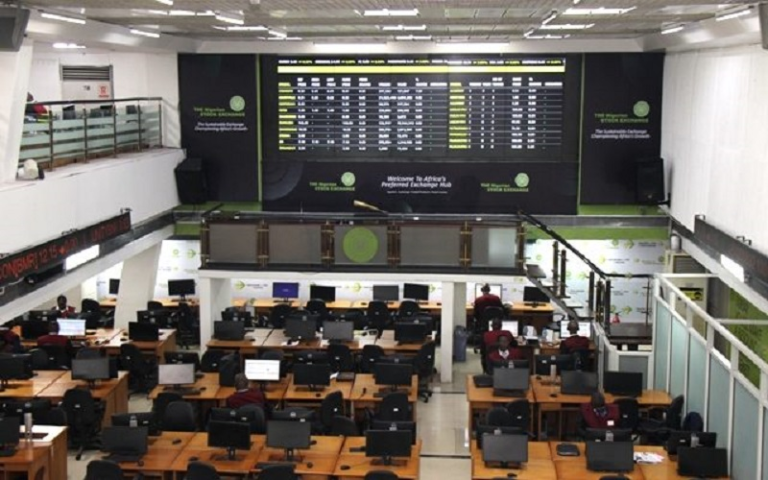
THE Nigerian Exchange Limited (NGX) has suspended the trading of Thomas Wyatt Nigeria Plc’s shares on the Nigeria stock exchange over the company’s failure to file its financial statements.

The suspension raises concerns about the company’s transparency and compliance with regulatory requirements.

Announcing this on Tuesday, February 11, the NGX said Thomas Wyatt shares’ suspension takes immediate effect.

The action follows Rule 3.1, which provides the rules for the filing of accounts and treatment of default filing, known as Default Filing Rules.

NGX noted that the rule mandates it to suspend trading in a company’s securities if it fails to submit its financial reports within the stipulated timeframe.

“This suspension is a necessary step to maintain the integrity of the market and ensure investors have access to timely and accurate information.

“We have clear rules in place regarding financial reporting, and we must enforce them to protect the investing public,”  NGX said.

Thomas Wyatt has yet to file its audited financial statements for the year ended March 31, 2024, as well as its unaudited financial statements for the periods ended June 30, and September 30 for the same year.

The NGX usually allow three months for listed companies to submit their audited financial statements after the close of the financial in every December and one month after the close of quarterly reports.

“We understand that companies may face challenges in meeting reporting deadlines.

“However, timely and accurate financial reporting is crucial for investor confidence. We urge Thomas Wyatt Nigeria Plc to submit their outstanding reports as quickly as possible,” the NGX added.

On Tuesday, The ICIR observed that the company’s shares were not traded on the floor of the exchange.

Aside from the concern about the company’s internal controls and financial management, the suspension has resulted in investors being unable to trade their shares until the ban is lifted.

Market analysts suggest that this incident could negatively impact investor sentiment towards the company and potentially the broader market and erode investor confidence.

The ICIR can report that in November 2018, the NGX similarly suspended Thomas Wyatt’s shares from trading on the exchange over non-compliance in filing its financial reports.

Listed on the Nigeria stock exchange in October 1978, Thomas Wyatt currently has a market capitalisation of N732.60 million on the exchange.

Its share price has dropped by 2.12 per cent since the start of the year to close at N1.85 on Monday, February 10.

Thomas Wyatt’s line of business includes large-scale printing and the manufacturing of school and office stationery, hitherto printed in the United Kingdom and imported into Nigeria.

Meanwhile, the Nigeria stock market rebounded on Tuesday from yesterday’s losses.

The All-Share Index increased to 106,574.98 basis points from 105,891.33,  indicating a year-to-date return of 3.54 per cent.

Similarly, the market capitalisation increased by N66.495 trillion from N66.069 trillion, which closed the previous trading day.

This left investors to gain N426 billion at the close of the day’s trading.

Access Holdings and Transnational Corporation recorded the highest volume and value of shares trading on the exchange respectively, while Ellah Lakes topped the gainers’ list with 10.00 per cent.
Manufacturers call for 4% Customs levy suspension

0

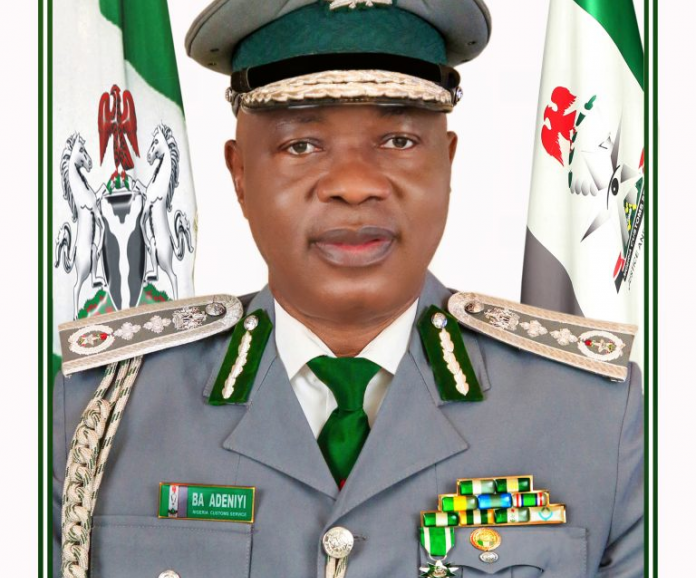
THE Manufacturers Association of Nigeria (MAN) has called for the suspension of the implementation of a 4 per cent charge on all Free On-Board (FOB) value of imports recently imposed by the Nigerian Customs Service.

The MAN leadership said the levy will lead to a further rise in Inflation and an increase in the cost of doing business, which is at variance with the government’s ease of doing business drives.

The ICIR reports that Customs announced the implementation of the 4 per cent charge on the Free On-Board value of imports in line with the provisions of the Nigeria Customs Service Act (NCSA) 2023.

“The FOB charge, which is calculated based on the value of imported goods, including the cost of goods and transportation expenses incurred up to the port of loading, is essential to driving the effective operation of the service,” Abdullahi Maiwada, the spokesperson of the service said in a statement on Tuesday, February 11.

Reacting to the development through a statement released on Tuesday and signed by the director-general of MAN, Segun Ajayi-Kadir, the association condemned the “sudden and inopportune introduction and implementation of the 4 per cent FOB Levy.”

MAN said it is an “unfortunate addition” to the 1 per cent Comprehensive Import Supervision Scheme (CISS) fee being paid by its members.

The association said it is concerned that the government through the NCS is introducing new levies at a time when it should be helping local businesses reduce the cost of doing business.

“We had expected that the NCS would give priority to trade facilitation given the prevailing economic downturn, rather than exacerbating the spiraling cost of production,” the statement noted.

The association stressed that the already high rate of calculating the customs duty exchange rate and the new levy will further escalate the cost of imported raw materials, which had earlier jumped by over 118 per cent from ₦2.07 trillion in the first nine months of 2023 to ₦4.53 trillion in the same period of 2024.

The association stressed that the levy will render Nigeria’s manufacturing sector uncompetitive and will increase smuggling appetite through unofficial trade routes.

“The indiscriminate increase in levy is contradicting the government’s preaching on ease of doing business. It will also make our cost environment less attractive for investors, thereby facilitating smuggling and loss of revenue for the Customs.

“The levy will cause heavy disruption in the supply chain, trigger raw materials stock-out in many manufacturing concerns, inflict higher cost of demurrage, further increase the huge volume of unsold inventories, and worsen the competitiveness of Nigerian manufacturers.

According to MAN, the introduction of the levy contradicts the principles of the ongoing Fiscal Policy and Tax Reforms and the spirit behind the tax bills currently being considered by the National Assembly.

“These efforts are targeted at eliminating the multiplicity of taxes and reduction of tax burden for households, manufacturers, and other private businesses,” it added.

The introduction of the levy is an additional incentive to smuggling, trade diversion, under-declaration of duty, and other trade infractions that have bedeviled the country, stretched the capacity of Customs, and undermined the revenue profile of the country.

The ICIR has reported that the manufacturers have called for a fixed customs import-duty exchange rate to avert ‘price-gouging’ and curb inflation’s impact on businesses.

Nigeria ranked 140th in global corruption index

0

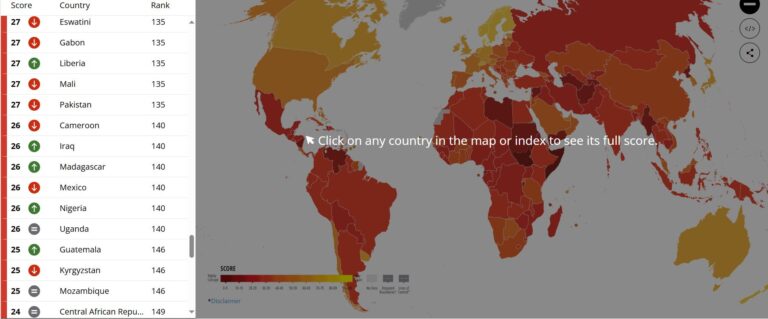
NIGERIA has crawled to the 140 spot in Transparency International’s global corruption ranking in 2024 with 26 scores from its position at 25 in 2023.

The chair of Transparency International (TI), Francois Valeria presented the 2024 Corruption Perceptions Index and the latest global rankings on Tuesday.

TI on Tuesday ranked the countries based on perceived levels of public sector corruption, using data from various reputable sources, including the World Bank and the World Economic Forum.

Valeria said that while 32 countries have reduced their corruption levels since 2012, 148 countries have stayed stagnant or gotten worse during the same period.

“The global average of 43 has also stood still for years, while over two-thirds of countries score below 50” he said.

CPI Score

Despite slight improvements in 2024, Nigeria still trails behind several African nations in tackling corruption. Countries like Seychelles that have strengthened their anti-corruption measures, enhanced accountability, and implemented governance reforms, is leading with a score of 72, followed by Cabo Verde (62), Namibia (59), Mauritius (56), Rwanda (57), and Botswana (57). 

The latest ranking came weeks after the Organised Crime and Corruption Reporting Project’s (OCCRP) named President Bola Tinubu among the five most corrupt persons worldwide.

Nigeria’s Historical Performance

The global anti-corruption coalition ranks countries based on data from reputable sources, like the World Bank and the bank of Africa. The scale ranges from 0 to 100, where 100 represents a corruption-free country, and 0 indicates a highly corrupt system.

The global coalition against corruption uses organizations and institutions as sources for its ranking. A score of 100 indicates a corruption-free country, while 0 signifies a highly corrupt system. 

Nigeria has consistently ranked low on the Corruption Perceptions Index, by attaining an all-time low in 1996 with an average score of 21.48 since 1996 and the highest recorded score was 28 in 2016, reflecting ongoing challenges in tackling corruption.

According to The ICIR, Nigeria ranked 144th and 148th respectively in 2017 and 2018, maintaining a score of 27 despite the Muhammadu Buhari administration’s efforts to combat corruption, even though Nigeria ranked 136th in 2014, one year before Buhari was elected.

In 2019 and 2020, Nigeria was ranked 146th and 49th which places Nigeria as West Africa’s most corrupt country after Guinea-Bissau.

The ICIR reports that Nigeria dropped in 2021from 149th to 154th place among 180 countries

Since 2012, Nigeria has maintained a dangling average score of 26.6 on the Corruption Perceptions Index.

Uganda, Mexico, Madagascar, Iraq, and Cameroon share the same ranking as Nigeria, each scoring 26 points in 2024.

The latest ranking makes Denmark the least corrupt country with 90 points, Finland as second with 88 points, and Singapore as third with 84 points.


I fear no arrest, I’m returning to Nigeria soon – El Rufai

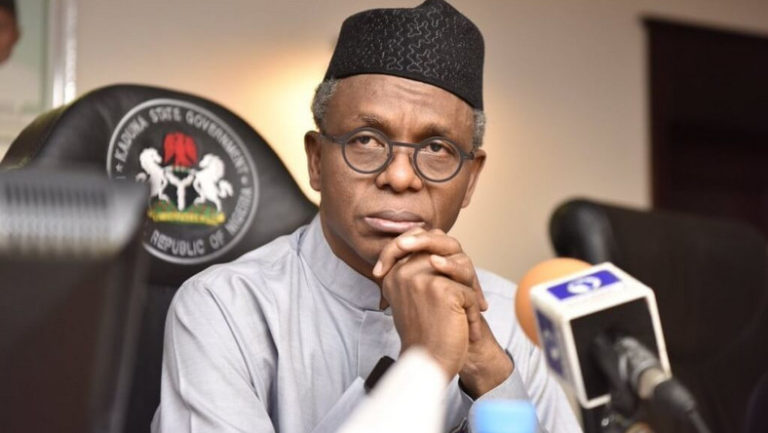
FORMER Kaduna State Governor Nasir El-Rufai has declared that he is not intimidated by threats of arrest by President Bola Tinubu’s government.

He promised to return to Nigeria before February 20.

He said he had put all his academic plans on hold and would spend more time in Nigeria than ever. “Silence is no longer golden. Inaction has never been an option,” he stated.

His latest outburst came amidst the festering rift between him and Tinubu’s government.

El Rufai and some chieftains of the ruling All Progressives Congress (APC) loyal to Tinubu have exchanged tantrums in recent weeks as his opposition grows against the government he helped to form.

Reacting to a post on X on Tuesday, February 11,  about his possible arrest by Tinubu’s administration, El-Rufai claimed that his adversaries were attempting to force him into exile.

He alleged that his political foes had sent similar threat messages through many of his friends, family, and political associates.

El-Rufai, who said he was in Egypt, said, I have been hearing these same rumours of arrest, detention, and torture in some dungeon in the NSA’s office (where Emefiele was allegedly tortured to resign as CBN governor),” since July 2024 when the so-called report of the Kaduna Assembly began circulating. El-Rufai tweeted.

He highlighted his intention to return to Nigeria for the launch of former President Ibrahim Babangida’s memoirs.

“The arrest, detention, and torture of perceived political enemies are nothing new in human affairs. I have been arrested and detained thrice in the past for expressing my views on previous governments.

“There is always a morning after the arrest, detention, or torture, and political life continues. As for death, it is when Allah destines it, and it is ultimately the fate of every human,” he added.

El-Rufai, one of the major APC stalwarts who ensured Tinubu won the presidency, was nominated as a minister by Tinubu in 2023 but was not confirmed by the Senate due to alleged security issues.

The ICIR reported that El-Rufai, a former minister of the Federal Capital Territory (FCT), has been an outspoken critic of the Tinubu administration in recent months.

He has confronted his predecessor, Uba Sani, who accused him and his appointees of squirrelling the state’s resources, milking it dry, and plunging it into a huge debt.

On February 4, he alleged that Tinubu’s administrationselectivelypaid Sani’s government over N150 billion. He attributed such payment to why the Kaduna governor backed the Tinubu-led Federal Government against him.

Also recently, while speaking at a national conference on strengthening democracy in Abuja on Monday, January 27, El-Rufai called on opposition parties to form a united platform to challenge the ruling party andsavethe nation’s democracy.

“We know what it is, and we don’t want a military rule, but we also don’t want civilians behaving like the military in their ‘babarriga‘ and suits. So, this is a national emergency,” he warned.

In another fiery attack, El-Rufai took a swipe at the national security adviser, Nuhu Ribadu.


Nigerians to pay higher charges for ATM withdrawals

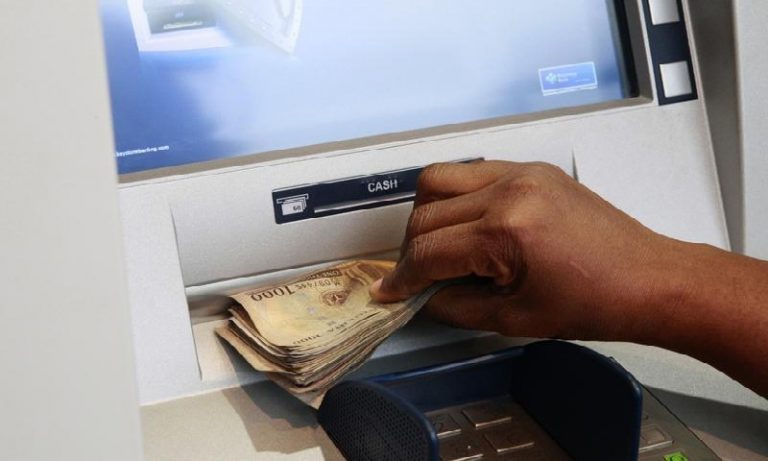
NIGERIANS will be paying higher charges starting from March 2023, for withdrawals at commercial banks’ Automated Teller Machine (ATM), the Central Bank of Nigeria (CBN) has announced.

In a circular signed, by John Onojah, the acting director of the Financial Policy and Regulation Department, on Tuesday, February 11, the apex bank confirmed that the new charges will take effect from March 1, 2025.

The increased charges, the apex bank said, were a result of a transaction fees review it conducted, wherein it observed rising operational costs and the need to enhance banking services.

This marks the first adjustment since 2019 when withdrawal fees were reduced from N65 to N35.

The regulator explained that the latest revision means customers will now pay more for cash withdrawals at ATMs, particularly for transactions involving other banks.

The apex bank emphasised that the surcharge for withdrawals at ATMs of different banks “is the income of the ATM deployer/acquirer and must be disclosed to consumers at the point of withdrawal.”

According to the new policy, customers withdrawing from their bank’s ATMs (on-us transactions) will continue to enjoy free withdrawals.

However, a N100 fee per N20,000 withdrawal will be applied at on-site ATMs (those located at bank branches).

For withdrawals at ATMs of other banks (Not-on-Us transactions), an off-site withdrawal will attract an N100 fee plus a surcharge of up to N450 per N20,000 withdrawal.

Citing further reasons that spurred the increase, CBN stated: “In response to rising costs and the need to improve the efficiency of Automated Teller Machine (ATM) services in the banking industry, the Central Bank of Nigeria (CBN) has reviewed the ATM transaction fees prescribed in Section 10.7 of the extant CBN Guide to Charges by Banks, Other Financial and Non-Bank Financial Institutions, 2020. (the Guide).”

According to the CBN, this review aims to “accelerate the deployment of ATMs and ensure that appropriate charges are applied by financial institutions to consumers of the service.”

Banks and other financial institutions have been directed to comply with the new directive ahead of its implementation on March 1.

“Accordingly, banks and other financial institutions are advised to apply the following fees with effect from March 1, 2025,” they further stated.

The ICIR has reported the rising cost of transactions witnessed specifically during the last yuletide celebrations among Point of sales operators, retail stores, and filling station outlets who were arbitrarily adding transaction costs to customers.

UCH, UNILAG, ABU, Army mortuaries, others major public institutions thrown into darkness under Tinubu

0

STUDENTS of the College of Medicine at the University College Hospital (UCH), Ibadan, staged a protest on February 10 in response to a persistent power outage that plagued the institution for over 100 days. 

The demonstration, which began at 7:00 a.m. and was supported by the Students’ Union (SU) of the University of Ibadan (UI), saw the students express outrage over the adverse effects of the blackout on their study and healthcare services at the institution.

During the protest, the students chanted aluta songs while also displaying placards with different inscriptions such as, “+100 Days of Darkness: Save UCH”; “Save ABH Hall”; “Save Falade Hall”; “Give Us Light”; “This Is Not How We Want To Live”; and “Medical School Is Hard Enough- Give Us Light,” among others.”

They demanded that the minister of power, Bayo Adelabu, who visited the protest scene, provide immediate solutions to the crisis.

This protest followed an earlier demonstration on January 22, where students also voiced their frustrations over the prolonged power outage.

Despite assurances from the authorities, the blackout persisted, prompting renewed calls for immediate action. 

Background to the crisis 

The power outage at UCH commenced in November 2024 when the Ibadan Electricity Distribution Company (IBEDC) disconnected the hospital from the national grid due to an outstanding debt of about N400 million.

The debt was part of N3.1 billion accumulated since 2019, according to a Premium Times report.

The situation at UCH is one of the disturbing incidents of power disconnection in key public institutions in Nigeria.

The situation appears to have worsened under President Bola Tinubu’s government, where electricity tariffs have been hiked and the cost of doing business has skyrocketed.

The ICIR reported that the Nigerian Electricity Regulatory Commission (NERC) in April 2024, approved a tariff hike for Band A customers, who they claimed enjoy up to 20 hours of power supply.

Many institutions and firms operating in the country were also moved to Band A despite protests on their inability to pay the bills.

The development elicited reactions from consumers and industry stakeholders who described distribution companies’ failure to meet up with power supply as structured by supply-service reflective tariffs as unfair.

Some public institutions disconnected by discos 

In 2024, a power outage left Lagos State University Teaching Hospital (LUTH) in limbo for days.

The blackout was linked to delayed payments to the electricity provider.

However, the hospital management claimed that backup generators and solar power ensured minimal disruption to the facility’s operations.

In August, the Eko Electricity Distribution Company (EKEDC) disconnected the University of Lagos (UNILAG) from the power grid over an outstanding debt of N472 million. W

The university claimed that its monthly electricity bill, previously between N150 million and N180 million, surged to nearly N300 million. it noted that the surge followed EKEDC’s decision to upgrade its tariff band from Band B to Band A in June.

Ahmadu Bello University (ABU), Zaria, was cut off from the national power grid by Kaduna Electric due to its inability to settle outstanding electricity bills in the same year. 

The disconnection, which took effect on Thursday, November 28, plunged the institution into darkness.

According to a bulletin issued by the university’s management on Friday, November 29, the institution struggled to cope with rising electricity costs.. 

It noted that despite paying over one billion naira in electricity bills to Kaduna Electric since January, the university was said to owe still owe a huge electricity debt.  

The ICIR reports that the electricity crisis has festered in Nigerian public hospitals despite the Federal Government’s pledge to subsidize their electricity bills by 50 per cent.

Corpse decomposed in Army mortuaries in 2024

Earlier, on February 23, 2024, the Nigerian Army had lamented the persistent blackouts in its barracks and cantonment across the country. 

The power outages, which it said started in January, were linked to N42 billion debt owed to electricity distribution companies (DISCOs). 

The late Chief of Army Staff Taoreed Abiodun Lagbaja stated that corpses were decomposing in Army mortuaries due to power disconnection by electricity distribution companies.

According to him, the Army couldn’t raise funds to pay the debt.

“Corpses in the Army mortuaries are decomposing and the owners of the corpses are protesting,” he said.

UCH to get light in 48 hours

Meanwhile, in response to the protest by the UCH students, the power minister held a closed-door meeting with the management of the institution and IBEDC. 

Following the meeting, Adelabu assured the students that electricity would be restored within 24 to 48 hours to the facility.

He urged the students to remain patient while the government and relevant stakeholders work towards a sustainable solution to the power crisis. 

MTN Nigeria keeps mum as data price increase hit customers

0

MTN Nigeria has kept silent on inquiries following the reflection of data price increase, which appears to be above the 50 per cent recommended by the Nigerian Communications Commission (NCC).

Following the demand for tariff hikes by the telecommunications companies (Telcos), the NCC had agreed that Internet data and other related charges be increased by 50 per cent.

The Telcos had demanded a 100 per cent increment, citing prevailing economic and market conditions.

When contacted, the investor relations contact person at MTN Nigeria, Chimaobi Nwaokoma, did not pick up.

“Sorry, I can’t talk right now,” he responded.

Also, the head of corporation communications, Funso Aina, did not respond to calls, WhatsApp, or text messages sent on the matter.

However, on Monday, February 10, MTN Nigeria raised the prices of its internet plans to implement the tariff increase approved by the NCC in January, although checks shows that some of the increase are above 50 per cent.

The revised prices check by The ICIR includes a 1.8GB monthly plan for N1,500, replacing the previous 1.5GB plan priced at 1,000.

The 20GB plan has been adjusted to N7,500, up from N5,500, while the 15GB plan now costs N6,500, a rise from N4,500.

Larger bundles have seen more significant increases, with the 90-day 1.5TB plan jumping from N150,000 to N240,000 and the 600GB 90-day plan increasing from N75,000 to N120,000.

Also, the 15GB Weekly Plan from the e-shop which was N2,000 is now N6,000.

The 15GB weekly plan, which was N2,000 as of February 7, is now N6,000 on the e-shop when checked on February 11.

The 15GB weekly plan, which was N2,000 as of February 7, is now N6,000 on the e-shop when checked on February 11.

Some plans remain unchanged, for instance, the 2.5GB daily plan at N600 has not been affected.

The ICIR further observed that the MTN *121# platform for the purchase of smart data has not been connecting.

WHO launches free cancer medicines for children in poor countries

0

THE World Health Organization (WHO) has launched a new platform to provide cost-free cancer medicines for children in low and middle-income countries (LMICs) to bridge the survival gap between high and low-income nations.

The initiative, which officially began on February 11, targets six countries – Mongolia, Uzbekistan, Ecuador, Jordan, Nepal, and Zambia – at the initial stage with plans to expand to 50 countries over the next seven years. 

The platform will deliver life-saving medications to approximately 5,000 children in 2025, addressing a critical gap in pediatric cancer treatment, according to a report by WHO.

The 2025 WHO’s report on the Global Platform for Access to Childhood Cancer Medicines, shows the disparities between high and low-income nations. While childhood cancer survival rates in high-income countries exceed 80 per cent, the rates in LMICs remain below 30 per cent. 

WHO data highlights that up to 70 per cent of children with cancer in LMICs die due to systemic barriers such as inadequate diagnosis, limited treatment facilities, and financial constraints.

This difference is largely attributed to a lack of access to essential medications, disruptions in treatment, and the prevalence of substandard drugs in poorly regulated markets.

It further noted that the organisation reviewed 42 countries and found that only one in eight low-income nations finances outpatient chemotherapy for children, with even fewer covering essential antineoplastic medicines. 

It added that in middle-income countries, fewer than 60 per cent provide funding for critical treatment​.

WHO Director-General Tedros Adhanom Ghebreyesus described the initiative as a crucial step in bridging the access gap for childhood cancer treatment.

“For too long, children with cancer have lacked access to life-saving medicines,” WHO chief Tedros Adhanom Ghebreyesus said in a statement by St. Jude Children’s Research Hospital, on Tuesday, February 11.

The global cancer medicine platform

The newly launched platform, developed in partnership with St. Jude Children’s Research Hospital, the United Nations Children Fund (UNICEF), and the Pan American Health Organization (PAHO), seeks to rectify these inequalities by ensuring the continuous supply of safe, high-quality cancer medicines. 

According to WHO, St. Jude has committed $200 million to the project, which aims to reach 120,000 children worldwide by 2030.

“A child’s chances of surviving cancer are largely determined by where they are born, making this one of the starkest disparities in global healthcare,” said the MD, president and CEO of St. Jude,  James R. Downing.

“St. Jude was founded on Danny Thomas’ dream that no child should die in the dawn of life. By developing this platform, we believe this dream can someday be achieved for children stricken by cancer, irrespective of where they live.

“The platform brings together governments, the pharmaceutical industry and non-governmental organisations in a unique collaborative model focused on creating solutions for children with cancer. The co-design approach addresses the broader needs of national stakeholders, with a focus on capacity building and long-term sustainability.

The platform provides comprehensive end-to-end support, from consolidating global demand to shaping the market, assisting countries with medicine selection and developing treatment standards. It represents a transformative model for the broader global health community working together to tackle health challenges, in particular for children and non-communicable diseases,” Downing added.

Dangote Refinery eyes full capacity operations in March

0

THE Dangote Refinery currently operating at 85 per cent capacity could begin operating at full capacity in 30 days.

The full operation will enhance its supply links to both local and international supply chains, while also influencing market pricing and control mechanism across the country.

The head of the Dangote oil refinery, Edwin Devakumar, hinted at this on Monday, February 10.

“We can go 100 per cent in 30 days,” Reuters quoted Devakumar to have said.

The 650,000-barrel-per-day refinery built by billionaire businessman, Aliko Dangote, is aimed to compete with European refiners.

However, since the commencement of operation in January 2024, the refinery has been unable to operate at full capacity and has been struggling to secure sufficient crude locally from the Nigerian National Petroleum Company Limited (NNPCL) despite a government-mediated crude-for-naira supply arrangement.

This led the Dangote refinery to turn to importing crude from the United States of America and other countries after it was unable to buy crude in the local naira currency.

The ICIR can report that the $20 billion refinery built in Lagos state, the commercial city of Nigeria, has been processing crude into products, including diesel, naphtha and jet fuel, and in September last year started processing petrol.

It has asked for 550,000 bpd of crude for January-June this year from oil producers in Nigeria according to the oil regulator, Nigerian Upstream Petroleum Regulatory Commission (NUPRC)

The NUPRC had also said it would block export permits for oil cargoes from producers who fail to meet their stipulated supply quota to local refineries, The ICIR reported.

The Dangote Oil Refinery is exploring new markets for its refined products.
Last week, the founder, Dangote, disclosed that the refinery was already exporting jet fuel to Saudi Arabia as part of its expansion plans.

“We are looking at all the markets right now,” Devakumar added.

Inibehe threatens Adeboye with lawsuit after cleric backtracked on detained Tiktoker’s release

0

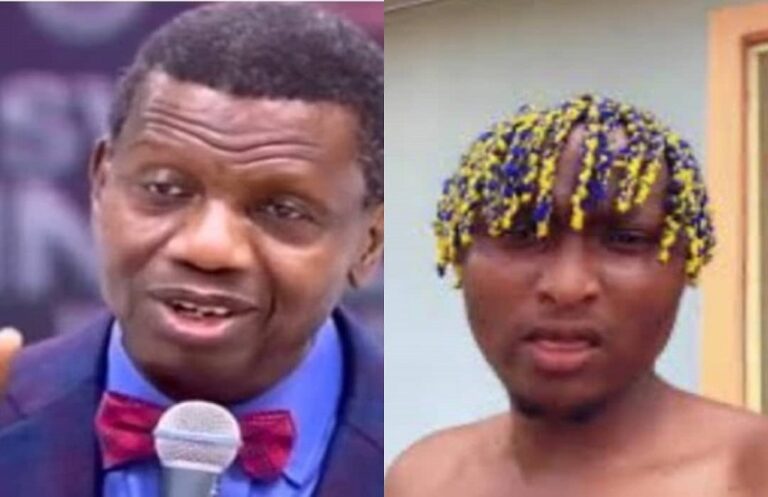
THE general overseer (GO) of the Redeemed Christian Church of God (RCCG), Enoch Adeboye, has made a U-turn on his earlier stance about the arrest and investigation of a Tiktoker Olumide Ogunsanwo, also known as Seaking.

The church, in a statement by the public relations unit, office of the principal executive assistant to the general overseer, on Monday, February 10, said after taking a closer look at the videos in which Seaking allegedly slandered the cleric, it resolved that the accused face the full wrath of the law.

The background

Seaking had allegedly lambasted Adeboye for asking his church members to fast for 100 days.

A group identified as the Concerned Christian Youth Forum petitioned the Lagos State Police Command over the Tiktoker’s action, which led to his arrest.

Lawyers and activists, including Inibehe Effiong and Omoyele Sowore swiftly demanded for the release of the accused. The calls were not immediately heeded by the police.

Speaking during a church programme on Friday, February 7, Adeboye distanced himself from Seaking arrest, stating that some people angered by the accused’s remarks took it upon themselves to file a petition that landed him in police net. He urged the police to release him.

“I heard that someone lambasted me thoroughly. What is my offence? Because I asked my people to fast for 100 days?

“I was told that some people got angry and went to arrest the fellow. Release him. He is fulfilling prophecy,” the GO told his congregation.

Adeboye, RCCG backtrack

However, in a sudden turn of event, the church, in a statement on Monday, said given the existence of an official complaint filed against Ogunsanwo by the Concerned Christian Youth Forum “on behalf of several prominent faith leaders”, including Adeboye, Seaking’s investigation must continue.

The RCCG stressed that it did not intend to interfere with the police investigation by asking the Tiktoker to be freed.

“We trust that the relevant authorities will carry out their investigations professionally and reach a just conclusion based on the law. While Pastor Enoch Adejare Adeboye maintains a heart of love and reconciliation, due process must be followed,” the church stated.

The RCCG cautioned against cyberbullying and inappropriate commentary targeting Adeboye, the church, and the broader Christian community.

The church said it was promoting a culture of respect and honour while discouraging defamatory and disrespectful comments.

It argued that respect for spiritual leaders was paramount, adding that it was committed to upholding the principles of justice, respect, and reconciliation.

Inibehe Effiong vows to drag Adeboye to court

Meanwhile, a lawyer in the case, Inibehe Effiong, gave the church and Adeboye 24 hours to retract the statement or be sued.

He revealed that the police had released the accused on administrative bail.

He said hours before the church released the statement, Adeboye and the RCCG were not the intended targets of a planned legal action against Seaking’s arrest.

He said the church had made itself part of the case following its latest stance.

In his statement titled, “Ilegal arrest and detention of Tiktoker Seaking: We will sue Pastor Adeboye and RCCG if they fail to retract their press statement within 24 hours,” Effiong said Seaking was re-arrested after his appearance at the Magistrate Court, Ogba, Lagos on Thursday, February 6, and flown to Abuja at the instance of the Cybercrimes Unit of the Force Criminal Investigation and Intelligence Department (FCIID).

“In the meantime, our attention has been drawn to a provocative public statement issued by the public relations unit of the The Redeemed Christian Church of God on this case. The church in the statement conceded that Pastor Adeboye is not behind the petition that led to the arrest of Seaking, but it nonetheless suggested that the law should take its course based on a petition written by a certain busybody named James Paul Adama masquerading under the name of ‘Concerned Christian Youth Forum’…

To be clear, purported injuries suffered as a result of any act of alleged cyberstalking or alleged defamation are personal in law and not transferable. Pastor Adeboye cannot be the victim of alleged cyberstalking or defamation, while another person pretends to act as the complainant. It should also be stated that mere vulgar abuse or ‘insults’ are not criminal offences in Nigeria. Mere vulgar abuse is neither defamatory nor cyberstalking.

“Cyberstalking and defamation cannot be pursued through proxies.Since Pastor E. A. Adeboye had initially distanced himself from the matter, we had decided not to join him and the church as respondents in any fundamental rights enforcement suit.”

Effiong said the Tiktoker’s fundamental rights had been breached, as he was detained beyond the permissible constitutional timeline, and without legally tenable grounds.

He argued that the church’s ‘capitulation’ might also require Adeboye to personally testify in court in any criminal charge brought by the police, and him being subjected to cross examination.

“Since the RCCG has decided to associate itself with the busybody petitioner and to drag Pastor Enoch Adeboye into the pit of illegality dug by the police and the busybody complainant, they must understand the legal implications,” he wrote.

He said Christian leaders must live by the true tenets of Christianity, stressing that pastors who resort to weaponising the police to witch-hunt those who speak against them stood the risk of having their calling questioned.

“Vengeance should be of the Lord as admonished in the Bible, not of the Police.

“However, where a pastor is determined to pursue an eye for an eye, he or she must be careful not to overreach his critic, abuser or adversary, and must be mindful not to violate the due process of law while seeking redress from earthly institutions.”

Sowore confirms Seaking’s release

Meanwhile, human rights activist Omoyele Sowore, in a post on his X handle Monday evening, confirmed that Seaking had been released by the police.

He said the Tiktoker was released from custody after the rejection of a bail condition requiring a Level 10 or 12 civil servant, resulting in a swift agreement and his release on administrative bail.
“We are pleased to confirm that Olumide Ogunsanwo @seaking303 has been released from @PoliceNG custody after our prompt rejection of the initial bail condition requiring a level 12 or 10 civil servant, resulting in a swift agreement and release on administrative bail, signed by me. #FreeSeakingNow,” he tweeted.