Home Blog Page 421

128 transmission towers destroyed by vandals in 2024 – TCN

0

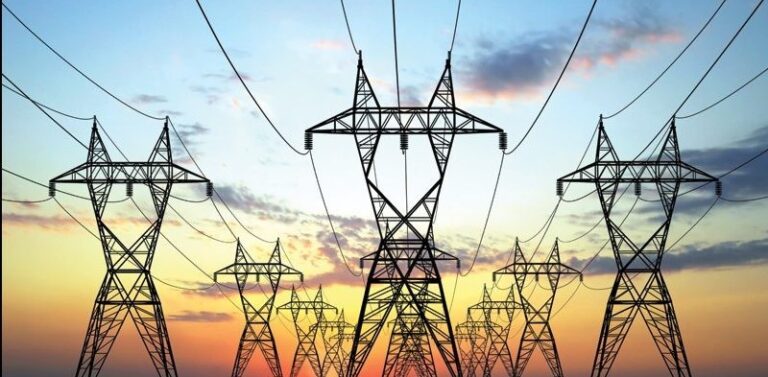
THE Transmission Company of Nigeria (TCN) said 128  transmission towers were destroyed by vandals in 2024, raising concern over the recurrent epileptic power supply in the country.

The transmission company also said it spent about N8.8 billion to repair and put into adequate use the vandalised transmission towers within the year.

The chief executive officer of TCN, Suleiman Ahmed Abdulaziz, disclosed this at the quarterly power sector working group meeting in Abuja.

Special adviser to the minister of power on strategic communication and media relations, Bolaji Tunji, also confirmed this in a statement issued on Wednesday, November 28.

He also disclosed that the Federal Government was working with the World Bank and the African Development Bank (ADB) to make electricity available to 50 million Nigerians by 2030.

Abdulaziz, who was represented by the executive director of Transmission Service Provider (TSO) of TCN, Olugbenga Emmanuel Ajiboye, said bandits and vandals destroyed 128 transmission towers across the country between January 13 and November 28, 2024.

He expressed worry that despite several arrests made of the vandals by the police, they often returned to continue with the vandalism after securing bail.

He said “As I talk to you today, 128 of our towers have been destroyed by either vandals or bandits. To date, we have spent about N8.8 billion, by our estimation, to put them back to full and functional use.

“It is so sad that each time the vandals were caught and taken to the police for prosecution, police would incident them for theft, instead of vandalism and they will be bailed. If they are charged for vandalism, they cannot be bailed, but this is where we are. So many of them have been arrested, but each time they will be bailed because police often incident their cases as that of theft.

“When the Shiroro-Mando-Kaduna towers were destroyed, we had to get the full military escorts for our contractors to get the transmission lines and towers restored. In some cases, they would tell us that we could only work for two hours on some days. In some instances, they would even tell us that it was not safe to move there. How do we get out of this? How can we deliver electricity to Nigerians under these terrible circumstances? These are part of the challenges we are facing in the power sector”, Abdulaziz added.

Notably,  the transmission line is a critical infrastructure that supplies power to different regions across the country but has been the target of vandals in several regions across the country.

In October, the ICIR reported that most of the states in the North were thrown into darkness by vandals, which disrupted economic activities within the region.

The ICIR reported that the disruption was due to the vandalisation of the Shiroro-Kaduna transmission line, the major line that supplies electricity to the North.
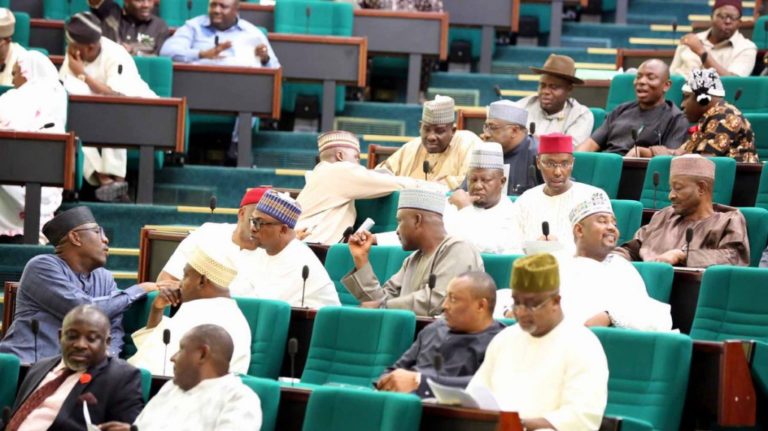
Reps pass 2025-2027 medium term expenditure framework

THE House of Representatives has passed the medium-term expenditure framework (MTEF) and fiscal strategy paper (FSP) for 2025-2027.

The approval followed the adoption of the Joint Committee on Finance and National Planning’s recommendations during plenary on Wednesday, November 27. 

The ICIR reports that the MTEF outlines Nigeria’s fiscal policy objectives and macroeconomic projections for the next three years and provides a framework for annual budget preparations.  

Key highlights of the adopted framework include an oil benchmark price of $75 per barrel for 2025, $76.2 per barrel for 2026 and $75.3 per barrel for 2027.

Domestic crude oil production was also projected at 2.06 million barrels per day for 2025, which is an increase from the current year’s 1.78 million barrels per day.  

The framework also set GDP growth rates at 4.6 per cent in 2025, 4.4 per cent in 2026, and 5.5 per cent in 2027, while pegging the exchange rate at N1,400 to the US dollar for the three years.  

The MTEF approval followed the Federal Executive Council’s recent adoption of the 2025-2027 framework, with a proposed N47.9 trillion budget for 2025, representing a 37.25 per cent increase from the 2024 budget.

The minister of budget and economic planning, Abubakar Bagudu, on Thursday, November 14, disclosed plans to finance part of the 2025 budget through N9.22 trillion in new borrowings to bridge deficits and fund key projects.  

This borrowing, according to him, is projected to bridge the anticipated budget deficit and support key government programmes aimed at stabilising the economy.

Bagudu highlighted the government’s focus on maintaining progress in deregulating petroleum prices and exchange rates while aiming to cut production costs in the oil and gas sector.  

“The budget size approved for presentation to the National Assembly in the MTEF is N47.9 trillion, with new borrowings of N9.22 trillion to finance the budget deficit in 2025. We aim to sustain the commendable market deregulation of petroleum prices and the exchange rate, compel the Nigerian National Petroleum Corporation Limited to significantly lower its oil and gas production costs, and potentially amend relevant sections of the Petroleum Industry Act 2021 to address key risks to the Federation,” Bagudu added.

The minister noted that a review of the 2024 budget implementation showed positive trends in revenue collection and expenditure management, particularly in non-oil revenue streams that had exceeded expectations. 

“Despite some lags in prorated targets, the overall trajectory shows that fiscal efforts are on track, with key non-oil streams performing better than anticipated,” he stressed.

While the MTEF provides a roadmap for fiscal sustainability, concerns remain over Nigeria’s rising debt profile, with significant portions of the budget reliant on borrowing. 

On January 1, Tinubu signed the N28.7 trillion 2024 appropriation bill into law.

The version of the bill passed by the Senate showed an increase of over N1.2 trillion from the N27.5 trillion proposal that the President laid before the joint sitting of the National Assembly on November 29.

Consequently, The ICIR reported that amid dwindling revenue resources and a huge debt servicing over Nigeria’s rising debt, Tinubu asked the National Assembly to increase the 2024 appropriation act by N6.2 trillion.

Rape: Police silent on allegations against DPO, affirm female officer’s dismissal in Edo

0

THE Nigeria Police Force (NPF) has reaffirmed the dismissal of Edith Uduma, an inspector, over allegations of extortion and misconduct.

However, the Force ignored accusations implicating a divisional police officer (DPO) in the same case.

The Police in a statement on Wednesday, November 27, said the decision followed an orderly room trial and further investigations that exposed the  dismissed officer’s complicity in an incident involving an attempted rape of a 17-year-old female suspect by another officer, Abraham Uzuobo.

The ICIR reported that Uduma, dismissed alongside Uzuobo, claimed her disengagement was a ploy to silence her after exposing Uzuobo’s alleged rape of a 17-year-old female suspect in custody.

The case, which garnered national attention after a viral video showing Uzuobo hastily dressing as Uduma filmed, but the footage did not surface until weeks after the incident. 

The police instead, claimed that she conspired with her husband, also an officer, to demand N1 million from Uzuobo to cover the case.

However, Uduma has repeatedly denied this allegation, claiming that the DPO instructed her to demand the bribe from Uzuobo under the guise of luring him out of hiding. 

While the police have also insisted that Uduma’s dismissal followed due process, the former officer accused the Edo State Police Command of twisting the facts and shielding the DPO. 

She also alleged that after Uzuobo paid N45,000, the DPO and other officers turned against her, accusing her of extortion.  

Uduma also expressed concerns about her ‘detained’ husband and the implications of her dismissal for her children, whom she said she had not seen in months due to her ordeal.

She also threatened to end her life and those of her children, saying that she’s been hiding since the incident.


READ ALSO:


Despite these allegations against the DPO, the Force’s statement was mum on the issue, but rather claimed Uduma’s claims were unfounded and were targeted at tainting the reputation and integrity of the Police Force. 

“However, it has come to the attention of the Force that following her dismissal, Mrs Edith has made numerous unfounded claims regarding her innocence and has sought to taint the reputation and integrity of the adjudicating authority, the Inspector-General of Police in person, and the entire Police Force.

“It is imperative to set the record straight and provide clear context regarding her actions and the decision to dismiss her from service. The dismissal of former Police Inspector Edith Uduma was not only justified but necessary, based on thorough investigations that presented irrefutable evidence of her failure to follow standard incident report protocol to immediately document the incident, attempt to conceal an offender for benefit, participation in extortion and manipulating the justice process for personal gain,” the statement added.

Court remands Yahaya bello in EFCC custody till December 10

0

A Federal Capital Territory (FCT) High Court has remanded former Kogi State governor, Yahaya Bello, in the Economic and Financial Crimes Commission (EFCC) custody till December 10, 2024.

The court’s presiding judge, Maryann Anenih, adjourned ruling on bail application by the former governor to December 10 and ordered that he, and two other defendants, remain in EFCC custody.

 Bello and his co-defendants, Abdulsalami Hudu and Umar Shoaib Oricha, were arraigned on a 16-count charge bothering on alleged 110 billion money laundering.

However, the former governor pleaded not guilty to the charges. After the court had listened to their pleas, the defendant’s counsel Joseph Daudu, moved for the bail application of the former governor.

The prosecution counsel, Kemi Pinheiro,  disagreed with the bail application and argued that it had been invalid since October.

Recall that the anti-graft agency had granted administrative bail to Bello’s co-defendants.

Disagreeing with Pinheiro’s argument, Joseph claimed that the only considerable application before the court was Bello’s bail application of Bello, filed on November 22. He said the bail application was made with a written address.

The ex-governor’s counsel argued that his client remained innocent until proven guilty by the court.

“It is within his rights to enjoy his liberty while preparing for trial,” he claimed

The prosecution’s objection was based on the fact that the accused was facing charges at the Federal High Court and had refused to appear to take his plea, he added.

“The court should not use issues from another court to determine issues before the FCT High Court.”

After the arguments, Anenih, the trial judge, rose for a short recess.

After the recess, Pinheiro opposed the bail application of Oricha, the second defendant, because he is still serving as the director-general of the Kogi State Government House.

The EFCC counsel argued that there was a likelihood that he would commit the same offence for which he is standing if he is not in custody.

Responding, Dauda said Pinheiro did not state where the second defendant allegedly committed another offence after being granted bail.

The counsel said the EFCC did not indicate that the second defendant was a habitual offender.

He urged the court to grant the bail application of the second defendant.

In her ruling, the trial judge adjourned ruling on the bail application to December 10 and ordered that the three defendants remain in EFCC custody.

ICPC re-arraigns professor, two firms for alleged certificate racketeering, money laundering

1

THE Independent Corrupt Practices and Other Related Offences Commission (ICPC) has re-arraigned David Iornem, a professor, and two firms on amended charges involving certificate racketeering and money laundering.

Iornem is alleged to have scammed many Nigerians by offering fake admissions and certificates through two purported universities, Island Open University Inc. and Commonwealth University Inc., which are also defendants in the case.

The trial, which initially commenced in 2013, was restarted after the judge handling the case, A.R. Mohammed, was promoted to the Court of Appeal.

The case was subsequently transferred to P.O. Lifu of the Federal High Court in Abuja.

The ICPC spokesperson, Demola Bakare, announced on Wednesday, November 27, that the commission was ready to proceed with the re-arraignment and trial of Iornem, as stated by prosecution counsel, David Nwaze, during a recent hearing.

Two witnesses were present and ready to testify. Iornem pleaded not guilty to all 12 counts against him and also entered not-guilty pleas on behalf of the second and third defendants for counts 13 and 14.

The amended charges against Iornem included count one, which alleged that between January 1 and December 31, 2012, and on various dates thereafter, he conspired with one Bruce Robert Duncan and others to defraud people by advertising false admission opportunities to Commonwealth University Belize on the internet, falsely representing it as a foreign university in Belize, when in fact it was not accredited or authorised to operate as a university, thereby committing an offence under the Advance Fee Fraud and Other Fraud Related Offences Act, 2006, specifically Sections 8(a) and 1(1)(a), and punishable under Section 1(3).

According to Bakare, the defence counsel requested bail for the defendants under the same conditions as before, but the court instead granted bail with more stringent terms.

“The bail bond was raised from ₦100,000 to ₦20 million, and the number of sureties increased to two. Additionally, one of the sureties must be a civil servant not below Level 14, while all other original conditions remained unchanged,” the statement added.

Bakare added that in the course of the trial, the prosecution counsel called the first witness, Chidi Orji, a staff member with the ICPC.

He said Orji, in his testimony, informed the court that he was part of the team that investigated the petition written to the commission by the National Universities Commission.

“He emphasised that the petition came at a time when the NUC partnered with the ICPC to clamp down on illegal degree-awarding universities and institutions in the country.

According to Bakare, Orji’s testimony revealed that he had acted as an undercover agent, pretending to seek a degree for a superior’s ward under the fake name Jamilu Rabiu Sani and had paid $800 to the third defendant as an application fee and good faith fee.

The matter has been adjourned till March 4, 2025, for continuation of the trial.

Alleged fraud: Yahaya Bello appears in court, pleads not guilty to 16-count charge

0

THE immediate past governor of Kogi State, Yahaya Bello, has pleaded not guilty to the 16-count charge preferred against him by the Economic and Financial Crimes Commission (EFCC).

Bello, who is the 1st defendant, is being charged along with two others before Maryann Anenih. of the Federal Capital Territory (FCT) High Court in Abuja.

Bello and others denied the allegations as they were read out to them.

Following the defendants’ pleas, their lawyer, Joseph Daudu, requested bail, but the EFCC’s lawyer, Kemi Pinheiro, objected, arguing that the bail application had lapsed in October.

The defendant’s counsel, Daudu, clarified that the only pending application before the court was the bail motion for the first defendant, filed on November 22.

He supported this with an affidavit and a written address, emphasising the importance of Exhibit A, the public summons, and the defendant’s voluntary appearance in court, demonstrating respect for the law.

This was in response to the EFCC’s request to commence trial immediately, with their first witness ready to testify.

Bello’s counsel countered that they received the charges at 11 pm on November 26, requiring additional time to adequately prepare his client’s defence.

Regarding the bail application, Daudu said that under Nigerian law, a defendant is presumed innocent until proven guilty, supporting the granting of bail.

He stated that the defendant had the right to enjoy his liberty while preparing for trial.

He explained that the prosecution’s objection was based on the defendant’s pending charges at the Federal High Court and his failure to appear to take his plea.

However, he argued that the court should not consider issues from another court when making decisions regarding the case before the FCT High Court.

The EFCC counsel opposed Bello’s submissions and premised his objection on three grounds: the application’s competence, its factual content, and the application of judicial principles and guidance.

This development came after Umar Shuaib Oricha and Abdulsalami Hudu, Bello’s co-defendants, were granted administrative bail by the EFCC, while Bello himself made his first court appearance.

Bello, Oricha, and Hudu are being prosecuted as the 1st to 3rd defendants, respectively, in a fresh N110bn 16-count charge instituted against them by the EFCC.

The charge against the defendants, marked CR/7781, borders on conspiracy, criminal breach of trust, and possession of unlawfully obtained property.

The ICIR reported on Tuesday that Bello presented himself to the EFCC over alleged misappropriation of funds levelled against him.

According to reports, Bello visited the EFCC office on Tuesday, November 26, accompanied by his lawyers.

This development followed the Supreme Court’s dismissal of a suit by some states challenging the EFCC’s powers. Kogi State played a lead role in the case in what many believed was a ploy to stop his trial by the EFCC.

Bello reportedly drove himself to the EFCC office in a black Hilux Tuesday morning.

Last week, the EFCC requested a hearing adjournment of his case to November 27.

Attempts to confirm Bello’s presence at the EFCC office on Tuesday were unsuccessful as the commission’s spokesperson, Dele Oyewale, did not respond to calls and messages sent to his line. However, the commission later clarified that Bello was arrested and did not submit himself to the EFCC as reported.

Bello has been facing allegations of financial impropriety, as the EFCC accused him of laundering N80.2 billion and other infractions while he served as governor.

He was charged with three others, including his nephew Ali Bello, Dauda Sulaiman, and Abdulsalam Hudu.

The EFCC declared Bello wanted in April 2024, after he allegedly declined invitations for interrogation.

The photograph of the former governor was displayed with the inscription ‘WANTED’.

The court had yet to rule on Bello’s bail when filing this report.


Port Harcourt Refinery’s petrol price higher than Dangote’s by ₦75/litre – Marketers

0

THE Petroleum Products Retail Outlets Owners Association of Nigeria (PETROAN) said the price of Premium Motor Spirit (PMS)  by the old Port Harcourt Refinery which resumed production on Tuesday, November 26, is ₦75 per litre higher than that sold by the Dangote Refinery.

The association’s public relations officer, Joseph Obele, revealed this during the refinery’s official reopening ceremony on Tuesday.

Obele, who initially applauded the Federal Government for revitalising the old refinery, expressed concern over the pricing disparity between petrol supplied by the Nigerian National Petroleum Company Limited (NNPCL) and the Dangote Refinery.

According to him, while Dangote Refinery sells petrol to marketers at ₦970 per litre, NNPCL’s price stands at ₦1,045, a difference of ₦75 per litre.

He said the ₦75 price differential is a steep margin for businesses, particularly for an industry where profitability hinges on competitive pricing.

He, however, described the refinery’s restoration as a significant step in reducing Nigeria’s dependence on imported petroleum products.

Obele revealed that the group chief executive officer of NNPCL, Mele Kyari, had promised to address the issue and harmonise prices to mitigate the impact on marketers and consumers.

The PETROAN president,-Billy Gillis-Harry also confirmed the development to The ICIR but expressed optimism that the price would moderate with time once the market achieves price stability with other modular refineries also functioning.

“We’ll achieve price stability with time. I’m pleading that Nigerians exercise patience with our operations,” he said.

The reopening of the Port Harcourt Refinery is expected to enhance local production capacity and reduce reliance on imports, a move welcomed by stakeholders across the sector.

However, concerns over pricing disparities underscore the need for continuous reforms to stabilise the downstream sector of the petroleum industry.

Meanwhile, most marketers are optimistic that the increase in local refining capacity by the NNPCL, Dangote Refinery and other modular refineries across the country would help moderate pricing and improve affordability.

Economic watchers are also of the view that lower pricing for PMS is a function of exchange rate volatility.

An oil sector governance expert, Henry Ademola Adigun said “PMS price is a function of foreign exchange. The price is susceptible to foreign exchange volatility. The crude-naira swap deal  for me didn’t create much impact on the PMS pricing. I think its more of a political than an economic move.”

Commenting further, an international finance expert and an economist, Muktar Mohammed, believed that prices would moderate if the NNPCL enlisted in the Nigerian stock market which would ensure the national oil company is transparently run.

He stressed that the government could get all the money it needed for the remaining refineries if it enlisted in Nigeria’s stock market.

“Enlisting in the stock market should remain the priority of the national oil company now that the refineries are gradually being rehabilitated. This would ensure upbeat investors and Nigerians to own higher stakes in the company,” he added.

The ICIR reported that marketers were expectant about the price moderation and affordability of petrol as the Port Harcourt Refining Company (PHRC) Ltd resumed operations on Tuesday after years of collapse.

The refinery has a combined crude processing capacity of 210,000 barrels per day (bpd) capacity, according to data from Nigeria’s Bureau of Public Enterprise.

Israel-Hezbollah agree to cease-fire deal

ISRAEL and Hezbollah have agreed to a U.S.-backed ceasefire deal to end 13 months of fighting.

The agreement, which will put a halt to the worst battle in Lebanon in decades, came into force on Wednesday, November 27, at 4 a.m. local time.

A senior Biden administration official told The Washington Post that Israeli forces would remain in their locations and not immediately leave.

According to those acquainted with the situation, who spoke on condition of anonymity, the agreement is expected to put a stop to combat for a first two-month period, during when Israeli troops are expected to withdraw and the Lebanese army will bolster its presence in the southern region of the nation.

However, according to reports, the battle raged until the very last minute, with Israeli Prime Minister Benjamin Netanyahu threatening to launch another attack if the Lebanese militant group broke the agreement.

Multiple reports stated that Israel bombarded Beirut and its southern suburbs on Tuesday, filling the skyline with a barrage of airstrikes.

The airstrikes coincided with the final discussions regarding a cease-fire between Israel and Hezbollah in Lebanon.

Speaking on the deal in a statement on Tuesday, the U.N. special coordinator for Lebanon, Jeanine Hennis-Plasschaert, said it would require the full and unwavering commitment of both parties to succeed.

According to a senior Biden administration official who briefed reporters under the White House’s regulations regarding anonymity, all fire from both sides would cease at 4 a.m. local time, or 9 p.m., while Israeli forces would remain in their positions and not leave right away. 

Similarly, a joint statement from Biden and French President Emmanuel Macron stated that the cease-fire in Lebanon would “create the conditions to restore lasting calm and allow residents in both countries to return safely to their homes.” Both leaders promised to ensure that the cease-fire is completely enforced.

Biden called for an end to the war in Gaza and referred to the agreement as “a new start” for Lebanon in his remarks at the White House on Tuesday.

The conflict between Hezbollah and Israel escalated in October 2023, when Hezbollah launched a rocket campaign against Israel in support of Gaza.


READ ALSO:


This move was in response to Israel’s bombardment of Gaza following a surprise attack by Hamas that killed 1,139 people and took 250 captive.

Israel retaliated with force, marking a significant intensification of the long-standing conflict between Hezbollah and Israel.

According to the Lebanese Ministry of Health, at least 566 people have been murdered, and 97,000 people displaced from their homes.

NNPCL, marketers clarify blending plant controversies over Port Harcourt Refinery

0

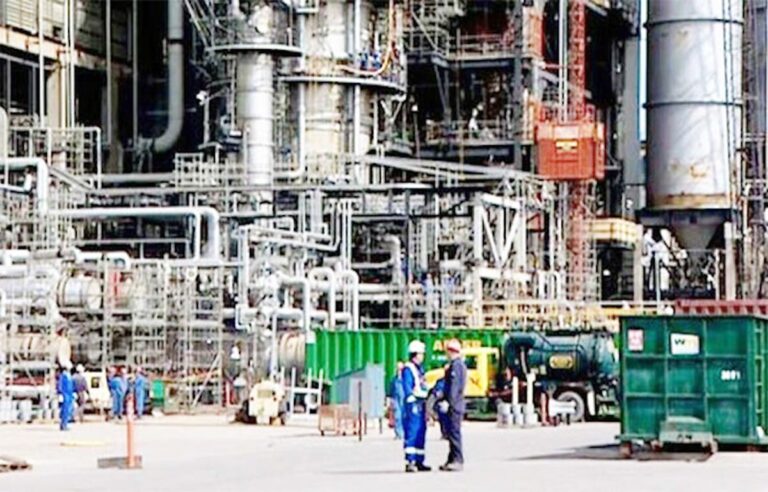
THE board and management of the  Nigerian National Petroleum Company Limited (NNPCL) said the 60,000 barrels-per-day  Port Harcourt Refinery is operating at 70 per cent of its installed capacity, with plans to ramp up to 90 per cent.

The NNPCL in a statement issued on Tuesday, November 27, said the refinery is producing the following daily outputs: straight-run gasoline (naphtha): blended into 1.4 million litres of premium motor spirit (PMS or petrol); kerosene: 900,000 litres; and automotive gas oil (AGO or diesel): 1.5 million litres.

The refinery also produces low pour fuel oil (LPFO): 2.1 million liters and liquefied petroleum gas (LPG):

The clarification by the national oil company followed a claim by a media outlet( not The ICIR) that the NNPCL was not trucking out petrol from the Port Harcourt Refinery as it claimed on Tuesday.

The claim noted that the  NNPCL instead bought “Cracked C5 petroleum resins” and blended it with other products, including naphtha to sell to the Nigerian public as though the refinery processed it.

The chief corporate communications officer of the NNPC Ltd, Olufemi Soneye, who issued the statement said the refinery incorporated crack C5, a blending component from its sister company, Indorama Petrochemicals (formerly Eleme Petrochemicals), to produce gasoline that met required specifications.

According to the NNPCL, blending is a standard practice in refineries globally, as no single unit can produce gasoline that fully complies with any country’s standards without such processes.

The national oil company noted that substantial progress had been made on the new Port Harcourt Refinery.

The ICIR reports that the refinery (both old and new) has a combined capacity of 210,000 barrels-per-day production with the rehabilitation on the old which has the capacity of 60,000 barrels per day now completed.

Giving further clarification on the development, the national president of the Petroleum Retail Owners Association of Nigeria (PETROAN) ,Billy-Gillis Harry, told The ICIR that he had a first hand visit to the refinery and witnessed the crude distillation and refining at the facility.

“PETROAN was there from the beginning to the end. The refinery is on stream and has started its 60,000 barrels per day production. Petrol is already being produced there.

“There’s nothing wrong with blending partnership of refineries across the World for efficiency. It happens elsewhere. I was there and have the empirical evidence of what happened from the beginning to the end .

“I saw the process from which trucks where qualified to come in, we saw them being invited into the loading base area, and when the eventual loading started. We cannot with armchair criticism destroy our own. Everywhere in the world, petrol is cracked and blended.

He added: “Refinery is not a generator, it’s not just what you kick-start like a normal machine. There’s a process to get to the point where commercial quantity takes off.

The ICIR reported that marketers were already upbeat about the price moderation and affordability of petrol as the Port Harcourt Refining Company (PHRC) resumed crude oil processing after years of collapse.

The refinery has a combined crude processing capacity of 210,000 barrels per day (bpd) capacity, according to data from Nigeria’s Bureau of Public Enterprise.

FIRS boss, others recommend ways out of Nigeria’s economic crisis

0

THE chairman of the Federal Inland Revenue Service (FIRS), Zach Adelabu Adedeji, has identified increased revenue generation and infrastructure development as panaceas to economic crisis facing Nigeria.

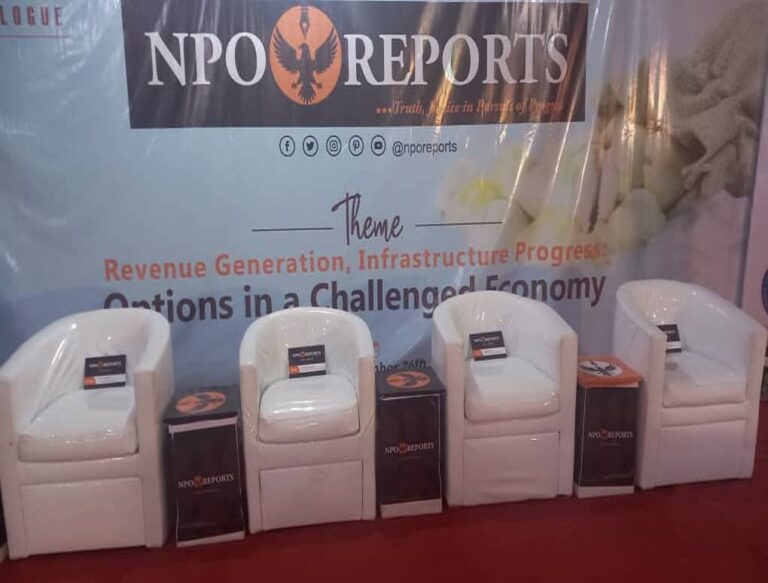
Adedeji stated this at the Nigerian Politics Online (NPO) Reports national dialogue on challenges facing revenue generation and infrastructure deficit in the country in Abuja on Tuesday, November 26.

The FIRS chief, who was the keynote speaker at the event, said in an era marked by economic uncertainty and fiscal constraints, countries face significant challenges in balancing revenue generation with infrastructural development.

Represented by the director of intergovernmental relations at the FIRS, Umar Idris Ahmed, he opined that effective strategies were vital to sustaining economic growth, enhancing public services, and improving living standards.

He added that to address the challenge of revenue generation and infrastructure, the country must combat corruption, strengthen institutions, empower regulatory bodies and law enforcement agencies, and ensure effective governance and smooth policy implementation.

NPO Reports dialogue: FIRS Boss identifies revenue generation, infrastructure development as panacea for economic challenges
The Director of intergovernmental relations at FIRS, Umar Idris Ahmed, represented the keynote speaker, Zach Adelabu Adedeji, the chairman of the FIRS, at the NPO Reports national dialogue in Abuja.

“Transparency initiatives, accountability mechanisms, and robust regulatory frameworks are essential to reduce corruption and build public trust.

“Empowering regulatory bodies and law enforcement ensures effective governance and smooth policy implementation,” the FIRS chairman stated.

He argued that revenue generation and infrastructure development were pivotal to overcoming the challenges of a constrained economy by adopting transparent, inclusive, and efficient strategies.

According to him, by adopting these strategies, the government can unlock economic potential, foster innovation, and improve public services.

He called for collaboration between public and private institutions, backed by sustainable practices and innovative technologies, to pave the way for resilient and equitable growth.

In his address, the chief executive officer (CEO) of S-OK Advisory and Media Limited, publishers of NPO Reports, Semiu Okanlawon, said the event was the second edition in the series.

He explained that in the previous edition, panelists discussed holding politicians to their campaign promises.

“You can’t just come out and tell people you want to do this just to get their votes only for you to get into offices and forget about those promises,” Okanlawon stated

He said the 2024 edition focused on the huge infrastructure deficit and how the government could raise revenue without overtaxing the citizens.

In his remarks, the chairman of the occasion, a former postmaster general of the federation, Ismail Adebayo Adewusi, said one of the major problems confronting the nation was government’s approach to revenue generation. He posited that the issue was not new.

He pleaded that as the country pushed for reforms, it must ensure that revenue generation does not come at the expense of social equity.

During a panel discussion, the executive director of Upshot Media, Mojeed Jamiu, said there should be a correlation between the increase in revenue generation, an increase in the country’s external reserves, and the livelihood of an average citizen.

Another panellist at the occasion, a senior research fellow at the Nigerian Institute of Social and Economic Research, (NISER), Hakeem Tijani, said tax rate hike often increased poverty.