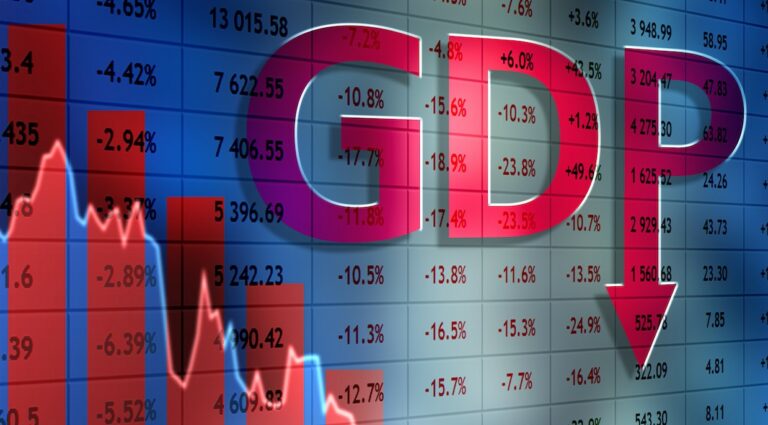
NIGERIA’s economy recorded a marginal appreciation of 3.46 per cent year-on-year growth in gross domestic product (GDP) during the third quarter of 2024.
The National Bureau of Statistics (NBS) revealed this in its latest GDP report on Monday.
The growth represents an improvement of 2.54 per cent recorded in the same period in 2023 and a slight rise from 3.19 per cent in the preceding quarter.
The figures show that oil remains the mainstay of the nation’s economy as the growth is largely driven by the sector, and continued growth expansion in non-oil activities, particularly services and agriculture.
“This growth rate is higher than the 2.54 per cent recorded in the third quarter of 2023 and also surpasses the second quarter of 2024, which saw a growth of 3.19 per cent.
“The performance of the GDP in the third quarter of 2024 was mainly driven by the services sector, which recorded a growth of 5.19 per cent and contributed 53.58 per cent to the aggregate GDP,” the NBS said.
The oil sector posted a real growth of 5.17 per cent in Q3 2024, rebounding significantly from a contraction of -0.85 per cent recorded in the same quarter of the previous year.
Average daily oil production increased to 1.47 million barrels per day (mbpd), up from 1.45 mbpd in Q3 2023 and 1.41 mbpd in Q2 2024.
The sector’s contribution to overall GDP stood at 5.57 per cent, reflecting its enduring significance to the Nigerian economy despite diversification efforts.
The non-oil sector continued to dominate, contributing 94.43 per cent of GDP in real terms and achieving a growth rate of 3.37 per cent.
This marked an improvement over the 2.75 per cent recorded in Q3 2023 and 2.80 per cent in second quarter (Q2) 2024.
Notably, key drivers of growth include financial institutions, telecommunications, agriculture, transportation, and construction, highlighting the importance of economic diversification.
The services sector emerged as the most significant contributor to aggregate GDP, growing by 5.19 per cent and accounting for 53.58 per cent of total GDP.
Telecommunications and information services played a pivotal role, reflecting increasing digitalisation and rising demand for connectivity.
Financial institutions also reported robust activity, further bolstering the sector’s performance.
The agriculture sector recorded modest growth of 1.14 per cent in real terms, slightly below the 1.30 per cent growth recorded in Q3 2023.
Crop production remained the dominant contributor, underscoring its critical role in food security and rural employment.
The industrial sector grew by 2.18 per cent, a significant recovery from the 0.46 per cent recorded in Q3 2023.
The mining and quarrying sub-sector, led by crude petroleum and natural gas, was the standout performer, supported by moderate gains in manufacturing and construction.
In nominal terms, Nigeria’s GDP for Q3 2024 stood at N71.13 trillion, reflecting a year-on-year increase of 17.26 per cent from N60.66 trillion in Q3 2023.
This growth underlines the combined impact of inflation and increased economic activity across various sectors.
Analysts hailed the growth but observed it’s still minimal to have the needed impact since the population is growing 2.96 per cent year-on-year according to worldlometers.
“We should be able to grow appreciably beyond six per cent to create more opportunities for our people. This is not good enough, given he huge impact of our population growth on the economy and the level of inflation now confronting us,” Basil Abia, co-founder Policy Analyst, Veriv Africa said.
The ICIR reported that the economy grew by 3.19 per cent and influenced by the services sector on a year-on-year basis in real terms in the second quarter (Q2) of 2024
It indicated that the growth rate was higher than the 2.51 per cent recorded in the second quarter of 2023.
It is also higher than the 2.98 per cent the NBS reported in the first quarter of 2024.
THE International Center for Journalists (ICFJ), in collaboration with the Elliott family and ONE, is accepting entries for the 2025 Michael Elliott Award for Excellence in African Storytelling.
The award aims to honour up-and-coming journalists in Africa who strive to strengthen people’s voices and illuminate the transformational change taking place on the continent.
The organisers say, “The contest is named after distinguished editor, former ONE CEO and longtime ICFJ board member Michael Elliott”.
Winners will receive a US$5,000 cash prize and a personalised award certificate. The winners will spend two weeks at The Economist headquarters in London.
English-speaking journalists working for print, broadcast and online news media based in Africa can enter this contest.
Applicants must have no more than 10 years of journalism experience.
Applicants must submit one published story that exemplifies Africa through thoughtful reporting and excellent storytelling.
The submission can be web, audio, video, visual or mixed media. The submitted story must have been published between December 1, 2023 and December 1, 2024.
The published story or broadcast must be submitted in English. Works in other languages must include English translations.
The deadline for the submission of application is January 12, 2025. Interested applicants can apply here.
A DISMISSED police inspector in Edo State, Edith Uduma, has threatened to end her life and those of her children, claiming her dismissal from the Nigeria Police Force was unjust and orchestrated to silence her after exposing an alleged rape incident involving a colleague.
Uduma, speaking in an interview with Punch Metro, denied accusations of extortion leveled against her and alleged that the Edo State Police Command dismissed her without granting her a fair hearing.
She alleged that she was sack from the Force because she had no one to help her. She accused the Edo State Police Command of twisting the facts of the case.
The ICIR reports that Uduma’s dismissal followed an incident involving Abraham Ozobor, a sergeant, and a female detainee, who was allegedly raped by the police officer.
In a viral video, the officer was seen hastily putting on his trousers while questioning why Uduma was filming, but the video of the incident would not come out until a few weeks later.
Both Uduma and Abraham were subsequently dismissed from the Force after investigations, with Uduma claiming that her dismissal was orchestrated to silence her after exposing an alleged rape incident involving a colleague.
Meanwhile, in an earlier statement, the Edo State Police Command had dismissed these claims, asserting that Uduma and her husband, Ibrahim Mohammed, an Inspector, were penalised following an orderly room trial.
The command stated that Uduma, as the charge room officer, failed to follow proper procedures when she allegedly caught Abraham Uzuobor raping a 17-year-old female suspect in custody.
Instead of reporting the incident to the dvisional police officer (DPO) or incident duty officer, the police alleged that Uduma conspired with her husband to demand N1 million from the accused sergeant in exchange for concealing the act.
The demand reportedly escalated when the sergeant only paid ₦45,000, leading Uduma to post a video of the incident online.
She explained that while the Force Headquarters in Abuja was still investigating the matter, the Edo command hastily dismissed her, raising questions about the motives behind the decision.
Uduma also expressed concerns about her detained husband and the implications of her dismissal for her children, whom she says she had not seen in months due to the ordeal.
“If Nigerians refuse to listen to me – because my husband has been in detention, and they have been looking for me to arrest me, to charge me to court – if Nigeria refuses to listen to me, I will just poison all my children and myself. I will die. Because I’m just stranded like this,” Udoma was quoted to have said.
Uduma further explained that she had been in hiding since the dismissal and had not seen her children for a long time due to the fallout.
She further alleged that the DPO at her station instructed her to ask the accused sergeant for N1 million to negotiate the case.
According to her, the request was a tactic to lure the suspect out of hiding, but the DPO and other officers allegedly turned the situation against her.
INVESTIGATIVE Reporters & Editors (IRE) is seeking entries to its David Donald Fellowship.
The fellowship aims to support computer-assisted reporting training for university educators to enable them to better equip their students to be effective watchdogs through the use of data.
The fellowship is named after the late David Donald, a former IRE training director.
The programme provides educators with assistance to attend a Data Journalism Bootcamp, or the NICAR Conference, March 6-9, 2025.
IN the build-up to the 2023 general election, the senator representing Abia North Senatorial District, Orji Kalu, promised residents of Ezeukwu in Bende local government that he would rehabilitate the road that connects the community to Obinagu in Ivo LGA, Ebonyi State, should they support him. The former Abia State governor was running for his second term as senator.
Constructed in the 80s, the road boosted economic opportunities for residents of Ezeukwu. Apart from making it easier to transport crops such as yam, cassava and palm kernel which are commonly grown in the area, from their farms straight to the market in Ivo and for transactions within the community, it was the shortest route to Ebonyi and Enugu States.
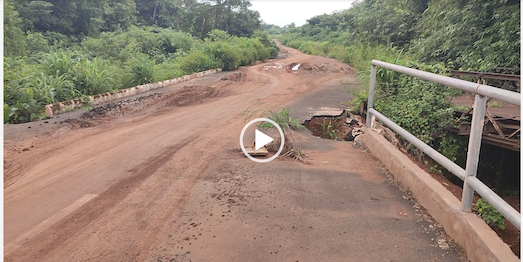
Old bridge constructed in the 80s is stronger that the bridge constructed just 5 months ago.
However, as years passed, the road began to dilapidate and make it difficult for community residents to evacuate crops from their lands. The steel used to construct the bridge connecting Ezeukwu to Alayi, another community in Bende also started to fail. Kalu promised to ensure that a new bridge was built.
“And so, when he came with the promise, we gave him every support during the election,” said a resident of the community where the road project passes, Vincent Okorafor. “We hoped to return to the good old days because we contribute massively to agriculture in Abia state,” he added.
A promise Kept?
In what looked like a fulfilment of his campaign promise to the people of Ezeukwu, Nuk International Resources Limited, a construction company arrived in the community in November 2023 to rehabilitate the Mile 2 Obinagu Road In Ivo LGA, Ebonyi State to Ezeukwu – Alayi Road Bende, Abia state.
However, out of the 7km hat the project was originally supposed to cover, residents say only 1.3 km of road was constructed, including the bridge. Findings on the ground also show that the 1.3km, which was only completed this January, was poorly done as some parts of the road were already damaged.
Good sections of the road and where the contractor stopped.
Whenever it rains these days, parts of the road that have not been constructed become impassable for residents who now find it difficult to convey their farm produce to the market to make sales.
Monica Ogwo is one of the farmers whose livelihoods are being negatively impacted by the poor state of the road, which is not motorable. Now, she says that buyers who used to drive into the community to buy her cassava and palm oil have stopped coming.
“We can only use motorcycles, which are usually too expensive, or carry our crops on heads or wheelbarrows,” she said, adding that the situation is affecting her income. “If it rains heavily, I cannot even go to my farm because everywhere will be submerged,” she lamented.
Monica said that before the construction of the road, which has now been abandoned, prominent members from the community usually would step in and grade the road, and after some time, when the rain comes, it gets bad again.
Another resident of the community, Ugochi Dickson, said that rather than let it waste away, she often eats everything she gets from the farm with her children in the absence of customers.
A motorcyclist who plies the road, Vincent Chukwuemeka, said that the situation has increased the cost of the fair to the community. According to him, distances that used to be covered with N500 now cost N1,500.
Vincent Chukwuemeka speaking to TheInvestigator.
Okorafor said “Kalu made us a promise during the election, now, we don’t know what the problem is and why the contractor has not come back to finish what he started,” he said.
Who exactly handled the project?
Amid concerns about the abandonment and quality of work done, there is the question of what company exactly handled the project. Findings by TheInvestigator show that the project may have been subcontracted.
Information on the signboard containing details of the project in the community showed that it was attracted by Senator Orji Uzor Kalu and handled by Nuk International resources limited, registered on July 1, 2021, with the Niger Delta Development Commission (NDDC) as the awarding agency.
Signboard shows details of the contract.
However, available information on the website of the Gov Spend platform, which tracks and analyses Federal Government spending and the Open Treasury Portal shows that African Plus Limited was awarded the project.
The information showed that N39 million (39,191,098) was paid to the company as 30 per cent mobilisation for the project on 30, November 2022- a year before the contractor came to the site. 0228041001 was the payment code and Nigerian Building and Road Research Institute – Lagos was the awarding agency handling the project.
A check on the public search portal of the Corporate Affairs Commission (CAC) database shows that African Plus Limited registered on October 4, 2002, and is inactive. One of the reasons a company status will be if they fail to file their annual returns with the commission. Nuk International Resources Limited was captured as active.
Nuk International Resources Limited has as one of its directors, Mascot Uzor Kalu, who findings show is a sibling to Kalu, who attracted the project. Under the Procurement Act 2007, it is unethical to award a contract to someone who may have special dealings or influence with the procuring entity. Part 1 (5a) of the Act describes it as conflict of interest which means “where a person has a direct or indirect interest in or relationship with a bidder that is or may be reasonably perceived to be unethical due to that person’s influence or ability to affect the procurement process.”
Mascot has also served as a former Abia State Chief of Staff in Abia state to former governor, Theodore Orji, governorship candidate of the Action Peoples Party (APP) in 2023 and Candidate of the All-Progressives Congress (APC) for the bye-election for Aba North & South Federal Constituency in Abia State in 2020. Other directors on the company include; Dr Mrs Molly U. Kalu, Johnson O. Uzor and Micheal O. Uzor.
Contractor failed to listen to the community
Okoroafor told TheInvestigator that the community had shown the contractor the exact location where to construct the bridge to ensure that it serves its purpose of controlling water flow from the stream when they arrived in Elu in 2023.
“We own the community and know what is necessary, but they asked us not to worry and that after their work, everything will be fine,” he recalled. “But barely five months after the bridge was constructed, it started developing cracks and falling away after it rained,” he lamented.
He said that water coming from the location they had suggested regularly overflows on top of the bridge. Now, whenever residents cross the bridge, their hearts beat for fear that it might fall. The centre of the bridge is already sinking. They say the old one is stronger now.
This raises the age-long question of the culture of contractors not always willing to collaborate with communities who are supposed to benefit from projects in the execution.
NDDC, Contractor, Senator Keep Mum
This reporter contacted all the parties involved in the Ezeukwu – Alayi Road project for their reactions to the abandonment, except Nuk International Resources Limited, whose contact details were not available online.
On Thursday, September 5, 2024, TheInvestigator sent a Freedom of Information (FOI) request to the Niger Delta Development Commission (NDDC) with specific requests for the details of the contract, including the value, date of award, level of completion and details of the contractor. However, at the time of this report, no response was received.
This reporter also sent an email to African Plus Limited on Friday, September 6 2024 and a reminder on September 11, 2024, with questions about whether it was aware of the project for which payment was made to the company. This was after the contact available on its website failed to connect.
This reporter also reached out to Kalu, via email on Thursday, September 5, 2024, and a reminder on Wednesday, September 11, 2024, after several calls to his line failed to connect. However, there was no response received at the time of this publication.
Expert comments
Vahyala Kwaga, a senior research and policy analyst at Budgit, a Nigerian civil organisation said that it is worrying that fiscal transparency as regards the utilisation of funds and the implementation of public works is not done in a systematic way in Nigeria.
Reacting to the specific impact of the abandoned project on agriculture, he said “Whether you look at agriculture, fast-moving consumer goods or services; there is a net loss in naira terms occasioned by not having that connectivity that you can measure for every day.”
Speaking further, he said, “If you add to that what the Senator would have done in agriculture, you can again quantify it. It’s because we don’t often measure these losses in naira and kobo, that’s why politicians get away with being irresponsible and the executive believes it owes no duty to them.”
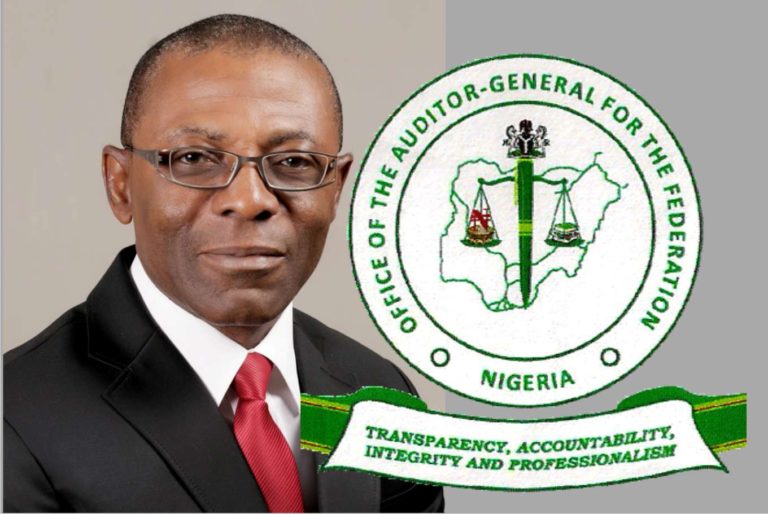
OFFICE of Nigeria’s Auditor-General of the Federation (OAGF) has revealed violation of procurement laws and uncovered contract fraud amounting to N197.72 billion in Rural Electrification Agency (REA) and other ministries, departments and agencies (MDAs) of the Federal Government.
It also uncovered procurement breaches in the Nigerian Bulk Electricity Trading Plc (NBET) and the Nigerian Security Printing and Minting Company – a subsidiary of the Central Bank of Nigeria (CBN)
The details of the findings were disclosed in the Auditor-General’s Annual Report on Non-Compliance and Internal Control Weaknesses, covering activities from
2020 and 2021.
These violations include irregular payment for contracts and payment for jobs partially executed or not executed at all, which contravene the country’s financial regulations and procurement laws.
Accordingly, the Office discovered N7.386 billion as fraud in contract awards by 32 MDAs.
REA topped the chart with N2.12 billion while NSPM recorded the least with N11.7 million.
The ICIR reports that the REA director of human resources management, Suleiman Garba Bulkwang, was recently arraigned by the Economic and Financial Crimes Commission before the Federal High Court in Abuja over a five-count charge of alleged fraud and money laundering amounting to N223 million (N223,412,909)
The EFCC accused Bulkwang of diverting public funds and engaging in money laundering through consultants and shell companies in violation of procurement laws.
“The sum of N7,386,551,051.09 (seven billion, three hundred and eighty-six million, five hundred and fifty-one thousand, fifty-one naira, nine kobos) was the number of irregularities in the award of contracts by 32 ministries, departments and agencies.
“The Rural Electrification Agency, Abuja, has the highest amount of N2,117,143,168.09 (two billion, one hundred and seventeen million, one hundred and three thousand, one hundred and sixty-eight naira, nine kobo), while the Nigerian Security Printing and Minting Company Plc (NSPM) has the least amount of N11,720,000 (Eleven million, seven hundred and twenty thousand,” the Auditor-General’s report indicated.
The ICIR earlier in the year reported that the 2020 Audit report published by the Auditor General of the Federation had similarly accused 101 federal government ministries and institutions of unaccounted funds totalling N149.36 billion.
The audit report complies with the provisions of the 1999 Constitution of the Federal Republic of Nigeria.
Section 85(5) of the 1999 Constitution of the Federal Republic of Nigeria, (as amended), states that “the Auditor-General shall, within ninety days of receipt of the accountant general’s financial statement, submit his reports under this section to each House of the National Assembly and each House shall cause the reports to be considered by a committee of the House of the National Assembly responsible for public accounts.”
Further revelation in the latest report showed that N167.59 billion was paid for jobs or contracts that were either partially executed or not executed at all. This contravenes Paragraph 708 of the Financial Regulations, which prohibits payments for services or goods not yet delivered.
In this aspect, the Nigerian Bulk Electricity Trading Plc, an agency in the country’s power sector, accounted for N100 billion of these irregular payments, making it the highest in this category. Meanwhile, the National Centre for Women Development recorded the lowest irregularity at N2.17 million.
The report read, “The sum of N167,592,177,559.40 (one hundred and sixty-seven billion, five hundred and ninety-two million, one hundred and seventy-seven thousand, five hundred and fifty-nine naira, forty kobos) was the number of payments for jobs/contracts not executed by 31 ministries, departments and agencies.
“The Nigerian Bulk Electricity Trading Plc., Abuja, has the highest amount of N100,000,000,000.00 (one hundred billion naira), while the National Centre for Women Development has the least amount of N2,171,766.44 (two million, one hundred and seventy-one thousand, seven hundred and sixty-six naira, forty-four kobo).”
Similarly, the report also uncovered violations of due process in contract awards amounting to N20.33 billion across 24 MDAs.
The violations are against Section 16(21) of the Public Procurement Act (PPA) 2007 which requires strict adherence to procurement plans and mandatory approvals before contract awards. Meanwhile, the audit report found that these requirements were often ignored or violated. The report showed that NSPM, a subsidiary of CBN was responsible for the highest amount of due process violations, totalling N14.14 billion, while the Corporate Affairs Commission had the least, at N8.98 million.
“The sum of N20,334,104,016.27 (twenty billion, three hundred and thirty-four million, one hundred and four thousand, sixteen nairas, twenty-seven kobo) was the number of contracts awarded in violation of due process by 24 ministries, departments and agencies.
“The Nigerian Security Printing and Minting Company Plc Abuja has the highest amount of N14,136,472,333.16 (fourteen billion, one hundred and thirty-six million, four hundred and seventy-two thousand, three hundred and thirty-three naira, sixteen kobos) while the Corporate Affairs Commission has the least amount of N8,980,603.72 (eight million, nine hundred and eighty thousand, six hundred and three naira, seventy-two kobo),” it added.
There have been violations and concerns over public sector accountability, with The ICIR always highlighting financial infractions by MDAs in its various reports.
THE Dangote Petroleum Refinery on Sunday, November 24, announced a slight reduction in its price of the Premium Motor Spirit (PMS), also known as petrol, to ₦970 per litre for oil marketers.
The company’s chief branding and communications officer, Anthony Chiejina, disclosed this in a statement.
He said the decision is the refinery’s way of appreciating Nigerians “for their unwavering support in making the refinery a dream come true.”
According to the statement, the move is a cut from the refinery’s ₦990 ex-depot price announced earlier this month.
“In addition, this is to thank the government for their support as this will complement the measures put in place to encourage domestic enterprise for our collective well-being,” the statement partly reads.
“While the refinery would not compromise on the quality of its petroleum products, we assure you of best quality products that are environmentally friendly and sustainable.
“We are determined to keep ramping up production to meet and surpass our domestic fuel consumption; thus, dispelling any fear of a shortfall in supply.”
The slash would help marketers save about ₦20 on each litre of petrol bought from the Lekki-based plant.
Informed energy analysts who spoke to The ICIR said Nigerians should expect further price moderation as competition is sustained in the sector with the federal government’s total removal of fuel subsidy.
“We expect that prices continue to moderate in the midst of expected competition in the deregulated petroleum sector. The market is now opened for further price moderation,” an oil sector governance expert, Chiedu Ukadike, said.
“This is what happens when the market is stabilising. There’s also the possibility of the price going down further, “he added.
The ICIR reports that the PMS popularly know as petrol currently sells above N1,050 in several filling stations across the country .
The ICIR also reported that the chairman of Dangote Group, Aliko Dangote, had earlier urged petroleum marketers, including the Nigerian National Petroleum Company Limited (NNPCL) to source petrol directly from his refinery to meet local demands.
Dangote who decried poor patronage from industry stakeholders within Nigeria, confirmed the refinery’s readiness to supply fuel after closed-door talks with President Bola Tinubu at the Aso Rock Villa, Abuja.
He stated that the refinery could produce over 30 million litres of fuel daily at full capacity and was holding 500 million litres in reserve, enough to supply the country for over 12 days without imports.
NIGERIA’s crude oil production experienced a slight decline in October 2024, dropping from 1.54 million barrels per day (bpd) to 1.53 million bpd.
This is according to the latest monthly oil production status report released by the Nigerian Upstream Petroleum Regulatory Commission (NUPRC).
This data, The ICIR reports, contradicts the earlier figure of 1.808 million bpd revealed by the Nigerian National Petroleum Company Limited (NNPCL) and the federal ministry of petroleum resources.
Although the NNPC also said that oil and condensate production in August was 1.7 million bpd, the report by the sector regulator indicated that the country only produced 1.57 million bpd for that month.
This showed a whooping difference of 130,000bpd during the afore metioned month.
The data also notes a marginal increase in crude oil production to 1.33 million bpd in October from 1.32 million bpd in September, aligning with OPEC’s primary source data.
Moreover, the NUPRC report highlights an increase in blended condensates to 44,134 bpd, while unblended condensates declined to 160,672 bpd during the same period.
In total, Nigeria’s crude oil production, including condensates, stood at 1,538,129 bpd in October 2024.
Notably, condensates in crude oil refers to a light hydrocarbon liquid that is typically produced alongside natural gas. When crude oil and natural gas are extracted from underground reservoirs, the hydrocarbons may exist in a gaseous state due to the high temperature and pressure within the reservoir.
However, as the temperature and pressure decrease during extraction and as they reach the surface, some of these hydrocarbons condense into a liquid form, which is known as condensate.
In certain situations, condensate can be blended with heavier crude oil to enhance its flow properties. This process helps reduce the viscosity of the oil, making it easier to transport through pipelines and other infrastructure.
Additionally, condensates are valuable in the energy and petrochemical industries due to their high content of light hydrocarbons, such as ethane, propane, and butane.
These components are essential feedstocks for producing a range of products, including plastics, chemicals, and fuels, making condensate an important resource in global energy markets.
The ICIR reports that the federal government’s budget is largely hinged on revenue accruals from the oil sector with the national budget largely benchmarked on global price.
Earlier in June 2024,the Organisation of the Petroleum Exporting Countries and its allies (OPEC+) set Nigeria’s crude oil production quota at 1.5 million barrels per day (mbpd) until December 2025.
This decision follows the resolutions from the last ministerial meeting on November 30, 2023, where OPEC increased Nigeria’s production level to 1.5 mbpd for 2024.
OPEC confirmed that Nigeria’s production level of 1.5 mbpd will be maintained from 1 January 2025 to 31 December 2025.
The ICIR reports that despite the benchmark, Nigeria has struggled to meet the designated quota as a result of attack on oil facilities in the oil rich Niger-Delta.
The Nigeria Politics Online (NPO) Reports, is set to hold a national dialogue on challenges facing revenue generation and infrastructure deficit in the country.
This was disclosed in a statement by the chief executive officer (CEO), of S-OK Advisory and Media Limited, publishers of NPO Reports, Semiu Okanlawon.
Okanlawon said the event with the theme: “Revenue generation, infrastructure progress: options in a challenged economy”, will be held on Tuesday, November 26, 2024, at the Nigerian National Merit Award House (Merit House) in Maitama, Abuja.
According to Okanlawon, experts from key economic sectors, income-generating organisations, and policy analysts had been gathered to analyse problems with revenue production and the nation’s infrastructure deficit.
He added that to address the severe challenges of the infrastructure deficit in the vital areas of the economy—such as roads, health, education, and security—speakers are asked to analyse issues related to income generation.
Prominent among those expected to speak at the event is the chairman of the Federal Inland Revenue Service (FIRS), Zach Adelabu Adedeji, and former Postmaster General of the Federation, Ismail Adebayo, Adewusi, who will chair the event.
“Adewusi, who is chairman of Global West, was also commissioner for finance and later budget and economic planning in Lagos under the administration of then Governor Bola Ahmed Tinubu.
“Also expected to speak at the event is a senior research fellow of political science in the political and governance policy department at the Nigerian Institute of Social and Economic Research (NISER), Ibadan, Hakeem Olatunji Tijani; the special adviser to the president on economic matters, Tope Fasua; chief communication officer, Nigerian National Petroleum Company Limited,(NNPL), Femi Soneye; and Idayat Hassan of the Centre for Strategic and International Studies (CISI),” Okanlawon stated.
He said that the event demonstrates the news outlet’s dedication to fostering more in-depth discussions on topics that touch on the well-being of Nigerians as a result of government activities.
“However, the administrations are also faced with daunting challenges in getting the needed revenues. Insecurity has made oil revenues unpredictable, with the government battling to shore up crude oil production.
“The tax reform efforts of the government are being met with stiff resistance, causing fears that the leakages of many decades and other factors causing revenue shortfalls may persist. What then are the w you’re
Speakers at the programme’s inaugural 2023 edition discussed campaign pledges as matters of accountability. They had urged those involved in politics to hold elected officials responsible for the pledges they make during campaigning.
NPO Reports, one of the first online publications in Nigeria, started as Nigeria Politics Online in April 2010.
THE finance minister’s claim of saving $20 billion from subsidy has been called to question as the federal government has resorted to recent borrowing N1.77trillion ($2.2 billion)for 2024 budget.
The minister of dinance and the coordinating minister of the economy, Wale Edun, has said that Tinubu’s reforms in removing fuel subsidy, floating the Naira has saved Nigeria $20 billion.
This claim is in spite of economic difficulties currently ravaging the larger population of the country as revealed by the National Bureau of Statistics that households are now struggling to eat food in Nigeria.
Aside the current economic hardship faced by most Nigerians, Nigeria is currently spending $3.5 billion to service other outstanding debts.
Edun, disclosed that the full implementation of the key reforms of market-based pricing of premium motor spirit (PMS) and market-based pricing of exchange rate by the federal government saved about $20 billion or five percent of the country’s gross domestic product (GDP) as at October 2,2024.
The minister pointed out that after 18 months of reforms implemented by President Bola Tinubu, the country has changed with gains of the reforms now glaring after gestation period paid, discomfort, difficulty, and increased cost of living.
Edun, said the result of that action was of immediate benefit to the federal, states and local governments coffers
“An amount of the five per cent of the GDP is what those two subsidies were costing when there was a subsidy on PMS; when there was a petroleum product generally for a long time and when there was a subsidy of foreign exchange. Between them, they were costing fiver per cent of the GDP.
“If you say GDP was an average, let’s say $400 billion, we all know what five per cent of that is -$20 billion of funds- that could be going into infrastructure, health, social services.
“And that is what the flow is now coming back into the government’s coffers to be able to be deployed in those area.”
Some economic watchers said the minister’s claim is not adding up since the Tinubu government is still embarking on borrowing spree from both domestic bonds, treasury bills and international sources such as eurobonds and from multi-lateral agencies such as the World Bank and the African Development Bank (AFDB).
“So where is the $20 billion savings? Why has it not been deployed to grow the economy,” a development economist,” Kalu Aja, asked?
Another economist queried the Tinubu administration’s borrowing spree despite claims of such huge savings.
“You saved $20 billion but go cap in hand to borrow $2.2billion. Something is definitely not adding up,”@SBRM wrote on his official X account.
Another concerned Nigerian, Folake Vaughn, queried the impact of such savings, in the light of the current state of the economy..
“Exactly where is the $20 billion savings?These people keep telling lies,and lies and lies and lies,” she wrote on his official @FolakeVaughn X account.
The ICIR reports that a larger chunk of the 2024 budget is being funded by borrowing despite the federal government’s claim of $20 billion subsidy savings.