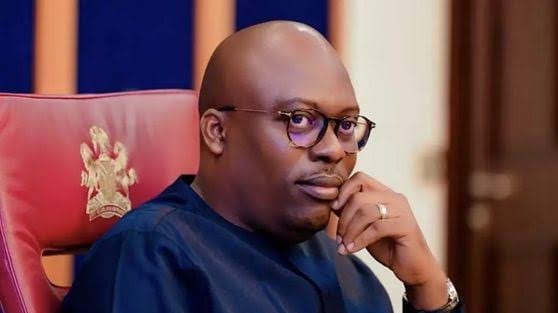
THE Akwa Ibom State government has commenced an investigation into the deplorable condition of boarding facilities in public schools across the state.
This follows the suspension of the principal of Presbyterian Senior Science College, Ididep, Ibiono Ibom local government area, after a viral video exposed students being served substandard meals.
This was disclosed in a statement by the state commissioner for education, Idongesit Etiebet, in Uyo on Saturday, November 24.
The commissioner said the investigation was spurred by the alarming footage showing the poor quality of food served to students at the school.
The statement read in part: “Following the very disturbing video where students were fed unpalatable and non-nutritious meals at Presbyterian Senior Science College, Ididep, I paid an unscheduled visit to the school.
“I have directed a comprehensive investigation into the state of boarding facilities in the school and the other 25 boarding secondary schools across the state.
“This review, which will focus on hostels, dining halls, recreation areas, menus, kitchens, and sanitary facilities, will be jointly overseen by the permanent secretaries of the ministry of education and the state secondary education board.
She said she has directed the immediate suspension of the principal of the school, Nse Sunday Umoh, pending the outcome of the investigation.
Etiebet further clarified that while the state’s free education policy covers tuition fees, it does not extend to boarding fees. However, she emphasised that the welfare and dignity of students in public schools remain a priority for Governor Umo Eno’s administration.
She urged parents, who are already relieved of the financial burden of tuition fees, to take on essential responsibilities to support their children in secondary schools.
“The ministry is committed to ensuring that all public school facilities meet irreducible minimum standards that uphold the well-being of both learners and staff.
“We urge the public to remain patient while this investigation lasts. Governor Umo Eno remains unwavering in his commitment to education, as outlined in the ARISE agenda,” the statement said.
THE governor of Ebonyi State, Francis Nwifuru, has ordered the arrest of six employees of ministry of health for allegedly stealing government property.
The suspects were reportedly apprehended on Saturday night at the ministry’s premises while attempting to transport the items to undisclosed points for sale.
This was contained in a statement issued on Sunday, November 24, by his chief press secretary, Monday Uzor.
The statement reads: “Ebonyi State Governor, Francis Ogbonna Nwifuru, has ordered the arrest and prosecution of one Ndukwe Ayansi and five others for allegedly diverting materials meant for the state’s ministry of health.”
According to the statement, the governor, while on his way to inspect a project, observed a Toyota Dyna truck being loaded with registers, books, and other materials from the ministry’s warehouse.
Further investigation revealed that the items, including patients’ data registers, cards, and other essential documents, were being transported without authorisation.
“It was also discovered that all the documents had been sold without government approval,” the statement added.
Nwifuru condemned the act, describing it as sabotage against the government’s efforts to improve the health sector.
“You are selling government documents without approval on a Saturday afternoon. Our hospitals in rural areas are in need of registers, data entry forms, and hospital cards. “Sadly, the ones provided by the government are being sold by you. This is pure sabotage to our efforts in the health sector, and it will not be tolerated,” he said.
The suspects have since been handed over to the police for further investigation and prosecution.
THE Edo State Governor Monday Okpebholo has unveiled a 14-man panel to probe the administration of the immediate past governor, Godwin Obaseki.
The panel named “State Assets Verification Committee”will be inauguratedon Tuesday, November 26 2024, at the Government House in Benin, the state capital.
This was disclosed in a statement released on Sunday, November 24, by the chief press secretary (CPS) to the governor, Fred Itua.
According to the statement, members of the committee include, Ernest Afolabi Umakhihe, chairman; Anslem Ojezua, deputy chairman; Kassim Afegbua, member; Patrick Ikhariale, member; Taiwo Akerele, member; Patrick Idiake, member; and Rasaq Bello-Osagie, member.
Others are; Fredrick Unopah, member; Frank Osumuede Edebor, secretary; Abdallah Eugenia, member; Patrick Obahiagbon, member; Kenny Okojie, member; Lyndsey Tes-Sorae, member; and Abass Braimoh, member.
The statement added that in furtherance of the governor’s initiative to set the state on the path of development and accountable leadership, the need to set up the probe panel has become very imperative.
“Despite repeated calls for a more holistic database of the assets and liabilities of the previous administration, the Godwin Obaseki-led government came up with very scanty and limited assets and liabilities of the state.
“In line with the governor’s campaign promise to ensure probity, accountability, and transparency in government and to deepen the governance process, a committee made up of respected sons and daughters from Edo State has to be constituted,” the government stated.
There have been rumours that the Edo State government may begin an investigation into the former administration.
On Friday, November 23, a committee set up to recover government assets said over 200 vehicles belonging to the state were missing.
The chairman of the committee, Kelly Okungbowa, informed journalists three of these vehicles had been found.
Okungbowa assured that the committee was committed to finding the missing government cars.
He claimed that in one of the three vehicles found, bags of garri and rice intended as palliatives from the federal government for the state’s citizens were found.
Okpebholo, a serving senator, was sworn in as the governor of Edo State on Tuesday, November 12, following his victory in the governorship election held in September.
The event comes two months after the All Progressives Congress (APC) clinched victory, securing the governorship position at the Dennis Osadebay House.
The Independent National Electoral Commission (INEC) declared Okpebholo, the candidate of the APC, the winner of the governorship election conducted in Edo State on Saturday, September 21.
Okpebholo polled 291,667 votes to defeat his closest rival and the Peoples’ Democratic Party (PDP) candidate, Asue Ighodalo, who won 247,274 votes.
The Labour Party (LP) candidate, Olumide Akpata, garnered 22,763 in the election to occupy a distant third position.
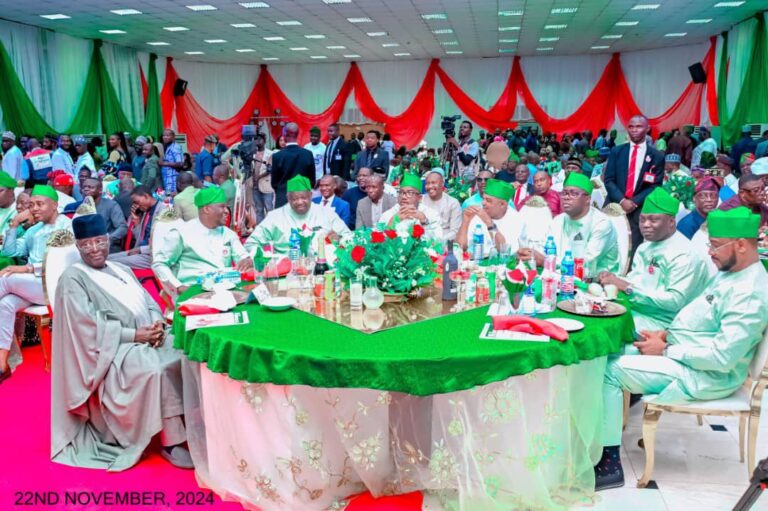
GOVERNORS under the platform of the Peoples Democratic Party (PDP), have urged President Bola Tinubu to reassess his administration’s economic policies to alleviate the current hardships Nigerians are facing.
The governors made this appeal in a communiqué released at the end of their two-day meeting in Jos, Plateau State, on Saturday, November 24.
The communique signed by the governor of Bauchi State and chairman of the PDP Governors’ Forum, Bala Mohammed stated: “The forum empathises with Nigerians who are groaning under the oppressive economic hardship foisted on the nation by the policies and decisions of the APC-led federal government. The forum calls on the president to urgently review both macroeconomic and fiscal policies to address the welfare and well-being of Nigerians.”
The communiqué while noting the governors’ commitment to pursuing programmes that will mitigate hardship and foster progress said: “The forum pledges that all PDP governors will continue to aggressively pursue policies and programs that will reduce hardship and ensure progress and development.”
The meeting, held at the Plateau State Government House, included key PDP organs such as the National Working Committee (NWC), the Board of Trustees (BOT), the National Assembly Forum, the Former ministers’ forum, and other party leaders.
On party unity, the communiqué stated: “The forum notes the concerns of Nigerians, PDP founding fathers, elders, and members of our great party over seeming divisions within the ranks. We remain resolute in our determination to ensure unity and cohesion in this great Party that Nigerians trust as the best platform for democratic governance.”
The Forum urged the NWC to convene a National Executive Committee (NEC) meeting by February 2025 to engage critical stakeholders and address leadership issues, litigations, and other challenges confronting the party.
Condemning what it called recent “electoral irregularities”, the governors expressed dissatisfaction with the conduct of the Edo and Ondo governorship elections.
“The forum notes with concern the rape of democracy in the Edo elections, where INEC manipulated results in favour of the APC candidate despite the PDP candidate, Asue Ighodalo, winning the majority of lawful votes. Similarly, in Ondo, the APC openly bought votes and manipulated results. The forum calls on the judiciary to save Nigerian democracy and urges the national assembly to strengthen electoral laws against such institutional sabotage,” the communiqué stated.
Governors present at the meeting included, senator Bala Mohammed (Bauchi), Caleb Mutfwang (Plateau), Agbu Kefas (Taraba), Ahmadu Umaru Fintiri (Adamawa), Seyi Makinde (Oyo), and Dauda Lawal (Zamfara). The governors of Delta and Enugu states were represented by their deputies, Monday Onyeme and Ifeanyi Ossai, respectively.
The ICIR reported that insecurity, inflation and a hike in the cost of living among others pushed many Nigerians to stage a nationwide protest, which began on Thursday, August 1.
Tinubu had stopped fuel subsidy and devalued the local currency – the naira – thus causing a spiral hike in food and commodity prices.
In a nationwide broadcast to Nigerians in the morning of Sunday, August 4, Tinubu said even though the decision to remove the fuel subsidy was painful, it was necessary because it had constituted a noose around the nation’s economic jugular and impeded economic development and progress.
THE Federal Government has vowed to tackle insecurity in the South-East amid rising insecurity in the region.
The minister of defence, Mohammed Badaru, said this in a statement issued on Saturday, November 23, signed by the ministry’s spokesperson, Henshaw Ogbuike.
“We are determined to end insecurity in Nigeria,” Badaru said.
He said there is a renewed determination to intensify efforts against all forms of insecurity under President Tinubu’s administration.
The minister pointed out that peace and the growth of business depend on a safe environment.
He stated that the defence ministry is still dedicated to creating a safe and tranquil atmosphere in the southeast region that supports enterprises and community growth.
According to Badaru, Tinubu’s pledge to eradicate all types of insecurity is limited to the entire country, not just a certain area.
The minister said that great strides had been achieved in that direction throughout the past 12 months.
He urged the military personnel to intensify efforts to combat the region’s insecurity.
The minister who was in Imo as part of his ongoing operational tour of the area thanked Governor Hope Uzodimma for his assistance with the military operations.
A report published by The ICIR in 2023 noted that micro businesses in the southeast states lost an average of N4.618 trillion ($10.495 billion) in one year to the sit-at-home order.
The ICIRreports that Simon Ekpa, a factional leader of the Biafra group known as IPOB Autopilots, has been enforcing the sit-at-home order in the southeastern part of the country, with what started as a peaceful exercise for the release of Nnamdi Kanu, leader of the proscribed Indigenous People of Biafra (IPOB), eventually becoming a bloody affair.
Residents of the region and visitors who dared to flout the order by stepping out for business, work, or personal reasons on Mondays risk losing their lives and property.
Several lives have been lost, and property destroyed at the hands of militias widely described as “unknown gunmen” who insist on enforcing the sit-at-home.
However, Finnish authorities have arrested and detained Ekpa, alongside four others over suspected involvement in terrorism-related activities in Nigeria.
Yle reported that the Finnish National Bureau of Investigation (NBI) accused Ekpa of leveraging his leadership in a Nigerian separatist group to promote violent activities in southeastern Nigeria.
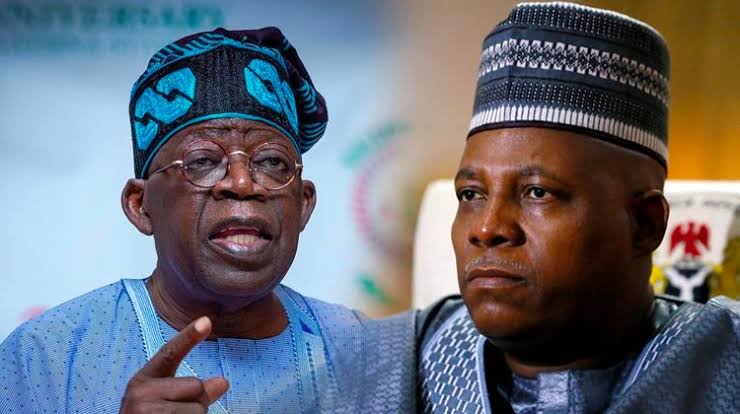
DESPITE repeatedly urgingNigerians to endure economic hardship, President Bola Tinubu and Vice President, Kashim Shettima, have pocketed N1.7 billion respectively as honorariums outside their regular salaries so far in 2024, The ICIR findings reveal.
This is according to data from GovSpend, a portal tracking the government’s expenditures.
The N1.7 billion could cover a month’s salary of 24,511 civil servants, based on Nigeria’s national minimum wage of N70,000.
In addition, the president and his vice, including the first lady, has spent N6.8 billion on foreign trips and related expenses this year. The data which was accessed by The ICIR on October 11, 2024, captured money spent by the government till September 15, 2024.
These expenditures were recorded amid nationwide frustration due to economic hardship triggered by President Tinubu’s economic policies, including the removal of fuel subsidies and unification of exchange rates.
In August, angry Nigerians staged a 10-day nationwide protest against widespread hunger in the country. The initially peaceful protests, dubbed #EndBadGovernanceinNigeria, eventually turned violent, resulting in casualties and property damage.
The protesters demanded the reinstatement of the petrol subsidy removed by President Bola Ahmed Tinubu during his inaugural speech in May 2023, a reduction in fuel prices to below N300 per litre, lower electricity tariffs, and the reversal of import duties to their previous rates, among other issues.
While Tinubu appealed to the citizens to bear the hardships caused by these reforms, which he says were necessary for the country’s economic recovery, this sacrifice did not reach the government officials as they continued to spend extravagantly.
An honorarium for a president refers to a payment or token of appreciation given in recognition of their services, often for speaking engagements or attending events.
For instance, the president pocketed N200 million and another N50 million as an honorarium on February 24, 2024. He also received N300 million on March 15, while vice-president Kashim Shettima received N100 million for the same purpose on February 7.
In March, N600 million was paid to the State House headquarters transit account as a presidential honorarium for the period. A sum of N595 million was paid in May 2024 while the sum of N71 million and N100 million were paid for July and August 2024 respectively.
The presidency’s expenditure on foreign trips also raised concerns. On February 21, 2024, N300 million was spent on presidential trips in January. More payments followed, including N250 million on February 24 and over N42 million on March 15.
Furthermore, between February 24 and March 15, 2024, the government spent over N2.9 billion on foreign exchange to fund trips by President Tinubu, Vice President Shettima, and first lady, Remi Tinubu, including visits to Dubai, Ethiopia, Switzerland, Liberia, France, and Côte d’Ivoire.
On February 24, N750 million was used to buy $1.27 million for Tinubu’s trip to Dubai, and N1.04 billion was allocated for his visit to Ethiopia. The vice president and first lady also incurred significant expenses, including N426.88 million for Shettima’s visit to Switzerland and N149.79 million for the first lady’s trip to France.
When he clocked one year in office, The ICIRreported that President Bola Tinubu made at least 17 trips out of the country for official and unofficial purposes since he was sworn in as president.
His international engagements began in June 2023, with a visit to France for the New Global Financial Pact Summit, where he advocated for economic justice and climate action for Africa. Shortly thereafter, he visited London privately before returning for the Eid-el-Kabir celebration. Tinubu’s role as chairperson of the Economic Community of Westa Africa (ECOWAS) led him to Guinea-Bissau in July, where he presided over key discussions on regional security and political stability.
In the latter part of 2023, Tinubu attended notable global events, such as the G-20 Summit in India, where he strengthened Nigeria’s economic ties with Asia. His visit to the UAE was aimed at resolving a visa ban on Nigerian travellers, although reports regarding the resolution remained mixed.
Also, the president participated in the United Nations General Assembly (UNGA) in New York, where he stressed the need for global attention on African development and the containment of military coups across the continent.
Moving into 2024, Tinubu resumed his travels with a private visit to France, followed by a trip to Qatar to strengthen bilateral relations. In April, he visited the Netherlands and Saudi Arabia to explore economic collaborations and participate in the World Economic Forum.
On August 29, Tinubu embarked on a trip to China, and Nigerians were told he would make a brief stopover in Dubai. He suddenly reappeared in London.
He had landed in Beijing in the early hours of September 1. He had a busy week meeting and signing agreements with Chinese political and business leaders on the sidelines of the Forum on China-Africa Cooperation.
The President concluded his official engagements in China by meeting with Nigerians living in the country on September 5. He left China the same day.
He departed Abuja on August 2 for the United Kingdom to begin a two-week vacation, part of his annual leave.
Tinubu had never handed over power to his deputy, Kashim Shettima, while away from the country, unlike Buhari who transmitted power to vice President Yemi Osinbajo on several occasions before he left office.
Commenting on The ICIR’s findings, Senior Program Officer, BudgIT Foundation, Ama Ekeheoveh criticised presidency’s expenditures on honorariums and travels, describing it as a major contrast to its call for sacrifices from struggling Nigerians.
She noted that even though engagements require funding, the amount spent on these trips, in the face of the widespread economic hardship, does not align with the government’s call for Nigerians to make sacrifices.
“It’s difficult to reconcile these expenditures with the prudence the presidency has been advocating for, while urging citizens to tighten their belts. This lack of accountability creates the perception that these sacrifices are one-sided; to the disadvantage of ordinary Nigerians,” she said.
Ekeheoveh noted that the expenditures are neither on capital projects that will benefit the general public. Rather they are expenditures with outcomes and impacts that are nearly impossible to measure.
“For citizens struggling with rising costs of goods and services, unemployment and general hardship, these expenditures are perceived as a total lack of care by the people. At a time like this, where the government needs trust and cooperation to implement tough economic reforms, they risk fueling public frustration and resentment instead. An example of this is the recent #EndBadGovernance protests that was a clear demonstration of the dissatisfaction of Nigerians with the way the economy is being run. The reality of Nigerians and the government spending really does not align.”
She further criticised the government for missing the opportunity to redirect the money toward critical sectors like food security, unemployment programs, or basic infrastructure, which could have provided long-term benefits to Nigerians.
Ekeheoveh also condemned spending by the ‘office of the first lady,’ describing it as unconstitutional, noting its expenditure of nearly three-quarters of a billion naira on foreign trips within a year.
“This is not a time where our leaders should claim solidarity with citizens with mere words, actions need to match those words. The national assembly should step up to the plate to provide the necessary oversight in terms of curtailing government spending. Prudent spending should be from the top, and detailed explanations on the impact of this spending should be provided. Far too often, Nigerians are told of government spending but the government does not prioritise audit of its spending, which essentially means Nigerians never know if value for money was achieved,” she said.
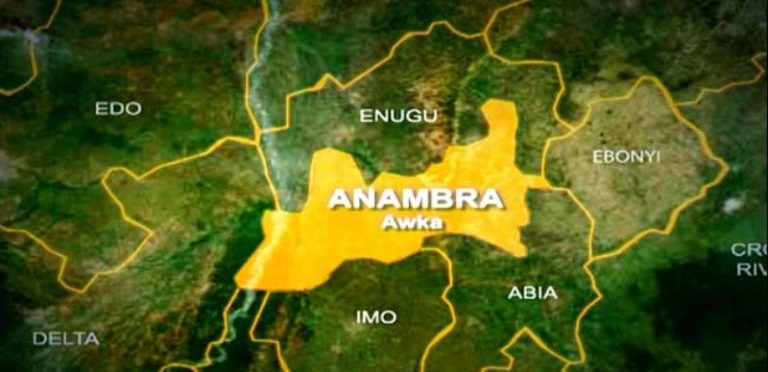
AN ANGRY mob has reportedly set ablaze two revenue collectors in Anambra State.
The victims were blamed for causing a truck driver to lose control of his vehicle, resulting in the death of a bystander along Venn Road, near Egerton bus stop in Onitsha.
According to Punch, the incident, which occurred on Friday, November 22, led to confusion and a traffic gridlock in the area.
Eyewitnesses reported that the truck driver lost control as the revenue collectors were reportedly dragging the vehicle’s steering wheel with him.
According to an eyewitness, there was chaos in Onitsha as the angry mob set ablaze two revenue touts, while four others were lucky as they managed to escape.
The revenue collectors, numbering about six, were reportedly chasing the tipper driver over a certain amount they asked him to pay.
Videos of the incident showing the charred remains of the revenue collectors have been circulating on social media, supporting eyewitness accounts.
Ebuka Unekwe, the chairman of the association, confirmed the development, lamenting that the revenue collectors have been a constant source of trouble for tipper drivers in the past two years.
The Anambra State police command’s spokesman, SP Tochukwu Ikenga, confirmed the incident, stating that the police had responded swiftly to bring the situation under control.
He was quoted as saying, “Anambra police responded swiftly on the receipt of the fatal accident that happened within that area.
According to him, the command was working with the relevant authorities to ascertain what happened with a view to finding an amicable solution.
FOR many travellers along the Accra-Aflao route, a critical artery between Ghana and Togo, what should be a normal journey often turns into a nightmare, especially for those travelling from Nigeria. Ghanaian security operatives stationed along this highway have turned it into a zone of unrestrained authority. It is a route where helpless passengers—especially Nigerians—are subjected to humiliation, harassment, and extortion over the flimsiest of excuses. This fourth part of the series on how security operatives prey on travellers along the Lagos-Cotonou-Lomé-Accra corridor, focus on the experiences along the Ghana route, exposing the disturbing stories of travellers who have suffered at the hands of corrupt officials, including the reporter.
Read the first part HERE, the second part HERE and the third part HERE
Stereotyped and targeted
Nigerians are often subjected to suspicion and mistreatment in many parts of the world, but one might expect them to find some relief within the West African sub-region, given the existing Treaty of the Economic Community of West African States (ECOWAS).
According to the United Nations High Commission for Refugees (UNHCR), the protocol granted ECOWAS citizens the right to enter, reside, and establish economic activities within member states, outlining a three-phase plan to achieve the “complete freedom of movement” envisioned by the treaty.
Unfortunately, instead of enjoying free movement, West Africans, especially Nigerians crossing borders in the sub-region are often treated like criminals rather than fellow nationals. We are particular about Nigerians because they constituted over 80 per cent of passengers in the buses our correspondent boarded in the course of this investigation. Besides, most if not all the commercial buses plying the routes are Nigerian-owned.
Perhaps that is why security agents in neighbouring countries seem to have a special skill for spotting them in a crowd and offering them the “VIP” treatment of extra frisking, suspicious stares, and extended questioning.
It is almost as if being Nigerian comes with an invisible badge that reads, “Handle with extreme caution,” and our correspondent certainly got more than his fair share of that special treatment.
During our investigation, our correspondent witnessed multiple incidents of unnecessary harassment and excessive force particularly by on travellers. These abuses occurred not only at the country’s entry and exit points but also along the road leading to Accra.
At the Togo-Ghana border, Ghanaian authorities subjected commercial buses arriving from Nigeria to nerve-racking searches. In contrast, Ghanaians and nationals from other countries received considerably less or no attention and scrutiny.
However, the treatment given to foreign nationals entering Nigeria from the Cotonou border was slightly better. Apart from collecting illegal levies from nearly every vehicle entering the country at the border, foreign nationals were spared the kind of humiliating searches and harassment that Nigerians experienced in Ghana.
The journey from Prampram Junction on the outskirts of Accra to the Aflao border which is slightly above 151 kilometres had a total of 27 checkpoints controlled by the Ghana Police, Immigration, and Customs Services.
On a typical 10-seater bus, security agencies in Ghana demanded payments amounting to ₦92,000 (equivalent to 900 Ghanaian cedis), based on the parallel market exchange rate.
To get a clear picture of what drivers and passengers endure in Ghana, buckle up for a bumpy ride! We are about to take you on a wild journey through the reporter’s six return trips along the route, where the road was not the only thing full of twists and turns but the experiences too.
Ghana Police Service
The Ghana Police had the highest number of checkpoints between Prampram Junction and Aflao border, with a total of 19. This tally does not include the additional motorised patrol teams stationed along the route.
While the motorised patrol teams never extorted any of the buses boarded by our correspondent during the investigation, it was a totally different kettle of fish with police officers stationed at the 19 checkpoints along the route.
Our correspondent noticed that vehicles leaving Accra for Lagos practically got VIP treatment. The officers simply waved them through their barricades until they got to the border where they were stopped and extorted before clearing them to cross into Togo.
From the very first checkpoint just a few kilometres from Aflao, right up to the last one in Prampram, commercial bus drivers were hit with demands for money at every stop.
Though the Ghana Police did not directly ask for cash, they mastered the creative art of time-wasting, excessive checking, and a few casual threats of arrest. Just enough to make drivers willingly part with 10 – 20 cedis.
During the investigation, our correspondent frequently clashed with the police whenever he questioned their reasons for causing excessive delays for drivers even after finding nothing incriminating in the vehicles.
Ghana Police billboard along the notorious extortion corridor (Credit: GuardPost Nigeria)
It was particularly puzzling because after thoroughly searching vehicles and passengers without finding anything implicating, the police officers would still shop for excuses to keep them.
During one such incident near Sogakope, a policeman, clearly frustrated that our correspondent would not let the driver pay a bribe of 20 GH₵, ordered him to step down for a thorough search.
The police officer, who proudly introduced himself as Sergeant Idris Ibrahim Yaya, claimed he was searching our correspondent for illegal arms, ammunition, and narcotics, adding that no one, including himself, was above the law.
“Mr. Journalist,” he barked, “when you’re writing your report, don’t forget to mention that your identity doesn’t exempt you from a search. And tell your readers how you asked for a search warrant, and I graciously tried to educate you on when one is required—but, of course, you were too proud to listen,” Yaya said, after our correspondent insisted on seeing a warrant.
Yaya, who authorised the search of our correspondent’s person and luggage, did not allow the officer conducting the search to be searched himself. The officer tore through our correspondent’s bag in a desperate attempt to find something incriminating, only to come up empty-handed.
Frustrated, the officer then demanded our correspondent’s passport, taking his search efforts to a whole new, immigration-like level.
Surprised by the audacity, our correspondent firmly pushed back, stating that the police had no legal right to carry out tasks meant for the Ghana Immigration Service and insisted on being taken to the nearest police station.
At this point, Yaya back-stepped and quickly denied ever authorising his subordinate to ask for the passport. He then ordered the driver to continue the journey, as if nothing unusual had just happened.
On all the six trips from Lagos to Accra, the buses carrying our correspondent faced intense checks by the police. Passengers, especial those of Nigerian origin were routinely singled out and ordered to step down.
Even when no incriminating items were found after the searches, the officers would often shift their focus to other vehicles, leaving the drivers and passengers stranded. The only way to continue the journey was to pay bribes.
On every Lagos-to-Accra trip, our correspondent, always a front-seat passenger, noticed that the Ghana Police Service had a knack for “lightening the load” of each 10-seater commercial bus to the tune of at least 180 GH₵ (N18, 118). Apparently, travelling to Ghana now comes with a little “forced generosity.”
Every driver on the route, who spoke to our correspondent agreed that before COVID-19, the Ghana Police Service were ahead of their Nigerian counterparts in terms of professionalism and discipline.
But things took a tailspin during the COVID era, especially during the lockdown. That was when the Ghana Police discovered a new “business model.”
From making humble bribe requests that started at a paltry five GH₵ and to 10 GH₵, it has eventually increased to a cool 20 GH₵ currently. Inflation hits everyone and everything, including bribes, it seems!
In a rare interview, a driver along the route told our correspondent that the security operatives along the Lagos, Cotonou, Lomé, and Accra stretch have a simple policy: no receipts for the money they receive. As he put it, corruption isn’t just present—it’s sitting comfortably, right out in the open.
Ghana Immigration Service
Almost every Nigerian crossing the Ghanaian land border at Aflao is met with disdainful suspicion from the well-fed and properly-dressed immigration officers stationed there, making it an experience one can hardly escape.
For anyone who has flown into the country through the Kotoka International Airport, it might come as a shock to meet the immigration officers along the Accra-Aflao border, who seem like they were trained in the fiery suburbs of hell itself.
At the international airport, one is greeted with smiles and questions are asked professionally, almost like they are going to roll out the red carpet. But on the infamous Accra – Aflao route? The story is shockingly different. While they welcome Ghanaians back to the Motherland, foreigners are greeted with scowls.
Instead of a normal conversation, travellers are subjected to interrogation that is akin to a crime drama, as if simply holding a foreign passport automatically makes one a prime suspect!
Our correspondent endured an endless parade of harassment and humiliation during the investigation, with the Aflao border serving as the grand finale of misery.
A long shot of Ghana Immigration and Ghana Customs Service outpost in Sogakope (Credit: GuardPost Nigeria)
Even after explaining that he was a journalist on the trail of human traffickers in the region, the officials stuck to their guns. They insisted that our correspondent had broken the law and would soon be enjoying the hospitality of a Ghanaian jail. Because, clearly, those extra 48 hours were a menace to the country!
“You cannot use your investigation as an excuse to break the law of Ghana. Your profession does not exempt you from obeying Ghanaian laws,” a visa officer, who had covered his name tag with a cardigan warned our reporter.
To continue his journey, our reporter had no choice but to fork over 60 GH₵ (N6, 000) in “fines,” though no receipt was ever provided for the “generous” contribution.
When he politely asked for a receipt to validate the payment, the head of the border command, who orchestrated the extortion, threatened to detain him and refund the fine. Because nothing speaks to an efficient “customer service” quite like an arrest for wanting a receipt!
Apart from the harassment and humiliation during the daring journeys, we discovered a startling reality: anyone with an average of N2, 000 could easily travel across borders along the route without a passport.
But more disturbing was the discovery that traveling without any form of identification was often simpler than dealing with the consequences of overstaying a visa by just a day or carrying an expired passport. This was particularly true across the four contiguous countries, where paying the right price made the rules seem almost irrelevant.
In fact, law enforcement officers in Nigeria, Benin Republic, Togo, and Ghana seem far more thrilled to have someone pay the “right price” and travel without a shred of identification than to deal with the hassle of a valid passport. Who needs official document when cash is all that is needed to get things done?
During each of the trips embarked by our correspondent, GIS, operating three major checkpoints, collected a total of GH₵38, 000 (N38, 249) in bribes—the highest collected by any security agency in the country.
Ghana Customs Service
The Ghana Customs Service (GCS) set up five checkpoints along the route. The checkpoints are at Dabala, Sogakope, Akachi, Prampram, and just before the Aflao border gate. They extorted 150 GH₵ (N15, 098) from every 10-seater commercial bus entering the country from Nigeria.
However, GCS operatives never stopped or searched any of the buses our correspondent boarded while travelling from Accra to Lagos. Only vehicles entering Ghana from Nigeria were targeted for extortion.
At the GCS outpost in Sogakope, piles of goods confiscated from passengers were visible, and many of the passengers could be seen negotiating and paying large sums of money to have their items returned.
Majority of the seized goods were Nigerian-made products such as Guinness Malt, Amstel Malt, fabrics, palm oil, crayfish, and dried fish.
Our correspondent was able to record some of the activities at the Customs outpost.
Extortion within Aflao Border Post
Throughout our investigation, our correspondent observed that extortion at the Aflao border post was a constant occurrence for vehicles entering or leaving Ghana. Upon reaching the final Customs checkpoint, situated just outside the border, a waiting border agent would take control of the process.
The driver would hand over photocopies of the vehicle manifest and all passengers’ travel documents to the agent, who would then present them to various agencies. This wasn’t just for clearance, but also for the payment of unofficial, unreceipted fees. Drivers carrying our correspondent paid no less than 200 GH₵ (₦20,131).
No words from Ghanaian authorities
GuardPost made multiple attempts to reach out to Ghanaian authorities through phone calls and emails, but, predictably, received radio silence. A request for a response to our findings was first sent to the verified email address of Ghana’s Ministry of Interior (info@mint.gov.gh). We got no reply.
We didn’t stop there. Similar emails were sent to the official addresses listed on the websites of the Ghana Immigration Service, the Ghana Customs Service, and the Ghana Police Service. The result? Cricket silence.
Determined not to throw in the towel, we tracked down the verified email and phone number of the Ministry of Information (info@moi.gov.gh and +233 302 909 609). However, the phone number proved to be unreachable, and our email met the same fate as the others and landed in a digital black hole.
As a last-ditch effort, we reached out directly to the Minister of Information, Hon. Fatimatu Abubakar, through her verified email and WhatsApp contact. Predictably, the email went unanswered, and the WhatsApp message was left unread, adding a death knock to our quest for transparency.
This report was partly supported by the Norbert Zongo Cell for Investigative Journalism in West Africa (CENOZO) and the Journalism Retool House, a charity arm of GuardPost.ng
THE vice president of Dangote Industries Limited, Edwin Devakumar, has disclosed that Dangote Refinery and other local refiners are struggling to secure enough crude oil supplies, despite the federal government’s initiative to sell crude in local currency.
To address challenges related to foreign currency access, the federal government announced in July that it would sell crude oil in naira to local refineries for an initial six months, starting in October.
The sale officially began on October 1, prompting Dangote refinery to focus on local crude supplies. The refinery recently received four crude cargoes from the NNPC under the naira-for-crude sale agreement, but it still relies on the U.S. for additional crude supplies.
“We need 650,000 barrels per day; state oil firm NNPC Ltd agreed to give a minimum of 385,000 bpd but they are not even delivering that,” Devakumar told Reuters on Friday.
Although the Dangote refinery, located in Lagos, is designed to compete with European refiners at full capacity, it has faced difficulties in securing enough crude to operate at optimal levels. While Devakumar did not disclose specific numbers, he referred to deliveries from NNPC under the new scheme as “peanuts.”
According to Mathins Obaze, acting executive director of the Crude Oil Refinery Owners Association of Nigeria (CORAN), Dangote is the only refinery among the eight operational in Nigeria to benefit from the naira-denominated crude sale arrangement. He added that other refinery owners are still unable to access crude priced in naira and are in discussions with the government for a resolution.
“Members are still unable to access crude in naira and are currently engaging the government for a resolution,” Obaze said.
In August, Dangote Refinery called on the Nigerian Upstream Petroleum Regulatory Commission (NUPRC) to enforce a rule requiring oil producers to supply a portion of their output to local refineries. In a statement, Dangote accused the NUPRC of failing to enforce the Domestic Crude Supply Obligation (DCSO), a provision mandating crude oil producers to supply domestic refineries.
“Our concern has always been that the NUPRC is pushing, but the international oil companies are not following the instructions,” said Anthony Chiejina, a spokesperson for Dangote Refinery.
“Consequently, we often purchase the same Nigerian crude from international traders at an additional $3-$4 premium per barrel which translates to $3-$4 million per cargo,” he added.
In response, the NUPRC explained that some producers were facing operational challenges, while others had committed most of their output to oil traders who financed drilling. It also stated that forcing producers to increase supply would breach their contracts.
With a current capacity of 425,000 bpd, Dangote has turned to international markets to secure additional crude supplies. According to trade sources and shipping data, NNPCL purchased two million barrels of U.S. WTI Midland crude on Wednesday, marking its first U.S. crude purchase since August.
THE Office of the Accountant-General of the Federation (OAGF) says it will obey court orders regarding the disbursement of federal allocations (FAAC) to Rivers State.
This development comes on the heels of recent legal disputes over the state’s financial entitlement from the federal government.
In a telephone chat with The ICIR on Saturday, November 23, the director of press and public relations at the OAGF, Bawa Mokwa, said the office will adhere to court orders that originate on the matter.
“Is there notification of appeal or an addition? Are we not going to obey it?” Mokwa asked.
He explained that if received, the notice of appeal supersedes the initial court judgment. As a result, the current court order will be obeyed.
The ICIR reported that the governor of Rivers State, Siminalayi Fubara, formally appealed a federal High court ruling that halted the monthly FAAC disbursement to the state.
The governor, through his counsel, Yusuf Ali, a senior advocate, requested the Court of Appeal to vacate the October 30 judgment by Joyce Abdulmalik, a judge of the Federal High Court, which barred the Central Bank of Nigeria (CBN) from releasing funds to the state government.
The appeal, marked CA/ABJ/CV/1303/2024, was filed before a three-member panel of justices, led by Hamma Barka.
Fubara’s appeal followed a ruling in which the court had restrained the CBN from allowing Rivers State to access its share of the federation account.
This judgment was delivered in response to a lawsuit filed by the factional leadership of the Rivers State House of Assembly, led by Martins Amaewhule, which accused the state executive of failing to comply with a court order related to the re-presentation of the state’s 2024 appropriation bill.
The presiding judge, Joyce Abdulmalik, in a ruling on Wednesday, October 30, ruled that the presentation of the 2024 budget by Fubara to four members of the state House of Assembly was an aberration and an affront to Nigeria’s 1999 constitution (as amended).
According to the judge, Fubara’s receipt and distribution of monthly allocations since January 2024 was illegal.
She directed Zenith Bank, Access Bank, the CBN, and the accountant general of the federation to stop Fubara from getting access to funds from the Consolidated Revenue and Federation Account.
However, in his appeal, Fubara contended that the Federal High Court’s decision was issued without proper consideration and called for the reversal of the order.
The governor also sought to nullify the directive by Abdulmalik on October 30, which included the prohibition on disbursing funds from the federation account to the state.
The move to halt the monthly allocation in Rivers State came amid a broader political rift between Fubara and his predecessor and minister of the Federal Capital Territory (FCT), Nyesom Wike.
Both leaders have been at loggerheads over who controls the PDP structure in the state since 2023. President Tinubu’s efforts to resolve the stalemate has so far yielded no result.




![Road to Extortion: How Security Forces Prey on Travellers on Lagos-Cotonou-Lomé-Accra Route [part 4]](https://www.icirnigeria.org/wp-content/uploads/2024/11/Ghana-Police-billboard-requesting-information-about-its-officers-even-as-they-extort-traveller-recklessly-768x576.jpg "Road to Extortion: How Security Forces Prey on Travellers on Lagos-Cotonou-Lomé-Accra Route [part 4]")