THE managing director of Azura Power West Africa, a power generating company, Edu Okeke, on Thursday, said there’s a need to address insolvency – unable to pay debt obligations – in the power sector, advocating $500 million market capitalisation of all the 11 Electricity Distribution Companies(DisCos).
Okeke, who spoke in Abuja at the 4th edition of the Power Correspondents Association of Nigeria (PCAN) annual workshop, on Thursday, November 14, noted that many of the DisCos are struggling to pay their total bills to the entire power sector market value chain.
The workshop was themed “Nigerian Power Sector: Ending the Talk, Moving to Action.”
Okeke advocated that DisCos must be adequately capitalised, adding that many of them carry a heavy burden of debt and are unable to pay when due.
To this end, he said no DISCO should operate without at least $250m in shareholder funds and called on the federal government to be decisive in addressing the issue.
Okeke, however, called on the government to remove the debts from the DISCOs’ books and to increase the capitalisation to $500m.
He said, “For any investment in the power sector to be viable, investors must be assured of Cost recovery. There are only two ways to achieve this: either the Government pays or consumers do. I commend the Government’s recent decision to transfer costs to, consumers, starting with Band A.
“Ultimately, consumers will bear a fair share of the cost of the power they consume. However, this equation has a critical weak link — the Distribution Companies (DISCOs), who directly interface with consumers. As things stand, even with tariff adjustments, many DISCOs struggle to pay their total bills to the entire value chain.
‘This is largely due to their lack of capacity to make the necessary investments to recover costs effectively. To enable meaningful progress, DISCOs must be adequately capitalized.
“Unfortunately, most DISCOs have negative equity, leaving them with little to no financial stake. This situation must change. Ideally, no DISCO should operate without at least $250m in shareholder funds. Just as the Central Bank of Nigeria has raised capital requirements for banks to ensure their stability and capacity to serve, the Nigerian Electricity Regulatory Commission (NERC) should mandate similar capitalization standards for DISCOs.
“Many DISCOs also carry a heavy burden of debt, accumulated over time through a mix of operational challenges and systemic issues. To truly address this problem, the Government needs to come clean and take a decisive step.
“My recommendation is a two-pronged approach: to consider removing these debts from the DISCOs’ books and mandating them to increase their capital by at least USD 500 million each.
He stressed that the move will require existing shareholders to dilute their holdings to attract new investors with real capital to invest in infrastructure — not just on paper, but in transformers, cables, and equipment to serve customers reliably”.
The ICIR has earlier reported over N5 billion electricity debts owed by ministries departments and agencies (MDAs) of the governments to DisCos which is increasing insolvency problems in the sector.
The report pointed out that the debts by the MDAs have huge impacts on Nigeria’s power sector crisis, prompting the Federal Government’s borrowing of about $1.5 billion from the World Bank to put the power sector on the right trajectory.
These loan facilities would be paid for eventually, despite the ‘payment delinquency’ by the various debtor MDAs, which is already affecting investments in power sector infrastructure.
“I’m worried about the MDA debt to the tune of over N5 billion, because looking at it from the perspective of the policymakers, I mean the policymakers manning various debtor ministries don’t have respect for their policy. In that respect, how would an investor take you seriously?,” the CEO of Sage Consulting and former corporate spokesperson of AEDC, Oyebode Fadipe told The ICIR.
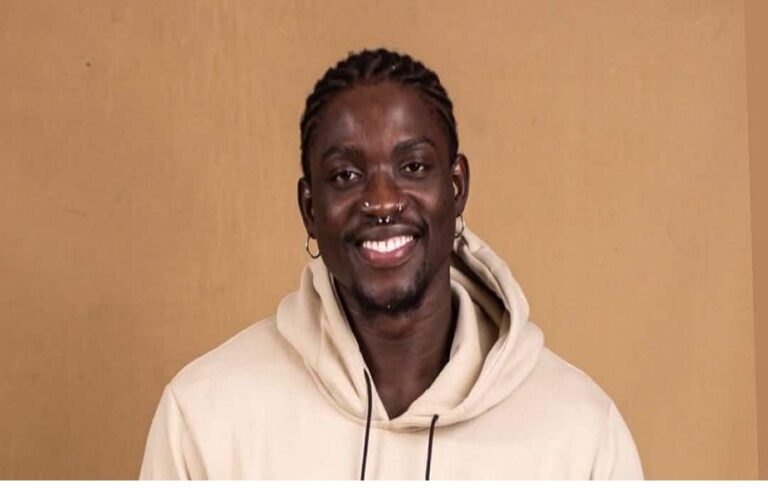
A LAGOS High Court, sitting in Ikeja, has adjourned a defamation suit brought against social media influencer Vincent Otse, also known as Very Dark Man by Femi Falana, a senior advocate, and his son, Folarin, popularly known as Falz.
The case could not continue because most of the applications filed by the parties are not yet in the court file, and the court has had to adjourn the hearing to January 23, 2025.
On October 14, the judge, Matthias Dawodu, while ruling on the Falanas’ exparte application, held that they possess legal rights safeguarding them against slander.
The court directed VDM to remove the allegedly defamatory video posted on September 24 against the Senior Advocate of Nigeria (SAN) and his son.
Additionally, VDM was restrained from further releasing, publishing, or circulating defamatory content on his social media handles and pages pending the hearing of the suit.
The judge ordered that all processes in the matter be served on VDM through his lawyer, Deji Adeyanju.
The Falanas had initiated separate suits, claiming N500 million each in damages over VDM’s video, alleging they accepted N10 million from Idris Okuneye (Bobrisky) to compromise justice.
They asserted VDM knowingly published unverified claims, recklessly injuring their reputation.
They alleged that the defamatory publication remains online, perpetuating harm to their reputation.
The senior advocate then proceeded to sue VeryDarkMan via an ex-parte originating application on October 9, 2024.
In response, VDM applied for leave to appeal the ruling, citing significant legal questions and potential miscarriage of justice.
He told the court that refusing to give him leave could lead to the implementation of a ruling that does not accurately apply the law, which could have negative effects on the parties concerned as well as the administration of justice generally.
However, many Nigerian media platforms erroneously reported that the Lagos State High Court imposed a fine of N500 million on him over defamatory posts and videos about Falana and his son Falz.
The claim, earlier reported but now deleted or removed by many media platforms, still exists on other platforms such as News Central and various social media posts, as seen here and here.
However, a review of the certified copy of the court ruling did not reveal anywhere that the court ordered the social media influencer to pay a sum of N500 million as a fine.
Very Darkman is not new to controversy, in a different matter. The ICIR reported that VeryDarkMan was granted bail in the sum of N2 million over the allegation that he wore a police uniform without permission and falsely presented himself as an officer of the Nigeria Police Force (NPF).
He was arraigned on Friday, November 1by the NPF before an Abuja Chief Magistrate Court sitting at Wuse, Federal Capital Territory (FCT) in the charge marked: CR/510/2024.
The court then gave him N2 million in bail, with the two sureties in the like sum.
The court ruled that the sureties had to register their passports with the FCT, Abuja, in addition to being residents of the FCT.
According to the court, the sureties must also provide a means of identification and depose an affidavit to provide the defendant for his trial whenever required.
The court mandated the police investigating the case to confirm the sureties’ addresses, and they were also instructed to present proof that their utility bills had been paid.
Additionally, the defendant was instructed to sign an affidavit stating that he would always be available for the trial.
VeryDarkMan was spotted wearing a uniform resembling that of the NPF in a video that went viral on social media.
He humorously asked his admirers and followers to always refer to him with his new rank rather than calling him an activist, describing himself as an officer of an online division.
However, the defendant eventually apologised publicly for his actions after an earlier encounter with the police that involved a summon.
IN today’s fast-paced digital space, Nigerian youths are constantly immersed in an endless stream of information, primarily driven by social media platforms. While this access offers numerous opportunities for learning and engagement, it also comes with significant challenges, notably, digital information overload.
This overload, fuelled by the sheer volume of content, often leads to short attention spans, quick consumption of information, and exposure to conflicting narratives from various sources. The result is information disorder, where misinformation, disinformation, and mal-information mix, creating confusion. For young people, this can also lead to psychological stress and disorder, making it harder to navigate the complexities of the digital world.
Media literacy as a solution
The Global Media Literacy Week highlights the importance of media literacy, and the question of how young Nigerians can become more media-savvy and avoid falling prey to fake news.
Global media and Information Literacy (MIL) Week, organised by UNESCO, is an annual event from October 24-31 that promotes media and information literacy worldwide. It aims to empower individuals with skills to critically evaluate information, combat misinformation, and engage responsibly with media.
The impact of misinformation in society and on individual decision-making is overwhelmingly negative. It can harm public health, as seen during the COVID-19 pandemic, escalate conflicts, influence election outcomes, and undermine social cohesion. In times of crisis, such as political or social unrest, misinformation can heighten tensions, further complicating efforts to restore order.
A recent report from The FactCheckHubdetails how information disorder can fan the embers of chaos, especially during times of public unrest. To mitigate these harmful effects, combating misinformation through media literacy education, fact-checking, and responsible digital citizenship is crucial.
The executive director of Round Check, Caleb Ijioma highlighted that media literacy empowers youths to think critically, recognise information’s impact, and grasp the intent behind media messages.
“In most situations, many Nigerian youths do not understand certain narratives, policies, acts, bills, or laws and therefore act and respond blindly. This is not to say they aren’t active citizens. However, to be actively involved in society, they must learn to understand the messages communicated to them.
Media literacy helps people think critically, understand the impact of information, and grasp the motives and actors behind it. It also focuses on understanding how these media messages are created. When this is done, people can make informed decisions, rather than decisions made with half-formed understanding of events.” Ijioma stated.
Engaging youth through fact-checking
The ICIR, through its Countering Misinformation and Media Literacy project, took this challenge head-on by training students from 12 Nigerian universities. In these sessions, students acknowledged that they had, at some point, fallen victim to misinformation or disinformation.
However, after two days of intensive training, they honed their fact-checking skills and attested to their newfound ability to recognise and counter information disorder.
The impact was profound and in some of the universities, fact-checking clubs were established, helping to pass on these critical skills to others. These clubs also organised awareness campaigns, spreading the message of responsible media consumption far beyond the classroom.
One student, Abdulrasheed Akere from Usman Danfodiyo University Sokoto, said: “The prevalence of misinformation on campus has significantly reduced. Now, most students reach out to the fact-checking club before reposting or sharing any information they see on social media.”
Influencers and misinformation
An analysis by The FactCheckHubshowed how social media influencers tried to launder the image of former minister of humanitarian affairs, Betta Edu, after her suspension by President Bola Tinubu.
Following allegations of approving the transfer of N585 million into a private account, social media users launched a coordinated campaign, posting at specific times to whitewash her image.
The negative impact of such coordinated campaigns, particularly when driven by influencers, can be far-reaching.
Their trusted voices easily amplify disinformation, manipulating their followers without them even realising they are being targeted.
Over time, these operations can damage the credibility of the influencers, polarise audiences, and exacerbate social, political, or ethnic tensions—leading to conflict.
Ijioma further noted that to critically assess media, one must understand how messages are crafted and their impact. Disinformation often exploits biases, prompting impulsive sharing without scrutiny, which can be dangerous.
“Disinformation actors use different approaches to spread their messages, one of which is leveraging people’s biases and emotions. People need to be cautious about this and avoid deciding to share something simply because it aligns with their biases. These actors want you to believe the message, so due to your biases, you may share without critically examining it, and that information can endanger lives.
“Also, consider what the message is promising: is it realistic? Do the promises in the message sound plausible? Is it achievable? Question these messages. Another important skill is identifying and understanding the difference between fact and opinion and recognising media manipulation,” he stated.
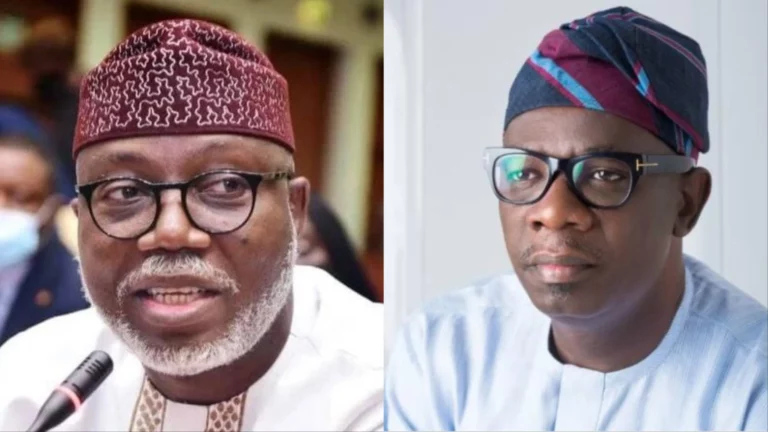
AHEAD of the Ondo State gubernatorial election on November 16, the Inspector-General of Police (IGP), Kayode Adeolu Egbetokun, has banned Very Important Persons(VIP) escorts at polling centres and a 12-hour restriction on vehicular movement.
According to a statement by the Nigeria Police Force spokesperson, Olumuyiwa Adejobi, on Thursday, November 14, the restriction on all vehicular movement will be enforced across roads, waterways, and other transportation modes from 6 a.m. to 6 p.m. on Election Day.
The statement noted that exceptions will be made for those on essential services, such as ambulances, fire services, accredited media personnel, and other critical service providers.
The IGP also emphasised that security aides and escorts for VIPs will not be permitted at polling units or collation centres, aiming to prevent any undue influence or disruptions during the election.
It further noted that unauthorised security and quasi-security personnel will be barred from participating in any election activities, and the use of sirens by unapproved vehicles is strictly prohibited.
The statement added that the IGP also appointed Deputy Inspector General (DIG) Sylvester Abiodun Alabi as the coordinating Deputy Inspector General for the election, with Assistant Inspector General (AIG) Bennett Igweh and Commissinoer of Police (CP) Tunji Disu designated as AIG and CP Elections respectively.
“Designated election lines have been established for inquiries and reporting incidents. These lines will be publicized as soon as possible.
“The Nigeria Police Force urges citizens to report all suspicious activities that may threaten the integrity of the electoral process and reaffirms its commitment to fostering a safe and democratic environment as the state gears up for the elections. The Police will also be working with the military and other Federal security agencies as collaborative efforts from all stakeholders are vital to ensuring that the elections are conducted fairly and peacefully,” the statement added.
The ICIRreports that residents of Ondo state will head to the polls on November 16 to choose their next governor in an election that has seen heightened security measures and political tensions.
Data from the Independent National Electoral Commission (INEC) showed 2,053,061 people registered to vote in the Ondo gubernatorial poll, including 58,708 new voters added during the ongoing voter registration drive.
According to INEC, a total of 18 political parties have put candidates forward for the election.
The candidate of the All Progressives Congress (APC) and incumbent governor, Lucky Aiyedatiwa, will be slugging it out with other notable candidates in the race for the highest seat in the Sunshine State.
THE Economic and Financial Crimes Commission (EFCC) has arraigned two members of an alleged syndicate for impersonating and attempting to blackmail the Chairman of the commission, Ola Olukoyede.
The two members of the syndicate, Ojobo Joshua and Aliyu Hashim, were arraigned on Wednesday, November 13, 2024, before a judge of the Federal Capital Territory (FCT) High Court in Abuja, Jude Onwuebuzie.
This was disclosed in a statement released by the EFCC spokesperson, Dele Oyewale, on Wednesday.
According to the EFCC, the suspects allegedly contacted Mohammed Bello-Koko, former Managing Director of the Nigerian Ports Authority (NPA), claiming to have access to a phoney investigation involving him by the EFCC.
They allegedly demanded $1 million, promising that the EFCC chair, Olukoyede, would ensure a “soft landing” for him.
The statement added that they also threatened him with arrest and prosecution should he fail to play along with them.
The EFCC filed a four-count charge against the duo for impersonation and attempted fraud.
Count two of the charge reads: “That you, Ojobo Joshua (aka PA to Chairman EFCC) and Aliyu Hashim, on or about September 28, 2024, in Abuja, within the jurisdiction of this Honourable Court, with intent to defraud, attempted to obtain the sum of $700,000 (Seven Hundred Thousand United States Dollars) by false pretence from Mohammed Bello-Koko. You falsely represented to him that there was a pending EFCC petition against him, which you could influence the Executive Chairman to halt. This act is contrary to Section 8(b) and punishable under Section 1(3) of the Advanced Fee Fraud and Other Fraud Related Offences Act No. 14, 2006.”
The defendants pleaded not guilty to all the charges when the charges were read to them.
Following their pleas, EFCC’s counsel, Elizabeth Alabi, requested the court to remand the defendants to a correctional facility pending the commencement of the trial.
“Having pleaded not guilty, my Lord, we ask for a date to begin calling our witnesses and request the defendants be remanded in custody,” the EFCC lawyer reportedly stated.
Counsel to the first defendant, Obinna S. Nwosu, applied for his client’s release on liberal bail terms, while counsel for the second defendant, Peter Oriobe, made an oral request for bail.
The judge, Onwuebuzie, however, directed Oriobe to formally submit the bail application in writing.
The EFCC counsel opposed the bail applications, referencing a 22-paragraph counter-affidavit and Exhibit EFCC 1, and urged the court to deny the defendant bail and grant an accelerated hearing.
After reviewing the applications, Onwuebuzie granted bail to the first defendant in the sum of N100 million with two sureties in like sum.
According to the judge, the sureties must not be less than level 16 officers in the civil service and are also required to submit their appointment and promotion letters, valid identification, and a written undertaking to bring the defendant to every court sitting.
The first defendant was also directed to surrender his international passport to the court.
The court ordered that the first and second defendants be remanded at Kuje Correctional Centre until bail conditions are met and adjourned the matter till November 18, 2024, for the hearing of the second defendant’s bail application.
According to the EFCC, Joshua and Hashim are members of an alleged four-man syndicate impersonating Olukoyede. They were arrested on Wednesday, August 28, 2024, at Gimbiya Street, Garki, and Apo legislative quarters.
THE Economic and Financial Crimes Commission (EFCC), has blamed corruption by contractors in Nigeria’s power sector for the incessant national grid collapse.
The EFCC chairman, Ola Olukoyede, disclosed this at the commission’s headquarters in Abuja on Tuesday, November 12, when members of the House Committee on Anti-Corruption and Financial Crimes visited him.
According to him, the level of corruption in the Nigerian electricity supply industry is capable of illuminating tears.
The ICIR reports that in the last week alone, the national grid collapsed two times, throwing the country into darkness.
In 2024 alone, the national grid collapsed about 11 times with energy experts projecting further collapse before the year runs out.
In his remarks, the anti-graft boss said contractors in the power sector purchased inferior materials to execute their contracts, which is the reason for the frequency grid collapses.
“As I am talking to you now, we are grappling with electricity. If you see some of the investigations we are carrying out within the power sector, you will shed tears.
“People who were awarded contracts to supply electricity equipment, instead of using what they call 9.0 guage, they will go and buy 5.0. Every time you see the thing tripping off, the thing gets burnt, and all of that falters, and it collapses. It’s part of our problems.”
Meanwhile, the Transmission Company of Nigeria (TCN), in several statements, blamed vandalisation and insecurity for the frequent grid collapse.
Similarly, the Minister of Power, Adebayo Adelabu, blamed insecurity and obsolete transmission infrastructure for the country’s national grid collapse.
The Ministers confirmation of obsolete grid raises further questions about huge spendings on transmission infrastructure largely funded by the African Development Bank (AfDB).
“Investments should be made in development or expansion of National Power Grid System Infrastructure. More so, conscious efforts should be made to acquire new ones or maintenance of those that have been subjected to wear and tear, “a power sector governance expert and the President of Power Consumers Network told The ICIR.
The frequent outages have heightened frustrations nationwide, with businesses, households, and essential services struggling under the country’s unreliable electricity supply.
ALL eyes are on Ondo as voters in the southwest state head to the poll on Saturday, November 16, 2024, to elect their next governor.
The Independent National Electoral Commission (INEC), reports that 2,053,061 people have registered to vote. The list includes 58,708 new voters added during the ongoing voter registration drive.
According to the electoral umpire, 123 voters moved their registrations out of the state, while 3,132 voters moved theirs into it.
According to INEC, a total of 18 political parties have put candidates forward for the election.
The candidate of the All Progressives Congress (APC) and incumbent governor, Lucky Aiyedatiwa, will be slugging it out with other notable candidates in the race for the highest seat in the Sunshine State.
Here are some of the key candidates in the election:
Lucky Aiyedatiwa (APC)
Following the death of Rotimi Akeredolu in December 2023, Aiyedatiwa, who was the deputy governor, then assumed the position of incumbent.
He is from Obe-Nla, in the Ilaje Local Government Area (LGA).
Agboola Ajayi (PDP)
Ajayi is a former deputy governor of the state. He hails from Kiribo town in the Ese Odo LGA.
He is lawyer.
Akingboye Benson Bamidele (SDP)
Bamidele is an engineer and entrepreneur and comes from Akure North LGA.
Sola Ebiseni (LP)
Ebiseni is a lawyer and politician. He was a member of the Student Union Government (SUG) while studying law at the University of Nigeria, Nsukka. He is also from the Ilaje axis of the state.
Nejo Adeyemi (ADC)
Nejo is a lawyer, and he was a member of the team that defended Akeredolu during his trials.
Abbas Mimiko (ZLP)
He is the younger brother of a former governor of the state, Olusegun Mimiko and a psychiatrist.
Fact-checking claims at the gubernatorial debate
At a debate organised by Channels TV on Sunday, November 3, 2024, the two leading Ondo State gubernatorial candidates spoke about their plans for the state if elected in the off-season poll.
Areas covered by the debate include discussions on the state of the economy, security, education, infrastructure, health, and poverty eradication in the state.
Aiyedatiwa of the APC and Ajayi of the PDP were present at the debate. You can read ithe fact-chcks of some of their claims here
Candidates sign peace accord ahead of the election
The ICIR reported that governorship candidates on Friday, November 8, in Akure signed a peace accord ahead of the off-cycle governorship election.
They pledged to support a peaceful and credible electoral process in the election on November 16, 2024.
The chairman of the National Peace Committee (NPC), Abdulsalam Abubakar, oversaw the signing and emphasised the accord’s importance in promoting peace and democracy.
Abubakar urged party leaders and candidates to accept the election outcome, provided it is deemed free, fair, and credible.
Tight security expected as IGP, and other security agencies deploy 43,157 operatives
The Inspector General of Police (IGP), Kayode Egbedokun, said on Saturday, November 9, that a total of 43,157 security personnel, comprising all security agencies, will be available for the poll.
According to him, the police will be deploying 34,757 personnel to polling units, wards, and local government collation centres across the state.
Earlier in the week, the police had placed the figure at 22,239 officers. It was not immediately clear why the figure was increased.
Egbetokun said the police would use their personnel and material resources to safeguard the state’s 18 LGAs, 203 Wards, and 3,933 voting units.
He added that the armed forces, intelligence security agencies, and other sister security agencies will supplement the numbers.
According to the police boss, sufficient preparations and procedures have been put in place to ensure the exercise’s success.
No place for quasi-security groups in the the ondo election
The IGP has announced a ban on quasi-security groups such as the vigilante corps and Amotekun, stressing that election security is the sole responsibility of the police and authorised federal agencies.
According to the statement, only the NPC and federal security bodies under the Inter-Agency Consultative Committee on Election Security (ICCES) are empowered to ensure safety during the election.
Furthermore, the IGP reaffirmed the established guidelines governing election security management in Nigeria, stressing that no quasi-security organization, including state-backed groups like the vigilante corps or Amotekun, will be permitted to participate in the election process.
THE Federal Government’s selection process for new permanent secretaries in the Federal Civil Service has seen 19 of 38 candidates fail the first stage of the qualifying examination.
According to the Office of the Head of Civil Service of the Federation (OHCSF), the test was conducted on Monday, November 11, 2024, as part of a rigorous three-stage recruitment process designed to fill vacancies in eight states.
A memo signed by Emmanuel Meribole on behalf of the examination committee and released on Tuesday disclosed that only half of the participating directors advanced to the next phase.
Based on the obtained result sheet, seven directors scored between 30 and just under 40, with the lowest score recorded at 10.50.
Likewise, eleven of the 38 directors scored in the 40 range, while ten candidates achieved scores between 50 and just below 60. Eight directors scored between 60 and just below 70, with only one candidate reaching 72.50.
The OHCSF had initially shortlisted 38 directors for these coveted roles for the process of appointing new permanent secretaries to fill the available positions.
A memo from the OHCSF, signed by the Head of Civil Service of the Federation, Didi Walson-Jack, and reported by punch, on October 7, 2024, clarified that individuals currently undergoing disciplinary procedures were excluded from applying for the positions.
Meanwhile, the OHCSF’s Director of Press, Eno Olotu, while providing details of the process, said, “Of the 38 eligible directors who sat for the exam, 19 have passed the first stage and will move on to the second stage, which will assess their competency in using Information and Communication Technology (ICT) in government operations on Wednesday, November 13, 2024.”
Following the ICT assessment which happened today, candidates who succeed will move on to the final phase, scheduled for Friday, November 15, 2024.
In the last stage, the successful candidates will face a thorough evaluation by a panel of top bureaucrats and private sector leaders.
In June, Punch investigation, revealed how about 305 directors have failed the written examination for appointment into the offices of permanent secretaries of the Federal Civil Service between 2020-2024
CRYING out over discrimination, traditional worshippers, in this report which is the second in the series ‘The others‘, say they should be respected and accorded equal status like adherents of Nigeria’s major religions, Christianity and Islam.
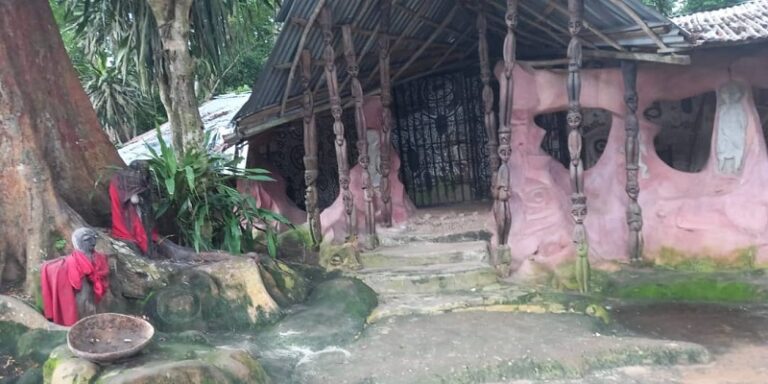
Traditional religion adherents known as Isese in Yoruba land, in the Southwest part of Nigeria, include persons who worship different gods like Sango, Obatala, Osun, Esu, Oya, Obaluaye, and Yemoja. They also believe in the supreme entity, Eledumare which according to them represents the ultimate source of existence.
Ifalake Ifadara, an Osun worshipper and herbalist, was traumatised for weeks after a teacher in his school forcefully cut his wrist beads, which he considers a symbol of his Ifa religion.
“All I heard was a sound, and my beads went spilling on the floor. I was traumatised for weeks because that was unfair to me.
“There are Muslims who put on hijab, and Christians that wear the cross. I used my beads to the school, and he preached to me to remove them. I asked if he could tell the Muslims to remove their hijab or the Christians to remove their cross which are symbols of their religion? For me, this is the symbol of my religion,” he said.
According to Ifadara, ironically, when the teacher fell ill , he was brought to his father where he was treated after performing some traditional sacrifices.
Ifaleke Ifadara
Ifadara is not the only one with such tales. A female Osun worshipper based in Osogbo, Tunrayo Semilore Egbetunmise, said she was forced to practice other religions to conform due to constant attacks over her choice of religion.
“I used to be traumatised but not anymore. There was a time while growing up when I and some of my family members, to be honest, were not proud of Isese (traditional religion).
“We had to practice a bit of other foreign religions for some years so as to ‘feel among’. There was a time when I attended a Christian school. I also attended a Muslim school and during those periods we were forced to do Muslim and Christian things.
Tunrayo Semilore Egbetunmise
“We were not bold enough to tell people that this is what we do in our house. We were hurting ourselves,” she said.
An Osun worshipper, Gbemi Osunkeye pointed to a loud sound coming from a Church speaker in Ilesa, Osun State.
“Repent or you shall go to hell fire. Accept Jesus Christ today, he is the only God; no other god can save you…,” were some of the words coming from the speaker.
“These are the kind of things we face daily here; we are constantly harassed with the threat of hell fire. They will tell you only their God is good, while all others are bad. The Muslims will soon start their own,” Osunkeye said.
For Osunkeye, the constant early morning sermon from the Mosque close to her house frustrates her. “All they do is insult other religions; they call us all manner of names because we are not serving their God. They even threaten us. Imagine waking up to this every morning, it is frustrating,” she lamented.
Although the majority of people in Nigeria are either Christians or Muslims, there were other religious systems like traditional beliefs in existence before those two emerged.
According to the World Factbook, demographics show that Muslims in Nigeria account for 53.5 per cent (126,659,714), Christians: 45.9 per cent (108,666,932) while indigenous/traditional religions have 0.6 per cent (1,420,482).
It is also assumed that Muslims and Christians make up the majority of the population in the southwest of Nigeria. Some traditionalists acknowledged that the advent of Islam and Christianity in the southwestern part of Nigeria resulted in a decline in the region’s acceptance of traditional worship.
This,according to traditional worshippers, has led to marginalisation, harassment and stigmatisation of their religion by people of other faiths.
According to Kayode Faniyi, the Agbongbon Awo of Osogbo and Baale Apowe of Oduduwa, who is an Ifa priest, traditional religion had been the custom from time immemorial; from ancestors and handed down by forefathers.
Describing it as oral literature from one generation to the other, he added that to be a Babalawo (herbalist), a person must learn and study two hundred and fifty-six Odus and be able to recite or chant at least four to six verses from each of the Odus and even chant more as time goes on.
For Faleke Fatunmbi, an Ifa priest and herbalist, one of the leaders of traditional worshippers in Osogbo, religion is the major ingredient used in the everyday running of society. Whether it is in the crowning of a king or other things.
Also commenting, the wife of an herbalist, Egbefunmi Faniyi, who is an Iyanifa, said the benefits of traditional religion are underestimated. According to her, traditional religion plays a vital role in promoting personal progress and the well-being of every society.
‘Christianity, Islam belittling traditional religion’
According to another Ifa priest, who is the Araba Olu Isese of Osogbo, Ifayemi Elebuibon, the mannerthe two “foreign religions” (Christianity and Islam) emerged allowed them to belittle the one they met here (traditional religion).
Elebuibon said the two religions deliberately speak ill of traditional religion so the Yoruba could accept theirs.
“If they told us, it was good, we would not accept them. But if a person is wise and researches the three religions in Africa, he or she will know that the other two religions came from abroad and their main aim was to enslave us,” he said.
He said if Yoruba people practice traditional religions and speak local languages, it will give them freedom.
“The English people that colonised Nigeria also colonised India. But India did not accept their religion,” he stated.
Elebuibon emphasised that foreign religions are relegating traditional religion popularly called Isese in the southwest of Nigeria.
He added that there is nothing in the Bible that is not in the Quran, and there is nothing in the Quran that is not in Odu Ifa.
Claims of discrimination, harassment and stigmatisation
Most traditional worshippers visited said they have faced either harassment, intimidation or stigmatisation in the past.
The Baale Apowe of Oduduwa, Faniyi, stressed that the two main religions are big obstacles to traditional religion, especially the Muslims.
“Some of them have good people among them who have a good understanding of other religions. But there are a lot of fanatics, who don’t even care if there is any other thing besides their Islamic faith.
He lamented that the constant name-calling by other religions is harassment.
“Even calling us Idol worshippers on radio, television or newspaper, is an injury to us. Some people will have vehicles with loudspeakers moving into the community and they say if you don’t have Jesus, you are nothing, and that you are going to hell fire,” Faniyi stated.
According to Elebuibon, when some missionaries set up a school, they will ask children of other religions not to come. He said they would tell their children not to marry from another religion except from theirs.
“If a Muslim sets up a school, the child of traditionalists must not attend to study. If you seek employment and you are not one of them, they will not employ you and so on,” he said.
A student at the Obafemi Awolowo University, Ile-Ife, Osunkayode Adewale Ifatoyinbo, an herbalist who worships Orisa said some people insist that they cannot sit with individuals in public buses who wear certain items, such as beads, symbols, or regalia, because they believe these items are associated with diabolic or demonic practices.
According to him, they hold this belief due to their religious convictions, with some Christians viewing them as ungodly and some Muslims considering them to be idolatrous or even satanic.
He said, “There is stigmatisation. For example, do you think it is nice to enter a public bus and people are trying not to come close to you because of the way you are dressed believing that you can harm them. I am talking about my experience now, but some people’s experience can be worse,” Fatoyinbo stated.
He added that people from other religions often disparage traditional religions without consequences yet cry blasphemy when their own beliefs are criticised.
Recounting her own experience, Egbetunmise said,” Yes, I have experienced discrimination. While I was in school, most of my schoolmates felt because I was a traditional worshipper I was using dubious means spiritually to pass my exams.
“Then some of my lecturers as well, not as if they were harsh but they tried so many means to convert me to their religion,” she stated.
She advised other religions to realise that traditional worshippers don’t kill humans, citing Ifa teachings that prohibit human sacrifice.
The president of the Traditional Worshippers Association of Osun State, (TRWASO), Oluseyi Atanda, a medical doctor who is also an herbalist said the discrimination against traditional worshippers was very high in the past but has gotten better in the last five years.
President of Traditional Worshippers Association of Osun State, (TRWASO), Oluseyi Atanda,
Atanda who is also the Ajana Awo of Osogbo said the discrimination is now less due to awareness and tolerance among the citizens.
“Yes, we know there are a few extremists but generally speaking, I think things are better. Here in Osun State, in the last couple of years, the government has done well, whenever there is a government function, the three religions are invited to pray, that’s the standard.
He noted that some time ago if someone entered public transport wearing beads on their wrist or neck, people would move away and avoid sitting next to them.
However, he observed that the situation has improved, and nowwhen one enters a public bus, they are likely to be traditionally greeted by the person sitting next to them.
According to Atanda, years ago, children of traditionalists could not put on beads, (the Ifa rosary) to school because teachers would want to remove them.
“My kids attend a catholic school, there are at least ten children of traditionalists in the school who use beads, and the reverend sisters don’t frown. We go to PTA meetings, and they just say, ‘children of the herbalists’ and everybody jumps and looks the other way,” he stated.
‘We are neglected by government’
They also faulted governments’ sponsorship of pilgrimage annually with government funds.
The traditionalists lament that while Christians go to Jerusalem, and Muslims head to Mecca, traditional religion practitioners are left at home with nothing.
According to the Osun State approved 2024 budget, a total of N350 million was earmarked for religious pilgrimage subsidy.
They also accused government and security agencies of always supporting other religions during any crisis in the state.
The non-availability of traditional studies in school curriculums was also pointed out as a sign of government neglect.
Faniyi stated that the government has not been fair to traditional worshippers but gave kudos to a former governor of Osun State, Rauf Aregbesola for proclaiming August 20 as Isese day (for traditional worshippers) and making it a public holiday.
“They sent them on pilgrimage with billions. We have a place where people can come like Osun Osogbo is there now. Only Aregbesola has done something feasible that we can see, and we will want even the present governor, Asiwaju Adeleke, to follow suit. We need a good road in the Osun Grove” Faniyi stated.
The ICIR reported the poor condition of the road leading to Osun Grove, the venue for the annual Osun-Osogbo festival. You can read the report HERE.
Also commenting on neglect by the government, Egbetunmise said the underrepresentation of traditional religion adherents in government makes them feel marginalised, and that this stems from the dominance of Muslims and Christians who often fear and hate traditional religion.
In his submission, Fatunmbi condemned the unfair treatment of traditionalists and asked for an adjustment.
Clashes among the faiths
In March 2024, several parts of Ile-Ife, Osun State, were thrown into chaos as business operations came to a complete halt when supporters of Obatala marched through the city’s streets carrying Oro, a traditional event celebrated by towns and settlements of Yoruba origin. It is a patriarchal celebration, exclusively observed by male descendants.
The traditionalists had declared a five-hour curfew in certain portions of the ancient town to facilitate the easy passage of the Oro before the incident.
In the past, there had been a tense relationship between Muslims and Oro believers in Ile-Ife that frequently turned violent.
For example, on Thursday, March 30, 2023, violent altercations broke out between five worshippers and an Imam, Abdullateef Adediran at the Ilare Mosque in Ile-Ife.
The Oro adherents were passing through the neighbourhood where the Mosque was located.
In another incident, in August 2022, an Oro traditional worshipper was allegedly stoned to death during a clash with members with some church members in Lagos.
Speaking on the frosty relationship between traditional worshippers and other religions in Ife and the southwest generally, the Baalesu of Obatala worshippers worldwide, Olaolu Oladotun Okanlawon Dada said no fight has occurred in recent times but accused the Muslims of an attempt to start one in 2023.
The Baalesu of Obatala, Chief OOO Dada
“We wanted to go and worship one of our gods and they said we could not put the sacrifice by the roadside, a government road. They turned it into a crisis where people were injured.
“When they are preaching during their programmes, you won’t see any traditional worshipper there because we don’t understand their language,” Dada said.
Speaking on the issue, Atanda said the lack of a communal cooperation committee and people’s intolerance towards each other’s beliefs are the main causes of inter-religious clashes.
He said that other religions often restrict traditional practices, like the incident in Ilorin, Kwara State where an Olosun worshipper was stopped from performing her festival, and stressed the need for tolerance, as traditional religion has equal rights to shared spaces and resources.
‘Movie producers not portraying us well’
Egbetunmise faulted the media, especially movie makers for the negative way they portray traditional worshippers.
“I have watched some Christian movies, but they didn’t talk about Isese, they preach love, and they preach Christianity so that’s what I am advising Christian and Muslim practitioners to do.
“They can preach love, and stop demonising Isese, Egungun or Ifa. If you don’t have enough knowledge and you want to talk about Ifa you can come to our fathers and ask, stop assuming or using the information you got from movies,” the Osun adherent stated.
She urged the media and movie practitioners to consult traditional religious experts to ensure accurate representations, rather than relying on assumptions or perpetuating misinformation
Antidote for peaceful coexistence
The Araba of Osogbo, Elebuibon, advised the government to promote equality of all religions,
He appealed to members of other religions to stop segregating one religion from the other and let people know that it is important to respect each other.
Elebuibon said anyone who wants to take up a government position should be taken to Ogun or Obatala to swear that money in his or her possession will not go missing.
Elebuibon suggested that traditional methods should be deployed to govern in Nigeria.
“All the people mismanaging government funds, the insincere ones, the ones stealing government money and taking it abroad won’t do it again,” he said.
Atanda appealed for the creation of an inter-religious committee in every state and at the national level to promote tolerance.
On his part, Ifaleke Ifatunmbi advised that all religions should be treated equally.
Muslim, Christian clerics react
A Muslim cleric at Ilesa Central Mosque, who wished to remain anonymous, attributed the practice of traditional worship activities to the approaching end of human existence.
Meanwhile, an Ilesa-based pastor, Murewa Ola said his God does not approve of the worship of “other gods“
“My God is jealous, and you can’t serve Him and other gods. Go and read Mathew 6: 24-26, for more understanding,” Ola stated. He urged all worshipping “other gods” to turn to the “right path”.
What the law says
Section 10 of the Constitution of Nigeria prohibits the establishment of a state religion and affirms the secular nature of the Nigerian State. The section states that, “The government of the federation or a state shall not adopt any religion as a state religion.’
Section 42 prohibits discrimination based on religion and states that no Nigerian can be discriminated against based on their religion or belief. This provision also emphasises the equality of all citizens irrespective of their religious affiliation.
We recognise traditional religion – the Osun government
Responding to the allegation of unfair treatment of traditional worshippers, the spokesperson to the governor, Rasheed Olawale stressed the importance of religion in the society.
He said the governor, Ademola Adeleke respects tradition and appointed a traditionalist as commissioner and special assistant.
Governor of Osun State, Ademola Jackson Adeleke
“When you are raising issues on whether we respect tradition, we are traditionalists ourselves.
“We also have a special adviser on traditional matters, Alexander Oloke from Ife Axis, a former banker, a babalawo, a Prince,” Olawale stated.
On sponsoring Christians and Muslims on pilgrimage with state funds, Olawale said the government has a better plan for them. He said if any traditionalist must go on a pilgrimage, it must be to Osun because it is the cradle of traditional religion.
He announced the proposed launch of the Yoruba Cultural Heritage Week, a global event showcasing key historical and cultural sites in Ile Ife, Osun, and beyond, which will attract visitors from around the world.
“We partly finance the Osun-Osogbo festival. We are the ones who rebuilt the pavilion centre at the Osun Grove. So, if you check our budget, you might not see it as traditional expenses, but government supports all these traditional events and activities,” he affirmed.
THE Federal Government has announced plans to begin addressing the pension backlog for retired workers under the Contributory Pension Scheme (CPS) starting next week(November 17)
The minister of Finance and Coordinating Minister of the Economy, Wale Edun, gave this information during a rally organised by the Nigeria Union of Pensioners Contributory Pension Scheme Sector (NUPCPS) at the Federal Ministry of Finance in Abuja on Tuesday, November 12.
The demonstration drew attention to long-standing grievances among retirees over unpaid contributions and federal government’s faltering in the CPS by exempting some category of public servants from the scheme and wittingly returned the same old pension scheme it has earlier abolished.
The ICIR reports that the pensioners at the demonstration ground cited poor remittances, government’s neglect of CPS and its abrupt stoppage leading to delays in the release of accrued rights portion of retirement benefits to retired workers between 2015 and 2019 as issues seeking the government must address.
During his address, Edun emphasised the government’s determination to make payments with the funds available under the current budget.
“We will start next week to pay everything that we can under the current budget as approved by the National Assembly,” he stated.
He acknowledged the backlog in contributions, which has severely affected retirees, assuring pensioners that their needs are a priority.
Commenting of efforts to tackle the backlogs sustainably, Edun revealed a coordinated effort involving the Office of the Head of Service, the Minister of Budget, and other stakeholders to address the backlog.
“There has been a committee under the Office of the Head of Service which has met with the Minister of Budget and myself. We have a plan for dealing with the backlog under the Contributory Pension Scheme (CPS).
“We are committed to paying it. It has to be paid this year. We are committed to doing that starting from next week,” Edun explained.
He also suggested a potential financial strategy of going to the capital market and raising a means that clears the backlog.
“It’s going to be a question of going to the capital market and raising an instrument that allows that backlog to be cleared once and for all,” he said
He expressed regrets that pensioners had to stage a rally to bring attention to their plight.
He emphasised the government’s commitment to their well-being and pledged accessibility to address their concerns.
“I am not happy that you have had to take this step and I assure you that any time that you or your leaders seek an audience with me, I will be available in the office.
“I was not aware of the Nov. 11 deadline, otherwise, I would never have allowed a situation like this.
“In spite of your age, and your situation in terms of cost of living, it costs money to come here. I would have avoided that as much as I could,” he stated.
The national chairman of NUPCPS, Sylva Nwaiwu, highlighted the union’s ongoing challenges, including the exclusion of pensioners from adjustments to the National Minimum Wage.
He also stressed that accrued rights had not been released for over 20 months. He called on the government to address these gaps urgently to prevent further hardship for retirees.
The ICIR had also in a series of reports highlighted the plights of pensioners in various states across the federation, many of whom live and die in penury as a result of outstanding debts owed them by the sub-national and the federal government.