Home Blog Page 439

Richard Akinnola’s ‘Judicial Terrorism’ raises question on Nigeria’s jurisprudence

0

THE  launch of ‘Judicial Terrorism: The 1992 Zangon Kataf Mock Trial’ by Richard Akinnola raises further questions on Nigeria’s judicial independence and reflects on its turbulent history, persistent socio-political challenges, and aspirations for a just future.

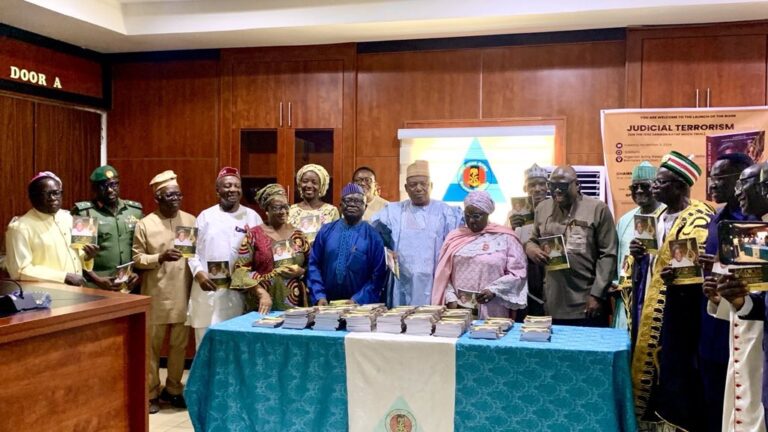
The book launch, which several dignitaries graced on Wednesday, November 5, 2024, not only celebrated the author’s detailed chronicle of judicial and political dynamics but also underscored the book’s resonance with the challenges Nigeria continues to face.

The book delved into the 1992 Zangon Kataf crisis, focusing on the contentious trial and death sentence imposed on a major general, Zamani Lekwot and five others, capturing a moment that still resonates with issues of justice and judicial independence today.

In his opening remarks, a lawyer and human rights activist, Chidi Odinkalu represented by Owei Lakemfa, highlighted that the book transcends a recount of the past. It is a testimony to Nigeria’s enduring quest for justice amidst ethno-religious tensions and the political misuse of the judiciary.

“This book speaks to us as Nigerians, and it speaks to our future because it addresses a plethora of challenges that we face today,  ethno-religious and the weaponisation of the judiciary as a tool to achieve political ends,” Lakemfa noted

He further stated that the book serves as a significant archival resource, shedding light on history and addressing the weaponisation of the judiciary during critical periods, especially under military rule.

“What Richard has done by writing Judicial Terrorism is to ensure that we do not forget our experiences as a people. The fact is that if we forget yesterday, we cannot remember today, and our tomorrow will suffer. Long after we all have gone, his books will continue to be witnesses to our past and a guide to new generations,” he emphasised.

For the author, Richard Akinnola, the book is a documentation of struggles fought to preserve Nigeria’s democratic fabric and judiciary’s independence.

He noted that the justice, Benedict Okadigbo’s actions as chairman of the Civil Dispraises Special Tribunal in Nigeria would be remembered as one of the judiciary’s most troubling chapters while noting that a similar concern now arises from the actions of numerous judges who appear overly influenced by political figures.

“Justice is rooted in public confidence. But when this confidence is eroded by any acts of commission or omission, we shall continue to hold the judiciary accountable. When a judge sits on a case, he is on trial. If there is any misconduct on his part, or any bias or prejudice, there is a requirement to keep an eye on him.” Akinnola stated

Lekwot (rtd), the focal figure of the book, spoke passionately about his journey and the significance of the book.

Reflecting on his experiences, he expressed gratitude for the Constitutional Rights Project and the countless human rights advocates who stood by him and others through times of profound hardship.

Cross-section of Dignitaries at the event. PC: Fatimah Quadri/The ICIR

The book, Lekwot noted, is not only a chronicle of his struggle but a testament to the resilience of those who fight for justice in Nigeria.

“What the tribunal did merely tarnished the fine reputation of our judiciary, which was the one on trial throughout the trial and not us.  What a grotesque situation that projected Nigeria in the backlight without compunction.

Nevertheless, we are very happy that this book compiled all the documents in respect of this mock trial for future generations to assimilate. For me, as a senior officer, all the service officers and service should also learn something from what has happened. Accountably, we are committed to serve.” Lekwot stated.

A rights activist and senior advocate of Nigeria (SAN), Femi Falana, who was the book reviewer noted that the book illustrates the flawed judicial process that Lekwot and his co-defendants experienced, highlighting how the tribunal rushed to adjourn for judgment as soon as the defense counsel withdrew, even though the prosecution had not finished presenting its case.

Falana commended Akinnola for compiling the events in detail, noting that the book serves not only the people of Zango Kataf but all who believe in justice and equality.

He acknowledged that the fight for justice in Nigeria is a daunting challenge, but one that must continue for the benefit of future generations.

Linking it with #endbadgovernance protesters who were detained and just released, Falana further noted that the  protesters needed proper rehabilitation from the government and if the government does not take action, “we will proceed with legal steps to compel it.”

The high point of the event was the launching of the book by Senator Danjuma Laah who was the chief launcher of the event.
Tinubu promotes acting COAS to Lieutenant General amid controversies surrounding lagbaja’s health

0

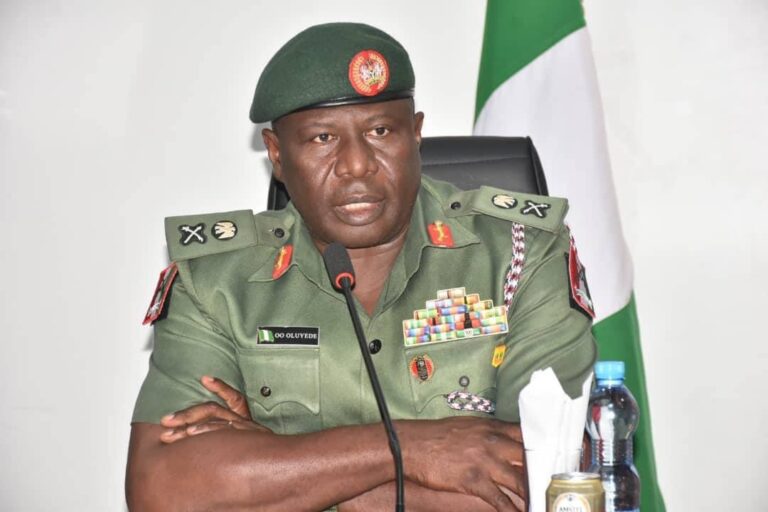
PRESIDENT Bola Tinubu on Tuesday, November 5, promoted the Acting Chief of Army Staff (COAS) Olufemi Oluyede, who was a Major-General, to the rank of Lieutenant General amid growing speculations over the COAS Taoreed Lagbaja’s health.

Tinubu, in his remarks at the short ceremony at the Aso Rock, praised Oluyede’s dedication and service to the Nigerian military, describing the promotion as a recognition of his commitment. 

It is both an honour and a privilege to decorate you today. This recognition reflects your commitment and service to the Nigerian military, which speaks volumes through your exemplary record,”Daily Trust quoted the President in his remarks.

“We recognise all that you have been doing to ensure the country is safe and stable,’’ Tinubu said.

Acknowledging the army’s efforts, Tinubu further expressed gratitude to Oluyede while assuring the armed forces of the administration’s support and attentiveness to their counsel.

Tinubu said “We are facing challenges, but progress is being made,’’ adding that the synergy among the armed forces.

Oluyede’s promotion comes amid ongoing speculations regarding the COAS Lagbaja’s health, which have not been formally addressed by the government or military officials. 

However, Oluyede’s elevation to Lieutenant General suggests Lagbaja may not make a comeback again into the position.

The ICIR on October 30, reported that the president appointed Oluyede, a major general, to act in Lagbaja’s place.

According to a statement by the President’s spokesperson, Bayo Onanuga,  Oluyede will act in the position pending when Lagbaja, whom the presidency said was indisposed, returns to Nigeria.

Until his appointment, Oluyede served as the 56th commander of the elite Infantry Corps of the Nigerian Army, based in Jaji, Kaduna.

The 56-year-old Oluyede and Lagbaja were coursemates and members of the 39th  Regular Course.

According to his profile, which accompanied Onanuga’s statement, Oluyede was commissioned a second lieutenant in 1992. He rose to major-general in September 2020.

He has led many commands since his commissioning as an officer. He was a platoon commander and adjutant at 65 Battalion, company commander at 177 Guards Battalion, staff officer at Guards Brigade, and commandant amphibious Training School.

Oluyede has participated in several operations, including the Economic Community of West African States Monitoring Group (ECOMOG) mission in Liberia, Operation Harmony IV in Bakassi, and Operation HADIN KAI in the North-East theatre of operations, where he commanded 27 Task Force Brigade.

He has also earned many honours for his service in various fields of operations.  He is married and has three children.

FG reverses 18-year admission benchmark in tertiary institutions

0

THE NEW Minister of Education, Tunji Alausa, has reversed the decision of the past minister, Tahir Mamman, on the 18-year admission benchmark into tertiary institutions in the country.

Alausa said this at his first briefing as Minister of Education in Abuja on Tuesday, November.

According to the minister, the creation of the National Policy on Education was the reason behind that first decision.

He, however, hinted at the possibility of his administration reviewing the nation’s education policy.

“We will not be going forward with the 18-year admission benchmark. We will go for 16 years, and we are going to meet with JAMB and others on that. There will also be exceptions for the gifted students. Eighteen years is not part of our policy again,” Alausa stated.

Alausa responded to the removal of certificates from Togo and the Benin Republic by saying that the policy would continue to be implemented in order to help remove phoney certificates from the system.

He stated that the ministry has made addressing the issue of out-of-school children a top priority and that several approaches would be taken into consideration in order to lower their population.

In order to encourage students to enroll in more schools, he stated that the ministry would work with the Ministry of Humanitarian Affairs to offer conditional financial transfers.

To improve the development of human capital, he added, nutritional programs would be implemented to enhance students’ health.

According to the News Agency of Nigeria (NAN), the minister, along with the Minister of State for Education, Suwaiba Ahmad, was officially welcomed by the Permanent Secretary of the ministry, Nasiru Sani-Gwarzo.

The ICIR reported that in July, the former Minister of Education, Mamman, a professor, made a U-turn on his earlier directive mandating the Joint Admissions and Matriculation Board (JAMB) and Nigerian tertiary institutions not to admit candidates below 18 years.

This decision came after objections and appeals from stakeholders, including rectors, registrars, the vice chancellor, and other principal officers present at the 2024 admission policy meeting organised by JAMB in Abuja on Thursday, July 18.

Mamman had earlier directed JAMB and tertiary institutions to stop admitting under-18-year-old candidates into higher education programmes.

Mamman gave the order in the same meeting, decrying the activities of some parents, whom he said pressured their underage wards to get admission into tertiary institutions.

“JAMB is hereby instructed this year to admit only eligible students. That is those who have attained 18 years by our laws,” the minister said.

The minister emphasised that his stance is supported by Nigeria’s law governing admissions into tertiary institutions, noting that admission bodies should recognise this requirement without being directed to obey it.

His announcement sparked mixed reactions among vice-chancellors, rectors, and registrars present at the meeting, with some stakeholders present at the meeting protesting the new minimum admission age.


READ ALSO:


However, during the review of the memorandum for the 2024 policy meeting on this year’s admissions, Mamman later called for the adoption of 16 years.

The minister agreed that candidates aged 16 and above would be admitted, acknowledging that many of these underage candidates had already taken the UTME without prior knowledge of the directive.

However, he stated that starting in 2025, the 18-year entry requirement in tertiary institutions would be in effect.

Again, Nigerians in darkness as national grid collapses ninth time in 2024

MOST Nigerian cities are plunged into total darkness as the national power grid experienced another collapse on Tuesday, November 5, 2024, marking the ninth time of such an experience this year.

The development has further raised questions about obsolete Nigeria’s grid infrastructure which the federal government has also admitted is not serving its purpose optimally.

According to data from the Nigerian System Operator’s portal, generation dropped to an unprecedented zero megawatts from 2:00 pm, affecting all 22 operational generation companies (GenCos) nationwide.

This latest blackout is another blow to Nigeria’s struggling power sector, which has been plagued by instability, insufficient capacity, and frequent grid disturbances.
This most recent collapse adds to an increasingly alarming trend.

The first major blackout of the year occurred on February 4, 2024, when the grid’s capacity plummeted from 2,407 megawatts to a mere 31 megawatts by midday, hitting zero shortly after.

Since then, the grid has continued to falter, with subsequent breakdowns on August 5 and three times in October.

Notably, the October 14 collapse was followed by a partial failure the next day, and another disturbance occurred on October 19, narrowly avoiding a complete collapse.

Consequently, the general manager of public affairs at the Transmission Company of Nigeria(TCN), Ndidi Mbah, confirmed the collapse, noting that the national grid experienced a partial disturbance at about 1:52 pm.

The transmission company said the collapse was triggered by a series of lines and generator trippings that caused instability of the grid and, consequently, the partial disturbance of the system. The data from the National Control Centre (NCC) revealed that a part of the grid was not affected by the bulk power disruption.

The company noted that the in-house engineers are already working to quickly restore bulk power supply to the states affected by the partial disturbance.

“Presently, bulk power supply has been restored to Abuja, at 2.49 pm, and we are gradually restoring to other parts of the country,” the company said.

Meanwhile, an industry analyst has blamed obsolete and decayed transmission infrastructure as the major cause of frequent collapses.

“The transmission infrastructure is obsolete and decayed infrastructure. TCN needs to take its maintenance activities seriously and not wait until there’s a crisis for them to be giving excuses for Nigerians, “a power sector governance expert and the president of Nigeria’s consumer protection network,Kunle Kola Olubiyo told The ICIR.

The ICIR reported in October that the national power grid collapsed for the third time in just one week.

The outages have heightened frustrations nationwide, with businesses, households, and essential services struggling under the country’s unreliable electricity supply.

Navigating misinformation in the 2024 US election: what voters need to know

THE 2024 US presidential election billed for Tuesday, November 5 will determine the country’s leadership and set the course of policy and governance for the next four years.

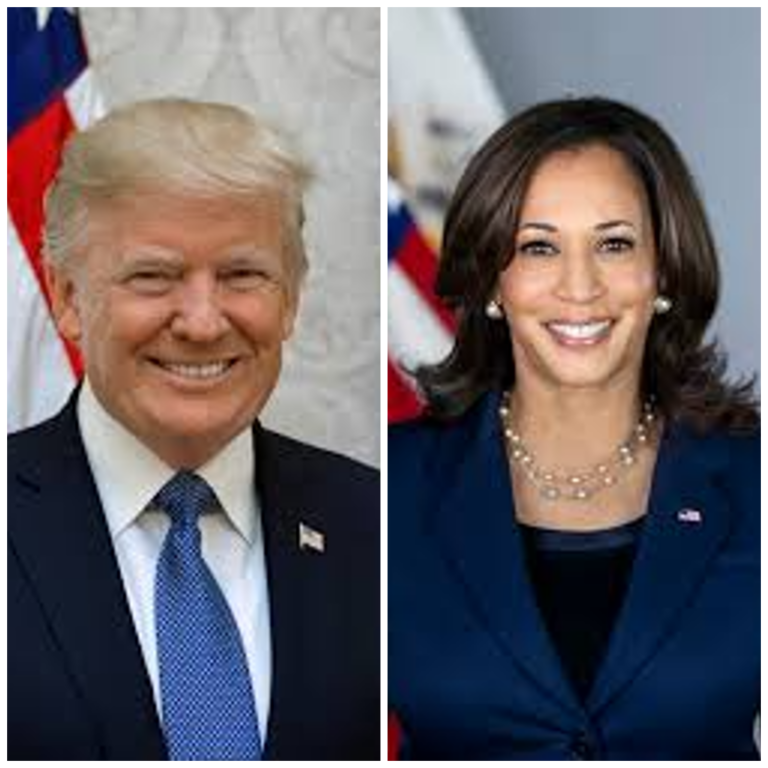
With Republicans’ Donald J. Trump and Democrats’ Kamala Harris as the top contenders in the ring, it is expected to focus on key issues like economic policy, healthcare, climate change, foreign relations, immigrant rights and social justice.

Given the polarized political landscape and ongoing debates around voting access, misinformation, and election integrity, the race is anticipated to be scrutinized intensively both within the US and globally.

As with previous elections, misinformation has flooded online and social platforms, with a notable increase in deepfake content targeting prominent candidates like vice president Kamala Harris and former president Donald J. Trump.

Observers say voters should be on the lookout for these manipulative tactics, which may include false portrayals of candidates making inflammatory statements or engaging in unethical behavior.

Understanding and identifying deepfake technology, along with other misinformation tactics like false claims about voting requirements, fabricated polling location closures, and incorrect result projections, is essential for navigating this election with critical thinking skill to avoid being misled with false narratives.

False claims about voting processes

Common misinformation includes false eligibility rules, incorrect election dates, misleading polling location information, and claims that people can vote by text or social media—all of which are FALSE.

Additionally, some posts may wrongly suggest extra documentation is needed at the polls, while others spread rumours of tampered voting machines or materials to undermine trust. These tactics aim to mislead voters and erode confidence in the election process.

AFP had also reported some voting falsehoods being spread by misinformation purveyors.

Misleading polls and statistics

Misleading polls and statistics are a common form of election-related misinformation that can shape public perception by distorting support for candidates.

For instance, polls with small sample sizes or selective reporting may exaggerate a candidate’s lead or downplay their opposition, creating a false sense of momentum. This can discourage voter turnout or sway undecided voters based on an illusion of popular opinion.

By carefully timing these misleading poll releases, campaigns or interest groups may attempt to influence voter behavior and erode trust in legitimate polling, contributing to a larger environment of election misinformation.

Disinformation about candidates

Disinformation targeting candidates, including fake news and doctored media, has intensified during this year’s U.S. election, with advanced deepfakes being deployed to spread convincing but false depictions of prominent figures like Trump and Harris. These deepfakes, which can make it appear as if candidates have said or done things they haven’t, quickly circulate on social media, influencing perceptions and reinforcing biases before fact-checking can intervene.

Earlier in March this year, the BBC reported how some Trump supporters target black voters with AI faked images, as Elon Musk also shares manipulated Harris video, thus violating the X platform’s policies.

Amidst the surge in AI-generated Trump and Harris voices, the Washington Post has listed how to avoid falling victim to audio deepfakes of the leading contenders. The platform also published a report which shows how Russian documents it reviewed expose the workings of a Moscow network that has become a potent source of fake news targeting American voters.

Such election-related misinformation is especially harmful, as it damages candidates’ reputations and sows doubt among voters about what is real, eroding trust in legitimate information sources and likely to cast doubt on the election integrity.

Verifying Information

Many false or misleading claims can be countered by checking credible news outlets, official election websites, and reputable fact-checking organisations.

Additionally, it’s important to be aware of confirmation bias, or the tendency to accept information that aligns with one’s views. By acknowledging this bias, individuals can stay objective and better assess information, avoiding the trap of believing unverified or biased sources.

For fact-checking resources, turn to trusted organisations like FactCheckHubFactCheck.orgPolitiFactSnopes, AFP Fact Check and The Washington Post’s Fact Checker etc.

These platforms help ensure that voters are informed with accurate information and are better equipped to navigate the complex landscape of election-related content.

To learn how to report misinformation on different social media platforms, you can read this report here and here. You may also reach out to us at The FactCheckHub to help quickly verify any information relating to ongoing 2024 US election here via WhatsApp.

Republished from The FactCheckHub, you can read the report here

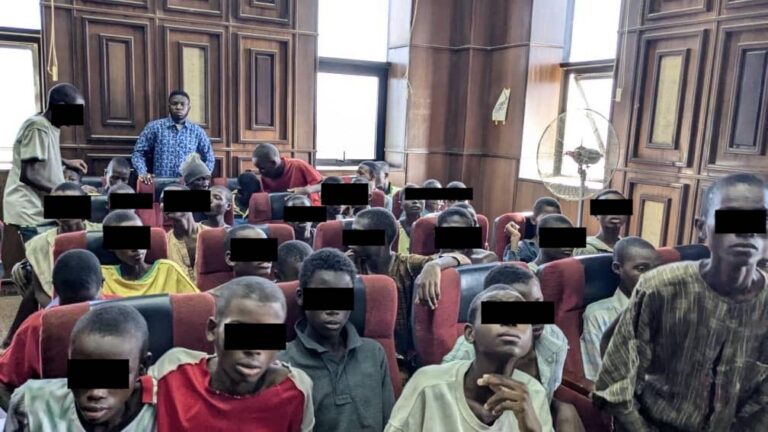
Freed minors arrive Aso Rock, meet Shettima

0

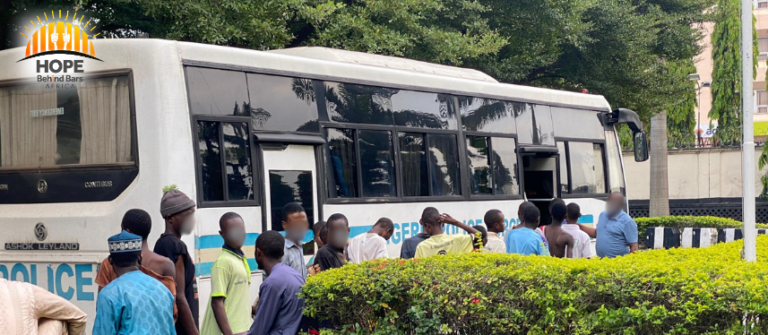
MINORS recently released from detention for their involvement in the August 2024 EndBadGovernance protests arrived at Aso Rock on Tuesday, November 5, to meet Vice President Kashim Shettima. 

The release followed a directive from President Bola Tinubu after widespread public outrage over the minors’ arrests and convictions.

At the ceremony, Vice President Shettima formally handed over 119 minors, along with other individuals prosecuted for participating in the protests, to the governors of Kaduna and Kano states.

Kaduna Governor Uba Sani and Kano Governor Abba Yusuf were present at the villa to receive the minors, alongside key federal officials, including Minister of Education Tunji Alausa, Minister of Humanitarian Affairs and Poverty Reduction Nentawe Yilwatda, Environment Minister Balarabe Lawal, and Minister of State for Education Tanko Sununu.

The minors’ detention had sparked significant national criticism, with rights groups and activists condemning the treatment of the young detainees and calling for their immediate release. 

Earlier today, a federal high court in Abuja dismissed the suit against 119 individuals, including more than 30 minors, who had been charged for their participation in the protests. 

Obiora Egwuatu, the presiding judge, granted the Attorney General of the Federation (AGF) Lateef Fagbemi’s request to take over and terminate the suit, citing constitutional powers under Section 174 of the 1999 Constitution. 

The judge then ordered the immediate release of the accused, most of whom were allegedly minors.

The ICIR reported how the Minister of Information and National Orientation Mohammed Idris disclosed that President Tinubu had directed the release of the detained minors on Monday, November 4, following a nationwide backlash over their recent arraignment. 

The protests, which mobilised thousands across Nigeria, called for government transparency, accountability, and an end to bad governance, with the detention and subsequent charges against minors intensifying public condemnation.

The minors had been charged with a 10-count indictment, including alleged treason and conspiracy to destabilize Nigeria, punishable under the Penal Code Act. 

However, the incident was heightened when some minors, who were among 76 persons set to be arraigned by the Nigerian Police Force (NPF), collapsed in the court on Friday, November 1. One of the defendants slumped while the judge was reading the charges.

Meanwhile, a human rights activist, and Senior Advocate of Nigeria Femi Falana has threatened to sue the FG if the minors (#EndBadGovernance) detained and released are not rehabilitated. 

Falana said this while speaking at the launch of the book, ‘Judicial Terrorism’ by Richard Akinnola, where he was the book reviewer, on Tuesday, November 5.

He stated that the minors cannot just be released, noting that the injustice done to them has to be redressed by their rehabilitation.

CONUA warns of looming crisis in universities over unpaid salaries, welfare

0

THE Congress of University Academics (CONUA) has warned of potential disruptions across Nigeria’s universities if the Federal Government fails to address outstanding welfare issues plaguing academic staff. 

In a statement signed by its national president Comrade ‘Niyi Sunmonu, on Tuesday, November 5, the union raised alarm over withheld salaries, unpaid promotion arrears, and financial strain on lecturers due to stagnant pay amidst rising costs of living.

CONUA expressed frustration over the government’s refusal to release three and a half months’ salaries, a consequence of last year’s ASUU-led strike, despite CONUA members not participating in the industrial action. 

They further argued that penalising its members contradicts a July 2023 National Industrial Court ruling that affirmed the union’s independence and is a direct violation of the Trade Disputes Act, which protects workers’ wages in lock-out situations. 

This, the union insists, not only undermines the integrity of the court’s decision but also demoralises law-abiding lecturers.

Of ASUU, CONUA and FG

The ICIR reported that ASUU downed tools over unmet demands by the Federal Government, including a 2009 agreement with the lecturers, which the government failed to implement.

ASUU went on strike for eight months – from February 14 to October 14.

In what many Nigerians saw as a plan to weaken ASUU, the Buhari government approved the request by CONUA, a breakaway ASUU faction, to be recognised as a labour union. The government also certified the new body during the last ASUU strike.

ASUU consequently called off its strike ten days after CONUA’s certification, executed by the former Minister of Labour and Productivity, Chris Ngige.

The government vowed it would not pay ASUU for the period its members were on strike but would pay CONUA, which it said did not participate in the strike but was forced out of classrooms because ASUU ‘shut the universities’.

However, with the emergence of Bola Tinubu as the president, Tinubu in October 2023, waived the “No Work, No Pay Policy” of the Federal Government and approved the release of four of the eight months’ salaries of ASUU members withheld by the administration of the former President Muhammadu Buhari’s government.

Tinubu, in a statement released by his former Special Adviser on Media and Publicity, Ajuri Ngelale, revealed that the waiver “will allow for the previously striking members of ASUU to receive four months of salary accruals out of the eight months of salary which was withheld during the eight-month industrial action undertaken by the union.”

Consequently, the ASUU chairperson of Usmanu Danfodiyo University, Sokoto, Muhammad AlMustapha, confirmed to The ICIR that the members of the union had begun to receive salaries for March and April 2023 while others were waiting for their turn.

But CONUA, who opted out of the strike, have claimed that they have not received the withheld salary of three and a half months.

CONUA warns of impending disruption 

The union, while criticising the government’s continued withholding of three and a half months’ salaries, maintained that it was unjust to penalise its members for the shutdown of schools.

The union also referenced a July 2023 National Industrial Court ruling that affirms CONUA’s independence as a union. 

“The President should note that withholding the three and a half months salaries of members of CONUA, who neither declared nor participated in any strike action, also contravenes Section 43 (1b) of the Trade Disputes Act CAP. T8, which states that “where any employer locks out his workers, the workers shall be entitled to wages and any other applicable remunerations for the period of the lock-out and the period of the lock-out shall not prejudicially affect any rights of the workers being rights dependent on the continuity of the period of employment”. 

“This provision is consistent with global best practices. In conclusion, CONUA demands that failure to process and pay this outstanding salary could throw the Universities into serious crises, and the peace, currently being enjoyed could be jeopardised,” the union stated.

Unpaid arrears 

CONUA further addressed the government’s recent implementation of a 35 percent and 25 per cent salary increase for tertiary institution staff, but noted that arrears covering January to December 2023 remain unpaid. 

“The Union is using this medium to demand for the immediate payment of this outstanding arrears. Financially debilitated, psychologically challenged, and dispirited lecturers cannot be expected to concentrate on their mentally tasking and physically exhausting tasks of teaching, research, and community service which constitute the mandate of academics.

“This point is particularly quite critical in the light of the unprecedented developmental challenges, which are being created and will be created by the policy measures that are being put in place by the Tinubu administration,” the union’s president said.

Exclusion from the renegotiation committee 

Adding to the tension, CONUA raised concerns over its exclusion from a government renegotiation committee constituted last month, demanding inclusion to ensure fair representation for its members.

The union stated that continuing to make decisions without their input is equivalent to “shaving the heads of its members in their absence.”

Beyond salaries, the union revealed that lecturers are still awaiting promotion arrears and that federal payments for earned academic allowances have been sporadic and insufficient, covering only a fraction of the agreed sessions.

CONUA urged the government to reconsider the hasty implementation of the new 18-year minimum admission age, warning that an abrupt rollout could upend the education system. 

Market competition to make our petrol cheaper, PETROAN replies Dangote

0

THE Petroleum Products Retail Outlets Owners Association of Nigeria (PETROAN), has insisted that the price of premium motor spirit, also known as petrol, it planned to import by December will be cheaper than the current rate if healthy competition is promoted in the sector.

In a statement by its National public relations officer, Joseph Obele, on Monday, November 4, the group said competition must be allowed in a deregulated environment.

Obele disclosed that the group had incorporated a business unit that would enable it to bring in petrol before December.

It disputed the allegation by Dangote Refinery that the marketers intend to import substandard products at a cheaper rate, saying the claims were not surprising.

PETROAN disclosed that it was not aware of the cost of petrol from Dangote Refinery until the refinery released a press statement on Sunday, November 3.

“Intensive or aggressive competition in any market brings the best value for money exchange for a commodity. Consumers get the best value for pricing when competition is at its peak, hence competition should be encouraged.

“Contrarily to competition, such a market will be exploitative and strictly for profiteering.

“The publication by Dangote refinery that PETROAN will import substandard petroleum product is not surprising to stakeholders, because such is his usual gimmick for maintaining monopoly”, Obele stated.

He continued, “It is important to set the records straight that PETROAN has never compared the price of Dangote PMS with any other on the fact that Dangote’s PMS price wasn’t known until this morning at the press release by Dangote Refinery.

Obele informed that PETROAN has concluded plans with her foreign refinery counterparts and financial partners to import the best quality of PMS and then sell far less than the present selling rate of PMS in Nigeria.

“We planned to enter the market before December 2024, pending the approval of our import permit license by the regulatory agency and access to foreign exchange from CBN at the official rate”, he added.

PETROAN called for the speedy completion of the ongoing rehabilitation of the Port Harcourt and Warri refineries, adding that when completed both refineries should be handed over to companies with technical capacity to manage them.

“We will still maintain our position by counselling that the Port Harcourt and Warri Refinery plant after rehabilitation should immediately be privatised and handed over to a reputable firm that has the technical capability, managerial skills, and financial strength in partnership with PETROAN and other critical stakeholders.

“This will enable the operators of the government-owned refineries to withstand aggressive ballistic competition that will be posed by the known beneficiaries of a monopolistic market. Antecedents of the beneficiaries of monopolistic markets have shown numerous suffocating business owners crashing out of other sectors for sole operators in the past.

“Stakeholders’ concern is a prayer that the process of the privatisation should be transparent using the Indorama Petrochemicals as a model as against Maintenance Repairs and Operations (MRO) contract”, he stated.

The ICIR has earlier reported that the  chairman of Dangote Group, Aliko Dangote, on Tuesday, October 29, urged petroleum marketers, including the Nigerian National Petroleum Company Limited (NNPCL) to source petrol directly from his refinery to meet local demands.

Dangote who decried poor patronage from industry stakeholders within Nigeria, confirmed the refinery’s readiness to supply fuel after closed-door talks with President Bola Tinubu at the Aso Rock Villa, Abuja.

He stated that the refinery could produce over 30 million litres of fuel daily at full capacity and was holding 500 million litres in reserve, enough to supply the country for over 12 days without imports.

Conversely, PETROAN has confirmed that beyond Dangote’s patronising appeal, healthy competition will ensure Nigerians pay appropriate pricing for the product without being exploited.

“We’re desperately looking for better way to serve Nigerians. Our concern is  to source from a moderately cheaper price and ensure price affordability to serve Nigerians better, even if it means cheaper import, we’ll do that,” PETROAN said.

Court throws out case against #EndBadGovernance protesters

0

A FEDERAL High Court (FHC) in Abuja has thrown out the suit against 76 persons charged for participating in the nationwide #EndBadGovernance protest in August.

The judge, Obiora Egwuatu, struck out the suit on Tuesday, November 5, following an application by the counsel to the Attorney General of the Federation (AGF), Mohammed Abubakar, to take over and terminate the suit.

The AGF, Lateef Fagbemi, represented by the Director of Public Prosecution of the Federation (DPPF), said at the proceedings that he is exercising his power under Section 174 of the 1999 Constitution to take over the case from the Inspector General of Police (IGP), Kayode Egbetokun.

After the judge, Egwuatu, granted the AGF’s request, the AGF then asked for the invocation of the same clause of the Constitution to end the trial of the 119 accused.

The request was granted by Egwuatu, who struck out the charges after several lawyers for the accused did not oppose.

The judge ordered the accused, the majority of whom are allegedly minors, to be released from prison immediately, even though they were not present in court.

The ICIR reported that President Bola Tinubu on Monday, November 4, ordered the release of minors arrested, detained, and charged to court for alleged involvement in the EndBadGovernance protests, following widespread outrage over their recent arraignment.

This was disclosed by the Minister of Information and National Orientation, Mohammed Idris, while briefing the State House correspondents shortly after the President swore in seven newly appointed ministers.

The arrest, detention and subsequent arraignment of the boy protesters sparked national backlash, with many Nigerians and human rights groups condemning what they described as inhumane and unjust treatment of children.

The ICIR reports that during the #EndBadGovernance protests, which drew thousands of Nigerians to the streets in a movement advocating for governmental transparency, accountability and an end to police brutality, several young protesters were arrested and detained. Among those detained were minors, reportedly held in various facilities under challenging conditions.

Recall that the minors who appeared in court on Friday, November 1, have been charged with a 10-count charge bordering on alleged treason and conspiracy to commit a felony with intent to destabilise Nigeria, an offence contrary to Section 96 and punishable under Section 97 of the Penal Code Act.

Howeverthe incident was heightened when some minors, who were among 76 persons set to be arraigned by the Nigerian Police Force (NPF), collapsed in the court on Friday, November 1. One of the defendants slumped while the judge was reading the charges.

While announcing the president’s directive for their release, the information minister stated that it was without prejudice to whatever legal processes are ongoing.

Tinubu further directed the Ministry of Humanitarian Affairs and Poverty Reduction to attend to the welfare of the minors promptly and to assist in facilitating their smooth reunion with their parents or guardians, wherever they may be in the country.


EFCC arrests ex-Delta governor Okowa for alleged fraud

1

THE Economic and Financial Crimes Commission (EFCC) has arrested a former Governor of Delta State, Ifeanyi Okowa, for alleged diversion of N1.3 trillion (13 per cent) derivation fund from the federation account between 2015 and 2023.

According to Channels Television, the information was obtained on Monday, November 4, by an EFCC source.

The source claims that the former governor was taken into custody on Monday in Port Harcourt, Rivers State, after reporting to the EFCC’s Port Harcourt Directorate at the request of the detectives working on his case.

He was arrested after he honoured the invitation of the anti-graft agency.

The former governor was accused of failing to provide accounts of the cash along with another N40 billion he allegedly claimed to have used to purchase shares in UTM Floating Liquefied Natural Gas.

In particular, Okowa is being accused of purchasing N40 billion worth of shares in one of the nation’s largest banks, which accounted for 8 per cent of the stock, in order to float the offshore LNG. It was claimed that the money was used for other uses.

Investigators are also examining the diversion of funds by the former governor to acquire estates in Abuja and Asaba in Delta State.

The former governor was currently being held at the EFCC holding facility in Port Harcourt.
Okowa was the running mate to Atiku Abubakar, the presidential candidate of the Peoples Democratic Party (PDP) in the 2023 election.

Investigators are also looking into how the former governor misappropriated money to buy properties in Asaba, Delta State, and Abuja FCT.

Reports say he is currently being detained at the EFCC facility in Port Harcourt, Rivers State.

Okowa was the running mate to former vice president Atiku Abubakar when he contested for president under the Peoples Democratic Party (PDP) in 2023.

Attempts to confirm the news from the EFCC were unsuccessful, as the spokesperson to the commission, Dele Oyewale, did not respond to messages sent to his phone, and calls to his mobile lines did not go through.