Home Blog Page 441

Dangote sells petrol at N960/litre to ships, N990 For trucks —official

0

DANGOTE Refinery has disclosed the price of its petrol, saying that it sells at N990 per litre in trucks and N960 per litre in ships.

The disclosure followed earlier concerns by marketers that imported petrol costs N80 less than that of Dangote Refinery.

Both, the Independent Petroleum Marketers Association of Nigeria (IPMAN) and Petroleum Products Retail Outlets Owners Association of Nigeria (PETROAN) had claimed that importing the products is cheaper when compared to that of Dangote.

The marketers made their position in an earlier interview where they claimed that they are buying at cheaper rates abroad while calling on Dangote Refinery to engage stakeholders.

But in its reaction, the refinery said that it is only substandard products that can be imported at cheaper rates than its products.

In a statement released Sunday, November 3 and signed by the group’s chief branding and communications officer, Anthony Chiejina, Dangote Refinery noted that it followed the pricing benchmark by the Nigerian National Petroleum Company Limited (NNPCL), adding that it went lower in pricing for selling into ships.

It reads, “Both organisations claim that they can import PMS at lower prices than what is being sold by the Dangote Refinery. We benchmark our prices against international prices and we believe our prices are competitive relative to the price of imports.

“If anyone claims they can land PMS at a price cheaper than what we are selling, then they are importing substandard products and conniving with international traders to dump low-quality products into the country, without concern for the health of Nigerians or the longevity of their vehicles. Unfortunately, the regulator (NMDPRA) does not even have laboratory facilities which can be used to detect substandard products when imported into the country.

“Post deregulation, NNPC set the pace by selling PMS to domestic marketers at N971 per litre for sale into ships and at N990 for sale into trucks. This set the benchmark for our pricing and we have even gone lower to sell at N960 per litre for sale into ships while maintaining N990 per litre for sale into trucks.

“In good faith, and the interest of the country, we commenced sales at these prices without clarity on the exchange rate that we will use to pay for the crude purchased,” he stated.

Dangote also alleged that an international trading company has recently hired a depot facility next to its refinery, to use it to blend substandard products that will be dumped into the market to compete with the refinery’s higher-quality production.

“This is detrimental to the growth of domestic refining in Nigeria. We should point out that it is not unusual for countries to protect their domestic industries to provide jobs and grow the economy. For example, the US and Europe have had to impose high tariffs on EVs and microchips to protect their domestic industries.

“While we continue with our determination to provide affordable, good quality, domestically refined petroleum products in Nigeria, we call on the public to disregard the deliberate disinformation being circulated by agents of people who prefer for us to continue to export jobs and import quality. ”

The ICIR reports that Dangote has decried poor patronage from major oil marketers and the NNPCL-an issue that raised unanswered questions about preference for imported fuel as against the locally refined one which ought to be cheaper as a result of local refining.

NBA condemns prolonged detention of minors, demands release, relocation

0

THE Nigerian Bar Association (NBA) has condemned the continued detention and trial of minors allegedly involved in the #EndBadGovernance protests.

In a statement, on Saturday, November 3, the Association President, Mazi Afam Osigwe, urged the Federal Government to either release the minors or transfer them to facilities closer to their families.

Osigwe, who is a Senior Advocate of Nigeria (SAN) while expressing concern over the conditions under which the minors are being held, described it as damaging to Nigeria’s reputation and reflective of broader issues in the country’s criminal justice system.

He added that images of malnourished children appearing in court serve as an indictment of how the justice system treats detainees before trial.

The ICIR reports that during the #EndBadGovernance protests, which drew thousands of Nigerians to the streets in a movement advocating for governmental transparency, accountability, and an end to police brutality, several young protesters were arrested and detained. Among those detained were minors, reportedly held in various facilities under challenging conditions.

Recall that, the minors who appeared in court on Friday, November 1, are being slammed with a 10-count charge bordering on alleged treason, as well as conspiracy to commit a felony with intent to destabilise Nigeria, an offence contrary to Section 96 and punishable under Section 97 of the Penal Code Act.

The ICIR reports how many Nigerians raised concerns regarding the severity of the charges, the due process afforded to the defendants, and the potential infringement on the rights of minors involved. 

Many took to social media to condemn the handling of the protests and urge the government to ensure justice.

The incident was heightened when some minors, who were among 76 persons set to be arraigned by the Nigerian Police Force (NPF), collapsed in the court on Friday, October 1.

One of the defendants, a minor who is under 18 years old, slumped while the judge was reading the charges.

The boy was taken to the court’s clinic with the lawyers present in the courtroom.

Reacting to this, the NBA president urged that, should the government proceed with charges, the minors should be transferred back to their original communities, where families can better arrange legal support and provide the emotional support necessary for the trial process. 

Osigwe stressed that proximity to family is crucial, especially in such cases, to ensure detainees’ rights are respected and to allow families to advocate on their behalf.

“This does not make us look good at all. It makes the credence of our correctional facilities and our pre-trial detention condition questionable and deplorable and portrays a negative image of us in the international community.

“Every effort must be made, either to release them (suspects) immediately on account of their long period of incarceration and be reunited with their families or if the Federal Government insists on trying them, they should be returned to the places where they were arrested, so that they will be close to their families and their families will be able to arrange for legal services for them and also be close to them and be able to follow the trial.

“It does not speak well of our criminal justice system that such children, looking malnourished, are being charged, showing that we have treated them poorly before their trial in court.” – Mazi Afam Osigwe, wrote.

SSANU, NASU suspend strike after agreement with FG

0

THE joint action committee of the Senior Staff Association of Nigerian Universities (SSANU), and the Non-Academic Staff Union of Educational and Associated Institutions (NASU) have announced  suspension of ongoing strike following renewed commitments from the Federal Government to meet key demands.

The strike is to be suspended from Tuesday, November 5, about a week after striking university workers down their tools.

The unions, which represent a significant portion of Nigeria’s university workforce, initiated the industrial action on October 28 to demand their withheld salaries, improved welfare, among others.

The strike, which had disrupted non-teaching activities across campuses, was suspended a day after the federal government said it had begun paying NASU members.

This notice of suspension was made known in a strike update sent to the chairpersons of branches across the country on Sunday, November 3.

On Saturday, the federal government announced that it has released funds to initiate payments of outstanding salaries to members of the NASU in federal universities, along with retirement benefits to retirees under the Nigerian Union of Pensioners Contributory Pension Scheme.

A statement by the director of press and public relations at the Office of the Accountant-General of the Federation (OAGF), Bawa Mokwa, said the payments to NASU members had commenced, with many beneficiaries already confirming receipt of their salaries and benefits.

While emphasising its dedication to addressing longstanding financial obligations within federal institutions, the Office of the Accountant-General also reaffirmed the government’s commitment to the welfare of Nigerian workers and retirees.

Reacting to this, the statement jointly signed by SSANU President Mohammed Ibrahim and NASU General Secretary Peters Adeyemi noted that the decision to suspend the strike followed “several extensive and exhaustive deliberations” with top government officials, including the new Minister of Education, the and the Minister of Finance.

The unions noted that through these engagements, they secured an “irrevocable commitment” from the government to release two months’ worth of withheld salaries in batches —one month by the end of October (which has reportedly been largely fulfilled) and the second month by the end of November.

The statement also emphasised that ongoing discussions with the government continue regarding the remaining two months’ withheld salaries, the N50 billion in Earned Allowances, the arrears of 25/35 percent, and a proposed Wage Award. 

“Arising from the above and in view of the level of commitment exhibited by the new minister and the leadership of the Department of State Services, the leadership of JAC, after several contacts and other patriotic considerations, hereby directs that the ongoing indefinite strike be suspended for one- month effective Tuesday, 5th November, 2024.

“Branch leaders of both NASU and SSANU are hereby directed to convene a joint Congress in their respective campuses on Monday, 4th November, 2024 and intimate members of these development and urge them to resume work on Tuesday, 5th November, 2024.

“We wish to also reiterate that discussions on the remaining 2 months, the N50 billion Earned Allowances, Arrears of 25/35 per cent and the Wage Award have been revisited and are undergoing deliberations.

The ICIR reported on Monday, October 28, that SSANU and NASU commenced an indefinite strike over unmet demands from the Federal Government.

The committee announced the strike in a statement on Sunday, October 27,  jointly signed by the national president of SSANU, Mohammed Ibrahim, and the general secretary of NASU, Peters Adeyemi.

They noted that the ultimatum they gave the government over their members’ withheld salaries would expire Sunday midnight.

The unions are demanding, among others, the payment of their four-month withheld salaries, improved remuneration, earned allowances and implementation of the 2009 agreement with the government.


Tinubu to swear in seven new ministers on Monday

0

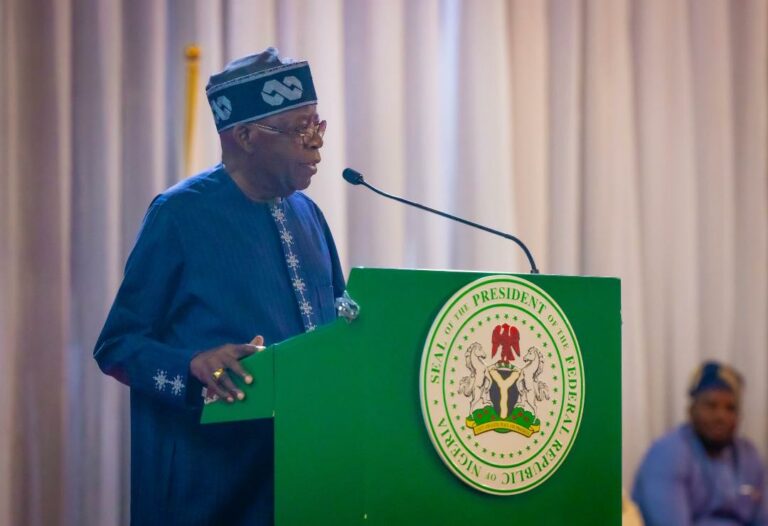
PRESIDENT Bola Tinubu will, on Monday, November 4, swear in seven newly appointed ministers following their confirmation by the Senate last week. 

A statement by the presidential aide Bayo Onanuga, on November 3, stated that the ceremony would take place at the Presidential Villa in Abuja.

With the swearing-in, the total number of ministers serving in the administration of Tinubu would be 48.

The new ministers, according to the statement include: Nentawe Yilwatda, who will lead the Ministry of Humanitarian Affairs and Poverty Reduction, and Muhammadu Maigari Dingyadi as Minister of Labour and Employment. Bianca Odinaka Odumegwu-Ojukwu will serve as Minister of State for Foreign Affairs.

Jumoke Oduwole has also been appointed Minister of Industry, Trade, and Investment, while Idi Mukhtar Maiha will take on responsibilities as Minister of Livestock Development. 

Others are Yusuf Abdullahi Ata the Minister of State for Housing and Urban Development, and  Suwaiba Said Ahmad the Minister of State for Education.

Recall that Tinubu on Wednesday, forwarded names of new ministers he appointed to the Senate for confirmation.

The President’s request was contained in a letter addressed to the Senate President, Godswill Akpabio, and read during plenary on Thursday, October 24.

Consequently the Senate, on Wednesday, October 40, confirmed the appointments of the seven new ministerial nominees.

The Senate President, Godswill Akpabio, announced the confirmation of the ministers after they were cleared through a voice vote by senators at the plenary.

The nominees were screened and approved by senators in the Committee of the Whole, led by the Senate President. 

Some of the ministers, including Dingyadi and Ata, were exempted from questioning during the screening as they were asked to introduce themselves and then permitted to “take a bow and go.”

The ICIR reported that Tinubu fired five of his ministers on Wednesday.

He also sacked the minister of humanitarian affairs and poverty reduction, Beta Edu, whom he suspended in January over corruption allegations.

This decision was contained in a message posted on X by the presidency on Wednesday, October 23.

The ministers sacked are Uju Kennedy-Ohanneye (women affairs), Lola Ade-John (tourism), Tahir Mamman (education), Abdullahi Muhammad Gwarzo (state, housing, and urban development), and Jamila Bio Ibrahim (youth development).


Lawmakers launch inquiry into $2bn renewable energy investment

0

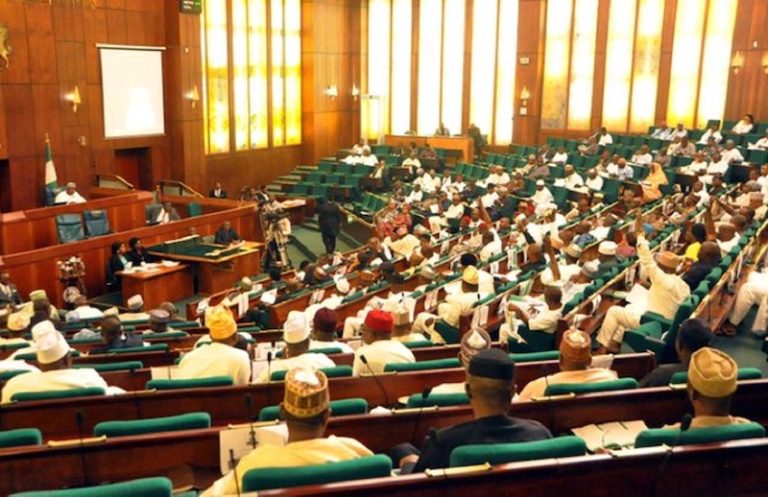
The House of Representatives Committee on Renewable Energy has summoned stakeholders to an investigative hearing regarding the $2 billion in renewable energy grants and investments in Nigeria.

The Committee noted that this investment has not significantly addressed the country’s energy security issues.

In July 2024, President Bola Tinubu announced at the Africa Natural Resource and Energy Investment Summit in Nigeria that the country had secured over $2 billion in investments within the sector over the last ten years.

The investigative hearing is scheduled for Tuesday and Wednesday, November 5 and 6, 2024, following a mandate issued to the Committee on June 6, 2024, to examine the Ministries, Departments, and Agencies involved in investments, procurement, and grants related to the development of the renewable energy sector.

In a statement released on Sunday, November 3 2024 by the Committee Chairman, Victor Ogene, in Abuja, it was noted that the investigation will focus on the period from 2015 to 2024.

The lawmaker expressed astonishment that despite the government securing over $2 billion in renewable energy investments in the last decade, as reported by the Rural Electrification Agency in 2023, there has been no significant progress in the sector.

“The House of Representatives was alarmed that the dysfunctional electricity generation and supply system persists, contrary to the objectives behind government investments and grants aimed at developing the renewable energy sector. Hence, the resolution to probe these investments to determine the integrity of the procurement and execution processes.” Ogene stated

He emphasised that the investigation is not a witch-hunt but an initiative aimed at discouraging corrupt practices and promoting transparency and accountability in the management of government resources.

The House’s decision came after the adoption of a motion titled “Need to Investigate Investments in the Renewable Energy Sector and Foreign Grants Received from 2015 Till Date,” which was sponsored by Mr. Okey-Joe Onuakalusi, the lawmaker representing Oshodi-Isolo II Federal Constituency in Lagos State.

In the leading debate, the lawmakers highlighted that inadequate electricity generation, transmission, and distribution represent a serious threat to the nation’s industrial and technological development objectives.

The lawmakers stated that successive governments since 2015 have made significant investments and secured multimillion-dollar foreign grants for Nigeria’s renewable energy sector to establish a viable and sustainable alternative energy supply. They pointed out that in December 2023, the World Bank approved a $750 million facility aimed at enhancing renewable energy access in Nigeria, which is expected to benefit over 17.5 million Nigerians through distributed renewable energy solutions.


READ ALSO:


Additionally, they noted that the federal government launched a $200 million initiative in 2020 called the ‘Nigeria Electrification Project,’ which is designed to provide off-grid energy to more than 500,000 people across 105,000 households in rural areas, funded by the African Development Bank.

Agencies invited to participate in the public hearing include the Rural Electrification Agency, Nigerian National Petroleum Company Limited, and Nigerian Content Development and Monitoring Board, among others.

Also on the list are representatives from the European Union, Union Bank Plc (Compliance Department), and various federal ministries related to power, science, and agriculture, as well as the United States Agency for International Development (USAID) and other relevant organisations.

SERAP calls for immediate release of detained minors

0

THE Socio-Economic Rights and Accountability Project (SERAP) has called on President Bola Tinubu to instruct Attorney-General and Minister of Justice Lateef Fagbemi to secure the release of all #EndBadGovernance protesters, including the “32 hungry and malnourished children.”

SERAP expressed concern that the children and other protesters were detained solely for peacefully exercising their human rights.

This appeal was outlined in a letter dated November 2, 2024, but made available to journalists on Sunday, November 3, 2024, and signed by SERAP’s deputy director, Kolawole Oluwadare.

SERAP warned that the detention of these protesters could deter other citizens from exercising their rights and stated that if the President does not act on its recommendations within 48 hours, it will pursue legal action against him.

The letter also sent to Matthew Gillett, Chair-Rapporteur of the United Nations Working Group on Arbitrary Detention, called on President Tinubu to instruct Fagbemi and relevant law enforcement agencies to swiftly investigate the serious human rights violations against the detained children and protesters. It urged authorities to hold those responsible accountable and to provide justice and remedies for the victims.

“Direct Mr. Fagbemi and appropriate agencies to ensure immediate access to medical treatment for all the protesters, including the 32 hungry and malnourished children, whose health is deteriorating.” The statement read.

The organisation argued that charging and detaining children solely for peacefully exercising their human rights is undoubtedly not in the best interests of the child, and emphasized that their detention infringes on their right to education.

“The apparent ill-treatment of the protesters, including the 32 hungry and malnourished children, has highlighted the appalling conditions in Nigeria’s prisons, which continue to put lives at risk. The ongoing arbitrary detention of the protesters creates a climate of fear, discouraging other citizens from freely exercising their human rights and leading to a broader chilling effect.

“We would be grateful if the recommended measures were taken within 48 hours of the receipt and/or publication of this letter. If we have not heard from you by then, SERAP shall consider appropriate legal actions to compel your government to comply with our request in the public interest.” The statement continued.

SERAP expressed concern that Nigerian authorities are using the criminal justice system as a tool to restrict the rights of detained children and other protesters, limiting their freedoms of expression, peaceful assembly, and liberty. SERAP noted that the protesters’ rights to life, health, and safety are being compromised in detention and argued that charging and detaining them is neither necessary nor proportionate.

Inspector-General of Police Olukayode Egbetokun filed ten charges against the defendants, including treason and incitement to mutiny by encouraging the military to depose the president.

The ICIR reports that on Friday, November 1, 2024, 76 suspects, mainly underage and appearing undernourished, were brought to court for charges related to the #EndBadGovernance protest. Some of them fainted and were quickly taken out of the courtroom.

However, the inspector-general of Police, Kayode Egbetokun claimed that the suspects who collapsed in court before their arraignment did so intentionally, as part of a planned effort to draw negative publicity.

Justice Obiora Egwuatu of the Federal High Court in Abuja has granted bail to the 76 #EndBadGovernance protesters, setting bail at a total of ₦760 million, with each defendant requiring two sureties.

Meanwhile, the Attorney-General of the Federation, Lateef Fagbemi has indicated his intention to assume control of the case from the Inspector-General of Police, expressing his commitment to dropping the charges against the 32 minors who were arraigned.

FG sets Q1 deadline for $5bn African energy bank take-off

THE Nigerian government has contributed $69.1 million part equity funding to the Africa Energy Bank. It has also set a first quarter(Q1) target for the take-off of the Bank in Nigeria’s federal capital Territory, Abuja.

The government has also called on other African Petroleum Producers Organisation (APPO) member countries to accelerate their financial commitments to the bank to facilitate the take-off at the scheduled time.

Nigeria’s minister of state for petroleum resources (Oil), Heineken Lokpobiri, while speaking to the ministers of the 18 APPO member States, reaffirmed Nigeria’s commitment to the bank’s establishment.

A statement issued by Nneamaka Okafor, the special assistant to the minister on media and communications, on Saturday, November 2, said, “With preparations progressing steadily, the bank is expected to launch operations in the first quarter of 2025, a move that represents a major advancement in Africa’s energy sector.”

Lokpobiri expressed Nigeria’s enthusiasm for the project, saying “We are prepared to host the Africa Energy Bank, and our dedication to enhancing funding for Africa’s energy sector remains unwavering.”

The ICIR reports that a cornerstone of the Bank’s mission is to bridge financing gaps within Africa’s oil and gas industry, facilitating advancements in energy infrastructure across the continent.

Lokpobiri emphasised that the Federal Government, under President Bola Ahmed Tinubu’s leadership, has taken significant steps to lay the groundwork for the Bank’s strategic objectives.

“Our commitment is underscored by Nigeria’s contribution of $69.1 million in equity funding to the Africa Energy Bank, which demonstrates our leadership role in supporting critical energy initiatives on the continent,” he noted.

Beyond financial contributions, Nigeria has also formally signed and ratified the AEB Establishment Agreement and Charter, a development that APPO has praised as a significant leap toward establishing the Bank. With the Treaty now in effect, the legal and operational framework is set, paving the way for the AEB’s launch and enabling it to advance its objectives of enhancing energy security and promoting sustainable development across the continent.

Lokpobiri further called on other APPO member countries to join Nigeria in accelerating their financial commitments to the Bank. “I urge all member countries to expedite their subscription and payment of their allocated shares to the AEB. Together, we can achieve remarkable advancements in our energy sectors and establish ourselves as a continental energy hub,” he stated.

The Africa Energy Bank represents a unified effort to support Africa’s long-term energy security, and Nigeria’s commitment as a host nation underscores its dedication to fostering regional energy independence. With final preparations underway, Nigeria is poised to welcome the AEB, bringing the continent closer to a future where sustainable energy infrastructure is within reach for all.

An oil sector expert, and the President of the Petroleum Products Retail Outlets Owners Association of Nigeria (PETROAN) Billy Gillis-Harry who spoke on the development told the ICIR that facility from the bank at a single-digit interest rate will gradually impact fuel price stability in Nigeria.

“We need a bank like this to enable our business in the petroleum retail sub-sector. If we can access facility from them at a single digit interest rate, it will help gradually stabilise the fuel price which is largely being affected by exchange rate volatility problems, “Billy Gillis-Harry said.

Bobrisky granted bail after denying N15m bribe voice note

0

THE Economic and Financial Crimes Commission (EFCC) has granted bail to Idris Okuneye, popularly known as Bobrisky, a well-known cross-dresser.

EFCC spokesperson Dele Oyewale confirmed Bobrisky’s release on Saturday, November 2 2024 but declined to provide additional details.

The ICIR reported that Bobrisky was detained late Thursday night at Lagos’s Murtala Muhammed International Airport while boarding a KLM flight to Amsterdam en route to London, UK.

Following the incident, he informed his social media followers of the arrest, mentioning that he had sustained injuries during the encounter.

He was later flown to the EFCC headquarters in Abuja, where he was questioned regarding his bribery allegations against the commission.

In an audio recording shared by social critic Martins Otse, known as VeryDarkMan, Bobrisky allegedly claimed he had paid EFCC officers N15 million to dismiss money laundering charges against him.

However, according to The Punch, a source privy to the situation revealed that Bobrisky denied the bribery allegation in his statement at the EFCC headquarters. The source further mentioned that Bobrisky challenged the individual who posted the audio clip to substantiate it.

“He denied everything about releasing money to any official as a bribe to drop the money laundering charges against him. He denied it in his statement. He said the fellow who posted the voice note should come over to justify it. He said nobody requested money from him in the EFCC and he didn’t give anyone anything,” the source noted

Road to extortion: security forces prey on travellers on Lagos-Cotonou-Lome-Accra route [part 3]

0

By Ibanga ISINE

IN parts I and II of this series, we revealed the impressive efficiency of security agents stationed at over 175 checkpoints, who managed to extract a modest N253,596 from a 10-seater bus on the notorious international highway connecting Nigeria, Benin, Togo, and Ghana. Truly, a masterclass in law enforcement “service.” In this third part, Gaurd Post takes a deep dive into our reporter’s tormenting (and money-sapping) encounters during the dangerous journeys. We hope this report prompts Nigeria, Benin Republic, Togo, and Ghana to finally round up their checkpoint cowboys and maybe—just maybe—give the dusty ECOWAS Treaty on free movement of people and goods the attention it deserves.

Read part 1 HERE and Read part 2 HERE


Passing through the camel’s eye

It is easier for a camel to squeeze through the eye of a needle than for West African nationals to travel by road across the sub-region. Our correspondent went undercover on six trips from Ghana to Nigeria and six more back to Ghana.

To fully understand the severity of the problem, we will in the coming parts examine the experiences of our correspondent more closely. Hopefully, it will serve as a wake-up call for authorities to act before these injustices become the accepted norm.

Nigeria’s cocktail of Interlocking checkpoints along Badagry-Seme Border

The Badagry-Seme border, a crucial gateway linking Nigeria to Benin Republic and the broader West African sub-region, has long become notorious for the staggering number of security checkpoints lining the route.

As shown in our previous reports, the 132 checkpoints operated by 10 agencies of the Nigerian government have created a punishing experience for travellers. While the intended goal might have been for enhanced national security and to combat smuggling, the proliferation of the roadblocks has led to excessive delays, harassment, and the extortion of road users, especially commercial drivers and passengers. Let us look at the operations of the agencies of the Nigerian government on the route.

Nigerian Police

Despite having little statutory responsibility for border patrols, the Nigerian Police have managed to set up a jaw-dropping 62 checkpoints along the kilometre stretch from Badagry to the Seme border —31 for incoming traffic and another 31 for those headed out.

Commercial buses leaving the country or coming in faced fewer disruptions but the constant confrontations between police and local bus and taxi drivers at each checkpoint resulted in nerve-racking delays.

It is, however, important to note that the checkpoint count did not include any within the inner city of Lagos itself. We began the tally from Badagry.

Category Inbound Outbound Total
Number of Checkpoints 31 31 62
Personnel per Checkpoint 4 4 4
Total Personnel Deployed 124 124 248
Number of Arms per Officer 4 per checkpoint 4 per checkpoint 4 per checkpoint
Total Number of Arms 31 x 4 = 124 31 x 4 = 124 248

Table 1 shows the number of checkpoints, personnel, and arms along both lanes of the Badagry-Seme border route.

Is it not very interesting that a country grappling with pervasive insecurity and an outrageously low police-to-citizen ratio would deploy such number of personnel and arms to an 18 kilometre stretch of road?

Little wonder when many drivers claim that a majority of the officers pay huge sums to secure postings to the border. Some are even said to go as far as getting loans with Shylock-level interests to make it happen.

A former Nigerian Deputy Inspector General of Police (IGP), who cannot be named, said an average police division has 80 personnel while the bigger ones in places like Lagos, Anambra and Rivers states and Abuja may have up to 200 and above.

When informed about the checkpoints and personnel we encountered along the Badagry-Seme Highway, he blamed the situation on poor coordination between the Force Secretary and the Operations Department in assigning the personnel.

“In a country facing severe security challenges, it’s entirely wrong to have that many checkpoints on a single stretch of road,” he began.

“This reflects a breakdown in communication between the Force Secretary’s office and the Department of Operations at the Force Headquarters. They’re not aligning on where officers are actually needed.

“There’s simply no reason to concentrate so many officers on one road while vast areas remain poorly policed,” the former DIG argued.

This was reechoed by Nigeria’s Inspector-General of Police (IGP) Olukayode Egbetokun on August 31, when he said insufficient manpower was hindering the efforts to tackle crime, saying that additional 190,000 personnel were needed to effectively police the country.

While the United Nations (UN) recommends one police personnel to 460- citizen ratio, he said Nigeria has a police-citizen ratio of 1:650. “The NPF requires an additional 190,000 personnel to be at parity with the United Nations recommended ratio,” said  Egbetokun.

Could it be true the IGP is not aware of the deployment to Badagry/Seme Highway?

Despite the many police checkpoints along the Badary-Seme route, commercial bus drivers going to Ghana pay relatively low amounts in extortion to the police. Out of the 12 trips embarked by our correspondent, it was only once that a driver paid N1,000 to a police officer in one of the checkpoints but they were actively extorting buses and taxis operating the local route.

Attempts to contact the Force Public Relations Officer, Olumuyiwa Adejobi, and the Lagos State Police Public Relations Officer (PPRO), Benjamin Hundeyin, regarding our findings were unsuccessful, as both officials did not answer phone calls or respond to text messages sent to their verified phone numbers. 

Nigerian Immigration Service (NIS)

The Nigerian Immigration Service (NIS) reigns supreme in extortion along the Badagry-Seme corridor, with an impressive 28 checkpoints. The most infamous of these is in Gbaji, where officers routinely halt vehicles and detain travellers for reasons that can only be described as absurd.

During several trips, our correspondent witnessed the NIS’s extortionary talents in action. While there were many contenders for “most outrageous incident,” one particular episode took the prize for sheer audacity.

Our correspondent was on a Lagos-to-Accra journey with a well-known transport company, and the bus had barely left the terminal when the driver’s phone rang. It was his colleague, the driver of the first bus, sounding like a man in a battle zone. Our correspondent was on the front seat of the vehicle with the driver.

The embattled driver, who had left an hour earlier, reported that two of his passengers had been detained by immigration officials at Gbaji. When the bus finally rolled up to the scene, our correspondent saw the two women sitting in the NIS’s shade by the roadside.

An operative named Victor, standing about 5.7 feet tall with a chocolate complexion, called out a name. A woman on the bus with our correspondent responded, and without missing a beat, Victor ordered her off the bus to join the two ladies already detained.

Unknown to passengers, the NIS operatives had already decided that the two earlier detainees were being trafficked to Ghana. Both women, who were over 25, tried to explain that they were traveling with a relative, who happened to be on the same bus as our correspondent, to work at her restaurant in Accra.

In an effort to prove her legitimate business, the lady who had been yanked off the bus by Victor presented both her resident and business permits, issued by the Ghanaian authorities. She explained that she owned a thriving restaurant in Accra and had brought the two ladies along to help cook special Nigerian dishes that were in high demand.

But the NIS operatives weren’t biting. Despite her papers and elaborate explanations, they insisted she was trafficking the women for prostitution. Unfazed, the two bus drivers refused to leave their passengers at the mercy of the unyielding officers and instead began negotiating for their release.

After nearly two hours of back-and-forth, N30, 000 was handed over to the operatives, and the women were finally freed. Of course, no receipt was issued, because who needs paperwork where extortion has become an art?

Our correspondent recorded a minimum of N14,000 shaken down, and running over into corrupt pockets during each trip he embarked on.

The operatives were simply perfect in the art of highway robbery, one checkpoint at a time, without any side of bureaucracy to keep things official. After all in West Africa, a road trip is dull and uninteresting without a little extortion and harassment to spice things up.

When reached for comment, Enoch Aparshe, spokesperson for the Seme Border Command of the NIS, gave us the classic “not us!” response, assuring that his command has never been involved in shady deals.

He did, however, point out that the NIS only operates a “modest” five checkpoints—just three stationary and two mobile ones, all approved by the government.

Because, you know, nothing speaks to efficient border control like a cocktail of checkpoints stretched from Mile 2 to the Seme Border, run by the NIS, whose sole job is to stop irregular migration (and apparently not hold up traffic or extort motorists).

“You can verify from the reports of the Inter-Ministerial committee set up to checkmate the multiplicity of checkpoints along the corridor,”  Aparshe said.

Nigerian Customs Service (NCS)

The Nigerian Customs Service (NCS) had the third-highest presence along West Africa’s notorious extortion corridor, with 24 checkpoints.

The service, which had a clean record during my 2019 investigation only extorted from the vehicles our reporter boarded at two checkpoints in Gbaji while entering and or leaving the country.

At the remaining checkpoints, the operatives generally waved drivers through, unless the vehicles were carrying large quantities of goods, in which case they were stopped for inspection and likely extortion.

In the course of our investigation, we found that drivers plying the Lagos- Accra route constantly drop (pay) a minimum of N2,000 at the two NCS checkpoints in Gbaji.

Husaini Abdullahi, spokesperson for the NCS Seme Border Command, explained that his agency operates only two approved checkpoints and patrol bases.

“There’s a difference between a checkpoint and a patrol base. Patrol bases are set up in areas where we suspect smuggling activity, and we strategically deploy officers there. They aren’t checkpoints,” he said.

He added, “I don’t think we have the number of checkpoints you mentioned. We have a specific function we’re performing along that corridor.”

However, Abdullahi did promise to follow up: “I will cross-check with the relevant authority in our office to confirm the exact number, but I really don’t think it matches what you’re saying.”

When informed that NCS operatives at Gbaji were extorting drivers, Abdullahi responded, “We have three layers of operations in Gbaji—the Federal Operations Unit, the Border Drill, and the Command. I don’t think our officers are collecting money from drivers. That’s not even within our jurisdiction. Why would Customs collect money from drivers? What for?”

After being told our correspondent witnessed the extortion during six trips into Nigeria and six out, he softened his stance: “I’m not arguing with you. We will investigate this. I’ll discuss the matter with my controller, and we’ll take action. By God’s grace, I will get back to you with our findings.”

Nigerian Army (NA)

The Nigerian Army was not left out of the checkpoint party along the infamous route. They set up a cocktail of three checkpoints on each side of the dual carriageway between Badagry and Seme – and they were committed to their work! But when it came to extortion, their approach was more of “gentle persuasion” than full-blown aggression.

At one of the three checkpoints on either side of the highway, the soldiers worked with NCS operatives in a joint operation against diehard smugglers.

Our correspondent found that long-distance drivers had an unwritten rule: they simply had to drop off a “donation” at the soldier-manned checkpoints. Like submissive congregants at a very unconventional church service, offerings were casually surrendered in exchange for a polite wave to continue their journey.

Who would have believed that a road trip would come with such a charming blend of military decorum and extortion? In their very peaceful and friendly approach, the Army only collected a paltry N2,000 from all the vehicles our correspondent boarded.

We tried reaching  the Army’s Director of Public Relations,  a Major General, Onyema Nwachukwu,through his verified mobile number and WhatsApp, hoping to discuss the little offering his soldiers were getting from motorists along the Badagry-Seme Highway.

But it seems the Major General had his phone on “do not disturb,” and neither picked up calls nor responded to our WhatsApp messages.


The State Security Service (SSS)

The  State Security Service (SSS) set up two checkpoints, one on each side of the dual carriageway. While the Nigerian secret police managed to keep things calm and drama-free with drivers, they never missed out on receiving seeds, which radical Pastor Abel Damina has strongly kicked against.

But like the soldiers, the SSS had a laid-back approach and drivers just instinctively knew the drill and gave “willingly.” During our many trips, drivers usually forked over not more than N2, 000 at the DSS checkpoints.

Due to the SSS’s new policy of opaqueness, as stated by its new Director General Oluwatosin Ajayi, it was not possible to obtain a response from the agency.

Former spokesperson Peter Afunanya, in a press briefing on September 4, announced that the service would be returning to a more secretive approach, especially in its dealings with the public and the media, particularly concerning information sharing.

National Drug Law Enforcement Agency (NDLEA)

The National Drug Law Enforcement Agency (NDLEA) had six checkpoints along the route with three on each side of the dual carriageway.  Unlike the DSS, their mode of operations presented a different story. They behaved like the overzealous bouncers, especially when young men and women sporting dreadlocks and “unique” fashion choices were onboard.

When these “suspicious” passengers were spotted, the NDLEA did not just conduct quick checks; they would turn the bus into a scene from a reality TV show, complete with thorough searches.

And when nothing incriminating was found, the drivers would still hand over their N1,000 each at the two checkpoints. You can call it a tip for a performance that never really happened.

You would recall that it was the action of a notorious narcotic officer, who arrested and detained a young Ghanaian businessman for not traveling with a luggage that triggered this investigation.

NDLEA spokesperson, Femi Babafemi’s response to our findings was a perfect mix of courteous disbelief and “please, show me the evidence.”

“I wish you could share some evidence with us,” he said, probably thinking of seeing an exposé with an undercover reporter and secret recordings. “So we can identify and establish that the persons are our officers. That would put me in the right position to process what you have said.”

When informed that we are not allowed to share such details due to restrictions from our partners, Babafemi did not miss a beat. “Ah, well, you see,” he continued with the wisdom of someone who has seen a few things, “The whole essence of an investigation is to point out some social vices with a view to getting the appropriate authorities to correct them.”

He was not quite ready to bite on our claims without something more tangible. “I won’t be reacting to anything speculative,” he said, adding with a philosophical shrug, “just because you’re telling me doesn’t mean it’s true or false.”

Interestingly, Babafemi in 2023 admitted the NDLEA had set up a task force to investigate its staff after similar findings of extortion.

In a report published by HumAngle, anti-narcotic operatives, alongside other law enforcement agencies (let’s just say it was a team effort), were caught with their hands in the motorists’ cookie jar in Borno, North-east Nigeria. But yes, that was last year—different time, different location and allegations, right?

Federal Road Safety Commission (FRSC)

The Federal Road Safety Commission (FRSC), which had emerged squeaky clean in the 2019 undercover investigation, failed with flying colours on the Badagry-Seme corridor.

Many drivers complained about a particular young officer, who seemed so determined to extort money from them at all cost.

During one of our trips, we had the luck of meeting this overzealous road marshal in person, and, unsurprisingly, he did not disappoint. His routine? Stop vehicles, give them a quick search, and if they pass his impromptu “inspection,” collect quick cash with a smile.

If they failed, he would quickly refer them to his superiors for a more “thorough” review. Clearly, he had perfected the art of turning safety into a money-making venture. However, when he noticed our correspondent recording him, he refused the money the driver had discreetly wrapped in the manifest.

The FRSC spokesperson, Olusegun Ogungbemide, said no FRSC staff has justification for extorting motorists, adding that those who do were risking their jobs.

“There is no ‘return syndrome’ in the FRSC,” Ogungbemide explained. “Our officers don’t collect bribes on behalf of anyone. We have a monitoring system both at the zonal and headquarters levels to check for any misconduct by our operatives on the highway.”

He added, “If anyone is caught with money and found guilty after due trial, they face dismissal. We have records of this over the years. Our officers are paid their salaries on time, so they can’t claim financial hardship as an excuse for taking bribes. The headquarters also ensures that monthly allocations are provided to the various commands.”

Ogungbemide concluded, “Any officer you see compromising on the highway is doing so at their own risk, fully aware of the consequences of their actions.”

Nigeria Security and Civil Defence Corps (NSCDC)

During the course of the investigation, the Nigerian Security and Civil Defence Corps (NSCDC) stood out as the only security agency that did not engage in any form of extortion. Along the Badagry-Seme corridor, the NSCDC maintained a total of four checkpoints—two positioned on the inbound lane and two on the outbound side of the dual carriageway.

Despite the presence of these checkpoints, none of the vehicles boarded by our correspondent were subjected to extortion or harassment by NSCDC officers. This was clearly a far departure from other security agencies encountered during the investigation.

This adherence to proper conduct by the NSCDC was very significant, given the widespread cases where we found operatives of other security agencies engaging in illegal activities along the route.


Nigerian Port Health Services

For anyone thinking that only law enforcement officers have a knack for shaking down motorists, we want to clear up that misconception: officials of the Nigerian Port Health Services have mastered the same shameful art.

This agency, under the Federal Ministry of Health, is meant to provide prompt and effective services in line with global best practices for the reduction of morbidity, mortality, and disability due to communicable and non-communicable diseases at Nigeria’s points of entry and exit.

While the job description sounds noble, it turns out they are doing a bit more than checking for diseases. They are also skilled at checking motorists’ wallets, whether they are entering or leaving the country.

With two checkpoints on the outbound and two on the inbound lanes, these health “experts” collected a cool N4,000 from every bus driver passing through. Apparently, contagious diseases are not the only things that need to be monitored, cash flow is also fair game.

Task Force

There are two checkpoints on each side of the dual carriageway, staffed by men and women that the drivers casually refer to as the “task force.”

However, during the course of our investigation, our correspondent observed that these task force members did not engage in any form of extortion.

Instead of the usual heavy-handed tactics, the officers were polite and professional. They maintained a calm and courteous conduct and always waved at drivers to continue their journey without delay or harassment.

It was almost refreshing to witness a checkpoint where the focus seemed to be on keeping traffic moving smoothly rather than extracting bribes. In a system afflicted by corruption and highhandedness, their behavior stood out as a rare display of integrity.

Bribe at the last post

At the border, every driver submitted their vehicle manifest and large sums of cash to the clearing agents, who would then share the money among the various security agencies operating there. It was not possible to determine the exact sharing formula, but each driver we spoke to confirmed they pay to clear both themselves and their vehicles before being permitted to cross. On the Nigerian side of the Seme border, drivers were handing over N30,000 to agents during each trip.

This report was partly supported by the Norbert Zongo Cell for Investigative Journalism in West Africa (CENOZO) and Journalism Retool House, the charity arm of GuardPost Nigeria.

EndBadGovernance protesting minors not in our custody – NCS

0

THE Nigerian Correction Service (NCS) has confirmed that none of the #EndBadGovernance protesting minors who were arraigned before Obiora Egwuatu of the Federal High Court (FHC) Abuja Division, for treason on Friday, November were in their custody.

The service disclosed this in a statement signed by its spokesperson Abubakar Umar on Saturday, November 3.

According to Umar, media reports stating that the suspect who was arrested for protesting against government policies are in their custody are misleading.

He stated that the said report has no iota of truth as the correctional centre operates based on best correctional and global practices.

“To set records straight, the Nigerian Correctional Service Act 2019 has empowered the Controllers of Corrections as well as Superintendents-in-charge of Custodial Centres not to admit juveniles in facilities meant for adults.

“The Act also mandates the Service to reject more intake of inmates where it is apparent that the custodial facility in question is filled.

The Service wishes to inform the public that the said suspects were rejected and none of the suspects was remanded in adult custodial facilities as insinuated by the said report,” the NCS stated.

The Service also assures the public that the Nigerian Correctional Service will continue to emphasise professionalism as well as respect for human rights in line with the United Nations Minimum Standard Rules for the Treatment of Juvenile offenders.

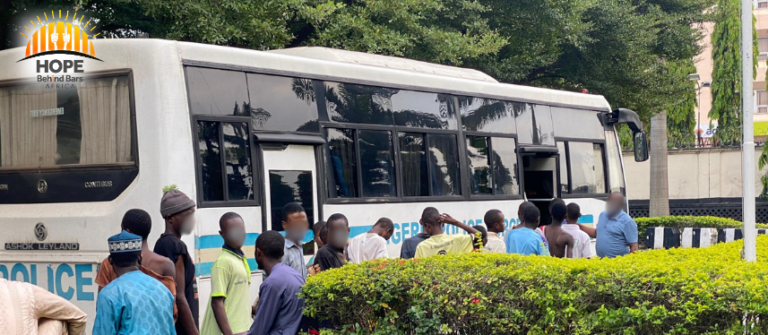
The ICIR reported that minors among the #EndBadGovernance protesters who were sent to Kuje prison for not meeting the N10 million bail each granted them by the FHC in Abuja on Friday were rejected by officials at the facility.

According to reports, the minors who are under the age of 18 years, in addition to the bail money, are expected to provide one surety, who needs to be a civil servant.

But when they could not meet their bail condition, they were taken to the Kuje Correctional Centre.

Narrating what transpired at the Kuje Correctional Centre, the executive director (ED) of Hope Behind Bars, Funke Adeoye, stated that on getting to Kuje, 27 minors were rejected and were subsequently taken to the office of the Intelligence Response Team (IRT) in Abuja.

According to her, the prosecution team was trying to use a single remand warrant for all 27 minors, and the officers at Kuje rejected this and insisted that individual warrants are required for each minor.

She added that the correctional officers also expressed concern about the potential risk of holding the minors at Kuje, citing the possibility of sexual assault by other inmates.

Other sources also raised issues on the whereabouts of the remaining minors. According to a reliable source, 38 minors were taken to Kuje, but only 27 were counted at the facility and sent to IRT, which raised the question of where the others were.