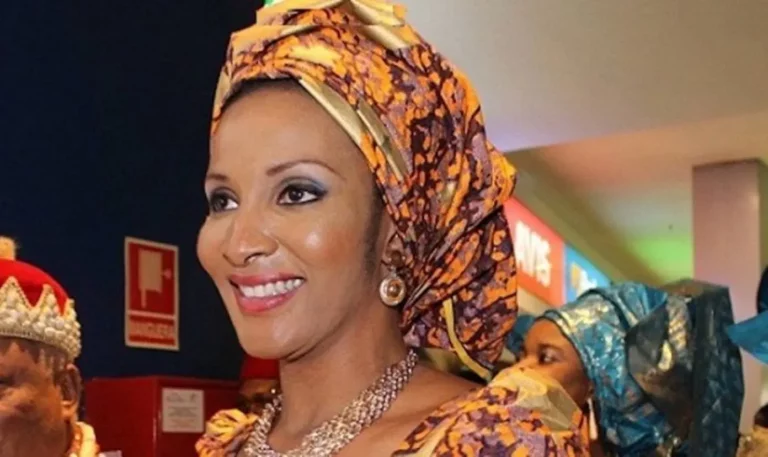
PRESIDENT Bola Tinubu has nominated Bianca Odumegwu-Ojukwu, others as ministers to his cabinet.
This is coming shortly after he announced the scrapping of the Niger Delta and Sports Development ministries.
The President has also appointed former Minister of Youth and Sports, Sunday Dare, as special adviser to the president on public communication and orientation.
The President has also merged the ministries of Tourism and Culture and Creative Economy.
This was revealed in a tweet by the special adviser on information and strategy to the President, Bayo Onanuga, on Wednesday, October 23.
Tinubu also sacked some ministers.
The ministers sacked are Uju Kennedy-Ohanneye (Women Affairs), Lola Ade-John (Tourism), Tahir Mamman (Education), Abdullahi Muhammad Gwarzo (State, Housing and Urban Development), Jamila Bio Ibrahim (Youth Development).
PRESIDENT Bola Tinubu has sacked five of his ministers.
This was contained in a message posted on X by the presidency on Wednesday, October 23.
The ministers sacked are Uju Kennedy-Ohanneye (Women Affairs), Lola Ade-John (Tourism), Tahir Mamman (Education), Abdullahi Muhammad Gwarzo (State, Housing and Urban Development), and Jamila Bio Ibrahim (Youth Development).
The President also announced Sunday Dare, former Minister of Youth and Sports, as his special adviser on public communication and orientation.
Bianca Onoh, the widow of the late Ikemba of Nnewi, Chukwuemeka Ojukwu, was also appointed as the Minister of State for Foreign Affairs.
Others appointed are Muhammadu Dingyadi (Minister of Labour and Productivity), Jumoke Oduwole (Minister of Industry, Trade, and Investment), and Yusuf Abdullahi Ata (Minister of State, Housing, and Urban Development)
The list includes Idi Muktar Maiha (Minister of Livestock Development), Suwaiba Ahmad (Minister of State for Education), and Nentawe Yilwatda (Minister of Humanitarian Affairs and Poverty Reduction)
The President also reshuffled some ministers. Those affected include Uba Maigari Ahmadu from Steel Development to the new Ministry of Regional Development as Minister of State; Doris Uzoka-Anite from the Ministry of Industry, Trade, and Investment to the Ministry of Finance as Minister of State.
Similarly, former Minister of Sports, John Owan Enoh, was moved to the Ministry of Industry, Trade, and Investment as Minister of State; Imaan Suleiman-Ibrahim, who was moved as Minister of State, Police Affairs Ministry to the Ministry of Women Affairs; Ayodele Olawande, former Minister of State for Youth Development, was promoted to full minister at the ministry; and Salako Iziaq Adeboye was moved from the Ministry of Environment to the Ministry of Health as Minister of State.
Others are Yusuf Tanko Sununu from the Ministry of Education to the Ministry of Humanitarian Affairs and Poverty Reduction as Minister of State; Moruf Olatunji Alausa was moved from the Ministry of Health to the Ministry of Education as the Minister of State, and Bello Goronyo from Water Resources and Sanitation to Ministry of Works as Minister of State.
The ICIR reported that Tinubu earlier announced the scrapping of the Niger Delta and Sports Development ministries.
The President also merged the ministries of Tourism and Culture and Creative Economy.
This was revealed in a tweet by the special adviser on information and strategy to the President, Bayo Onanuga, on Wednesday, October 23.
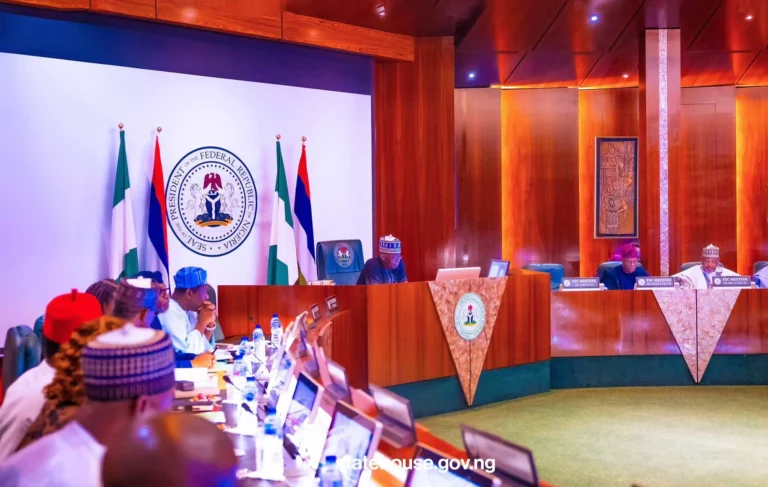
According to the tweet, the decision was reached during the Federal Executive Council (FEC) meeting held in Abuja on Wednesday.
The statement read, “President Tinubu and Federal Executive Council scrap Niger Delta Ministry and the Ministry of Sports Development.
“There will now be a Ministry of Regional Development to oversee all the regional development commissions, such as Niger Delta Development Commission, North-West Development Commission, South-West Development Commission, and the North-East Development Commission.”
He added that the National Sports Commission (NSC) would oversee sports-related activities in Nigeria, and assume the duties formerly performed by the Ministry of Sports Development.
A KANO State High Court has fixed Wednesday, November 20, for hearing a pending application in the case of alleged bribery and misappropriation against the national chairman of the All Progressive Congress (APC), Abdullahi Ganduje, and seven others.
The Kano State government had filed eight charges against Ganduje and his wife, Hafsat Umar, alleging bribery, misappropriation, and the diversion of public funds running into billions of naira.
Others charged with the couple are Lasage General Enterprises Limited, Lamash Properties Limited, Safari Textiles Limited, Jibrilla Muhammad, Umar Abdullahi Umar, and Abubakar Bawuro.
When the matter came up for hearing on Wednesday, October 23, the state counsel, Adeola Adedipe, a senior advocate, informed the court that he was not prepared to move further on the preliminary objection.
“My lord, we have filed our counter affidavit, and one of our witnesses is hearing before the court all the way from Lagos State,” Adedipe stated.
Offiong Offiong, a senior advocate, who represented Ganduje and his wife, informed the court that he had yet to receive the plaintiff’s counter-affidavit and preliminary objection.
Offiong told the court he was not ready and asked for another date to move the application.
In his submission, counsel to the 3rd and 7th defendant, Taye Falola, told the court that he had yet to be served the applications and counter affidavit.
“We filed our preliminary objection on the motion on notice dated and filed October 10, 2024. We humbly apply for another date for the hearing,” Falola told the court
Counsel to the 6th respondent, Nureini Jimoh, also a senior advocate, told the court that he filed a notice of preliminary objection dated July 9 and stated that he was ready to proceed with the application.
The counsels for the fifth and eighth defendants, Abdul Adamu and Faruk Asekome, respectively, stated that they had yet to receive the preliminary objection and counter-affidavit.
“My lord, we are also asking for another date,” they stated.
The judge, Amina Adamu-Aliyu, said service of processes was essential and revoked the plaintiff’s application.
The judge adjourned the matter until Nov. 20 for the hearing of all pending applications.
Recall that the court had on July 11 insisted that the defendants’ trial must continue even in their absence.
The case is attracting significant attention due to the high-profile nature of the defendants, particularly Ganduje, the state’s immediate past governor.
The court had on June 5 granted an order seeking to serve Ganduje and seven others through substituted service.
In a ruling in July, Justice Adamu-Aliyu dismissed the state government’s application seeking a bench warrant on the defendant.
She entered a plea of not guilty on behalf of the defendants and refused to strike out the charge.
The ICIR reported in July that the Kano State government filed fresh charges against Ganduje, accusing him of spending N240 million belonging to the state to pursue a personal legal matter.
The state’s attorney general and commissioner for justice under Ganduje, Musa Abdullahi, was listed as a second defendant in the charge marked K/143c/24 and submitted to the state High Court.
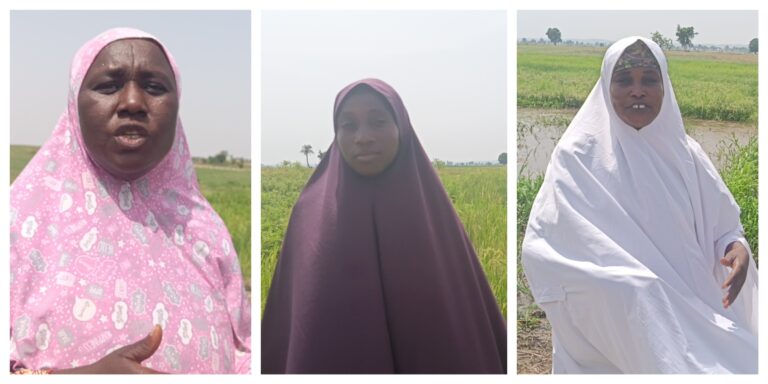
EVERY year, the Niger State Government promises smallholder farmers a lifeline: subsidised agricultural inputs and machinery worth millions of naira. Yet, despite the grand declarations and elaborate plans, these subsidies rarely reach the farmers who need them most. What happens after the ceremonial flag-offs? Do the intended beneficiaries, especially those in remote communities, actually get the crucial inputs? Justina Asishana visited several rural communities and spoke to smallholder women farmers about their experiences with government subsidies.
“We have put in place structures and machinery for distribution. We have made it a policy that only 10 bags can be sold to an individual. Bank details and BVN of individuals will be taken into consideration and we have invited the EFCC, ICPC, and also the police to make sure that this is done right. We are bringing subsidies in agriculture and it must be sustained. EFCC, ICPC and CID will oversee the sale of fertilisers to farmers.”
Those were the words of Niger State Governor, Mohammed Umaru Bago, stated at the flag-off of the 2023 wet season sales and distribution of fertilisers as well as other agricultural inputs to farmers in Minna on July 10, 2023. There, however, appears to be a gulf between promises and reality with respect to equitable distribution of fertiliser to farmers in the state.
A rice and soyabeans farmer in Wushishi Local Government Area (LGA) of Niger State, Bilikisu Suleiman, has been into farming for the past eight years. She was hopeful after hearing the governor’s promises. However, her optimism was short-lived because neither she nor other women benefitted from the subsidised inputs.
“This happens every year. We will hear that the government is giving out inputs, but at the end of the day, we do not see or get it..
“But this time, we felt things would change since the governor mentioned EFCC and ICPC, but it remained the same.
“We went to the distribution centre which is the Agricultural Development Programme (ADP) office but were not given any input.
“It came as a surprise to us because they asked us to submit our names but we did not even know who to meet when the distribution began.
“So, we ended up looking at those who came to collect the subsidised produce and thinking of how our members will benefit.
SWOFON coordinator in Gbako (wearing green skirt) and other farmers
In Gbako LGA, the coordinator of the Smallholder Women Farmers Organisation of Nigeria (SWOFON), Felicia Maaji, who farms beans, groundnut, millet, rice and potatoes, said that the lack of access to subsidised inputs forces farmers to rely on outdated and inefficient methods, including using of hoes for tilling, heaping and planting and cutlass or hoes for weeding.
Due to the inability to get fertilisers, their lands, according to Maaji, have been losing fertility while several crops are being lost to insects and pests because the farmers have no pesticide to stop an infestation.
“Every year, we re-cultivate our lands which are fast losing their fertility because we do not have fertilisers.
“There is no access to government-subsidised fertilisers and no money to buy from the retailers who sell at the stores.
“Chemicals like herbicides and pesticides are too expensive for us. Even now, we are having a shortage of lands because the lands are losing their fertility. They do not produce much like before, and since there is no fertiliser to put in, the yield is low.”
Speaking about benefiting from government-subsidised inputs, the coordinator said they do not hear about it nor have they received it at any time.
“We do not even hear about it, not to talk of receiving. If they are bringing these inputs, it means they do not bring it out in the open for people to benefit. Or maybe they share it among themselves.
“But here in the Gubata community, the farmers have not benefited from any of these subsidies.”
A maize, melon and sweet potatoes farmer from Gusadin Community in Gbako LGA, Mary Musa, recalled better times when fertilisers were affordable, pointing out that since last year, due to the increase in the price, she could no longer buy fertiliser for her farm.
She said; “When fertiliser was cheap, I could buy up to five to ten bags for my farm and spray the needed quantity of herbicides and pesticides.
“Before, I bought a bag of fertiliser at the rate of between N20,000 and N22,000. But now, it costs between N35,000 and N42,000 per bag.
“Sometimes, I have to buy per measure because buying in bags is very expensive for me now.”
Majority of the smallholder women who spoke to our reporter mentioned various ways they tried to improve the yields of their farms.
A rice and millet farmer in Gusadin community in Gbako, Linda Kosu, said that she and others resorted to using refuse as fertiliser on their farms in the absence of fertiliser.
“We use refuse on our farms to improve the fertility of the soil. That is what is called organic manure. That is how we manage it.
“But we do not get enough to cover the whole land where we farm because there is not much refuse and it is what everyone packs to their farms.
“So sometimes, we cultivate half of the farms or only farm in the area the manure covers.”
A rice farmer in Doko community, Lapai LGA, Fatima Mohammed, said she uses rice and maize dusk and cow dung popularly called manure to fertilise her land and crops. “I would not say it is good or not, but it is better than not putting anything at all in the farm after we plant,” she said.
Political farmers hijack subsidies
Several smallholder farmers revealed a troubling trend, ‘political farmers,’ well-connected individuals who exploit the system, securing large quantities of subsidised inputs meant for genuine farmers, leaving the real farmers with nothing.
SWOFON coordinator in Kontagora, Ramatu Mohammed Kontagora, shared her frustration especially as she was present at the flag-off ceremony held in Minna and she had to rush back to Kontagora to inform her members that they were bringing the inputs to the local government area.
Women farmers.
“But in the end, we still did not get anything. They said they were bringing it down to Kontagora and we should go to the ADP office in Kontagora. But on getting there, we got nothing because it has already been shared among politicians. We did not get even one bag.
“The problem is that you cannot access it if you don’t have access to those people, those politicians. There is no way you can get it.
“Yes, the fertilisers and chemicals got to Kontagora but the real farmers did not get it. They will tell you that they were given allocations, and when these officials come, they give the allocation to the politicians, which they share among their own people.
“Once you are not their people, you will not get it. At the end of the whole thing, the people who get it will resell it to the real farmers, which is us.
“Although it is still less than the one sold in the market, it is higher than the subsidised price. Like if they got it for N20,000 from the politicians, they will sell it at N30,000 or N35,000 while the market price is between N40,000 to N45,000.”
Saadatu Gambo from the Nasara Women Farmers Cooperative in Wushishi echoed these sentiments. She noted that real farmers often have to purchase subsidised inputs from those who received them through connections rather than need.
“Because they have ‘long legs’ (connection), they get these inputs. We on our part use our own money to buy from the market or from those who were given subsidised inputs.
“They sell it to us because they are not real farmers and they do not need it. What they only need is the money they would gain from selling it,” Gambo said.
Despite government efforts to streamline the distribution of subsidised inputs, the system seems to be failing. Many smallholder farmers, especially women, feel sidelined and disenfranchised.
Felicia Umaru from Lavun Local Government Area expressed her exasperation that despite being told to submit names to the local government secretariat, which they had done several times, they still did not benefit when the inputs were brought in.
She said, “Those of us in Kutigi here, especially women farmers, have not benefited from the subsidised inputs.
“Yes, the government is bringing it out, and yes, they are asking us to submit names, which we do, but sometimes before it reaches the grassroots, when it enters the hands of the politicians, we hardly get it.
“Even when we submit names, we do not know when these items are distributed or even when they are brought into town.
“We usually feel that everything begins and ends in Minna. If everyone who is a farmer says they did not get it, then who did they give it to?
“Also, look at the local government secretariat close to us here. If they are sharing something like that, some of our people will be aware and inform us.
“So everybody cannot be lying that they did not get it”, she stated.
The SWOFON coordinator in Gbako, Felicia Maaji, said they often meet the traditional leaders in their various communities accusing them of hijacking the process and not letting them have access to the fertiliser, but these leaders claim they do not know when they share it.
“We do not benefit here at all. I know because I am in contact with almost all the women farmers in this local government.
“We do not even hear about it without seeing or receiving it. If they are bringing them, that means they do not bring it out to distribute to the real farmers, and if they do bring it out, that means they share it among their own people but I and other women buy our inputs with our own money.”
How dilapidated and non-functional ADP offices lead to non-accountability of fertilisers
The reporter learnt that most of the fertiiser shared at the state capital was supposed to be distributed from the ADP offices across the states where farmers could get it via information from Extension workers. However, this has failed to get to those who really need it because several of the ADP offices across the state were in state of collapse and there were not enough extension workers to give the information to the farmers in the rural areas.
Several of the farmers spoken to acknowledged that in the past there were agricultural extension officers who helped them a lot with farming techniques and adequate information. But this is no longer the case as several of them do not know who the extension workers are or how they can get to them.
The SWOFON coordinator in Lavun said that no extension officer had been in contact with her or any of her members saying that all they do is from the knowledge they gained from their relatives and from the training they got from development partners who come once in a while to the local government.
The warehouse in Wushishi has collapsed while the farmhouse which should be staff quarters for the extension officers is dilapidated.
In Zungeru, the office structure is collapsed with some skeletal building standing, and the Zonal office in Kontagora is dilapidated with several remnants of office furniture. In Rijau, there was only a pillar showcasing that an office was there.
The women asked that if the offices and warehouses are dilapidated, where would the fertilisers and other input sent in from the state capital be stored?
“That is why we told you that we do not know how to get these inputs. Even before we hear about it, it is finished. In most cases, we do not even know when it is distributed because we do not know who to meet or where to go,” said Fatima Mohammed in Lapai.
The reporter tried to locate some of the extension officers in these local government areas but could not locate any because the women who were interviewed said they did not know any and efforts to reach out to relatives and friends to connect them to one or two met a brick wall.
The agricultural extension service is an important public service institution with the widest range of responsibilities for agricultural and rural development.
Extension officers provide advice and information to assist farmers in making decisions and generally enable them to take action.
Although farmers already have a lot of knowledge about their environment and their farming system, extension can bring them other knowledge and information which they do not have.
The transfer of knowledge and skills to farmers and their families is an important extension activity.
The African Seed Access Index (TASAI) 2020 Report rated Nigeria as one of the African countries with the lowest ratio of agricultural extension workers to farmers in Africa. The report assumed a baseline of one extension officer to 7500 farmers.
“The lower this ratio, the better access farmers have to expert information and advice on how to access and use improved seed and other relevant agricultural technologies,” the report said.
The only good building in the ADP office in Kontagora was shut when the reporter visited, while the agric desk officer at the local government secretariat was not on seat.
However, the reporter met the cashier of the local government secretariat, Mohammed Ibrahim Bello, who said that the inputs are not given directly to the secretariat but to the ADP office.
Bello said, “In the past, that was about eight years ago, these inputs were given to the local government which handles everything and knows how to share them but now, they do not and we have heard complaints that several people do not benefit from it.
“It would be great if this is reversed back to the way it was before. They give it to the local government chairman who shares it with the real farmers through the desk officer of agriculture.
“Now, from Minna, they take it to the ADP and from the ADP, they share it, not minding whether you are a farmer or not. They give some people preference and ask others to join the queue day after day.
“Most people do not get at all even after staying in the queue for days.”
At the community level, the community leaders also say they do not know when these inputs are shared, saying that they did not hear about when the distribution would be made.
When the reporter paid a visit to Muhammad Kudu Ibrahim, the Ezanuwa Kutigi, a traditional ruler, he was with his council of chiefs and they all said they had not received any type of government-subsidised agricultural inputs in the domain.
One of the chiefs, Jiya Lemu, said, “We have not been receiving it. We haven’t even seen the place they share it talk less of receiving it.
“The interventions we get mostly are from FADAMA and IFAD which we know are government based. But they have their own focus areas. But anyone from the state government directly, we haven’t seen that.”
Ezanuwa Kutigi said, “You have heard them all. If they have been given, at least, our people would inform them and they would inform me.
“Such things cannot be going on in my community and I would not know. If they say they bring it to the local government area, where do they take it? Who do they give it to? We also need to know.”
The village Head of Gubata in Gbako Local Government Area said that the common problem with farmers is access to fertilisers and other inputs and expressed sadness that they do not receive the government-subsidised inputs.
“Sometimes we do not hear about the subsidised agricultural inputs and sometimes we hear about them. But by the time we send our people to go and access it, they would have distributed it.
“We also found out that most of those who receive it resell it. We have sent people to these places several times but those they meet at the ward level will direct them to individuals who have received it but want to resell it so they buy from them.
“These agricultural inputs are usually given to people who do not need it, but because they are in politics or they have friends who are politicians, they have that opportunity. Power is in their hands.
“Last two years, I went to the Edozhigi ward when we were informed of availability, but with my status and efforts, at the end of the day, I could not get any.
“What we sometimes do is that because Bida is a bit far from here, we gather money from anyone interested in buying fertiliser and other inputs and one person would go to Bida to buy them.
“It is much less expensive to buy in Bida than the retailers in our community.”
The Niger State SWOFON coordinator, Grace Disa, says it is not all the ADP offices across the state that are functioning, adding that though there are extension officers who offer extension services, they are not able to reach the majority of the women in the rural areas.
“Most of my members have not benefitted from extension services. The majority of them do not even know any extension officer or agent and they do their farming activities the way they can.”
Grassroots solutions
Many farmers and community leaders believe that empowering local leaders to distribute inputs would be more effective.
The Ezanuwa Kutigi recommended that the government should give directives that the subsidised agricultural inputs be given to the community leaders who will in turn call the leaders of the farmers and give it to them for onward distribution to their members who are fellow farmers.
The village head of Gusadin in Gbako Local Government Area, John Gana, suggested that the government should leverage the trust and proximity of community leaders if the government really wants the real farmers to benefit from its interventions.
“We know our people and are close to them so, we know each and every one of them especially those who are farmers. If the inputs come through us, we can ensure they reach the real farmers,” he proposed.
Village head of Gusadin, John Gana
“What they are doing currently is making it go through the hands of the politicians, which makes it hard to get to the farmers.
“We had a meeting with the District Head where we laid out our complaint.
“Even if it is to take the inputs to the Emirs who would give it to us for onward distribution to our people in the community, it will help a lot.”
Elizabeth Saba from Gbako agreed, emphasising the role of cooperatives. “Most farmers are in cooperatives. If the government worked with our leaders, we could distribute the inputs efficiently.
“If they can locate our leaders with the fertiliser, we will get it without any stress or struggle,” she said.
Felicial Umaru in Lavun also stated the same.
She said, “Take the example of SWOFON, we are in every local government area and we have members almost all women farmers are members of SWOFON.
“Once the people at the top ask us to submit names, they should deal with the coordinators directly as it is through these coordinators that these inputs will get to the farmers at the grassroots.
“But if they do not do this, it will still be zero. The farmers at the grassroots will not benefit from these government interventions.
“Whenever the government wants to help the people, they should follow the right channel, find the leaders in the communities and groups so that these interventions will get to the real farmers.”
We’re aware of political farmers, ready for them – Government
The managing director of the Niger State Agricultural Mechanisation Development Agency (NAMDA), Muhammad Ali Baba, acknowledged that the government is conscious of the issue of ‘political farmers’ and assured that measures are being put in place to eliminate this problem and they do not scuttle the initiative put in place for the real farmers to benefit.
“Political farmers come from where the government is. But in this new dispensation, it would not be business as usual.
“The programme we have in place would require that any beneficiary submit its cluster, ward and local government area and we will ask our extension workers to verify them through the village and district heads.
‘In this new programme we intend to start, the village heads and community leaders will be part of the verification process as they will have to vouch for and verify the farmers.
“We are conscious of the challenge and every effort is being made to mitigate it.
“We will also reinvigorate our extension workers to ensure that they begin working again as they will be the ones who will identify the farmers and ensure that every farmer at the grassroots benefits from the initiatives.”
When the reporter asked about measures taken to prevent the extension workers from compromising the process, the MD said there would be checks and balances to ensure that there is no compromise by the extension workers, “any worker that plays funny with this task will be risking his or her work. It is their job and their life and I do not think they will want to risk it.
“As the extension workers would be demanding transparency and commitment from the farmers, so also would we be demanding commitment and transparency from them.”
On the ADP offices across the state, the executive director of Operations in NAMDA, Rilwan Jibril, said that the ADP offices had been neglected by the previous government while the Extension Officers are either aged or retired adding that the current administration is working to revive the ADP offices and employ young men and women across the local government areas as extension officers.
“We are currently recruiting youths for the Agricultural Extension Volunteer scheme where three youths per ward would fill the vacuum of ageing and retiring extension workers.
“The government has also set up a committee to go around the local government areas to assess and look at ways of resuscitating the warehouses and offices of ADP across the state
Despite these assurances, the permanent secretary of the state Ministry of Agriculture, Mathew Ahmed, dismissed reports of diversion of the inputs distributed so far by Mohammed Umar Bago’s administration, citing the ministry’s implementation and monitoring committees.
“I want to assure you that there is no diversion of those inputs to the best of my knowledge, because the ministry staff, the store officer and security officers are all involved and will be there at the distribution centre.
“Each beneficiary will have to identify themselves before they are given the input and reports. The issue of diversion is just news that is flying, but you cannot really pin it and say this is true.
“As a ministry, we set up an implementation committee that monitors the input distribution and we also limit the number of bags or quantity that each farmer would access so that it can go around.
“The truth of the matter is that we cannot provide input on subsidies for all the farmers so we are looking at basically smallholder farmers benefiting, farmers that have one hectare and below so that it would be able to go round.
“People who are complaining about this may be those who have like five hectares so if you have five hectares, you are no longer a smallholder farmer.
“Those who are considered are the smallholder farmers, only those with one hectare can access the inputs so that other farmers will be able to key in and benefit from the subsidy.”
On the smallholder farmers not getting the information for the distribution of the inputs, Ahmed highlighted the state’s communication efforts to inform farmers about distribution schedules.
He said, “The news is always on air. We do jingles, we make announcements, it is on the social media and it is everywhere.
“It is not true for people to say they are not aware of when the inputs are distributed at the local level.
“The information is also on the radio and because we are conscious of the fact that some people may not be able to watch television due to non-access to electricity and are in the village but they can access radio, and social media, so we ensure that the information is there. The information is not only passed in English, we pass it in other Indigenous languages like Hausa, Nupe, and Gbagi so that people can understand that this is the ongoing activity.”
The permanent secretary said that farmers are discouraged from selling or diverting the inputs when they get access to it but lamented that everyone has a mind of their own, “you can only give someone advice after you leave, we cannot monitor them to their houses. But we try to monitor their various farms to ensure that it is used in their farms. Even with that, they are just samples of the farmers but we ensure that any farmer that is caught will not benefit from subsequent input distribution. These are the things we have put in place.”
He further disclosed that the sales of the inputs by the farmers is of concern to the government which is why in the new agricultural initiative of the state government, farmers who benefit from the input distribution would be paid N50,000 monthly to quell the temptation of them to sell the inputs they will be given.
“Our current Niger food arrangement with farmers which will commence soon, we are going to give the farmers minimum wage. This is because when we give a farmer fertiliser, herbicide and at the end of the day, the farmer does not have access to funds, there is this temptation to sell a bag out of the bags of fertiliser he was given or one litre of herbicides he was given so that he would have money with him. What Niger Food is trying to do is that with the input distribution to smallholder farmers, every month, they will be given N50,000 to cushion the effect of cash within the smallholder farmers.”
What next in 2024?
Despite government assurances, the stark reality for many smallholder farmers in Niger State is a continuous struggle for access to essential agricultural inputs. As the new administration promises reforms and stricter measures, it remains to be seen whether these efforts will finally address the systemic issues and ensure that the true beneficiaries receive the much-needed support.
For now, farmers like Bilikisu, Felicia and Mary continue to grapple with uncertainty, hoping for a day when the government’s promises translate into tangible support for their fields and futures.
For real progress, the government must heed the voices of the farmers and community leaders, ensuring transparency and accountability in the distribution process. Only then can the vision of sustainable agricultural support truly reach the grassroots.
This report republished from the Nation was made possible with support from the International Budget Partnership (IBP) under the ICIR Strengthening Public Accountability for Results and Knowledge (SPARK 2) Project.
PRESIDENT Bola Tinubu has scrapped the Niger Delta and Sports Development ministries.
The President has also merged the ministries of Tourism and Culture and Creative Economy.
This was revealed in a tweet by the special adviser on information and strategy to the President, Bayo Onanuga, on Wednesday, October 23.
According to the tweet, the decision was reached during the Federal Executive Council (FEC) meeting held in Abuja on Wednesday.
The statement read, “President Tinubu and Federal Executive Council scrap Niger Delta Ministry and the Ministry of Sports Development.
“There will now be a Ministry of Regional Development to oversee all the regional development commissions, such as Niger Delta Development Commission, North-West Development Commission, South-West Development Commission, and the North-East Development Commission.”
He added that the National Sports Commission (NSC) would oversee sports-related activities in Nigeria, and assume the duties formerly performed by the Ministry of Sports Development.
THE two-week ultimatum issued by the Academic Staff Union of Polytechnics (ASUP) to the Federal Government to address lingering issues in the nation’s public polytechnics will soon elapse.
With the deadline approaching, some lecturers are supporting the ASUP national executive council’s plan to direct members to down tools should the government fail to meet the union’s demands.
Speaking with the News Agency of Nigeria in Port Harcourt on Wednesday, October 23, ASUP Zone D coordinator, Iloma Richard, said the government was yet to address the union’s concerns.
“The strike was suspended to create the necessary environment for the speedy resolution of all contentious issues through the stakeholders’ engagement process.
“Regrettably, as I speak, no progress has been made in this direction due to the obvious reluctance of NBTE.
“The union has also noted, with regret, a similar attitude of the government towards other welfare needs of the union’s members,” he said.
The ICIRreported that ASUP announced an ultimatum from October 7 to October 25, 2024, for the federal government to meet its demands.
The union’s national president, Shammah Kpanja, while outlining the unresolved issues in federal and state polytechnics, said one of the key issues was the alleged breach of the Federal Polytechnics Act and other related laws, particularly regarding the appointment of key administrative officers.
He also called the government’s attention to its failure to review the schemes of service for polytechnics and update the conditions of service for polytechnic staff, as well as the delay in disbursing the second tranche of the NEEDS Assessment intervention funds, among others.
Addressing NAN on Wednesday, the union’s Zone D coordinator warned that if the disregard for quality control in polytechnic education continued, it would lead to the collapse of technical and vocational education in the country.
“This position has been articulated by our national leadership and formally communicated to all relevant authorities, with a subsisting 15-day ultimatum effective from October 8.
“We shall not hesitate to swiftly mobilise our members from all chapters in the zone if, upon the expiration of the ultimatum, NEC directs any form of industrial action,” he added.
THE Federal Government, on Wednesday, October 23, withdrew all charges filed against Binance executive, Tigran Gambaryan.
This move came after months of investigation and proceedings, which had placed the Gambaryan under scrutiny following allegations of financial misconduct involving cryptocurrency transactions levelled against him.
The four-count charge bordering on tax evasion, initially preferred against him by the Nigerian authorities was part of a broader effort intended to protect Nigeria’s economic integrity.
However, according to a report by Premium Times, the Nigerian government dropped all money laundering charges against Gambaryan during a hearing held two days before the previously scheduled date – October 25.
The counsel to the Economic and Financial Crimes Commission (EFCC), the prosecuting agency, announced the discontinuance of the case at the Federal High Court in Abuja Wednesday morning.
While making the announcement, the lawyer said Gambaryan was simply an employee of Binance, the company whose activities had led to his prosecution.
According to the report, the development came against the backdrop of diplomatic lobbying that had been ongoing for months between Nigerian and U.S. government officials for the release of Gambaryan, a U.S. citizen.
Backstory
Gambaryan had been embroiled in a legal battle with the Federal Government following his arrest earlier this year.
The EFCC had charged Binance, Gambaryan, and Nadeem Anjarwalla with hiding the source of the $35,400,000 in revenue that Binance made in Nigeria while knowing that the money was the product of illegal activities.
The ICIRreported on Monday, March 25, that the Federal Government, through the Federal Inland Revenue Service (FIRS), filed criminal charges against Binance at the Federal High Court in Abuja.
During the proceedings, Gambaryan’s lawyer, Mark Mordi, on two different occasions argued in court that his client suffered from severe medical conditions, including a herniated disc and mental health challenges, and sought bail for him to receive treatment.
On September 4, he sought a six-week bail for his client to receive proper medical attention outside prison, citing inadequate care in custody.
He stated that Gambaryan’s health was ‘perilous’ and that he needed surgery for a herniated disc along with psychiatric treatment for depression and anxiety.
However, the court denied multiple bail requests, stating that the accused health could be managed at Kuje Correctional Facility with access to Nigerian medical experts.
In his October 11 ruling on the motion for bail on medical grounds, the presiding judge, Emeka Nwite, denied the request, stating that ‘renowned Nigerian medical experts’ were already overseeing the health of the second defendant.
He also ruled that the Nigerian Correctional Service “refer Gambaryan to a standard hospital in Abuja for treatment for three days to two weeks under security supervision.”
KEYSTONE Bank Limited said the Central Bank of Nigeria (CBN) has no plan to withdraw its operating licence, amid growing concerns over the health of the bank.
The chief executive officer (CEO), Hassan Imam, said on Tuesday, October 22, corroborating a post the bank shared on its X handle the previous day.
He said he needed to clarify the issue due to the constant spread of fake news, especially on social media platforms like WhatsApp.
Following the apex bank’s revocation of Heritage Bank’s operating licence, news on the withdrawal of some other banks’ licences has continued to fester.
On June 3, the CBN revoked the banking licence of Heritage Bank, revealing the action became necessary due to the bank’s breach of Section 12 (1) of BOFIA.
It later refuted reports that it had plans to terminate the operating licences of Unity, Polaris, and Keystone banks.
While Unity Bank had settled for a meagre with Providus Bank Limited, the notion over withdrawal of the other banks are still in the media space.
Reacting to this on Tuesday, Imam said the bank’s retail services remain strong as it maintained second place in industry rankings, recognised as the ‘Retail Bank of the Year’ in KPMG’s 2023 report, and emerged as the ‘Retail Bank of the Year’ at the Africa Industrial and Development Conference and Awards 2024.
“We wish to set the records straight that we are strong and have continued to grow our balance sheet while delivering exceptional value to our stakeholders.
“We are actively pursuing legal action against those responsible for spreading fake news and are committed to holding them accountable, the Keystone Bank CEO said.
He asserted that the bank has continued to operate from a position of financial strength, consistently meeting its obligations as well as all regulatory requirements.
Imam became Keystone Bank CEO after CBN dissolved its previous board alongside two other banks on Wednesday, January 10, over various infractions.
The ICIRreported that CBN said the dissolution became necessary due to the non-compliance of the banks and their respective boards with the provisions of Section 12(c), (f), (g), (h) of the Banks and Other Financial Institutions Act, 2020.
The organisation also reported that the sack was not unconnected to the recommendation of the special investigator, Jim Obazee, appointed by President Bola Tinubu in July 2023 to probe the activities of the apex bank under embattled former governor Godwin Emefiele.
“CBN has stated that the changes were made in those banks because they failed to comply with provisions of BOFIA. The signs were evident that the regulatory hammer would fall on the bank’s leadership, having been indicted by the report from the special investigation,” the executive vice chairman of Highcap Securities Limited, David Adonri, told The ICIR at the time.
In an analysis, The ICIR pointed to some reasons CBN might consider revoking some other banks’ operations licences, including Keystone Bank.
NIGERIA’s economy is expected to expand by 3.2 per cent in the coming year, says the International Monetary Fund (IMF).
Similarly, the country’s headline inflation is to drop to 25 per cent in the same year.
The IMF projects this in its latest World Economic Outlook (WEO) report released on Tuesday, October 22.
Its projection means Nigeria’s economy will improve by 0.3 per cent to 3.2 per cent in 2025, from 2.9 per cent in 2024.
In July, the IMF downgraded Nigeria’s economic growth to 3.1 per cent from 3.3 per cent it forecast in April, citing weaker growth recorded in the first quarter of the year.
IMF, a member of the Bretton Wood Financial Institution, also projects that Nigeria’s headline inflation will drop to 25 per cent in 2025.
This represents a 7.5 moderation from the 32.5 per cent it forecasted for the year.
Nigeria’s headline inflation currently stood at 32.70 per cent as of September, higher than the IMF projection.
Since President Bola Tinubu came into office on May 29, 2023, Nigeria’s inflationary pressure has surged considerably from 22.4 per cent, caused by the administration’s twin policy of fuel subsidy removal and exchange rate unification that have stoked the country’s economic.
The impacts have resulted in the increasing cost of energy, commodities, transportation and the general slowdown in the economy.
On the Sub-Saharan Africa’s economic, the global lender downgraded the region’s growth to 4.2 per cent in 2025 from an earlier projection in April.
“In sub-Saharan Africa, GDP growth is similarly projected to increase, from an estimated 3.6 per cent in 2023 to 4.2 per cent in 2025, as the adverse impacts of prior weather shocks abate and supply constraints gradually ease.”
“Compared with that in April, the regional forecast is revised downward by 0.2 percentage points for 2024 and upward by 0.1 percentage points for 2025. Besides the ongoing conflict that has led to a 26 per cent contraction of the South Sudanese economy, the revision reflects slower growth in Nigeria, amid weaker-than-expected activity in the first half of the year,” IMF stated.
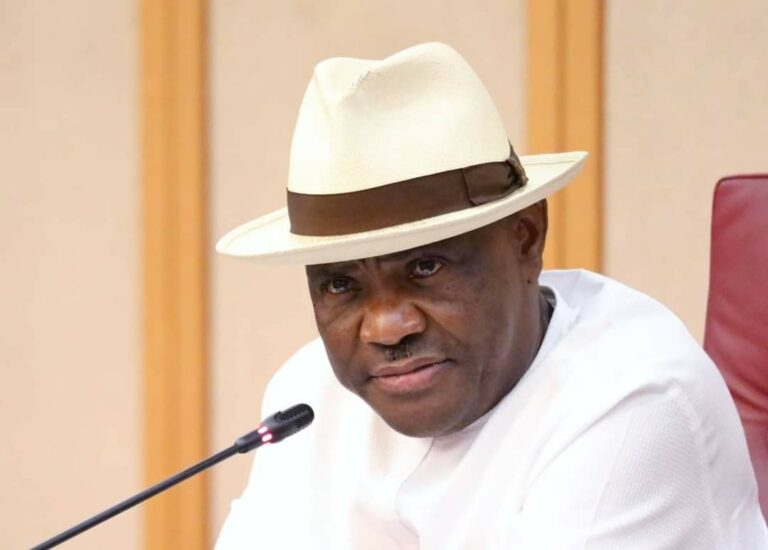
THE minister of the Federal Capital Territory, Nyesom Wike, has ordered the demolition of all illegal buildings in the Sabon-Lugbe community, along the Airport Road.
Wike, accompanied by heads of security agencies in the FCT on Tuesday, October 22, paid an unannounced visit to the community, according to a statement signed by assistant director, press, in the minister’s office, Rabi Musa Umar, and mailed to The ICIR after the visit.
The minister said buildings without proper documents from the FCT Administration should be pulled down.
Describing the building owners as land grabbers, Wike noted that the structures were built without the approval of the Development Control Department and in contravention of the land use provision of the FCT.
“You can see they are all land grabbers without documents, and we are not going to allow that,” he said.
He further directed the director, Department of Development Control, Mukhtar Galadima, to work with security agencies and bring the structures down.
He ordered the security institutions to arrest anyone who obstructed the demolition.
The minister gave a similar approval on Monday that all shanties in the city centre be pulled down.
The ICIRreported in January how the minister approved the demolition of uncompleted buildings allegedly serving as criminals’ hideouts in the Gwagwalada area council of the FCT.
Also in January, Wike approved the demolition of Nuwalege, another village along the Airport Road, which the government claimed was to be used for presidential fleet.
A recent report by The ICIR highlighted major lapses in the FCT since Wike’s assumption in office as minister.