
Home Blog Page 457

Women farmers in Jigawa struggle to access markets despite gender policy

By Khadija Ishaq Bawas

SMALLHOLDER women farmers in Jigawa State are facing obstacles in accessing markets and achieving economic empowerment. Despite promises made in the national policy on gender in agriculture to improve market access and value chain development, these women continue to struggle due to a lack of empowerment and infrastructure.


Ramatu Dahiru is a smallholder farmer in Dutse, the capital of Jigawa State. Besides her investments in livestock and home-based irrigation farming, Dahiru annually cultivates acres of land around the state capital, growing millet, sorghum, groundnut, beans, and other cash crops.

Last year, she faced a significant farming crisis due to encroachment on her land.

“My neighbour felt that because I am a woman and there’s nothing I can do about it, he simply encroached on parts of my land by farming there, thus extending his own into mine unfairly,” Dahiru said as she took this reporter around her farm.

She was the only woman farmer in the area.

As the rainy season began, marking the start of the farming season, Dahiru worried about a possible recurrence of the same issue. The previous conflict took various interventions to settle and delayed her cultivation.

Dahiru explained that the delay in accessing her farmland frustrated her efforts to earn income from her produce. She noted that although she had previously sought intervention from community leaders, she still faced the challenge of encroachment on her farmland, which she partly attributed to her gender as a woman farming in an area traditionally dominated by men.

Her experience points to a broader pattern of gender-based discrimination and barriers that women farmers like her face in accessing and retaining control over their land and agricultural resources.

Section 1.3, sub section 5 of the National Policy on Gender in Agriculture condemns all forms of gender-based violence in the agricultural sector. It recognises the need to address and eliminate violence against women in agriculture, ensuring a safe and conducive environment for their participation.

However, there are no clear indications of how this policy is being enforced, especially for women like Dahiru who say that only the intervention of community leaders has had some effect in addressing the persistent challenge they face.

Without a reliable source of produce due to the unauthorised takeover of their farmland, women farmers’ access to markets, which is crucial for selling their crops at competitive prices, generating steady income, and reinvesting in their farms, remains severely constrained.

As the national policy on gender in agriculture states, gender equality is essential for the sustainable development of the agricultural sector. Yet, the experiences of women farmers like Dahiru suggest that gaps remain in translating the policy’s commitments into tangible outcomes and protections on the ground.

Even when Dahiru and other women farmers like her manage to harvest farm produce, other barriers such as lack of transportation, storage facilities, and market information systems greatly hamper their ability to efficiently transport and store their produce.

“To move our produce to the market, we rely on donkeys but it is time-consuming,” Dahiru quipped.

Such infrastructural deficiencies not only limit their market access but also hinder their participation in value-added activities such as processing and marketing, which could significantly increase their income and overall economic opportunities.

“We do not have dedicated places where we can keep our crops safely after they are harvested especially our perishable crops, like fruits and vegetables, that will spoil quickly if not stored properly.

“Without good storage, we have to sell our crops right after harvest, even if the prices are low, because we have nowhere to keep them,” Dahiru explained.

This is worsened by a much wider gap where women farmers constantly face exploitation in negotiations and limited access to crucial resources.

According to findings, women farmers lack the necessary negotiation skills to secure fair prices for their crops. This leaves them vulnerable to buyers who may take advantage, offering significantly less than the market value.

The situation is further complicated by a lack of access to legal representation when faced with land disputes, such as encroachment or seizure; women farmers have limited options for resolving such conflicts. Yet, section 1.4 national gender policy emphasises the need for gender-responsive programming, including legal support for women in agriculture.

Furthermore, the unequal distribution of resources is a lingering one. Government support programs, like fertilizer distribution and mechanised farming equipment, often prioritise men, leaving women with insufficient supplies to meet their agricultural needs.

Dahiru, an active member of the Small-Scale Women Farmers Organisation in Nigeria (SWOFON), emphasises the gender disparity in resource allocation.

“For example, they (the government) can give only 10 bags of fertiliser to over 100 women to share. How can it be adequate?” she questioned.

This limited access to resources, coupled with the lack of negotiation skills and legal protection, creates a situation where women farmers are disproportionately burdened. The gender policy calls for equitable access to resources and opportunities, ensuring that both men and women can achieve their potential and sustain suitable livelihoods (Section 1.3).

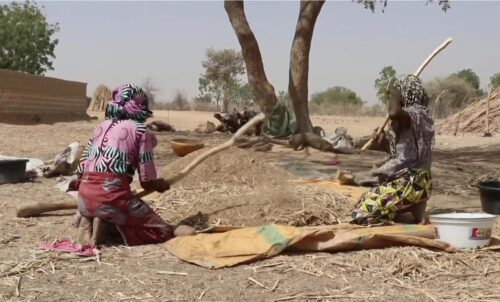
For Sadiya Adamu, another smallholder farmer in Kafin Gana, Birnin Kudu LGA, lacking storage facilities and wanting to earn more money means she has to pound some of her farm produce by hand to process it.

“Here in Kafin Gana, the work never seems to end; I cannot continue pounding and hitting by hand every day. It’s a constant worry. How much longer can I keep this up before it’s too much?” she quizzed.

Typically, Adamu pounds staple crops such as millet or sorghum, spending an average of 4-6 hours a day to pound and package it. Depending on the quality and quantity of the produce, she might realise between N5,000 and N10,000 per week.

While pounding is not the only way to process these crops – alternatives like grain mills or motorised decorticators exist. However, Adamu’s lack of access to such machinery limits her productivity and takes a toll on her health.

With the aid of better machinery, Adamu says she could potentially earn between N20,000 and N50,000 per week, and she would also have more time to focus on other aspects of her personal life.

Again section 1.4 of the policy advocates for gender-responsive delivery of agricultural services, including access to appropriate technologies and equipment.

Sharing in Adamu’s challenge, Halima Baso, another smallholder farmer in Baso – Kiyawa local government area, lamented the absence of proper storage facilities which is another major hurdle faced by women farmers.
“The lack of silos forces us to sell our harvest right after reaping, even if the market price is low. We have no choice; our crops will spoil if we can’t store them properly,” Baso said.

This pressure to sell quickly puts women farmers at a disadvantage, as they have less bargaining power and are forced to accept lower prices.

With respect to the gender gap in market access, Baso says many men in these communities are able to participate in a barter system, exchanging their crops for other necessities. However, this option is often unavailable to women.

As Baso points out, “The men take their crops to the market and trade them for things we need, like cooking oil or fabric. But for us, it’s just cash. We have to pay the high transport costs, which eats into our profits,” she explained.

These high transportation costs stem from the rising price of petrol, forcing many farmers to rely on donkeys to transport their goods. This not only adds significant time to the journey but also damages the quality of the produce.

“The donkeys can only carry so little,” says Hajiya Hadiza Giwa, the Jigawa State Coordinator of SWOFON.

“By the time we reach the market, our fruits and vegetables are bruised and wilted. It’s frustrating, because we know we could get a better price if they were still fresh,” Giwa emphasised.

She, however, said that in recent times, there has been improvement in supporting women farmers in the state by the government, particularly through programs like NGCares, calling on the government to do more.

Agricultural interventions in Jigawa State

The NG-Cares initiative in Jigawa State is part of the Nigerian COVID-19 Action Recovery and Economic Stimulus programme which aims to support the recovery of the state’s agricultural sector from the COVID-19 pandemic.

The programme’s objectives include empowering young people to engage in agriculture, producing high-quality rice seeds, creating jobs, providing training, inputs, and market linkages to farmers.

Some of the programme’s achievements, according to a statement published on the NG-Cares Initiative website, include 10,730 vulnerable households receiving agricultural inputs, 4,220 beneficiaries being selected to receive inputs and agricultural assets, 2,000 beneficiaries receiving seeds, fertilizers, and crop production chemicals, and 2,220 beneficiaries receiving critical farm assets like water pumps and processing machines.

However, the gender balance in the distribution to beneficiaries remains unclear.

Agricultural experts speak

In a telephone interview, Umar Gambo, a retired agricultural extension worker at the Jigawa Agricultural and Rural Development Authority (JARDA) and now an Agric Officer with Agro- Climatic Resilience in Semi-Arid Landscapes (ACReSAL), a World Bank assisted Project aimed at addressing the challenges of land degradation and climate Change in Northern Nigeria on a multi-dimensional scale, attributed some of the challenges faced by women farmers to religious and cultural attachments.

He noted that these are powerful forces influencing human behaviour, particularly in regions in the north, where the mingling of women and men is discouraged.

This deeply entrenched norm makes it difficult for women to go to the market and interact with men. However, he added that there is a growing awareness among some families.

He further emphasised that this could be worse when a married woman is involved because if she engages in such activities without her husband’s consent or support, it may lead to divorce.

However, with cooperative societies and women organisations springing up, there is growing awareness and support. He further called on the government to intensify awareness campaigns to make people understand that allowing women to participate in profitable farming does not mean they will lose their identities, emphasising that religious scholars and traditional authorities also have a role to play.

This reflects the policy’s emphasis on addressing gender differences and ensuring equal opportunities in the agricultural sector as seen in Policy’s Conceptual Framework

On his part, Abubakar Usman Karfi, the chief executive officer of Silvex International, an agricultural firm in Kano and Jigawa, says it has been a norm that men tend to get bigger size farms even when inheritance is shared and due to a phenomenon he dubbed “absentee ownership.”

“Most of these women farmers don’t go to the farm themselves; they delegate men to manage the farm on their behalf, and because of that absentee ownership, they are not there themselves to manage the farm, which poses an opportunity for some of the challenges identified to thrive,” he said.

However, he is of the opinion that access to market in a technology-driven century should not be a cause for concern because with the right training, skills, access to information, pricing surveillance, and market intelligence, women can thrive. But he says unholy practices of middlemen which eliminate fair trading frameworks that regulate and guide everybody on where to buy, how to buy, and what should be the transaction dynamics lead to the shortchanging of farmers.

While calling for the full implementation of the National Policy on Gender in Agriculture by relevant stakeholders, Karfi opines that a multi-pronged approach to achieve effectiveness and address lingering issues is key.

He supports the idea of training programmes that can equip women farmers with the skills they need to negotiate effectively, ensuring access to legal representation to help them defend their rights and resolve land disputes, and designing resource distribution initiatives by the government to be more inclusive, ensuring women farmers receive the support they need to thrive.

National Gender Policy in Agriculture

This aligns with the Nigerian National Gender Policy in Agriculture, as highlighted in the 2019 CGIAR Research Programme on Policies, Institutions, and Markets Annual Report. The policy aims to promote the adoption of gender-sensitive and responsive approaches in the agricultural sector, ensuring that both men and women have equal access to and control of productive resources.

In 2019, Nigeria took a significant step towards gender equality in agriculture with the launch of the National Gender Policy in Agriculture. This policy recognises the crucial role women play in the agricultural sector, often as smallholder farmers, and aims to bridge the gap in access to resources and opportunities.

Prior to the policy, women faced numerous challenges. They often lacked access to land ownership, credit facilities, and essential tools like water pumps and storage silos. Additionally, limited negotiation skills left them vulnerable to unfair pricing for their produce. The National Gender Policy seeks to address these issues by promoting equal access to resources, training programs, and legal representation.

The policy’s ultimate goal is to empower women farmers and unlock their full potential. By fostering gender equity in agriculture, Nigeria can not only improve food security but also drive economic growth and create a more sustainable and just food system for all.

While the Jigawa State government may have made some good strides, it is still far away from consolidating the intentions of the gender policy.

When reached for comments concerning the efforts the state government is making to consolidate the policy in the state and address issues identified by this investigation, Muttaka Namadi, the Jigawa state commissioner for agriculture and natural resources initially gave an appointment for a meeting in Abuja on May 15, 2024. However, subsequent calls to the commissioner on the meeting were not successful as his line was not reachable.

A follow-up call was made and a text message sent to the commissioner on May 18, informing him of the presence of the reporter in Dutse, Jigawa state, having learned that he had returned to the state, but he did not reply. Similarly, on the 21st and 22nd of May, text messages with the accompanying questions for the commissioner’s attention were sent by WhatsApp and SMS, but there was no response.

This was followed by several calls on the 15th, 18th, and 22nd of May 2024, all of which went unanswered.

However, the Technical Adviser to the Governor on Agriculture, Saifullahi Umar, said that under the leadership of Governor Umar Namadi, Jigawa State has taken a targeted approach to empower women farmers, aligning with the National Gender Policy on Agriculture to meet the specific needs of women in the region.

He further highlighted the administration’s efforts since taking office in August 2023 to prioritise agricultural development with a strong focus on gender inclusivity.

He explained that Jigawa State has adapted the National Gender Policy on Agriculture to suit its unique local context, ensuring that women are integral to every aspect of agricultural development.

He said the government has achieved a 50 per cent inclusion rate for women through the NG-CARES FADAMA initiative, which focuses on supporting women and youth from vulnerable and high-risk communities by providing essential agricultural assets, inputs, services, and capacity-building opportunities.

“The FADAMA initiative is central to Jigawa State’s strategy to empower women in agriculture.

Nearly 40,000 women and youth have benefited from the programme, engaging in various agricultural enterprises, including rice, sorghum, millet, and maize production, as well as goat livestock farming. The government equips these beneficiaries with essential agricultural tools and training, enhancing productivity and income”.

Umar emphasized the government’s commitment to addressing challenges such as land encroachment and gender-based discrimination.

To protect women’s land rights and ensure equitable access to resources, he said that the government has implemented specific measures, including legal support and collaboration with local authorities to enforce land rights and reduce disputes.

To improve market access and infrastructure for women farmers, the government is enhancing transportation networks and storage facilities, he stated.

Umar conceded that access to markets and efficient transportation are significant barriers for women farmers and noted that by improving the road networks and providing processing equipment, the government enables women to bring their produce to market more effectively, add value to their products, and increase their income.

Security and safety are also key priorities Umar said, stressing the importance of creating a safer environment for women in agriculture. He said that the government is working with local security agencies to protect women farmers from harassment, theft, and crop destruction, particularly in rural areas. Perpetrators of such unlawful acts will face strict legal consequences.

Recognising additional challenges faced by women, such as limited access to premium seedlings and agricultural technology, the government, he stated, has launched initiatives to improve access to quality inputs. Programs have been established to provide women farmers with necessary agricultural inputs and offer training and capacity-building sessions to enhance their farming practices. The aim is to empower women farmers to be resilient and self-sufficient, significantly contributing to the state’s agricultural output.

One notable programme is the Rice Millennial Programme, which has empowered 1,000 youth, including young women, to produce rice seeds. This initiative highlights the potential for financial independence through rice cultivation.

Moreover, the state has strengthened its agricultural extension services by recruiting 1,435 extension agents and 300 community animal health workers to operate mobile veterinary clinics. This initiative ensures that women farmers receive timely advice and support on best farming practices and animal health.

Umar observed that Jigawa State’s focus on women farmers represents a comprehensive approach to agricultural development, ensuring inclusivity and sustainability. By addressing gender-specific challenges and providing the necessary support and resources, the government is paving the way for a more inclusive and resilient agricultural sector, he said further.

He concluded by reaffirming the government’s commitment to fostering an inclusive agricultural sector that supports both men and women farmers, aiming for sustainable growth and food security in Jigawa State.

However, analysists say it remains to be seen how the Jigawa State government and stakeholders at all levels will embrace the National Gender Policy on Agriculture, address challenges which can empower women farmers, promote agricultural development, and create a more equitable food system for all.

To truly empower women farmers in Jigawa and across Nigeria, some say there’s need for implementation of the National Policy on Gender in Agriculture in full. This requires concerted efforts from government institutions, development partners, civil society organizations, and the private sector to address the specific challenges faced by women farmers.
‘Serial paedophile’ head teacher bags life jail for defiling 2 seven-year-olds

0

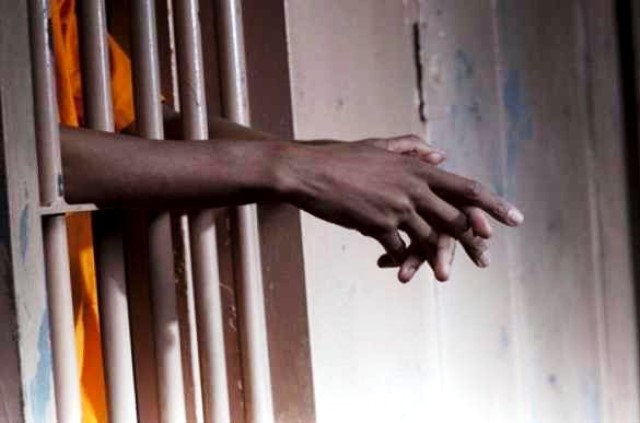
A PRIMARY school head teacher, Benjamin Ogba, has been sentenced to life imprisonment by a judge, Abiola Soladoye, of the Ikeja Sexual Offences and Domestic Violence Court for defiling two minors.

On Tuesday, October 8, Soladoye ruled that the prosecution proved the case beyond a reasonable doubt, with the ingredients of defilement to the court’s satisfaction.

Describing the defendant as a “serial paedophile”, the judge held that his witnesses were tainted with lies.

“The convict and his fellow defence witnesses were not truthful and credible in their testimonies, during the trial. Their testimonies were a pack of lies and fell asunder like a pack of cards.

“This serial paedophile, a head teacher, who is expected to teach his students morals, stooped so low and defiled the underage girls. What a shame!

“This irresponsible and randy teacher, who teaches his students nonsense, should be locked away,” she ruled.

In addition, Soladoye said all cases of sexual abuse should be reported and not ignored, advising parents to report such incidents to the proper authorities without giving up.

“Continuous education and awareness of this issue of sexual menace must be at the forefront of all stakeholders in the administration of justice to advocate the rights of young children.

“The defendant, having been found guilty of the two counts bordering on defilement, is hereby sentenced to life imprisonment on each of the counts.

“The sentencing, will, however, run concurrently and his name registered in the Sex Offences Register as maintained by the Lagos State,” she added.

The state prosecution counsel, Olusola Soneye during the trial stated that the convict committed the offence sometime between April and May 10, 2019, at Shalom Private School, Oke-Ira Road, Ebutte Metta in Lagos.

Ogba defiled two underage girls who were both seven years old by having unlawful sexual intercourse with them.

The prosecutor noted that the offence contravened Section 137 of the Criminal Laws of Lagos State, 2015.

The ICIR reported that the Lagos State Domestic and Sexual Violence Agency (DSVA) has been publishing the names and pictures of sex offenders who have been convicted for their offences.

Although Lagos began publishing names of offenders in 2022, its register had been open since 2014.

In 2019, the Nigerian government launched its first National Sex Offenders Register to name and shame rapists and other forms of violence against persons offenders across the country.

Some other states, including Delta, Ogun, Ekiti, Bayelsa, Edo, Akwa Ibom, Bauchi, Adamawa, Abia, and Kaduna, also keep a register of sex offenders.

Another report by The ICIR shows that in Nigeria, six out of every 10 children suffer from one or more forms of physical, sexual or emotional violence before the age of 18. More than 70 per cent of children experience this violence repeatedly, according to the United Nations Children’s Fund (UNICEF).

Nigeria needs 1.5mbpd refining capacity to meet Africa’s demand – Dangote

0

THE chairman of Dangote Refinery and Petrochemicals Company Limited, Aliko Dangote, says Nigeria must develop a refining capacity of 1.5 million barrels per day and prioritise domestic crude supply obligations to provide petroleum products for African needs.

The billionaire businessman and Africa’s richest man emphasised this at the Crude Oil Refinery Owners Association of Nigeria’s (CORAN) two-day summit that ended on Tuesday, October 8.

He expressed concern that Africa imports around three million barrels of petroleum products daily, despite over 3.4 million barrels of crude oil per day production.

He noted that African countries import primarily from Europe and Russia, among other regions, and that it cost the continent approximately $17 billion to import petroleum products in 2023.

Dangote was represented by his group executive director, Mansur Ahmed, at the summit with the theme, ‘Making Nigeria a net exporter of petroleum products.’

He urged the Nigerian government to incentivise investors, amid the myriad of challenges.

“It is unfortunate that while countries like Norway are putting oil proceeds into a future fund, in Africa, we are spending oil proceeds from the future.

“We will also need to prioritise the implementation of domestic crude supply obligations. We will need to expand our crude oil production capacity to support demand from new refining capacity,” Dangote said.

He maintained that Nigeria must enhance its crude oil production capacity and effectively manage its crude supply to ensure adequate feedstock for domestic refineries, to transit from a net importer to a net exporter of petroleum products.

He opined that Nigeria could capitalise on the situation to become a net exporter of refined petroleum products, as the markets would be more competitively served by Nigeria.

“Both the crude oil and the petroleum products will travel shorter distances. The logistics costs of floating storage will be eliminated, and countries can purchase their petroleum product requirements just in time.

“Nigeria and Africa can become completely self-sufficient, and we can keep all the value on our shores. We have done it in cement, and we can certainly do it for petroleum products,” Dangote stressed.

He called for consultation, collaboration, and cooperation among stakeholders to make it work.

“As a vibrant exporter of refined products, Nigeria will witness an improvement in its balance of trade and generate much-needed foreign currency. Nigeria’s potential as a refining hub is clearly not in doubt; let us work together to make it happen,” he urged.

He also expressed confidence that his 650,000-capacity refinery would transform Nigeria from a net importer to a net exporter of refined petroleum products.

The ICIR reports that the  Dangote Refinery commenced production earlier this year with diesel and jet fuel, and started loading petrol production to marketers in September.

Already the refinery exports products to diverse markets, including Europe, Brazil, the UK, USA, Singapore, and South Korea.

At the CORAN summit, the chairman of IPPG/Waltersmith Refinery & Petrochemicals, Abdulrazaq Isa, urged the government to support domestic refiners by ensuring the availability of crude, adhering to domestic crude supply obligations, and implementing effective pricing and monitoring measures to prevent smuggling.

Also, the chairman of CORAN’s Board of Trustees and chief executive officer of Integrated Oil & Gas, Emmanuel Iheanacho, said Nigeria lost approximately $83 billion annually by not meeting its OPEC quota.


READ ALSO:


Iheanacho urged the Nigerian Midstream and Downstream Petroleum Regulatory Authority (NMDPRA) to consider cancelling import licences, as Nigeria could meet its local demand.

The chairman of CORAN, Momoh Oyarekhua, expressed concern over challenges related to crude supply, stating that domestic refiners would work with regulators and stakeholders to address these issues.

On his part, the minister of state for petroleum resources (Oil), Heineken Lopkobiri, assured that the government would continue to refine frameworks to enhance crude production and support domestic refineries.

Fubara instigated Rivers violence, says Wike

THE Minister of the Federal Capital Territory (FCT), Nyesom Wike, has blamed Rivers State Governor Siminalayi Fubara for the violence that engulfed parts of the state after the Saturday, October 5, local government election.

He said Fubara’s refusal to obey a court order stopping the election led to the crisis.

Wike, Fubara’s predecessor, stated this while featuring on Channels Television’s “Politics Today,” on Tuesday, October 8.

”You must obey the judgment of the court. The moment you don’t obey a court judgement, you are inviting anarchy, you are inviting violence,the minister stated.

Responding to the allegation that he is demanding too much from the governor, Wike denied the claim and retorted, Has Fubara ever told you that I said come and be giving me money or I should do this or that, and I didn’t do it, and I am not happy.”. The point is he plotted a coup to remove the deputy speaker of the state House of Assembly, and the thing boomeranged against him,he stated.

Wike also accused Fubara of sponsoring the Action Peoples Party (APP) in the state’s local government election.

“Today, people say, ‘discipline Wike; he did anti-party’. I did not do anti-party; I said we must stand for equity, fairness, and justice.

“Today, what happened? The governor [Fubara] is the one who sponsored the APP. The chairman of the [PDP] governors’ forum was the one who attended the swearing-in,Wike stated.

The ICIR reported that the crisis in Rivers State turned violent on Monday, October 7, when hoodlums set two LGA headquarters ablaze in the oil-rich state.

The headquarters of Ikwerre and Eleme local government areas (LGAs) were set ablaze shortly after the Nigerian Police Force withdrew its officers from the facilities after months of siege.

Police spokesperson in the state, Grace Iringe-Koko, while announcing the police withdrawal from the state’s 23 LGA secretariats, said the organisation would not hesitate to return the officers should the need arise.

The ICIR reported on Sunday, October 6, that the state governor Fubara swore in all the newly-elected 23 local government chairmen shortly after the Rivers State Independent Electoral Commission (RSIEC) announced the election results for the last local government.

The ICIR reported how the African People’s Party (APP) won 22 out of the 23 local government chairmanship seats in the state according to results announced by RSEIC.

Fubara’s preferred candidates were victorious in the poll marred by controversies and security challenges.

Fubara also won the election for an opposition party, as he has yet to decamp from his party, the People’s Democratic Party (PDP).

Fubara and Wike have been at loggerheads over who controls the PDP structure in the state, with President Bola Tinubu’s efforts to resolve the stalemate yielding no result. 

Wike has maintained that he belonged to the PDP and dared the party to suspend him if they could.

On his part, Fubara has insisted on taking over the PDP’s structure in Rivers, as the move exacerbated his rift with Wike.

Earlier this year, Fubara ordered the LGA chairmen elected under Wike to vacate their seats, stating that they had completed their term.

The ensuing crisis led to the police taking over the secretariat.


Speed Darlington arrested for allegedly defaming Burna Boy – lawyer

0

A LAWYER and popular activist, Deji Adeyanju, has taken to social media to confirm that singer, Darlington Okoye, known as Speed Darlington, who was declared missing recently, is in the custody of the Nigerian Police Force in Abuja.

Adeyanju said on X on Tuesday, October 8, that Darlington was arrested in Lagos on Friday, last week after which he was transfered to Abuja where he has been in detention.

He further confirmed that his arrest was as a result of the petition signed by Grammy award -winning singer, Burna Boy.

“We just spent the last 30 minutes with Speed Darlington and he narrated how he was arrested in Lagos, Friday last week. (He was) moved around and eventually brought to Abuja and has been in detention since then. Petition against him was written by Burna Boy, we can confirm,” his post read.

Earlier, a video by Darlinghton’s mother went viral on social media, where she revealed that her son was picked by the police in his house after making a video about Burna Boy, pleading with the artiste to have mercy on her son and release him.

Darlington in his video called out Burna Boy, alleging that he had affiliations with Diddy, the American rapper that recently got arrested for sexual exploitation, human trafficking, among other crimes.

On the other hand, Burna Boy earlier today made a post on his official X account, asking about who is missing, coming shortly after Speed Darlington was declared missing.

“Who’s missing?” he posted.

Meanwhile, the issue has been trending on social media with reactions from Nigerians claiming that Burna Boy got Darlington arrested over defamation as a result of the video he (Darlington) made.

A recent report by The ICIR explained that defamation, in law is the act of communicating to a third party false statements about a person that result in damage to that person’s reputation.

Section 373 of the Nigerian Criminal Code says, “Any person who publishes any defamatory matter is guilty of a misdemeanour, and is liable to imprisonment for one year; and any person who publishes any defamatory matter knowing it to be false is liable to imprisonment for two years.”

According to the report, in Nigerian law, defamation can be both civil and criminal depending on the context, a defamation case can result in both civil remedies and criminal penalties.

In civil law, defamation, including both libel and slander, is treated as a wrongful act. An individual who believes their reputation has been harmed can file a lawsuit in civil court seeking compensation for the damage caused.

Currently, neither has Burna Boy outrightly stated that his post on X was linked to Darlington’s arrest nor is there any statement by the police concerning the issue.

Nigeria’s capital importation shrinks in second quarter – NBS

NIGERIA’s capital importation dropped in the second quarter of 2024, the National Bureau of Statistics (NBS) disclosed on Tuesday, October 8.

The latest figures released by the statistics office show that total capital importation slides to $2.60 billion compared to $3.38 billion in the first quarter of the year, representing a 22.85 per cent decline.

The figure was, however, higher than the $1.03 billion the NBS reported in the second quarter of 2023.

Capital importation comprises inflows from foreign direct investment (FDI), foreign portfolio investment (FPI), and other investments.

The FPI accounted for 53.93 per cent or $1.40 billion of the total capital importation in the quarter, reflecting the Central Bank of Nigeria (CBN) monetary policy on rate hikes.

Other investments were $1.17 billion, representing 44.92 per cent.

The FDI only attracted $29.83 million or 1.15 per cent, reflecting how government policies frustrated businesses in the second quarter.

The FPIs are ‘hot’ money brought by investors to invest in Nigeria’s bonds and stocks, while FDIs are investments made by a firm or individual in one country into business interests located in another country.

Industry analysts decry this type of investment as the investors are likely to take their funds out of the country when they sense economic trouble.

Also, FPIs are easier to dispose of than an FDI, which improves under a business-friendly environment.

The NBS report further revealed that the banking sector recorded the highest inflow, with $1.12 billion, representing 43.15 per cent of the total inflows.

The production/manufacturing sector followed with a $624.71 million inflow, and the trading sector with $569.22 million.

Capital importation came largely from the United Kingdom with $1.12 billion or 43.01 per cent of the total capital imported.

The Netherlands followed with $577.82 million and the Republic of South Africa with $255.98 million.

Again, only three out of Nigeria’s 36 states and the Federal Capital Territory attracted foreign inflows in the review quarter.

Lagos State remained the top destination with $1.37 billion and accounted for 52.52 per cent of the total capital imported.

Abuja (FCT) followed with $1.24 billion or 47.48 per cent, and Ekiti State with $0.0003 million.

Citibank Nigeria Limited received the highest capital importation into Nigeria with $818.46 million, representing 31.43 per cent.

This was followed by Standard Chartered Bank Nigeria Limited with $654.79 million and Rand Merchant Bank Plc with $488.59.

The ICIR, in a report, analysed why Nigeria should attract more FDI as it is crucial for any economy.

It showed that to build a robust economy, Nigeria must implement policies that will encourage businesses that attract higher FDI.

Doing so will strengthen the naira against other currencies and bring about foreign exchange liquidity in the country.

CBN signs pact to boost regulation of Nigerian banks with subsidiaries abroad

THE Central Bank of Nigeria (CBN) said it had established memoranda of understanding (MoU) with countries where Nigerian banks have subsidiaries.

The move is to enable CBN to maintain oversight while supporting the overall stability of the Nigerian banking sector.

The apex bank disclosed this in a statement on Tuesday, October 8, through its acting director of corporate communications, Hakama Sidi-Ali.

“The CBN has established memoranda of understanding with the various countries where Nigerian banks’ subsidiaries are located.

“This collaboration enhances regulatory coordination and ensures that our banks operate within a safe and sound framework in accordance with banking regulations, both domestically and internationally,” the statement said.

The apex bank said it recognised the crucial role confidence plays in banking operations, and affirmed that all depositors’ funds in Nigerian banks were secure.

Additionally, the CBN said it was committed to ensuring a secure banking environment, giving depositors full confidence in the safety of their funds.

It emphasised that it had implemented various safeguards to protect public funds and uphold confidence in banking operations.

The measures include regular stress testing, early warning systems, risk-based supervision, and collaboration with foreign regulators.

The ICIR reports that some Nigerian banks have subsidiaries across Africa and beyond, including in the United States, United Kingdom, United Arab Emirates, and Asia.

The banks with frontier subsidiaries include First Bank, Zenith Bank, United Bank for Africa, and Access Bank.

TRACE Foundation seeks entries for investigative reporting awards

The TRACE Foundation is accepting entries for its 2025 prize for investigative reporting.

The award aims to recognise journalism that uncovers business-related bribery and financial crime with the goal of increasing commercial transparency and good governance.

Nominees may be print, broadcast or online reporters from any country who have investigated commercial bribery schemes, business activities that create serious conflicts of interest or similar commercial misconduct. Team entries and multiple submissions per author are permitted. Book-length entries are not accepted.

Works must have appeared in 2024 and may cover actual violations of law and activities that create significant conflicts of interest and related misconduct. Entries not originally written/produced in English must be accompanied by a translation.

Up to two winners will be selected to receive US$10,000 each. In addition, they will be invited to an awards ceremony organised by TRACE International.

Two honourable mentions will each receive US$1,000.

The deadline for the submission of application is January 31, 2025. Interested applicants can apply here.

Court affirms Abure as Labour Party chairman

0

THE Federal High Court in Abuja has declared Julius Abure as the substantive national chairman of the Labour Party (LP). 

Delivering judgment in the suit on Tuesday, October 8, the judge, Emeka Nwite, affirmed the Abure-led leadership.

The court also recognised the March 2024 Nnewi convention that produced Abure and other executives of the party.

The judge ordered the Independent National Electoral Commission (INEC) to recognise Abure as the legitimate chairman of the LP, overturning the commission’s rejection of the Abure-led leadership.

The court upheld the plaintiff’s stand, citing convincing and verifiable documents.

“The plaintiff has proved his case.  I hereby make an order compelling the defendant to accord the plaintiff’s political party under the leadership of barrister Julius Abure all the rights and privileges accorded a political party duly registered in Nigeria.”

INEC had earlier claimed that the LP’s national convention held in Nnewi, Anambra State, violated the Nigerian Constitution and Electoral Act and failed to meet legal requirements.

INEC claimed Abure’s tenure as LP chairman expired in June 2024 and refused to recognise him as the party’s national chairman.

The INEC stated this in response to a lawsuit filed by the LP challenging its exclusion from INEC’s refresher training for uploading party agents ahead of the Edo and Ondo governorship elections.

INEC’s legal team, led by Tanko Inuwa, a senior advocate, boasted that the LP’s lawsuit seeking declaratory reliefs won’t be granted.

He added that the party needed to provide strong proof to support its case.

Meanwhile, the LP has applauded the court’s ruling. The party, in a statement signed by Abure on X on Tuesday, commended the court for reaffirming the party’s leadership and for upholding the outcome of its Nnewi convention.

“This victory is not just mine, but a victory for justice and democracy. It confirms that the rule of law prevails and that our party’s leadership remains legitimate. For this, I must first and foremost thank Almighty God for guiding us through this challenging period,” Abure stated.

The ICIR reported in September that the crisis in the LP got to its peak when the Abure-led faction withdrew the automatic ticket it previously earmarked for the party’s presidential candidate in the 2023 election, Peter Obi, and Abia State governor, Alex Otti, for the 2027 presidential and governorship elections, respectively. 


NYSC losing its values under Tinubu, Akpabio – Chidi Odinkalu

0

HUMAN rights activist and former chairman of the National Human Rights Commission (NHRC), Chidi Odinkalu, has said that President Bola Tinubu and Senate President, Godswill Akpabio, are eroding the values of the National Youth Service Corps (NYSC) by allowing politicians who failed to participate in the Service to be part of the President’s cabinet members. 

In an interview with The ICIR to commemorate Nigeria’s 64th Independence, Odinkalu criticised the nation’s leadership for undermining one of Nigeria’s ‘few success stories’ – the NYSC.

The ICIR reports that the former military Head of State Yakubu Gowon, an Army general, established the NYSC in 1973, three years after the Nigerian civil war.

The Service sought to unite the nation which was ethnically balkanised by the nearly three-year deadly conflict.

Odinkalu lauded the NYSC as a unifying force in the country but decried how successive governments, including Tinubu’s, neglected its potential to foster national unity and development.

“I think the Tinubu government with my good friend, Godswill Akpabio, have been a dreadful disservice to this country by going ahead to bulldoze the clearance through to ministerial positions of people who should have done the national youth service but failed or refused to do.

“There are, I believe, three ministers who failed clearly to have done the NYSC when they were eligible to do so and the Federal Government and the National Assembly, Senate in particular, nevertheless cleared them,” he said.

According to him, some standards should not be compromised as a country, noting that NYSC is an essential component in building Nigeria.

He noted that making people to understand the country’s diversity was an important asset to building it.

The ICIR reports that the Minister of Art, Culture and Creative Economy, Hannatu Musawa, during her confirmation hearing at the Senate could not provide proof of completing the mandatory one-year NYSC programme after graduating from university.

Although in August 2023, the NYSC confirmed that the minister was a serving corps member, reports indicate that she abandoned the programme in Ebonyi state around 2003.

Musawa, however, argued that the NYSC had not conducted a thorough and careful search for her records and that she was not given a fair opportunity to demonstrate that she did not abscond from the programme.

Nigerians are bleeding in dozens

Speaking further on the impact of Nigeria’s leadership crisis on the youth, Odinakalu said Nigeria’s best and brightest were fleeing the country in droves to seek better opportunities abroad.

He warned that the country’s productive population was dwindling, leaving behind an ageing and dependent population.

“We are not bleeding our best in tens or dozens. We are bleeding in the droves,” he said.

He also emphasised that the exodus was a result of the country’s failure to create an environment where young people believed they could succeed.

The consequence, according to Odinkalu, is a national productivity crisis, with Nigeria unable to leverage its human capital to build a thriving economy.

“All of that is because of the absence of vision and the narrative of a divided country,” he added.

While stressing that the failure to unite as a country stemmed from the absence of visionary leadership, compounded by a lack of accountability in elections, Odinakalu, noted that democracy is built on three pillars.

“Democracy is about three things or about one thing in three dimensions. Democracy is about counting and accounting; what do you count an account for? One, you count your people. What do you call that? Census. Two, you count the votes of your adults. What do you call that? Elections. Number three, you count your money. What do you call that? public accounts.

“So how does this work? Through elections, you acquired the legitimacy to administer your public accounts, your money, commonwealth on behalf of and for the benefit of your people. Those are the three things. It is more of counting and accounting. The Nigerian condition is that we don’t count or account honestly,” he said.


READ ALSO:


 He added, “We manufacture numbers for elections that have not taken place. And we read judgments of the courts, it is the same thing and then what happened because we don’t count to account properly.

“We then look to the judiciary to manufacture legitimacy, which belongs to the people. And so the judiciary has toppled the people and installed itself as the source of electoral legitimacy, which ordinarily if you look at Section 14 of the Constitution, should be the people,” he added.

This culture of electoral fraud and corruption in the judiciary, Odinkalu argued, has eroded the legitimacy of government.