The University of Michigan seeks application to its Knight-Wallace Journalism Fellowship.
The programme aims to bring together exceptional journalists from the United States and abroad for a year of academic study. Fellows devise a personalised plan of study with access to the courses and resources at the university.
Selected journalists are able to access the resources of a world-class university and dive into a journalism project.
Typically, 12 Americans are joined by six to eight international colleagues. Applicants must be granted a leave of absence for the academic year from their employers.
Mid-career journalists can apply for a fellowship at the University of Michigan in Ann Arbor.
Applicants must have at least five years of professional experience. Print, broadcast and online journalists are eligible to apply.
Fellows receive a US$85,000 stipend for living expenses, plus US$5,000 for relocation expenses.
The deadline for international applicants is December 1, 2024. U.S. applicants have until February. 1, 2025 to apply. Interested applicants can apply here.
Nigeria’s President Bola Tinubu has yet to replace the ambassadors he recalled a year ago, leaving only the country’s UN permanent representative. Nigeria has 109 diplomatic missions worldwide, comprising 76 embassies, 22 high commissions, and 11 consulates. The move was made as part of an attempt to drive efficiency in Nigeria’s foreign service.
The Conversation Africa asked Sheriff Folarin, an international relations expert and the author of a new book, Declining Hegemonic Foreign Policies of Nigeria, to explain the implications of a Nigeria without ambassadors.
Why does a country need ambassadors?
Mutual diplomatic representation is important for understanding and cooperation between states. Diplomatic representatives or ambassadors, high commissioners or envoys facilitate interstate cooperation and relations. This keeps the temperature in the international system cool and stable. Ambassadors are sometimes regarded as the eyes and ears of a state in another state, not in the sense of espionage, but with the understanding that they get information that will be valuable for the home state. They have the privileges, recognition and legal personality accorded the head of state whom they represent.
Keeping a mission, embassy or consulate in another state is a mark of friendship. The reverse is a mark of broken or non-existing ties. For some nations, ambassadors and foreign missions are meant to be strategically situated in a position to secure the national interest of their home governments and states. They do this through political, cultural, military, economic or even technological instruments.
What are the implications of Nigeria not having ambassadors for a year?
There are three. First, it implies that Nigeria does not want to maintain relationships with the international community. The states affected could withdraw their ambassadors too in reciprocity, but they understand that it is not a show of hostility but a local governance issue of finance. It shows further that the country is retreating from the world and chooses isolation.
Second, the world may perceive Nigeria as unable to run its missions as a result of human capital deficiency or government incompetence.
Third, it projects the country as weak – unable to protect and pursue national interests abroad. Citizens suffer too, particularly when they are in need of their government outside Nigeria.
Nigeria may miss opportunities to influence decisions in world politics. Its lack of ambassadors could also jeopardise the quest to be considered as one of the two permanent members in an enlarged UN security council.
Nigeria may miss opportunities to influence decisions in world politics. Its lack of ambassadors could also jeopardise the quest to be considered as one of the two permanent members in an enlarged UN security council.
However, there may not be significant setbacks if the other full-time embassy staff are efficient and dynamic in the discharge of their duties.
Earlier in May, Nigeria’s foreign affairs minister cited lack of money as the main reason for the government’s failure to appoint ambassadors. How do you see this?
This narrative works against the country. Nigeria is known for being creative, dynamic, active and influential in global politics. Making such an open disclosure works against the country’s reputation.
Has Nigeria descended to the level where all its challenges and failures of government must be linked to financial problems? It projects Nigeria negatively and further diminishes the reputation and respect that have suffered in the last few years.
Running embassies with high calibre, dynamic, creative and knowledgeable ambassadors cannot be optional.
To address the problem, government should cut down the cost of running government and save money to run the country’s embassies. There should be accountability in the revenue generated by the embassies through visa issuance and expenses in the embassies, so that money made can be judiciously used to fund the missions.
Visa fees could be increased to meet the cost of running the embassies. For instance the UK government increased visa fees in 2023 to pay for vital services and allow more funding to be prioritised for public sector pay rises.
Wastefulness in government, evidenced by the presidential fleet and other government officials in jets and vehicle convoys, can be cut down. The cost of running the National Assembly too should be looked into as a matter of national emergency. Money saved from all these wasteful expenditures can be used for embassies. Financial discipline is required.
How do you think other countries will perceive the absence of Nigeria’s ambassadors in their countries?
They will consider Nigeria as irresponsible, unready for a world of competitiveness in all fields, and not serious about achieving a rebound in regional and global leadership. The derision is already loud.
ON March 19, 2024, an Ibadan-based baker who gave her name as Nike raised an alarm in a post on X about a change in her genotype after she had conducted a laboratory test.
“All my life I’ve always thought my genotype is ‘A’ because that’s what the result said when I did the test years ago. I did the test again today and the result showed I’m AA. So what happened to the guys I had let go because of genotype?” the post read.
A blood genotype is the genetic makeup of an individual, encompassing all the genes inherited from both parents. It is the complete set of DNA, including all of its genes, which determines specific traits and characteristics. Typically, there are five (5) distinct types of blood genotype namely; AA, AS, AC, SS, and SC
Fatimah Muhammed, a consultant haematologist at Baze University explained that genotype is haemoglobin testing and the common ones in West Africa are: AA, AS, AC, SS and SC, adding there are other variants of haemoglobin in other places such as the Mediterranean.
“The common methods used in genotype testing is the hb electrophoresis which can be alkaline medium and acidity medium. There are other advanced methods of testing that are used when haemoglobin disorders such as sickle cell anaemia,” Muhammed said.
The importance of knowing one’s blood genotypes is significant as they influence various aspects, such as physical traits, susceptibility to certain diseases, behavioural tendencies, choosing a life partner and ensuring compatibility in blood transfusions.
Understanding one’s genotype can guide medical decisions, such as identifying risks for genetic disorders, tailoring personalised treatments, and informing reproductive choices.
It also helps in understanding ancestry and can provide insights into how genetics contribute to overall health and development.
When choosing a life partner, knowing the genotypes of both partners is important, For instance, if both partners have the AS genotype, there is a 25 per cent chance with each pregnancy of having a child with sickle cell disease (SS genotype).
In these scenarios, understanding genotypes helps in making informed decisions that promote health and well-being, reducing the risk of genetic disorders in offspring and ensuring safe medical procedures.
Muhammad stated that some individuals may resort to dishonest methods to obtain a desired genotype result due to certain pressures.
“There are some individuals who may wish to have a particular genotype and are ready to go through dishonest ways to get fake results. Some people go to business centres to produce fake genotype result as if obtained from laboratories. Therefore it is best to go to a standard lab or standard hospitals to do the investigations,” Muhammad said.
Aderayo Olasunkanmi, had a similar issue with Nike but hers was on blood type. She noted that her blood group was O+ but when she got tested in her school clinic it was B+.
“When I was small and my parents took me to the hospital to conduct the test, they told me that my genotype was AS and my blood group was O+. when I grew older, I was able to confirm it myself from the document.
“But when I got admission into the university and I had to do my clinic registration, I was tested to be B+ but my genotype remained the same which left me puzzled,” she noted.
Nike (mentioned earlier) opted to retake the test from a different lab to be sure and the test was the same as her initial genotype as she said.
“I ran a second test [third test in total] yesterday. The result is “AS” … Same result with the one I did years ago. This makes it the third genotype test I’ve done all together since birth. Do I have to rerun a 4th test?”, she asked.
She now has an AS, AA and AS result.
Why there are inconsistent results
Inconsistent test results can lead to uninformed decisions, increasing the risk of genetic disorders in offspring. Addressing these inconsistencies is essential to ensure reliable genetic information for medical and personal decision-making.
Muhammad noted that in blood grouping and genotype testing, it is essential to use an accredited laboratory that adheres to proper procedures.
The reagents must be in good condition and stored correctly, as improper storage can affect the results. Blood samples must be collected in appropriate containers and placed on a tile for testing.
“There are three main sources of error in blood grouping; pre-analytical, analytical, and post-analytical”, the consultant stated.
Pre-analytical stage errors
Speaking on the errors she said “during the pre analytical, that is when the sample is being taken. You have to identify the person or the patient that is doing the blood group, check their details and the sample so as not to mix the sample with another name.
When the sample is collected it should be done in at least four hours at room temperature. If you are going to keep the sample in the lab or at room temperature, if you are not running the sample immediately, it should be refrigerated.”
Analytical sources of errors
She explained that analytical sources of errors are the errors that may occur while the test is being done.
“For instance when an instrument is not properly cleaned, you may pick some of the anti sera blood from one portion to another portion and that can affect the reaction because you have mixed two different reactions that can give you a wrong blood group.
Another source of analytical errors is when using reagents that are not properly stored or that have expired,” she emphasised.
Post-analytical stage errors
She stated that the errors that can occur in the post-analytical stage is when the results are not written or recorded on the system properly. There might be typographical errors and most times when there are irregularities in tests it is in the documentation.
“The common irregularities are human factors, either the person is not qualified to do the testing or the lab is not qualified to do the investigations or there is error in documentation of the person’s details and therefore mixing of results. There could be error in documenting the final results.”
Discrepancies are very rare because most of the errors are usually documentation errors. This means when you refer to the investigation, you always see the correct test that was done likewise for genotype.
However there are a lot of fake genotype around because people change results that have been given to them in laboratories because of the pressure put on them for the desired genotypes for pre marital testings or investigations.”
She stated further that irregularities in blood grouping are easily detectable. Blood group information is typically requested during blood transfusion or donation. Blood grouping is often checked multiple times during these processes to ensure accuracy.
KINGSLEY Sule, also known as Kellyrae, has won the Big Brother Naija, No Loose Guard Season 9 reality show, taking home the N100 million grand prize.
He received a cash prize of N60 million naira and a brand new car, among other prizes which made up the N100 million grand prize.
Kellyrae was declared the winner by the show’s host, Ebuka Obi-Uchenndu, during the show’s grand finale on Sunday, October 6.
Recall that the show kicked off with a plot twist where the housemates entered in pairs. They were allowed to enter as couples, siblings or friends.
This was the first time in the history of Big Brother Naija that this happened. The contestants were also auditioned in pairs. Kassia and Kellyrae (Double Kay) were the only married couple for this season.
The first runner-up in the competition was Wanni Danbaki who joined the show with her twin, Handi. Handi was, however, evicted after Big Brother changed the rules of the show and disbanded the paired housemates.
One of the highlights of the week before the grand finale was when Wanni won the Innoson task, which got her a brand-new SUV courtesy of Innoson.
Unlike the previous seasons, the ninth season had eight finalists including, KellyRae, Wanni, Onyeka, Victoria, Nelly, Ozee, Anita and Sooj.
Meanwhile, Anita and Nelly were the only housemates who came in as pairs to make it to the finale.
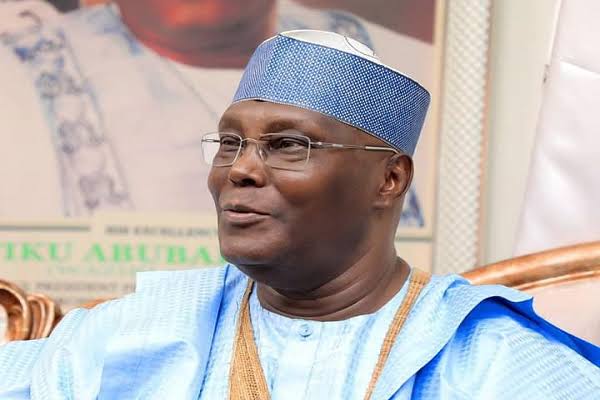
FORMER Vice President Atiku Abubakar has hailed the success of Rivers State local government election, held on Saturday, October 5.
Abubakar said the outcome of the poll would dissipate judicial chicanery and “self-serving godfatherism” in the state.
The Peoples Democratic Party (PDP) chieftain stated this on Sunday, October 6.
He said, “With the conclusion of the local government election in Rivers State, the shadows of political intimidation and judicial chicanery have dissipated, paving the way for the noble pursuit of governance to commence in the state.
“As prophesied, it has now been revealed that the citizens of Rivers are astute and resolute, unwavering in their rejection of any form of political oppression, harassment, or the machinations of self-serving godfathers.”
He said the state’s people had spoken as one, affirming that nothing could be better than democracy.
Congratulating the newly elected leaders, Abubakar urged them to prioritise their people’s welfare, shun tyranny and delusional ambition in their political endeavours.
“Moreover, I commend the resilient people of Rivers State for their steadfastness in the face of adversity, courageously ensuring that yesterday’s election unfolded with peace and integrity.
“I must also applaud Governor Fubara @SimFubaraKSC, for his unwavering commitment to the people’s interests, safeguarding the sanctity of the local government elections even amidst provocative challenges,” he said.
The PDP’s former presidential candidate maintained that it was Rivers people that emerged victorious in the election, adding that their ‘sacred’ right to choose their leaders was firmly upheld within the framework of democratic process.
The ICIRreported that with the African People’s Party (APP) winning 22 out of the 23 chairmanship seats in the poll, Fubara appeared to have taken over the party structure in the state.
The APP-elected chairmen are said to be the preferred candidates of the governor which could also mean that his predecessor and Minister of the Federal Capital Territory, Nyesom Wike, might have lost control of the state’s structure, at least for now.
Fubara and Wike have been at loggerheads over who controls the PDP structure in the state, with President Bola Tinubu’s efforts to resolve the stalemate ending in a fiasco.
THE Action Alliance (AA) has clinched the final chairmanship seat in the Rivers State Local Government election conducted on Saturday, October 5.
But the African People’s Party (APP) cleared all the 19 councilorship positions in the local government.
The ICIRreported Saturday night that the APP won 22 out of the 23 chairmanship seats in the state.
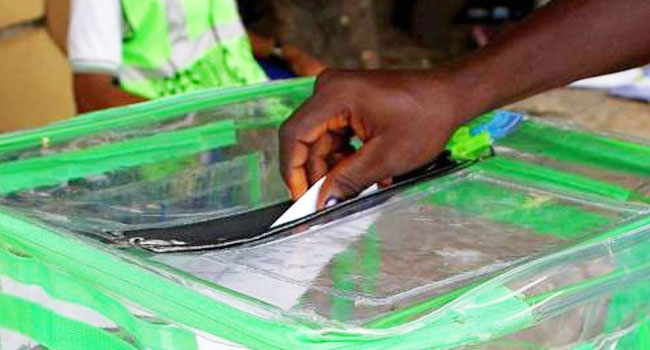
Declaring results for the remaining local government area on Sunday, October 6, the chairman of the Rivers State Independent National Electoral Commission (RSIEC), Adolphus Enebeli, lauded the exercise and voters turnout.
He said the exercise was free, fair, and credible, despite the controversies characterising it.
He also noted that there was a large voter turnout during the poll.
According to Channels Television, the electoral commission announced that the APP claimed 314 councilorship seats, while the All Progressives Congress (APC), Boot Party, Labour Party, Social Democratic Party (SDP), and Young Progressives Party (YPP) each secured one seat.
Meanwhile, Governor Siminalayi Fubara has swore in the newly elected chairmen.
The ceremony, held at the Executive Council Chambers, Government House, Port Harcourt, was held hours after the chairmen were issued certificates of return by Enebeli.
With this development, The ICIR reports that Fubara’s preferred candidates were victorious in a poll marred by controversies.
Fubara has also won the election for an opposition party, as he has yet to decamp from his party – the People’s Democratic Party (PDP)
It also means his predecessor and Minister of the Federal Capital Territory, Nyesom Wike, lost control of the state’s structure, at least for now.
Fubara and Wike have been at loggerheads over who controls the PDP structure in the state, with President Bola Tinubu’s efforts to resolve the stalemate ending in a fiasco.
The election was held amidst accusations of violence, intimidation, and a disrupted political atmosphere.
The ICIR reports that heightened tensions in the build-up to the poll across the state.
The ICIR also reported how an explosion rocked the APC secretariat in Port Harcourt just hours before the election.
The incident caused damage to the building’s main gate and security post, with videos showing the aftermath circulating on social media.
Reacting to the incident, the APC caretaker committee chairman, Tony Okocha, blamed Fubara’s supporters for the attack.
Okocha in a message sent to journalists in the state, accused the governor’s supporters of orchestrating the explosion to intimidate opposition forces and disrupt the electoral process.
Similarly, voters in Port Harcourt, at Ward 19 Elekahia, accused the police of firing shots and using teargas at the collation centre.
THE All Progressives Congress (APC) has won all the chairmanship and councillorship positions in the local government election held on Saturday, October 5, in Benue State.
The chairman of Benue State Independent Electoral Commission (BSIEC), Richard Tombowua, announced the results on Sunday, October 6, at the commission’s headquarters.
He said APC candidates won all 23 chairmanships and 276 councillorship positions contested in the poll.
“The election held yesterday across the state went off without a hitch; it was free and fair, and the returning officers have submitted all the results from the field.
“From the results, the All Progressives Congress won all 23 chairmanship and 276 councillorship positions,” Tombowua declared.
He noted that five political parties that submitted lists of candidates participated in the exercise.
The parties were the APC, Peoples Democratic Party (PDP), Labour Party (LP), Social Democratic Party (SDP), and All Progressives Grand Alliance (APGA).
Addressing journalists on Saturday while the election was going on, Tombowua noted that voters’ turnout was unprecedented.
However, The ICIR reports that a few incidents were witnessed in Akwa Ibom and Rivers states where local government elections also took place on Saturday.
The ICIR reported that an explosion rocked the APC secretariat in Port Harcourt before the commencement of the local government poll in River State and a fire incident at the Akwa Ibom State Independent Electoral Commission (AKISIEC) in Ibiono Ibom Local Government Area that led to reinforcement of security operatives.
IN today’s evolving cultural landscape, body piercings have transitioned from traditional practices to mainstream forms of self-expression, particularly in Nigeria, where regional attitudes toward piercings differ significantly.
Body piercing refers to the production of a semi-permanent or permanent opening through the skin or a mucosal-lined surface such that a decorative item of jewellery may be inserted.
The most common example, by far, is earlobe piercing, which is mostly done at birth for female children. But as children come of age, some of them tend to extend the piercings to other body parts such as nostrils, tongues, eyes, belly button, lips, tongue, eyebrows, nipples, and genitals, irrespective of gender which may or not be connected to cultural norms. Some of these norms can be attributed to culture, spirituality, religion or self-expressionism.
Many studies have shown that body piercing and tattooing have become more common in today’s popular culture, but these practices are not solely modern trends.
An article by the American Academy of Paediatrics states that archaeological evidence indicates different forms of body decoration have existed in human societies for thousands of years. While previous research has mainly explored the connections between personality traits and the likelihood of getting piercings or tattoos, few have examined the subject from an evolutionary viewpoint.
Body piercings can be seen as a form of self-expression, a way to take ownership of your body and showcase your identity.
In Nigeria, body piercings were traditionally widespread in the northern region, where many young women would have two or more ear piercings and occasionally a nostril piercing. This practice were deeply rooted in some northern cultural norms.
Illustrations showing different kinds of facial piercing Image by Myriam – No AI pictures in my gallery. from Pixabay
In contrast, in modern times such piercings were less common in the southern parts of Nigeria, where they were viewed with suspicion and often associated with negative stereotypes. Women in the south who had body piercings were frequently considered to lack moral values or be of questionable character, reflecting a cultural divide between the two regions regarding the practice.
This was the reality Adebimpe Adetunji, a middle-aged woman, was faced with when she intended to pierce her nose in her early twenties.
“When I was younger, I wanted to pierce my nose because I really liked it and I was in a northern environment where it was quite common but my boyfriend warned me of the cultural implications as a Yoruba girl and I saw reasons with him which made me drop the Idea,” Adetunji stated.
She added that over time, nose piercings have become widely accepted across different tribes and cultures. Despite her age, being in her mid-fifties, she is now considering getting a nose piercing herself.
“I have decided to pierce my nose but I would use very small jewelry and just one on the left part of my nose,” Adetunji further stated.
She said although the idea of getting a piercing has resurfaced for her, she still dislikes some of the more modern trends. These include septum piercings, piercing on both sides of the nose, and piercing in other areas of the ear, like the tragus.
Today, it is common to see young people with multiple visible piercings on various parts of their bodies, reflecting a growing trend of self-expression through body modification.
This surge in popularity includes piercings like the septum, double nostrils, and multiple ear piercing, which were once less common but are now becoming more mainstream among younger generations across Nigeria.
Hannatu Abdulwahab is one of such youth that has faced backlash from strangers due to her double nostrils unconventional piercing.
“I got my first piercing in 2019 when I was in my final year, and it was normal because Ilorin is north central and it is a norm over there. I got my second piercing during my service year.
I faced a lot of disdain and judgements because it was strange to a lot of people especially adults, they felt it was immoral. I have gotten insults like prostitute, a wayward child, a mannerless child, any sort of insult you can think of,” Abdulwahab said.
She mentioned that her distinct style of dressing might have contributed to the stereotype she faced characterised by beads adorning her body and anklets on both legs.
“I also do not dress in the usual way everyone does, my looks are alté (alternative). I have beads all over my body and I think that actually contributed to it also, I had anklets on both legs.
I had gotten used to the insults to the point that i didn’t even realised when it stopped because now compared to then I don’t get people to judge me. In the space of four years, it has reduced,” Abdulwahab stated.
This might be the privilege Aisha Adio, another individual with double nostrils piercing enjoys as she told The ICIR that has not gotten any judgmental remarks or looks since when she got another piercing on the other side of her nose since 2023.
“No one has made a negative comment on my piercing. It was only when I was in camp that we were all asked to remove our piercings and some earrings too on arrival.” Adio stated.
An image of Aisha Adio showing her double piercings. Photo Credit : Aisha Adio
Disapproval can also be found in the professional workforce as some employers still harbour reservations on the unconventional modern-day piercings whilst some employers have evolved significantly, particularly creative fields like fashion and technology, are becoming more accepting of body piercings, viewing them as expressions of individuality and creativity.
In a recent post, an X user named @chrisllonaire expressed his frustration over a situation involving a candidate who had applied for a personal assistant position with the CEO of an oil servicing firm.
After successfully passing the first interview, the candidate was preparing for a second round with the CEO. However, the executive criticised her appearance, specifically targeting her multiple ear piercings, a leg chain, and visible panty lines.
“I’ve been fuming for the past 12 hours. Someone applied for a personal assistant job to the CEO of an oil servicing firm. She scaled the first interview and was set for the second round with the CEO and another person.
“But the guy totally frowned at her appearance just because she had multiple ear piercings, wore a leg chain, and had visible panty lines. Seriously, what happened to being decent about stuff you don’t like? If you’ve got reservations, keep them to yourself. I’m boiling over this. The post read.
Some X users supported the executive’s action while stating that such appearances might not reflect the company’s values.
Navigating employment opportunities, Abdulwahab stated that she usually removes one of her nose rings when attending interviews or applying for in-person opportunities.
“Whenever I am going for interviews or applying for opportunities, I remove one of my nose ring because I know I am going to get judged because of it. I have gotten an employment referral and I had to remove my nose ring due to my previous experience. because you get judged even before they hear what you have to offer
Aderayo Akolade said that she decided to pierce her nose in an effort to stand out and to deter herself from self-harm. However, the experience didn’t go as planned, as the piercing became infected, leading to unexpected complications.
“I always wanted to pierce my nose just to look different, but at the time I pierced my nose I did it cause I didn’t want to self harm. It mostly occurs when I’m overwhelmed with my feelings or resenting myself when I make a mistake .
“I just made the decision on a random day, I went to a jewelry stall and I had the left side of my nose pierced. I didn’t really feel the pain like I imagined,” Akolade stated.
Non-suicidal self-injury, or self-injury, involves intentionally harming oneself, like through cutting or burning, without the intent of suicide. People often engage in it as a way to cope with emotional distress such as sadness, anger, or stress.
Though it may offer temporary relief, it is usually followed by feelings of guilt and the return of negative emotions. While serious injuries are not usually the goal, self-harm can sometimes lead to unintended severe or even fatal consequences.
“It was all going great not until I misplaced the jewellry I used in piercing it and I got another piece of jewellry which I didn’t know was fake. This affected the healing process and it got infected and really painful. I had to close the piercing,” She further stated
Akolade treated the infection using a saline solution made from sea salt and water. She mentioned that she’s waiting for the piercing to fully heal before attempting to re-pierce it.
Akolade’s experience with a piercing infection is just one of several health risks associated with body piercings. Other potential health implications include allergic reactions to materials used in jewellry, which can cause irritation and discomfort. Keloids, or raised scars that form due to excessive collagen production during the healing process, are another concern. If a piercing is improperly executed or if unsuitable jewellry is used, there is a risk of tissue damage, potentially affecting surrounding tissues, nerves, or blood vessels.
Navel piercing: Image by Sergey Nemo from Pixabay
Moreover, over time, some piercings may lead to complications like migration, where the jewellery shifts from its intended position, or rejection, where the body pushes the jewellry out. These issues can also result in permanent damage to the skin or underlying tissue
Aisha Suleiman, who is a piercer, explained that she usually takes safety precautions such as cleaning and sterilising the equipment for several minutes in front of the clients before proceeding to pierce.
“I make sure to clean the equipment for some minutes and I do so in front of clients for them to witness. I analyze the faces of clients and access how and what part should be pierced by asking which part of their face do they look prettier” Suleiman stated
She also mentioned that she utilises social media platforms such as TikTok and Youtube to stay informed about trends and to learn new piercing techniques.
“Most of my clients usually come to pierce their ears and when they are scared about the process, I show them videos of previous customers who didn’t even flinch to allay their fears.”
When asked about after-care treatments she stated that she usually recommends treatments such as hot towels, shea butter, and gentle rubbing.
Muneerah Owolabi, a medical officer, noted that to reduce the risk of developing keloids after a piercing, it is best to choose an experienced piercer who uses sterile techniques.
“It’s crucial to follow aftercare instructions meticulously, including keeping the piercing clean and avoiding any irritation to the area. Additionally, consider avoiding piercings in areas where you have a history of keloids,” She said.
Owolabi also noted that is best to opt for hypoallergenic materials such as titanium, surgical stainless steel, or gold as these materials are less likely to cause allergic reactions or irritations that could lead to keloids
“If you notice early signs of a keloid, such as raised tissue at the piercing site or unusual redness, it’s essential to consult with a healthcare professional.
There are topical treatments available, such as silicone gel sheets or steroid creams, which may help prevent keloids post-piercing. It’s best to discuss these options with a dermatologist, as they can provide personalised recommendations based on your skin type and history” She further highlighted.
KANO State Governor Abba Yusuf has warned local government area (LGA) officials in the state against stealing public funds.
He vowed that any official found culpable would face severe sanctions.
The governor expressed concern that officials were engaging in practices that could lead to significant financial mismanagement at the grassroots level.
His warning came in the wake of his administration’s efforts to grant local governments full access to their funds.
Speaking at a two-day workshop organised for personnel of the 44 LGAs in the state, on Saturday, October 5, Yusuf said his government would continue to implement more stringent measures aimed at combating corruption.
“The government has noticed with dismay the potential for both grand and petty corruption at the grassroots level. This has been realised as a result of this administration’s effort to give the local government councils full access to their funds, even before the apex court’s intervention,” Yusuf said.
Yusuf emphasised that his administration would not hesitate to sanction or dismiss any officials involved in the misappropriation of funds or other financial misconduct.
“We shall also continue to implement more measures aimed at checkmating corruption and will continue to support the State Public Complaints and Anti-Corruption Commission, the organisers of this programme.”
This, according to him, is to achieve an anti-corruption mandate through enhanced financing and oversight monitoring while maintaining a non-interference policy for optimum performance of the LGAs.
While commending anti-corruption stakeholders, he stressed that the workshop was aimed at sensitising the participants on transparency and accountability.
He further noted that in line with the Supreme Court ruling, his administration had dissolved the 44 local government interim management committees.
He stressed that it had also appointed civil servants to oversee local government affairs until elections could be conducted.
“Our government is founded on the principles of transparency and accountability, as well as the entrenchment of the rule of law in our society. This takes into account the Supreme Court’s verdict relating to local government administration in the country.
“And as a true believer in the rule of law, the Kano State Government, under my leadership, dissolved the 44 local governments interim management committees. We have made the civil servants, who are strategically and statutorily positioned to fill any vacuum in governance, oversee the affairs of the local government councils.
“This is while preparations are in top gear to fill the absence of the public officers, as a result of the court’s judgment, through democratic means,” Yusuf said.
The governor’s position followed the Supreme Court ruling, which mandated all states to conduct democratic elections for local government councils and grant them full financial autonomy.
The July 2024 ruling, which restored financial and administrative independence to the nation’s 774 local government areas (LGAs), marks a departure from the previously pervasive practice of appointing caretaker committees that were mainly the governors’ stooges and tools for squirrelling public funds.
Although The ICIRreports that this practice has been widely criticised for undermining local governance and stalling community development, many Nigerian state governors used the LGAs as tools for political patronage, which negated democratic ideals.
Meanwhile, no fewer than 11 states, including Adamawa, Kwara, Bauchi, Delta, Cross River, Rivers andAnambra have held local government elections after the Supreme Court ruling, allowing citizens to elect who leads them at the level of government closest to them.
Others are Ebonyi, Kebbi, Enugu and Sokoto. The ICIR reports that local government elections were held in these states between July and October 2024.
CONTROVERSIAL Islamic cleric, Sheikh Ahmad Gumi, has criticised Nigeria’s intelligence-gathering, describing 90 per cent of the country’s intelligence as ‘garbage.’
Gumi, a Kaduna-based figure and former captain in the Nigerian Army, known for his direct negotiations with bandits and his calls for dialogue with terrorists, made this remark in an interview published by the Punch Newspaper on Sunday 6.
He addressed the rising insecurity in Nigeria and the ‘ineffective’ strategies deployed by the government.
In his assessment, Gumi emphasised that poor intelligence was a critical factor behind Nigeria’s failure to curb banditry and terrorism, particularly in the northern region.
He attributed this intelligence failure to the lack of a nuanced approach to addressing the root causes of insecurity, such as social neglect and economic deprivation.
According to the cleric, the persistent reliance on military action against guerrilla fighters, like bandits and Boko Haram insurgents, is a flawed strategy.
“The military is a fire engine. It is a fire-for-fire approach. These people they are fighting are guerrillas.
While drawing comparisons with other conflicts around the world, including the struggle faced by Israeli forces in Gaza, Gumi said using the military to fight a guerrilla war was like punishing the military.
He added that the military was not designed for fighting bandits or terrorists.
“The military is not designed to fight guerrillas. It is just like using a hammer to kill flies. One will destroy the house. The design of the military is not for this job,” he said.
According to him, the Nigerian government needs to empower the police, enhance intelligence gathering, and empower the people.
He stressed that addressing the socio-economic grievances of these groups would yield better results than militarisation.
Gumi argued that the Nigerian government had ignored more effective approaches to solving the insecurity crisis.
“Today, 90 per cent of our intelligence is garbage. What we have left is just about 10 per cent. That is why we have coups because intelligence does not have a way to identify these people.
“They also killed their leaders because no intelligence picked them up. Can we wait until we get a government that understands, then, we can make plans to intervene and see if it can calm nerves to achieve peace. No, as individuals, we have to do our best. Then I can advise the government on what we have seen,” he added.
Gumi also revealed that his negotiations with bandits were never carried out in isolation but were supported by government officials and the police.
“I have never been to any den of these people without officials of the government. I go with the police because one cannot go alone,” he said, countering suggestions that he could be used as bait to apprehend the bandits.
The cleric further dismissed allegations that politicians were sponsoring bandits or insurgents to wreak havoc in the country, stating that the violence was a natural reaction of neglected communities.
“No politician is sponsoring these people. We are all victims. The opposition is not even behind this. This is a natural reaction of people neglected for centuries.
“Now they are exposed to the world and they want education. These people are exposed to the internet and see how much they are deprived. They want to fight back. This act is not orchestrated by anybody.
Gumi also explained that the terrorists had become angrier in the past months because the government chose to kill rather than dialogue with them.
“At the moment, they have started shouting ‘Allahu Akbar,’ and that is what we are fearing. Now they are committing the same crimes of killing, raping, and slaughtering.
“When we went there, they were not shouting ‘Allahu Akbar.’ Now, they are aggrieved, and they think it is a revengeful fight. They must have been engaged by religious fanatics. This is what we feared.”
The ICIR reports how Zamfara state governor Dauda Lawal had called for the minister of state for defence, Bello Matawalle’s resignation over accusations of sponsoring banditry and money laundering during his time as governor.
The governor claimed that the Government House in Gusau, the state capital, was allegedly involved in the ransom payment for the children of a permanent secretary who was abducted.
Matawalle has however, denied the allegations, calling the governor and other politicians in the state to swear by the Holy Quran if they know nothing about banditry that has made the state insecure in the past years.