Home Blog Page 498

Power generation hit record 5,170MW in August – Minister

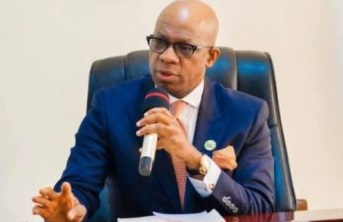
NIGERIA’S power generation peaked at 5,170 megawatts on August 30, 2024, the Minister of Power, Adebayo Adelabu, has said. 

However, he said due to distribution companies’ (DISCOs) inability to absorb the supply, the figure was reduced by 1,400 megawatts, leaving the nation to make do with the available 3,770 megawatts amidst worsening power outages across the nation.

The minister stated this in a statement issued by the Ministry of Power on Sunday, August 31, during a facility tour of TBEA Southern Power Transmission and Distribution Industry in Beijing, China.

“This is truly regrettable, considering that the government is on course to increase generation to 6,000 megawatts by the end of the year,” he said.

The minister also said the federal government planned to release $800 million to construct substations and distribution lines under the Presidential Power Initiative.

He said $400 million each would be allocated for the construction of substations and distribution lines for Lot 2 and Lot 3. Lot 2 encompasses the franchise areas of Benin, Port Harcourt, and Enugu Distribution Companies (DISCOs), while Lot 3 includes the franchise areas of Abuja, Kaduna, Jos, and Kano DISCOs.

During an interactive session with TBEA management, Adelabu assured of the federal government’s commitment to work with world-class organisations like TBEA to achieve President Bola Tinubu’s Renewed Hope vision for the power sector in Nigeria, particularly in the areas of transmission and distribution across the entire power sector value chain, as well as Nigeria’s renewable energy segment.

Adelabu noted that some challenges in the power sector are partly due to the fragility of the transmission and distribution infrastructure, which he said had become outdated and dilapidated.

“This has led to the historical epileptic supply of power to households, industries, and businesses,” he said.

He further explained that more than 59 per cent of industries in Nigeria were off the grid.

“They do not consider the national grid reliable and dependable. As a result, many now operate self-generated power.”

Reflecting on the government’s initiatives, Adelabu recalled that in 1984, about 40 years ago, Nigeria generated 2,000 megawatts, and it took over 35 years to add an additional 2,000 megawatts.

“When this administration came in last year, we inherited around four gigawatts (4,000 megawatts) of power, but within a year, we achieved a milestone of 5,170 megawatts, adding about 1,000 megawatts of power within the first year. It may seem small, but compared to the country’s history, this is commendable.

“Our plan is to achieve 6,000 megawatts of power by the end of the year through a combination of hydroelectric power plants and gas-fired power plants. We are also targeting 30 gigawatts of power to be generated, transmitted, and distributed by 2030, with 30 per cent of that being renewable energy.”

The Minister noted that the renewable energy segment would be sourced from a combination of hydroelectric power from small dams, solar energy, and wind farms from onshore and offshore winds.

Nigeria has been grappling with persistent power supply challenges for decades. The country’s generation capacity has consistently fallen short of demand, leading to frequent blackouts and load shedding. The country generates most of its power through hydro, gas and thermal.

Nigeria produces an average of 5,000 megawatts of electricity which is insufficient for the consumption of its approximately 220 million population.

Successive governments have tried but failed to reform Nigeria’s energy sector.

Rising energy costs pushing cement price above Nigerians’ means – data

0

MOST Nigerians are struggling to cope with the rising cost of cement and may not be able to embark easily on housing construction with rising energy prices taking its toll on the commodity which is a basic material for housing construction.

Accordingly, DANGOTE, BUA, and Lafarge cement companies reported a 108.65 per cent rise in production cost to N1.24 trillion in the first six months of the year, spurred by higher energy costs.

The increase in the cement giants’ production costs was largely due to the rise in energy costs as the price of cement remains high, despite a price slashed by BUA Cement late last year.

An analysis of the companies’ 2024 half-year financial statements shows that production costs rose significantly as the companies spent more on energy costs.

Aggregate production costs for the three cement giants more than doubled to N1.24 trillion in the first half of 2024, relative to N592.32 billion in the same period in 2023.

A breakdown of the analysis shows that Dangote Cement Plc posted N833.27 billion as total production cost from N383.09 billion.

BUA Cement Plc recorded N254.66 billion from N114.94 billion, and Lafarge Africa Plc, N147.94 billion from N94.29 billion as production costs.

A production cost refers to all of the direct and indirect expenses businesses face from manufacturing a product or providing a service.

It includes a variety of expenses, such as labour, raw materials, consumable manufacturing supplies, and general overhead.

A cursory look at the line items that made up the production costs on the companies’ records shows an astonishing rise in the price of energy.

The Dangote Cement recorded N374.82 billion in energy costs, compared to N157.02 billion in the same quarter of 2023.

The figure represents 44.98 per cent of the company’s N833.27 billion total cost of production in the review quarter.

BUA Cement reported N130.15 billion in energy costs from N47.91 billion, representing 51.11 per cent of N254.66 billion of its total cost of production.

A recent disclosure by BUA Cement shows that the price of a bag of cement would remain high, despite an earlier slash in price.

The company had, on October 2, 2023, slashed the price of cement with immediate effect and promised to review the price upon completion of new plants, expected to increase its production volumes to 17 million metric tons per annum, The ICIR reported.

However, at the company’s 8th annual general meeting (AGM) on Thursday, August 29, the chairman of BUA Cement, Abdul Samad Rabiu, said energy costs are too high, and it contributes largely to the high cost of cement in the country.

He said, “We are currently building a mini-powered plant. We are doing this because energy costs are too high and that contributes largely to the high cost of cement in Nigeria. When the project is completed, the energy cost element will reduce and that will reflect in the price of the community.”

The BUA chairman hinted that the LPG-fired power project would be completed by next year, meaning until then the company’s cement price would remain high in the market.

Rabiu further cast blame on cement dealers for undermining the company’s plan to sell cement at N3,500 per bag, pointing out that consumers purchase the commodity as high as between N7,000 and N8,000 per bag.

He claimed a lot of dealers took advantage of the price slash but rather than pass the low price to customers, almost doubled the price they sold it to consumers.

Rabiu said the company sold over a million tons of cement to dealers at N3,500 per bag, hoping to benefit end-users.

He added that the dubious play by the dealers led the company to abandon its planned price slash.

Chidimma Adetshina wins 2024 Miss Universe Nigeria

0

NIGERIAN-South African model, Chidimma Adetshina, has won the  the 2024 edition of the Miss Universe Nigeria competition.

This was announced at the grand finale of the the pageant show on Saturday, August 31, at the Eko Hotel and Suites.

Adetshina won the pageant, surpassing 24 other models representing different states in Nigeria.

At the grand finale, Miss Anambra, Paula Ezendu, emerged as the first runner-up, earning her the title of Miss Supranational Nigeria and representing Nigeria at the Miss Supranational pageant in Poland in 2025.

The ICIR reports that Adetshina, a former finalist at the Miss South Africa pageant faced backlash from South Africans after making it to the top 16 at the pageant. Consequently, she withdrew from the competition.

Following her withdrawal, she was invited by the Miss Universe Nigeria organisation to participate at the 2024 Miss Universe Nigeria pageant competition which she accepted.

The finale saw the contestants  showing up in different attires to showcase the rich Nigerian culture after which they had the swimsuit and evening gown competition. category of the contest. The finale was hosted by Victory Wilson and Anthony Abraham.

Chidimma will be representing Nigeria at the Miss Universe pageant in Mexico in November.

Truck drivers’ associations berate illegal extortion of members at ports

TRUCK drivers’ associations within the Nigerian maritime industry have taken divergent positions on the plan to withdraw their services in demonstration of grievances against illegal extortion and forceful imposition of levies by state and non-state actors along the port corridors.

Touting, extortion and other illegal activities have continued to thrive on the Lagos port corridors which the government, its agencies and regulatory authorities are expected to put an end to.

In two separate reports (here and here), The ICIR investigated the illegal activities that go on along the Lagos port corridors.

The Association of Maritime Truck Owners (AMATO) and the Lagos State Truck and Cargo Operators Committee (LASTCOC) said to be led by the duo of Remi Ogungbemi and Lookman Shittu, and other associations within the maritime industry have proposed to withdraw their services over dissatisfaction on the harassment, forceful and illegal collections of levies by state and non-state actors along the port corridors.

In a statement dated Friday, August 30, the National Association of Maritime Transport Operators (NAMTOP) declared not to join the planned withdrawal of service based on some allegations it put forward.

The statement was signed by its chairman, Adisa Moshood Olaitan.

According to Olaitan, NAMTOP recognised the right of individuals and groups to withdraw service, protest and engage government, security agencies on issues, but asserted that AMATO and the other group were not representing the interests of the entire truck owners and operators in the maritime transport industry.

Although his members condemn and partially agreed with the other groups on issues concerning extortion, harassment, and intimidation by state and non-state actors, but disagreed on the planned withdrawal of service by truckers.

Olaitan alleged that the other groups have points of extortion and sale of illegal tickets along the port corridors.

“The said planners are in partnership with RTEAN (Road Transport Employers Association of Nigeria) and NURTW (National Union of Road Transport Workers) on the extortion business, as could be seen in their fraternity in the past.

“Members of the said groups led by One Oladimeji Olaseni are behind the illegal collections and extortion in Amuwo Odofin using an illegal revenue ticket of Amuwo Odofin Local Government as a false instrument.

“Issa Babatunde Kunfayakum uses illegal Lagos State government tickets as his own false instrument to obtain truckers in the same area.

“Ahmed Saro is operating the same illegal tickets at the Erick Moore area of Surulere and Rasaki Igbalaye at Ijora Olopa, Lagos/Badagry express road under Mukaila Aliu, and many more places all under the headship of Lookman Shittu, the chairman of LASTCOC,” the NAMTOP chairman further alleged.

Olaitan said NAMTOP wants a holistic investigation and prosecution of all acts of extortion and illegality being imposed against truckers.

“We in NAMTOP are using this medium to inform the general public that we are not part of the proposed withdrawal of service.

“We are open for business as usual. We believe that this action will cause unnecessary disruption to the maritime industry and may lead to economic losses for all stakeholders involved,” he said.

Olaitan added that the groups are planning to shut down the port and disrupt economic activities, calling on the government and security agencies to prevent it.

The ICIR contacted the chairman of AMATO, Remi Ogungbemi, and he confirmed the development.He said, “We are not planning to protest nor strike, but planning to peacefully withdraw our services.

“We do not expect anyone that is not part of us to join, but every trucker that has suffered or suffering the menace of the hoodlums will not disassociate from the peaceful exercise that will believe will further draw the attention of relevant authorities to our predicaments.”

Ogungbemi explained that the proposed withdrawal of service is to express their grievances against unending brutalisation of drivers, damaging and vandalisation of their trucks and forceful demanding of money from drivers by hoodlums.

The reason also include the outrageous bills imposed by states for removing breakdown trucks.

“We want the government to outlaw the ignoble activities of the street miscreants that are inflicting cruelty on our drivers, causing pains and economic hardships,” Ogungbemi said.

On the NAMTOP’s allegation that AMATO and the other groups have points of extortion and sale of illegal tickets along the port corridors, Ogungbemi refuted it.


READ ALSO:


He said, “That’s not true; as far as AMATO is concerned, we weren’t involved and wouldn’t be part of the extortionist.

“You can do your independent investigation to ascertain; I can assure you that you can’t see any member of Amato involved in such a primitive way of doing things.”

He added that sensitisation and consultations are ongoing to determine the day the associations would embark on the proposed withdrawal of service.

Hackers hijack Hisbah’s Facebook page, post nudes

0

HACKERS have hijacked the official Facebook page of the Kano State Hisbah Board and uploaded inappropriate and explicit content.

The ICIR reviewed the handle of the organization on Saturday, August 31, and confirmed that the hackers bombarded it with various explicit pictures and videos.

The commander general of the Board, Aminu Daurawa, also confirmed the incident to reporters, stating that the situation would be addressed.

“Kano State Hisbah Board is aware that its Facebook page has been hacked and inappropriate things are being shared. On behalf of the Board, I call on people to help solve this problem.”

He assured the public that the Board’s ICT department was working to restore the page and had engaged in discussions with Meta to resolve the issue.

He urged the public to report the hacked page to Meta in English to help prevent further dissemination of inappropriate content.

The head of ICT at the Hisbah Board, Sani Zailani, noted that the account had experienced previous hacks.

He added that Meta had been contacted regarding the latest breach and it pledged to resolve the issue within 48 hours.

The Kano Hisbah was established in 2003 as a religious police to enforce Shariah laws for Muslims in the state.

Shariah law is practised in 16 of the 19 states in Nigeria’s North, and the Federal Capital Territory (FCT).

According to a report by the Human Rights Watch, most Hisbah members were recruited at the local level by traditional leaders and local governments.

They “consist of young men with a low level of formal education, no background in law, and no training in law enforcement or procedures for arrest, investigation, or gathering of evidence.”

The ICIR reported how the religious police violate the freedom of many Nigerians in the name of religion. The Hisbah operation is also characterised by hypocrisy and a preference to persecute the working-class citizens.

Two missing minors found dead in Ogun river

0

TWO minors between the ages 13 and 15 have been found dead in a river at Egudu Baale, Idi-Oke community in Igbesa, Ado-Odo Ota Local Government Area of Ogun State.

The teenagers, identified as Malik Abdulganiyu and Hawal Akande, were found dead with their bodies floating in a river on Friday, August 30, after they were reported to be missing.

The Ogun State Police Command public relations officer, Omolola Odutola, confirmed this to The ICIR on Saturday, stating that the teenagers had reportedly left their home on Olaigbe Street in Egudu Baale on Wednesday morning to go to work at the Salvation Army, located within the same community.

“On August 8, 2024, at approximately 1:30 a.m., the mothers of Abdulganiyu and Akande, aged 15 and 13, respectively, reported that their children had not returned home from work on Thursday.

“The corpses were discovered floating in a river not far from their home. Police detectives visited the scene and conducted a thorough examination of the bodies, but found no signs of an attack.

“The bereaved family demanded the release of the corpses, arguing that they wanted to bury them according to Islamic rites,” she added.

Cases of people drowning are common in Nigeria, especially during the rainy season.

In June, The ICIR reported that six students drowned in the Mbang River in Ribang village, Kauru Local Government Area, Kaduna State, while returning from a Junior West African Examinations Council (WAEC) exam.

The casualties were students of the Government Secondary School Fadan Chawaiwere.

The national public relations officer of the Ribang Development Association, Simon Ishaku, said that the river had been a death trap for people while pleading with the government to build a bridge for the community.

“The Mbang River has been a death trap for our people over the years,” he stated, noting that before the community could access any school or hospital facility, they would travel for about eight kilometres.

UI shuts down after students protested against tuition fees hikes

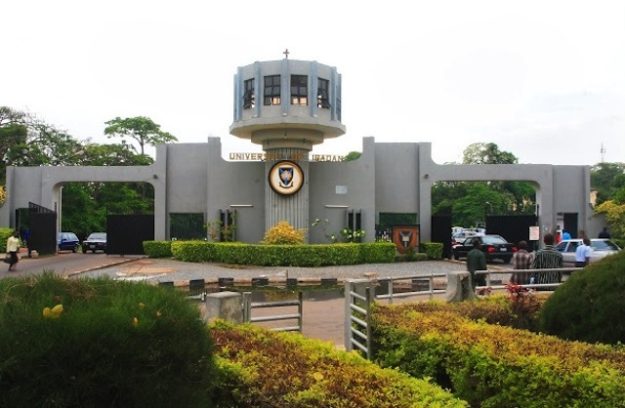
THE management of the University of Ibadan has shut down the school for three weeks and directed all students to vacate the campus.

The development followed the protest held by students on Friday, August 30, over the hike in tuition fees by the university’s governing council.

During the protest, the students waved different placards with inscriptions such as, “We Say No Tuition Hikes,” “Management Is Insensitive To Our Plights,” and “Our Parents Cannot Afford The New Hikes,” while they blocked roads leading to the school.

According to a circular dated August 30, 2024, the institution’s registrar, G. O. Saliu, directed the students to vacate the school premises by 2 pm on Saturday (today), stating that the school would be shut for three weeks.

The decision to shut down the institution was taken at the meeting of the university’s management with the leadership of the students’ union on Friday, August 30, 2024.

The school’s vice-chancellor, on behalf of the Senate, approved that the institution be shut.

He noted that the directive would be effective Saturday, August 31, 2024, till September 20, 2024.

Part of the circular reads, “All students are to vacate the university campus by 2 pm on Saturday, August 31, 2024. The hostel will be reopened from noon on Friday, September 20, 024.

“Students are therefore to note the following: The three weeks is to give students ample time to complete their online registration, the 2023/2024 first semester examination will now start on Monday, 23 September 2024, and the period for registration will be closed on Friday, September 20, 2024.”

Reports indicate that many students who paid between N20,000 and N30,000 may now pay N200,000 and more in the school.

This is not the first time The ICIR will be reporting how fee hikes amid hardship resulting from several economic reforms by President Bola Ahmed Tinubu’s government have sparked protests at various tertiary institutions across the country.

Immediately after his inauguration on May 29, Tinubu removed fuel subsidy and floated the naira leading to a surge in the cost of transport, food and other essential commodities.

Despite the hardships occasioned by the government’s reforms, several universities have hiked school fees, with some students paying over N200,000, including the University of Jos (UNIJOS) and University of Abuja (UNIAbuja), where a student Cyprian Igwe was rusticated in May for urging students to meet and discuss the hike.

Adetshina, other key contestants to watch as Miss Universe Nigeria winner emerges today

0

AS the search for the next Miss Universe Nigeria (MUN) comes to a close today, Saturday, August 31, all eyes are on the different contestants vying for the coveted title.

The finale which is set to hold at the Convention Centre of Eko Hotel and Suites, Victoria Island, Lagos will have 25 ladies battle for the crown.

At the finale, the ladies are set to wow the audience at different rounds of the competition where they will show up in different attires to showcase the rich Nigerian culture.

There will also be a swimsuit and evening gown competition where the ladies will strut the runway in their different swimsuits and long dresses for that category of the competition.

The winner is set to go home with a prize worth N10 million and represent Nigeria at the Miss Universe pageant in Mexico this November while the first runner-up will represent the country in the Miss Supranational pageant next year.

In 2001, Agbani Darego, the first African Miss World had a top 10 finish before going to contest at Miss World. Also, Nigeria’s representative in 2019, Olutosin Araromi, was placed in the top 20.

Following the recent uproar surrounding the Miss Universe Nigeria pageant, especially the Nigerian-South African Chidimma Adetshina who joined the contest late, after withdrawing from a similar competition in South Africa over xenophobic attacks, Nigeria has garnered attention from the international pageant community as well as non-pageant fans worldwide.

However, everyone is eager to see who will take home the title this year.

The ICIR highlights some major contestants in this year’s competition.

Chidimma Adetshina (Miss Taraba)

Chidimma Adetshina is a Nigerian-South African model, who faced backlash from South Africans after making it to the top 16 at the Miss South Africa pageant. Consequently, she withdrew from the competition.

Following her withdrawal, she was invited by the Miss Universe Nigeria organisation to participate at the 2024 Miss Universe Nigeria pageant competition which she accepted.

She is representing Taraba State at the contest.

Nyekachi Douglas (Miss Rivers)

Douglas is not a new face in the pageant industry as she has held major titles.

The Nigerian model emerged as the Most Beautiful Girl in Nigeria in 2019 and represented Nigeria at the Miss World pageant where she finished as Miss World top model and Miss World Africa the same year.

She grew into prominence and became many people’s favourite after her reaction when Toni-Ann Signh from Jamaica won the Miss World title in 2019.

Douglas competed at the Miss Universe Nigeria pageant in 2023 but finished in the top 15. Returning again this year, she is one of the top contenders for the crown.

Ufa Dania (Miss Kwara)

Ufa Dania is the first plus-sized Nigerian to compete in the Miss Universe Nigeria pageant.

The new Miss Universe policy embraces inclusivity, equality and empowerment, throwing away the traditional pageant standards of being ‘beautiful’.

Dania said she is proud to represent curvy women and claims she is in the competition “to show that you can be curvy, smart, intelligent and not fit into one specific box to be a queen”.

Ogun revokes licence of 20 orphanage homes

0

OGUN State Government has revoked the provisional licences of 20 private orphanage homes operating in the state.

According to Punch, the state commissioner for women’s affairs and social development, Adijat Adeleye, made this known on Friday, August 30, during a meeting with private orphanage owners in Abeokuta, the state capital.

The orphanage homes were shut down due to non-compliance with regulations and laws aimed at ensuring the well-being and safety of vulnerable children.

Adeleye expressed displeasure over some private orphanage owners’ activities, stating that the state would not tolerate shady practices involving illegal adoption, child trafficking or maltreatment of children in their care.

The commissioner said the state government’s actions aim to protect vulnerable children and maintain the integrity of orphanage services.

“About 20 orphanages with provisional licences were affected but not all of them were involved in various sharp practices like not following due guidelines on child adoption among other contraventions.

“But we have withdrawn the provisional licences of these 20 orphanages. We want to take our time to dig deeper and ensure that they are all doing the right things,” she said.

She added that the affected orphanages have been asked to reapply after a month and additional guidelines had been offered to those with permanent licences to ensure that the standard is not compromised.

Last month, the Imo State government also shut down ten substandard orphanage homes and revoked operational licenses.

The closure was done after a comprehensive accreditation process and thorough inspections.

The ICIR reports that many orphanages in Nigeria engage in child trafficking. In 2022, this organisation reported how an Air Force officer confessed to buying children from orphanage homes.

SSS releases journalist’s passport, describes seizure as ‘mistaken identity’

0

OPERATIVES of the State Security Service (SSS) have returned the seized passport of investigative journalist, Adejuwon Soyinka, blaming his arrest on “possible mistaken identity.”

Soyinka reclaimed his passport on Friday, August 30, after being accompanied by human rights lawyer, Inibehe Effiong, on a visit to the DSS office in Ikoyi, Lagos.

The SSS’ explained that Soyinka’s arrest was because his name was placed on its watchlist at the request of an unnamed government agency, after which the entire saga was blamed on a possible mistaken identity.

But Inibehe said the secret police’s decision to blame the incident on possible mistaken identity did not surprise him.

The ICIR reported that the SSS arrested Soyinka on Sunday, August 25.

One of his friends sent a distress message, stating that he was taken into custody shortly after he arrived from the United Kingdom, without being informed of the reason for his arrest, and was held in isolation without access to communication.

However, he was released from detention on the same day. The SSS agreed to release him on bail through the efforts of the International Press Institute (IPI) Nigeria, which intervened on his behalf.

As part of his bail conditions, the agency seized his passport and asked him to provide his Nigerian address and reliable phone number through which he could be reached anytime.

“I have just been released by the DSS in Lagos. They are holding on to my passport, though. I am on an Uber ride ordered for me by the deputy director of SSS in Lagos. I will speak better when I get home,” Soyinka wrote on his social media handle after his release.

The ICIR reported in December 2023 how security agents abused their power and flouted the Nigerian Constitution by harassing 39 journalists in the line of duty, nationwide.

Four reporters with The ICIR were harassed by state actors in the line of duty that year.

Meanwhile, in 2024, the Nigeria Police Force National Cybercrime Centre (NPF-NCCC) in Abuja invited and detained The ICIR’s executive director, Dayo Aiyetan, and reporter, Nurudeen Akewushola, over an investigation of sleazes in which its former Inspector-Generals were complicit.


READ ALSO:


This organisation reported that a reporter, Daniel Ojukwu, was abducted by officials of the Intelligence Response Team (IRT) of the Inspector-General of Police (IGP) Kayode Egbetokun on May 1, two days before World Press Freedom Day.

His abduction only became known on Friday, May 3, after spending four days with the police in Lagos State.

These are a few incidents among several cases of attack on the media in Nigeria by President Bola Tinubu’s government.

On August 25, this organisation published a report asking the government if it could ever guarantee press freedom as journalists are persistently harassed and incarcerated under a President who owns some of the biggest media outfits in the country.