THE National Youth Service Corps (NYSC) has invalidated the certificates of 101 graduates fraudulently mobilised by the University of Calabar (UNICAL) during the 2021, 2022 and 2023 service years.
This action, according to a statement by NYSC’s Director of Information and Public Relations, Eddy Megwa, on Monday, August 12, follows the discovery that 99 of the said graduates and two others on exemption were fraudulently mobilised despite being ineligible for the scheme.
Established in 1973, the NYSC is a programme created by the Nigerian government to foster national unity, promote patriotism, and equip young people with self-employment skills, among other objectives.
Every Nigerian graduate under 30 must participate in a one-year service, during which they are deployed to various states to work in different sectors.
The NYSC emphasised its unwavering commitment to maintaining the integrity of the national service programme by ensuring that only qualified graduates from local or foreign universities are recognised and issued certificates of national service.
The statement reads, “This is to inform members of the public that the under-listed 99 persons and two (2) others on exemption were fraudulently mobilised by the University of Calabar for national service during the 2021, 2022 and 2023 NYSC service years.
“Management of the National Youth Service Corps hereby restates its strong commitment to ensuring that unqualified locally and foreign-trained Nigerian youths, especially those purported to have graduated from unaccredited universities, are not recognised while only qualified persons are issued with NYSC certificates of national service.”
“Arising from the above, the certificates of national service of the under-listed persons have been invalidated forthwith by the NYSC management.”
The NYSC also advised the public to confirm the authenticity of NYSC certificates of national service, exemption, and exclusion letters through the NYSC National Directorate Headquarters in Abuja before accepting them for any official purpose.
“Members of the public, especially corps employers, government ministries, departments and agencies (MDAs), corporate and religious organisations, multi-national companies, corps producing institutions and other critical stakeholders of NYSC are to take note of this advertorial for prompt action,” the statement added.
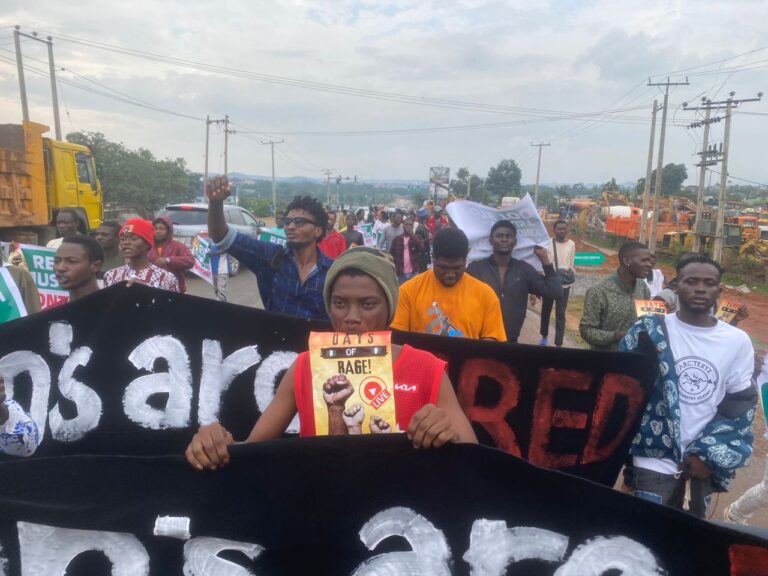
THE Federal High Court (FHC) Abuja has dismissed an application aiming to stop the just concluded #EndBadGovernance protesters from continuing with the demonstration across Nigeria.
The protest with the hashtag #EndBadGovernance was organised from August 1 to 10 across the nation to show displeasure with high inflation, corruption and hunger in the country.
Danladi Goje, Buky Abayomi, Adiza Abbo, and 13 others sought the interim injunction restraining the protesters under different platforms from continuing with the protest.
In the lawsuit filed on August 12, they requested the protection of their fundamental rights against the groups organising the #EndBadGovernance protest.
Organisations mentioned in the case include the Take It Back Movement, Concerned Nigerians, Nigerians Against Hunger, Initiative For Change, Human Rights Co-advocacy Initiative, Nigerian Against Corruption Initiative, Citizens For Change Advocacy Initiative, and Timely Intervention as 1st to 8th respondents.
Others include the Social Democratic Party (SDP), Youths Against Tyranny, Save Nigeria Movement, Active Citizens Group, Students For Change, We Coalition, Total Intervention, Refurbished Nigeria, Tomorrow Today, and Our Future In Our Hands Initiative.
The Attorney General Of The Federation and security agencies were also listed in the suit.
The applicant’s attorney, Tsembelee Sorkaa, claimed in the suit that the protests in Nigeria led by the first through nineteenth respondents, who were using the hashtag #EndBadGovernanc, were likely to violate his clients’ rights to life, personal liberty, private and family life, movement, property, and economic development.
While his motion on notice was being considered, he requested that the court prevent the first through 19th respondents from continuing with the protest.
In addition, he implored the court to require security services to implement any restraining order that may be issued.
Citing urgency, he also asked for an order of substituted service on the first through the 19th respondents through any national publication.
The lawyer claimed that the previous protests in Nigeria in 2020, hashtag #EndSARS, led to the deaths of innocent Nigerians and massive lootings and destruction of property.
The judge, Peter Lifu, dismissed the ex parte motion with the file number FHC/ABS/CS/1149/2024.
The judge ruled that the lawyer did not submit the necessary affidavit to back up his motions for an interim injunction and substituted service, making it improper for him to rush and grant the requests.
In addition, the judge declared that the protest in question came to an end on August 10 and that the lawyer had not shown any proof suggesting that the demonstrators would reassemble later.
The court consequently postponed the motion’s hearing till August 29, 2024.
During the protest, some state governors were forced to implement curfews as a result of violence and looting.
On August 10, the protest came to an end with the organisers promising to return to the streets to keep pushing for a better government.
President Bola Tinubu addressed the nation during the protests, acknowledged the grievances that necessitated the demonstrations and restated his administration’s commitment to rebuilding the economy and enhancing quality of life of Nigerians.
THE Edo State Government has asked the reinstated Deputy Governor in the state, Philip Shaibu, to stop parading himself as deputy governor.
This was disclosed by the state Commissioner for Communication and Orientation, Chris Nehikhare, on Monday, August 12.
The ICIR, earlier reported that Shaibu resumed office and instructed his staff to join him.
In a video broadcast on X on Monday, August 12, Shaibu stated that his action was in adherence to the 1999 Constitution of the Federal Republic of Nigeria, as amended.
A Federal High Court in Abuja reinstated Shaibu as the deputy governor of Edo State three months after the state House of Assembly impeached him.
In his ruling, on Wednesday, July 17, the presiding judge, James Omotosho, said the impeachment was in gross violation of the Nigerian Constitution.
The judge held that the allegation on which the House of Assembly based the impeachment proceedings was untenable in law, adding that the impeachment was illegal and unconstitutional.
While the government has appealed the judgment and filed for a stay of execution pending the determination of the appeal, the court has yet to rule on the appeal.
Reacting to the latest development in a statement, the Commissioner for Communication and Orientation (Nehikhare) raised concerns that Shaibu had been parading himself as the Deputy Governor in communications with various institutions.
Nehikhare noted that Shaibu was no longer the Deputy Governor and that any such correspondence from him should be ignored.
He also emphasised that the issue of his reinstatement was still under legal review, with upcoming hearings scheduled.
“The issue of his purported reinstatement is still active in court, with the next hearing for the two separate motions filed by the State Government and the Edo House of Assembly challenging the purported reinstatement by Justice James Omotosho scheduled for 24 September 2024.
“The State, through the Attorney General of Edo State and the Edo House of Assembly, represented by their lawyers, Oluwole Iyamu, SAN, and Ken Mozia, SAN, respectively, has sought an order for a stay of execution of the purported reinstatement, an order suspending the judgement, and a restraining order preventing Shaibu from presenting himself or attending any official function as deputy governor pending the hearing and determination of the appeal,” he said
The government also warned that any dealings with Shaibu should be considered risky, as his actions could lead to security breaches.
“Therefore, the status quo remains that His Excellency, Omobayo Marvelous Godwins, is the deputy governor of Edo State. Any correspondence carried out by any other person, including Philip Shaibu, constitutes impersonation, and anyone dealing with him does so at their own risk.
“Security agencies are hereby alerted to the potential breach of peace and are urged to hold Philip Shaibu accountable for any security breaches in the state arising from his actions,” he added.
THE Nigeria Deposit Insurance Corporation (NDIC) has explained the delay of payment to 17.6 per cent of the defunct Heritage Bank’s depositors, citing a challenge in their accounts verification.
The NDIC disclosed this in a statement on Sunday, August 12, by its spokesperson, Bashir Nuhu.
“It is instructive to state that, the remaining 17.64 per cent of the insured deposits yet to be paid were largely depositors whose accounts have post no debits (PND) instructions or have no BVN. Others are those with no alternative accounts in other banks or accounts with KYC limit on the maximum lodgment per day and are yet to come forward for verification,” NDIC said.
Heritage Bank’s liquidation came after the Central Bank of Nigeria (CBN) accepted that the bank had violated Section 12 (1) of the Banks and Other Financial Act (BOFIA) 2020.
The apex bank said specifically that the Heritage Bank’s board and management failed to improve the bank’s financial performance, “a situation which constituted a threat to financial stability.”
It further revealed that the withdrawal of the Heritage Bank’s licence followed a period after various supervisory steps prescribed by the CBN to rescue the bank from liquidation proved abortive.
On Monday, June 3, however, CBN announced the revocation of the Heritage Bank’s operating licence and directed the NDIC to liquidate the bank and pay depositors their funds.
To pay off the remaining depositors, NDIC said it is making attempts to contact the remaining depositors yet to receive their funds through telephone calls and text messages to the depositors to complete their verification process.
It stressed that it is offering both online verification options and the possibility of depositors visiting the NDIC offices in person to resolve outstanding issues.
NDIC added that it has paid about 82.36 per cent of the total insured deposit to date and the payment process was initiated using Bank Verification Numbers (BVN) to transfer up to N5 million (£5,000,000) per depositor into their alternate bank account within a record time of four days of the bank closure.
“This unprecedented achievement of direct payment through BVN-linked alternate accounts without the need for depositors to visit NDIC offices or fill out forms marks a historic shift for the NDIC in the prompt reimbursement of depositors with payment of about 82.36 per cent of the total insured deposit to date.
Fate of uninsured depositors and creditors
For deposits exceeding the insured limit of N5 million, the corporation hinted that it has initiated the process of recovering debts and realizing assets from the defunct Heritage Bank to distribute liquidation dividends to these depositors.
After the full payment of both insured and uninsured portions of deposits, the NDIC will proceed with the payment of creditors by priority of claim as provided in the extant law.
“We would like to reiterate that all payments other than that of insured deposits are subject to availability and realisation of assets of the bank in the form of liquidation dividend,” it said.
Financial experts had toldThe ICIR that going forward, CBN needed to improve more on its oversight function by ensuring timely protection of depositors’ funds and investing public in order not to create image and panic problems.
THE reinstated Deputy Governor of Edo State, Philip Shaibu, has resumed office and instructed his staff to join him.
In a video broadcast on X on Monday, August 12, Shaibu stated that his action was in adherence to the Constitution of the Federal Republic of Nigeria, as amended.
“I announce my official resumption to the office. God Bless Edo State, God Bless Nigeria,” he tweeted.
Shaibu also expressed sadness over the death of a police officer killed in the company of the All Progressives Congress (APC) governorship candidate, Monday Okpebholo, days after a Federal High Court in Abuja reinstated him.
Shaibu also disclosed that he had asked the state Governor Godwin Obaseki for permission to bring back his aides, but he had yet to get a response from the governor.
On July 20, The ICIR reported that Shaibu appointed a few aides to work in his office.
He appointed Musa Ebomhiana as Chief Press Secretary (CPS) and reappointed Kingsley Ehigiamusoe as Chief of Staff (COS).
Shaibu also appointed seven other persons to serve in various capacities.
The state government condemned the appointments and described his actions as ‘provocative’.
In a statement released by the State’s commissioner for information and communication, Chris Nehikhare, on Saturday, July 20, the government stated that it had filed a stay of execution of the FHC judgment.
The ICIR reports that it remains unclear if two deputy governors will co-exist in the state as the governor promptly replaced Shaibu with Omobayo Godwins shortly after he was impeached.
THE West African Examinations Council (WAEC) has released the results for the 2024 West African Senior School Certificate Examination (WASSCE) for school candidates, with 1,301,949 candidates, representing 72.9 per cent of those who sat for the examination, earning credits in five subjects, including Mathematics and English Language.
This is according to a statement by the WAEC’s Head of Nigeria Organisation, Amos Dangut, on Monday, August 12.
He said out of the 1,805,216 candidates who sat for the examination, the results of1,685,889 candidates, accounting for 93.9 per cent, were released.
Dangut noted that 215,267 results were withheld due to examination malpractice by the candidates. This accounts for 11.92 per cent of the total number of candidates who wrote the examination.
“WAEC is releasing its results today, as out of 1,805, 216 that entered for the exam, 1,332, 089 candidates have credits in five subjects including any subjects with either Mathematics or English language and 1,301, 949 candidates got credits in five subjects including Mathematics and English language accounting for 72.9 per cent of total candidates.”
However, this year’s results also reflect a decline in the examination performance compared to the previous year, according to the WAEC official.
He noted that the percentage of candidates who met the criteria for credit in the key subjects decreased by 7.6 per cent compared to the 2023 WASSCE results.
“This is a 7.6 per cent decrease in examination performance compared to last year of 2023 WASSCE. Also, 215,267 results were withheld due to examination malpractice by the candidates. This accounts for 11.92 per cent of the total number of candidates who wrote the examination,” Dangut said.
Coda Story is inviting applications from candidates for the Bruno Reporting Fellowship, sponsored by Martin Walker’s Bruno Foundation.
The fellowship is designed to benefit early career journalists working in countries where journalism is under-resourced and the issues pertinent to Coda’s editorial concerns are under-scrutinised.
Fellows will receive mentorship, guidance and editorial support from Coda’s editors and staff. They are expected to contribute ideas and to produce regular reporting, including at least one long-form piece.
The programme offers each fellow a stipend of $1000 a month for 10 months. Pre-approved expenses will be covered separately. Throughout the fellowship, the reporter will benefit from mentorship, guidance and editorial support from Coda’s editors and staff.
Organiser says, ” Our goal is to create an environment where hungry early-career journalists can learn and challenge themselves in a supportive and rigorous environment”.
“The fellows will become a trusted part of our team and newsroom, are expected to contribute ideas, and to produce regular reporting, including at least one long-form piece”.
Applicants can be from any country but must have excellent English and a track record of writing reported pieces in English. This year, the fellowship is open to one Georgian reporter and one reporter of any nationality currently living in exile.
The deadline for the submission of application is August 30, 2024. interested applicants can apply here.
OVERDUE salary payments are plaguing midwives enrolled in the Midwives Service Scheme (MSS) within Niger state’s Bida, Paikoro, and Lapai local government areas (LGAs). These salary delays, stretching over six months in one year, have placed significant financial strain on the affected midwives and their families.
At the core of the crisis
In the heart of Niger state’s Bida, Lapai, and Paikoro LGAs, the distressing reality faced by midwives grappling with delayed salaries, promised under the Midwives Service Scheme (MSS), is blunt, shedding light on a broader issue of systemic shortcomings.
A mother of six, Safiya Kabiru Usman, embodies the struggles of these essential healthcare providers, grappling with the financial uncertainty that impedes their ability to fulfill their vital duties.
Usman finds herself in a financial bind, unable to meet basic needs for her family due to the absence of her expected income.
Her situation mirrors that of others such as Salima Mohammed and Aishat Ummi, whose reliance on monthly wages has been destabilised by recent payment delays.
Internship staff attending to patients at Engr. A. A Kure Primary Health Care Centre
Financial strain amid personal sacrifice
In narrating her ordeal, Usman reflects the ripple effects of delayed payments. She said since February, she has been awaiting her salary, a delay that has not only strained her finances but has also impacted her family’s well-being.
Sadly, her experience is not an isolated one because fellow midwives like Salima Mohammed, Aishat Ummi Kabir, and Aishat Usman also rely on their monthly salaries to sustain their families.
Salima Mohammed’s plight, as she recounted, is particularly telling, despite a monthly salary of N62,000, a recent delay has left her stranded during a crucial moment, forcing her to take out a loan to cover expenses.
Typically, she sets aside a portion of her income for monthly contributions, but because of the delay, she had to forgo this savings to be able to fall back on in the nearest future.
Midwives missing in action, intern nurse overwhelmed
The scene at the Engr. A. A Kure Primary Health Care Centre in Efun Makodi Area, Bida LGA, paints a true picture of the healthcare crisis unfolding.
With over 100 nursing mothers and children awaiting immunisation, the facility had only an intern nurse and a volunteer present, highlighting the absence of government-employed midwives.
The officer-in-charge, (OIC), Fatima Yusuf, voices her dismay as three designated midwives have been missing for months, citing systemic flaws in the selection process and the deployment of assigned midwives from the local community.
Yusuf observed that similar concerns persist in other healthcare centres across the LGAs, where irregular attendance by midwives disrupts essential services. She added that this shortage of midwives has serious consequences for maternal health, contributing to alarming mortality rates in rural communities.
Despite efforts to enhance healthcare, Nigeria still struggles with preventable deaths due to insufficient maternal and neonatal care, she disclosed.
To address mounting challenges, the Niger state government, she said, purportedly allocates substantial funds to strengthen primary healthcare.
Nevertheless, the persistent delays in salary payments continue to impair ongoing funding issues, affecting the livelihoods of frontline workers.
Challenges prompting resignation
Amidst the hardship caused by irregular payments, Aishat Ummi Kabir considers resignation, citing unbearable financial strain as she shares her story. Her thoughts find resonance with nurse Idris Moi of the National Association of Nigeria Nurses and Midwives (NANNM), who emphasised the unjust burden on healthcare personnel.
Government officials also acknowledge the problem to the reporter, attributing delays to funding gaps and communication lapses. However, despite assurances of action, concerns persist regarding the efficacy of current measures in addressing systemic issues.
Midwife shortage amid rising maternal mortality
Insufficient midwives in rural primary healthcare settings have heightened maternal mortality rates, as they play a crucial role in prenatal, delivery, and postnatal care, detecting and preventing complications.
Patients waiting service at a PHC.
In fact, the lack or shortage of midwives in Niger’s Primary Healthcare system has resulted in unsafe births and untreated post-partum issues, worsening preventable maternal mortality.
According to reports from the World Health Organization (WHO) and the World Bank, despite some improvements in recent years, Nigeria still grapples with a high maternal mortality rate, currently standing at 821 per 100,000. Specifically, in Niger state, this rate is 130 per 100,000, with under-5 maternal mortality at 103 per 100,000 live births and an infant mortality rate of 260 per 100,000 live births.
Shockingly, in Niger state, one out of every 95 women succumbs to pregnancy-related complications, resulting in an estimated annual toll of 1,934 deaths.
Most of these tragedies occur in rural and hard-to-reach communities, primarily due to the challenging terrain of the state, as the reporter found out.
Engr A.A. Kure primary healthcare centre.
Across all local government areas in the state, the leading causes of maternal mortality include post-partum hemorrhage (PPH) and eclampsia – a severe complication of pregnancy characterised by seizures, often occurring after high blood pressure (pre-eclampsia) has already been diagnosed, according to health officials.
Similarly, they noted that birth asphyxia and neonatal sepsis – these are conditions where a newborn baby is deprived of oxygen, either during pregnancy, labour, or delivery, leading to potential complications such as brain damage or even death.
And as for the neonatal sepsis, it is a bacterial infection that occurs in the bloodstream of newborn babies, typically within the first month of life and often lead to serious complications if not promptly treated, including organ failure and death. And either of these can emerge as significant contributors to neonatal mortality in the state.
In 2023, when Nakiyyah Usman, a Midwives Service Scheme (MSS) recipient, received her appointment letter, her elation knew no bounds. She had fervently hoped to be assigned to a nearby facility, envisioning a relief from the strain of accommodation and transportation costs that burdened her.
Nakkiyah Usman, a midwife.
Despite her salary mirroring that of her peers at N62,000, Nakiyyah found herself shelling out at least N2,500 each day on transportation and meals alone.
Her weekly routine of approximately 43 minutes (22.4km) unfolded with her working three days at Tutungo PHC in Paikoro LGA while residing in Maitumbi, the heart of Minna, the state capital.
Lamenting a similar fate was also Aishat Usman, another beneficiary of the scheme who shared her daily odyssey from Minna to Lapai, painting a picture of the daily struggles faced by many in the project. Minna to Lapai is a one hour 34 minutes (69.9 km) journey.
“Every day, the long commute wears me out,” she said, highlighting the physical exhaustion she suffers. She also faces significant financial strain, noting that “the cost of transportation takes a large part of my earnings.”
The emotional toll is also heavy, as she explained that “being away from my family for so long is very difficult.”
The same goes for Zainab Hussaini Goni, also a beneficiary, who illuminated on the hurdles she encountered, ranging from delayed salaries to the perpetual issue of inadequate housing.
For Zainab, being a mother further compounded her challenges as she shuttled between Minna and Lapai every week day due to the absence of government-provided lodging.
Karima Umar, a midwife nestled in the Fadipke neighbourhood of Minna, echoed similar sentiments, stressing that a big chunk of her income is devoured by transportation and sustenance costs.
Karima Umar, a midwife.
She fervently appealed to the government to devise concrete solutions to alleviate these hardships, emphasising how such measures could empower midwives like herself to render even more effective services to their communities.
Funding shortfalls and operational disruptions
In its 2024 budget, the Niger state government notably placed a significant emphasis on bolstering the health sub-sector, earmarking a substantial sum of N42.7 billion.
A notable initiative found within this allocation is the establishment of the state Ministry of Primary Health Care intended to signal a strategic move towards enhancing the accessibility and quality of healthcare services at the grassroots level.
Additionally, a considerable portion of the budget, amounting to N2.253 billion was set aside for the transformation of the Shiroro Hotel into a teaching hospital.
This transformation, it was believed, holds promise for expanding healthcare infrastructure and improving medical education within the state.
And to complement this endeavour, a further N968.751 million was allocated for the procurement of essential medical equipment, ensuring that the newly established teaching hospital is adequately equipped to meet the healthcare needs of the populace.
Despite a substantial injection of N56 billion from the Basic Healthcare Provision Fund (BHCPF) for initiatives such as midwife training, challenges persist in the healthcare funding landscape.
These funds were expected to impact timely disbursement of worker salaries, yet significant obstacles continue to hinder effective healthcare delivery.
In response to the pressing need for skilled healthcare professionals, the state’s Primary Healthcare Development Agency (SPHDA) explained that it has embarked on a recruitment drive, hiring approximately 200 midwives.
These midwives, it was noted, have been strategically deployed to BHCPF-funded facilities across the state’s 25 local governments, aiming to strengthen the frontline healthcare workforce and improve access to essential services in underserved communities.
Staff absenteeism plagues Lapai LGA PHCs
During a visit by the reporter to the Takuti Shaba Primary Health Care Center (PHCC) in Lapai LGA, it was found that the facility opened but bereft of any staff, despite an hour-long wait. The OIC of the centre, Gambo Takuti, acknowledged that three midwives from the MSS were assigned to the facility, yet none were on duty.
Tutungo PHC.
He attributed this absence to a likely official assignment elsewhere. He could not explain what this assignment could be.
Similar absenteeism was observed at the Comprehensive Primary Health Care Lapai and the Modern Primary Health Care Paiko, where an undisclosed number of MSS beneficiaries failed to report for duty.
The OIC of Comprehensive PHC, Abdulkadir Danteni Mohammed, conceded to the absence of the midwives, attributing it to a lack of commitment among staff members.
The Head of the Maternity Unit at the same facility, Ramatu Garba, identified midwives Habiba Mohammed, Zainab Mohammed, and Murjanatu Mohammed as frequently absent, citing sporadic attendance as the issue.
At the Modern PHC Paiko, the OIC, Bawa Sabo, acknowledged the midwives’ absence but defended their commitment, stating that they have been providing assistance despite logistical challenges and delays in salary payments.
Nurse shortage hurts mothers
Accessing adequate antenatal care remains a daunting challenge for many expectant mothers like Aisha Musa.
The OIC Kudu PHC, Abudulmalik Aliyu.
Her journey to the Comprehensive Primary HealthCare Centre in Lapai is always filled with frustration and disappointment as she narrated to the reporter.
“When I visited the centre, there were not enough nurses and no drugs available,” she related. “The few nurses present often seem distracted, leaving us waiting for hours.”
Musa is not alone. Many women in Lapai, including Habiba Ibrahim, share stories of neglect and substandard care.
Ibrahim vividly recalls her traumatic ordeal during labour.
“A nurse refused to examine me properly and sent me home, saying my pregnancy wasn’t due for delivery. I had to deliver my baby in my living room, with only my neighbours to help,” she said fighting back tears welling up in her eyes.
“This is the reality of Niger’s primary healthcare system, where understaffed and under-equipped facilities struggle to meet the needs of expectant mothers. Whereas, there should be more qualified nurses and better facilities,” asserts Hajara Umar, another resident of Bida.
“We often wait for hours just to be seen and attended to,” she further quipped.
“And the consequences of these deficiencies are profound. One of such is that, many women, disillusioned by their experiences, opt for traditional midwives or even home births despite the risks. So, improving these services is crucial,” repeated Musa, adding that “every mother and child deserve better health care treatments.”
Ineffectiveness of PHCs in LGAs
A director within the local government’s Primary Health Care (PHC) system, who pleaded for anonymity with lest they would be victimised, expressed apprehension regarding the efficacy of the MSS in the region.
She disclosed that among the 14 midwives designated to the PHC in her LGA, only three consistently discharge their duties, with the others exhibiting irregular attendance because some of them no longer reside within the LGA but commuting from Minna and Abuja, thereby limiting their ability to effectively serve the local populace.
The health worker added that some of the midwives are former students who have since graduated and moved away for the area.
She also noted that despite lodging numerous complaints with state authorities, no corrective measures have been initiated.
She said a reevaluation of the recruitment process to prioritise dedicated individuals willing to work and reside locally had been proposed but further actions is still being awaited.
Subsequently, she advocated for giving preference to residents of host communities during recruitment and involving LGA authorities to ensure accountability.
Additionally, she suggested the utilisation of Community Health Extension Workers (CHEWS) who are already trained and available while stressing the importance of state officials engaging with the community to identify suitable candidates willing to serve effectively in rural areas.
Global midwife shortage looms large by 2030
With Africa and Nigeria facing pressing challenges despite their indispensable role, midwives are in short supply worldwide, with a projected need for 900,000 additional midwives to meet current demand.
By 2030, an estimated 1.3 million more midwives will be necessary, but only 300,000 are anticipated to be available.
Africa, in particular, grapples with a significant shortfall, with midwives addressing just 43 per cent of maternal and reproductive health needs.
In Nigeria, the scarcity of midwives is compounded by a dearth of data on their current availability. For instance, a World Bank dataset spanning 2013 to 2019 reveals no recorded figures for the number of midwives per 1,000 people, creating a crucial information gap.
Worker considers quitting over financial strain
A resident of Minna, Aishat Ummi Kabir, expressed her worries regarding the persistent delays in receiving her salary and hinted at the possibility of resigning from her job due to the financial strain caused by the situation.
She lamented the challenge of daily transportation expenses, which has almost turned her into a beggar as she has to borrow money to meet her needs for without any guarantee that she would be able to pay back.
She also criticised the disparity in government salary levels, stating that she is unable to sustain herself under such conditions.
Kabir cited her recent absence from work because of not being paid her salary on time, adding “Living in Minna and commuting daily from Paiko has been imposing a dire financial strain on me.”
Niger nurses decry dire conditions under MSS scheme
“The current condition of the MSS scheme is deeply troubling,” stated Moi, who is the Public Relations Officer of the National Association of Nigeria Nurses and Midwives (NANNM) in Niger state.
Patients waiting at A.A Kure PHC
“Our nurses and midwives are grappling with delayed and insufficient salary payments,” he emphasized, shedding light on the challenges faced by healthcare personnel.
“In a profession pivotal to public health, remuneration and compensation should be commensurate with the importance of the role,” Idris asserted.
“But expecting nurses to maintain dedication amidst meagre wages is unrealistic and unsustainable.”
He further noted, “Additionally, it’s impractical for the government to anticipate staff, often deployed away from home, to cover essential expenses with inadequate reimbursement.
“So, improved remuneration, effective communication channels, and accountability mechanisms are essential to address the systemic challenges plaguing Nigeria’s healthcare system.
“Also, in light of these pressing issues, concerted efforts at the governmental, institutional, and community levels are imperative to ensure equitable access to quality healthcare services and safeguard the well-being of both healthcare providers and the communities they serve,” he remarked.
NPHCDA staffing guidelines for Nigerian healthcare
The National Health Care Development Agency (NPHCDA) sets standards for staffing at primary healthcare centres in Nigeria to ensure effective care delivery. According to these standards, each centre should have one doctor for every 1,000 people, aligning with global health service recommendations.
Additionally, there should be at least two nurses for every doctor to enhance patient care.
For optimal functioning, primary healthcare centres should also include one midwife per 500 people, one community health worker per 1,000 people, and one laboratory technician per 5,000 people.
Adequate staffing is crucial to address healthcare disparities, minimise long wait times, and provide comprehensive and timely care for both routine and emergency situations.
Reporter documents midwives’ struggles with transport costs on bad roads
For a first-hand experience of what it takes a particular absentee midwife to commute back and forth to her LGA in Minna to Bida LGA along the Minna-Bida Road, this reporter embarked on a fact-finding mission cruise. Going on the journey reveals a stark illustration of the transportation challenges faced by specific midwives plying this route.
Once a simple one-hour drive, this outing currently extends to over three hours due to the deteriorating road conditions.
Riding in a commercial vehicle, this journalist experienced the daily hurdles that midwives endure on their way to work, compounded by the issue of delayed salaries.
He recounts how much he spent on a fact-finding round trip summing up to N6,500. This experience gave him the clue on the weighty financial burden on the healthcare workers which he had earlier been made to understand was one of the factors for their absenteeism.
Having been told that earning a monthly salary of N62,000 and traveling five times a week, the midwives said they usually end up spending N32,500 on transportation, which constitutes 52.61 per cent of their monthly earnings; that made it hard for them to be able to go to the PHCs regularly.
As the reporter returned to the PHC, from where he commenced other activities, he realised the stark illustration of the heavy financial strain placed on midwives by transportation costs, that consumes some notable portion of their modest and delayed incomes.
Coupled with the physical toll and safety risks associated with traveling on such poor roads, this reporter observed the considerable difficulties midwives face as they continue to provide crucial healthcare services in their communities despite infrastructural shortcomings and delays in wage payments.
Health director blames exhaustion of FG’s counterpart funds
Reacting to the complaints on delayed payment of midwives’ salaries in the state, Inuwa Junaidu, the State Director of Health Planning, Research, and Statistics, acknowledged the issue, revealing that beneficiaries have not received payment since February.
Inuwa Junaidu
He attributed the delay that the state had finished the federal government’s counterpart funds allocated for the scheme, highlighting the need for additional funding.
Junaidu also addressed absenteeism among health workers, stating that salaries would be halted for those found absent, though he noted a lack of communication between frontline agencies and state officials. But he gave assurances that all complaints would be addressed promptly, stressing the importance of effective communication channels.
Regarding equipment deficiencies in healthcare facilities, Junaidu outlined fund disbursements from the Basic Healthcare Provision Fund (BHCPF), with facilities receiving financial allocations for necessary equipment.
Yet despite efforts, challenges persist in ensuring adequate equipment provision.
Expressing concerns about scheme implementation, Junaidu emphasized the necessity of collaboration between the state government, PHC directors, and World Development Committees (WDCs) in all LGAs.
Also acknowledging logistical challenges in supervising remote areas, Junaidu emphasized ongoing efforts to improve accessibility and oversight in Niger state’s healthcare system.
Expert urges rapid action to curb high maternal & infant mortality rates
Renowned radiation medicine professor at the University of Nigeria, Nsukka (UNN), and the University of Nigeria Teaching Hospital Enugu (UNTH), Ifeoma J. Okoye, sounds alarm on Nigeria’s persistent healthcare crisis.
She said there are serious concerns regarding the ongoing high rates of maternal and infant mortality in Nigeria and despite concerted efforts, recent research indicates that the nation’s objectives for reducing these alarming rates remain unfulfilled.
In light of these sobering findings, Okoye also called for urgent and targeted interventions to tackle this pressing issue head-on as she emphasizes the critical necessity of overhauling primary healthcare systems at the grassroots level to enhance professionalism and efficiency.
Okoye further advocates for a significant improvement in the attitude and compliance of healthcare workers towards their responsibilities, alongside robust monitoring mechanisms within primary healthcare facilities.
She then stresses the importance of offering better remuneration packages to healthcare professionals in rural areas as a notable way to bolster productivity and combat challenges such as the “Japa syndrome.”
Moreover, Okoye emphasizes the vital need for adequate working materials and equipment across healthcare facilities, coupled with a reinforced referral system to ensure prompt access to specialised care for high-risk cases.
She also highlights the importance of equipping expectant mothers with knowledge about pregnancy danger signs, alongside enhanced data collection and analysis methods to pinpoint causes and implement effective solutions.
NIGERIAN singer and one of the Psquare twins, Peter Okoye, popularly known as Mr P, has openly responded to his twin brother, Paul Okoye, also known as Rudeboy, stating they had disappointed their fans.
This was stated in an open letter he shared on social media on Monday, August 12.
In the letter addressed to his brother, Mr P stated that Rudeboy constantly discredited his efforts in their group in several interviews he had granted.
“I have told you several times, I am not in a competition with you or anybody else. However, seeing you grant countless interviews where you constantly discredit my efforts in the group that we both created and built together really speaks volume,” he said.
He further said that their fans loved them due to their combined effort, uniqueness and unity.
“What made us special was the magic that came from our combined effort – us two! P-SQUARE was a force, and the fans fell in love with P-SQUARE because of our uniqueness and unity.
“We both have talent, no doubt, and I have often praised you in our interviews for your songwriting ability. I have also praised anyone who has ever written a song for us or even for me as Mr. P. But instead of showing gratitude for my kind words, you seem to find satisfaction in rubbing it in my face, forgetting that it is by God’s grace that we have come this far,” he added.
This is not the first time the twins have publicly discussed their issues and split as a group.
In 2017, they announced their separation. However, in 2017, they ended their rift and performed together during a show at Sierra Leone National Stadium in Freetown.
They were together until recently when Rudeboy revealed in an interview that “PSquare was no more”. He added that Mr P had pulled out from the group because he was no longer interested and asked that they should both make their decision private.
Mr P however expressed his desire to continue with his music career peacefully and wished his brother the best, not minding the rift between them.
”I hope you are happy now. I genuinely wish you nothing but the best, bro! As for those who believe these lies and false narratives and come to my page to drop negative comments, I understand because you have been fed the wrong narrative for a long time.
“Please allow me to focus and do my music in peace,” he added.
THE secretariat of the Action People’s Party (APP) in Rivers State was hit by an explosion on Monday, August 12.
The explosion at the party office located along the GRA axis of the state came amid the political crisis in the state.
There is a suspicion that political thugs are responsible for the incident which occurred in the early hours of the day.
The attackers reportedly threw what appeared to be dynamite into the secretariat building, breaking windows and doors and damaging other valuable assets.
A Daily Trust report indicates that the building’s ceiling and fittings were also wrecked by the explosion.
The perpetrators have not been identifiedat the time of filing this report.
The incident occurred amid rumours that the state governor, Siminalayi Fubara was planning to take his supporters to the APP after his estranged political godfather – the Minister of the Federal Capital Territory (FCT) Nyesom Wike – is bent on taking over the structure of the People’s Democratic Party (PDP) in the state.
A party official who reportedly refused to disclose his identity said the incident was politically motivated.
Meanwhile, attempts to speak to the state police command spokesperson, Grace Iringe-Koko were unsuccessful as she neither picked up calls nor responded to messages sent to her line.
Wike and Fubara have been at loggerheads over who controls the state’s PDP structure and other issues.
Though a PDP member, Wike currently serves in the APC government as a minister.
Following the hostility between the two leaders, 26 members of the River State House of Assembly members decamped from the PDP to APC in 2023, shortly after assuming office.
The feud had degenerated into nearly physical combat between their loyalists, and the possible chaos was so palpable in the state that President Tinubu had to intervene twice before tempers were calmed.
However, the camps of both leaders have continued to threaten a showdown a few months after the leaders were together in the same political space.
In October 2023, Fire engulfed the State House of Assemblycomplex.
It was subsequently quenched by the Fire Service and security agents who prevented it from consuming the entire complex.
The crises follow reports of an impending impeachment of the Fubara by the House.