Home Blog Page 518

Explosion rocks APP secretariat in Rivers

0

THE secretariat of the Action People’s Party (APP) in Rivers State was hit by an explosion on Monday, August 12.

The explosion at the party office located along the GRA axis of the state came amid the political crisis in the state.

There is a suspicion that political thugs are responsible for the incident which occurred in the early hours of the day.

The attackers reportedly threw what appeared to be dynamite into the secretariat building, breaking windows and doors and damaging other valuable assets.

A Daily Trust report indicates that the building’s ceiling and fittings were also wrecked by the explosion.

The perpetrators have not been identified at the time of filing this report.

The incident occurred amid rumours that the state governor, Siminalayi Fubara was planning to take his supporters to the APP after his estranged political godfather – the Minister of the Federal Capital Territory (FCT) Nyesom Wike – is bent on taking over the structure of the People’s Democratic Party (PDP) in the state.

A party official who reportedly refused to disclose his identity said the incident was politically motivated.

Meanwhile, attempts to speak to the state police command spokesperson, Grace Iringe-Koko were unsuccessful as she neither picked up calls nor responded to messages sent to her line.

Wike and Fubara have been at loggerheads over who controls the state’s PDP structure and other issues.

Though a PDP member, Wike currently serves in the APC government as a minister.

Following the hostility between the two leaders, 26 members of the River State House of Assembly members decamped from the PDP to APC in 2023, shortly after assuming office.

The feud had degenerated into nearly physical combat between their loyalists, and the possible chaos was so palpable in the state that President Tinubu had to intervene twice before tempers were calmed.

However, the camps of both leaders have continued to threaten a showdown a few months after the leaders were together in the same political space.

In October 2023, Fire engulfed the State House of Assembly complex.

It was subsequently quenched by the Fire Service and security agents who prevented it from consuming the entire complex.

The crises follow reports of an impending impeachment of the Fubara by the House.

NICO flouts FOI Act, hides projects details

0

THE National Institute for Cultural Orientation (NICO) has failed to respond to a request by The ICIR for the details of research projects and publications it executed between 2019 and 2023.

This refusal violates the Freedom of Information Act which requires public institutions to respond to requests within seven days, either by providing the information or explaining why it cannot make it available within the time frame stipulated by the Act.

In a letter dated July 31, 2024, The ICIR, in pursuance to the Act, asked the agency to release the details of the projects it undertook during the period, including project titles, descriptions, and dates.

After the request was submitted, The ICIR’s data analyst, in charge of the FOI desk, James Emmanuel, said he received a call from one Mrs. Maria, who requested that he visit the NICO office at no. 23, Kigoma Street, Wuse Zone 7, on Thursday, August 8, before the organisation could process the request.

Upon arrival at the office, Maria took Emmanuel to the office of the Director of Publications, where they met with another director.

The directors claimed they were hearing of The ICIR for the first time and sought to know what the information requested would be used for.

After a detailed explanation by Emmanuel, they agreed to send a soft copy of the FOI response via email.

“Unfortunately, a few minutes after leaving the premises, I received a call from Mrs. Maria informing me that the Executive Secretary (ES) wanted to see me. I returned to the premises and was taken to his office,” Emmanuel said.

After introducing himself, the ES claimed he did not know The ICIR. He asked when the organisation was founded and demanded to know its management. Emmanuel provided answers to his questions.

“The ES also said he wanted to verify the authenticity of The ICIR, saying his organisation could not provide information to faceless organisations, especially since The ICIR is not a government institution.

“Despite explaining the purpose of the request and providing details about the organisation, the ES insisted that he would need to speak with the Executive Director of The ICIR and seek approval from NICO’s parent ministry before releasing the information.”

Since Nigeria’s return to democracy in Nigeria in May 1999, citizens, media and civil society organisations have been engaging tiers of government to achieve transparency and accountability.

In 2011, replicating a law that was already in force in many parts of the world, former President Goodluck Jonathan signed the FOI Bill into law to give the Nigerian people access to information on government activities in the custody of any public institution or where the public fund was (or is being)utilised.

The law also mandates public institutions to disclose essential information on their websites.

The law gives a person, group, association or organisation the right to access information from all government institutions and private firms utilising public funds.

It provides a platform to hold leaders accountable, but public institutions like NICO have continued to disregard the law, especially when they have something to hide from Nigerians.

Section 1, subsection (1) of the FOI Act, states that “Notwithstanding anything contained in any other Act, law or regulation, the right of any person to access or request information, whether or not contained in any written form, which is in the custody or possession of any public official, agency or institution howsoever described, is established.”

Also, Section 2, subsection 4, of the same Act mandates public institutions to ensure that information requested by an individual or organisation is widely disseminated and made readily available to the public through various means, including print, electronic and online sources, and at the offices of such public institutions.

Should there be any reason an FOI request will not be granted, the Act stipulates that the affected institution must give written notice to the applicant on why the information will not be granted, referencing the section of the Act under which the denial is made.

Furthermore, Section 4 of the Act states: “Where information is applied for under this Act, the public institution to which the application is made shall, subject to sections 6, 7, and 8 of this Act, within 7 days after the application is received- (a) make the information available to the applicant (b) Where the public institution considers that the application should be denied, the institution shall give written notice to the applicant that access to all or part of the information will not be granted, stating reasons for the denial, and the section of this Act under which the denial is made.”

Similarly, section 5, provides for a public institution to transfer a FOI request to another public institution if the organisation has a greater interest in the information within at least 7 days after the application is received.

“(2) Where an application is transferred under subsection (l), the application shall be deemed to have been made to the public institution to which it was transferred on the day the public institution received it.

“(3) For the purpose of subsection (l), a public institution has a greater interest in information if – (a) the information was originally produced in or for the institution; or (b) in the case of information not originally produced in or for the public institution, the institution was the first public institution to receive the information.”

In an earlier interview with The ICIR, the Media Right Agenda’s programme manager,  Ayode Longe, had said every public institution must respond to FOI requests or give reasons for non-compliance within seven days.

“In fact, the law does not specify who they should not respond to, and it applies to both natural and legal persons, whether they are registered or not registered. They are expected to respond to all of that type of request.”

He however advised The ICIR and other NGOs denied response to charge affected institutions to court as specified in the Act or seek help.

Also, a human rights lawyer, Festus Ogun, bemoaned the trend of public institutions disregarding requests made through the FOI Act, adding that recklessness persists because there are no consequences for impunity in the country.

“I think the refusal to provide your organisation with the requested information is a violation of the Freedom of Information Act.

“It is gravely disturbing. It seems that the rule of law has no place in this country. And their recklessness persists because there are no consequences for impunity.”

Flimsy excuses by public officials to deny the media access to official information are not new.

The ICIR reported how the Federal Capital Territory Administration, Ministry of Education; Ministry of Aviation, Nigeria Communications Satellite (NIGCOMSAT), National Agency for the Control Aids (NACA), and other public institutions continue to deny Nigerians access to public information by not responding to FOI requests sent to them.

NIS to probe woman for destroying husband’s passport at Lagos Airport

0

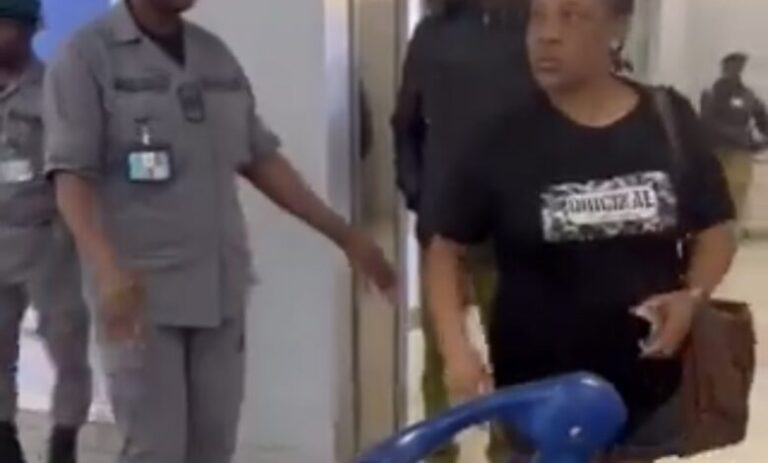
THE Nigeria Immigration Service (NIS) has launched an investigation into an incident at the Murtala Muhammed International Airport in Lagos, where a woman destroyed her husband’s passport. 

This was contained in a statement released on Sunday, August 11, by the NIS public relations officer, Kenneth Udo.

Video of the incident went viral on Sunday, August 11, shortly after the couples arrived in the country.

According to the video sighted by The ICIR, the female traveller, identified as Igiebor, was seen shouting at her husband, and tearing up her husband’s passport in a fit of rage.

The incident led to a mild commotion at the airport but has generated widespread reactions from many Nigerians on social media.

Reacting to the incident, the NIS stated that it had “launched a formal investigation following the circulation of a video on social media, showing a female traveller destroying a Nigerian Standard Passport at the Murtala Mohammed International Airport (MMIA), Lagos.”

The NIS emphasised that tampering with official documents, particularly international passports, is an offence under Nigerian law and could be a violation of Section 10(b) of the Immigration Act 2015 (as amended), which prohibits the willful destruction of Nigerian travel documents.

The service reiterated its commitment to upholding the rule of law, safeguarding national security and preserving the integrity of Nigeria’s legal and diplomatic instruments.

I am not mad – woman who tore passport reacts

Reacting to the outrage that trailed her action in a video by @JejojaFamily TV, the woman defended her actions, citing long-standing marital issues and claiming she acted out of frustration upon returning to Nigeria. 

She said she had wanted to tear the passport when they were in Europe but she didn’t want to stress her husband.

Her words: “These issues have been going on for a very long time. I was just dancing to the tune till I arrived (in) my motherland Nigeria which just happened and I did what I did.”

She expressed frustration over social media criticisms that had trailed her action and urged people to consider the underlying reasons behind her actions.

“I am not a mad woman who would just come and act like that. I have my reasons. I have gone through so many things. So many of you just commenting on the video, I am seeing so many comments, and friends calling me. Those that have never called me for ages are calling me, those that have heard from me 20 years ago are calling me. I am not like that.

“So many of you commenting, what if I had done this thing in Europe where we were coming from? Because I don’t want him to go through a lot of stress, that’s why I did it in Nigeria.

“So I don’t care about what people are writing because if you don’t know what is happening, don’t just comment on what you don’t know. You have to know how to come into an issue. So many people at the airport that day saw me. Those who have thinking faculty were calm to ask me, wanting to know what happened,” she said.

She claimed that her husband had been controlling her social media and other aspects of her life, which contributed to her frustration. 

She further challenged those calling for her arrest, demanding to know what offence she committed.

“I suffered with this my husband. I know how many years I suffered with him and just like that. They just want my suffering to be chartered away (sic). Where is it done? I know men will never accept it. But those men who have sisters who have gone through this thing I’m going through now will understand but other men would not understand.

“…I want to reap what I have sowed with him, that’s all I have to say. If he knows he has the mind let him come out and say what’s happening.”

Gunmen kill soldiers in Sokoto, leave several injured

0

BANDITS have reportedly killed four soldiers and wounded four others in the Gudu Local Government Area of Sokoto State.

The attack took place on Saturday, August 10, after the gunmen laid an ambush for the soldiers.

In addition to those killed, the assailants also set the soldiers’ patrol vans ablaze.

The member representing Gudu LGA at the state House of Assembly, Yahya Gudu, confirmed the attack.

“Yes, it is true. Some gunmen ambushed soldiers on patrol along the Kukurau-Bangi road on Saturday and killed four of them while two others were injured. They also burnt down their patrol vehicles,” he said.

Meanwhile, more security personnel have been deployed to the area after the incident.

Terrorism has been rampant in northern parts of Nigeria, with states namely Borno, Yobe, and Adamawa, mostly affected.

The crisis, which began in 2009, peaked between 2011 and 2018.

The ICIR reports that Boko Haram insurgents have wreaked havoc on infrastructures and businesses, disrupting education, health, and power supply, among others, especially in Northern Nigeria.

The group has been joined by the Islamic State West African Province (ISWAP) to terrorise the nation.

Similarly, banditry, largely a product of farmer-herders clashes, has further compounded the nation’s insecurity, and has been more rampant in the North-West and North-Central states.

The ICIR reports that soldiers have been killed by terrorists in different parts of Nigeria.

This organisation reports that the Nigerian Army lost 17 of its men in Otuama, Delta State, to communal clashes in March, this year.

In 2023, The ICIR reported that some bandits suspected to be loyalists of a notorious kingpin Gwaska Dankeremi attacked a military base in Zurmi community, in Zormi local government area of Zamfara state, killing three soldiers.

These deaths are among the losses the Army has suffered in different parts of the country due to insecurity.

NLC condemns invasion of Abuja office, demands apology from FG, Police

0

THE Nigeria Labour Congress (NLC) has condemned the recent invasion of its National Headquarters – the Labour House – by the Police, describing the act as an unprecedented violation of trade union rights and a calculated attempt to intimidate the organisation.

The National Executive Council (NEC) of the NLC held an emergency meeting on Saturday, August 10, to address the situation and deliberate on the implications for Nigerian workers and the broader labour movement.

In a statement, the NEC said that since the President Bola Tinubu-led administration took office, there had been a pattern of intimidation, brutality, and deceit against the NLC and Nigerian people.

“The government’s actions began with the President’s May 29, 2023, statement declaring the removal of subsidies, followed by efforts to suppress the NLC’s opposition through threats, divisive propaganda, and unfulfilled promises to alleviate the country’s hardships. It has been a trail of systematic intimidation and violence against trade unions and their leaders.”

The NEC also recalled several incidents of violence and intimidation against labour leaders, including the abduction and assault of the NLC President and other leaders in Owerri, Imo State, and the government’s use of legal and military means to obstruct peaceful protests.

The council criticised the government’s apparent disregard for the rights enshrined in International Labour Organization (ILO) Conventions 87 and 98, and the Nigerian Constitution.

“Additionally, the NEC highlighted the recent invasion of the NLC headquarters, following a biased letter from the Registrar of Trade Unions, as part of a coordinated attack to silence the NLC, which has become the last stronghold of popular voice in Nigeria.”

In a series of resolutions, the NEC demanded that the government guarantee the safety and security of Nigerian workers and allow trade unions to operate freely.

The council also rejected the police’s explanation for the invasion, describing it as an afterthought designed to obscure the true motives behind the action.

The NLC further called for the immediate release of all detainees arrested during recent protests and demanded an end to the harassment of citizens holding opposing ideologies.

The NEC urged the government to convene a stakeholders’ dialogue to address the root causes of recent unrest, including poverty, inflation, and insecurity. The council announced plans for a forensic security audit of the NLC headquarters to ensure its continued safety.

The NEC said it believed that the invasion by the Police was a deliberate provocation by the government and as such would not allow itself to act out of anger but to exercise caution for the greater good of our nation.

The NEC reaffirmed the NLC’s dedication to defending the rights and welfare of Nigerian workers, warning that it would take necessary actions to ensure their safety and well-being in the face of whatever challenges.

Recall that the  NLC had accused personnel from the police and the State Security Service (SSS) of invading its Abuja office on Wednesday night.

According to a statement by the NLC spokesperson, Benson Upah, the operatives arrested the security guards on duty and forced them to hand over keys to the offices on the building’s second floor.


READ ALSO:


Upah added that the operatives broke into the floor, ransacked the bookshop, and stole hundreds of books and publications.

Reacting, the police said the detectives were tracing a suspect under investigation to a shop in the union’s building and the operation had no connection with the NLC secretariat or leadership.

The SSS also said it did not participate in the raid.

Senate denies involvement in salary decisions, incentives from Presidency

0

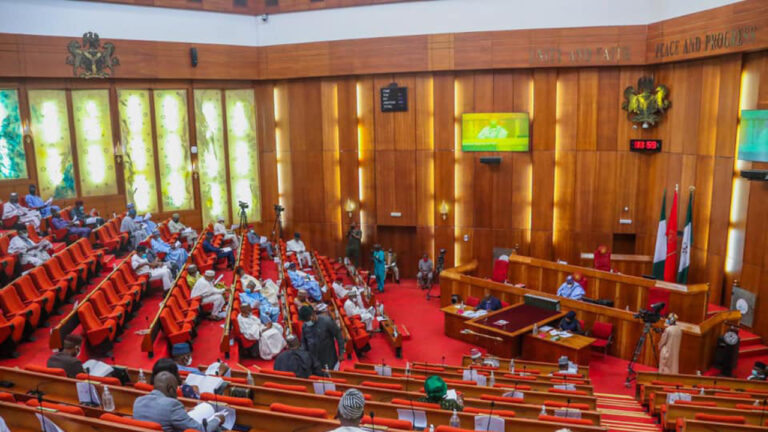
THE Nigerian Senate has denied allegations that it is involved in setting its own salaries or receiving special financial packages from the Presidency.

These accusations, which reportedly emerged during a visit by members of the House of Representatives to former President Olusegun Obasanjo, have ignited widespread public debate.

In a statement issued by the Senate spokesperson, Yemi Adaramodu (APC, Ekiti South), on Sunday, August 11, the Senate labelled the allegations as an attempt to “crucify the legislature by the centurions of political hypocrisy.”

Adaramodu emphasised that no senator had received any financial favours from the Presidency.

He clarified that the constituency projects often associated with the legislature are simply proposed and nominated by senators, which aligns with practices seen in other democracies worldwide.

He said, “The Executive arm of government, through its various ministries and agencies, is responsible for awarding contracts for constituency projects. The funds allocated for these projects vary depending on the number of constituencies in each state, with the goal of ensuring that every region of Nigeria benefits from federal resources.”

Adaramodu reassured the public that the 10th Assembly remains a “responsible and responsive chamber.”

He reiterated the Senate’s dedication to supporting Nigeria’s economy and growth, insisting that it only received what was constitutionally allocated and would never seek additional benefits from other arms of government.

The ICIR reports that despite the Senate’s claims, many Nigerians have described the National Assembly as a puppet of the Presidency, especially under President Bola Tinubu’s government.

This organisation further reports that since Nigeria returned to democracy in May 1999, the Godswill Akpabio-led Senate has promptly approved requests from the Executive, headed by Tinubu, more than any other Senate since the Fourth Republic.


Sports minister apologises for Nigeria’s poor performance at 2024 Olympics

0

THE Minister of Sports Development, John Enoh, has apologised to Nigerians over the poor performance of the nation’s athletes at the Paris 2024 Olympics ending today.

Enoh, on Sunday, August 11, said Nigeria’s performance should have been better than the poor outing recorded.

“The Olympic Games, Paris 2024, have ended, and I accept that our performance should have been a lot better. It obviously fell short of our objectives, expectations, and hopes of Nigerians.

“I must apologise to our compatriots and reflect on what went wrong while looking forward to the Paralympic Games, Paris 2024 (August 28–September 8th),” he said.

The minister stated that upon assuming office, he was met with the tasks of executing four international competitions namely the AFCON, the African Games, the Olympic, and the Paralympic Games and needed sufficient time to prepare.

“I was also reminded that the Olympic Games is the world’s supreme sports competition, and countries require at least four years to prepare for it.

“I held extensive discussions with the management staff of the Ministry and got to know that preparations for the Olympics, which was less than a year away, had not started.

“In the true Nigerian spirit, it was our view that we should spare no effort to sustain the international sports image of our country,” he stated.

He further added that he had put the necessary measures in place to support the athletes and the coaches, adding that President Bola Tinubu had approved the funds needed to ensure a hitch-free outing.

The minister noted that despite all the efforts made, the Nigerian team underperformed, stressing that he owed Nigerians an explanation. He said that lessons had been learnt and urged the citizens to turn the disastrous outcome of the 2024 Olympics into opportunities to strengthen the nation’s sports.

The President had approved N12 billion naira for the country’s outing at the Olympics and the Paralympics. However, Nigeria finished without a medal at the Olympics where it paraded 88 athletes.

The ICIR reported that a Nigerian cyclist, Ese Ukpeseraye got stranded and had no bike to use for the scheduled keirin and sprint events but was saved by a German cycling team.

This incident caused an uproar on social media by Nigerians who claimed that the Tinubu-led government only dented the nation’s image at the Olympic games..

UNIBEN probes sexual harassment allegations against Philosophy professor

0

THE University of Benin, Edo State, has set up a committee to investigate allegations of sexual harassment against a professor in the school’s Department of Philosophy.

This was contained in a circular issued by the investigation committee’s Secretary, B. D. Jonathan, and made available to journalists on Saturday, August 10.

Although the professor’s name was not disclosed, the committee urged members of staff and students with relevant information or who had experienced any related incidents to come forward and share it.

It was gathered that the institution made the decision following a social media post by a female graduate who accused the lecturer of sexual harassment during her undergraduate studies.

The circular read, “The Vice-Chancellor has set up a committee to investigate the allegations of sexual harassment against a professor from the Department of Philosophy.

“The committee, to actualise its mandate, is requesting all staff and students with relevant information or who have experienced any incident related to the allegation to please come forward and share as it will assist the committee in ensuring a thorough and fair investigation.

“Be rest assured that your identity will be protected, and all information will be treated with utmost confidentiality.”

Several cases of sexual harassment have been reported in Nigeria’s tertiary institutions.

According to a 2018 survey conducted by the World Bank Group’s Women, 70 per cent of female graduates from tertiary institutions in the country were sexually harassed in school, with the main perpetrators being classmates and lecturers.

The ICIR reported that more lecturers were accused of sexual harassment by students at tertiary institutions in 2023 than any other year in the last five years showing an increase in the number of reported cases.

According to a survey by Oga Lecturer, at least 43 lecturers were accused or indicted for sexual harassment between 2018 and 2023.

Based on media reports tracked by Oga Lecturer, at least 15 lecturers were accused in 2023.

They include Cyril Ndifon, former Dean of Law Faculty at the University of Calabar, and Balogun Olaniran, a lecturer at the Tai Solarin University of Education (TASUED), who have been arraigned by the Independent Corrupt Practices and Other Related Offences Commission (ICPC) for sexual harassment.

Although the Senate had, in 2021, passed a bill stipulating 21 years imprisonment for randy lecturers, however, most of the lecturers indicted and found guilty after the bill was passed were simply sacked.


NYSC debunks N70,000 minimum wage implementation, warns against misinformation

0

THE National Youth Service Corps (NYSC) has clarified that it had yet to receive approval from the Federal Government to begin paying the N70,000 minimum wage to corps members. 

The NYSC also refuted claims circulating on social media that corps members’ bank accounts were being upgraded in preparation for the payment of the new minimum wage.

The NYSC’s Director of Information and Public Relations, Eddy Megwa, in a statement on Saturday, August 10, said the claims were misleading and false.

The NYSC, therefore, advised corps members to desist from allowing mischief makers to continue to play on their intelligence.

The statement read in part, “The attention of National Youth Service Corps management has been drawn to misleading information circulating in the media regarding payment of N70,000 minimum wage to corps members and the directive to upgrade their accounts. This is an absolute falsehood which is far from the truth.

“Corps members, parents and members of the public should note that no directive has been received from the relevant sector of government responsible for wages matters.

“It is, therefore, impossible for the NYSC to issue any information on such. Corps members already know the approved channel and mode of communication in the scheme and should therefore ignore the directive accordingly.”

The NYSC also warned bloggers and social media influencers to cease making unauthorized statements about its management, urging them to refrain from issuing unverified information.

President Bola Tinubu signed the National Minimum Wage Act 2019 Amendment Bill into law, which will ensure that workers in Nigeria earn N70,000 as the minimum wage.

The president assented to the bill, on Monday, July 29, at the State House in Abuja barely a week after the National Assembly passed the bill.

Recall that the Nigerian Senate on Tuesday, July 23, passed the minimum wage amendment bill, after the bill speedily scaled through first, second and third readings.

The Senate unanimously voted for the consideration and approval of the bill minutes after it was transmitted to it by President Bola Tinubu.

The bill sought to increase the national minimum wage and reduced the period for periodic review from five years to three years.

The upward review by the federal government came after a series of negotiations between the government’s representatives and organised labour.

The ICIR reports that corps members’ allowance is usually determined by the country’s minimum wage.

For instance, the corps members had their allowances increased from N19,800 to N33,000 in 2020, months after a new minimum wage of N30,000 took effect.

However, it remains unclear when the recent upward review of minimum wage would also be applicable to the NYSC Corp members.

Edozie Godwin: the lecturer who ensured recruitment into Delta State education service was merit-based

1

By Arinze CHIJIOKE

“NIGERIA Go better,” pidgin English translation for “Nigeria will be Great,” was the title of a sermon preached by a pastor *Johnson (not his real name) one Sunday after his daughter, who had no connection or knew anyone in government, was employed into the Delta State education service.

The year was 2019. The Delta State Government had announced the recruitment of teachers who will be posted across secondary schools in the state. Johnson’s daughter was one of the applicants for the job.

On the day slated for the examination, Johnson told his daughter Mary (not her real name) that she was only going to waste her time as nothing good would come out of it. He thought it was going to be business as usual, where merit is often not enough to secure a job.

Mary sat for the examination and after some time, she got an email inviting her for an oral interview. Afterwards, she got another email informing her that she had been offered the job.

When she got home with her appointment letter, her father could not believe his eyes. Mary was only one of over 1,000 people who got jobs in the teaching service in 2019 without any backing or connection. It was purely based on performance and merit.

And the man who made it happen was Edozie Godwin.


Edozie Godwin. 
Edozie Godwin.

In 2015, Godwin went on leave of absence from the Federal College of Education Technology, Asaba, where he worked as a senior lecturer after he was appointed Special Adviser to the Commissioner for Basic and Secondary Education in Delta State, Chiedu Ebie.

Four years later, in 2019, he was appointed Senior Special Assistant on Education to the Governor of Delta State, Ifeanyi Okowa, a position he held for another four years. In the same year, he was drafted into a team that was in charge of recruiting teachers for secondary schools. He has also assisted in the recruitment of agricultural officers into the state civil service.


A transparent process 

The recruitment was advertised online and interested applicants were given the timeframe to apply and upload relevant documents. On the day of the exam, which was a Computer Based Test (CBT), they underwent biodata verification to curb impersonation and ensure information accuracy.

After the examination, applicants saw their scores before they left the hall; it was also printed for them. Afterwards, oral interviews were conducted for candidates who passed the exam stage.

On the day of the interview, which was held at the Government House, another biodata verification was done to ensure that those invited were the actual people who passed the test. Three professionals in each of the subjects interviewed applicants and rated them individually.

“Before they got in, they presented their letters of invitation, which had their photographs, to security men at the gate to avoid cases of impersonation,” Godwin, who had worked as a civil servant since 1991, said.

According to him, the consultants who managed the application were different from the ones who managed the CBT. Those who collated the results at the end of the exercises were different too. This was to avoid compromise.

“We sent messages and emails to keep them informed about updates,” Godwin said. “Cut-off point of 70 per cent for CBT and 30 per cent for the interview was used to determine qualified candidates that were selected for the job,”.

Changing the status quo

The recruitment process was not based on allocations to local governments but purely on merit and this meant that some of them had over 50 people employed while others had only ten or fewer people given jobs.

“We also got teachers posted to rural areas to sign undertakings that they will work in those areas for five years before they are transferred, he said. “They did and now they are due for transfer to other locations,” Godwin noted.

Before Godwin’s involvement in the process of recruitment, findings by this reporter showed that politicians used to have automatic slots for employment. When he came on board and introduced measures that made the process merit-based, they became uncomfortable.

“But we had the political backing of the governor, who was committed to transforming the education sector in the state,” he said. “We were invited by the house committee on education, who wanted to understand the process.”

Godwin said that he made sure that no applicant could bribe any member of the recruitment team. He adds that efforts were made to ensure that people with disabilities and others who had difficulties writing the exam were taken care of.

“We did 90 per cent purely on merit during the recruitment process and we reserved 10 per cent for people who had difficulties during the exam or interview,” he said.

He said the team also employed a master’s degree holder in English who was visually impaired and could not see the screen of the computer during the CBT exam but did well during the oral interview.

After the expiration of Okowa’s tenure in 2023, Godwin went back to the classroom. But barely a year after he resumed, he was appointed again to serve as Senior Aide to the Chairman of the governing board of the Niger-Delta Commission (NDDC), a testament to his proven integrity. He has now proceeded on another leave of absence.

Godwin’s integrity has earned him awards, nominations, and commendations.  He says these recognitions only serve to  encourage him to keep doing the good work.

Like Godwin, public servants must be determined to ensure that they always uphold integrity in the discharge of their responsibilities regardless of the oppositions they face from colleagues.

This report is championed by Accountability Lab Nigeria and sponsored by The John D. and Catherine D. MacArthur Foundation and Luminate.