FOLLOWING President Bola Tinubu’s address to the nation amidst ongoing #EndBadGovernance protests, former Vice Presidential candidate Peter Obi has expressed disappointment over Tinubu’s address, noting that it’s disconnected from the harsh realities faced by Nigerians.
In a statement via his X handle, on August 5, Obi acknowledged the President’s ‘belated’ address, which he said might have prevented the loss of lives.
He lamented the lack of empathy towards those injured, arrested, and detained during the protests, citing the approach of security forces as a great concern.
“While I had hoped that, in consoling the families of those who lost their loved ones in the protest, he would also show some empathy towards those who were injured, arrested, and detained due to the overzealous and unprofessional conduct of some security operatives, this was unfortunately not the case. It is the responsibility of the government to identify criminal elements attempting to disrupt the protest through looting and other unlawful behaviours and to protect those genuinely exercising their democratic rights.”
He also noted that he had hoped a more decisive action would see immediate arrest and prosecution of those responsible for disrupting the peaceful protest.
Expressing concern over what he described as a lack of awareness or deliberate disregard for public sentiments, Obi called on the President to surround himself with advisers who provide candid assessments of the nation’s challenges.
“The President’s address regrettably appeared disconnected from the harsh realities faced by the people and failed to address critical issues that initially triggered the protest. It either reflects a lack of awareness among his advisers regarding the scale of anger, hunger, and hardship in the country, or a deliberate choice to disregard it. At this point, I strongly advise the President to distance himself from sycophants and surround himself with individuals who will present the unvarnished truth,” he said.
Obi emphasised that while the President’s address focused on the past, the people had been more concerned with present and future challenges.
He said the President should address urgent priorities such as reducing governance costs, combating corruption, tackling the high cost of living, and effectively allocating resources to critical sectors like health, education, and poverty alleviation.
He said persistent corruption and mismanagement of public funds should have been addressed decisively in his press briefing.
“Nigerians do not expect the President to solve the nation’s problems overnight, but we do expect a concerted effort to address the mismanagement of public resources, reduce the high cost of governance, and tackle issues like insecurity, corruption, electricity, agriculture, and productivity to set the country on a path to recovery and growth. By doing so, the President can restore hope and rekindle the people’s faith in our dear country Nigeria.”
The ICIR reports that many Nigerians have trooped to the streets to protest poor governance and economic hardships caused by President Bola Tinubu’s reforms.
The protests have been marred by violence, largely caused by the security operatives in places like Lagos and Abuja, where protesters have been subjected to tear gas and harassment.
In some states, political thugs have hijacked the protest to cause mayhem, attacking demonstrators and looting properties.
With the attacks and looting in some states, generating outrages, President Bola Tinubu in his broadcast on Sunday, August 4, called on the protest organisers to dialogue with the government, and immediately suspend the demonstration.
While condemning the attacks on properties and lives, the President branded the protesters as ‘violent’ noting his “government will not stand idly by and allow a few with a clear political agenda to tear this nation apart.”
Tinubu further stressed that those who had taken advantage of the protest would face the wrath of the law, adding that the security operatives should continue to protect lives and property.
Like Obi, a coalition of civil society organisations has accused the government of escalating violence and unrest in the country.
THE State Security Service (SSS) has denied it arrested one of the #EndBadGovernance protest leaders, Michael Lenin, in Abuja.
In a message posted on its X handle Monday evening, the secret police declared that Lenin was not in its custody.
“The DSS can confirm that Adaramoye Michael (aka Michael Lenin) is not in its custody,” the Service wrote.
The ICIRreported that the Director of Mobilisation for the Take It Back Movement, Damilare Adenola, said operatives of the.Service arrested the activist Sunday night.
In a chat with The ICIR, Adenola alleged that the SSS was responsible for the arrest and claimed Lenin was picked up from his house.
He also added that he was assaulted during his arrest.
He said Lenin was arrested for being one of the protest organisers.
The spokesperson of the TIB, Abiodun Sanusi, also confirmed Lenin’s arrest to The ICIR.
During a press briefing on Sunday, Lenin was among the organisers who voiced their dissatisfaction with President Bola Tinubu’s nationwide broadcast.
He claimed at the briefing that the President’s broadcast showed how far he was from the country’s economic and other realities.
The ICIRreported on Saturday, August 3, that operatives of the Nigeria Police Force, (NPF) and the Army chased away protesters and journalists from the MKO Stadium in Abuja, where the government had restricted them.
The Police reportedly fired several tear gas canisters in the direction of the protesters.
It was also gathered that the SSS personnel came later to disperse the remaining protesters and journalists covering them.
Meanwhile, the SSS in its tweet on Monday confirmed that it had arrested some tailors in Kano State responsible for making Russian flags being distributed in the city.
The ongoing nationwide protest tagged #EndBadGovernanceInNigeria aims at addressing the lingering hunger crisis experienced since the assumption of President Tinubu assumed office in May 2023, according to the organisers.
THE Kaduna State government has imposed a 24-hour curfew on Kaduna and Zaria areas of the state and their environs.
The State Security Council, led by Governor Uba Sani, said the curfew took immediate effect.
According to the Council, the state’s security situation was reviewed, and it was found that criminal elements were using the protests to loot and destroy property, both public and private.
Consequently, the government urged citizens to report suspicious activity and stay indoors while security forces worked to maintain security.
The Commissioner for Internal Security and Home Affairs, Samuel Aruwan, advised citizens to stay indoors.
On Monday, the #EndBadGovernanceinNigeria demonstration persisted in Kaduna, with many young people taking to the streets to call for an end to the country’s poor governance and dire economic conditions.
The youth claimed that despite President Bola Tinubu’s Sunday address to the nation, which called for patience and an end to the nationwide protest, his speech ignored the fundamental challenges faced by Nigerians, the reason they said the protests continued.
According to reports, some groups were also protesting along the Ungwan Sariki Ali Akilu Road in Kaduna, calling for the removal of fuel subsidies and making the nation’s economy better.
The protesters marched along Constitution Road down to the Stadium Roundabout in Kaduna, carrying placards with various inscriptions and Russian flags.
Protesters were heard demanding the resignation of President Bola Tinubu while waving Russian flags and chorusing anti-government songs in Hausa Language.
Many of the protesters were seen looting shops and other public offices. A number of them were observed carrying away office chairs, roofing sheets, generator sets, door burglaries, and other belongings.
The nationwide protest tagged #EndBadGovernance aims at addressing the lingering hunger crisis experienced since President Bola Tinubu assumed office in May 2023, according to its organisers.
THE Federal Government (FG) has cautioned Nigerians living in the United Kingdom (UK) to be vigilant following the “increased risk of violence” in anti-immigrant protests.
Protests in several UK cities intensified over the weekend in response to a knife attack at a Southport school that claimed the lives of three students.
On July 29, at a dancing school, there was an attack during an American artist, Taylor Swift’s performance, during which children were stabbed.
In a statement on Sunday, August 4, the spokesperson of the Federal Ministry of Foreign Affairs, Eche Abu-Obe, said the violence in the UK had escalated to hazardous levels and that the girls’ killings had given rise to a narrative that is anti-immigration, specifically targeting Muslims and people of colour.
“To this end, citizens are advised to be extra vigilant and take measures as follows; avoid political processions and protests, rallies or marches, avoid crowded areas and large gatherings. Be vigilant and self-aware at all times.” the statement reads.
The ministry advised Nigerians to contact the High Commission to pass information that could be of interest via e-mail and telephone at hc@nigeriahc.org.uk, +442078391244.
Large-scale protests by far-right and other extra-parliamentary groups have been taking place in various parts of the UK in recent weeks.
A sizable gathering outside a mosque resulted in riots as people threw bricks and bottles at police cars.
False reports circulated claiming the attacker was an immigrant who adhered to radical Islam. Subsequently, groups opposed to immigration and Muslims seized control of the protest.
Eight more children were stabbed, and three girls, aged six to nine killed in the crisis.
The riot moved to Manchester, Bristol, and Liverpool on Saturday, August 3.
Several arrests were made, according to the police, as stores and other establishments were robbed and vandalised while several officers were injured.
In the most recent violence, rioters attacked a Rotherham hotel that houses asylum seekers.
During the altercations, demonstrators smashed hotel windows, hurled objects, and sprayed fire extinguishers at police officers.
The UK Prime Minister, Keir Starmer, declared that the law would catch up with people who participated in violent anti-immigration demonstrations in some areas of the nation.
In an address on Sunday, August 4, Starmer promised that arrests would be made and called the rally “organised violent thuggery.”
He said there was no excuse for the assaults and that any rational person would find the violence intolerable.
“I guarantee you will regret taking part in this disorder whether directly or those whipping up this action online and then running away themselves,” Starmer warned.
Before this, Starmer promised to provide law enforcement with the “complete support” of the government to combat ‘extremists’ who want to “sow hate”.
The home secretary, Yvette Cooper, also issued a warning, stating that anybody involved in “unacceptable disorder” could face jail term and travel restrictions in addition to other penalties.
Cooper declared, “There is no place for criminal violence and disorder on Britain’s streets,” adding that ‘sufficient’ jail space had been made available.
NIGERIAN oil marketers have shifted the blame of fuel scarcity being experienced across the states in the country to the #EndBadGovernance protest which started five days ago, despite many filling stations being under lock and key for many weeks in several cities in the country.
In a statement seen by The ICIR on Monday, August 5, the Independent Petroleum Marketers Association of Nigeria (IPMAN) claimed the hunger protest was responsible for the resurgence of long fuel queues in filling stations in major cities across the country.
The IPMAN’s National Public Relations Officer (PRO), Chinedu Ukadike, said there was no movement of trucks during the protests, especially on Thursday and Friday, August 1 and 2 respectively.
“Now that the trucks are no longer moving due to this protest, the depots are not working, the truck drivers are not driving, particularly during the first and second days of the protest, these issues have disrupted the supply of petroleum products. So it will result in scarcity at the filling stations,” Ukadike stated.
The youth-led demonstration against hardship in the country started on Thursday, August 1, which is barely one week and has been relatively peaceful in southern states, especially in Lagos State, where petroleum products are mainly loaded and transported to other parts of the country.
Fuel queues started to build up in some filling stations in the Federal Capital Territory (FCT) on Friday, July 26. Motorists were seen engaging in panic buying, as most filling stations closed shops and a few hiked their pump prices.
Responding to the resurgence of the long queues, the Nigerian National Petroleum Company Limited (NNPCL) blamed it on a “hitch in the discharge operations of a couple of vessels,” The ICIRreported on July 27.
On July 25, The ICIR reported that fuel scarcity hit most of the NNPCL filling stations as marketers anticipated products from Dangote Refinery.
The ongoing fuel scarcity started on July 5 when it resurfaced in Abuja and spread to other states, including Lagos. The NNPCL had said it was caused by flooding and logistics challenges.
Specifically, the NNPCL said the flooding disrupted the ship-to-ship transfer of petrol between mother vessels and daughter vessels, and weather conditions affected berthing at jetties, truck load-outs and transportation of products to filling stations, disrupting supply to filling stations.
In a report on July 12, the IPMAN PRO toldThe ICIR that NNPCL’s supply to oil marketers was still a bit slow and affected by higher demands for the products.
“NNPCL is giving products to marketers. There are still issues around epileptic distribution which shows that the supply hiccups are not sorted. It is taking longer before the products get to the marketers. We are not fully independent as we are still dependent on the products supplied to us by the Federal Government through NNPCL,” Ukadike said.
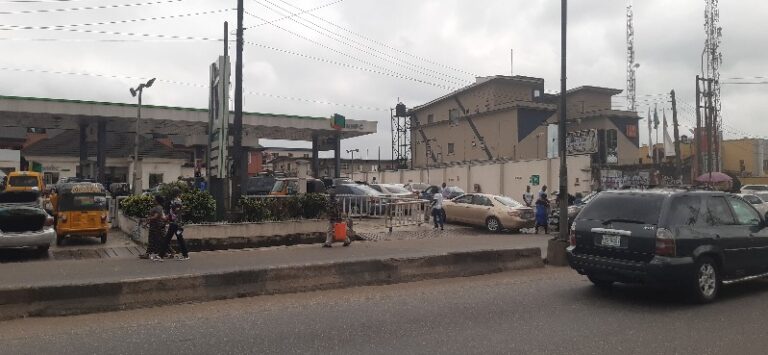
The ICIR observed a few queues on Monday, August 5, at the filling stations that opened for operations in Lagos.
At the NNPCL stations at Ojodu Berger, the queues were minimal and selling at a pump price of N568.
However, several filling stations have hiked their pump prices, selling above N700 to over N800 per litre, while other filling stations have been under lock and key for weeks.
POPULAR Nigerian crossdresser, Idris Okuneye, popularly known as Bobrisky, has been released from the Kirirki Correctional Centre.
In a viral video on social media, he was seen leaving the facility after serving over four months out of his initial six-month sentence.
Following his release, he urged Nigerians to desist from spraying the naira, the offence that took him to jail.
“Follow the rules, abide by the law. Don’t spray money, unless you’ll be a landlord inside Kirikiri.
“It’s not just about killing or any criminal activity, something light like this can take you there,” he said.
The ICIR reports that in April, Bobrisky was arrested and detained by the Economic Financial Crime Commission (EFCC) in Lagos and was sentenced to six months without an option of a fine for abusing the Nigerian naira.
Reacting to a question on his gender, he confirmed to the court that he was a man and not a woman.
“I’m a man, my lord,” he told the court.
Bobrisky is well-known for dressing like a woman and flaunting all the bodily features of the female gender.
The EFCC spokesperson, Dele Oyewale, had confirmed that he was arrested, not for his lifestyle as a crossdresser but for abusing the naira.
Days before his arrest, Bobrisky had been on the news for several controversial reasons, including winning the ‘Best Dressed Female’ at a movie premiere in Lagos.
While there was an outcry by Nigerians for his arrest, a report by The ICIR shows that there is no law in Nigeria yet that criminalises cross-dressing.
THE human intestine is essential for digesting food, absorbing nutrients, and excreting waste. The intestine extends through the duodenum to the small intestine and large intestine, liking the colon to the outlet anus, where faecal excretes are being passed out.
The intestine plays a significant role in health and disease, to the extent that a little disruption of the intestinal content could result in states of metabolic disorders. These intestinal contents are made up of trillions of microorganisms of which 99 per cent are bacteria.
The intestine of a healthy human was estimated to hold 38 trillion bacteria, together with the 1 per cent of other microorganisms (i.e. fungi, protozoa and viruses) that are collectively called intestinal microbiota.
The relative distribution of intestinal bacteria is unique to an individual, partly owing to strain-level diversities and differences in microbial growth rates and in structural variants within the microbial genes, and partly owing to influence from the considerable inter-individual variation in the host genetics and environmental exposures such as diet, and lifestyle.
The overall genetic composition of these intestinal microbiota is referred to as intestinal microbiome. The number of genes in the intestinal microbiome is 150- to 500-fold more than in human DNA. Imbalances or alterations in the intestinal microbial composition or activity, also called Intestinal dysbiosis
The mode of birth and access to breastfeeding shape the infant gut microbiota, and it matures gradually during childhood in response to environmental exposures. Thereafter, the intestinal microbiota remains relatively stable in late childhood, adolescence and adulthood until a decline in diversity occurs as a result of environmental exposures and host genetics.
Breastfeeding, food and water security are major protective factors against malnutrition and are crucial factors in the maturation of the healthy gut microbiota. Globally, malnutrition affects ~160 million people and is the leading cause of death in children under the age of 5 years. Early loss of Bifidobacterium longum and Bifidobacterium pseudolongum, two key members in mother milk, represents some of the first disruptions in the intestinal dysbiosis of severe acute malnutrition (SAM).
The loss of the healthy mature anaerobic gut microbiota gradually leads to a deficiency in energy harvest, immune responses and vitamin synthesis, and links with chronic malabsorption, diarrhea and systemic invasion from pathogenic bacteria.
The diet is regarded as one of the key drivers for the differences in gut microbiota between people and environmental exposures and lifestyles. Whole diets as well as food components (protein, fat, carbohydrates, polyphenols), influence the total bacteria community as well as the relative abundance of certain species. Food processing and preservation reduces the intake of commensal, food-associated microbes, whereas fermented foods enrich specific bacteria that transiently colonize the gut.
Plant protein diet like whey, pea, bean nourishes the beneficial bacteria. However, an animal protein-based diet usually also means a higher fat intake. Fruits, seeds/nuts, vegetables, tea, cocoa products, and wine contains polyphenols which increases the relative abundance of beneficial bacteria. Fruit polyphenols work against Staphylococcus aureus and Salmonella typhimurium which are disease causing (pathogenic) bacteria. Food delivering prebiotics are soybean, chicory roots, raw oats, unrefined wheat, unrefined barley, as they contain carbohydrates which are not digested in the small intestine but are fermented in the large intestine by anaerobic colonic microbiota to beneficial metabolite (i.e. short chain fatty acids).
The microbiota produces signalling molecules and metabolites that influence several intestinal functions: visceral-sensing, motility, digestion, permeability secretion, energy harvest, mucosal immunity, and barrier effect. These products are also transported to various organs affecting their functionality: brain (cognitive functions), liver (lipid and drug metabolism), and pancreas (glucose metabolism).
Imbalances or alterations in microbial composition or activity, also called Dysbiosis can influence health and is implicated in various diseases, such as obesity, type 2 diabetes, asthma, allergies and inflammatory bowel disease.
Obesity results from the accumulation of excess fat in the adipose tissue. Causes include behavioral and environmental factors, such as excessive consumption of energy-dense foods and a sedentary lifestyle. But also, intestinal microbiota turned out to take part in the development of obesity. Microbiota from obese individuals has an increased capacity to harvest energy from the diet.
The elevated harvested energy causes a state of imbalance between energy intake and energy expenditure, a resultant model for the development of obesity. Microbiota also influences the host’s lipid metabolism by increasing fat deposition and storage in adipose tissue, liver, and/or muscle.
Diet is one of the critical factors in progression of obesity and is profoundly linked to intestinal microbiota composition. Nutrient intake and eating habits directly influence the composition, diversity, and metabolism of intestinal microbiota. Furthermore, the composition and functionality of intestinal microbiota respond quickly to changes in dietary composition.
Interestingly, a healthy dietary pattern related to intestinal microbiota profiles exerted protective effects against development of diabetes in obese individuals. Therefore, a balanced diet is required to maintain the composition and proper function of the intestinal microbiota, and this have the potential to improve the human health condition.
Aside diet, lifestyle, physical activity and exercise acutely promote a more anaerobic intestinal environment potentially promoting increased inhabitation of anaerobic bacteria.
Exercise can also influence the gut’s mucus layer, a critical barrier between microbes and the gut lining; as well as gut motility which can alter GI transit time, potentially impacting microbial habitats and their nutrient availability. Resistance training increases abundance of selected SCFA producers and microbial metabolic pathways and improves cardiometabolic health
In conclusion, the human intestine is a dynamic and essential part of our overall health, influenced significantly by diet, lifestyle, and environmental factors. From birth through adulthood, maintaining a balanced gut microbiota is crucial for preventing diseases and promoting well-being. By adopting a balanced diet and an active lifestyle, individuals can support their gut health, thereby enhancing their overall health and quality of life. This underscores the importance of informed dietary choices and regular physical activity as pivotal strategies for maintaining a healthy microbiota and, consequently, a healthier life.
THE State Security Service (SSS) has allegedly arrested one of the leaders of the ongoing nationwide protest, Michael Lenin, in the Federal Capital Territory (FCT).
Lenin was said to have been arrested by operatives of the secret service around 2 am on Monday, August 5, at his residence in the Apo area of the FCT.
In a chat with The ICIR, theDirector of Mobilisation of the Take It Back Movement (TIB), one of the groups organising the #EndBadGovernance protest, Damilare Adenola, alleged that the SSS was responsible for the arrest and claimed Lenin was picked up from his house.
He also added that he was assaulted during his arrest.
“He has been arrested. He was arrested over the night.”
Adenola claimed there was no news yet on the activist’s whereabouts after the arrest.
He confirmed that he was arrested for being one of the protest organisers.
The spokesperson of the TIB, Abiodun Sanusi also confirmed Lenin’s arrest to The ICIR in a chat.
Adenola also said that protesters who gathered at the Gudu area of the FCT to continue their protest early Monday morning were dispersed by the security operatives.
During a press briefing on Sunday, Lenin was among the organisers who voiced their dissatisfaction with President Bola Tinubu’s nationwide broadcast.
He claimed at the briefing that the President’s broadcast showed how far he was from the country’s economic and other realities.
The ICIRreported on Saturday, August 3, that operatives of the Nigeria Police Force, (NPF) and the Army chased away protesters and journalists from the MKO stadium, Abuja.
The Police reportedly fired several tear gas canisters in the direction of the protesters who were demonstrating against the high rate of poverty and hunger in Abuja on Saturday, August 3.
It was also gathered that the State Security Service (SSS) personnel came later to disperse the remaining journalists and protesters.
The ICIR alsoreported that on the second day of the #EndBadGovernance protest in Abuja on Friday, August 2, protesters witnessed violence with police throwing tear gas canisters at demonstrators.
Security operatives had taken strategic positions at the stadium even before the protest began on Thursday, August 1.
The nationwide protest is aimed at addressing the lingering hunger crisis experienced since the assumption of President Tinubu assumed office in May 2023, according to the organisers.
The SSS spokesperson, Peter Afunanya, did not respond to calls, texts and WhatsApp messages from The ICIR over the alleged arrest when filing this report.
AS the nationwide #EndBadGovernance protests across Nigeria entered the fourth day, a coalition of civil society organisations has accused the government at all levels of escalating violence and unrest in the country.
In a statement jointly signed by 55 CSOs, including Yiaga Africa, Media Rights Agenda, and Accountability Lab, on Sunday, August 4, the coalition noted that the government’s response had been to suppress and delegitimise the protests using propaganda, politics, threats, intimidation, arrests, bribery, and blackmail.
The protests, driven by frustration over the high cost of living, failed government policies, and bad governance, according to the coalition, began with high hopes that the government would address citizens’ concerns.
It, however, stressed that the response from government officials, including the security operatives, had been largely dismissive and hostile, exacerbating tensions.
The ICIR reports that many Nigerians have trooped to the streets to protest poor governance and economic hardships caused by President Bola Tinubu’s reforms.
The protests have been marred with violence, largely caused by the security operatives in places like Lagos and Abuja, where protesters have been subjected to tear gas and harassment.
In some states, political thugs have allegedly hijacked the protest to cause mayhem, attacking demonstrators and looting properties.
With the attacks and looting in some states, generating outrages, President Bola Tinubu in his broadcast on Sunday, August 4, called on the protest organisers to dialogue with the government, and immediately suspend the protest.
While condemning the attacks on properties and lives, the President branded the protesters as ‘violent’ noting his “government will not stand idly by and allow a few with a clear political agenda to tear this nation apart.”
Meanwhile, the coalition said although the President had acknowledged the agitations of Nigerians and communicated some of the government’s plans, his address lacked what most Nigerians expected to hear and was devoid of conviction in delivery.
They also noted that he did not respond to the demand of Nigerians to cut down significantly on the high cost of governance, address insecurity and the unbearable cost of living.
They further expressed concern over Vice President Kashim Shetimma labelling protesters as ‘bandits and idiots.’
“The Secretary to the Government of the Federation (SSG), with disdain at a press conference, described the protests as ‘useless.’
Another instance the coalition gave was when the Senate President said protests could continue as long as officials kept eating.
It added that the Nigeria Police fired tear gas and used live ammunition against unarmed protesters, killing citizens.
“This is criminal, unlawful and a grave violation of their fundamental human rights. The Nigeria Police have beaten and physically assaulted peaceful protesters, including journalists and a person with a disability.
“The government is threatening to deploy soldiers to the streets. The implications of these threats are obvious, as we recall the outcome of the last time soldiers were deployed to respond to citizens’ protests (#EndSARS),” the coalition said.
The statement further reiterated that peaceful protest is a legitimate form of expression enshrined in international human rights instruments, and Nigeria’s 1999 Constitution (as amended), among others.
Citing relevant sections of the Constitution, it noted that the Constitution allowed citizens to publicly voice their concerns, express displeasure with government policies, challenge injustices, and participate actively in the democratic process.
“We are holding the government accountable for ignoring the protesters’ grievances and the negative outcomes of these protests.
“The violence and looting occurring in the #EndBadGovernance protests speak volumes about the failure of the government to validate and address the concerns of its citizens. The blame solely lies with the federal, state, and local governments, which have failed to provide security and welfare to the people,” the statement added.
The group urged the government to immediately focus on providing adequate security for the protesters, and prevent hired thugs and hoodlums from attacking protesters or disrupting the protest.
HADIZAH Sunday, a female farmer in the Saki West local government area of Oyo state was excited when she heard of the Central Bank of Nigeria’s (CBN) Anchor Borrowers Programme loan from a friend. She was happy that this would finally boost her farming business. Specifically in terms of expanding her farmland in Ataye, Saki and growing other crops like yam. But her excitement became short-lived. She wasn’t able to access the credit. Her inability and that of other women farmers to access credit has been a huge setback for the farming business in Oyo state.
Hadizah Sunday working on her farm Photo Credit- Fasilat Oluwuyi
In Oyo state, women farmers in rural communities’ struggle to access credit, gender-friendly farm implements and other supports despite numerous agricultural interventions by the government. This is compounded by insecurity in the state as herders’ cattle often destroy their crops.
Gender inequality in loan disbursement
In Nigeria, women make 70-80 per cent of the agriculture workforce, especially rural women, according to reports by the Civil Resource and Documentation Centre (CIRDC) and the Women Advocate Research and Documentation Centre (WARDC). Women farmers are believed to be responsible for a higher per cent of the food produced for consumption in the country, yet gender inequalities continue to exist in the farming business.
One of the oldest initiatives managed by the Central Bank of Nigeria (CBN) is the Agricultural Credit Guarantee Scheme Fund (ACGSF) in collaboration with the federal government through the Federal Ministry of Agriculture and Rural Development (FMARD). This fund guarantees up to 75 per cent of every credit extended to farmers under the scheme in case of any eventuality that may lead to loan repayment default.
While the credit support is targeted at both male and female farmers, findings show that the scheme has continued to benefit more male farmers in Oyo state than female farmers.
According to the gender data in the ACGSF report of the CBN, a total of N2,859,844,000 billion was given out as credit to 16,815 farmers in Oyo state from 2015 and 2022.
The report revealed that male farmers got the highest amount totalling N661,345,000 while female farmers got N289,900,000 between 2015 and 2020.
In 2015, a total of 4,028 beneficiaries got the sum of N749,949,050 as loan support in Oyo state, out of which 2,753 male farmers received N601,602,050 while 1,273 female farmers got N135,315,000.
Similarly, in 2016, the sum of N585, 335,000 loan was given to 5,228 beneficiaries. Out of this, 2,683 male farmers got N403,050,000 while 2,545 female farmers received N182,285,000.
ACGSF loan beneficiary distribution by gender in Oyo. PC: Women Radio.
From 2017, women’s access to credit facilities started to shrink and the number of women beneficiaries in Oyo started to decrease further. Out of a total of N307,405,000 given to 2,158 beneficiaries in 2017, 1,468 male farmers received N245,810,000 while 689 female farmers got N57,895,000. In 2018, 1,200 male farmers got the sum of N234, 925,000 as loan support with only 173 women getting N27,560,000.
From January to October 2020, ACGSF data on gender disaggregation of beneficiaries of CBN loan shows that men continued to get the larger chunk of loan support even though women account for 70-80 per cent of the agriculture workforce.
Out of the total sum of N162,420,000 given to a total of 815 beneficiaries, 691 men got N140, 260,000 while only 124 women received the sum of N22,160,000.
Findings from the CBN report on the ACGSF loan show that the gender data of beneficiaries were missing from its 2019, 2021 and 2022 reports.
Sakirat Adeniran has been farming for 30 years in Tokun Idode Oyo East local government.
She has not benefited from any loan support from either the CBN or the state government.
Sakirat grows maize, cassava, cowpeas among others and went alongside other female farmers to her local government secretariat to enquire about the loan as this would help her to increase her yields.
She was directed to visit a microfinance bank, but after two fruitless attempts, she gave up hope. ‘‘We only hear about all the loan support that the government is giving out to farmers. We did not benefit from it. Women hardly benefit from all the money they have been lending farmers,” she laments.
Picture: Sakirat Adeniran working on her farm in Oyo East LG on her farm [PHOTO CREDIT-Fasilat Oluwuyi]Another female farmer in Oyo East LGA, Suabatu Musbau, who has been into farming for over 20 years growing crops such as beans, maize amongst others, narrated how in her attempt to get a loan was made to submit passport
Another female farmer in Oyo East LGA, Suabatu Musbau, who has been into farming for over 20 years growing crops such as beans, maize amongst others, narrated how in her attempt to get a loan was made to submit passport photographs at different times, took pictures and paid a certain amount of money yet did not get the loan.
The story of women farmers in Iseyin and Saki East local government areas is not different. They lamented how the inability to access credit to finance their farming has been a huge challenge and setback despite many agricultural interventions, loans and other credit facilities available for farmers in the state. These are women who are either breadwinners and or are supporting their husbands, children and extended families financially for survival.
Picture: Suabatu Musbau in Oyo East on her farm [PHOTO CREDIT-Fasilat Oluwuyi]After hearing about the loan opportunity to help farmers in the state, Baliqees Adebayo who has been into farming for over 30 years growing crops like cassava and others in Ibarapa central submitted passport photographs and BVN all to no avail.
Picture: Baliqees Adebayo in Ibarapa Central LG on her farm [CREDIT? Fasilat Oluwuyi]
The Anchor borrowers programme
The Anchor Borrowers Programme (ABP) launched by former President Muhammadu Buhari in 2015 was created to support farmers in accessing credit to finance farming and increase agricultural productivity in the country.
The ABP loan was designed to deepen financial inclusion and grow smallholder farmers from subsistence to commercial farming with targeted beneficiaries as smallholder farmers and medium to large-scale farmers who are engaged in the production of agricultural commodities in Nigeria.
Though the CBN claimed it had disbursed a total of N1.1 trillion, smallholder women farmers across the five LGAs; Oyo East; Iseyin; Saki West, Saki East and Ibarapa Central in Oyo rural communities interviewed said they were yet to benefit from any government loan. Over the years, CBN reports have consistently omitted the gender disaggregation of ABP’s beneficiaries, despite the application form mandating intended beneficiaries to specify their gender.
Women are left out
According to a 2022 report by the Rockefeller Philanthropy Advisors Gender Centre of Excellence, about 98 per cent of Nigerian women are unable to get loans from Nigerian financial institutions. The report says women in rural areas and those with low education and limited decision-making power are excluded from credit facilities. The statistics reflect the challenges of women farmers in the five LGAs visited who said they were yet to benefit from any loan intervention despite their efforts.
Gender differences in loan approvals, the report recommended, should be documented. Analysing gender-disaggregated data would help to reveal the implicit biases in the supply of formal financial services. Highlighting the inequalities smallholder women farmers face, Small-Scale Women Farmers Organisation in Nigeria (SWOFON) Oyo state, in its charter of demand noted that though intervention programmes such as that of CBN and the World Bank Fadama exist in the state, its members have not benefited from any.
Aside the ACGSF Fund and the Anchor Borrowers Programme of the CBN, the Oyo State Agriculture Development Agency (OYSADA) said it has provided a series of interventions and support to farmers in the state. Over N207 billion was allocated to the Oyo State Ministry of Agriculture between 2019 and 2023. The Oyo State Agric credit corporation was allocated over N527 million in five years between 2019 and 2023. Women farmers interviewed in the five LGAs said they did not benefit from these interventions despite efforts in applying for loans.
One of them, Suaibatu Musbau, a farmer in Oyo East LG said, “The government made many promises to give us bags of fertiliser but these promises are empty.”
[Also, Sakirat Adeniran in the same LG lamented that farm support like seedlings and other farm implements did not get to them.
“They did not help or allow anything to get to us. There’s nothing like support for us”. Similarly, Rukayat Lukman in Iseyin also said there’s no form of support adding that money to buy drugs, sprayers for weed and others is a huge challenge.
Ineffective National gender policy on agriculture
In 2019, the National Gender Policy on Agriculture was introduced in Nigeria. The policy, according to Sabo Nanono, the then minister of agriculture was aimed at enhancing the equality of access to resources by farmers.
“The National Gender Policy in Agriculture is expected to drastically reduce the vulnerability of women to biases in agriculture, address the unequal gender power relation and bridge gender gap,” Nanono said.
Four years later, the policy has yet to reduce gender inequalities in the agricultural sector.
Battle with insecurity
Aside from the inequalities in agricultural intervention programmes, the financial constraints and lack of support from the government faced by women farmers in Oyo rural communities, they also contend with insecurity from herders.
Ibijola Aderoju, a farmer and widow in Saki East LGA had planted close to eight hectares of beans this year while expecting to yield a bountiful harvest and bring good profit. Ibijola recounted how one fateful morning while inspecting her farm, she found out her beans have been destroyed by cattle.
Picture: Ibijola Aderoju on one of her farms [Photo credit-Fasilat Oluwuyi]‘‘The beans destroyed by the cattle was more than eight hectares of land. They did not allow me to see the reward of my hard work,’’ she laments.
Sakirat Adeniran said she and other women farmers in Oyo East can no longer go to their farms alone for fear of insecurity. According to her, the herders are becoming a threat to them on the farms. She and other women farmers have now resorted to going to their farms accompanied by men for fear since they cannot confront the herders alone.
‘‘Whenever the herders should meet us on the farm, they say they will marry us, and any money they find on us that we are supposed to use for feeding they collect.
We do not know what to do about them anymore, they have taken over our farmland at our side in Tokun, we are helpless.’’
Suabatu Musbau in Oyo East LGA said: ‘‘We can no longer stay on our farm the way we used to do before now. The Fulani are taking over our farms, look down there; they have eaten most of the beans and maize that we planted. They will not let us rest.’’ Women farmers in other LGAs visited also cited insecurity as a challenge on their farms calling on the government and law enforcement agents around the farm to protect them.
In its national development plan 2021-2025, the federal government cited food insecurity as a major concern in the country due to a decline in food security. There have been calls to the state governments to enforce anti-open grazing law promulgated in 2020 but this has not been done. Baliqees Adebayo, a farmer in Ibarapa Central LG said despite their struggles as women farmers, the cattle prevent them from having good harvest. ‘‘If we plant cassava and maize, these cattle do not let us get a good harvest at the end of the day despite all our struggles. We call on the government to come to our aid on this herders’ issue.
Calls for help!
Women farmers in various LGAs in Oyo appeal for urgent support to access interest-free loans, equipment and other forms of assistance to boost their farming activities. “I rely solely on farming for survival. With no other viable employment options, government’s support in the form of interest-free loans would significantly enhance my farming business,” said Suabatu Musbau from Oyo East.
Sakirat Adeniran also in Oyo East LGA expresses her desire to expand her farming business but laments the lack of funding resources. “The government’s neglect is deeply distressing. We, as women farmers, deserve equitable access to government assistance. Despite owning and cultivating significant agricultural land, I am unable to expand my operations due to financial constraints. I implore the government to extend its support to us,” she appeals.
In Ibarapa central, Baliqees stressed the importance of government’s support in the form of interest-free loans, fertiliser, pesticides and gender-sensitive equipment to enhance female farmers’ productivity. Ibijola Aderoju calls for support in acquiring farming equipment and securing loans to improve agricultural practices. Hadizah Sunday from Saki West echoes the sentiments of many women farmers, highlighting the struggles they face without adequate support. She pleads with the government to prioritise assistance for female farmers to alleviate their plight.
Concerns regarding exclusion from farmer associations are also raised by Hadiza who said women are often overlooked in such gatherings.
Investigations across the five LGAs reveal that many rural women farmers are not part of any exclusive women-only farmer associations and lack awareness of organisations like SWOFON designed to address their needs. Rukayat Lukman in Iseyin LGA said she does not belong to any associations because women farmers in the area are never invited to meetings.
Picture: Rukayat Lukman in Iseyin LG on her maize farm [PHOTO CREDIT-Fasilat Oluwuyi]‘‘It is only men that attend these meetings. If we women can also gather so they can support us, we would form our own association so they can help us. As they are giving farmers support items like fertiliser, we are yet to receive anything. The men are not even telling us what is going on. We call on the government to assist us so we can also be beneficiaries of these loans by having a separate support for women farmers which will be different from that of men.’’
The Oyo State coordinator for Smallholder Women Farmers Organization in Nigeria, Atinuke Akinbade said most of the support that they got as an association was inadequate to cater to its large members. She said the association was planning to organise a sensitisation rally to reach women farmers in underserved communities who are unaware of SWOFON.
Akinbade said they do not have access to loans. ‘‘We divide ourselves by ten and we contribute money. Aside from this we do not get any other loan support. She called on the government to support women farmers in the state with grants, loans, fertiliser, machines amongst others.
Picture:Rukayat Lukman in Iseyin LG on her cassava farm. PHOTO CREDIT-Fasilat Oluwuyi]
Oyo government reacts
The Director agricultural tech, Oyo State Agriculture Development Agency (OYSADA), Joseph Ilori said it is only responsible for farmers who are medium and large-scale farmers directing that the reporter contacts another department in the agric ministry.
The director, Agricultural Extension Services Oyo State, Razaq Moruf attributed the problem of low access to credit by women farmers to inability to secure guarantors saying some of the loans target certain geographical locations.
Moruf said most of the interventions and programmes in the state such as GIZ and GAIN give 30 percent to women farmers but if the women farmers are not from the LGAs the programmes and interventions are being conducted, they would not benefit.
‘‘Most of the programmes stipulate that 40 percent should be youths, while 30 percent be women and others to partake. So, I would not say they have not been benefiting, it depends on where they are. We try as much as possible to give a substantial part of the allocation to the women farmers. In fact, we have a unit under our department dealing with women called women in Agriculture.’’
This report republished from Weomen Radio was done with support from the Women Radio Centre and the MacArthur Foundation.








![Picture: Sakirat Adeniran working on her farm in Oyo East LG on her farm [PHOTO CREDIT-Fasilat Oluwuyi]](https://www.icirnigeria.org/wp-content/uploads/2024/08/Picture4.jpg)
![Picture: Suabatu Musbau in Oyo East on her farm [PHOTO CREDIT-Fasilat Oluwuyi]](https://www.icirnigeria.org/wp-content/uploads/2024/08/Picture5.jpg)
![Picture: Baliqees Adebayo in Ibarapa Central LG on her farm [CREDIT? Fasilat Oluwuyi]](https://www.icirnigeria.org/wp-content/uploads/2024/08/Picture6.jpg)
![Picture: Ibijola Aderoju on one of her farms [Photo credit-Fasilat Oluwuyi]](https://www.icirnigeria.org/wp-content/uploads/2024/08/Picture7.jpg)
![Picture: Rukayat Lukman in Iseyin LG on her maize farm [PHOTO CREDIT-Fasilat Oluwuyi]](https://www.icirnigeria.org/wp-content/uploads/2024/08/Picture8.jpg)
![Picture:Rukayat Lukman in Iseyin LG on her cassava farm. PHOTO CREDIT-Fasilat Oluwuyi]](https://www.icirnigeria.org/wp-content/uploads/2024/08/Picture9.jpg)