Home Blog Page 533

Who were the first Africans at the Olympics? The disturbing story of two 1904 marathon runners

0

 By Francois Cleophas, Stellenbosch University

WHO were the first Africans to compete in the modern Olympic Games? The answer to that question reveals the surprising story of a 1904 marathon – and exposes the history of racism and white supremacy that characterised the Olympics in its early days.

The first modern Olympic Games was held in 1896 in Greece. This was at the height of European colonialism and there is no record of Africans participating. It was only after the second world war, in the late 1940s, that African countries began to join the Olympic movement in significant numbers, as African independence took hold.

There exists, however, a little-known story of two black South African runners who competed in the first US-hosted Olympics, in St Louis in 1904. They were Jan Mashiani and Len Taunyane (Tau), who appeared along with a white South African runner – B.W. Harris – on the Olympic marathon programme. (A Boer tug-of-war team from South Africa also took part in the Olympics that year.)

A photo of Mashiani and Tau is housed at the museum of the Missouri Historical Society, which switched their names around in the caption, resulting in the two men being given the wrong identities for decades.

Mashiani and Tau did not officially represent South Africa at the games. That’s because, in 1904, South Africa was not South Africa at all, it was a colony governed by Great Britain. This was two years after the South African War between Great Britain and two independent Boer (Dutch Afrikaner) republics.

Both sides used black South Africans in various roles, including running with messages. Which is how Mashiani and Tau enter the picture – along with their appearance at a world’s fair in St Louis that was tied to the Olympics. The fair presented “savages” competing in physical displays as part of its international exhibition of science and culture.

The story of Mashiani and Tau was documented by the South African sport historian Floris van der Merwe. It is from this research that a reconstruction can be drawn about them.

For me as a sport historian who teaches this history, this reconstruction matters. Colonialism wiped out records of African sporting history and achievements. And African Olympic history has not been researched as extensively as US and European Olympic histories.

So, documenting African sport histories like this one is an important act of reclaiming black life – while discussing the ugly prejudices it has had to endure and rise above.

Back in 1904

The 1904 Olympic Games was a far cry from what we will see in Paris in 2024. For one thing, events looked pretty different. One researcher writes: “The early games was a fascinating jumble of bizarre tournaments … that included swimming obstacle races, tug of war, hot air balloon contests, polo cycling and American croquet.”

The 1904 games was also steeped in racism and reflected the eugenics culture of the day. The St Louis Olympics accommodated the St Louis World’s Fair, which held various competitions for the indigenous people of different continents, under the title Anthropology Days.

Van der Merwe writes that while the Olympic marathon was scheduled for August 30, “athletic events for savages” were planned for 11 and 12 August: “The unique spectacle of men deliberately throwing stones at one another was to be one of the features at the athletic meet … in which all of the ‘savage tribes’ at the World’s Fair will compete.”

Before competing in the Olympic marathon, Jan Mashiani (referred to as “Yamasani” by officials who could not pronounce his name) and Len Tau (referred to as “Lentauw”) participated in this “athletic event for savages”. Besides the stone-throwing battle, there was javelin throwing for accuracy, tree climbing, throwing the baseball, and various track and field sports including a one-mile (1.6km) race, which they ran in.

They did so as part of the South African War Show at the fair. Both had most likely been messengers for the Boers during the war. Van der Merwe cites an account of the one-mile event: “From the start Lentauw set a killing pace for the first lap, running like an old-time professional followed by his countryman. Despite his lead of 20 yards, he kept looking back and lost valuable ground in the process. In the stretch he was finally passed by a Syrian and an Indian.”

Mashiani and Tau

Mashiani and Tau were most likely from South Africa’s Tswana ethnic group. But the country’s Zulu people were better known internationally. By August 14, it was reported, according to Van der Merwe, that entries for the Olympic marathon had been received from, among others, Zululand.

Van der Merwe believes that they had been used by the Boers under General Piet Cronje during the war in South Africa to carry messages – which is why they could move at a fast pace for long periods. He contests newspaper reports from the St Louis Post-Dispatch that “Leetouw” and “Yamasani” had been runners for the English army.

Today in South Africa, using the racial slur “kaffir” to describe black people is punishable by law. In 1904, the official Olympic programme notes “B.W. Harris; Lentauw, k… mail carrier; and Yamasani, k… mail carrier” on the marathon line-up. The white South African runner Harris had entered about a week earlier than Mashiani and Tau, so it’s possible that he persuaded them to take part.

The 1904 Olympic marathon was a gruelling race run over 40km in very hot (32°C) conditions – made worse by the dust generated by automobiles using the same road. The runners started in two rows, Harris in the front row and Mashiani and Tau in the back row. Harris dropped out, while Tau finished 9th and Mashiani 12th. One of them, it was reported, could have done better had he not been chased off course by a dog while running along a deserted road that formed part of the course.

Mashiani and Tau were the first two indigenous Africans to compete in the Olympic Games. (The third from South Africa would be Ron Eland, who qualified for the British weightlifting team in 1948 before emigrating to the US and later to Canada.)

In 1948 the South African government introduced apartheid – a system of separate development imposed by a white minority government. Because of apartheid, black South Africans were not able to represent their country at the Olympics. And because of apartheid, the country was banned from competing in the games from 1964 until 1992.The Conversation

Francois Cleophas, Associate professor, Stellenbosch University

This article is republished from The Conversation under a Creative Commons license. Read the original article.

Report: Discos raked in N291.6bn revenue in Q1 2024

THE Nigerian Electricity Regulatory Commission (NERC) has revealed that electricity distribution companies (Discos) in the country made N291.62 billion in revenue in the first quarter (Q1) of 2024.

The NERC in its first quarter,2024 report, noted that the N291.2 billion generated was collected out of the N368.65 billion bills distributed to customers, resulting in a collection efficiency of 79.11 per cent. 

This, according to the report, translates to an increase of over 5.32 per cent compared to the 73.79 percent collection efficiency in fourth-quarter (Q4) 2023.

This is just as the report disclosed that the licensed DisCos operating in the country remitted N110.62 billion out of the cumulative invoice of N114.12 billion in the first quarter (Q1) 2024.

This translates to a remittance performance of 96.93 per cent in Q1, 2024 compared to the 69.88 per cent recorded in fourth-quarter (Q4), 2023.

While also stating that 123,604 meters were installed in Q1, 2024, it added that the new installations increased the net end-user metering rate in the NESI by 0.40pp between fourth-quarter (Q4), 2023 (44.39 per cent) and first-quarter(Q1), 2024 (44.79 per cent).

The meters installation, according to the report, represented an increase of 8,423 installations (7.31 per cent) compared to the 115,181 meters installed in the fourth quarter (Q4), 2023.

The NERC further stressed that during the quarter, 114, 477 meters (92.62 per cent of the total installations) were installed under the MAP framework, while 14 meters were installed under the NMMP framework.

According to the NERC report, the DisCos cumulatively received 291,380 complaints from consumers in first-quarter (Q1), 2024, representing a decrease of -19,337 (-6.22 percent) compared to the 310,717 complaints received in fourth-quarter (Q4), 2023.

It said, that metering, billing, and service interruption were the prevalent issues of customer complaints, accounting for more than 75 per cent of the total complaints during the quarter.

Bilateral countries failed to remit

NERC in its report also revealed that none of its internal bilateral countries paid for the electricity they consumed from Nigeria during the first quarter of 2024.

The bilateral agreement, it would be noted is from neighboring West African countries who have some agreements with some power generation companies in Nigeria on power supply through the West African power pool.

According to the report, the countries owe $ 14.19 million as invoices issued to them by the Market Operator (MO) for the electricity supplied in the first quarter of 2024.

Also, none of the bilateral customers within the country made any payment against the cumulative invoice of N1,860.11 million issued to them by the MO for services rendered in the first quarter (Q1), of 2024.

This disclosure comes amidst broader regulatory efforts to reform the Nigerian Electricity Supply Industry (NESI) and transition to a more sustainable market structure.

NERC orders NESI to transition to bilateral trading

In a similar development, NERC has also issued a new order to transition the Nigerian Electricity Supply Industry (NESI) to a bilateral trading system. 

This regulatory instrument, known as the “Order on the Transition to Bilateral Trading in the Nigerian Electricity Supply Industry,” will take effect from July 25, 2024, and remain in force until further notice.

The order followed the unbundling of the defunct Power Holding Company of Nigeria Plc. (PHCN) and the privatisation of successor Generation Companies (GenCos) and Distribution Companies (DisCos). 

The Electric Power Sector Reform Act (EPSRA) had initially provided for the establishment of the Nigerian Bulk Electricity Trading Company Plc. (NBET) as an intermediary to procure energy and capacity from GenCos and sell to DisCos until the latter achieved the required creditworthiness.

According to the new order, NBET is expected to immediately stop entering into new contracts for the purchase and resale of electricity and ancillary services in NESI, noting that any new contracts executed in violation of this order will not be approved and will be subject to regulatory sanctions.

It further stated that NBET would continue to administer fully effective contracts with five GenCos based on the minimum “take-or-pay” capacities specified in their Power Purchase Agreements (PPAs) or their average available capacity in 2023.

With the new order, DisCos is now allowed to negotiate and contract directly with GenCos for their electricity needs.

CBN to create new office to manage dormant funds

THE Central Bank of Nigeria (CBN), has disclosed that it would create a dedicated office to manage dormant accounts and unclaimed balances in the nation’s banks. 

In a guideline released on July 25th, the apex bank said that the office would be supervised by a management committee which would manage the funds in trust, refunding the principal and any accrued interest to beneficiaries within 10 working days of receiving a reclaim request from financial institutions.  

A savings or current account is classified as ‘inoperative’ or ‘dormant’ if there have been no transactions in the account over a period specified by the CBN.

The issued document titled, “FAQs – Guidelines on Dormant Account and Unclaimed Balances”, reads in part: “The interest payable shall be at a rate to be determined by the CBN from time to time. For non-interest banks, the profit and loss on the unclaimed balances shall be determined by the CBN from time to time. 

“The CBN will refund the principal and any interest on the invested funds to the beneficiaries within ten (10) working days of receiving a reclaim request from the FI.” 

Furthermore, CBN stated that financial institutions are required to notify customers immediately and every quarter when their accounts become inactive or dormant.  

To reactivate a dormant account, the account owner must submit a reactivation form to their financial institution, providing proof of ownership and a valid form of identification. 

Recall that the CBN recently implemented a stricter guideline to manage dormant accounts in financial institutions. 

After 10 years of dormancy, the guidelines allow eligible account balances and unclaimed financial assets to be transferred to a special account managed by the CBN.

The ICIR reported how Nigerians expressed anger over the CBN’s plan to tamper with investors’ unclaimed dividends following this guideline.

Bandits raid Borno police station, kill officer, one other

0

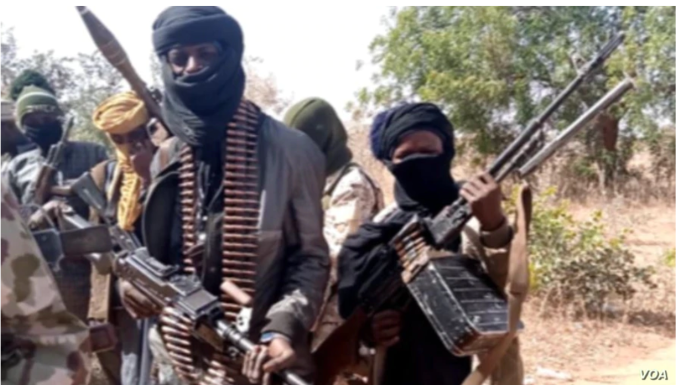
GUNMEN suspected to be Boko Haram terrorists, in the early hours of Sunday, July 28, attacked Jakana Police station in Konduga Local Government Area of Borno State.

The assault, according to a Daily Trust report, resulted in the deaths of a policeman and a woman, while the attackers also made off with arms and ammunition.

Jakana, located along the Damaturu-Maiduguri Expressway, is about 45 kilometres from Maiduguri, the Borno State capital.

Citing security sources, the report noted that the insurgents also set ablaze two patrol vehicles and a motorcycle.

It indicated that the attackers, who caught the security operatives off guard, arrived at the police station around 1:00 a.m. and engaged in a gunfight with the officers until 3:00 a.m.

“They overpowered them and gained access to the police station, looted arms and ammunition and destroyed two patrol vehicles.

“One of the vehicles belongs to the police and the other for the members of Civilian Joint Task Force (CJTF)” a source told the newspaper.

Also, confirming the attack, the chairman of the Konduga Local government, Abbas Ali Abari, promised to provide more details on the incident.

Meanwhile, The ICIR’s efforts to get more information about the incident from the Police Public Relations Officer, Borno State command, Nahun Kenneth, proved abortive as he did not respond to phone calls and text messages sent to his line.

This attack was coming about a month after a female suicide bomber detonated a bomb at a wedding ceremony on Saturday, June 29, in Tashan Mararaba, Gwoza town, in the state, killing at least six persons and injuring others.

Security analyst, Zagazola Makama, disclosed this in a post on his X handle.

He said the bomber, who was later identified as a young lady in her early twenties, detonated the explosive device in the middle of the gathering, causing confusion and devastation.

Makama added that intelligence sources told him that the victims, all civilians, were returning from a wedding when the attack occurred near a busy motor park.


READ ALSO:


The Boko Haram insurgents have wreaked havoc on infrastructures and businesses, disrupting education, health, and power supply, among others, especially in Northern Nigeria.

The group has been joined by the Islamic State West African Province (ISWAP) to terrorise the nation.

Terrorism in Nigeria mostly affected Borno, Yobe, and Adamawa states between 2009 and 2018.

BBNaija Season 9: what to look out for

THE highly anticipated Africa’s biggest reality television show, Big Brother Naija is set to return to screen for its 9th season today, Sunday, July 28, with a plot twist tagged ” Dynamic Duos.”

The executive head of content and West Africa channels at MultiChoice, Busola Tejumola, said that as the show premieres, it would air on all Africa Magic channels at 7 pm WAT while the main show would begin immediately by 9pm.

She added that the winner of the show this season would go home with a grand prize of N100 million and a brand-new SUV car.

“After 71 days of game playing, on the 6th of October 2024, a grand total of N100 million worth of cash and a brand-new SUV will be won,” she said.

Although Nigerians have reacted to the grand prize being short of the previous year’s prize amount of N120 million, the organisers have promised that this year’s season would be one for the books with shocking twists, explosive drama, among other thrilling activities to keep viewers locked in.

The eighth season of the show, themed “All Stars,” which featured former housemates from past seasons had Ilebaye Precious Odiniya, popularly known as the Gen Z baddie, emerge winner and she took home the N120 million grand prize.

As the new season of the show begins, here are some things to expect:

Housemates in pairs

The show will kick off with an exciting twist with housemates entering in pairs. They could be couples, siblings or friends. This is the first time in the history of Big Brother Naija this will be happening. The contestants were also auditioned in pairs.

Easy voting system

Voting during the show this season has been made easy, giving viewers the option to vote using the MyDStv and GOtv apps, with up to 250 votes available per user. Fans can also vote on the Big Brother Naija website which allows for 100 votes to support their favourites.

Fave Lock Game

The season is set to come with a new game twist. Here, viewers get to predict the winner of the weekly immunity challenge.

This serves the viewers opportunities to be active participant of the show as well. The game will commence on August 1 and run till August 26.

Custodian Challenge

The season launches a new game known as Custodian Challenge which will hold on the first night after the housemates enter the house. Following this will be the Head of House game to pick who will lead the housemates for the first week, thereafter the Immunity Challenge and nominations.

New House Design

One of the major exciting aspect fans of the show look forward to each season is the upgraded and new designs of the house which is not short of what will be delivered this season. The house design has been completely redesigned, providing a brand-new and exciting setting for the contestants to put out their episodes of drama.

Why fuel scarcity resurfaces in Lagos, Abuja – NNPCL

THE Nigerian National Petroleum Company Limited (NNPCL) has attributed the current fuel supply disruptions in some parts of Lagos and the Federal Capital Territory (FCT), Abuja, to a hitch in the discharge operations of some vessels.

Chief Corporate Communications Officer of the national oil company, Olufemi Soneye, explained that the situation was being addressed in a statement on Saturday, July 27.

He assured that the company was working round the clock with all stakeholders to resolve the challenge and restore normalcy in operations.

The ICIR reports that fuel queues started building up in some filling stations in the FCT on Friday, July 26, as motorists were seen engaging in panic buying.

Checks in Kubwa at NIPCO, NNPCL and the  Rain Oil Filling Station in Dutse all in FCT showed ong-queues with motorists waiting in turns to make purchase. 

This latest development is amidst the call for protest against the Nigerian government to improve the living standards of Nigerians and end bad governance.

The situation has also led to widespread frustration among residents, with many expressing anger over the recurrent fuel shortages and demanding that the fuel pump price be reduced.

Meanwhile, the Minister of State for Petroleum Resources (Oil), Heineken Lokpobiri, has appealed to Nigerians, especially tte youth in the Niger Delta, to remain calm and avoid participating in the proposed nationwide protest.

In a statement signed by his Media and Communications Assistant, Nneamaka Okafor, on Saturday, Lokpobiri, urged the youth of the Niger Delta to be constructive as they seek for solutions to the hardship in the country.  

“We understand the frustrations and challenges faced by many Nigerians, but it is essential to approach these issues constructively,” Lokpobiri stated.

“President Bola Ahmed Tinubu is dedicated to revitalising our economy and bringing renewed hope through well-thought-out policies and programmes,” he added.  

The minister emphasised the importance of unity and patience as the government works to address the nation’s challenges.

“Now more than ever, we need to stand together and support the initiatives being put in place. Our collective efforts will pave the way for a more prosperous Nigeria.”

Acknowledging the role of protests in a democracy, the minister warned against those who might intend to exploit the protest for malicious purposes. 

“Certain groups are looking to use this protest to incite violence and crime. We must not let non-state actors disrupt our peace and stability,” he warned.

He also called for constructive engagement and dialogue over any action that could unsettle the nation. 

“While protesting is your democratic right, consider the broader implications on our national stability and progress. Dialogue and collaboration are far more effective solutions”

Lokpobiri reassured Nigerians of President Bola Tinubu’s commitment to their well-being. 

The ICIR reports that some Nigerians, along with a group led by former presidential candidate, Omoyele Sowore, have been mobilising for nationwide protests scheduled for the first week of August.

The posts and tweets on the protest carry different hashtags, ranging from #RevolutionNow, #EndBadGovernanceInNigeria, #TakeItBack, #DaysofRage and #TinubuMustGo.

However, since then, some state actors, including the presidency, military, SSS and police, have threatened the protest organisers, calling on them to suspend the plan.

UPDATED: Oando refutes claim of owning Maltese blending plant, Raz Hansir Oil

This report has been updated. See the bottom for details.

OANDO Plc, one of Nigeria’s successful independent oil and gas companies, had on Friday, July 26, refuted widespread allegations of owning a blending plant in Malta, Raz Hansir Oil Terminal Limited, where dirty petroleum products are allegedly imported into Nigeria.

A statement by the energy company on its X handle stated that neither Oando PLC nor its executives have ever held shares, investments, or interests in the ‘fictitious’ Maltese company.

“As part of a comprehensive investigation into the basis of the false claims, we conducted a search of the Malta Business Registry, the official repository for all registered entities, past and current, within the country. Our search yielded no results for a company bearing that name. Subsequent due diligence efforts similarly failed to uncover any record of the company’s existence.

“We therefore believe that the false claims are of the malicious intent of misleading the public and our stakeholders,” the company said.

The company further reiterated that any corporate action by Oando, including acquisitions, is disclosed to the public in compliance with applicable corporate governance laws and regulations because the company is publicly traded.

Controversies

Both Oando and the Maltese blending plant have been in the news following an allegation by the President of Dangote Group, Aliko Dangote, that some officials at the Nigerian National Petroleum Company Limited (NNPCL) own and operate an oil blending plant in Malta.

An oil blending plant has no refining capability but can be used to blend re-refined oil (a used motor oil that has been treated to remove dirt, fuel, and water) with additives to create finished lubricant products.

Dangote said this while speaking at the House of Representatives on Monday, July 22, noting that diesel produced locally at 650 parts per million (ppm) and 700 ppm is of better quality than imported fuel.

“Some of the terminals, some of the NNPC people, and some traders have opened blending plants somewhere off Malta. We all know these areas. We know what they are doing,” Dangote said.

The ICIR reported that Dangote and the Nigerian petroleum regulator – the Nigerian Midstream and Downstream Petroleum Regulatory Authority (NMDPRA) – have been at daggers-drawn over his refinery’s access to Nigeria’s crude with the regulator recently casting doubt over the quality of his diesel.

The impasse between both parties also led to Dangote’s affirmation that the NNPCL did not own a 20 per cent share in his company because of failure to fulfil certain payment obligations.

The business mogul had admitted regrets in investing over $20 billion in the refinery and said his friend who advised him not to make the investment in Nigeria was taunting him over his predicaments.

He has repeatedly lamented how difficult it had been to get the feedstock required to keep his company’s 650,000 capacity running, compelling it to source crude oil supply from Brazil and the United States.

Editor’s Note: The report was updated to remove the section that referenced ‘Malta Business Registry shows inconsistencies’, this is because the section of the report had referenced an outdated business registry. The headline was also updated. 

Nigerian leaders mourn Ifeanyi Ubah’s passing at 52

0

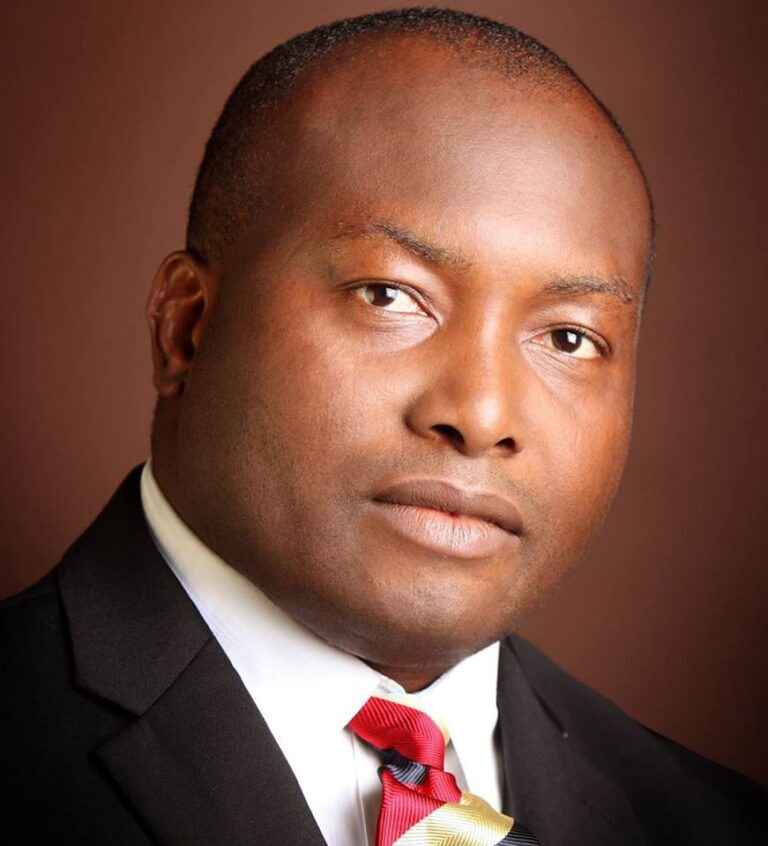
NIGERIAN leaders, including President Bola Tinubu and the Senate, have expressed their condolences to the family of the late Ifeanyi Ubah, a serving senator before his passing.

Ubah’s death was reported Saturday morning. He was 52. 

The late businessman and politician was elected as senator in 2019 on the Young Progressive Party (YPP) platform and was re-elected on the same platform in 2023. 

Ubah defected to the All Progressives Congress (APC) earlier this year and had expressed interest in running for the governorship of Anambra State in next year’s election, positioning himself as a leading frontrunner. 

In a statement issued by the Special Adviser to the President on Media and Publicity, Ajuri Ngelale, Tinubu commiserated with the deceased relations and the people of Anambra State.

He prayed for the repose of the departed lawmaker’s soul, and strength and comfort for his family.

In the same vein, the Nigerian Senate mourned Ubah’s death.

A statement issued by the Senate spokesperson, Yemi Adaramodu noted that Ubah was an exemplary leader and an advocate for his constituents.

“Before his illustrious career in public service, Senator Ifeanyi Ubah distinguished himself as a prominent businessman and philanthropist. As the founder and CEO of Capital Oil and Gas Industries Limited, he made substantial contributions to Nigeria’s energy sector, fostering economic growth and creating numerous job opportunities.

“Through the Ifeanyi Ubah Foundation, his philanthropic endeavours provided scholarships, healthcare, and vital support to the less-privileged, profoundly impacting countless lives,” the Senate said.

Colleagues, and friends, mourn

The former Abia State governor, Orji Kalu, ,extolled Ubah and described him as a patriotic and detribalised Nigerian with a passion for a prosperous and better Nigeria.

Kalu, a serving senator, further urged the deceased’s family and associates to sustain his good deeds, noting that the late senator contributed immensely to the economic, social, and political development of Nigeria.

“His invaluable contributions to the growth and development of Nigeria are worthy of commendation and emulation. The late business mogul, no doubt, will forever be remembered for his good legacies,” Kalu added. 

Also, a chieftain of Ohanaeze Ndigbo, a  socio-cultural organisation in Nigeria’s South-East region, where the late senator hailed from, , Okechukwu lsiguzoro, expressed shock over Ubah’s death.

Reacting to Ubah’s death, ilsiguzoro, in a chat with Daily Post, said it had been a “harvest of deaths” in the South-East.

“It is with a huge shock that we received the sad news, an unfortunate incident concerning the demise of one of the business moguls in the South-East, a High Chief from Nnewi, Senator Ifeanyi Ubah.’

Also reacting to Ubah’s passing, the Deputy Speaker of the House of Representatives, Benjamin Okezie Kalu expressed sadness over the loss.

He described the late lawmaker as a patriot and philanthropist who made remarkable strides in the parliament, media, sports and petroleum industry.

$2.08bn petroleum imports from Malta, others weakening naira, economists say

NIGERIA’S reliance on petroleum importation from Malta and several other European countries is a major cause for Nigeria’s weaker currency which has seen the naira continuously perform badly against other foreign currencies due to the search for dollars for fuel imports.

To meet the demands of over 200 million of its population, Nigeria relies largely on Belgium, Netherlands, Singapore, and Malta for its fuel import despite being the leading oil-producing nation in Africa, according to Statista.

This development, analysts said, has been a major reason the value of the naira is depreciating against the dollar.

“If the Dangote Refinery starts to work, it means there will be no business or Malta. Malta is the reason why your naira is weak,” a development economist, Kalu Aja, said in his official X account while reacting to the problems with fuel import.

Findings have shown that petroleum importation has been a major foreign exchange transaction in Nigeria and is denying the availability of foreign exchange for importers.

“This government has not shown it will be accountable and transparent. Since the face-off between Dangote and the regulators, have you heard any official response from the Presidency or even the Federal Ministry of Petroleum? What does that tell you? They know that the importation is draining the foreign exchange for the manufacturers and weakening the naira, yet, they are not speaking up,” an economist and consultant to the British Department for International Development (DFID), Celestine Okeke, told The ICIR

To worsen this challenge, a recent statement by the chairman of Dangote Industries Limited, Aliko Dangote, that some officials of the Nigerian National Petroleum Company Limited (NNPCL), oil traders, and terminals opened a blending plant in Malta, had sparked controversy.

Dangote had said, “Some of the terminals, some of the NNPC people, and some traders have opened a blending plant somewhere off Malta. We all know these areas. We know what they are doing.”

A reaction from the group chief executive officer of NNPCL, Mele Kyari, faulted the allegations, saying he did not own a blending plant in Malta.

An oil blending plant is a facility that has no refining capability but is either capable of producing finished motor gasoline through mechanical blending or blending oxygenates with motor gasoline.

Recent developments show that the African richest man has been speaking up following the seeming frustration faced in bringing his 650,000 oil refinery to operate at maximum capacity.

The management of the Dangote Group, NNPCL, and the regulators in the Nigerian oil industry have been at loggerheads over the supply of crude products and the monopoly of the market.

While Dangote Group accused the regulators of frustrating its effort to get crude oil to start petroleum products production, the regulators said the refinery  churn out inferior petroleum products.

Following the Malta imports allegation, social media became agog with information that Nigeria saw substantial growth in its fuel imports from Malta, totaling $2.25 billion over the past nine years, signifying the robust trade relations between Nigeria and Malta.

In the report credited to Trade Map, an online database, Nigeria’s imports of petroleum oils obtained from bituminous minerals saw a remarkable increase, reaching $2.8 billion in 2023, representing a 342 per cent rise from $47.5 million in 2013.

However, an accurate percentage calculation will arrive at 5,794.74 per cent and not 342 per cent.

The report said that the annual import values were $59.98 million in 2014, $117.01 million in 2015, and $13.32 million in 2016,  stating that this upward trend in trade underscored the growing demand for fuel and the effective trade channels established between the two countries.

Again, this could not indicate an upward movement in import values between 2014 to 2016 but rather a fluctuation in trade activities.

It added that Nigeria importing $2.08 billion worth of fuel in 2023 showed trade relations with Malta have proven to be beneficial. However, the figure contradicts the $2.8 billion earlier stated as the total petroleum import from Malta in 2023.

A check at the Trade Map data indicates that Nigeria’s imports stood at $2,082,893 in 2023 for petroleum oils and oils obtained from bituminous minerals excluding crude from Malta in 2023.

The Trade Map data credited this figure to data from the Nigerian National Bureau of Statistics (NBS).

What the NBS report shows

In 2023, Nigeria’s annual total trade stood at N71.88 trillion of which imports amounted to N35.92 trillion and exports N35.96 trillion, representing a trade surplus of N400 billion, according to the NBS’ Foreign Trade in Goods Statistic (Q4 2023).

Of the N35.92 trillion total imports, mineral products (where refined petroleum products are included) amounted to N12.19 trillion, representing 33.94 per cent of the total imports.

According to NBS, Malta falls within the top ten import destination countries, falling in the eighth position below Singapore, China, Belgium, India, and the United States in the top five positions.

It further revealed that Malta’s share of Nigeria’s total imports was at 2.07 per cent with total imports at N291.979 billion Q4 2023.

In the third quarter of 2023, Malta was in the fourth position with a 6.64 per cent share or N561.37 billion share of Nigeria’s imports, coming below China, Belgium, and India. In the second quarter, Malta imported products worth N181.55 billion, representing a 3.17 per cent share of its total imports to Nigeria and falling in the sixth position.

In the first quarter of 2023, the NBS did not report Malta as among the import destinations for Nigeria.

It then shows that imports from Malta stood at N1.034 trillion in 2023 according to NBS’ disclosure. While the NBS did not state the exchange rate at which it converted the dollar to the naira, however, an annual average rate conversion shows the naira to dollar rate stood at N638.7 in 2023.

Additional data may be required from the Nigerian Customs Service, NNPCL, Nigerian Midstream and Downstream Petroleum Regulatory Authority (NMDPRA), Central Bank of Nigeria (CBN), Nigerian Ports Authority (NPA), and various authorities in the oil sector to nip in the bud what Nigeria imports from Malta and the individuals or companies behind the importation.

Imports strain foreign reserves

Vice-President Kashim Shettima revealed recently that Nigeria spends $25 billion per annum on the importation of petroleum products.

Nigeria has been a long-time importer of petroleum products as its four refineries have been comatose over the decades, putting a strain on its foreign reserves.

According to CBN’s outlook, foreign reserves, which stood at $33.09 billion in 2023 are expected to dip in 2024 on the assumption of continued payments of outstanding foreign exchange forward obligations, matured foreign exchange swaps, and debt service.

Protest: I can participate in hunger protest from anywhere, Sowore replies presidency

0

AS tension mounts over the proposed mass protest by Nigerians against President Bola Tinubu’s administration over ravaging economic hardship across the country, the Special Adviser to the President on Information and Strategy, Bayo Onanuga, has criticised a former presidial aspirant and one of the protest conveners, Omoyele Sowore, for his absence in Nigeria. 

Sowore had granted an online interview on News Central Television from New Jersey, the United States of America, three days ago, where he was questioned on his availability for the protest. 

While he did not directly respond to the question, Onanuga posted on his X account on Saturday, July 27, that “Omoyele Sowore is mobilising the gullible for protest in Nigeria as he sits pretty in his home, with family in New Jersey, United States. Be wise, the easily excitable Nigerians!”

However, The ICIR reached out to Sowore on the telephone for a reaction to Onanuga’s post.

He said his location during the protest is irrelevant, adding that he could participate in the demonstration from anywhere.

The renowned activist and good governance crusader said that he was in the US, stressing that his location was irrelevant as far as the planned protest is concerned.

“I have participated in 200 protests between 1989 and now and in many of them I was not physically in the country. Therefore they are just dwelling on irrelevance to incite the people against the protest,” Sowore said.

According to him, in 2012, he mobilised the ‘Occupy Nigeria’ protest from New York.

While insisting there was no going back on the planned protest, Sowore said: “The government is the one inciting the protest through hunger, unemployment, insecurity, corruption and poverty.”

He also dismissed the threats by security agencies, including the military, police and DSS, saying: “How many are they compared to the people? We are their employers.”

The ICIR reported some Nigerians have been mobilising for nationwide protests scheduled for the first week of August.

The posts and tweets on the protest carry different hashtags, ranging from #RevolutionNow, #EndBadGovernanceInNigeria, #TakeItBack, #DaysofRage and #TinubuMustGo.

State actors, including the military have warned against the protest.

The ICIR reported Tinubu’s closed-door meetings with the traditional rulers, and governors

Meanwhile, the former candidate of the New Nigeria Peoples Party (NNPP) in the 2023 presidential election, Rabi’u Musa Kwankwaso, cautioned Nigerians against the protest, urging the citizens to prepare to vote out the government in the next election.