AS tension mounts over the proposed mass protest by Nigerians against President Bola Tinubu’s administration over ravaging economic hardship across the country, the Special Adviser to the President on Information and Strategy, Bayo Onanuga, has criticised a former presidial aspirant and one of the protest conveners, Omoyele Sowore, for his absence in Nigeria.
Sowore had granted an online interview on News Central Television from New Jersey, the United States of America, three days ago, where he was questioned on his availability for the protest.
While he did not directly respond to the question, Onanuga posted on his X account on Saturday, July 27, that “Omoyele Sowore is mobilising the gullible for protest in Nigeria as he sits pretty in his home, with family in New Jersey, United States. Be wise, the easily excitable Nigerians!”
However, The ICIR reached out to Sowore on the telephone for a reaction to Onanuga’s post.
He said his location during the protest is irrelevant, adding that he could participate in the demonstration from anywhere.
The renowned activist and good governance crusader said that he was in the US, stressing that his location was irrelevant as far as the planned protest is concerned.
“I have participated in 200 protests between 1989 and now and in many of them I was not physically in the country. Therefore they are just dwelling on irrelevance to incite the people against the protest,” Sowore said.
According to him, in 2012, he mobilised the ‘Occupy Nigeria’ protest from New York.
While insisting there was no going back on the planned protest, Sowore said: “The government is the one inciting the protest through hunger, unemployment, insecurity, corruption and poverty.”
He also dismissed the threats by security agencies, including the military, police and DSS, saying: “How many are they compared to the people? We are their employers.”
The ICIR reported some Nigerians have been mobilising for nationwide protests scheduled for the first week of August.
The posts and tweets on the protest carry different hashtags, ranging from #RevolutionNow, #EndBadGovernanceInNigeria, #TakeItBack, #DaysofRage and #TinubuMustGo.
State actors, including the military have warned against the protest.
Meanwhile, the former candidate of the New Nigeria Peoples Party (NNPP) in the 2023 presidential election, Rabi’u Musa Kwankwaso, cautioned Nigerians against the protest, urging the citizens to prepare to vote out the government in the next election.
BETWEEN 2014 and 2024, the value of Nigeria’s passport significantly declined by 13 points, new data from the Henley Passport Index shows.
The Henley Passport Index is the original, authoritative ranking of all the world’s passports according to the number of destinations their holders can access without a prior visa.
The recent report highlighted the changes experienced in several countries over the past decade. In 2014, Nigeria was ranked 79th on the Henley Passport Index, while in 2024, the country has slipped to 92nd position.
The decline indicates that Nigerian passport holders now have fewer visa-free or visa-on-arrival travel options, with only 45 countries accessible without a visa or with visa-on-arrival arrangements.
The implications for Nigerian travellers mean that there would be increased visa requirements, which can affect business travel, tourism, and even family visits and limit the opportunities for Nigerians to engage internationally.
Some destinations Nigerians can still travel to without a visa include Ghana, Benin, Guinea, Kenya, Liberia, Maldives (visa on arrival), Niger and Togo.
Just like Nigeria, the ranking also showed that countries like Venezuela, Yemen, Syria, Bangladesh and Senegal’s passports ranking also fell in the last decade.
Venezuela ranked 25th in 2014 and dropped to 42nd in 2024 with access to 124 countries.
For Yemen, its passport, ranked 85th in 2014, plummeted and now stands at the 100th position with access to 33 countries.
Also, Syria’s ranking fell from 89th in 2014 to 102nd in 2024 with access to 28 countries. This might be connected to the ongoing civil war which had led to increased travel restrictions for its residents.
Bangladesh moved from the 86th position in 2014 to 97th in 2024 with access to 40 countries, while Senegal’s passport ranking has dropped from 71st in 2014 to 82nd in 2024 with access to 58 countries.
Meanwhile, at the top of the list is Singapore, with its citizens enjoying access to 195 travel destinations out of 227 around the world visa-free. It is followed by France, Germany, Italy, Japan, and Spain, each with visa-free access to 192 destinations.
Recall that Nigerians have had several confrontations with countries like Seychelles and the United Arab Emirates on visa bans.
The ICIR reported how Nigerians abroad are exposed to difficult, inconsistent passport application process.
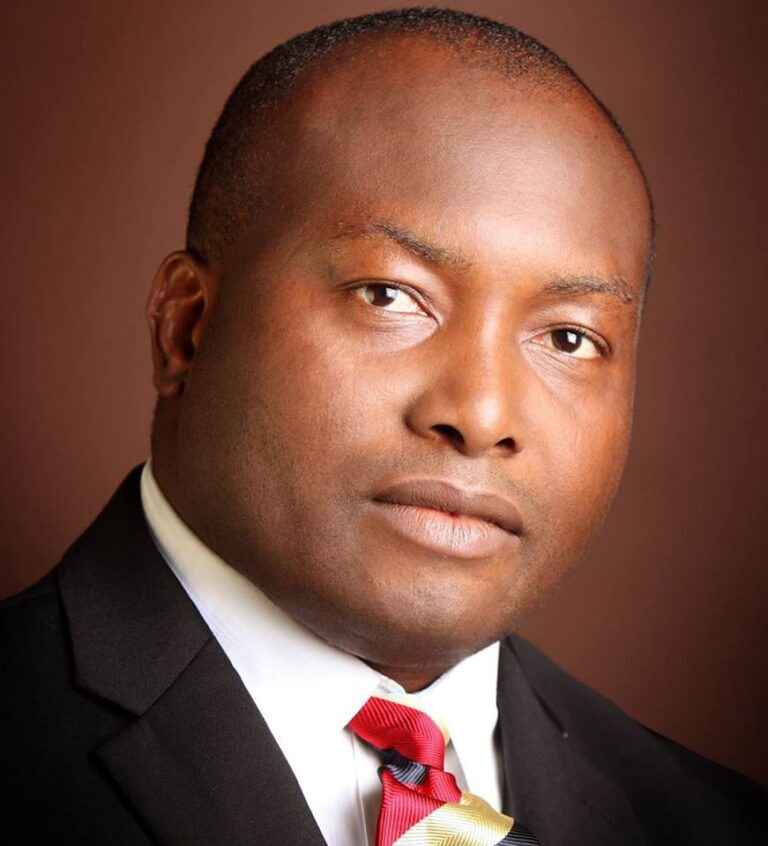
NIGERIAN senator and businessman Ifeanyi Ubah is dead.
The late lawmaker, aged 52, represented Anambra South, and was said to have passed on in London.
Details of his death were still sketchy as of the time of filing of this report.
Ubah, through his campaign council, had recently donated N71 million to the All Progressives Congress (APC) in Anambra State, bolstering the party’s presence and strength in the South-East region.
A statement by his special adviser, media and strategic communications, Kamen Chuks Ogbonna, indicated that the donation was part of efforts to redeem the senator’s pledge towards enhancing the party’s effectiveness In the state.
His political career
In 2014, Ifeanyi Ubah lost at the 2014 Anambra State gubernatorial election under the Labour Party platform.
He was, however, elected as Senator in 2019 on the Young Progressive Party (YPP) platform and was re-elected in 2023.
Ubah later defected to the All Progressives Congress (APC) earlier this year, and has expressed interest in running for the governorship of Anambra State in next year’s election, positioning himself as a leading frontrunner.
The deceased had previously contested the 2021 Anambra governorship election, coming fourth in a race won by the incumbent Governor Chukwuma Soludo of the All Progressives Grand Alliance (APGA).
In September 2022, Ubah narrowly escaped assassination when gunmen attacked his convoy on the way to Nnewi in Enugwu-Ukwu, Anambra State.
His attackers opened fire on the convoy, which resulted in the deaths of at least five people, including two policemen and his aides, while he survived the attack, thanks to his bulletproof vehicle.
Personal life
Ubah was born in Otolo, Nnewi on the 3rd of September, 1971 to Alphonsus Ubah and Patty Ubah. He was the first son of seven children in his family.
Ubah was married to Uchenna, a Business Administration graduate from Ahmadu Bello University, Zaria. The couple had five children.
The deceased attended Okongwu Memorial Grammar School, Nnewi, Anambra State, before heading to Premier Academy, Lugbe, Abuja, where he dropped out because his parents couldn’t afford his academic and material needs.
Ubah later bagged a degree in Law from Baze University, Abuja.
Business Life
He was an entrepreneur and businessman who served as the CEO of Capital Oil (CCO), a company he founded in 2001, until his death.
Ubah also established a foundation named after himself, the Ifeanyi Ubah Foundation.
He founded the Ifeanyi Ubah Football Club in the Nigeria Premier Football League (NPFL), previously known as Gabros International Football Club.
The late lawmaker started his business as an exporter of motor tyres and parts in West African nations like Ghana, Sierra Leone, Liberia, and the Democratic Republic of the Congo before extending to Belgium and the UK.
In, 2015, he founded the Authority Newspaper, with the platform covering both domestic and foreign news.
Corruption allegations
In 2019, a Federal High Court sitting in Abuja removed Ubah from the Senate after founding him of certificate forgery. The lawsuit was filed by Obinna Uzoh, the runner-up of the election that brought the accused to the Senate.
Uzoh was a member of the Peoples Democratic Party (PDP)
However, the Court of Appeal voided the judgment that sacked Ubah as the lawmaker representing Anambra South Senatorial District.
The court, in a unanimous decision by a three-man panel of justices, led by Stephen Adah, held the ruling was based on incompetent court processes.
Similarly, the Federal High Court in Lagos struck out a charge brought by the Asset Management Corporation of Nigeria (AMCON) against Ubah and his company, Capital Oil and Gas Limited, over an alleged N135 billion debt.
The charge was struck out just six days after Ubah announced his defection from the Young Progressive Party to the ruling APC.
Ubah said his defection was due to the insurmountable disagreements within his party – the YPP.
Following a mass trial held for two days in Kainji, Niger State, the Federal Government has disclosed that 125 members of the Boko Haram terrorist group, including their financiers, have been convicted and found guilty of the charges brought against them.
The Attorney-General of the Federation (AGF) and Minister of Justice, Lateef Fagbemi, disclosed this in a statement on Friday, July 27.
Signed by the Special Adviser to the President on Communication & Publicity, office of the AGF, Kamarudeen Ogundele, the statement noted that the convicts were tried on charges bordering on terrorism, terrorism financing, and rendering material support, among others.
The trials were held under the Giwa Project Kanji Phase Five, between Tuesday and Wednesday, before five Federal High Court judges led by Binta Nyako. Other Justices are Joyce Abdulmalik, Emeka Nwite, Obiora Egwuatu, and Mobolaji Olajuwon.
The statement read in the part, “The Attorney-General of the Federation and Minister of Justice, Prince Lateef Fagbemi (SAN), is superintending over the trial in conjunction with the Office of the National Security Adviser.
“The prosecution team was led by the Director of Public Prosecution of the Federation, Mohammed Babadoko Abubakar, while the defence team was led by Mr Abdulfatai Bakre from the Legal Aids Council.”
“Others in attendance as international observers are the National Human Rights Commission, the Nigerian Bar Association, and the United Nations Office on Drugs and Crimes among others. The courts convicted 85 persons for terrorism financing, 22 for ICC-related crimes while others were convicted for terrorism. They were sentenced to various jail terms.”
It added that 400 defendants who had completed their sentence were moved to Operation Safe Corridor in Gombe State for rehabilitation, deradicalisation and subsequent reintegration.
Recall that in March 2024, the Nigeria Sanctions Committee (NSC) listed some individuals and Bureau de Change (BDCs) designated as terrorism financiers. The NSC document showed 21 individuals and six entities tagged as financiers of terrorism.
For more than a decade, the Boko Haram group been known for its brutality mostly in the Northern part of the country, killing thousands of people in multiple attacks. The United Nations documented that millions of Nigerians have been displaced since the conflict started in 2010.
Aside from killings and destruction of properties, the group have been notorious for the kidnapping of people, including over 1,000 school children, as documented by The ICIR.
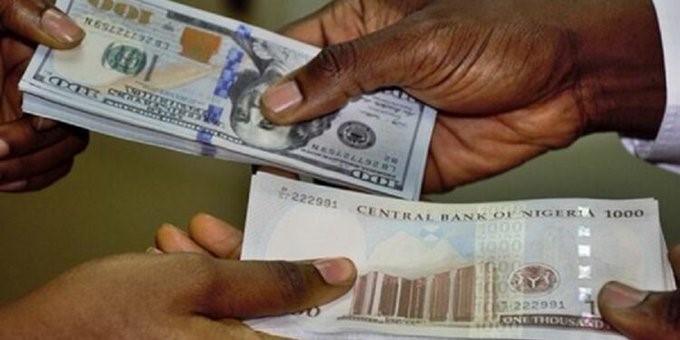
THE naira depreciated to its worst level in four months to N1,609.29 against the dollar on Friday, July 26, a few days after the Central Bank of Nigeria (CBN) raised the benchmark interest rate.
At its two-day monetary policy committee (MPC) meeting on Tuesday, July 23, the CBN tightened the monetary policy pool and hiked the benchmark interest rate to 26.75 per cent from 26.25 per cent in May.
This is the fourth consecutive time the apex bank has raised the monetary policy rate to rein in inflation which surged to 34.19 per cent in June.
The rate hike has failed to lessen inflationary pressure which inadvertently is affecting Nigeria’s currency market, with the naira becoming a weaker store of value by the day.
For instance, at the official Nigerian Autonomous Foreign Exchange Market (NAFEM) window, the naira closed at closing at N1,609.29 to the dollar on Friday, July 26 compared to the N1,500.32 it closed on Monday, July 22 when the apex bank commenced its MPC meeting.
On Tuesday, July 23 when it ended its meeting, the naira worsened to N1,548.76 to the dollar, to N1,586.71 on Wednesday, July 24, and to N1,603.80 on Thursday, July 25.
A check by The ICIR shows that the last time the dollar traded above N1,600 to the dollar was on March 15 when the naira depreciation against the dollar at N1,602.75.
The depreciation of the naira to a four-month low came after the CBN announced its intention to defend the naira over the next few weeks.
The apex bank had on Friday, July 19, said it had commenced a regular intervention in the country’s foreign exchange market to quell the large demand pressure from corporate entities and the expected seasonal uptick during the summer period.
“Recent movements in the forex market are largely driven by demand pressure from corporate entities and the expected seasonal uptick during the summer period.
“Over the next few weeks, the CBN will continue to support various segments of the official markets with liquidity,” the apex bank said.
According to the CBN, its intervention in different segments of the market is in line with its price stability mandate and commitment to ensuring a well-functioning and liquid market.
In the last three weeks, the apex bank had sold $229.17 million to authorised dealer banks between an exchange rate range of N1,480 above to a dollar.
It also sold $20,000 to each of the eligible Bureaux De Change operators to avert market distortion in the Nigerian foreign exchange market.
Experts believe that not meeting its crude oil production quota remains a major determining factor for the shortage of foreign exchange in the country.
The federal government needs to pay closer attention to Nigeria’s dwindling oil production to grow support for the foreign exchange market, a Partner and Head of Africa Tax at KPMG, Wale Ajayi, said.
“We are not meeting up with our Organisation of Oil Producing Countries (OPEC) quota and it’s not good for our foreign exchange market and budget funding. We have 1.7 million barrels per day in the budget and we are not doing up to 1.5 million barrels per day production,” he said.
The Dangote Refinery, projected to earn foreign exchange savings of between $25 billion and $30 billion yearly for the country, has struggled to start production of petroleum products due to regulatory bottlenecks.
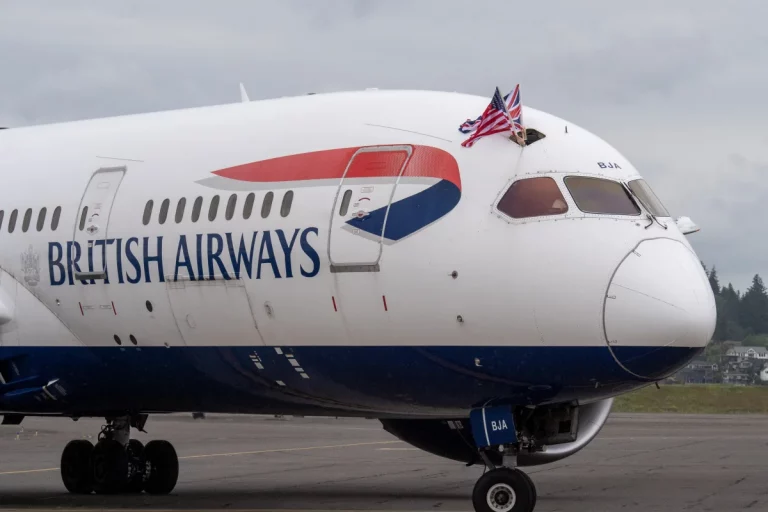
THE Minister of Aviation and Aerospace Development, Festus Keyamo, has threatened that the federal government might restrict the United Kingdom’s British Airways from landing at Nigeria’s Murtala Muhammed International Airport (MMIA), Lagos.
This is due to a slot issue in the UK that has restricted Nigeria’s airline, Air Peace, from flying to Heathrow, the UK’s number one airport in London.
Air Peace has flown its passengers to Gatwick Airport, London, since it began its flight operation in March 2024. Since it commenced operations, Air Peace has had conflicts with the UK authorities in a bid to get a slot at Heathrow.
Keyamo said that the ministry had written to the UK Civil Aviation Authority (CAA) to allow Air Peace to fly to Heathrow in line with the reciprocity principle in the Bilateral Air Service Agreement (BASA).
Speaking at the 28th Annual Conference of the League of Airports and Aviation Correspondents (LAAC) in Lagos, Keyamo argued that it was unjust to grant British Airways unrestricted access to MMIA, Nigeria’s busiest airport, while Nigerian airlines are not afforded the same privilege in the UK, contrary to the principles of the BASA
He noted that the ministry was awaiting a response from the ministry in the UK adding that insisted that countries must abide by the BASA arrangement that Nigeria reached with their governments
The minister stressed that the failure to do this might lead to a negative reaction from the Nigerian government.
He said, “We have already written to the United Kingdom to give Nigerian carriers, especially Air Peace Heathrow Airport, which is a tier one airport, just as we have British Airways, using our Lagos Airport. We may as well give BA Ilorin to operate to. When we asked for Heathrow Airport, you’re telling us to go to a slot committee. Who does that? Air Peace, I can tell you is on its way to Heathrow away from Gatwick.
“The local operators are struggling to cover their routes locally, not to talk of our international routes; Air France is coming here 10 times a week, we are not going to Paris, Lufthansa is coming here, we are not going to Frankfurt, Delta and United from America are all coming here, but we are not reciprocating. Even, though South African Airways is coming here, we are not going there.
“We only managed to have Air Peace in London and to Gatwick, but we are pushing for them to take us to Heathrow. You can’t tell us you have a slot committee. Your airport operator should know that you have an existing relationship and they should respect it. For connectivity, people prefer Heathrow. That is an airport you can have an airline to codeshare with so that there can be connectivity.”
The ICIRreported that the Nigerian government announced that local airlines would soon launch direct flights to America and South America. This would be the first-ever direct flight between Nigeria and South America.
The efforts are aimed at increasing Nigerian presence in global airspace, making travel more seamless and boosting the nation’s economy.
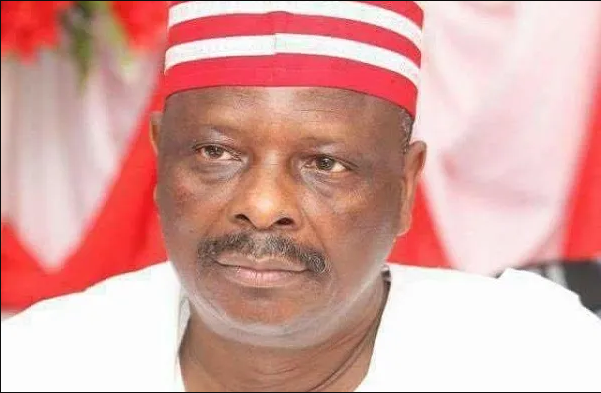
THE former candidate of the New Nigeria Peoples Party (NNPP) in the 2023 presidential election, Rabi’u Musa Kwankwaso, has cautioned Nigerians against embarking on a nationwide protest
He said rather than protest against unfavourable events under President Bola Tinubu’s government, Nigerians should prepare to vote out the administration in the next election.
While attributing the country’s hardships to leadership failures dating back to 2007 in a statement via his X account, on Saturday, July 27, the former Kano State governor urged Nigerians to remain patient and supportive of Tinubu’s government in its efforts to navigate some of the challenges.
The NNPP national leader also expressed deep regret over the attitude of Nigerian leaders towards governance, which he said had resulted in widespread anger, hunger, insecurity, and hopelessness, particularly among the youths.
He cited several examples of these governance failures including federal government interferences in Kano State emirship matters, the impeachment of Edo State’s Deputy Governor, political crises in Rivers State, and controversies surrounding the SAMOA Agreement.
He added that the alleged sabotage of the Dangote Refinery and the continued insecurity in the country were among the issues that angered citizens.
Part of his statement reads, “I urge Nigerians to put our country first before any other consideration by way of being patient with the government and giving it all necessary support to succeed. If any government fails to provide the necessary leadership for better Nigeria, we will have opportunity as citizens to elect the people who can bring the required change using our votes.
“In these trying times, our nation stands at a crossroads. Our collective frustration with bad governance has reached a boiling point, and the urge to protest is strong. As an elder and patriotic Nigerian, I share your concerns and your desire for change. However, I urge you to consider the consequences of national protests and to channel your energy into a more effective and peaceful means of transformation—through the power of your ballot.
“Protests, while a fundamental democratic right, often come with unforeseen and dire consequences. The tragic events of the past have shown us that protests can escalate into violence, leading to loss of lives, destruction of property, and widespread chaos. The repercussions of such actions extend far beyond the immediate moment, leaving scars on our communities and deepening divisions among us.”
The ICIR reports that some Nigerians, along with a group led by former presidential candidate, Omoyele Sowore, have been mobilising for nationwide protests scheduled for the first week of August.
The posts and tweets on the protest carry different hashtags, ranging from #RevolutionNow, #EndBadGovernanceInNigeria, #TakeItBack, #DaysofRage and #TinubuMustGo.
However, since then, some state actors, including the presidency, military, SSS and police, have threatened the protest organisers, calling on them to suspend the plan.
The Nigerian military had, on Thursday, July 25, accused the organisers of the planned protest of intending to replicate the recent protest demonstration in Kenya, which led to deaths, destruction and drastic actions from the country’s president.
Foreign mercenaries involve in protest – IGP
The Inspector-General of Police (IGP), Kayode Egbetokun, on Friday, July 25, told journalists that intelligence at the Force’s disposal revealed that foreign mercenaries were involved in the proposed protest.
He advised every Nigerian to proceed with caution and reconsider their decision to join the protest.
He also directed the protest organisers to submit their names and other details to the Commissioners of Police in their respective states.
He added that to prevent clashes with other events or activities, the police needed to be aware of the precise routes and locations for the demonstrations.
THE Inspector-General of Police (IGP), Kayode Egbetokun, has directed organisers of the #EndBadGovernanceInNigeria protest to submit their names and other details to the Commissioners of Police in their respective states.
Egbetokun stated this while addressing journalists in Abuja on Friday, July 26. He claimed the order was to guarantee a peaceful protest.
Egbetokun declared that he recognised Nigerian citizens’ constitutional right to peaceful assembly and protest.
“To facilitate a successful and incident-free protest, they should please provide the following information: state the proposed protest routes and assembly points; expected duration of the protest; and names and contact details of protest leaders and organisers.”
According to the IG, to maintain public safety, the police would be able to deploy enough manpower and resources from the information provided.
He added that to prevent clashes with other events or activities, the police needed to be aware of the precise routes and locations for the demonstrations.
Additional directives from Egbetokun include creating open lines of communication with protest organisers to resolve any issues or concerns that may come up and reduce the likelihood of violence, property destruction, or other criminal conduct.
To ensure a safe and effective exercise of their rights, he urged all demonstrators to collaborate with law enforcement agencies, follow international best practices for peaceful assembly, and obey the law.
Foreign mercenaries involve in protest – IGP
Egbetokun told journalists that intelligence at the disposal of the Force revealed that foreign mercenaries were involved in the proposed nationwide hunger protest.
He advised every Nigerian to proceed with caution and reconsider their decision to join the protest.
The IGP said the Force had been monitoring development surrounding the protest threats.
“While some groups call for violent protests, emulating Kenya’s recent events, others advocate for peaceful demonstrations.
“However, some individuals promote peaceful protests with violent undertones, raising concerns about their sincerity. We have our history of violent protests in Nigeria, and I don’t believe we have to look to other countries to note the dangers of unchecked demonstrations,” the police boss stated.
Abuja not available for protest – Wike
Meanwhile, The FCT Minister, Wike, hadwarned against any planned demonstrations, saying no protest would be allowed in the nation’s capital under his watch.
Wike said this on Thursday, July 25, while addressing some FCT residents during an inspection tour in Saburi community.
“For those who want to protest on the 1st (of August), FCT is not available for such protests,” he said while urging residents to desist from embarking on such acts.
The minister claimed that protests would not address the problems facing the country, urging that instead, every well-meaning citizen work together to find solutions.
He noted that prominent politicians and other leaders endorsing the demonstration had no good intentions for the nation,but rather were acting in their self-interest.
Wike acknowledged that there was widespread poverty in the nation but insisted that the administration of President Bola Tinubu was making every effort to solve the issue and enhance the quality of life for all citizens.
He urged Nigerians to be patient with the federal government.
The ICIR reports that Wike has issued a warning against the anticipated nationwide protest twice in the last week.
Group writes minister to prepare Eagles Square for protest
Despite Wike’s opposition to the protest, a group has written to the minister for permission to use Eagle Square for the protest scheduled for August 1 to 10.
The group, Take It Back Movement, in a letter titled, “Request For Use of Eagles Square Abuja For #EndBadGovernance Protest,” addressed to Wike and dated Friday, July 26, notified the minister of its decision to use the Eagles Square as a point of convergence to “demand for better governance.”
In addition, it requested that the outer wire barrier facing the Aso Rock Presidential Villa be removed as the protesters may decide to visit the Presidential Villa during the protest.
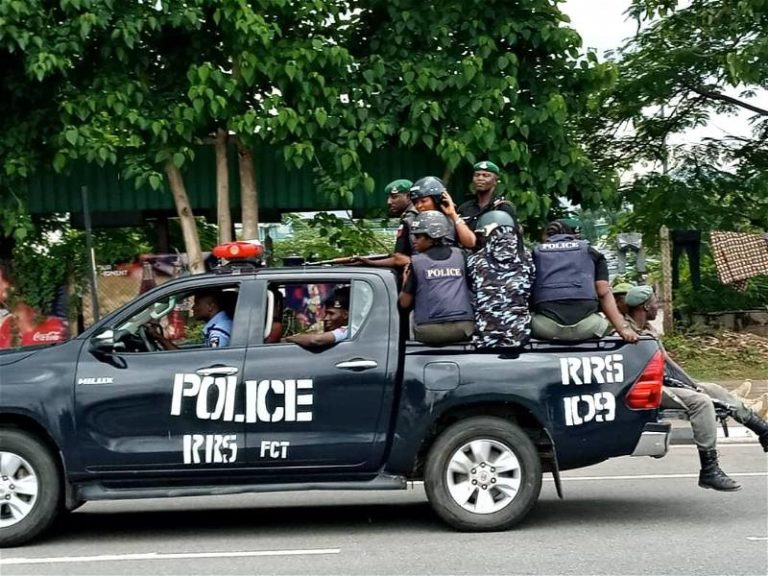
NO fewer than 4,200 police officers have been deployed to various strategic locations in the Federal Capital Territory ahead of the planned nationwide protest, scheduled to begin on August 1.
In a statement on Friday, July 26, the FCT Police Command, said in anticipation of the planned nationwide protest by Nigerians, it had also deployed material and explosive ordnance device experts at the command’s disposal across the nation’s capital.
“The proactive deployment, which is aimed at ensuring public safety, protection of protesters, and preventing protests from being hijacked by non-state actors, is characterised by visibility policing, the deployment of explosive ordinance devices (EOD) experts and personnel at various strategic locations, raids on identified black spots, uncompleted buildings/shanties, stop and search, vehicular and foot patrol and synergy with sister security agencies.
“The Commissioner of Police FCT, CP Benneth C. Igweh psc, mni, while acknowledging the right of residents to protest, advises that it should be peaceful. The CP vows to resist all forms of violent protest and lawlessness, as the police will not be stampeded into allowing the destruction of public and private properties or loss of lives,” the statement added.
While the police agreed with citizens’ right to protest, the FCT Minister, Nyesom Wike, had vowed that the city would not see a protest under his watch.
The ICIR reports that some Nigerians, along with a group led by former presidential candidate, Omoyele Sowore, have been mobilising for nationwide protests scheduled for the first week of August.
The posts and tweets on the protest carry different hashtags, ranging from #RevolutionNow, #EndBadGovernanceInNigeria, #TakeItBack, #DaysofRage and #TinubuMustGo.
However, since then, some state actors, including the presidency, military, SSS and police, have threatened the protest organisers, calling on them to suspend the plan.
THE ICIRreported how the Nigerian military accused the organisers of the planned protest of intending to replicate the recent protest demonstration in Kenya, which led to deaths, destruction and drastic actions from the country’s president.
“The Armed Forces on its part will not stand by and allow anarchy to befall our nation,” a Director of Defence Media Operations, Major General Edward Buba, said at a media briefing in Abuja, on Thursday, July 25.
“While citizens have the right to peaceful protest, they do not have the right to mobilise for anarchy and unleash terror,” Buba added, noting that “The level of violence being envisaged can only be described as a stage for anarchy.”
The military’s stance aligns with the positions of a few other state actors, including the presidency and the police, who have also issued stern warnings against any protest.
The Inspector General of Police, on Tuesday, July 23, expressed similar sentiments, warning that “some groups of people, self-appointed crusaders and influencers, have been strategising and mobilising potential protesters to unleash terror in the land under the guise of replicating the recent Kenya protests,” he said.
Meanwhile, the Nigeria Labour Congress (NLC) had warned the Nigerian government against engaging in a “war-war” situation with Nigerians by trying to suppress citizens’ fundamental right to protest.
THE World Bank has denied a recent allegation by the Minister of Women Affairs, Uju Kennedy-Ohanenye, that the Bank’s staff in Nigeria pocket 40 per cent of all loans Nigeria receives from the financial institution.
The Bank refuted the claim in an exclusive mail sent to The ICIR, noting its staff did not receive 40 per cent of project funds in “consultation fees,” as alleged by the minister.
It also disputed the claim by the minister that Nigerian officials were entitled to five per cent of project funds after signing loan agreements.
The ICIRreported how Kennedy-Ohanenye accused the World Bank staff in Nigeria of pocketing 40 per cent of the loans given to Nigeria as consultation fees, while government officials who sign those loans get five per cent of the funds.
“All the loans they collect, including World Bank loans, are you aware that the same World Bank staff in Nigeria take back 40 per cent and call it consultation fees?
“These are things you people should look into. You people should focus on where the problem is and let them leave me alone,” the minister said during a phone interview with THISDAY newspaper.
She also alleged that she was being victimised by the National Assembly and some cabals for refusing to sign a $500 million World Bank loan request.
“There is a $500 million loan that was meant to be signed by me, but I refused to sign. There was also a case of $100 million earlier as well. Find out what it was meant for,” the minister added.
World Bank reacts
Meanwhile, the World Bank, while responding to The ICIR’s queries on the issue, emphasised that projects funded by the Bank were implemented by recipient governments and were governed by strict policies designed to prevent the misuse of funds.
The Bank also noted that it worked closely with borrowers to manage procurement processes, ensuring that funds are used transparently and efficiently. Key contract award information, including details about the recipients and the purposes of the funds, is required to be published as a condition of Bank financing, the Bank said.
“In response to your query, please note that World Bank staff do not receive 40 per cent of project funds as “consultation fees”. Nor are ministers entitled to five per cent of project funds for signing loan agreements. Both assertions are unequivocally false.
“World Bank-funded projects are implemented by recipient governments and are governed by rigorous policies meant to prevent the misuse of funds and ensure they are used for the purposes intended.
“Under our Procurement Framework, the Bank works with borrowers to carefully manage the integrity of procurement processes in line with core principles that emphasise fair competition, transparency, and efficiency.
“Borrowers are required to publish key contract award information – who the contracts were awarded to, where the money goes, and for what purposes – as a condition for bank financing,” the organisation wrote.
It further claimed that project staff involved in World Bank-supported initiatives are employees of the government ministry that hired them, not of the World Bank.
“Furthermore, it is worth noting that the World Bank does not recruit project staff. Such is purely the responsibility of the government ministry in charge of the project. Project staff in World Bank-supported projects are not employees of the Bank, but employees of the government ministry that hired them.
“The World Bank has zero tolerance for fraud and corruption and takes very seriously our obligation to ensure that our funds are used for clearly defined activities for the benefit of the poorest and most vulnerable,” the statement added.
Loan distribution based on claim by women’s affairs minister
Meanwhile, through media reports, The ICIR gathered that Nigeria has secured $4.95 billion in loans from the World Bank since the beginning of President Bola Tinubu’s administration in May 2023.
The amount was secured from six different loan requests: $750 million for the power sector, $500 million for women empowerment, $700 million for educating adolescent girls, another $750 million for renewable energy, $1.5 billion for economic stabilization reforms, and $750 million for resource mobilization reforms.
With the claim by Kennedy-Ohanenye, of the $4.95 billion secured by the country, $1.98 billion went for consultancy fees to the World Bank staff, meaning that only $2.97 billion was for the federal government to execute projects.
Infographic on loans Nigeria took from the World Bank under President Tinubu and amount that allegedly went to World Bank staff as claimed by the Minister of Women Affair, Uju Kennedy-Ohanenye
Nigeria’s current loan status
According to the Country’s Debt Management Office (DMO), Nigeria’s total public debt portfolio rose by 24.99 per cent in three months to N121.67 trillion as of March 31, 2024.
The DMO in its latest report released on Thursday, June 20, declared that the federal government and the 36 states, including the Federal Capital Territory (FCT), owe $91.46 billion.
“Central Bank of Nigeria’s (CBN) official exchange rate of $1 to N1,330.26 as of March 31, 2024, was used in converting external debt to naira,” the DMO noted.
Also, domestic debt rose to N65.65 trillion or $49.35 billion, representing 11.05 per cent increase relative to N59.12 trillion or $65.73 billion as of December 31, 2023.
External debt rose to N56.02 trillion or $42.12 billion, representing a 46.57 per cent increase compared to N38.22 trillion or $42.495 billion the debt office declared as of December 31, 2023.
Of the external debt, The ICIR reports that Nigeria’s current World Bank loan, as of March 31, is $15.59bn, according to data from the DMO.