Home Blog Page 534

Why fuel scarcity resurfaces in Lagos, Abuja – NNPCL

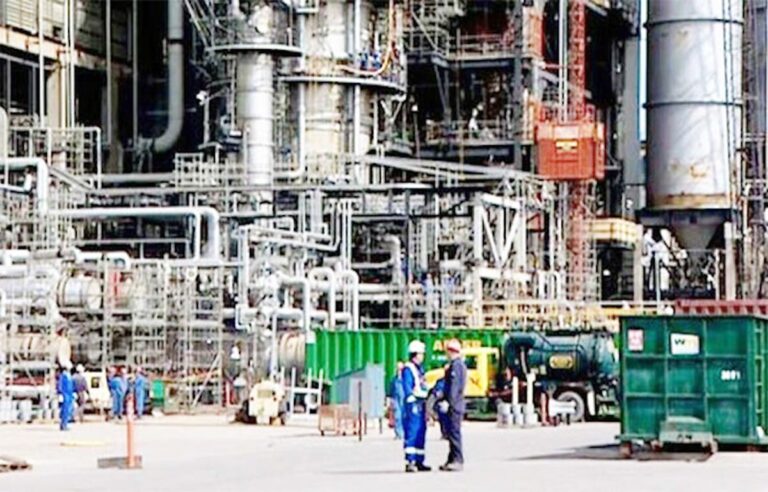
THE Nigerian National Petroleum Company Limited (NNPCL) has attributed the current fuel supply disruptions in some parts of Lagos and the Federal Capital Territory (FCT), Abuja, to a hitch in the discharge operations of some vessels.

Chief Corporate Communications Officer of the national oil company, Olufemi Soneye, explained that the situation was being addressed in a statement on Saturday, July 27.

He assured that the company was working round the clock with all stakeholders to resolve the challenge and restore normalcy in operations.

The ICIR reports that fuel queues started building up in some filling stations in the FCT on Friday, July 26, as motorists were seen engaging in panic buying.

Checks in Kubwa at NIPCO, NNPCL and the  Rain Oil Filling Station in Dutse all in FCT showed ong-queues with motorists waiting in turns to make purchase. 

This latest development is amidst the call for protest against the Nigerian government to improve the living standards of Nigerians and end bad governance.

The situation has also led to widespread frustration among residents, with many expressing anger over the recurrent fuel shortages and demanding that the fuel pump price be reduced.

Meanwhile, the Minister of State for Petroleum Resources (Oil), Heineken Lokpobiri, has appealed to Nigerians, especially tte youth in the Niger Delta, to remain calm and avoid participating in the proposed nationwide protest.

In a statement signed by his Media and Communications Assistant, Nneamaka Okafor, on Saturday, Lokpobiri, urged the youth of the Niger Delta to be constructive as they seek for solutions to the hardship in the country.  

“We understand the frustrations and challenges faced by many Nigerians, but it is essential to approach these issues constructively,” Lokpobiri stated.

“President Bola Ahmed Tinubu is dedicated to revitalising our economy and bringing renewed hope through well-thought-out policies and programmes,” he added.  

The minister emphasised the importance of unity and patience as the government works to address the nation’s challenges.

“Now more than ever, we need to stand together and support the initiatives being put in place. Our collective efforts will pave the way for a more prosperous Nigeria.”

Acknowledging the role of protests in a democracy, the minister warned against those who might intend to exploit the protest for malicious purposes. 

“Certain groups are looking to use this protest to incite violence and crime. We must not let non-state actors disrupt our peace and stability,” he warned.

He also called for constructive engagement and dialogue over any action that could unsettle the nation. 

“While protesting is your democratic right, consider the broader implications on our national stability and progress. Dialogue and collaboration are far more effective solutions”

Lokpobiri reassured Nigerians of President Bola Tinubu’s commitment to their well-being. 

The ICIR reports that some Nigerians, along with a group led by former presidential candidate, Omoyele Sowore, have been mobilising for nationwide protests scheduled for the first week of August.

The posts and tweets on the protest carry different hashtags, ranging from #RevolutionNow, #EndBadGovernanceInNigeria, #TakeItBack, #DaysofRage and #TinubuMustGo.

However, since then, some state actors, including the presidency, military, SSS and police, have threatened the protest organisers, calling on them to suspend the plan.

UPDATED: Oando refutes claim of owning Maltese blending plant, Raz Hansir Oil

This report has been updated. See the bottom for details.

OANDO Plc, one of Nigeria’s successful independent oil and gas companies, had on Friday, July 26, refuted widespread allegations of owning a blending plant in Malta, Raz Hansir Oil Terminal Limited, where dirty petroleum products are allegedly imported into Nigeria.

A statement by the energy company on its X handle stated that neither Oando PLC nor its executives have ever held shares, investments, or interests in the ‘fictitious’ Maltese company.

“As part of a comprehensive investigation into the basis of the false claims, we conducted a search of the Malta Business Registry, the official repository for all registered entities, past and current, within the country. Our search yielded no results for a company bearing that name. Subsequent due diligence efforts similarly failed to uncover any record of the company’s existence.

“We therefore believe that the false claims are of the malicious intent of misleading the public and our stakeholders,” the company said.

The company further reiterated that any corporate action by Oando, including acquisitions, is disclosed to the public in compliance with applicable corporate governance laws and regulations because the company is publicly traded.

Controversies

Both Oando and the Maltese blending plant have been in the news following an allegation by the President of Dangote Group, Aliko Dangote, that some officials at the Nigerian National Petroleum Company Limited (NNPCL) own and operate an oil blending plant in Malta.

An oil blending plant has no refining capability but can be used to blend re-refined oil (a used motor oil that has been treated to remove dirt, fuel, and water) with additives to create finished lubricant products.

Dangote said this while speaking at the House of Representatives on Monday, July 22, noting that diesel produced locally at 650 parts per million (ppm) and 700 ppm is of better quality than imported fuel.

“Some of the terminals, some of the NNPC people, and some traders have opened blending plants somewhere off Malta. We all know these areas. We know what they are doing,” Dangote said.

The ICIR reported that Dangote and the Nigerian petroleum regulator – the Nigerian Midstream and Downstream Petroleum Regulatory Authority (NMDPRA) – have been at daggers-drawn over his refinery’s access to Nigeria’s crude with the regulator recently casting doubt over the quality of his diesel.

The impasse between both parties also led to Dangote’s affirmation that the NNPCL did not own a 20 per cent share in his company because of failure to fulfil certain payment obligations.

The business mogul had admitted regrets in investing over $20 billion in the refinery and said his friend who advised him not to make the investment in Nigeria was taunting him over his predicaments.

He has repeatedly lamented how difficult it had been to get the feedstock required to keep his company’s 650,000 capacity running, compelling it to source crude oil supply from Brazil and the United States.

Editor’s Note: The report was updated to remove the section that referenced ‘Malta Business Registry shows inconsistencies’, this is because the section of the report had referenced an outdated business registry. The headline was also updated. 

Nigerian leaders mourn Ifeanyi Ubah’s passing at 52

0

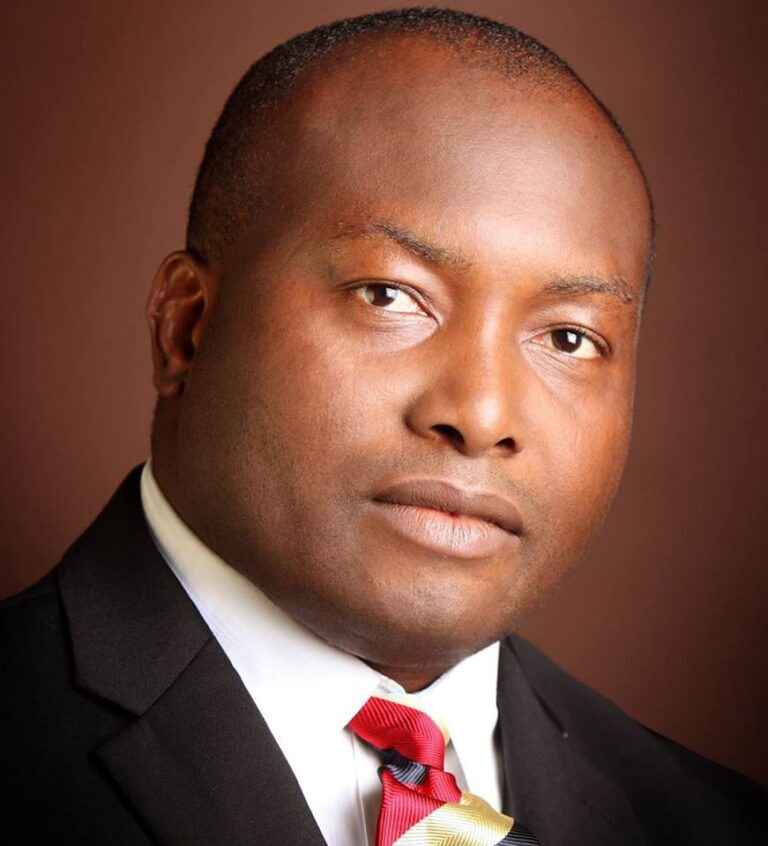
NIGERIAN leaders, including President Bola Tinubu and the Senate, have expressed their condolences to the family of the late Ifeanyi Ubah, a serving senator before his passing.

Ubah’s death was reported Saturday morning. He was 52. 

The late businessman and politician was elected as senator in 2019 on the Young Progressive Party (YPP) platform and was re-elected on the same platform in 2023. 

Ubah defected to the All Progressives Congress (APC) earlier this year and had expressed interest in running for the governorship of Anambra State in next year’s election, positioning himself as a leading frontrunner. 

In a statement issued by the Special Adviser to the President on Media and Publicity, Ajuri Ngelale, Tinubu commiserated with the deceased relations and the people of Anambra State.

He prayed for the repose of the departed lawmaker’s soul, and strength and comfort for his family.

In the same vein, the Nigerian Senate mourned Ubah’s death.

A statement issued by the Senate spokesperson, Yemi Adaramodu noted that Ubah was an exemplary leader and an advocate for his constituents.

“Before his illustrious career in public service, Senator Ifeanyi Ubah distinguished himself as a prominent businessman and philanthropist. As the founder and CEO of Capital Oil and Gas Industries Limited, he made substantial contributions to Nigeria’s energy sector, fostering economic growth and creating numerous job opportunities.

“Through the Ifeanyi Ubah Foundation, his philanthropic endeavours provided scholarships, healthcare, and vital support to the less-privileged, profoundly impacting countless lives,” the Senate said.

Colleagues, and friends, mourn

The former Abia State governor, Orji Kalu, ,extolled Ubah and described him as a patriotic and detribalised Nigerian with a passion for a prosperous and better Nigeria.

Kalu, a serving senator, further urged the deceased’s family and associates to sustain his good deeds, noting that the late senator contributed immensely to the economic, social, and political development of Nigeria.

“His invaluable contributions to the growth and development of Nigeria are worthy of commendation and emulation. The late business mogul, no doubt, will forever be remembered for his good legacies,” Kalu added. 

Also, a chieftain of Ohanaeze Ndigbo, a  socio-cultural organisation in Nigeria’s South-East region, where the late senator hailed from, , Okechukwu lsiguzoro, expressed shock over Ubah’s death.

Reacting to Ubah’s death, ilsiguzoro, in a chat with Daily Post, said it had been a “harvest of deaths” in the South-East.

“It is with a huge shock that we received the sad news, an unfortunate incident concerning the demise of one of the business moguls in the South-East, a High Chief from Nnewi, Senator Ifeanyi Ubah.’

Also reacting to Ubah’s passing, the Deputy Speaker of the House of Representatives, Benjamin Okezie Kalu expressed sadness over the loss.

He described the late lawmaker as a patriot and philanthropist who made remarkable strides in the parliament, media, sports and petroleum industry.

$2.08bn petroleum imports from Malta, others weakening naira, economists say

NIGERIA’S reliance on petroleum importation from Malta and several other European countries is a major cause for Nigeria’s weaker currency which has seen the naira continuously perform badly against other foreign currencies due to the search for dollars for fuel imports.

To meet the demands of over 200 million of its population, Nigeria relies largely on Belgium, Netherlands, Singapore, and Malta for its fuel import despite being the leading oil-producing nation in Africa, according to Statista.

This development, analysts said, has been a major reason the value of the naira is depreciating against the dollar.

“If the Dangote Refinery starts to work, it means there will be no business or Malta. Malta is the reason why your naira is weak,” a development economist, Kalu Aja, said in his official X account while reacting to the problems with fuel import.

Findings have shown that petroleum importation has been a major foreign exchange transaction in Nigeria and is denying the availability of foreign exchange for importers.

“This government has not shown it will be accountable and transparent. Since the face-off between Dangote and the regulators, have you heard any official response from the Presidency or even the Federal Ministry of Petroleum? What does that tell you? They know that the importation is draining the foreign exchange for the manufacturers and weakening the naira, yet, they are not speaking up,” an economist and consultant to the British Department for International Development (DFID), Celestine Okeke, told The ICIR

To worsen this challenge, a recent statement by the chairman of Dangote Industries Limited, Aliko Dangote, that some officials of the Nigerian National Petroleum Company Limited (NNPCL), oil traders, and terminals opened a blending plant in Malta, had sparked controversy.

Dangote had said, “Some of the terminals, some of the NNPC people, and some traders have opened a blending plant somewhere off Malta. We all know these areas. We know what they are doing.”

A reaction from the group chief executive officer of NNPCL, Mele Kyari, faulted the allegations, saying he did not own a blending plant in Malta.

An oil blending plant is a facility that has no refining capability but is either capable of producing finished motor gasoline through mechanical blending or blending oxygenates with motor gasoline.

Recent developments show that the African richest man has been speaking up following the seeming frustration faced in bringing his 650,000 oil refinery to operate at maximum capacity.

The management of the Dangote Group, NNPCL, and the regulators in the Nigerian oil industry have been at loggerheads over the supply of crude products and the monopoly of the market.

While Dangote Group accused the regulators of frustrating its effort to get crude oil to start petroleum products production, the regulators said the refinery  churn out inferior petroleum products.

Following the Malta imports allegation, social media became agog with information that Nigeria saw substantial growth in its fuel imports from Malta, totaling $2.25 billion over the past nine years, signifying the robust trade relations between Nigeria and Malta.

In the report credited to Trade Map, an online database, Nigeria’s imports of petroleum oils obtained from bituminous minerals saw a remarkable increase, reaching $2.8 billion in 2023, representing a 342 per cent rise from $47.5 million in 2013.

However, an accurate percentage calculation will arrive at 5,794.74 per cent and not 342 per cent.

The report said that the annual import values were $59.98 million in 2014, $117.01 million in 2015, and $13.32 million in 2016,  stating that this upward trend in trade underscored the growing demand for fuel and the effective trade channels established between the two countries.

Again, this could not indicate an upward movement in import values between 2014 to 2016 but rather a fluctuation in trade activities.

It added that Nigeria importing $2.08 billion worth of fuel in 2023 showed trade relations with Malta have proven to be beneficial. However, the figure contradicts the $2.8 billion earlier stated as the total petroleum import from Malta in 2023.

A check at the Trade Map data indicates that Nigeria’s imports stood at $2,082,893 in 2023 for petroleum oils and oils obtained from bituminous minerals excluding crude from Malta in 2023.

The Trade Map data credited this figure to data from the Nigerian National Bureau of Statistics (NBS).

What the NBS report shows

In 2023, Nigeria’s annual total trade stood at N71.88 trillion of which imports amounted to N35.92 trillion and exports N35.96 trillion, representing a trade surplus of N400 billion, according to the NBS’ Foreign Trade in Goods Statistic (Q4 2023).

Of the N35.92 trillion total imports, mineral products (where refined petroleum products are included) amounted to N12.19 trillion, representing 33.94 per cent of the total imports.

According to NBS, Malta falls within the top ten import destination countries, falling in the eighth position below Singapore, China, Belgium, India, and the United States in the top five positions.

It further revealed that Malta’s share of Nigeria’s total imports was at 2.07 per cent with total imports at N291.979 billion Q4 2023.

In the third quarter of 2023, Malta was in the fourth position with a 6.64 per cent share or N561.37 billion share of Nigeria’s imports, coming below China, Belgium, and India. In the second quarter, Malta imported products worth N181.55 billion, representing a 3.17 per cent share of its total imports to Nigeria and falling in the sixth position.

In the first quarter of 2023, the NBS did not report Malta as among the import destinations for Nigeria.

It then shows that imports from Malta stood at N1.034 trillion in 2023 according to NBS’ disclosure. While the NBS did not state the exchange rate at which it converted the dollar to the naira, however, an annual average rate conversion shows the naira to dollar rate stood at N638.7 in 2023.

Additional data may be required from the Nigerian Customs Service, NNPCL, Nigerian Midstream and Downstream Petroleum Regulatory Authority (NMDPRA), Central Bank of Nigeria (CBN), Nigerian Ports Authority (NPA), and various authorities in the oil sector to nip in the bud what Nigeria imports from Malta and the individuals or companies behind the importation.

Imports strain foreign reserves

Vice-President Kashim Shettima revealed recently that Nigeria spends $25 billion per annum on the importation of petroleum products.

Nigeria has been a long-time importer of petroleum products as its four refineries have been comatose over the decades, putting a strain on its foreign reserves.

According to CBN’s outlook, foreign reserves, which stood at $33.09 billion in 2023 are expected to dip in 2024 on the assumption of continued payments of outstanding foreign exchange forward obligations, matured foreign exchange swaps, and debt service.

Protest: I can participate in hunger protest from anywhere, Sowore replies presidency

0

AS tension mounts over the proposed mass protest by Nigerians against President Bola Tinubu’s administration over ravaging economic hardship across the country, the Special Adviser to the President on Information and Strategy, Bayo Onanuga, has criticised a former presidial aspirant and one of the protest conveners, Omoyele Sowore, for his absence in Nigeria. 

Sowore had granted an online interview on News Central Television from New Jersey, the United States of America, three days ago, where he was questioned on his availability for the protest. 

While he did not directly respond to the question, Onanuga posted on his X account on Saturday, July 27, that “Omoyele Sowore is mobilising the gullible for protest in Nigeria as he sits pretty in his home, with family in New Jersey, United States. Be wise, the easily excitable Nigerians!”

However, The ICIR reached out to Sowore on the telephone for a reaction to Onanuga’s post.

He said his location during the protest is irrelevant, adding that he could participate in the demonstration from anywhere.

The renowned activist and good governance crusader said that he was in the US, stressing that his location was irrelevant as far as the planned protest is concerned.

“I have participated in 200 protests between 1989 and now and in many of them I was not physically in the country. Therefore they are just dwelling on irrelevance to incite the people against the protest,” Sowore said.

According to him, in 2012, he mobilised the ‘Occupy Nigeria’ protest from New York.

While insisting there was no going back on the planned protest, Sowore said: “The government is the one inciting the protest through hunger, unemployment, insecurity, corruption and poverty.”

He also dismissed the threats by security agencies, including the military, police and DSS, saying: “How many are they compared to the people? We are their employers.”

The ICIR reported some Nigerians have been mobilising for nationwide protests scheduled for the first week of August.

The posts and tweets on the protest carry different hashtags, ranging from #RevolutionNow, #EndBadGovernanceInNigeria, #TakeItBack, #DaysofRage and #TinubuMustGo.

State actors, including the military have warned against the protest.

The ICIR reported Tinubu’s closed-door meetings with the traditional rulers, and governors

Meanwhile, the former candidate of the New Nigeria Peoples Party (NNPP) in the 2023 presidential election, Rabi’u Musa Kwankwaso, cautioned Nigerians against the protest, urging the citizens to prepare to vote out the government in the next election.

Nigeria falls by 13 points on Henley Passport Index in 10 years

0

BETWEEN 2014 and 2024, the value of Nigeria’s passport significantly declined by 13 points, new data from the Henley Passport Index shows. 

The Henley Passport Index is the original, authoritative ranking of all the world’s passports according to the number of destinations their holders can access without a prior visa. 

The recent report highlighted the changes experienced in several countries over the past decade. In 2014, Nigeria was ranked 79th on the Henley Passport Index, while in 2024, the country has slipped to 92nd position.

The decline indicates that Nigerian passport holders now have fewer visa-free or visa-on-arrival travel options, with only 45 countries accessible without a visa or with visa-on-arrival arrangements. 

The implications for Nigerian travellers mean that there would be increased visa requirements, which can affect business travel, tourism, and even family visits and limit the opportunities for Nigerians to engage internationally.

Some destinations Nigerians can still travel to without a visa include Ghana, Benin, Guinea, Kenya, Liberia, Maldives (visa on arrival), Niger and Togo.

Just like Nigeria, the ranking also showed that countries like Venezuela, Yemen, Syria, Bangladesh and Senegal’s passports ranking also fell in the last decade. 

Venezuela ranked 25th in 2014 and dropped to 42nd in 2024 with access to 124 countries.

For Yemen, its passport, ranked 85th in 2014, plummeted and now stands at the 100th position with access to 33 countries. 

Also, Syria’s ranking fell from 89th in 2014 to 102nd in 2024 with access to 28 countries. This might be connected to the ongoing civil war which had led to increased travel restrictions for its residents.

Bangladesh moved from the 86th position in 2014 to 97th in 2024 with access to 40 countries, while Senegal’s passport ranking has dropped from 71st in 2014 to 82nd in 2024 with access to 58 countries. 

Meanwhile, at the top of the list is Singapore, with its citizens enjoying access to 195 travel destinations out of 227 around the world visa-free. It is followed by France, Germany, Italy, Japan, and Spain, each with visa-free access to 192 destinations.

Recall that Nigerians have had several confrontations with countries like Seychelles and the United Arab Emirates on visa bans.

The ICIR reported how Nigerians abroad are exposed to difficult, inconsistent passport application process.

Nigerian senator, businessman Ifeanyi Ubah, is dead

0

NIGERIAN senator and businessman Ifeanyi Ubah is dead.

The late lawmaker, aged 52, represented Anambra South, and was said to have passed on in London.

Details of his death were still sketchy as of the time of filing of this report.

Ubah, through his campaign council, had recently donated N71 million to the All Progressives Congress (APC) in Anambra State, bolstering the party’s presence and strength in the South-East region.

A statement by his special adviser, media and strategic communications, Kamen Chuks Ogbonna, indicated that the donation was part of efforts to redeem the senator’s pledge towards enhancing the party’s effectiveness In the state.

His political career

In 2014, Ifeanyi Ubah lost at the 2014 Anambra State gubernatorial election under the Labour Party platform.

He was, however, elected as Senator in 2019 on the Young Progressive Party (YPP) platform and was re-elected in 2023. 

Ubah later defected to the All Progressives Congress (APC) earlier this year, and has expressed interest in running for the governorship of Anambra State in next year’s election, positioning himself as a leading frontrunner. 

The deceased had previously contested the 2021 Anambra governorship election, coming fourth in a race won by the incumbent Governor Chukwuma Soludo of the All Progressives Grand Alliance (APGA).

In September 2022, Ubah narrowly escaped assassination when gunmen attacked his convoy on the way to Nnewi in Enugwu-Ukwu, Anambra State. 

His attackers opened fire on the convoy, which resulted in the deaths of at least five people, including two policemen and his aides, while he survived the attack, thanks to his bulletproof vehicle.

Personal life

Ubah was born in Otolo, Nnewi on the 3rd of September, 1971 to Alphonsus Ubah and Patty Ubah. He was the first son of seven children in his family.

Ubah was married to Uchenna, a Business Administration graduate from Ahmadu Bello University, Zaria. The couple had five children.

The deceased attended Okongwu Memorial Grammar School, Nnewi, Anambra State, before heading to Premier Academy, Lugbe, Abuja, where he dropped out because his parents couldn’t afford his academic and material needs.

Ubah later bagged a degree in Law from Baze University, Abuja.

Business Life

He was an entrepreneur and businessman who served as the CEO of Capital Oil (CCO), a company he founded in 2001, until his death. 

Ubah also established a foundation named after himself, the Ifeanyi Ubah Foundation.

He founded the Ifeanyi Ubah Football Club in the Nigeria Premier Football League (NPFL), previously known as Gabros International Football Club.

The late lawmaker started his business as an exporter of motor tyres and parts in West African nations like Ghana, Sierra Leone, Liberia, and the Democratic Republic of the Congo before extending to Belgium and the UK.

In, 2015, he founded the Authority Newspaper, with the platform covering both domestic and foreign news.

Corruption allegations

In 2019, a Federal High Court sitting in Abuja removed Ubah from the Senate after founding him of certificate forgery. The lawsuit was filed by Obinna Uzoh, the runner-up of the election that brought the accused to the Senate.

Uzoh was a member of the Peoples Democratic Party (PDP)

 However, the Court of Appeal voided the judgment that sacked Ubah as the lawmaker representing Anambra South Senatorial District.

The court, in a unanimous decision by a three-man panel of justices, led by Stephen Adah, held the ruling was based on incompetent court processes.

Similarly, the Federal High Court in Lagos struck out a charge brought by the Asset Management Corporation of Nigeria (AMCON) against Ubah and his company, Capital Oil and Gas Limited, over an alleged N135 billion debt.

The charge was struck out just six days after  Ubah announced his defection from the Young Progressive Party to the ruling APC. 

Ubah said his defection was due to the insurmountable disagreements within his party – the YPP.

Court jails 125 Boko Haram terrorists, financiers

Following a mass trial held for two days in Kainji, Niger State, the Federal Government has disclosed that 125 members of the Boko Haram terrorist group, including their financiers, have been convicted and found guilty of the charges brought against them.

The Attorney-General of the Federation (AGF) and Minister of Justice, Lateef Fagbemi, disclosed this in a statement on Friday, July 27.

Signed by the Special Adviser to the President on Communication & Publicity, office of the AGF, Kamarudeen Ogundele, the statement noted that the convicts were tried on charges bordering on terrorism, terrorism financing, and rendering material support, among others.

The trials were held under the Giwa Project Kanji Phase Five, between Tuesday and Wednesday, before five Federal High Court judges led by Binta Nyako. Other Justices are Joyce Abdulmalik, Emeka Nwite, Obiora Egwuatu, and Mobolaji Olajuwon.

The statement read in the part, “The Attorney-General of the Federation and Minister of Justice, Prince Lateef Fagbemi (SAN), is superintending over the trial in conjunction with the Office of the National Security Adviser.

“The prosecution team was led by the Director of Public Prosecution of the Federation, Mohammed Babadoko Abubakar, while the defence team was led by Mr Abdulfatai Bakre from the Legal Aids Council.”

“Others in attendance as international observers are the National Human Rights Commission, the Nigerian Bar Association, and the United Nations Office on Drugs and Crimes among others. The courts convicted 85 persons for terrorism financing, 22 for ICC-related crimes while others were convicted for terrorism. They were sentenced to various jail terms.”

It added that 400 defendants who had completed their sentence were moved to Operation Safe Corridor in Gombe State for rehabilitation, deradicalisation and subsequent reintegration.


READ ALSO:


Recall that in March 2024, the Nigeria Sanctions Committee (NSC) listed some individuals and Bureau de Change (BDCs) designated as terrorism financiers. The NSC document showed 21 individuals and six entities tagged as financiers of terrorism.

For more than a decade, the Boko Haram group been known for its brutality mostly in the Northern part of the country, killing thousands of people in multiple attacks. The United Nations documented that millions of Nigerians have been displaced since the conflict started in 2010.

Aside from killings and destruction of properties, the group have been notorious for the kidnapping of people, including over 1,000 school children, as documented by The ICIR. 

Naira hits worst level in four months at N1,609.29 after CBN rate hike

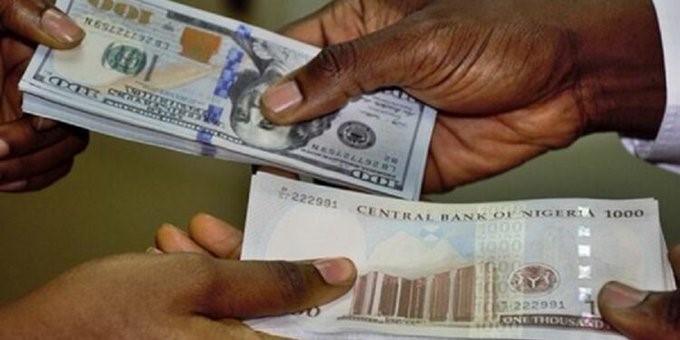
THE naira depreciated to its worst level in four months to N1,609.29 against the dollar on Friday, July 26, a few days after the Central Bank of Nigeria (CBN) raised the benchmark interest rate.

At its two-day monetary policy committee (MPC) meeting on Tuesday, July 23, the CBN tightened the monetary policy pool and hiked the benchmark interest rate to 26.75 per cent from 26.25 per cent in May.

This is the fourth consecutive time the apex bank has raised the monetary policy rate to rein in inflation which surged to 34.19 per cent in June.

The rate hike has failed to lessen inflationary pressure which inadvertently is affecting Nigeria’s currency market, with the naira becoming a weaker store of value by the day.

For instance, at the official Nigerian Autonomous Foreign Exchange Market (NAFEM) window, the naira closed at closing at N1,609.29 to the dollar on Friday, July 26 compared to the N1,500.32 it closed on Monday, July 22 when the apex bank commenced its MPC meeting.

On Tuesday, July 23 when it ended its meeting, the naira worsened to N1,548.76 to the dollar, to N1,586.71 on Wednesday, July 24, and to N1,603.80 on Thursday, July 25.

A check by The ICIR shows that the last time the dollar traded above N1,600 to the dollar was on March 15 when the naira depreciation against the dollar at N1,602.75.

The depreciation of the naira to a four-month low came after the CBN announced its intention to defend the naira over the next few weeks.

The apex bank had on Friday, July 19, said it had commenced a regular intervention in the country’s foreign exchange market to quell the large demand pressure from corporate entities and the expected seasonal uptick during the summer period.

“Recent movements in the forex market are largely driven by demand pressure from corporate entities and the expected seasonal uptick during the summer period.

“Over the next few weeks, the CBN will continue to support various segments of the official markets with liquidity,” the apex bank said.

According to the CBN, its intervention in different segments of the market is in line with its price stability mandate and commitment to ensuring a well-functioning and liquid market.

In the last three weeks, the apex bank had sold $229.17 million to authorised dealer banks between an exchange rate range of N1,480 above to a dollar.

It also sold $20,000 to each of the eligible Bureaux De Change operators to avert market distortion in the Nigerian foreign exchange market.

Experts believe that not meeting its crude oil production quota remains a major determining factor for the shortage of foreign exchange in the country.

The federal government needs to pay closer attention to Nigeria’s dwindling oil production to grow support for the foreign exchange market, a Partner and Head of Africa Tax at KPMG, Wale Ajayi, said.

“We are not meeting up with our Organisation of Oil Producing Countries (OPEC) quota and it’s not good for our foreign exchange market and budget funding. We have 1.7 million barrels per day in the budget and we are not doing up to 1.5 million barrels per day production,” he said.

The Dangote Refinery, projected to earn foreign exchange savings of between $25 billion and $30 billion yearly for the country, has struggled to start production of petroleum products due to regulatory bottlenecks.

FG threatens to stop British Airways from Lagos Airport

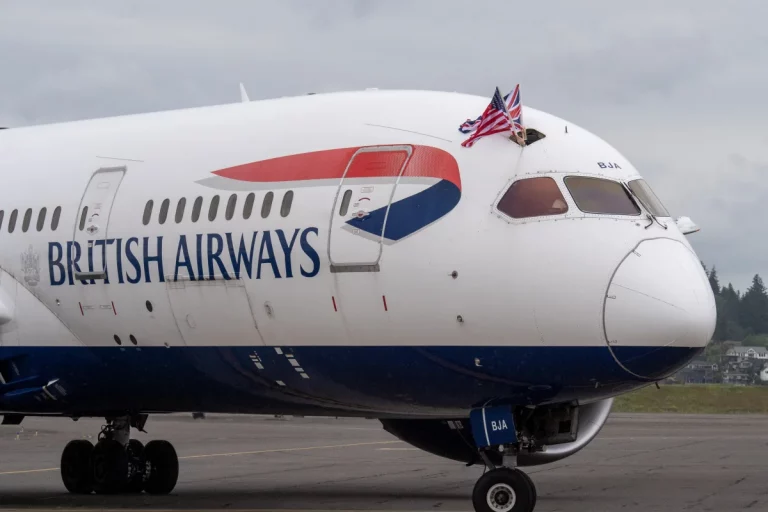
THE Minister of Aviation and Aerospace Development, Festus Keyamo, has threatened that the federal government might restrict the United Kingdom’s British Airways from landing at Nigeria’s Murtala Muhammed International Airport (MMIA), Lagos. 

This is due to a slot issue in the UK that has restricted Nigeria’s airline, Air Peace, from flying to Heathrow, the UK’s number one airport in London. 

Air Peace has flown its passengers to Gatwick Airport, London, since it began its flight operation in March 2024. Since it commenced operations, Air Peace has had conflicts with the UK authorities in a bid to get a slot at Heathrow.

Keyamo said that the ministry had written to the UK Civil Aviation Authority (CAA) to allow Air Peace to fly to Heathrow in line with the reciprocity principle in the Bilateral Air Service Agreement (BASA).

Speaking at the 28th Annual Conference of the League of Airports and Aviation Correspondents (LAAC) in Lagos, Keyamo argued that it was unjust to grant British Airways unrestricted access to MMIA, Nigeria’s busiest airport, while Nigerian airlines are not afforded the same privilege in the UK, contrary to the principles of the BASA

He noted that the ministry was awaiting a response from the ministry in the UK adding that insisted that countries must abide by the BASA arrangement that Nigeria reached with their governments

The minister stressed that the failure to do this might lead to a negative reaction from the Nigerian government.

He said, “We have already written to the United Kingdom to give Nigerian carriers, especially Air Peace Heathrow Airport, which is a tier one airport, just as we have British Airways, using our Lagos Airport. We may as well give BA Ilorin to operate to. When we asked for Heathrow Airport, you’re telling us to go to a slot committee. Who does that? Air Peace, I can tell you is on its way to Heathrow away from Gatwick.

“The local operators are struggling to cover their routes locally, not to talk of our international routes; Air France is coming here 10 times a week, we are not going to Paris, Lufthansa is coming here, we are not going to Frankfurt, Delta and United from America are all coming here, but we are not reciprocating. Even, though South African Airways is coming here, we are not going there.

“We only managed to have Air Peace in London and to Gatwick, but we are pushing for them to take us to Heathrow. You can’t tell us you have a slot committee. Your airport operator should know that you have an existing relationship and they should respect it. For connectivity, people prefer Heathrow. That is an airport you can have an airline to codeshare with so that there can be connectivity.”

The ICIR reported that the Nigerian government announced that local airlines would soon launch direct flights to America and South America. This would be the first-ever direct flight between Nigeria and South America.

The efforts are aimed at increasing Nigerian presence in global airspace, making travel more seamless and boosting the nation’s economy.