Home Blog Page 536

Planned protest: Tinubu meets traditional leaders, after meeting with governors

0

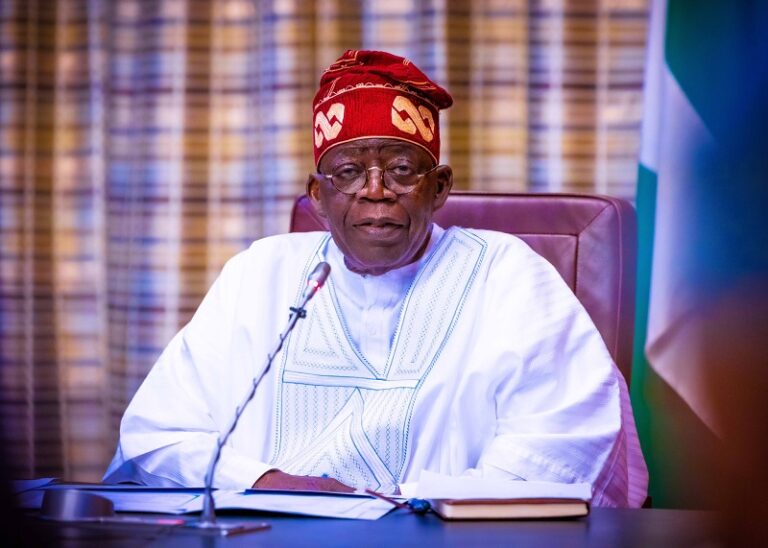
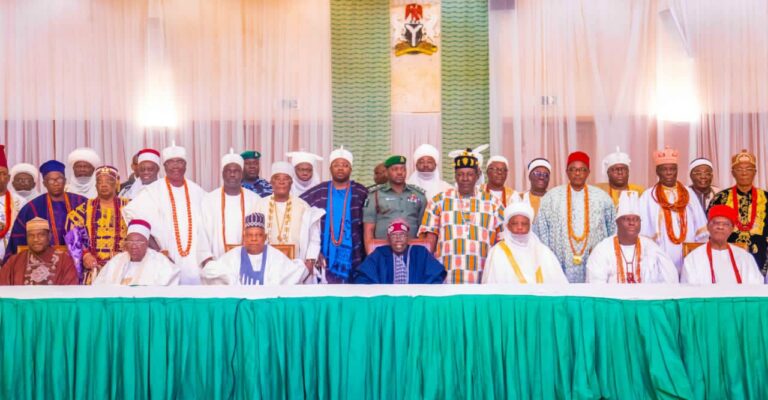
PRESIDENT Bola Tinubu is currently holding a closed door meeting with traditional rulers at the Presidential Villa in Abuja.

The meeting began at about 2:30 pm when the President arrived at the Council Chamber.

The delegation of royal fathers is led by the Sultan of Sokoto, Muhammad Sa’ad Abubakar III, and the Ooni of Ife, Oba Adeyeye Enitan Ogunwusi.

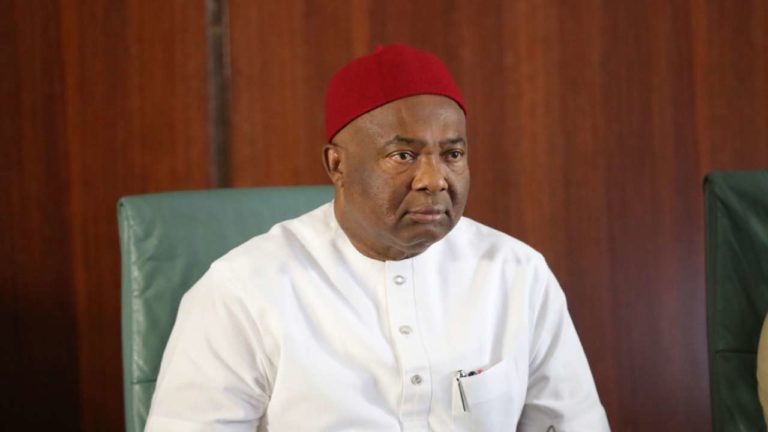
Also at the meeting are Kwara State governor and chairman of the Nigeria Governors’ Forum, Abdulrazaq Abdulrahman, and Hope Uzodinma of Imo State, who doubles as chairman of the Progressives Governors Foru

While the agenda for meeting remains undisclosed, it may not be unconnected with the planned nationwide protests scheduled for the first week of August against economic hardship ravaging the nation.

This latest development came some minutes after Tinubu and All Progressives Congress (APC) Governors also held a closed door meeting at the Presidential Villa.

According to a report by Daily Trust, the meeting held was also unconnected with efforts by the government to stop the planned nationwide protest.

The ICIR earliier reported how the governors under umbrella of  Progressives Governors Forum (PGF), pleaded with Nigerians to shun the nationwide protest 

At a closed-door meeting with members of the forum on Wednesday, July 25, the group’s chairman and governor Uzodimma, admitted that the policies of Tinubu’s government had caused pains and economic hardship for the citizens.

He expressed confidence that the issues would be resolved by the government.

“We have looked at the various policies of this government, and we acknowledge a teething problem associated with the initial stage of the programme and agree that because we are very hopeful, it is also the solution to the current problem and economic hardship that has befallen our country.

“In a very short time, we are confident that the situation will be restored. Prosperity would come at the end of the day. We use this opportunity to advise our young boys and girls, young men and women, to desist from being instigated into causing crisis or chaos in the country, he said.

Meanwhile, he blamed opposition parties for instigating attacks on the government and harped on patriotism among citizens.

The ICIR reported that some Nigerians, along with a group led by former presidential candidate, Omoyele Sowore, have been mobilising to start nationwide protests in the first week of August.

Reacting to the plans earlier, Tinubu had asked Nigerians to shelve the protests.

He called on the citizens to await his administration’s response to all their demands.

The ICIR reported that the Nigerian military joined other state actors to threaten the protest organisers, warning that the Armed Forces would not stand by and allow anarchy to befall the nation.

APC governors urge Nigerians to shun protest

0

THE Progressives Governors Forum (PGF) has pleaded with Nigerians to shun the nationwide protest against hardship slated for the first week of August.

At a closed-door meeting with members of the forum on Wednesday, July 25, the group’s chairman and Governor of Imo State, Hope Uzodimma, admitted that the policies of President Bola Tinubu’s government had caused pains and economic hardship for the citizens.

He expressed confidence that the issues would be resolved by the government.

“We have looked at the various policies of this government, and we acknowledge a teething problem associated with the initial stage of the programme and agree that because we are very hopeful, it is also the solution to the current problem and economic hardship that has befallen our country.

“In a very short time, we are confident that the situation will be restored. Prosperity would come at the end of the day. We use this opportunity to advise our young boys and girls, young men and women, to desist from being instigated into causing crisis or chaos in the country, he said.

He blamed opposition parties for instigating attacks on Tinubu’s government and harped on patriotism among citizens.

“Already, Nigerians have suffered enough. The global economic recession, insecurity in Nigeria, political tension occasioned by instigations and campaigns of calumny by the opposition party, and social media attacks on various policies of the government.

“We want to advise for the interest of the country and a show of patriotism. Our citizens must take ownership of this country. We have no other country we can call our own. We took the opportunity also to agree to explain to the larger Nigerians that this government is doing well, he added.

Uzodinma further said that the body was committed to the country’s unity and doing whatever would make Nigerians live better lives.

He however stated that the governors were not aware of the motive behind the planned protest, and it was unwise for anyone or group to protest under whatever guise.

The ICIR reports that some Nigerians, along with a group led by former presidential candidate, Omoyele Sowore, have been mobilising to start nationwide protests in the first week of August.

Reacting to the plans, President, Bola Tinubu asked Nigerians to shelve the protests.

He called on the citizens to await his administration’s response to all their demands.

The ICIR reported that the Nigerian military joined other state actors to threaten the protest organisers, warning that the Armed Forces would not stand by and allow anarchy to befall the nation.

Eni secures regulator’s approval to sell 100% of Nigerian unit to Oando Plc

0

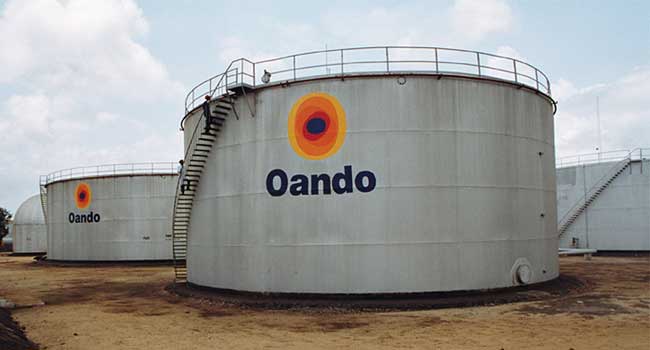
THE Nigerian government has approved the 100 per cent divestment of Italian firm Eni onshore Nigerian assets to Oando Plc, an Indigenous energy solutions provider.

Oando disclosed this to the investing public in a statement signed by its chief compliance officer and company secretary, Ayotola Jagun, on Thursday, July 25.

It said Eni had received formal consent from the Nigerian Upstream Petroleum Regulatory Commission (NUPRC) for the sale of 100 per cent of the shares of Nigerian Agip Oil Company (NAOC) to Oando.

It noted that the acquisition followed Eni’s receipt of consent, adding that both parties could proceed with the completion of the transaction.

“We are delighted that Eni has received the government’s approval to proceed with the completion of this strategic transaction.

“We extend our gratitude to the Honourable Minister of Petroleum Resources and the Chief Executive Officer of the Nigerian Upstream Petroleum Regulatory Commission (NUPRC) for their concerted efforts in ensuring the execution of the grant of consent under the novel and robust divestment framework established by the recently enacted Petroleum Industry Act,” the group chief executive of Oando, Wale Tinubu, said.

Eni had in September 2023 hinted of its plans to divest its Nigerian onshore assets to Oando following the recent operating environment faced by many companies.

The ICIR reported that the completion of the transaction was to be subject to ministerial consent and other required regulatory approvals.

The transaction, in which the acquisition cost was not disclosed, will increase Oando’s current participating interests in OMLs [Oil Mining Lease] 60, 61, 62, and 63 from 20 per cent to 40 per cent.

However, a report by Reuters, quoting an investment bank, pegged the deal at more than $500 million.

A formal chairman of the Major Oil Marketers Association of Nigeria (MOMAN), Adetunji Oyebanji, had told The ICIR that international oil companies’ exit and divestment was hurting Nigeria’s oil production.

Not less than 15 multinational companies have either divested or partially closed operations in Nigeria in the last three years.

In a report, the ICIR chronicled some of the companies that were left under harsh economic realities in the last year of President Bola Tinubu’s administration.

Trump: Inside US presidents who faced assassinations, survived attempts

ON Saturday, July 13, the former President of the United States (US) and Republican candidate in the upcoming elections, Donald Trump, escaped an assassination attempt.

Trump was shot in his right ear during a political rally in Pennsylvania. He was rushed off stage by the Secret Service after the shooting.

The FBI later identified the shooter as Thomas Matthew Crooks, a 20-year-old from Pennsylvania after being killed by law enforcement.

The incident led to the death of two persons – the gunman and an attendee, Corey Comperatore, leaving Trump and two other spectators wounded.

Timelines of assassination plots

Trump is not the only ex-president or presidential candidate to have faced an attempted assassination. In the history of America’s presidency, about ten presidents and presidential candidates have either been assassinated or experienced an attempt.

Abraham Lincoln

Lincoln was the 16th president of America and the first to be assassinated. He was shot in the back of his head on April 16, 1865, by John Wilkes Booth during a special performance of the comedy “Our American Cousin” which he attended with his wife, Mary Todd Lincoln, at Ford’s Theatre in Washington.

After the incident, he was rushed to a house across the street from the theatre for medical treatment but died the following morning. He was succeeded by the vice president, Andrew Johnson. However, his killer, Booth was shot and killed on April 26, 1865, after he was found hiding in a barn near Bowling Green, Virginia.

James Garfield

James Garfield was the second US president to be assassinated. He was the US’ 20th president and was shot four months after taking the oath of office on July 2, 1881, while walking through a train station in Washington to catch a train to New England.

Shot by Charles Guiteau, Garfield was laid at the White House for several weeks. However, he died in September holding office for just six months. Guiteau was eventually caught by the police and executed in 1882 while Chester Arthur, the vice, took over as the 21st president of the United States.

William McKinley

McKinley was the 25th president of the United States. He was shot twice in his chest while shaking hands with people passing through a receiving line after giving a speech in Buffalo, New York, on September 6, 1901. He died on September 14 of the same year, barely six months after the beginning of his second term in office. He was succeeded by his vice, Theodore Roosevelt.

A 28-year-old Detroit resident, Leon F. Czolgosz admitted to the shooting and was found guilty at trial. He was executed in an electric chair on October 29, 1901.

Franklin D. Roosevelt

Roosevelt was the 32nd president and longest-serving U.S. president. He is the only president to have served more than two terms. As the president-elect in February 1933, Roosevelt had just given a speech in Miami Guiseppe when Zangara fired five shots at him but missed his target and instead killed the Mayor of Chicago, Anton Cermark. Zangara was however convicted and sentenced to death.

Harry S. Truman

Harry Truman, the 33rd president escaped an attempted assassination in November 1950 after two gunmen broke into Blair House, across the street from the White House. The incident led to the death of a White House policeman and one of the assailants during an exchange of gunfire, leaving two other White House policemen wounded.

The remaining assailant, Oscar Callazo was arrested and sentenced to death. In 1952, Truman commuted the sentence to life in prison. He was however released from prison in 1979 by President Jimmy Carter.

John F. Kennedy

The 35th president, John Kennedy, was shot by a hidden assassin in November 1963. He was rushed to Parkland Memorial Hospital where he died.

He was succeeded by Vice President Lyndon B. Johnson, who was sworn into office in a conference room aboard Air Force One, the only president to take the oath of office on an aeroplane.

Gerald Ford

The 38th US president, Gerald Ford faced two assassination attempts in 1975 but was not hurt in any of the incidents.

On the first attempt, Ford was travelling to Sacramento for a meeting with the governor of California when Lynette “Squeaky” Fromme, a disciple of Charles Manson, squeezed up and through a mob on the street, pulled out a semi-automatic pistol, and aimed it at the president.

But the gun was not fired. Fromme was then sentenced to prison and released in 2009.

Seventeen days after the first attempt, another woman, Sara Jane Moore, fired a shot at Ford while he was outside a hotel in San Francisco.

She missed the first shot and was caught on her second attempt. Moore was sent to prison and released in 2007.

Ronald Reagan 

In March 1981, Reagan was shot by John Hinckley Jr. after delivering a speech in Washington, D.C. He was shot alongside three other people, including his press secretary, James Brady, who was partially paralysed as a result. Reagan eventually recovered from the shooting.

However, after a jury declared Hinckley not guilty by reason of insanity for shooting Reagan, he was taken into custody and placed in a mental health facility.

A judge then declared that he was “no longer a danger to himself or others,” which resulted in his release from court supervision. Reagan was the USA’s 40th president.

George W. Bush

In 2005, George W. Bush, the 43rd president of the United States, was attacked with a hand grenade while he and the Georgian president Mikhail Saakashvili were attending a rally in Tbilisi.

The cloth-wrapped bomb fell about 100 feet from the two men, who were protected by a bulletproof barrier. However, nobody was harmed, and the grenade did not explode.

Presidential candidates that were assassinated/faced attempted assassination
Theodore Roosevelt 

Theodore Roosevelt, who served as the 26th president was shot while he was campaigning to return to the White House in 1912. He was not seriously hurt.

Robert F. Kennedy

In 1968, Robert Kennedy, who was running for the Democratic presidential nomination, was assassinated just after he delivered his victory speech for winning the California primary. The shooting also left five other people injured.

George C. Wallace

In 1972, presidential candidate, George Wallace was shot during a campaign in Maryland while he was seeking the Democratic presidential nomination. He became paralysed from the waist down after the incident.

Arthur Bremer, the person who fired the gun was convicted and sentenced to prison but was released in 2007.

Death toll rises in Lagos building collapse

0

DEATH toll has risen to five at a collapsed building on Wilson Mba Street, Arowojobe Estate Maryland, Lagos State.

The incident happened in the early hours of Thursday, July 25, and three persons were earlier confirmed dead from the tragedy.

According to the Lagos State Emergency Management Authority, (LASEMA) at least five yet-be-identified persons were recovered dead from the debris while five others were rushed to a nearby hospital for treatment.

After the rescue operation, the Permanent Secretary of LASEMA, Femi Oke-Osanyitolu confirmed more casualties at the collapsed building.

A total number of dead is now five, adult males and a total number of five persons rescued and receiving medical treatment,Oke-Osanyitolu stated.

The official said search and rescue operations were swift leading to the rescue of some victims.

According to him, three adult males were recovered dead shortly after the incident, and two male adults were rescued alive. One male adult was trapped under the rubble and but was subsequently rescued alive by the LASEMA and the Lagos State Fire Service.

“All the six men were site workers. They are receiving pre-hospital care on location while SEHMU has been contacted for the remains of the three fatalities,Oke-Osanyitolu stated.

The Nigerian Police Force (NPF), LASEMA, Lagos State Rescue and Fire Service, and other rescue teams were among the emergency organisations on the site of the incident.

The incident occurred around midnight when three terraces under construction unexpectedly fell.

An eyewitness reported that the incident happened at about 3:58 in the morning.

The ICIR reports that there have been several incidents of building collapse in Lagos State. In the last years, the state has recorded no less than 115 incidents of building collapse.

According to LASEMA, between January and July 2022, the state recorded no less than 30 cases of building collapse.

In some cases, there were no fatalities, while in others, scores of people perished in the rubble.

For instance, a 21-storey building located at Gerard Road, Ikoyi, caved in in November 2021 leading to the death of about 45 people.

Also, the collapse of the Lekki Gardens in Ikoyi in 2016 claimed about 35 lives.

Military threatens to foil planned protest

0

THE Nigerian military has joined other state actors to threaten organisers of the nationwide protest scheduled for the first week of August this year.

“The Armed Forces on its part will not stand by and allow anarchy to befall our nation,” a Director of Defence Media Operations, Major General Edward Buba, said at a media briefing in Abuja, on Thursday, July 25.

“While citizens have the right to peaceful protest, they do not have the right to mobilise for anarchy and unleash terror,” Buba added, noting that “The level of violence being envisaged can only be described as a stage for anarchy.”

According to him, organisers of the planned protest intend to replicate the recent protest demonstration in Kenya, which led to deaths, destruction and drastic actions from the country’s president.

The ICIR reported how President William Ruto fired his entire cabinet including the attorney general on Thursday, July 11, after weeks of intense protests by Kenyans against the controversial Finance Bill which the citizens believed would hike taxes and worsen the already harsh economic realities. 

The protest also led to the President refusing to sign the Financial Bill into law, while he also promised to further consult with various stakeholders and political groups to form a broad-based government focused on implementing radical programmes to address debt, increase domestic resources, and expand job opportunities, among others.

Meanwhile, Buba, a military general, said although citizens had a right to express their grievances, the military won’t condone any form of violent gatherings or protests.

He further noted that the military had uncovered plots by unscrupulous elements to hijack the protest and turn it into a violent one by attacking innocent Nigerians and their businesses.

“It is easy to see that the contemporary context of the planned protest is to shadow the outrage in Kenya which I must say is violent and remains unresolved. The level of violence being envisaged can only be described as a stage for anarchy.

“The Armed Forces on its part will not stand by and allow anarchy to befall our nation. This is because we have seen wars and have witnessed anarchy in countries with which we have operated, particularly in times of ECOMOG (Economic Community of West African States Monitoring Group) and during our peacekeeping operations in various countries,” he said.

He stated that some people fantasised war, imagining it to be like watching movies, without understanding the devastation that accompanies it.

This declaration came amid growing hardships across the nation as many Nigerians plan to take to the streets to protest and compel President Tinubu’s government to take drastic measures to alleviate their pains.

The military’s stance aligns with the positions of a few other state actors, including the presidency and the police, who have also issued stern warnings against any protest. 

The Inspector General of Police, on Tuesday, July 23, expressed similar sentiments, warning that “some groups of people, self-appointed crusaders and influencers, have been strategising and mobilising potential protesters to unleash terror in the land under the guise of replicating the recent Kenya protests,” he said.

The ICIR reports that some Nigerians, along with a group led by former presidential candidate, Omoyele Sowore, have been mobilising for nationwide protests scheduled for the first week of August.

The posts and tweets on the protest carry different hashtags, ranging from #RevolutionNow, #EndBadGovernanceInNigeria, #TakeItBack, #DaysofRage and #TinubuMustGo.

Meanwhile, the Nigeria Labour Congress had warned the Nigerian government against engaging in a “war-war” situation with Nigerians by trying to suppress citizens’ fundamental right to protest.

ECOWAS disintegration denting Tinubu’s international image – Experts

THE re-election of President Bola Ahmed Tinubu as the chairman of the Economic Community of West African States (ECOWAS) came with concerns over the seeming disintegration of the regional bloc which diplomatic analysts posited has affected his international and regional political image.

Tinubu was re-elected as its chairman during the  Authority of Heads of States and Government session at the Presidential Villa Abuja.

He was first elected to the position on July 9, 2023.

In his re-election address, Tinubu said: “I have agreed to continue to deliver on this service with the great men and women on this democratic journey to serve our interest and build democratic values on the structure we inherited.”

President Tinubu’s re-election is coming in the wake of biting challenges in the West African sub-region, Africa, and the world.

At the time of his first election, the sub-region was confronted with the overthrow of democratic civilian governments in Mali, Niger, and Burkina Faso.

Parallel meetings of ECOWAS  in Abuja on Tinubu’s re-election day and the Alliance of Sahel States (AES) – comprising Burkina Faso, Mali, and Niger – in Niger’s capital, Niamey, exposed growing discontent within the unstable region, pitting neighbours against each other.

The juntas in Burkina Faso, Mali, and Niger announced their intention to leave ECOWAS in January, amid heightening tensions over the bloc’s position on military takeovers.

Diplomatic analysts insist that in foreign policy, countries’ national interest comes before anything else. Nigeria’s interests and others’ should be guaranteed by member nations, which was why ECOWAS was established.

Some of them argued that not having a grip on the region lowers his foreign diplomacy rating at the international level.

“The Sahel is like the melting point for the current crisis and it doesn’t speak well of the president’s political image and foreign policy internationally, given the size and strength of Nigeria as a political leader in the continent,” a professor of political science and  International Relations and director of strategic partnership at Al-Muhibbah University, Abuja, Muhktar Imam told The ICIR.

“Some of these countries particularly Niger, depend largely on Nigeria. It also depends considerably on the International community for it is survival. That’s why the budget is always on deficits and they require international support for budgetary responsibility,” he added.

According to the professor, what is playing out, with the disintegration of the regional bloc, which started under his watch is not good for Tinubu’s image locally and internationally.

He further said that regardless of international partnership with France and the United States, if he fails to hold a grip on ECOWAS politics, it could make his diplomatic relations shaky at the continental and international level.

He suggested the need for the ECOWAS bloc to understand that diplomacy is the only way out of the crisis for the countries that have left the bloc.

Expressing further concerns, he noted that the junta regime of the seceded countries – Burkina Faso, Niger, and Mali had grievances that have not been met by ECOWAS.

He argued further that the unmet needs could spur their inability to rejoin the regional bloc.

“Some of the grievances haven’t been addressed and they’re going to move ahead in establishing that regional team bloc. It is not surprising that the re-election day for President Tinubu was the day the juntas hoisted their session flag,” he said.

As a consequence of that, ECOWAS unanimously voted to impose a wide range of sanctions on the military rulers of the countries involved as part of efforts to force them to restore democratic rule.

Harvest of coups

On July 26, shortly after President Tinubu was elected as chairman of the regional group, which was just after he was inaugurated as president of Nigeria on May 29, 2023, there was another military coup in Niger in which President Mohamed Bazoum was overthrown.

As chairman of the body, President Tinubu was mandated to lead the ECOWAS in compelling the Niger military rulers, along with the other military regimes in the region, to immediately restore democracy or face further sanctions, including military action.

Within the one year of his stewardship of ECOWAS, the military regimes have not only remained recalcitrant, they have continued their defiance by pulling out of the regional body and forming their alternative group, which they called the Association of Sahel States.

In addition to these immediate challenges in the sub-region, Tinubu, as ECOWAS chairman, was confronted with an increasingly fractured world in which the powerful countries are coming head-to-head in their competition for spheres of influence. These conflicts imply that the post-second world war global order is becoming unhinged as emerging powers stake their claims in the global system.

In all these, Africa has continued to not only miss out but to become a pawn in the geo-strategic game going on in the world. In many instances, it has been demonstrated by these powers that Africa is only relevant to them as a treasure trove of the mineral resources it possesses, and as a market to dump their goods.

It is noticeable that as countries in other regions of the world are consolidating their efforts to face the changing global order, African states are mired deep in one conflict and contradiction after the other. Some African countries are at war internally with political and ethnic factions going at each other and externally against their neighbors.

There is also the perennial factor of economic challenges leading to increasing poverty, environmental degradation, and insecurity along with its related issues of displacement of people and their livelihoods.

For a political economist, Katch Ononuju, President Tinubu needs the association and cooperation from Burkina Faso, Mali, and Niger.

“These countries have built a military alliance and have been able to arrest the insecurity in their shores. I think these are the things he needs to do, being newly re-elected since he’s now the leader of the subregion.

According to Ononuju, the creation of the ministry of livestock is not the way to address the insecurity in the Sahel.

“The crisis in the Sahel is not the first time for Nigeria. We faced a similar crisis in 1974. Let President Tinubu learn from that when Maronite Christians who left Lebanon were quartered in Apapa, Kano when they came as destitutes,” he said.

Punctured cultural,economic ties with Niger 

Also, a security and Economic Analyst, Majeed Dahiru, who spoke to The ICIR on the issue, said Nigeria is almost the greatest loser in the countries’ exit because of the strong economic and cultural ties it has with the Niger Republic.

“For many years, Niger has proven to be a strong ally to Niger. It also has strong cultural and economic ties with Nigeria. Also, a war against insurgency will only be won with strong ally forces working together.

“In terms of hydro-power generation, Niger Republic contributes to the West African power pool. All these should have been considered diplomatically before such sanctions were imposed on these countries.”He suggested that Nigeria should initiate a diplomatic meeting with Niger Republic to address some of these key problems and to be headed by the Nigerian minister of Foreign Affairs.

Diplomatic analysts insist that in foreign policy, countries’ national interest comes before anything else. Nigeria’s interests and others’ interests should be guaranteed by member nations, which was why ECOWAS was established.

The ICIR has earlier reported that Nigeria will likely face more security and economic challenges following the exit of Burkina Faso, Mali, and Niger as the country’s fight against insurgency and dwindling economy bite harder.

The three countries were sanctioned by the ECOWAS for enforcing a military regime and severing diplomatic ties with French colonial masters.

 

Ningi, Ndume: Is the Senate penalising President Tinubu’s critics?

IN what appears like enforcing disciplinary measures on legislative members, the leadership of the Nigerian Senate might be punishing its members who criticise the current administration of President Bola Tinubu. 


In separate interviews, the ‘disciplined’ senators were reported to have raised questions about unclear financial misappropriations within the government; an action that stirred disagreement within the hallowed chambers.

Essentially, it is within the purview of legislators, beyond making and amending the law, to question the processes of how the law and governance carry out implementation. But since the 10th Senate, under the leadership of Senator Godswill Akpabio, was inaugurated in June 2023, this has barely happened. 

On July 18, Ali Ndume,representing Borno South, was stripped of his role as the Chief Whip of the Senate. The decision was taken following a letter from the national chairman of the All Progressive Congress, (APC), Abdullahi Ganduje, and the  secretary, Bashir Ajibola, which was read during the plenary by the senate president. 

The ICIR reported that Ndume had alleged that ex-President Muhammadu Buhari was a more accessible leader, accused Tinubu of being out of touch with some of the issues plaguing the country and had been “fenced off by plutocrats.”

These statements were interpreted by the APC national leaders as “unguarded utterances” that are “against the federal government”, as contained in the letter. 

Although it was not the first time Ndume would be stripped of a position as a legislator serving for 21 years, the recent sack was the second time the lawmaker would be stripped of the position of a principal officer in the 10th Senate.

Before Ndume, there was Ningi

About five months ago, the Senate also suspended Abdul Ningi, representing Bauchi Central Senatorial District, for three months over the allegation that the National Assembly padded the 2024 budget.

Ningi’s allegation was hinged on  some questionable items of the budget amounting to about N3 trillion. Also, there were allegations of some projects carried out by MDAs without a description and some constituency allocations higher than others. 

Although The ICIR extensively analyzed the allegations introspecting into the budget, Ningi’s claim, however, caused an uproar within the plenary session. He was later recalled from suspension in May.

What both senators have in common

Aside from the fact that both senators are from the North, which is not a factor in their suspension, both senators have been long-serving members of the Senate since 2011 and have equally served as lawmakers in the House of Representatives. This means that they understand lawmaking soundly. 

While Ningi is a member of the opposition party, the People’s Democratic Party, Ndume, who is now a member of APC,  was part of the opposition party until 2014.

Until their suspension, both lawmakers were members of the Appropriations Committee during the 10th senate which looks into the financial expenditure of the executives. While Ndume was the vice-chairman, Ningi was a member of the committee.

Both senators granted interviews to the press raising questions on financial misconduct.  

These unexpected similarities suggest that the upper chamber may be trying to protect the executives from any challenging questions as regards the government’s expenditure.

Recently, the Senate approved the extension of the implementation of the capital component for the 2023 Appropriation Act and the 2023 Supplementary Appropriation Act to December 31, 2024.

This approval, according to The ICIR report, raised several concerns over the potential implications of this unconventional approach to budgeting.

A public affairs analyst Akpo Ebireri told The ICIR that the stifling of Senator Ningi and Ndume has become cultural with the Senate, which means that much cannot be expected of the Akpabio-led Senate.

He said, “The effect of this is that we will continue to see a reckless and untamed executive and further weakening of institutions if this course is not reversed.

“This can be changed when citizens take more active steps towards holding legislators to account such as recalling their representatives through constitutional means, physically protesting locally the actions and conduct of their representatives letting them know they’re watching them or voting them out as was seen in the FCT during the 2023 elections,” Ebireri said.

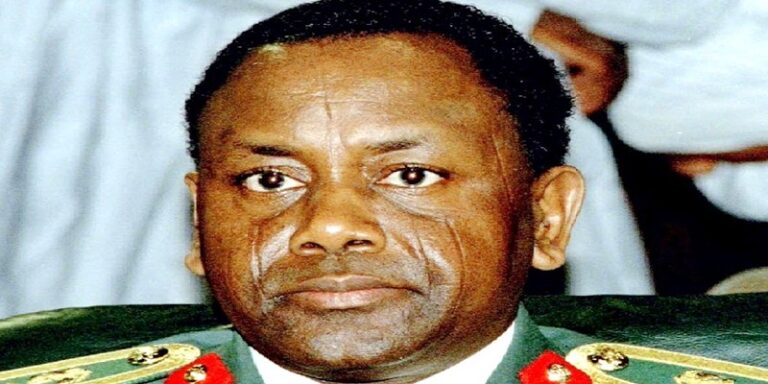
Abacha’s family drags Tinubu, Wike to court over Abuja property

0

THE family of Nigeria’s late Head of State, Sani Abacha, has sued President Bola Tinubu, Minister of the Federal Capital Territory (FCT), Nyesom Wike, and two others before the Court of Appeal in Abuja over the revocation of the late General’s landed property in Abuja.

On behalf of the Abacha family, former first lady Mariam Sani Abacha and her son Mohammed Sani are trying to reclaim property they believe was illegally taken from them.

The Federal Government allegedly withheld ownership of the land in Abuja’s Maitama District and sold it to Salamed Ventures Limited, a private corporation, without informing the Abacha family.

The Abacha family is pleading with the Court of Appeal to nullify the ruling by the Federal High Court, Abuja, which dismissed their lawsuit on the land on May 19, 2024.

The Federal Capital Territory (MFCT) Minister, the Federal Capital Development Authority (FCDA), Nigeria’s President, and Salamed Ventures Limited are listed as the first through fourth respondents in the appeal.

In addition, Maryam Abacha and her son are pleading with the appellate court to use Section 15 of the Court of Appeal Act to assume jurisdiction over their legal dispute as a court of first instance and provide fair treatment for the family.

Reuben Atabo, a senior advocate, filed a notice of appeal on their behalf, citing eleven reasons and two significant reliefs.

They asserted, among others, that Justice Lifu committed a legal error when he decided that their claims in the Federal Capital Territory’s High Court (suit No.: FCT/HC/CV/317/2006) and the Court of Appeal (appeal No.: CA/A/197/2010) were rejected, even though they were rejected for lack of jurisdiction.

The hearing has not been assigned a specific date.

The ICIR reported on Monday that a Federal High Court (FHC) in Abuja dismissed a suit initiated against the Federal Government by the Abacha family.

The Judge, Peter Lifu, dismissed the lawsuit in a ruling on the nine-year-old dispute in which the Abacha family is requesting N500 million in damages and the return of their father’s property.

The family said in its statement of claims that between 2004 and 2005, the FCT under Nasir El-Rufai as the minister ordered it to submit the certificate of occupancy for re-certification.

It claimed that Mohammed Sani Abacha, the second plaintiff, complied with the directive by giving the FCDA the C of O and received an acknowledgement copy for the submission.

In his judgment, the judge agreed with Salamed Ventures that the Abacha property was rightfully revoked due to breaches in the right of occupancy, including the erection of structures without first obtaining building plans.


READ ALSO:


After dismissing the lawsuit, the judge mandated the Abacha family to pay Salamed Ventures N500,000 for legal fees.

The ICIR reported how subsequent governments in Nigeria recovered funds looted by the late Abacha, including the return of about $723 million from Switzerland, and other sums from other countries allegedly running into $5 billion in total.

However, a Federal High Court in Abuja, on July 3, ordered the Nigerian government to disclose how the $5 billion Abacha loot was spent

Investigative Reporters and Editors offers AccessFest 2024

Investigative Reporters and Editors (IRE) is offering and inviting applications to its fellowships and scholarships to attend AccessFest 2024.

AccessFest focuses on expanding IRE’s efforts to provide more accessible training centered on belonging, equity, and inclusion in the newsroom and through better news coverage of inequities in the communities journalists serve.

The conference will be held October 17 to 19, 2024.

Journalists, students and educators of colour are eligible for fellowships to attend a virtual conference.

Successful applicants will receive a one-year IRE membership/renewal and complimentary conference registration.

The deadline for the submission of application is September 9, 2024. Interested applicants can apply here.