Home Blog Page 548

Media stakeholders celebrate Raheem Adedoyin’s re-election into IPI board

0

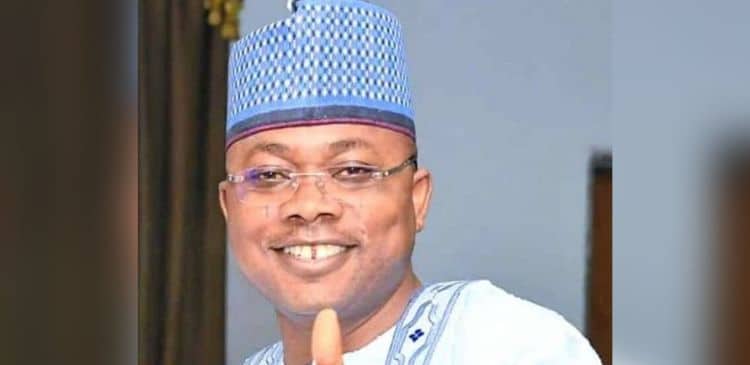
MEDIA stakeholders in Nigeria have celebrated Raheem Adedoyin’s re-election into the International Press Institute (IPI) global board.

With this re-election, Adedoyin will represent Nigeria and Africa at the global network of senior editors, media executives, and communication experts headquartered in Vienna, Austria.

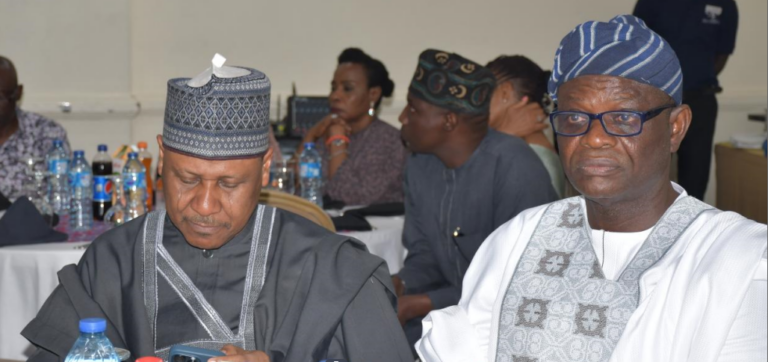
At the dinner night in honour of Adedoyin held in Abuja on Thursday, July 11, the stakeholders commended him for championing media freedom in the country and beyond.

“His (Adedoyin) tireless efforts to promote press freedom, foster excellence in reporting and support journalists worldwide are a testament to his unwavering commitment to our noble profession,” said Mojeed Muskilu, IPI President, Nigeria chapter.

Muskilu added that Adedoyin’s contributions to IPI had been instrumental in shaping the global conversation on press freedom and journalism.

In his speech, Nigeria’s Minister of Information, Mohammed Idris, lauded Adedoyin’s efforts in promoting press freedom in Nigeria. However, he urged media practitioners and executives to adhere to “responsible media freedom.”

“All of us have to be free to do our jobs, but freedom comes with responsibility. It is by doing so that we can entrench media framing and ask everybody to respect it,” he said.

Also, Special Adviser to the President on Information and Strategy, Bayo Onanuga, urged journalists to be factual in their reportage and avoid publishing stories for the sake of social media traffic.

 “There are rules and if we (journalists) commit any transgressions, the authorities will come after us,” he said.

Adedoyin, a former Commissioner for Information in Kwara State and Chairperson of the Editorial Board of The Herald Newspapers was re-elected to a three-year term in May 2024 at the World Congress and General Assembly of the IPI in Sarajevo, Bosnia and Herzegovina.

In his speech, Adedoyin reinstated his commitment to press freedom, appreciating media stakeholders and members of the IPI Nigeria chapter for their support.


Former Nigerian power minister who allegedly stole N33bn gets N10bn bail

0

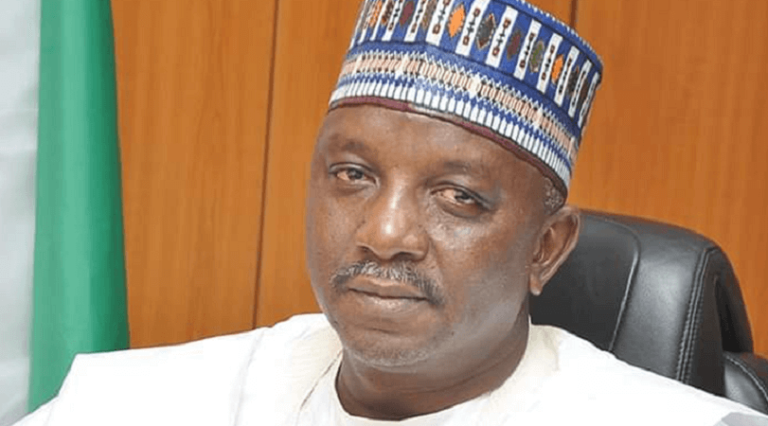
FORMER Minister of Power, Saleh Mamman, who was charged for a N33 billion fraud by the Economic and Financial Crimes Commission (EFCC) has been granted bail.

During a sitting on Friday, July 12, at the Federal High Court in Abuja, Mamman was granted N10 billion billion with two sureties in like sum.

Issuing the verdict, the chief judge, James Omotosho, held that the sureties must be owners of landed properties within the Federal Capital Territory with a minimum valuation of N750 million.

The judge stated that the sureties must swear an affidavit of means and submit their three-year tax clearance certificates, adding that certified copies of the defendant and sureties’ bank statements and their most recent passport photograph must also be submitted.

In addition, the judge directed the defendant to turn in his international passport to the court’s registrar, stating that the registrar must confirm every document before the defendant is allowed to leave custody.

The court further ordered that the defendant be held in jail until all bail requirements were fulfilled and that the sureties could provide a bank guarantee or bond of N10 billion. The case has been adjourned until September 25, 2024.

On Thursday, July 11, the judge ordered the remand of the former minister at the Kuje Prison after his not-guilty plea to all the 12-count charges preferred against him. His lawyer, Femi Ate, a senior advocate, however, told the court that a bail application had been filed on behalf of his client.

Although the judge stated the bail application had not yet made it into the court file, the lawyer representing the EFCC, Adeyinka Olumide-Fusika, also a senior advocate, admitted that the application had been received.

Meanwhile, the defendant had collapsed outside the courtroom before the hearing on Thursday but was revived with the help of his lawyers and some medical personnel at the court.

Nigeria’s power sector has ranked poorly on the global scale. According to the World Bank 2020 business report, Nigeria ranks 171 out of 190 countries in getting electricity and electricity access is seen as one of the major constraints for development.

Although there have been several attempts to address the situation, some of these efforts have been hampered by corruption.

The ICIR reports that in January, EFCC arraigned a former minister of power and steel development, Olu Agunloye, before a High Court in Abuja over alleged $ 6 billion fraud.

The former minister in September 2023, was accused by former President Olusegun Obasanjo of mismanaging the Mambilla power project during his tenure, alleging that he fraudulently awarded the project contract without the approval of the federal executive council.

Deutsche Welle seeks multimedia journalists

DEUTSCHE Welle (DW) is seeking multimedia journalists (f/m/d) for its English for Africa for Programming in Abuja, Nigeria, Accra, Ghana and Nairobi, Kenya.

The programme begins on November 1, 2024, or as soon as possible on the basis of a freelance contract limited to two years.

Applicants must have a university degree and excellent storytelling skills.

In addition, applicants must have extensive knowledge of the current political, economic, social and cultural conditions in Africa.

Journalists in Africa can apply for positions in Nigeria, Ghana and Kenya.

Experience with Adobe Premiere is a plus.

The organiser says, “As employees of Deutsche Welle, we identify with the values laid down in the Deutsche Welle Act. We are especially opposed to every form of discrimination, racism and antisemitism.

“We promote diversity and equal opportunities. We welcome your application, regardless of your nationality, your cultural, ethnic or social background, any disability you might have, your sexual orientation, your gender or your age. We aim for gender parity in all departments and across all levels of the organisation”.

The deadline for the submission of application is August 5, 2024.

Interested applicants can apply here.

CUNY seeks business journalism fellows

THE McGraw Center for Business Journalism at the City University of New York’s Craig Newmark School of Journalism is seeking entries to its fellowship programme that support in-depth coverage of business and the global economy.

The fellowship provides editorial and financial support to journalists who need time and resources to tackle complex, time-consuming stories.

Journalists with at least five years of experience can apply for a remote fellowship.

The programme is accepting applications for in-depth text, video or audio pieces. Fellows will receive grants of up to US$15,000 to complete investigative and enterprise stories.

Reporters and editors working at news organisations, as well as freelancers, may apply. International journalists are also eligible as long as their reporting is completed in English and targeted to a U.S. media outlet and audience.

The next application deadline is October 6, 2024.

Interested applicants can apply here.

Fuel scarcity hits NNPCL stations as marketers await products from Dangote

THE ongoing fuel scarcity across the states has hit most of the Nigerian National Petroleum Company Limited (NNPCL) filling stations as marketers anticipate products from Dangote Refinery this month.

On Friday, July 5 fuel scarcity resurfaced in Abuja, Nigeria’s capital city and spread to other states including Lagos where the product is mostly loaded to other parts of the country.

While most of the independent marketers and other private filling stations have run out of stock, the filling stations owned by the country’s sole importer of petroleum products, NNPC, appeared to be running out of stock.

On Thursday, July 11, The ICIR observed that most of the NNPC filling stations were not open to sell fuel to motorists.

Along the Lagos-Ibadan expressway, from the Redemption Camp City point to Abeola Garden and along Ojodu-Berger to Ogba, The ICIR observed that the NNPL filling stations were not open to sell petrol to motorists.

Some independent marketers and private filling stations along the same corridor were also not selling fuel. A few that were selling, have increased their pump price.

A Conoil filling station at the Redemption Camp City in Mowe, Ogun State was pumping petrol at N650 while an Adova, formerly AP filling station directly opposite it was selling at N655. Along that same corridor, Petrocam filling station was selling at N740.

Relating the current pump prices with the market survey The ICIR did in April this year, the pump price of petrol has been hiked by filling stations.

The increase in the pump price of petrol has further hiked the cost of transportation across many routes in the states.

On Tuesday, July 9, The ICIR observed that transporters were charging N1,000 from the Seven-Up bus stop to Obalende/CMS for a journey that used to cost about N500. From a motor park at Zenith Bank roundabout in Victoria Island to Oshodi, transportation fare has risen to N1,000 and N1,000 also from Berger at Oworoshoki to Mowe.

Mohammed Bulala, a commuter waiting to board a bus at Agogbala, an adjoining town along the Lagos-Ibadan expressway, to Kara, a cattle market before Berger-Lagos, told The ICIR that he now pays more for transportation to and fro his journey.

“I used to pay N400 but it is N600 Danfo drivers are collecting now. Okada people used to collect N500 and they will carry two people but now it is N1,000 per head.”

A bus conductor who yelled at commuters at the bus stop, later told The ICIR reporter that the situation was also hurting transporters.

“We spend time queueing at filling stations. We buy the fuel at a higher price. You can’t blame us. Go and blame the government,” the bus conductor who gave His name as Sunday, said.

In Abuja, most filling stations have adjusted their pump to sell at about N690 with the long queues still visible in most retail outlets and commuters fastly adjusting transport fares from one part of the city to the other.

Commenting on the development, the  National Public Relations Officer of the Independent Petroleum Market Association of Nigeria (IPMAN) Ukadike Chinedu told the ICIR  that the supply from the NNPCL has commenced but is still a bit slow and affected by higher demands for the products.

“NNPCL is giving products to marketers. There are still issues around epileptic distribution which shows that the supply hiccups are not sorted. It is taking longer before the products get to the marketers. We are not fully independent as we are still dependent on the products supplied to us by the Federal Government through NNPCL.

Meanwhile, the NNPCL had blamed the ongoing fuel scarcity on flooding and logistics challenges.

It said specifically that the flooding disrupted the ship-to-ship transfer of petrol, between mother vessels and daughter vessels and weather conditions affected berthing at jetties, truck load-outs and transportation of products to filling stations, disrupting supply to filling stations.

Due to the flammability of petroleum products and in compliance with the Nigerian Meteorological Agency (NIMET) regulations, it was impossible to load petrol during rainstorms and lightning, the NNPCL said.

It has been a week and the fuel scarcity situation appears to have gradually intensified across the states.

Industry experts believe that the ongoing fuel scarcity may not be unconnected to the Dangote refinery’s plan to start the production of petrol.

The vice president at Dangote Industries Limited (DIL), Devakumar Edwin, had on July 7 reiterated that the refinery would start production of petrol this July.

Dangote refinery had fixed 10 to 15 July to pump out its maiden petrol product and start selling to marketers.

The ICIR reported that the planned kick-off of petrol products by the Dangote refinery raises concerns over NNPC’s price-control regime despite the deregulation of the petroleum downstream sector.

FOIA: Media Rights Agenda reacts to Blueprint’s editorial

0

THE Media Rights Agenda (MRA) has reacted to a publication by Blueprint newspaper titled “Akume’s riot act on official secrets,” describing it as wrong and disturbing. 

In a statement signed by the MRA’s Head of the Legal Department, Obioma Okonkwo, on Thursday, July 11,  the organisation described the report as inaccurate and a violation of journalistic ethics.

“As a newspaper established and owned by the current Minister of Information and National Orientation, Alhaji Mohammed Idris, some would say it is inevitable and, perhaps, understandable that Blueprint newspaper would allow itself to be co-opted as part of the already substantial arsenal of government’s propaganda machinery.

“But some sticklers for media professionalism and ethical rules that guide the profession of journalism would argue that such co-optation, whether voluntary or coerced, violates ethical principles and standards in the media sector and is unjustifiable.

“Whatever position one takes, we believe that a point of convergence among various schools of thought on this issue would be, as journalists are wont to say, that facts are sacred and that the pursuit of truth is a core foundation upon which any journalistic enterprise should be built,” part of the statement read.

The report – an editorial – by Blueprint newspaper was published on Monday, July 8, as an editorial piece.

It described a warning by the Secretary to the Government of the Federation (SGF), George Akume, that government workers who leak official secrets are at risk of jail time as a right step towards securing the nation. The MRA had earlier condemned the directive.

The editorial piece described MRA’s position that the government would find it difficult to prosecute its officials for unauthorised disclosure of information due to the Freedom of Information Act (FOI) as misleading and mischievous.

“Unfortunately, the MRA’s claims are as misleading as they are mischievous, thus, falling on all fours. It is trite to state that the FoI Act is neither inconsistent nor incongruous to the Official Secrets Act. The FoI, therefore, does not invalidate, vitiate, void or repeal the Official Secrets Act. The extant legal instruments are, in fact, complementary and analogous as they are geared towards the overall objective of ensuring the nation’s security and accelerating its socio-economic and political development.

“It does appear that the MRA is unperturbed by the menace of bandits, kidnappers, insurgents, secessionists, militants, oil thieves and the myriads of insecurity ravaging the country and frustrating its developmental efforts. Evidence abounds that the deadly and dastardly activities of these criminal elements are aided and abetted by corrupt and unscrupulous public officers who leak official secrets to them,” part of the editorial read.

In its reaction, MRA noted that while the FOI did not repeal the Official Secrets Act, it was not consistent or complementary with the Act, as claimed in the editorial.

The MRA noted that there was a difference between the Official Secrets Act which criminalises disclosure of information without authorisation and the FOI which protects workers that disclose information without authorisation.

“The two laws are not complementary, they are not analogous and there is absolutely no meeting point between them. The difference between the two pieces of legislation is as stark as the difference between night and day.  Besides, there is nothing contained in the Official Secrets Act that can be interpreted to be aimed at enhancing transparency or accelerating the socio-economic and political development of Nigeria,” the MRA noted in its latest statement.


READ ALSO:


The organisation also argued that despite the difference between both laws, the FOI is superior, as provided in the guidelines on its implementation.

In its editorial, Blueprint newspaper noted that there was evidence showing links between bandits, kidnappers, other non-state actors and public officers who divulge official secrets.

The MRA, however, pointed out that no instance of such was cited by the new outlet, adding that unauthorised disclosure of information by government officials helps to expose corruption, and incompetence among, others.

Consumer protection network seeks strict enforcement as NERC set to sanction DisCos

THE President of Nigeria Consumer Protection Network, Kunle Kola Olubiyo, said the organisation is seeking stiffer enforcement of sanctions for erring Distribution Companies (DisCos) who failed to meet up with key performance indicators (KPI) from the electricity regulator.

Olubiyo’s suggestions follow a new order from the Nigerian Electricity Regulatory Commission (NERC) which announced that there will be new sanctions for Discos that failed to meet some contractual agreements with customers and regulators.

The contractual agreement is focused on providing a stable grid through infrastructural expansion, creating certainty in the gas-power market segment through contracting as a way of improving firm gas availability to power stations. It also focused on addressing challenges surrounding the securitisation of payments across the industry and widening the gap between peak demand and availability generation.

According to NERC, the  Order on Performance Monitoring Framework for all the DisCos will affect seven issues that would be used to assess their performance.

“This includes energy off-take relative to partial contracted capacity; revenue recovery rate; compliance with reporting of a uniform system of accounts; compliance with API feeder streaming; compliance with the order on capping of estimated bills; compliance with the implementation of forum decisions; and compliance with service standards for the resolution of complaints received through the NERC contact center and NERC headquarters,” it said.

The order which was signed by NERC’s chairman, Sanusi Garba, and Commissioner Legal, Licensing & Compliance, Dafe C. Akpeneye, and made available to the media on Wednesday, July 10, added that the new order sought to hold the top management of each DisCos accountable for their compliance with reporting requirements and implementation of directives of the commission in line with the terms and conditions of the utility.

“This will drive increased operational performance from DisCos thereby improving energy delivery to customers under their franchise area,” it said.

Commenting on the order, Olubiyo said the Electricity Act had given NERC all the powers to sanction erring DisCos and set the power sector on a development trajectory.

He said there are no longer conflicts between NERC and the Bureau for Public Enterprise (BPE), which was the case before the enactment of the Electricity Act 2023, adding that Nigerians need to enjoy quality services in the sector.

“NERC now has every power to deliver and ensure the defying works. Before now, if NERC wants to check the books and reports of DisCos, it will go and get a court order. Now the Electricity Act has provided a “Quasi” judicial body to serve as an arbitrator for issues on the power sector in a court of  first instance – like the Federal High Court,” he said.

Notably, the NERC  order stipulated that failure to off-take up to 95 per cent of available nominations in any month will attract issuance of a rectification directive.

But the failure of any DisCo to off-take up to 95 per cent of available nominations in two of the three months in any quarter will attract a downward adjustment of DisCos guaranteed Admin OpEx by 5 per cent for the next quarter.

Also, for any instance of a customer overbilled, 10 per cent of the naira value of the total over-billing for the period will be deducted from the DisCo’s annual Admin OpEx allowance during the next tariff review, and credit adjustment for overbilled customers.

“If the energy overbilled is greater than 20 per cent of the allowed cap or the number of customers overbilled represent is greater than 20 per cent of unmetered customer base, the Commission may take other enforcement actions including the withdrawal of the KYL of the Head of Billing or the officer responsible for the billing function in the utility.

“For non-compliance to the resolution of complaints through the NERC contact centre or headquarters after the expiration of timelines in the CPR, the DisCo would be made to pay fines within the first month -billing: N10,000 per day; disconnection: N2,000/day; interruption: N2,000/day; metering: N1,000/day; delay in connection: N1,000/day; Voltage: N1,000/day,” it said.

The ICIR has earlier reported that NERC signed an agreement with the DisCos on performance improvement which would promote efficiency in the electricity market.

“A competitive market would be healthy for a regulatory market, which gives positive signals to the market,” a power sector governance expert and energy lawyer, Chuks Nwani told The ICIR.

CBN’s Cardoso blames high interest rate on ‘excessive N27trn’ lending to FG

THE governor of the Central Bank of Nigeria (CBN), Yemi Cardoso has blamed the country’s rising high interest rates on the excessive N27 trillion loan facility issued to the Federal Government by the apex bank.

Cardoso disclosed this on Thursday, July 11, at the CEO forum in Lagos monitored by our correspondent, raising further concerns that the Nigerian in the streets is feeling the pains of that decision.

The economy is currently underperforming, and analysts have linked it to the high interest rate currently pegged at 26.25 per cent by the CBN as a result of excessive lending to the federal government by the apex bank during former President Muhammadu Buhari’s tenure.

The interest rate at 26.25 per cent and inflation at  33.95 per cent have put pressure on the lending capacity of commercial banks which has squeezed lending to the manufacturing sector and businesses.

Cardoso, said as a result of an unavoidable interest rate hike, Nigeria is currently shouldering the excesses of N27 trillion in ways and means as well as N10 trillion in intervention programmes which have led to the recent spike in inflation.

He said the apex bank is aware of the impacts of these loan facilities on businesses and the economy and is working to avert future occurrences.

The apex bank governor explained that high interest rates are driven by increased money supply and subsequent inflation, which forces the Monetary Policy Committee (MPC) to maintain elevated rates.

He emphasised that while he is not responsible for these decisions pointing out that the MPC makes such choices, Nigerians must understand that the surge in Ways and Means and intervention programs has negative consequences.

He further clarified that the MPC’s primary mandate is to reduce inflation, and its decisions are based on data trends rather than emotions.

Cardoso, clarified that the Interest rate is not set by the CBN governor, but by the members of the monetary policy committee.

“The MPC has made it very clear that for them the major issue is taming inflation and has also made it very clear that they will do whatever is necessary to tame inflation.

“Sadly, we have a situation where a lot of money supply went into the system. We all saw ways and means soared to N27 trillion. We saw interventions of N10.5 trillion. It has its consequences. In large respect, that is what we are paying for now,” Cardoso added.

Commenting further, he noted that the high interest rate is only temporal until inflation moderates.

He added that the hawkish rate is based on timing, stressing that without such a high rate the naira would have tumbled against the dollar.

Cardoso further clarified that inflation moderation will see the rate decline.

On whether the high rate is working, the governor said month-to-month inflation has declined by 50 per cent, adding that it is projected to further reduce shortly.

“The MPC is not oblivious to the fact that ultimately, we do want growth. If these hikes were not done at the time they were done, the naira to the dollar was almost tipping over. This helps to stabilise it. Secondly, it is a timing issue. It’s not something that will remain with us forever.

“Fiscal issues being moderated and the ability to suck up all the excess liquidity in the system and be able to balance things out over some time. That’s the important thing for the MPC as far as I can see.

“Between February and May of this year, the month-on-month rate of inflation has gone down 50%. I sense that this is not something that is a one-size-fits-all. I think in a not-too-distant future, the interest rate will come down,” he added.

The ICIR has earlier reported that the Senate has commenced a probe into the CBN’s excessive lending to the Federal Government which many analysts described as a failure of oversight and poor scrutiny before approval of such lending to the federal government by the legislature.

Appeal Court affirms Ododo as Kogi governor

0

THE Court of Appeal, Abuja Division, has affirmed the election of Usman Ododo as the Governor of Kogi State.

A three-man panel of the court in a judgement on Thursday, July 11, upheld the decision of the Kogi State Governorship Election Petition Tribunal.

The appellate court gave the ruling after dismissing the appeal filed by the candidate of the Social Democratic Party (SDP) in the November 11, 2023 election, Murtala Yakubu Ajaka.

While dismissing all four grounds of appeal against the SDP and Ajaka, the Appeal Court found that the petitioners had not established each of their claims beyond a reasonable doubt.

The court further decided that the case involving Ododo and the purported certificate fabrication should have started at the Federal High Court because it is a pre-election matter.

The ICIR reported in November 2023 that the Independent National Electoral Commission (INEC) declared Ododo of the All Progressive Congress (APC) as the winner of the Kogi State governorship election.

Ododo garnered 446,237 votes, to defeat his closest opponent Ajaka, who had 259,052 votes. Dino Melaye, a PDP candidate, received 46,362 votes.

Dissatisfied with the election results, Ajaka proceeded to the tribunal to request that the results be overturned and that INEC be ordered to hold new elections in roughly five LGAs.

Ajaka and his party contested the poll on the grounds of purported voting fraud, non-compliance with the Electoral Act, and forgery.

To prove their point and refute the results in the polling centres, they called a few witnesses from the five Local Government Areas, including the Adavi and Okene LGAs.

However, the tribunal rejected the case and upheld Ododo’s election, concluding that the petitioner had not proven, among other things, that the governor had provided a fake certificate.

The ICIR reported that Ododo was sworn in on January 27.


EndSARS: ECOWAS fines Nigeria over ‘several human rights violations’ against protesters

THE ECOWAS Community Court of Justice has ruled that the Nigerian government breached the African Charter on Human and Peoples’ Rights in its handling of the 2000  ENDSARS protests.

On Wednesday, July 10, the court fined the country N2 million, to be paid to three victims whose rights were violated by soldiers and other security operatives at the Lekki Toll Gate in Lagos State, where the largest number of protesters converged.

According to the court, the fine was a compensation for the violations of security of person, prohibition of torture and cruel, inhuman, and degrading treatment, rights to freedom of expression, assembly, and association, duty to investigate human rights violations, and right to effective remedy for the complainants.

The applicants were Obianuju Catherine Udeh, Perpetual Kamsi and Dabiraoluwa Adeyinka.

The court ruled that the Nigeria government violated Articles 1, 4, 6, 9, 10, and 11 of the African Charter on Human and Peoples’ Rights, specifically pertaining to the right to life, security of person, freedom of expression, assembly and association, prohibition of torture, duty of the state to investigate, and the right to an effective remedy.

Furthermore, the court declared that the applicants were denied the right to an effective remedy. It ordered that the respondent make reparations to the applicants for the violation of their fundamental human rights.

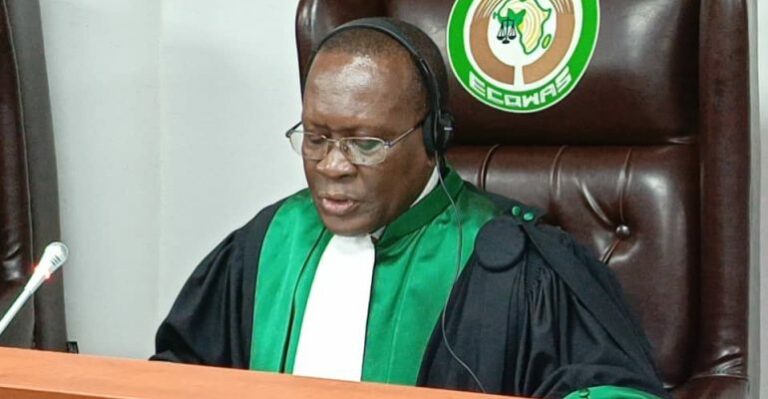
Three justices of the court namely Koroma Mohamed Sengu (rapporteur who delivered the ruling), Dupe Atoki, (presiding judge), and Ricardo Claúdio Monteiro Gonçalves, ruled that the Nigerian government must adhere to its obligations under the Charter, investigate and prosecute its agents responsible for the violations, and report to the court within six months on the measures taken to implement the judgment.

Meanwhile, the court dismissed the claimants’ allegation that their right to life as guaranteed under Article 4 of the ACPHR was violated.

The applicant’s arguments

The applicants alleged that during the peaceful protests against the SARS Unit of the Nigerian Police Force at Lekki Toll Gate, Lagos State, on October 20 and 21, 2020, the respondent committed several human rights violations.

“Triggered by the alleged killing of Daniel Chibuike, the protests aimed to address police harassment and brutality. The first applicant’s claims include that the soldiers shot protesters, resulting in deaths and injuries, which she live-streamed, subsequently receiving threatening phone calls that forced her into hiding and eventual asylum.

“The second applicant, responsible for protesters’ welfare, describes how soldiers began shooting after a power cut, leading to her hospitalisation due to police tear gas.”

Similarly, the third applicant recounted narrowly escaping being shot, observing the refusal of ambulance entry by soldiers, and later witnessing inadequate hospital care for victims.

She argued that she and her colleagues took over the victims’ care and she faced ongoing threats and surveillance, believed to be by respondent’s agents. The applicants sought declaratory reliefs and compensation from the court for these violations.

Nigerian government denies claims

The defendant denied all claims by the applicants. It said the officers who allegedly shot protesters were searching for escapee Boko Haram members.

It denied that the military shot any protesters and claimed that soldiers at the scene followed their rules of engagement.

Besides, it alleged that the protesters unlawfully assembled at Lekki Toll Gate under the guise of protesting against SARS.

“It argued that the first applicant incited the crowd by playing music and using her Instagram page to stir disaffection against law enforcement, who were targeting escapee members of Boko Haram and bandits. The respondent contended that the second applicant’s provision of logistics and welfare support indicated her support for the violent protest.

“It claimed that soldiers were present to restore peace until the police arrived, denying any harm inflicted on protesters and the refusal of ambulance access. The respondent also denied that the third applicant’s presence was peaceful, asserting it was meant to escalate violence. It argued that the treatment and care of the injured were managed by the Lagos State government and submits that the applicants have not provided credible evidence to support their claims, or the reliefs sought.”

The ICIR reports that ENDSARS protests targeted scrapping the notorious Special Anti-Robbery Squad (SARS), but it ended up making more citizens victims of the police and other security officers’ brutality as many Nigerians were reportedly killed during the protest.

The protest also led to the destruction of critical infrastructures and looting of food warehouses and other stores where essential items were stored across the nation.

Despite the protests, police brutality has yet to abate in the nation.