Home Blog Page 550

Oyo Rep. Akinremi ‘Jagaban’ is dead

A MEMBER of the House of Representatives representing Ibadan North Federal Constituency, Oyo State, Musiliudeen Akinremi, also known as Jagaban, is dead.

He was aged 51.

Akinremi was a two-time member of the House and a member of the All Progressives Congress (APC).

According to a report by Punch, Akinremi’s death was confirmed by the spokesperson of the House of Representatives, Akin Rotimi, in a statement on Wednesday, July 10.

The statement quoted the Speaker, Tajudeen Abbas, as expressing “profound sadness over the loss.”

It added, “Until his demise, the Oyo legislator was a dedicated public servant known for his unwavering commitment to the development of his constituency and the country at large…

“Rep. Akinremi Olaide Adewale was a beacon of dedication and service. His contributions to our legislative work, especially in the area of science and research, were invaluable. His passing is a great loss to the House, his constituency, and the nation. We will miss his leadership, wisdom, and the unique passion he brought to his work.”

The ICIR reports that the cause of his death had yet to be known when filing this report.

This organisation further reports that at least three members of the House of Representatives have died since the inauguration of the 10th Assembly in June, 2023.

On Friday, May 10, a lawmaker representing Babura/Garki Federal Constituency in Jigawa State on the All Progressives Congress (APC) platform, Isa Dongoyaro, died after a brief illness.

Dongoyaro was 46 years old at the time of his death.

While announcing his death, Rotimi said Dongoyaro contributed significantly to the development of legislation, particularly in the area of HIV/AIDS, Tuberculosis, and Malaria Control, where he served as the deputy chairman of the House Committee.

Similarly, in October 2023, a lawmaker representing Isa/Sabon Birnin federal constituency of Sokoto state, Abdulkadir Danbuga, died at 63.

Before the 10th Assembly was inaugurated in 2023, Isma’ila Maihanchi, who was elected to represent Jalingo/Yorro/Zing Federal Constituency in Taraba, died, aged 36.


‘Steeze’, ‘composure’, other trending slangs in Nigeria

THE use of slang is an exciting communication feature in Nigeria with its dynamic language environment and vibrant culture, as such now and again new crops of words gain widespread usage among the populace and pop culture.

Every year, a new set of slang emerges, reflecting the nation’s youthful spirit, inventiveness, and adaptability. Nigeria is among the countries with a youthful population.

Over time some of these slangs become mainstream and find their way into official settings, adding to what is called ‘Nigerian English.’ In 2020 a number of Nigerian English words became internationally recognised when they were added to the Oxford dictionary.

They include, ‘Gist’, ‘Ember Month’, ‘K-leg’, ‘Send forth, ‘Okada,’ ‘Danfo’, ‘Non-indigene’, ‘Guber’, ‘Tokunbo’, ‘MamaPut’, ‘Kannywood’, ‘Next Tomorrow’ among others.

Sometimes some of these slangs are remergence or words taking new connotations.

The ICIR compiles some slangs that trended on social media in the first half of 2024 and what they mean.

No gree for anybody’

A few days after the year started, this slang became viral, leading many individuals to declare that 2024 is the year to stick to one’s principles and resist giving in to pressure from others. The meaning of ‘no gree for anybody’ was understood to be a personal commitment to never give in but to resist forces and individuals that could undermine one’s goals and ambitions.  Example, ‘this 2024, no gree for anybody’.

‘Fold’

Just like the original meaning, which means to bend, bring to a close/end, wrap, and so on, “fold” as a slang term expresses the original meaning in human form; to give up.

It is often used when someone gives up during an argument or conflict with another person. For example: ‘After evidence were brought against him he folded and even deactivated his social media account.’

Ate’

This is used to commend and show enthusiasm for someone who has excelled in something. ‘He ate the interview’.it’s also used to compliment appearance. ‘She ate up the look with that orange dress and curly wig.’

Rizz’

It refers to an effortless charm and attractiveness, particularly in romantic or flirtatious situations. It’s used to characterise someone’s elegant seduction abilities and capacity to draw others in. For example, ‘The man’s rizz needs to be studied.

‘Delulu’

It is derived from the word delusion. It is used to characterise someone with excessively idealistic or unrealistic fantasies. For example: ‘I will continue living in my delulu till I get everything I want.’

Steeze’

Steeze combines comfort of wear with style and carriage. It is frequently used to indicate that someone has good sense of style and presents oneself well in the context of fashion. If a person exudes confidence and dresses elegantly, you might consider them to have an appearance full of steeze. For example: ‘despite complaining about being low on cash, his steeze was still top notch.’ Steaze is one of those words that made a comeback.

Composure’

This is often used alongside steeze. It refers to keeping your cool under pressure. When the terms steeze and composure are used in the same sentence, it suggests that what is being said is portraying a person who not only maintains their cool under duress but also looks nice doing it. For example: ‘No matter the storm, always maintain composure.’

Go warm eba’

This is used to tell someone to keep quiet or get out during an argument or any conversation. It means they should find something else to do with their time or life. For example: Your opinions are really pointless, please go warm eba.’ Eba is a Nigerian meal made from cassava – garri. The phrase literally means go and reheat garri.

Walk with me’

This is used to tell someone to pay attention to what they are talking about or doing at the point in time. It is often used when someone wants to give an explainer of an issue or trend. For example: ‘ Janet is trending, the timeline is scattered, and you don’t know what’s going on, I’m going to give you the full gist, just walk with me.’

I am sat / I plaster

I’m sat’ is another slang used when someone wants to listen to a gossip, gist or story. It used to indicate their interest in the development.

Tinubu creates new ministry, despite approving full implementation of Orosanye’s report

FOUR months after approving the full implementation of Orosanye’s Report, President Bola Tinubu has created a new ministry.

The President on Tuesday, July 9, announced the creation of the Federal Ministry of Livestock Development,  bringing the number of Federal Government ministries to 36.

According to the President, the move is expected to end the constant clashes between herders and farmers. 

He announced the new ministry at the inauguration of the Presidential Committee on Livestock Reforms at the Council Chamber of the State House in Abuja.

The ICIR reports that Nigeria has been locked in years of conflicts between farmers and herders, leading to thousands of deaths, displacements, food scarcity and unending disputes.

Efforts by successive governments to end the impasse have failed, as the crisis ballooned under the former President Muhammadu Buhari’s government, a retired Army General and a livestock farmer.

It has also failed to cease under Tinubu, one year after he took over power.

There have been killings in Plateau, Benue, Taraba, Osun, Oyo, Ondo, Ekiti, Enugu, Abia, Ebonyi and several other states with attendant deaths and disruption to crop and animal farming.

Plateau and Benue have been the epicentre of the crisis.

On January 1, 2018, suspected herders killed over 70 Benue residents in what is arguably the largest tragedy in the state.

The ICIR reported in 2021 how herders invaded a Plateau community in a reprisal attack despite military presence.

This organisation has published scores of reports on farmers and herders attacks and killings in Plateau, Benue and other states.

There have been several interventions by local and international organisations to resolve the enmity between the parties without success.

The ICIR reported how Zambia, Gambia and South Africa offered the country refresher courses on cattle management.

But Tinubu believes the creation of the ministry will fix the crisis.

“To enable Nigeria to finally take advantage of livestock farming, we have seen the solution and opportunity for this adversity that has plagued us over the years, and I believe the prosperity is here in our hands,” Tinubu stated.

The ICIR also reports that the new ministry is coming when Nigeria’s budget funding is threatened by a dip in oil production, the country’s major source of revenue and many Nigerians struggle to feed because of uncontrollable inflation.

As of March 2024, the country’s oil production dropped to 1.23 million barrels per day (bpd), from the 1.32 million daily production in February 2024.

This figure is based on data from the Organisation of Petroleum Exporting Countries (OPEC) monthly oil market report for March.

Running ministries takes a huge toll on Nigeria’s meagre resources, much of which is corruptly diverted into the private purses of public officials, as seen in scores of corruption cases involving former public officeholders in the nation’s courts.

In August 2023, The ICIR reported that paying 45 ministers in Tinubu’s cabinet would gulp N30 million monthly.

In another report, this organisation detailed what the President, his Vice, Governors, Ministers and their aides receive as salaries.

Meanwhile, the Nigerian workers have been angry over the Federal Government’s failure to implement a new minimum wage, making them threaten a longer strike than they did recently and consequently shutting down the nation’s economy.

Nigeria’s current minimum wage is N30,000 which some states have refused to pay since it became law in 2019.

What the implementation of Orosanye’s Report mean

The Oronsaye’s report on public sector reforms, presented in 2012, showed there were 541 statutory and non-statutory federal government parastatals, commissions and agencies.⁣

The current Minister of Information and National Orientation, Mohammed Idris, said multiple agencies would be scrapped, while others would be merged to cut governance costs.

On her part, the special adviser to the President on policy coordination, Hadiza Bala-Usman, said Tinubu had constituted a committee to implement the report within 12 weeks.

The Oronsaye-led panel was constituted in 2011 by former President Goodluck Jonathan to identify inadequacies in the country’s civil service.

The committee suggested the closure and merger of 102 government agencies and parastatals in its 800-page report.

In 2014, the report’s white paper committee turned in their work.

The report’s recommendations have not been implemented since it was submitted.

Film grant available for climate, labour stories

THE Pulitzer Center, the Financial Times and One World Media are accepting applications for the Climate and Labour Film Grant.

This initiative seeks to amplify new perspectives, stories and voices on the changing climate with a particular focus on the economic transition.

Applicants must submit a recorded pitch. Organisers are interested in creative proposals, ideas that are newsworthy, cover an underreported story, or hear from people who are often unheard of and offer unexpected or rare access to working conditions and the workplace.

Experienced filmmakers from the Global South, who are interested in climate change, can apply for a grant.

The successful filmmaker will receive up to GBP20,000 for their film. The film must be completed by June 2025.

Organiser says, “Through Pulitzer’s Our Work/Environment initiative, journalists have documented some of the risks of rising temperatures for workers, in fields and in factories”.

“In the past two years, reporters have travelled throughout India and across Nigeria, Ghana, Sri Lanka, Kenya, Uruguay, Paraguay and South Africa to document the impact of extreme heat and weather on some of the world’s most vulnerable workers—including women who are often heads of household—and we encourage stories that detail the interconnected nature of business, climate, and consumer choices”.

We particularly encourage submissions from underrepresented groups (people of colour, ethnic groups, women, LGBTQ+, or people with disabilities)

The deadline for the submission of the application is September 1, 2024.

Interested applicants can apply here.

Louise Behan Reporting Grant seeks entries

THE World Federation of Science Journalists is accepting applications for the Louise Behan reporting grant.

The grant aims to enhance reporters career and the quality of science journalism in their country.

These objectives are aligned with the work of Louise Behan, who spent her career with Canada’s International Development Research Centre and provided money from her estate to create this grant programme.

Stories can be in print, radio, television or online, but must meet the basic criteria of science journalism.

Stories should emphasise themes of science, technology or medicine.

Journalists from the Global South with an interest in science reporting can apply for a grant.

Two or three awards between US$750 and US$1,000 will be awarded to successful applicants.

Applicants must be from lower-income countries.

The deadline for the submission of applications is July 15, 2024.

Interested applicants can apply here.

An international panel of science journalists will review entries and successful applicants will be announced by September 2, 2024.

FG tariff suspension on food a bold step, not a lasting solution – Analysts

0

THE Federal Government of Nigeria’s tariff suspension on select food items such as rice, wheat, and cassava is a bold step but may not deliver a lasting solution to Nigeria’s food insecurity, agricultural experts have said.

The move is expected to prune down food inflation and improve the purchasing power of Nigerians, but some food experts said the government needs to secure the food belt and support agricultural productivity with improved yield variety to farmers.

“This is a knee-jerk approach to managing food inflation. The management of food inflation requires a multi-thronged approach to supporting farmers with single-digit facilities and securing their farmlands. The government must also support farmers with improved yield variety of seedlings for improved productivity. What the government has done is good, but they need to pay more attention to some teething problems,” a development economist, Celestine Okeke told The ICIR.

Nigerians have been struggling with high food prices and food inflation at 40.33 per cent.  This was worsened by insecurity in Nigeria’s food-belt and naira devaluation which kept worsening the food price hike.

Most food stuff sellers and restaurant managers have raised concerns over the constant rise in the prices of foodstuffs at each market day, which has made staple food now a luxury for an average Nigerian.

In what appeared to be a solution-oriented directive, the federal government approved a 150-day duty-free waver for rice, maize, and wheat to address rising food inflation in the country.

The minister of Agriculture and Food Security, Abubakar Kyari, made the approval announcement on Monday, July 8, hinting that the measure would be implemented over the next 180 days.

He said suspending the tariff on imported food items through both land and sea borders was part of implementing the Presidential Accelerated and Stabilisation Advancement Plan (ASAP).

“The Federal Government has announced a 150-day Duty-Free Import Window for Food Commodities, suspension of duties, tariffs and taxes for importing certain food commodities (through land and sea borders). These commodities include maize, husked brown rice, wheat, and cowpeas.

“Under this arrangement, imported food commodities will be subjected to a Recommended Retail Price (RRP).

“I am glad to reiterate that the Government’s position exemplifies standards that would not compromise the safety of the various food items for consumption,” Kyari was quoted to have said.

In addition to the importation by the private sector, the minister said the federal government would import 250,000 metric tonnes of wheat and maize each.

“The imported food commodities in their semi-processed state will target supplies to the small-scale processors and millers across the country,” he added.

Commenting on the development, a director at the International Institute of Tropical Agriculture (IITA), Abisola Adebowale Akande, said the research institute was like the Lagos government, building partnerships with other private agribusiness to see that the agric sector grows.

Akande said collaboration holds the key to Nigeria’s worsening food crisis, drawing examples from his work at the IITA where the research body now engages other private agribusinesses and uses technology to further enhance agricultural research.

The prices of foodstuffs have increased significantly above the reach of many Nigerians, The ICIR can report.

For instance, the price of 50 kilograms of rice peaked at around N90,000 this year compared to about N40,000 a year ago.

Food inflation in Nigeria rose to 40.66 per cent in May 2024 from 40.53. per cent in April, according to the latest data released by the National Bureau of Statistics (NBS).

In the last year, food inflation has risen by 15.84 per cent from 24.82 per cent in May 2023, surging consistently on a month-on-month basis.

The upward movement in food inflation increases the average cost Nigerians spend on a healthy diet, among other things.

According to NBS data on the Cost of a Healthy Diet (CoHD), in May Nigerians spent N1,041 on average to eat a healthy diet, The ICIR reported.

Also, between May 2023 and May 2024, the average cost of eating a healthy meal has risen consistently as a result of the continued rise in headline inflation, food inflation, and cost of fuel, which affected the prices of transportation, increased monthly.

The ICIR had also analysed that Nigeria could crash the prices of food items and other products by an average of 18 per cent should the government suspend tariffs on certain consumables.

Court reserves ruling on Dende’s bid to stop Soyombo, FIJ from publishing further reports about him

0

AN Abuja Federal High Court has reserved a ruling on the quest by a businessman, Ibrahim Dende, to stop the Foundation for Investigative Journalism (FIJ) and its founder, Fisayo Soyombo, from further publishing any report about him.

Dende had dragged Soyombo and FIJ to court over an undercover investigation that labelled him a “smuggler and gunrunner.”

He said the publication and its accompanying social media posts by Soyombo and FIJ were defamatory.

Arise Group, owners of Arise Television, was joined in the suit for airing a documentary on the report.

At a recent hearing presided over by the judge of the FCT High Court, Abuja Judicial Division, Binta Mohammed, counsels to the defendants and Dende argued against and in favour of the request, respectively.

Dende’s counsel wrote to the court claiming that his client’s character had been continuously assassinated by the first and second defendants.

The counsel said in addition to the damage the report did to the litigant, subsequent social media posts by FIJ and Soyombo continued to harm him.

The counsel maintained that it had become necessary for the court to grant an injunction to prohibit the “continuous and daily defamatory publications” against the claimant until the determination of the substantive case.

The counsel further argued that the right to free expression should not be a yardstick for any journalist to defame anyone.

Dende claimed he was not a smuggler but a licenced clearing and forwarding agent whose role was to assist with the movement of goods and other products into and out of Nigeria.

The defendants, however, countered Dende’s arguments, affirming the authenticity of its publication and prayed the court to reject the claimant’s application.

They said the request was unconstitutional in form and effect because it sought to restrict press freedom.

In the written argument submitted on behalf of Soyombo and FIJ by their counsel, it was argued that suppressing the press in advance of a trial is an unconstitutional violation of the freedom of the press and the right to free speech under the Constitution.

The counsel said it was the press’ constitutional duty to expose wrongdoing and such role must not be subjected to censorship or curtailed in the interest of the public.


READ ALSO:


According to the counsel, granting an application for an injunction to restrain further publication on the claimant would be prejudicial to the main suit because it would be wrongly assumed that previous publications were defamatory and there was a need to stop further defamatory publications.

The counsel further argued that Dende who had admitted under oath to assaulting law enforcement officers did not deserve the injunction he sought from the court.

The counsels closed their argument and the court reserved ruling on the application for interlocutory injunction to a later date to be communicated to the parties.

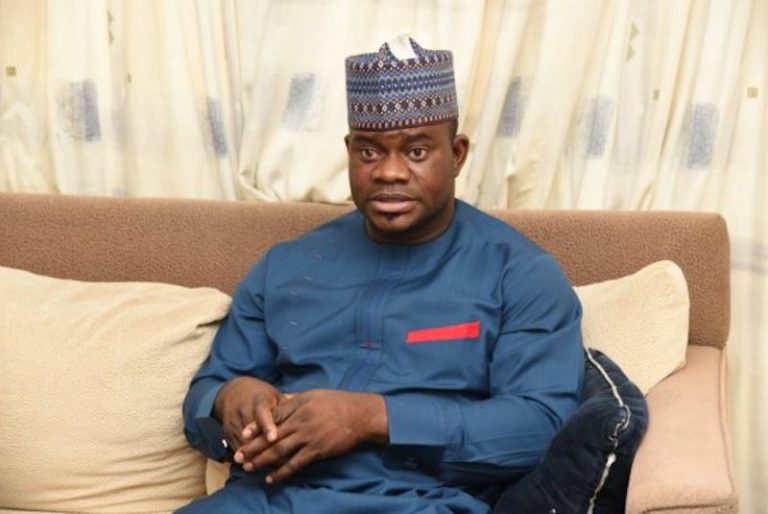
Yahaya Bello loses bid to transfer fraud case to Kogi

0

THE former Governor of Kogi State, Yahaya Bello, has lost his bid to transfer his alleged N80.2 billion fraud case from Abuja to his state.

The Chief Judge of the Federal High Court, John Tsoho, on Monday, July 8, dismissed Bello’s application seeking the transfer.

Tsoho concurred with the argument of the Economic and Financial Crimes Commission (EFCC) that the case should remain in Abuja.

Bello is being prosecuted on 19 counts for allegedly misappropriating public funds, breach of trust, and money laundering.

Even though he denies the accusations, he has not appeared in court since the case began.

His lawyers have applied to move the trial to Lokoja, the Kogi State capital.

The EFCC, on the other hand, objected to the proposal, claiming that both Kogi and Abuja would be appropriate places for the trial, given that some of the alleged offences were committed there.

In a letter signed by his Special Assistant, Joshua Ibrahim Aji, the Chief Judge agreed with the EFCC and stated that the law allows the charge to be filed in either Abuja or Lokoja

The court further submitted that it would be premature to transfer the case, given the ongoing appeal and because two comparable criminal charges were being handled in the Federal High Court, Abuja.

The ICIR reported on June 27 that Bello told a Federal High Court sitting in Abuja to transfer his case with the EFCC to Kogi State.

At the resumed proceeding on Thursday, June 27, Bello, who failed again to appear before the court, sent the request through his legal team, led by Abdulwahab Mohammed, a senior advocate, as he entered his plea to the charge.

A lawyer who announced his appearance for Bello, Adeola Adedipe called the attention of the trial judge, Emeka Nwite, to the letter his client had sent to the Chief Judge.

He prayed the court to dismiss “the story of the defence lawyer as dilatory and a further attempt to treat this court with scorn.”

Responding, the EFCC lawyer, represented by Kemi Pinheiro, a senior advocate, urged the court to order the defence lawyer to explain the defendant’s non-appearance in court despite his assurance on June 13 to guarantee his presence in court for arraignment.

Pinheiro claimed that the commitment made by the senior lawyer was not fulfilled by the letter to the Chief Judge..

As a result, he requested that the court invite the two senior lawyers representing Bello to justify why they would not be charged with contempt of court.

The EFCC lawyers insisted that the court dock the defendant’s lawyer for failing to produce the former governor after five sittings and make him a scapegoat.

The EFCC accused the former governor of money laundering allegedly perpetrated in connivance with his nephew, Ali Bello, and two others, Dauda Suleiman and Abdulsalam Hudu.

Bello insisted that when the EFCC filed the allegation against him and requested the issuance of a bench warrant for his arrest, it was acting in violation of an existing ruling from a Kogi State High Court.

The ICIR reported that the Federal High Court Abuja refused to revoke the arrest warrant on Bello over the allegations against him.


Pro-Wike lawmakers give Fubara 7 days to re-present budget

LAWMAKERS loyal to the former governor of Rivers State, Nyesom Wike, have given the incumbent Governor Siminalayi Fubara a seven-day ultimatum to re-present the 2024 budget.

According to a report by Channels TV, the decision was reached at the first sitting of the pro-Wike lawmakers, led by Martin Amaehwule, months after they were sacked by a court.

They gave the directive while a parallel sitting was taking place by the other faction of the House of Assembly led by Victor Oko-Jumbo.

The Oko-Jumbo-led faction presided over a sitting where a commissioner-nominee, Emeka Frank-Fubara, would be screened before being confirmed as a member of the State Executive Council.

While the Amaehwule-led team held their session at the House of Assembly Quarters, the pro-Fubara lawmakers sat in an improvised Hallowed Chamber within the Government House.

Fubara earlier presented the budget to five lawmakers loyal to him in December 2023, after 27 of the 32-member Assembly defected from the Peoples Democratic Party (PDP) to the All Progressives Congress (APC).

He subsequently signed the budget into law, but the action was nullified by the Federal High Court in January 2024.

In a judgment on Monday, January 22, delivered by James Omotoso, the court mandated Fubara to represent the budget to the lawfully constituted House of Assembly under Amaewhule, describing the actions of the pro-Fubara lawmakers as null and void.

The Court of Appeal in Abuja, had, on Thursday, July 4, also nullified the expulsion of Amaewhule and 24 others from the Rivers State House of Assembly by the Rivers State High Court.

A three-member panel of the appellate court held that the lower court did not have the jurisdiction to grant the exparte order.

Fubara, however, assured his supporters that there was no cause for alarm.

“I want to assure every one of you and the good people of Rivers State that we are not deterred. We have made our promises, we will continue to give you good governance, no matter how difficult it is.

“But, like I said before, the worst is over. We are moving on to ensure that we continue to provide what is needed for the development of our state,” Fubara said.

The ICIR reports that Wike and Fubara have been at loggerheads over who controls the PDP structure and other issues in the state.

Though a PDP member, Wike currently serves in the ruling All Progressives Congress (APC) government.

The feud had degenerated into nearly a physical combat between their loyalists and possible chaos was palpable in the state that President Tinubu had to intervene twice before tempers were calmed.

However, camps of both leaders have continued to threaten a showdown with each other less than a year that the leaders were gambolling in the same political space.

Pulitzer Center seeks entries to AI Accountability Fellowships

THE Pulitzer Center is organising and inviting entries for the AI Accountability Fellowships.

The programme seeks to support journalists working on AI (artificial intelligence) accountability stories that examine governments and corporations’ uses of predictive and surveillance technologies to guide decisions in policing, medicine, social welfare, the criminal justice system, and more.

Interested journalists must apply for a reporting project they wish to pursue during their fellowship.

Staff and freelance journalists can participate in a fellowship and receive up to US$20,000 to pursue a reporting project.

Enterprise and accountability projects that use a variety of approaches – from data analysis to records requests, and shoe-leather reporting – and delve into the real-world impact of algorithms on policy, individuals, and communities are preferred.

This year, the programme seeks to support at least one project that examines transparency and governance in relation to AI.

The 10-month fellowships are remote, begin in September and continue until July 2025.

Journalists can be based anywhere.

The deadline for the submission of application is August 10, 2024.

Interested applicants can apply here.