Home Blog Page 560

Five dead, many injured as protesters invade Kenya’s Parliament

0

ATLEAST five persons have died and many others injured in Kenya following the invasion of the country’s Parliament by protesters.

The protesters on Tuesday, June 25, set a part of the parliament on fire, while lawmakers were inside passing revisions to increase taxes.

In a chaotic scene, the protesters outnumbered the police, chasing them away as they sought to enter the Parliament premises.

Citizen TV (a Kenyan broadcast media) displayed the damage inside the Parliament building, which had been partially engulfed in flames.

Several other cities and towns across Kenya witnessed protests and clashes, with many citizens demanding the resignation of the  country’s President, William Ruto, and expressing their objections to the tax increases.

Addressing the nation, the President noted that the debate on the tax had been “hijacked by dangerous people”, describing the intrusion into parliament as an act of treason and vowed to take action against the organisers and financiers of the protests.

“It is not in order, or even conceivable, that criminals pretending to be peaceful protesters can reign terror against the people.

“I hereby put on notice the planners, financiers, orchestrators, and abettors of violence and anarchy that the security infrastructure established to protect our Republic and its sovereignty will be deployed to secure the country and restore order and normalcy, Ruto said.

In Nairobi, police resorted to firing when tear gas and water cannon proved ineffective in dispersing the crowds after they succeeded in driving protesters away from the parliament building, and lawmakers were evacuated through an underground tunnel.

Also, the country’s Defence Minister, Aden Duale, stated that the Army had been called in to assist the police in handling a “security emergency” that had led to the “destruction and breaching of critical infrastructure”.
According to the Kenya Medical Association, at least five people had died while tending to the wounded and 31 people injured while 13 were shot with live bullets and four others with rubber bullets.
The association urged the government to create secure medical lanes and safeguard medical personnel and ambulances.

PSC denies cancelling 2022 police recruitment exercise

0

THE Police Service Commission (PSC) has denied cancelling the recently concluded 2022 recruitment into the constable cadre of the Nigeria Police Force (NPF).

The PSC said the recent hitch arose from a routine maintenance of its portal containing the list of successful candidates for the exercise.

The commission also disassociated itself from a statement circulating in social media alleging that it has surrendered to pressure and cancelled the final list of successful candidates.

This was disclosed in a statement on Tuesday, June 25, signed by the commission’s spokesperson, Ikechukwu Ani.

Ani said the PSC was in control of the situation and had since restored the recruitment portal with its original contents.

He urged successful candidates to ignore what he termed deliberate antics of desperate groups bent on destroying the good work of the commission.

The commission noted that it would continue to ensure that federal character, gender sensitivity and merit are the bedrock of its recruitment process.

“The commission calls on this disgruntled element to desist further from undermining the recruitment exercise as anyone caught will be dealt with.

“The commission restates that the portal is now fully functional and accessible. Candidates can now log in and access all its features without any disruptions. The commission regrets the hitches and assures that it has fully secured the platform.” the statement added.

The PSC and the Nigeria Police Force (NPF) have been in at daggers drawn following the NPF’s accusations that the commission’s recruitment process was marred by irregularities.

The ICIR reported on Friday, June 21, that the PSC challenged the Inspector-General of Police (IGP), Kayode Egbetokun, to provide evidence of allegations that the recruitment exercise was marred by corruption.

This was contained in a press release signed by Ani, on Friday.

Ani also noted that due process was followed during the exercise and demanded that a forensic audit be carried out on the list of successful candidates published by both organisations.


READ ALSO:


The PSC had released a list of successful candidates recruited into the NPF but the NPF rejected it, arguing that the PSC portal was scrutinised and several names released did not apply for the job and, therefore could not have emerged on the list.

The NPF dissociated itself from the list of candidates and called for a review.

However, the PSC’s Joint Union Congress (JUC) dismissed the allegations at a press briefing on Wednesday, June 19.

The Congress also alleged that elements within the Police Force attempted to smuggle over 1,000 names into the recruitment list.

Obasanjo, Gov Adeleke, other dignitaries arrive Davido, Chioma’s wedding venue

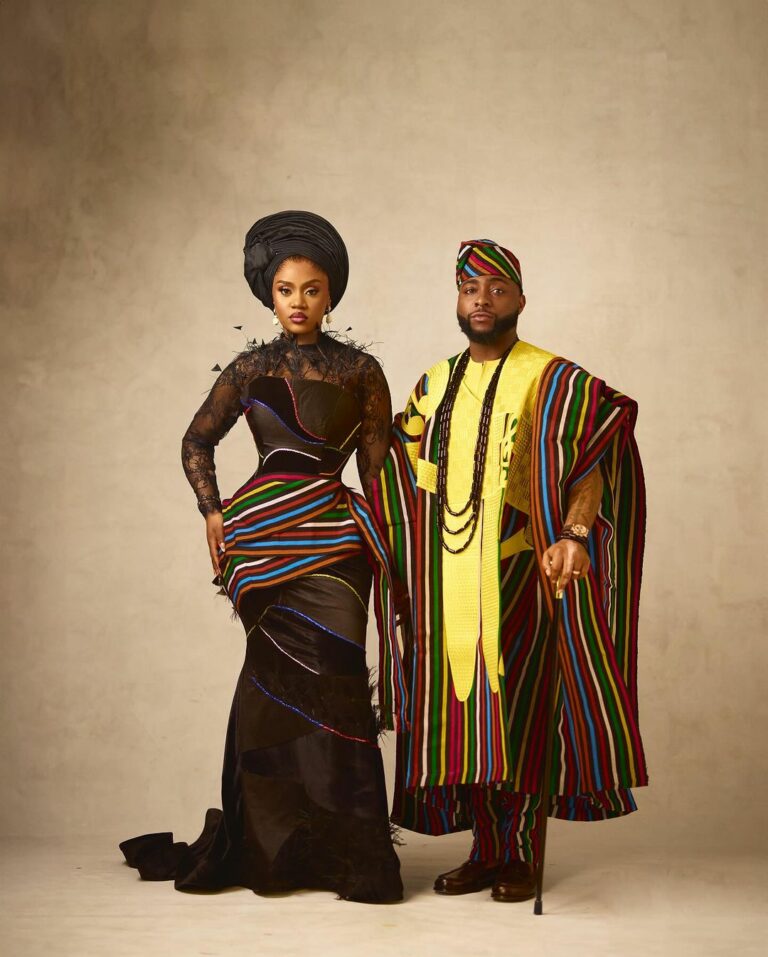
FORMER President Olusegun Obasanjo and Osun State Governor Ademola Adeleke are among the dignitaries who have arrived at the venue of the wedding ceremony of award-winning singer, David Adeleke, popularly known as Davido, and his wife, Chioma Rowland.

Also honouring the artiste with their presence are the Oni of Ife, Oba Adeyeye Enitan Ogunwusi, Ojaja II, and the former governor of Akwa Ibom state, Udom Emmanuel.

The singer announced his wedding, holding today, Tuesday, June 25, at Habour Point Centre, Lagos State, across social media platforms.

Other celebrities in attendance include popular socialist, Obi Cubana, Ebuka Obi-Uchenndu, Craze Clown, Layi Wasabi, among others.

The wedding has been the talk of the town since the past weekend and much-talked about topic on social media with the hashtag #CHIVIDO2024 since the pre-wedding photos of the couple surfaced online.

Days before the artiste announced his wedding, he had filed a lawsuit against the mother of his first child, Sophia Momodu, seeking custody of their daughter, Imade.

Responding to the lawsuit, Momodu, denied the accusations made by the singer against her, claiming he abandoned their daughter.

Meanwhile, veteran journalist, Dele Momodu, who is also an uncle to Sophia Momodu has taken to his official X account to congratulate Davido and his partner on their big day.

“On behalf of the Momodu family of IHievbe, Edo State, I wish to send our heartiest congratulations to @davido and his lovely wife @chefchioma on this special day of their wedding. May God almighty bless the union and provide you with good health, more prosperity and unlimited happiness.” Momodu, he wrote.

Customs Deputy Comptroller slumps, dies at National Assembly

0

DEPUTY Comptroller of Finance Administration and Technical Service at the Nigerian Customs Service (NCS) Esien Etop Andrew died at the National Assembly on Tuesday, June 25.

Andrew died while responding to questions resulting from the ongoing probe of revenue-generating agencies by the Public Accounts Committee of the House of Representatives.

According to a report, Andrew suddenly began to cough in the course of answering questions and slumped.

A statement by the spokesperson of the House of Representatives, Akin Rotimi, also confirmed the incident, although the the statement didn’t identify the deceased.

The statement disclosed that the official was immediately taken to the National Assembly clinic upon showing signs of distress.

“During the engagement, which occurred around 1.00 pm on Tuesday, June 25, 2024, the official developed sudden health complications. Despite the immediate and diligent efforts of first responders and medical personnel at the National Assembly Clinic, he unfortunately passed away,” Rotimi noted.

He conveyed the condolences of the Speaker of the House l, Tajudeen Abbas, to the deceased family.

“The House of Representatives stands ready to support efforts to understand the circumstances surrounding the incident and is cooperating fully with all relevant authorities to ensure all necessary protocols are followed,” the statement further read.

The ICIR reports that a customs official suddenly slumped and died in 2022 at the Aminu Kano Airport in Kano state, during an official engagement.

The official who was Comptroller, Trade Facilitation Unit of the Nigeria Customs Service, Anthony Ayalogu, suddenly took ill upon arrival at the airport and lost consciousness before his demise.

Recently, an officer of the NCSAbdulwahab Magaji, was found dead in his residence after reportedly committing suicide.

Magaji was reported to have shot himself to death in May 2024, and an alarm raised by members of his family prompted the police to arrive at the scene of the incident.

Miles Morland Foundation offers writing scholarships

THE Miles Morland Foundation (MMF) is offering and inviting applications to its Morland Writing Scholarship, with an aim to allow each scholar the time to produce the first draft of a completed book.

Scholars writing fiction will receive a grant of GBP18,000 – paid monthly over the course of 12 months. At the discretion of the foundation, scholars writing nonfiction, who require additional research time, could receive an additional grant, paid over a period of up to 18 months.

African writers working on fiction and nonfiction books can apply for a scholarship.

To qualify for the scholarship, candidates must submit an excerpt from a piece of work of between 2,000 to 5,000 words, written in English that has been published and offered for sale.

The deadline for the submission of application is September 20, 2024.

Interested applicants can apply here.

2027: Is Atiku on the move again?

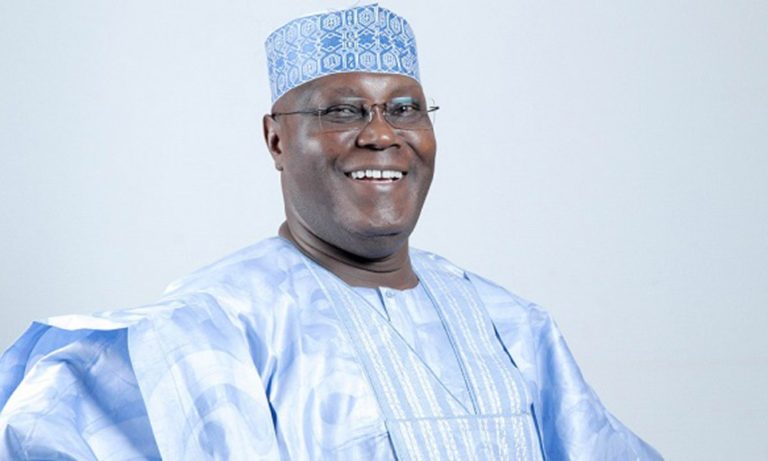
THE recent actions by Nigerian former vice president Atiku Abubakar have generated a lot of buzz in the political space with many asking if he is planning to contest for the presidency again in 2027.

The ICIR reported that Abubakar is the only politician in Nigeria who has sought the presidency the most times and has yet to win it.

The suspicion surrounding his interest in the presidency in 2027 followed his recent visit to three former presidents within the past week.

On Wednesday, June 19, he visited former military heads of state, Ibrahim Babangida and Abdulsalami Abubakar in Minna, the Niger State capital.

In a post on X, the Adamawa state-born politician said he visited the former military leaders at their residences to pay them aSallah homage”.

He also visited former President Muhammadu Buhari barely three days after he visited Babangida and Abubakar.

Atiku visited Buhari in Daura

Abubakar was the candidate of the Peoples Democratic Party (PDP) in the 2023 presidential poll.

He came second in the election, behind President Bola Tinubu of the All Progressives Congress (APC) and was trailed by the Labour Party (LP) candidate, Peter Obi. 

Obi was his running mate in 2019 when they jointly sought the presidency on the PDP’s platform before parting ways in the build-up to the 2023 election. 

In May, Abubakar hosted Obi in Abuja where they had a private discussion.

Also in May, the former vice president said the PDP would determine his fate in 2027, an indication that he is most likely to throw his hat in the ring again!

However, the former vice president assured that he would support Obi if the PDP backs his candidature in the next election.

The ICIR reports that the recent visits have raised questions on Abubakar’s real intention with many suggesting they are part of consultations for the 2027 general election.

His supporters’ reactions on social media whenever he makes these visits are also instructive, with many of them hailing him as their next President.

According to The ICIR’s earlier report, Abubakar has had two more shots at the country’s most exalted office than former President Muhammadu Buhari, who ran four times before winning it.

Abubakar had contested for the top office for 31 years and had had his hopes dashed. 

In the election conducted on February 25, 2023, he came second with 6,984,520 votes, behind Tinubu, who polled 8,794,726. 

While he has failed in all six times he has contested for the seat since 1992, Tinubu only contested once and won.

It remains unclear if Nigerians will be willing to elect him in 2027, should he contest, because he would be 80 years old by then.

Atiku’s loss in the last election arguably stemmed from his rift with five aggrieved governors in his party and not jointly seeking the office with Obi as he did in 2019.

The ICIR reported how the crisis between Abubakar and the aggrieved governors in the PDP lingered weeks before the poll.

The former Rivers State Governor and current Minister of the Federal Capital Territory (FCT), Nyesom Wike, led the governors, known as G-5. Others were Okezie Ikpeazu (Abia), Samuel Ortom (Benue), Seyi Makinde (Oyo), and Ifeanyi Ugwuanyi (Enugu)

Wike had contested for the PDP’s presidential ticket and lost to Atiku in May 2022.

Since losing the 2023 poll, Atiku has emerged as one of the major critics of Tinubu’s administration.

In January, Atiku advised Tinubu to resign if he could not handle insecurity challenges in Nigeria.

Atiku said this in a post on his X handle, as the nation continued in its insecurity slide under the President.

He decried the numerous incidents of kidnapping and other attacks that had occurred across Nigeria in the past months.

The ICIR reports that Abubakar may ride on the wing of the current hardship, occasioned by the suspension of subsidy on petrol and other harsh economic policies of Tinubu’s government to stand as a major contender for the presidency in 2027 if he seeks the office for the seventh time.


READ ALSO:


Commenting on Abubakar’s recent moves, a PDP member, Dokun Ojumo, told The ICIR in a chat that he believed the politician’s efforts were geared towards contesting the 2027 presidential election.

According to Ojumo, Atiku’s chances will be very bright in 2027 if he hires a good media team to help him push his agenda.

“In 2023, his manifesto and intentions did not get to most people. He should go big on social media in 2027,” Ojumo stated.

Nigeria’s national anthem change was a tactic to distract attention from the country’s real problems – political analyst

0

By Samuel OYELOWO, University of Pretoria

A year into his administration, Nigeria’s President Bola Ahmed Tinubu signed the National Anthem Bill into law, replacing an anthem adopted in 1978 with its predecessor. The decision generated debate among Nigerians, some of whom felt it did not rank on the list of social, economic and security challenges confronting the country. Samuel Oyewole, a political scientist, says it is a “distract and rule” tactic, which he described in his published research as serving the political elite’s goal of a democracy in name only and promoting a democratic setup where people’s involvement in governance is not respected.


The recent change to Nigeria’s national anthem was rushed through the legislature. What does that say about Nigerian politics?

While the majority of Nigerians are preoccupied with how to make ends meet, their representatives in Abuja prioritised changing the national anthem, and without any public hearing (participation).

The first and second reading of the bill at the floor of the Senate was on 23 May and it was passed on 28 May and signed by the president the next day.

In the House of Representatives, the bill passed through first, second and third reading on the same day.

Based on the available record of the National Assembly, that is unusually fast.

Many other bills that are relevant to the welfare of the citizens are stuck at first reading in the same Senate. Some of these include the Inflation Reduction Programme (Special Provisions) Bill and the Child Right Act (Amendment) Bill, waiting since 7 February, and the Government Performance and Accountability Bill, waiting since 22 February.

Instead of reviewing the performance of the government under Tinubu and the 10th National Assembly, public attention was dominated by discourse on the national anthem.

How is the change of national anthem a distraction strategy?

“Divide and rule” is a familiar feature of Nigerian politics. Political elites have perfected the art of dividing the people along ethnic, religious and regional lines.

However, this is only a tactic in the broader strategy of “distract and rule”. This seeks to draw people’s attention away from serious governance challenges that affect their lives, to focus instead on trivial issues.

The whole point is to maintain a “democracy” without the participation or representation of the people.

Has this strategy of distraction been effective?

Public opinion has been divided on the reintroduction of the old anthem. Some Nigerians, especially the older generation that are familiar with the old (now new) anthem and supporters of the ruling party, have welcomed the move.

Others are indifferent to the anthem change as they feel it does not affect their socioeconomic and security realities.

The socioeconomic realities prompted the Nigerian Labour Congress and its affiliated unions to declare an indefinite strike on 3 June 2024, to demand a living minimum wage. The strike shut down the economy, as the power grid, airports and other critical sectors were shut down.

Although the strike was suspended on the second day for renewed negotiation with government, it brought attention back from the national anthem.

How has Tinubu’s administration fared thus far?

At his inauguration on 29 May 2023, President Tinubu gave a message of hope amid rising inflation, growing public debt, pervasive insecurity, a legally contested election and a deeply polarised polity.

He also announced the removal of the petroleum subsidy. But he had no plan for the aftermath.

The unsubsidised petrol price jumped from 145 naira (US$0.324) per litre in May to 617 naira (US$0.7802) in July 2023. The cost of living skyrocketed.

The government claimed that removing the subsidy saved 1.45 trillion naira (US$976 million) between June and September. But Nigeria reportedly spent 3.6 trillion naira (US$2.4 billion) on the subsidy in 2023.

To address the shortage of foreign exchange, the administration also allowed for free flow of the naira. The currency dropped in value by 40.78% from 471.67 naira to 664.04 naira against the dollar in June 2023.

By February 2024, the naira was 1,542.58 per dollar and was predicted to reach 2,081, before it was relatively stabilised between 1,200 and 1,400 to a dollar at the official rate in March 2024.

Once the largest economy in Africa, Nigeria is set to slide to the fourth position in 2024.

The economic policy has worsened inflation, which rose from 22.22% to 33.69% between April 2023 and April 2024.

Although the president promised to review the minimum wage in June 2023 and outlined eight weeks to reach an agreement with the unions, it remained at 30,000 naira (about US$21.76) per month one year into his administration.

The World Bank projected that the share of the population below the international poverty line would increase from 30.9% to 40.7% by the end of 2024.

In addition to a crippling economic crisis, Nigeria is battling with security challenges, including terrorism, insurgency, armed banditry, illegal mining, kidnapping, smuggling and other organised criminal violence.

Despite the efforts of the Nigerian military, which killed 6,880 criminals, apprehended 6,970 others and rescued 4,488 hostages in 2023, the security situation has not improved.

Analysis by the Armed Conflict Location & Event Data Project shows that Nigeria recorded 4,556 fatalities and 7,086 abductions between 29 May 2023 and 22 May 2024, compared to 2,606 fatalities and 3,523 abductions in the previous year.

These are the real challenges facing the country and they highlight the many failures of Tinubu’s year in office.The Conversation

Samuel Oyewole, Postdoctoral Fellow in the Department of Political Sciences, University of Pretoria

This article is republished from The Conversation under a Creative Commons license. Read the original article.

Tinubu appoints Olatunji Bello as CEO of FCCPC

0

PRESIDENT Bola Tinubu has appointed Olatunji Bello as the Chief Executive Officer (CEO) and executive vice-chairman (EVC) of the Federal Competition and Consumer Protection Commission (FCCPC).

This was made known in a statement issued by the special adviser to the President on media and publicity, Ajuri Ngelale on Monday, June 24.

Ngelale in the statement noted that Bello is a lawyer, administrator, and renowned journalist.

“He is the former secretary to the Lagos State Government and holds a master’s degree in International Law and Diplomacy from the University of Lagos. He studied Law at the same university and was called to the Nigerian Bar in 2002.

“Mr. Bello began his career in journalism at the Concord Newspapers in 1985 and held the positions of Group Political Editor, Sunday Concord Editor, and Editor, National Concord.

“He is a winner of the US Alfred Friendly Press Fellowship and was appointed the chairman, Editorial Board of THISDAY Newspapers in 2001. He also served as Commissioner for Environment under various administrations in Lagos State,” the statement added.

Tinubu expects the new appointee to ensure the holistic realisation of the commission’s mandate, which includes protecting and promoting the interest and welfare of Nigerian consumers and adopting measures to guarantee the safety and quality of goods and services.

This appointment is coming barely six months after the Pesident sacked the commission’s former CEO, Babatunde Irukera.

The President noted that the sack was part of federal government’s plans to restructure and reposition vital agencies in the country.

Raising the bar for press freedom in Nigeria

0

By Edosa Oviawe

ON May 3, 2024, the global community commemorated World Press Day (WPD), which provided an opportunity to celebrate the fundamental principles of press freedom and assess the state of media freedom worldwide.

Though the 2024 theme was on informing the public about the problems and solutions facing the environment and influencing concrete action to address pressing environmental problems in Nigeria, this year’s WPD came at a most perilous time for the freedom of the press in the country. Hence, the major conversations and engagements in Nigeria on May 3, 2024, highlighted recent experiences in Nigeria, indicating that press freedom is under threat, and there is a need to raise the bar for a free press in the country. We are witnessing increased deployment of state resources and the weaponization of state institutions in the attempts to gag the press in Nigeria.

Section 39 of the 1999 Constitution of Nigeria (As Amended) recognises and guarantees Freedom of Expression and the Press as a fundamental right, and Section 22 of the 1999 Constitution of Nigeria (As Amended) places the burden on the press to uphold the government’s responsibility and accountability to the people. Similarly, other international treaties and conventions, of which Nigeria is a signatory, recognise the right of the press as fundamental to the existence of democracy.

However, since the beginning of 2024, there has been an alarming surge in incidents of unwarranted arrests of journalists, mostly for revealing corruption cases and governance failures. There is the increased deliberate use of the Cybercrimes Act to stifle press freedom in Nigeria.

Ironically, there is the continued application of Section 24 of the Cybercrimes Act 2015, which has been repealed in the Cybercrimes Prohibition, Prevention Act 2024 (As Amended) passed into law in February 2024 to arrest journalists. For instances, on 7 February, 2024 the Kwara State Police charged Salihu Ayatullah, Editor-in-Chief of Informant247, Managing Editor Azeez Adisa Jaji, and reporters, Abdurahman Taye Damilola and Salihu Shola Taofeek, with conspiracy and defamation under the Cybercrime Act, and the Penal Code respectively. The charges stemmed from a report alleging that the Kwara Polytechnic Rector,  Abdul Jimoh Mohammed made false financial claims and commissioned uncompleted projects.

On 23 March 2024, Bukky Shonibare, Chairperson of the Board of Trustees for the Foundation for Investigative Journalism (FIJ), was summoned by the National Cybercrime Centre of the Nigerian Police Force and interrogated on 26 March after which she was asked to produce FIJ’s publisher, Fisayo Soyombo, over his revealing report of alleged corruption and arms dealing by personnel of the Nigeria Customs Service.

On 1 May 2024, Daniel Ojukwu, an FIJ reporter, was arrested in Lagos and taken to the State Crime Investigations Department before being transferred to the National Cybercrime Centre in Abuja. He was detained for 10 days over allegations of cybercrime, following a report on the misappropriation of public funds by Adejoke Orelope-Adefulire, the Special Adviser to the President on Sustainable Development Goals (SDGs).

On 15 May 2024, Nurudeen Akewushola, a reporter with the International Centre for Investigative Reporting (ICIR), received a letter from the Police Cyber Crime Centre (PCCC) inviting him for an interview arising from a petition following an ICIR report. The same day, another letter invited ICIR’s managing directors for a similar interview. This list of attempts to hound journalists and gag press freedom in Nigeria tends to be increasing by the day.

It has been reckoned globally that the beacon of democracy is, in fact, a free and fair press. Freedom of the press is respected because it is indeed the ultimate value of any democracy. Democracy is about citizen’s participation in governance; the fulcrum of that freedom is freedom of expression. The media, both conventional media and new media, play a crucial role in this. They are the vehicle or channel through which citizens can express their views, hold the government accountable, and participate in the democratic process.

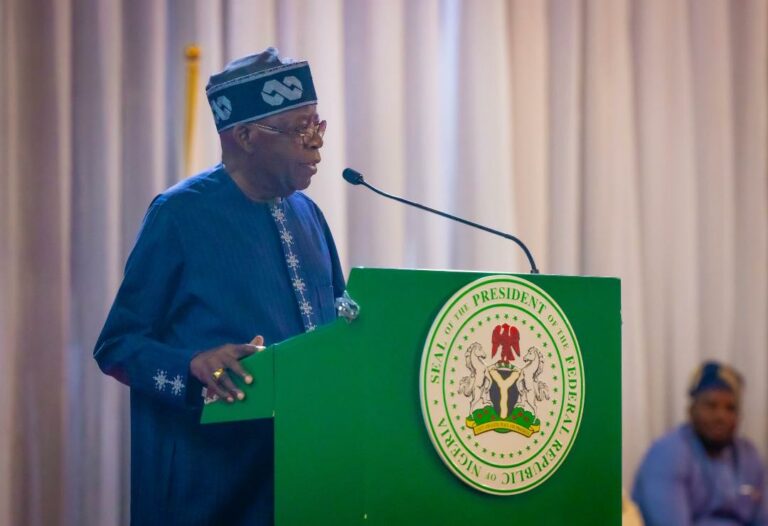
Nigeria’s President, Bola Ahmed Tinubu, recently in his 2024 Democracy Day speech not only celebrated the nation’s progress but also enumerated his administration’s commitment to entrenching democratic values and economic reforms. The President, while paying tribute to some media organisations for their fight and doggedness for a return to democracy during the military regime, noted that “we could not have won the battle against military dictatorship without the irrepressible Nigerian journalists who mounted the barricades along with the pro-democracy activists”. These very profound words of the President now leave one to wonder: If the Nigerian Press is so important to this democracy, why are journalists increasingly becoming victims of law enforcement and security agents’ harassment under his watch?

Press freedom is not just about protecting journalists. In fact, when press freedom is in jeopardy, it means the citizens have lost their basic freedom to participatory governance. If citizens ever needed to rise against tyrannical tendencies by those who wield state powers against its citizens, now is that time.

A country’s democracy is only as good as its citizen’s ability to freely live, move, associate and express their views without fear. All Nigerians must therefore rise up in defence of press freedom in the country; Journalism Is Not A Crime!

Edosa Oviawe is a human rights and governance advocates. He is currently the programme manager for Global Rights.


Soyinka: Group organises stage play to celebrate literary icon at 90

0

A MULTI-MEDIA literary, theatre, and movie company, Adubiifa Network Company (ANC) is set to charge Nigeria’s drama and theatre space with the public presentation of a stage play to honour literary icon, Wole Soyinka, a professor, as he clocks 90.

The play, titled “The Noble Warrior – Eni Ogun.” is written by Aiye-ko-ooto, directed by Oriade Adefila, and produced by Cash Onadele.

The play will be performed in honour of the Nobel Prize for Literature winner as he joins the nonagenarian group.

The performance is a collaboration between Wole Soyinka International Cultural Exchange (WSICE) and Adubiifa Network Company.

This was disclosed in a statement released on Sunday, June 23, and signed by the Executive Producer, Toye Arulogun.

According to the statement, the play is billed to premiere on Monday, July 15 by 6:00 pm at the Hubert Ogunde, Hall of the June 12 Cultural Centre in Abeokuta, Ogun State.

The group will also have two shows daily at 3:00 pm and 6:00 pm.
at the MUSON Centre, Lagos.

“With a carefully selected cast and technical crew, this celebrative cultural heritage play showcases the protagonist’s brand persona likened to Wole Soyinka and highlights similar personality traits as a fighter and the humane warrior in his 90-year sojourn on earth.

“The storyline is that of Oluwole – a princely noble warrior who desires a private life hunting, teaching, and romancing his intended, Olasope. Little did he know that Olasope’s fervent wish would be the subject of a bet between the wizard and the witch of the land.

“Oluwole’s new goal was to rid his homeland of the British. This followed (his adversary) Gbadamosi’s prompt for Major Scott to deflower Olasope, his intended,” the statement added.

It noted that the spine of the drama is only one arrow, which serves as the conscience that pierces the crossroads of corruption, colonialism, and the crown.

The organisers said the production of the commemorative tribute to Soyinka would tour selected cities across Nigeria after the initial shows in Abeokuta and Lagos.