Home Blog Page 578

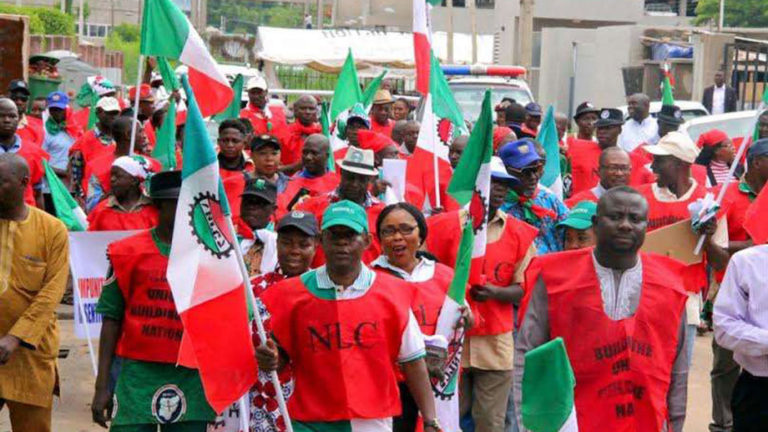
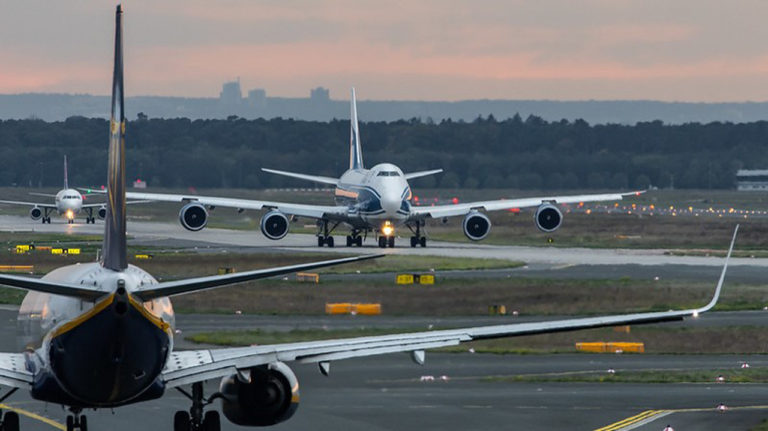
Schools, banks, airports, others shut down as labour begins nationwide strike

0

A NATIONWIDE strike called by the organised labour unions begins today, Monday, June 3, after negotiations between federal government representatives, National Assembly leaders, and officials from the Nigeria Labour Congress (NLC) and the Trade Union Congress (TUC) ended in a deadlock.

The meeting, held behind closed doors at the National Assembly complex in Abuja, started at around 5:50 p.m. and concluded at 8:45 p.m., on Sunday, June 2.

Addressing journalists after the session, the Senate President, Godswill Akpabio, said the government pleaded with the labour leaders to reconsider their planned strike but they declined.

Akpabio added that should the strike proceed, it would affect the nation’s economy, including essential services such as schools and hospitals.

The strike, which comes as a direct response to unresolved issues surrounding wage increases, economic policies, and electricity tariff hike, was earlier unannounced on Friday, May 31.

The labour leaders stated that they took the decision after their ultimatum for the federal government to finalise all negotiations for a new minimum wage by the end of May expired.

Aviation unions, electricity, bank workers, others join strike

Consequently, the aviation unions in Nigeria have directed their members to withdraw services at all the country’s airports.

The unions include the National Union of Air Transport Employees, the Air Transport Services Senior Staff Association of Nigeria, the Association of Nigerian Aviation Professionals, and the National Association of Aircraft Pilots and Engineers.

This was contained in a statement jointly signed by the unions after an emergency meeting in Abuja on Sunday.

Also, the Secretary-General of the Nigeria Union of Railway Workers, Igbokwe Francis, has announced to the union members that they would join the strike, beginning at midnight on Monday, urging management to protect all critical equipment and properties.

The Secretary General of the Association of Nigeria Aviation Professionals (ANAP), AbdulRasaq Saidu had also criticised the government for being unserious with the negotiations.

He further directed ANAP members and all aviation workers to stay away from work by midnight on Sunday, June 2.

The organised labour’s affiliates, including the Nigeria Union of Petroleum and Natural Gas Workers, NUPENG, National Union of Electricity Employees, NUEE, Maritime Workers Union of Nigeria, MWUN, National Union of Banks, Insurance and Financial Institutions Employees, NUBIFIE, and other critical sector unions had also written to their members to ensure total compliance.

Our position – Gov’t

However, the federal government, on June 1, pleaded with the organised labour in Nigeria to reconsider its decision to embark on a nationwide strike, noting that the government had made an offer of N60,000.

“The government is pleading with labour to reconsider its position. The federal government has already made an offer of N60,000, and whatever the government does is in the interest of Nigerians. We won’t like to do something that will throw the country into another problem.

“Even as we do that, we are pleading with labour. They are partners in this project called ‘Nigeria’ and we expect them to join hands with the federal government as it strives to look for solutions that will take Nigeria to the desired prosperity,” Minister of Information and National Orientation Idris Mohammed, said

The ICIR reports that following the plea by the Information Minister, the meeting, held on Sunday night was convened by the leadership of the Senate and House of Representatives to shelve the planned strike action over minimum wage demands.

The decision to proceed with the strike was also confirmed by the TUC President, Festus Osifo, who stated that the strike would commence as planned, pending discussions with their organs.

“The Senate President appealed to us to call off the strike. But we can’t sit here and call off the strike because we have other organs. We will take the appeals to our various organs.

“We don’t have the powers to call off the strike action. For now, the strike action will commence, while we discuss with our organs,” Osifo told newsmen after the meeting.

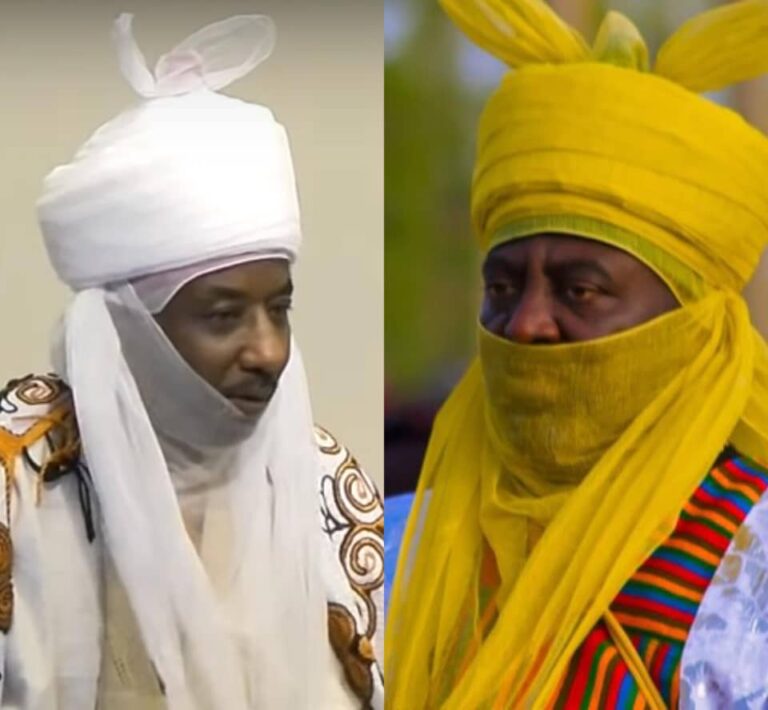
Sanusi vs Bayero: Who will lead Kano Durbar Festival?

0

AS the current emirship crisis unfolds in Kano, many residents are left wondering which of the two embattled emirs will lead the Durbar festival, one of Northern Nigeria’s most significant and historic traditional festivals.


On Thursday, May 23, 2024, the Kano State House of Assembly amended the Emirate Council Law.

The amended law abolished the existing five emirates and restored the single emirate system in the state.

By implication, all the five emirs ruling at the time of the amendment were dethroned, and the state government reinstated Lamido Sanusi, who was deposed by the previous administration, led by the current national chairman of the All Progressives Congress (APC), Abdullahi Ganduje.

The APC produced President Bola Tinubu and the party controls more states in Nigeria.

Ganduje’s APC lost to the New Nigerian Peoples Party (NNPP) in Kano State and the ANPP’s leadership vowed to return Sanusi as emir.

Sanusi’s reinstatement threw the entire state into confusion and the impasse has remained unresolved nearly two weeks after.

The state Governor Abba Yusuf backed Sanusi’s reinstatement but the decision did not sit well with one of the dethroned five emirs, Aminu Ado Bayero and his supporters.

He refused to relinquish the throne.

Two days after he was deposed, Bayero, who had been away from the city, returned to Kano and made his way to the Nasarawa mini palace, since the newly reinstated emir had already occupied the main palace in Kano, the state capital.

A Federal High Court issued an order restraining the governor from reinstating Sanusi as emir before Bayero returned; the governor ignored the order.

Relying on the court order, Bayero continued in his capacity as emir and expressed optimism that he would emerge victorious from the tussle.

“I call on the people to remain law-abiding as we await the pronouncement from the court in this legal matter. We call on the authorities to be fair and just in this matter. Kano is like a mirror and an influential state in Nigeria.

“Justice is the way to go on every issue. There will be justice. Nobody is above the law. We will accept whatever the law says. I appreciate all the people who have shown concern,” he said on Saturday, May 25.

However, two days after his return, the State High Court restrained Bayero from parading himself as the Emir.

More contradictory court orders followed, leaving many people further confused about the position of the law on the issue.

Pronouncements by the courts compelled the Chief Justice of the Federation, Olukayode Ariwoola, to summon the state Chief Judge and the Chief Judge of the Federal High Court. The Nigeria Bar Association also described the courts’ injunctions as embarrassing to the legal profession.

The ICIR reports that as both emirs continue to hold separate courts, the date for one of Kano’s most significant festivals inches closer, and it remains unclear which of the emirs will lead the event.

Kano Durbar festival

The Durbar festival is usually held twice a year in Kano and some other ancient towns in Northern Nigeria, to mark the Eid-el-Fitr and Eid-el-Kabir celebrations.

Kano is known to have one of the largest Durbar festivals in the country.

A colourful celebration that often lasts for three or four days, the festival is characterised by processions through the city led by the emir, a key player in the event.

The emir leads about five processions throughout the period of the festival.

On the first day, he leads a procession of men dressed in colourful robes and turbans first to the Eid grounds for prayers, then through the city, riding on horses in a parade that residents throng out to the streets of Kano to watch.

The processions stop at various points, including the Government House and other locations to pay or receive homage and for prayers.

One of the processions often has the emir making a temporary stop at the mini palace, which Bayero now occupies.

In April 2024, Bayero led the first Durbar for the year, and the second festival is expected to begin on June 16.

But with both deposed and reinstated emirs now sitting in Kano, and in light of contradicting court orders on the legitimacy of either, the forthcoming festival threatens to take a different look from the norm. Who will lead the Durbar?

CPJ to Nigerian police: Drop criminal investigation against ICIR journalists

0

THE Committee to Protect Journalists (CPJ) has urged the Nigerian police to immediately drop its criminal investigation against the International Centre for Investigative Reporting (ICIR) and its journalist, Nurudeen Akewushola.

The Committee in a statement dated Friday, May 31, said the police should allow the news platform to perform its constitutional mandate without harassment.

“Nigerian police should immediately end the criminal investigation of journalist Nurudeen Akewushola over his reporting, drop any plans to charge him or his colleagues, and cease harassing the International Centre for Investigative Reporting,” said the head of CPJ Africa programme, Angela Quintal, from Durban, South Africa.

“It seems that despite reforms to Nigeria’s Cybercrimes Act, police continue to use it as a tool to summon and harass the press, even without bringing charges,” Quintal said further.

On May 28, The ICIR reported how the officers of the Nigeria Police Force-National Cybercrime Center (NPF-NCCC) detained Akewushola and the organisation’s Executive Director, Dayo Aiyetan for nine hours over an investigation which exposed the corrupt practices of two former Inspectors-General of Police.

Both Akewushola and Aiyetan were at the cybercrime centre having received two separate invitations from the police on alleged cyberstalking and defamation.

Although The ICIR raised concerns over the first invitation which was dated April 16, 2024, the police insisted on questioning the journalists.

Consequently, on May 15, The ICIR received another invitation from the police, a copy of which CPJ said it reviewed.

Both journalists honoured the invitation and were accompanied by the organisation’s lawyer, Saidu Muhammad Lawal.

“Akewushola and Aiyetan told CPJ that police questioned them about a February 2024 report authored by Akewushola and published by ICIR that alleged two former Nigeria inspector generals of police, Solomon Ehigiator Arase and Ibrahim Kpotum Idris, were involved in illegal land sales. During police questioning, Aiyetan, Akewushola, and Lawal said that officers showed them a criminal complaint filed by Corpran International Limited, one of the land developers mentioned in the ICIR report. Akewushola also said the complainant accused him of seeking a bribe when he called for comments before publishing the report, an allegation the journalist described as a blatant falsehood.

“Additionally, days after the publication, Arase wrote a letter to ICIR, which CPJ reviewed, describing the report as false and demanding a retraction of the story and compensation of one billion naira ($714,647 USD). He also filed a civil suit against ICIR alleging defamation of character,” the statement read.

Corpran Int’l calls CPJ journalist stupid

Meanwhile, CPJ disclosed that its reporter was called ‘stupid’ when she reached out to Corpran International Limited owner Andy Chime on the phone on Wednesday, May 29, while also confirming that he filed a complaint with police over cyberstalking and defamation of character.

Chime called the reporter “stupid” for requesting clarity on the allegation of cyberstalking mentioned in his complaint, before ending the call.

CPJ further noted that when it contacted Arase on May 17, after the first invitation, he confirmed he had filed a civil case against The ICIR and declined to comment about a possible police complaint filing.

“On the same day, when CPJ contacted the director of the NPF-NCCC, Henry Ifeanyi, he declined to discuss details of the case that caused the summons and said he was not aware of any laws preventing the police from inviting Nigerians for questioning. Reached by phone on May 28 while Akewushola and Aiyetan were at the station, Ifeanyi said ‘I don’t have any journalists detained’ and declined to comment further, referring CPJ to the police’s public relations office.

“When contacted on May 28, police force public relations officer Muyiwa Adejebi said he would contact the Cybercrime Center for details of the police invitation and investigation. On Wednesday, Adejobi told CPJ that he could not give the details of any possible charge against Akewushola but added that if the investigators decided to charge him, it would relate to Akewushola’s work as a journalist,” the statement added.

Backstory

The police, through the National Cybercrime Centre, delivered a letter of invitation to The ICIR office in Abuja on Wednesday, May 15, 2024.

The letter, dated April 16, requested the reporter and the organisation’s managers to report to the centre on Wednesday, April 24, 2024, three weeks before the letters were delivered to The ICIR by the Police.

Part of the letter reads, “The Nigeria Police Force National Cybercrime Centre is investigating a case of cyberstalking and defamation of character in which the above-named person featured prominently.

In view of the above, you are requested to interview the Director of the Nigeria Police Force National  Cybercrime Centre (NPF-NCCC) plot 625 Mission Road, Diplomatic Zone, Central Business District, Abuja through CSP Omaka Udodinma Chukwu on Wednesday 24th April 2024. Call 08067854241 on your arrival. Your cooperation in this regard will be highly appreciated, please.”

One of the concerns raised by the organisation was the delivery of the invitation letter three weeks after Akewushola and the ‘managers’ were expected to have shown up at the Cybercrime Centre.

There were no details of the petition which led to the investigations for cyberstalking and defamation of character, as this would have helped the invitees to better prepare for the interview with the Police.

The ICIR perceived the invitation as part of the growing trend of a crackdown on journalists by security operatives using the Cybercrimes Act, despite a recent amendment of the legislation following public outcry that it was being manipulated to stifle free speech and harass journalists.

The media organisation, therefore, requested that a new letter be provided by the Police addressing the concerns raised.

“As a law-abiding organisation that holds power to account, we are always willing to submit to accountability and would honour lawful invitations from law enforcement agencies but we have written to the Police to provide details of the petition against The ICIR and its reporter and write a new invitation letter before we honour the invitation,” the statement concluded.

The police sent another letter of invitation, though it failed to provide details of the invitation. The ICIR Executive Director, Dayo Aiyetan, the reporter and the organisation’s lawyer were at the centre on Tuesday, 28 May, 20

Summary of investigation that exposed two former IGPs, other police chiefs

The report revealed that two former Inspectors-General of Police, Ibrahim Idris and Solomon Arase, currently the chairman of the Police Service Commission (PSC), were accused of receiving N200 million each and a house allocation as incentives for awarding an estate development contract to Corpran International Limited for land originally meant to be used as police barracks.

A former staff member of Corpran International Limited Kalu O. Kalu and a lawyer Francis Mgboh accused both former IGPs of unlawfully approving the contract for the development of the land, which belongs to the Police, without adequate scrutiny, after receiving the bribe.

The allegations currently form a part of ongoing litigation at the Federal High Court in Abuja, and documents obtained by The ICIR, including court affidavits, showed that many other top police officials were also bribed to facilitate the approval of the contract.

Arase, abusing the office he currently occupies, had released a statement through the PSC spokesperson Ikechukwu Ani on Friday, May 17, 2024, saying he had sued three ICIR staff members, including the reporter Akewushola, Executive Director of The ICIR, Dayo Aiyetan, and The ICIR Editor, Victoria Bamas, over the report.

Journalists remain state targets in Nigeria

Despite the constitutional mandate given to journalists to hold the government and its agencies to account, laws such as the Cybercrimes Act have been used to intimidate journalists and stifle press freedom.

Corrupt officeholders and other persons with questionable wealth use state security to harrass journalists who expose sleazes.

On Wednesday, May 1, a journalist with the Foundation for Investigative Journalism (FIJ) Daniel Ojukwu was abducted by officials of the Nigerian Police and detained at the NPF-NCCC for ten days.

Before his abduction, former editor of First News Segun Olatunji was also abducted and detained for nearly two weeks by operatives of the Nigerian military before being released.

Attacks and harassment of journalists have remained a matter of concern in the country and in 2023 alone, four reporters with The ICIR were harassed by state and non-state actors in the line of duty.

Abandoned and rejected: Nigerian travellers lament experience with Air France

AN Air France aircraft has abandoned some Nigerian passengers on board from Paris to Abuja in Chad after a flight disruption, leaving them stranded, The ICIR findings have shown.

In a viral video on X on Sunday, June 2, passengers could be seen stranded and helpless while lamenting on the tragedy.

In the video seen by The ICIR, a man was seen lamenting about the situation saying that they arrived at Chad after Air France dropped them, including children, elderly women, and men stranded.

“Air France has not provided any means of accommodation for us and this is unacceptable, they cannot treat us as animals.

“They dumped us at the hotel and the hotel is telling us that they don’t have rooms, we are all at the passage. This is a very sad situation, but we are hoping for the best,” he said.

Reacting to the issue, the minister of aviation and aerospace development Festus Keyamo, noted via a post on his official X account that he has called on the appropriate body to swing into action.

“It has come to my attention that some Nigerians on an Air France flight from Paris to Abuja are presently stranded in Chad, from where the flight earlier dropped some passengers. I have immediately directed the Consumer Protection Department of NCAA to swing into action and engage Air France.

“We shall inform everyone of the outcome soon. Meanwhile, I urge @AirFranceNG to immediately issue a statement on the fate of those Nigerians,” he stated.

Meanwhile, the airline, Air France has apologised for leaving Nigerian passengers stranded on its flight AF878 scheduled to connect N’Djamena in Chad to Abuja, noting that the flight was canceled due to a heavy storm in N’Djamena.

They further stated that they have been able to provide accommodation for the passengers in hotels, ensuring their safety and comfort, adding that a some of the passengers will be able to board AF820 on Sunday June 2 at 7.45pm (landing in Abuja at 9.15pm), while others will board AF 4191 on Monday June 3 at 8.15am (landing in Abuja at 10.15am).

Nigeria risks electricity generation collapse over N3.7trn debt – GenCos

THE power Generation Companies (GenCos) have expressed worries over the N3.7 trillion debt owed to the companies, warning that it could threaten their operations and lead to the collapse of electricity generation in Nigeria if not resolved.

GenCos gave the warning in a statement signed by its Board Chairman, Sani Bello on Sunday, June 2, urging the government to ensure a payment plan to settle all outstanding invoices to the companies.

Gencos said they were left to bear the brunt of the liquidity crises in the electricity sector.

The companies are worried about the current Multi-Year Tariff Order ((MYTO) by NERC that further worsened GenCos’ situation as payment of nine to 11 per cent of services it rendered was paid for by its customers.

“GenCos is currently owed over two trillion Naira for the power they generated, put unto the national grid, and consumed by end users. This is in addition to the over 1.7 trillion naira, funding gap created in the recent supplementary MYTO order 2024 without a designated fund to fill the gap.

“This huge debt outlay is now greatly inhibiting GenCos ability to meet their obligations to lenders, O&M operations, necessary maintenance, spare parts procurements, and employee-related obligations etc,” GenCos stated.

The GenCos’ revelation came roughly two weeks after the Minister of Power, Adebayo Adelabu, said Nigerian President Bola Tinubu had approved a payment plan to clear outstanding debts owed by the power sector, estimated at N3.3 trillion.

On Thursday, May 16 at the 8th Africa Energy Marketplace in Abuja, Adelabu said specifically that the government would liquidate the N1.3 trillion owed to GenCos and $1.3 billion debt to gas companies.

The minister even disclosed that the federal government had commenced payment of the cash part of the N1.3 trillion debt owed GenCos and had concluded plans to settle the second part via promissory notes within two to five years.

As of the time of filing this report, the Minister of Power is yet to give an update of the N1.3 trillion promised the GENCOs to defray their debts.

In the statement by its board chairman, GenCos said cash liquidity crises were on the top burner, reducing their ability to perform obligations and undermining the electricity value chain.

“Notwithstanding this and other severe difficulties the GenCos have battled with since takeover in 2013, they have kept to the terms of their contractual agreements by ramping up capacity which has largely suffered systemic constraints.

“The power generated by GenCos have continued to be consumed in full without corresponding full payment, notwithstanding the commencement of the partial activation of contracts in the NESI which took effect from July 1, 2022, the minimum remittance order, bilateral market declaration, waterfall arrangement, the risks of inflation, forex volatility with no dedicated window to cushion the effect of the forex impact, the supplementary MYTO order which leaves about 90% of GenCos monthly invoices unmet without a bankable securitisation, or financing plan. This situation has dire consequences for the GenCos and by extension the entire power value chain,” the GenCos stated.

It pointed out that the new order was an aberration and clear departure from existing power purchase agreement (PPA) terms guiding the contractual relationship between GenCos and the Nigeria Bulk Electricity Trading Plc (NBET).

“It, therefore, said to continue operations, the government needs to ensure a payment plan to settle all outstanding GenCos invoices, in line with their PPAs. Reprioritization of payments under the waterfall arrangement to give full priority to a hundred per cent payment of GenCos’ invoices as at when due. A clear financing plan to backstop the exposures in the NERC’s Supplementary Order to the MYTO and the DRO 2024.”

Nigeria has cleared 98% of foreign airlines’ trapped funds, says IATA

0

THE International Air Transport Association (IATA) said Nigeria has cleared 98 percent of foreign airlines’ trapped funds, urging the country to clear the remaining two per cent of the residual $19 million funds.

The IATA, a trade association of the world’s airlines, disclosed this on Sunday, June 2.

It recalled that at its peak in June 2023, the Nigerian government blocked funds that amounted to $850 million, significantly affecting airline operations and finances in the country, as airlines faced difficulties in repatriating revenues.

Nigeria floated its foreign exchange market in June 2023 and since then devalued its currency twice, The ICIR can report.

On March 21, The ICIR reported that the Central Bank of Nigeria (CBN) confirmed clearance of  all valid foreign exchange backlogs for the aviation sector following international airlines’ threats to halt operations in the country.

“However, as of April 2024, 98per cent of these funds have been cleared. The remaining $19 million is due to the Central Bank’s ongoing verification of outstanding forward claims filed by the commercial banks,” IATA stated.

IATA said that at the time, the high volume of blocked funds led some airlines to reduce their operations, causing one airline to temporarily cease operations in Nigeria, which severely impacted the country’s aviation industry.

“We commend the new Nigerian government and the Central Bank of Nigeria for their efforts to resolve this issue. Individual Nigerians and the economy will all benefit from reliable air connectivity for which access to revenues is critical. We are on the right path and urge the government to clear the residual $19 million and continue prioritizing aviation,” IATA’s Director General, Willie Walsh, stated.

IATA also revealed a 28 per cent decrease in the amount of airline funds blocked from repatriation by governments as total blocked funds at the end of April stood at approximately $1.8 billion, a reduction of $708 million since December 2023.

The world aviation body said the main driver of the reduction was a significant clearance of funds blocked in Nigeria, and noted that airlines were adversely affected by the devaluation of the naira.

It also revealed that eight countries including Pakistan, Bangladesh, Algeria, XAF Zone, Ethiopia, Lebanon, Eritrea, and Zimbabwe, were responsible for 87 per cent of blocked funds with Pakistan and Bangladesh leading.

It said the situation has become severe in Pakistan and Bangladesh with airlines unable to repatriate $731 million ($411 million in Pakistan and $320 million in Bangladesh) of revenues earned in these markets.

It urged governments to remove all barriers to airlines repatriating their revenues from ticket sales and other activities in accordance with international agreements and treaty obligations.

“The reduction in blocked funds is a positive development. The remaining $1.8 billion, however, is significant and must be urgently addressed. The efficient repatriation of airline revenues is guaranteed in bilateral agreements. Even more importantly, it is a pre-requisite for airlines—who operate on thin margins—to be able to provide economically critical connectivity. No business can operate long-term without access to rightfully earned revenues,”  IATA’s director general, added.

One year after Tinubu took office, the cost of eating healthy food increased by over 100%

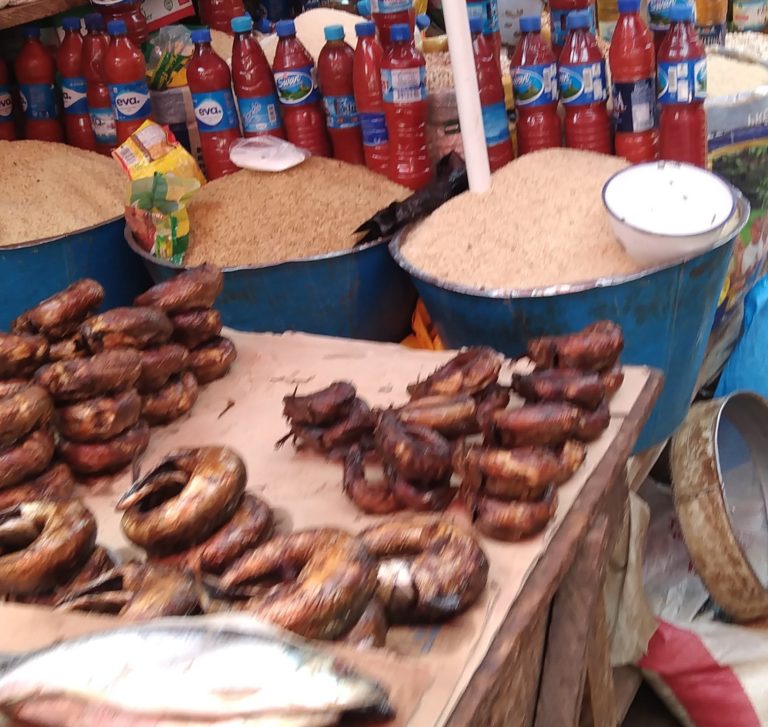
THE latest data from the National Bureau of Statistics (NBS) has shown that as of April 2024, eating healthy food in Nigeria now costs N1,035. 

This report is part of The ICIR series, “Tinubu’s one year in office”, read it here.

The NBS’s report on the Cost of a Healthy Diet (CoHD) shows that the new figure is 5.4 per cent higher than the amount recorded in the previous month, March 2024, with N982. 

To put this into perspective, anyone in Nigeria would need N64,170 to eat at least two healthy diets daily for a month – 31 days. Nigeria’s minimum wage for workers is currently N30,000. 

The ICIR’s further findings showed that as of May 2023, when President Bola Tinubu assumed office, the cost of a healthy diet was N503. With this new data, the price increased by 105.77 per cent in one year. 

That is more than double the amount paid to eat a healthy meal one year after Tinubu’s assumption.

According to NBS, animal-source foods were the most expensive food group recommendation to meet in April, accounting for 36 per cent of the total CoHD. Also, fruits and vegetables were the most costly food groups in terms of price per calorie; they accounted for 11 per cent and 16 per cent, respectively. 

At the state level Ekiti, Ogun and Osun States recorded the highest costs with N1,483, N1,447, and N1,417 respectively. Kogi and Katsina accounted for the lowest costs with N709, followed by Kaduna and Nasarawa with N756 and N769, respectively. 

Meanwhile, at the zonal level, the average CoHD was highest in the South West Zone at N1,406 per day, followed by South East Zone at N1,190 per day. 

The lowest average Cost of a Healthy diet was recorded in the North-West Zone with N781 per day. 

The ICIR reported how Nigeria’s headline inflation rate increased to 33.69 per cent in April. This was the 11th consecutive rise under Tinubu since he assumed office in May 2023. The food inflation rate for the month under review was 40.53 per cent.

Erisco: Chioma Okoli released from custody, Lawyer confirms

0

A NIGERIAN woman, Chioma Okoli, has been released following her arrest over a review of an Erisco Foods product on social media.

In a post shared by her lawyer, Inibehe Effiong via X on Saturday, June 1, Okoli’s bail was perfected, and her release secured from the Medium Security Custodial Centre in Suleja, Niger State where she was remanded on Tuesday after her arraignment, adding that she has reunited with her family.

He further noted that she will be seeking medical care while expressing gratitude on her behalf to Nigerians for their support,

“Chioma is grateful to Nigerians who have supported her materially and otherwise. This case further demonstrates that there are people of conscience and goodwill who would not hesitate to commit their energies, resources, and voices in pursuit of the course of justice and defense of the oppressed.

“Some people have helped Chioma in ways that are simply profound and humbling; we are eternally grateful to everyone of them. Thank you. History will vindicate the just,” he said in his post.
In 2023, The ICIR reported that the president and Chief Executive Officer (CEO) of Erisco Foods, Eric Umeofia, had threatened to sue Chioma Okoli, after she posted a negative review of one of the company’s products, noting that her adverse comments affected his business.
However, she was arraigned on Tuesday, May 28, 2024, where she pleaded not guilty to the two counts of conspiracy and cyberstalking leveled against her and thereafter granted bail in the sum of N5 million with two sureties.
The judge in charge, Justice Peter Lifu held that one of the sureties must be her spouse or blood relative with verified means of livelihood residing within the jurisdiction of the court as well as the sureties to deposit a passport photograph for each and directed the defendant to also deposit her international passport, if she has one.

According to the court, denying her bail would be a wrongful application of discretion and tantamount to judicial rascality and pre-trial judgment.

The decision by the court is based on the presumption of innocence as stated in Section 365 (5) of the 1999 Constitution of the Federal Republic of Nigeria as amended. The case was thereby adjourned to June 13, for further hearing.

Sit-at-home: Tinubu describes killing of soldiers in Aba as “treasonable”

NIGERIAN President Bola Tinubu has condemned the mindless killing of soldiers in Abia State in the country’s southeast geopolitical zone, describing it as “treasonable” and “unwarranted barbaric and evil acts.”

Tinubu expressed his displeasure in a statement he signed and shared on his X handle on Sunday, June 2, as he directed the soldiers to fish out the perpetrators.

“I have received yet another disheartening news story about the killing of five soldiers by suspected militants of the proscribed terrorist organization, IPOB.

“These unwarranted barbaric and evil acts are condemnable and should never be condoned or tolerated in our country. Our soldiers and the police have the onerous duty to protect all of us from aggressors and criminal non-state actors,”he  further said.

The soldiers were allegedly lynched by the proscribed Indigenous People of Biafra (IPOB) on Thursday, May 30,  when a military checkpoint in Obikabia Junction in Aba, Abia state was attacked by the hoodlums.

The ICIR reported that about 15 hoodlums launched an attack on the soldiers at about 8:00 a.m. while allegedly enforcing a sit-at-home order declared by the proscribed group across the southeast states of the country.

Tinubu noted that the slain soldiers were on peacekeeping duty  on Thursday, May 30, when they were murdered, just two months after a similar tragic incident happened in Okuama, Delta State.

According to the President, hundreds of the country’s security officers have paid the ultimate price in fulfillment of their duty, while some have experienced the indignity of being manhandled by the people they protect.

“They surely do not deserve the mindless attacks by unruly elements in our society,” Tinubu said.

Commenting on consequences of such actions,Tinubu said  the federal government would come down heavily against those who have made it a habit to needlessly attack the officers and men of our armed forces.

He stressed that on no account should anyone, under any guise, have the audacity to kill agents of the state.

“I want to make it clear that the government of the Federal Republic of Nigeria and the armed forces have the capacity to crush violent non-state actors, making our communities unsafe.

“I urge security agencies not only to fish out the masterminds and perpetrators of the Aba attack but also those calling on people to stay at home. Their actions are nothing short of treason.”

The fact that the security forces are exercising necessary restraints when attacked should not be mistaken for weakness, he warned.

“We are working to build a peaceful and harmonious society, but nobody should be under any illusion that the government will not act appropriately when the lives of our officers and men are wantonly taken.

“While my condolences go to the families of the five slain soldiers, their colleagues, and the leadership of our armed forces, I urge other men and women on peacekeeping duty not to be discouraged by the unfortunate incident in Aba,” Tinubu added.

Nigeria doesn’t need change of governance system- Shettima

0

NIGERIA Vice President Kashim Shettima has reportedly expressed his view that the country does not need a change of system of governance as being canvassed by some people, but good governance.

Shettima took this position at an event in Ilọrin, Kwara State capital, on Saturday, June 1.

According to the Vice President, “Democracy can only survive by adherence to the rule of law and quality of governance, not by parliamentary system as being canvassed by some people.

“Many nations that collapsed did so because of lack of access to truth and justice; their access to justice was frustrated and denied.”

Shettima claimed that the President Bola Tinubu-led administration never influenced the electoral process since they assumed office, despite the obvious litigations that trailed the 2023 electoral process that brought them into power.

“President Bola Tinubu never influenced the electoral process and we (the presidency) never used instruments of office to hunt or hound perceived opponents standing trial,” he added.

The ICIR can report that since 1999 Nigeria returned to democratic rule the country has had almost 25 years of uninterrupted presidential system of government, however, there have been pockets of clamour for a change of governance system, besides regional agitations for secession.

At the event on Saturday, the former Minister of Works, Babatunde Fashola, lent his voice that the country once practised a parliamentary system but failed which brought about unwarranted disaster.

“Let’s think deeply about why the parliamentary system failed us and have we overcome those reasons,” he said.

The former minister, however, suggested a liberal democracy that would ensure better and improved livelihood of Nigerians.

He said, “Those calling for the system change are instigated by economic reasons. If only they are confident the government would provide for their economic need, they won’t chant this clamour for change.

“If there is sincerity of purpose, there will be better life for all even under the present system of government.”