THE Federal High Court Abuja has ordered the Attorney General of the Federation (AGF) and Minister of Justice, Lateef Fagbemi, to re-open the investigation into the murder of renowned journalist Dele Giwa.
Giwa, one of the founders of the defunct Newswatch Magazine, was murdered on October 19, 1986, in his Lagos office via a letter bomb.
Inyang Ekwo of the Federal High Court, in his ruling, stated that the AGF had a duty to bring charges against those who murder journalists in the nation.
In addition to Giwa, the court mandated that the AGF look into cases of other journalists killed while performing their constitutional duty to bring perpetrators to book.
In accordance with Articles Four and Nine of the African Charter on Human and Peoples’ Rights and Sections 33 and 39 of the Nigerian Constitution, Ekwo further directed the Federal Government to provide sufficient security and safety for the lives of journalists in the country.
The judge gave the orders while ruling in a case brought by the Incorporated Trustees of Media Rights Agenda (MRA).
The group filed a lawsuit against the AGF to uphold media practitioners’ fundamental rights to safety, as enunciated by the African Charter on Human Rights and the 1999 Constitution (as amended).
According to the MRA, the AGF is purportedly doing little to stop security agents from harassing journalists.
He had his higher education in the United States at Brooklyn College in 1977 and later enrolled for a graduate programme at Fordham University.
Before returning to Nigeria from America, he worked as a News Assistant with the New York Times. He honed his craft at the defunct National Concord and Daily Times newspapers.
Following his exit from the National Concord Newspaper, alongside Ray Ekpu, Yakubu Mohammed and Dan Agbese, Giwa co-founded the Newswatch and introduced whistleblowing journalism.
He died at the age of 39 as a result of injuries he sustained via a letter bomb he received on October 19 1986, in his home at 25 Talabi Street, Adeniyi Jones, Ikeja, Lagos State.
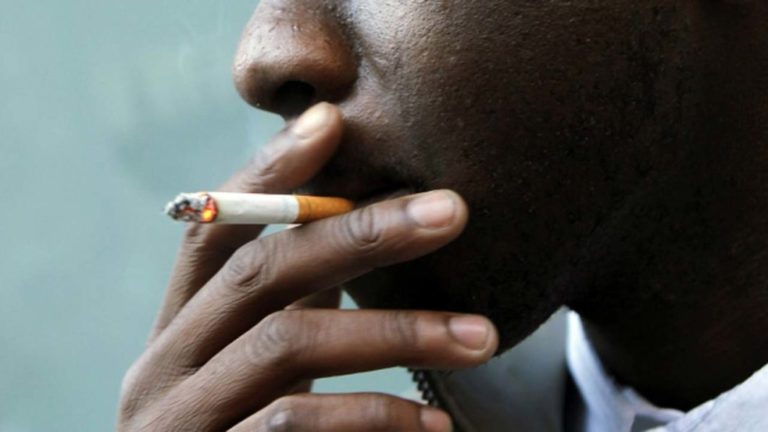
“THE true face of smoking is disease, death and horror, not the glamour and sophistication the pushers in the tobacco industry try to portray” – David Byrne.
Notwithstanding the heavy toll of cigarettes and other deadly nicotine products on consumers, the tobacco industry continues to employ duplicitous tactics to undermine public health efforts further and carry on business as usual. The Tobacco Industry Interference Index 2023, published by Pan-African watchdog Corporate Accountability and Public Participation Africa (CAPPA) with support from Bloomberg Philanthropies through the Centre for Good Governance, unveils a range of such deceptive tactics adopted by the industry.
They include leveraging corporate social responsibility activities to launder its image and utilising misleading harm reduction arguments to masquerade as public health advocates and infiltrate critical policy discussions.
On the one hand, faced with irrefutable scientific evidence, the industry reluctantly admits the deadly harm of its products and professes an ironic willingness to reduce the harm in newer products and comply with tobacco control laws. On the other hand, it actively engages in notoriously devious conduct that contradicts its confessions. This much is evidenced in a recent case in point epitomising the industry’s underhand approach of circumventing advertising and promotion restrictions imposed by Nigeria’s National Tobacco Control Act 2015 and the National Tobacco Control Regulations 2019.
Imagine celebrating 20 years of manufacturing the world’s leading cause of preventable death: tobacco and other nicotine products. This is exactly what British American Tobacco (Nigeria) Limited (BAT Nigeria) – a prominent player among the world’s top five tobacco companies, collectively known as “Big Tobacco” – did in Ibadan, Oyo State, on February 6, 2024.
Officially, the multinational said it was marking two decades of its Ibadan factory’s exceptional value delivery to the Nigerian economy, the environment, and the communities it serves. In a statement ahead of the event, the company described the factory as “a shining example” of its “commitment to excellence and sustainability in Nigeria,” further boasting of its significant contributions to the country.
What, of course, BATN conspicuously omitted in its narrative of celebration is that the health and economic costs of smoking-related deaths and diseases in Nigeria – such as heart diseases, lung diseases, cancer, etc – far outweigh any supposed contribution it claims to make.
A 2021 research conducted by the Centre for the Study of Economies of Africa (CSEA) underscores the gravity of this issue, revealing that tobacco smoking is responsible for 28,876 annual deaths in Nigeria.
The CSEA’s research further found that the direct costs of treating these smoking-related diseases amount to N526.45 billion each year, which was equivalent to 0.36 per cent of the Nigerian GDP in 2019 and 9.63 per cent of the country’s annual healthcare spending, placing a substantial burden on Nigeria’s healthcare system and economy.
Chronic obstructive pulmonary disease (COPD) was identified as the top cause of smoking-attributable mortality, followed by ischemic heart disease, stroke, passive smoking, lower respiratory tract infection, and cardiovascular deaths of non-ischemic cause. Adding up productivity losses due to illness, early deaths and informal caregivers, tobacco-related diseases represented 0.44 per cent of the GDP in 2019, according to the CSEA study.
Another study on the estimated benefits of increasing cigarette prices through taxation on the burden of disease, published in 2022 in the PLOS ONE journal, found that tobacco’s total economic burden accounts for ₦634 billion annually, considering direct treatment costs, productivity losses (due to early mortality and disability) and informal caregiving cost. It added that in Nigeria, the tax revenue generated by the sale of cigarettes (and other tobacco products) was around ₦36 billion in 2019, which covered only 6.9 per cent of the direct medical costs of smoking, or 5.7 per cent of the total financial burden.
As for the environmental sustainability of manufacturing cigarettes, the public and regulators may want to bear in mind that Nigeria is Africa’s second highest contributor to the $26 billion global costs of environmental pollution caused by plastics in cigarette butts and packaging every year, according to data analysed by The African Tobacco Control Alliance (ATCA).
The ATCA’s conclusion, as contained in a statement issued in 2023, followed its analysis of research findings by the Global Centre for Good Governance in Tobacco Control, published in the Tobacco Control journal.
The analysis found that African countries with the highest smoking rate contribute the most to the cigarette filter pollution costs, estimated at $26 billion annually or $186 billion every ten years — adjusted for inflation — in waste management and marine ecosystem damage worldwide. These countries include South Africa, Nigeria, Sudan, Mozambique, Kenya, and Ethiopia.
Yet, despite the grave consequences and impacts of its operations on public health and the environment, the industry continues to award itself accolades while craftily sidestepping its obligations to national tobacco control laws.
‘‘Whilst Nigeria’s National Tobacco Control Act and its Regulations have largely checked the activities of tobacco corporations and entities, the industry has exploited some weaknesses in these laws and gaps in the system to interfere in tobacco control,” said CAPPA’s Executive Director, Akinbode Oluwafemi.
One such tactic, Akinbode noted, “is the tobacco industry’s cunning use and loud celebration of its CSR activities in the media and public to whitewash its image, thereby creating a façade of responsibility and desirability. These initiatives, often endorsed, lauded by, and executed in collaboration with state authorities, further entrench the industry’s influence, undermining public health campaigns.’’
Aside from the negative health and environmental impacts of the tobacco industry in Nigeria, one also notes an interesting observation concerning BATN’s proclaimed contribution to empowering local communities.
The corporation touted its Ibadan factory’s “exceptional value delivery to the Nigerian economy, the environment, and the communities it serves.” However, this claim finds little to no echo among the tobacco-growing communities in the Oke-Ogun axis of Oyo state, which purportedly benefit from the factory’s operations.
During a field visit undertaken by CAPPA last May, as part of its monitoring activities leading up to World No Tobacco Day 2023, tobacco farmers from Ilu Oke, Ilero, and Iseyin, Oke-Ogun area recounted how BATN had allegedly ceased purchasing their tobacco, citing heavy government taxation as a reason for their withdrawal.
These farmers, who had devoted years to cultivating tobacco, articulated their struggles in pivoting to alternative agricultural ventures after years of tobacco farming and without enough support. Their testimonies also flagged the absence of the tobacco giant’s sourcing offices in the region, indicating perhaps a strategic decommissioning of the corporation’s procurement belt.
The BATN also claimed that its Ibadan factory had facilitated the export of its products to “11 countries in the West and Central Africa region, and more recently, to the United States of America, thereby placing made-in-Nigeria products on the global stage” However, if the testimonies of retired tobacco farmers in Oyo State are to be considered, this raises a significant question: If BATN is not purchasing tobacco from its immediate community—which hosts the largest concentration of tobacco farms and growers in Nigeria—where then is the company sourcing the commodity it processes, sells and exports?
Unsurprisingly, tobacco control advocates and groups in the country have continued to urge the Nigerian government to not only investigate export expansion grants and benefits unduly awarded to tobacco companies but also provide substantial support to farmers in their transition from tobacco farming to other crops required to sustain and nourish public health.
As evidence shows and the World Health Organization (WHO) emphasises, tobacco consumption remains the leading cause of preventable deaths worldwide. Now, more than ever, the Nigerian government must fully commit to implementing and enforcing public health rules. This includes reviewing ambiguities in tobacco control laws to effectively prevent the tobacco industry from compromising public health and governance.
• Dr Olayinka Oyegbile, an award-winning journalist and playwright, is a Fellow of the World Health Organisation (WHO) in Public Health Reporting and the American Cancer Society (ACS). Until recently, Oyegbile was deputy editor of The Nation on Sunday. He can be reached via yinka2005@gmail.com.
THE Supreme Court has dismissed the appeal filed by the Federal Government against the reversal of the conviction of former Niger Delta Minister Godsday Orubebe.
The apex court acquitted Orubebe on an allegation of breach of the Code of Conduct for Public Officers.
A five-person panel of the Supreme Court on Friday, February 16, ruled that the Federal Government’s appeal was ineligible.
According to the lead judgment written by Mohammed Lawal Garba and read by Emmanuel Agim on Friday, the appellant was deemed to have filed the appeal based on mixed law and facts but without first obtaining prior leave from the court.
The court dismissed the appeal after ruling that it was incompetent due to the failure to seek the necessary court permission.
The Federal Government, in case number SC/680/2017, appealed the June 14, 2017 ruling that overturned the conviction which was handed down to Orubebe on October 4, 2016, by the Code of Conduct Tribunal (CCT) for violating the Code of Conduct for Public Officers.
In a single-count indictment, the Federal Government charged him with neglecting to disclose a property located at Plot 2057, Asokoro District, Abuja, on any asset disclosure forms he filed with the Code of Conduct Bureau (CCB) during his tenure as a minister.
Orubebe refuted the accusation and said he sold the property before swearing in and consequently saw no need to disclose it.
In May 2017,Orubebe asked the Abuja Division of the Court of Appeal to quash his conviction by the CCT following an allegation by the Federal Government that he falsely declared his assets in 2007.
Orubebe, in his notice of appeal, marked CA/A/633c/2016, prayed the appellate court to not only set aside the judgment the Danladi Umar-led tribunal delivered against him on October 4, 2016, but to discharge and acquit him of the charge.
In its ruling, the tribunal had expressed satisfaction that Orubebe had concealed his ownership of Plot 2057 in the Asokoro District of Abuja.
The Tribunal noted that his name remained on the title records six years after Orubebe claimed to have sold the land and filed the assets declaration form.
Disappointed with the decision, Orubebe approached the Appeal Court with three points through his lawyer, Selekowei Larry.
He argued that the appellate court ought to overturn his conviction.
In June 2017, the October 2016 CCT ruling that found Orubebe guilty of false wealth declaration was overturned by the Appeal Court’s Abuja division.
A three-judge panel at the court, chaired by Abdu Aboki, declared that the records produced before the lower court adequately demonstrated ownership transfer.
The court further decided that Orubebe was not legally required to declare an asset he had previously sold.
THE Federal Competition and Consumer Protection Commission (FCCPC) has sealed off the Sahad Store in the Garki area of Abuja.
The popular supermarket was sealed off hours after President Bola Tinubu announced strategies to address the causes of the food crisis confronting Nigeria.
The supermarket’s management was accused of overcharging customers by implementing prices different from those listed on the shelf tags.
The acting executive vice chairman of the FCCPC, Adamu Ahmed Abdullahi, supervised the enforcement.
Speaking with reporters, Abdullahi said the preliminary inquiry conducted by the commission verified that the supermarket’s management had been shortchanging customers.
He declared that the store would be closed until the conclusion of the additional probe.
Attempts to get more clarifications on the issue from the spokesperson of the FCCPC, Ondaje Ijagwu, were unsuccessful as his phone was not going through, and messages sent to his phone have yet to be responded to as of the time of filing this report.
The store’s closure follows a similar action by the Kano State government, which shut down ten stores for hoarding foods earlier this week.
Meanwhile, The ICIR reported on February 9 that Tope Fasua, Special Adviser on Economic Affairs to President Bola Tinubu, said high food exports to Nigeria’s neighbouring countries fuelled rising food costs in the country.
Fasua said this while speaking on Channels TV on Thursday, February 8.
The ICIR reports that the immediate neighbouring countries surrounding Nigeria are the Republic of Benin, Chad, Cameroon, and Niger.
He noted the indiscriminate sale of food items and raised concerns about the need for price control mechanisms and reviving the commodity boards.
The ICIR reports that before 1986, Nigeria had six commodity boards before embarking on a market-oriented economic ideology.
The Commodity Boards Act 1977 dissolved the Nigerian Produce Marketing Company Limited and all the States Marketing Boards and, in their place, set up six new Commodity Boards.
Fasua said states and local governments were closer to the farmers and should work with the Federal Government to save Nigerians from the calamity of surging food prices.
“There is a need to understand what is happening at that level to save ourselves from this calamity.
“The surging price of food items has a trace to happenings at the global stage, Fasua noted, adding that the government must put in place intellectual and regulatory infrastructure other countries like the United States and the United Kingdom had used to control their food inflation.
Nigerians are facing the worst situation of rising food prices because of the government’s reforms,” Fasua said.
However, whether the export proceeds are coming in is an issue the Central Bank has to look into, Fasua stated.
Speaking on setting up the price control board on Thursday, February 15, Tinubu said his government would not consider the option.
MEDIA stakeholders have identified journalists’ financial dependence and compromise as major factors undermining press freedom in Nigeria.
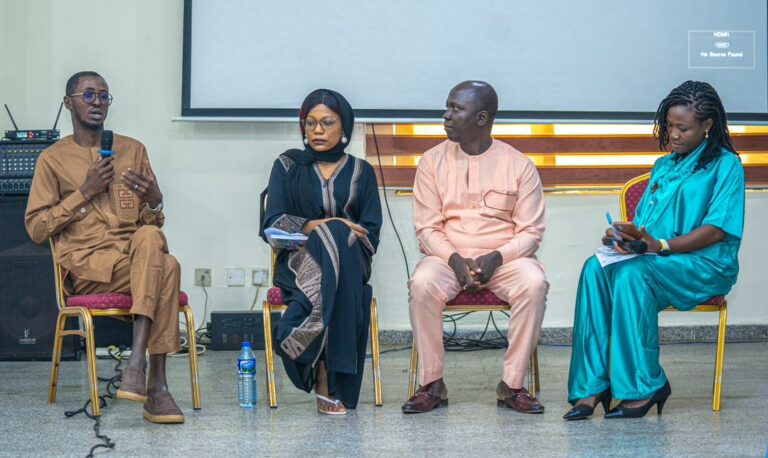
They stated this on Thursday, February 15, in Abuja, during one of the panel sessions of a workshop organised by Hope Behind Bars Africa (HBBA) in collaboration with The International Centre for Investigative Reporting (The ICIR), Centre for Journalism Innovation and Development (CJID), with support from Civicus.
The workshop was aimed at addressing the unlawful detention of human rights activists and the need for freedom of peaceful assembly in Nigeria.
Speaking during the panel session, Managing Editor Premium Times, Idris Akinbajo, urged journalists and media owners to explore other means of financial sustainability rather than dependence on the government, which often leads to censorship.
He urged journalists to be ethical in discharging their duties, adding that oppression of journalists was more prevalent in some states than others due to the actions of many state governors and heads of subnational governments in shrinking civic space.
“At the subnational level, in many states and local governments, what you see is that journalists have become too compromised. So we must first ask ourselves: are we on the right path? Are we doing the right thing?
“If you are sure you are on the right path and doing the right thing, then you have the moral leverage to say, ‘my rights have been violated.’ But if you are not doing that, then it becomes difficult,” he said.
Akinbajo also encouraged local media workers to escalate cases of illegal detention or attacks on journalists and human rights activists to generate more support from journalists nationwide, “which is more effective in pushing back against harassment.”
Also speaking during the session, The ICIR Editor, Bamas Victoria, emphasised the importance of collaboration between organisations in the civic space.
“I definitely think there is a need for more collaboration. I think collaboration has helped out in terms of strategic lawsuits. When you do a report, if you are alone, it is easier for people to come for you. But once you get quite a number of media houses to publish that same report, those coming for you will think: do I want to go against this many media houses? So collaboration works,” she said.
She pointed out that the collaboration between the Coalition of Whistleblower Protection and Press Freedom (CWPPF) had been efficient in managing issues around harassment and detention of journalists in Nigeria.
A journalist with the Associated Press, Taiwo Hassan, pointed out that in addition to its role in upholding a free press, collaborations in the media lead to impactful reporting, as governments are often forced into taking action when collaborative efforts are made.
He also noted that collaborations do not necessarily have to be limited to national platforms but could involve international media for better impact.
“When we do investigations, the most important thing is to generate impact. So one thing I would advise colleagues to do is to find a way they can generate action from outside, which is something that can be done.
“You not only have to collaborate with international media, one thing you can do if you are doing a story is get an international NGO like Amnesty International, Human Rights Watch, to comment so they have a sense of ownership. They are likely to use your report for advocacy,” he said.
Press freedom and harassment of activists have been sources of concern for journalists and other stakeholders in the Nigerian civic space.
The ICIRreported that at least 39 journalists were harassed across the country by state and non-state actors in 2023. Four of these journalists work at The ICIR.
THE Federal Government and state governors have agreed on creating state police.
This was part of the outcome of a meeting between President Bola Tinubu and state governors at the Presidential Villa in Abuja on Thursday, February 15.
Minister of Information and National Orientation Mohammed Idris disclosed this to reporters after the meeting.
He said the process was still in its early stages and would take shape after further discussions.
“Of course, this is still going to be further discussed. A lot of work has to be done in that direction. Both the Federal Government and the state governments agreed on the necessity of having state police. Now, this is a significant shift. But as I said, more work needs to be done in that direction.
“A lot of meetings will have to happen between the Federal Government and the sub-nationals to see the modalities of achieving this. Now, these are some of the issues that have been discussed,” Idris stated.
The ICIR reports that there have been calls for state police in response to the country’s growing security concerns.
Kidnapping and banditry are two security issues Nigeria has struggled with in recent years after over a decade of fighting terrorism.
On Monday, February 13, governors elected on the Peoples Democratic Party (PDP) platform reiterated their support for state policing to address the nation’s deteriorating security. The governors lamented that Nigeria is “almost on the road to Venezuela.”
While Nigerian governors have been pushing for state police, regional groups in the country have established security outfits to complement the Federal Government-funded police and other security institutions in the country.
The South-East launched Ebube Agu, the South-West created Amotekun, and the North founded “Shege Ka Fasa”.
However, it appears that only Amotekun has fully taken shape among the outfits.
In addition to the regional outfits, some states, including Benue, Zamfara and Kano, have created vigilantes or constabulary to further protect their people.
A report by The ICIR examined cases of kidnapping, ransom payment and the cost of being kidnapped in Nigeria.
The ICIR reported that over 5,000 Nigerians were killed in President Bola Tinubu’s first seven months in office, underscoring the threat posed by the nation’s insecurity.
The killings by non-state and state actors, which have persisted since Tinubu came into power, have seen over 5,000 casualties.
Tinubu’s thrust of campaign promise to Nigerians was to tackle insecurity and revamp Nigeria’s economy.
His government has struggled to keep Nigeria safe since he assumed office on May 29, 2023.
According to data gathered by The ICIR from the Armed Conflict Location & Event Data Project (ACLED), a data bureau that collects real-time data on the locations, dates, actors, fatalities, and types of all reported political violence and protest events worldwide, about 5,135 people were killed between May 29 and December 31, 2023.
This also means that an average of twenty-two people were killed daily from violent attacks during the period, given that the six months have 227 days (plus the remaining three days in May 2023) divided by 5,135, averaging 22.6.
According to the NBS, “In January 2024, the headline inflation rate increased to 29.90 per cent relative to the December 2023 headline inflation rate which was 28.92 per cent.
“Looking at the movement, the January 2024 headline inflation rate showed an increase of 0.98 per cent points when compared to the December 2023 headline inflation rate. Similarly, on a year-on-year basis, the headline inflation rate was 8.08 per cent points higher compared to the rate recorded in January 2023, which was 21.82 per cent.”
“Furthermore, on a month-on-month basis, the headline inflation rate in January 2024 was 2.64 per cent, which was 0.35 per cent higher than the rate recorded in December 2023 (2.29 per cent). This means that in January 2024, the rate of increase in the average price level is more than the rate of increase in the average price level in December 2023.”
Food inflation has been a reoccurring issue faced by several governments across the globe and inflamed by the ongoing war between Russia and Ukraine.
In Nigeria, the price of food products has increased sharply and persistently, triggered largely by high energy prices as a result of fuel subsidy removal,
The ICIR recently reported protests in different parts of the country in reaction to the high cost of living, with citizens in Niger, Kano, Lagos, and other states demanding solutions to the economic crisis.
Also, on Wednesday, the Northern traditional rulers and the Nigerian Bar Association decried the hardship in the country.
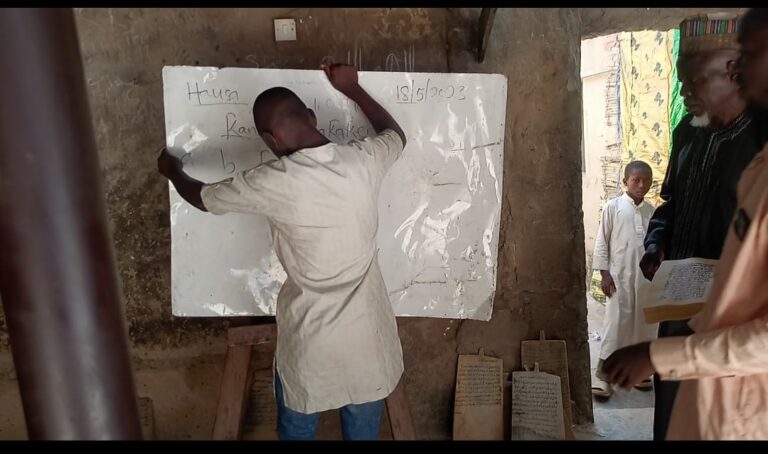
Yahaya Ibrahim and Muhammad Bilyaminu, both 16-year-old teenagers, are learning the alphabet and numbers both in Hausa and English languages for the first time in their lives, thanks to the World Bank’s sponsored Better Education For All (BESDA).
“Now I can read letters on the wall when I see them,” he said with a wide grin, but occasionally avoiding eye contact.
“We enjoyed the classes; we liked everything they were teaching us,” they replied.
Though pleased with the newly acquired literacy skill, Ibrahim was sad that basic literacy classes stopped in December 2022. He was looking forward to learning more.
Continuing to tertiary institutions is not a priority for him. He wishes to be able to read better and comprehend faster.
“I hope they will come back and continue,” Ibrahim stated hopefully.
Bilyaminu
Bilyaminu’s (earlier mentioned) wish is slightly different from Ibrahim’s. He wants more than just reading and writing. He would like to get a higher education.
He is one of the pupils of Tsangayar Malam Dauda at Tarauni Local Government Area (LGA) of Kano state, who are beneficiaries of the basic literacy classes held every Thursday and Friday.
Struggling to put words together, Muhammad was able to read two-letter words like A-T and B-Y.
“We like to sit and learn. The teachers come in every Thursday and Friday,” he smiled, reminiscing on how it felt like exploring a relatively new field.
“We are happy, we try to put words together when we walk past them. But I want to finish the Primary here and learn in a bigger school,” he stated enthusiastically.
He does not know how this will materialise, but it is a dream he shared with this reporter, hoping it would come to pass – sooner rather than later.
Ibrahim, helping display the whiteboard used for learning
The Better Education Service Delivery for All (BESDA), a World Bank initiative, was introduced to increase equitable access for out-of-school children in Nigeria.
The programne, which was implemented in Adamawa, Bauchi, Borno, Ebonyi, Kano, Oyo, Yobe, Niger and Zamfara states, is meant to improve literacy and strengthen accountability for results in basic education in Nigeria.
Part of the programme’s goal is to provide basic literacy and numeracy education for boys who do not have access to any form of western education.
The World Bank funds for the programme is $ 734.80 million and would run until October 31, 2025.
In 2019, the BESDA programme kicked off with Cohort I, spanning two years; another set of voluntary teachers was chosen for Cohorts II and III, which ended in 2022.
Currently, volunteer teachers patiently await the kickoff of Cohort IV. However, some state governments where the programme is being run have not disclosed when the exam and selection for Cohort IV will begin.
During this period, some Almajiri schools (Tsangayu) were enrolled in the programme to help equip the students with basic literacy and numeracy, which they would otherwise not have.
What is the Almajiri education system?
The Almajiri system of education, mainly practised in the northern part of Nigeria, dates back to the pre-colonial era when early Qur’anic scholars took students from very far distances under their wing for the memorisation of the holy Quran and the learning of Islamic principles, jurisprudence, values and theology.
Parents entrust their children (usually between the ages of seven to 15) to the Alaramma (Quranic teachers) for the memorisation of the holy Quran while maintaining contact with the mallam to provide food and other necessities for the child as he studies.
In the beginning, the boys did not beg as widely seen today. Instead, they went to farms, gathered firewood from the bush as well as did some menial jobs for members of their community, who in turn provided support and care through gifts and Zakat donations.
However, over time, the boys now go through the streets begging for food while a few do menial jobs to feed themselves. So, now, the boys fend for themselves while in the Quranic school.
Right programme, wrong approach
It is not just the students, but also the teachers and other stakeholders who share the same enthusiasm about the programme – it is the right programme, but there is a but.
The mixed education’s continued survival, even without government involvement, may depend on the provision of food and other necessities.
Malama A’isha Muhammad Lawan taught Bilyaminu for a few months.
She also taught about 15 Almajiri boys at Tsangayar Malam Dauda at Tarauni LGA, Kano mostly within the age range of 6-17.
She said, “I am proud of how fast these boys learn, but because they have to go out and beg for food, detergents, and sometimes bath soap, they leave classes early.”
These challenges, according to Muhammad, could cause the programme to fail later.
Also speaking, the chairman of Alarammas ( Quran memorisers) in Nassarawa LGA, Malam Ayuba and the proprietor of Tsangayar Malam Ayuba at Kawo, said the programme is “really good” adding “that was why we accepted it in the first place.”
“The teachers are selfless, despite that the government would owe them months allowances of N15,000, they never missed classes,” he noted.
The chairman, who said he started running his Tsangaya School 41 years ago, said, “The students are enjoying the classes, else we would not have allowed it. We want them to continue the classes, this is education, not a joke.”
The elderly Alaramma was excited about how his boys have gained some new knowledge – being able to read and write using the English & Hausa letters, without having to forsake Qur’anic memorisation.
hairman of Alarammas ( Quran memorizers) in Nassarawa LGA, Alaramma Malam Ayuba and the proprietor of Tsangayar Malam Ayub
He said that in a generation that is fast growing in different aspects, the boys also need to be exposed to Western education, even if it is at the basics.
But even he believes the programme will not last.
“Government is not fulfilling its promises to us, or even paying the voluntary teachers their allowances,” he lamented.
He fumed about how they were tricked with promises for the provision of food for the boys.
“They promised us that they would provide funds to our wives to cook for the boys, this way the boys would not have to go out to beg for food during hours for classes, but they never fulfilled the promise,” he said.
Sadisu Salisu is an expert and researcher in the Northeast on Almajiri education and insurgency, he believes the BESDA system is an excellent initiative that is yielding amazing results in states where it is being implemented.
“In Yobe, I have seen some of the results, when I was in Yobe.”
Parents are willing to enrol their children/wards in Tsangayas (Quranic memorisation schools) with a touch of Western education.
He said this singular act made the BESDA programme trustworthy to the Alarammas and their student’s parents.
A Tsangaya product himself, Salisu said, “One of the innovations or things they did I felt good about was the fact that they drew some of the facilitators/teachers from the Tsangaya and have them teach in the same Tsangaya.”
“The success (In Yobe) hugely depended on the effective implementation and integration, which they tried to do. As I said earlier, they engage the Alarammas. Some of the Alarammas are teaching in the school, some of the Gardis (most senior Almajiri students) are teaching in the school.”
In case a Tsangaya cannot produce teachers with the skills needed, they (instructors) were sourced from the neighbourhood where the Tsangaya is located, he disclosed.
“The Alarammas are asked to nominate someone from their area, someone they trust,” Salisu stated. “This is fundamental in dealing with the Tsangaya people. Now, in some Tsangayas in Yobe, even without government intervention, Tsangaya schools offer Western education up to secondary school level.”
For example, Salisu pointed out that Darul Furqan Tsangaya Model School is a privately run Tsangaya school that now teaches both Qur’anic and western education.
He said the programme is also doing well in Kano but still has a long way to go.
Why we may not fully support the BESDA programme in our Tsangaya – Group
Even though equipping these promising boys with basic literacy and numeracy is doing them good, some parents and Alarammas still do not seem so enthusiastic about it.
Alaramma Misbahu Aliyu Babagoni is the Kano Voice of Alarammas association’s secretary
An alaramma, Misbahu Aliyu Babagoni is the Kano Voice of Alarammas association’s secretary, and he told this reporter that he believes that “the BESDA system is in rivalry with the Qur’anic education.”
“So, the only way to make the Alarammas of the Tsangayas at ease and believe this is done in their best interest is for the rich and mighty to enrol their children in the Tsangaya schools.”
Personally, Goni Misbahu does not support the incorporation of Western education into the Tsangaya system, and it is not practised even at his Tsangaya.
He believes sooner or later, the other Tsangayas will turn against the programme as well unless they are properly reoriented on the matter.
Parents, however, have mixed feelings. Some believe they are doing their children a lot of good by sending them to Tsangaya, and that any attempt to introduce a foreign concept is not readily acceptable.
“We would like our boys to just attend their normal Qur’anic classes, and go to another school for Western education but not in the same building,” one father told this reporter.
For many of them, introducing modern/western education into the Tsangaya is a way of diluting the old system of education, and introducing spiritually harmful content.
Older schools have better coordination of mixed education
Tahfizul Qur’an wa Ilmi at Wailari in Kumbotso LGA of Kano is one of the Almajiri schools that benefited from the BESDA programme from 2020 to early 2023.
Its proprietor, Muhammad Rabi’u Ibrahim, says it was established 24 years ago.
He rose in defence of the scheme, saying that they knew and trusted the teachers sent to them would not bring in an agenda to destabilise the Quranic foundation/values already instilled in the boys.
“The teachers live close to us, so we know one another.”
He says maybe that’s part of the reason they hold classes even when the government has owed them for months and notes how established the school is as a reason for retaining the students even during rainy and harvest periods.
“During harvest periods, the students leave to help their parents on the farms,” he shared.
He added that when the students leave, a handful of them stay behind to continue learning.
How nomadic nature, insecurity foil the programme in some Tsangayas
Although the BESDA programme is working well for some Tsangayas, this is not the same for newly established ones, where the teachers take the boys with them to work for them (on the proprietor’s farm), and some Tsamgayas in insecurity-ridden areas in Katsina and Zamfara states.
Ahmad Ibrahim is the Tsangaya proprietor of Hisbul Raheem in Gusau LGA in Zamfara State. He said there was a government programme to teach their students how to read and write in Hausa, but added that “they stopped because they (government) were unable to pay the instructors their monthly allowances.”
“Then they returned the programme to radio – they were teaching students, giving them instructions through the radio, and they later stopped that too,” he added.
He said insecurity also played a role in discouraging the teachers from going to remote villages.
“The boys from the villages of Magami, Rijiya, and others came to us and they were included in the programme before it stopped,” he said.
He lamented how insecurity has ravaged all local governments in Zamfara, making residents leave for safety, and losing the chance to learn any kind of knowledge.
Birnin Magaji, Kaura Maradun, and Anka local government headquarters used to be safer, but even those places are no longer livable since the government officials have relocated to town, Ibrahim observed.
The story is similar in Katsina State where insecurity has persisted for a while.
An official at the State Universal Basic Education Board who spoke anonymously confirmed how insecurity prevented the implementation of the programme.
He said it is a sensitive issue he could not elaborate on, adding, “This is a state secret.”
Other Tsangaya not plagued by insecurity are disrupted by the nomadic nature of some of the proprietors.
Alaramma Muhammad’s Tsangaya, a Tsangaya in Kumbotso LGA in Kano was closed when we arrived. This reporter earlier arranged a visit.
However, after a phone call, he said he had left with his students to harvest produce on his farm in Zaria, Kaduna State.
“I am sorry we could not meet, we are here working on the farm,” the proprietor, Muhammad stated.
The nomadic nature of some of the Tsangayas deprives some of the boys of a chance for basic education, either with the government’s support or otherwise.
However, Tsangayas with private investment and documented arrangements with parents prevent them (parents) or teachers from withdrawing students for farming.
Another Tsangaya, Madarasatu Hubbin Nabiyu Littahfizul Qur’an fi Tarbiyatul Zikhrullah at Kwarin Goje, a private school, models mixed education – with the introduction of basic literacy and numeracy to its boys
Being in existence for over 20 years, it introduced the Western education system five years ago, without any government support!
Aside from the introduction of the system to the Almajiri boys, the school also widened its acceptance to include girls.
Malam Ibrahim Zakariyya Mukhtar, the school’s spokesman, says they could not sit by and watch their students being unable to catch up with the rest of the world.
“Seeing how the world is changing, our proprietor Muhammad Makiyi, decided to introduce the Islamiyya aspect and Western education. We call the Allo students (Tsangaya), boarding students.”
He revealed that all teachers in the school are National Certificate of Education (NCE) holders paid by the school, unlike other Tsangaya schools where parents do not pay a kobo.
“If the government had included us in the programme, it would strengthen them.”
He further shared that it is not too late to include them as the IV cohort of the programme is yet to begin. But the proprietor of the school, Muhammad Makiyi is sceptical about the government’s involvement.
“I want them to help, and I do not want their help, it depends,” he said. “We already have a system that works, all the teachers you see are NCE holders and I like how things are going.”
He pointed out the need for the government to support the students with teaching/learning materials and a curriculum (for the literacy and numeracy program).
“We will welcome these. For Western education, we teach it here from Saturday to Wednesday for the rest of the students. For the Almajiri students, sessions are held on Thursdays and Fridays.”
Kano government appreciates the impact of the BESDA program, promises full-time employment
On October 16, 2023, the Kano State governor, Abba Kabir Yusuf, said he was pleased with the performance of BESDA teachers in the overall programme (including where it is implemented in conventional schools).
He further directed that the about 5,500 teachers enrolled in the programme be screened and offered permanent and pensionable employment to better strengthen the quality of education in the state.
“Let me at this juncture appreciate the role of our BESDA teachers who support uplifting our primary education. It is based on this recognition that we will do everything to assist them,” he said.
The BESDA programme was a success in many ways, including resetting the minds of parents/guardians and Tsangaya proprietors to accept a form of basic Western into their system.
According to Mallam Haruna, the immediate past BESDA desk officer in the Kano State Universal Basic Education Board (SUBEB), over 100 Tsangaya recorded success in forms of ensuring literacy and numeracy across the state’s 44 local governments and gaining acceptance from parents/Tsangaya School owners.
He added that the program was successfully carried out, the students learned, and the government has monitored the whole program from inception.
NIGERIA, Côte d’Ivoire, the two finalists at the just concluded 2023 Africa Cup of Nations (AFCON) have moved upward in the latest Federation of International Football Association (FIFA) ranking of countries in the men category.
According to the FIFA ranking released on Thursday, February 15, Nigeria’s Super Eagles rapidly moved from 42nd to 28th position, closing the gap between fourteen places on the log.
While on the continent, the three-time African champions also moved three steps up from sixth to third.
The last time the Eagles recorded the highest global ranking was in May 2013, when they were ranked 28th also.
The Super Eagles’ upward movement in this latest ranking was due to their stellar performance at the AFCON in Cote d’Ivoire.
The Eagles ended as the runners-up after losing 1-2 to the host nation, Cote d’Ivoire, at the continental football showpiece final.
The winner, Côte d’Ivoire, moved ten places from 49th in the world to 39th.
Morocco and Senegal are the two African countries within the first twenty countries in the ranking, as the former moved from 13th to 12th position to lead African countries while the latter leapfrogged from the 20th to 17th position.
Also, Angola moved up 24 places to 94th from 118th, Equatorial Guinea jerked up by nine spots to 74th, and South Africa by eight spots to 58th.
Some African countries that dropped in the ranking were Egypt, from 33rd to 36th, and Cameroon, from 46th to 51.
Ghana moved downward from 61st position to 67th.
In the CAF ranking, Morocco remained at the top of the continent, while Senegal maintained the second. Nigeria occupies the third while Egypt and Cote d’Ivoire are on the fourth and fifth positions, respectively.
Tunisia, Algeria and Mali occupy the sixth, seventh and eighth positions, while Cameroon and South Africa occupy the ninth and tenth positions.
Meanwhile, in the world ranking, Argentina remained number one while France and Brazil maintained second and third spots, respectively.
England and Belgium are in the fourth and fifth positions in the ranking.
THE Federal Government has dropped treason and felony charges against a former presidential candidate, Omoyele Sowore.
The Attorney-General of the Federation (AGF), Lateef Fagbemi, filed a notice of discontinuance to inform the Federal High Court in Abuja of the decision to end the trial against Sowore, Sahara Reporters publishers.
The notice was dated February 15, 2024.
The government stated in the notice that it also intended to drop the charges against Sowore’s co-defendant, Olawale Bakare, also known as Mandate.
“Notice of discontinuance. By virtue of the power conferred on me under Section 174 (1) (c} of the Constitution of the Federal Republic of Nigeria 1999 as amended, Section 107 (1) of the Administration of Criminal Justice Act 2015 and all other powers enabling me in that behalf, I Lateef Olasunkanmi Fagbemi, SAN, intend to discontinue charge No: FHC/ABJ/CR/235/2019,” the notice reads.
On Wednesday, February 14, the trial judge, Emeka Nwite, threatened to dismiss the case, which had been pending for more than four years.
The judge also asked the Federal Government’s prosecution team to take a position on the trial after the Federal Government’s attorneys clearly failed to state their case in court in November 2023.
Two days before the pro-democracy activist Sowore’s scheduled August 5, 2019, #RevolutionNow rally dubbed “Days of Rage,” he was arrested by the State Security Service (SSS) agents at midnight.
Sowore posted a distress tweet at exactly 1:25 a.m. just before his phone was confiscated from him, The 247ureports, an online newspaper, said.
On his Twitter handle, @YeleSowore posted a terse message at 1:25 a.m.: “DSS invades Sowore’s house”.
“He also tweeted ‘Jap’, confirming his phone must have been seized while trying to raise the alarm about his arrest,” Premium Times reported, quoting a statement from a close associate of Sowore.
Sowore was coordinating a national protest, which he called ‘a day of rage’ in 21 states on Monday, August 5, against President Muhammadu Buhari’s government over maladministration and insecurity in the country.
He had promised to “shut down” the country on the day of the protest – which he claimed would be held simultaneously across the country’s cities.
The DSS repeatedly charged him after his arrest. However, after intense pressure, the African Action Congress (AAC) presidential candidate in the last general election was eventually freed.
The legal team of human rights advocate Femi Falana, a senior advocate, represented Sowore in court.
Responding to the termination of the case in court, Sowoore, in a post on X on Thursday, described the trial as “fruitlessly malicious, tendencious and idiosyncratic.
“Five years ago, the Federal Government of Nigeria commenced a fruitlessly malicious, tendencious and idiosyncratic treason trial (persecution) against me and several other revolutionary comrades across Nigeria. We stood our ground and began a historic journey to liberate our country despite threats, the assassination of family members, state-sponsored violence and targeted attacks by security forces. We promised never to back down.
“Today, we have been vindicated on one front. The Nigerian government has terminated its own case against me, but we will not terminate our struggle for justice and liberty of our compatriots. We warned the @MBuhari regime and those who followed his ruinous path that they would face ultimate disgrace before long. We salute our revolutionary comrades. #RevolutionNow,” he posted.