Home Blog

US Supreme Court strikes down Trump’s birthright citizenship order

THE United States Supreme Court has struck down President Donald Trump’s executive order seeking to end birthright citizenship for children born to undocumented immigrants and temporary residents.

In a 6-3 decision delivered on Tuesday, the court ruled that the US Constitution guarantees citizenship to anyone born on American soil, regardless of their parents’ immigration status.

The ruling is a major setback for Trump’s efforts to narrow the scope of the Citizenship Clause of the Fourteenth Amendment.

Writing for the majority, Chief Justice John Roberts said birthright citizenship remained a fundamental constitutional guarantee.

“Citizenship, then and now, was the right to have rights — to freely participate in our political community. The Framers of the Fourteenth Amendment extended that promise to ‘every free-born person in this land’,” Roberts wrote.

“We keep that promise today.”

The Fourteenth Amendment provides that all persons “born or naturalised” in the United States are citizens of the country.

Trump, however, has repeatedly argued that the provision encourages “birth tourism,” with foreign nationals travelling to the US to give birth so their children automatically acquire American citizenship.

Hours after returning to office in January, Trump signed an executive order seeking to end the practice. The order was immediately challenged in court and blocked by lower court injunctions.

Despite the legal challenges, the administration continued to discourage birth tourism. In July, the US Embassy in Nigeria warned that visa applications could be denied if consular officers believed the primary purpose of travel was to secure US citizenship for a child through birth.

Tuesday’s ruling effectively nullifies Trump’s executive order, reaffirming that any attempt to alter birthright citizenship would require a constitutional amendment rather than executive action.

Protesters reject Jabi Lake privatisation, demand transparency, consultation

0

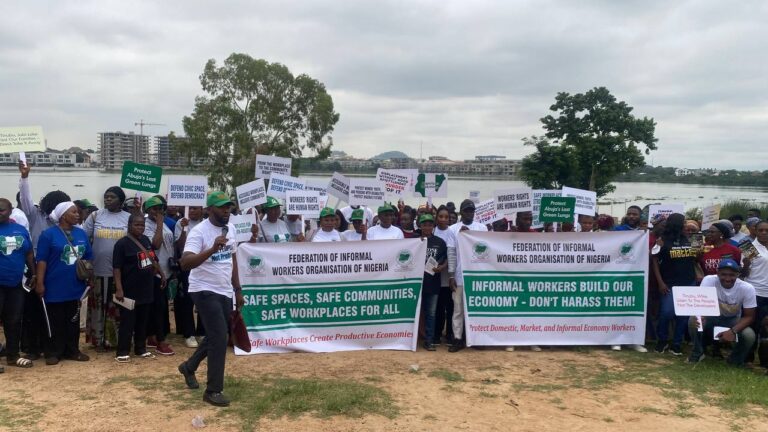
INFORMAL workers, residents and civil society prganisations on Tuesday, June 30, staged a peaceful protest at the Jabi Lake Recreational Park in Abuja, demanding that the Federal Capital Territory (FCT) Administration halt the proposed redevelopment and privatisation of the park until the full details of the project are made public and affected communities are consulted.

The protesters, led by the Federation of Informal Workers Organisation of Nigeria (FIWON) and Accountability Lab, among others, marched through the park carrying placards with inscriptions such as “Displacement Without Good Resettlement Is Murder. Stop It,” “Protect Abuja’s Last Green Lungs,” “Tinubu, Governance by Fiat Is Not Democracy,” “Tinubu, Small Businesses Matter. Stop Demolition,” and “Jabi Lake Fed Our Families—Don’t Take It Away.”

They called on President Bola Tinubu and the FCT Minister, Nyesom Wike, to protect women, youths, children and informal workers from displacement, insisting that any redevelopment of the park should be preceded by transparency, meaningful public consultation and adequate protection for those whose livelihoods depend on the facility.

Background

The protest came months after the FCTA signed development agreements with Suburban Broadband Limited and Akida Hills Limited to transform the Jabi Lake waterfront into what officials describe as a world-class recreational and tourism hub.

The agreements, signed in February 2026 at the office of the FCT Minister, reportedly form part of the administration’s urban renewal agenda aimed at redeveloping the lake into a major destination for recreation and tourism.

According to the FCTA, the project will include waterfront commercial developments, tourism and leisure facilities, modern recreational infrastructure, environmental clean-up, urban renewal around the lake, and the removal of illegal settlements and abandoned structures.

The administration argued that the redevelopment would beautify Abuja, attract investment, boost tourism and create employment opportunities.

During the signing ceremony, Wike said the initiative would reposition the nation’s capital while addressing land speculation, warning that allocated lands left undeveloped would be revoked.

The redevelopment, however, attracted widespread criticism from residents, traders, religious leaders and advocacy groups, who fear the concession could limit public access to one of Abuja’s few remaining public recreational spaces and threaten the livelihoods of hundreds of informal workers operating around the lake.

Earlier in June, Daily Trust reported that preparatory work had commenced at the site, with sections of the park barricaded, perimeter fencing installed, and construction equipment moved into the area despite public opposition.

Commissioned in 2007, Jabi Lake Recreational Park spans about 1,300 hectares in Abuja’s Jabi District and has become one of the city’s most popular public leisure destinations. Besides providing free recreational access to residents, the park supports dozens of small businesses, including food vendors, artisans, boat operators and other informal workers who depend on daily patronage for their survival.

Rights group demands transparency

Addressing journalists during Tuesday’s protest, Accountability Lab Nigeria Country Director, Friday Odey, said the groups were not opposed to development but insisted that the process must be transparent, inclusive and accountable.

According to him, although the FCTA entered into an agreement with two private companies in February, the details of the Memorandum of Understanding (MoU) were not made public.

“We are not against development,” Odeh said, adding, “What we are saying is that the MoU has not been published. Under the Open Government principles, citizens have the right to know what agreements have been entered into concerning public assets.”

He said Nigerians also deserve to know whether the government conducted any assessment of the social and economic consequences of the project before allocating the park to private companies.

Odeh further argued that informal workers whose livelihoods depend on activities around the park were neither informed nor consulted before the decision was taken.

“These workers have not been communicated with or consulted. Civic space matters, people’s voices matter, and those who will be directly affected deserve to be heard,” he said.

He also urged the FCTA to publicly disclose any relocation or resettlement plans for people who may be displaced by the redevelopment.

The Chairperson of FIWON, Blessing Yusuf, also condemned what she described as the privatisation of one of Abuja’s last major public recreational spaces.

She argued that Jabi Lake serves not only as a business hub for informal workers but also as a public space where residents exercise, socialise and interact freely.

Residents who use the park for recreation also expressed concern that unrestricted private control of the facility could reduce public access.

“This is where people come to exercise, socialise and do business. Many people earn their living here while residents also come to relax and relieve stress. The government should allow the public to continue using this place while ensuring there is proper planning and engagement before any redevelopment takes place,” Akpotu Mobo, a resident said.


South African cities shut down as anti-migrant protests trigger fear

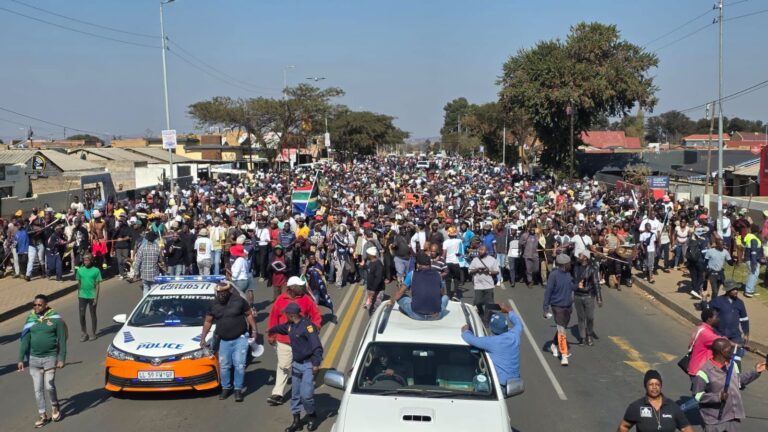
ECONOMIC activities have been brought to a near standstill as thousands of workers in South Africa remain indoors across parts of the country on Tuesday following a nationwide anti-migrant protest, deepening fears of renewed xenophobic violence.

According to Reuters, in major cities including Johannesburg and Durban, groups of protesters carrying wooden sticks gathered in the streets, chanting anti-immigrant slogans and accusing undocumented foreigners of worsening unemployment and crime.

The demonstrations followed an ultimatum issued by protest organisers demanding that undocumented migrants leave the country by Tuesday, prompting thousands of foreign nationals to flee their homes or avoid public spaces amid growing security concerns.

Authorities have mounted one of the country’s largest recent security operations in anticipation of possible violence.

Thousands of police officers have been deployed nationwide, while the military remains on standby under an emergency security allocation worth 600 million rand, approximately $36.6 million.

Deputy National Commissioner for Policing Tebello Mosikili said authorities had already opened 103 criminal cases against anti-foreigner vigilante groups since March.

The protests have heightened fears among migrant communities after weeks of attacks linked to anti-immigrant sentiment.

Since demonstrations began in April, at least five people have been killed, while thousands of migrants have reportedly been displaced, with homes, shops and businesses vandalised and looted.

Community leaders said many victims possess valid immigration documents but have nevertheless become targets.

Congolese community leader, Mabako Majole, revealed that nearly 100 displaced people were sleeping outside a government office in Durban, noting that many of them had been illegally evicted by landlords fearful that their buildings would be attacked.

Witnesses in both Durban and Johannesburg reported landlords forcing foreign tenants from their properties as tensions escalated.

Meanwhile, the protest campaign, March and March, insists it is advocating government action against undocumented migration rather than violence against foreign nationals.

Its leader, Jacinta Ngobese, acknowledged widespread anger but denied responsibility for attacks carried out by individuals.

Despite those assurances, rights groups have warned that previous waves of anti-migrant protests in South Africa have frequently escalated into deadly attacks, regardless of migrants’ legal status.

President Cyril Ramaphosa condemned threats against migrants while acknowledging growing public frustration over illegal immigration.

In a statement on Monday, Ramaphosa said concerns about undocumented migration deserved attention but warned that violence and intimidation could not be justified.

South Africa continues to grapple with deep economic challenges more than three decades after the end of apartheid, as the country faces one of the world’s highest unemployment rates, with roughly one in three people out of work, while slow economic growth has fuelled public frustration over access to jobs, housing and public services.

Although migrants are frequently blamed for unemployment, rising crime and pressure on social infrastructure, researchers have repeatedly found limited evidence supporting those claims.

According to Statistics South Africa (StatsSA), immigrants account for about three million people, representing roughly four per cent of the country’s population, relatively low compared with many countries globally.

The renewed anti-migrant unrest threatens South Africa’s international standing as a defender of human rights and risks straining diplomatic relations with neighbouring African countries whose citizens make up a large share of migrant communities.


Ford rehires 300 veteran engineers after AI quality check fails

THE Ford Motor Company has rehired more than 300 veteran quality inspectors and engineers to reverse manufacturing shortfalls after finding that its automated artificial intelligence systems could not replicate human experience.

The decision represents a change for the automaker, which had previously integrated automation across its manufacturing operations in an attempt to reduce production costs and maximise factory efficiency.

During an investor briefing during Ford’s quarter earnings call in October 2025, Ford’s Chief Operating Officer, Kumar Galhotra, stated that the firm was “deploying AI across the entire industrial system.” The strategy involved installing 900 automated cameras across various plants to detect assembly flaws at the source and minimise supply chain disruptions.

However, the technology failed to live up to internal expectations. Charles Poon, Ford’s Vice President of Vehicle Hardware Engineering, stated that the company overestimated the tech’s standalone capabilities.

“Mistakenly, we thought that by just introducing artificial intelligence and ingesting the design requirements that we had, that would produce a high-quality product,” Poon admitted.

He noted that the automated tools lacked the practical training and nuance of experienced staff, adding that “artificial intelligence is a fantastic tool, but it’s only as good as the information you use to train it.”

According to reports, many of Ford’s most knowledgeable engineers had left the company before their technical insights could be incorporated into the machine learning models.

The returning specialists are now tasked with identifying potential quality issues before vehicles enter production, mentoring younger factory employees, and calibrating the automated systems.

This pivot to human oversight coincides with Ford securing the number one spot among mainstream US automakers in the J.D. Power Initial Quality Study, a ranking the company has not held since 2010.

In an official statement addressing the quality milestone, the company noted that achieving best-in-class quality required a significant talent refresh. This initiative involved restructuring senior leadership across its engineering, manufacturing, and supply chain divisions, alongside hiring the 300 veteran engineers who hold decades of hands-on design experience.

Court grants Sowore N200m bail, demands traditional ruler with Abuja land as surety

0

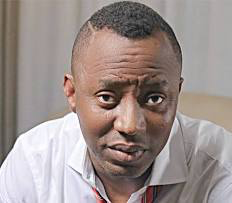
THE Federal High Court in Abuja on Tuesday admitted the presidential candidate of African Action Congress (AAC), Omoyele Sowore, to a N200 million bail with two sureties.

One of the court’s justices, Mohammed Umar, in a ruling on Sowore’s application for stay of execution of the order for his bail revocation, directed that one of the sureties must be a traditional ruler from Sowore’s community.

Umar held that the surety must have a landed property in Abuja.

The judge, who held that the sureties must also be verified by the prosecution, the State Security Service (SSS), ordered Sowore to also deposit his international passport with deputy chief registrar of the court.

The judge then handed over the defendant to his lawyers and adjourned the matter until July 6 for Sowore to open his defence.

Umar earlier vacated the defendant’s bail revocation order and the earlier order remanding him in Kuje Correctional Centre.

The News Agency of Nigeria (NAN) reports that Umar had, on June 22, ordered the remand of Sowore, also the publisher of Sahara Reporters, in Kuje Correctional Centre.

The judge, in a short ruling, ordered Sowore to be kept in the correctional centre pending the hearing and determination of his motion for stay of the order for revocation of his bail and bench warrant filed by his lawyer, Adeyinka Olumide-Fusika, a senior advocate.

The judge equally dismissed Sowore’s earlier application seeking the judge’s recusal from the case on the ground of alleged bias.

He adjourned the matter till June 24 for hearing of the application for stay of execution.

After Sowore’s application was moved and argued on June 24, Umar fixed today for a ruling.

He ordered the defendant to remain in custody pending the ruling.

The judge had, on June 16, revoked a bail granted to Sowore following his failure to appear in court for his trial.

Umar, in a ruling on an oral application made by the lawyer to the prosecutor, the SSS, Akinlolu Kehinde, a senior advocate, also issued a bench warrant for his arrest.

The SSS is prosecuting Sowore for allegedly making false claims against President Bola Tinubu by referring to him as “a criminal” in a post he made on his X and Facebook accounts. (NAN)

Police officer, 2 others arrested for allegedly raping 13-year-old girl in Niger

THE Niger Commissioner for Women Affairs, Hajiya Hadiza Kuta, has confirmed the arrest of a police officer serving with the Niger Police Command for allegedly raping a 13-year-old girl.

Hajiya Kuta disclosed this in an interview with the News Agency of Nigeria (NAN) in her office in Minna on Monday.

She said two other suspects were also arrested for allegedly raping the girl.

According to her, the victim was repeatedly raped by the three suspects before the matter was reported to the ministry.

The commissioner explained that the victim’s parents reported the case to the ministry for intervention, which led to the suspects’ arrest.

“The parents told the ministry that their efforts to seek justice were consistently obstructed, which prompted them to seek the ministry’s assistance,” she said.

Kuta expressed concern over the rising cases of rape involving minors and teenagers.

She lamented that attempts were being made to divert attention from the rape allegations by accusing the victim of stealing livestock.

According to the commissioner, the suspects took advantage of the girl after buying chickens from her.

She stressed the dangers of street hawking, especially for girls.

The commissioner also lamented that the individuals accused of rape were often granted bail shortly after arraignment.

She said such practices deny victims and their families justice and embolden perpetrators to continue the act.

“It is distressing to observe that cases of this nature frequently cause significant psychological trauma, undermining the educational aspirations of young girls.

“The future of these children can be irreparably damaged by the actions of the perpetrators,” she stated.

She assured the victim’s family that the ministry would pursue justice on their behalf.

“As part of its intervention, the ministry has relocated the victim from her community to ensure her safety and has placed her under protective custody,” she revealed.

Kuta said the girl would receive comprehensive medical care, psychological evaluation, counselling, and other support services to assess the physical and emotional impact of the abuse and aid her recovery.

She stressed the need for a thorough investigation, noting that the charges filed against the suspects would determine the strength of the prosecution’s case in court.

“The ministry hopes justice will prevail and reaffirmed its commitment to protecting the rights and welfare of the victims,” she noted.

According to findings by the Thomson Reuters Foundation’s 2018 global poll, Nigeria ranked among the most dangerous places in the world for women, largely due to the prevalence of sexual violence, cultural stigma, and weak enforcement of protective laws.

Recent data from the National Bureau of Statistics also suggests that sexual offences remain widespread, though significantly under-reported, with many survivors never formally reporting cases to authorities.

In many communities, incidents are further compounded by silence, fear of stigma, and limited access to justice, leaving survivors to navigate trauma without institutional support.

The ICIR reports that in Nigeria, six out of every 10 children suffer from one or more forms of physical, sexual or emotional violence before clocking 18. More than 70 per cent of children experience this violence repeatedly, according to the United Nations Children’s Fund (UNICEF).


FEC approves sweeping NYSC reforms, targets skills, safety

THE Federal Executive Council (FEC) has approved a comprehensive reform of the National Youth Service Corps (NYSC).

The Minister of Youth Development, Ayodele Olawande, announced the approval on Monday, June 29, describing it as a landmark decision aimed at repositioning the NYSC to meet the demands of a rapidly changing Nigerian economy.

According to the minister, the reforms will transform the scheme into a “skills-driven, productivity-focused and youth-empowering institution” that aligns with President Bola Tinubu’s ambition of building a $1 trillion economy.

“For over five decades, the NYSC has remained a powerful symbol of national unity and service. Today, we have taken a bold step to preserve that legacy while preparing it for the future,” Olawande said.

He explained that the reforms would equip corps members with practical skills, career opportunities and experiences needed to thrive in an evolving labour market.

Among the key changes approved by the council is the introduction of a technology-driven call-up process designed to improve efficiency and transparency.

The reforms also provide for risk-sensitive deployment of corps members to enhance their safety, a redesigned six-week orientation programme with greater emphasis on leadership, entrepreneurship, digital skills and specialised career streams, as well as skills-based primary assignments aligned with participants’ academic qualifications and career aspirations.

In addition, the government approved a new governance structure that places the scheme under civilian operational leadership while retaining military support for security during orientation exercises.

The reforms further include the introduction of a national grading and certification system to improve camp standards across the country, alongside a new graduation ceremony that will replace the traditional Passing Out Parade. Corps members will also receive redesigned NYSC uniforms intended to reflect professionalism and national pride.

The minister said the reform process began in 2025 through consultations involving the Federal Ministry of Youth Development, the Federal Ministry of Education, and the Office of the Special Adviser to the President on Policy and Coordination.

He added that FEC has directed the Attorney-General of the Federation and the Federal Ministry of Youth Development to commence amendments to the NYSC Act and its regulations to provide the legal framework required for implementing the reforms.

Describing the decision as an investment in Nigeria’s youth, the minister said the changes would make the NYSC more relevant and impactful.

“This is more than a reform of an institution. It is an investment in Nigeria’s greatest asset, our young people. The future of the NYSC begins now, and it is brighter, more relevant and more impactful than ever,” he said.

The NYSC was established by Decree No. 24 of 1973 in the aftermath of the Nigerian Civil War to foster national unity, reconciliation and integration among young graduates.

The one-year mandatory national service scheme requires graduates of universities and other eligible tertiary institutions below the age of 30 to serve in states outside their regions of origin.

The programme currently comprises a three-week orientation camp, a primary place of assignment, community development service and a passing-out exercise at the end of the service year.

Over the years, the scheme has become one of Nigeria’s most enduring national institutions.

It has also faced growing criticism over the safety of corps members, inadequate welfare, deployment challenges and concerns that its operations no longer reflect the country’s changing economic and security realities.

The new reform by the Tinubu government may have put an end to calls by many Nigerians that the scheme has outlived its usefulness and should consequently be scrapped.

International Anti-Corruption Conference 2026 seeks entries

TRANSPARENCY International (TI) is inviting young journalists worldwide who are passionate about fighting corruption to apply for its 2026 programme.

TI has 10 places available for journalists in the early stages of their professional career to join its International Anti-Corruption Conference in the Dominican Republic from 1-4 December 2026.

As part of a mentored programme, participants will have the chance to join the conference discussions, interview leaders and activists, and build their knowledge of the latest trends in the anti-corruption space.

Participants must be proficient in English, under 35 years old, and be prepared to develop at least one report and to secure coverage in a media outlet after the event.

The organisers say, “We are committed to creating an inclusive work environment where diversity is valued and where there is equality of opportunity. We actively seek a diverse applicant pool and therefore welcome applications from qualified candidates of all regions, countries, cultures and backgrounds.

“Selection to the young journalist programme is made on a competitive basis, and we do not discriminate on the basis of national origin, race, colour or ethnic background, religious belief, sex, gender identity and expression or sexual orientation, marital or family status, age or ability. We kindly ask applicants to refrain from including in their application information relating to the above, as well as from attaching photos.

The deadline for applications is July 15, 2026. Interested applicants can apply here.

Council declared non-existent by Presidency gets N1.3bn allocation in 2026 budget

0

A FRESH controversy has emerged over the existence of the Presidential Foreign Intervention Promotion Council (PFIPC) after the council received a N1.3 billion allocations in the 2026 Appropriation Act, despite the Presidency insisting that the council does not exist.

On June 11, the Chief of Staff to the President, Femi Gbajabiamila, publicly described the organisation as a non-existent entity and warned the public against dealing with individuals claiming to represent it.

“It has come to the notice of the Federal Government of Nigeria and specifically the Office of the Chief of Staff… that a certain Prince Adeniyi Adeyemi, under the auspices of an alleged organisation styled as the ‘Presidential Foreign Intervention Promotion Council’ is portraying himself to the general public as having been appointed by my office,” Gbajabiamila said in a statement.

The Chief of Staff stated that no such office exists under the administration of President Bola Tinubu and that no appointment had been made in! that regard. He urged foreign missions, development partners, financial institutions and the public to disregard any claims linking the council to the Presidency.

However, documents reviewed by TheCable in the 2026 Appropriation Act paint a different picture.

The 2026 Federal Government’s budget expressly lists the Presidential Economic Advisory Council/Presidential Foreign Intervention Promotion Council under the Presidency, with a total allocation of N1,302,978,784.

A breakdown of the allocation shows that N802,978,783 was earmarked for personnel costs, N200,000,001 for overhead expenses, while N300 million was budgeted for capital projects.

The allocation raises questions over how a council publicly disowned by the Presidency came to be captured in the nation’s approved budget with provisions for salaries, operations and capital expenditure.

The controversy deepened on Thursday when Adeniyi Adeyemi, who claims to head the council, challenged Gbajabiamila’s position during a press conference in Abuja.

Adeyemi described the Chief of Staff’s statement as inconsistent with existing government records.

According to him, the council maintains accounts with the Central Bank of Nigeria (CBN), occupies office space at the Federal Secretariat, and received approval for more than 300 personnel from the Office of the Head of the Civil Service of the Federation.

He argued that the existence of such official records would be difficult to reconcile with the Presidency’s assertion that the council had no legal or administrative existence.

Adeyemi called on President Bola Tinubu to establish an independent investigative panel to examine all government records relating to the council and determine how it came to appear in official federal documents, including the national budget.

The conflicting positions have raised concerns over the integrity of government records and the budget preparation process.

As of press time, neither the Presidency nor the Budget Office had publicly explained why the Presidential Foreign Intervention Promotion Council appears in the approved 2026 budget despite the official denial of its existence.

The development is likely to intensify scrutiny of the 2026 federal budget and may prompt demands for a comprehensive investigation into the council’s legal status, funding history and the officials responsible for its inclusion in the national appropriation.

A similar report by The ICIR in 2020 showed how the Office of the Chief Economic Adviser to the President (OCEAP) got approval for the sum of N573.45 million as capital allocations in five years without a clear identity of presidential appointee answerable to the fund’s utilisation.

Police confirm abduction of NECO students in Borno

THE Borno State Police Command has confirmed the abduction of an unspecified number of students sitting for the National Examinations Council (NECO) examination after suspected terrorists attacked a secondary school in Lassa community, Askira/Uba Local Government Area of the state on Monday, June 29.

The command said it had deployed security operatives to the area, where they are currently combing nearby forests in a bid to rescue the abducted victims and apprehend the attackers.

The spokesperson for the command, Nahum Daso, confirmed the incident on Monday, saying the attack occurred at about 9 a.m. when suspected fighters of the Islamic State West Africa Province (ISWAP) invaded Government Day Secondary School, Lassa, and opened fire.

“Around 9 a.m. this morning, ISWAP attacked Lassa Day Secondary School. They shot sporadically. An unspecified number of students have been abducted,” Daso said.

He added that security forces engaged the attackers during the assault, preventing what could have been a larger-scale abduction.

“Security forces confronted them. For now, we have an unspecified number of students who were abducted. The CP (commissioner of police) has deployed the Area Commander in Askira/Uba. They are currently combing the bush,” he said.

The latest attack comes about six weeks after suspected Boko Haram insurgents abducted 42 pupils and students from Mussa Primary and Junior Secondary School, also in Askira/Uba Local Government Area.

On May 15, suspected Boko Haram insurgents attacked Mussa Primary and Junior Secondary School and surrounding communities in the LGA, abducted 42 students and teachers. 

Similarly, in Oyo, on the same day, gunmen launched coordinated raids on Baptist Nursery and Primary School, Yawota; Community Grammar School, Ahoro-Esiele; and L.A. Primary School in Oriire Local Government Area, whisked away 39 pupils and seven teachers. The attackers reportedly killed at least one teacher during the operation before marching the victims into the forest.

More than 40 days after the incident, the victims remain in captivity despite repeated assurances from authorities that rescue efforts were underway.

Since then, relatives in both states have endured weeks of uncertainty, with many saying they have received little information about the condition of their loved ones. Parents, community leaders and civil society groups have repeatedly appealed to authorities to intensify efforts to secure the victims’ release. 

The union later staged protests in Oyo, Maiduguri and other parts of the country, demanding urgent government action to secure the release of the captives, as frustration mounted among residents of the affected communities.

The renewed attack also comes despite repeated assurances by President Bola Tinubu that his administration is prioritising security. In his June 12 Democracy Day address, the president acknowledged the continued captivity of schoolchildren abducted in Borno and Oyo states, describing the incidents as a source of national concern.

“We remain hopeful for their safe return,” Tinubu said, adding that the Federal Government had declared a security emergency, approved the recruitment of more than 50,000 police officers and thousands of military personnel, and allocated N5.41 trillion to defence and security in the 2026 budget.

The ICIR reports that the latest assault shows the persistent insecurity confronting communities in many parts of the country, where schools have repeatedly come under attack more than a decade after the 2014 Chibok schoolgirls’ abduction drew global attention to the vulnerability of educational institutions in Nigeria’s North-East.