FBN Holdings Plc’s total loans to the agriculture sector in the past five years are less than three per cent of the bank’s loans and advances to customers, findings by The ICIR have shown.
The ICIR discovered that the bank lent N285.18 billion to the agriculture sector, representing 2.29 per cent of N12.42 trillion in total loans and advances to customers.
Gathered from the bank’s 2018 to 2022 financial statements, The ICIR’s checks showed that FBN Holdings’ loan to the agriculture sector relative to its loans and advances to customers stood at N2.72 per cent in 2018, rose to N2.97 per cent in 2019 and declined to 2.73 per cent, 2.25 per cent and 1.55 per cent in 2020, 2021 and 2022, respectively.
Out of N1.68 trillion in loans and advances to customers in 2018, FBN Holdings lent N45.87 billion to the agriculture sector and N55.07 billion out of N1.85 trillion to customers in 2019.
In 2020, 2021 and 2022, the bank’s loans to the sector were N60.55 billion, N64.97 billion and N58.72 billion out of N2.22 trillion, N2.88 trillion and N3.79 trillion loans and advances to customers, respectively.
Compared to other commercial banks like Zenith Bank, Fidelity Bank, Access Holdings, and Sterling Financial Holdings Company, the findings show that FBN Holdings’ lending to the agriculture sector was the lowest in the years under review.
For instance, Fidelity Bank’s lending to the agriculture sector grew by 539.97 per cent from N17.03 billion in 2018 to N109.01 billion as of 2022. Access Holdings followed with a 238.65 per loan rise to the sector from N17.002 billion in 2018 to N57.58 billion in 2022.
While Zenith Bank increased its agriculture lending by 130.01 per cent to N265.21 billion in 2022 from N115.303 billion in 2018, Sterling Holdings’ loans to agriculture jumped by 104.99 per cent to N81.26 billion in 2022 from N39.64 billion in 2018.
According to the Food and Agriculture Organisation of the United Nations (FAO), Nigeria’s agricultural sector faces many challenges, from low technology, high production cost and poor distribution of inputs, limited financing, high post-harvest losses and poor access to markets, impacting its productivity.
Experts believe agriculture, a critical sector for economic development, job creation, and poverty reduction, needs adequate funding to help support farmers and agribusinesses nationwide to improve productivity and reduce rising food prices.
Input costs hiking prices of agric produce
Many of the problems confronting food production in Nigeria beg for solutions, Segun Ajibola, a professor of Economics at Babcock University, said.
According to Ajibola, a commercial farmer, there is every tendency that if food problems are addressed, the issue of poverty will be almost solved.
The prices of agricultural produce have more than doubled or tripled than the costs of fixing farm inputs compared to two or three years ago, he said, adding that from his experience, about 30 to 40 per cent of what farm produce is wasted either due to problems of storage or transportation – having to carry goods to the hinterland.
“In my farm, for example, I constructed the road to the farm that is about five kilometres. I provide my water, power, and storage. Even when travelling from the farm to the cities, you face many road problems,” Ajibola said, stressing the need to address the issue of farm input costs.
“How do we bring down the costs? How do we help the farmers in the area of storage, transportation, off-takers,” he asked.
She said Nigeria must address these issues to avert food security challenges.
He lamented the non-existence of a marketing board, which existed years back, provided storage facilities, and created price stability.
The Centre for the Promotion of Private Enterprises (CPPE) executive director, Muda Yusuf, said there was no quick fix or silver bullet to crashing foodstuff prices.
“Food prices are a function of output, production, productivity, and at what cost can you produce. These are the fundamental issues,” he said.
He explained that nearly 90 per cent of the domestic foods consumed were produced by peasant farmers who mostly relied on the orthodox use of hoes and cutlasses to farm.
“Unlike other sectors of the economy where we have been leveraging technology, we are not doing so much in agriculture. How much can a peasant farmer produce? The population is growing. Most of them are still using hoes and cutlasses. Increasingly, there is a gap and demand pressure. That is one.
“Secondly, we have this problem of insecurity. Even a good proportion of them that are managing to do this production, many of them cannot go to farms,” Yusuf said, adding that the dilapidated roads from the hinterlands to the cities and the rising cost of diesel further worsened the situation.
Corroborating the issues highlighted by the economists, the national secretary of the All Farmers Association of Nigeria (AFAN), Yunusa Halidu, said, “High input and transportation costs are impacting the price of rice. The production chain is shallow; the consumption chain is higher than the production chain.
“Before now, it cost about N300,000 to N400,000 transporting a trailer load of rice from Kano to Lagos; it now costs about N1.3 million or N1.5 million.”
THE Economic and Financial Crimes Commission (EFCC) has presented N76.586 billion as its 2024 budget proposal to the House of Representatives Committee on Financial Crimes.
The proposed budget presented on Tuesday, December 5, 2023, represents a 53.48 per cent increase in the commission’s 2023 appropriation of N49.901 billion.
In the budget estimate, N37.074 billion was proposed as personnel cost, N14.513 billion as overhead, and N25 billion as capital cost.
Presenting the budget to the committee, the EFCC chairman, Ola Olukoyede, said the 2024 proposed estimate represented a significant increase over 2023’s budget due to additional funds needed for overhead, personnel and capital costs.
“This increase is solely attributable to the increase in personnel cost from N36.83 billion (in 2023) to N37.074 billion in 2024, overhead cost from N10.535billion to 14.513 billion in 2024 and capital cost from N2.531billion to N25.000 billion in 2024,” Olukoyede stated.
Speaking on the 2023 budget performance, Olukoyede explained that N36.835 billion was appropriated as the commission’s personnel cost for the year. “Out of this figure, the sum of N28.452 billion, representing 77 per cent, has been released for the payment of salary and allowances of staff on the commission’s payroll between January and November 2023.
He added that N7.024 billion, representing 67 per cent of the N10.535 billion appropriated for the commission for its overhead cost in 2023, had so far been released.
Olukoyede noted that the exorbitant prices of airline tickets, gasoline and diesel for cars, building upkeep, operating vehicles, and office equipment at the commission’s headquarters and 14 zonal commands were the reasons for the increase in the commission’s budget for overhead.
Responding, the committee’s chairman, Ginger Obinna, said financial crimes were a danger to the growth and stability of any nation.
“It is our duty to stay ahead of these threats, adapt our strategies and equip ourselves adequately to counteract the forces that seek to undermine our economic well-being and that of our nation.
“It is a pledge to provide the necessary resources to empower the Economic and Financial Crimes Commission to carry out its vital mission effectively.”
In July 2022, The ICIRreported how the commission budgeted N100 million to buy photocopy machines.
DESPITE killing 85 unarmed civilians and injuring several others, the Defence Headquarters (DHQ) on Tuesday, December 5, said the Nigerian Army did its best to distinguish between civilians and terrorists in the bombing of a community in Kaduna state on Sunday, December 3.
It further stated that terrorists often mix with civilians, noting that the Army’s unmanned aerial vehicle (UAV) detachment observed the movement of terrorists at Ligarma, an area notorious for being a haven for insurgents.
The ICIR reports that scores of people were feared dead when Tundun Biri village was bombed while residents celebrated Maulud Nabiyy (the birth of Prophet Muhammad) in the late hours of Sunday.
The National Emergency Management Agency (NEMA) has since confirmed that 85 bodies have been recovered so far while search is still ongoing.
Amnesty International, a human rights advocacy group, however, stated that over 120 persons, including women, children, and the elderly, died during the air attack.
A statement by the Director of Defence Media Operations, Edward Bub, on Tuesday said that the general area of Tudun Biri and adjoining villages have been infested with armed bandits, who terrorised the communities.
“The observed advance of the terrorists that were gathered posted a threat to key infrastructure within reach of the untoward activities. Accordingly, the threat was eliminated to prevent the terrorists from unleashing terror on innocent civilians.
“It should be noted that terrorists often deliberately embed themselves within civilian population centres for the civilian population to bear the consequences of their atrocities. Nevertheless, the Nigerian military does its best at all times to distinguish between civilians and terrorists.
“The military views every civilian death in the cause of operations as a tragedy as such tragedies are needless and unwanted, which causes the armed forces to take extensive measures to avoid them,” the statement added.
The DHQ explained further that communities were expected always to alert troops of their activities, particularly when such a community is known to be infested with terrorists and their sympathisers.
“These instructions are intended at enabling the military to distinguish between friendly and untoward activities.”
In another statement, the Chief of Army Staff (COAS), Taoreed Lagbaja, during his visit on Tuesday, pointed out that the troops were carrying out aerial patrols when they observed a group of people and wrongly analyzed and misinterpreted their pattern of activities to be similar to that of the bandits before the drone struck.
The incident has since generated widespread reactions from political leaders and concerned Nigerians, demanding a probe into the matter.
President Bola Tinubu has also sympathised with the victims’ families and the Kaduna state’s government.
“Tinubu describes the incident as very unfortunate, disturbing, and painful, expressing indignation and grief over the tragic loss of Nigerian lives.
“The President directs a thorough and full-fledged investigation into the incident and calls for calm while the authorities look diligently into the mishap,” the presidency’s statement reads in part.
The President also directed swift and comprehensive medical attention for survivors of the attack while praying for the repose of the souls of the deceased.
The ICIR reports that the attack wasn’t the first time the Nigerian military would be accused of bombing unarmed Nigerians.
In 2021, The ICIRreported how the Nigerian military killed and injured civilians in several villages, leading to the forced displacement of hundreds of residents.
The military had embarked on offensive airstrikes at insurgents’ hideouts in Zamfara state and provided support for ground troops to rid out criminals from the North-East region.
THE Supreme Court has dismissed an application by Emeka Ihedioha of the Peoples Democratic Party (PDP) seeking to remove Hope Uzodinma as Imo state governor.
The applicant urged the court to give the Independent National Electoral Commission a consequential order to issue a certificate of return to Ihedioha as the validly elected Imo state governor in the 2019 election.
According to Ihedioha’s statement before the apex court, Uzodinma was deemed unfit to stand for election in the first place.
According to Ihedioha, Uche Nwosu was earlier declared by the court as the rightful candidate of the All Progressives Congress (APC). Consequently, he said Uzodinma was not qualified to run for the election.
According to Tijjani Abubakar, who read the lead judgment on Tuesday, December 5, the application was frivolous and vexatious.
He added that the 60 days allotted to hear the election dispute had passed and that the court lacked the authority to decide the case.
The court fined PDP lawyer Mike Ozekhome (SAN) N40 million for bringing the case to court.
The ICIRreported in January 2020 that the apex court sacked Ihedioha as Imo state governor and declared Uzodinma of APC as duly elected governor.
In a court judgement by a seven-man panel led by the then Chief Justice of Nigeria, Tanko Muhammed, the decision to sack the incumbent governor was unanimously taken.
Announcing the panel’s decision, Kudirat Kekere-Ekun ordered INEC to withdraw the certificate of return earlier issued to Ihedioha and issue same to Uzodinma.
In 2019, INEC announced that PDP candidate Ihedioha polled 273,404 votes, Nwosu had 190,364, All Progressives Grand Alliance (APGA) candidate Ararume got 114,676, while Uzodinma won 96,458.
On Sunday, November 12, INEC declared Uzodimma the winner of the state governorship poll held on Saturday, November 11. The victory gave Uzodinma a second and final term in office.
Uzodimma polled 540,308 votes to defeat his major opponents – Sam Anyanwu of the PDP, who got 71,503, and Anthony Achonu of the Labour Party (LP), who won 64,081 votes.
THE Coalition for Whistleblowers Protection and Press Freedom (CWPPF) has condemned the detention of a journalist Marcus Fatunmole who works as the News Editor at the International Centre for Investigative Reporting (ICIR).
This was contained in a statement signed by Deputy Director, Centre for Journalism Innovation and Development (CJID), Busola Ajibola, on behalf of the coalition on Tuesday, December 5.
Fatunmole was detained by security operatives on Monday, December 4, while investigating a mass transportation scheme in Abuja.
“Expressing deep concern over the harassment faced by Mr Fatunmole while performing his duties at the Eagle Square car park, FCT Abuja, the CWPPF asserts that Mr Fatunmole’s investigative reporting on controversial buses circulating on social media, claimed to be part of an FCT mass transportation scheme, was unjustly interrupted by security operatives.
“Security operatives, including a Police officer, Abuja Property Development Company (APDC),” and a staff of 360 TFA including Ibukun Akindele, unlawfully detained him, obstructing his right to freely exercise his duties as a journalist,the statement read.
Following a viral video of some buses said to be a part of the Federal Capital Territory (FCT) mass transportation scheme, Fatunmole visited the Eagles’ Square to investigate allegations made in the video.
Security operatives, including a Police officer, Abuja Property Development Company (APDC), and private security personnel Ibukun Akindele, accosted Fatunmole and detained him.
Although Fatunmole presented a valid identity card identifying him as The ICIR News Editor, he was detained for six hours, between 9.00 a.m. and 2.00 p.m., at the Eagle square security output before eventually taken to the Central Police Station, Federal Secretariat in Abuja.
Officials of Abuja Property Development Company (APDC) demanded to seize Fatunmole’s phone while also demanding for access to his google account.
“We note that the detainment and harassment of Mr Fatunmole was unjust, unlawful and failed to comply with legal processes. There was no warrant of arrest, he committed no crime and yet was detained and subjected to long hours of interrogation by the Police on the instruction of Ms Ibukun Akindele”, the statement by CWPPF read.
Akindele claims to 360 TFA legal adviser.
The coalition called for an investigation by the Nigerian Police Force, sensitisation of security operatives on the role of journalists in society and urged The ICIR to take legal steps while seeking redress for the harassment against Fatunmole.
“Upon discovering that Ibukun Akindele, the TFA private security officer involved, is also a lawyer, the Coalition calls on the Nigerian Bar Association (NBA) to thoroughly investigate the matter and take appropriate actions against her for colluding with the Police in violating the journalist’s rights,” the statement read.
Editor at The ICIR Victoria Bamas, who also spoke on the issue, condemned the harassment of journalists in Nigeria.
“This is an instance of the daily hassle journalists practising in Nigeria go through in the discharge of their work. At every level, we face harassment and intimidation from both official and nonofficial forces. There is a need for mass sensitization of the public on the work and role of journalists, as well as massive training and sensitisation for the different cadres of security agents,” she said.
Harassment, intimidation and attacks have remained a source of concern for journalists in Nigeria and many other countries.
Four ICIR journalists harassed in 2023
At least four staff members of The ICIR have been attacked by both state and non-state actors in 2023.
Officials of the Federal Road Safety Corps (FRSC) attacked Mustapha Usman, a reporter with The ICIR, and confiscated his Identity Card at Zone 7, Wuse.
Usman was beaten up by the FRSC officials while trying to record a video of them forcefully grabbing the steering wheel from a female driver and deflating her car tyres afterwards.
In April, a man in military uniform and a woman, who identified themselves as soldiers of the Nigerian Army, led a mob action against a journalist with The ICIR, Sinafi Omanga.
During the general elections held on February 25, The ICIR Executive Director Dayo Aiyetan was attacked while recording a case of electoral violence in the Gwagwalada area of the FCT.
He was beaten and disposed of his phone, car key, purse and a pouch containing his debit cards, Nigeria and US driver’s licenses, among other items, some of which he recovered following the intervention of a Divisional Police Officer in Gwagwalada, Hamza Sadiq.
Omanga had noticed a case of jungle justice against two men accused of stealing a mobile phone on Mombassa street in Zone 5, Wuse and picked up his device to record the incident when they pounced on him.
PRESIDENT Bola Ahmed Tinubu has expressed anger over the Nigerian Army’s air bombing of Maulud celebrants in Kaduna on Sunday, December 3.
In a statement released on Tuesday, December 5, and signed by his spokesperson Ajuri Ngelale, the President said he had ordered a full investigation into the incident.
The ICIR reports that scores of people were feared dead when Tundun Biri village was bombed while residents celebrated Maulud Nabiyy (the birth of Prophet Muhammad) in the late hours of Sunday.
While the Army has admitted it carried out the attack, details of the tragedy are still sketchy. Pictures and posts sighted by The ICIR on social media, particularly X, indicate that no fewer than 30 people lost their lives during the incident.
Army takes responsibility for bombing
Following the incident, the Kaduna state government called an emergency security meeting chaired by the deputy governor, Hadiza Balarabe, on Monday, December 4.
After the meeting, the Nigerian Army took responsibility for the bombing.
The commissioner overseeing the state’s Ministry of Internal Security and Home Affairs, Samuel Aruwan, confirmed the development at the end of an emergency security meeting.
According to Aruwan, the operation unintentionally harmed residents as the forces were conducting a routine raid against local insurgents.
He also revealed that the injured victims had been taken to the Barau Dikko Teaching Hospital for medical attention and that search and rescue efforts were still ongoing.
“The General Officer Commanding 1 Division Nigerian Army, Major VU Okoro, explained that the Nigerian Army was on a routine mission against terrorists but inadvertently affected members of the community,” Aruwan said.
Tinubu angry over attack
Reacting to the incident on Tuesday, Tinubu sympathised with the families of victims and the government of Kaduna state.
“Tinubu describes the incident as very unfortunate, disturbing, and painful, expressing indignation and grief over the tragic loss of Nigerian lives.
“The President directs a thorough and full-fledged investigation into the incident and calls for calm while the authorities look diligently into the mishap,” the presidency’s statement reads in part.
The President also directed swift and comprehensive medical attention for survivors of the attack while praying for the repose of the souls of the deceased.
Not the first time
The ICIR reports that the attack wasn’t the first time the Nigerian military would be accused of bombing unarmed Nigerians.
In 2021, The ICIR reported how the Nigerian military killed and injured civilians in several villages, leading to the forced displacement of hundreds of residents.
The military had embarked on offensive airstrikes at insurgents’ hideouts in Zamfara state and provided support for ground troops to rid out criminals from the North-East region.
“LAST week (September), I carried somebody to Umueze-Anam, and on our way, we met some people carrying a corpse. When they came to the end of the tarred road, they came down from their cars and carried the casket on their heads and trekked to Umuenwelum Anam,” said Ogbonna Onwe, a commercial motorcyclist, describing the adverse effect of the deplorable condition of the Otuocha-Nzam-Inoma-Iheaka-Abaji road in Anambra West Local Government Area of Anambra State.
That encounter, and other experiences justified the motorcyclist’s initial hesitation to ferry this reporter and a fixer on an assessment tour of the road. “If not that I see chief with you, I cannot put my bike on this road,” he said, acknowledging the fixer.
The Otuocha-Nzam-Inoma-Iheaka-Abaji road is a 30-kilometre road that was awarded on December 3, 2009, by the administration of then President Umaru Musa Yar’adua. Residents of the LGA had then described it as a Christmas gift and were jubilant that the Federal Government had decided to address their greatest worry.
Awarded to Niger Construction Limited at the initial cost of N5,804,811,747.04, the completion period for the project was put as 24 months. The project had raised the hope of residents that their local government headquarters, Nzam, would soon measure up to others.
Felix from Umudora Anam is unhappy with the abandonment of the road project. Credit Alfred Ajayi
“Our people were very happy because we have stayed for many years without an access road. We were in the dark, cut off from other parts of the state,” a doctor, Mike Ozoemena, a resident of Umudora Anam, a community in the LGA remarked.
“So, with the project awarded, we were hoping that one day, we would be connected to other parts of the state,” he said.
But not long after work commenced, their joy was cut short as the project was stopped. “Our hope was cut short, and our problems got compounded. We continued with the Israelites kind of journey to Awka or Onitsha before heading to Abaji. So, a journey of one and half hours now takes about five hours or more,” Mathias Ameke, a resident of Mmiata Anam, another community in the LGA, recalled.
Apart from its huge economic potential for Anambra State, residents say the road, when completed, is capable of easing the evacuation of farm produce from the benefiting communities.
How poor state of road affects communities
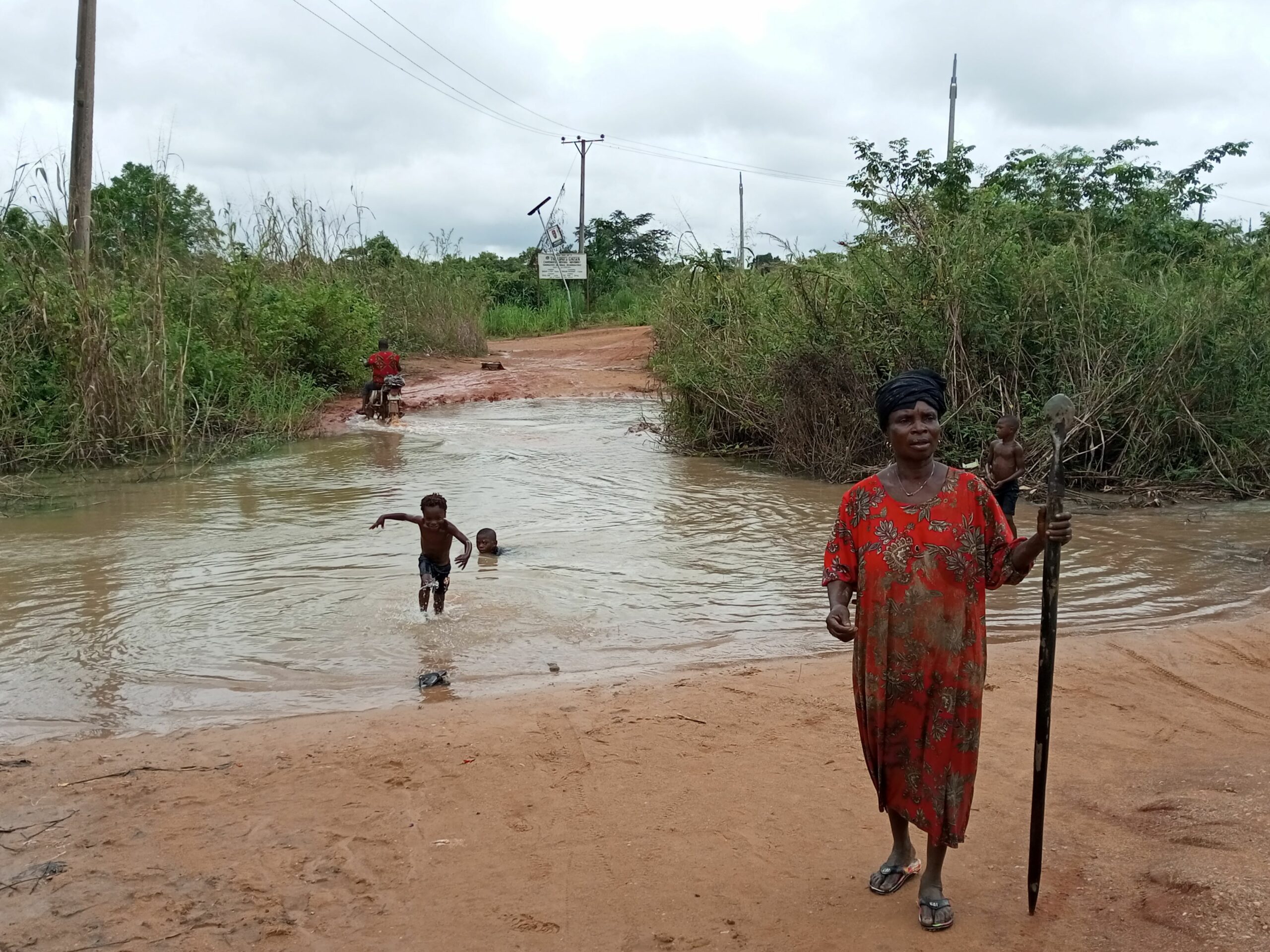
After the long and torturous journey that lasted more than 30 minutes, a welcoming signpost ushered this reporter and a fixer to Oromaetiti Anam; a beautiful and serene community in Anambra West LGA. But as earlier threatened, the motorcyclist ended the trip abruptly at the boundary between Oromaetiti and Umuenwelum Anam marked by a small flowing Ora-oroma River, where residents were seen taking their baths, washing clothes, as children splash the water while others washed their motorcycles.
Okwuota Ifediora at Ora-Oroma river bordering Oromaetiti and Umuenwelum Anam. Credit. Alfred Ajayi
At the riverside, Okwuota Ifediora, a septuagenarian, spoke of the hardship of evacuating farm produce due to the condition of the road. “See my children there suffering to cross the yams. After suffering to plant, you hardly see buyers,” she lamented.
Farmers like Ifediora attest that the deplorable condition of the Otuocha-Abaji road and others traversing agricultural belts across the country threaten food security.
The case is worsened by the lack of storage facilities in the area, explained Ifediora, adding, “We eat the much we can, and the rest get rotten, or we often sell at giveaway prices. For those who try to evacuate their harvested crops to nearby markets, they do so at a higher cost, and at the end, there is little or no gain.”
The septuagenarian narrated how the deplorable state of the road affects access to health care services, stressing that many pregnant women and sick persons have lost their lives while being carried out of Oromaetiti for medical care.
“Our primary health care centre is not functioning well. Sick people and pregnant women prefer to go to chemist shops. The greatest desire of our people is having this road constructed by the Federal Government,” she noted.
With vehicles constantly breaking down on the road, Ifeoma Kingsley, another female farmer, said they have nothing tangible to justify the labour associated with subsistence farming. “Farming here is suffering from tilling, ridge making, planting and weeding. At the end, you harvest but have no road to evacuate. We sell at giveaway prices,” she said.
Based on this, Ozoemena (mentioned earlier) urged President Bola Tinubu’s administration to construct rural roads for easy evacuation of farm food produce.
Over N3.4 billion paid to Niger Construction Limited
Apart from other releases to the contractor in the early days of the project, data from the Govspend portal hosted by the BudgIT Foundation, a machine-readable replica of the Federal Government’s Open Treasury portal, revealed that N316,666,666.66 was paid to the contractor on October 2, 2018. The contractor received another ₦148,452,119.92 on January 14, 2019, while ₦26,197,432.92 was paid on May 9, 2019. Cumulatively, records from the Federal Ministry of Works show the contractor had received a total of N3,433,445,808.05, which is more than half of the initial project cost.
“I don’t know why the government would decide to award a contract, start the project and then abandon it. If the government was not ready to do this road, why start it?” asked Samuel Jemigbola, a former President-General of Ukwualla community in Anambra West LGA.
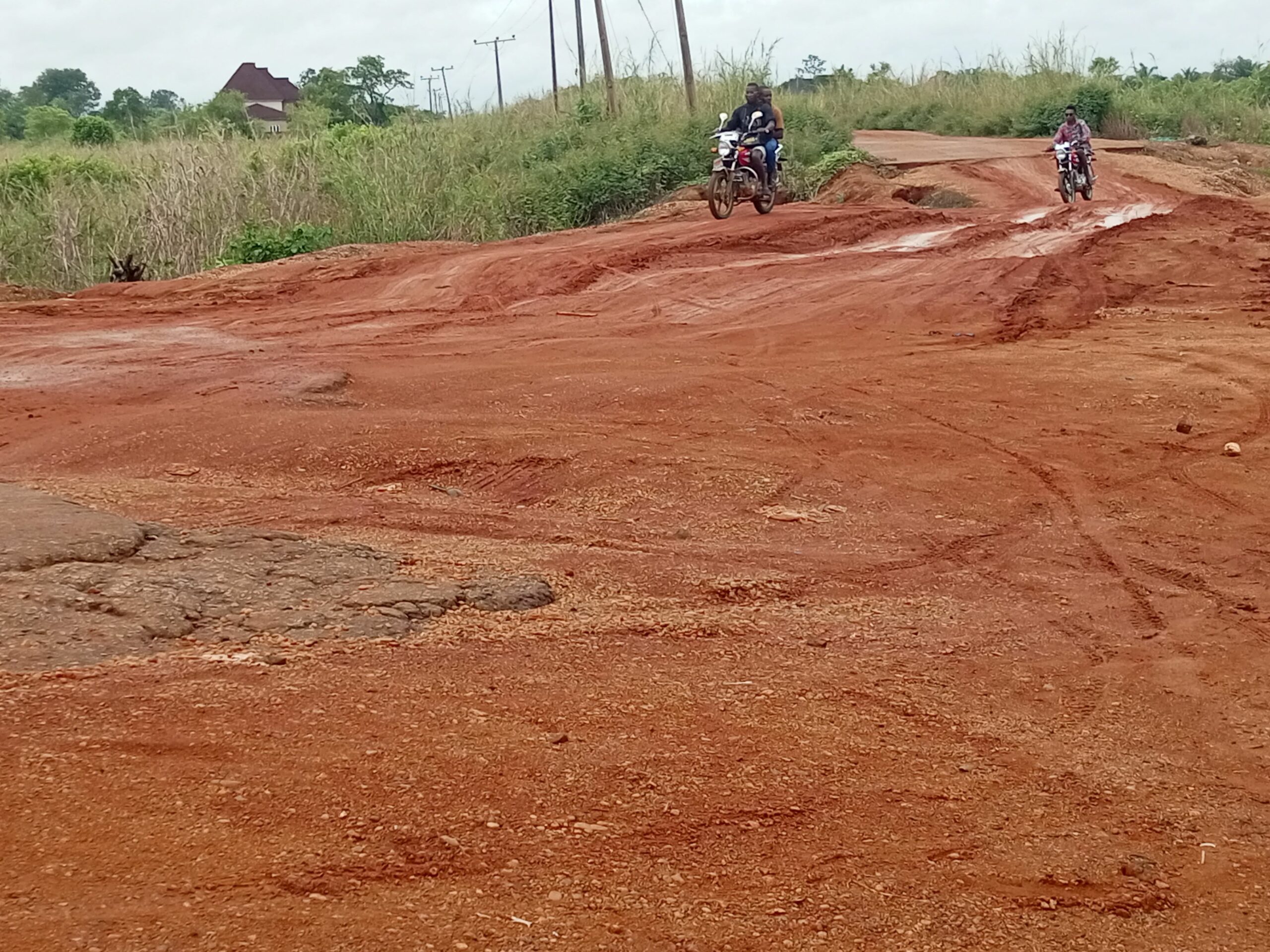
Beginning point of the road once asphalted Credit Alfred Ajayi
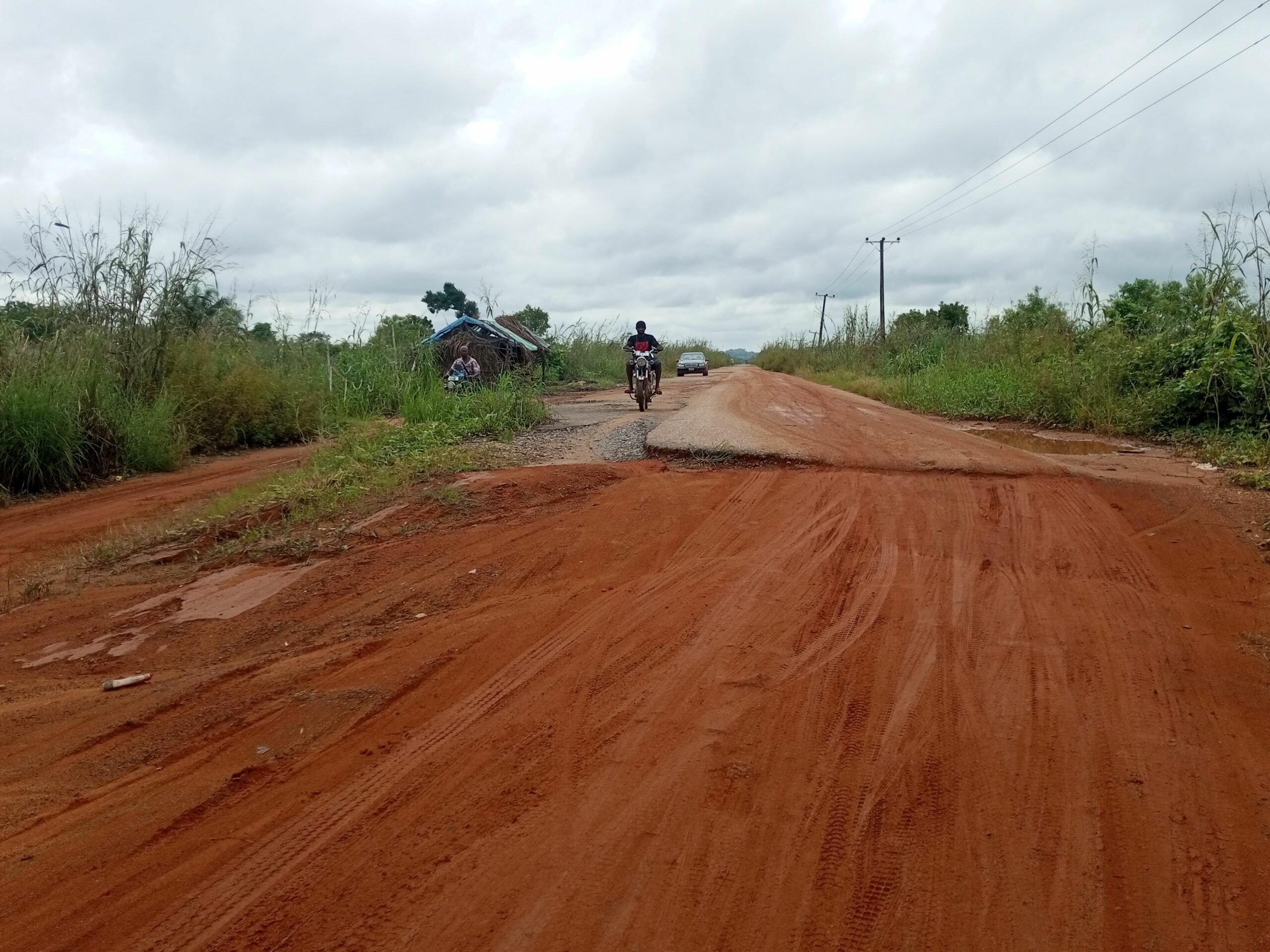
At the starting point of the project, this reporter was greeted by obvious deterioration, forcing repeated refusals by several commercial motorcyclists (popularly called okada) to take him on an assessment tour of the area.
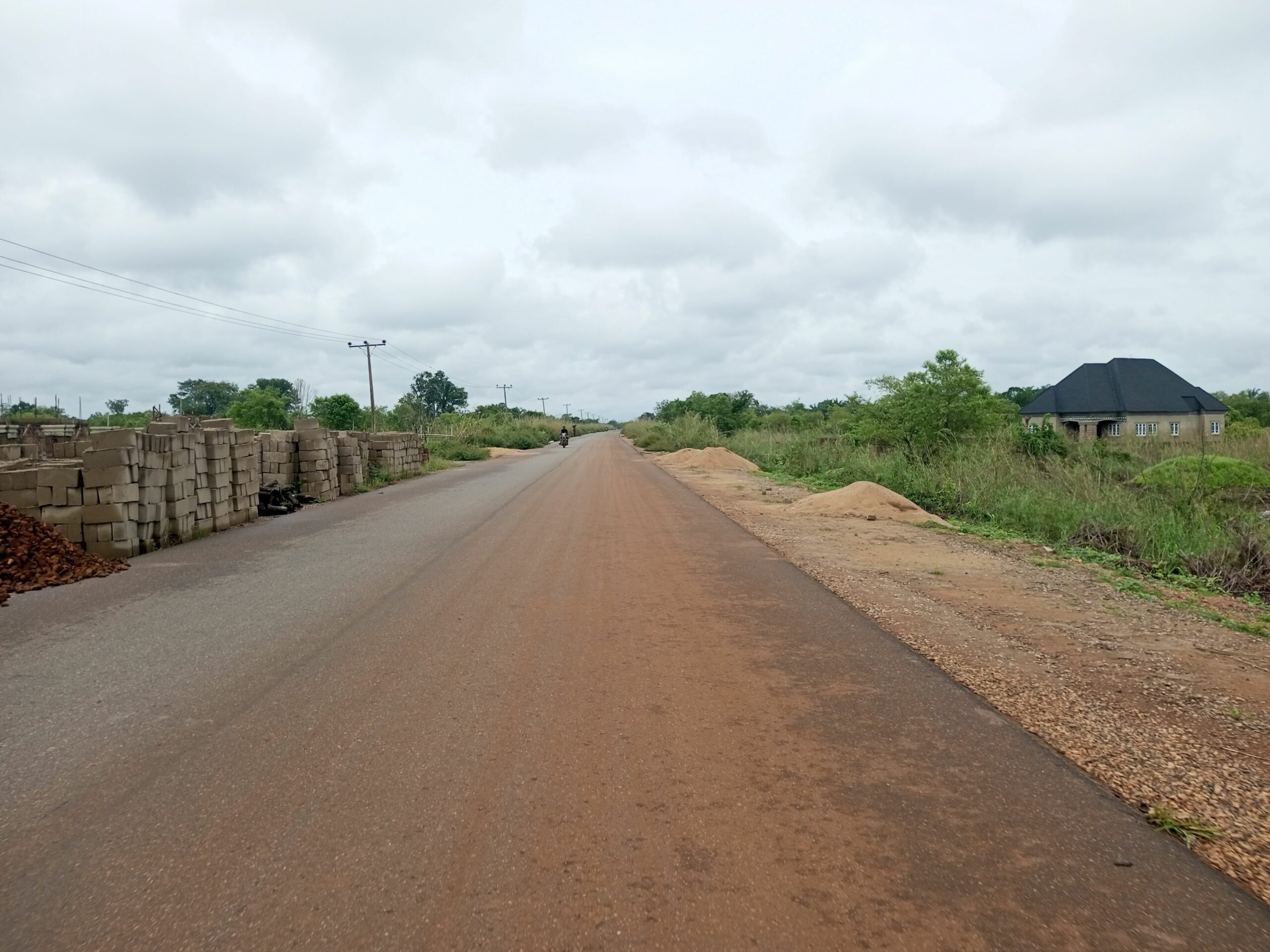
The Commercial Manager of Niger Construction Limited, Julien Shahinen, said that they were able to achieve the first binder asphalting of 7km out of the 30km road before the project stopped. However, residents in the LGA recalled that the asphalted part of the 7km said to have been achieved by the contractor started failing less than one year after construction. It was observed that the road shoulder is being eaten up by consistent flooding.
Nightmare on the road begins from here Credit Alfred Ajayi
This reporter observed that from the terminating point of the asphalted portion of the road lies the nightmare for road users. With the rains at their pick, it was observed that the road was waterlogged, making movement difficult for even pedestrians.
The project to construct the Otuocha-Nzam-Inoma-Iheaka-Abaji road was awarded to Niger Construction Limited, a subsidiary of the C.A.T Group, covering various sectors such as oil and gas, energy, utilities, civil, infrastructure and buildings, was registered in Nigeria on November 2, 1961 with registration number 2760. Corporate Affairs Commission, CAC search showed that the company is run by a seven-man board of directors. They are: Alsayegh Roger Gerges (Lebanese), Col Iheanocho Lambert Ogbonna (Nigerian), Sir Odhegolo Henry Orioko (Nigerian), Dr AnthoinePapadopoulo (Lebanese), Dr Aziz Michel Bassoul (Lebanese), Hanna Georges Miled (Lebanese), Omeru Mike (HRM) (Nigerian).
Its shareholders are C.A.T. International Limited, Ministry of Finance Incorporated, Imo State, Niger Construction Limited Employees Trust Fund, and Ministry of Finance Incorporated, Delta State. The Company Secretary is Marina Nominees.
NIGERCAT may be in breach of Section 822 (1) of the Companies and Allied Matters Act (CAMA 2020), which compels every registered business name, private or public company (limited by shares or guarantee or unlimited), incorporated trustees, or partnership to file annual returns with the Corporate Affairs Commission (CAC) latest by 30th June every year. As of October 22, 2023, NIGERCAT status on the CAC portal says “inactive”.
In reaction, its commercial manager, Shahinen, said, “We don’t have a problem with this. Since 1962, we started operations in Nigeria, we never broke the law. You know, sometimes, when you do some things, it does not get reflected immediately. We are compliant.”
Project re-awarded despite gulping over N3b
This reporter gathered that despite the initial release of N3,433,445,808.05, which is more than half of the contract award of N5,804,811,747.04, to the contractor, the Otuocha-Nzam-Inoma-Iheaka-Abaji road project has been re-awarded to the same contractor at a reviewed sum of N34,263,364,000,60 with a new design.
“The project was not abandoned but put on hold until the Federal Ministry of Works completes the new design to protect the road from future floods,” Shahine further explained.
“Due to the dam flushing in Cameroun in 2017, the entire area surrounding the project was flooded, and the road was submerged by water because the original design did not take this fact into consideration,” he said.
The zonal director in charge of the southeastern states in the Federal Ministry of Works, Bede Obioha, threw more light. “The road was designed prior to that flooding, which had devastating effects on the project. This has led to a redesign, introducing a total of five additional bridges to create channels for water to move across the road with minimal damage to the road infrastructure,” the Zonal Director said.
With a new design, the old design and initial resources expended by the government to achieve it become a waste.
A lawyer and Public Affairs commentator based in Awka, Anambra State, Okoli Akirika, argued that “If the road is abandoned because the terrain is flood-prone, the government failed in its fundamental duty as contained in the Due Process Act which stipulates that before the government goes into contracts, certain conditions ought to be observed. For that type of critical project, the government should have carried out a feasibility study to ascertain the nature and topography of the area,” he said.
Akirika said the government does not deploy its scarce resources to the benefit of the common man and added that excuses of floodplains and redesign will not justify its failure to ensure that the road is constructed for the overall benefit of Nigerians.
When confronted with the issue of the feasibility study, NIGERCAT’s Commercial Manager expressed discomfort that the reporter was asking for too much. “My friend, you are asking too much details which are internal,” he replied. But, with a reply that the queries were all in a bid to maintain fairness, he answered in the affirmative, “Yes, for sure, we always conduct feasibility studies which is part of the tender.”
This calls to question the credibility and reliability of the feasibility study since it did not take into account that the area is prone to flooding.
But the Zonal Director in charge of South East states in the Federal Ministry of Works, Bede Obioha, pointed out that the new contract sum will cater for additional works and other incidentals to address the unusual circumstances. “Due to so many indices in the nation’s economy of recent, there have been market increases in the prices of goods and services and the construction industry is no exception,” he said.
Good part of the asphalted portion of the road Credit Alfred Ajayi
According to NIGERCAT’s Commercial Manager, the contract re-award is a continuation of the previous one. “It is the same augmentation but a change in design. NigerCat is currently monitoring the water level to drop down in order to start their activities, as the entire area is waterlogged,” Shahine said.
Government’s actions breach of constitution, wasteful- Analysts
Akirika, argued that abandoning projects embarked upon by the government at any level violates the socio-economic rights of the affected persons as enshrined in Chapter 2 of the 1999 Constitution. He said this is part of the fundamental objectives and directive principle of state policy, which dictates how government affairs shall be carried out in all aspects – politically, socially, economically, religiously and otherwise.
“By that provision, the government should manage its affairs, which include contracts to ensure that there are economic benefits derivable from them, and government activities should be carried out in such a manner as to avoid waste.
“So, if the government goes into a contract, pays money and it fails to complete it because of corruption, incompetence, ineptitude or whatsoever, it is breaching the constitution,” Akirika argued.
Vahyala Kwaga, a policy analyst with BudgIT explained that abandonment of capital projects is viewed as a proof of misplaced priorities with devastating consequences on the nation’s economy.
Kwaga argued that the provision and maintenance of road infrastructure is key to economic and export growth and increase in per capita income even as it fast tracks the achievement of Sustainable Development Goals SDG of zero hunger and eradication of extreme poverty.
“Unfortunately, the Senate has recorded that the country loses over N1 trillion in a year in revenue, due to bad roads. The Federal Road Management Agency (FERMA) also claims that over N1.2 trillion is lost in man hours, per annum, due to the traffic that comes along with poor roads.
“This is in addition to the annual losses from vehicle maintenance that have been estimated to be N133.8 billion per annum,” he regretted noting that the Federal Government has continued to spend huge sums on recurrent expenditure not minding its inability to deliver on-going capital projects as in the case of Otuocha-Abaji road.
He blamed both the executive and legislature for failure to fund awarded contracts. “The Executive through the Ministry of National Planning and the Budget Office is not penalized for failing to complete critical infrastructure projects.”
“The failure of the Legislature stems from their own inability to execute proper oversight because there is no incentive for them to do so. Monies are wasted that could have been used for serious developmental projects and frittered away, representing a net loss to the country,” Kwaga submitted.
Another public policy analyst, Kachi Chukwu, explained that the complexities surrounding the abandonment of projects are multifaceted. “A typical example could be inter-ministerial disputes maybe between a ministry of finance and another entity often leading to delayed fund disbursement and the subsequent inability to utilize allocated funds within the fiscal year.
“Another factor relates to governments initiating projects that were neither originally budgeted for nor meticulously planned. This practice necessitates reallocating resources from other agencies, leading to significant variances between planned and actual expenditures at the end of the fiscal year.
Mitigating project abandonment, Chukwu noted, calls for a comprehensive audit and transparency, transparent budgeting, utilisation of Open Contracting Data Standards (OCDS), e-procurement systems and citizens’ engagement.
A ray of hope
Disappointed as they are, re-awarding the road is heart-warming for the people of the affected communities. One of them, Samuel Jemigbola, is optimistic that the hitherto elusive relief has come.
NIGERCAT says it awaits clear instructions from the Federal Ministry regarding the specific type of pavement for the project as well as provision of funds. The Federal Government, according to the Zonal Director, is sourcing for funds to complete the project alongside other ongoing federal highway projects in the country.
“There are known mechanism within the contract that may be able to sustain the project to some limits. It is hoped that these limits will not be exceeding and the project will be realized in due course as funds allow,” the Director in charge of South East states assured.
But, Chukwu, the public policy analyst charged President Bola Tinubu’s administration to reverse the wasteful culture of project abandonment. “Governmental bodies must place a heightened emphasis on meticulous planning and budgeting. Contracts should only be awarded if they were originally part of the planned and budgeted projects, barring unforeseen circumstances like a pandemic, such as the COVID-19 outbreak or natural disasters,” he concluded.
As residents of Anambra West and the entire state earnestly await NIGERCAT back on site, their greatest wish is uninterrupted execution of the project. However, they will also have to pray that funds are available to the Federal Government to deliver the project so dear to their heart.
*Inde
This story is published under the GovSpend Media Fellowship, supported by BudgIT, ICIR and MacArthur Foundation.
MIXED reactions have trailed the United Kingdom’s (UK) plans to reduce immigration and curb abuse of its visa system.
On Monday, December 4, the UK Prime Minister, Rishi Sunak, via its official handle, announced that the country was reforming the Health and Social Care Visa to prevent overseas care workers from bringing dependants to the UK.
He also required social care firms in England to be Care Quality Commission (CQC) registered to sponsor visas, ending the system’s abuse.
The Prime Minister also announced that the country was stopping immigration from undercutting British workers by increasing the minimum earnings threshold by 48 per cent.
“We’re increasing the minimum earnings threshold for skilled workers by 48 per cent to £38,700, encouraging businesses to look to British talent first and invest in their workforce.”
Also, Sunak stated that the UK was scrapping the 20 per cent going rate salary discounts offered for shortage occupations, meaning that the “immigration system cannot undercut British workers.
“We are also ensuring that people only bring dependants to the UK that they can support financially by raising the minimum income requirement for family visas.”
While adding that the country had already stopped overseas students from bringing family members to the UK from 2024, he noted that the UK was increasing the fees migrants must pay to use the NHS.
The new policy has stirred various reactions from Nigerians in the diaspora and those considering travelling to the UK from Nigeria.
They perceive the immigration policy as unfavourable, especially from a country that once colonized theirs.
Some also used the opportunity to demand good governance in Nigeria, noting that every developed country will always favour its citizens.
Reacting to the development, Onye Nkuzi, on X, wrote: “So if you are to work in the UK as a care worker, you should leave your kids behind – to be looked after by who, exactly?
“Only reason why they are crafting these nonsensical policies is we are so desperate for work in the UK because our nations are so dysfunctional.”
Another X user, Oluomo Of Derby, who is also the president of Nigerians in the UK community, advised the citizens to use the opportunity to demand good governance in Nigeria.
“If you like, move to Canada, Australia or even Afghanistan. The politicians in those countries will only put in place policies that favour its citizens. We all need to wake up and demand good governance in our country. Nigeria must work by fire by force,” he wrote.
There will be a legal challenge
A UK-based lawyer, Dele Olawanle, in a thread made on X, argued that there would be a legal challenge against what he described as ‘inhumane’ immigration policy.
According to him, bringing a spouse from abroad has been challenging for many individuals who settle in the UK, as they were required to earn a minimum of £18,600 per annum for several years.
“Today, the government announced that people already in Britain wanting to bring loved ones on a family visa would need to earn £38,700, up from £18,600 in the first increase since 2012. That is more than double the present amount.
“So, you must ‘buy home-made goods’ by marrying locally.
“Surely, there will be legal challenges. It is an inhumane immigration policy that will separate families and deprive many children of their parents.”
He said the rise in income expectations was considered ‘irrational,’ given that only a few people in the UK earn £38,000.
“How many people are earning £38000 in the UK at the moment? It is an irrational increase that shows that Rishi Shunak, who is very rich, and the newly appointed Home Secretary are unaware of what is happening to common people in the society.
The government announced that the employers should source for workers locally, but how many British citizens are willing to work in the care industry?”
In another post, he urged the UK Prime Minister to stop stereotyping immigrants, especially the black ones, noting that the government was making a lot of money from the ‘overpriced’ immigration application fees and the priority service.
He argued that many immigrants were higher rates taxpayers and were more likely to buy properties in just a few years after arriving in the UK due to their ownership mentality.
Besides, he stated that many foreign students sustained most UK universities and the local economy of many towns.
“Rather than raise the minimum income to £38000 per annum to the intending useful immigrants, the government should concentrate on blocking the porous borders which give many asylum seekers the privilege of staying in 4-5 star hotels at the taxpayer’s expense on arrival,” he concluded.
THE Federal Government says it only funded 422 persons to the ongoing COP28 Climate Summit in Dubai, the United Arab Emirates (UAE).
The Nigerian government issued this clarification in response to the uproar and condemnations from concerned Nigerians regarding the reported number of delegates sponsored by the government.
A statement by the Minister of Information and National Orientation Mohammed Idris, on Monday, December 4, said ‘Nigeria’s representation is very much in line with our status as Africa’s leading Sovereign voice and player in climate action.’
The Minister also noted that a number of delegates were sponsored by the state government, Civil Society Organisation, Non Governmental Organisations, Media among others.
According to him, the Convention of Parties (COP) to the United Nations Framework Convention on Climate Change (UNFCCC) is the world’s pre-eminent Climate Change Conference, attended this year by more than 70,000 participants and delegates from over 100 countries.
“Parties to this Convention from Nigeria include government officials, representatives from the private sector, civil society, the voluntary sector, state governments, media, multilateral institutions, representatives of marginalised communities, and many others.
“It is imperative to point out that the overall Nigerian delegation to COP-28 comprises Government-sponsored (Federal and State Governments) and non-government-sponsored participants (from Private Companies, NGOs, CSOs, Media, academia, etc).”
Giving the breakdown down of the 422 Federal Government-funded delegates, the Minister highlighted the figures as follows:
1.National Council on Climate Change: 32
2Federal Ministry of Environment: 34
All Ministries: 167
Presidency: 67
Office of the Vice President: 9
National Assembly: 40
Federal Parastatals/Agencies: 73
Idris further mentioned that Nigeria holds a substantial interest in climate action, justifying its active and strong involvement at COP.
“It should be highlighted that, over the years, Nigeria has firmly demonstrated its climate action credentials by being the first African country to launch its Energy Transition Plan, the first African country to issue a Sovereign Green Bond, and one of the first to pass national climate change legislation.
“President Tinubu has been unequivocal in his position that Africa, which is battling problems of poverty and security and struggling to provide education and healthcare to her people, cannot be told to abandon its primary source of income, which is mostly from extractive industries, without the West providing the funding and investment in alternative and clean energy sources.”
The ICIR reports that several Nigerians have since taken to social media, particularly X to vent their anger after the United Nations Convention on Climate Change (UNFCCC) published a provisional list of accredited delegates at the ongoing COP28.
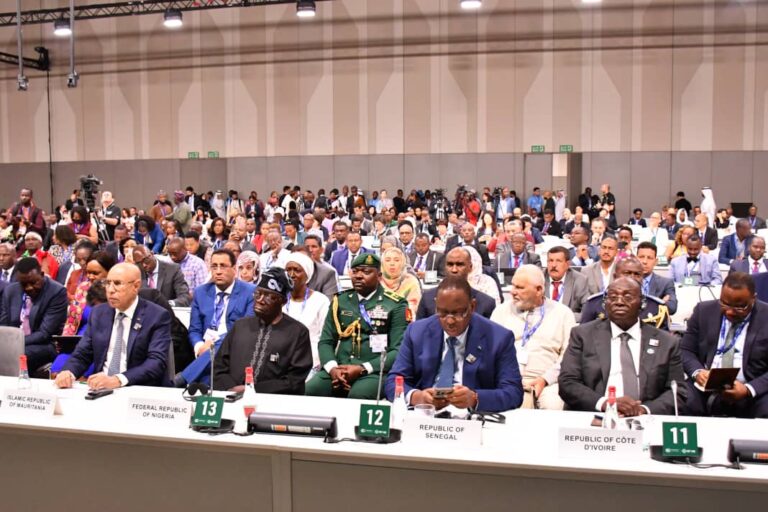
According to the published list, Nigeria ranked third joint behind UAE and Brazil, with 1,411 delegates each with badges accredited to attend this year‘s summit in Dubai.
However, Nigerians condemned the ‘substantial’ number of delegates representing the country, citing the current economic hardships.
They also highlighted certain individuals whom they believed lacked portfolios or the capacity to participate in the event, labeling it as a way to reward party loyalties.
KANO Pillars sensation Yusuf Abdullahi’s five goals in a single match against Gombe United in a matchday 11 fixture of the 2023/2024 Nigeria Premier Football League (NPFL) played on Sunday, December 3, 2023, has ended the four-year drought of ‘over’ hat-trick goals in the league.
In football parlance, when a player scores five goals in a single match, it is called a glut, but the popular feat achieved on the field of play is scoring three goals which is called a hat-trick.
Abdullahi’s brilliance came into the spotlight as he became a nightmare to his opponent’s defence line, leaving their goalkeeper hapless behind the stick during the match.
The young lad achieved his feat, scoring 3 and 2 goals in both the first and second halves to secure the victory for Kano Pillars, 5-2, against relegation-threatened Gombe United.
His feat not only bolstered confidence in the team to forge ahead in the league, but it also ended the drought of more than three goals scored by an individual player in a single match in the country’s top-flight league.
The last time the country’s top-flight league recorded a player scoring more than three goals was during the 2019/20 season when Israel Abia scored all four goals for Sunshine Stars in a 4-2 win over Nasarawa United.
Coincidentally, the match was played on December 9, 2019, at the Ondo state Sports Complex stadium in Akure, the state capital. At the end of the season, he emerged as the top goalscorer with 12 goals.
Before Israel came into the limelight, Emem Eduok of the defunct Dolphins FC netted six goals against Nembe City to record a similar performance in the country’s top-flight football in 2014.
He became the first and only player in the league to score as many as six goals in one match.
It took the cycle of five years before the sun shined on Sunshine Stars’ Israel to score more than three goals to end the over three goals drought in the league.
The ICIR reports that despite Kano Pillars’ Abdullahi’s and Sunshine Stars’ Israel’s five goals, they could not match defunct Dolphins FC’s Eduok six-goal thriller in a single match.