THE Nigerian Army has taken responsibility for the air bombing that occurred in Kaduna on Sunday, December 3.
The incident reportedly left many villagers killed and several others injured at Tudun Biri village in Kaduna State.
The ICIR reports that scores of people were feared dead when Tundun Biri village was bombed by a yet-to-be-identified jet while celebrating Maulud Nabiyy (the birth of Prophet Muhammad) in the late hours of Sunday, December 3.
Though the details of the attack are still sketchy, pictures and posts sighted by The ICIR on social media, particularly X, indicate that no fewer than 30 people lost their lives during the incident.
Following the incident, the Kaduna state government called an emergency security meeting chaired by the deputy governor, Hadiza Balarabe, on Monday, December 4.
It was at a meeting that crucial information about the incident was revealed.
The commissioner overseeing the state’s Ministry of Internal Security and Home Affairs, Samuel Aruwan, confirmed the latest development at the end of an emergency security meeting.
According to Aruwan, heads of security agencies who attended the meeting included the commissioner of Police, MY Garba, and the director of the State Security Services (SSS), Abdul Eneche.
Others are the chairman of the state chapter of Jam’atu Nasril Islam (JNI), Shafi’u Abdullahi, and other religious leaders.
“The Kaduna State government has received briefings on Sunday night’s attack, which left several citizens dead and others injured.
“In a meeting presided over by the Deputy Governor, Dr Hadiza Balarabe, which had in attendance heads of security agencies, religious and traditional leaders, the Nigerian Army explained the circumstances which led to the unfortunate and unintended attack.
“The General Officer Commanding 1 Division Nigerian Army, Major VU Okoro, explained that the Nigerian Army was on a routine mission against terrorists but inadvertently affected members of the community,” Aruwan said.
Aruwan told reporters after the security meeting that the operation unintentionally harmed residents as the forces were conducting a routine raid against local insurgents.
He also revealed that the injured victims had been taken to the Barau Dikko Teaching Hospital for medical attention and that search and rescue efforts were still ongoing.
Aruwan apologised for the bombing.
According to earlier reports, the Nigerian Air Force was accused of the attack, but the organisation promptly denied the claim.
Reacting to the allegation, the NAF spokesman, Edward Gabkwet, noted that the Air Force had not conducted any air operation in Kaduna since Sunday morning.
Gabkwet also stressed that NAF was not the only organisation operating armed drones within the region.
The ICIR reports that this wasn’t the first time the Nigerian military would be accused of bombing armless Nigerians.
In 2021, The ICIR reported how the Nigerian military killed and injured civilians in several villages, leading to the forced displacement of hundreds of residents. The military had embarked on offensive airstrikes at insurgents’ hideouts in Zamfara state and provided support for ground troops to rid out criminals from the North-East region.
A FEDERAL High Court in Abuja has ordered the Independent National Electoral Commission (INEC) to hand over its officials responsible for registering underage voters within 90 days.
In polling units nationwide, there was so much noise about underaged voters who came out to participate in the February and March general elections earlier this year.
In a judgement delivered by Obiora Egwuatu, the judge further ordered that the offenders be brought forward and turned over to the proper law enforcement organization so that they might be looked into and perhaps prosecuted.
In addition, Egwuatu issued a mandatory order requiring INEC to immediately remove from its national voter registration all names of minor voters from every polling place in the federation that was listed on its website.
The judge also issued an obligatory order, requiring the commission to provide the plaintiff with a certified true copy (CTC) of the updated national voter registration list, including every Nigerian citizen eligible to vote, within ninety days.
Alternatively, he mandated that the electoral umpire post on its website, within ninety days of the decision date, the updated national voters’ register listing every individual eligible voter to vote in the nation.
According to News Agency of Nigeria (NAN), Mike Agbon, the plaintiff, sued INEC as the only defendant in the initial summons filed on Match 17 under the file number FHC/ABJ/CS/367/2023, through his attorney, Desmond Yamah.
The plaintiff sought answers to six issues, including “whether the defendant is legally and constitutionally required to conduct credible CVR (continuous voter register) in the Federal Republic of Nigeria.”
“Whether the defendant is bound by the Constitution and its enabling statute, the Electoral Act, 2022, to act in strict compliance with the provisions of the Constitution and its enabling act.”
He also asked whether, by virtue of Section 23 of the Electoral Act, 2022, it is illegal and unlawful for the defendant to have registered underaged, i.e. infants and toddlers, during the CVR.
Therefore, Agbon asked for “a mandatory order, compelling and directing the defendant to forthwith within a period of one month to identify, produce and hand its officials that are involved in the registration of the underaged in each polling unit across the federation for investigation and prosecution by the appropriate law enforcement agency.”
He claimed that after looking through the national voter registration database, he saw that the commission had enrolled minors in violation of the Electoral Act, which detailed the requirements for registration.
The plaintiff used compiled copies of the underage registration from the INEC website to support his claims, designating it as “Exhibit A”.
He informed the court that on November 23, 2022, Prof. Mahmood Yakubu, the chairman of INEC, gave an assurance to Nigerians at a national stakeholders’ forum on elections hosted by the Nigeria Civil Society Situation Room (NCSSR) that the commission would diligently clean up the register in advance of the elections based on the observations of Nigerians.
Agbon said despite serving INEC with court processes and hearing notices in the matter, the electoral body was neither represented in court nor filed any defence.
Egwuatu, in his ruling on November 28, held that Sections 77(2), 117(2), and 12 of the Electoral Act outlined the requirements for being eligible to register as a voter.
He said that these sections all required that the voter be a Nigerian citizen, reside in Nigeria, and be at least eighteen years old.
“What this translates into is that the registration officers and an update officers of the defendant failed in their duties to carry out the registration of voters in accordance with the provisions of the Constitution and the Electoral Act,” the judge ruled.
The judge cited the terms of Section 120(1) of the Electoral Act, 2022, stating that any officer who violated their official duties committed an offence and might face up to N500,000 fine, a year in jail, or both upon conviction.
AN ongoing investigation by the Nigerian Senate has unravelled how the Central Bank of Nigeria (CBN), disbursed over N135 billion out of N250 billion gas fund to 14 ‘Potfolio’ companies.
The Upper Legislative Chamber also disclosed that the CBN disbursed the fund without due diligence and without working with the Federal Ministry of Petroleum Resources.
Chairman Senate Committee on gas, Agom Jarigbe, on Friday, December 1, said the defaulting companies would be handed over to anti-graft agencies after the investigations.
He pointed out that the apex bank didn’t follow the necessary fund disbursement guidelines, adding that the Federal Ministry of Petroleum Resources wasn’t aware of the disbursement.
“The guidelines for the disbursement state that there ought to be an evaluation of the firms at the Ministry. Also, the names of the obligors (Beneficiaries) should be sent to the Ministry to access the funds, but that wasn’t done properly.
“We discovered that some of the companies that collected these funds are portfolio companies, and they have nothing on the ground to show,” he added.
It would be recalled that the current Central Bank Governor, Olayemi Cardoso, has said, that the apex bank would not be involved in quasi-intervention programmes and related development financing functions.
Cardoso expressed concerns that CBN, under Godwin Emefile, spent over N10 trillion on various kinds of interventions with less impact on the economy.
“The CBN had strayed from its core mandates and was engaged in quasi-fiscal activities that pumped over N10trillion into the economy through almost different initiatives in sectors ranging from agriculture, aviation, power, youth and many others. These clearly distracted the bank from achieving its own objectives and took it into areas where it clearly had limited expertise,” said the CBN Governor at the recent Banker’s meeting in Lagos.
An experienced World Bank Project consultant said, Henry Ademola Adigun, who spoke on the development, said the CBN getting into activities of quasi-intervention fuels corruption.
“We have development banks in Nigeria like the Bank of Industry, Bank of Agriculture and Development Bank of Nigeria,” he said,
THE Nigeria Military on Friday, December 2,said it has killed 180 terrorists and arrested 204 within seven days.
The Director of Defence Media Operations (DDMO), Edward Buba, disclosed this in a statement he signed on behalf of the Nigerian Military.
According to the statement, the military rescued 234 victims in the week-long operations.
The military said the operations occurred in multiple theatres and involved air and land interdictions.
In describing the results, Buba said that 46 different types of firearms and 148 different types of ammunition were found.
These included two pump-action Josef Magnum rifles, one double-barrel gun, two single-barrel guns, and thirty AK47 rifles.
In addition, he said twelve handguns manufactured locally, thirteen Dane guns, one hand grenade, nine rifles built locally, three RPG chargers, and two hand grenades created locally were taken into custody.
In addition, the military recovered N1.5 million along with 34 vehicles, 64 cell phones, 47 motorcycles, 120 rounds of 7.62mm NATO, 364 rounds of 7.62mm special ammo, 54 live cartridges, and 11 rounds of empty cases of 7.62mm special munitions.
According to Buba, during the week, the soldiers of Operation Hadin Kai killed 19 terrorists, detained 52 others, and freed 134 captives who had been kidnapped in the Northeast.
According to the Director of Defence media operations, kidnappers and illegal miners were apprehended by the military during fighting patrols in Yobe’s Gulani Local Government Area. In Borno’s Monguno, Mafa, and Gwoza Local Government Areas, they also found and detonated improvised explosive devices (IEDs).
In Borno State, the military said troops eliminated alleged ISWAP/JAS terrorists in the Madagali, Adamawa, and Maiduguri Municipal Council regions.
Buba claimed that between November 22 and November 28, 91 terrorists turned themselves into the military. This group consisted of thirty-five adults, thirteen adults, and forty-three children.
Data collated by The ICIR have shown that between January and October 2023, 7,046 people were killed in violent attacks across Nigeria.
The ICIR data was obtained from the Armed Conflict Location & Event Data Project(ACLED), a data bureau that collects real-time data on the locations, dates, actors, fatalities, and types of all reported political violence and protest events worldwide.
When broken down, this means that an average of 24 persons were killed daily within the month under review.
Insecurity has been a perennial challenge in Nigeria, ranging from attacks by bandits and secessionist groups to attacks by insurgent groups like Boko Haram/Islamic State’s West Africa Province (ISWAP) and clashes between herdsmen and villagers, among others.
The ACLED documents that 15 people were killed in protests within ten months. Also, 133 people died in several riot attacks between January and October.
According to the data, the states with the highest killings within the ten months are Zamfara (672 deaths), Niger (544 deaths), Benue (454 deaths) and Plateau (362 deaths).
The states with the lowest reported cases of death are Ekiti, Gombe, and Jigawa, with five, three, and two deaths, respectively.
The data means that living in Jigawa state within the first ten months of 2023 is safer than any other state in Nigeria.
When broken down by geopolitical zone, states in the North-Central reported 1,589 deaths, the North-East reported 2,691 deaths, and the North-West region had 1,767 casualties.
For the Sothern region, the South-East recorded 450 deaths, the South-South recorded 333 deaths, and the Sout-West lost 216 people to attacks.
In September, the Chief of Army Staff, Taoreed Lagbaja, said, during the Nigerian Army civil-military cooperation media chat for the third quarter of 2023, that the Nigerian Army would curb the security challenges currently facing the country.
THE Federal Government has approved the release of N135.4 as reimbursement to States and FCT for the implementation of the Nigeria COVID-19 Action Recovery and Economic Stimulus (NG CARES) Programme.
In a statement by the NG-CARES Information and Communication Officer, Suleiman Odapu, on Sunday, December 3, the National Coordinator of NG-CARES Programme, Abdulkarim Obaje, said the funds were disbursed based on the results achieved by the States and FCT’s achievements in supporting impoverished Nigerians.
NG-CARES Programme is a World Bank- State support operation implemented in all 36 states and FCT. The programme aims to mitigate the economic and social shocks faced by poor and vulnerable Nigerians as a result of the lockdown during the COVID-19 crisis.
The project is structured as a Programme for Results (PforR), reimbursing States and the FCT for their expenditures if they implement the project as prescribed in the Financing Agreement, the Funds Release Policy, and the Independent Verification Agent (IVA) Protocol.
The ICIRreports that the Federal Government obtained a 750 million USD credit facility from the World Bank to support the 36 states and the Federal Capital Territory in the implementation of the NG-CARES Programme.
Meanwhile, the statement added that the “top three best performing states in this Second Round of Assessment are Nasarawa which earned N13,697,828,496.96, Cross River N10,944,747,818.84 and Zamfara N10,231,055,267.82.”
The statement added that it is a milestone achievement in the efforts of President Bola Tinubu administration at providing funds towards addressing multi-dimensional poverty in the country.
Obaje further praised the Minister for Budget and Economic Planning, Atiku Bagudu, for his support in coordinating the implementation of NG-CARES programme across the country.
He also commended state Governors, the FCT Minister and the World Bank for providing support.
NG-CARES was launched on January 20, 2022, by the then Vice President Yemi Osinbajo SAN.
Consequently, the Federal Government disbursed a one-off recoverable advance of N35.3 billion to all the 36 States and FCT in March 2022 to facilitate the smooth take-off of the programme.
According to Obaje, the States and FCT produced results valued at N77.2 billion, impacting over two million direct beneficiaries.
Following its initial outcomes observed across all 36 States and the FCT, the Federal Government disbursed a total of 45.3 billion Naira to 29 States and the FCT on Thursday, April 13, 2023.
SOCIO-Economic Rights and Accountability Project (SERAP) has urged Senate to reject the plan by the Minister of the Federal Capital Territory, Nysom Wike to spend N15 billion for the construction of ‘a befitting residence’ for the Vice President.
The Organisation also urged the Senate President Godswill Akpabio to assert the Senate’s authority and constitutional oversight responsibilities by opposing the allocation of N2.8 billion for publicity by the FCTA and other proposed ‘wasteful and unnecessary’ spending that may be contained in the 2023 supplementary budget and the 2024 budget proposed by President Bola Tinubu.
In a statement issued on December 3, SERAP’s deputy director, Kolawole Oluwadare, highlighted that the proposal to allocate N15 billion for a ‘befitting residence’’ for the vice president violates the Nigerian Constitution and the nation’s international commitments regarding anti-corruption measures and human rights.
According to the statement, the Senate has the constitutional duties to ensure that the Minister proposed spending is entirely consistent and compatible with constitutional provisions including his oath of office.
Part of the letter read: “It would be a grave violation of the public trust and constitutional oath of office for the Senate to approve the plan to spend N15 billion on ‘a befitting residence’ for the vice president at a time when the Federal Government is set to spend 30% (that is, N8.25 trillion) of the country’s 2024 budget of N27.5 trillion on debt service costs.”
“The Federal Government also plans to borrow N7.8 trillion to fund the 2024 budget. Nigeria’s public debt stood at 87.4 trillion naira as of June with 38% owed to external creditors including multilateral and commercial lenders.”
SERAP further threatened to take legal action against the National Assembly should it fail to stop what it described as ‘wasteful and unnecessary’ spending.
“SERAP urges you to refer to the Economic and Financial Crimes Commission (EFCC) and Independent Corrupt Practices and Other Related Offences Commission (ICPC) the allegations of corruption in the spending of the previously approved N7 billion for the construction of a new residence for the vice president.”
It added that “The House of Representatives has reportedly approved the plan to spend N15 billion on ‘a befitting residence’ for the vice president. The National Assembly has also approved another N3 billion for the renovation of the vice president’s residence in Lagos State. Mr Wike also plans to spend N2.8 billion on publicity for the FCTA.”
“The proposed plan to spend 15 billion on ‘a ‘a befitting residence’ for the vice president is different from the N100 billion for the FCT contained in the federal government supplementary budget.”
The organisation, also noted that the Federal Government also budgeted N8 billion on the two official residences of Tinubu in Abuja and Lagos.
It further stressed that on top of the planned spending of N15 billion on ‘a befitting residence’ for the vice president, billions of naira have been allocated for the purchase of cars for the Villa and the Office of the First Lady.
Referencing the Nigerian constitution, SERAP quoted that the security and welfare of the people shall be the primary purpose of the government.
AVAILABLE economic indicators, have shown that the N27. 5 trillion 2024 budget proposed by President Bola Tinubu will not spur economic development.
The 2024 budget proposed an aggregate expenditure of N27.5 trillion for the Federal Government in 2024, of which the non-debt recurrent expenditure is N9.92 trillion naira, while debt service is projected to be N8.25 trillion naira and capital expenditure is N8.7 trillion.
A business advisory consultant, Wole Ogundare,in his reaction to the budget said, the projected growth gross domestic product (GDP) is lower when compared to the population growth rate.
Ogundare, who tagged the appropriation ‘budget of coasting along,’ said any budget of hope will be one where the GDP growth rate is around 7 to 10 per cent.
“When you look at the assumptions, the first thing I typically look at is the growth rate. So the macroeconomic framework tend to force you to look at the growth rate. The President projected a 3.76 per cent growth rate; if you look at that growth rate, how does it really make sense?
“You compare it to the population growth rate in Nigeria. Our population growth rate today is about 2.5, so if you look at 2.5 population growth rate relative to a 3.76 GDP growth, it tells you immediately that this is not a budget of hope, it is a budget of coasting along. Let us just coast along for now.
Commenting further on the proposed budget, the Managing Director of Cowry Asset Management Ltd. Johnson Chukwu, said the proposed budget is not too different from others before it, lamenting the continued increase of recurrent expenditure.
“We have not seen any strategic initiative that will bring down recurrent expenditure. We have seen a consistent increase in the recurrent expenditure of the government because the structure on which you incur recurrent expenditure is being expanded,” Chukwu said.
President Tinubu said, the 2024 budget will ensure micro-economic stability, poverty reduction, and greater access to social security, amongst others.
Nigeria also struggles to meet its own Organisation of Petroleum Exporting Countries (OPEC) quota which forms the basis for budget benchmark, as the oil rich region is constantly under the siege of oil theft.
This development, will also affect its macro-economic indices,analysts warn.
The ICIR, has earlier reported that the budgetary provision of 1.78 million barrels per day (bpd) of crude oil production will fall below the benchmark projected in 2024 and lower the country’s revenue prospect for the year.
An investment banker with Stanbic IBTC,Charles Ademuluyi, decried the heavy padding of the budget each year, leaving less funds for economic development.
“There is no year the Senate will not increase the proposed budget by the president. They keep smuggling in projects that will inflate the total budget. But we as a people are to blame because we hardly ask questions or insist on accountability from these elected representatives. How can some projects keep getting allocations since 1999 and yet nobody ask why. So, we will keep seeing increased budgetary allocations with less impact on lives because we do not care how the taxpayer’s money is lavisciously spent by our Senators and other government officials,” Ademuluyi said.
THE Nigerian Meteorological Agency (NiMet) has predicted a three-day dust haze across the country and warned people with Asthma and other respiratory issues to exercise caution.
According to NiMet, the dusty haze and sunshine will occur between Sunday, December 3 and Tuesday, December 5.
This was released in a weather report in Abuja on Saturday, December 2.
The agency, stated that Monday will bring sunny skies and a foggy atmosphere to the country’s north and north-central areas for the forecast period.
According to NiMet, there is a chance of dust hazes over the northern area on Sunday and throughout the duration of the prediction.
It further stated that throughout the early hours, hazy skies with sporadic sunny spells are predicted over the coastal belt and the inland states of the South.
Furthermore, isolated thunderstorms are predicted to occur over portions of the states of Delta, Bayelsa, Rivers, Cross River, and Akwa Ibom throughout the afternoon and evening hours.
Over the southern inland states and coastal cities, NiMet forecasted cloudy skies interspersed with sunny spells during the morning hours.
The agency predicts localised thunderstorms to occur over portions of the states of Imo, Abia, Edo, Delta, Bayelsa, Rivers, Akwa Ibom, and Cross River.
“For Tuesday, sunny and hazy skies are expected over the north and north-central regions throughout the forecast period.
“Cloudy skies with intervals of sunshine are envisaged over the inland states of the south and the coast in the morning hours,” the prediction stated.
The agency predicts that later in the day, thunderstorms are anticipated over most parts of the southern region.
NiMet cautioned Nigerians and those with respiratory ailments to take precautions to protect themselves.
Additionally, the ministry cautioned people driving and walking through flood waters because flash floods can occur from moderate to heavy rainfall.
For efficient planning, airline operators were also urged to utilise NiMet’s weather reports.
NiMet is a federal agency tasked with providing the federal government with advice on all matters related to meteorology, as well as with planning, preparing, and interpreting government policy in this area and issuing weather (and climate) forecasts for the safe operation of oil rigs, aircraft, and ocean-going vessels.
OIL theft has ballooned into a mega-organised crime in Nigeria, involving various stakeholders; in this three-part report, Anayochukwu Agbo looks at the different angles.
Government after government, Nigeria has unsuccessfully made repeated efforts to fight and reign in illegal oil theft. Yet the illegal business continues to blossom.
Findings by The Sentinel show that this is the case because of the involvement of top government officials from the Presidency, the military, Civil Defence and Police in the lucrative oil theft business.
According to our sources, who would not be named because they are still in active service, the SSS is not visibly involved in the trade. This was corroborated by the CEO of Tantita, Government Ekpemupolo, popularly known as Tompolo.
NNPC Towers Abuja,
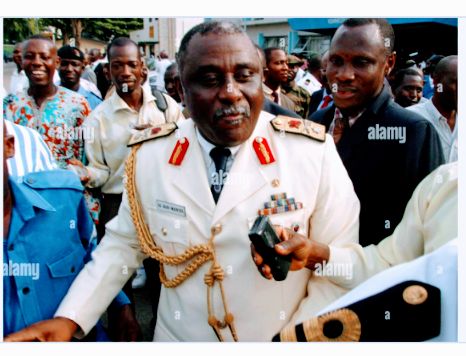
Military personnel lobby to be posted to the Niger Delta and stage parties to celebrate being posted. The junior officers who spoke anonymously because of the nature of their job expressed frustration at the betrayal by their officers in the fight against oil theft. Several of them that wanted to be brave and reject inducement by oil bunkerers suddenly find themselves posted out of the Niger Delta. Though the Navy denied ever losing any personnel in the fight against oil bunkerers, some operatives insist that some stubborn officers get killed if they insist on obstructing the business. Ledum Mitee, who is now a member of the NNPCL Board, confirmed this.
Having studied the body language of their superiors, the middle and lower cadres toe the line and equally make good money for themselves, by not only looking the other way on the beat but also actively aiding and abetting the economic crime.
For instance, the Naval Junior Ratings who were mobilised by their immediate superior to transload the crude in M.T African Pride to another rogue ship were compensated with N250,000 each for one night of illegal operation. Had any of them disobeyed the unlawful order, he would have been victimised and hounded out of the Niger Delta.
Now that Nuhu Ribadu, a known anti-corruption czar, is the National Security Adviser, NSA, it is hoped there could be result in the war against oil theft. The office of the NSA is alleged to have been active in the evolution of oil bunkering in Nigeria across many regimes.
The Man they could not arrest opens a can of worms
Government Oweizide Ekpemupolo, popularly called Tompolo is an enigma. Several times the Nigeria government wanted to arrest him for security breaches but failed. He simply disappeared into the thin air. That is why some people call him “The man they couldn’t arrest.” He, Asari Dokubo and Ateke Tom make up the tripod of the Niger Delta armed struggle in its present cycle, feeding off Isaac Boro’s 14 days revolution in 1966. He had minimal education but has grown in the wisdom of the creeks to become a fundamental voice in the security of the Niger Delta.
Tompolo
He was the commander of the Movement for the Emancipation of the Niger Delta, MEND, and presently the chief priest of Egbesu, the Ijaw god of war.
The last time the federal government declared him wanted was in January 2016 on charges of theft and money laundering. Security operatives invaded his village, tore his home apart and desecrated his Egbesu shrine but could not find him. He simply disappeared. He went underground for five years and resurfaced in 2020 in his Egbesu shrine.
In August 2022, the Nigerian National Petroleum Company Limited, NNPCL, renewed his lucrative surveillance contract to monitor the Niger Delta pipelines at the cost of N48 billion per annum, or N4 billion monthly.
Tompolo in Thanksgiving to Egbesu after his reappearance
Tompolo was born on April 12, 1971, to the royal family of Thomas Ekpemukpolo in Okerenkoko, the traditional Gbaramatu Kingdom, Warri South Local Government Area, Delta State. During the Niger Delta struggle for resource control between 2003 and 2007, the security operatives referred to this area as “The Axis of Evil” because of the invincibility of the militants.
He is the new face of the government’s guided war against oil theft in the Niger Delta as government security operatives failed to deliver on their mandate.
The Danger of Exclusion: “We are waiting for them at the pipelines.”
Tompolo is making progress in his surveillance contract exposing the hidden illegal trunk lines for siphoning crude oil in the Niger Delta. Already, he has exposed over 156 tapping points in Delta and Bayelsa states. However, the award of the N48 billion contract to Tompolo’s Tanitata has not gone down well with other former militants who are still heavily armed with very modern weapons. Some of the leaders interviewed during this investigation complained that they were excluded from the surveillance contract.
The Niger Delta creeks are under the influence of three former militant leaders. While Tompolo holds sway in Delta and some parts of Bayelsa states, Asari Dokubo and Tom Atetke control what happens in the large expanse of creeks of Rivers state by their sheer influence.
Creekmen, “We are waiting for them at the pipelines.”
Some former militants who now prefer to be called ‘Creekmen’ want to be carried along. They argue that the pipeline under contract, NCTL trunkline, covers over 90 kilometres, out of which 83 kilometres belong to the Kalabaris and other ethnic nationalities of Rivers State and are outside the control of Tompolo. Those critical kilometres fall under the influence of former militants’ leaders, Dokubo and Tom, who is now the traditional ruler of his community, Okochiri in Okirika. Neither heavy weight was ‘recognised’ in the surveillance contract. These aggrieved creekmen are from Nembe, Kalabri, Okirika, Okoloba and Adoni kingdoms of Bayelsa and Rivers states.
“We are waiting for them at the pipelines. We own it. They are our own. We are waiting for him. Let him come. The end will justify the means…They didn’t consult us, but they say someone should secure the pipelines in our communities,” lamented the creekmen who preferred not to be identified individually.
“They should have respect for us. This is colonialism. The pipelines are more in our territory than in the community of the person the contract was awarded to. They should talk to us first. If they say that equity is not good, then let them come to equity with dirty hands. They will see war!”
It was gathered that Tompolo later engaged in intense creek diplomacy and may have achieved an understanding with the other groups.
Navigating the treacherous mines of corruption and connivance
Tompolo uncovered a four-kilometre pipeline on the Trans Escravous trunk line in the Yokiri area of Delta state. His Tanitata operatives have since uncovered 156 illegal crude oil tapping points in Delta and Bayelsa states, and still counting. These are illegal investments of highly placed people in power and retired generals in Nigeria. They have connections in government, military and with the locals. They are losing heavy investments to what they see as Tompolo’s meddling and they are very angry. But those close to him say Tomopolo is not an ordinary man and cannot be intimidated.
“This is our area and this is our people. We are doing everything to stop it because the aquatic life of our people is gone. We only provide intelligence; the security people will come and do the work,” says Tompolo. “We are not going to use illegality to fight another illegality. We are doing everything with our people; we are working together to save our environment and our people.”
Tompolo uncovered a four- kilometre pipeline on the Trans Escravous trunk line in the Yokiri
That is being diplomatic to massage the frayed ego of military men who feel a non-state actor has taken over their jobs and is doing it better. It is not about lack of competence; it is about vested interests.
Tompolo reveals, “We have top security men that are deeply involved. They are trying to bring down this country called Nigeria. If you are coming from Warri you see many houseboats. You have one military gunboat by the right, you have one navy gunboat to the left. At the extreme (middle) is where this bunkering is taking place! You must pass through the military to get there. We have some of these illegal bunkering sites owned by the Navy, Army, Civil Defence and Police personnel. It is only the DSS that are not involved. And we have the evidence.”
The godfathers of oil theft are not happy with him. “A lot of them were not happy when they mentioned me. We are riverine people. I actually know the in and out of this country. When we started the project a lot of high caliber people were touched. That is where our problem came from. Many of the security people are involved in the bunkering business. There is no way you will load a vessel without settling the security within that environment. One gunboat to the left, one gunboat to the right, can they load crude oil in the middle end without settling the security? A lot of people are now running helter-skelter because they know there is nothing in this country concerning the riverine that I don’t know. Once our people are fully engaged and you call your people to order we are good to go. And if they fail to comply, I will tell my people to bring out the list of oil bunkerers.
“I have a comprehensive list and all of them know that…A lot of key players are involved in this illegal bunkering. Our people cannot take a drum of crude oil out without the help of security men.”
He confirms what other former militants’ commanders had told us. “We don’t have any opposition. It is even these security men that are inciting our people so that Tompolo will not come and work. Enough is enough. A lot of these things people are saying have been doctored by security people. We know our people. We don’t have problem. We can have little argument about sharing formula but besides that we don’t have problem.”
Tompolo, “Security men are deeply involved.”
The militants revealed that during the height of the Niger Delta crisis from 2003 to 2007, security men would call and ask why they had been ‘quiet’ if they did not do any operation for one week. Likewise, they said the idea of making money from taking hostages was sold to them by security men and politicians.
“At the beginning, we just kidnapped people to press for better deal for the Niger Delta as activists but they started bringing large sums of money to release the hostages. We discovered that they offered more money in hard currency for white men. Then it occurred to us that we could fund the struggle from kidnapping. They told us the security votes of the governors were big and meant for such emergencies. Later we discovered that the intermediaries took more than what they delivered to us,” revealed a former militant from Rivers State.
Today, the scenario is still the same in oil bunkering as oil companies allegedly leverage on oil bunkering to steal Nigeria’s crude for their own benefit. When Tompolo started his pipeline surveillance contract in August 2022, Nigeria’s official daily crude oil production was 937,000 barrels daily against the Country’s Organization of Oil Exporting Countries, OPEC, quota of 1.8 million b/d. In February 2023, NNPC put Nigeria’s daily oil production at 1.59 million b/d. However, a Bloomberg survey put it at 1.35 million b/d, and the Nigerian Upstream Petroleum Regulatory Commission, NUPRC, reported a 1.24 million b/d, excluding condensates. As at October 31, 2023, Nigeria’s official average crude production still remained static at 1.35 m/b daily
The oil companies are accused of utilising the activities of oil thieves to under-declare their production output. “If somebody takes 2,000 barrels, they will say it is 200,000. At the end, they will declare oil theft! These are people sponsoring people against Tompolo,” he revealed.
Be that as it may, Tompolo insists, “I am a confident man. This is our area. We are the landlords. The real perpetrators are in Abuja and Lagos; after all they will shift the blame to our people,” he stated.
The NNPCL Connection
Trans Escravous pipeline
Our investigation showed that most crimes committed in the crude oil theft business revolves around NNPCL. That is why some industry stakeholders refer to the NNPCL headquarters as “The Four Towers of Corruption.” The fight against oil theft was found to actually be largely a campaign to get rid of unauthorized thieves and reduce the volume of losses. The NNPC allegedly authorizes ships arrested by Navy without licence to come in and load crude oil. It is those without sufficient connection that get hooked.
The Navy has expressed frustration that when they arrest ships without licence coming to lift crude oil, the NNPC issue some licence while under arrest and get them to load crude oil officially and leave Nigeria. It is said to be highly irregular for a vessel to arrive Nigeria without licence. What emboldens them is their contacts inside NNPC and the Presidency.
For instance, MT Heroic Idun, a Motor Tanker with capacity of three million barrels, tried to load crude oil and her name was not on the list given to the Navy by the NNPC. The Very Large Crude oil Carrier (VLCC) entered the Nigerian Maritime Environment on 7 August 2022 and headed for Akpo Field without any form of authorization or clearance. The ship, IMO: 9858058, is registered in Marshall Island with an overall length of 336-metres, 60 metres breadth and capacity of three million barrels.
The vessel was spotted by the Nigerian Navy Maritime Domain Awareness facility and a Nigerian Navy Inshore Patrol Craft, Nigerian Navy Ship GONGOLA probed the legitimacy of her presence in the Total Safe Anchorage operated by Akpo Field. Following the interrogation, the Captain of MT HEROIC IDUN duly responded to NNS GONGOLA and further stated that his vessel was without relevant clearance to operate in the Field.
The vessel was, therefore, ordered to turn around and follow NNS GONGOLA to Bonny anchorage pending when she will be cleared for loading by NNPC Ltd. However, she bluntly declined on the claims that she had been told by her agent not to take directives from the Nigerian Navy Ship. Thereafter, she engaged full speed and escaped to Sao Tome and Principe maritime area in a bid to evade arrest.
The Nigerian Navy therefore, invoked the collaboration of neighbouring Equatorial Guinea through the Yaoundé Architecture to arrest the vessel. With the aid of the Nigerian Navy surveillance facility, MT HEROIC IDUN was tracked and the Equatorial Guinea Amphibious Ship, CAPTAIN DAVID was therefore vectored to intercept and arrest the fleeing ship on 12 Aug 2022. By invoking the appropriate international treaties MT HEROIC IDUN was brought back to Nigeria from Equatorial Guinea on 12 November 2022.
On May 4, 2023, the 26-member crew pleaded guilty and entered into a plea bargain with the Nigerian government.
Among the offences the Nigerian Navy charged the ship with are: Attempt to deal in export of crude oil without license or authorization and Entering the Restricted Zone around an Oilfield without authorization and thus violating Nigeria’s Exclusive Economic Zone regulations.
MT Heroic Idun and its 26 foreign crew pleaded guilty and entered into a plea bargain with Nigeria
This was said to be an inside job gone awry. According to insiders, a captain cannot risk such a supertanker with three million barrels capacity to head for Akpo Oil Field to load illegally without backing from someone in NNPC. The Captain refused to stop when the Navy ordered him to, saying he was told not to stop for the Navy.
In bunkering, there is legal and illegal bunkering. The legal bunkering is done by retired army generals and other influential Nigerians. So there is legal bunkering which NNPC authorizes. The GMD can also scribble on the back of his card, and whoever sees it will act. His senior directors and presidency officials are also said to get some slots. It was actually alleged that some of them hire vessels themselves and supply to refineries outside the country and as far as the international market at Florida, United States.
Mele Kyari, group chief executive officer, GCEO, of Nigerian National Petroleum Company Limited, NNPCL, aware of all these intrigues and economic interests decided to award the surveillance contract to a non-state actor. “We need private contractors to man the right of way to these pipelines… And we believe we made the right decision.”
He said the decision was to achieve three broad objectives, one of which is “to ensure that the government’s security agencies play their part. We have our Navy and the Army and they are doing an excellent job of containing this but as you do this sustenance is everything and therefore, we also decided that we need private contractors to man the right of way and also operate outside the right of way so that they can also join us to manage members of the community.”
Kyari is either being economical with the truth or he is not properly briefed on the roles the security agencies and staff of NNPC are playing in the value chain of oil bunkering. Our investigation shows that oil theft cannot be done successfully without the commercial connivance of the security agencies, especially the Navy but the GCEO says they are doing an “excellent job.”
Tompolo’s revelations corroborate the weight of their involvement. Similarly, the testimony of the Rear Admiral, Bob-Manuel, the ordeal and trauma he went through at the hands of a compromised Navy hierarchy, underlines the treachery of Nigerian Navy bigwigs in the protection of Nigeria’s highest foreign exchange earner.
Just like it has been shown that oil bunkering cannot take place without the involvement of security operatives, it was also found that successful oil bunkering business cannot take place without the involvement of staff of NNPC.
The Department of Petroleum Resources, DPR, a department of the Ministry of Petroleum Resources, ensures compliance with the industry regulations, process applications for licenses, leases, and permits, establishes and enforces environmental regulations. DPR has the statutory responsibility of ensuring compliance to petroleum laws, regulations and guidelines in the Oil and Gas Industry. The discharge of these responsibilities involves monitoring of operations at drilling sites, producing wells, production platforms and flow stations, crude oil export terminals, refineries, storage depots, pump stations, retail outlets, any other locations where petroleum is either stored or sold, and all pipelines carrying crude oil, natural gas and petroleum products.
Ledum Mitte, “There is high complicity of the security agencies.”
Among other functions, they supervise all Petroleum Industry operations being carried out under licences and leases in the country and maintain records on petroleum industry operations, particularly on matters relating to petroleum reserves, production/exports, licences and leases.
In other words, DPR should have an accurate record of crude oil and gas production by Nigeria. However, some industry stakeholders insist there is no accurate record of Nigeria’s crude oil production. Paul Osu, Head, Public Affairs, DPR, denied that and affirmed that every litre of crude produced in Nigeria is adequately captured during the process of extraction.
“As a further step to boosting crude accounting process from production to export, DPR recently launched the National Production Monitoring System, NPMS; NPMS is an online platform for direct and independent acquisition of production data from oil and gas facilities in Nigeria. NPMS as an electronic data transmission tool at production and export terminals is designed to better predict the performance of oil and gas reservoirs and better production forecasting,” he explains.
In other words, NPMS tool enables DPR to exercise electronic surveillance, perform production monitoring and data analysis for utilization and forecasting.
If this is the case, critics of DPR and NNPC ask why DPR cannot detect when an illegal pipeline is grafted onto a petroleum pipeline and large quantities of crude are taken daily. Some industry insiders insist that daily crude oil loss are far more than what is officially reported by NNPC.
It is alleged that DPR is part of the oil bunkering nexus and other sleazes in the sector. During the fuel subsidy heist in 2011/2012 portfolio companies obtained papers from DPR confirming the importation of refined products that did not exist. They claimed subsidy for products they never imported and Nigeria paid subsidy for oil never imported. It was found by the Economic and Financial Crimes Commission, EFCC, that ships that claimed to have delivered refined products to Nigeria were confirmed to be at Brazil and Holland at the same time they were supposed to be discharging oil in Nigeria.
Even worse, NNPC was alleged to take fuel they refined locally in Nigeria offshore and bring it in as imported fuel and claim subsidy on the consignments.
During the course of this investigation, the attitude of the Ministry of Petroleum Resources and NNPC suggested a heavy conscience. Seven times we asked the Personal Assistant to the former Minister of State of Petroleum Resources, Timipre Slyva, to fix an interview appointment with his Principal. He showed interest at the beginning but once he was told the focus of the interview, he became evasive. Till today, we are still waiting for the appointment now under a new minister of state.
Garba Deen Muhammad, Chief Corporate Communications Officer of NNPCL, did not responded to repeated efforts for him to address the alleged involvement of some NNPC top brass in the oil bunkering chain. For instance, the Navy revealed that some ships they arrested are cleared by the NNPC and are subsequently released.
The betrayal of Trust by security operatives
Our investigation showed active connivance by security operatives across various services charged with security operations in the Niger Delta. Operatives posted to the Niger Delta stage thanksgiving parties before leaving Abuja for their new posts in anticipation of a change in their fortunes beyond what their monthly salary can achieve.
The ratings that were persuaded to assist transship the stolen crude oil in The MT African Pride to another ship were paid N250, 000 each for their pains. Rear Admiral Bob-Manuel turned down an offer of $100, 000 bribe to free the ship laden with 11,300 metric tons of crude oil. Security operatives blackmailed Ibelema to return to work on the pipelines.
Ledum Mitte reports, “.I have been somewhere in Abuja where some soldiers were partying that they had been posted to the creeks in the Niger Delta. They said those who were posted there for one year are building houses in Abuja! Those in security agencies lobby to be posted to these areas. That is the level of corruption. Any person who has seen where the oil theft is taking place, you will see the amount of security guarding the cartel. These young boys don’t have such connections. They are only beneficiaries and they pay to get this level of security.
“I have even seen where there is sharing formula. Two different security agencies exchanged fire and one person was killed, the Civil Defence. This was about two years ago. There is high complicity of the security agencies.”
As NEITI Chairman, Mittee and his team talked with various stakeholders in the oil theft saga and made first hand discoveries. “Even the security operatives were sincere with us. They admitted a complicity between their superiors and those who are doing it. Some of the officers said that when they arrest some people, the big boys, nothing happens. When they see things like that they are disempowered. There are some of the security agencies doing what they ought to do but if you arrest one small boy and they put him in detention. The person names the big guys and nothing happens, if you are the arresting officer, what will you do?”
Sara Igbe maintains that security operatives are crucial to the logistics of oil theft. “My stand remains that the oil host communities lack the capacity to do oil bunkering, stealing so much barrels of crude oil daily. I continue to maintain that this is done by the forces that be – the security agencies, the oil companies and the big boys in the industry…So we have consistently maintained that they should hold the oil companies and their contractors responsible for oil theft.”
He argues that the points where the oil is stolen from are impossible for villagers to access: “The villagers do not have the money to build four kilometers of pipeline. It takes a lot of resources, a lot energy, a lot of equipment to excavate four kilometres and lay pipelines. You don’t carry pipes on your head; you must use excavators, cranes and other equipment to lay the pipes. It’s a huge business.”
He also indicts the oil companies. “On the part of the oil companies, how can you tell me you don’t know what is happening to the oil when from your office you are observing the movement of the oil through the pipelines from one end to another? You cannot tell me that you can’t see where there are diversion of pipes to another pipeline. It will be shown because we are now using an electronic dashboard that show how everything works. From the monitoring room there is no way they will not see that oil is being diverted. But everybody keep quiet.”
“We have consistently maintained that they should hold the oil companies and their contractors responsible for oil theft.”
He said Bob-Manuel was a victim of crude oil thieves. “He made arrests. He did so many things. Today, nobody is talking about those vessels. Those cases are all closed. Nobody was sent to jail and the man was retired unceremoniously! You ask yourself, what am I fighting? This country is not what you think! Instead of being commended, he was retired prematurely. He was their stumbling block. The cartel fought against him and the cartel won. He was court martialed. He won the case but they still retired him.”
He further lamented that Rear Admiral Bob-Manuel gave an insight into what was going on in the oil industry and instead of encouraging him, they removed him. So if something of 2003 is still on in 2023, that’s 20 years.”
Rear Admiral Antonio Bob-Manuel, “Instead of being commended, he was retired prematurely. He was their stumbling block”
Sara-Igbe also cautions that the oil thieves will retaliate eventually. “Government should expect a fightback from the cartel, which involves the security agencies, because you are going to expose them for what they have done, they are not going to fold their hands.”
Dunamene Fyneface, executive director of Port Harcourt based Youth and Environmental Advocacy Centre, Nigeria, says the revelations Tompolo and Tanitata are doing are not really new. “I don’t call what Tompolo is doing in the surveillance contract by the Presidency new discovery. I call it exposure because they have been there since. He knew where they are. Some points in time he was also part of the process.”
However, he is worried about the consequences: “As an environmentalist I am concerned about how they go dismantling these sites; they are destroying the environment. They are making the fishermen unable to fish and farmers unable to farm, and generating soot into the environment, polluting the water and aquatic life and food people eat.”
Dunamene Fyneface, “It is an organised trans-national crime.”
On how the oil thieves are able to graft rouge pipes onto crude oil pipelines without getting caught, Fynface said, “It is very simple! As we talk now people are connecting pipes; people are taking oil right now. Everyday people do that. These youths are in the creeks. Where they go to security is not there. We are in a country where we have both ungovernable spaces and ungoverned spaces.
“Where they carry out these operations fall under the purview of ungovernable spaces. They are the lords of those areas. So they go there, tap their pipelines and take the crude without the security even knowing. But the types of pipes that Tompolo exposed cannot be connected without security involvement.”
On the taping points, he argues that it is not possible to tap the pipelines without the involvement of the company staff. However, it was gathered that now the boys have improved their illegal practice to the extent that they can tap crude oil pipes without the knowledge of the company. How the insiders in the companies come in is that they will inform them when there is no or low pressure in the pipeline so they can tap. Now the boys are tapping even when there is pressure in the pipeline. They have experts that do that.
It was found that they now use chemicals. They make a circle on the pipeline and put chemical on the circle. It creates a hole. After connecting their illegal pipe to the pipeline of the company, they leave the spot that is supposed to open for the crude to pump. The chemical they put in that spot melt the pipe at the measured point, and crude will begin to flow into their own pipe.
Experts are involved in this. These experts are being trained by professionals in the Niger Delta, especially the Petroleum Institute at Effrun, Warri, Delta State. Not all those who are trained by the Institute in that special field are absorbed by the oil companies in regular jobs. Those who cannot find regular jobs deploy their skills to the illegal sector of oil theft where they are well rewarded.
Some of them we met in the course of this investigation are beneficiaries of the Presidential Amnesty Programme. The government trained them abroad and abandoned them. They have learned contemporary skills and are left without jobs. These professionals are involved in technical side of oil theft. There is nothing they cannot do.
Fynface says oil bunkering is organised crime. “It is an organised trans-national crime with the crude oil being stolen from the Niger Delta passing the same route of slave trade. This is a reorganisation and a rebirth of what we know as slave trade. It has evolved into another organised criminal activity, which is illegal bunkering.”
Fynface condemns incinerating the confiscated vessel without arresting the owners and crew. “It was completely wrong to set that vessel ablaze because you destroyed evidence. I’m surprised that even now the EFCC has not arrested the people involved. The suspects should be under prosecution. Burning that barge was deliberate to destroy evidence.”
Then the bad news. From our investigation, oil theft may never end; it is rather evolving and recreating its modus operandi. The people of the Niger Delta are deeply involved in various ways.
“Those who are part of the oil theft are more than those of us fighting it,” laments Fynface. “We are a threat to them so our own security is also threatened. I pushed the campaign to the extent that they called me to say, ‘leave this thing you are doing, it won’t help you. Come, let’s give you a truck of oil that will give you about N400m. it will change your life. I told them not to worry, that I wouldn’t know what to do with that kind of money.”
He says that “no vessel can cross the ocean, come to the creeks and take crude oil without the assistance of Niger Delta people but the security operatives have the greater share. There is a lot of collaboration from community people to ex-agitators, security operatives and oil company staff. Even some chiefs are allegedly involved because they are the custodians of the tradition of the people. Some of these boys are powerful chiefs in the Niger Delta because they operate arms the chiefs don’t have. Some of them are paid N250, 000 monthly; how long can you sustain that? It may not be sustainable. Remember that the person you are paying N250,000 in 30 days is earning at least N2.5m per a day in the crude oil theft process. His living standard has improved; so he cannot make do with the N250, 000 again.”
Mitee is not excited about the discovery of illegal crude pipelines and tapping points. “When people talk about the discovery of pipelines, for me I don’t think I’m excited. Mind you the story is that it has been there for about eight or nine years. And no one knew that it existed? Are these drama to justify, maybe, the huge pipeline contract? The authorities should not claim ignorance of what has happened… No one is fooled that they don’t know that these pipes exist in many other places. So what I feel is that once in a while to grab attention, they say, we have discovered another one so that NNPC will see that they are improving in what they are doing. I’m not amused by what we are seeing. I feel that we have not decisively made up our mind that we want to deal with oil theft in Nigeria.”
The Duplicity of NSCDC
The Nigerian Security and Civil Defence Corps (NSCDC), is the agency entrusted with safeguarding the oil pipelines but they have seriously betrayed this trust by getting enmeshed in the oil theft business. A former commandant was found to be part of the business and Governor Wike insisted he must be leave Rivers State and he was recalled to Abuja.
When we visited the Rivers State Command of NSCDC the current Commandant was said to be away to Abuja and would not be back for one week. So we were encouraged not to wait for him as there was no guarantee he would even be back after seven days. But a strange thing happened. The next day we returned to the office, the seven tankers arrested for oil theft had disappeared into the thin air! No personnel could confirm where the tankers were relocated to.
At the Abuja headquarters the public relations officer of the Corps, Sola Odumoshun, showed the organisation may have a lot to hide. When contacted, he said he was on a course and that we should send questions and he would ‘respond immediately.’ We sent the questions, and he chickened out. He stopped picking up his calls. An insider suggested that “any answer he gives you will put him in trouble.” For over five months, Odumoshun has not responded to the questions. “
The next day the seven tankers arrested for oil theft had disappeared into the thin air!
This story republished from The Sentinel was funded by the International Centre for Investigative Journalism, ICIR.
HUMAN rights violations have thrived under President Bola Tinubu’s administration, six months after assuming power, a human rights organisation, Amnesty International, has said.
The organisation revealed this in a statement signed by its director, Isa Sanusi, following the launch of its human rights agenda, which aims to establish a framework for the Nigerian government to investigate and address human rights abuses.
According to the organisation, Tinubu’s policies did not address rampant human rights violations nationwide. It urged the administration to ensure that human rights are at the centre of its policies.
“Tinubu’s new administration still has the chance not only to ensure that everyone is able to fully and effectively enjoy their human rights but also to hold perpetrators of past rights violations to account,” the report reads.
The organisation further urged the government to implement the findings of previous investigation panels on human rights violations and investigate cases of human rights violations recorded under the past government to ensure justice and accountability.
“Amnesty International has prepared a detailed human rights agenda for the Nigerian authorities. The government must now respond not by paying lip service to human rights, but by ensuring that their words are matched with concrete actions to protect and uphold the rights of everyone in the country.
“President Tinubu’s administration must guarantee and ensure respect for the human rights of everyone in the country. In Nigeria, the rights to freedom of expression and media freedom are routinely violated. Occasionally, security forces threaten, arrest, and detain journalists, bloggers, human rights defenders, and activists simply for doing their work. During the 2023 general elections, at least 42 journalists were attacked, harassed, beaten, or denied access to cover the elections.
Amnesty International also implored the government to devise a permanent solution to the security challenges plaguing the nation and conduct an exhaustive and transparent probe into the extrajudicial killings perpetrated by security forces in the northeast and other regions of the country.
“Since 2009, the Nigerian military has committed gross human rights violations and crimes under international law, including extrajudicial executions, enforced disappearances, arbitrary arrests, and incommunicado detention in the northeast.
“The authorities must also fully implement findings of the investigation of the killings of peaceful #EndSARS protesters by the military and Police at Lekki Toll Gate on 20 October 2020, as well as the rising cost of living triggered by the removal of fuel subsidy and increasing taxation amidst unprecedented inflation.”