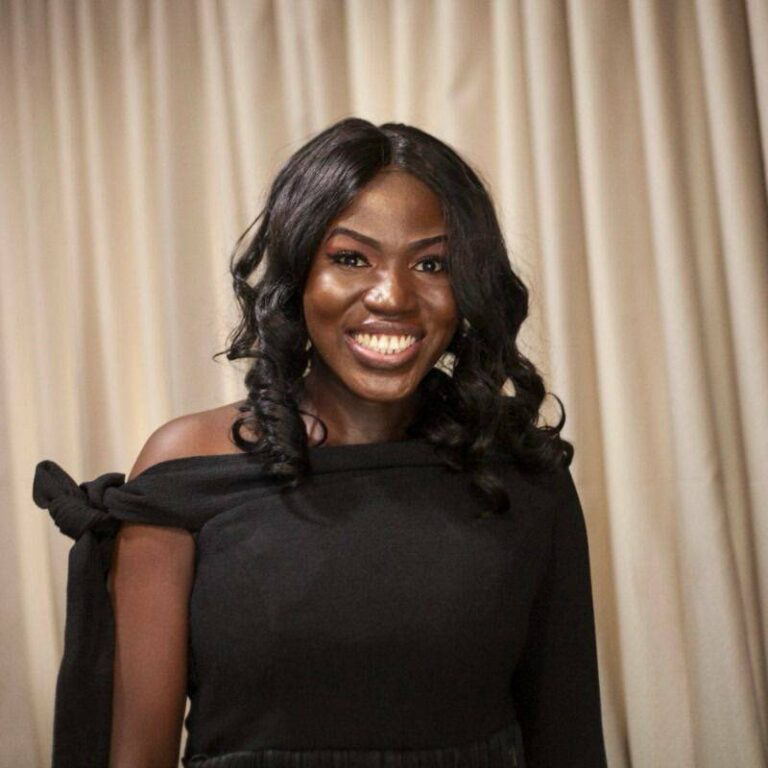
THE Director-General of the World Trade Organization, Ngozi Okonjo-Iweala, and media personality Mosunmola Abudu have been included on Forbes’ list of the most powerful women worldwide.
This is according to the list of the most influential women in the world in 2023 published by Forbes on Tuesday, December 5.
According to Forbes, the selection was based on ‘four major evaluations: money, media, effect, and spheres of influence.’
The list featured one hundred accomplished women from various industries, including technology, media & entertainment, business, politics, and more.
Reacting to her nomination on her official X (Twitter) handle, Okonjo-Iweala said, “Feel truly honoured to be named one more time as one of the Forbes 100 most powerful women in the world. This will be the 7th time, starting in 2011.”
The publication hailed Abudu as a “media mogul and philanthropist.” With a lineup of films that includes Elesin Oba: The King’s Horseman, The Wedding Party, and Chief Daddy, she has altered the game in Nollywood as the founder of Ebony Life Media.
Abudu and Okonjo-Iweala are working on a Netflix documentary series, Black, Brilliant, and Bold.
Abudu defined the “Black Brilliant and Bold” initiative as “A groundbreaking series designed to celebrate and showcase the remarkable achievements of Black Women from all corners of the world.”
Mo Abudu stated that various black women from different backgrounds, including politics, the arts, activism, and science and technology, are anticipated to appear in the series to bring attention to and celebrate their accomplishments that have gotten less attention over time.
HEARTLAND FC on Wednesday, December 6, ended their 11-match winless streak as they defeated Bendel Insurance, 1-0 in the Nigeria Premier Football League (NPFL) Matchday 12 fixture at the Dan Anyiam Stadium.
The ICIRreported how the team’s poor performance since their return from the Nigeria National League (NNL) to the country’s top-flight league had ignited worries, leading to the appointment of a new coach, Kennedy Boboye.
Despite the confidence reposed in Boboye’s coaching prowess to salvage the club from the murky water of relegation, the club lost 0-1 to an arch-rival Enyimba FC at home, picked an away point against Shooting Stars before securing a maximum of three points against Bendel Insurance.
The hope of securing the maximum three points came in the 51st minute after Austine Osayande benefitted from Divine Ukadike’s corner kick and lashed the ball into the net from close range.
In an attempt not to suffer recurring setbacks of always leading but lacking the courage to end matches in victory, Boboye introduced the trio of Ifeanyi Anyawu, Christian Weli, Onyekachi Okafor to replace Ezekiel Bassey, George Jenom, Kingsely Arum in the 66 minutes.
Their introduction paid off as the players helped to contain a recurring comeback of opponents, as witnessed in the club’s matches against Bayelsa United, which ended 2-2 in matchday eight, and Sporting Lagos, which ended 1-1 in matchday nine fixture.
Bendel Insurance could not compound their host’s woes despite the return of the club’s Tamara Ezekiel and Paul Obata in the starting eleven.
Heartland FC’s victory against Bendel Insurance helped them move from 20th to 19th position on the log. They have five more matches before ending the first half of the season.
PRESIDENT Bola Tinubu’s Chief of Staff (CoS) Femi Gbajabiamila, has refuted claim that he would spend N10 billion from the proposed N27.5 trillion 2024 budget on his official residence.
The response followed reports by some media platforms on the amount budgeted for the rehabilitation of CoS residence and the purchase of software computers.
Although the chief of staff failed to justify or explain the quality of computer software that would consume N10 billion, he said the N10 billion allocated for rehabilitating fixed assets was for the presidential lodge and the vice presidential quarters’ repair.
A review of the proposed budget by The ICIR showed that the CoS office will gulp N21 billion, with the renovation of fixed assets and computer software acquisition amounting to N10 billion each.
The breakdown of the N10 billion earmarked for renovation of the fixed assets showed that N5 billion was budgeted for the repair of Dodan Barracks presidential lodge and the vice presidential quarters.
The purchase of fixed assets, such as computers, printers, vehicles, refreshments, and office stationery, among other expenditures, takes up the remaining amount.
Reacting to this, Gbajabiamila wrote on his X handle on Wednesday, December 6: “I have seen social media commentary regarding the 2024 appropriation bill, particularly the provisions under the Office of the Chief of Staff to the President. Owing to the erroneous nature of these reports, it has become necessary to clarify that there is no provision in the 2024 appropriation bill for the renovation of any residence for the chief of staff to the President. I live in my private residence.
“The sums mischievously quoted by online bloggers and fake news merchants are for renovating the Presidential Quarters in Dodan Barracks and the Vice President’s Lodge in Lagos, to overhaul the information management and communications facilities in the presidency to meet modern standards and to provide vehicles for the staff of the presidency. The sums proposed for these projects are clearly stated in the budget proposal and bear no resemblance to the deceptive online commentary.”
He further stressed that Tinubu’s administration encouraged constructive scrutiny of government expenditure.
Meanwhile, the N10 billion allocated in the proposed 2024 national budget was aside the previously allocated N15 billion for a ‘befitting residence’ for the Vice President by the Federal Capital Territory (FCT) Minister, Nysom Wike.
Wike made the proposal from the N61.5 billion 2023 supplementary budget of the FCT presented before the House of Representatives Committee on FCT recently.
Budget for the planned construction of the new residence by Wike adds to the N2.5 billion earmarked for renovating the Vice President’s current residence in the recently passed 2023 Nigeria’s supplementary budget.
This means that if the N5 billion budgeted for the rehabilitation of the vice president residence in the 2024 budget under the CoS’ Office is approved, the total fund for the building and rehabilitation of the vice presidential building will exceed N22 billion, as stated in the 2023 supplementary budget and 2024 appropriation bill.
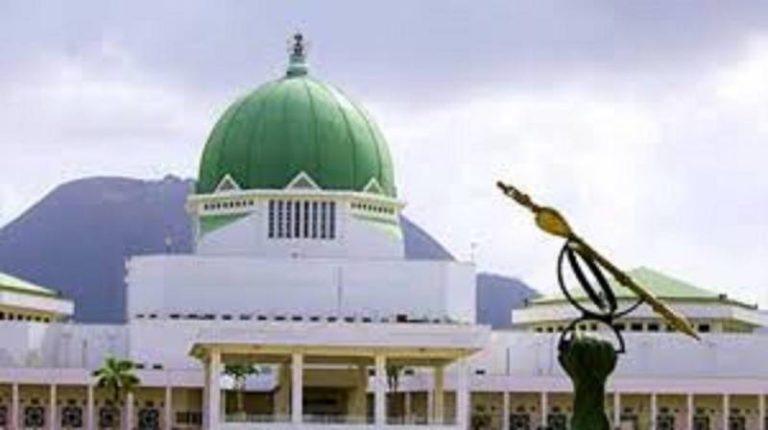
On November 29, Tinubu presented a proposed 2024 budget of N27.5 trillion to the National Assembly.
The ICIR reported how capital projects across Nigeria would suffer more as the Federal Government projected 45 per cent of its N18.3 trillion expected revenue in 2024 to service debts.
The 2024 budget proposed an aggregate expenditure of N27.5 trillion for the Federal Government, of which the non-debt recurrent expenditure is N9.92 trillion naira, while debt service is projected to be N8.25 trillion naira and capital expenditure is N8.7 trillion.
PAMPERS, Ariel, Always, Oral B, Gillette, and other products of Procter & Gamble (P&G) will cost more in Nigeria as the firm plans to exit Nigeria.
The firm, has announced plans to transition its Nigerian operations to an import-only model, citing concerns of Nigeria’s foreign exchange unpredictability.
Consequently, the company has dissolved its on-ground presence in the country, with thousands of jobs at risk.
According to the firm, the decision stems from the challenging business environment in Nigeria, primarily attributed to dollar-denominated operations and unfavourable macroeconomic conditions.
Procter & Gamble’s chief financial officer, Andre Schulten, during his presentation at the Morgan Stanley Global Consumer and Retail Conference in Lagos, noted that operating in certain markets, such as Nigeria and Argentina, had become increasingly difficult due to their macroeconomic realities.
He said the company was implementing a restructuring programme to optimise its operating model and portfolio, focusing on markets with greater potential.
“The other reality that arises in some of these markets is that it gets increasingly difficult to operate and create US dollar value. So when you think about places like Nigeria and Argentina, it is difficult for us to operate because of the macroeconomic environment,” Schulten said in a statement containing his address at the Lagos conference on Wednesday, December 6.
“So with that in mind, we are announcing a restructuring programme with the intent to adjust the operating model and adjust the portfolio to ensure that we maintain the portfolio discipline that has brought us to this point. The restructuring programme will largely focus on Nigeria and Argentina. We’ve announced that we will turn Nigeria into an import-only market, effectively dissolving our footprint on the ground in Nigeria and reverting to an import-only model,” Schulten said.
He noted that the decision would help the company focus on markets that have the highest potential.
Reacting to questions bothering on the effect of the company’s planned restructuring in Nigeria and Argentina on its overall group’s portfolio, Schulten explained that Nigeria was a $50 million net sales business.
He said compared to its overall portfolio worth $85 billion, the company does not anticipate any material impact on the group’s balance sheet from a sales or profitability standpoint.
With over three decades of operations in Nigeria, the firm has invested millions of dollars in the manufacturing sector.
The firm noted that at the 2014 plant launch, it provided over 5,000 jobs directly and indirectly through its offices, suppliers and distributors and has created over 200 SME jobs.
The exit is coming months after drug manufacturer GSK announced it was ceasing operations in Nigeria and appointing a third party to take over distributions, which has made price of key medications – Augmentin and Ammoxil to go out of reach of an average Nigerian.
A PANEL set up by the Minister of the Federal Capital Territory (FCT), Nyesome Wike, has revealed that a victim of ‘one chance’ attack in Abuja, Greatness Olorunfemi, was brought to the Maitama Hospital dead.
Olorunfemi reportedly died at the hospital, where she was rushed after the attack along the Katampe-Kubwa Road in September this year.
The panel said contraryto social media reports, Olorunfemi was not abandoned by the facility.
A viral video on Wednesday, September 27, showed Olorunfemi by the roadside along the Maitama-Kubwa expressway after reportedly being pushed out of a vehicle by a suspected criminal gang disguised as commercial drivers.
According to an audio tape from the eye witness that also went viral, passersby had taken her to the Maitama District Hospital for treatment but was rejected by the hospital staff.
“All of us, about 15 vehicles, we all drove down there, and then she was still alive. The Maitama General Hospital refused to receive her and said they wanted a Police report before they could attend to her,” the eyewitness narrated.
He stated that the hospital staff were informed of an extant law that criminalises the demand of a Police report before treatment is provided for patients with gunshot or stab wounds. However, despite efforts to convince the staff to accept her, he claimed Olorunfemi was denied treatment until she bled to death.
A social media user on X, with username @Nwaadaz, who claimed to be friends with the deceased, also posted a video of the victim with a caption accusing the hospital staff of neglect.
“Maitama General Hospital refused to attend to my friend who was stabbed by a one-chance driver in Abuja. They allowed her to bleed to death and locked the emergency ward against her because she didn’t have a Police report!! Nigeria has failed Greatness!!” she tweeted.
Olurunfemi was reportedly thrown out of a fast-moving vehicle by her attackers on September 26 while on her way from work.
On October 4, the FCT Minister constituted a nine-member panel to investigate the death.
Two months later, the panel, while presenting its findings on Wednesday, December 6, at the Abuja Property Development Company, stated that Olurunfemi was taken into the hospital dead based on investigations.
Mohammed, the president of the Medical and Dental Consultants of Nigeria, said contrary to what had been claimed on social media, no Police report was requested.
He said there was no sign of life in the video depicting the late Olorunfemi sitting.
He clarified that she was strangled to death and that, in contrast to what some people on social media had said, she did not bleed to death because there were just a few little bloodstains on her body.
However, he was silent on how the deceased’s body was handled after she passed on, as evidenced by the delay in putting the body in the morgue.
The panel observed that the Maitama General Hospital staff did not follow professional standards when she was evaluated in the hospital’s car and public areas rather than being placed on a stretcher and given private treatment in an accident and emergency (A&E) section.
It demanded a thorough autopsy to determine the full cause of her death and urged the Police to launch a formal investigation into the incident.
It also restated the legal requirement that hospitals treat all emergency cases without first requesting a Police report since they must preserve lives.
The panel explained further that Olorunfemi received medical attention forty seconds after her body was transported to the hospital at 8:35:10 p.m.
Based on the CCTV camera evidence, the panel stated that the victim received care at 8:35:50, 8:39:00, and 8:41:00 p.m., respectively.
The panel regretted how the deceased body was handled at the hospital, emphasising that all corpses should be treated with respect.
THE House of Representatives Committee on Public Petitions, has issued a warrant of arrest on the Governor of Central Bank (CBN) Olayemi Cardoso, for refusing to appear before it to answer questions on the unremitted oil sector funds.
The panel, also ordered the arrest of the Accountant General of the Federation (AGF) Oluwatoyin Madein, and 17 others.
Among the 17 to be arrested are the heads of National Petroleum Investment Management Services (NAPIMS), Ethiop Eastern Exploration and Production Company Ltd, and Western Africa Exploration and Production.
Others are heads of Alteo Eastern E&P Co. Ltd., First Exploration & Production Ltd., The Md, First E&P Oml 8385 Jv, Heirs Holdings Oil and Mobil Producing Nigeria Unlimited (Mpnu).
Also listed are Shell Petroleum Development Company (SPDC), Total Exploration & Producing Nig (TEPN), Nigeria Agip Oil Company (NAOC), Pan Ocean Oil Nig, Ltd, Newcross E&P Ltd and Frontier Oil Ltd.
This resolution was reached at the investigative hearing of the committee to consider a petition filed by one Fidelis Uzowanem on Tuesday, December 5.
The committee chairman, Michael Etaba (APC, Cross River), said Cardoso and others had refused to honour its invitations.
Consequently, a committee member, Fred Agbedi (PDP, Bayelsa), moved the motion to issue the arrest warrant.
Agbedi said the affected persons should be made to appear before the committee on 14 December.
The committee adopted the motion, which ordered the Inspector General of Police, Kayode Egbetokun, to execute the warrant.
Afterwards, Etaba explained that the warrant compelled the concerned individuals to appear before it to respond to the issues raised in the petition.
Uzowanem, the petitioner, explained that the petition was on the Nigeria Extractive Industries Transparency Initiative (NEITI) report of 2021.
He said his organisation discovered multiple infractions committed by players in the oil and gas sector in connivance with government officials.
“We took up the challenge to examine the report and discovered that what NEITI put together as a report is only a consolidation of fraud that has been going on in the oil and gas industry.
“It dates back to 2016 because we have been following up, and we put up a petition to this committee to examine what has happened.
“The 2024 budget of N27.5 trillion that has been proposed can be confidently funded from the recoverable amount that we identified in the NEITI report,” he said.
A latest Nigeria Extractive Industries Transparency Initiative (NEITI) latest report revealed a compilation of the outstanding financial liabilities due to the Federation. The report indicated that $13.591 million in revenues was payable to the Federal Inland Revenue Service (FIRS) as of July 31, 2023.
The report revealed further that the Nigerian Upstream Petroleum Regulatory Commission (NUPRC) had outstanding tax-collectable revenues of $8.251 billion as of December 31, 2022.
The report added that over 80 per cent of these outstanding financial liabilities are owed by NNPCL.
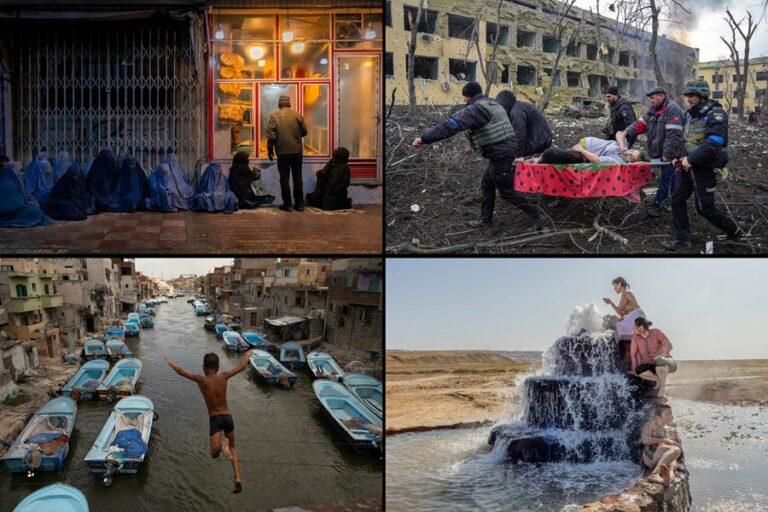
THE World Press Photo Digital Storytelling Contest invites applications for professional photography in combination with audio and visual elements like video, animation, graphics, illustrations, sound or text.
The competition features four categories based on genre: open format, long-term projects, stories, and singles.
Entries on a broad range of themes may be submitted to the appropriate format-based category because these categories cover all thematic categories from previous rounds, including general news, spot news, contemporary concerns, environment, nature, sports, and portraits.
A winners’ event will be open to the winners. Each winner of the Photo Open Format Award, Photo Story of the Year, Photo Long-Term Project Award, and Photo of the Year will earn EUR5,000 (US$5,441).
Professional visual journalists can submit digital projects to the contest. Also, entries must have been published in 2023 in English or with subtitles in English.
The deadline is January 11, 2024. To begin registration, click here
THE Minister of Finance and Coordinating Minister for the Economy, Wale Edun, said Nigeria is exploring options from a pool of funds from climate financing to support deficits in 2024 budget.
Edun said this during the 2024 budget interactive session with stakeholders at the Senate on Tuesday, December 5.
He explained that Nigeria’s fiscal space was exhausted in line with the International Monetary Fund’s (IMF) position.
He proposed a strategic shift towards concessional funding, including climate financing, as a viable solution.
“Nigeria’s fiscal space is exhausted. The solution is that we have to focus on concessional funding, the cheaper funding, even free funding, and climate financing is the way,” Edun stated.
He highlighted the urgency of addressing the fiscal constraints and reducing dependence on borrowing, particularly foreign borrowing.
Edun pointed out that with an estimated $1 trillion annually earmarked for climate change, the Nigerian government would plug up opportunities from the fund to finance deficits in the N27.5 trillion budget.
A new study shows that annual climate finance flows surpassed USD one trillion for the first time in 2021, six years after the Paris Agreement was adopted in 2015.
“Just yesterday UAE announced 30 billion dollars for climate action. What that means is that as we look to fund the N27.5 trillion budget this year, our first port of call must be the cheapest and the most concessionary financing including climate financing.
“We have to be brave, courageous and innovative to make sure that we use the financial market to take the stress down, to reduce our debt servicing, and to reduce our emphasis on borrowing,” Edun urged.
The minister highlighted recent strides, including the signing of a 100 million euro foreign direct investment for the reforestation of Mangrove Forests in Cross River.
He underscored the importance of maximizing existing assets without resorting to excessive borrowing.
He also pointed out the possibility of leveraging countries and organisations willing to allow funding based on their credit ratings, which could alleviate debt service burdens for Nigeria.
Edun further emphasized the need for Nigeria to quickly optimize its resources and make them align with the changing global dynamics that emphasize equity over excessive debt.
The 2024 budget proposed an aggregate expenditure of N27.5 trillion for the Federal Government in 2024, of which the non-debt recurrent expenditure is N9.92 trillion naira, while debt service is projected to be N8.25 trillion naira and capital expenditure is N8.7 trillion.
Earlier in his remarks, the Senate President, Godswill Akapbio, said Nigeria would not achieve much unless the country increased revenue.
He urged all revenue agencies in the country to do more and block all leakages.
“No matter how beautiful the budget is, if there is no money to spend, the budget will not work. Let’s get up and block the loopholes of leakages and wastages and then bring more revenue so that the 2024 budget becomes realistic”, he said.
The Senate president assured that the National Assembly was determined to pass the budget on record time and wanted to make sure the continue with the January to December budgetary cycle.
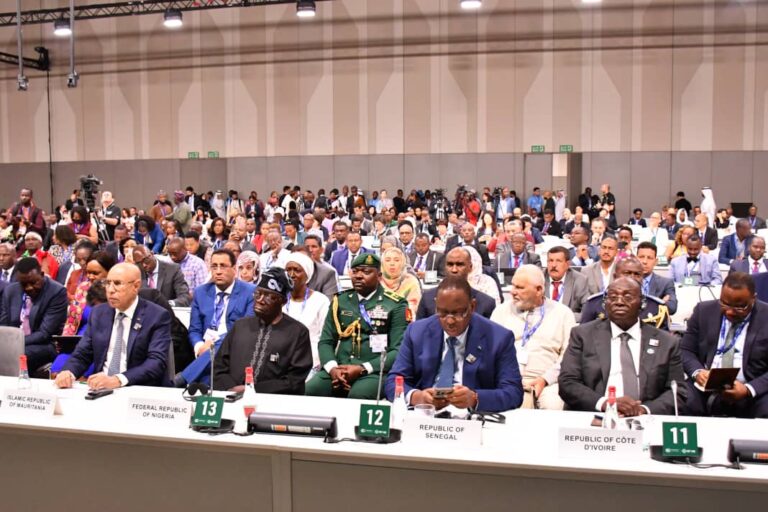
ESTIMATES by The Internation Centre for Investigative Reporting (ICIR), from its independent findings, have shown that the Nigerian Government might have spent N1.09 billion on round-trip flights for all participants it sponsored to the ongoing COP28 Climate Summit in Dubai, United Arab Emirates (UAE).
Following uproar from Nigerians on social media, questioning why the Federal Government funded ‘1,411 delegates’ to the event amidst the prevailing economic hardship the nation faced, the Information Minister, Mohammed Idris, clarified that the government only sponsored 422 persons.
According to Idris, Nigeria’s representation aligns with its status as Africa’s leading sovereign voice and player in climate action.
The minister also noted that several delegates were sponsored by the state governments and civil society organisations, among others.
Still, Nigerians have continued to condemn the sponsorship of 422 delegates representing the country, citing the country’s current economic downturn.
Upon close observation of the list, The ICIR also discovered that some delegates labelled as government officials did not have a climate portfolio or direct responsibility that justified their attendance at the conference.
To arrive at the estimated funds spent on the participants by the Federal Government, The ICIR checked through a travel website, Wakanow, for the average cost of a round trip within a week from Lagos to Dubai. The results from five airlines showed an average cost of N2.5 million.
Airline
Amount
Egypt Air
2,135,854
Qatar Airways
2,213,394
South African Airways
2,616,580
Ethiopian Airlines
3,027,297
Kenya Airways
2,918,094
(The cost of a trip to and from Lagos to Dubai in one week on Wakanow)
Screenshot showing the flight fee from Lagos to Dubai
Using the average cost of N2.5 million above as an estimate, it translates to spending N1.09 billion for flying 442 people from Nigeria to Dubai from Lagos Airport.
This amount excludes feeding, per diem, transport allowance, and other benefits the government or the host country provides for attending the conference.
Reacting to our findings, Celestine Okeke, a social critic and associate consultant at the British Department for International Development (DFID), described sponsorship as ‘embarrassing.’ He noted that the President Bola Tinubu-led administration had not shown the capacity to cut the cost of governance.
“The key thing for me is that this government has not shown it has the ability to cut the cost of governance. It has not shown the ability to use results efficiency principles. It has not shown the ability to do things differently. And they are not bothered about the numbers.
“Generally, what are the components of the supplementary budget sent to the National Assembly? It is buying cars and renovating offices and all of that. The result efficiency principles were not used here, in terms of scarce resources and what really should be into.”
He noted that he would have expected the government to consider the current economic hardship and send no more than 50 delegates to the conference.
“I think that the most they would have done is to send key policy officials, not more than 50, and come back and speak on whatever they learn. They can have two or three days of debriefing where other people who are there now can come and hear what they have to say.
“The whole thing is embarrassing to me, to say the least. And we are borrowing funds to fund the budget and now from that to now pay people to go and attend a conference, I don’t think that makes sense to me.”
On her part, the Executive Director of Atune Ngun Foundation, a climate foundation advocating for deforestation and oil spillage in the South-South, Eme Okang, said it was difficult to justify spending such a significant amount of money on sending a large delegation to a conference, especially during a time of economic travails.
She added that the funding raised questions about the government’s priorities and whether the funds could have been better used to address pressing domestic issues.
“In light of recent borrowing by the government, spending a large amount on a climate change conference may not be viewed favourably. Many people may believe that a smaller, more cost-effective delegation could have represented the country at the conference without such a hefty expense.”
She noted that it was important for the government to carefully consider its spending decisions and prioritise the country’s needs during challenging economic times.
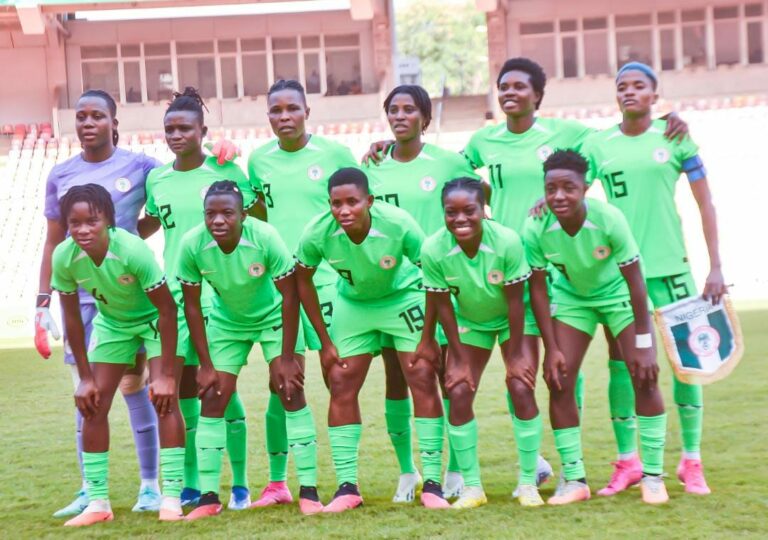
NIGERIA’S senior women’s football team, Super Falcons, on Tuesday, December 5, picked the ticket for the 13th edition of the Women Africa Cup of Nations after edging Cape Verde 2-1 at the Santiago-Estádio Nacional Cabo Verde in Praia.
The ICIRreported how the Super Falcons pummeled Cape Verde, 5-0, in the first leg of the qualification series at the Moshood Abiola National Stadium in Abuja.
The outcome of both home and away results sums to a 7-1 aggregate win in favour of the Super Falcons, earning them a qualification ticket to the championship billed to be held next year in Morocco.
Unfazed by the Super Falcons’ five-goal margin in Nigeria, Cape Verde began seeking redemption after scoring a goal in the nine minutes through Ivania Tavares Moreira, who slotted in the ball past Nigeria’s goalkeeper Chiamaka.
The early goal ignited the possibility of a miracle for the host country to clear the deficit of the remaining four goals.
They won a couple of corner kicks in the process, but the Super Falcons expressed confidence, displaying their panache of an unbroken streak of appearances since the tournament’s inception in 1991.
The resumption of the second half saw the introduction of Esther Onyenezide and Esther Okoronkwo for Peace Efih and Uchenna Kanu.
Super Falcons coach Justin Madugu’s substitution paid off. Okoronkwo levelled the scores 11 minutes into the game but was cancelled after she was judged for off-side.
Six minutes later, Okoronkwo, who got a brace during the first leg in Abuja, pulled a goal to level the score for Nigeria.
After the goal, Nigeria dominated possessions, cancelling the hope for their host. Captain Rasheedat Ajibade could have doubled the lead in the 71st minute, but her attempt exceeded the crossbar.
The last straw that broke the camel’s back came in the 87 minutes through Ajibade, whose goal sealed the ticket for the Super Falcons to fly to Morocco.
The Super Falcons have won the title nine times.
Apart from AFCON qualification, the team is also in the race to qualify for the Paris 2024 Olympic Games.
The Falcons will face Cameroon early next year in the Paris 2024 Olympic Games qualifiers.





 Upon close observation of the list, The ICIR also discovered that some delegates labelled as government officials did not have a climate portfolio or direct responsibility that justified their attendance at the conference.