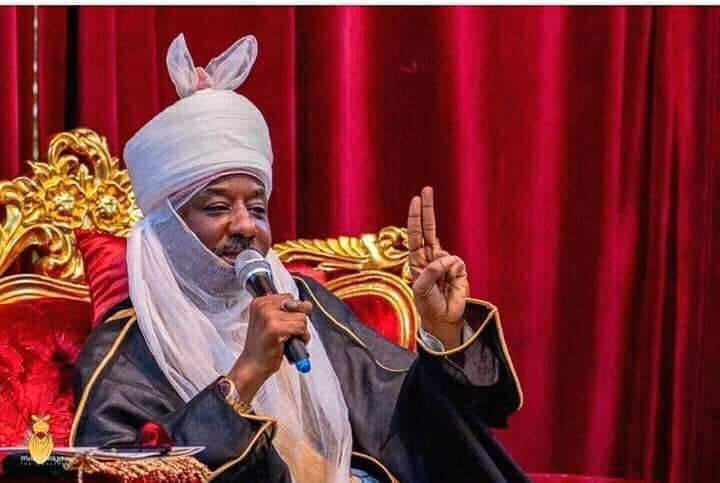
FORMER Central Bank of Nigeria (CBN) Governor, Sanusi Lamido Sanusi, has berated the Nigerian National Petroleum Company (NNPCL) over its poor revenue remittance to the federation account.
He challenged the NNPCL to give account of the dollar inflows from its operations amid the rising volatile exchange rate.
Sanusi said this on Thursday, December 7, at the opening session of the 2023 Bank Directors’ Summit with the theme: “Emerging Issues: Navigating the Complex Balance Between Regulation and Compliance,” organised by the Bank Directors Association of Nigeria (BDAN).
“We are no more paying the subsidy on Petroleum products, so where are the dollars? Sanusi asked.
He expressed concern over President Bola Tinubu’s role as the Minister of Petroleum, adding that it would not solve the non-transparency issues of the national oil company.
“A minister has to be there to be held accountable. When I was the CBN Governor, I could attack Dieziani. Now, if you talk, you’re attacking the President,” he added.
…warns against amendment of CBN Act
Sanusi also warned against any move to remove the independence of CBN and subject it to political manipulations, saying this could be dangerous to the economy.
He said the CBN Act remained one of the best laws in the world, adding that the solution was not in changing the bank’s law but in ensuring its implementation.
Speaking on the current forex liquidity challenge in the country, the former Emir of Kano said the question about the NNPC earnings would continue to linger.
Sanusi recalled that the question about non-transparency at the NNPC cost him his job as the CBN governor during the administration of Goodluck Jonathan when he blew the whistle over missing $20 billion at the national oil company.
He said he would continue to demand answers to queries on the NNPC’s activities until the organisation is properly reformed.
He said the current fiscal challenges resulted mainly from the inability of the National Assembly to do proper oversight on the CBN, on exceeding the limit of overdraft lending of CBN to the Federal Government.
Sanusi described the NNPC as the most opaque institution in the world.
Tinubu, who was represented at the summit by the Minister of Finance and Coordinating Minister of the Economy, Wale Edun, stated that funding liquidity in the foreign exchange market, though a short-term solution, remained critical for the economy.
Tinubu said it was only a matter of time before short, medium and long-term funds would be mobilised across the spectrum.
He said, “Regulators must partner with industry to promote innovations that drive financial access, and banks have a duty to embed integrity and transparency into our culture and technology systems.”
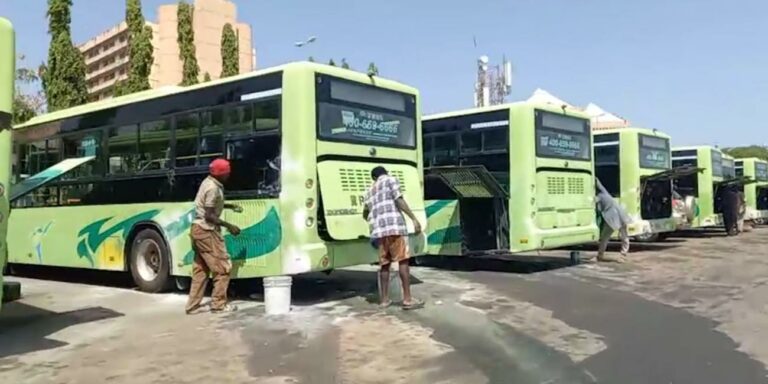
THE high-capacity buses in the now-viral video shot by a yet-to-be-identified man at Eagle Square car park in Abuja is said to have gotten the nod of the FCT government to be used in mass transportation, says an official of 360TFA.
The man in the video had claimed the buses are second-hand as they are in a dilapidated state.
A staff of 360 TFA (360 Transport for Abuja), Akindele Ibukun, who introduced her position as a compliance and legal adviser for the organisation, noted that they have gotten the approval to commence operations and will most likely launch this Decemeber.
She also confirmed that the buses are second-hand and are currently undergoing refurbishment and branding at Eagle Square, where the buses are parked.
The video gained traction because of President Bola Tinubu’s promises on June 12 and October 1, Democracy Day and Independence Day, respectively, that his government would procure and deploy high-capacity buses across Nigeria to alleviate Nigerians’ pains due to his government’s removal of fuel subsidy.
Since the subsidy removal, millions of Nigerians have found getting vehicles to and from work difficult, especially in cities like Abuja and others.
Sources noted that the buses were brought to Eagle square after October 1.
Currently, along the Kubwa expressway and other areas of the FCT, there are scores of buses meant for mass transportation which are out of service and have been parked for a while.
ICIR’s news editor’s verification mission at Eagle Square
On Monday, December 4, The ICIR news editor went on a fact-checking mission to Eagle Square car park to verify claims in the viral video.
There were two sets of buses at the park. The first were 20 high-capacity CNG buses donated to the Federal Government by the Depot and Petroleum Products Marketers Association of Nigeria.
The buses are new and manufactured in Nigeria by Innoson. They were parked close to Eagle Square, behind the offices of the Federal Road Safety Corps (FRSC) and the FCT Directorate ofRoad Traffic Services (DRTS), also known as the Vehicle Inspection Officer (VIO), at the car park.
The others comprise 14 high-capacity buses parked near the eateries within the premises. These were the buses in the viral videos, and there were signs that they were undergoing repairs.
Buses ownership
Findings by The ICIR show that a private firm, 360TFA (360 Transport for Abuja), owns the buses, which it will use for commercial transportation services in the nation’s capital.
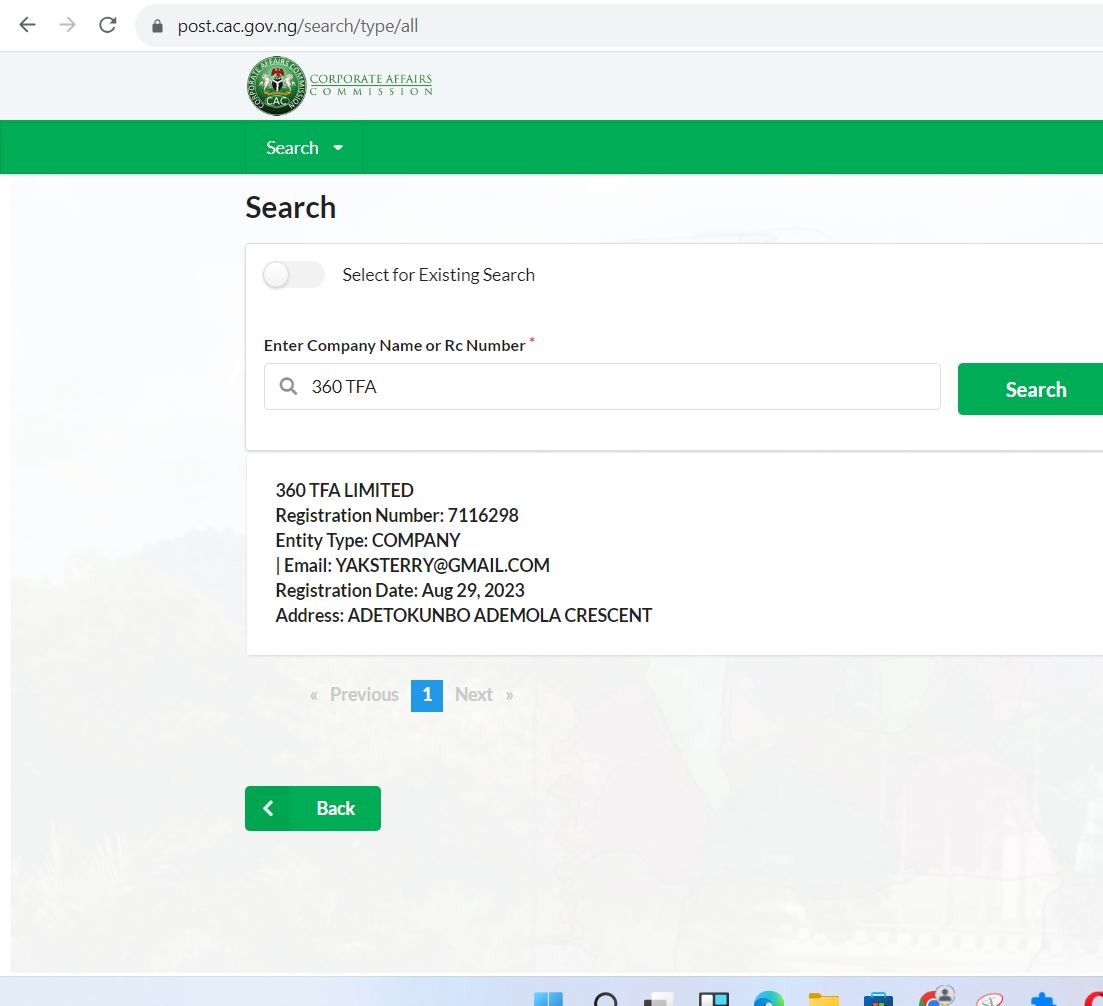
Interestingly, the company which claims it has gotten its operation licenses and approval was registered by the Corporate Affairs Commission (CAC) on August 29, 2023, with the registration number 7116298.
It has its address at Adetokunbo Ademola Crescent in Abuja.
Screenshot of 360 TFA Limited’s registration on the Corporate Affairs Commission’s website
The ICIR could not independently verify if a firm registered in late August can process and already have its operation licenses. However, Akindele, the legal adviser, says they do and was willing to show the police while adding that she actively participated in the process.
The ICIR findings also show that the company has a link with a fintech firm, Kwankol. Kwankol has Akindele listed as the legal and compliance officer, it also has Luqman Atolagbe listed as corporate service and compliance staff. Akindele had introduced him as her colleague at 360TFA.
How The ICIR journalist was detained for hours
While snapping the buses, some private security guards at the park approached the journalist and challenged him, demanding to know why he took the pictures.
They immediately called on the officers in charge of the buses to arrest him while also calling on one of the Police officers at the Federal Secretariat’s Police station to arrest the reporter.
The Police officers and the private security guards working for the Property Development Company (APDC), which manages the park, detained the journalist at the guards’ office for four hours saying they couldn’t let him go without the approval of the management of 360TFA which they explained have been notified and were on their way.
Akindele, who later identified as the company’s legal adviser, came with Kwakol’s corporate service and compliance officer, Luqman Atolagbe, who she introduced as her colleague at 360TFA.
Akindele, insisted on the reporters identification, which was provided, The ICIR also independently confirmed to her that he is their reporter but she insisted he must provide a written letter which will be a determination for his release. In addition, the management of the park (Property Development Company, APDC) insisted that the reporter’s phone be seized and he should give his password and also give them access to his google cloud services. As such the issue was taken to the Federal Secretariat Police station.
Front view of some of the used buses at the secretariat
Police lecture lawyer on journalists’ operations
Police officers at the station, including the divisional Police officer (DPO) Hassan Abdullahi, made it clear to the lawyer that the journalist did not need her company’s permission to take pictures or make video of any property kept in a public place, in which the public has an interest.
Avvering with the DPO, The ICIR reports that Section 22 of the Nigerian Constitution empowers the media to do its work without hindrance.
After spending about three hours at the station, the DPO resolved the matter and asked both parties to go.
360TFA accused of parking buses without paying
Meanwhile, a source at the Eagle Square car park says the vehicles were parked without the on-ground management knowledge while adding that the 14 buses took up spaces that should generate money for the organisation daily, whereas 360TFA wasn’t paying a dime for the spaces.
Responding, Akindele said her firm secured permission from the FCT Transport Secretariat, which allocated the space to support the business.
What operator could lose to spaces occupied by buses
The ICIR calculated what the operator could lose to the spaces in a year, should the company have them permanently or temporarily.
The operators charge N100 per parking space. It is most likely that more than one vehicle owner parks in each space daily, meaning that the operators could generate revenue as many times as possible for a space, depending on how long motorists leave their vehicles at the park in a day.
Given this explanation, since there are 14 high-capacity buses, taking about three spaces smaller vehicles would occupy, the operators are likely to lose N1.092,000 yearly (being five working days weekly x 52 weeks a year = 260 x 14 vehicles x 3 spaces occupied by each bus x N100 charged per space).
Meanwhile, fees are paid on the 20 buses donated to the Federal Government by fuel marketers and parked on the premises.
Public transport system remains a challenge in FCT
Means of public transportation have been a major challenge for Abuja residents, making the ‘one-chance’ criminal activity thrive.
One chance is a criminal group disguised as commercial drivers and commuters. They usually move around cabs in groups of two, three, or four, armed with weapons such as guns, knives, hammers, and other harmful objects.
They dispossess passengers of their belongings, including laptops, money, phones, and other valuables. Many of them conduct their illicit business using point of sale (PoS) machines to empty victims’ bank accounts, using force.
Among the recent victims of one-chance in Abuja was Greatness Olorunfemi, a young lady who was reportedly denied treatment by the Maitama General Hospital because the sympathisers who brought her could not produce a police report.
On November 16, this organisation reported how the FCT Police impounded 52 vehicles and arrested the suspects using them for one-chance activities.
Abuja had been with high-capacity buses, but they have virtually vanished. In December 2021, the ICIRreported how poor planning led to the failure of the Abuja Urban Mass Transport scheme, managed by the Abuja Urban Mass Transport Company Limited (AUMTCO). The AUMTCO had scores of buses in its fleet.
Public transport crises have taken a worse turn in Abuja since the AUMTCO buses were grounded and kept at a facility along the Kubwa Expressway,
We need buses in viral video, but we fear they may pack up soon – Residents
Many residents who reacted to The ICIR’s journalist arrest at the park said Nigerians, especially FCT residents, needed vehicles to ease transportation challenges in the nation’s capital.
They expressed reservations about the buses’ durability. They referred to similar initiatives in the FCT, which are now moribund.
One of such residents, wondered why the FCTA would allow a firm to bring fairly used vehicles to a public place such as Eagle Square car park, refurbish them at the park and put those vehicles on the FCT roads.
FCT Transport Secretariat declines comment
While the Police DPO was mediating between the lawyer and The ICIR, a senior official at the Transport Secretariat, Farouk Aliyu, walked in with his team. He confirmed his office approved the buses to operate.
The DPO challenged him on why used buses would be packaged for the FCT residents and brought to Eagle Square car park for the government to commission.
Efforts by the ICIR to interview the official when he stepped out of the DPO’s office proved abortive.
He requested that The ICIR meet his public relations officer to book an appointment for an interview in his office.
He also gave another option: his office would do a media briefing on the buses soon.
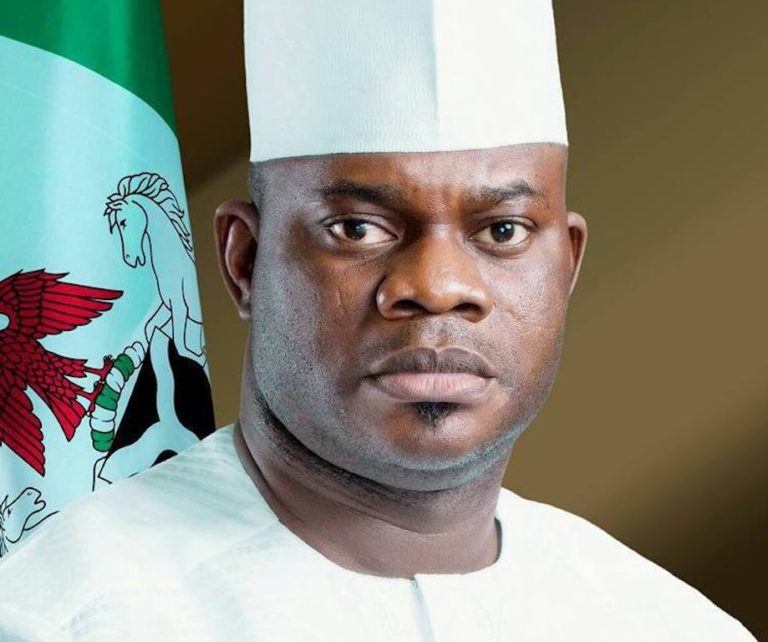
A FEDERAL High Court in Abuja has ordered Kogi state Governor Yahaya Bello to pay N500 million damages to Social Democratic Party’s (SDP) candidate in the November 11 governorship election in the state, Murtala Ajaka, for violating his rights.
In a ruling on Thursday, December 7, the trial judge, Inyang Ekwo, ordered Bello to tender a public apology to Ajaka “for the gross and unwarranted violation” of his rights,
In addition, Ekwo directed heads security agencies – the 2nd through 7th respondents – to guarantee Ajaka’s safety, including his property in Abuja, Kogi, and other parts of Nigeria.
Furthermore, The judge also issued an injunction prohibiting the security services from arresting, detaining, or harassing the applicant or threatening his safety or property.
On July 11, S.E. Aruwa, a senior advocate, filed the originating motion, with the reference number FHC/ABJ/CS/952/2023, on behalf of Ajaka, in which he requested protection from the court.
The first through sixth defendants in the suit filed by the SDP candidate were Bello, the commissioner of Police in Kogi, the Nigeria Police Force, the Inspector General of Police, the State Security Service (SSS), and the DG SSS.
As the seventh through eleventh respondents in the case, the applicant also joined the Chief of Defense Staff, the Chief of Army Staff, the Chief of Naval Staff, the Director of DSS Command in Kogi, and the Commandant-General of the Nigeria Security and Civil Defense Corps (NSCDC),
Ajaka informed the court that he had previously run for the Kogi governorship election under the All Progressives Congress (APC) platform.
He claimed threat to his life by Bello because of his interest in the state governorship seat.
Besides, he said Bello’s plots grew when he dumped the All Progressives Party (APC), joined the SDP and received the party’s endorsement to run for governor on November 11.
He said even after switching from the APC to the SDP, he continued to feel intimidated by Bello’s overt and covert actions.
“That the 1st respondent has co-opted the 2nd to 11th respondents in threatening the right to life, liberty and association of the applicant,” his case reads.
In his first objection, Bello asked for two orders: to set aside the court’s previous July 13 judgment about lack of jurisdiction and strike out the lawsuit.
He contended that as the Attorney-General of Kogi was not a party to the complaint, the petitioner had not sued him in his official position.
In addition, he contended that the litigation was incompetent because the purported violation of Ajaka’s fundamental right and all the circumstances supporting the breach, according to his affidavit in support of the originating motion, occurred in the state.
In addition, the governor dismissed of Ajaka’s claim that he was running in the APC primary election.
Similarly, Bello refuted any threat to kill Ajaka for not following any instructions.
The governor stated that the APC candidate, who eventually won the election, Usman Ododo, participated in the APC primary, and denied he appointed Ododo as a successor.
He claimed that since the second through eleventh responders were all federal entities that are not under his direct supervision, he was unable to use them to jeopardize Ajaka’s right to life, liberty, and association.
Justice Ekwo, in his ruling, stated that he had discovered that the governor had made no specific allegations throughout the entire affidavit.
Bello’s counter-affidavit, in his opinion, was extremely weak and did not successfully refute Ajaka’s allegation.
“It is not hard to see that the 1st respondent was acting clever when he sent his aide de camp to make a report to the same Police that acted in concert with him at the scene of the shooting, after preventing the applicant (Ajaka) from entering Lokoja,” he said.
He ruled that the incident of June 3, which was the focus of Ajaka’s complaint, could not be addressed by any of the respondent’s affidavit evidence.
“In awarding damages in this case, I will take into account the trauma of the applicant of being shot at by those whose statutory duty is to protect the citizens, acting under the command of the 1st respondent (Bello) who is statutorily the chief security officer of a state for a cause that is manifestly unlawful but inhuman,” the judge stated.
‘TIMELESS,’ fourth studio album by Nigerian Afrobeats singer David Adeleke, known as Davido, has been ranked in the top 50 Billboard staff list.
According to Billboard’s list, which was announced on Wednesday, December 6, Davido clinched the 39th slot, claiming it as the finest of his career.
“What Davido achieves on Timeless truly lives up to his acclaim. Davido delivers one of the best bodies of work from this past year, and certainly the best of his career.
“Simply put, Timeless is a triumph, and a landmark album in the global explosion of Afrobeats,” the magazine wrote.
The album is the only African release on the list, which also includes popular albums from around the world.
Davido’s first Grammy nomination came from this album. The award ceremony is scheduled to hold in Los Angeles in February 2024.
‘Timeless’ album, released in March, has set numerous records in Nigeria and across Africa on music streaming platforms.
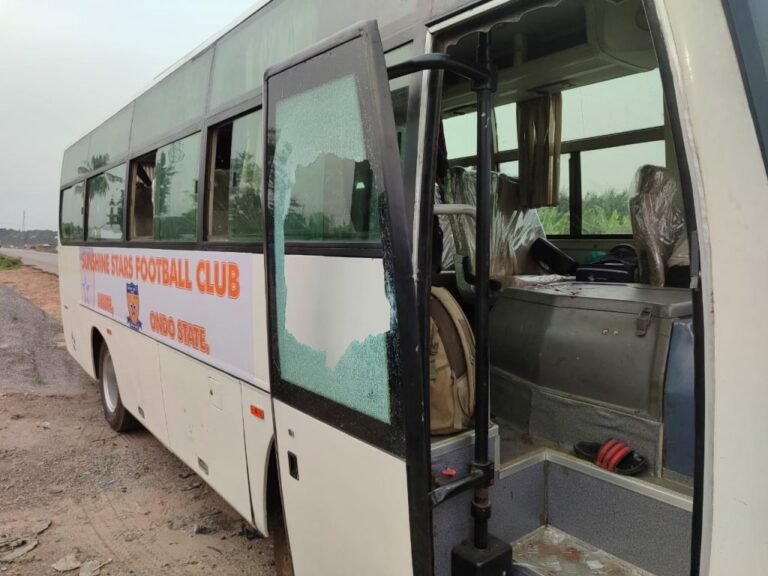
GUNMEN on Thursday, December 7, attacked the Nigerian Premier Football League, NPFL club side, Sunshine Stars, along the Ore-Benin Expressway in Edo state.
The Akure, Ondo state-based team, which edged Shooting Stars Sports Club, 3SC of Ibadan 1-0 in a keenly-contested derby at the Ondo State Sports complex on Wednesday, December 6, fell victim to the unfortunate incident its way to honour its match day 13 fixture against Bendel Insurance of Benin.
The match is billed to be held this weekend.
According to the press release by the club’s media officer, Michael Akintunde, one of the club’s ball boys was shot while other officials were injured.
“It saddens our hearts to inform Nigerians, especially football lovers, that our team was attacked a few minutes ago along Ore-Benin Expressway to honour an Elite League tie against Insurance of Benin, scheduled for this weekend.
“Our ball boy was shot in the horrible attack. Our team manager and other club officials, including players, are seriously injured,” the statement read.
The club added that the officers of the Federal Road Safety Corps (FRSC) helped to rescue the injured officials and the ball boy to a nearby hospital.
However, in a chat with The ICIR, the club spokesperson confirmed that no life was lost, adding that those affected were receiving treatment in hospital.
FG urged to tighten security
In a chat with The ICIR, the Financial Secretary Sports Writers Association of Nigeria, (SWAN) Ondo state chapter, Femi Atolagbe, called on the Federal Government to tighten security on the nation’s roads.
He also urged the Police to bring to book the Sunshine Club’s attackers.
“We have been saying we do not take the security issue seriously on this side of the world. Imagine a team like that, and as we speak, nobody has been arrested. It is unfair.
“We will keep telling the government to do something about security, if it takes them to take some of our top officials outside the country to know how to Police the environment,” he said.
He advised the residents of the communities where such incidents occurred to help the Police gather intelligence to foil uncivil operations.
“We should do more on our intelligence unit because those guys that shot them today, they might have hidden around that area for two to three days, and those living around that side will know them. If we have a very intelligent unit in the form of community policing, security agencies might have been tipped off.
“I will call on the government to do something. As Nigerians, if we see something, we should say it,” he said.
NPFL club owners association condemn attack on club
Similarly, the Club Owners Association bemoaned the attack, attributing it to the poor security on Nigerian roads.
The association’s chairman, Okey Kpalukwu, described the incident as unfortunate.
“The news of gunmen men attacking the Sunshine Stars team came to me as a shock, but we thank God that no life was lost. This has once again brought to the forefront the poor security situation in our country, and something has to be done urgently by our government, especially at this time of the year. Let’s pray for the quick recovery of those injured,” he said.
Kpalukwu stressed that the poor state of the roads contributed to the road users becoming easy targets for hoodlums to perpetuate their dastardly acts.
“One of the major reasons armed men find it easy to attack and kill innocent Nigerians on our roads is because they’re very bad.
“Our major roads are in deplorable conditions, which forces vehicles to move slowly on them. Drivers are most times forced to a halt when navigating the very bad parts of our roads, and hoodlums take advantage of this to kill and maim innocent travellers. Let the government fix our roads to save lives,” he added.
The ICIR contacted the Edo state Police command public relations officer, Chidi Nwabuze, a superintendent of Police. He said he is not aware about the attack.
“My friend. I am far away Abuja on official assignment. But I have not seen or heard of such a report. You said Ore-Benin Road, perhaps, is not within our jurisdiction. Thank you,” he responded via SMS.
OIL theft has ballooned into a mega-organised crime in Nigeria, involving various stakeholders; in this three-part report, Anayochukwu Agbo looks at the different angles.
Oil theft is evolving and developing a lucrative value chain. Artisanal refining, called Kpo-Fire in Niger Delta parlance, is the downstream component, or local content, of the trade in stolen crude oil. Due to the supply gap created in the local market for refined petroleum products the business of illegal local refining of fuel emerged and became a significant contributor to the supply of petrol, diesel and kerosene. It is called Kpo-Fire after the huge popping sound the boiling crude makes when it reaches the boiling point.
Kpo-Fire became so pervasive that the resulting soot became a health hazard in Rivers State. It was raining soot in Rivers. People spread white clothes and they turned black. People with white beards found it bleached black when they walked in the open air. Associated illnesses were reported across hospitals in the state.
Alarmed, Nyesom Wike, then governor of Rivers State, swung into action and led operations against the artisanal refiners himself because the security agencies had failed to stop it due to their involvement in the business.
Nyseom Wike led operations against the artisanal refiners himself because the security agencies had failed to stop it due to their involvement.
Chidi Loyd, a lawyer and chairman of Emuoha Local Government, an epicenter of the Kpo-Fire business, like Wike, led the counterforce against the illegal refiners at Emuoha. He explained the complexity of the business and the complicity of security operatives to us when we visited his local government during this investigation. He described the campaign as a “vicious fight into what I will call an organized crime.”
He says that oil theft is deeper than what people see. “It is more than what you see in the bush. It is a systemic problem. People have put structures in place to continue to rob the nation of its resources.”
He felt the impact directly in Port Harcourt. “There was a time here in Rivers State when you could not safely on your barefoot step on the floor of your house. Windows were not open for years in Port Harcourt for fear of soot. There’s a common denominator, people call it Shakeleke – the white bird (Egret) – all turned black in Port Harcourt and Rivers State because of the activities of illegal oil refiners. People became ill often in Port Harcourt. People with bronchial ailments died; people with asthma and all that. It was now impossible for people to continue to live in Port Harcourt safely. Expatriate workers left Port Harcourt in droves to neighouring states where they breathe fresh air! Our air was constantly polluted. The ecosystem was endangered.
Chidi Loyd, “There was no oxygen because the water had blackened everywhere.”
“When I went round, the Choba River had turned brown! You couldn’t fish in the river. Our people couldn’t pick periwinkles. There was no oxygen because the water had blackened everywhere. When you got to the area where this thing happened you will shudder because for 10 to 20 years, grasses may not grow there.”
He revealed that Kpo-Fire has evolved with the money the practitioners are making. The basic infrastructure involves what they simply call setting up a pot and the refining process is called ‘cooking.’ It costs between N20 to N30 million to set up a pot. “It is a mini-refinery; they know when they heat the crude, how the different products come out. When they heat to a point, it’s PMS. They know when it’s kerosene and diesel,” revealed Loyd.
Kpo-Fire: Says Loyd, “Once there is a political will to do a thing, crime will be a thing of the past in Nigeria.”
“At times when you hear explosions (Kpo!), it had gotten to the point of gas. These young men who do this thing are usually high on drugs. They are high on Tramadol; the ones we were able to arrest we saw Methamphine that is popularly known as ice (Mkpurumiri). These are the things they take to keep them strong and awake because the cooking is done in the small hours of the night.”
It was a big battle to dislodge the refiners from Emuoha but Rivers had what Nigeria lacks – political will. Says Loyd, “Once there is a political will to do a thing, crime will be a thing of the past in Nigeria. Then Governor came out. He came to my local government – Emuoha – and I led him to the forest. The Governor trekked ten miles! The place is not motorable. They go far to where they have these pipelines; they break the pipeline and they fix their own.”
That is what makes Emuoha attractive to Kpo-Fire entrepreneurs. The pipelines are on the surface. They easily graft their own pipes and take the crude they need free of charge.
All these could not happen without the involvement of security operatives. Loyd insists, “The security agencies cannot deny involvement. The Governor caused the transfer of the man in charge of pipeline vandalization in NSCDC. He became the kingpin of illegal oil refinery and the Governor insisted he must leave. He was thrown out. The Divisional Police Officer, DPO, Rumuji, was also thrown out. The Civil Defence will continue to be implicated because they haven’t left it.”
He says the collaboration of security agencies is crucial to the value chain of oil theft. “How do you transport it if the end user do not see it? It will remain there. But you find Army, Police and Civil Defence fighting to share money and they will escort them from Emuoha, through Obele, to Imo. Then they will hand over to the next set of security agencies from there who will take their share. A time was in this town when the boys cooked (refined) Monday, Tuesday and Wednesday. What they cooked on Thursday was used to settle security agencies.
“When I got the information that the DPO was involved I immediately alerted the Governor. He was a security risk, an enemy of the State. And they butted him out. The State Commandant of Civil Defence was also removed because the Governor insisted. If the Police and others are not involved the illegal products cannot be transported. There’s a young major at Five Battalion Elele, a very patriotic officer, Major Garba. He fought this menace to a standstill with me. If I called him at 2am he was awake. He wondered why I am not a soldier. Four A.M I will be in the bush and call him to meet me there. And he will be there.”
Artisanal refining is an organized crime. “It was a cartel. We seized trucks; we seized anything that was used in the illegal activity. There were instances where we set boats ablaze because they couldn’t be evacuated. We did all that to save the environment.”
Loyd was disappointed with the attitude of the Federal Government to the local fight against oil theft and artisanal refiners in Rivers State by the Rivers State government. “When the fight had reached a serious dimension, one day we heard that the Chief of Army Staff, the GMD of NNPC and the Minister of State for Petroleum came to Port Harcourt and they had no courtesy of even seeing the Governor, let alone come here. But we started the fight.”
He feels the federal government is not sincere in the campaign against oil theft and that is why the business may never end. “Imagine a situation where a ship was discovered in Gbaramatu, instead of seizing the ship and using it as evidence they set it on fire and destroyed evidence. This is the only Country that will ask a non-state actor to do the duty of the state actors. Nigeria is good at digging one hole to cover another hole.”
Unknown to Nigerians, Kpo-Fire was responsible for much of the refined products in the market. That was why their costs skyrocketed when Rivers State government dislodged the artisanal refiners.
“We discovered to our chagrin that these illegal refiners were the mainstay of the economy. The price of petroleum products went through the roof when we stopped illegal refining. It now dawned on us that these were the people holding the economy of Nigeria because once this war was started, the price of diesel went up! There was no contingency plan for the people. So at the end of the day, Nigerians are the losers for whatever rot that is going on in the system,” says Loyd.
He laments, “What are we talking about? A country where monkeys and snakes swallow money and people have the effrontery to even say it! A country where an accountant general of the nation alone will steal billions, pretend as if he is sick in court and drop the clutches when he was out of the court! This is the most dangerous place to stay on earth. Life doesn’t mean anything here. Imagine a country worse than Syria! We are now at par with Afghanistan in the Global Terrorism Index!”
The Nigeria Navy speaks
Olukayode Ayo-Vaughan, a commodore and then spokesman of the Nigeria Navy, responded to some of the issues in contention. He revealed that from 2015 to 2022, the Navy have arrested a total of 537 vessels and barges as follows
2015 – 45
2016 – 50
2017 – 70
2018 – 64
2019 – 85
2020 – 88
2021 – 44
2022 – 46 (September 2022)
A breakdown shows that out of these, 147 vessels are under NN Custody; 137 were handed over to the EFCC for prosecution; 12 were handed over to the Police; 17 to NSCDC; 45 to NIMASA; 79 released to owners; 29 handed over to Dept. of Fisheries and two to NDLEA; Seven were forfeited; while three were handed over to the Federal Government; one to Equatorial Guinea; one to A – One Sy LTD and three to AMNI INTL Petroleum AMNI Development COY LTD.
Ayo-Vaughan explains, “Some of those ships have been handed over to prosecuting agencies for prosecution because Navy is not a prosecuting agency. Some with minor offences like switching off Automatic Identification System were handed over to NIMSA. Some of them have paid fines to NIMASA and have been released.
“Some, like Pedroku that came into our water from Switzerland. It’s a chemical carrying vessel and did not have the required papers to come into our waters. Because of that it was arrested and detained by the Navy. Unfortunately, the prosecuting agency did not do a diligent prosecution so the case was turning against the Navy and had to be handled at the highest level. Between the Vice President of Nigeria and the Vice President of Switzerland and it was taken to the International Court of Arbitration on Maritime Crime.
“It went on. At one time their officials visited Nigeria and ours visited Switzerland. An out of Court settlement was reached. They wanted to claim fines, things our own seafarers cannot do in Western Waters they will come and do it here and go away free. They want to see us as one backward Kangaroo Country. There was no diligent prosecution and the case was turning against the Federal Government, The Navy stood her ground. And though eventually released, Pedroku was detained for two years.
“The data I have given to you showed those who have been arrested over the years. Some have reached the level of final forfeiture to the Federal Government, for which the Federal Government has sold them out. It is very long cumbersome thing. Some are forfeited and some are at the stage of being forfeited.
“The Nigerian Navy has patriotically been at the forefront of curbing crude oil theft with the launch of Operation DAKATAR DA BARAWO in Rivers on April 1, 2022 in synergy with the NNPC Limited.
“The successes so far recorded have been significant. So far, oil thieves have been denied oil products to the tune of more than N35 billion and still counting. In addition to the interception of MT Heroic Idun, the Nigerian Navy’s offshore surveillance and operations has in recent months uncovered similar attempts at unlicensed loading of gas by MT Vivit Arabia in July 2022 and attempted unlicensed loading of crude oil by MT Trinity Arrow also in July 2022 – both of which happened in the Bonny area.”
In the current operating manual of the Nigerian Navy, vessels caught stealing Nigeria’s oil are to be “appropriately handled.” We asked Ayo-Vaughan what this phrase means in real terms.
“’Appropriately handled’ is a phrase coined from directive from the higher authorities, specifically the Presidency, that gave instruction that vessels, vehicles, anything found involved in crude oil theft should be destroyed in situ. That’s a directive from the Presidency, which was amplified by the Chief of Defence Staff to the Services.
On the “Orders from above”, which some Navy personnel attributed the infractions from the Service, he said, “First, before I respond to this you need to tell me those operatives because in service there is no such thing as ‘hidden directives from above’. Where are they serving? Who are they? What are their names? In every organization, in every family, there’s that tendency to find a Judas. Whoever have compromised, whoever are complacent, it’s good you mention their names; mention where they are serving.
“I want to say with all seriousness and all sense of responsibility that the Nigerian Navy particularly takes time before appointing officers to command our bases in the Niger Delta, which carry out operations against oil thieves. The officers that are the commanders are credible, honourable men. They know the standard of the Service; they have respect for their family names and will not do anything of such.
“Yes, we know that sometime in 2022, there were some of our personnel that were picked up. Somebody who had wanted to start an illegal refinery himself, they were disciplined in line with service regulations. So if others are saying ‘orders from above’, let us get their names and know where they are serving.”
On Tompolo and Tantita getting better results than the Navy, he further explains, “Well, you are a Nigerian and you know the history of Tantita. The ex-agitators, particularly those in the Warri area, were the ones that built Camp 5. If you remember, before the amnesty period. The operators of Camp 5 almost brought the economy of this country to its knees. They barricaded incoming tanker vessels from coming to lift crude oil and they themselves were involved in illegal oil bunkering, including siphoning oil and diverting pipelines. These were the same people who were brought to the scene to fight the war. So what do you expect? They are from that area, they understand the terrain better; they have done the business, the criminality, before. So what do you expect?
“You have visited the Niger Delta, can you comb the creeks in the Nembe area, Okulama area, Brass or Bonny area, or even in Warri area heading out of Escravous? People go missing in those creeks for three weeks when we were in Operation Delta Safe and Operation Restore Hope. These pipelines crisscross the creeks, including some settlements and villages. So it’s almost completely impossible for one organization to survey the entire pipelines. It’s a job that requires a level of expertise, professionalism, technology and everything. And now, government has given it as a contract to ex-agitators who know the terrain. What do you expect? They have brought out the issue of hidden pipelines for diverting crude oil. It’s not something surprising. And they are not doing it on their own; they are working with the Commander of Operation Delta Safe.”
Loss of any personnel? “The Navy has not lost any personnel in the fight against oil theft. That is not to say the Navy have not encountered armed resistance. In some places there have been cases of fire outbreak in some illegal refining sites but there have been no fatalities to the best of my knowledge.”
Cases of arrested vessels escaping from Navy custody? “MT Heroic Idun attempted to load crude oil and was arrested. Now they are shouting about human rights. They escaped but we transferred her back from Equatorial Guinea. PBT Arabia and one other vessel attempted to load gas and crude oil at different times in July 2022 without licence, until the Navy accosted them before NNPC regularized their papers. These issues should also be directed to NNPC, why should vessels want to load crude oil without licence until they are caught by the Navy?”
How to end oil theft
Loyd says Nigeria can end oil theft by deploying technology in the surveillance of oil installations. “We don’t need non-state actors. I was told that Saudi Arabia monitors all their oil installations from one room. All we need to do is, deploy technology; use drones and get the host community involved.”
“Nigeria can end oil theft by deploying technology in the surveillance of oil installations.”
Mitee agrees. “We need to engage the community themselves in a conversation. Ask them what they want. Give them incentives to protect. Employ people from those communities. Pay them sufficient living wage. If you pay young people N250, 000 monthly and they are in the village with water and electricity, they don’t need to come to urban centres. They will stay there and work and live well. They have something to protect so they will be dedicated to the work.”
Onengiya Erikosima, spokesman of Asari Dokubo’s Niger Delta Peoples Volunteer Force, now the executive director of Foundation for Peace in Nigeria, says pacification of armed groups is only a palliative, not the solution. “Nigeria rewards violence. All of us were in the struggle for the liberation of Niger Delta. Some renounced violence but some haven’t. However, the government prefers those who shoot guns. They have ignored those of us who preach non-violence. Once you shoot gun, they will listen to you; if not, they will not listen to you. The solution is to empower the oil-bearing communities to see the oil infrastructure as their own. Engage with the youths directly and you will see significant buy-in from the communities and peace in the creeks.”
He feels that the various federal intervention agencies are operating above the heads of the grassroots. Consequently, the expected benefits are flowing into private pockets. Scholarships are awarded by the Amnesty Office and PTDF; the list of beneficiaries with special skills but without jobs is lengthening every year. Frustrated, they become available to oil bunkerers. Erikosima is of the view that these beneficiaries of scholarship programmes should be given jobs in the oil industry when they graduate.
“The solution to the equivalent job you can give them is to set up modular refinery.”
Fynface says the only win-win solution is to upgrade the artisanal refining to modular refining. “The solution to the equivalent job you can give them is to set up modular refinery, where they can be engaged. I’m promoting transition from point A to point B, from where we can now have clean and renewable energy. Why I’m promoting the Presidential Initiative on Artisanal Refining is because if we modify the artisanal refining going on in the creeks now, they can be able to refine without polluting the environment and buy the crude the crude oil without stealing it.”
Sara Igbe, “Solve the problem of unemployment in the Niger Delta.”
Sara-Igbe insists, “If government wants to really solve this problem they should solve the problem of unemployment in the Niger Delta.”
Mitte is the oldest of those who favour non-violence. He was in the trenches with Late Ken Saro Wiwa and only escaped death by the whiskers. A lawyer and an activist of over 30 years standing but the federal government will ignore him when executing environmental projects even in his Ogoni backyard.
“I feel disappointed that the country is such that rewards only violence and ignores non-violence but I still believe, ultimately, if not in my generation, generations to come will find out that we stand for the preferred option. If you make non-violence to work, it is a disincentive to violence. If you make violence to work it becomes a disincentive to non-violence. That the world over have seen. Everywhere you see in the world there has been that realization, whether it is in South Africa, you see they had armed struggle, but they came back through a conversation. In New Zealand among the aborigines there has been that conversation going on. In America you see that for the native Americans the government made allowances for people who stood for non-violence so that at the end of the day they will say, for doing what we are doing, this is the reward.
“What we see in Nigeria is the opposite. Shoot, shoot, shoot there! Then they will call and ask, ‘What can we do so that you don’t shoot?’ You now send message to upcoming generation that this is the way to get rewarded and empowered.”
This story was funded by the International Centre for Investigative Reporting, ICIR.
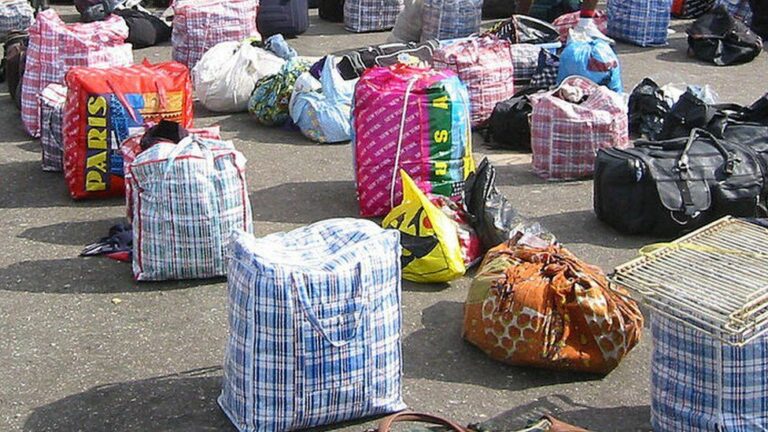
ON December 1, 2023, several Nigerian media platforms reported that the Federal Airports Authority of Nigeria (FAAN) had instituted a ban on the use of travel sacks, popularly known as ‘Ghana Must Go’ bags, by passengers at all airports across the nation.
This followed a circular allegedly issued by FAAN titled ‘Re: Prohibition of Usage Of Ghana Must Go,’ dated November 24 and reportedly signed by Henok Gizachew, the Manager of Airport Services.
Ghana-must-go bags are popular sac-like load carriers in Nigeria that come in different sizes and colours and are preferred by many travellers due to their durability and affordability.
According to the new reports, passengers were advised to forfeit its usage and instead, use cartons or something related to it to pack items for travelling.
Several media platforms including Arise News,Vanguardand BusinessDay newspapers misreported the statement as issuance of general issuance on the use of the bag in all airports across Nigeria.
Other news platforms have deleted the report from their websites; and due to its virality, we present the true story in this report for record.
THE CLAIM
FG bans ‘Ghana must go’ bags in all Nigerian airports.
Screenshot of the media report published by BusinessDay in Nigeria. INSERT: False verdict.
THE FINDINGS
Findings by FactCheckHub show that the claim is FALSE.
Contrary to what is being reported in some sections of the media, Ethiopian Airlines is the only organisation that imposes this regulation on its passengers; the Federal Airports Authority of Nigeria (FAAN) has not issued a mandate prohibiting “Ghana-must-go” baggage.
According to an accurate news report by The Punch, Ethiopian Airlines on November 24, 2023 sent a letter to the Regional Manager of FAAN expressly notifying them that passengers boarding Ethiopian Airlines flights from Nigeria will not be allowed to bring “Ghana-must-go” bags.
This restriction does not apply to other airlines that operate in Nigeria; it only affects passengers travelling on Ethiopian Airlines.
Meanwhile, the FAAN has clarified, in a post on X (formerly Twitter), that the directive was from Ethiopian Airlines and not the Nigerian government.
The agency also shared the original notice from the Ethiopian Airlines addressed to her “valued passengers”.
The statement read, “We would like to inform you of a restriction regarding the usage of irregularly shaped packages on Ethiopian Airlines flights. It is strictly prohibited to bring “Ghana must go” bags unless they are adequately packed in a carton or hardcover rectangular container.
“This restriction has been implemented due to the frequent occurrence of damages to conveyor belts at various airports, resulting in significant costs incurred by the airlines involved.
“We kindly request your cooperation in complying with this rule to ensure the smooth operation of our flights and to minimize any potential disruptions caused by damaged conveyor belts.”
The claim that the Nigerian government banned the use of the “Ghana Must Go” bags in all airports is FALSE; findings show that the directive is restricted to passengers of Ethiopian Airlines only.
THE Kogi State Police Command has confirmed that gunmen attacked the secretary of the state’s governorship election petition tribunal.
The Police said the gunmen carted away sensitive documents filed before the tribunal.
According to the Police, the tribunal’s secretary, David Mike, was attacked on Monday, December 4, in Lokoja, the state capital.
The state Police public relations officer, William Aya, said in a press statement on Wednesday that the attackers carted away all the petitions filed by five political parties at gunpoint.
The papers that were taken from Mike, according to the Police, included two record books and a bag that contained his personal belongings, along with petitions submitted by four political parties, namely the Action Alliance (AA), Action People’s Party (APP), Peoples Redemption Party (PRP), and Social Democratic Party (SDP).
According to the Police, the victims were on their way to the tribunal site at the state High court complex in Lokoja when the tragedy occurred in front of the Central Bank of Nigeria (CBN) building.
The Police added that Mike was in the company of Labode Apreala, confidential secretary, and Hassimu Adamu, assistant secretary when the incident occurred.
Mike and the two others reported the case. They said, “Just before the CBN at about 1320hrs, one SUV vehicle that had overtaken him (and) blocked his car with two other SUVs following behind.
“All of them surrounded and blocked him as he attempted to reverse. He saw about seven hooded men, all heavily armed and dressed in black attire, who shot severally into the air and dragged him and his two other colleagues out of their car, ransacked the car and made away with all the petition documents” the statement reads.
The Police command added that the state commissioner of Police, Onuoha Benthrand, had ordered a thorough and diligent investigation into the incident.
Meanwhile, the Police have advised the general public to avoid statements that might prejudice the ongoing investigation into the matter, even as the command appealed to anyone with useful information on the incident to provide the same to the command.
The ICIR reported that gunmen attacked the residence of the Independent National Electoral Commission (INEC) Resident Electoral Commissioner (REC) for Kogi state Hale Longpet on Friday, December 1.
According to a statement by INEC on its official X handle, the incident happened in the early hours of the day.
The INEC said the armed men who arrived around 3. 30 am engaged the security personnel in a gun duel for over 30 minutes until reinforcement arrived.
The INEC conducted an off-cycle election in the state on Saturday, November 11.
Opposition parties, civil society organisations, and Nigerians who are displeased with the conduct of the poll have continued to condemn the exercise and malpractices that allegedly characterised it.
The state is one of the eight states in Nigeria with off-season governorship polls. Others are Anambra, Imo, Bayelsa, Ekiti, Ondo, Edo and Osun
The INEC announced Usman Ododo as the election winner on Sunday, November 12.
The poll was held in 3,508 polling units spread across the 21 local government areas of the state.
In this report, the ICIR highlighted the major talking points from the election.
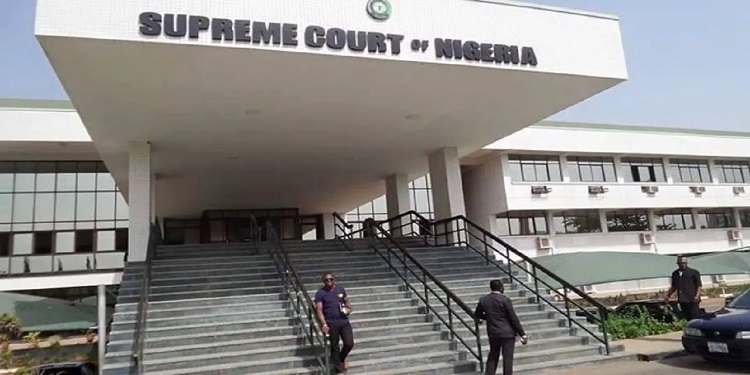
THE National Judicial Council (NJC) has recommended the appointment of 11 justices to the Supreme Court.
The council also recommended one justice of the Court of Appeal, six heads of courts and 26 other judicial officers to President Bola Tinubu for approval.
A statement by the apex court’s Director of Information, Soji Oye, said the recommendation was made at the 104th meeting of the council in Abuja on Wednesday, December 6.
According to the statement, the recommended candidates would be sworn in sequel to the approval of their recommendation by Tinubu and the subsequent confirmation of their appointment by the Senate.
In October, The ICIRreported concerns over a drop in Nigerian Supreme Court justices, coming short of the court’s full complement of 21 justices as stipulated in the Constitution.
The number had decreased to 10 after the retirement of a justice, Musa Dattijo Muhammad, on October 26, 2023.
However, with the appointment of the recommended candidates, the Supreme Court will have the full complement of 21 justices, as enshrined in the Constitution.
Below are the eleven (11) justices recommended by the NJC for the Supreme Court bench:
Justice Jummai Hannatu Sankey
Justice Chidiebere Nwaoma Uwa
Justice Chioma Egondu Nwosu-Iheme
Justice Haruna Simon Tsammani
Justice Moore Aseimo A. Adumein
Justice Obande Festus Ogbuinya
Justice Stephen Jonah Adah
Justice Habeeb Adewale O. Abiru
Justice Jamilu Yammama Tukur
Hon. Justice Abubakar Sadiq Umar
Justice Mohammed Baba Idris
The NJC recommended Mohammed Ahmed Ramat as the Court of Appeal Justice.
It also recommended candidates for various heads of courts across states, such as Taraba, Kebbi, Ogun, Zamfara, Nasarawa, Bayelsa, Kano and Oyo.
“The various heads of court recommended would also be sworn-in upon the approval of their appointment by their various state governors and subsequent confirmation of same by their respective state Houses of Assembly.”
MORE than 130 civilians have been killed in accidental airstrikes by the Nigerian military in 2023.
These fatalities were recorded during two separate airstrikes that occurred in different parts of the country.
At least 85 unarmed civilians were killed recently in an attack by the military on Tundun Biri village, Kaduna state. The villagers had been celebrating the Maulud Nabiyy (the birth of Prophet Muhammad) in the late hours of Sunday, December 3, when they were bombed.
The Nigerian Army took responsibility for the bombing, and according to the National Emergency Management Agency (NEMA), 85 corpses were recovered from the scene of the attack, as the search for others is still ongoing.
However, human rights organization Amnesty International stated that the number of people who died in the attack was as high as 120.
The organisation disclosed this in a statement via its official X handle, condemning the attack by the military and calling for investigations.
“Amnesty International strongly condemns air strikes by the Nigerian Army, launched on Tudun Biri village in Igabi LGA of Kaduna state. Over 120 civilians have been killed and dozens injured. Launching air raids is not a legitimate law enforcement method by anyone’s standard.
“The air strike on the community while holding a religious gathering on Sunday, December 2023, must be investigated. Such reckless use of deadly force is unlawful and lays bare the Nigerian military’s shocking disregard for the lives of those it supposedly exists to protect,” the statement partly read.
Reacting to the incident, in a statement, Chief of Army Staff (COAS) Taoreed Lagbaja described the attack as regrettable, adding that such attacks would be avoided in future.
“My assessment of that unfortunate incident of Sunday, December 3, 2023, is that it is grave, regrettable. We will do everything possible to prevent such an occurrence from happening again in the conduct of our operations going forward,” he said about one of the country’s deadliest military bombing accidents.
However, this is not the first time civilians have been killed in such a manner by the Nigerian military.
Barely 11 months before the Kaduna attack, civilians suspected to be herders returning from Benue state were killed in Nasarawa during a military airstrike.
The attack occurred on Tuesday, January 24, and according to a report by SBM Intelligence, at least 47 people died during the incident.
However, the police disclosed that only 27 corpses were recovered following the attack.
No justice for affected victims
After the airstrike in Nasarawa state, the Nigerian Air Force (NAF) repeatedly denied responsibility for the attack for several months.
Nearly six months later, NAF, however, accepted responsibility for the attack, although very little information was provided.
In June, Human Rights Watch condemned the lack of justice for victims of the airstrike and the delay in accepting responsibility by the NAF.
Although the Nigerian Army acted slightly differently from NAF by accepting responsibility a few days after the airstrike, the Defence Headquarters (DHQ) blamed the incident on terrorists who often hide within civilian communities.
He also stated that communities such as Tudun Biri were always expected to alert the military of their activities.
“These instructions are intended at enabling the military to distinguish between friendly and untoward activities,” Director of Defence Media Operations Edward Buba, disclosed in a statement on Tuesday, December 5.