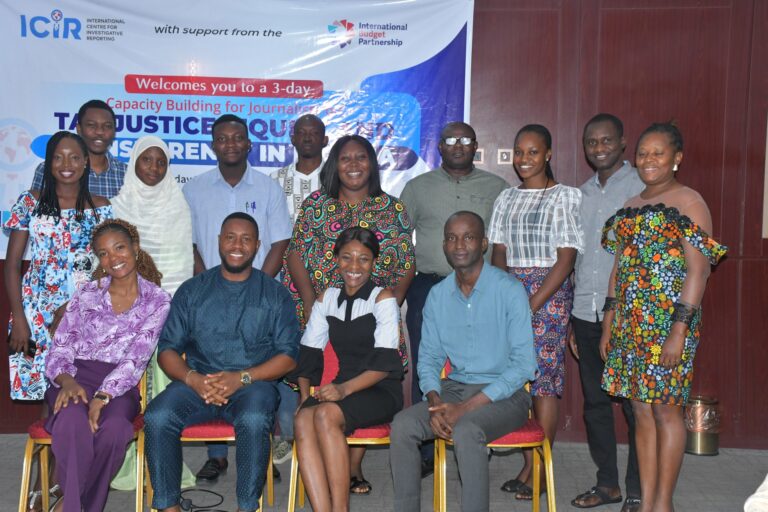
THE International Centre for Investigative Reporting (The ICIR) has concluded a three-day training for select journalists on Tax Justice, Equity, and Transparency Project.
The training which had participants drawn from Lagos, Kano, Taraba, and Cross Rivers State across print, electronic and digital media, was held in Abuja between Tuesday, December 5, and Thursday, December 7.
The project supported by the International Budget Partnership aims to enlighten Nigerians and stimulate discussions around tax issues using investigative and data-driven journalism as a tool in a manner that would promote tax equity and justice.
It was designed to build journalists’ capacity and enhance their skills in investigative reporting, using the Freedom of Information Act, reporting in hostile or unsafe environments, and sensitising journalists on safety and security, among others.
The Centre will also provide financial support for the selected journalists to undertake critical business investigative and data-driven reports on tax equity and multiplicity of taxation in the informal sector in Nigeria.
A participant interviewed by The ICIR, Busola Aro, who works with The Cable Newspapers in Lagos State, said the training would positively impact her future.
The Executive Director of The ICIR, Dayo Aiyetan, highlighted the importance of the training in his opening remarks and stressed its significance for journalists, stating that it provided them with the necessary skills to report on tax issues, tax equity and justice.
A cross-section of participants at the training
The organiser said in the last five years, the Centre had worked to build the journalists’ capacity to undertake investigative, data-driven reporting, thus strengthening accountability and engendering effective service delivery for citizens, particularly at the sub-regional level.
The Katsina state government has waived the Right of Way (RoW) charges for telecommunication firms despite the decline in tax revenue reported by the state in 2022.
Checks by The ICIR on the state’s internally generated revenue (IGR) showed that its tax revenue declined to N10.37 billion in 2022 from N11.33 billion in 2021, representing an N964.20 million or 8.51 per cent drop .
The ICIR reports that RoW charges are expected to be paid by telecommunication firms before laying their optic fibre in any part of the state. It represents a tax the telecom companies pay to state governments to bury cables that transport internet traffic beneath roads and install other telecommunications equipment.
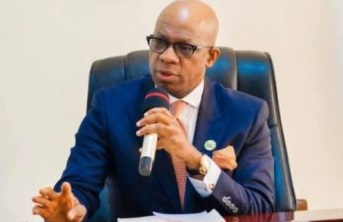
In a statement on Friday, December 8, Ibrahim Kaula, the chief press secretary to the state Governor, Dikko Radda, said the waiver was aimed at wooing telecom investors.
He disclosed that the governor had signed an executive order titled, ‘Right of Way (RoW) charges Regulation Order 2023,’ to that effect on the same day.
Kaula quoted that the order was promulgated to exercise the powers conferred upon the governor by Section (5)2 of the Constitution of the Federal Republic of Nigeria 1999 (as amended).
“This order may be cited as the Right of Way (RoW) charges (Regulation) Order and shall be deemed to come into effect on December 8, 2023.
“From the commencement of the order, charges on Right of Way (RoW) throughout the state shall be free of charge per linear metre,” Kaula said.
A RoW charge is a levy paid to state governments for the laying of optic fibre by telecom operators, he avvered.
He noted that the RoW fixed charge of the Nigeria Communications Commission (NCC) is N145 per linear meter.
Noting that other states charged even above that amount, Kaula said Radda’s latest order made the service accessible at no cost in Katsina State.
“I have no doubt that the move will soon attract investments for Katsina, especially in the areas of ICT and internet development,” Kaula added.
THE Federal High Court in Abuja has granted former Attorney General of the Federation and Minister of Justice, Mohammed Adoke, permission to travel to the United Arab Emirates (UAE) to visit his family.
Adoke is on trial with Aliyu Abubakar, a property developer, for alleged money laundering amounting to N300 million.
Adoke’s lawyer, Kanu Agabi, invoked sections 36 and 37 of the 1999 Constitution, requesting permission for the ex-AGF to travel and meet his family.
He explained that he had been unable to visit his family in the UAE since the start of the trial. Agabi argued that spending time with his family was crucial for Adoke’s physical and mental health and urged the court to grant his request.
He emphasized that Adoke had consistently attended all court proceedings since being granted bail and showed no intention to flee.
In his ruling, Inyang Ekwo acknowledged Adoke’s consistent court attendance and lack of flight risk and granted his travel request.
The judge ordered the release of Adoke’s passport, deposited at the court registry, to facilitate his travel to the UAE.
The ICIRreported that the EFCC accused Adoke, Attorney-General and Minister of Justice, from April 6, 2010- May 29, 2015, under former President Goodluck Jonathan, of making a cash payment of over two million ($2,267,400) to Unity Bank in 2013, violating money laundering laws.
The anti-graft agency claimed he exchanged the money at a bureau de change in Abuja as part of his share of the controversial $1.1 billion Malabu Oil deal.
According to the charge, Adoke collected the sum of $2,267,400 on September 16, 2013, and immediately got money changers to convert it to naira.
Based on the prevailing exchange rate, Adoke made N345.2 million after converting the funds. He subsequently deposited the money into a Unity Bank account to offset an outstanding overdraft of N300 million.
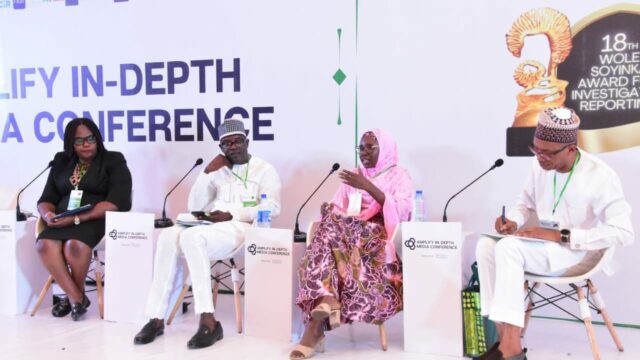
STAKEHOLDERS have recommended solutions to media policies, technology innovation, and sustainability challenges.
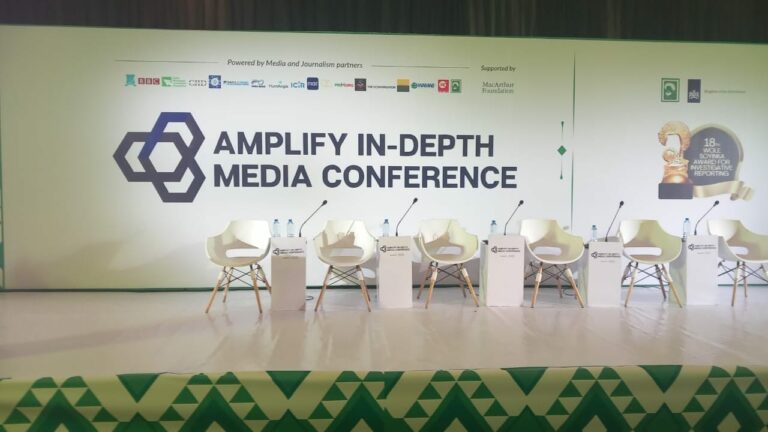
They made the recommendation at the Amplify In-Depth Media Conference organised by the media coalitions, which includes The International Centre for Investigative Reporting, (The ICIR), The Wole Soyinka Centre for Investigative Journalism (WSCIJ), on Friday, December 8, in Abuja.
The two-day conference has participants comprising veteran, young, and student journalists and Mass Communication lecturers nationwide.
In his keynote address at the event titled “From Attention to Intimacy: Journalism in the Age of Artificial Intelligence,” Premium Times founder Dapo Olorunyomi urged Nigerian media to investigate how independent journalism affects ownership, technology, sustainability, and policy in the digital age.
He added that journalism and democracy are inseparable.
“If we are going to save our democracy, we must make sure fact-checking protocols become part of us.
“If you will be called a journalist, first and foremost, your credentials must be that you are truth-telling,” he stated.
He reminded journalists at the conference that democracy would not exist if accountability journalism did not.
Olorunyomi said that without accountability in democracy, journalism would not endure.
He reiterated that journalism must be an enterprise in truth-telling.
Dapo Olorunyomi, Keynote speaker at AIM Conference 2023.
Motunrayo Alaka, Executive Director of Wole Soyinka Centre for Investigative Journalism (WSCIJ) and Deji Adekunle, Programme Director MDIF/Nigeria Media Innovation Programme (NAMIP), delivered the opening remark.
They noted that the conference was organised with the MacArthur Foundation and eighteen media and journalism (MAJ) Cohort organisations to deliberate on the primary concerns influencing media freedom and how journalism would help Nigeria maintain a strong democracy.
Discussion on the keynote address
Speakers suggested solutions to media challenges amid dwindling resources in a session centred around the keynote address moderated.
The panellists urged media organisations to reflect and develop more initiatives to bolster their independence and financial security.
The editor-in-chief of the Daily Trust Newspaper, Naziru Abubakar, outlined how his organisation was testing out fresh financial models with the help of contributors and partners because traditional revenue sources were not generating enough to pay for staff salaries alone, let alone other costs.
He added that the media’s most difficult challenge, either locally or globally, was financial sustainability.
“Legacy media needs to find so many ways to fund their newspapers,” he suggested.
According to Deji Adekunle, MDIF/Nigeria Media Innovation Program (NAMPIP) programme director, there are still hurdles to scale to achieve accountability journalism.
On media regulations, Adekunle said, “We don’t have to focus on regulations that will come; we should look at regulations that exist. The policy framework should be about press freedom.”
Media regulations and independence
In a session on media regulations and independence moderated by Sharon Ijasan of TVC News, Lanre Arogundade of the International Press Centre (IPC) said press freedom should be about the people.
“Media regulatory bodies must be interested in the economy of the media. The media in Nigeria has never been averse to being regulated,” he stated.
Arogundade outlined how the Nigerian press must adhere to the Nigerian Union of Journalists Code of Ethics to fulfil its role as the country’s watchdog.
On the role of the National Broadcasting Commission (NBC) in regulating media houses, the Director of Broadcast Monitoring, NBC, Franca Aiyetan, said the commission had done a lot to hold the space.
Cross section of participants at the event @AIMConference 2023.
She said synergy was important in carrying out their mandate as regulators.
“Every civilised society is concerned about what happened in its digital space,” she said
Sharing experience in investigative journalism
Deji Badmus, founder of TV360, and Juliana Francis, deputy editor of The Eagle Online, ehared their experience in investigative journalism.
Badmus said the passion to change society and hold government accountable drives investigative journalism.
He listed the effects of investigations and explained that notable journalistic reporting led to the first restoration of the Third Mainland Bridge and the refurbishment of the Police College in Lagos.
According to Badmus, investigative journalism will thrive only in a society where the reporter does not need to worry about where the next meal will come from.
Francis urged journalists to intentionally look for mentors who know what investigative journalism is all about.
“Write to make impacts and not to win awards,” she said.
Media ownership structure and independence
Speaking in a session on media ownership structure and independence, Oluchi Adams, managing director of AD4TVRadio, said politicians had access to the media because the media is capital-intensive.
Yusuf Alli, the Managing Editor of Nothern operations at The Nation Newspaper, said mitigating media ownership and managing owners was possible.
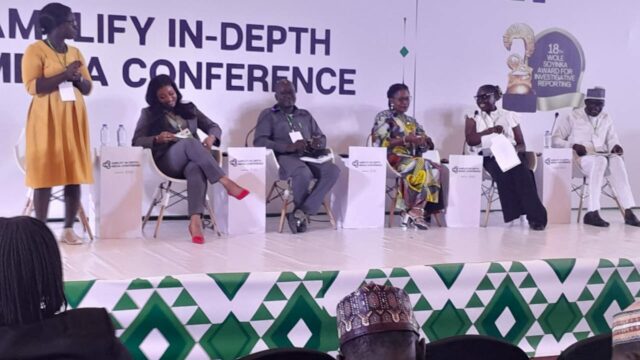
Panelists at the session on ownership structure and media independence. #AIMConference
“Ownership of the media should not be magnified. It is not peculiar to Nigeria; as far as you have the idea, someone else has the money.
“How do you mitigate? You need to tell the truth to the powers that be. Ownership will always be there,” he stated.
Regarding some media houses not paying their workers, Alli said, “If you are in an organisation and you are not paid, get out. Don’t cheapen yourself by going to work every day on an empty stomach.”
In her address, the Editor of the International Centre For Investigative Reporting (ICIR), Victoria Bamas, said the organisation’s position on every grant it received was that the fund would not affect its editorial independence.
“At the end of the day, the important thing for a non-profit is to have editorial independence,” she submitted.
According to Bamas, The ICIR utilises various financial sources to reduce outside influence on its operations.
She added that the ICIR would not accept funds that would compromise its independence and that it included funders’ names in reports to promote transparency.
Sustaining media independence
On sustaining media independence, Umar Pate, a professor and Vice-Chancellor of the Federal University of Kashere, Gombe state, said economic independence determined editorial independence.
He said stakeholders were trying through a curriculum review to address challenges facing the media, such as verifiability issues and values.
“When you see the work of a journalist, you will know, and when you see the work of a quack claiming to be a journalist, you will know.
“In the new curriculum, we introduced a new course, Media Economics. This is a new course,” Pate said.
Pate submitted that a new generation of journalists would have unique skills, adding that more skills were needed for every journalist.
He noted that investigative journalism was expensive and called for regular training for Mass Communication lecturers.
Theophilus Abbah, Director of Daily Trust Foundation, harped on the need for media houses to invest in research.
He said students should be taught how to draft and implement business plans.
“The content you are putting out must have so much value that people will be willing to pay for it.”
Similarly, Sharon Ijasan of TVC said giving hope to the next generation was important. She explained how she combined teaching journalism students at a university (to share her knowledge with student journalists) with her work at the TVC.
Gatekeeping for journalism in a digital age
In another session moderated by Azubuike Ishiekwene, Editor-in-chief of Leadership Newspaper, participants agreed that gatekeeping in journalism was relevant.
Ngozi Okpara, a lecturer at Pan-Atlantic University, noted that the ethical nature of journalism made it essential in the modern era.
Alli of The Nation said the media ecosystem was polluted and riotous. “We need gatekeeping because we need sanity in the space,” he added.
Panellists at the session on gatekeeping for journalism in a digital age #AIMConference
Lami Sadiq, Head of Investigations at Daily Trust, urged all journalists to have the necessary skill sets to check all facts independently.
“While speed is important, you have to understand that it is important to fact-check your information,” Sadiq advised.
Samson Folarin, Features Editor at Punch Newspaper, said media houses must prioritise accuracy and train journalists to be resourceful.
Goodwill messages
There were goodwill messages from Amina Salihu, Deputy Director of MacArthur Foundation.
She lauded the efforts of the WSCIJ and the MAJ Cohort in fostering democracy through the media.
According to Salihu, the media are responsible for ensuring accountability and openness at all governmental levels through their reporting.
In her goodwill message, Dina Sabi, Second Secretary of the Netherlands Embassy in Nigeria, said honesty and freedom of the press were required for a functional society.
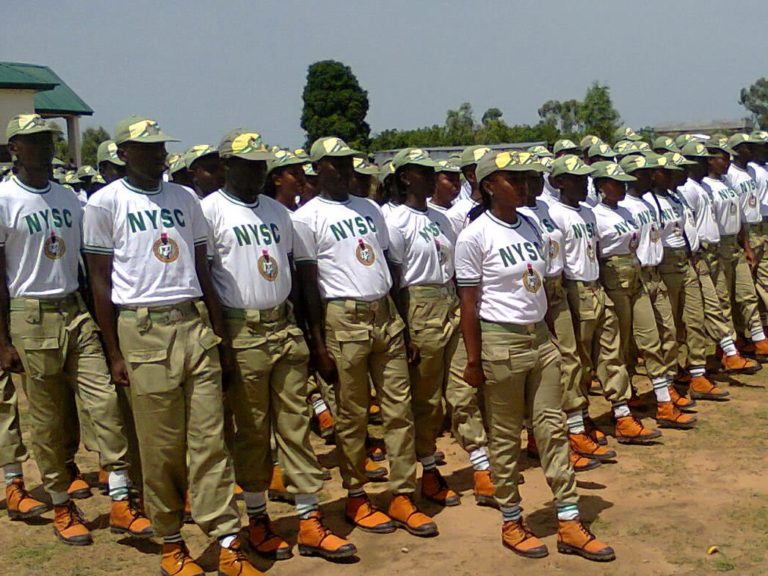
THE National Youth Service Corps (NYSC) has confirmed the release of two corps members kidnapped more than two months ago in Zamfara state.
This was disclosed by NYSC director of press and public relations Eddy Megwa on Friday, December 8, while speaking on Channels TV’s magazine programme Sunrise Daily.
He said efforts were on to ensure the safe release of the remaining four corps members with the kidnappers.
Eleven prospective corps members from Akwa Ibom state were kidnapped on August 17 while travelling to the camp in Zamfara state.
They were abducted while travelling in an Akwa Ibom Transport Company (AKTC) bus from Uyo, Akwa Ibom, to Sokoto state to carry out the mandatory one-year national service.
Megwa said out of the eleven abducted, three escaped shortly after they were held, leaving eight and the driver who were taken into the bush.
He added that one person was rescued on September 1, another regained freedom on October 20, and two were rescued on Thursday, December 7.
He said four others are still awaiting rescue.
“Yesterday, we were all excited to hear that two of our prospective corps members, who were kidnapped in the Zamfara saga, were rescued by the military.
“It’s a thing to be happy; it’s hope for all of us and the family. Even the remaining four—two girls and two boys—will still be rescued very soon.
“It’s been worrisome for us in the scheme over this number of months that these young ones that are coming up to serve their fatherland were kidnapped,” Megwa stated.
He claimed that the freed corps members were already getting medical care and would be reunited with their families and continue their national service once they recover.
Megwa reiterated the NYSC’s commitment to securing the safe release of the four hostages whom the kidnappers still held.
He claimed that the director-general of NYSC had promised the country that he would do all it required to ensure that the corps members were rescued unharmed.
He advised travelling corps members to take precautions, stay away from night travel, and get some rest after 6 p.m. to reduce their chance of being victims of unforeseen circumstances.
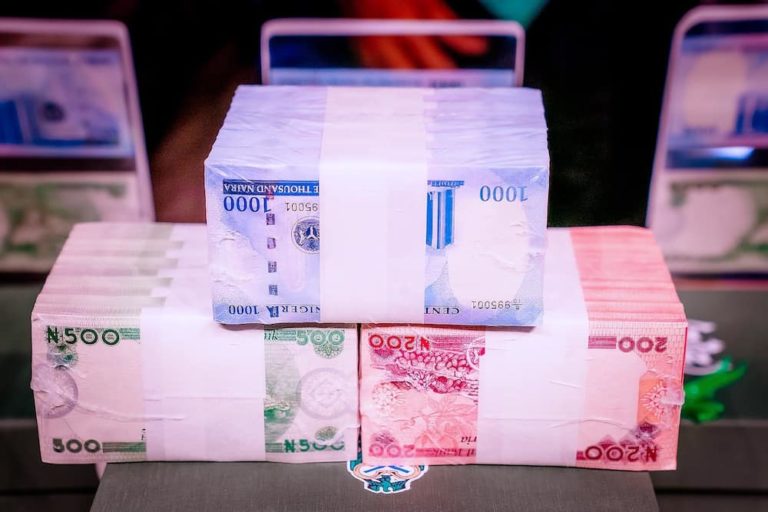
THE Central Bank of Nigeria (CBN), on Friday, December 8, confirmed that fake naira notes were circulating nationwide, alerting the public to beware of their transactions.
The apex bank raised the alarm in a statement titled, ‘Beware of Counterfeit Naira Banknotes in Circulation,’ and signed by its acting director of Corporate Communications, Sidi Hakama.
“The attention of the Central Bank of Nigeria (CBN) has been drawn to the circulation of counterfeit banknotes, especially higher denominations, by some individuals for transactions in food markets and other commercial centres across major cities in the country,” CBN stated.
Quoting Section 20(4) of the CBN Act (2007) as amended, the apex bank said, “It shall be an offence punishable by a term of imprisonment of not less than five years for any person to falsify, make or counterfeit any bank note or coin issued by the Bank which is legal tender in Nigeria.
“The CBN is in constant collaboration with relevant security and financial agencies to confiscate fake naira banknotes, arrest and prosecute counterfeiters. Members of the public are also encouraged to report anyone suspected of having counterfeit naira notes to the nearest Police station, branch of the Central Bank of Nigeria or via contactcbn@cbn.gov.ng,” CBN said.
The ICIRreported that the apex bank introduced new naira notes of N200, N500 and N1,000 to phase out the old denominations but that the masses widely criticised the redesign policy.
Most Nigerians believed the new notes unveiled by former President Muhammadu Buhari and embattled former CBN governor Godwin Emefiele in November 2022 into circulation only changed colours but retained their old features.
Buhari and the former CBN governor had argued that the new notes were fortified with security features that made them difficult to counterfeit and that it would be difficult to produce counterfeits of the newly redesigned banknotes, but most Nigerians doubted them.
However, about one year later, the apex bank was already worried and urging the deposit money banks, financial houses, bureau de change, and the general public to be more vigilant and take the necessary precautionary measures to curtail the acceptance and distribution of counterfeit notes.
“Furthermore, the general public is encouraged to embrace alternative modes of payment, e-channels, for day-to-day transactions to mitigate the risk of spreading counterfeit banknotes,” CBN added.
OGUN state government has offered N50 million to anyone who could provide information that would lead to the arrest of the murderers of the state’s immediate past director of finance, Taiwo Oyekanmi.
This was contained in a statement by the state government on Friday, December 8.
“The Ogun state government has announced a reward of N50 million for anyone with information that could lead to the arrest of the killers of the state’s director of finance and administration, Mr. Taiwo Oyekanmi, on 30th November 2023, in Abeokuta. Information provided would be treated with utmost confidentiality,” the statement read.
On Wednesday, November 29, the state commissioner of Police, Abiodun Alamutu, confirmed that Oyekanmi was killed while returning from the bank by gunmen who ambushed a bullion van that he had been accompanying.
The bullion van was said to have been carrying about N112 million naira, and the assailants carted away an undisclosed sum.
The Director had been rushed to the state General Hospital in Ijaye, along with other aides who sustained gunshot injuries during the attack, but he died shortly after.
Alamatu had later stated that the attack on the deceased was likely premeditated.
Based on the nature of the attack, Alamatu disclosed that the assailants must have received prior information that Oyekanmi was headed for the bank to make withdrawals.
“From the information we have, it is obvious that it was premeditated. It was an in-house (thing). We have this feeling because how did they know that they would need a hammer to break the receptacle?
“And they must have been lurking around the bank area, waiting for the man, or he must have been trailed to that area, and they must have had information that he was going to take a large amount of money from the bank. So, we are working on it,” he said.
THE Logan Science Journalism Programme at the University of Chicago’s Marine Biological Laboratory is seeking entries for its two intense seminars for journalists keen on learning basic biomedical and environmental research methods.
The programme is scheduled for May 13–23, 2024, in Woods Hole, Massachusetts.
Science and health journalists are the target audience for the biomedical research course, while environmental journalists are the intended participants for the environmental hands-on research course.
Journalists with at least three years of experience covering science and the environment are eligible to apply for this programme.
The fellowship covers course fees, room, board and travel.
The deadline for the submission of application is January 25, 2024. Interested fellows can apply here
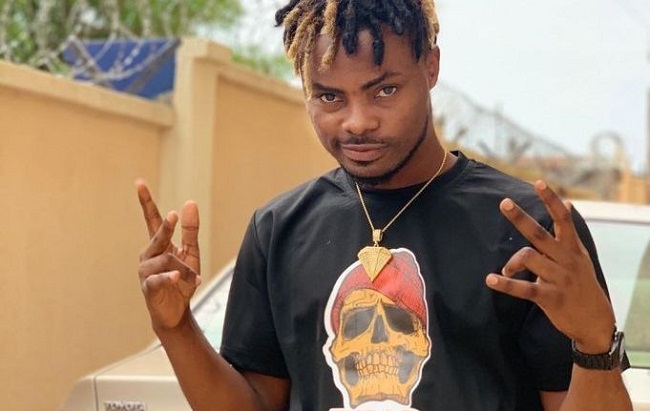
NIGERIAN rapper, Oladipupo Oladimeji, popularly known as Oladips, has apologised for his fake death claim.
In an interview with Naija FM on Thursday, December 7, the rapper took full responsibility for the announcement and apologised for the confusion and distress caused by the alarm.
“I apologise to Nigerians and my followers. I will never play with people’s emotions like that. It was never a prank. I am sorry for the confusion, distress and false alarm. I take full responsibility,” he said.
In November, the rapper’s team posted on his Instagram page that he passed on after being rushed to the hospital.
“We are saddened to inform the general public that Oladipupo Olabode Oladimeji, aka Oladips, passed away yesterday, November 14, Tuesday evening, at exactly 10:14pm. We are still in shock as we speak.
“For over two years, he has kept his battles within himself. His body is now with his family, and the funeral service will be announced as soon as it is concluded. The family asked that we respect their privacy in this trying time. May God give us all the fortitude to bear this great loss. (Amen),” the statement read.
Weeks after the announcement, another rapper, Fakoya Oluwadamilare, fondly called Qdot, revealed on social media that the rapper was alive.
Following Qdot’s disclosure, Oladips came forth with video evidence to indicate that he was alive and well, fueling social media speculation that he faked his death to promote his new album.
During the interview with Naija FM, Oladips said would have the right people around him to avoid more problems such as what happened.
“From now on, I will make sure I’m surrounded by professionals because I feel like that’s where the problem started from…
“It got to a point where I didn’t even have a manager again. It was just my boys and me, so I feel like that’s where the problem came from. Right now, I’m trying to select the right people and be sure they are professionals,” he added.
The rapper’s assistant, Abdulrasheed Opeyemi, had confirmed that Oladips died for three days before resurrecting.
Opeyemi had also disclosed that Oladip’s manager was sacked after the incident.
In 2019, Oladips announced his exit from LRR/ Edge Records, owned by Nigerian rapper Remilekun Safaru, aka Reminisce, after which he launched his label, Disciples Music.
THE Nigeria Police Force (NPF) has confirmed the arrest of its officials caught in a viral video demanding money from a female Dutch rider in Oyo state.
This was disclosed by the Force Public Relations Officer (FPRO) Muyiwa Adejobi in a statement on Friday, December 8.
Describing their actions as punishable and unacceptable, Adejobi noted that the Oyo State Commissioner of Police Adebola Ayinde Hamzat has commenced disciplinary procedure on the issue.
The police authority has condemned the act and ordered that the men and their supervising Divisional Police Officer be sanctioned accordingly.
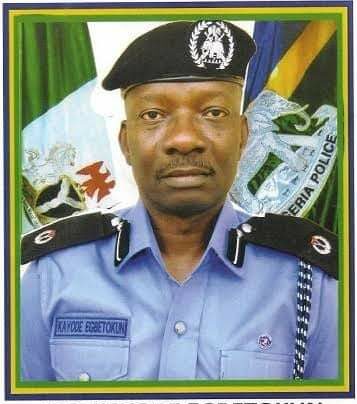
“Such an act is unpolice and would never be tolerated in any manner. The Force would however intensify efforts in commencing the reorientation programme initiated by the Inspector-General of Police, IGP Kayode Adeolu Egbetokun, Ph.D, NPM, for officers and men of the Force to address issues of this nature and reposition the Nigeria Police Force,” Adejobi noted.
Two police officers were captured in a video that went viral on social media, demanding money from a foreign rider who was on her way to Abuja via a motorcycle.
The biker had asked why the policemen were requesting money of her, but the officers only intensified their demands.
The Oyo State Police Command also expressed regret at the actions of the policemen and encouraged Nigerians to report such misconduct.
“Viral video portraying the regrettable misconduct of certain policemen along Moniya-Iseyin Road has been accessed. All those involved have been apprehended for immediate disciplinary actions. Supervision will be increased. Please report any misconduct to Xsquad on +2348023535470,” the Command disclosed via its official X handle.