Home Blog Page 721

Police mum over gunmen attack on Sunshine Stars in Edo

0

THE Edo state Police command has been silent over gunmen’s attack on a Nigeria Premier League Football (NPFL) club side, Sunshine Stars of Akure, Ondo state.

The ICIR reported how the club was attacked by gunmen on Thursday, December 7, along Ore-Benin Expressway, Edo state, on its way to honour its match day 13 fixture against Bendel Insurance of Benin.

According to the club’s media officer, Michael Akintunde, in a press statement he signed and mailed to journalists, one of the club’s ball boys was shot while others were injured.

He said it took the intervention of Federal Road Safety Corps (FRSC) officers to rescue the club’s injured officials and players to a nearby hospital.

“It saddens our hearts to inform Nigerians, especially football lovers, that our team was attacked a few minutes ago along Ore-Benin Expressway to honour an Elite League tie, against Insurance of Benin, scheduled for this weekend.

“Our ball boy was shot in the horrible attack. Our team manager and other club officials, including players,, are seriously injured,” the statement read.

Although the club’s players and officials received support from the Edo state’s Governor Godwin Obaseki, who offered to clear the bill for the medical treatment of all those involved in the unfortunate incident, the state Police command has not reacted to the attack on the team.

On the day the attack took place, The ICIR contacted the state Police command public relations officer, Chidi Nwabuze, a superintendent of Police. He said he was not aware of the incident.

“My friend. I am far away from Abuja on an official assignment. But I have not seen or heard of such a report. You said Ore-Benin Road, perhaps, is not within our jurisdiction. Thank you,” he responded via SMS.

The following day, after the news went viral, The ICIR contacted the PPRO via text to confirm if the Police had received the attack details and what action they had taken.

As of the time of filing this report on Sunday, December 10, he had yet to respond to the incident.


Stakeholders recommend collaboration, innovation for media sustainability

0

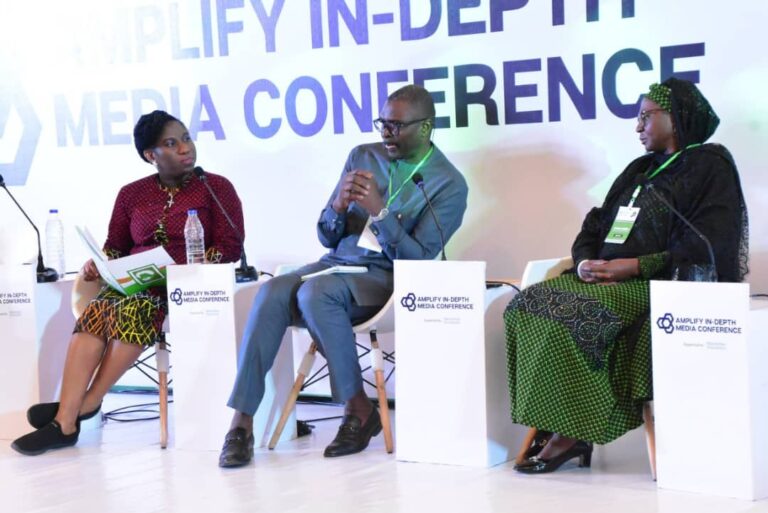
MEDIA stakeholders have recommended that newsrooms in Nigeria embrace collaboration, innovation and ethical journalism for the sustainability of the industry.

They said this on Saturday, December 9, at the two-day Amplify In-Depth Media  Conference, organised by a group of media organisations, including The International Centre for Investigative Reporting (The ICIR), Woke Soyinka Centre for Investigative Reporting (WSCIJ), and supported by the Mac Arthur Foundation.

The ICIR executive director Dayo Aiyetan, a panelist during one of the sessions, said critical and ethical journalism were key determining factors in ensuring media sustainability.

“Historically, journalism is about critical reporting. The foundation of any journalism is ethics, and I say that around the world, there is a resurgence. In today’s world of fake news, the post-truth era and all that, there is a crisis of confidence, and trust in society.

So it is those media organisations that have their foundation on critical reporting, ethics that will survive,” he said.

He also noted that ethical journalism should be treated as a business to address the issue of financial sustainability within the industry.

“The opportunities for financial sustainability are limited. They have been explored by others abroad, the New York Times, for example, and the Washington Post. They don’t have problems with resources, but it doesn’t come on a platter of gold. You have to work at it. And so, that is why I think that we have to see media work as a business and see our news as a product to sell.”

Noting that restoring public trust in the media was crucial, the vice president of Africa Luminate Group, Toyin Akinniyi, also a panelist, urged the media to put more effort in demanding press freedom.

She said the lack of press freedom in society contributed to the sustainability problem, as, according to him, intimidating journalists makes it impossible for the media businesses to thrive.

“I think the media needs to do more agenda setting for situating the media’s role within a democracy to employ more creative ways to present itself to the public, to restore and rebuild the trust that it desperately needs now.

“We’ve talked a lot about dwindling funding and all of that as a result of social media and the new ways of media distribution. But I think what else we should be looking at is how to restore the public trust in the media,” she added.

She encouraged media organisations to continue exploring collaborations created through donors even after funding ends.

“A funding cycle can end, but the collaborations they have facilitated should not end. I think it behoves media institutions and others within the media ecosystem to ensure that we explore those collaborations and what they can bring,” Akinniyi noted.

Editor of the British Broadcasting Corporation (BBC) Jimeh Saleh also harped on collaboration and the need for media organisations to sustain partnerships beyond funding cycles.

He stated that investigative reporting could be carried out in local languages to create a wider audience, strengthening the fight against corruption and creating more room for funding.

Deputy Director of the MacArthur Foundation, Amina Salihu, urged civil society organisations (CSOs) and community members to amplify impactful reports to achieve media sustainability.

“It is hard to be the one to take the courage, do those hard stories and still have to amplify the stories. Civil society has a role to play. The community whose life story it is also needs to step into the frame and do their part to amplify the story and demand legal action,” she said.

Road crashes killed 35, injured 270 in Anambra in 11 months – FRSC

0

THE Federal Road Safety Corps (FRSC) in Anambra state said it reported 97 road crashes between January and November this year, resulting in 35 deaths and 270 injuries.

The state sector commander of the FRSC, Adeoye Irelewuyi, released the statistics on Saturday, December 9, stating that the accidents involved 820 persons.

According to Irelewuyi, the statistics showed significant improvement and reduction compared to the 2022 records.

“Looking at our activities from January to November 30, we recorded 97 road crashes which involved 820 persons. Twenty-five of the crashes were fatal, claiming the lives of 35 persons and 270 persons injured.

“There is a significant reduction when compared with the 2022 record where we recorded 132 road crashes involving 1,048 persons, 42 of which were fatal, claiming the lives of 64 persons and injuring 306 others.”

The corps also arrested 1,953 offenders in 2,119 offences and impounded 332 vehicles.

The sector commander also noted an improvement in the 2023 figures compared to 2022.

It logged 1,381 offenders arrested for 1,493 offences and impounded 382 vehicles in 2022.

Irelewuyi also noted that the corps would commence Operation Zero Tolerance to Road Traffic Crash from 15 December to 15 January 2024 to ensure a free traffic flow during the yuletide.

According to him, 1,000 personnel, including regular and special marshals, would be deployed across the state to ensure robust traffic management, enforcement and control.

He said the operation would be carried out in partnership with sister agencies, the media, the Federal Ministry of Works, the Anambra State Ministry of Transport and the Traffic Management Agency.

“We are discussing with the Federal Ministry of Works on the possibility of some emergency repairs of critical portions of the expressway along the Onitsha-Owerri road, Bridgehead and other points.

“We received the delivery of a brand new 70-ton Tow truck (juggernaut) from our national headquarters to ensure prompt response and removal of obstructions and reduce gridlock.

“These are part of our strategies to ensure safe travels within Anambra during this season. We urge motorists to drive safely to arrive alive and to remember that only the living celebrate,” he said.


CBN alerts Nigerians over counterfeit Naira notes in circulation

0

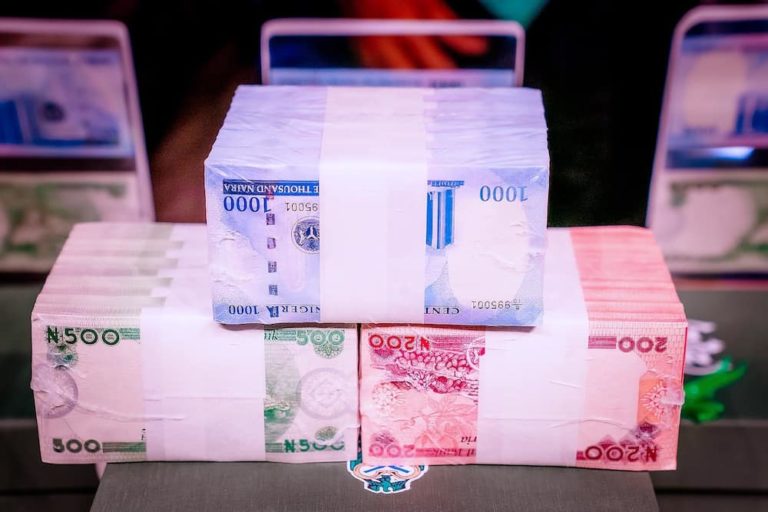
AMID concerns of rationing of Naira notes to customers by most commercial banks, the Central Bank of Nigeria (CBN) has cautioned Nigerians over counterfeit Naira notes in circulation.

The CBN on Friday, December 8, 2023, officially drew attention to the circulation of “counterfeit banknotes, especially higher denominations, by some individuals for transactions in food markets and other commercial centres across major cities in the country.”

The apex bank gave the warning in a statement titled:”Beware of Counterfeit Naira Banknotes in Circulation.”

The Apex bank’s Acting Director, Corporate Communications, Sidi Ali Hakama, in the  statement, warned offenders, with section 20(4) of the CBN Act (2007) as amended, which states that:”It shall be an offence punishable by a term of imprisonment of not less than 5 years for any person to falsify, make or counterfeit any bank note or coin issued by the Bank which is legal tender in Nigeria.”

“The CBN is in constant collaboration with relevant security and financial agencies to confiscate fake Naira banknotes, arrest and prosecute counterfeiters. Members of the public are also encouraged to report anyone suspected of having counterfeit naira notes to the nearest police station, branch of the Central Bank of Nigeria or via,”it said.

Meanwhile, all Deposit Money Banks, Financial Houses and Bureau de Change(BDCs) and the general public are enjoined to be more vigilant and take all necessary precautionary measures to curtail the acceptance and distribution of counterfeit notes.

“Furthermore, the general public is encouraged to embrace alternative modes of payment, echannels, for day-to-day transactions to mitigate the risk of spreading counterfeit banknotes,” the statement added.


ICIR partners AE-FUNAI, Coal City University on countering misinformation

THE International Centre for Investigative Reporting (ICIR) has partnered with the Coal City University, Enugu and AE-FUNAI (Alex Ekwueme Federal University, Ndufu- Alike, Ikwo) on countering misinformation and promoting media literacy.

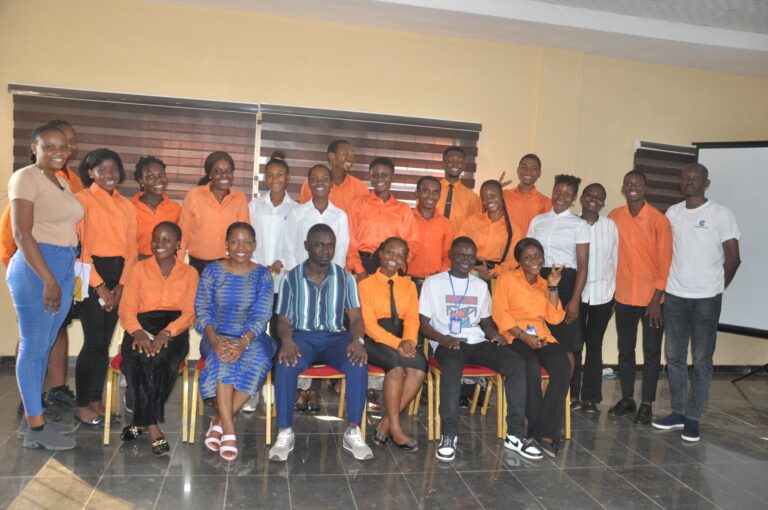
The partnership resulted in a two-day training for the institutions’ students from November 22 to 23 on the “Countering Misinformation and Promoting Media Literacy” project.

It aims to reduce the dissemination and impact of misinformation in Nigeria by promoting media literacy and responsible information sharing among citizens.

The German Embassy in Abuja supports the project.

Students were given a thorough step-by-step guide on combatting false news, identifying phishing websites, and verifying images and videos.

They were also taught how to write pitches, use OSINT tools, and archive claims online, among others, at the training held within the schools’ premises.

The ICIR editor, Bamas Victoria, who headed the facilitators, explained what could be said to be misinformation, disinformation, and malinformation. She also stressed the need to cross-check sources cited in a report.

The seminar emphasized the need to identify false news circulated on various platforms and how to fact-check using the tools available.

The ICIR team, led by The ICIR Editor, Victoria Bamas, met with Alex Ekwueme Federal University, Ebonyi State’s management for The ICIR’s “Countering Misinformation and Promoting Media Literacy” project.

They were received by the university’s vice chancellor.

TheICIR team during the courtesy visit to the VC AE-FUNAI

In his speech, the Vice Chancellor, Professor Sunday Elom, represented by Deputy Vice-Chancellor Professor Ezeoha Abel, emphasised the university’s dedication to improving students’ educational experiences.

He conveyed the university’s unwavering support for the students’ educational journey and extended his sincere gratitude for being chosen as one of the 12 universities in Nigeria to take part in The ICIR’s Countering Misinformation and Promoting Media Literacy project.

Some of the students interviewed said the seminar taught them not to be purveyors of false news and to always check sources of information obtained on social media and other platforms.

Students of Alex Ekwueme Federal University, Ebonyi during a session

Facilitators at AE-FUNAI include Victoria Bamas, Editor of the ICIR, researcher and fact-checker at Dubawa, Silas Jonathan, and social media manager Shehu Olayinka.

At Coal City University, Enugu, The ICIR team, led by the FactCheckHub Editor, Opeyemi Kehinde, met with the management of Coal City University in Enugu for The ICIR’s “Countering Misinformation and Promoting Media Literacy” project.

TheICIR team during the courtesy visit to the VC of Coal City University, Enugu

The university’s Vice-Chancellor received them.

In his speech, the Vice Chancellor, Professor Afam Icha Ituma, emphasised the university’s commitment to enhancing the educational experience of its students.

He expressed profound gratitude for being selected as one of the 12 universities in Nigeria to participate in #TheICIR’s Countering Misinformation and Promoting Media Literacy project and reiterated the university’s full support for the students’ learning journey.

Some students who shared their experiences after the training noted that the seminar taught them not to be purveyors of false news and always to check sources of information obtained on social media and other platforms.

Students of the University of Lagos during a session
Students of Coal City University, Enugu during a session

Facilitators at Coal City University include FactCheckHub Editor Opeyemi Kehinde, researcher at Dubawa, Temilade Onilede, and social media management expert Esther Ilesanmi.

On October 30 and November 8, The ICIR reported a similar partnership and training at the  Federal University Lokoja, Kogi State, Hassan Usman Polytechnic, Katsina State, Adekunle Ajasin University, Akungba-Akoko, Ondo State, American University of Nigeria (AUN) in Yola, Adamawa state, University of Calabar, University of Lagos and  Federal University of Kashere, Gombe state.

COP28: OPEC, AEC oppose Western-driven anti-fossil fuels policy

0

THE Organisation of Petroleum Exporting Countries (OPEC) and the African Energy Chamber (AEC) have called on African countries to reject any anti-fossil fuel policy being pushed by developed countries and fiercely defend the role of oil and gas.

The OPEC and AEC made the call against the backdrop of the conversations at the 2023 United Nations Climate Change Conference (UNFCCC) COP28 in Dubai, United Arab Emirates (UAE), which started on November 30 and would end on December 12, 2023.

Developed countries are pushing their views for an anti-fossil fuel energy transition that does not consider the needs of developing countries like in the African continent at the conference.

If endorsed, this approach will cause detrimental impacts on Africa’s economies, AEC said on Saturday, December 9, urging African countries to reject any anti-fossil fuel policy that may arise.

“The hypocritical, biased and unjust climate agenda poses a direct threat towards Africa’s development, and countries should remain resilient in their efforts to defend their right to utilise oil and gas,” AEC said.

Earlier on December 8, the Secretary General of the Organisation of Petroleum Exporting Countries (OPEC), Haitham Al Ghais, issued a similar remark, urging member countries to reject any agreements that target fossil fuels during the climate negotiations.

He said focus should be placed on reducing emissions rather than reducing energy.

“It seems that the undue and disproportionate pressure against fossil fuels may reach a tipping point with irreversible consequences, as the draft decision still contains options on fossil fuels phase out.

“What we will continue to advocate for is reducing emissions, not choosing energy sources. The world requires major investments in all energies, including hydrocarbons, all technologies, and an understanding of the energy needs of all peoples. Energy transitions must be just, fair and inclusive,” Al Ghais urged.

According to AEC, the African continent has not only contributed the least to global greenhouse gas emissions – less than two per cent – but faces the worst impacts from climate change, owing mainly to the actions taken by developed countries for centuries.

It pointed out that Africa’s oil and gas resources had been extracted and exported for decades to benefit wealthy nations. While the continent had been left with inadequate resources to meet its growing demand, rich countries had not only used the resources to develop but positioned themselves financially and infrastructurally ready to transition away from fossil fuels.

AEC said that Africa was trying to take the same path and was being directed to abandon an approach taken by those before it.


READ ALSO:


“With oil and gas, Africa is seizing control of its energy future. By directing substantial investments towards these resources, the continent will not only be able to bolster industrialisation, alleviate energy poverty and join the world in its development but also strengthen its capacity to deal with climate change.

“By phasing out fossil fuels, Africa will not only reduce its inconsequential emissions, but essential phase out energy in almost its entirety. Remember, the main sources of energy in Africa are oil (42 per cent), gas (28 per cent) and coal (22 per cent). If Africa were to phase out these resources, it would be transitioning from dawn to darkness,” the chamber submitted.

In the report, AEC’s Executive Chairman, NJ Ayuk, said, “…A year on, we are faced with the same threat: developed nations telling the world to abandon fossil fuels, thereby abandoning any chances of economic growth. Africa cannot afford to adopt the Western-centric energy transition. Doing so would eliminate any chance of making energy poverty history, industrialising economies and improving the lives of millions of people.”

Africa contributes less to emissions but mostly impacted 

According to Statista, a data gathering platform, Africa accounts for 3.9 per cent of the world’s carbon dioxide (CO2) emissions from fossil fuels and industry in 2021 – the smallest share among all world’s regions.

But, while the continent contributes negligibly to the changing climate and global emissions, it stands out disproportionately as the most vulnerable region globally, according to the UN Environmental Programme.

PDP, APC at loggerheads in Sokoto over contracts inflation allegation

THE Peoples Democratic Party (PDP) in Sokoto State has accused Governor Ahmed Aliyu of the All Progressives Congress (APC) of contract inflation and reckless spending of public funds. 

The state government has, however, described the allegation as propaganda.

In a statement signed by its publicity secretary, Hassan Sayinnawal, on Saturday, December 9, 2023, the party accused the Aliyu-led administration of handling public funds recklessly through inflated contracts in contravention of due process and standard financial procedures.

The “PDP wishes to raise a serious alarm over the increasing recklessness being displayed by the APC government in the state in the handling of public resources, through the award of grossly inflated contracts that are in defiance of due process and standard financial procedures.

“While Governor Ahmed Aliyu has, on the inception of his government, unilaterally awarded huge contracts with neither the approval of the executive council nor the participation of statutory ministries and departments, the costs of completed, ongoing and proposed projects are a clear indication of gross misappropriation of state resources.”

The party alleged that the state government spent N2 billion on street lights and N40 billion on roads less than two kilometres. 

“Our party views as ridiculous, the spending of N292 million on the redecoration of three roundabouts in Sokoto, which have already been carried out by private companies in the state. So is the allocation of a whopping N1 billion to the purchase of a new fleet of limousines for Governor Ahmed Aliyu.”

The PDP called on the government to reconsider spending N800 million on the reconstruction of the Maiduguri Road by Eastern Byepass Road.

Reacting to the allegations, the state government, in a statement signed by its Commissioner for Information, Sambo Danchadi, described the PDP’s allegations as propaganda.

The government said, “The bone of contention in the press release is the amount of money the Ahmed Aliyu-led administration is spending in bringing back the lost glory of the good old days Sokoto was known for.

“Although the PDP in all ramifications has agreed and accepted that the APC has within the last six months changed the socio-economic face of the state, it is concerned about the huge spending on projects. There is an Igbo saying that ‘better soup na money make am.’ Therefore, quality work must surely cost so long as the people benefit from it as the end always justifies the means.”

He claimed that within 100 days the Ahmed Aliyu-led administration had spent in office, he had executed more road projects than the eight years of the PDP’s government headed by former Governor Aminu Tambuwal. 

Justifying the contracts’ sums, the state government claimed they were affected by the exchange rate, adding that most of the materials needed for the projects were imported. 

Mohamed Salah emerges as first African player to score 200 goals in EPL

0

Egyptian international Mohamed Salah scored his 200th goal for Liverpool on Saturday, December 9, in a keenly contested match against Crystal Palace, which ended 2-1 in favour of the Reds. 

The Egyptian goal in the 76 minutes registered his 200th goal, making him the only African player in the English Premier League (EPL) to have achieved the feat.

Salah, who has recorded 247th Premier League appearances, occupies the fifth position among the all-time top-10 Liverpool legends who have scored over 200 goals.

The Egypt star is behind Ian Rush (346), Roger Hunt (285), Gordon Hodgson (241) and Billy Liddell (228).

The ICIR analyses the top 10 African players with the highest EPL goals. They include

1) Mohamed Salah (Egypt) – 200 goals

The Egypt international began his stint in England with Chelsea between 2014-16.

He joined Liverpool in 2017, and since his spell with the club, he has etched his name in the club’s hall of fame.

The Egypt international has won the Golden Boot three times. He claimed Player of the Season prize in 2017/18 and helped Liverpool end a 30-year wait for Premier League glory in 2019/20.

2) Sadio Mané, Senegal, – 111 goals

The Senegal international began his stint in the Premier League with Southampton in 2014.

Before leaving Southampton for  Liverpool in 2016, he had 21 goals in his 67 appearances.

At Liverpool,  he had 196 appearances with 90 goals before he joined Bayern Munich in the summer of 2022.

He now plays for the Saudi Arabian team Al Nassr.

3) Didier Drogba (Ivory Coast) – 104 goals

The Ivorian striker boasts of his strength and exceptional scoring qualities.

He joined Chelsea under Jose Mourinho, the club’s manager, in 2004 and left in 2012.

During his eight years in the club, he became the first African player to score 100 goals and won two Golden Boot awards in 2006/20007 and 2009/2010.

He won the Premier League four times with the Blues.

4) Emmanuel Adebayor (Togo) – 97 goals

Emmanuel Adebayor came into the spotlight at Arsenal when he became the club’s top striker after the departure of Thierry Henry.

His voyage in the Premier League from 2006 to 2016 saw him play for four different clubs.

After he left Arsenal, the lanky striker played at Manchester City and Tottenham.

In 2016, he ended his adventure in England with a brief stint at Crystal Palace.

5) Yakubu Aiyegbeni (Nigeria) – 95 goals

The Nigerian international displayed rare abilities blended with his strong body structure.

He played for four different teams throughout his career in the Premier League.

He scored 95 goals in 295 games, averaging 0.38 goals per match.

His final stint was with Blackburn in 2012 before he retired from playing football in November 2017.

6) Riyad Mahrez (Algeria) – 82 goals

The Algerian started with Leicester City in the Premier League in 2014 and left in 2018.

During his four-year stint, he scored 42 goals in 158 appearances.

He joined Manchester in 2018, scoring 43 goals in 145 appearances and left in 2023.

He scored 85 goals in 303 appearances in all his eleven-year spell in England.

Before leaving the Premier League for Al-Ahl in Saudi Arabia, he won a Premier League title and PFA Player of the Year winner at Leicester City.

He won four more titles with Manchester City, including a maiden Champions League crown.

7) Wilfried Zaha (Ivory Coast) – 81 goals

Wilfried Zaha began his career with Crystal Palace in 2010. He recorded 12 goals in 110 appearances.

After three years, he joined Manchester United in 2013, but it was not a stroll in the park for Ivorian at Old Trafford.

He returned to Palace on loan before making the move permanent in 2015.

His return to Crystal Palace saw his flair as he became a nightmare to defenders.

He scored 69 goals in 318 appearances before leaving for Turkish giants Galatasaray in the summer of 2023.

8) Pierre-Emerick Aubameyang (Gabon) – 69 goals

Pierre-Emerick Aubameyang left Borussia Dortmund for Arsenal in 2018.

He recorded 68 goals in 128 games and shared the Golden Boot prize with Salah and Mane in 2019.

After he departed for a short spell at Barcelona, Aubameyang returned to England, joining Chelsea in 2022/23.

He had only one goal in 15 appearances before departing for French club Marseille in the summer of 2023.

9) Yaya Touré (Ivory Coast) – 59 goals

Yaya Toure is the highest-scoring African midfielder in Premier League history with 59 goals.

The four-time African Footballer of the Year joined Manchester City between 2010 and left in 2018.

He had 230 appearances, helping the club to win the 2011 FA Cup final – and the Premier League three times.

10) Nwankwo Kanu (Nigeria) – 57 goals

Kanu is a legendary figure in the Premier League.

The Nigerian international was part of Arsenal’s iconic ‘Invincibles’ team that won the 2003/04 season without losing a match.

He won two Premier League titles, recording 30 goals in 119 appearances for Arsenal.

Five years later, after his stint at Arsenal, Kanu joined West Brom in 2004, scoring seven goals in 53 appearances.

In 2006, he teamed with Portsmouth, making 143 appearances with 20 goals to his credit.

He left the club in 2012.

ICIR reports bag awards at 2023 WSAIR

0

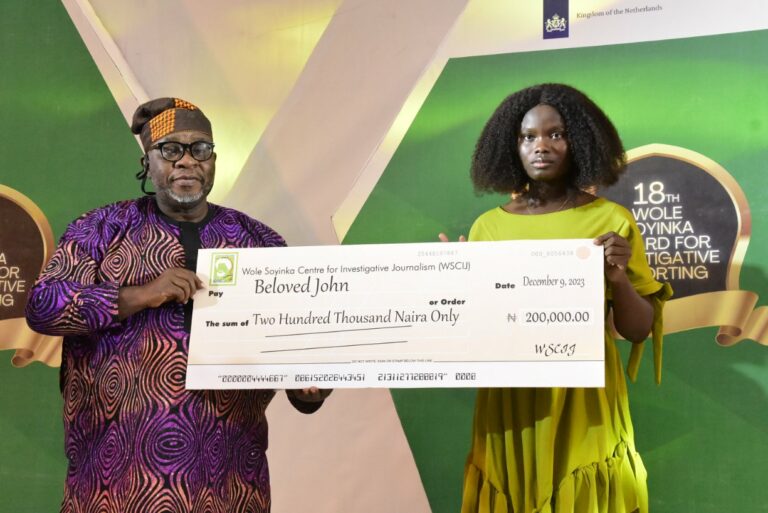
TWO reports of the International Centre for Investigation Reporting (ICIR) have won awards at the just concluded 18th Wole Soyinka Award for Investigative Reporting (WSAIR) held in Abuja on Saturday, December 9.

A former journalist with The ICIR, Beloved John, emerged as a runner-up for her work, “London Graduate School: The ‘Degree Mill’ selling fake honorary doctorate to Africans”.

Similarly, the news editor at The ICIR, Marcus Fatunmole, received a commendation for his work, “How North Korean runs illegal hospital patronised by the high and mighty in Abuja” in the same category.

The overall winner of the category was Kemi Busari of Premium Times for his work, Baba Aisha Herbal Medicine’: The deadly concoction consumed by many Nigerians.

The award is an annual event first held in October 2005 to aid the development of an investigative reporting culture in the Nigerian media.

It honours and promotes investigative journalists from around Nigeria who conduct excellent investigative stories to hold persons in power accountable, expose evils, and raise the voices of Nigeria’s most vulnerable citizens.

Speaking at the event on behalf of the judges, the chairperson of the panel, Abigail Ogwezzy-Ndisika, said a total of 209 entries were received from radio, television, online, photos and editorial cartoons, out of which 99 were assessed to get the ten finalists.

She also praised Nigerian journalists for their investigative reporting despite threats from state and non-state actors seeking to hide the truth.

“Looking at some of the processes the journalists went through to tell their stories, the judging committee for this year submitted that in the face of threat and resistance by state and non-state actors who were the protagonists in the stories, what they are doing rightly or wrongly because we look at issues around governance, Nigerian journalists have shown passion, resilience and creativity, and also used innovation and technology to uncover the truth.

“Light was shone on issues of public interest as most of the stories threw light on clandestine activities, public or corporate corruption, human rights violation and, or the failure of regulatory agencies,” she said.

She added that the stories were human-interest and tackled issues that affect Nigerians the most and if addressed, would curtail the aggravated exposure to poverty, hunger, lack of access to education, poor access to quality health care, human rights abuses, inequalities between female and male persons and other issues that stagnated the nation.

“Therefore, the journalists who made the list for the awards have, in the course of their duties, shown passion, uncommon innovation and profundity, ethical journalistic courage, individual creativity and public benefit in their reports. As such, we salute their uncommon courage and irreproachability.”

Other awardees are Sharon Ijasan of Television Continental (TVC), who emerged as the winner of the Television Category, closely followed by Folashade Ogunrinde of TV 360 as runner-up.

Lami Sadiq of the Daily Trust Newspaper claimed the award for the print category, while Omolabake Fasogbon received a commendation for the category.

Ayodele Adeniran got a commendation in the photo category for his photo story highlighting Nigerians’ suffering during the cash scarcity earlier this year. There was no winner for the category.

For the editorial cartoon category, Victor Asowata emerged as runner-up while Chukwuemeka Emenike got the commendation award.

In addition, the Late Professor Lai Oso received a Posthumous Lifetime Award for Journalistic Excellence and Human Rights Defender Award for his efforts to promote investigative reporting.

Reactions trail death of Court of Appeal judge Shagbaor Ikyegh

0

NIGERIANS have reacted to the death of Appeal Court judge Shagbaor Ikyegh.

Ikyegh died on Wednesday, December 6, in his hometown of Makurdi, Benue state.

He was aged 65.

Before his passing, he presided over the Court of Appeal in Port Harcourt, Rivers state.

Ikyegh was one of the 22 justices initially shortlisted by the National Judicial Council (NJC) to the Supreme Court.

However, his name was not among the final list of 11 justices recommended by the NJC for appointment to the Supreme Court on Wednesday, December 6.

One of his last major assignments was on November 24, when he delivered the majority decision that affirmed Dapo Abiodun’s victory as Ogun state governor in the March 18 election.

Ikyegh presided over the panel that upheld the ruling of the governorship tribunal, based its decision on technical grounds.

Abiodun’s major opponent in the election, Ladi Adebutu, has appealed the case at the Supreme Court. 

NBA mourns

Among Nigerians mourning the judge’s death is the Nigerian Bar Association (NBA).

In a statement on Thursday, December 7, the branch chairman of the group in Benue state, Maimuna Ikwulono, said the state executive received the judge’s passing with shock and sadness.

“This is a huge loss to the Benue bar as a whole, particularly at a time we had hoped that he would be the face of Benue on the apex bench, a position he eminently qualifies for.

We pray for God’s comfort for his immediate and extended families as well as the bench and the bar,” the group said.

Other Nigerians react

Reacting to the death, a former chairman of the National Human Rights Commission, Odinkalu, described it as “sad and tragic”.

Also reacting, an X user @barnofwisdom reminded judges that no one lives forever.

“Appeal Court Judge, Justice Joseph Shagbaor Ikyegh, RIP. Our judges should remember that no one lives forever when delivering judgement,” he posted.

An X user, @IkeGod_, said the late judge Ikyegh was accused by opposition politicians in Ogun State of allegedly collecting a bribe from the governor Dapo Abiodun to rule in his favour as the re-elected governor of Ogun State, another X user, @HonMichaelson, described Ikyegh as a disciplined judge.

“I learnt he was a no-nonsense man. Numerous sources who knew him attested to his straightforwardness and firm stance against all compromise. His family and the entire Tiv race will miss him dearly,” he stated.

“Hon. Justice Joseph Shagbaor Ikyegh??? Oh no I liked him,”  @Oluwanonso_Esq tweeted.

Until his death, the late judge was the president of the Port Harcourt Division until he suddenly slumped before his family members and was pronounced dead.

 The late judge was admitted to the Nigerian  bar in 1980 after obtaining his Bachelor of Law degree from Obafemi Awolowo University (previously the University of Ife),

His career started in 1991 in the Benue State High Court, and in July 2010, he was promoted to the Court of Appeals.