Home Blog Page 734

Abuja landlords must recertify C of O, submit BVN, NIN – Wike

0

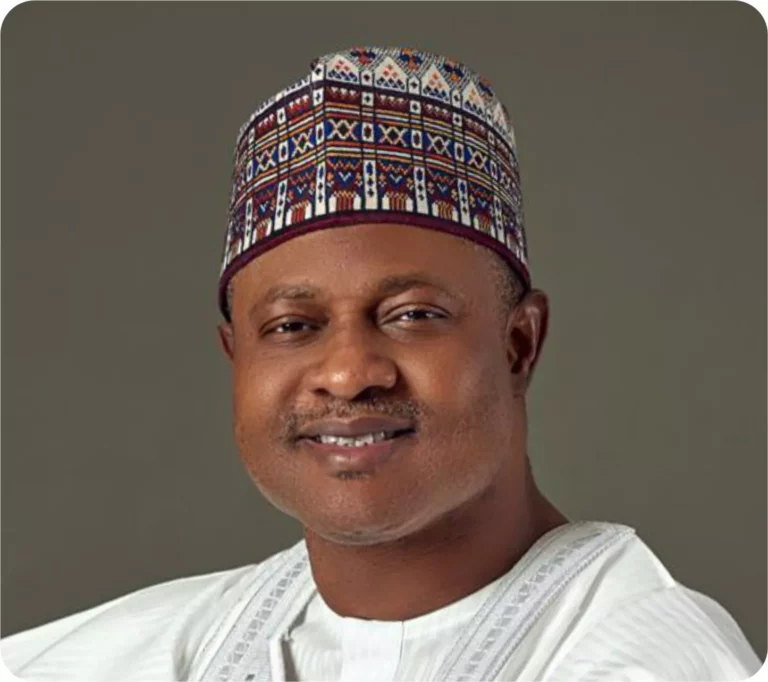
MINISTER of the Federal Capital Territory (FCT) Nyesom Wike has said land owners in Abuja must recertify their Certificates of Occupancy (C of O).

The process will require them to include the national identification number (NIN) for individuals and the bank verification number (BVN) for corporate bodies.

He disclosed this while addressing journalists in Abuja on Friday, November 24.

Wike said the NIN and BVN would also be required of any person or organisation planning to obtain a C of O in the nation’s capital.

“There are a lot of discrepancies, a lot of cloning of C of Os. So we have come up with an idea that every allottee who seeks and applies for a C of O must supply his NIN. This is one of the features we are going to put in the new C of O.

“If a corporate body doesn’t have an NIN and they have a property, they must put their BVN. So many persons have not registered, and this will make them go and re-register,” the minister said.

He noted that private individuals might pay as much as N50,000 for recertification of the document to incorporate the required details, while corporate bodies might be charged about N100,000.

Wike noted that he had avoided signing C of Os since he assumed office as minister to give room for the latest development, which he described as security measures and means of improving revenue generation.

“It helps in terms of security; it also helps to improve our revenue generation. There are people who own seven properties, so this will identify them so they can pay taxes,” Wike said.

Speaking on the proposed N5 million fee for obtaining a C of O, Wike said the amount was not determined by the structure on the land but the property itself.

On Tuesday, November 21, Wike insisted that C of Os would cost a flat rate of N5 million, regardless of the size of the property, location, or structure to be erected on the land.

According to a statement by the director of press, office of the FCT minister Anthony Ogunleye, on Tuesday, Wike turned down suggestions by stakeholders to review the price and consider size, location of properties, and other factors, while determining the fee.

Although the minister hinted at the possibility of a review, he maintained that N5 million would be the flat rate for the document.

Appeal Court affirms Uba Sani as Kaduna governor

0

THE Court of Appeal in Abuja has affirmed Governor Uba Sani of the All Progressives Congress (APC) as the winner of the March 18 governorship election in Kaduna state.   

While delivering the lead judgment, a three-member panel of the appellate court, on Friday, November 24, ruled that the Peoples Democratic Party (PDP) failed to prove the allegations of malpractices and non-compliance with the Electoral Act 2022.

According to the panel, the key witness called by the PDP during the tribunal hearing merely gave hearsay evidence as he was not present when the malpractices he alleged happened.

The appellate court confirmed that the accusations regarding vote deductions, ballot box stuffing, and tampering with sensitive electoral materials presented by the witness were based on hearsay.

The court also held that the tribunal’s decision to dismiss the PDP and Isa Ashiru’s petition was justified, citing the petitioners’ abandonment of their case by failing to request the issuance of a pre-hearing information sheet after the completion of pleadings, as mandated by paragraph 18(1) of the first schedule to the Electoral Act 2022.

It, however, stated that the tribunal acted in error when it depended on inadmissible evidence to order the conduct of supplementary polls in 22 polling units of four local government areas (LGAs) where the exercise was deemed inconclusive.

The Independent National Electoral Commission (INEC) declared Sani the winner of the Kaduna governorship election conducted on March 18.

INEC’s returning officer, Lawal Bilbis, said Sani secured 730,002 votes to defeat his closest rival, Isah Ashiru Kudan of the PDP, who garnered 719,196 votes. Jonathan Asake of the Labour Party (LP) came third with 58,283 votes.

The ICIR reports that Sani won in 10 local government areas (LGAs) of the state, while Ashiru won in 13. The LGAs won by Ashiru include Kaura, Sanga, Kajuru, Jaba, Makarfi, Jema’ah, Zango-Kataf, Soba, Chikun, Kagarko, Kachia, Lere, and Kudan.

Dissatisfied with the poll’s outcomes, the PDP candidate petitioned the Kaduna State election petitions tribunal to declare Sani’s victory void.

Meanwhile, the tribunal had split two-to-one in its conclusions on the merit of the petition and a technical aspect of the case.

The three-member panel led by Justice Victor Oviawie, dismissed the petition filed by Ashiru.

In a two-to-one decision, the tribunal said it would have declared the election inconclusive had the petition passed the procedural test.

Disappointed with the decision, Ashiru appealed the tribunal’s ruling at the Appeal Court.

NFF may need N120m to terminate Peseiro’s contract before expiration 

0

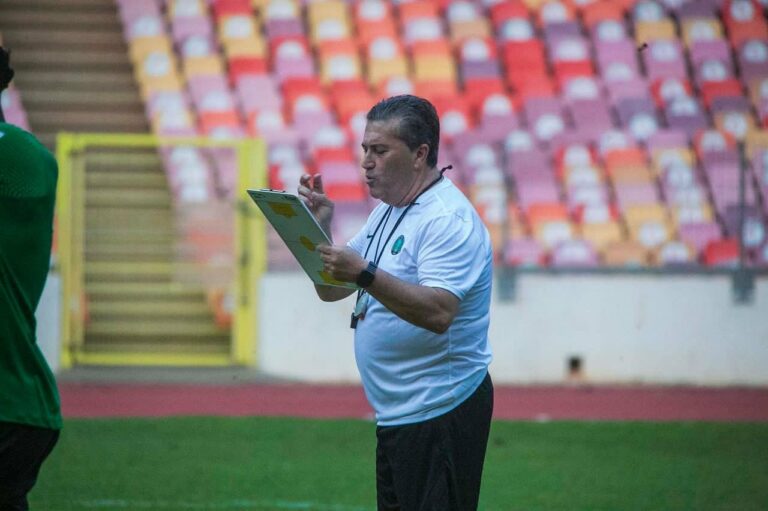
NIGERIA Football Federation (NFF) will need over N120 million (N120,804,000) to terminate the contract of the Super Eagles coach Jose Paseiro before its expiration in February 2024.

The ICIR got this sum after calculating Paseiro’s monthly salary at $50,000, equivalent to N40,268,000 million naira, using the current exchange rate at N805 multiplied by the three months (December, January, and February) left before his contract expires.

The ICIR reported that the Portuguese agreed to a 25 per cent pay cut of his initial $70,000 to continue as the gaffer of the country’s senior men’s football team in September 2023.

In his agreement to continue his job, he agreed to lead the Super Eagles to, at the minimum, the semi-finals of the 34th Africa Cup of Nations finals in Ivory Coast, billed to hold next year.

“As stipulated in the original contract, drawn in May 2022, the Portuguese has been handed the mandate to lead the Super Eagles to, at the minimum, the semi-finals of the 34th Africa Cup of Nations finals in Ivory Coast in a few months.

“He has now agreed to continue in the role after accepting a pay cut on his earlier terms, with the new agreement also putting him in charge of the Super Eagles B – the home-based professionals who contest the biennial African Nations Championship,” the NFF stated in the statement.

Peseiro’s contract hoodwinks NFF despite poor performances

Following the recent Super Eagles poor performances, Nigerian football enthusiasts have called for the replacement of the 63-year-old coach, worrying over his technical ability to qualify the team for the 2026 World Cup.

Although, since his contract renewal in September, the Super Eagles have won two matches and drawn three.

Fan’s outbursts have been fueled by the coach’s inability to maximise his star-studded team to defeat low-ranked countries like Lesotho and Zimbabwe.

Amidst fans’ disappointments has been the coach’s insistence on featuring Francis Uzoho despite his fumbling goalkeeping errors.

But the echoes of Peseiro’s sack were lowered in a post-match interview after the match against Zimbabwe when NFF’s board member Nse Essien revealed the federation could not pay the coach’s compensatory fees if he were to be relieved of his job.

In a chat with The ICIR, a sports journalist based in Jos, Peter Eben advised that the Super Eagles coach should be allowed to continue his job until the expiration of his contract in February.

“Let’s allow the coach to continue his job,” he said.

Contrary to Eben, a veteran sports journalist based in Lagos state, Maxwell Kumoye argued that the Super Eagles deserved a better coach, calling for the termination of Peseiro.

“No contract cannot be terminated. It is an agreement between two parties, and if one party feels this cannot go on, it will intimate the other party that this can not continue,” he said.

When reminded of NFF’s claim of lack of money to pay off Peseiro’s contract, Kumoye said the NFF got grants from the world football governing body, FIFA, which could be used to cater to its need.

“It is the stupidity of the highest order. How much will it cost to pay him off? They have properties they can use to collect loans in the bank, and after all, they get grants from FIFA,” he stressed.

Ill-health: Governor Akeredolu out of Ondo state for nearly 6 months

0

ONDO state Governor Rotimi Akeredolu has been out of the state for nearly six months (171 days) since he was flown out of Nigeria to receive care for an undisclosed ailment.

The issue has evoked criticisms from the opposition parties, who believe his absence leaves a governance vacuum in the state.

Besides, his relationship with his deputy, Lucky Aiyedatiwa, has been in tatters over who controls the government.

The ICIR reports that there have been cracks in his cabinets as the feud between him and Aiyedatiwa splits the state executive council.

Apart from the ongoing legal fireworks between the governor and his deputy over the former’s insistence to get the Assembly to impeach the latter, it remains unclear if the ruling party’s – the All Progressives Congress (APC) – intervention in getting the leaders to bury their hatchet is yielding desired results.

Since his return to Nigeria in September, the governor has been in Ibadan, Oyo state capital. He had handed over power to his deputy in June but took it back upon his return to Ibadan, and crisis erupted in their camps days later.

The ICIR reports that since September 7, when he returned to Nigeria, Akeredolu has governed the state from Ibadan, where he has decided to stay.

His team said he had no befitting residence in Akure, adding that he would only return to the state when work on a new place being ‘arranged’ for him is completed.

On November 16, the state executive council passed a vote of confidence in the governor.

These developments have been widely condemned by the major opposition party in the state – the Peoples Democratic Party and other concerned Nigerians.

While the ruling All Progressive Congress (APC) argues that governance remains uninterrupted by the governor’s absence in the state, many residents in the state disagree.

Residents displeased with the situation say governance has been slow, and Akeredolu’s unavailability causes rancour in his governance and lack of checks that could encourage, bolster and incentivise corruption. 

Opposition parties, including the PDP and Social Democratic Party (SDP), civil society organisations, and concerned people in the state have alleged that the governor’s family and some cabinet members have been managing the state affairs instead of the duly elected Deputy Governor, Lucky Aiyedatiwa, empowered by the Constitution to act in Akeredolu’s absence.

The ICIR reported how, after weeks of speculation surrounding his health and his prolonged absence from the state, the governor officially transferred power to his deputy, Lucky Aiyedatiwa, on Monday, June 13. 

The Speaker of the state House of Assembly, Olamide Oladiji, confirmed that the governor would be on a 21-day medical leave abroad from June 7 to July 6, 2023.

 In July, the governor again wrote the lawmakers, extending his leave indefinitely.

Days after he returned to Nigeria, Akeredolu moved to impeach his deputy – a move that the deputy has vehemently resisted through litigations.

Meanwhile, in 2009, when he was the Nigerian Bar Association (NBA) president, Akeredolu called on the then-ailing late President Umaru Musa Yar’Adua to hand over to his deputy Goodluck Jonathan.

He had said: “The prayer of the association is that the President should recover fast, return to his office, and resign. No matter how much you love your country, it should not be to the detriment of your health.

“It is not your party or your wife that will decide whether you are capable of handling state matters; it is only your doctors that can decide that. The bar is not asking the President not to come back and take his seat, but the right thing must be done.”

He also supported the National Assembly’s adoption of the doctrine of necessity as a political resolution to the constitutional deadlock resulting from Yar’ Adua’s deviation from the Constitutional process and the void created by his absence from office.

The doctrine of necessity is the basis of satisfying the exigencies created by certain situations outside the contemplation of the Constitution or the rule of law and, thus, designed to preserve political stability.

For instance, in February 2010, the National Assembly, upon a joint resolution from both chambers and at the request of the Governors’ Forum, authorised the Vice President, Goodluck Jonathan, to act as the President and Commander-in-Chief of the Armed Forces due to the prolonged illness of the substantive President, preventing him from fulfilling the constitutional duties of the office.

However, while Akeredolu’s health has been shrouded in secrecy, and his officials continue to claim that he discharges his duties, the opposition parties, particularly the PDP, have consistently called on the governor to hand over power to his deputy.

PDP continues protest, demands governor’s removal

A press statement titled “Akeredolu’s cabinet dances naked in the market square,” which the PDP shared with The ICIR on Saturday, November 18, showed the party expressing worry over the state of affairs in the state.

The party alleged that the governor’s son, Babjide Akeredolu, was seen in the Oke-Ijebu area of Akure, the state capital, inspecting a government project with a full complement of the governor’s convoy and security apparatus.

It also expressed displeasure over what it described as a ‘meaningless’ communique by the state executive committee, passing a vote of confidence on Akeredolu whose whereabouts have been unknown for months.

Part of the statement read: “Last week, Babajide Akeredolu, the governor’s heir apparent, was seen in the Oke-Ijebu area of Akure, inspecting government projects with the full complement of the governor’s convoy and security apparatus. Things have never been this bad in Ondo State. Who voted for Babajide as governor, or his mother, Betty, both of whom have held the state by its jugular?   

“Now that the state executive committee has decided to come and dance in the marketplace naked, it is clear the days of this government are numbered. 

“The Peoples Democratic Party (PDP), Ondo state chapter wishes to advise Akeredolu’s appointees to be honourable in the discharge of their responsibilities instead of making a mockery of themselves in the eyes of the people.”

Meanwhile, this wasn’t the first time the party had called out the governor, the state House of Assembly, and the APC to lead according to the Nigerian Constitution. 

Lawyers react

Some legal practitioners who spoke to The ICIR said Nigeria’s Constitution had loopholes exploited by politicians.   

They argued that the Constitution did not explicitly specify the extent to which leaders could be away from office due to illness before they could be removed from office.

One of the lawyers, Olu Olaniyi, also a public affairs analyst, explained that in the event of the governor’s incapacity to discharge his duties, the state House of Assembly has to impeach him.      

Impeaching the governor, he said, requires a two-thirds majority in the Assembly after verifying the governor’s incapability through assessment by the governor’s physician and a medical panel formed by the same Assembly.

“Now, if the representatives of the people, the members of the House of Assembly, are not asking about the medical well-being of their governor, then there’s nobody else that can mediate.

“Even if we go to court, the court will simply direct the state House of Assembly. This is possibly what anybody can do, including private citizens, to get the court to disclose the health status of the governor and direct the House of Assembly within days to play its role as stipulated under section 189 of the Constitution.  

“Take note that the Speaker still has the prerogative of determining who goes in the medical panel. Absolutely no requirement other than those that are eminent in the field. That’s all.”

He also argued that the Constitution failed to indicate that a governor could only govern from the state, adding that it’s also silent on whether he could lead from any part of the country.

“There’s a difference between he is dead, he is of unsound mind as the Constitution says (he can only be removed) if he’s a ‘lunatic,’ or he has infirmity of body or mind and cannot perform his functions.  Since he is not dead and yet to be proven unsound, there is nothing yet to warrant his resignation or removal from office according to the Constitution,” he added.  

Similarly, quoting section 189 of the Constitution, another legal practitioner, Abiola Kolawale, explained that the Constitution did not specify how long a governor could be on a sick bed before being deemed unfit to continue.

He, however, noted that if it was established that the governor had not been discharging his duties due to his continuous sickness, the House of Assembly might have violated the Constitution by failing to move for his removal.

Governor’s goodwill to state lawmakers, permanent secretaries

In August this year, the governor presented each of the 26 members of the state House of Assembly with an SUV worth millions of naira while on a sick bed.

The governor also extended a similar gesture to 30 permanent secretaries in the state.

State’s governorship election months away 

Akeredolu’s second term tenure of four years apiece ends in February 2025. The Independent National Electoral Commission (INEC) has fixed the state governorship election for Saturday, November 16, 2024.

It remains unclear if the governor clings to power because of the election.

Some politicians in the governor’s camp are jostling to succeed him.

The ICIR could not independently confirm from Aiyedatiwa if he would seek to succeed his principal.

But an impeccable source from his camp told our reporter he would make his position known at the right time.

The ICIR reports that Akeredolu was sworn in for a second term of four years on February 24, 2021.

He is the 18th person to lead Ondo State since its creation in 1976 and the sixth elected governor of the state.

He has been the most vocal governor in Nigeria’s southern region against atrocities committed by non-state actors, including herders, kidnappers, insurgents, and bandits, who killed many people during former President Muhammadu Buhari’s tenure.



SEC’s new e-dividend portal may fall short of expectations if…

0

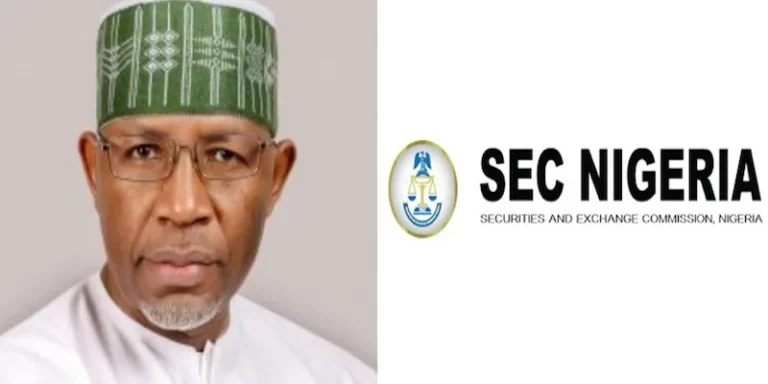
THE Securities and Exchange Commission’s (SEC) new e-dividend mandate portal to be unveiled on or before the end of the month may fall short of expectations if certain flaws are not addressed, shareholders told The ICIR.

According to the shareholders, the SEC has to get it right to resolve the lingering problems of unclaimed dividends, which have risen to N190 billion.

The ICIR reported on November 16 that the apex regulator was about to launch the new e-dividend portal to solve the perennial problem of unclaimed dividends in the capital market.

The Director General of SEC, Lamido Yuguda, hinted at the launch in a remark to welcome journalists for a two-day training the commission organised in Lagos State on Tuesday and Wednesday, November 14 and 15.

The initiative, e-dividend mandate management system (E-DMMS) portal, was birthed on July 29, 2015, under the leadership of the former director general, Mounir Gwarzo.

Gwarzo had described the e-dividend platform as a priority initiative for the entire capital market to curb the growth of unclaimed dividends and improve the overall efficiency of Nigeria’s equities markets.

Over eight years, the initiative has not yielded the desired results as unclaimed dividends continue rising and investors encounter difficulties mandating their accounts.

The unclaimed dividend has more than doubled to N190 billion, as announced by SEC in August this year, relative to N90 billion it was as of September 2015.

As the SEC plans a new e-dividend portal, the regulator must take into cognisance some impediments hampering the process, the national president of the New Dimension Shareholders Association, Patrick Ajudua, told The ICIR.

According to him, for the new unclaimed dividend portal to make any meaningful impact, the SEC needs to embark on more sensitisation and awareness campaigns.

He believes that the SEC needs to create more awareness to drive the success of the e-dividend mandate initiative, pointing out that many shareholders need to be informed on the workings of the platform.

Related to this argument is that the SEC and the registrars have to unearth the root cause of “identify management”, which, if not addressed, will continue to account for 80 per cent of unclaimed dividends, Ajudua said.

“There is a need for sincerity on the part of the registrar, SEC, central securities clearing system (CSCS), and other stakeholders in holistically solving the issue of unclaimed dividends.

“The new portal must be made seamless in operation and able to provide an immediate response to an enquiry,” Ajudua further highlighted as issues SEC should address.

On his part, the national chairman of the Progressive Shareholders Association of Nigeria (PSAN), Boniface Okezie, queried that the SEC would embark on designing a new e-dividend portal without carrying shareholders associations’ leaders along with their plans. 

He said, “Why will they (SEC) launch such important things that involve shareholders, and they did not deem it fit to invite leaders of the Registered Association of Shareholders? Is there anything they are hiding from us, the shareholders?

“What happened to the existing one launched by the immediate past director general?”

Okezie believes the current SEC DG, Yuguda, needs to achieve the objectives of the e-dividend mandate set out by his predecessor in solving the issues of unclaimed dividends.

He also sought to know if the new platform would solve the impending problem.

“If that is what he wants as the DG on board now and will be a lasting solution, let him go ahead and make it work so that shareholders can get their money, and it will be accepted,” Okezie added.

The SEC’s e-dividend mandate portal is an initiative that enables investors to search and locate their outstanding dividends, if any. Through it, several investors have been able to reclaim their dividends.

“The platform’s effectiveness could be improved by regularly updating it. It provides only information but needs to resolve the issues investors face while reclaiming their dividends.

“Hope the new platform will remedy flaws of the current one and facilitate the reclaiming of dividends,” David Adonri, a capital market operator, opined.

What’s unique about SEC’s new portal?

At the capital market committee (CMC) media briefing on November 17, SEC’s director, Lagos zonal office, Hafsat Rufai, noted the new portal would require shareholders’ bank verification number (BVN), account details, pictures, and other means of identification.

Unlike in the existing portal, where the registrars have their e-dividend forms, the new portal has a drop-down list of stocks, and shareholders can tick simultaneously as many companies they own shares in, she said.

Mandating an account on the new portal will cost N250 from N150 accepted on the existing portal, Rufai said. “This is because of the cost of building the portal so the portal developers can be paid.

“We will ensure the payment is at the end of the process. So, only when you mandate successfully will you be charged, but if your mandate is not successful, you will not be charged.” 

According to her, the SEC will ensure the portal gives a prompt within forty-eight hours, adding that when the mandate is successful, a shareholder will get a message that their account has been mandated.

But if unsuccessful, it will give you a reason why it was unsuccessful.

Another feature to be expected is that when a shareholder has a challenge with the registrar and the information they input on the portal does not match what the registrar has, the query will state the specific reason.

Rufai hinted that the SEC had not placed a deductible charge to use the portal “as there are different things the commission is doing to reduce unclaimed dividends.”

On tracking investors’ data from the secondary market, the SEC Lagos director said the commission would ensure that the CSCS transmits information to the registrars.

“If you buy a security, you would have provided your data or KYC (know your customer) to your broker, who then routes it to the CSCS.

“Ordinarily, CSCS will route that information to the registrars. What the commission then mandates the CSCS to do is that in addition to such personal data, your bank’s details should also be routed through the registrar.”

So, when an investor buys security via the secondary market, they do not even have to access the new portal as the person’s information will automatically be made to the registrar to enable their dividend to be paid, Rufai explained.

She said the SEC had directed the registrar to do a clearing house number (CHN) mapping on the major issue – outstanding unclaimed dividends. 

She further explained that if a shareholder had some securities with the same registrar, once one account is mandated, the registrar should use its technology to discover the other accounts the person has with it, using the person’s name, address, and CHN as a minimum, and extend the mandate to the other accounts.

“So, the portal is essentially for legacy issues or any other issues the two systems we have designed could not handle,” Rufai added.

Initial process

The e-DMMS portal utilises the Nigeria Inter-Bank Settlement System’s (NIBSS) document management system, to which completed e-dividend mandate forms filled by the investor are uploaded.

Where an investor opts to fill this form at a registrar’s office, the registrar verifies details such as the investor’s name, account number, and CHN. 

Should an investor choose to complete the form at a bank branch, the bank validates their BVN and account details before uploading a scanned copy to the e-DMMS portal.

This uploaded form would immediately be accessible to the investor’s chosen registrar, who must validate the investor’s name, shareholder account number, and CHN.

FCT records over 2000 gender-based violence since January

0

THE Federal Capital Territory (FCT) Mandate Secretary for Women, Adedayo Benjamins-Laniyi, has expressed concern over the rising cases of gender-based violence (GBV) in the country’s capital, which she said had seen 2,344 reported cases so far in 2023.

Benjamins-Laniyi said this after a meeting with stakeholders in Abuja on Thursday, November 23, ahead of activities for a 16-day activism against GBV, which is expected to kick off on November 25.   

She also decried the challenges associated with reporting incidents of GBV and the difficulties in raising awareness about it.

She said the FCT planned to use the national GBV dashboard to create awareness of the underreporting and state of the crisis across the city.

Benjamins-Laniyi noted that the reported cases recently surged from a thousand to 2,344, emphasizing that the increase compelled the government to take swift action to address the crisis.

She said: “From a thousand reported cases of sexual and gender-based violence (SGV), it has now shot up to 2,344 as of today.”

Gender-based violence is a frequent occurrence in Nigeria, especially against women and girls.

It comprises a multifaceted issue deeply rooted in societal norms and cultural dynamics. It also encompasses various forms of abuse, including physical, sexual, emotional, and economic violence, disproportionately affecting women and girls.

On September 3, The ICIR reported how pre-teen girls in the FCT were tortured and made to endure breast ironing to make them look unattractive due to the fear of rape and other forms of sexual abuse.

Of the number who reported their experiences, fewer than five per cent received any form of support, data from the United Nations Children’s Fund (UNICEF) shows.

The ICIR reports that the Federal Government has repeatedly promised to establish specialised courts to hasten the trial of SGBV offenders. The pledge has yet to come to fruition.

NBC fails bid to vacate order stopping imposition of fines on stations

THE Nigerian Broadcasting Commission (NBC) has failed to secure a court order to vacate a ruling stopping it from imposing fines on broadcast stations.

The presiding judge, James Omotosho, slammed the commission for failing to defend the case despite being served the court papers.

According to the News Agency of Nigeria (NAN), the court file showed that NBC was served with the case but failed to enter an appearance.

The judge said the affidavit of facts deposed to by the court bailiff confirmed that court processes were served on the commission on different occasions but were ignored.

“The respondent applicant cannot claim it was not served. The objection is hereby overruled,” said the judge on Thursday, November 23.

In May, The ICIR reported that the judge gave a perpetual injunction restraining NBC from imposing fines on stations.

He said the commission lacked the powers to impose penalties.

The judge held that the NBC Code, which gives the commission the power to impose sanctions, conflicts with Section 6 of the Constitution, which vested the authority in the law courts.

The judge also set aside fines imposed on 45 broadcast stations by NBC.

In 2019, NBC fined 45 broadcast stations the sum of N500,000 each over alleged ethical infractions in the year’s general elections. The commission said the stations had to be sanctioned for allowing politicians to utter abusive, inciting, and provocative statements during broadcast programmes.

Displeased, the Incorporated Trustees of Media Rights Agenda filed a suit against NBC in 2020.

The group asked the court to declare the sanctions procedure applied by NBC in imposing the fine on the broadcast stations a violation of the right to a fair hearing under Section 36 of the 1999 Constitution (as amended) and Articles 7 of the African Charter on Human and Peoples Rights (Ratification and Enforcement) Act (Cap AQ) Laws of the Federation of Nigeria, 2004.

Ruling on the N500,0000 fine, Omotosho said the commission acted as the complainant, court, and judge when it acted on the alleged infractions.

The judge noted that the Nigerian Broadcasting Code could not confer judicial powers on NBC to impose criminal sanctions or penalties.

He pointed out that NBC had no power to conduct a criminal investigation that would lead to a criminal trial and imposition of sanctions.

“This will go against the doctrine of separation of powers. The action of the respondent qualifies as excessiveness as it had ascribed to itself the judicial and executive powers,” he said. 

The judge held that the doctrine sought to prevent tyranny by concentrating too much power in one organ.


Court orders CBN to release bidders list for e-Naira technical partner

0

THE Federal High Court, Abuja, has granted the request of an anti-corruption group, Human and Environmental Development Agenda (HEDA), demanding details of bidders for the Central Bank of Nigeria (CBN)’s e-Naira technical partner’s project.

In the suit marked FHC/ABJ/CS/1542/2021, between the Incorporated Trustees Of HEDA Resources Centre and the CBN, the group sought an order of mandamus to compel the apex bank to reveal details of the bidding process for the project.

The CBN had announced Bitt Incorporated as a technical partner for its digital currency project named “eNaira” after what it described as a competitive bidding process.

In a letter dated September 1, 2021, signed by the Chairman of HEDA, Olanrewaju Suraju, and addressed to the former CBN governor, Godwin Emefiele, HEDA requested details of the bidding process.

The organisation requested the following from the apex bank: evidence of a newspaper advert calling for bidders for the contract, a list of bidders, and proof of public opening of the bid.

The organisation said the demand was keeping with international best practices. The request was dated September 1, 2021.

According to the Certified True Copy (CTC) of the case sighted by The ICIR, HEDA, in a motion on notice dated and filed on February 22, 2022, prayed the court for an order of mandamus compelling the CBN to supply the information in the request.

On the main application, the applicant’s counsel, Labiru Ahmad, drafted a sole issue in his written address dated and filed on February 22, 2022, which is whether, considering the facts and circumstances of the case, the applicant provided sufficient ground(s) for the grant of the reliefs sought in the application.

He argued that the demand was to make public records and information freely available to the public and that every person had the right to access or request information, as enshrined in Section 1(1) of the FOI Act, 2011.

In his written address, counsel for the CBN, Bamikole Folorunso, citing Section 15(2) of the Public Procurement Act, contended that a newspaper advertisement for bidders and a public opening of bids were not necessary for the e-Naira bidding process, which involved specific products, works, and services connected to national defence and security.

He further argued that releasing the information sought would harm Nigeria’s foreign policy, economic interests, and security, especially because other countries were approaching the CBN for advice on how to implement e-currency in their own countries.

He said such information was exempted by Section 11(1) of the FOI Act, 2011.

In his response, the applicant’s lawyer abandoned two of the requested pieces of information: evidence of the newspaper advert calling for bidders and evidence of public opening of the bid. He left the list of bidders as the only information requested by HEDA.

According to him, it does not come under exemption in any law.

In its ruling on Friday, November 10, the judge, Z.B. Abubakar, emphasised that the CBN is a public institution or agency, as defined in Section 31 of the FoI Act, 2011.

Abubakar stressed that the mandatory nature of the provisions, employing the term “shall,” leaves the respondent with no discretion but to comply.

“Therefore, the disclosure of the information requested by the applicant, which is reduced to only the list of bidders, cannot possibly interfere with the contractual or other negotiations of a third party, nor can it frustrate any procurement process or exercise in relation to that or give an advantage to any person howsoever.

“What the applicant requested is only the list of the bidders and nothing more. Thus, the facts and circumstances of the two cases are distinct, which makes the case under reference inapplicable to this instant one.

“Based on the foregoing, the applicant merits the grant of the sole relief sought, which, however, relates only to the information on the list of the bidders, and it is accordingly granted, the judge ruled.

Consequently, the court deemed the applicant’s application meritorious and granted the relief sought.

Speaking on the matter, HEDA’s chairman, in a chat with The ICIR, said the judgment strengthened HEDA’s resolve to promote accountability in governance in the country.

“It is also pushing back on attempts by public officials to personalise government and its institutions,” he said.

He added that HEDA would continue challenging every illegal, unconstitutional, and disobedience of the rule of law by public office holders.

Taiwo Awoniyi risks missing out of 2023 AFCON due to groin injury

0

SUPER Eagles forward Taiwo Awoniyi may miss the forthcoming 2023 African Cup of Nations, billed to kick off in 2024 in January in Cote d’Ivoire.    

Awoniyi, who just returned from a previous groin injury sustained in September, played for 59 minutes during the 2026 World Cup qualifying match against Lesotho on Friday, November 17, at the Godswill Akpabio Stadium in Uyo.

Terem Moffi replaced him in the match, and he could not play in the second fixture against Zimbabwe.

After undergoing the evaluation of the injury at his club, Awoniyi’s Nottingham Forest coach Steve Cooper said the striker would be out for “months” because of a groin injury.

The player has scored four goals in 10 Premier League appearances for Forest this season.

“We’ll definitely see him again this season, but it’s groin surgery, so it will take a little while,” the coach said.

The coach admitted Awoniyi’s huge contribution to the club’s progress, assuring the club will offer support to get him back on his feet quickly.

“It’s bad news on Taiwo; he’s had to have surgery, and he is going to be out for months. We’ll support him and try to get him back as quickly and as fit as he can be, but it’s a really unfortunate situation and a blow for him.

“He’s become an important player for us with the goals he’s scored. He’s such a good guy and a good professional who is desperate to do well, so to get an injury like this is harsh on him,” he added.

2024 budget to suffer setback as Nigeria won’t meet 1.78mbpd crude benchmark

0

NIGERIA’s budgetary provision of 1.78 million barrels per day (bpd) of crude oil production will fall below the benchmark projected in 2024 and lower the country’s revenue prospect for the year.

On Wednesday, November 22, the Senate approved the medium-term expenditure framework (MTEF) for ‪2024-2026 and the fiscal strategy paper (FSP), which contains projections for budget appropriations over the next three years.

A daily crude oil production of 1.78 million bpd at $73.96 per barrel was projected for 2024, subject to the Nigerian National Petroleum Company Limited’s (NNPCL) confirmation.

Also approved was the Federal government’s proposed spending of N26 trillion in 2024, with N16.9 trillion in retained revenue, a N9 trillion budget deficit, and N7.8 trillion in new borrowings, besides other figures.

However, a recent report by the African Energy Chamber (AEC) shows that Nigeria’s daily crude production will fall below the 1.78 million bpd approved by the Senate.

According to the AEC report, ‘The State of African Energy 2024 Outlook,’ Nigeria is expected to achieve daily crude oil output of 1.51 million bpd in 2024.

Compared with the approved benchmark of 1.78 million bpd, it then means that Nigeria will lose 270,000 per day of crude oil production, which will reduce its revenue and, therefore, impact its fiscal expenditure.

The ICIR reports that despite the Organisation of the Petroleum Exporting Countries (OPEC) quota reduction system, Nigeria still needs to meet its daily crude production target, as shown in OPEC’s monthly oil market reports (MOMR).

In October, the country’s oil production stood at 1.35 million bpd, the highest production level since the beginning of the year and the most considerable volume since January 2022. The low outputs have been occasioned by insecurity, pipeline vandalism, militancy, and resulting force majeures imposed by operators, exacerbated by declining legacy fields and a lack of new start-ups.

In a statement by the AEC on November 19, its executive chairman, NJ Ayuk, said a flat market was likely in store for Africa, but with a gradual decline in oil production in 2024.

“As for Africa, our 2023 – 2024 output is expected to stay relatively flat at about 6.77 million bpd. But month-on-month production looks a bit bleaker, with production declining from 6.9 million bpd in January 2024 to approximately 6.62 million bpd in December 2024.

“We are forecasting global output to total more than 84 million barrels per day (bpd) next year, which is a 1.6% increase over 2023. The Americas, both north and south combined, are expected to see a marginal four per cent growth in output year over year (YoY) in 2024, while the Middle East is expected to see a smaller two per cent YoY growth over 2023 output,” Ayuk noted.