Home Blog Page 733

Despite truce, Israeli forces kill 8 Palestinians in West Bank

0

DESPITE an agreement to reach a four-day pause in fighting with Hamas, Israeli forces have killed about eight Palestinians in the West Bank, including a child.

According to a report, this was disclosed by the Palestinian Ministry of Health on Sunday, November 26.

The ministry said five Palestinians were killed in Jenin late on Saturday and early Sunday, while three others were killed in other parts of the West Bank, bringing the total number of deaths in the West Bank to 239 since the war between Israel and Hamas broke out in October.

Six other Palestinians were injured during the attack by Israel in Jenin.

Palestinian news agency Wafa disclosed that Israeli forces attacked Jenin “from several directions, firing bullets and surrounding government hospitals and the headquarters of the Red Crescent Society.”

On Tuesday, November 21, Israel and Hamas reached the agreement to go on a four-day pause in fighting from Thursday, November 23 to Sunday, November 27, aimed at releasing hostages on both sides.

Israel had, however, said there would be a “lull in fighting” during the period.

This was contained in a statement by the Israeli government late on Tuesday, November 21, via its social media handle on X, stating that the release of every ten additional hostages would translate to an extra day of respite in the war.

“The Israeli government is committed to the return of all abductees home. Tonight, the government approved the outline for the first stage of achieving this goal, according to which at least 50 abductees – women and children – will be released for four days, during which there will be a lull in the fighting. The release of every ten additional abductees will result in an additional day of respite,” an English translation of the statement read.

Hamas released 13 Israeli and four Thai captives on Saturday, November 25, while Israel released a first batch of 39 Palestinian prisoners in exchange. More hostages are expected to be released by Sunday.

Nigeria loses N18trn to non-transparent tax waivers in 3yrs

THE Federal Government has revealed a loss of  N18 trillion to non-transparent tax waivers and pioneer status incentives (PSI) to companies in the last three years. 

The chairman of the presidential committee on tax and fiscal policy reforms, Taiwo Oyedele, disclosed this on Friday, November 24.

According to Oyedele, several incentives granted by the Federal Government to some companies were not impactful to the economy due to poor cost-benefit analysis.

“In one of the reports by the former finance minister, we got it from there, and as a matter of fact, we’re giving away N6 trillion annually. This is not good for the economy. People use their connections to the government to get such waivers.

“What we’re talking about is N6 trillion annually in the past three years. We’re looking at N18 trillion, not the exact number, but we’re looking at the average amount. It could be more than that,” Oyedele said in an interview monitored on Channels Television.

He stressed that Nigeria’s low revenue generation exposed the nation to more fiscal risks, as it has resorted to borrowing to fund its annual budgets.

“The revenue regenerated in 2021 by the Federal Inland Revenue Service (FIRS) and the year before is barely N6 trillion. We cannot be losing these kinds of funds to incentives that cannot be accounted for,” he said.

He noted that Nigeria would abide by international treaties committed to waivers but would henceforth evaluate its social and economic impact.

“The committee will look at the social and economic impact of subsequent waivers and incentives. We have suggested value-added tax (VAT) removal on diesel and compressed natural gas (CNG). The waivers we have checked have a social impact because of the current hardship in the country,” he added.

Established by the Industrial Development (Income Tax Relief) Act, No 22 of 1971, PSI is designed by the Federal government to reduce the cost of doing business in Nigeria by providing corporate income tax relief to qualifying companies, investing in industries designated as ‘pioneers’.

In effect, PSI seeks to enhance beneficiary companies’ survival, profitability, and sustainability.

“The PSI is a tax holiday which grants qualifying industries and products relief from payment of corporate income tax for an initial three years, extendable for one or two additional years,” the Federal Ministry of Industry, Trade, and Investment said.

Although Oyedele did not mention the companies with such non-transparent waivers,  data from the Nigerian Investment Promotion Commission (NIPC) disclosed that the 11 companies that were granted the three-year PSI in 2019 were Royal Mills and Foods Ltd, Gowus Nigeria Ltd, Triton Aqua Africa Ltd, Globus Resources Ltd, Crown Flour Mills Ltd, Dharul Hijra Fertilizer Company Ltd, and Olam Hatcheries Ltd.

Others are Harvestfield Industries Ltd, Royal Pacific Group Ltd, Dangote Sinotrucks West Africa, and Montego Upstream Services Ltd.

Akeredolu remains Ondo governor – Presidency

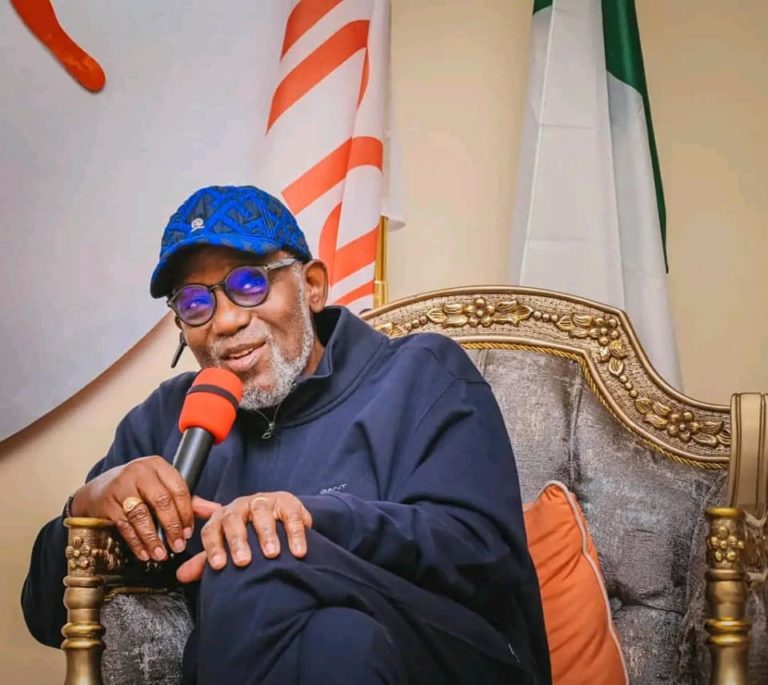
AFTER wading into the dispute between Ondo State Governor Rotimi Akeredolu and his deputy Lucky Aiyedatiwa, Nigerian President Bola Tinubu has urged both parties to “bury the hatchet and maintain the status quo.”

This was contained in a statement by the special adviser to the President on media and publicity, Ajuri Ngelale, on Saturday, November 25.

The statement said the parties involved in the dispute, including lawmakers in the state, expressed willingness to comply with the President’s directive. The decision was reached during a meeting between Tinubu and parties to the crisis on Friday, November 24.

“This means that Governor Akeredolu remains the chief executive of the state. Aiyedatiwa remains deputy governor, and members of the state executive council continue their respective duties, even as the leadership of the state’s House of Assembly and the APC chapter in Ondo state is preserved,” the statement noted.

Akeredolu and Aiyedatiwa had been involved in a months-long feud over the governor’s insistence on retaining power despite being unable to function optimally due to ill health.

On Friday, November 24, The ICIR reported that Akeredolu had been out of Ondo state for 171 days, nearly six months since he was flown out of Nigeria to receive care for an undisclosed ailment.

Although he returned to Nigeria in September, the governor has remained in Ibadan, the Oyo state capital, and has governed Ondo state from there.

Since the governor arrived in Ibadan, he has made botched moves to impeach his deputy.

During the meeting with Tinubu, Aiyedatiwa accepted to remain in his position as deputy governor, describing the crisis as part of politics.

“I want to say that with no offence, no guile in my mind whatsoever. All that has happened is politics. Impeachment is part of politics. If you survive it, it is also politics. It has come. I’ve survived it, and every other thing is in the past.

“It is one big family, and our father has intervened to bring all the children together to remain under the same family and with the position that I occupy, I will carry every one of you along in every decision that needs to be taken.

“In everything that we do, we will work together; the executive and the legislature will work together to ensure that governance is on the right track,” Aiyedatiwa said.

In 2009, former Nigerian President Umaru Musa Yar’ Adua was ill in office. During the prolonged illness that later led to his death, Yar’Adua refused to hand over power to his deputy, Goodluck Jonathan, after he was flown out of Nigeria.

Akeredolu, then president of the Nigerian Bar Association (NBA), had urged Yar’Adua to hand over power to his deputy, arguing it was a Constitutional requirement.

“It is not your party or your wife that will decide whether you are capable of handling state matters; it is only your doctors that can decide that. The bar is not asking the President not to come back and take his seat, but the right thing must be done,” Akeredolu had said.

Hilda Baci, Ilebaye, others bag nominations for U-30 CEOs awards

0

NIGERIAN chef and former Guinness World Records (GWR) holder Hilda Baci, and Big Brother Naija season 8 winner Ilebaye Odiniya have been nominated for the Under-30 Chief Executive Officers (CEOs) awards.

The 5th anniversary of the award, organised by the CEOs Network Africa (CNA), will be held later this year.

CEOs awards celebrate the spirit of entrepreneurship and tell the stories of young Africans breaking barriers across different walks of life.

The awards recognise Nigerians in different categories, including start-ups, creativity and arts, prize for education, entrepreneur of the year, food and catering, social impact, and online personality.

A statement by the chairperson of the awards committee, Mina Obetan, on Saturday, November 25, said the awards had been committed to fostering the growth of young African talents, highlighting the nominees’ accomplishments.

While calling on the public to participate in the voting process, Obetan stated that the nominees were thoughtfully selected for their contributions as creators and business owners.

“As a devoted platform fostering the growth and recognition of exceptional talent, CEOs Network Africa (CNA) invites the public to actively participate in the voting process

“Nominees, including Prada Uzodinma, Hilda Baci, Bright Shekoni, and others, have been thoughtfully selected for their outstanding contributions as creators and business owners who exemplify unparalleled leadership, innovation, and creativity,” she stated.

Also speaking on behalf of CNA, the awards committee co-chair, Abass Oroh, emphasised the awards’ impact on the African business landscape over the last five years.

“The Under 30 CEOs awards have served as a beacon, illuminating the remarkable work of businesses and business owners across the continent. Seeing the transformative influence these awards have had on the lives of young entrepreneurs has been nothing short of inspiring.

“The success stories that have emerged from past award recipients are a testament to the resilience and innovation inherent in Africa’s youth. It is this impact, this tangible result, that fuels our team’s unwavering dedication to organizing this event annually,” he said. 

Furthermore, he encouraged the public to join the organisers in their quest to showcase African talent and hard work by voting for businesses and people they believe deserve the awards.

How 5 states got highest FG’s allocations yet topped debt chart in 2022

0

AN analysis by The ICIR has shown that five of Nigeria’s 36 states which received the highest allocations from the Federal Government in 2022 also logged the highest public debt in the same year.

This means these states got more money than their peers from the Federal Government and still borrowed from internal and external lenders.

The states are Lagos, Delta, Akwa Ibom, Edo, and Rivers.

For this analysis, The ICIR reviewed the total amount disbursed to all 36 states and the Federal Capital Territory by the Federal Government in 2022 through the Federal Account Allocation Committee (FAAC)  and the total public debt of the states as of the fourth quarter of the same year. 

Both documents, produced by the National Bureau of Statistics (NBS), were sorted to show the top 10 states with the highest FAAC allocations and public debt in the year under review.

The findings produced the above claims.

S/N FAAC DEBT
1 DELTA LAGOS
2 AKWA IBOM KADUNA
3 RIVERS OGUN
4 BAYELSA DELTA
5 LAGOS CROSS RIVER
6 KANO RIVERS
7 EDO AKWA IBOM
8 FCT EDO
9 ONDO IMO
10 OYO BAUCHI

(Top 10 states with the highest FAAC and DEBT in 2022)

The ICIR reported how 31 states survived on federal allocation more than their internally generated revenue (IGR). 

In 2022, the total revenue pulled by the 36 states and the FCT was N1.923 trillion, while the total FAAC allocated to the states was N3.24 trillion, bringing the total revenue to N5.17 trillion.

Meanwhile, the domestic debt accumulated in 2022 by the states totalled N5.34 trillion, while the external debt amounted to $4.46 billion. If converted using the exchange rate of N448.55/$1 as of December 2022, it amounts to N2 trillion. This brings the total public debt of the states to N7.34 trillion.

Breaking down the data

As of the fourth quarter of 2022, Lagos state’s public debt had risen to N1.37 trillion despite receiving N160.93 billion as FAAC and generating an IGR of N651.15 billion in the same year. 

Also, Delta state had a total public debt of N331.101 billion despite generating N85.90 billion as revenue and receiving N348.65 billion as FAAC. 

For Akwa Ibom, the total FAAC received by the state was N227.04 billion, while it generated a revenue of N34.81 billion. However, its total borrowing as of December 2022 stood at N239.38 billion. 

Edo and Rivers states had a public debt of N227.73 billion and N264.59 billion respectively. However, both states received N87.50 billion and N270.54 billion as FAAC, respectively, while they generated N47.46 billion and N172.82 billion as revenues.

How these states performed 

To examine how these five states performed in the 2022 fiscal year, The ICIR looked to the 2023 fiscal ranking of the 36 states and FCT released by a civic organisation, BudgIT, on health and education per capita in 2022.

The per capita budget is the average amount budgeted for each resident in the state for a fiscal year. With the allocation and borrowings by these states, it is expected that there would be a major investment in these two critical sectors when appropriating the yearly budget.

For instance, according to the report, Akwa Ibom spent 2.43 per cent and 7.29 per cent of its revenue on health and education. This placed the total health per capita to N1,494.7 and the total education per capita to N4,481.43.

In Delta, the health spending was 5.09 per cent bringing the total health spending per capita to N4,986.12 while the education spending was 11.85 per cent, bringing the total education spending per capita to N11,601.92.

States Total Health per capita
Total Education per capita
Akwa Ibom N1,494.7 N4,481.43
Delta N4,986.12 N11,601.92
Edo N2,189.65 N4,047.23
Rivers N2,267.01 N7,232.84
Lagos N6,201.73 N8,831.69


Also, Edo State had a total health spending of 5.57 per cent with a total health per capita of N2,189.65, while its education spending was 10.29 per cent with a total education per capita of N4,047.23.

Meanwhile, in Rivers, the revenue spending on health and education was 4.51 per cent and 14.39 per cent respectively. The total per capita on health was N2,267.01, while education was N7,232.84.

For Lagos State, the health spending was 7.42 per cent bringing the total health spending per capita to N6,201.73 while the education spending was 10.57 per cent, bringing the total education spending per capita to N8,831.69.

Expert reacts

A senior research & policy analyst for BudgIT, Vahyala Kwaga, told The ICIR that the increasing debt of states would translate to them paying back more, especially when they do not generate enough IGR to offset the debt.

He added that Nigerian states do not often have the requisite productivity and general fiscal performance to justify their borrowing.

He said, “The challenge with states in Nigeria is that they fail to see the FAAC allocation as what it truly is: an intergovernmental transfer. This component of their revenue ought to be viewed as a ‘rainy day’ support rather than as a core part of state revenue.

“FAAC is often very sensitive to exchange rate fluctuations. This means states gain where the naira does poorly, but they would receive less where the naira does better. This state of affairs- where the states are heavily dependent on federal transfers that are themselves very volatile- is not good for any state’s fiscal health.

Nigeria’s third quarter GDP grows slightly to 2.54% – NBS

0

NIGERIA’s gross domestic product (GDP) grew to 2.54 per cent year-on-year in real terms in the third quarter (Q3) of 2023, higher than the 2.25 per cent recorded in the corresponding quarter in 2022, the National Bureau of Statistics (NBS) has revealed.

The statistics office disclosed this in its ‘Nigerian Gross Domestic Product Report Q3 2023’ released on Friday, November 24.

The report shows that GDP grew slightly by 0.03 per cent in Q3, higher than the 2.51 per cent reported in the second quarter of 2023 growth.

According to NBS, the performance of the GDP in the review quarter was driven mainly by the services sector, which recorded a growth of 3.99 per cent and contributed 52.70 per cent to the aggregate GDP growth.

While the agriculture sector grew by 1.30 per cent, from the growth of 1.34 per cent recorded in Q3 2022, the industry sector improved to 0.46 per cent from a negative territory of -8.00 per cent recorded in Q3 2022.

In terms of share of the GDP, however, agriculture and the industry sectors contributed less to the aggregate GDP in Q3 compared to Q3 2022.

The report also revealed that in nominal terms, aggregate GDP grew by 16.08 per cent to N60.66 trillion in Q3 compared to N52.26 trillion in Q3 2022.

“For better clarity, the Nigerian economy has been classified broadly into the oil and non-oil sectors,” NBS stated.

Commenting on the Q3 GDP growth in an interview with Arise TV on Friday night, a development economist, Ken Ife, said the modest growth reflected President Bola Tinubu-led administration policy that started on May 29 when he declared that subsidy was gone.

He said that the new policy of the removal of subsidy, the low production of crude and revenue impact, and the policy of the convergence of the exchange rate and its challenges affected the Q3 GDP growth rate.

“In all cases, we didn’t have enough supply or guarantee of supply of dollars to temper the widening rates.

“But now we are seeing more hope. We can see the light at the end of the tunnel. There is a lot of money coming in from offshore and more intervention for the Central Bank,” Ife added.

CBN to direct banks to increase capital, sanction payment service providers

0

THE Central Bank of Nigeria (CBN) said it would mandate financial institutions to raise their capital adequacy ratio relative to serving a $1 trillion economy anticipated in the coming years.

The CBN’s governor, Olayemi Cardoso, said this on Friday, November 24, while unveiling the apex bank’s monetary policy thrust and economic outlook for 2024 at the 58th Chartered Institute of Bankers of Nigeria Annual Bankers’ Dinner.

He also said the apex bank would sanction payment service operators operating beyond their core mandates.


While highlighting Nigeria’s myriad macroeconomic and social challenges, Cardoso pointed out that with proper policy measures, the country could overcome the obstacles and pave the way for progress and prosperity.

“Considering the policy imperative and the projected economic growth, achieving a $1 trillion economy in the next seven years, it is crucial for us to evaluate the adequacy of our banking industry to serve the envisioned larger economy.

“It is not just about the financial stability of the financial system in the present moment, as we have already established that the current assessment shows stability.”

He asked, will Nigerian banks have sufficient capital relative to the finance systems needed to serve a $1 trillion economy in the near future?

In his opinion, Cardoso believes the answer is a capital no unless the country takes action.

“Therefore, we must make difficult decisions regarding capital adequacy. As a first step, the central bank will be directing banks to increase their capital,” he stressed.

In his speech on Friday, regarded as his first public address on the monetary authority stance on Nigeria’s economy since he and his committee of governors assumed office, Cardoso pointed out that high inflation eroded the banking system’s financial stability and affected banks’ asset quality and insolvency ratios.

“Additionally, the persistent naira depreciation poses a significant risk for domestic banks with foreign exchange exposures,” he noted

The ICIR reports that CBN’s capital adequacy ratio, currently at 32.5 per cent, indicates how well a bank can meet its obligations. It is critical to ensure banks have a large enough financial cushion to absorb reasonable losses before becoming insolvent.

In a report on November 14, The ICIR analysed that the continued weakening value of naira is eroding banks’ capital base.

Expressing that technology will continue to play a critical role in delivering financial services and enhancing financial inclusion, Cardoso hinted that recent developments in the payment services landscape have raised concerns regarding the use of technology and the operators’ existing licensing and regulatory framework.

He said, “We have observed that some licensees are operating outside of their approved activities, breaching the boundaries set for them.

“Any intentional or unintended non-compliance will be subject to sanction, as operators have the responsibility to ensure that they are licensed for the activities undertaken.”

According to Cardoso, the apex bank has concurrently conducted a comprehensive review of the licensing framework of the payment service operators and will consult extensively to develop a new regulatory and compliance framework suitable for the technology-driving payment service sector.

Stressing further on the financial system’s stability, he said, “Looking ahead for the industry, banks should reassess their responsible banking framework to ensure that the requirements are effectively integrated into the strategies.

“I am aware that some banks have made commendable progress in this regard.”

Furthermore, he maintained that CBN is enhancing its in-house capacity to assist other banks struggling to implement their sustainability principles.

Some macroeconomic and social challenges highlighted by the CBN governor include high and rising inflation, inadequate foreign exchange supply, exchange rate depreciation, limited external reserves, weakened output and high unemployment.

“These challenges have led to increased interest rates, discouraging investment in productive activities,” Cardoso said.

Wike bows to pressure, slashes C of O’s cost to N3.5m in FCT

0

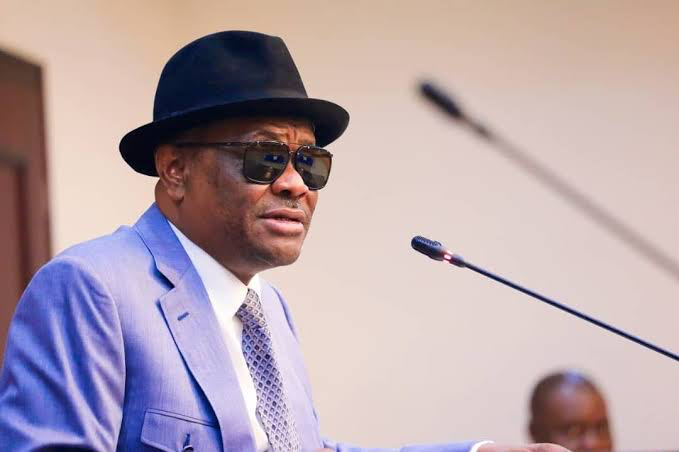
MINISTER of the Federal Capital Territory (FCT) Nyesom Wike has reduced the cost of obtaining a certificate of occupancy in the nation’s capital to N3.5 million.

This was contained in a statement released by the director of press, office of the FCT minister Anthony Ogunleye on Friday, November 24.

Wike had earlier pegged the cost of obtaining the document at N5 million, based on the recommendations of a task force set up to recover land use contravention fees in the FCT.

The minister’s decision did not go down well with many of the city’s residents, who believed the new fee would stifle their desire to own land in the city.

The ICIR reports that some stakeholders met with the minister and pleaded that he slash the fee, given the prevailing unfavourable economic situation the nation faces.

In the statement released on his behalf on Friday by Ogunleye, Wike said payment of the N3.5 million would not apply for recertification, but would be applicable only for new issuances.

The minister also disclosed that payment of ground rent would be enforced and threatened land owners who do not comply with the revocation of titles.

“Over the years, nobody has been able to enforce the payment of ground rent. I came on board, and I said, okay, it can’t be business as usual. You have property; you are given a C of O to back up your property. In that C of O, you are told to be paying annual ground rent. For the past 15 years, you didn’t pay. Some people, for the past 20 years, have never paid.

“And you know Nigerians, they said nothing will happen. I came and said something would happen, and they had to pay. Seeing that we mean what we have said, if you don’t pay, we will revoke, and we have been doing that. People are now queuing up to pay. Go to AGIS, people are queuing up, and that has now increased our IGR,” he said.

Wike added that the monthly internally generated revenue (IGR) in the FCT has increased from N14 billion to over N20 billion.

The ICIR reported that Wike directed all landowners to carry out a recertification of their C of O.

The recertification is to include the national identification number (NIN) for private individuals and the bank verification number (BVN) for corporate bodies in the document.

The process would cost N50,000 for private individuals and N100,000 for corporate bodies.

Appeal Court affirms Abiodun, Oborevwori as Ogun, Delta governors

0

THE Court of Appeal, Lagos, has upheld the elections of Dapo Abiodun and Sheriff Oborevwori as the duly elected governors of Ogun and Delta states.

On Friday, November 24, the court declared Abiodun the March 18 governorship election winner in a split – two-to-one – decision.

In the majority judgment delivered by Joseph Ikyegh, the appellate court rejected the appeal filed by Ladi Adebutu, the People’s Democratic Party’s (PDP) candidate.

However, the minority judgment delivered by Ane Inyang upheld the appeal and ordered the Independent National Electoral Commission (INEC) to conduct a fresh election in the state within 90 days.

The INEC had declared Abiodun – the governorship candidate of the All Progressives Congress (APC) – the poll winner.

Abiodun got 13,915 votes to extend his tenure as the state governor for a second and term of four years.

Declaring Abiodun winner, the Returning Officer for Ogun State governorship poll Kayode Oyebode Adebowale, who is Vice Chancellor of the University of Ibadan, said the governor polled 276,298 to edge PDP’s Adebutu who scored 262,383 votes.

Similarly, in a unanimous judgment, The Court of Appeal affirmed the election of Oborevwori of the PDP as the winner of the March 18 poll in Delta state.

The appellate court denied the appeal filed by Ovie Omo-Agege of the APC.

The appeal was deemed to have no merit by the court.

On September 29, the Delta state governorship election petition tribunal in Asaba affirmed Oborevwori’s victory in the governorship election held on March 18.

Omo-Agege, unsatisfied, appealed the tribunal’s ruling at the appellate court.

Abuja landlords must recertify C of O, submit BVN, NIN – Wike

0

MINISTER of the Federal Capital Territory (FCT) Nyesom Wike has said land owners in Abuja must recertify their Certificates of Occupancy (C of O).

The process will require them to include the national identification number (NIN) for individuals and the bank verification number (BVN) for corporate bodies.

He disclosed this while addressing journalists in Abuja on Friday, November 24.

Wike said the NIN and BVN would also be required of any person or organisation planning to obtain a C of O in the nation’s capital.

“There are a lot of discrepancies, a lot of cloning of C of Os. So we have come up with an idea that every allottee who seeks and applies for a C of O must supply his NIN. This is one of the features we are going to put in the new C of O.

“If a corporate body doesn’t have an NIN and they have a property, they must put their BVN. So many persons have not registered, and this will make them go and re-register,” the minister said.

He noted that private individuals might pay as much as N50,000 for recertification of the document to incorporate the required details, while corporate bodies might be charged about N100,000.

Wike noted that he had avoided signing C of Os since he assumed office as minister to give room for the latest development, which he described as security measures and means of improving revenue generation.

“It helps in terms of security; it also helps to improve our revenue generation. There are people who own seven properties, so this will identify them so they can pay taxes,” Wike said.

Speaking on the proposed N5 million fee for obtaining a C of O, Wike said the amount was not determined by the structure on the land but the property itself.

On Tuesday, November 21, Wike insisted that C of Os would cost a flat rate of N5 million, regardless of the size of the property, location, or structure to be erected on the land.

According to a statement by the director of press, office of the FCT minister Anthony Ogunleye, on Tuesday, Wike turned down suggestions by stakeholders to review the price and consider size, location of properties, and other factors, while determining the fee.

Although the minister hinted at the possibility of a review, he maintained that N5 million would be the flat rate for the document.