NIGERIA Customs Service (NCS) has revealed it lost N1.3 trillion in 2023 due to waivers and concessions that former President Muhammadu Buhari’s administration granted to investors.
The Customs also said it was not privy to details of the Custom’s $3.2bn modernisation project.
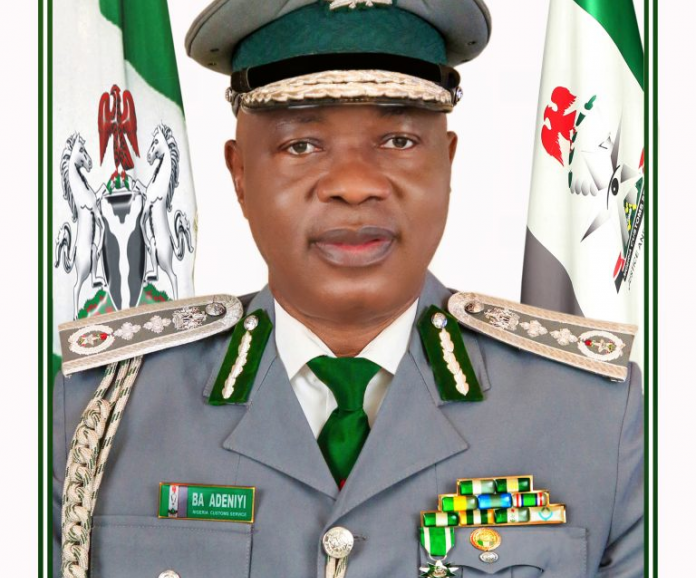
The NCS Comptroller-General, Adewale Adeniyi, disclosed this at the National Assembly on Wednesday, November 15.
He was represented by the Deputy-Comptroller General, Mba Musa, at a public hearing organised by the Senate Joint Committees to scrutinise the 2024–2026 Medium-Term Expenditure Framework and Fiscal Strategy.
At the hearing, the senators inquired from the Comptroller General about the details of the agreement signed by the Federal Government on the modernisation of Nigeria Customs.
The ICIR reports that the Federal Executive Council had in April 2023 approved the Nigeria Customs Service modernisation project, also known as e-customs, despite a court order restraining the government from going ahead with the initiative.
Buhari’s administration specifically approved implementing the Customs modernisation project to a concessionaire.
The concessionaire was granted to Bergman Securities Consultant and Suppliers Limited as the project sponsor, Africa Finance Corporation (AFC) as the lead financier, and Huawei Technologies was named as the lead technical service provider.
However, stakeholders knocked the project, saying it would mortgage the Customs’ future and was inimical to national security.
Speaking on the modernisation project before the Senate joint panel, Mba said, “We are not privy to details of modernisation agreement of the Nigeria Customs Modernisation Project.”
He also declared that the Customs lost of N1.3 trillion in 2023 due to waivers and concessions the Buhari’s administration granted to investors.
He explained that “NCS would have generated more revenue to the nation’s Consolidated Revenue Fund in 2023 if not for the waivers and concessions arrangements.”
Not comfortable with the arrangement, the Chairman of the Joint Committee, Sani Musa, said the Senate would commence an investigation into granting of waivers and concesioning in the country.
THE International Centre for Investigative Reporting (ICIR) has partnered with the University of Lagos, Lagos state, and the University of Calabar, Cross River state, on countering misinformation and promoting media literacy.
The partnership resulted in a two-day training for the institutions’ students from November 8 to 9 on the “Countering Misinformation and Promoting Media Literacy” project.
It aims to reduce the dissemination and impact of misinformation in Nigeria by promoting media literacy and responsible information sharing among citizens.
The German Embassy in Abuja supports the project.
Students were given a thorough step-by-step guide on combatting false news, identifying phishing websites, and verifying images and videos.
Students of the University of Lagos during a session
They were also taught how to write pitches, use OSINT tools, and archive claims online, among others, at the training held within the schools’ premises.
The ICIR editor, Bamas Victoria, who headed the facilitators, explained what could be said to be misinformation, disinformation, and malinformation. She also stressed the need to cross-check sources cited in a report.
The seminar emphasized the need to identify false news circulated on various platforms and how to fact-check using the tools available.
Facilitators at UNILAG include Kemi Busari, Editor of DUBAWA, Kimberly Kures, author and Content Creator, and Victoria Bamas, Editor of the ICIR.
Students at the event expressed gratitude to the organisers as they revealed it was an eye-opening seminar.
The UNILAG’s head of the Department of Mass Communication, Adepoju Tejumaiye, a professor, urged the students to take advantage of every opportunity to learn.
“The session is going to be interesting, informative, and enlightening. Our profession continually evolves, and it is a dynamic field. You have been carefully selected because we believe you will effectively share the knowledge gained with your colleagues. By the end of this training, you will be pleased that you participated in it. Welcome to a world of learning,” he said.
HOD Department of Mass Communication, UniLag – November 2023
Some students who shared their experiences after the training noted that the seminar taught them not to be purveyors of false news and always to check sources of information obtained on social media and other platforms.
The ICIR team, led by Bamas, paid a courtesy visit to the school’s Vice Chancellor, Folasade Ogunsola, a professor.
Folasade warmly welcomed the team and expressed delight at the team’s presence and collaboration with her institution.
TheICIR team during the courtesy visit to the VC Unilag
She lauded the project and highlighted the prevalence of misinformation in the media space.
The vice chancellor noted that even experienced journalists sometimes allow their emotions to guide them, often lacking thorough analysis and failing to present both sides of the story before publishing or airing.
She also stressed the need for the media to improve its standards.
She explained that she used to trust social media content after confirming it in the press, but now she is less certain, as it appears the press may be sourcing its information from social media.
Folasade Ogunsola, VC Unilag
She also observed that “truth, facts, and science” faced general challenges, and much work was needed. Folasade reiterated her enthusiasm for the Centre’s initiative in fact-checking and related efforts.
At the University of Calabar, an associate professor at the Department of Mass Communication, Stanislaus Iyorzza, urged the students to take advantage of every opportunity to learn.
During his visit to the training session, Iyorzza said, “The programme has been rich, and the students have attested. I know with the establishment of the hub in this school, we are going to have the train-the-trainers.”
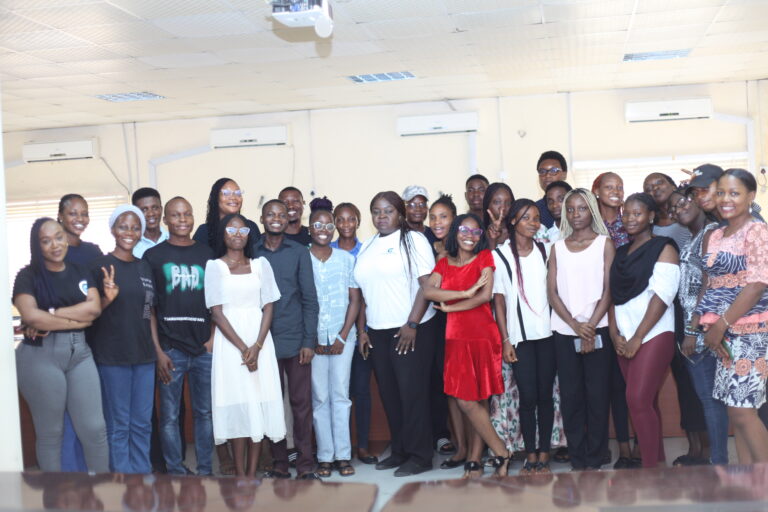
A group photograph of the students and the trainers at the University of Calabar.
Facilitators at UNICAL include researcher and fact-checker at Africa Check and FactCheckhub, AllWell Opki, Nurudeen Kures, respectively, and social media management expert Esther Ilesanmi.
Some of the students interviewed said the seminar taught them not to be purveyors of false news and always to check sources of information obtained on social media and other platforms.
One of the sessions at the University of Calabar
On October 30 and November 8, The ICIR reported a similar partnership and training at the Federal University Lokoja, Kogi State, Hassan Usman Polytechnic, Katsina State, Adekunle Ajasin University, Akungba-Akoko, Ondo State, American University of Nigeria (AUN) in Yola, Adamawa state, and Federal University of Kashere, Gombe state.
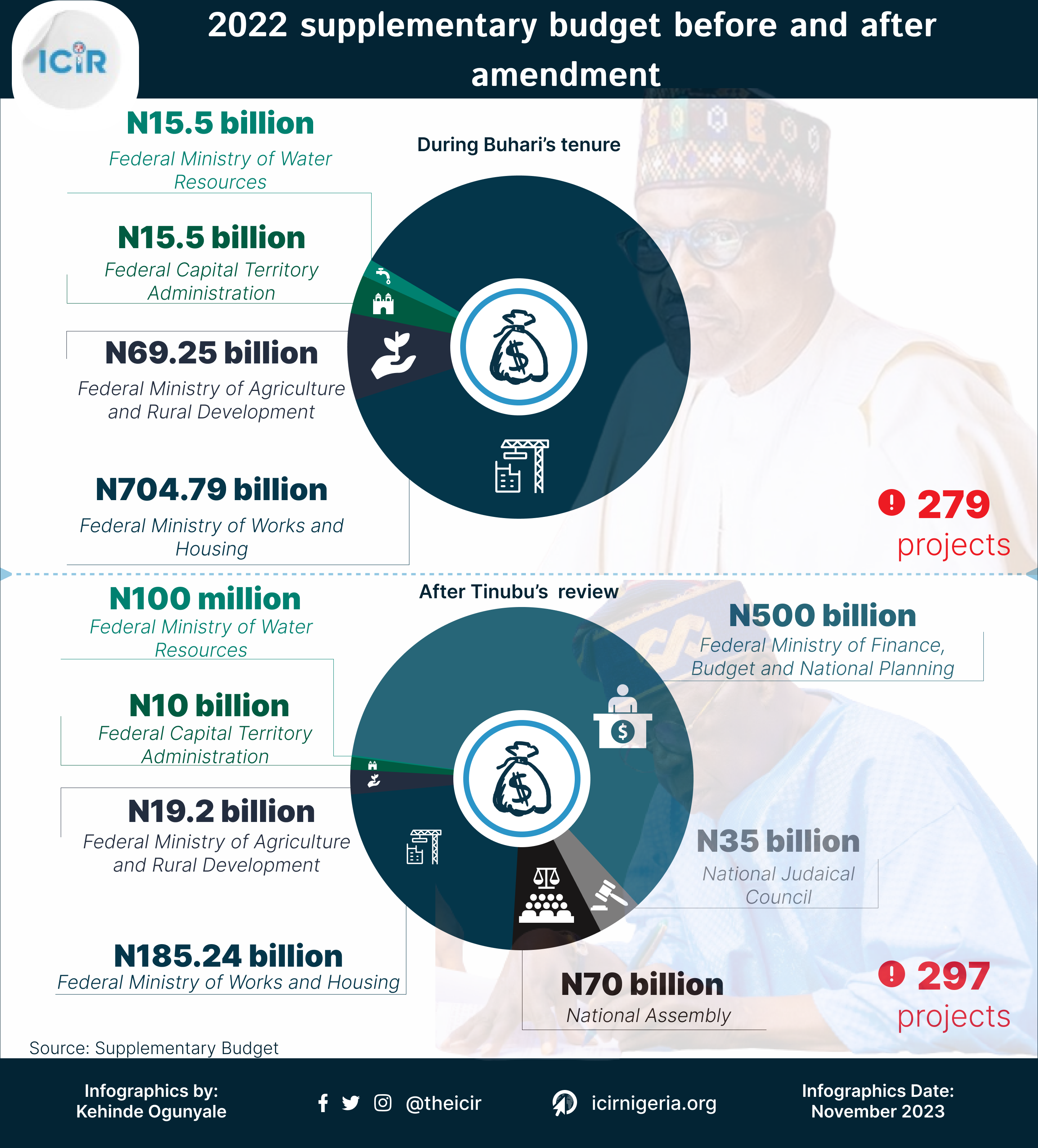
In December 2022, under Muhammadu Buhari’s Administration, a supplementary budget of N819.5bn was passed by the 9th Assembly to address the aftermath of the year’s flooding and to complete other crucial projects. The budget was for four MDAs – Works & Housing, Water Resources, FCTA and Finance. However, after subsidy removal in 2023, the 10th assembly, upon President Bola Tinubu’s request, reviewed the 2022 supplementary budget to reallocate N500bn for palliative. This was not all they did, as the ICIR’s investigation reveals the new leadership of the National Assembly, including the Senate President Godswill Akpabio, his deputy, Barau Jibrin, and the Senate Appropriation Chairman, Solomon Adeola (also known as Yayi), diverted over N20 billion in projects to their constituencies, resources that should have gone into solving flooding problems in other places. This was aside from the N70 billion approved budget for the National Assembly.
The ICIR reports that around N110.23 billion was earmarked in the supplementary budget for flood prevention projects and related road projects within the Federal Ministry of Works and Housing (FMWH), while several other projects across the Ministry of Finance, Budget and Planning; Water Resources; and Federal Capital Territory collectively received the highest share of the budget.
The 2022 flooding, which affected 35 states and the FCT, destroyed scores of houses, thousands of hectares of farmlands, infrastructure, and roads. Beyond the infrastructural damages, about 662 persons lost their lives, 3,174 suffered injuries, and 2,430,445 individuals were displaced, with a total estimated loss due to flooding amounting to N4.2 trillion, according to the former Minister of Finance, Ahmed Zainab.
The ICIR, in various reports, which can be read here and here, detailed the yearly cycle of warnings by the Nigerian Meteorological Agency (NiMet) and its potential recurrence if the state and federal governments fail to take preventive measures. Read The ICIR extensive reporting on flooding tagged Flood Serieshere.
Despite these warnings, The ICIR reported that states such as Niger, Rivers, Bayelsa and Kogi are at risk of experiencing another devastating flood due to a lack of proper preventive measures and inadequate preparations.
Meanwhile, after the emergence of Tinubu as the president, the senate leadership hid under the amendment of the 2022 Supplementary Appropriation Act sent by the president to pad the budget by over 20 billion.
Tinubu, in his letter to the National Assembly, said the amendment was to allow the Federal Government to source N500 billion from the N819.5 billion 2022 supplementary budget. This, according to Tinubu, was to cushion the effect of subsidy removal following his declaration that his administration would no longer pay fuel subsidy.
Infographic showing details of the 2022 supplementary budget, initially approved by the Buhari administration and subsequently reviewed by the Tinubu administration.
However, while passing the amendment supplementary budget, the senate also approved N70 billion for the 469 federal lawmakers for improved working conditions and another N30 billion for the National Judicial Council (NJC), among others.
Agricultural allocation reduced from N69.2 bn to N200m, 18 new projects inserted
The ICIR gathered that in the original supplementary budget, exclusively earmarked for four ministries, N69.2 billion was allocated to the Ministry of Agriculture. However, after the budget amendment, the money was reduced to 200 million.
Still exercising their power over the budget document, the lawmakers inserted 18 projects, amounting to N19 billion, into the Ministry of Agriculture and Rural Development (MDAs) budget. This brought the total amount to N19.2 billion.
Out of the total 19.2 billion allocated to the Agriculture Ministry as amended, only N200 million was allocated to the listed projects that comprised the initial 69.2 billion, while the remaining 19 billion was earmarked for new projects championed by influential figures within the senate.
Accordingly, the Federal Government, through the Ministry of Finance, ordered the release of the total supplementary budget of N819.5 billion to the seven (7) MDAs.
In a letter dated September 29, 2023, the Ministry, through the Deputy Director of Cash Management Department and the Permanent Secretary Special (PSSD), sought approval from the Finance Minister to release the funds to the beneficiary MDAs.
A letter, dated September 29, 2023, requesting for the approval of the Minister of Finance for the release of the budget amount to the beneficiary MDAs
Five new projects to Yayi’s constituency
While reviewing the document obtained by The ICIR, it was discovered that 18 additional projects, amounting to N19 billion, were inserted by the lawmakers out of which five were nominated by Senator Yayi. Most of the projects are to be executed in his constituency, Ogun West Senatorial District.
The five projects amount to N4 billion of the N19 billion additional budget are: 1. Construction of Edi Road, Sabo market and Ilaro township road, Yewa south 2. Construction of roads in Imeko, Afoniwye and Obada 3. Construction of Ilashe-Agbara road 4. Construction of market square-fadama ring road 5. Construction of police barrack, old baggage link road Ode Ogun
However, aside from the projects not being directly related to flood projects as read by the senate when passing the bill, Ogun State was not among the top 30 of the most hit states with flooding in 2022.
States such as Bayelsa, Anambra, Kwara, Nasarawa, Adamawa and Jigawa, which are some of the most devastated by the flooding and thus needed the most assistance, either saw their budget reduced significantly or excluded completely.
Reacting to The ICIR’s findings, Yayi’s Media Aide, Kayode Odunaro, argued that the senator is not part of the senate’s leadership and, thus, does not have the power to influence the budget to favour his constituency. Yayi was, however the Senate appropriations chairman.
“A budget passed through several stages before it was now passed, and it was signed into law by the president, which means it is law. Any query on it is not about an individual coming to explain…
“Once the executive brings the budget, the legislature has the power of appropriation. Now, if they bring the budget and they want to do a project of N1 billion to build one kind skyscraper, the legislature in their appropriation can do whatever they want to do with the budget,” he said
He, however, referred The ICIR to the senate spokesperson for further details on the issue, adding that the senate stance has been expressed in the budget passed.
Meanwhile, when The ICIR contacted the Senate spokesperson, Senator Yemi Adaramodu, his phone line was not reachable, and the text message sent to his phone received no reply.
7 new projects to Akpabio’s constituency
Similarly, another seven projects, amounting to N7.1 billion, with a predominant focus on road projects, the majority of which are designated for implementation within the senate president’s constituency, Akwa Ibom North West, were added to the supplementary budget.
There are also no direct and precise specifications of project details as the document carries ‘some roads’ for nearly all the projects nominated by Akpabio.
For instance, N1.250 billion was budgeted for the construction of some rural roads in the Essien Udim Local Government Area(LGA,) to improve farm produce, another N700 million was budgeted for the construction of rural roads in Ikot Ekpene LGA, and N1.250 billion for the construction of some roads in Abiakpo, Ikot Essien-Ikono, to ease the movement of farm produce.
The ICIR’s effort to get the reaction of the Senate President proved abortive, as his phone line was not reachable, and a text message sent to his line was not returned.
N5bn earmarked for vague projects
A further look at the document revealed that N5 billion was earmarked for vague projects, with no states, LGAs, cities or communities to be executed.
This was despite the widespread slashing of the entire supplementary budget, particularly in the Ministry of Works and Housing, to enable the removal of N500 billion for palliative as requested by the president.
This is also aside from the N70 billion inserted by the Senate for the ‘upkeep’ of the new members and N30 billion for the judicial council.
Barau Jibrin gets over 90 per cent of FERMA’s allocation
The alteration of the supplementary budget did not stop at that, as most of the projects allocated to the Ministry of Works and Housing were either slashed to the barest amount or removed completely, particularly the ones under the Federal Road Maintenance Agency (FERMA).
While the Assembly slashed some of the projects initially nominated by the senators in power in the previous administration, including projects nominated by former senate president Ahmed Lawan, the projects nominated by Jibrin, who represents Kano’s North Senatorial District, remained completely unaffected and remained as initially proposed during his tenure as Chairman of the Senate Committee on Appropriations in the 9th Senate.
Initially, the Buhari administration approved 704 billion to the Federal Ministry of Works and Housing, of which N82.9 billion was also allocated to the FERMA for the construction, rehabilitation and completion of some road projects in some states. However, after the amendment of the supplementary budget, the amount was reduced significantly to N11.5 billion, representing an 86.09 per cent decrease.
The reduction in FERMA’s appropriation from N82.9 billion to 11.5 billion is said to be causing ripples as contractors who had been awarded the projects and given the nod to commence the project are at a complete loss.
Sources and documents sighted by The ICIR further revealed that the projects nominated by the Jibrin accounted for 98.96 per cent of the total budget estimate of the Agency. Specifically, out of the total budget allocation of N11.5 billion, a substantial N11.2 billion was designated for projects in the deputy senate president’s constituency.
However, when this platform reached out to the spokesperson of the Deputy Senate President, Ismail Mudashir, on Monday, November 6, he claimed that the allegations that the Deputy Senate President ‘hijacked’ the 2022 Supplementary Budget to facilitate two projects in his constituency is unfounded, adding that the bill cannot be hijacked.
“…the budget is introduced by the executive and approved by the legislature: the Senate and the House of Representatives. Before the passage, it passes through a rigorous review of all lawmakers – 469 at both chambers who are members of committees that worked on the proposal. How can one lawmaker hijack it? How can a 90 per cent allocation of an agency with management and a board be hijacked by a lawmaker?
“After the approval by the legislature, the buck stops at the President’s table, who has the powers of assent. In the case of the 2022 Supplementary Budget, it was former President Muhammadu Buhari. As we all know, the Federal Government, in its quest to address infrastructural deficits or challenges, can locate projects in any part of the country. Is it an offence if a state or a community gets a federal project,” he said.
Politics of project allocation
It should be noted here, too, that the former senate president Ahmed Lawan had ‘cornered’ a total of N11.2 billion for projects in his constituency, but when he lost out in the presidential contest to Akpabio, the tables turned, and only N20 million were allocated to two of his projects.
Comparing allocations to flood-related projects within the Ministry of Works and Housing before and after the emergence of the new administration.
Contractors bear the brunt
Twenty-two other projects that initially amounted to N7.7 billion now have a budget of N300 million. Some crucial projects with over N5 billion initially appropriated had their budgets slashed to as low as N10 million.
For instance, N8.2billion awarded for the construction of Gasamu – Amshi – Gorgoram Road in Yobe state (ongoing) was reduced to N10 million, while N3 billion for the rehabilitation of 90km Buni Gari-Gulani Road (ongoing) was also reduced to N10m.
For a detailed account of how the amendment impacted their work, The ICIR spoke with different sources within the Ministry of Works and Housing, including a contractor, who has been affected by the amendment and padding of the budget.
The sources disclosed that some contractors have completed the project to 100 per cent while most of them have been at the different completion stages of the project since April 2023.
When asked about potential changes to the project scope, timeline, or specifications that might affect the payment process, *John (not real name), a contractor, revealed that the project terms and scope had remained constant, adding that the original timelines were also unchanged, but the current situation has now affected the timelines.
According to him, many projects were abandoned as contractors awaited payment, which may eventually lead to a necessity for extending the completion period.
“The terms and scope of the projects remain the same. The timelines, too, remained the same, but with the current situation, the timelines may be exceeded as everybody has abandoned the projects for those still on site. The client may need to extend the completion period due to the current situation.
John clarified that typically, an Advanced Payment Guarantee (APG) of 30 per cent was made available, and almost all contractors had provided this guarantee. However, the terms stipulated that payment should be made within 60 days of the issuance of the APG or interim and completion certificates by the contractors.
Sadly, these agreed-upon terms had been violated and disregarded in the current contract agreement.
“The only feedback has been that the budget has been reviewed downward to a ridiculously low, and they can only pay for what was provided by the government. They don’t have any answer to the current situation except they (the ministry) talk to the National Assembly or budget office to put it in the 2024 appropriations, which is being worked on but the issue is the government want to do a new budget which will still stagnant this current supplementary budget,” he stated.
John explained that he, along with a few contractors, had taken out loans from banks to complete the projects, adding that they are now facing a time crunch as interest continues to accumulate on their loans.
According to him, some of the already started projects, if not protected or completed on time, may get spoiled and increase further losses.
“A lot of us have gone to borrow money from banks and interest running negatively with our properties held by the bank, which may be liquidated if nothing is being done to remedy the situation. And even when it is remedied, the interest that must have accrued may have wiped out whatever expected profit as banks charge interest daily.”
He also stated that some of their staff have been idle and jobless due to the development.
Not the first time…
Over the years, there have been allegations of budget padding and diversion of funds by lawmakers, with the presidency, aggrieved lawmakers and some other relevant stakeholders raising concerns about the trend.
The ICIR in a series of reports, has reported how the lawmakers, the presidency and ministries have been accused of corruption in budgetary allocations.
Unlike Tinubu, who has refused to react to the budget ‘padding’, Buhari, in 2021, accused the National Assembly of altering the 2022 budget proposal without ‘apparent justification’ and explanation.
The former president signed the N17.13 trillion 2022 budget into law, different from the proposed budget of N16.3 trillion.
However, Buhari was concerned about the changes to the original budget proposal in the form of new insertions, outright removals, reductions and/or increases in the amounts allocated to projects, reduction of the provisions made for as many as 10,733 projects and the introduction of 6,576 new projects into the budget.
He also identified some worrisome changes in the budget that included an increase in projected Federal Government independent revenue by N400 billion, a reduction in the provision for sinking fund to retire maturing bonds by N22 billion, a reduction of the provisions for the non-regular allowances of the Nigerian Police Force and the Nigerian Navy by N15 billion and N5 billion respectively -all without any explanation.
The ICIR reports that wasn’t the first time that Buhari would be raising such allegations against the lawmakers.
Among the many allegations was the introduction of “about 2,000 projects … amounting to about N284 billion” into the 2016 budget by members of ’10 out of the 96 Standing Committees of the House.’
Also, in December 2021, Buhari accused the 9th Senate, led by Lawan, of altering the 2022 budget proposal without ‘apparent justification’ and explanation.
Although Lawan said the lawmakers were correct in their decisions, the former president raised concerns about the alteration made to the original budget proposal, including complete removal, adjustments in project allocations, reductions in provisions for as many as 10,733 projects, and the introduction of 6,576 new projects in the budget.
Buhari also expressed concerns about the inclusion of new provisions totalling N36.59 billion for the National Assembly’s projects in the service-wide vote, which he said was contrary to the principles of separation of powers and financial autonomy of the legislative arm government.
FOR the 10th consecutive month in 2023, Nigeria’s inflation rate increased to 27.33 per cent in October – the highest rate recorded since August 2005.
According to the National Bureau of Statistics (NBS) data, the inflation rate rose by 0.61 per cent from 26.72 per cent recorded in September 2023.
Then NBS said, “On a year-on-year basis, the headline inflation rate was 6.24 per cent points higher compared to the rate recorded in October 2022, which was (21.09 per cent). This shows that the headline inflation rate (year-on-year basis) increased in October 2023 when compared to the same month in the preceding year.”
The ICIR reports that this is the third time in the last decade (2014-2023) that the inflation rate would rise consecutively for ten months.
This organisation reported the rising inflation impacts on the snowballing cost of goods in the local market. This is coming despite the effort by the federal government to cushion the impact of subsidy by releasing several palliative schemes.
The NBS data also showed that the food inflation rate in October 2023 stood at 31.52 per cent higher than the 30.64 per cent recorded in September 2023. The rise in food inflation, according to NBS, was caused by increases in bread, cereals, oil, and fat prices.
It also attributed leaps in the prices of potatoes, yams, other tubers, fish, fruit, meat, vegetables, milk, cheese, and eggs to food inflation.
Accordingly, the prevailing high inflation in Nigeria is eroding the value of money, which may likely reduce investment and the real gross domestic project (GDP) growth rate in the country while commodity prices shift upward in the market.
Economic analysts, worried by this trend, told The ICIR that the government needed to take some bold steps to address the rising inflation impact on the economy, especially now the festive season is close.
“The inflation trend is not surprising because the factors that push it up haven’t normalised. You see a spike in energy costs – fuel, diesel, aviation fuel and cost of funds still very high from commercial banks,” former Director-General of Lagos Chamber of Commerce and Industry (LCCI), Muda Yusuf, told The ICIR.
He suggested to the government to prune down inflation through domestic refining, which would lessen petrol and diesel prices by extension, transport costs, reduction of import duty, and also lessen the cost of funds to enable the survival of businesses.
THE Securities and Exchange Commission (SEC) has said that a new e-dividend mandate portal would be operational at the end of this month to solve the challenges investors encounter in processing their unclaimed dividends.
The Commission’s Director General, Lamido Yuguda, said this while giving a remark at a two-day training SEC organised for journalists in Lagos State on Tuesday and Wednesday, November 14 and 15.
He said, “To help solve the perennial problem of unclaimed dividends, the Capital Market Committee, under the leadership of the Commission, has embarked on the creation of a new e-dividend portal, which is expected to become operational on November 30 2023.
“Once operational, this portal will simplify the process of mandating accounts for e-dividend. This will improve efficiency and ultimately leading to a significant fall in unclaimed dividends.”
SEC had in July 2015 introduced an e-dividend mandate form supposedly to ease the processing for shareholders to claim their dividends.
At the end of September 2015, the value of unclaimed dividends stood at N90 billion; it rose to N155.44 billion as of 2019, then to N170 billion in 2020, and has continued to surge.
The e-dividend mandate was expected to allow quoted companies to pay dividends directly into shareholders’ bank accounts and reduce the total value of unclaimed dividends.
But eight years later, the total value of unclaimed dividends has continued to increase.
In August this year, the SEC disclosed that unclaimed dividends have risen to N190 billion, escalating concerns, particularly among shareholders who rightfully owned the money.
Unclaimed dividends are payments companies declare for their shareholders, which the latter has yet to claim.
Among other issues, the SEC has blamed the increasing value of unclaimed dividend cases on multiple subscriptions.
In his remark, Yuguda added that unclaimed dividends would remain there until the owners come forward to claim them.
“In furtherance of its efforts to ensure that new dividends do not become unclaimed, the Commission is presently supporting work on an identity management system that would ensure that investors and market participants are properly identified so as to forestall the problems that led to the accumulation of unclaimed dividends,” Yuguda added.
The ICIR had on March 18 reported that unclaimed dividends, resting in the Unclaimed Dividends Trust Fund being managed by the Debt Management Office (DMO) and SEC, are unsettling the Nigerian Exchange Limited (NGX) and the entire stakeholders in the capital market.
The chief executive officer (CEO) of NGX, Temi Popoola, at a retail investors’ webinar on March 17, expressed worries over the unended cases of unclaimed dividends.
Popoola was concerned that some retail investors remained unaware of the backlog of unclaimed dividends accrued over many years.
The matter is worse for investors with legacy investments held on their behalf and endowed as investments by birthright or inheritance.
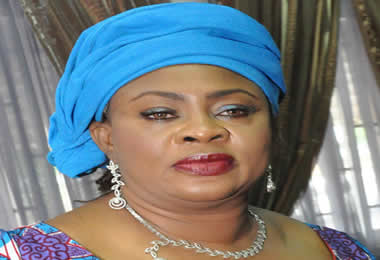
THE Office of the Attorney General of the Federation (AGF) has taken over a N5 billion fraud case filed by the Economic Financial Crimes Commission (EFCC) against a former Minister of Aviation, Stella Oduah.
The case was filed by the Economic Financial Crimes Commission (EFCC).
The AGF’s lawyer, David Kaswe, revealed this during the court proceedings on Tuesday, November 15.
He said the defendant’s case file had been requested in a letter to the EFCC.
According to Kaswe, the AGF could not start the trial because the commission had yet to release the case file.
He sought an adjournment, but trial judge Inyang Ekwo told him that the AGF was supposed to take over the matter following the court’s order.
Ekwo said since the AGF’s office was required to follow the directive, it was unnecessary to write the EFCC.
However, Kaswe claimed that his office had considered the recent leadership shift at the EFCC.
The judge then postponed the case until March 28, 2024.
The ICIR reported that the EFCC arraigned Oduah, her ex-aide, Gloria Odita, and seven others over alleged N5 billion naira fraud three years ago.
They were arraigned before a Federal High Court in Abuja, presided by Inyang Ekwo, for money laundering, conspiracy, and maintaining anonymous bank accounts.
The 25-count charge was read to them by the court’s official.
Each defendant entered a not-guilty plea.
Other defendants include Chukwuma Irene Chinyere, Nwosu Emmanuel Nnamdi, Global Offshore and Marine Ltd, Tip Top Global Resources Ltd, Crystal Television Ltd, China Civil Engineering Construction Corporation (CCECC) Nigeria Ltd, and Sobora International Ltd.
The EFCC alleged that Oduah misused government funds worth N5 billion while serving as a minister.
The charge marked FHC/ABJ/CR/316/2020 was first filed in 2020.
The court mandated that the AGF’s office handle the prosecution of Oduah and others.
Ekwo gave the order after Oduah and her co-defendants were arraigned before him by the EFCC.
The judge claimed that the controversy surrounding the case’s prosecution played a role in his decision to assign the case to the AGF.
To ensure thorough prosecution of the accused, he instructed the EFCC to transmit the case file to the AGF’s office.
Between 2021 and 2023, the case was repeatedly set for arraignment, but it was postponed for several reasons.
In February 2014, former President Goodluck Jonathan sacked Oduah as minister of aviation alongside three other cabinet members.
Oduah’s sack did not come as a surprise, as her approval to purchase two bullet-proof cars for N255 million caused public outrage in the country, with many Nigerians calling for her removal and prosecution.
The House of Representatives approved the recommendation of its aviation committee, asking for her removal following the controversial purchase of the two armored vehicles at an inflated N255 million.
Oduah had maintained she did nothing wrong.
She said the purchase was not done in her name.
The minister was also accused of forging her certificates.
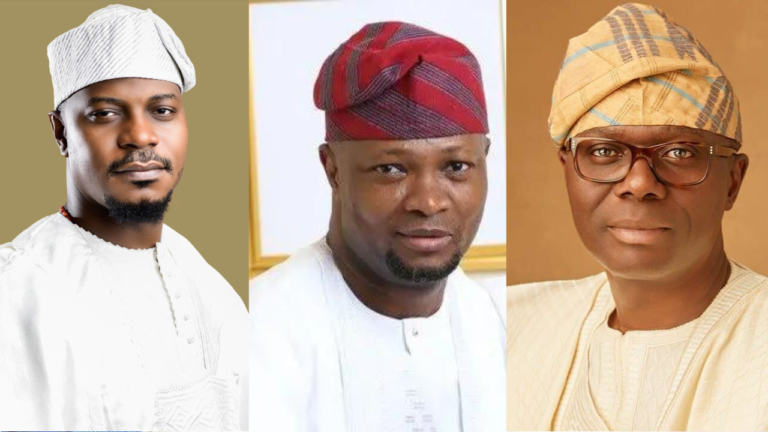
THE Court of Appeal in Lagos Lagos, on Wednesday, November 15, dismissed the suits filed by the governorship candidates of the Labour Party (LP), Gbadebo Rhodes-Vivour and the Peoples Democratic Party (PDP), Olajide Adediran, challenging the victory of the All Progressives Congress (APC) candidate, Babajide Sanwo-Olu, in the March 18 governorship election in the state.
In a unanimous judgment, the panel of the appellate court, headed by Yargata Nimpar, dismissed the appeals for lacking merit.
The court held that the appellants failed to prove their allegations of forgery and non-qualification against the governor and his deputy, Dr. Obafemi Hamzat.
When reading the decision regarding the PDP’s appeal, Justice Nimpar declared, “Even though they were all pre-election matters, the appellants (PDP and Adeniran) still failed to prove them.
“The appellants came empty-handed and left empty-handed.
They merely enjoyed their day in court. Their petition is dismissed.” the three-man panel stated.
Also ruling on Rhodes-Vivour’s appeal on Wednesday, the appellate court dismissed his suit and described it as lacking merit.
In a unanimous decision, the panel affirmed Sanwo-Olu and Hamzat as governor and deputy governor of the state.
In addition to Nimpar, other justices on the panel were Paul Bassi and Samuel Bola.
In March, the Independent National Electoral Commission (INEC) declared Sanwo-Olu the winner of the Lagos governorship election.
Sanwo-Olu polled 762,134 votes to defeat his closest rivals, Rhodes-Vivour of the LP, who scored 312,329, and Adediran of the PDP, who came third with 62,449 votes.
Dissatisfied with the poll’s outcomes, the LP and PDP candidates petitioned the Lagos State Election Petitions Tribunal to declare Sanwo-Olu’s victory void.
On September 25, the tribunal dismissed the lawsuit filed by Adediran and Rhodes-Vivour.
Disappointed with the decision, Jandor and Rhodes-Vivour appealed the tribunal’s ruling at the Appeal Court.
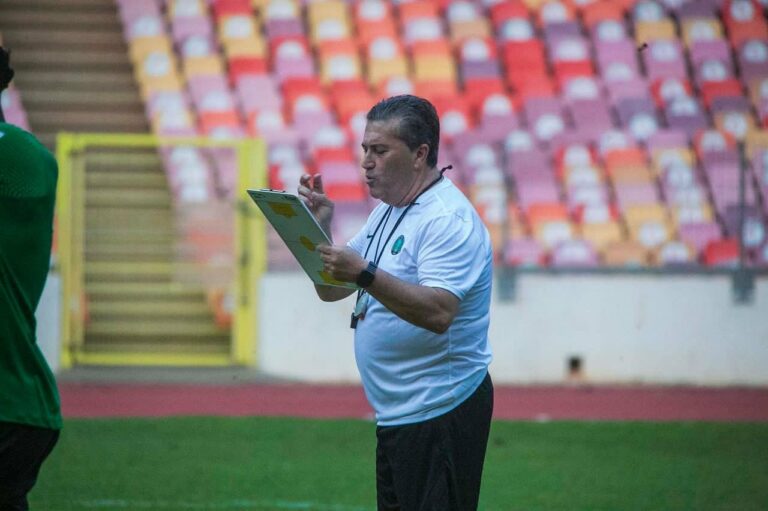
NIGERIA’s senior men’s football team Super Eagles coach, Jose Peseiro, has defended his selection of Francis Uzoho as first-choice goalkeeper despite outbursts over the shot stopper’s howlers.
Uzoho’s recent performances in two international friendly matches against Saudi Arabia and Mozambique, which ended 2-2 and 3-2, respectively, raised concerns about how he responded to his conceded goals.
Reactions from Nigerians on social media fueled the buzz generated by his performances, and it worsened after he took a swipe at his critics.
However, he apologised to fans for his actions.
Ahead of the race for the World Cup qualification match against Lesotho at the Godswill Akpabio Stadium on Thursday, November 16, the Super Eagles gaffer, in defiance of calls by his critics, opted for Uzoho again as his first-choice goalkeeper.
“Francis Uzoho is the best goalkeeper in Nigeria, and he will be starting tomorrow against Lesotho,” said Peseiro at a press conference.
The three goalkeepers in camp are home-based goalkeeper Enyimba FC keeper Ojo Olorunleke, Bendel Insurance Amas Obasogie and Francis Uzoho.
The ICIR reports that the Super Eagles’ victory against Lesotho will take them to lead their Group C after Rwanda played a goalless draw against Zimbabwe today.
In this report on December 10, this organisation published the 23-man list for the match, including debutant Nathan Tella.
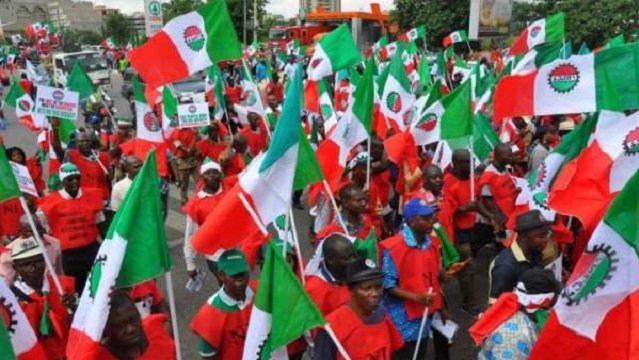
MEMBERS of Organised Labour have suspended their nationwaide strike action on Wednesday, November 15.
The National Executive Council (NEC) of the National Labour Congress (NLC) and Trade Union Congress (TUC), called off the strike on Wednesday night.
“The NEC of the NLC and the TUC have suspended the strike. We did this based on our trust for the National Security Adviser, Nuhu Ribadu, who gave us his words,” National Deputy Vice-President of the TUC, Tommy Etim said.
The suspension comes after meetings with the Minister of Labour Simon Lalong and National Security Adviser (NSA) Nuhu Ribadu.
The NLC, TUC and affiliated unions declared a nationwide strike on November 7, which took effect on Tuesday, November 14, following Ajaero’s attack.
The ICIRreported that the NLC president was captured and brutalised during the workers’ protest in Imo State on Wednesday, November 1.
Upon his release, he emerged with a battered face and was quickly rushed to the Federal Medical Centre, Owerri, for medical attention
On November 3, the unions issued a five-day ultimatum to the federal government demanding the replacement of the Imo Police Commissioner Mohammed Barde over his alleged involvement in the attack on Ajaero.
The attack was also blamed on the state governor Hope Uzodimma, who was seeking re-election at the time.
In retaliation, members of the union staged protests at the Abuja and Owerri airports, on Thursday, November 9.
The unions also called for the arrest and prosecution of some of the governor’s aides and threatened to embark on a nationwide industrial action if their demands were not carried out.
Hope, however, emerged winner of the elections and claims that he was not involved in the attack.
A few days after the attack, the Inspector General of Police (IGP) Kayode Egbetokun redeployed Barde from the state.
The NSA on Wednesday, November 15, urged the Organised Labour to call off the nationwide strike, expressing concerns over the implication of the action.
He added that some of Ajaero’s attackers have been arrested, and were being investigated.
“The NSA is particularly worried about the implications of the strike action on the livelihood of ordinary Nigerians and its potential impact on economic security and other strategic national interests. As attested by the NLC leadership, the NSA immediately intervened on learning about the travails of the President of the Nigerian Labour Congress (NLC), Comrade Joseph Ajero who was assaulted in Owerri, Imo State.
“The NSA regrets the incident and condemns it in its entirety as it was against the rule of law and the principles of freedom of association and expression subscribed to by President Bola Ahmed Tinubu and his administration,” Ribadu noted in a statement.
Every year, high-level political, industry, science, and civil society participants gather in Berlin for two days to discuss shifting to a sustainable energy system.
International journalists are welcome to report on the BETD 24 discussions and proposed innovative energy solutions.
This BETD Media Fellowship allows young journalists from around the world to come together in the German capital to participate in this exclusive conference, talk to high-ranking stakeholders from science, politics, industry, and civil society, as well as connect with other BETD Media Fellows from all over the world and strengthen international energy journalism that does not stop at national borders.
The fellowship program includes the following parts:
Travel & accommodation
A paid trip to Berlin for the BETD and Berlin Energy Week
A virtual meeting upfront with professional input
Active participation in the BETD 24 and more
Community building with former BETD media fellows
Visibility & outreach via our platform for all the media fellows’ articles about BETD.24
The deadline for the submission of application is December 4, 2023. Interested fellows can apply here