Home Blog Page 811

REA connects over 40,000 MSMEs to 103 mini-grids

THE Rural Electrification Agency (REA) said the electrification of 46,661 Micro, Small and Medium Enterprises (MSMEs) will foster ease of doing business growth and provide opportunities for wealth creation.

The agency also said households and public facilities are also being electrified with a total of 103 mini-grids geared toward providing an enabling business and economic environment for them.

The Agency, in a statement issued on August 24, 2023, said 103 mini-grids were also being deployed across the country under the Performance Based Grant subcomponent of the Nigeria Electrification Project, funded by the World Bank.

This, it said, signalled a crucial advancement in enhancing electricity access for households, MSMEs, as well as public facilities in rural and underserved regions of Nigeria.

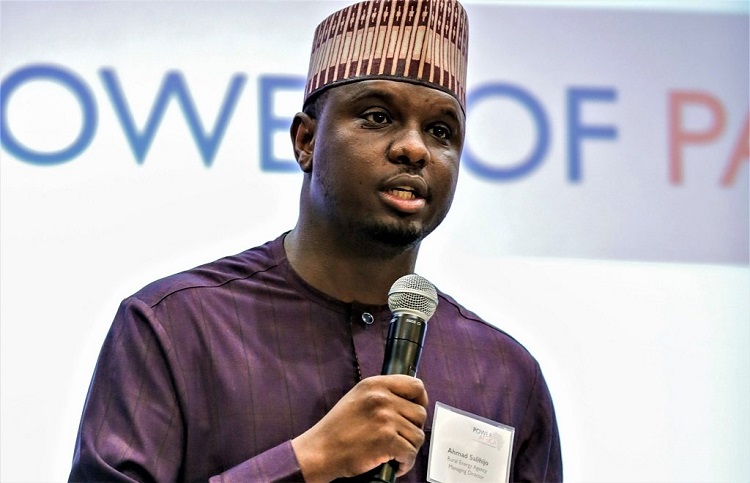
Speaking at a recent 10th Mini-Grid Roundtable discussion, which was held virtually, the Managing Director/Chief Executive, REA, Ahmad Salihijo, said the agency was dedicated to bridging the energy access gap in Nigeria.

“The REA was established with the mandate to increase access to electricity by bridging the energy access deficit in Nigeria. Since inception, we have made significant progress in achieving this goal.

“The agency is implementing various electrification programmes – like the Nigeria Electrification Project, targeted at creating lasting impacts by fostering economic growth, improving education, and enhancing the overall quality of life of Nigerians,” he stated.

Highlighting the key strategy, he said, “One of the key strategies that we are using to achieve this goal is the Performance Based Grant sub-component. The PBG is a financing mechanism that provides grants to qualified developers to construct and operate mini-grids in rural communities.

“So far, the PBG has been very successful in attracting private sector investments in mini-grids. Through the NEP, over 80 mini-grids have been completed and commissioned, connecting about 32,000 households, MSMEs, and public facilities, and providing clean and reliable electricity.”

Salihijo said the solar hybrid mini-grid component had witnessed remarkable success, “with a total of 46,661 verified connections made to households, MSMEs, and public facilities.”

He added, “Each connection is a step towards bridging the energy gap and fostering economic development.”

The REA boss stated that an additional 281,578 connections were in progress, as the agency was poised to further expand the project’s impact and reach.

The head of the REA Project Management Unit of the NEP, Abba Aliyu, while applauding the project said, “We are thrilled to announce that we have successfully completed and commissioned 103 mini-grids as part of the NEP initiative.

“This achievement underscores our commitment to providing reliable and sustainable energy solutions to communities that have long been underserved.

“Our goal has always been to empower communities with the power of electricity. These 103 mini-grids represent brighter futures, improved livelihoods, and opportunities for growth.”

He explained that the initiative had positively impacted over 230,000 people across the country, leading to meaningful changes in their daily routines, economic activities, and overall quality of life.

Aliyu said the installation of 5.8 megawatts of photovoltaic capacity underscored REA’s commitment to harnessing renewable energy sources for sustainable power solutions.

Meanwhile, Salihijo stated that as the REA continued its efforts, the successful deployment of 103 mini-grids stood as a testament to the project’s dedication to creating a brighter and more electrified future for communities throughout Nigeria.

“We’re not stopping here. Our vision is to keep expanding, keep innovating, and keep bringing light to every corner of this nation,” he stated.
Nigeria other countries can benefit more from reforming fossil fuel subsidies – IMF

0

THE International Monetary Fund (IMF) says reforming fossil fuel subsidies is in countries’ interest, even when excluding climate benefits.

It stated this in a report, ‘IMF Fossil Fuel Subsidies Data: 2023 Update’, released on Wednesday, August 23.

A fossil fuel subsidy is any government action that lowers the cost of fossil fuel energy production, raises the price received by energy producers, or reduces the price paid by energy consumers.

The Fund explained that in the average country, reforming fuel subsidies to the extent that the government reduces CO2 (carbon dioxide) by about 25 per cent below baseline levels in 2030 would raise net welfare before even counting global climate benefits.

This could result in local environmental benefits and remove price distortions.

“Fuel price reform would avert about 1.6 million premature deaths yearly from local air pollution by 2030.

“Globally, full price reform would generate net welfare benefits of about 3.6 per cent of GDP,” the international financial institution said.

Though Nigeria’s CO2 emissions fluctuated substantially in recent years, it tended to increase from 1972 – 2021, ending at 127 million tonnes in 2021.

Research showed that about 80 per cent of carbon emissions in Nigeria are direct consequences of fossil fuel combustion.

Put, CO2 is a colourless, odourless gas in the atmosphere and is formed when any fuel containing carbon is burned.

Nigeria has the highest number of overall air pollution-related pneumonia deaths of children under five worldwide.

The country also has the highest number of household air pollution-related pneumonia deaths among children under five, according to a United Nations International Children’s Emergency Fund (UNICEF) report.

It showed that the deaths of Nigerian children under five due to overall air pollution-related pneumonia were 67,416 in 2019, while deaths of those under five due to household-specific air pollution-related pneumonia were 49,591 during the same year.

A member of the Britton Wood institutions, IMF said fully reforming fossil fuel prices by removing explicit fuel subsidies and imposing corrective taxes such as a carbon tax would reduce global CO2 emissions by 43 per cent below ‘business as usual’ levels in 2030 (34 per cent below 2019 levels).

Explicit subsidies occur when the retail price is below a fuel’s supply cost.

IMF said, “Full fuel price reform would also raise substantial revenues, worth about 3.6 per cent of global GDP.

“These revenues could be used to cut more burdensome taxes such as on those labour, help with debt sustainability, or fund productive investments.

“Indeed, for developing countries as a whole, revenue gains from full price reform exceed the estimated extra spending needed to achieve the Sustainable Development Goals,” IMF said.

The ICIR reported that Nigeria’s debt currently stood above N46 trillion, and with the central bank’s ways and means to the federal government, it is approximately N70 trillion.

The latest Debt Sustainability Analysis (DSA) report has highlighted the need for more revenues to keep Nigeria’s public debt sustainable.

The recently released DSA Report, which is for the year 2022, also emphasised the need for the government to grow revenues.

Continuing, the IMF report showed that underpricing for local air pollution and global warming account for nearly 60 per cent of global fossil fuel subsidies and underpricing for supply costs and transportation externalities (such as congestion) explains another 35 per cent. In contrast, the remainder is accounted for by forgone consumption tax revenue.

It estimated that global total fossil fuel subsidies amounted to $7 trillion in 2022, equivalent to nearly 7.1 per cent of global gross domestic product (GDP).

“By fuel product, undercharging for oil products accounts for nearly half the subsidy, coal another 30 per cent, and natural gas nearly 20 per cent (underpricing for electricity accounts for the remainder).

“By region, East Asia and the Pacific account for nearly half of the global subsidy. By country, in absolute terms, China remains the biggest subsidiser of fuels, followed by the US, Russia, EU, and India,” the IMF added in the report.

Brics expansion: six more nations are set to join – what they’re buying into

0
By Bhaso Ndzendze, University of Johannesburg

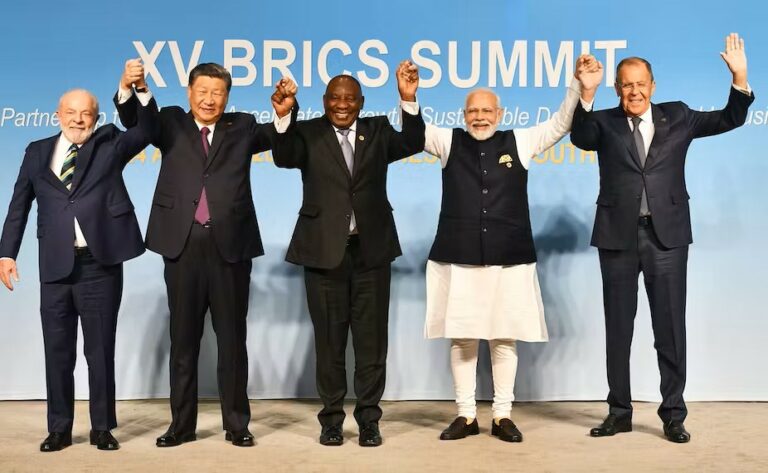
One key outcome of the 15th Brics summit, hosted by South Africa, is the decision to invite six more countries to join the group with effect from January 2024. They are Argentina, Ethiopia, Iran, Saudi Arabia, Egypt and the United Arab Emirates. All six had applied for membership. The enlargement will grow the association’s membership to 11, and increase its envisaged role as a geopolitical alternative to global institutions dominated by the west.

The five current member countries – Brazil, Russia, India, China and South Africa – have argued that their size, in economic and population terms, was not represented in the world’s institutions, particularly the World Bank and the International Monetary Fund (IMF).

The Brics five represent about 42% of the world’s population and more than 23% of world GDP.

The enlarged grouping will account for 46.5% of the world population. Using the IMF’s 2022 GDP data, we can deduce that it will account for about 30% of global GDP.

The disparate nature of the six new members is bound to spark debate about the real nature of Brics.

In his welcoming remarks at the summit (22-24 August), the host, South African president Cyril Ramaphosa, stated:

Brics stands for solidarity and for progress. Brics stands for inclusivity and a more just, equitable order. Brics stands for sustainable development.

The group has been remarkably consistent on these values and aspirations.

Understanding the nature of Brics

One of the first questions about Brics is often “what is it?”. This is telling. This question does not come up, for example, about the European Union or even the G20.

Brics is not an organisation (it has no headquarters, secretariat or treaty). But it does have a formal institution that is jointly owned – the New Development Bank. Confusion about Brics’ precise nature is understandable.

At various points it has referred to itself as a forum, a platform, a mechanism, a partnership, or a strategic partnership, to name a few. Others have called it an alliance or a bloc. It is neither.

In international relations, both terms are strictly defined. The term “alliance” refers to a mutual defence pact and implies military cooperation. A “bloc” refers to ideological consistency (political bloc) or a free trade agreement (trade bloc). Brics has none of these characteristics.

The members also disagree on some key issues. China and Russia are noncommittal (at best) on the aspirations of India, Brazil and South Africa to become members of the UN Security Council. Their declarations have over the years reiterated the same phrase:

China and Russia understand and support the aspirations of India, Brazil and South Africa to play a greater role in the United Nations.

This shows there is some serious disagreement within the group.

As a political scientist interested in global politics, I have written about Brics and its potential for changing the status quo. With hindsight, I can assert that certain principles have informed it since its establishment and first summit in 2009. In my view, at a material level, the 15 years of summit declarations point to four fundamental values:

  • mutual development

  • multilateralism

  • global governance reform

  • solidarity.

The association self-reportedly seeks secure sustainable development for itself and the global south, to safeguard and advance multilateralism, to institute reform for the goal of representative institutions, and to achieve solidarity among members.

Economic development

Economics comes first in the group; at its root, it is a collective of emerging economies eager to sustain and improve their economic trajectory. Their insistence on reform is, after all, based on their perceived disproportionate under-representation in global financial institutions.

The group’s first, and so far only, notable establishment is the New Development Bank, primarily to finance infrastructure development. There’s also a contingent reserve that members can draw from in emergencies. It is valued at US$100 billion.

Multilateralism

The second value refers to the group’s concern about the use of entities outside the UN to pursue global objectives. Most notable is the use of the North Atlantic Treaty Organisation (Nato) to invade Afghanistan in 2001 following the 9/11 attacks in the US, and the invasion of Iraq in 2003 by the US and the UK, circumventing the UN Security Council.

Russian president Vladimir Putin expressed this concern in his speech to the 2007 Munich Conference on Security:

The use of force can only be considered legitimate if the decision is sanctioned by the UN. And we do not need to substitute NATO or the EU for the UN.

Global governance reform

Thirdly, the Brics countries have long pushed for leaders of global institutions to be elected in a transparent and democratic way. For example, the president of the World Bank has always been an American, and the managing director of the IMF a European. The World Bank has 189 member states and the IMF 190.

The idea of the New Development Bank was not to substitute the World Bank but to “supplement” existing international financial institutions. Brics still envisions a World Bank in which its members have voting rights proportional to their economic weight, and with staff drawn from across the world in a geographically balanced way.

Solidarity

Finally, the members have articulated solidarity with one another in a number of declarations, beginning in 2010. It comes down to mutual assistance in times of humanitarian disasters, respecting one another’s sovereignty and territorial integrity.

In light of criticism and sanctions plans against China, for its alleged suppression of the Uyghur-Muslim population, and Russia, for invading Ukraine, solidarity has come to mean silence or nonalignment.

A blank slate

Brics is a nebulous entity. This has proved beneficial for member countries hosting Brics summits. They get to set the agenda and use it for their ends – without upsetting the consensus. One common pattern has been the use of summits to set overarching themes that are favourable to the host country’s domestic policy and regional leadership or foreign policy stance.

Thus, for example, all Brics summits hosted by South Africa foregrounded Africa in their names: “Brics and Africa: Partnership for mutually accelerated growth, sustainable development and inclusive multilateralism” in 2023. Brazil and Russia have inserted issues that are important to their region, and often invited leaders of neighbouring countries to retreats.

This shows how much clout they enjoy, as they get to funnel access to a now-renowned association that is simultaneously well established but also evades easy definition. With the addition of the six new members, such evasiveness is set to only continue.The Conversation

Bhaso Ndzendze, Associate Professor (International Relations), University of Johannesburg

This article is republished from The Conversation under a Creative Commons license. Read the original article.

NFF To Reps: We have no money to clear Super Falcons 2019 backlog

0

*We have cleared 2023 bonus – NFF

THE Nigeria Football Federation (NFF) has distanced itself from owing the country’s senior women’s football team, Super Falcons, their bonuses from the just concluded FIFA Women’s World Cup hosted in Australia and New Zealand.

The country’s apex football administration president, Ibrahim Gusau, made this known on Thursday in Abuja while appearing before the House of Representatives ad-hoc committee after being summoned.

The NFF told the committee that the Super Falcons had been paid their match bonuses and allowances owed them last Friday.

Asked regarding the unpaid allowances of the Super Falcons in the 2019 FIFA Women’s World Cup, Gusau explained that no funding was released for their participation.

He noted that $960,000 was given to all 32 countries that qualified for the 2023 FIFA Women’s World Cup.

Giving an explanation of the $960,000, the NFF president explained that it was preparation money provided by FIFA to be used by the participating countries to prepare the teams for the World Cup.

“We can’t use this money to pay outstanding allowances for the 2019 FIFA Women’s World Cup,” he said.

Rattled by the unpaid 2019 bonuses, the chairman of the ad hoc committee, Blessing Oni, questioned how the NFF was able to fund the Super Falcons campaign at the 2019 FIFA Women’s World Cup hosted by France.

Unsatisfied by NFF’s response, Onu ordered that the documents of how the Super Falcons were funded in the 2019 FIFA Women’s World Cup, including match bonus payments for the 23 players and the coaching crew, should be provided by the NFF before August 30, 2023.

Gusau, in response to a question about their funding he told the ad hoc committee’s that they usually get funded by the Confederation of African Football (CAF) and FIFA.

On funding, the NFF stressed that the Federal Government does not provide funds for its staff and officials; rather, the federation gets its operational cost from FIFA.

He said: “The Confederation of African Football provides $250,000 per annum as a subvention fund.”

Chicago State University responds to Atiku’s request to release Tinubu’s academic record

THE Chicago State University (CSU) has responded to a request by the candidate of the Peoples Democratic Party (PDP) in the 2023 presidential election, Atiku Abubakar, seeking to obtain academic records of President Bola Tinubu at the institution.

Abubakar went to a US Court to force the institution to release an acceptance letter, attendance and other related document of Tinubu’s undergraduate days in the school.

Atiku, through his lawyer, Angela M. Liu, is requesting documents that include records of his enrollment and admittance to the University, dates of attendance, as well as any degrees, honours, and honours Tinubu may have received at the institution.

Atiku informed the Court that the subpoena was issued to investigate the accuracy and truth of Tinubu’s claims, adding that Tinubu is currently the president of Nigeria and is involved in numerous legal battles over his election and the validity of documents proving his enrollment at Chicago State University.

In its response, the CSU restated that President Tinubu is a graduate of the institution.

In a document shared by the PDP on its official Twitter account on Thursday, August 24, the CSU said it needs to understand why Tinubu’s academic records could have any bearing on a 2023 election challenge in a foreign country.

However, it stated that Tinubu’s academic record would be made public whenever an order is issued by a court in the United States (US).

“Bola Tinubu, the President of Nigeria, graduated from the University in 1979.

“One of his political opponents, Abubakar, seeks discovery from the University of Tinubu’s student records and information about the dates and circumstances certain diplomas were issued by the University, asserting such discovery is pertinent to a Nigerian proceeding challenging Tinubu’s election earlier this year.

“The student records Abubakar seeks from the University via a documents subpoena (Doc.1-1) and the information Abubakar seeks the University to provide pursuant to a deposition subpoena (Dec. 1-2) concem Tinubu’s private educational records. But since Tinubu has intervened to oppose this discovery, the University defers to Tinubu on the privacy issues implicated by Abubakar’s Application,” the statement reads.

The University said it struggles to understand how-given that Tinubu did, in fact, graduate from the University in 1979-Tinubu’s grades and other student records from the 1970s and date and signatory information on subsequently issued ceremonial diplomas could have any bearing on a 2023 election challenge in a foreign country.

The University admitted that it is not familiar with the issues in the Nigerian proceeding or the evidentiary and other legal principles applicable therein.

Accordingly, the CSU said it defers to Tinubu, who is involved in that foreign proceeding, to move objections to the Atiku’s application.

“The University respectfully requests that this Court, in ruling on the application, scrutinize both the actual status of the Nigerian proceeding and the likelihood that any discovery information provided by the University would, in fact, be considered in the Nigerian proceeding.

“The University Reserves Objections to the Scope of the Discovery Sought by Abubakar. Finally, in the event the Court determines to allow any discovery to proceed here, the University urges the Court to direct only limited, targeted discovery on the University.

The CSU added that without limiting further objections, the University notes that the scope and relevancy of Abubakar’s requests are inappropriate.

In conclusion, the institution stated that following the Court’s ruling on the request, should any discovery be permitted, it will meet and confer promptly and in good faith with Abubakar’s counsel to attempt to address all the University’s concerns.

On Tuesday, August 1, the Presidential Election Tribunal reserved judgment on the petitions filed by Abubakar and Peter Obi of the Labour Party (LP) against the outcome of the February 25 presidential election.

In different suits, Atiku and Obi are challenging President Tinubu’s declaration as the winner of the election by the Independent National Electoral Commission (INEC).

In Atiku’s case, the respondents in the suit are the Independent National Electoral Commission (INEC) Tinubu and the All Progressives Party (APC).

After adopting the parties’ final written addresses, the Tribunal reserved judgment on the petition.

The Chairman of the Tribunal, Simon Haruna Tsammani, announced that the verdict would be given at a later time that would be made known to all parties.

Jamaica’s Danielle Willams denies Tobi Amusan’s World women 100m hurdles title defence

0

JAMIACA’S Danielle Willams has emerged as the winner of the 2023 world women’s 100m hurdles champion at the ongoing World Athletics Championships in Budapest.

Williams who finished in the top position of the race ended with 12.43 seconds to deny Nigeria’s medal hopeful Amusan, who finished 6th with 12.62.

Puerto Jasmine Camacho-Quinn and USA Kendra Harrison ended at the second and third positions with 12.44 and 12.46, respectively.

Amusan’s sixth position also denied her a podium finish.

The Nigerian road to the final saw her begin her campaign from the heat 5 qualification, where she emerged at the top with 12.48 seconds to progress to the Semis, where she finished as winner with 12.56 seconds.

Last year, Amusan emerged as the World Champion in Oregon in the women’s 100m Hurdles.

Updated: Unemployment rate fall to 4.1%, NBS clarifies report

THE National Bureau of Statistics (NBS) in its latest report, the organisation said the unemployment rate has fallen to 4.1 per cent in the first quarter of 2023, translating to 8.2 million unemployed Nigerians based on the estimated 200 million population.

The report, covering the fourth quarter of 2022, revealed that 5.3 per cent of the population, equivalent to 10.6 million Nigerians, were unemployed during that period. The data showed a significant drop by over two million. 

NBS clarifies report

The ICIR had earlier reported that the Bureau disclosed another figure totally deviating from the unemployment statistics highlighted on the summary page of its report. On a separate page, it reported that 4.1 per cent, estimated to 8.2 million, are unemployed for the fourth quarter of 2022, while in Q1 2023, 3.3 per cent, which is 6.6m Nigerians are unemployed.

However, the bureau told The ICIR that the page reflected the proportion of the working-age population and not the unemployment rate.

153 million Nigerians are employed

Based on the employment rate for Q1 2023, as highlighted by the Bureau, about 153 million Nigerians are employed. This shows that most people were engaged in some jobs for at least one hour in a week for pay or profit.

The data also show a significant increase to that of the fourth quarter of 2022 as 73.6 per cent of that age bracket work for at least one hour in a week.

The report also showed that about one-third of employed individuals, 36.4 per cent in Q4 2022 and 33.2 per cent in Q1 2023, worked fewer than 40 hours per week during both quarters. This trend was particularly prevalent among women, individuals with lower educational attainment, younger age groups, and residents of rural areas.

This marks a significant decrease in joblessness within the country compared to the from 2020.

In 2021, The ICIR reports that NBS in its report titled ‘Labour Force Statistics, Unemployment and Underemployment-Q4 2020,’ stated that 33.3 per cent of the current population of Nigeria is unemployed, meaning that one in three Nigerians was without a job.

According to the NBS, the 33.3 per cent is a 23 per cent increase from the 27.1 per cent rate recorded in the second quarter of 2020 (Q2) 2020. 

Underemployment rate declined from 28.6 per cent in Q2 2020 to 22. 8 per cent in Q4 2020.

Although Nigeria has a huge population of young people between the age of 15-34 years, the data revealed that the unemployment rate within this age group rose to 42.5 per cent in Q4 of 2020, from 34.9 per cent in Q2 2020.

Underemployment for young Nigerians declined to 21.0 per cent in Q4 of 2020, from 28.2 per cent recorded in Q2 of 2020.

NBS data showed that during Q4 2020, 46.49 million Nigerians were with jobs, with 30.57 million fully employed and 15.915 million underemployed (working 20-29 hours per week).

Tinubu’s promise on job creation

Tinubu, had in different reports, promised to create meaningful opportunities for youths to reduce the unemployment rate in the country.

In his inaugural promises, he reiterated that his administration would create one million jobs through the digital economy for the teeming youths in Nigeria.

He said, “My administration must create meaningful opportunities for our youth. We shall honour our campaign commitment of one million new jobs in the digital economy,”

“My administration must create meaningful opportunities for our youth. We shall honour our campaign commitment of one million new jobs in the digital economy. 

“Our government also shall work with the National Assembly to fashion an omnibus Jobs and Prosperity bill. This bill will give our administration the policy space to embark on labour-intensive infrastructural improvements, encourage light industry and provide improved social services for the poor, elderly and vulnerable.”

Court dismisses Kano Governor’s appeal to nullify tribunal’s ruling

0

THE Court of Appeal, Abuja Division, has dismissed an interlocutory appeal by the governor of Kano state, Abba Kabir Yusuf, seeking to nullify the ruling of the Kano governorship tribunal.

The presiding judge of the tribunal, Oluyemi Akintan Osadebay, on July 13, granted the All Progressives Congress (APC) leave to call a subpoenaed witness, Aminu Idris Harbau.

But in an appeal with reference number CA/KN/EP/GOV/KAN/05/2023, Yusuf argued that the judges of the Election Petition Tribunal erred in law when they granted the application of APC and sought its nullification. 

The Court of Appeal, in its ruling on Thursday, August 24, affirmed the tribunal’s order, maintaining that it is allowed in Election Petitions to call subpoenaed witnesses and testify on issues related to the petition.

Read also: Election tribunal outcome: Police ban protest across Kano

The Cout described Yusuf’s appeal as “frivolous, vexatious and deserve penalty of dismissal.”

The Kano election tribunal on Monday, August 21, reserved ruling on a petition filed by the All APC against the victory of Yusuf.

APC, through its lead lawyer, Offiong Offiong, is contesting the victory of Yusuf as the winner of the governorship election held on March 18.

Additionally, the APC claims that Yusuf’s name should have been added to the New Nigeria People’s Party (NNPP) membership registry thirty days before the election.

They requested that the tribunal uphold the APC petition and provide all requested reliefs.

According to the lead counsel for Yusuf, Adegboyega Awomolo, Yusuf is a legitimate member of the NNPP.

He added that it is not the APC’s business to decide whether someone is a NNPP member.

Awomolo requested that the tribunal dismiss the APC case since it was seen without merit.

After hearing from all the addresses, the three-judge panel, presided over by Osadebay, reserved a day for a ruling.

The judge added that all parties would be notified when the judgement would be ready.

The ICIR reported that the Kano State Police Command has banned all protests in the state with immediate effect.


READ ALSO:


The command, in a statement on Monday, August 21, signed by the Commissioner of Police (CP) Mohammad Usaini Gumel, said intelligence received by the command indicates that two dominant parties, the All Progressives Congress (APC) and the New Nigeria People’s Party (NNPP) have gathered a crowd to launch a protest.

The police added that information gathered indicated that some members of both political parties are pressuring Civil Society participants to make this choice purely out of concern for their safety and to get ahead of the election tribunal’s ruling.

Aso Villa: Journalists barred to decongest state house – Presidency

0

THE Presidency has reacted to the barring of almost twenty-five journalists from covering activities at the Presidential Villa, Abuja.

In a chat with The ICIR on Thursday, August 24, the special adviser to the president on media and publicity, Ajuri Ngelale, said the move was an internal attempt to reduce overcrowding across all departments of the State House.

He added that the reduction did not affect only the media department. 

“This is an internal effort to reduce overcrowding across all departments of the State House, not only the Media department. 

“The number of print photographers was bloated and reduced to ensure the efficient use of more than six remaining photographers, which does not include dozens of videographers still present, due to security concerns raised by State House officials and visiting dignitaries concerning the overcrowding of the press gallery area that blocks the walking path to the President’s Office,” Ngelale stated.

According to Ngelale, initial notice of the cutdown was made known to the entire Press Corps well ahead of time.

He added that 62 other Press corps members remain, including all major print, online, and electronic media houses.

There were reports over the weekend that President Bola Tinubu ordered the withdrawal of the accreditations of 25 journalists covering the Villa.

Findings by The ICIR indicate that security operatives stationed at the main gate of the Villa on Friday, August 18, told the affected journalists to submit their accreditation tags.

Further findings show no reason for withdrawing the journalists’ accreditations was given.

In a chat with The ICIR, one of the journalists covering the Villa who chose to remain anonymous confirmed the incident.

According to the source, the media personnel affected by the withdrawal were mainly online journalists and cameramen.

He confirmed that the press gallery at the state house is bloated, hence the need to reduce the numbers.

“Yes, I can confirm that about 25 journalists were stopped from covering the Villa.

“Most of those affected are from online media houses and cameramen. Most of the camera operators still have their reporters there.

“We have over 100 journalists covering the Villa and most of them do not represent any credible media house. Most mainstream media houses were not affected. We still have a large number there,” our source stated.

He confirmed that the incident happened on Friday.

According to reports, the affected journalists include reporters, cameramen, and photographers from various broadcast, print, and online media outlets.

The affected media outlets have been asked to rely on their colleagues for video clips and other news content. 

While resuming as the special adviser to the president on media and publicity, Ngelale promised to uphold a free exchange of information between the Presidential Villa and members of the press. 

Ngelale gave the pledge on Tuesday, August 1, while speaking to the State House Press Corps members in Abuja.

Ngelale, appointed by President Tinubu in August, made a commitment to be more accessible than ever before in terms of granting information to radio networks, television networks, newspapers, and online news media.

[UPDATE] We must arrest owners of Abuja collapsed building- Wike

0

*Two dead, 35 injured in Abuja building collapse

Two people have died in a building collapse at Lagos Street in the Garki area of the Federal Capital Territory (FCT).

Thirty-five others were injured in the collapse and have been taken to hospitals around the area. The incident occurred at about 11.30 pm on Wednesday, August 23, according to Head of public Affairs, Nkechi Isah.

Minister of the FCT Nyesom Wike who arrived at the scene on Thursday, August 24, promised to foot the bills of those injured in the collapse.

“This is why cities are planned, to forestall this kind of incident. I sympathise with those who have lost their lives. The government will take over the bills of those who are alive. I want everybody to support those who are working here to make sure they get to the last level so that if there are people that are still there, God willing, we will save them,” Wike said.

He also noted that the area will be sealed and ordered the immediate arrest of the property owner.

“We must identify and arrest the owners of this property. It is very important, and the government will take over the area and make sure that no further development is carried out and I want all the stakeholders to work with the government.

“These are the things we have been saying. Nobody knows whose turn it will be and therefore, it is important that when the government says they will take actions on certain areas that we believe are illegal to build or buildings that don’t comply with the standard, it is not as if anybody has any personal vendetta,” Wike said.

Wike reacted after director, of Development Control, Mukhtar Galadima, said the building was an unplanned structure.

FCT Senator Ireti Kingibe was also at the scene of the building collapse on Thursday.

“Everybody should get proper documentation and approval for their buildings; this is an old building there was no approval. The agency should also have a process in which they go regularly to evaluate old buildings, we the people need to comply then the agencies will do their work,” she said.

There have been at least three other cases of building collapse within the FCT in 2023.

In February, a three-storey building had collapsed in Gwarimpa, resulting in at least three deaths.

Two workers died in Wuse 2 on April 19, after an adjacent fence fell on a building under construction, trapping six workers.

In July, a four-storey building collapsed at the Life Camp area of the FCT, trapping workers in it.