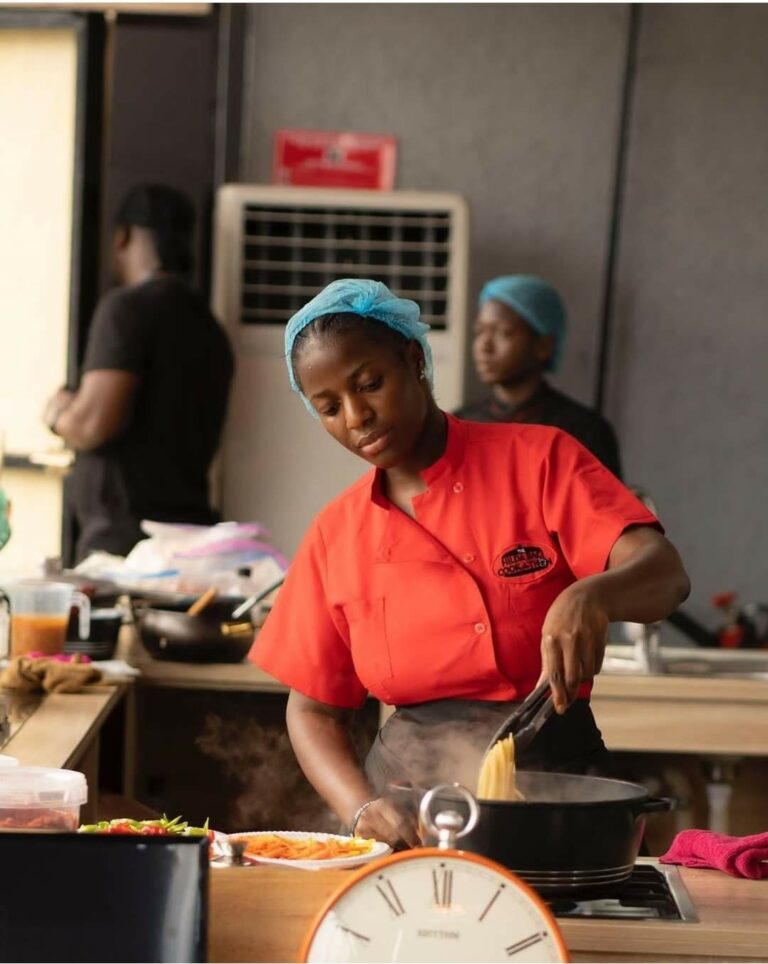
The Guinness World Record (GWR) has officially recognised the attempt by Hilda Effiong Bassey, professionally known as Hilda Baci as the holder of the title for the longest cooking marathon (individual).
In a Twitter post, the organisation said, “After reviewing all the footage, we’re delighted to announce that Hilda Baci is the new record holder for the longest cooking marathon (individual).”
Furthermore, in a blog post announcement on Tuesday, June 13, on its website, GWR said that it was acknowledging, “after a rigorous verification process and a thorough review of the evidence”, Hilda’s extraordinary accomplishment, solidifying her status as the record holder.
Hilda’s feat, lasting 93 hours and 11 minutes, surpassed the previous milestone of 87 hours and 45 minutes set by Lata Tondon of India in 2019, propelling her into culinary stardom.
Hilda embarked on her journey on Thursday, May 11, captivating the world “Hilda’s cook-a-thon was in fact so popular that our website crashed for two days due to the immense volume of traffic we received from her legion of loyal fans,” Guinness World Records said.
She cooked over 100 pots of food during her four-day kitchen stint, originally aspiring to set a record of 100 hours, Hilda encountered a minor setback when she inadvertently exceeded her rest break early in her effort.
After reviewing all the footage, we’re delighted to announce that Hilda Baci is the new record holder for the longest cooking marathon (individual) 💫
Watch the video to find out the official time we’ve awarded Hilda and read the full explanation below 👇 pic.twitter.com/bf352ndxWO
According to the regulation guiding the competition, participants are granted a five-minute rest break for every continuous hour of activity, which can be accumulated if unused.
Consequently, nearly seven hours were deducted from her final total.
Another important rule is that all items must be consumed after cooking. To this end, she invited members of the Nigerian public to eat her freshly made meals; all leftover food was donated to the Festus Fajemilo Foundation.
In the post by GWR, She said she attempted the record to “put Nigerian cuisine on the map” and “to inspire young African women to chase their dreams.”
She added, “I also decided to break this record to truly push my limits and test my abilities,” she added.
The Nigerian chef prepared for the event by creating a 35-item menu “as a guide” for every meal that she would cook.
She also ensured that she had the necessary ingredients to make each recipe, with her team procuring more food items while the cook-a-thon was underway “based on what was needed to be topped up.”
The news of Hilda’s Guinness World Records recognition sent ripples of excitement throughout social media, as millions of fans in Nigeria and beyond enthusiastically celebrated her well-deserved achievement.
In 2020, an 11-year-old boy from Warri in Delta State, Chinonso Eche, emerged the youngest ever Nigerian to win a Guinness World Record for most consecutive football touches in one minute while balancing another football on the head.
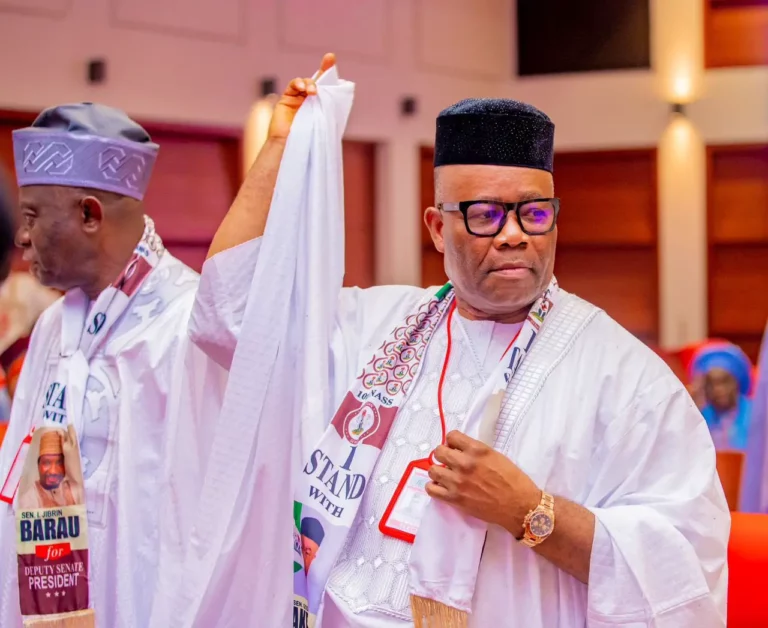
He garnered 63 votes out of the 109 total ballots casts, defeating the Zamfara West Senator-elect, Abdul’aziz Yari, who had 46 total votes.
The voting commenced at the Red Chamber in Abuja, Nigeria, at 8:45 and ended at 09:15 am.
Akpabio is former Governor of Akwa Ibom. He also served as the Minister for Niger Delta Affairs from 2019 to 2022. He represents Akwa Ibom North-West Senatorial zone in the 10th National Assembly.
Several members of the parliament had indicated an interest in the position of the senate president.
But Akpabio contested on the platform of the APC, the party with the highest number of senatorial seats, and had the support of the president, Bola Ahmed Tinubu.
Contenders for the hot seat included Ahmed Ibrahim Lawan (Yobe North), Ali Ndume (Borno South), Akpabio Godswill (Akwa-Ibom North), Orji Uzoh Kalu (Abia North), Jibrin Barau (Kano-North), and Mohammed Sani Musa (Niger-East).
In the Senate, the APC has 57 seats, the People’s Democratic Party (PDP) has 29, and the Labour Party has six.
The New Nigeria Peoples Party (NNPP) and the Social Democratic Party have two members each, while the All Progressives Grand Alliance (APGA) and the Young Peoples Progressive Party (YPPP) have one member each.
IN the middle of May, visuals of mutilated, burnt bodies and mass burials were circulated on social media. These images were accompanied by different captions ranging from gruesome attacks on a community to an entire village wiped out overnight. What was constant in the narrative was that attacks happened in Nasarawa state. Many of the posts stated it was Takalafiya village.
To this end, The ICIR Marcus FATUNMOLE, accompanied by Olayinka FATUNBI, went to several communities in Nasarawa state to investigate.
The sounds of a few remaining animals abandoned by fleeing residents of Takalafiya showed that the tragedy that befell the community was still fresh when The ICIR reporters visited the village on Tuesday, May 23.
Sighting the reporters, goats bleated, pigs grunted, and ducks quacked in the hope of getting something to eat. The animals looked hungry. In a community once full of life and activities. Only the animals’ sounds interrupted the silence in the area.
A duck in a cage in Takalafiya after the crisis that befell the community in May. Photo credit: The ICIR
Their owners were victims of an attack launched by suspected herders on the community on Thursday, May 11, in which 40 people reportedly died.
Others who survived the carnage fled and have yet to return.
Apart from the few animals, all that remain in the village are debris from burnt homes and a few buildings spared by the assailants.
Among the casualties of the early morning attack were five children and three adults burnt alive in their homes, and others slaughtered while fleeing the crisis, said many survivors who spoke with The ICIR outside the community.
The survivors, mainly farmers, fled to neighbouring communities after having their relations killed and their means of livelihood severed by the tragedy. They now worry about where and how to restart their lives.
One of the houses burnt in Takalafiya. Photo credit: The ICIR
However, the attack was a mystery to them. They wondered why the attackers pounced on them, killed their kinsmen, set their homes and relations ablaze, looted their homes and rustled their animals. They claimed they had no issue with anyone or group and never experienced any assault on their community.
Since the tragedy, they have lived with relations who they said had supported them with food, clothing and other necessities. But they fear such support might not last.
Takalafiya is roughly 50 kilometres from Gitata, a major town in Karu LGA. It takes a motorbike about one hour from Gitata to reach the community. Gitata is about 33.6 kilometres from Keffi and 153 kilometres from Kachia, Kaduna State.
Mountains surround the environs, and there are small rocks. The sand is mainly loamy, making crop farming a good business in the area. There are also a few rivers supporting crop and livestock farming.
A wide range of land previously used for farming lay fallow, overgrown with weeds. An indication that people have not been farming in the area since the attack occurred.
Another burnt home in Takalafiya. Photo credit: The ICIR
Though the community lacks infrastructure like tarred roads, power, water and school, the residents had lived there for decades. The ICIR crew saw some herders, mostly Fulanis and cattle grazing in the bush and on the road. They have some huts on the path leading to Takalafiya, but the indigenous people had fled.
We lost everything – Residents
One of the survivors, Isa Abu Awudi, said, “We had lived in peace in Takalafiya. One morning, they just came to attack us. We could not do anything. They killed many of our people, and others ran away. The assailants burnt our houses and took everything, including food and motorbikes. They were all burnt. I’m yet to find my family members.”
Atiku Sardauna, one of the bereaved at Takalafiya
Another survivor, Atiku Sarduana, who spoke to The ICIR about the onslaught outside the community, said he lost 11 relations to the carnage.
“One day, many of us were sitting around at the market square at noon and saw the assailants storm our village. They started attacking and killing us. They killed my father, brothers and other relations. We had never faced any problem like this before,” he said.
“They took away our belongings and burnt our houses. We have since not got food to eat and could not work on our farms. We’ve been roaming the streets, seeking means to survive.
Isa Abu Awudi, one of the bereaved at Takalafiya
Awudi corroborated what Sardauna said: “We had lived in peace in Takalafiya. One morning, they just came to attack us. We could not do anything. They killed many of our people, and others ran away. The assailants burnt our houses and took everything, including food and motorbikes. They were all burnt. I’m yet to find my family members.”
Why was Takalafiya attacked?
II. Kwaja.
Attack on Takalafiya, ripple effect of crisis in another community, findings suggests
Two arguments surfaced for the attack on Takalafiya.
First, the community allegedly harboured fleeing residents of Kwaja, a neighbouring village where a Fulani herder was purportedly attacked.
The herder, Jibo Alhaji Ali, 18, was attacked by unidentified persons while on his way to Kwaja village.
He later died at a private clinic in Gitata, a major town in Karu LGA.
“There’s a crisis between the Takalafiya people and the Fulanis because Takalafiya community accommodated the people of Kwaja where their son was attacked. That’s why that thing happened,” a source said.
The source, who pleaded anonymity, said upon realising that Kwaja people took shelter in Takalafiya, after fleeing their homes over fear of possible attack, the attackers swooped on the community, killed scores of its residents and set its houses on fire.
A statement the police in the state sent to The ICIR confirms the attack on the herder and his death.
The ICIR reports that none of the people interviewed in Takalafiya told this organisation that the community harboured anyone having issues with herders. They claimed they never had any problem with anyone, and peace had reigned in their environs.
III. Tattara-Mada.
Then comes the second account. In late March, a young man visited his mother in the Tattara-Mada community in Kokona LGA. He wasn’t living with his mother, who hailed from the village, but with his siblings in Keffi, a major town in the state.
He went with his brother to the farm, hoping to return home early. The two men got to the farm and met some herders grazing their cattle, allegedly on their sugarcane farm. After exchanging heated argument with each other, the visiting young man and one of the herders engaged in a fight. The young man hit the herder’s head with a hoe; The ICIR gathered.
Unknown to him, that fight would end up making him a killer.
One of the houses burnt at Tattara Mada. Photo credit: The ICIR
The Fulani herder fell and was rushed to a nearby hospital. He died five days later.
Several residents interviewed by The ICIR said the Fulani community in the village demanded that the community produce the killer who fled the community after the fight to enable them to hand him over to the police.
The community could not produce him to the Fulanis for two weeks.
When all entreaties by the Fulanis failed, they reported the matter to the leader of Garaku town, who oversees the area. The monarch allegedly threatened to invite the police to arrest the young man’s mum and other relations if he remained at large. The threat, they said, forced his family to produce him and handed him to the police. By then, it was too late, as the embers of the crisis were already glowing faster than imagined.
An engine destroyed by inferno at Tattara Mada community. Photo: The ICIR
Herders allegedly killed a villager in retaliation
Another young man from the village did not return from the farm days after the young man was handed over to the police. The community launched a search party for him. He was dead when they found him, far away from his farm.
Some youth in the community headed to the Fulani’s compounds on the village’s outskirts and accused them of the killing as retaliation for their son’s death.
The Fulani’s allegedly brought out guns and shot one of the villagers dead. Others fled and left the community in fear.
Most residents fled the community, including its monarch, Augustine Silas, after receiving information that attackers were on their way to the village. This paved the way for arsonists to burn the houses and kill residents they met.
“The arsonists and killers mowed down everything they saw. They killed as many people as they could see. They burnt the king’s house and his car too. It was a terrible incident we had never seen in Tattara-Mada. The indigenes and Fulanis had lived together peacefully in this community for decades,” said an elder in the community, Haruna Danladi.
Haruna Danladi, a resident of Tattara Mada
He added, “Tattara-Mada is a peaceful place where people live peacefully. I’m more than 60 years. This is the first time we are seeing this thing. People ran to Garaku. The following day, Fulani fully came here, very many, though I didn’t see them. I ran away for my dear life. They burnt all the houses you see here.”
The ICIR crew saw a building belonging to a church in the village completely burnt down.
Some indigenes who narrated the incident to The ICIR include the community leader, Augustine Silas; an elder in the community, Haruna Danladi; Youth Secretary, Isaac Danlami; and a youth, Amos Silas. Their narrations were the same.
They alleged that herders had killed other persons before the fatal attack, plus the man who died on the farm, and the other killed when the village youth protested in the Fulani community.
Augustine, the community leader, said his people had coexisted peacefully with the people of other tribes for a long time.
“We had been living very peacefully with the Fulanis. A borehole was supposed to be dug in my community, but I took it to them just to continue to build on the peace we’d been enjoying. Some of them stay on our land free. They didn’t buy the land. We had a cordial relationship” he explained.
Monarch of Tattara-Mada, Augustine Silas
“My community lost over 15 people. The ones we took to the mortuary were 12. Those were different from the ones we buried before the attack.”
According to him, the state government’s only intervention in the disaster was mattresses it brought with some food, once. The government set up a committee on the crisis, through which he said the government gave N1.5 million for the burial of the casualties.
“Since the deputy governor came, we’ve never heard anything from the government. The local government chairman did not support us in any manner,” alleged the community leader.
He claimed that Fulanis in his community packed out silently before the attack. He also said the Fulani leader denied knowledge of the attack.
Car and house of Tattara Mada’s monarch, Augustine Silas, burnt in the crisis. Photo credit: The ICIR
“The head of the Fulani denied. He said his people didn’t know anything about the mayhem. He told me that if they had wanted revenge for their son’s death, they would have done it since. We didn’t know it was a game plan, allowing me to deceive my people that they should not run away when they heard of the planned attack,” he stated.
He told The ICIR of his personal experience of the crisis, “As you see me, I don’t have anything. Even the clothes that you see there, it’s people that dashed me.” The ICIR crew saw his home and car in the village completely burnt down.
He expressed fear that his people would face starvation in the coming year because they could not farm because of the crisis.
Meanwhile, he said his people would not revenge because they already signed a peace accord with the Fulanis.
“Peace is going to return to our land. Our people don’t take revenge in crisis, and we don’t look for trouble. We only believe that whatever comes our way, God allows it. We’re not troublesome people. Everybody knows us. There is nothing like revenge on this issue.”
To confirm his pledge, he invited the Fulani head to his house in Garaku shortly after speaking with The ICIR. The Fulani leader, Daga Waziri, appeared within minutes.
Smiling at each other, the two leaders said they had been friends for years and would sustain their friendship and ensure peace return to their community.
Waziri refuted claims that his people were responsible for the attack.
His words, “I was born and raised here, and till now, I am still here. I have spent over 40 years here. We’ve never had issues with the people of Tattara-Mada. We’ve always been living peacefully. We do things together. I would say this is the devil’s work because nothing would make us quarrel with the people of Tattara”.
Fulani leader in Tattara Mada, Daga Waziri
“When it happened, everyone took to their heels; we also ran and left our houses. They left their houses too. To be honest, we are not happy with this. Everyone has been asked to return to their rightful place and live just as we always did. That was why I returned even after I ran.
“Individuals have been returning in bits. As we’re all returning, I want us to be patient with ourselves and co-exist like we used to. This has passed. That’s all I know. Let’s all come back, live peacefully, and join heads together. If we do that, nothing of this sort would ever happen again.”
Police deployed officers on a ‘permanent’ mission to community
At least six police officers have ‘permanently’ been deployed to Tattara-Mada by the state Police command.
The officers have a patrol van with them in the community. They live at the community’s primary health care centre, abandoned over the crisis.
Getting food and water is a major challenge for the officers because they must get to Garaku before getting them.
The ICIR interviewed Tattara Mada’s monarch, Augustine Silas and the Fulani leader in his community, Daga Waziri, at the former’s house as they promised to rebuild peace
It takes a motorcycle about 40 minutes to ride from Garaku to Tattara, and it will take a vehicle more time because of the condition of the road.
IV. Angwa Barau, Maigini.
Crisis spread to Angwa Barau, Maigini village
Several villages in the Karu and Kokona LGAs were affected by the crisis. Some residents abandoned their communities because of fear of possible attack. Others left after arsonists attacked their villages.
Most residents who spoke said the same people carried out the attacks across the settlements. They believe it was a coordinated onslaught.
Among the communities is Angwa Barau (a neighbouring village to Tattara-mada), where 11 people were said to have died
The ICIR crew saw charred remains of homes. The crew met only three indigenes in the community out of about 500 they said lived there.
Maryama Yarou, an indigene of the community, said eleven people died. He’s a teacher in the village’s dilapidated and only public primary school.
Maryama Yarau, resident of Maigini Village
According to him, the attackers came in the afternoon, killing residents and burning houses.
Yarou, 56, and father of six is the assistant village head.
After the incident, he rented a room for his children in Garaku, hoping they would return if things improved.
“We’d been living peacefully with the Fulanis here. When the crisis started, we ran out of the village. My people cannot come here for now because of fear. If you look at the community, the place is just empty. Our fathers lived here. We were brought up here.”
Yarou still fears that the attackers could return. “We still live in fear till now. We are not comfortable as we used to be. We don’t know whether they can come back again.”
His community was attacked around 3 p.m., the same day Tattara-Mada was burnt.
“The attackers – all men and over 300 – trekked into the community, set it on fire and started pouncing on residents and killing them. They also took away the people’s belongings,” Yarou stated.
Herders overrun Barau community with cattle after the attack. Photo: The ICIR
Yarou suspected herders as the perpetrators. He said the government in the state took no action since the incident occurred.
Another community affected by the violence is Maigini village, also a neighbouring village to Tattara-mada. Residents have deserted the settlement. The ICIR saw herders and an old man exchanging words after the herder’s cattle grazed within the community.
The village leader’s son, Sunday Audu, said of the crisis, “One day, we just saw the Fulani people come into our village and they started shooting guns. Everybody ran away. They took away our property and packed everything. They killed two of our people. Even at night, we returned to sleep; they still returned and chased us away.
Sunday Audu, son of Maigini chief
“We are more than 100 in the village, but everybody ran away. We are no more up to ten people in the community.”
Police say 14 people died in Takalafiya, Kwaja, silent on killings, arson in Tattara-Mada, others
Despite media reports and residents’ claim that about 40 people died in the attack on Takalafiya, the police in the state said, the casualties were 14. The force kept mute on whether its officers arrested anyone concerning the attacks.
The ICIR contacted the Police spokesperson in the state, Ramhan Nansel, a deputy superintendent of police. He declined speaking on the attacks. He forwarded a statement he mailed to journalists shortly after the attacks on Takalafiya and Kwaja.
Fulani settlement in Maigini village. The ICIR
Part of the statement reads, “On 11/5/2023 at about 2200hrs, information was received that one Jibo Alhaji Ali, 18yrs and Fulani by tribe was attacked by unidentified persons while on his way to Kwaja village, Gitata.
“Upon receipt of the information, Police operatives attached to Gitata Division raced to the scene and rushed the victim with a machete cut on his head to Na-Allah private hospital, Gitata, where he died while receiving treatment.
“Sequel to the above, information was received that Tarkalafia and Kwaja village were attacked. Reacting to the above, the Commissioner of Police, CP Maiyaki Baba, deployed police operatives comprising mobile police personnel, a counter-terrorism unit, and the military to the area where fourteen corpses were recovered and taken to the hospital and subsequently buried.”
Nansel refused to respond to questions on attacks on Tattara-Mada and its neighbouring villages.
One of the farms around the houses in Maigini village. Photo: The ICIR
The Special Adviser to the Nasarawa State Governor on Security, Timothy Maikasuwa, declined to speak on the matter.
He referred The ICIR reporter who spoke with him on the phone to the Secretary to the State Government or the Governor, whom he said could only talk about the issue.
The Chief Press Secretary to the governor, Ibrahim Addra, directed The ICIR reporter to the Police when asked about how the state government handled the crisis, supported the victims and what it was doing to avert a recurrence. He said, “Why are you not speaking with the Commissioner of Police?”
When confronted that the government is responsible for protecting its people from such attacks, he said, “You are right, but I’m not in a position to speak on the matter.”
The local government chairman of Kokona and Karu also refused to comment on the killings.
James Thomas, Karu LGA chairman, in response to a text and Whatsapp message said he was in Lafia, the state capital.
He also did not respond to the request to meet him in Lafia for an interview which was sent to him as text and Whatsapp messages.
Some of the hungry animals in Takalafiya. Photo: The ICIR
Similarly, the Kokona LGA chairman, Auwal Adamu, declined to react to the killings. The ICIR reporter called his telephone number and sent him text and Whatsapp messages. He did not respond.
***
The leaders of Tattara-Mada community in Kokona Local Government Area (LGA) of Nasarawa State, Augustine Silas, and the head of the Fulani community in his village, Daga Waziri, are wondering how a minor disagreement between their subjects on a farm metamorphosed into bloodletting, arson and looting in the village, allegedly spilled over to other communities and claimed scores of lives in neighbouring settlements – Angwa Barau and Maigini – and then to Takalafiya and Gwanja villages, in Gitata District, Karu LGA in the state.
In August 2021, The ICIRreported how the farmers-herders crisis fueled insecurity in Plateau State. In another report, two months later, The ICIR also reported how herders invaded a community in the state in a reprisal attack, despite military presence.
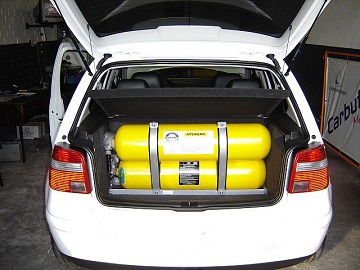
THE national president of the Independent Petroleum Marketers Association of Nigeria (IPMAN), Chinedu Okoronkwo, says the association is 90 per cent ready to roll out compressed natural gas (CNG) at the cost of about N100 to N110 per litre before the end of June.
Okoronkwo said this on Channels Television’s Business Morning programme on Monday, June 12, stressing that CNG has come to serve as an alternative to petrol.
The ICIR reports that the pump price of petrol has recently surged from about N185 to N550 per litre following President Bola Tinubu’s resolve to stop paying for fuel subsidy.
That removal has resulted in a hike in transportation fares, cost of fuelling vehicles generally, and gradual increase in living costs.
Okoronkwo, exuding confidence that CNG would help bring down the cost of energy in the country, said, “Very soon, we will roll out. We are 90 per cent close to that, and that will also unveil many possibilities.”
He noted that fuel subsidy removal had reduced the speed with which Nigeria could have gotten another energy mix
“IPMAN has brought relief to a lot of families. We have got the usage of our natural energy, CNG, to power vehicles, generators, and even cooking,” the IPMAN president said.
The CNG is expected to reduce, to a large extent, the country’s exposure to fuel importation as natural gas would not be imported.
According to a report by PwC on Evaluating Nigeria’s Gas Value Chain, the country has 202 trillion cubic feet (tcf) of untapped proven gas reserves, and an estimated recoverable gas at 139.4 tcf.
Okoronkwo claimed that CNG-powered cars had started gaining momentum in the country because of increased awareness about its efficiency and affordability, compared to traditional fuels like diesel and petrol.
“If the government buys into what we are saying, it will act as an assistance, bring relief, and create job opportunities.
“What we need the government to do is create the market. The demand is there,” the IPMAN president said.
He added that IPMAN had gotten a lot of buy-in from companies overseas.
On what the CNG brings to the value-chain, he said, “I don’t know if you have seen what is trending this week where people with their I-pass-my- neighbour generators are beginning to use liquified petroleum gas. LPG is close to N700 per kilogramme, but this natural gas we are talking about is under N100 to N110.
“When you check what the impact will be, it will reduce the cost of food because people coming from the hinterlands bring food to the cities. From Kano, it takes them about N1.2 million to fuel trucks with diesel, but with this CNG, it will cost them about N150,000 to N200,000. About a million naira is saved that will translate to cheaper food and open up a lot of other businesses.
“It will provide cheaper energy to drive the processing zones like the agro-based industries, where the gas will also create a lot of impact.
“CNG does not replace PMS, but it is a choice. We are talking of something that will help your purse and not deepen it.”
The Director of Gas Analytics and Solutions Limited, Shuaibu Bello, who also spoke at the Channels Television programme, said the CNG would be a game-changer for Nigerians.
“This is the best palliative you can give the nation. If you talk of palliative, it is not just sharing money with people, it is creating a system that will reach the rich and the poor.
“If you compare CNG price at N110 per litre with petrol now at N540 or its former price of N185, still you will have a reduction,” he said.
IPMAN had in April 2023 approached the Finance ministry to request that the Central Bank of Nigeria (CBN) be mandated to release N250 billion intervention fund for the implementation of the National Gas Expansion Programme (NGEP).
IPMAN explained it asked for the fund to provide access to the Gas Expansion Fund for vehicle, commercial tricycle and truck owners to access loans to finance the acquisition of natural gas conversion kits.
At the time, IPMAN said that it had partnered with Gas Analytics & Solutions Limited to co-locate natural gas dispensers on their network of over 30,000 filling stations in Nigeria.
According to IPMAN, it controls over 80 per cent of the downstream oil sector, and as such, the collocation model would help to reduce the exposure in building new filling stations.
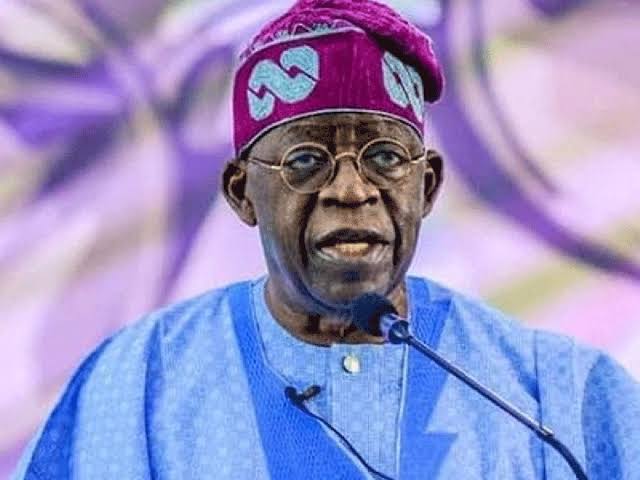
NIGERIA’S President, Bola Tinubu, has signed the Students Loan Bill into law.
Dele Alake, who was Director of Strategic Communications of Tinubu’s Presidential Campaign Council, disclosed this to journalists on Monday, June 12.
The Speaker of the House of Representatives, Femi Gbajabiamila, had sponsored the Student Loan bill to provide interest-free loans to indigent students in Nigeria’s tertiary institutions.
The bill also provides for the establishment of an Education Bank, which shall have powers to supervise, coordinate and administer student loans in Nigeria.
Alake said the funds would be domiciled within the Ministry of Education.
“Today, President Bola Ahmed Tinubu has just signed the Student Loan Act. This is just in fulfilment of his promise during the electioneering campaigns, where he promised that students would access loans to go to school,” he said.
The Act provides that repayment of the loan would commence following a two-year grace after completion of the mandatory National Youth Service Corps (NYSC) before repayment commences.
It also proposes a two-year jail term, a fine of N500,000 or both for students who default in repayment.
The bill had earlier been passed by the House of Representatives and sent to the Senate, where it also sailed through in November 2022.
It attracted criticisms from many Nigerians, including members of the Academic Staff Union of Universities (ASUU), who described it as unnecessary.
The union also described the bill as an attempt by the government to systematically abandon funding of education in public universities.
ASUU President, Emmanuel Osodeke, said lecturers would not support the proposed bill due to the high unemployment rate of graduates in Nigeria.
“We should not also pretend not to know that such loan would have matured in about 10 years up to more than double of the principal amount. And so if those students don’t get a job – since getting a job is not an automatic thing – how would such a graduate pay back, or his or her father, who is earning about N30,000 monthly as salary, help in paying back such a loan?
“So, I think we should all be realistic and not deceive ourselves any longer in Nigeria as this policy cannot work, at least, for now and also not in near future in our country,” he said.
However, Gbajabiamila said criticism of the bill was contrary to attempts to resolve education challenges confronting students in Nigerian universities.
Tinubu had also promised during his presidential campaign to pass the bill into law.
The ICIR contacted Osodeke over the new law. The ASUU president, however, declined to comment until the union has received the official document.
THE Nigerian Federal government has warned its citizens on the consumption of cow skin, popularly known as ponmo, and bush meat.
The warning was contained in a statement the Federal Ministry of Agriculture and Rural Development (FMARD) issued on Monday, June 12.
The Permanent Secretary, FMARD, Ernest Umakhihe, who signed the statement, said the warning became necessary due to the outbreak of the anthrax disease in neighbouring countries.
It can affect humans who come in contact with infected animals or products, and comes with flu-like symptoms, including cough, fever, and muscle aches.
According to the statement, the disease could lead to lung and respiratory issues, shock and death if not properly diagnosed.
Umakhihe noted that the disease had been detected in the northern part of Ghana, which borders Burkina Faso and Togo.
“The disease, which has claimed some lives, is a bacterial disease that affects both animals and man; that is, it is a zoonotic disease. Anthrax spores are naturally found in the soil and commonly affect domestic and wild animals.
“The general public is strongly advised to desist from the consumption of hides (ponmo), smoked meat and bush meat as they pose serious risks, until the situation is brought under control. Meanwhile, the public is urged to remain calm and vigilant as the Federal Government has resuscitated a Standing Committee on the Control of Anthrax in the Ministry of Agriculture and Rural Development,” he noted.
He added that directors of veterinary services nationwide had been sensitised on the issue, as he urged border states in Nigeria to intensify vaccinations of animals.
“Infected animals cannot be vaccinated but animals at risk can be vaccinated. So in this present case, there is a need to intensify animal vaccinations along border states of Sokoto, Kebbi, Niger, Kwara, Oyo, Ogun and Lagos because of their proximity to Burkina Faso, Togo and Ghana. Other states of Nigeria are equally advised to join in the exercise,” he said.
The Permanent Secretary advised that infected animals be buried along with burial equipment.
In 2022, the Federal government had planned to ban ponmo as a means of reviving the leather industry in the country.
The Director General of the Nigerian Institute of Leather and Science Technology, Zaria, Muhammad Yakubu, saidponmo had no nutritional value and should be banned to revive the industry and boost the nation’s economy.
However, due to the fact that it is inexpensive, many Nigerians kicked against the proposed ban, and the Chairman of the Nigerian Bar Association Section on Public Interest Development Law, Onyekachi Ubani, threatened to sue the government over the issue.
“I enjoin us all to rededicate ourselves to strengthening this form of government of free peoples that has been our guiding light these past 24 years. In particular, those of us who have been privileged to be elected into public offices at various levels in both the executive and legislative arms of government must recommit ourselves to offering selfless service to the people and delivering concrete democracy dividends in accordance with our electoral promises.
“On my part and that of my administration, I pledge anew our commitment to diligently fulfilling every component of our electoral pact with the people – the ‘Renewed Hope’ agenda.
“We shall be faithful to truth. Faithful to equity. And faithful to justice. We shall exercise our authority and mandate to govern with fairness, respect for the rule of law, and commitment to always uphold the dignity of all our people,” the president said.
The ICIR had reportedhow the president promised to invest massively in transportation, power, health, education and other sectors of the Nigerian economy to cushion the pains Nigerians are experiencing over the removal of subsidy on petrol.
Following subsidy removal by the government, prices of many essential commodities and transportation faresjumped.
Report shows the subsidy removal led to more than 200 per cent in the price of a litre of petrol, otherwise known as premium motor spirit (PMS).
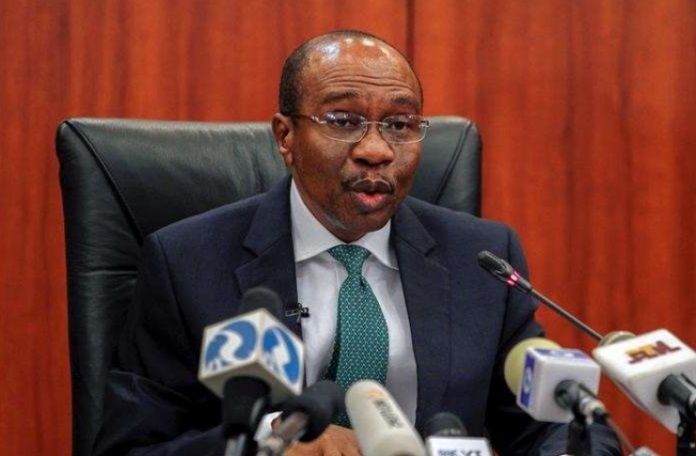
THE suspended former Central Bank of Nigeria’s (CBN), Governor Godwin Emefiele, was the chief executive at Zenith Bank Plc before moving office to head the CBN in June 2014, a year before President Muhammadu Buhari became president of Nigeria.
Emefiele was reappointed for a second five-year term in May 2019, which was due to end in June 2024.
Roles and controversies under Buhari administration
The governor was one of the most influential members of the Buhari administration, during which the central bank made significant economic interventions, some of which were controversial.
These include propping up the naira, lending huge sums to the Federal government through Ways and Means (as a lender of last resort), extending credit to multiple sectors through the Anchor Borrowers Programme, and other ancillary interventions.
Analysts were, however, worried about some of his policies that gave undue attention to development finance and excessive regulation of banks at the expense of price stability.
Emefiele and violation of CBN Act, Fiscal Responsibly Act
The Central Bank of Nigeria (CBN) under Emefiele violated Section 38 of its own Act by overlending the sum of $49.2 billion to the Federal government through Ways and Means.
The situation subjected the economy to intense pressure as Nigeria’s inflation rate surged to 22.22 per cent.
Section 38(2)of the CBN Act 2007 provides that lending to the government should not exceed 5 per cent of the previous year’s actual revenue.
The ICIR findings further showed that with respect to revenue accruals, lending to the Federal government should not have exceeded $450 million but had spiked to $49.2 billion.
This development, among others, led to Moody’s downgrading of the Nigerian economy to B3 rating, driven by the significant deterioration in Nigeria’s government finances and overburdening debts.
An economist, Kelvin Emmanuel, told TheICIR that one implication of the development was that it put intense pressure on lending to small and medium enterprises.
“You notice that cash supply deposits are higher than the production outlook of the economy. When so much cash is chasing a few goods without commensurate production and services, it creates a problem.”
“Basically, we printed $49.2 billion out of thin air when the window says you can give only $450 million. You can see the wide margin. The apex bank violated its own Act. This is part of the major reason the economy is in a mess. The wider implication is that lending to real sector is now extremely difficult,” Emmanuel said.
He added that when there is so much paper money that is not backed by assets, it inadvertently spikes prices and inflation, and suffocates lending to the small and medium enterprises.
“The lending rate of 18.5 per cent is as a result of this kind of over-bloated cash into the economy not being tied to specific assets. The banks will now have to put their own mark-up and will lend around 27 and 28 per cent,” he said.
The CBN’s guidelines limit the amount available to the government under its Ways and Means Faculty of 5 per cent of last year’s revenue. However, according to Fitch Ratings report in January 2021, “the Federal Government’s borrowing from the CBN repeatedly recorded around 80 per cent of FG 2019 revenues in 2020.”
Besides the CBN Act, the Fiscal Responsibility Act of 2007 provides a threshold and the guidelines for national and sub-national borrowing.
Section 41 (1) (a) and (b) of the FRA stipulates that borrowing shall only be for capital expenditure and human development, be on concessional terms with low interest rates, and be for a reasonably long amortization period.
The FRA also requires legislative approval for borrowing, as well as stipulates that the government should ensure that the level of public debt as a proportion of national income is held at a sustainable level.
The controversial Anchor Borrowers Programme
The lion’s share of a N1 trillion ($2.1-billion) loan it extended to rice farmers, under the so-called Anchor Borrowing Programme was not largely repaid, an official who worked as a facilitator in the scheme confirmed.
“The scheme is fraught with lots of repayment challenges as the political class’ undue interference dragged down the success of the policy,” a development economics and consultant to the British Department of International Development, (DFID), who consulted for the policy, Celestine Okeke, told The ICIR.
At a point, many of the farmers, especially in the northern region of Nigeria, clearly declared to Emefiele they would not be able to repay the loans because of herdsmen attacks on and destruction of their farms.
Attacks by herdsmen on farmers was one of the dark incidents that marked the Buhari administration. In many cases, the herdsmen killed the farmers and destroyed hectares of what could have been bountiful harvests for the nation.
Contradictory banking regulations
Emefiele also came under fire for subjecting banks to contradictory regulations.
For instance, whereas lenders must hold 32 per cent of deposits as reserves — far more than their counterparts in South Africa and Kenya, as the regulator battles to contain inflation — banks were being forced to extend 65 per cent of their deposits as loans to stimulate credit.
Emefiele also left interest rate unchanged, well below the annual inflation rate for too long, critics contend.
The CBN was unable to rein in consumer prices until they skyrocketed to an 18-year high of 22.22 per cent in April.
Emefiele even made a foray into party politics when he asked a federal court to permit him to remain in charge of the CBN while seeking the ruling party’s nomination for the presidential election. He only dropped that ambition after Buhari ordered ministers and political appointees wishing to run for office to resign.
His most controversial move as central bank governor came just before the 2023 general elections with his naira redesign policy.
His attempt to replace the old N200, N500 and N1,000 notes with new ones at short notice resulted in an acute shortage of cash, hobbling day-to-day business in the cash-dominant economy.
Some state governors challenged the policy in court, and in a ruling, the Supreme Court nullified the February 10 deadline he had set to phase out the old notes.
But even with the ruling, Emefiele tarried for weeks to announce that all the denominations would remain legal tender till December 31, 2023, as declared by the Supreme Court.
Nigerians experienced intense agony during that period as many individuals and businesses suffered acute cash scarcity for survival.
THE chairman, House of Representatives committee on Aviation, Nnolim Nnaji, has denied asking for a 5 per cent equity in Nigeria Air, saying the immediate past minister of Aviation, Hadi Sirika, was not just comfortable with demands of transparency on the project.
Sirika, however, maintained that the position of the committee members against him and Nigeria Air was “predetermined.”
Nnaji described Sirika as “a drowning man struggling to grab anything to survive the barrage of attacks he has been receiving since the controversial unveiling ceremony of the Nigeria Air aircraft.”
The lawmaker, in a statement he issued on Sunday, June 11 while responding to an allegation of bribery Sirika had levelled against him earlier in the day on ARISE Television, said the former minister was not happy that he had demanded transparency and due process in all matters relating to the aviation sector, especially the Nigeria Air project.
“Ordinarily, l would not have bothered to reply to his allegations of my demand for 5 per cent equity in Nigeria Air as he claimed during his interview on Arise Television, but l believe l owe my constituents and, indeed, Nigerians a duty to put the records straight.
“It is on record that last year when the Minister announced Ethiopian Airlines as the core investor in Nigeria Air, my committee, which was also inundated with petitions from various stakeholders regarding that announcement, invited the Minister and his team to furnish the committee with the details of the project,” Nnaji said.
He added that the committee requested for evidence of the bid process that gave Ethiopian Airlines the award and the full business case as prepared by the Nigerian Infrastructure Concession Regulatory Commission (ICRC), which was supposed to spell out the details of all the investors and their equity contributions.
“Sirika at that meeting said the Full Business Case was still being worked out by the ICRC and promised to make it available to the committee as soon it was ready, which he failed to do before the Airline Operators of Nigeria took the Ministry to court and got an injunction restraining it from going ahead with the project,” he said.
The lawmaker said he crossed Sirika’s path again when there were threats of mass resignations by key personnel of the Nigeria Civil Aviation Authority (NCAA) due to pressures from the ministry to give waivers to Nigeria Air to enable it secure an Air Operator’s Certificate, (AOC).
Former Minister of Aviation, Hadi Sirika
“On May 20th 2023, l received reports of threats of mass resignations by key personnel of the Nigeria Civil Aviation Authority, (NCAA) due to pressures from the Ministry to give waivers to Nigeria Air to enable it secure Air Operator’s Certificate (AOC) so that it could take off before the exit of the last administration of President Muhammadu Buhari.
“I quickly issued a statement warning the former Minister against subverting the authority of the NCAA because of its severe consequences on the Nigeria’s air transport sector. It is also a common knowledge that the Nigerian institutional investors he mentioned as participants have all denied him.
“It is not strange that Sirika came up with this spurious allegation against my person because l remained consistent in demanding that he followed due process.
“He should not deviate from the subject matter. Let him tell Nigerians the truth about the contraption he sold to us as Nigeria Air. Nnolim Nnaji is not his problem,” the legislator added.
The Federal House of Representatives committee on Aviation had on Tuesday, June 6 summoned the permanent secretary in the ministry of Aviation and Aerospace, Emmanuel Meribole, and some industry stakeholders for discussions on the launch, on Friday, May 26, of Nigeria Air.
Nnolim Nnaji, Chairman, House of Representatives Committee on Aviation.
Sirika had brought in a Boeing 737-800 aircraft from Ethiopia branded in the colours of Nigeria Air for the launch, as reported by The ICIR.
The event attracted wide controversies, and even condemnations, especially when it became public knowledge that the aircraft used for the Nigeria Air unveiling was a chartered flight from Ethiopian Airlines, which was returned to Ethiopia after the unveiling and put into use once again by the Ethiopian Airlines.
The interim managing director of Nigeria Air, Dapo Olumide, confirmed this at a public hearing by the Senate Committee on Aviation.
The ICIR had reported how Nnaji had at the meeting with Meribole and some other industry stakeholders described the Nigeria Air aircraft unveiling as “a fraud.”
But Sirika, on the Arise Television programme on Sunday, said Nnaji was feeling bitter with him on the Nigeria Air deal because he (Sirika) had rejected the lawmaker’s demand for a 5 per cent share in the airline.
“On the issue of Hon Nnaji who called Nigeria Air launch a fraud, I will respond now. I will say exactly what I told him in private when we spoke.
“Honourable Nnaji asked me that I should give him 5 per cent of Nigeria to carry him along with his people, and I said to him at that time, ‘Honourable, a bidding process that has taken place, and some people won. So, I think you should go to those people and ask for the 5 per cent.’ ”
When prodded further by the programme anchor to clarify if the lawmaker, indeed, asked for bribe for himself and other legislators, the former minister said, “Let’s be fair, Honourable Nnaji didn’t say other members. He said he wants it for himself and his people. His people could be his family, could be members, and it could be leadership. I don’t know, but he insisted on 5 per cent. I said that he should relax and approach the owners. That’s exactly what I told him.”
Sirika also criticised Nnaji and the aviation committee for conducting what he regarded as a “predetermined hearing.”
He said, “I was a member of the House of Reps 20 years ago, and 10 years ago, I was a Senator. I know the workings of the National Assembly. He [Nnaji] called for a public hearing. And right under the public hearing, he just turned the paper and read the riot act. The practice in the National Assembly is that after hearing people and the complaint, you now go and sit down as a committee, discuss the issues, raise them, approach the whole House of Reps and take position of the House plus its leadership and come back and make your findings known. But not immediately you just read the riot Act out. It means it is predetermined.”
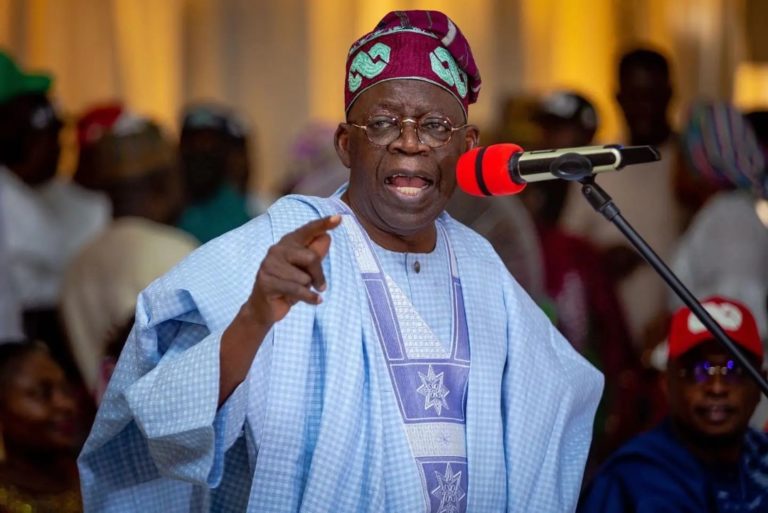
PRESIDENT Bola Tinubu has promised to invest massively in transportation, power, health, education and other sectors of the Nigerian economy to cushion the pains Nigerians are experiencing over the removal of subsidy on petrol.
In his inaugural Democracy Day address on Monday, June 12, the president also promised a more effective judiciary and a sustained nurturing of the nation’s democracy.
Besides, he spoke glowingly of the winner of the June 12, 1999 presidential election, Moshood Abiola, for his courage, patriotism, and faith in democratic ideals.
Tinubu described Abiola, who died mysteriously in detention where the military junta which annulled his victory had kept him, as the symbol of democracy and a custodian of a sacred mandate of Nigerians.
He said the 1993 poll was the freest and fairest in the country and described its annulment by the military as unjust.
The democracy that Abiola died for is the one that promotes the welfare of the people above personal interest, Tinubu stressed.
The ICIR reports that the 1993 presidential election took place exactly 30 years ago, today. In 2018, former president, Muhammadu Buhari, declared June 12 the Democracy Day in honour of Abiola.
In his address today, Tinubu also lauded Abiola’s wife, Kudirat, who was assassinated while defending her husband’s mandate, as well as Pa Alfred Rewane and Shehu Yar’Adua, a retired military general. “They gave their yesterday for the liberty that is ours today. We must never take this democracy for granted,” he said.
While acknowledging Nigerians’ pains because of the subsidy removal, the President said, “I feel your pain. This is one decision we must bear to save our country from going under and take our resources away from the stranglehold of a few unpatriotic elements.”
“In my inauguration address on May 29, I gave effect to the decision taken by my predecessor-in-office to remove the fuel subsidy albatross and free up for collective use the much-needed resources, which had hitherto been pocketed by a few rich.”
“I admit that the decision will impose an extra burden on the masses of our people. Painfully, I have asked you, my compatriots, to sacrifice a little more for the survival of our country.”
“For your trust and belief in us, I assure you that your sacrifice shall not be in vain. The government I lead will repay you through massive investment in transportation infrastructure, education, regular power supply, healthcare, and other public utilities that will improve the quality of lives.”
Speaking on the 2023 general elections, he urged those who did not win to accept defeat in good faith because they could win in future elections, while those who won at the poll could lose.
He described the lawsuits trailing the election in many states, including his own, as the beauty of democracy.
“That the polls were intensely contested is in itself positive evidence that democracy is well and alive in our land. It is only natural that even as those who won and experienced victory in the various elections are elated and fulfilled, those who lost are disenchanted and disappointed.
“But the beauty of democracy is that those who win today can lose tomorrow, and those who lose today will have an opportunity to compete and win in the next round of elections. Those who cannot endure and accept the pain of defeat in elections do not deserve the joy of victory when it is their turn to triumph.”
He also said his signing of a bill harmonising judges’ retirement age to 70 years would further enhance justice in the country. He vowed that multiple rulings on cases would not occur under his watch.
He also said the reforms in the judiciary had just started.
He pledged a commitment to his electoral promises, to the rule of law, and to uphold the dignity of Nigerians.

![[INVESTIGATION] In May, gruesome photos and videos from attacks on Nasarawa communities were widely circulated; here is what happened](https://www.icirnigeria.org/wp-content/uploads/2023/06/Car-and-house-of-Tattara-Madas-monarch-Augustine-Silas-burnt-in-the-crisis.jpg "[INVESTIGATION] In May, gruesome photos and videos from attacks on Nasarawa communities were widely circulated; here is what happened")