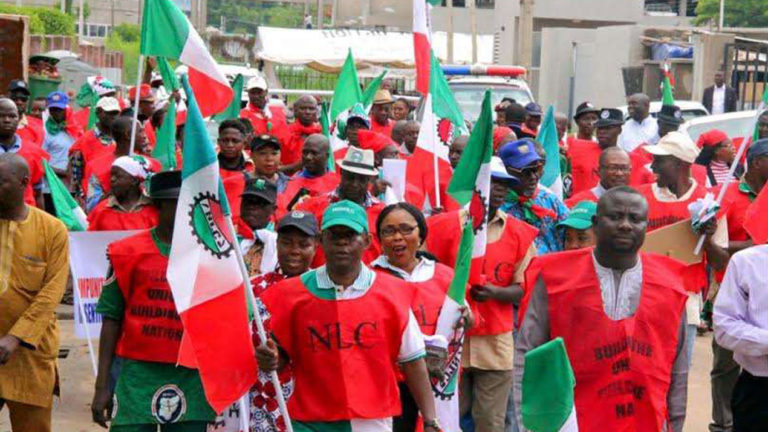
THE Nigeria Labour Congress (NLC), on Monday, June 5, secured seven key agreements with the Federal Government before suspending its planned nationwide strike scheduled to commence on Wednesday, June 7.
The ICIRreported that the union was set for its first major national strike in eight years, hours before the workers back-pedalled after reaching an agreement with the government.
NLC declared the strike to compel the government to rescind its decision to remove the subsidy on petrol.
While the NLC was mobilising its members across the country’s 36 states and the Federal Capital Territory, a sister union, the Trade Union Congress (TUC), was meeting with the Federal Government to avert the strike.
TUC also suggested ways out of the looming crisis to the Federal Government.
In a move to block the labour union from embarking on the strike, the Federal Government approached the National Industrial Court in Abuja to seek an ex-parte order stopping the industrial action.
On Monday, June 5, Justice O. Y. Anuwe of the National Industrial Court ordered the workers to halt the planned strike pending the determination of the case brought against them by the government.
Meanwhile, another government delegation headed by the Chief of Staff to the President, and Speaker, House of Representatives, Femi Gbajabiamila, met with the Joe Ajaero-led NLC and the TUC.
The parties agreed on the following, which led to suspension of the planned strike on Monday night.
The Federal Government, the TUC and the NLC to establish a joint committee to review the proposal for any wage increase or award and establish a framework and timeline for implementation.
The Federal Government, the TUC and the NLC to review the World Bank Financed Cash transfer scheme and propose the inclusion of low-income earners in the programme.
The Federal Government, the TUC and the NLC to revive the CNG conversion program earlier agreed with labour centres in 2021 and work out detailed implementation and tinting.
The Labour centres and the Federal Government to review issues hindering effective delivery in the education sector and propose solutions for implementation.
The Labour centres and the Federal Government to review and establish the framework for the completion of the rehabilitation of the nation’s refineries.
The Federal Government to provide a framework for the maintenance of roads and the expansion of rail networks across the country.
All other demands submitted by the TUC to the Federal Government will be assessed by the joint committee.
The parties also agreed on the following:
The NLC to suspend the notice of strike forthwith to enable further consultations.
The TUC and the NLC to continue the ongoing engagements with the Federal Government and secure closure on the resolutions above.
The Labour centers and the Federal Government to meet on June 19, 2023, to agree on an implementation framework.
The agreement was signed by Festus Osifo, President, TUC; Joe Ajaero, President, NLC; Nuhu Tors, Secretary General, TUC; Emmanuel Ugboaja, General Secretary, NLC; Kachollom S. Daju, Permanent Secretary, Federal Ministry of Labour and Employment, and Femi Gbajabiamila, Speaker House of Representatives.
THE Universal Basic Education Commission (UBEC) has said Nigeria is yet to achieve 100 per cent qualified teachers in primary education despite huge investments by the Federal Government.
UBEC added that the Federal Government had disbursed N57.16 billion to states for teachers’ professional development programmes in the last 13 years.
Speaking at the national conference on Teacher Professional Development (TPD) on Monday, June 5, in Abuja, the Executive Secretary of UBEC, Hamid Bobboyi bemoaned state governments’ lack of commitment towards enhancing the capacity of teachers through regular training.
Bobboyi explained that the 2022 National Personnel Audit (NPA) disclosed majority of teachers in public and primary schools had not attended in-service training in five years.
“The UBEC 2022 NPA reveals that 67.5 per cent of teachers in public schools and 85.3 per cent in private schools have not attended any in-service training in five years (2018-2022). This prevailing situation has implications for quality education delivery.
“The Federal Government, through UBEC, has contributed a total of N57,165,751,416.12 as assistance to the states for Teacher Professional Development between 2009 and 2022.
“This is grossly inadequate to cover the training needs of the teachers. The states that are being assisted have come to depend largely on the Federal Government fund for their TPD, with little or no contribution. This is a major challenge in assuring quality learning outcomes at the basic education level.”
The UBEC executive secretary further expressed his dissatisfaction on the poor teacher-to-pupil ratio in Nigeria, stressing that the dearth of teachers negatively influenced the quality of education.
“The following data were returned from the UBEC 2022 National Personnel Audit of Basic Education Institutions in the country. There were 177,027 basic education institutions with a total enrolment of 47,010,008, made up of 7,234,695 in ECCDE, 31,771,916 in primary schools and 8,003,397 in junior secondary schools,
“For teacher supply, there were 354,651 teachers/caregivers in the ECCDE centres; 915,593 in primary schools and 416,291 in junior secondary schools.
According to Bobboyi, “The learner/pupil ratio varies from state to state, but none is within the recommended ratio. There are states where the learner/pupil ratio is as high as 1:100 pupils. Nigeria is yet to attain 100 per cent qualified teachers in primary schools.”
He expressed worries over the limited number of qualified teachers and increasing rate of unqualified teachers in primary schools across the country.
“It is sad to find that some of the people teaching in schools are holders of the first school leaving certificate, basic education certificate, senior secondary school certificate, associate certificate in education, diploma certificate.”
The UBEC executive secretary however urged all conference participants and resource persons to collectively adopt new ways to boost learning in basic schools across the country.
“It is time for us to review our practice and approaches and ensure that the main objective for the introduction and implementation of TPD which is improved teacher and learner performance is achieved for the benefit of the learners and the nation at large.”
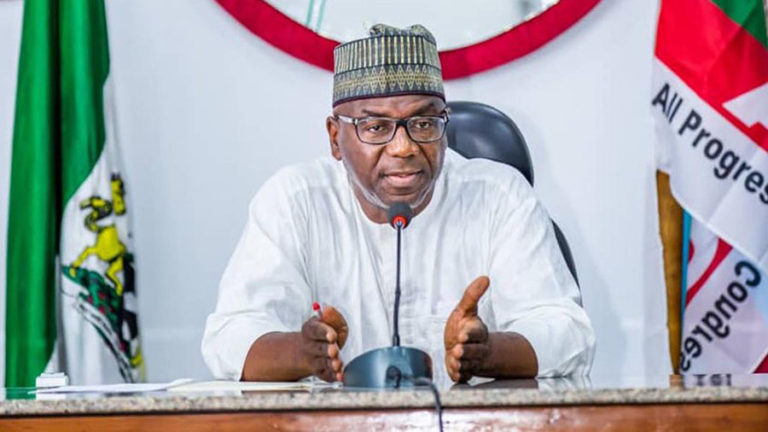
KWARA State government has reduced work days for its staff from five to thrice a week following the removal of fuel subsidy, which led to a surge in transportation costs.
This was disclosed in a statement by the Chief Press Secretary (CPS), Office of the Head of Service (OHOS), Murtala Atoyebi, on Monday, June 5.
“The State Head of Service, Mrs Susan Modupe Oluwole announced today that the State Governor, Mallam Abdulrahman Abdulrazaq, has directed that the workdays be reduced from five days to three days per week for every worker.
“Mrs Oluwole directed all Heads of Ministries, Departments and Agencies (MDAs) in the State to immediately work out a format indicating the alternating work days for each worker under them,” the statement said.
The Head of Service warned workers against abusing the gesture, noting that her office will intensify the monitoring of ministries, departments and agencies (MDAs) of the state government.
After Nigeria’s President Bola Tinubu declared that there would be no more subsidy for fuel, getting access to the product became difficult, as oil marketers shut down petrol stations across the country.
Kwara state governor Abdulrahman Abdulrazaq on May 30, threatened to revoke Certificates of Occupancy of fuel stations hoarding petrol and creating artificial scarcity.
However, the Nigerian National Petroleum Company Limited (NNPCLtd) increased the pump price of petrol by about 200 per cent a few days later, leading to a hike in transport fares.
In most parts of the country, transport costs rose by at least 100 per cent and the daily commute to work has become a difficulty for many Nigerians.
Some Nigerians have resorted to trekking long distances to reduce transport costs, while motorists complain of low patronage.
Oyo State Sector Commander of the Federal Road Safety Commission (FRSC) Joshua Adekanye advised Nigerians to embrace the use of bicycles as alternative means of transportation due to the price surge across the country.
“Use of bicycle is economically cheap because the cost of a bicycle is not as expensive as using a car or motorcycle,” he said.
BARRING a last-minute agreement between the Nigeria Labour Congress (NLC) and the Federal Government, Nigeria will witness the first major strike by the workers’ union in eight years on Wednesday, June 7.
The strike will follow the Federal Government’s refusal to reverse its decision to remove the subsidy it paid on petrol.
On Monday, May 29, The ICIR reported how President Bola Tinubu announced the end of the subsidy regime in his inaugural address.
Tinubu took over from former President Muhammadu Buhari, whose government made no budgetary provision for subsidy beyond June in the 2023 appropriation act.
Buhari’s government had announced that the government would no longer subsidise the product from June 2023.
Following the pains Nigerians face because of the removal of subsidy by Tinubu, NLC, through its President, Joe Ajaero, declared the planned strike on Friday, June 2, after its National Executive Council (NEC) meeting in Abuja.
The ICIR reports that the policy has resulted in about a 200 per cent hike in the price of a litre of petrol and corresponding increases in the cost of other products and transportation nationwide. It has also worsened the high inflation rate threatening the nation’s economy.
The ICIR further reports that if held, Wednesday’s strike will be the first full industrial action from the workers since Buhari took over office in May 2015 and the first for the ruling All Progressives Congress (APC) to contend with at the national level.
Coincidentally, the APC and Tinubu, while in opposition to the then-ruling Peoples Democratic Party (PDP), vehemently opposed subsidy removal announced by the PDP government, headed by former President Goodluck Jonathan on January 1, 2012.
They developed the slogan “Occupy Nigeria,” which attracted millions of citizens to oppose the decision through street protests across the nation’s cities.
Wednesday’s strike may paralyse the economy, education, banking sector, health services, and other critical sectors of the economy.
The ICIR reports that Nigeria occupied the seventh position among oil-producing countries, globally.
The country subsidised petrol, otherwise known as premium motor spirit (PMS), for years for its citizens.
However, the government said it could no longer pay for the product because of piling debts and the need to meet its responsibilities.
In its June 2 notice to the government, the NLC issued the Nigeria National Petroleum Corporation Limited (NNPCL) an ultimatum to reverse the new pump price by Wednesday, June 7, failing which the union would embark on a nationwide strike.
The union has mobilised its affiliate bodies, including the Nigeria Union of Local Government Employees (NULGE), the Medical and Health Workers Union of Nigeria (MHWUN), the Non-Academic Staff Union of Educational and Association Institutions, and the Judiciary Staff Union of Nigeria.
Other affiliate unions mobilised the strike are the Nigeria Union of Journalists, Senior Staff Union in Colleges of Education, Nigeria, Maritime Workers Union of Nigeria, National Association of Nigeria Nurses and Midwives, Nigeria Civil Service Union, National Union of Electricity Employees, and National Union of Civil Engineering Construction, Furniture and Wood Workers.
How threats by NLC to embark on strike failed under Buhari
In October 2018, the NLC threatened to down tools following the Buhari administration’s foot-dragging in implementing the new minimum wage.
Justifying the suspension, the NLC’s immediate past President, Ayuba Wabba, said the union had received a commitment from the government to pay the new wage.
Similarly, in September 2020, the NLC and its sister workers’ union, the Trade Union Congress (TUC), planned a nationwide protest against fuel price increases. But the groups aborted the action hours before the protest after meeting with the government.
Then came the third time the workers threatened to confront the Buhari government over his administration’s plan to remove fuel subsidy.
Wabba’s NLC fixed January 27 and February 2, 2022, for a national protest against the decision.
Because it always cancelled its planned confrontation with the Buhari government, many Nigerians have described the NLC as a “toothless bulldog,” and accused it of deviating from its firmly stance during former President Olusegun Obasanjo’s tenure.
While the strike by the Academic Staff Union of Universities (ASUU) was on in 2022, NLC held a solidarity protest with the teachers. The ICIRreported Buhari facing his first confrontation with workers as a military and civilian leader. Generally, Buhari’s government opposed protest, using state power and security forces.
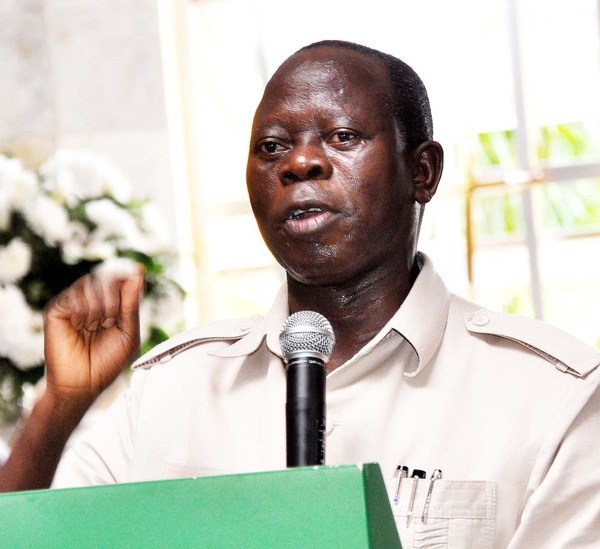
Adam Oshiomhole, now a senator-electfor Edo North, led NLC during Obasanjo’s days in office. During his time as labour leader, there were several confrontations between the government and the workers, leading to several strikes.
Oshiomhole, who later became Edo State governor and national chairman of the APC, has said the demands presented by labour in response to the removal of fuel subsidy ‘are in order.”
Generally, strikes are the last resort for workers to make government meet their demands, including calls for better welfare for their members, good governance, and accountability.
THE Senator-elect for Edo-North Senatorial District of Edo State, Adams Oshiomhole, has said demands presented by Nigerian labour unions over the removal of fuel subsidy are legitimate.
According to him, subsidy removal by the President Bola Tinubu administration has Broughton hardship on Nigerians due to the rise in the cost of living.
Oshiomhole, who is a former NLC leader, and former governor of Edo State, said this while speaking on Channels Television’s Sunday Politics, on Sunday, June 4.
The ICIR had on June 2, reported that NLC is set to commence a nationwide strike on Wednesday, June 7, if the Federal Government fails to reverse the hike in the fuel pump price.
According to the NLC President Joe Ajaero, the decision to embark on strike was prompted by the pains Nigerians are going through following the increase in the cost of petrol, otherwise known as premium motor spirit (PMS), after the Federal Government removed subsidy for the product.
“The NLC NEC directs all state councils and industrial unions to commence mobilisation from this moment,” Ajaero added while addressing journalists after the meeting.
This development followed the declaration that ‘subsidy is gone’ by Tinubu.
The declaration has led to widespread economic repercussions, with petrol prices rising at filling stations across the nation.
The Trade Union Congress (TUC) also raised concerns over the removal of fuel subsidy by Tinubu, calling for caution in the implementation of the decision.
TUC demanded ample time for these discussions and engagements, to ensure that all concerns and questions were addressed before proceeding while also stressing that Nigerian workers and the masses should not bear the brunt of the inefficiencies of successive governments.
Speaking on the TUC and NLC reactions, Oshiomhole said a lot of demands by the two unions are ‘doable and viable.’
“The Trade Union Congress (TUC) came up with a list of specific demands which they will want the government to address. I believe that a lot of those demands are doable, are viable and they make a lot of sense.
“The government in return agreed to look at this comprehensively and revert back on Tuesday (June 6) with a view to finding a common solution,” he said.
According to Oshiomhole, the current administration is ready to increase the minimum wage but insisted that it must be done in line with the money available to the government.
He said, “When you withdraw subsidy, you try to make some savings. The fact of that savings means the cost of PMS is going to go up and therefore those who operate commercial vehicles or own private vehicles will have to pay more. Passengers will have to pay more to return from work, farmers will have to pay more to go to the market to sell their farm produce and also pay more to return back home.
“In a sense, there is no question that removing the subsidy means some level of increase in the cost of living beyond the cost of transportation. It will cascade to every aspect of life.
“Labour is opposed to the removal of subsidy because of the consequential increase in the cost of living. And now that you have done it, then you have to deal with the other side of it which is adjusting my wages in a manner that will enable me to cope with the increase in the cost of living so that overall, I protect my living standard. I think that is very legitimate.
“The business of labour is to protect and even improve the living standard.”
The Federal Government and the labour unions, NLC and TUC, are still engaged in negotiations following the removal of fuel subsidy. However, the NLC is set to commence a nationwide strike on Wednesday, if the government fails to reverse the hike in fuel pump price.
A PEOPLES Democratic Party (PDP) witness has told the Presidential Election Petition Court (PEPC) that the party’s candidate, Atiku Abubakar, and his counterpart in the All Progressives Congress (APC), President Bola Tinubu, failed to meet the criteria to be declared President following the February 25 presidential poll.
The witness, Mohammed Babaji Madaki, who is also the chairman of the PDP in the Federal Capital Territory (FCT), stated that Atiku and Tinubu did not get up to 25 per cent of total votes cast in the FCT.
During cross-examination by counsel to the Independent National Electoral Commission (INEC), Mohammed Aliyu, at the resumed hearing of the petitions on Monday, June 5, the witness affirmed that receiving 25 per cent of total votes cast in the FCT was a prerequisite for a candidate to be declared President.
When asked if his statement was merely his opinion, the witness clarified that it was based on constitutional provisions.
Responding to questions regarding whether his candidate, Atiku, had attained the required result in the FCT, the witness unequivocally stated, “My candidate did not score 25 per cent of votes in the FCT, according to the purported result published by INEC.”
When pressed further by Tinubu’s counsel, Akin Olujimi, a Senior Advocate of Nigeria (SAN), the insisted that despite not being a lawyer or mathematician, his assertion was grounded in the law.
Further cross examined by counsel to the APC, Lateef Fagbemi, (SAN), the witness, acknowledged that the FCT held equal significance to any other state in the country.
Also, another PDP witness told the court that the February 25 presidential election was marred by violence at collation centres in Rivers State.
The witness, Abiye Sekibo, a former minister, who served as the PDP state collation officer for Rivers State, said that he received reports of violence in Obiakpor, Ahoada East, and Ahoada West, but was prevented from reaching the party’s agents in Obiakpor.
He stated that his visits to 20 polling units in Okrika and communication with party agents from various polling units revealed that they were unable to upload results using the BVAS system.
During cross-examination by Tinubu’s counsel, Olujimi, Sekibo admitted that he did not collect the names of the INEC officials at the polling units.
INEC had declared Tinubu as the winner of the February 25 presidential election.
According to INEC, Tinubu secured 8,794,726 votes to come first, Abubakar finished second with 6,984,520, while Obi polled 6,101,533 to come third.
The PDP and LP candidates rejected the result and approached the tribunal with separate petitions to challenge Tinubu’s victory.
They alleged that Tinubu was not qualified to contest the election and that he failed to secure the majority of lawful votes cast at the poll.
They are also contesting that Tinubu’s running mate, Kashim Shettima, had a double nomination contrary to the Electoral Act.
Both candidates, in their separate petitions, prayed the tribunal to nullify Tinubu’s election because he didn’t obtain 25 per cent of votes in the FCT.
However, lawyers have expressed different opinions on the matter.
According to a former Attorney General and Commissioner for Justice in Ekiti State, Dayo Akinlaja (SAN), the requirement does not necessitate winning the presidential election in the FCT in addition to securing two-thirds of the votes in the 36 states.
“If the intention had been to make securing 25 per cent in the FCT a distinct condition precedent, it would have been so distinctly and separately stated in the Constitution. The way it is now, all a candidate needs to do is to secure 25 per cent in two-thirds of the 37 units. Once that is achieved, there is a valid election,” he said.
Similarly, a human rights activist, Femi Falana (SAN), had argued that a candidate could win a presidential election without necessarily obtaining 25 per cent of the votes in the FCT.
Falana referred to Section 299 of the Constitution, which states that the FCT should be treated as a state, implying that the requirement for 25 per cent of votes in two-thirds of the states includes the FCT as the 37th unit.
But a former President of the Nigerian Bar Association (NBA), Olisa Agbakoba, argued that 25 per cent in the FCT, was a constitutional requirement to be declared President in Nigeria.
Speaking on Arise Television in April, Agbakoba listed the two reasons why the declaration of Tinubu as the winner of the February 25 presidential election may have a problem.
He pointed to Section 134 (2) of the Nigerian Constitution, which provides the conditions to be met before one is declared a winner of a presidential election and Section 35 of the Electoral Act 2022 (as amended), which forbids candidates from contesting two positions in an election.
He explained that the two positions are unambiguous and do not require lengthy time or argument for the Tribunal to decide.
“Section 134 (2); it applies literally, because the rule of interpretation says if you read something and it’s so clear to you, then you don’t need to interpret it.
“The thing says you must win a quarter of the votes in two-thirds of 36 states and the… And then what do you want to say? The answer is obvious.”
When pressed by the presenter to break it down, he said, “I have just broken it down. I have broken it down. You want to put words in my mouth, which I won’t accept.
“It’s so simple, you get a quarter of the votes in of 24 states. That’s what the law says, which is 24. So that’s one part of it.
“It goes on to say, ‘and’. What does that mean? ‘And’ the FCT’. So as far as I am concerned, you must also win 25 per cent in the FCT.
“But that’s not for me to say because I would be pre-judging what’s before the tribunal.
“So we think the tribunal can answer this question quite easily in one hour. That’s my point. Quite easily, it’s not a difficult question to resolve,” he said.
Agbakoba had, before the general elections, written to INEC to clarify its position on the true interpretation of the section.
BOLA Tinubu has been sworn into office as the President of Nigeria and as he takes over the leadership mantle, some stakeholders have proffered solutions to the myriad of security challenges confronting the country.
Nigeria has witnessed seemingly unrestricted killings by non-state actors in recent times, so Nigerians anxiously wait to see how his government will tackle the massive security challenges that bedevilled the country over the past few years.
When the immediate past President, Muhammadu Buhari, was sworn into office on May 29, 2015, he promised that his administration would concentrate on the economy, fight corruption, and tackle insecurity.
However, eight years after, data by the Council on Foreign Relations’ Nigeria Security Tracker (NST) checked by The ICIR showed that non-state actors killed 31,821 people between May 2015 and April 2023.
The NST website tracks violent incidents related to political, economic, and social grievances directed at the state or other affiliated groups.
The ICIR, in a special report, looked at key security issues and major killings that took place in Buhari’s eight years of administration.
Tinubu was sworn in as the President of the Federal Republic of Nigeria on Monday, May 29.
After emerging as the All Progressives Congress (APC) presidential candidate for the 2023 general elections, in June 2022, Tinubu promised a secure, prosperous and united Nigeria in his victory speech.
Tinubu said he was ready to unite the nation, provide security, and rebuild the economy.
He said if elected President, he would eliminate criminals, including terrorists.
“They have been worrying us, but we will eliminate them. We are Nigerians. We are sure that no animal in the darkness of the night, no intruders, no destroyers, can bring Nigeria backward. Forward we are moving,” he said.
Also, during his campaign around the country, Tinubu promised to provide security for the large populace.
He promised to tackle the security situation across the country, stating that the economy cannot thrive in an insecure environment.
“I will give priority to confronting security, making the economy one of widely shared prosperity and paying special attention to agriculture, like the current government of President Muhammadu Buhari.
“On security, my policy is not artificial, created to sound good for this campaign. Our security policy is based on dedicated study and long conversations with experts in this field.
“I used the same approach to tackle the bad security situation that faced me when I became governor of Lagos. I created programmes and institutions to solve the real and dangerous challenges Lagos faced.
“I shall increase security personnel and better equip them. Advanced air and ground surveillance technology will identify, track and attack the criminals until they are utterly defeated,” the former governor of Lagos state said.
In his inaugural speech on May 29, he also pledged to prioritise security and effectively tackle the menace of insecurity.
“Security shall be the top priority of our administration because neither prosperity nor justice can prevail amidst insecurity and violence.
“To effectively tackle this menace, we shall reform both our security Doctrine and its Architecture.
“We shall invest more in our security personnel, and this means more than an increase in number. We shall provide better training, equipment, pay and firepower,” the President stated.
Meanwhile, in separate interviews with The ICIR, some stakeholders in the security industry offered suggestions on ways the Tinubu administration can effectively address insecurity. Most of the stakeholders encouraged the use of technology in the fight against insecurity.
A security analyst with SBM Intelligence, Emeka Okoro, in a chat with The ICIR, listed some measures Tinubu should implement to address insecurity.
Increased funding for security agencies
He said, “The government should increase the funding for security agencies to enable them to procure modern equipment and technology to combat insecurity effectively.”
Okoro noted that, although the Buhari administration invested huge amounts in the security sector, “there was really nothing to show for the huge funding”.
The situation implies that more funding is needed to address the country security challenges.
Collaboration with neighbouring countries.
Okoro, in the same vein, called for cross-border collaboration in the campaign against insecurity.
“Nigeria should collaborate with neighboring countries to tackle cross-border criminal activities such as arms smuggling and banditry. This aspect is very important if any meaningful progress is to be made.”
Address the root causes of insecurity
According to him, the Federal Government should address the root causes of insecurity, such as poverty, unemployment, and inequality.
He said this can be done by implementing policies that promote economic growth and development.
Community policing
Okoro further urged the government to invest in community policing to enable security agencies to work closely with local communities to identify and tackle security threats.
Strengthen intelligence gathering
The security analyst further advised the government to strengthen intelligence gathering so as to anticipate and prevent security threats before they occur.
Address corruption within security agencies
Okoro identified corruption within security agencies as one of the factors responsible for the high level of insecurity in the country.
“Corruption undermines security by providing an enabling environment for criminal activities. The government should tackle corruption in all its forms, including especially within security agencies,” he stressed.
Engage in dialogue
He urged the new administration to dialogue with stakeholders, including religious and community leaders, to address underlying grievances that fuel insecurity.
Improve border security
Finally, he added that the government should improve border security by deploying modern technology to monitor the movement of people and goods across the border.
According to Okoro, improving security at the country’s borders would help address insecurity.
Also speaking with The ICIR, the Managing Director of Ethicos Security, Oladele Fajana, urged Tinubu to understand that security of lives and property is a fundamental right of Nigerians.
Fajana called for an audit and evaluation of the security situation in the country.
“As a professional, I implore the leaders to at least audit and evaluate the security situation; if I may suggest, the security architecture should be changed; this will usher in fresh ideas; I mean all the service chiefs,” he submitted.
He added that government should use technology instead of ‘wasting’ manpower, considering the number of security personnel that lost their lives fighting the insurgency.
Also speaking on the same issue, the Director, Security Salute Nigeria Initiative, a non-governmental organisation, Salihu Dantata Mahmud, asked for a restructuring of the nation’s security architecture.
He also urged the President to appoint competent service chiefs and the IG of Police and visit Military and police formations regularly to interact with both commissioned and non-commissioned officers.
Mahmud, who is also the director of publicity at Arewa Youths for Peace and Security, asked Tinubu to seek the involvement of traditional rulers of affected areas.
“Procure intelligence gathering gadgets, install CCTV in forests, highways and also procure right hour drones, capacitate police outposts, divisional headquarters and area commands to meet up with instant insurgent and arm bandits invasion.”
He equally urged Tinubu to open up more mobile police squadrons in different areas, establish more military cantonments, and also improve the welfare of officers and personnel.
THE Nigerian National Petroleum Company Limited (NNPC Ltd) has highlighted a couple of issues it believed Nigerians needed to know about the fuel subsidy removal.
The new administration of President Bola Tinubu has taken the courage to end the fuel subsidy regime, which previous administrations had shied away from because of its economic and political implications.
As a result, citizens are currently experiencing an almost 200 per cent hike in the pump price of fuel, which has caused a surge in the cost of transportation, food and other items.
In an infographic shared on its official Twitter handle on Saturday, June 3, NNPC Ltd conveyed some of the issues.
According to the enterprise, the future of petrol supply to the domestic market now lies in the hands of the Dangote, NNPC, and other domestic refineries.
“NNPC Ltd will no longer be the sole supplier of petrol. By law, no player can control more than 30 per cent of the market,” it stated.
NPPC Ltd had increased the pump price of petrol even before the end of June date slated to do so, based on the provisions made in the 2023 Fiscal Framework and Appropriation Act and Petroleum Industry Act (PIA).
“Delaying subsidy removal till the end of June 2023 could have caused serious nationwide fuel scarcity and hardship as NNPC Ltd was owed over N2.8 trillion and NNPC Ltd can no longer sustain sufficient supply to the market,” it claimed.
Another concern the NNPC Ltd conveyed in the infographic was that for filing stations to be able to restock petrol, they have to resort to selling the old stock at the new prices.
The NNPC Ltd had raised the pump price of fuel from about N184 to about N550, depending on certain logistics, like transportation, involved in supplies.
It, however, noted that with time the price of fuel would be determined by market forces of demand and supply, and by then the price could moderate.
“These are some of the inevitable costs of reforms; we need the reforms to prevent the collapse of the economy,” the chief executive officer of the Centre for the Promotion of Private Enterprise (CPPE), Muda Yusuf, told The ICIR.
To Yusuf, things would have to get worse before they get better, saying, “It would be painful initially, but it would progressively get better. As the supply-side response improves, the prices will moderate.”
He suggested that the government should urgently put immediate and short-term measures in place to mitigate the pains of the sharp increases in transportation costs on the citizens.
Food and transportation account for over 50 per cent of the household budget of the poor, and, according to Yusuf, the Federal government should do something urgently to ameliorate their sufferings.
“Such measures should focus on reducing the cost of food, provision of cheaper public transportation options, improving power supply to reduce demand for fuel for electricity generators, promoting the use of autogas, reduction in import tariffs for intermediate products for food processing companies, eliminating taxes and levies on all agricultural inputs to boost food production, and reduction in import tariffs on mass transit buses, among others,” he recommended.
NNPC’s petrol pricing should be, at least, 15 per cent less than the prices of private fuel stations, Yusuf added. “This is necessary to signal social sensitivity to the government,” he said.
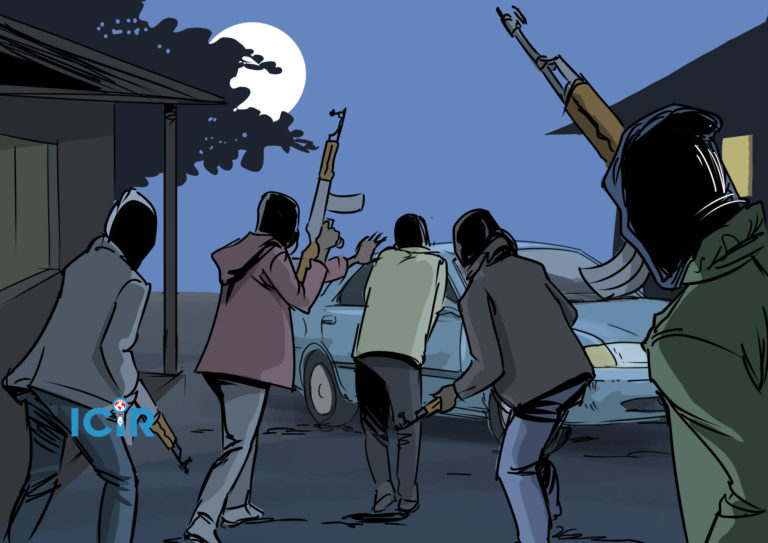
RESIDENTS of Abuja and Lagos have been entangled in the cobwebs of the men of the underworld popularly known as ‘one-chance’, a calibre of robbers who disguise themselves as commercial motorists and passengers.
In this report, Adedokun Theophilus chronicles his one-on-one encounter and the experiences of commuters in Abuja and Lagos who had fallen prey to the bloodcurdling activities of “One-chance robbers”.
As daylight waned and the cloudy sky alarmed the dusk on Sunday, March 19, I hurried to board a car in Lugbe-Berger after a gruelling day at work.
En route to Gwagwalada, some minutes past eight in the evening, I walked closer to an awaiting navy blue Toyota Camry parked by the tarred highway.
The car windows were already wound down; I looked closer at the rear seat and noticed two passengers waiting to be conveyed to their destinations.
After pondering the inconvenience I might experience in transit with four passengers sitting in the rear seat, I opted to sit beside the driver’s seat.
A few seconds after I boarded the car, a dark-skinned man in a brown shirt and trousers approached and sat beside me. In objection, I lamented the inconvenience that accompanied two people sitting in the front seat meant for one person, but the driver was determined to carry two passengers.
Afterwards, two more passengers joined to fill the rear seat, and the driver immediately wound up the tinted windows and drove off.
As the driver sped off on the four-lane asphalt road with street lights, the car radio blared out a collection of Nigerian hip-hop playlists. Although I was absent-minded till the car passed the array of lampposts which illuminated the road for motorists, pedestrians and the flyover leading to the famous Nnamdi Azikiwe International Airport.
Unfortunately, the silence was cut short when a quarrel broke out from the rear seat between a man; I will later find out his name to be Hammed Yunusa and the three other passengers as he scuffled to resist their assault.
“Where is your ATM card, your phone and money? What is your password? One of the passengers, who I later found out to be a robber, demanded in unpolished English with the interference of a Hausa accent as the two others displayed various small arms like hammers, chisels, daggers and wire cables.
Confused and afraid, I willingly gave in as one of our raiders threatened to kill us, but Yunusa- an average-height young man with an athletic body grudgingly refused and kept wrangling with them.
Sadly, one of the assailants signalled his colleague, and Yunusa was stabbed on his left lap with a knife. While I was slapped and whipped with cable as we painfully shrieked and pleaded for our lives.
“Dan Allah, “Please,” we begged our captors several times.
Yet, we were compelled to release valuables; three phones (two Techno and one Samsung), a wristwatch, four automated teller machine cards and a sum of fifteen thousand denominations of the new naira currencies.
With Yunusa injured, bleeding and writhing in agony, the robbers dropped us off along a deserted bush leading to the University of Abuja campus.
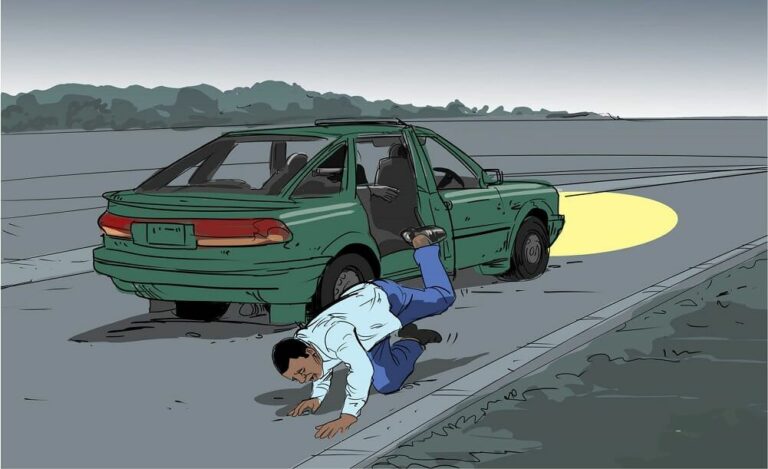
Like Yunusa and I, many residents of Abuja and Lagos state have experienced a different variation of one-chance robbery, where many commuters have been robbed of their belongings and, sometimes, their lives when they get thrown out of the moving vehicle or sustain fatal injuries.
One-chance robbery a threat to commuters
The activities of these robbers have become a threat to users of public vehicles.
The ICIR’s in 2019reported how the one-chance robbery is becoming a booming venture and a growing threat to the safety of lives and properties on the streets of Abuja.
From the victims’ accounts and hospital sources, the people robbed lose their phones, money and, sometimes, lives. The report stated that the lack of streetlights in Abuja contributed to the city’s rise in criminal activities. Many parts, including major road networks, are dark at night.
The absence of closed-circuit television (CCTV) cameras also contributed to the difficulty in tracking and arresting offenders.
This followed The ICIRreport, which exposed that security cameras planted on major roads in Abuja did not work for long after their installation, even though as much as N76 billion was spent on the project. Many of them have also been vandalised and stolen by hoodlums.
Consequently, The ICIRspotlighted the danger zones for drivers and residents in Abuja after speaking to motorists and leaders of the road workers because they also fall prey to attacks by people posing to be passengers. The report unravelled the hotbed where one-chance robbers and car hijackers mostly operate.
Several news reportsalso showed that Lagos residents are raising the alarm over the increasing operations of one-chance car robbers in the metropolis.
In Lagos…
In 2022, a woman, Olamide Azeez, was affected when suspected one-chance robbers stole her life savings in the Ikosi area of Lagos state.
The victim boarded the cab from Toll Gate, Ikosi, while heading for work at Victoria Island around 6:00 a.m. on Friday, September 29, 2022.
Narrating her ordeal, Azeez said, “The robbers made away with my life savings-all N910,000; my iPhone XR, N4,300 cash, earrings, wristwatch, and Oraimo EarPods.”
While Azeez was lucky to be alive, another unidentified victim, who boarded a cab to the Island from Oshodi on her way to work, was not lucky, as reported in The Guardian.
Her mutilated body was later discovered a day after her death at Oyingbo.
Maimed, mutilated and marred by one chance
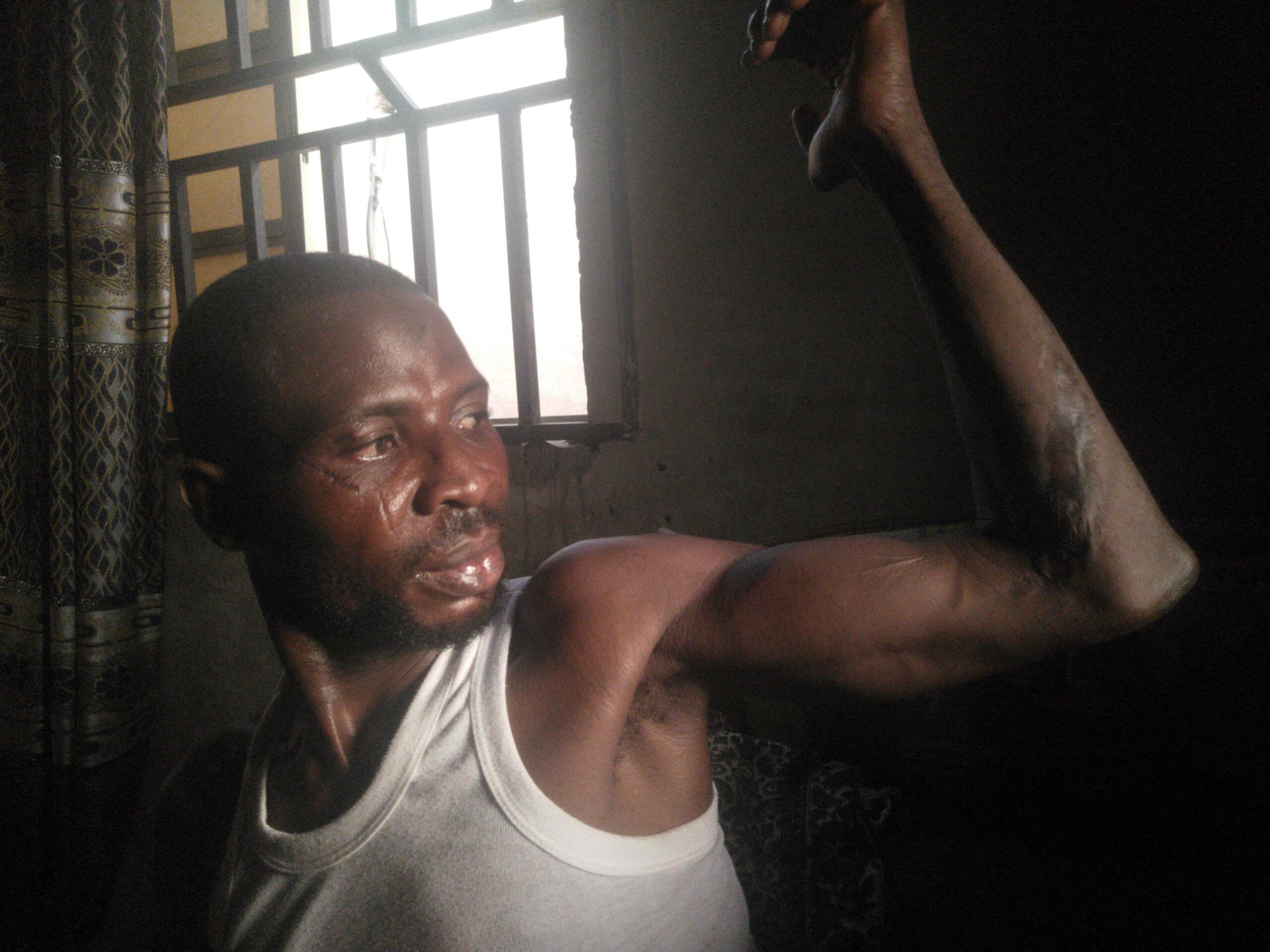
Similar to my experience, Kehinde Sulaimon, an Abuja-based plumber, escaped death by a hair’s breadth from these robbers in June 2021. Now supported by a pair of crutches everywhere he goes, Sulaimon is still haunted by his harrowing encounter with the men of the underworld.
According to Sulaimon, he was not born disabled, but his unfortunate encounter with one-chance robbers maimed, mutilated and marred him physically.
Kehinde Sulaimon, a victim of one chance robbery, displayed his mutilated arm/ Source: ICIR/Theophilus Adedokun
As rain drizzled by 8:00 p.m., exhausted Sulaimon desired to join his family and hurried to board a vehicle in Zuba, a popular park in FCT to beat the rain before it let. En route to Anagada, Sulaimon was unaware he had boarded the wrong vehicle.
“I joined the car in Zuba Park, and I didn’t bother checking because it was in an accredited garage, but we were almost at Tuganmaji when one of the passengers dipped his hand into my pocket and in anger, I punched him”, he recounted.
“Before I knew what was happening, the lady who sat beside me landed consecutive slaps, and three people pounced on me as the fourth culprit drove the car,” he stated.
“When they saw that I could overpower them, they used a hammer to break my leg and cut off some flesh from my left hand,” Sulaimon continued his narration of the encounter as he showed the scars of the wound sustained.
“I could not bear the excruciating pain, so I collapsed,” Sulaimon stated while wiping the beads of sweat that had formed on his brow.
Immediately he lost consciousness; the perpetrators dumped him in a bush before the intervention of a good Samaritan who took him to the hospital.
“I was unconscious and left to die. I was only told when I woke up that a stranger brought me to the hospital, and I spent six months at the hospital spending close to a million naira,” Sulaimon stressed. “I still feel the pain sometimes, but the wound has healed up already,” he said as he touched the scars.”
Disguised ‘DSS’ clears victim account in daylight
Meanwhile, a university graduate and father of two, Ayodele Jimoh, said he was robbed by people who said they were from the Department of State Security (DSS) officers in November 2022.
Jimoh said that the culprits, two hefty men, accosted him after he withdrew seventy thousand Naira at an ATM booth around the NAF centre, – the Bannex-Gwarimpa road. He said they showed him DSS identification cards and also handcuffs.
Shocked, Jimoh complied and was instantaneously driven down to Mabushi, where the duo obtained his ATM card, phones and the withdrawn naira notes.
“I complied because I thought they were DSS officers. It all happened in a flash. They drove me to Mabushi and took away everything I had on me,” he noted
He stated that he immediately went to the bank to block the card, but they had already withdrawn all the money from his account.
“When I realised they were a one-chance robber, I rushed to the bank to deactivate all pending transactions on the ATM, but I found out that what is left in my account is N1,250. It was done through POS machines, and we could not trace it”, he stated.
Jimoh said the money they stole was meant for a construction project.
“When I went to Mabushi police station, I was informed by the policemen on duty that to obtain a report for the incident that happened to me, I must pay N20,000 after everything that I lost,” he said. “while narrating my experience so that they could pity me, two of the officers whispered secretly at the description of the culprits.”
Jimoh, however, mentioned that he was not allowed to give a written statement despite the incident that happened to him.
In addition, Jimoh bemoaned the incompetence of the FCT police. He expressed his suspicion of foul play and connivance of officers and the criminal syndicate.
Muggers abduct; adopt balms as a tool for operation
Adebanji Bunmi, a Lagos-based properties manager, described her sordid experience to The ICIR. She said it happened around 6:00 am on a Thursday in July 2022.
She had woken up to beat the traffic and arrived at her workplace early. Unknowingly she boarded a commercial Sienna bus in the company of other passengers who were co-assailants along the Oshodi expressway to Lekki.
Not long after she noticed the suspicious gesture of the one-chance robbers, a handful of syrup of Aboniki balm mixed with grind pepper was applied on her face to prevent her from seeing.
“Immediately we took off, the two men on both my sides grabbed my neck and covered my face with punches. One of them held me at my throat, and I was unable to breathe.”
Subsequently, Bunmi said she was beaten and battered to a stupor as she showed the picture of her disfigured face to The ICIR.
“They collected all valuables from me; my phone and ATM card were collected; when I hesitated in giving out my pin, I was beaten with a hammer till I was bleeding on my right knee,” she groaned as she recalled the tragic incident.
According to her, she was tortured and coerced to disclose her ATM pin, which she could not resist because of her pain.
“I had to release my password, and they put aboniki balm mixed with pepper inside my eyes, but they kept me with them while someone went to withdraw my money. That was the last thing I saw till I was dropped by the roadside at Alausa,” she said.
She said the muggers had successfully harvested a sum of N1.2 million before she could restrict her account.
She noted that the withdrawal from her ATM card was made from different Point of Sales (POS) machines.
Muggers adopt lies and extorting family members as a tool
Likewise, another administrative staff of The ICIR, Kimbi John, was abducted by armed one-chance robbers from the Lugbe to Area 1 in Garki park.
John stressed that although he entered the car at the park and was not expecting anything fishy until the muggers abducted him in Area 1.
Conveyed to Asokoro extension, Kimbi stated that what followed was a series of assaults, lies and threats to him and his family members after they had collected his belongings.
“They were five in number; they drove me to Asokoro,” he said. “They called my people, saying I was caught with Marijuana and they should send money if they want to bail me.”
Tied and bundled, the abductors devised another method of obtaining money from John’s kin. They repeatedly called some of John’s friends and said that he had been involved in an accident and that some amount was needed to foot his medical bill urgently.
“They have a POS, it was the POS that they used to transfer my money; they withdrew N35,000 and collected N6,400, my wristwatch, my flash drive and phones,” he explained.
Disappointedly, he received a negative response when he lodged his complaint at the Garki police station. He said that the policemen neither sympathised nor empathised with him.
“In Garki police station, they said there is nothing they can do to help, and I should go back to Lugbe to lodge my complaints.”
He said the police mockingly asked him to guide them on how they were supposed to trace a POS transaction.
Weak regulations aid muggers use of POS, boom one-chance activities
The ATM and POS channels are adopted by the one-chance robbers to withdraw victims’ money. A bank statement shared by Adebanji shows that N1.2M was withdrawn using these channels.
The document shows a systemic transaction from Access Bank’s Automated Teller Machines and different point-of-sale systems.
It revealed that consecutive withdrawals of N700,000 from Fashveego venture; N200,000 from Favour-Endurance; N202,500 from Sodiq Enterprise while the other transactions were done through ATM.
A bank statement of a Adebanji Bunmi displaying amount she said were withdrawn by muggers and the medium of transaction
A series of tweets made by Azeez, who was robbed around Ikosi in Lagos and lost N910,000, showed that she was robbed in a similar fashion as Adebanji.
Azeez said “The 910,000 was withdrawn from a different POS, N305,400 from one POS belonging to T_Tommy_Global Link.”
She further highlighted that Fashveego Venture was part of the point of sales used by the muggers to withdraw her money.
Other points of sales used include Frankem Venture and Tommy Global Link.
While using an open-source tool, The ICIR established that the point of sales used for withdrawal did not exist as a registered business name on the public website of theCorporate Affairs Commission.
This, however, contravenes the Central Bank of Nigeria’s (CBN) guidelines for regulating Agent Banking and Agent Banking Relationships, which state that an entity seeking to be appointed as an agent by an institution must provide a certificate of incorporation or business registration.
It further elaborated that it is mandatory for the entity that intends to work with the point of sales to provide a tax clearance certificate, a physical location address, a postal address and an active telephone number.
It also pointed out that agency businesses with a proven criminal record involving fraud, dishonesty, integrity or any other financial impropriety would be prohibited from acting as a banking agent.
Speaking to The ICIR, an Abuja-based company lawyer, Komolafe Aderibigbe said there are instances where the CAC registration may not be needed as what banking institution requires from POS businesses is a bank verification number (BVN) and name.
He said that transactions made by POS muggers should be traceable, but most muggers connived with bank officials to frustrate the victims’ efforts.
“Even without supplying and submitting the necessary information, POS are still given to people.”
“Activities on most POS could not be traced easily; there are a lot of vacuum and gaps that need to be filled to regulate how people are given POS,” he said to The ICIR.
Further investigation of renowned mobile financial services like Moniepoints, Opay, Nomba revealed it takes less than thirty minutes to become an agent of many mobile financial institutions.
A screenshot that revealed that a bypass of registration as a POS agentA Screenshot of Moniepoints agents’ registration process displaying waiver for valid identification card
The registration process of these financial institutions to become an agent could be completed without verification to prove if the contact address filled in by prospective agents is correct.
The ICIR noticed similarities in the pattern of the registration process to become an agent of these financial institutions.
According to the service providers, registration of names and entry password code is necessary.
Followed by contact and business name which is registered, this however contravenes the Companies and Allied Matters Act (CAMA), 2020 that stressed that businesses should be registered as a sole proprietorship or a partnership.
The ICIR noticed that some essential parts of the registration process, like National Identification Number (NIN) and Bank Verification Number (BVN) can be waived at demand while prospective agents continue to use the financial institutions for a long time until an upgrade is done.
However, during the process of usage, transactions could be done under a specific limit hitch free by the prospective POS agents.
Some of the victims interviewed by The ICIR complained that the police were not following up on information provided to them. They accused the Police of being accomplices, while others feared that filing their complaints to the police would only cause them to lose more money without obtaining justice.
To establish the facts and allow The FCT Police Command to clarify the allegation against its image, the reporter scheduled an interview with Abuja Police Public Relation officer (PPRO), Josephine Adeh, on Friday, April 14.
After narrating the findings and plights of some victims, the PPRO was asked what the Force is doing to ensure the safety of lives and properties is guaranteed in FCT and also asked about the claims on illegal monetisation of police reports and the lackadaisical approach of some bad eggs of the force in Mabushi and Zuba Police station in addressing one chance victims investigation.
In reaction to the questions, Adeh instructed a junior police officer to search and take the reporter out of the office premise. The junior officer led this reporter out of the PPRO office, deleted the recording and threatened to lock him up.
Similarly, TheICIR contacted the Lagos State Police Public Relations Officer, Benjamin Hundeyin, to explain how the command is tackling the menace and the monetisation of the phone tracking and police reports.
Hundeyin told this reporter that although the police are doing their best by providing patrol vehicles and a hotline which victims can call, the police is handicapped to freeze any suspected account.
“There was a time Police officers were allowed by the law of Lagos state to get a court order and freeze suspected accounts. But now the existing law in Lagos state doesn’t permit the police to do that, so what the complainant or victims can do is to engage the service of a lawyer to get a court order to freeze any suspected Point- of – sale (POS) account the withdrawals are linked to.”
According to Hundeyin, “The moment the Police get the court order and service the bank, the account will be frozen, and that will enable police to get the KYC and other things needed to aid our investigation.”
He further stressed the need for the victims to report to the nearest police station.
“Victims are not supposed to pay any money to the Police for either phone tracking or police report, but if anybody has paid he/she should report to the Divisional Police officer of the station,” he told The ICIR.
Hundeyin noted that until the victims obtained a court order, the police cannot swing into further investigative action to retrieve lost resources or prosecute suspected assailants.
Park Management says it is waging war against crime- NURTW
Meanwhile, the Lagos State Secretary of the Nigerian Union of Road Transport Workers (NURTW), Oluwaseyi Bankole dissociated the union from an attempted incident by a mugger to kidnap and rob passengers.
Bankole said the bus driver is not known to the union and did not take off from a park operated by the union. It was learnt that the incident, which involved a driver and six passengers, occurred along the Lagos Ibadan expressway.
The driver picked up the passengers from the Ojota Garage in Lagos and was heading to Warri, Delta State. But the passengers found themselves in Ibadan.
Corroborating the Lagos State Chapter’s statement, the Chairman of Kosofe Branch ‘A’, Ojota Biode Motor Park, Michael Odugunle said the bus took off at a private park.
“We will have to meet with the operators of the private parks and iron it out. The incident came to us as a surprise; such has never happened before in any of the union-owned parks, Odogunle said. He noted that it is safer to board the garage because both drivers’ and passengers’ data are collected before departure.
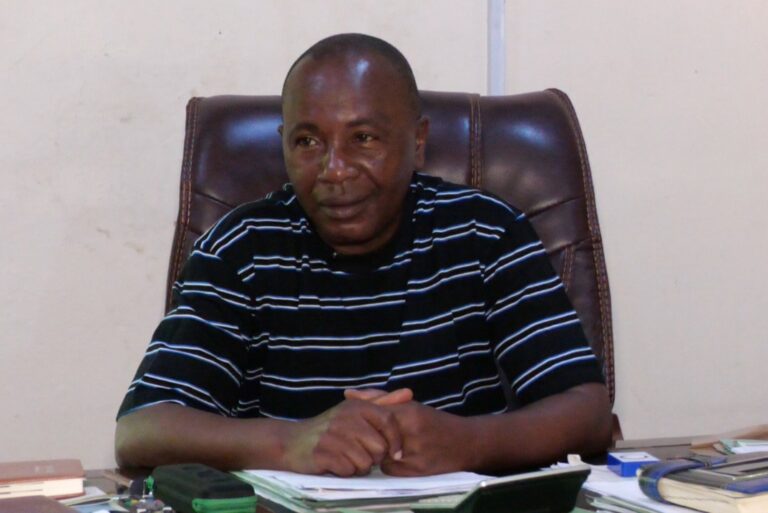
The Chairman, NURTW, Lugbe Abuja Dalhatu Muhammad gesticulating. Photocredit: ICIR/Theophilus Adedokun
Also reacting to the incessant increase in the incidence of one-chance robbers to The ICIR, The NURTW Chairman Lugbe Garage, in Abuja Dalhatu Mohammed, said members found guilty are punished.
He stressed that passengers are always recalcitrant to board accredited vehicles parked inside the garage.
He also noted that the increased number of car owners using their vehicles for commercial purposes has worsened the problem. “The problem is that everybody has turned to Kabu Kabu. There is no ministry where you won’t find someone using his car as a commercial vehicle: Police, DSS, immigration and even Ministers’ cars are used to carry passengers; when they send them to the airport, they will carry passengers, and it is impossible for us to arrest.”
Mohammed further told The ICIR that most of the vehicles off the road did not belong to the NURTW, “This is the reason we put some of our officials on the road to ensure that people are secured,” he explained.
“If the government direct us to paint our cars, one chance robbers will be the first to paint and you’ll not be able to distinguish between genuine drivers and robbers,” he added.
Mohammed, however, emphasised that Abuja Park managers and NURTW are collaborating with the police to apprehend perpetrators, adding that the joint efforts have led to the arrest of many robbers.
Sustainable solution
Speaking to The ICIR, a security expert and director of Ethicos Security Limited, Oladele Fajana stressed the need for the government to invest heavily in the transportation sector to reduce the menace.
According to Fajana, “One-chance is not new, but a modern-day security challenge, but the lack of a developmental plan of the transportation sector is worsening the problem.”
The security expert noted that the menace could be mitigated if passengers can take precautionary measures by deterring from boarding unmarked vehicles and buses.
He, however, urged the federal government to put necessary infrastructure like security lights and CCTV cameras in place to deter perpetrators.
Fajana further charged security agencies to be proactive and responsive to responding to calls for help from one-chance victims.
On March 13, 2023, youths in the neighbouring communities of Otukpo and Obi local government areas (LGAs) in Benue state launched a communal war over a power outage, causing death and destruction that is still being investigated, according to the police.
In this exclusive interview with The ICIR conducted before the change in government on May 29, the special adviser to the then Benue state governor on security matters, Paul Hemba speaks on the crisis.
The ICIR: How did the crisis between Igede and Idoma youths come to you and the state government?
Hemba: The crisis came to me, the Benue state government and even the people in the affected communities as a shock because the Idoma and the Igede people have always coexisted very peacefully. In fact, the Ochi’Idoma, the paramount ruler of the Idoma kingdom presides over both Idoma and Igede land. The people share so many cultural affinities, they intermarry, and there are similarities even in the spoken language. There has never been a crisis of that scale between them, so I will say that crisis came as a surprise to many of us. Even the elders from the communities we spoke to never expected such an eruption.
The ICIR: From your record, how many people died or are missing due to the crisis? The police said no death or missing person was reported to them; however, the youth leaders said they recorded casualties, and some people were still missing.
Hemba: Well, we got conflicting figures from both communities. At some point, we felt the figures were not reliable because some people died, and their corpses could not be seen. Due to the nature of the crisis, some people were burnt in their houses; some were killed in the bushes while trying to escape the violence. So, it is understandable why there are varying figures. In fact, it is the reason we still have a lot of reported cases of missing persons. For this particular reason, I can not give reliable data on the casualties at this moment.
The ICIR: The Jos Electricity Distribution Plc which some people blamed the crisis on for failure to restore power, said there might be another reason beyond electricity; how true is that claim?
Hemba: From my investigation and interaction with both communities, I have not found any other underlining factors that degenerated into that crisis except that of electricity. But the issue of electricity is not the only trigger; poverty, lawlessness on the part of the youths and lack of adherence to laid down rules are some issues. Our youths in the country generally are jobless, and they are under pressure, so any slight thing acts as a trigger.
A lot of small arms and light weapons are in the hands of these youths
A lot of small arms and light weapons are in the hands of these youths, so issues that hitherto could have been resolved through dialogue and understanding by elders and community leaders, but instead you find youths resorting to the use of firearms which are readily available in their hands.
The ICIR: How can your government make JED Plc more responsive when there is a power outage?
Hemba: For now, we have drawn their attention, and we will be monitoring the situation to ensure that if there is any problem with electricity, the company responds promptly, especially in all these volatile areas. But we will engage with the company more constructively and peacefully, not capitalising on their shortcomings to fight ourselves or even the company. We must be patient and follow due process in resolving conflict and not take the law into our hands.
The ICIR: You blamed the crisis on the proliferation of illegal arms in the state, but what measures has the government put in place to curtail the use of illegal arms?
Hemba: We are looking at the possibility of another amnesty programme to reduce the number of illegal weapons in their hands. My message remains that the youth remain patient with authorities as nobody gains from violence.
The ICIR: How possible is the proposed amnesty programme since your administration ends on May 29?
Hemba: Government is a continuum, and we hope that the incoming administration will look into and implement some of the recommendations we will make at the end of this dialogue that is going on. The problem of illegal possession of arms is not just in Benue state but across the whole country.
Government is a continuum, and we hope that the incoming administration will look into and implement some of the recommendations we will make
There is a large number of illegal arms in the hands of idle youths and unauthorised persons. Even politicians buy these arms and give them to these youth for election purposes. After the elections, the politicians can not control them, so they use the guns for communal crises, armed robbery, kidnapping, cultism, and what have you. So I think this should worry not only the state government but the federal government as well.
The ICIR: Victims on both sides accused the state government of abandoning them. What have you done to ameliorate their suffering?
Hemba: The government has sent some relief materials. Of course, it may not be enough but remember that this crisis happened at the time the whole country was facing the general elections. The attention of everybody was diverted, but it is not like they have been abandoned. The elections came with its own issues throughout the country. But we will still look for ways of drawing the attention of the government and concerned organisations to see ways of alleviating the suffering of affected persons and communities as quickly as possible.
The ICIR: What measures has the government taken to resolve the crisis and avoid similar occurrences in the future?
Hemba: We got in touch with the traditional ruler, particularly the Ochi’Idoma and traditional rulers on both sides, to dialogue together and recommended ways of preventing a future occurrence of violence of that magnitude between the two neighbouring communities.
Initially, the Igede people were sceptical. They feared the Idoma people might harm them if they came to Otukpo. But that was just a mere perception. Eventually, we held a meeting with them in my office.
In attendance were traditional rulers, youth groups, opinion leaders and stakeholders from both sides on the directive of the Governor (Samuel Ortom). They all regretted all these misconceptions and the violence that happened.
So far, they have promised to cooperate with the authorities of the state government and the traditional institutions to dialogue and lay down their arms. So we are hopeful that the crisis will be resolved.