Home Blog Page 900

NNPCLtd increases petrol pump price by almost 200%, document confirms deregulation

THE Nigerian National Petroleum Company Limited (NNPCLtd.) has officially increased the pump price of premium motor spirit (PMS), popularly known as petrol, by about 200 per cent.

President Bola Tinubu had declared in his inauguration speech on Monday, May 29, that his administration would be abolishing the subsidy on petroleum imports.

“Fuel subsidy is gone”, Tinubu had declared.

Fuel queues had immediately begun building on the same day as many retailers shut their filling stations, hoarding their stock and creating scarcity with a view to hiking fares later.

By the morning of Tuesday, May 30, long queues of vehicles had built up at filling stations open for business, and retailers were selling at unofficial pump prices as high as N600 per litre.

The NNPCLtd has, however, in a template it sent today to marketers, confirmed the astronomical rise in pump price of the product, with the minimum being the N488 per litre obtainable in Lagos, while it will be selling as high as N557 per litre in Maiduguri.

As is the current dynamics, prices in the different states are determined by the vagaries of logistics, especially transportation costs.

Document shows price hike of petrol across various states of the Federation.

A document regarding the price hike sighted by The ICIR has been confirmed by oil industry sources.

President of the Petroleum Retail Owners Association of Nigeria (PETROAN), Billy-Gilly Harris, told The ICIR, “Yes, I can confirm the document; we are now in a full deregulated market.”

The NNPCLtd, in a statement it issued today signed by its chief corporate communications officer, Garba Deen Muhammed, explained it was adjusting price upward “in line with current market realities.”

The company noted that “prices will continue to fluctuate to reflect market dynamics.”

NNPCLtd official statement confirming the price hike.

In Abeokuta, Ibadan, Osogbo, Akure and Ado-Ekiti, petrol will be selling for N500 per litre. And in the following four cities of Port-Harcourt, Calabar, Benin and Asaba, it will be N511 per litre.

In Ilorin, Uyo, Umahia and Owerri, it is also N511 per litre, while it is N537 per litre in Abuja, Jos, Lafia, Minna and Makurdi. It gets higher in Kano, Kaduna, Dutse and Gusau at N540 per litre, and N545 per litre in Birnin Kebbi.

It is highest in Maiduguri and Damaturu at N557 per litre.

A commercial bus driver Dickson Aja told The ICIR that he bought fuel today for N530 per litre in the Gwagwalada Area Council of the Federal Capital Territory.

Unofficially, however, the prices are higher, especially at filling stations owned by independent marketers, than what the NNPCLtd template dictates. A tricycle operator in Enugu, Onyeka Anyaegbule, told The ICIR that he bought petrol for N600 per litre in Enugu today.

Also, The ICIR correspondent in Lagos bought a litre of the product in the afternoon today at N520 at the C & G filling station on Pedro Road, after the Pedro police station, Palm Grove, in the Lagos metropolis.

The Nigeria Labour Congress (NLC) president Joe Ajaero has urged the Federal government to put some mechanisms in place to mitigate the effects of the subsidy removal on the people.

“There are hiccups associated with subsidy removal, especially inflation on transportation costs and food prices. All these reactions and side effects ought to have been taken into consideration before the removal of subsidy,” Ajaero, who spoke today in a monitored interview on Channels Television Sunrise breakfast show, said.

The NLC chief and other top officials of the body were scheduled to meet with some Federal government representatives by 2pm today over the subsidy removal development.

“Government seems to have shown interest in the discussion. As at last night, they reached out, and we have fixed 2pm today to commence discussions,” Ajaero said.

“There are other issues that will be discussed because you can’t just say there’s no subsidy and then you are not producing and leave us at the vagaries of the market to people who want to sell the product they bought for N10 for N100 to maximise profit,” he said.

Why tobacco business thrives in Africa — WHO

THE World Health Organization (WHO) has said the tobacco industry is flourishing in Africa due to regulatory lapses.

The agency said while the number of people using tobacco products decreased in other parts of the world, it rose in Africa.

According to the WHO, tobacco users in the African Region increased from an estimated 64 million adult users in 2000 to 73 million in 2018.

It attributed the rise partly to the increased production of tobacco products and aggressive marketing by the tobacco industry.

In a message to commemorate 2023 World No Tobacco Day on Wednesday, May 31, WHO Africa Region Director Matshidiso Moeti, a doctor, said the solution to the crisis was for tobacco farmers to switch to planting food crops.

This year’s ‘World No Tobacco Day’ theme is ‘Grow Food, Not Tobacco’. The theme aims to raise awareness about alternative crop production and marketing opportunities for tobacco farmers and encourage them to grow sustainable, nutritious crops. 

The theme also seeks to expose the tobacco industry’s efforts to interfere with attempts to substitute tobacco growing with sustainable crops, thereby worsening the global food crisis, Matshidiso said.

She explained that the tobacco epidemic was one of the biggest public health challenges facing the world, killing more than eight million people yearly.

“Tobacco growing and production exacerbates nutrition and food insecurity. Tobacco farming destroys ecosystems, depletes soil fertility, contaminates water bodies and pollutes the environment. Any profits from tobacco as a cash crop may not offset the damage to sustainable food production in low- and middle-income countries.

“Nearly 828 million people are facing hunger globally. Of these, 278 million (20 per cent) are in Africa. In addition, 57.9 per cent of people in Africa suffer from moderate to severe food insecurity. This jeopardizes the region’s attainment of SDG 2, which aims to end hunger, achieve food security and improved nutrition, and promote sustainable agriculture.”

The WHO chief argued that the world faced a grave challenge in food and nutrition security imposed by the increasing tobacco farming in Africa Region. 

“Available data shows that the area under tobacco cultivation decreased by 15.7 per cent globally. In Africa, it increased by 3.4 per cent from 2012 to 2018.   

“During this period, tobacco leaf production globally reduced by 13.9 per cent; however, it increased by 10.6 per cent in Africa. In recent years, tobacco cultivation has shifted to Africa because of a regulatory environment that is more favourable to the tobacco industry and increasing demand for tobacco.”

Meanwhile, the agency said three African countries, Kenya, Uganda and Zambia, were already supporting their farmers to shift from tobacco farming to other crops. It appealed to other countries in the region to offer similar aid to their farmers.

The WHO also urged tobacco-growing countries to step up the implementation of Articles 17 and 18 of the WHO Framework Convention on Tobacco Control (WHO FCTC) by enacting legislation, developing and implementing suitable policies and strategies, and enabling market conditions for tobacco farmers to shift to growing food crops that would provide them and their families with a better life while enhancing the protection of the environment and the health of their people.

In June 2022, The ICIR reported how the Nigerian government began a new tax regime on tobacco products to reduce tobacco product marketing.

In 2021, The ICIR published a report accusing British American Tobacco of bribing African and other leaders to undermine public health.

Earlier, in 2019, this organisation reported how Nigeria was not doing enough to reduce tobacco use.

Gender equality bill passes second reading at Senate

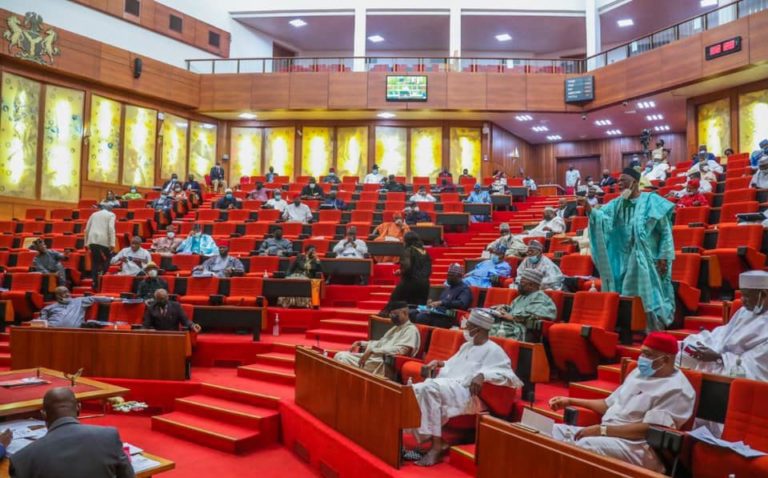
THE Gender and Equal Opportunities Bill passed second reading at the Senate on Wednesday, May 31.

The bill, which seeks to eliminate all forms of discrimination against women and girls, was sponsored by the senator representing Ekiti South in the 8th National Assembly Biodun Olujimi in 2016.

The bill is aimed at ensuring equal opportunities for every Nigerian based on Section 42 of the 1999 Constitution as amended.

The proposed legislation also seeks to guarantee government protection and empowerment of women and the implementation of laws relating to female representation in government.

“You will find this bill beneficial for the clear and constructive ways the bill seeks to address several forms of issues bedevilling men and women in their constituencies in issues of land ownership, inheritance, education, employment and the rising tide of sexual and gender-based violence in private and public spaces of institutions of learning.

“The bill further consolidates senate’s courageous passage of the bill on sexual violence in higher institutions in Nigeria, assuring girls, women and men of protection from abuse and exploitation in our schools,” Olujimi said.

The clamour for gender equality has been on for years, with women groups and civil society organisations advocating for change and an end to gender-based violence.

The bill was stepped down at least three times in the past due to several challenges, including religious concerns.

In the 8th Senate, the bill was rejected on the grounds that its provisions could not be implemented in all parts of the country as it contravenes the principles of Islamic religion and culture.

It was also stepped back in 2021 due to similar opposition by members of the Senate.

Senator representing Taraba-Central Yusuf A. Yusuf opposed the bill, stating that equal opportunities as provided by the bill contradict provisions of the Holy Qur’an.

“I oppose the passage of this bill for second reading until the word ‘equal opportunity is removed,” Yusuf said.

The senator representing Sokoto-North Aliyu Wamakko also expressed his displeasure with the concept of equal opportunities for women and men.

“When it comes to socio-cultural practices, it is wrong. When you talk of equity it is okay. When you talk of equality it is no. I will not support it,” Wamakko said.

Tinubu, EFCC chairman meet in Presidential Villa

0

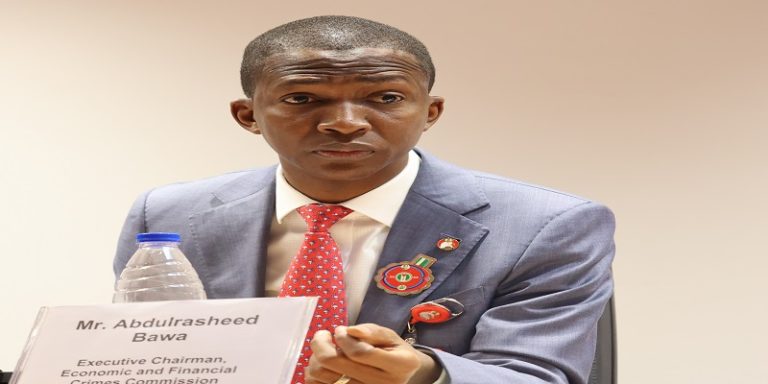
PRESIDENT Bola Tinubu held a closed door meeting with the Chairman of the Economic and Financial Crimes Commission (EFCC), Abdulrasheed Bawa, at the Presidential Villa, Abuja, on Wednesday, May 31.

The agenda of the meeting could not be determined at the time of filing this report, but there are indications that it might not be unconnected with the altercation between the Department of State Services (DSS) and the EFCC on Tuesday, May 30.

The ICIR reported that the DSS and the EFCC clashed over a Lagos office building on Tuesday, May 30. The clash followed the blockade on the anti-graft commission’s office by operatives of the security agency.

Operatives of the DSS reportedly prevented staff of the EFCC from gaining access to their offices during the incident.

It was gathered that the EFCC and the DSS shared office spaces in the building at No. 15A Awolowo Road, Ikoyi.

Reacting to reports on the development on its official Twitter page, the DSS, in a statement signed by its spokesperson, Peter Afunanya, said it did not stop EFCC staff from having access to their offices.

Rather, the DSS said the building in question belonged to it.

The DSS added that there is no rivalry between it and the EFCC over and about anything.

However, in its reaction, the EFCC described the siege on its Lagos office by the DSS as shocking.

The EFCC claimed that the action of the DSS undermined the nation’s fight against economic and financial crimes.

The EFCC’s reaction was contained in a statement signed by the Commission’s Spokesperson, Wilson Uwujaren.

The Commission said it had cohabited with the DSS in the same facility for 20 years without any fracas.

The EFCC added that the siege is inconsistent with the synergy expected of agencies working for the same government and nation.

Tinubu later directed the DSS to immediately vacate the office.

The directive was disclosed in a statement released by Tinubu’s media aide, Tunde Rahman, later on Tuesday, May 30.

The President said any issues between the two government agencies should be resolved amicably.

CSOs are demanding EFCC chairman’s sack 

Tinubu’s meeting with Bawa is coming amid calls for the sack of the EFCC chairman by some civil society organisations.

The CSOs, who have been staging protests, allege that the EFCC under Bawa is corrupt and inefficient.

The CSOs, led by the Chairman of the Centre for Anti-Corruption and Open Leadership (CACOL), Debo Adeniran, and representing over 150 organisations, noted that the EFCC has become a tool for settling political scores.

Demanding Bawa’s exit from the office, they argued that it is accepted practice worldwide for officials suspected of serious misbehaviour to resign during investigations.

The group called for a thorough investigation into the activities of the EFCC under Bawa over the last three years, including analysis of records of arrests, investigations, outcomes and final closure of each incident and individual suspects and how the matters were eventually dispensed with.

Bawa has also been having a running battle with the immediate past governor of Zamfara State, Bello Matawalle, over corruption allegations.

While Bawa accused Matawalle of involvement in ‘’monumental corruption’, the governor accused the EFCC chairman of demanding a $2 million bribe from him.

The governor made the accusation in an interview with BBC Hausa Service.

Otti freezes Abia State accounts, dissolves boards amid EFCC probe

ABIA State governor Alex Otti has frozen all bank accounts belonging to the government and its agencies.

He also dissolved all boards of agencies and parastatals of the state government, with immediate effect.

Otti’s Special Adviser on Media and Publicity Ferdinand Ekeoma disclosed this in a statement on Tuesday, May 30.


READ ALSO:
Tinubu directs DSS to vacate EFCC office, gunshots rock building

EFCC chairman, Matawalle fight dirty over corruption allegations

Zamfara governor accuses EFCC chairman of demanding $2 million bribe

Yahaya Bello: EFCC moves to halt execution of ruling on 14 properties, N400m


“The Governor, in a statement issued by his media office on Monday, May 29, 2023, said with the notice, all banks and other financial institutions in the country are directed to immediately desist from honouring any cheque, document, instrument or directive of any kind not expressly approved by or emanating from him.

“Similarly, Governor Otti has directed the immediate dissolution of all boards of Abia State Government agencies and parastatals and subsequently ordered the chief executives of these organisations to hand over to those next in line to them,” the statement said.

Otti had accused the outgoing Peoples Democratic Party (PDP) administration led by Okezie Ikpeazu of looting properties belonging to the state while he was Governor-elect.

He alleged that vehicles and other equipment purchased with public funds were being removed from the Aba General Hospital, School of Health Technology Aba, Abia State Universal Basic Education Board, School of Nursing Amachara, and Abia State Government Umuahia, among other organisations.

Describing the actions as callous and insensitive, he urged Ikpeazu to pay attention to the allegations.

However, the former governor denied the allegations, describing them as senseless.

Earlier, the Economic and Financial Crimes Commission (EFCC) had begun a probe on the utilisation of local government funds by Abia State officials.

The EFCC invited affected the concerned officials to report for questioning at the Chairman’s Monitoring Unit (CMU).

The officers invited for questioning include treasurers and Heads of Service in the 17 local government councils.

However, the Ikpeazu-led government, through Abia state’s Attorney-General and Commissioner of Justice Uche Ihediwa, pleaded with the EFCC to delay investigations.

Ihediwa explained that the invited officials were all involved in the preparations to transit to a new government and may be too occupied to honour the invitation.

NAPTIP dismisses director, officers for misconduct

0

THE National Agency for the Prohibition of Trafficking in Persons (NAPTIP) has dismissed a deputy director and four other officers for offences bordering on bribery, corruption and leaking confidential information to suspects.

A statement released on Wednesday, May 31, by the Press Officer of NAPTIP Vincent Adekoye, disclosed that the offences committed by the officers encompassed corruption, solicitation and acceptance of bribes from suspects and their relatives.


READ ALSO:

Online sexual exploitation: NAPTIP sets up cybersecurity response team

NAPTIP wades into ICIR’s investigation on Nigerian Air Force officer trafficking children

NAPTIP, Ministries of Information, Industry rank lowest on FOI compliance in five years

African Migrants caged, vital organs harvested in Libya – NAPTIP


Other offences committed by the officers were leaking confidential information to suspects that endangered the lives of colleagues, violating the oath of secrecy, stealing and alteration of official records and being absent without official leave.

The statement noted that the offences are all in contrast to the Public Service Rules and other extant regulations.

“These offences are all contrary to provisions of the Public Service Rules and other extant laws and regulations. Two other officers were demoted by two ranks for soliciting bribes from a suspect of human trafficking, while one officer was demoted by one rank for negligence of duty.”

The statement further explained that the sanctions against the officers were approved by the Governing Board of NAPTIP during a meeting on May 25.

According to the statement, the governing board reviewed and ratified the decisions made by the agency’s Senior Staff Committee, which had previously addressed the disciplinary matters in accordance with the Public Service Rules and other applicable laws and regulations.

“The disciplinary actions followed the approval of the Governing Board of the Agency at its meeting of May 25, 2023. At that meeting, the board considered and ratified the decision of the agency’s Senior Staff Committee which earlier sat on the disciplinary matters in accordance with the Public Service Rules and other extant laws and regulations,” the statement said.

The statement added that a law enforcement officer had been convicted and sentenced to prison by a Federal High Court in Sokoto State.

The officer was convicted on two counts of trafficking, contrary to Section 26 (2) of the Trafficking in Persons (Prohibition) Enforcement and Administration Act (2015) and was sentenced to five years on each count.

Tribunal adjourns hearing at request of Obi’s lawyers

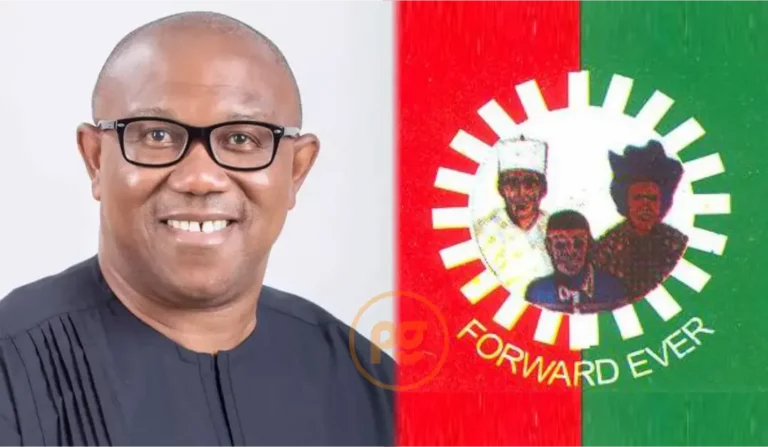
THE Presidential Election Petition Court (PEPC) has adjourned hearing of the petition against President Bola Tinubu’s election, following a request by Labour Party (LP) presidential candidate Peter Obi’s legal team.

The five-man panel, led by Haruna Simon Tsammani, granted the adjournment during the resumed hearing of the case on Wednesday, May 31.

During the hearing, Awa Kalu, a Senior Advocate of Nigeria (SAN), the counsel for the petitioner, informed the court that the original plan of Obi‘s legal team was to present documents to the tribunal today.


READ ALSO:
Impostors clone my voice, make phone calls to tarnish my image — Peter Obi

‘I am not desperate but I will be Nigeria’s President’ – Peter Obi

Tribunal: APC, Tinubu oppose moves to merge Atiku, Obi’s petitions

Tribunal to merge petitions challenging Tinubu’s election


However, according to him, the legal team experienced an unexpected setback due to the sudden illness of two key staff members at their secretariat.

As a result, Kalu stated, “We are constrained to pray for an adjournment till tomorrow (Thursday, June 1).

The legal representatives of the Independent National Electoral Commission (INEC), Tinubu, and the All Progressive Congress (APC), namely Abubakar Mahmoud, Wole Olanikpekun, and Lateef Fagbemi, who are all SANs, did not contest the request for a postponement.

They acknowledged that the time wasted would be added to the petitioner’s allotted time since the request originated from the petitioner’s side.

Tsammani, in response to the plea, granted the prayer for an adjournment and scheduled the continuation of the hearing for Thursday, June 1.

The ICIR earlier reported that the tribunal, during its sitting on Tuesday, May 30, admitted a United States court judgment against Tinubu as evidence. The judgment, which included five exhibits presented by Obi’s counsels, alleged that Tinubu had been convicted of drug trafficking and fined $460,000.

Obi’s petition

In their petition, Obi and the LP argued that when Tinubu’s running mate, Kashim Shettima, became the vice presidential candidate, he was still nominated as the APC candidate for the Borno Central Senatorial election.

They also challenged Tinubu’s eligibility, alleging that he was previously indicted and fined $460,000.00 by a United States District Court for an offence involving dishonesty and drug trafficking.

Obi, who came third according to results announced by INEC, claimed that the election was invalid due to corrupt practices and non-compliance with the provisions of the Electoral Act, 2022.

He argued that INEC breached its regulations and guidelines by not prescribing and deploying technological devices for voter accreditation, verification, continuation, and authentication as required.

The petitioner sought a declaration from the court that Tinubu was not qualified to contest the election and that all votes recorded for him were wasted.

He also requested the court to determine that he received a majority of lawful votes and satisfied constitutional requirements to be declared the winner.

In the alternative, he called for the cancellation of the election and the conduct of a fresh election in which Tinubu, Shettima, and the APC would not participate.

Agbakoba urges Tinubu to release Nnamdi Kanu

A FORMER president of the Nigerian Bar Association (NBA), Olisa Agbakoba, has urged the Federal Government to release the leader of the proscribed Indigenous People of Biafra (IPOB), Nnamdi Kanu, to foster peace and national unity.

Speaking on Arise TV on Wednesday, May 31, Agbakoba stressed the need for Nigerians to forget the deficiencies of the previous government and focus on President Bola Tinubu’s administration.

He also condemned Kanu’s continued detention.

“On Nnamdi Kanu, there is no reason to detain him unnecessarily. They are just heating up the polity. If I were him (Tinubu) whatever it is, I will draw a line for Nnamdi Kanu and tell him that as long as what he is doing is in the context of the Constitution, you are expressing a desire for Biafra and you are not fighting, you are not causing trouble, then go ahead.

“It is because the government uses the wrong method by putting him in prison which makes it becomes an issue. Also I will tell Kanu that all charges against him are dropped,” he said.

Agbakoba spoke of the need for the new government to utilise leaders of sub-national ethnic groups in strengthening national unity, peace and stability.

“This administration can use the leaders of the sub-national ethnics like Edward Clark, Arewa, Afenifere and Ohanaeze because these are people who I feel if Tinubu uses, can calm the situation and that will enable him to deliver good governance. These are the ones who handle sub-national issues.

“All of Nigeria’s problems are known to us. But it is this sub-ethnic nationalities that will help Mr President validate the new constitution. Whether the constitution is going to abrogate the 1999 Constitution and a new one will be introduced I don’t know but those are the things he needs to do to create national order.

“Forget President Buhari’s eight-year tenure, it is gone. If I were Tinubu I would be looking at what I can do because if he starts looking back, he will carry a lot of issues and baggage. We all know the issue around President Buhari but right now I think he is in Daura and he is no longer the issue. The issue is that President Tinubu is the man in Aso Rock and not Buhari. Whatever it is I will urge Nigerians to forget the past and to see what President Tinubu can do to make us happy.”

He noted that tension would reduce if the new administration provides basic social amenities and essential services.

“Nigerians don’t demand much; what they want is a good job. What they want is housing, water, fuel and electricity. If he looks backward we would not advance.

“Also, one of the problems confronting Tinubu as President is the issue of national unity and Nigeria is presently struggling with disunity.”

The ICIR earlier reported that Tinubu vowed to increase Nigeria’s gross domestic product (GDP) by, at least, six per cent annually.

Delivering his inauguration speech at the Eagle Square, Abuja, on Monday, May 29, Tinubu said his administration would ensure that Nigeria raises the GDP through job creation and food security to mitigate poverty.

He promised that his administration would create one million jobs through digital economy for the teeming youths in Nigeria.

He said, “My administration must create meaningful opportunities for our youth. We shall honour our campaign commitment of one million new jobs in the digital economy.

“We shall remodel our economy to bring growth and develop the GDP much better than we have seen through job creation, food security and an end to extreme poverty.

“On the economic, we target a GDP of not less than six percent growth.

“Our government also shall work with the National Assembly to fashion an omnibus Jobs and Prosperity bill. This bill will give our administration the policy space to embark on labour-intensive infrastructural improvements, encourage light industry, and provide improved social services for the poor, elderly and vulnerable.”

Sokoto gov reverses Tambuwal’s last minute appointments, revokes land allocations

SOKOTO State governor Ahmad Aliyu has overturned the last-minute appointments and some other major decisions taken by his predecessor, Aminu Tambuwal, before leaving office.

The governor also suspended all traditional rulers recently appointed by the immediate-past governor of the state.

Press Secretary to the new governor, Abubakar Bawa, disclosed these while addressing journalists on Tuesday, May 30, at the Government House, Sokoto.

According to him, Aliyu nullified the naming of tertiary institutions and the constitution of governing councils and directed the affected institutions to revert to their former names and locations.

“All the affected institutions are instructed to return to their previous names and locations accordingly,” he said.

Bawa further disclosed that all appointments pertaining to the institutions’ governing councils and recent relocations announced by the previous administration have been invalidated.

Bawa added: “All local government Sole Administrators/Caretaker Committees recently appointed by the immediate-past administration are hereby dissolved and the Sole Administrators are to hand over to the Directors of Administration of their local governments with immediate effect.

“All governing boards of parastatals other than statutory boards are hereby dissolved with immediate effect.

“All land allocations and other related matters made by the out-gone administration in recent weeks are hereby revoked with immediate effect.

“All recent wasteful and unnecessary auction of government assets are hereby suspended and will be revisited in due course.”

The ICIR had on March 20, reported that Aliyu, the candidate of the All Progressives Congress (APC) was declared winner of the March 18 governorship election in Sokoto State by the Independent National Electoral Commission (INEC).

Aliyu won with a total of 453,661 votes, defeating Saidu Umar of the Peoples Democratic Party (PDP), who received 404,632 votes, in a close race.

Tribunal admits US court judgment, BVAS report in Obi, Atiku’s petitions against Tinubu

THE Presidential Election Petition Court (PEPC) accepted five exhibits as evidence on the opening day of the hearing of the petition filed by the Labour Party (LP) and its presidential candidate, Peter Obi, to challenge the election of President Bola Tinubu.

Led by Jubril Okutekpa, a Senior Advocate of Nigeria (SAN), the LP presented the exhibits, marked as Exhibits PA (1 to 5), which included a copy of a United States court judgment alleging Tinubu’s conviction with a fine of $460,000 for drug trafficking.

These exhibits, along with the deposition of the first witness, Lawrence Uchechukwu Nwakaeti, were admitted by the tribunal led by Haruna Tsammani, on Tuesday, May 30.

Tinubu and the All Progressives Congress (APC) voiced objections against admitting the judgment into evidence.

During cross-examination by Wole Olanipekun, (SAN), representing Tinubu, Nwakaeti acknowledged that the judgment was not registered in Nigeria.

Olanipekun questioned the witness about the absence of any mention of a fine in the US court judgment, to which Nwakaeti agreed.

“Will you be surprised that not a single line or word relating to fine was in the US court judgment?” Olanipekun asked.

However, Nwakaeti asserted that he had read the judgment in its entirety during his visit to the United States and would be surprised if the $460,000 forfeiture was not mentioned.

Under cross-examination by Lateef Fagbemi (SAN), counsel for the APC, Nwakaeti stated that the American court judgment lacked a certificate from any American police officer.

He also denied awareness of a formal clearance report from the American Embassy concerning the alleged indictment and forfeiture on February 4, 2003.

When asked by Fagbemi to provide a copy of the charges against Tinubu, Nwakaeti admitted not having one but maintained that the indictment and forfeiture arose from civil proceedings.

In a separate petition filed by the People’s Democratic Party’s (PDP) presidential candidate, Atiku Abubakar, the tribunal admitted the printout of results from the Bimodal Voter Accreditation System (BVAS) of all 36 states as evidence.

Tsammani accepted the evidence in line with the First Schedule of the Electoral Act 2022.

The court marked the evidence as PG (1-36) and PH (1-36), representing the printouts of BVAS results and Permanent Voter Cards (PVCs) from the 36 states and the Federal Capital Territory.

During the opening of Atiku’s petition, his counsel, Eyitayo Jegede (SAN), informed the court that the documents were filed at the beginning of the petitions and duly served to all parties, adhering to the legal requirements.

However, counsel for the second and third respondents – Tinubu and APC – objected to the admissibility of the evidence, arguing that the documents were not submitted in accordance with the law.

INEC had declared Tinubu as the winner of the February 25 presidential election.

According to INEC, Tinubu secured 8,794,726 votes, Abubakar had 6,984,520, while Obi polled 6,101,533.

The PDP and LP candidates rejected the result and approached the tribunal with separate petitions to challenge Tinubu’s victory.

They alleged that Tinubu was not qualified to contest the election and that he failed to secure the majority of lawful votes cast at the poll.

They are also contesting that Tinubu’s running mate, Kashim Shettima, had a double nomination contrary to the Electoral Act.

Despite the objection, the court admitted the evidence as per its pre-hearing orders, which stipulated that parties would not contest the certified true copies provided by the Independent National Electoral Commission (INEC).

The court adjourned the proceedings to May 31, where further examination of the evidence and arguments from the parties involved are expected to take place.