Home Blog Page 926

Nigerian Hilda Baci seeks Guinness world record in cooking marathon

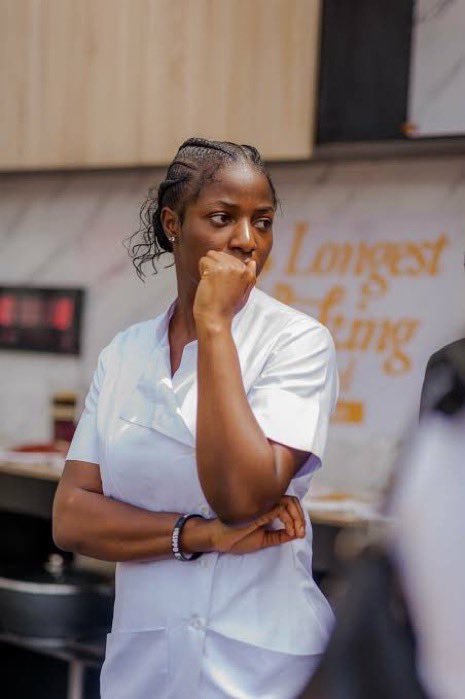
Nigerian chef, Hilda Effiong Bassey popularly known as Hilda Baci, is attempting to break the Guinness world record for the longest cooking marathon by an individual.

 Hilda Baci
Hilda Baci

The cook-a-thon held in Lagos, which is set to last for 90 hours, started on Thursday, May 11 and will end today, Sunday, May 14.

The Guinness Book of Records, often known as the Guinness World Records, is a reference book that contains human and natural world records.

It was first published in 1955 by the Guinness Brewery in Ireland and has since become one of the world’s most well-known and frequently read reference books.

The records include a wide range, from the world’s largest and smallest things, to the quickest and slowest, to the most weird and unusual accomplishments.

Individuals or groups must submit proof to the Guinness World Records team and go through a verification process to qualify for a world record listing. When a record is validated, it is put into the book and becomes an official world record.

Nigerians who have made it to the list of those in the Guinness World Records include Stephen Keshi, Vincent Okezie, Fela Kuti, Blessing Okagbere, and Wizkid.

Earlier this year in February, a 16-year-old Nigerian senior secondary school student, Gbenga Ezekiel, made it to the Guinness World Record for the most skips in a minute on one leg.

Similarly, 23 years old Divine Ikubor, popularly known as Rema, made it to the Guinness World Records with his hit song ‘Calm Down’ earlier this month.

The last record of the longest cooking marathon (individual) is 87 hours 45 minutes and was achieved by Lata Tondon, an Indian, in Rewa, India, on September 7, 2019.

Baci could well break that record as she had already done over 64 hours and is hoping to reach the 90 hours set for the cook-a-thon. She’s being cheered and supported by Nigerians, both online and at the venue.

Guinness World Records has become a cultural phenomenon, inspiring many people to set their own world records.

Budget Deficit: Why Nigeria’s debt is rising – DMO

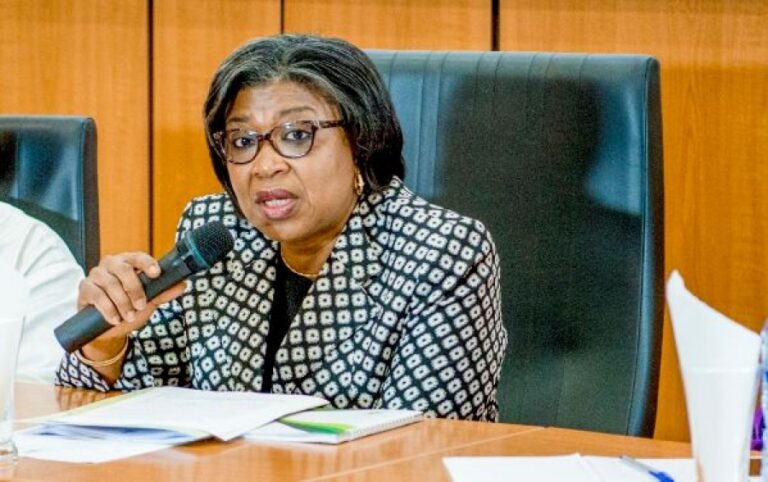
THE Debt Management Office (DMO) has explained that decades of operating budget deficits by successive governments is responsible for Nigeria’s high debt profile.

The Director-General of the DMO, Patience Oniha, disclosed this to the News Agency of Nigeria (NAN) on Sunday, May 14 in Abuja.

Oniha said a review of Nigeria’s fiscal data showed that not only had the government operated growing budget deficits, most of the deficits had been funded through local and external borrowings.

The ICIR, on January 28, reported that the Budget Office of the Federation’s data analysis indicated that the total budget deficit was set to hit N47.43 trillion under President Muhammadu Buhari.

The analysis coverred the actual budget deficits and projections for the 2015, 2016, 2017, 2018, 2019, 2020, 2021, 2022, and 2023 fiscal years.

According to the figures, deficit financing had risen by 370.54 per cent from N2.41 trillion in 2016 to N11.34 trillion in 2023.

On March 30, two months later, The ICIR reported that Nigeria’s total public debt stock increased to N46.25 trillion, or $103.11 billion, in the fourth quarter of 2022.

The figure, according to the report, consisted of the domestic and external total debt stocks of the Federal government and the sub-national governments (36 state governments and the Federal Capital Territory).

Oniha, highlighting the implications to the News Agency of Nigeria (NAN), said recent records showed that deficits in the annual budgets, including supplementary budgets, rose to N10.78 trillion in 2023, from N1.62 trillion in 2015.

“Between 82 per cent and 99 per cent of these were funded by new borrowings, which ranged from N1.46 trillion in 2015 to N8.80 trillion in 2023.

“These facts confirm that these budget deficits, funded by new borrowings, have been responsible for the rapid growth in the debt stock and the resultant increases in debt service,” she said.

The DMO boss added that the trend could have been avoided or, at least, moderated if revenues had been higher or expenditures lower.

She tasked the incoming government of Bola Tinubu to take cognisance of the situation and prioritise increased revenue generation.

“The budget deficits would have been much smaller, or Nigeria would have operated on a balanced budget.

“It is, therefore, imperative that the incoming government takes into account the perennial budget deficits in the preparation of the Medium-Term Expenditure Framework (2024 – 2026) and the 2024 budget.

“The government should also accelerate the growth in revenues to ensure debt sustainability,” she said.

A report by The ICIR on January 18 had projected that every Nigerian would be owing N384,864 each when President Muhammadu Buhari leaves office on May 29, as the debt profile was expected to spiral to N77 trillion by the end of his administration.

Available data showed that 73 per cent of internal debts, which is about 60 per cent of the total debt stock, are government bond, saving bonds, treasury bills, sukuk and green bonds.

Of internal debts, 2.3 per cent is government’s promissory notes to companies issued export expansion grant.

Similarly, the World Bank, in its latest report, disclosed that Nigeria spent 96.3 per cent of its 2022 revenue on servicing its debts.

The report, which was on Macro Poverty Outlook for Nigeria and released in April 2023, noted that Nigeria’s fiscal position deteriorated in 2022, leaving the cost of petrol subsidy to increase from 0.7 per cent to 2.3 per cent of the gross domestic product (GDP).

“This has kept the public debt stock at over 38 per cent of the GDP and pushed the debt service-to-revenue ratio from 83.2 per cent in 2021 to 96.3 per cent in 2022,” the report read.

It further stated that the fiscal deficit was estimated at 5.0 per cent of the GDP in 2022, breaching the stipulated limit for a federal fiscal deficit of 3 per cent.

According to the World Bank, the oil price boom had supported the country’s economy, but this has changed since 2021.

Despite the high debt profile of the country under the Buhari administration due to excessive borrowing, the outgoing President is seeking another $800m World Bank loan.

The loan, according to Buhari, would help to alleviate the negative impacts of fuel subsidy removal.

He also claimed the loan facility was intended to be used to support poor Nigerians, and would be disbursed to poor households across the country.

Why House of Representatives leadership was zoned Northwest — Onanuga

THE decision to zone the leadership of the House of Representatives to the Northwest was influenced by the contribution of the party members in the region to the 2023 presidential election, according to Bayo Onanuga, member of the media subcommittee of the Presidential Transition Council.

Onanuga said the All Progressives Congress (APC) allocated the deputy senate president and speakership positions to the Northwest to compensate for the significant number of votes the geopolitical zone polled for the party in the election.

Onanuga, the media director of the now defunct APC presidential campaign council, said this in an interview the Daily Trust published on Sunday, May 14. 

In the APC zoning plan, the northwest geopolitical zone was allocated a leadership position each in the Senate and House of Representatives. The party endorsed Tajudeen Abass from the Northwest as the House of Representatives speaker,  and Benjamin Kalu from the Southeast as his deputy.

For the senate, the party endorsed Godswill Akpabio from the Southsouth geopolitical zone as senate president, and Barau Jibrin from the Northwest as deputy senate president. 

Onanuga emphasised that without the Northwest, the party would have lost the election, so they should be compensated for their contribution.

“The Northwest gave the APC the largest number of votes in the last election and I think it is fair that they are compensated. Without the Northwest, there is no way the APC would have won the election. So, as far as APC is concerned, you have to recognise that and compensate them accordingly.

“Of course, they brought almost 2.7 million votes, but you know they lost quite a number of states, including the governorship in Kano and Zamfara.

“They are for local reasons, not because the people there didn’t like the APC. I think the Zamfara people had a problem with Governor Bello Matawalle, but generally, the party did very well in the Northwest,” he said.

Nigeria’s 10th National Assembly will be inaugurated on June 13 and shortly after the inauguration, members of the national assembly will elect new presiding officers.

According to the election results announced by the Independent National Electoral Commission (INEC), the ruling APC retained the majority in the Senate and House of Representatives seats, with 57 and 162 members, respectively.

Deborah Samuel: One year later, prime suspects still at large

0

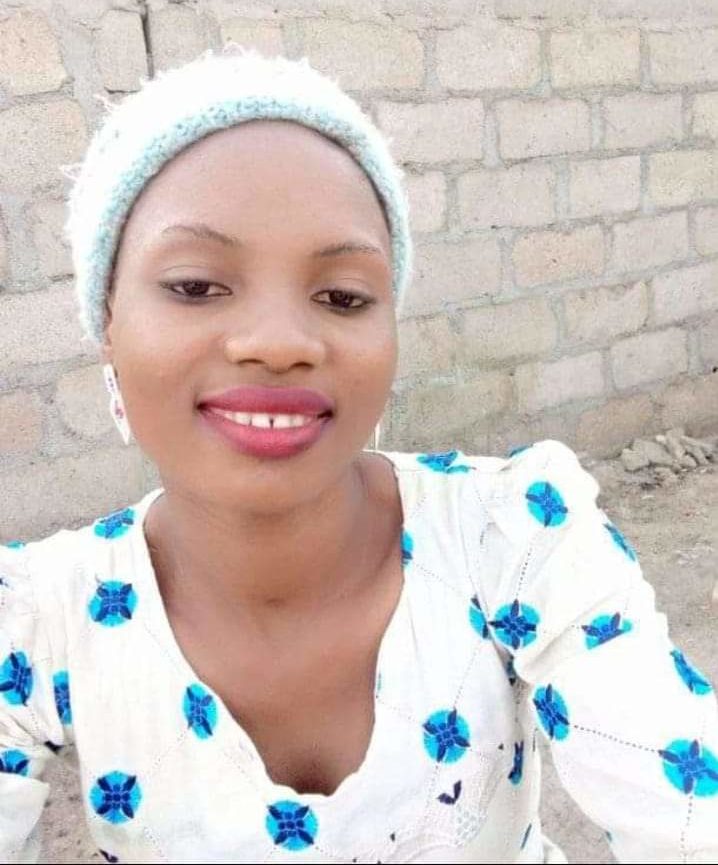
ONE year after Deborah Samuel, a female student of the Shehu Shagari College of Education, Sokoto state, was murdered by some Islamic extremists, the Nigeria police Force are yet to apprehend the prime suspects who killed her.

The public relations officer (PRO) of the Sokoto State Police Command Abubakar Sanusi confirmed this on Saturday May 13.

“We’re still on the trail of some of the prime suspects in connection with the murder. However, we have made arrests, and we’ve charged all the arrested suspects to court since then.

“The case is at the chief magistrate court 1 in Sokoto, and the arraigned suspects were/are remanded at the Nigerian Correctional Service, Sokoto State Correctional Centre, since 2022,” Sanusi said.

Samuel was lynched on May 12, 2022 by some youths in the state for what they described as blasphemy against Prophet Muhammed.

The victim had kicked against posting religious content on a WhatsApp group created for academic purposes, which led to the attack on her.

In a video that went viral in 2022, Samuel, dressed in pink, was lying unconscious on the floor while being mobbed, after which youths chanting ‘Allahu Akbar’ set her on fire using motor tyres.

One of the persons in the video confirmed he was part of those who mobbed and burnt her. He noted he struck the match that led to the fire.

Two suspects, Bilyaminu Aliyu and Aminu Hukunci, were arrested by the police and subsequently charged with taking part in the killing.

At least, 34 lawyers appeared in court in defence of the suspected murderers.

Citing sections 157, 161(a,f) and 164 of the Administration of Criminal Justice Law of Sokoto State, as well as 36(5) of the 1999 Constitution of the Federal Republic of Nigeria (as amended), the leader of the defence team, Mansur Ibrahim, pleaded with the court to grant the suspects bail.

Assault on policeman: “I welcome investigation” says Seun Kuti as IGP orders his arrest

THE Inspector-General of Police, Usman Alkali Baba, has ordered the arrest of afrobeat singer Seun Kuti, who was captured on Saturday, May 13 in a viral video assaulting a policeman in uniform on the Third Mainland bridge, Lagos.

Seun is a son of the late afrobeat legend, Fela Anikulapo-Kuti.

The video showed Seun pushing the policeman, and then slapping him.

“You dey craze! You dey mad!” he could be heard saying as he slapped the policeman.

The musician would later claim the policeman attempted to kill him and his family, hence the reason for his action.

“He tried to kill me and my family. I have proof, but I no dey chase clout. He has apologised and I have agreed not to press charges. Make una mind una business make the poor guy no lose im job,” Seun said via a post on his Instagram story.

A statement released by the public relations officer, Force Headquarters, Abuja, Olumuyiwa Adejobi, late Saturday said Baba had ordered the Commissioner of Police, Lagos State command, Idowu Omohunwa, to arrest the singer.

The statement read, “The Inspector-General of Police, IGP Usman Alkali Baba, CFR has ordered the Commissioner of Police, Lagos State Command to arrest Afrobeat singer, Seun Kuti, who was captured on video assaulting a police officer in uniform.

“The IGP has equally ordered a speedy and full investigation into the remote and immediate cause(s) of the assault, and prosecution of the suspect accordingly.”

Adejobi quoted Baba in the statement as assuring Nigerians that “acts of contempt/disdain for symbols of authority will not be tolerated while offenders of such hideous crimes will be surely brought to book.”

Seun, in another post on his Instagram story, agreed to an investigation on the incident, adding a prayer that the guilty party be indicted.

“I welcome the investigation and will give my full cooperation! I also pray to the IG that whoever is wrong should be indicted,” he stated.

Fela, Seun’s father and a globally acknowledged afrobeat icon, was well known for his many entanglements with the police, and, indeed, with the Federal government.

On February 18, 1977, armed soldiers numbering scores invaded Fela’s one-storey building located inside his ‘Kalakuta Republic’ at No. 14, Agege Motor Road, Mosalasi, Yaba, Lagos, gave Fela and his many female dancers severe beatings and burnt the house to the ground.

Fela’s mother, Funmilayo Ransome-Kuti, an activist reputed to be the first female to drive a car in Nigeria, was thrown off the top storey to the ground during the soldiers’ attack at the house, and consequently died from the injuries she sustained.

Just a month before the soldiers’ invasion of Kalakuta Republic, Fela  had released the album ‘Zombie’, a scathing sarcasm of junior soldiers’ unquestionable obedience to the orders of their superiors.

NUC says Nigeria’s tertiary education underfunded

0

THE National Universities Commission (NUC) says tertiary education in Nigeria is grossly underfunded and this is affecting the quality of research and teaching in the sector.

The commission is, therefore, asking that the Federal government allocate more funds and invest in universities nationwide.

According to the NUC executive secretary, Abubakar Rasheed, the brain drain across universities was caused by the complex learning and teaching environment.

Rasheed said this at a reunion conference at Obafemi Awolowo University, Ile Ife, Osun state, on Saturday, May 13.

The NUC boss, who was represented by a professor, Shehu Ado, a consultant for the regulatory body, said the government needed to increase funding to promote quality education and other issues.

“The universities are producing graduates who lack skills for employment and creative ability. There is a need for universities to generate income to complement government efforts. The sector cannot be funded alone by the government.

“Brain drain in our university system is caused by a non-conducive learning and teaching environment and some other issues that need to be corrected,” he said.

Rasheed also said tertiary institutions should endeavour to identify other areas where they could get funds to continue their work.

“There is an urgent need to invest in university education, urging that state and private sectors should invest in the sector for national development. The university management also needs to be more prudent in spending.

“Amongst other issues affecting our tertiary education is the archaic curriculum which ought to be redesigned by injecting realities of time as the world is moving rapidly. Other issues are lack of skilled workers, and graduates with no skill and self-confidence,” he added.

The ICIR had once reported that government funding of tertiary institutions was poor, and was even worse among state-owned universities.

According to the report, state governments had continued to create universities despite failing to fund the existing ones adequately.

The ICIR report indicated that the government budget was below the benchmark recommended by the United Nations Educational, Scientific and Cultural Organisation (UNESCO) for the education sector.

UNESCO specifies that governments should set aside, at least, 15–20 per cent of their total budgets for education. But governments in Nigeria do not comply with this recommendation, and most tertiary institutions have remained weakened by inadequate funding.

Lagos police confirm arrest of guard over rape of four-year-old girl

1

THE Lagos State police command has confirmed the arrest of a security guard at Greater Scholars International School who is suspected of raping a four-year-old female pupil of the school.

The command’s public relations officer (PRO), Benjamin Hundeyin, disclosed this on Saturday, May 13 in a post he shared via his official Twitter handle.

“The suspect has been arrested and is still in custody. A medical report that would ensure a conviction is being expected.

“We don’t pander to emotions but deal with evidence to prove issues beyond reasonable doubt,” he said.

The Lagos State Domestic Violence Agency (DSVA) also said via Twitter on Saturday, that the survivor was receiving medical support.

“On May 3rd, 2023, we received a report of this case through our toll-free line and acted promptly by referring the child for medical and psychosocial support.

“We also alerted the Ajiwe FSU Police Division for investigation. The suspect is currently in police custody. The case would be transferred to Gender, Lagos State Police Command before it is charged to court on Monday,” the agency stated.

On Friday, May 12, a Twitter user, Omolomo, also raised an alarm over the same incident.

“So a 4-year-old girl was raped by the security of a school in Lekki, Lagos. The name of the school is Greater Scholars International school.

“The father of the girl went to report the case to the police but the owner of the school brought thugs to threaten him,” Omolomo tweeted.

Several cases of sexual abuse against children by staff of schools had been recorded in Nigeria.

In 2021, a 14-year-old boarding student of Premier Academy, Lugbe, Keren-Happuch Akpager, died after she was raped and a condom left in her vagina.

An autopsy report showed that the victim was also sodomised, and her mother, Vivienne Akpager, alleged that the rape occured within the school premises.

However, two years after the incident, the rapist is yet to be apprehended and the matter remains unresolved.

In Nigeria, six out of every 10 children suffer from one or more forms of physical, sexual or emotional violence before the age of 18. More than 70 per cent children experience this violence repeatedly, according to the United Nations Children’s Fund (UNICEF).

Implement existing laws against GBV, Ford Foundation urges FG

0

THE Nigerian government needs to enforce existing laws and adopt proactive measures to end gender-based violence (GBV) in the country, says Ford Foundation, an organisation focused on promoting social justice and equality.

According to the non-profit organisation, the Federal government must deploy more resources and prioritise ending GBV and other harmful practices against women.

Speaking with journalists during her visit to Lagos on Friday, May 12, the foundation’s executive vice president, Hilary Pennington, urged the Federal government to involve indigenous people and religious leaders as part of measures to prevent any form of restiveness.

“In many places around the world, including in Nigeria, there are laws, but they are not doing enough to stop the practices. So we are trying to focus on a number of things. The first is to get much better and improve the knowledge and the models we all have access to. That is how you prevent the violence in the first place,” Pennington said. 

From forced and early marriages to physical, mental or sexual assault on women, gender-based violence persists in Nigeria. According to data from the United Nations Population Fund, 28 per cent of Nigerian women aged 25-29 had experienced some form of physical violence since age 15.

The study also reported that 15 per cent of women experienced physical violence within 12 months. The exposure to the risk of violence varied based on marital status, and 44 per cent of divorced, separated or widowed women reported experiencing violence since age 15, while 25 per cent of married women or those living with their spouses had experienced violence.

Pennington urged the Nigerian authorities to do more work to end GBV by enforcing laws and regulations against gender-based violence at the grassroots.

She also noted the foundation’s dedication to supporting the fight to end violence against women in Nigeria.

She also asked the government to abolish harmful cultural norms and enlighten traditional and religious leaders on the laws and policies protecting the rights of women.

She said, “No matter what the foundation does, their resources are small in comparison with government’s resources.”

Pennington also called for the protection of resources-rich communities, saying, “Indigenous people in the communities that sit largely over natural resources are the first defenders of those resources. They don’t have legal rights to their lands, and they are not equipped to have power and to sit at the table where negotiations are being made about the values extracted from those lands.

“Our overall goal is to make sure they are on those tables. And when they are at those tables, they know the laws. They have negotiating skills, powers and backgrounds that would help them to be effective and fund research organisations, and advocacy organisations that can come around the communities that are most affected and give them more power.”


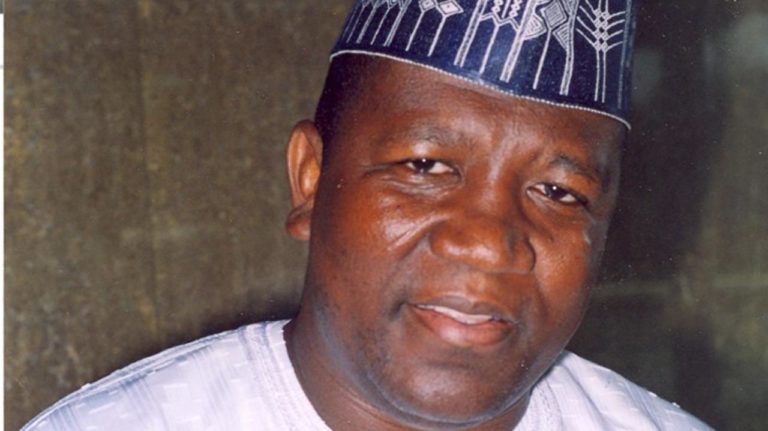
Senate Presidency: Yari urges lawmakers to avoid religious, ethnic sentiments

THE former governor of Zamfara State, Abdulaziz Yari, has urged all senators-elect to ensure that religious or tribal sentiments do not influence their leadership choices in the 10th National Assembly.

Yari asked that the senators-elect choose leaders that would prioritise the country’s growth and promote infrastructural development in their constituencies.

In a congratulatory letter to his colleagues on Saturday, May 13, the senator-elect for Zamfara West said the division among Nigerians resulting from religious, tribal and ethnic sentiments was a narrative that must change for the country to move forward.

“This is the time to eschew religious, tribal, nepotic tendencies and ethnic sentiments in the choice of the president of the senate, which is first among equals. As I continue to consult on my aspiration to serve you as your president, please accept the assurances of my highest esteem.

“While in the senate, you should always be reminded that you are indebted to your constituencies and should work towards attracting development projects to your people. This, in the first instance, is the reason you are elected to serve, and this is why you need a senate president that is compassionate, honest, fair-minded and result-driven,” he said.

He added that the senate must work with the President-elect, Bola Ahmed Tinubu, to implement the ‘Renewed Hope’ agenda to achieve economic growth and transformation in all sectors.

Yari urged the senators-elect to establish unity in the national assembly, saying this would create a better and united country.

“The voyage you are embarking on is a journey to unify Nigeria. This is an opportunity to rebuild this country in the interest of all,” he said.

Nigeria’s 10th National Assembly will be inaugurated on June 13. Different interest groups nationwide are already lobbying for the seats of senate president and speaker of the House of Representatives.

Shortly after the inauguration, members of the Senate will elect new presiding officers.

Based on the Independent National Electoral Commission (INEC) results, the ruling All Progressives Congress (APC) retained the majority in the Senate and House of Representatives seats, with 57 and 162 members, respectively.

The APC National Working Committee recently released the party’s zoning arrangement.

In its zoning plans, the party endorsed Godswill Akpabio from the South-South geopolitical zone as senate president and Barau Jibrin, from the North-West as deputy senate president.

Also, in the House of Representatives, the party endorsed Tajudeen Abass from the North-West as speaker and Benjamin Kalu from the South-East as deputy speaker.


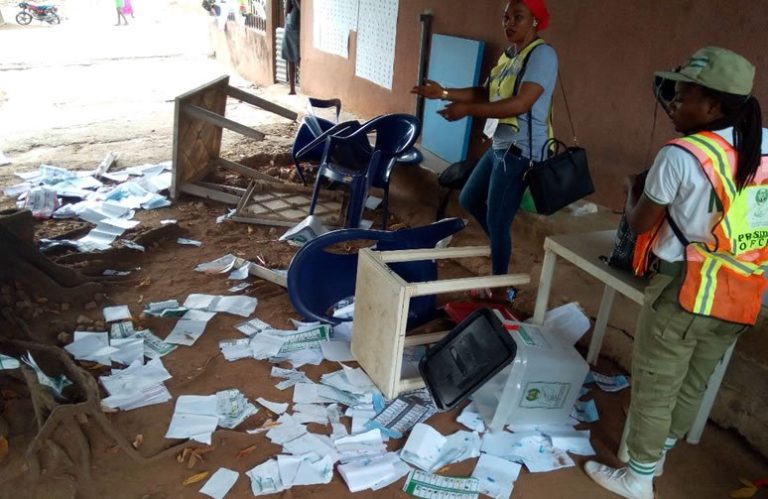
2023 elections record 24 deaths, 238 violence incidents — Report

0

A CIVIL society organisation (CSO), Kimpact Development Initiative (KDI), says 24 deaths occurred from 230 electoral outbreaks of violence cases during the 2023 general elections.

KDI, an election violence monitoring and mitigation group, says its report showed that a total number of 98 violent acts occurred during the February 25 presidential election, and 140 were reported during the governorship and state House of Assembly elections on March 18.

Speaking on behalf of the group at the public presentation of its report on violence during the 2023 general elections in Abuja, the leader of the group, Bukola Idowu, said it looked at about 238 cases of election violence, which spread across the country.

The KDI report is titled, ‘The Quest for Peaceful Election: The Report and Documentation of KDI’s 2023 General Elections Security Interventions and Assessments.’

According to Idowu, the report was prepared with support from the National Endowment for Democracy and International Republican Institute.

“In total, we had looked at about 238 cases of election violence, which is spread across the country, and not good enough, and each of them has their perpetrators. And we also looked at the victims, which we have close to 900 victims. At the same time, there were reported 24 cases of electoral deaths,” Idowu said.

Urging the authorities to work together, he added that security organisations should deploy resources according to early warning systems.

Idowu explained that research had shown that electoral violence decreased the more security forces were present in a community, and this had proven to be one of the most effective approaches to reducing electoral violence.

He pleaded with the Federal government to show zero tolerance for the illicit sale of weapons before, during, and after elections, pointing out that arming and enlisting thugs was a major factor in the electoral violence in the sampled states.

The study advised the Independent National Electoral Commission (INEC), the police, and the Federal Ministry of Justice to guarantee that electoral offenders were prosecuted as doing so would deter other electoral offenders.

The organisation also asked CSOs and the media to pay close attention to and strongly denounce the current government’s “misuse of power” by prohibiting political parties from accessing public spaces for their campaigns.

The National Commissioner and chairman of the Outreach and Partnership Committee for INEC, Kunle Ajayi, a professor, highlighted that the revelation of 238 incidents of violence recorded during the violence was an improvement over past polls.

Ajayi commended the KDI for the report and assured that the commission would continue to create conditions that would ensure peaceful elections across the country.