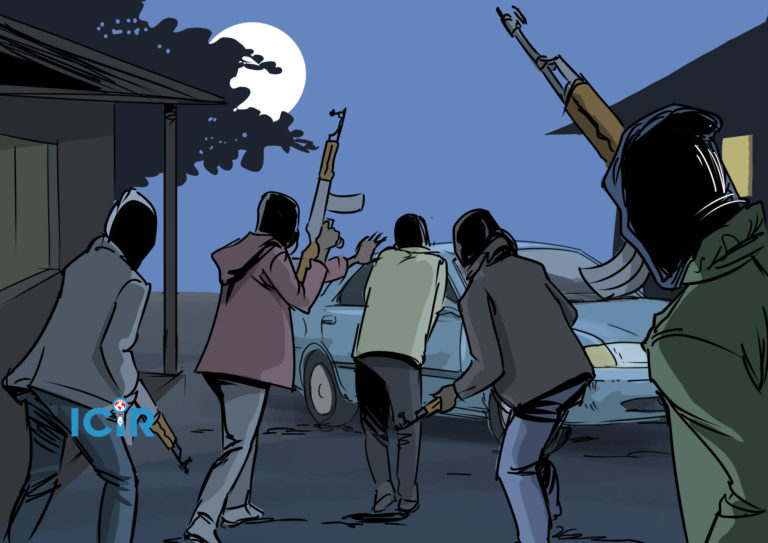
KIDDNAPPING for ransom has become a national security threat in Nigeria. How it’s done varies from targeted individuals, to indiscriminate kidnappings and mass kidnapping in schools and communities.
And there has been a growing body of research on the subject. However, there remains a gap in the understanding of how families mobilise resources and deliver ransom to kidnappers.
Our study interrogated the roles that families play in finding support and in raising ransom money and ensuring it is delivered to kidnappers to get their loved ones released from captivity.
This information is important to appreciate the experiences, challenges, and coping strategies of those with family members who have been kidnapped. It can help to design post traumatic therapy for victims who have been rescued, as well as those who are close to them, and who may have been traumatised by the kidnap incidence.
We concluded from our findings that the Nigerian government’s decision to criminalise ransom payment by families missed the point because it fails to address the protection of potential victims. It should be revisited.
The study
Our study focused on the Adamawa State in northeast Nigeria, where at least 300 people were kidnapped in 2019.
We interviewed 12 people, through referrals. The sample size is appropriate for a research of this nature due to the confidence building process required to secure participation from, already traumatised, families and friends of people who have been kidnapped.
The people we interviewed included ransom negotiators, a pastor of the church of one of the victims, two police officers from the Force Intelligence Bureau and a Divisional Police Officer, one State Security Service agent, two wives of kidnapped people and five released kidnapped persons.
Our study showed that ransom negotiators were either nominated by families or by the person kidnapped. Kidnappers used threats and the beating of captives to unsettle families and pressure them to raise ransoms.
Family members raised ransoms through family, church and community donations, and through loans. Wives of kidnapped persons coped with spiritual support from church, experiences of others who faced similar situation, and counselling from significant others. Below we outline some of the nuances of our findings.
Finding support
People’s experience varied according to the relationship they had with the victims. For those at the scene of the kidnapping, the emotions and trauma experienced was heightened.
Ill-health, age, and ability to withstand pressure also increased the burden on family.
Our participants unpacked the support mechanisms they used to strengthen and give hope to the immediate family of the kidnapped person.
The church was a pillar of support for some. Others turned to family members, friends and neighbours. Others took loans to pay for the release of their family members.
Friends and brothers risked their lives to negotiate with kidnappers as well as take the ransom to the den of kidnappers.
What’s usually needed
We found that organising for the release of the kidnapped involved the following:
Support systems: The immediate family of the kidnapped person would need a support system. This included emotional support as well as ensuring that the family had food to eat. The church provided spiritual support.
Ransom negotiation team: Selecting or nominating the ransom negotiator was done by a person in the kidnappers’ den or by the family. In some cases, those kidnapped would be asked to drop names of people who could bring ransom money to the kidnappers.
One kidnapping victim gave the name of his father because the father was already a retiree and could mobilise family members to rally round and raise any amount. One nominated his childhood friend.
Role of religious leaders: Spiritual support was provided by the church (prayer and empathising with victim’s family members). Our sample did not include people of other religious persuasions.
Fund raising: Negotiators reported that they eventually mobilised and paid between 271,232 Naira (US$651.49) and 1,807,104 Naira (US$4,343.29) ransom depending on how well they could bargain and how the family cooperated. They highlighted the need to ensure that a wrong signal was not sent to kidnappers about the financial capacity of the family to prevent future kidnapping. Negotiators faced a variety of pressures. They had to deal with the family of the victims, their own families and the kidnappers who would beat the victims in the middle of negotiations.
What needs to be done
The family and their religious and social groups are vital players in the processes leading to the freedom of the captive through ransom mobilisation and delivery. This shows that the African kinship tie is still very strong especially when a member is going through difficulty.
Victims of kidnapping need supportive, coordinated, and organised families not to only negotiate and mobilise ransom but to also manage and cooperate with the kidnappers to ensure a safe release and return.
There is also the need for a post-traumatic counselling for the freed kidnapped victim, their spouses and children.
We concluded that it’s important to provide policies that support families and victims of kidnapping. And that the government must revisit the ban on payment of ransoms. The real issue is to prevent kidnapping. The Nigerian Government must discharge its responsibility to protect to Nigerians.
THE Federal Road Safety Corps (FRSC) has dissociated itself from a publication by different media that it sought to introduce Sharia law to complement existing regulations on enforcing traffic rules and prosecuting offenders.
In a statement he issued on Saturday, May 13, the assistant corps marshal/corps public education officer, Bisi Kazeem, described the report as a “baseless and unfounded opinion.”
Kazeem stated, “The Federal Road Safety Corps wishes to dissociate itself from a baseless and unfounded opinion currently published on different news platforms, linking the Corps to seeking the introduction of Sharia Law to complement existing extant regulations on enforcement of traffic rules and prosecution of offenders.”
The news platforms had reported that the FRSC Sector Commander in Bauchi State, Yusuf Abdullahi, made the call in an interview with the News Agency of Nigeria (NAN) on Thursday, May 11, in Bauchi.
Abdullahi was reported to have said that the extant laws guiding road crashes needed to be stiffer, hence, the need to introduce Sharia law into traffic rules.
The FRSC sector commander was quoted to have said, “If we don’t introduce Sharia Law, many road users, especially in this area, would not start thinking twice before doing whatever they want to do.
“The extant law is working. However, the extent to which it works is very important because in countries where Sharia Law is being implemented, it guides attitudinal conduct to a level that even relatives and friends guide their relations in terms of what to do or not do.”
Kazeem, however, said the statement did not reflect the position of the FRSC.
According to him, the Corps Marshal, Dauda Biu, had recalled, with immediate effect, the sector commander to its national headquarters, Abuja, for necessary administrative action.
He stressed that Abdullahi had, through his statements, breached the FRSC regulations and the standard operating procedures.
“Without any reservation, it is key to inform the general public that the Federal Road Safety Corps is a government agency with statutory responsibilities for road safety administration in Nigeria and is sensitive to the country’s multi-religious as well as heterogeneous ethnic composition.
“By this very fact, it is important to clearly posit that the Corps is neither a religious nor sectional organisation, but a Federal Government agency established with a mandate that is guided by the provisions of an establishment Act; and not a Sharia, Mosaic, customary, canon or any other law whatsoever that contradicts the provisions of its establishment Act, or the constitution of the Federal Republic of Nigeria,” Kazeem explained.
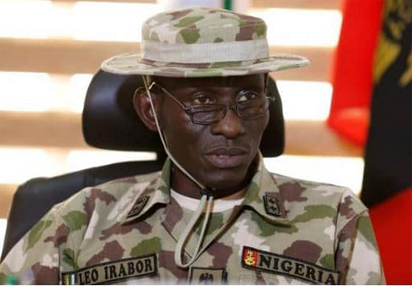
THE Chief of Defence Staff (CDS), Lucky Irabor, has again debunked Reuters’ claim against the Nigerian military that it carried out forceful abortions on civilians in the Northeast.
Irabor also declared that human rights violations allegations against the military were unfounded.
The CDS spoke on Friday, May 12, before the National Human Rights Commission (NHRC) investigative panel on rights violations in counter-insurgency operations by the military in the Northeast.
The NHRC inaugurated the panel on February 8, 2023, following allegations of gross human rights violations in the three-part report that Reuters published in December 2022 on military operations in the Northeast.
“The allegations came as a rude shock to me. It is a rude shock to me that someone could orchestrate such a report.
“There are strange allusions; if they say we want to stop the regeneration of Boko Haram children, on what grounds?” he asked.
Irabor claimed that the military was not responsible for the stigmatisation of the women who bore children by Boko Haram insurgents.
On Reuters’ claim that some officers it spoke to confirmed the abortion, Irabor said such officers should be brought before the panel.
“Who are the officers? I will give them immunity to come and testify before the panel on what they have alleged,” he stated.
He explained to the panel that the Nigerian Army operated hierarchically, contrary to what Reuters said.
He claimed he had never witnessed any strange allusion to the arrangement within the armed forces.
“The military facility under my control is open. There is nothing secretive going on there. Whoever will disparage the men and women of the armed forces who have put their lives in the forefront is doing a damage,” Irabor said.
The ICIR had reported in December 2022 that an investigation by Reuters indicted the Nigerian Army for carrying out illegal abortions on pregnant victims of terrorism in the Northeast.
According to the report, the Nigerian military was running a secret programme that ended at least 10,000 pregnancies without consent from women kidnapped, raped or forcefully married to terrorists in the Northeast.
The victims, including those as young as 12, were said to have been deceived into taking pills and injections that ended their pregnancies under the false assurance that the medication was to restore their health.
“In some instances, women who resisted were beaten, caned, held at gunpoint or drugged into compliance. Others were tied or pinned down as abortion drugs were inserted into them,” the report said.
Reuters noted that the abortions by the Army were carried out in many military and civilian facilities in Yobe, Borno and Adamawa.
The Nigerian Army has consistently refuted allegations that it forcefully aborted about 10,000 pregnancies in the Northeast.
Irabor had earlier, in March 2023, denied the claims made in the report, describing them as “nonsense and untrue.”
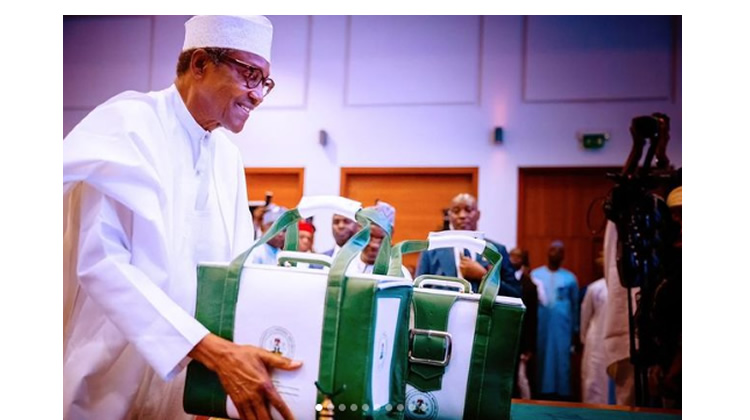
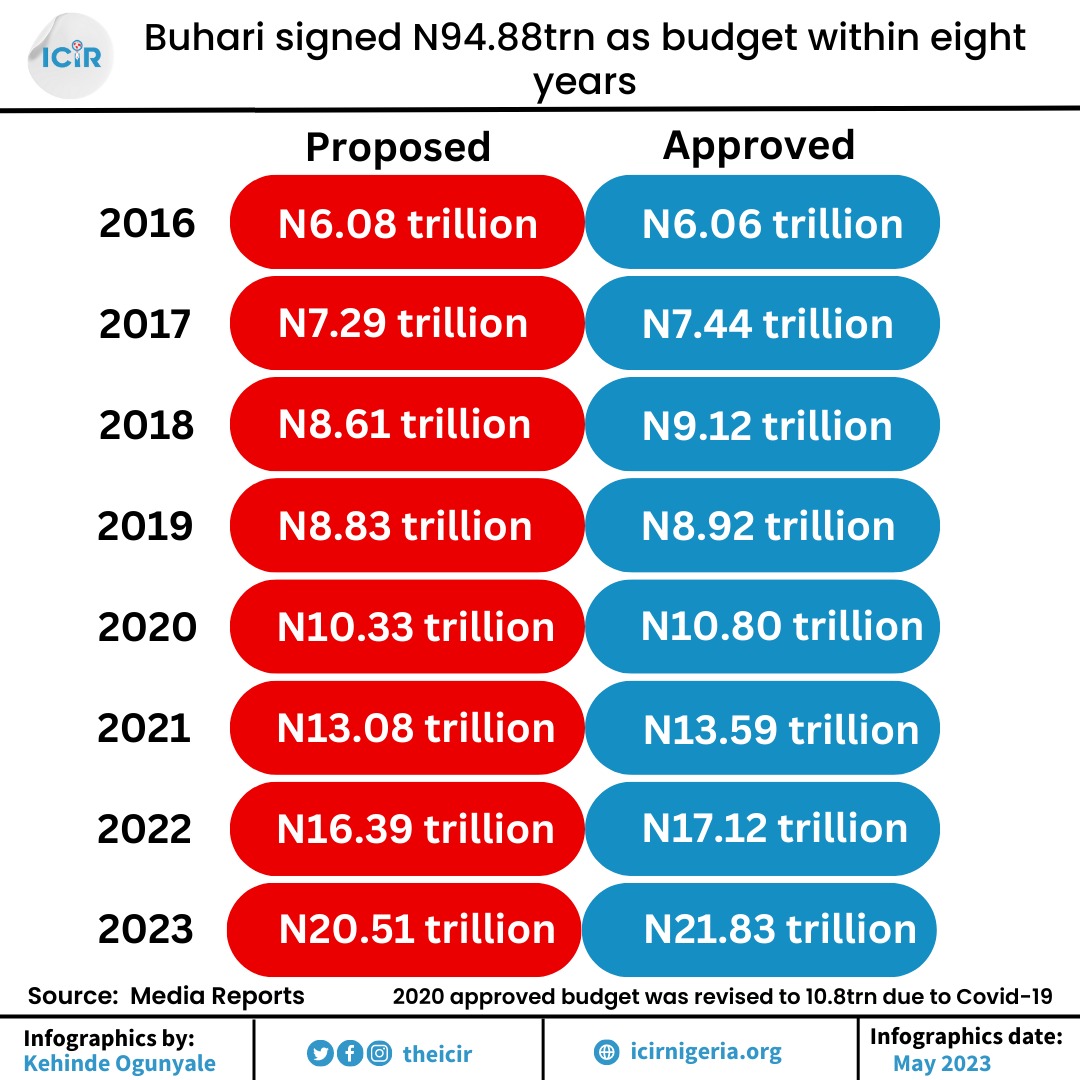
WITHIN the eight-year administration of President Muhammadu Buhari, a total of N94.88 trillion appropriation bill was signed into law.
This is 4.12 per cent higher than the total amount of N91.31 trillion proposed by the president to the National Assembly before its approval.
By this, it implies that, under Buhari’s administration, the 8th and 9th Assembly increased the budget with N3.75 trillion.
The president is set to hand over power to Bola Ahmed Tinubu, the president-elect, on May, 29, who will be working with the N21.83 trillion signed into law in January as the 2023 budget.
The budget was increased by 6.44 per cent over the N20.51 trillion proposed by the president.
The ICIRreported that the 2023 budget allocated N967.5 billion for statutory transfers, N6.6 trillion for debt servicing, N8.3 trillion for recurrent expenditure, and N5.9 trillion for capital expenditure.
Meanwhile, checks by The ICIR revealed that, under Buhari’s administration, the National Assembly increased the budget seven times. This excludes the budget revision of 2020 necessitated by the covid-19 pandemic.
While this is not peculiar to the Buhari’s government, data collated from media reports by The ICIR showed that National Assembly had increased a budget as high as by 6 per cent against the proposed amount.
Budget for the first four-year tenure
Buhari was sworn into office on May 29, 2015, succeeding Goodluck Ebele Jonathan who had signed N4.4 trillion as budget a few days before he handed over following several controversies.
In December 2015, Buhari presented his first appropriation bill of N6.08 trillion for the 2016 fiscal year. The budget significantly increased the capital expenditure by over 300 per cent to N1.8 trillion. However, in March 2016, the National Assembly, after reviewing the bill, reduced it by 0.33 per cent to N6.06 trillion.
The president assented to the bill two months after it was passed by the assembly.
The proposed and approved budgets.
In December, of that same year, Buhari presented N7.928 trillion as the proposed budget for 2017 which he themed as the “budget of economic recovery and growth” targeted at steering the economy from the current recession.
After its deliberation in the National Assembly, the budget increased to N7.44 trillion, 1.95 per cent higher than what was proposed. The Vice president, Yemi Osinbajo, signed the budget in June while the president was on his medical vacation in the United Kingdom.
A total of N8.612 trillion was submitted as the budget for the 2018 fiscal year in November 2017. It was increased to N9.12 trillion, 5.9 per cent, by the 8th Assembly. By June 2018, the president assented to the bill amid several controversies around the increment.
By December, Buhari presented N8.83 trillion as the budget for the 2019 fiscal year. It was approved in May after the assembly had increased it by 0.91 per cent to N8.92 trillion a month earlier.
Budget for the last four-year tenure
Buhari was re-elected into office for a second term in 2019. In October, he sent N10.33 trillion naira as the proposed budget for 2020 to the assembly.
It was the first time the budget would hit a double digits figure. The 9th Assembly continued the trajectory to increase the budget by N260 billion. Buhari signed an increased amount of N10.59 trillion.
However, due to the outbreak of the COVID-19 pandemic, which suspended the country’s economic activities, the budget was later revised to N10.8 trillion to accommodate additional expenditure in June 2020.
Three months later, the president presented the sum of N13.08 trillion as the proposed 2021 Budget estimates to the Assembly but approved N13.59 trillion, an increase of 3.9 per cent, in December.
For 2022, Buhari proposed a bill of N16.39 trillion tagged the “Budget of Economic Growth and Sustainability” to the joint assembly for deliberation. It was increased to N17.12 trillion, an increase of 4.45 per cent.
While the 2023 budget was increased from N20.51 trillion by 6.44 per cent to N 21.83 trillion.
Expert express concerns
Meanwhile, Senior Research & Policy Analyst for BudgIT, Vahyala Kwaga, told The ICIR that the country’s fiscal management mediates between several competing interests when it comes to budget approval in the National Assembly.
“The reason behind the difference in what the President proposed and what he signed is a result of 3 main things; the inability of our supreme oversight and citizen’s representative-the National Assembly to discharge its functions, the inability of the President to reject the budget bill, as passed by the National Assembly and the third cause is due to the lack of clear guidelines and rules on whether or not the National Assembly can increase the size of the budget,” he said.
Kwaga also mentioned that the budget is likely to continue in its double digits increase due to Nigeria’s macroeconomic fundamentals-inflation, low revenue as a result of low oil production and exchange rate imbalance.
He noted that the country’s fiscal economy, including the world, had been affected by the COVID-19 pandemic, however, the incoming government would have to make tough decisions, like removing fuel subsidies and other proper strategies.
DEPUTY Speaker of the House of Representatives Idris Wase has officially declared his intention to contest the speakership position of the 10th Assembly.
Stating his intention on Friday, May 12, Wase said, “Respected colleagues, I appreciate every one of you present, and by the grace of God, if you give me your mandate, we shall do you proud. We shall create a vibrant legislature that will stand the test of time among nations of nations.”
The deputy speaker stated that it was his turn to occupy the position and added that he had made sacrifices for the National Assembly by giving up his previous leadership ambitions.
Wase, a member of the All Progressives Congress (APC), has been in the House of Representatives since 2007 and won his re-election bid in February 2023 for the fifth time.
Although Wase is regarded as one of the leading contestants, the APC National Working Committee had zoned the National Assembly leadership positions to the South-South and North-West in favour of Godswill Akpabio and Tajudeen Abbas as senate president and House of Representatives speaker respectively.
The zoning formula has, however, generated criticisms from many party members, including Wase, who hails from North-Central Nigeria.
Some dissenting party members described the zoning as a marginalisation of the region. Others said there were no thorough discussions and consultations with party members before the decision was reached.
The APC national chairman Abdullahi Adamu, however, promised the aggrieved lawmakers that the zoning formula would be revisited and resolved before the 10th Assembly is inaugurated in June.
“As chairman of APC and members of the NWC, we take responsibility for what has gone out. We will go back to the drawing board. We owe our party that duty to take a look whether what was done can be changed; what was done needs some changes or reviews. We will take a look at it again.
“Hold the fire until the last word is heard from us. We are the custodians of the party as NWC but we are not acting alone,” Adamu said.
Several lawmakers had also indicated interest in the position, including embattled majority leader Alhassan Ado-Doguwa; chairman, House Committee on Appropriations, Aliyu Betara; and chairman, House Committee on Media and Public Affairs, Benjamin Kalu.
In April, a female lawmaker representing the Isiala-Mbano/Onuimo/Okigwe constituency of Imo State, Miriam Onuoha, joined the race for the position of speaker, stating that the declining number of women in the National Assembly was a call to action.
THE Federal government will stop feeding state offenders in correctional centres nationwide from January 1, 2024.
The minister of Interior, Rauf Aregbesola, disclosed this at a Correctional Service in Owerri on Friday, May 12, according to a statement issued by his spokesman, Sola Fure.
Aregbesola said state governments would be providing food for inmates in correctional centres located in their states from 2024, as 90 per cent of inmates in the country are state offenders.
He asked state governments to include the feeding of their inmates in federal facilities in their budgets, and to start building state-owned custodial centres.
“The Federal Government will stop feeding state inmates by December 31, 2023. Furthermore, by January 1, 2024, the Federal Government will stop feeding state inmates kept in federal facilities. State governments must now start budgeting for feeding their inmates in federal facilities, while we wait for them to build their facilities,” he said.
The minister urged state governments to optimise the recently signed constitutional amendment and improve the condition of inmates in custodial facilities nationwide.
“It is also hoped that state governments will take advantage of the constitutional amendment recently signed by President Muhammadu Buhari, which makes corrections a concurrent affair. It is on record that more than 90 per cent of inmates in our facilities are state offenders. It is important, therefore, that state governments begin to invest in corrections,” he added.
The ICIR reported that the Federal government approved N22.44 billion in 2023 to feed prison inmates.
The approved sum for feeding inmates is over 1 per cent of the 2023 budget, which is 21.83 trillion, much of which will be funded by international loans.
The permanent secretary, ministry of Interior, Shuaib Belgore, blamed the huge amount partly on the increasing number of inmates in custodial facilities nationwide.
Aregbesola said prisons nationwide were congested due to the high population density and complex human relations.
He said the high population had led to a higher crime rate.
“One big challenge we have at Corrections is congestion, especially in urban centres where the population density is high and human relations are more complex, leading to higher crime rates and the need to keep some people behind bars.
“But we are addressing this challenge with the construction of six mega custodial centres in the six geopolitical zones of the country. The ones in Kano and Abuja are ready, and with regular funding the remaining will be completed,” he added.
About 52,436 inmates are awaiting trial; this is 80 per cent of the total number of inmates across the country.
Correctional facilities hold 37 per cent more inmates than they were designed to do, as per data from Nigerian Correctional Service (NCS).
The data showed that facilities in all the geopolitical zones are either overcrowded or almost at full capacity, except for three states in the North-East.
AS Nigeria’s capital, one would not expect people living in Abuja to be in want of basic amenities like good roads, portable water, stable electricity and other essential services, but this is the case for residents of Ibwa community, a suburb in Gwagwalada Area Council, where the state of the road is a constant nightmare. Residents are either smeared by mud or covered by dust, Adedokun Theophilus reports.
Things almost fell apart for Idris Adam, a dark-skinned commercial farmer and a resident of Ibwa, in December 2022 when his wife developed a complication which required urgent specialist attention during the birth of their first child.
In excruciating pain after birth, the medical staff did not hesitate to transfer Zainab, Adam’s wife, to another health facility which could get the required medical attention.
Sadly, there was another hurdle for the unconscious mother and new father to cross – the 15km road the links to the next community, This road, known as Ibwa Road, which connects the predominantly farming community to other parts of the Federal Capital Territory (FCT) is barely motorable.
Idris Adam, Ibwa community resident
It’s a hurdle to ply that road during rainy or dry seasons, much less with a woman in need of medical attention in tow.
Recounting his experience during the birth of his child Adam, who is in his mid-thirties, described it as “terrible”.
“She had given birth successfully” he told The ICIR “but there was a complication because she had lost a lot of blood and needed urgent attention. Unfortunately, she could not access emergency medical service because of the delay we experienced on the road”.
“The road was bad, she was bleeding and unconscious at the same time. I could not bear seeing her suffer as we journeyed through the road but there was nothing I could do”, he recalls.
They spent more than an hour getting from Ibwa to Paiko kore, a neighbouring community.
Adam’s fear heightened because his wife still had the placenta in her womb and needed special attention.
President Muhammadu Buhari administration said it had constructed 13,000 kilometres of roads nationwide between 2015- 2021, but many roads remain deplorable across the country.
Apart from adding to health emergencies such as Adam’s wife, bad roads are also responsible for the deaths of many people in Nigeria.
According to the World Health Organization (WHO), more than 1.3 million people die annually due to road accidents worldwide, with more than half of all road traffic deaths among vulnerable road users, including pedestrians, cyclists and motorcyclists.
The WHO report notes that Nigeria records the highest number of road accident death rates, with an estimation of 41,693 deaths globally.
The report further states that Nigeria contributes 2.82 per cent to the total number of global road accidents.
Meanwhile, a document obtained from the World Bank websitesays that the world bank between 2008 to 2017 approved three million US dollars for road construction, yet Nigeria ranks 54th on the list of countries with the number of road accidents globally.
The National Bureau of Statistics (NBS) reported that 1,834 people died out of 3,345 road accidents that occurred in the country between January and March 2022.
The Federal Road Safety Commission (FRSC) further disclosed to The ICIR that 1,349 people were killed in road accidents between January 1 and April 12, 2023.
The Commission noted that 2,463 crashes occurred during the period. According to the FRSC, the crash involved 3,965 vehicles conveying 16,102 people. Out of that number, 1,349 people were killed, while 7,744 got injured.
Like Zainab, Usman Bawala a sixty-eight-year-old subsistence farmer and commercial motorcyclist, recounts his ugly experience to The ICIR at the Ibwa village on the state of the road.
Bawala recalls how he had a ghastly accident on the road.
A commercial driver Abubakar Sodiq displayed his extra clothe
After a laborious day, exhausted Bawala was in a hurry to get home and relax from work.
Noticing the cloudy sky and impending rain, he rode his motorcycle as fast as he could to beat the rain.
Unfortunately, he lost control of his bike and galloped into a ditch.
“I fainted when I lost balance, and I could not recall anything.”
Visible lines appearing as wrinkles sustained from the accident were still on his face when he spoke with The ICIR. He had a bone fracture on his right hand which made him bedridden for a while.
“I could not work for a month because the bone on my right hand broke,” he said.
He stressed that he now depends on menial work and members of his family to make ends meet.
Role model covered by dust
Aminu, a lanky Fulani man who lives in Gwagwalada but works in Ibwa as a secondary school principal, was not left out as he shares his ordeal.
“As a school teacher, I used to come here every day; we pay between a thousand naira to one thousand five hundred naira on transportation because of the road,” he says.
According to Aminu, teachers who reside outside the community are not exempted from the road problem as it impedes their productivity.
“We will have to trek from Paiko kore to Ibwa to and from during the rainy season because everywhere would be full of mud. Any day it rains, nobody likes to get on the road, including motorcyclists and people who trek.”
“Other times, we have to close before the stipulated time, especially when it is raining and we have to come to school with two clothes because of mud and dust,” the principal laments.
Similarly, the administrative head of LEA primary school Ibwa, Mohammed Shuaibu, laments that the dust from the road causes severe health challenges for the teachers.
A partly dilapidated bridge on Ibwa road
“That dust is really disturbing us, and we have had a series of health challenges because of it. We use face masks always, but anytime we forget our nose mask at home, we would develop catarrh and cough for that week because of the dust that was inhaled on the road.”
According to Shuaibu, there is a distant route that could be used to access Paiko kore but the route is far and unsecured.
The school teacher groans at the discomfort he undergoes to meet his targets in the classrooms because of the poor road.
“Sometimes I wear two to three clothes due to the dust. Like yesterday, I wore three clothes when I got to some places. I have to put off the first and second clothes. I also had to clean my shoes.
“You know teachers are role models, and the students have to see us as an example because you cannot tell your students to be very neat without serving as an example,” he adds.
Civil workers, farmers groan over the delay, losses due to bad road network
In the farming-dominated village, the majority struggle with loss annually because of the difficulties of conveying farm produce to markets.
After farmers had struggled to plough, cultivate, sow, irrigate and harvest their farm produces, conveying their crops to marketable places becomes a snag.
Bemoaning the difficulties farmers experience, Usman Abiba who has resided in the community for more than a decade, stated that the road devalues produce and reduces its market worth.
“The suffering that we experience is not a small thing. If you don’t have trousers, you cannot use the road.
“We often get to the market late, and when people are selling in the morning, we sell our produces in the afternoon,” she stats, adding that “you cannot escape catarrh and cough. If you get to the market, there’s no need to be asked where they are coming from because the dust or mud easily discloses that we are from Ibwa.”
In September 2017, the Federal Government lamented that infrastructure deficits, such as deplorable roads like Ibwa took over $9 billion from Nigeria after harvests.
The federal government again complained of recording over N3.5 trillion in similar losses in 2022. This, however, has a negative effect on the Agricultural component Gross Domestic Product (GDP) of Nigeria.
Corroborating the government’s claim, another resident of Ibwa, Ismael Salamontu, highlighted how the residents toil to access neighbouring communities after their harvests.
A resident, Ismael Salamontu and her colleague display a piece of wrappers to be worn as change of clothing when they get to their destination after plying the Ibwa road.
Despite the dust enveloping the road wherever a motorbike rides on it, Salamotu notes that the road was manageable at the time The ICIR visited the community.
“It is better at this time of the year. If it were to be during raining season, you wouldn’t be able to access this community.”
Shady culvert and waterway
Finding by The ICIR revealed that a former chairman of Gwagwalada Area Council, Adamu Mustapha said that his administration captured the construction of culverts and waterways for the neglected community.
In an interview with DailyTrust in 2017, Mustapha noted that his administration had repaired the dilapidated Ibwa road.
“We have constructed a double cell-box culvert on Paiko-Ibwa Road. Before I assumed office, the two communities were completely cut off. The work as of today is 90 per cent complete, and this has eased the movement of people and goods to and from the communities,” he noted.
However, findings by this reporter through the deployment of an open-source tool, google earth reveals that culverts and drainage had not been constructed as claimed by the former chairman. This was also confirmed when the reporter visited Ibwa.
Helpless head of district groans
Speaking with The ICIR, the district head of Ibwa, Abubakar Suleiman, pointed out that the rainy season in the community, which ought to be a season of blessing, is always accompanied by suffering because of the bad roads.
While describing the torturous condition of his community during the rainy season, the community leader revered that it is always tough accessing other communities.
“We spend almost two hours from Ibwa to Paiko during raining season.”
He affirmed that he goes out of the community with extra clothes because of dust.
He also recalled how he slipped on his way to Paiko during a downpour.
The district head of Ibwa and the chiefs
The district head called on the Federal Government, the Federal Capital Territory Administration (FCTA) and the Chairman of Gwagwalada Area Council to intervene and construct a motorable road for the village.
Constructing the road could bankrupt the council; residents should pray – Gwagwalada Council
In an interview with The ICIR, a Deputy Director in the Department of Civil and Building in Gwagwalada Area Council, Jubril Sulaimon, noted that the Area Council lacked the financial ability to construct a tarred road for Ibwa.
Gwagwalada local council secretariat
According to the director, the dearth of funds is a major problem in running the area council.
“We have more than fifty roads of this nature in the council, and we must attend to most of them. If we use the resources of all the council to do one, what have we done? So what we do is to ensure every community has access to Gwagwalada”
Although Sulaimon mentioned that the council would attempt to do little maintenance on the road, he, however, cited that the plan for the construction was not feasible unless the road is considered an Intervention project of the Federal Government.
“Our prayer is that one day, Ibwa should be one of those that should be considered by the federal government for intervention.”
He added the council could not afford to construct the thirty-kilometre road at the detriment of other communities that required developmental projects.
“The council cannot tar that road because we have similar areas with similar problems and to tar a road now because of the cost of the asphalt is very expensive.
“Based on the financial capacity of the council, some culverts and grading could be done. What we can do is do partial work until we get an intervention to tackle it once and for all,” the director added.
PRESIDENTIAL candidate of the Labour Party (LP) Peter Obi has said he is not desperate to be Nigeria’s President.
But he added that he is certain that his ambition to rule Nigeria will become reality.
Obi said this at a book launch in Awka, the Anambra state capital, on Friday, May 12.
“Anyone who thinks I’m on transit is wasting his time. Let me tell you, I must be the President of this country. I’m sure of that. If it is not today, it must be tomorrow. I am not desperate; I am not in a hurry. I’m committed to the cause of better Nigeria,” he said.
Speaking on a report that predicted severe hunger in Nigeria, Obi decried Nigeria’s inability to provide sufficient food to feed its teeming population.
“The report listed Borno, Adamawa and Yobe as the states that will be worst hit, but those three states put together are five times larger in land mass than Israel, yet Israel exports food, but Nigeria cannot feed itself. So we must cultivate a habit of doing the right thing. If we don’t do the right thing, it will consume us some day,” Obi said.
He also noted that he would respect the decision of the courts on the ongoing election petition hearing and urged his followers to avoid getting involved in violence over the process.
“We are peaceful, we are not going to quarrel with any politician. Don’t be discouraged about my apologies to people. As youth, we cannot fight our fathers, even when we are right. We are not going to riot . I am in Nigeria; I don’t have dual citizenship; I will not run away; we must be here to right the wrongs in the country,” he said.
Obi contested the 2023 presidential election held on February 25, coming third place behind the All Progressives Congress (APC) candidate Bola Tinubu and Atiku Abubakar of the Peoples Democratic Party (PDP).
The LP candidate, however, rejected the election results announced by the Independent National Electoral Commission (INEC) and, on March 21, submitted a petition challenging the outcome of the process, which produced Tinubu as winner.
The Commission had announced that Tinubu scored 8,794,726 votes to defeat Atiku, who polled 6,984,520, and Obi, who followed with 6,101,533.
Challenging Tinubu’s victory, Obi’s petition stated that Tinubu was not qualified to contest the election and failed to secure the majority of lawful votes cast at the polls.
Obi also alleged that the elections were rigged in 11 states and promised to prove this based on the results that were uploaded.
The Presidential Election Petition Tribunal commenced sitting on Monday, May 8.
SOME residents of the Wazobia, in Mararaba, Karu area council of Nasarawa State, have staged a protest over five years power outage in the community.
The protesters, who took to the streets of Maraba down to the head office of Abuja Electricity Distribution Company (AEDC), decried the persistent outage, adding that the community has been paying for electricity without getting served.
While speaking to NAN, the community chairman, Ifeanyi Alamaujo, who led other residents in the protest said: “We marched to the AEDC Mararaba area office because we are paying for electricity, but we don’t get service. Sometimes, we get supply for only 10 minutes”.
He added that the protesting residents had stormed the electricity firm’s office “to discuss with the management to know why we don’t get power supply”.
“It has been five years. It is too much,” the community chairman stated.
Also, a community elder, John Otitoaja, appealed to AEDC to move the community from 11KVA to 33KVA to enhance power supply to the community.
While addressing the protesters, the area manager of Mararaba AEDC office Aluko Temiday, vowed to improve the power supply to the community.
“Like I promised, we will do the needful to make everyone happy. We cannot be 100 per cent perfect because of our system. We will do something that, at the end of the day, you will see changes.”
Temidayo noted that the situation is a general problem and not limited to the Wazobia community.
“We are in now is a general problem,” noting that the blackout is not limited to “your community alone, but we will do our best to make our customers happy.
“If our customers are not happy, we too are not happy too because you pay our salaries. Please bear with us.”
President Muhammadu Buhari commissioned the 330,132,33 kilovolts (kV) Akurba power transmission substation in Lafia, Nasarawa State, in February 2022, to boost the power distribution and supply in the state.
The minister of power Abubakar Aliyu, after the commission disclosed that the substation, built by the Niger Delta Power Holding Company (NDPHC), would boost small businesses.
Aliyu said, “It is a very good event, we welcomed the president and he was so happy to see that the substation is commissioned. This is a 330kV substation which the people of the state are already enjoying. It started since 2016, and thank God it is already completed now.
“Before now, they received their electricity from Jos; which wasn’t sufficient. With this substation, Nasarawa has become a centre point for electricity transmission around its environs.”
However, despite the development, many communities have decried the erratic power supply in the state.
On April 17, 2023, about 1000 residents of Lafia protested the outrageous estimated bills on consumers by the Abuja Electricity Distribution Company in the state.
One of the protesters, Rayyanu Bala, while addressing journalists, said despite the huge resources spent by the federal and Nasarawa State governments to construct the recently inaugurated Akurba 330KVA substation located in Lafia Local Government Area, the residents were still experiencing blackouts in their homes.
He said, “Since President Muhammadu Buhari inaugurated the Akurba 330KVA substation in February 2022, we have been suffering from total blackout in Lafia and other surrounding areas.
“AEDC in June last year migrated us to tariff BAND A from tariff BAND D, which made monthly bills jump by almost 100 per cent without a commensurate supply of electricity in the state.
“Any consumer on tariff BAND A is supposed to enjoy electricity for 20 hours and above in a day, but that is not happening in Nasarawa State.
“The exploitation by AEDC is jeopardy for us because we record more days without electricity than the days we use to have electricity.”
IN a surprising announcement on Friday, May 12, tech entrepreneur and CEO of Tesla and SpaceX, Elon Musk, revealed that Linda Yaccarino has been appointed as the new Chief Executive Officer (CEO) of Twitter.
The decision comes as Musk assumes the role of interim CEO at Twitter after Jack Dorsey stepped down earlier this year.
Yaccarino is a highly respected and accomplished executive in the media industry, known for her leadership roles at NBCUniversal.
As Chairman of Advertising and Partnerships, Yaccarino played a pivotal role in driving growth and innovation for the company, overseeing global advertising sales, client partnerships, and market strategy.
Musk, who has been known for his bold and unconventional moves, expressed his confidence in Yaccarino’s ability to lead Twitter into a new era.
He praised her strategic vision, business acumen, and understanding of the evolving media landscape.
Musk believes that Yaccarino’s extensive experience in media and advertising will bring a fresh perspective to Twitter and help unlock its full potential.
Under Yaccarino’s leadership, Twitter aims to enhance user engagement, expand its advertising offerings, and capitalize on new revenue streams.
Yaccarino has a track record of driving successful partnerships and implementing innovative advertising strategies, which will be crucial in Twitter’s ongoing efforts to monetize its platform and attract new advertisers.
In a statement, Yaccarino expressed her excitement about the new opportunity, emphasizing her belief in the power of Twitter as a global communication platform.
She recognized the challenges and opportunities ahead, acknowledging the importance of maintaining Twitter’s commitment to free speech, user privacy, and combating misinformation.
The appointment of Yaccarino as Twitter’s CEO has already generated significant buzz within the tech and media industries.
Industry experts and analysts are closely watching this unexpected move, speculating on the potential impact it may have on Twitter’s future direction and performance in the highly competitive social media landscape.
As Musk takes on the role of interim CEO, his involvement in the decision-making process regarding Yaccarino’s appointment adds an intriguing element to the unfolding narrative.
Musk’s influence and reputation as a visionary entrepreneur bring added anticipation and curiosity about the strategic direction he may steer Twitter in during his interim tenure.
While Yaccarino assumes the CEO role at Twitter, Musk is expected to maintain an active presence within the company, leveraging his expertise and innovative thinking to shape the platform’s future growth.
As the news of Yaccarino’s appointment spreads, investors, users, and industry stakeholders will be eagerly awaiting her initial actions and strategic plans for Twitter.
The transition in leadership brings both opportunities and challenges for the social media giant, with the hope that Yaccarino’s leadership will contribute to Twitter’s continued evolution and success in the dynamic digital landscape.