Home Blog Page 925

Prominent officials disgraced, booted out of office under Buhari

AS PRESIDENT Muhammadu Buhari winds up activities for his exit from office on May 29, many of his appointees are preparing to bow out with him.

While those quitting with the president are leaving ceremoniously, there are some others he appointed but he booted out of office for various infractions.

The ICIR reports that many of those leaving with Buhari on May 29 started with him in 2015 when he took the oath of office. 

Buhari is known for making his appointees keep their portfolios for as long as he wishes. 


READ ALSO:

Anti-graft war: Five Buhari ministers perceived as corrupt by Nigerians


There are appointees with expired constitutionally-fixed terms that the President allowed to continue in office after their terms expired. Such beneficiaries include the current Comptroller-General of Immigration, Isah Jere Idris, whose tenure the president has extended twice

Though the magnanimity conflicts with the constitution and succession processes in the affected institutions, the president has repeatedly appeared unfazed. 

Buhari rode into office on his rhetoric of tackling corruption, ending insecurity, and improving the economy to win the 2015 presidential election. 

His assumption of office awakened hope for moral rectitude in a nation floundering under high-scale corruption, especially among public officeholders.

The memory of how he dealt with public fund looters and other offenders during his days as military Head of State sent shivers down the spine of hardened plunderers of the commonwealth and other criminals.

But the fear soon tapered as many could not pinpoint clear differences between him and his predecessors in fighting corruption. Buhari’s indifference saw many of his officials sinking neck-deep in sleaze – and the president was compelled to kick them out of office dishonourably, albeit after much public outcry.

How the mighty fell in Buhari’s government

Babachir Lawal – former SGF

The first corruption victim in the Buhari government was the former Secretary to the Government of the Federation, Babachir Lawal.

He was enmeshed in a N544 million naira grass-cutting scandal.

After much pressure from the public, who felt the accusation was too huge for a government that promised to fight corruption decisively, Buhari relieved Lawal of his office and appointed the current SGF Boss Mustapha as his replacement.

But the court eventually acquitted and discharged him.

Kemi Adeosun – former Minister of Finance 

In 2018, the former Minister of Finance, Kemi Adeosun, was found to have tendered a forged exemption certificate of the National Youth Service Corps (NYSC) alongside other documents to the Directorate of State Services and the Senate for her clearance as a minister in 2015.

After much heat from fuming Nigerians, she resigned in but insisted she did not know the certificate was fake.

Ibrahim Magu – former EFCC boss

The former chairman of the country’s foremost anti-corruption agency – the Economic and Financial Crimes Commission (EFCC) – was suspended by Buhari after he was accused of corruption.
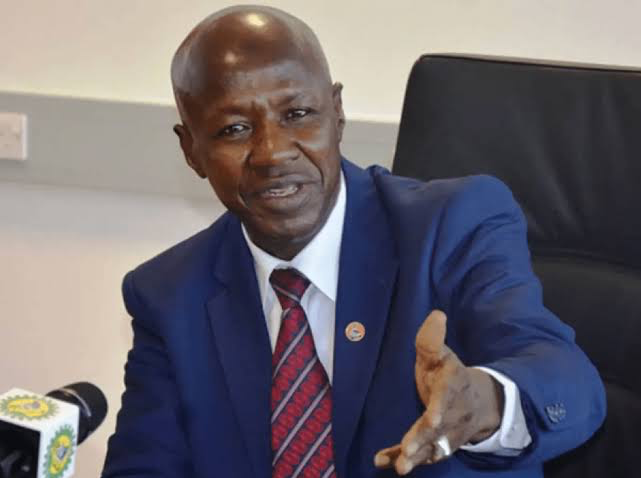
Ibrahim Magu
File photo: Ibrahim Magu

Magu, a senior police officer, led the commission from November 9, 2015, to July 7, 2020. On July 6, he was arrested and detained before being charged in court.

Among the allegations against him is that he pocketed part of the money the EFCC realised from the sale of forfeited assets of corrupt Nigerians.

Ahmed Idris – former Accountant-General of the Federation 

In May 2022, the Buhari government suspended former Accountant-General of the Federation Ahmed Idris over his alleged involvement in an N80 billion fraud.

Another N90 billion he allegedly stole was uncovered days after the first discovery, bringing the amount he allegedly stole to N170 billion.

Idris was charged to court, where he sought a plea bargain

Usman Yusuf – Former NHIS Executive Secretary

Buhari fired the former Executive Secretary of the National Health Insurance Scheme (now the National Health Insurance Authority), Usman Yusuf, in July 2019.

Yusuf was in a raging war with the former Minister of Health, Isaac Adewole, and the NHIS Governing Board, headed by Enantu Ifenna, who accused him of high-handedness, insubordination, fraud and other infractions.
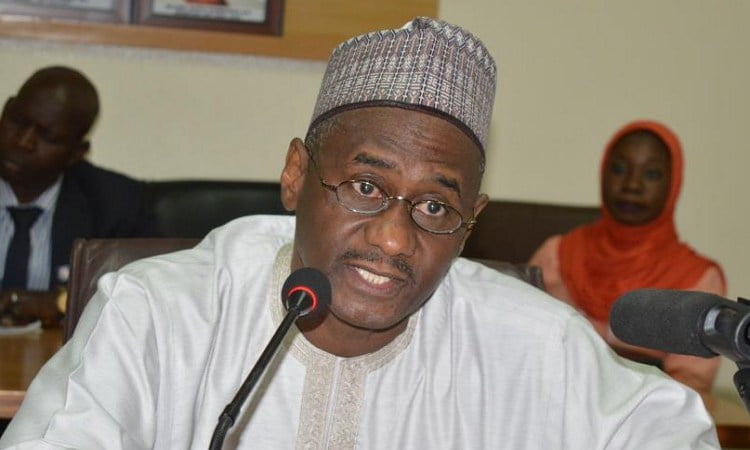
Usman Yusuf
Former Executive Secretary of the NHIA, Usman Yusuf

In 2017, the minister suspended him, and the board suspended him indefinitely in 2018 after reviewing his actions and finding them questionable.

While acting as president in 2017, Vice President Yemi Osinbajo ordered Yusuf’s probe. The investigation was on till February 2018 when President Buhari reinstated the embattled official after Buhari returned to Nigeria from the United Kingdom, where he spent weeks for treatment.

Since he was booted out of office, Yusuf has become a leading voice among people opposing the Buhari government’s handling of the nation’s security.

Bala Usman, former Managing Director, Nigeria Ports Authority

In 2021, President Muhammadu Buhari approved the suspension of the managing director of the Nigeria Ports Authority (NPA) Bala Usman.

The reasons where  not clearly known, but it was clear she had a confrontation with the leadership of her parent ministry, the Ministry of Transportation, headed by former minister Rotimi Amaechi.

Buhari first appointed Usman as the NPA managing director in 2016, and the president renewed her tenure before approving her suspension in May 2021.

Sabo Nanono and Sale Mamman – former Agriculture and Power ministers

On September 1, 2021, the president sacked two ministers in his first and only cabinet reshuffle for eight years. They were the ministers for Agriculture and Rural Development Mohammed Sabo Nanono, and that of Power Sale Mamman.

The sack was part of efforts to “identify and strengthen weak areas, close gaps, build cohesion and synergy in governance, manage the economy, and improve the delivery of public good to Nigerians,” according to a statement signed by the Special Assistant to the President on Media and Publicity, Garba Shehu.
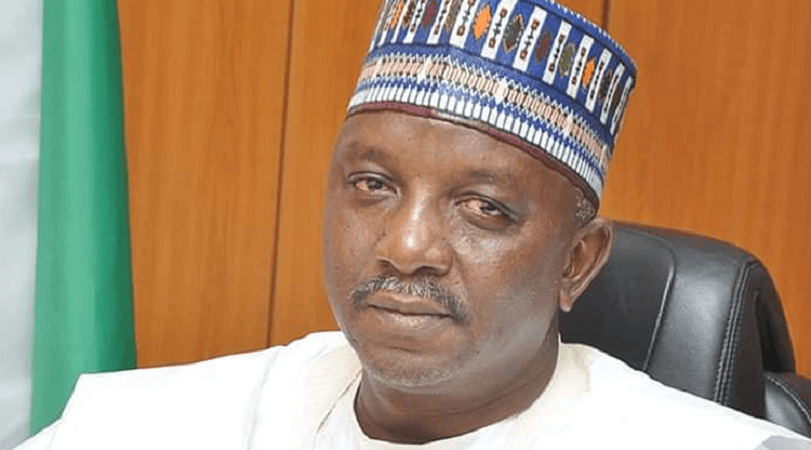
Saleh Mamman
Saleh Mamman, former Minister-of-Power.
Credit: the whistler.ng

The ICIR reports that the power crisis that led to Mamman’s sack has worsened as the country rationed the available 4000 megawatts in the first week of May 2023, making communities and businesses continue to depend on other power sources.

To worsen his woes, the EFCC arrested and detained him on Wednesday, May 10, over an alleged N22 billion fraud uncovered in some power projects executed by his ministry across the country while he was a minister. He headed the Power ministry between 2019 and 2021.

Nanono was fired for “reversing the gains made in agriculture between 2015 and 2019.”

Under his watch, food prices skyrocketed, leading to worsening cases of hunger and malnutrition.

But The ICIR reports that the blame was not entirely his. Buoyed by a poorly-managed economy, inflation shot food prices up during his time in office. Farmers could not go to farms in several states because of rising insecurity. 

Ismail Adewusi – former Post-Master General

President Buhari sacked the former Post-Master General of the Federation, Bisi Adegbuyi, in December 2019 and appointed Ismail Adewusi, a doctorate degree holder, as his replacement.

The president kicked Adewusi out in September 2022 over alleged muscle-flexing with NIPOST’s governing board and top government officials on stamp duty.

Under his watch, NIPOST was at war with the Federal Internal Revenue Service (FIRS) over who should collect stamp duty. 

Saratu Umar – former Executive Secretary, NIPC 

After barely nine months in office, President Buhari fired the Executive Secretary of the Nigeria Investment Promotion Commission (NIPC), Saratu Umar.

The president appointed her in July 2022 and sacked her in April 2023.

Umar has, therefore, been dismissed from the commission twice as executive secretary.

President Goodluck Jonathan first appointed her for a five-year term in 2014. The former leader sacked her the following year over allegations of ineptitude and gross incompetence.

Buhari sacked her for the same allegations.

Walter Onnoghen – former Chief Justice of Nigeria,

Shortly before the presidential and other elections in 2019, President Buhari approved the suspension of former Chief Justice of Nigeria (CJN) Walter Onnoghen and appointed  Tanko Mohammed as the acting CJN.
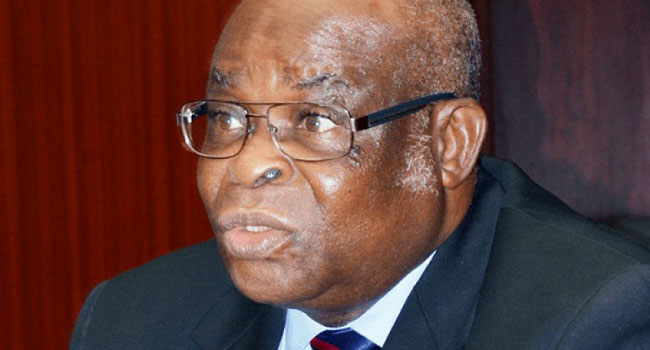
Suspended Chief Justice of Nigeria, Walter Onnoghen. Credit: file photo

Vice President Yemi Osinbajo swore Onnoghen in as the substantive CJN while Buhari was receiving treatment for an undisclosed ailment in the United Kingdom in 2017.

The Buhari government eventually suspended Onnoghen over allegations of corruption and non-declaration of assets, leading to his untimely but ‘voluntary’ retirement.

Despite Buhari’s anti-corruption mantra, The ICIR reported how the country dropped further in the global corruption ranking. 

In 2019, the president admitted fighting corruption was challenging in a country like Nigeria.
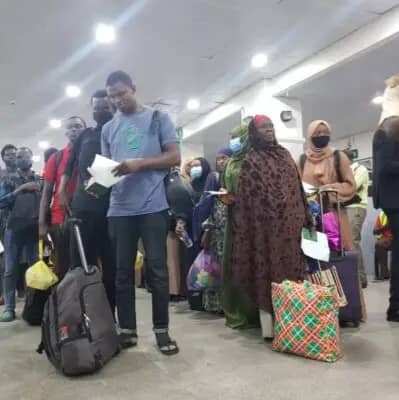
2,518 Nigerians evacuated from Sudan – NiDCOM

THE Nigerians in Diaspora Commission (NiDCOM) has said that a total of 2,518 Nigerians have been evacuated from Sudan to their home country, Nigeria.

NIDCOM head of Media, Public Relations and Protocols Unit, Abdur-Rahman Balogun, said this in Abuja on Sunday, May 14 while giving an update on the evacuation exercise.

On April 20, the Federal government had commenced moves to evacuate Nigerians trapped in Sudan.

READ ALSO:

Sudan: Nearly half a million children have fled their homes — UNICEF

This followed reports of unrest in the country as a result of violent clashes between the Sudanese Army and a paramilitary group, Rapid Support Forces (RSF).

The Sudanese Armed Forces (SAF) and the RSF have been fighting for control of the government since February 15. As a result, at least, 180 people have been killed.

The plan to evacuate Nigerians trapped in the country was in response to a request by Nigerian students in Sudan for immediate evacuation from the country.

The evacuation process began on Wednesday, April 26, when stranded Nigerians embarked on the journey from Khartoum, the Sudan capital, to Egypt by road.

Speaking on the development, Balogun said, ”As of today being Sunday, this is where we are with the evacuation exercise.

“The evacuation is done through a total number of 15 flights, with four from Aswan, Egypt and 11 from Port Sudan.

“As I said earlier, a total of 2,371 evacuees have safely returned home as of Saturday, May 13.

“The new arrivals just now are 140 adults, comprising three infants and 30 children, making a total evacuation to 2,518″.

The NiDCOM chairperson, Abike Dabiri-Erewa, has said that the Summit University, Offa, Kwara, was among the higher institutions that showed interest in admitting Nigerian student returnees.

The ICIR had reported that the first batch of Nigerians fleeing the crisis arrived in Abuja late on Wednesday, May 3.

The batch comprised a total of 376 persons, and each of them received N100,000 cash for transportation to their various homes.


READ ALSO:


On May 5, the Federal government revealed that Nigerians in Sudan who indicated interest in leaving had all been successfully evacuated from the country’s capital, Khartoum.

The permanent secretary in the Federal Ministry of Humanitarian Affairs, Sani Gwarz, disclosed this while receiving the second batch of 130 evacuees at the Nnamdi Azikiwe International Airport, Abuja.

Nigeria and Sudan have had a close relationship since 1960.

INEC yet to pay Lagos ad-hoc staff presidential, governorship allowances

THE Independent National Electoral Commission (INEC) is yet to pay many of its ad-hoc staff who participated in the 2023 general elections at the Ifako-Ijaye local government area of Lagos State, The ICIR reports.

Some affected persons are accusing a staff member of the commission, an Electoral Officer (EO), Rita Awhefada, who led them during the elections, of blocking their payment.

According to them, they were supposed to receive N13,000 for each election. The ad-hoc staff were either students or National Youth Service Corps (NYSC) members.

The ICIR reporter contacted Awhefada (the EO) on Saturday, May 13, to get her reaction to the accusation. She abruptly ended the call after the reporter introduced himself and the matter.

She declined subsequent calls from the reporter. She did not also respond to text and Whatsapp messages sent to her on the matter.

A screenshot of text message sent to the EO by the reporter on Saturday, May 13

The ICIR also contacted the INEC Commissioner for Information and Voter Education, Festus Okoye. He neither picked up the calls put across by the reporter to his phone nor responded to text and WhatsApp messages sent to him despite proof that he read at least the WhatsApp message.

A screenshot of a WhatsApp message sent to Festus Okoye on Saturday, May 13. The two blue marks under the message indicate that he read the message. He didn’t respond.

The ICIR reports that the presidential/National Assembly elections were held on February 25, and the state governorship/House of Assembly polls took place on March 18.

Five of many ad-hoc staff members allegedly affected spoke with this organisation. They included Olatunbosun Suliyat, Amujo Ronke Felicia, Fatade Victoria Adejoke, Keshinro Adejoke Adetoun and Abosede Hannah.

While Hannah and Suliyat said they had received payment for one (governorship and presidential, respectively), Felicia, Adejoke, and Adetoun claimed they had yet to get paid for any of the exercises.

“I have often been to their office at Ifako Ijaiye, lodging complaints. They advised me to keep coming. At times, they asked me to write down my name on the list of unpaid ad-hoc staff, which I did,” Felicia said.

She explained that they were told to change a particular bank the name of which some of them had submitted for their payment because the bank had issues, and they did. Despite changing the accounts, they had yet to get the payment.

On her part, Adejoke said all ad-hoc staff and INEC officials at the local government were on a WhatsApp platform where they discuss issues bordering the elections and payment.

“Several times, we were asked to retype our accounts, which we did. They explained that some banks had issues, including the one l initially submitted. I was asked to change my account, and l gave them another account number and still did not get paid.

“Initially, they assured us to hold on, promising they were working on it. That was from March to April. But since May, once in a while, they would put on the platform within 30 minutes that we should start coming to the office to lodge a complaint or resend the account number if we cannot come. So, since last week, we’ve not heard anything from them,” claimed Victoria.

MNJTF troops neutralise terrorists, recover weapons in Lake Chad

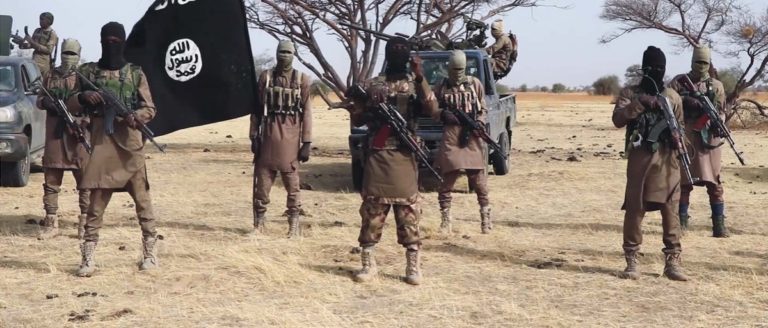
TROOPS of the Multinational Joint Task Force (MNJTF) neutralised many terrorists and recovered heavy weapons during an operation on the fringes of Lake Chad. 

The MNJTF spokesman, Kamarudeen Adegoke, disclosed this in a statement on Sunday, May 14.

Adegoke described the operation as the latest success recorded by the troops of Operation Harbin Kunama (Scorpion Sting), operating in the Lake Chad region.

He said the operation was carried out last week after an attack by members of Boko Haram and the Islamic State West African Province (ISWAP) on troops positioned in the general area of Arege, a village in the northeast of Borno state.

“The ongoing operation by troops of the MNJTF has further diminished the capacity of Boko Haram/ISWAP terrorists to carry out their activities in the Lake Chad Basin region.

“The offensive posture and doggedness of troops of the MNJTF has continued to yield remarkable results.

“Following an attack by BH/ISWAP terrorists on troops’ position in the general area of Arege, which was effectively repelled, exploitation was conducted by soldiers of the Force on May 11 in the general area.

“Several items were recovered, including one Dushka gun, Dushka Turrell and a burnt gun truck, while many terrorists were neutralised during the encounter,” Adegoke said.

The troops recovered two gun trucks, two anti–aircraft guns, one RPG tube, two AK 47 rifles, one RPG bomb and three Toyota buffalo gun truck tyres.

Others are 387 rounds of 12.7mm, 440 rounds of 7.62mm x 54mm, and 364 rounds of 7.62mm x 50mm ammunition.

Since 2009, over 350,000 people have died due to the armed conflict as insecurity continues to ravage the country. While the actors responsible for armed conflict differ across the country, they are all aided by access to ammunition. 

In Borno state, the epicentre of the Boko Haram conflict, an estimated 35,646 people on both sides had been violently killed since 2009. The Boko Haram terrorist has also been blamed for the 5,747 killings in Zamfara; 5,462 in Kaduna; 4,097 in Adamawa, 3,774 in Benue; 3,359 in Plateau, and 3,176 in Yobe.

The bulk of small weapons in Nigeria is illegally possessed.

A report by SMB Intelligence puts small arms in the hands of civilian non-state actors at 6,145,000. This number represents 8.71 per cent of the total small arms and firearms in circulation.

Another research by the National Center for Control of Small and Light Weapons (NCCSALW), a regulatory body established in May 2021 by the Nigerian government, showed that terrorists and insurgent groups in Nigeria hold one out of every hundred illegal firearms in West Africa. There are, at least, seven million illegally held assault rifles and other small arms in the region. 

In the Lake Chad area, Boko Haram and ISWAP are in possession of about one per cent of that total. This amounts to, at least, 77,000 small arms and light weapons in the hands of organised terrorist groups in the northeast.


Respect APC position on NASS leadership, Sanwo-olu urges Reps

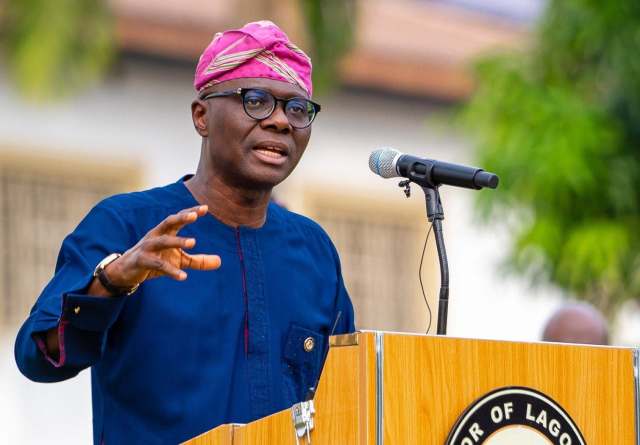
THE Lagos State governor, Babajide Sanwo-olu, has urged members-elect of the House of Representatives to respect the zoning arrangement of the All Progressives Congress (APC) for the leadership of the green chamber.

Sanwo-Olu asked the APC members to support the party’s decision and fully support the chosen candidates for the House of Representatives speaker and deputy speaker positions.

He said this on Saturday, May 13 while receiving the chosen candidate of the APC for the position of speaker, Tajudeen Abbas, and for the deputy speaker, Benjamin Kalu.

Nigeria’s 10th National Assembly will be inaugurated in the first week of June and shortly after the inauguration, members of the national assembly will elect new presiding officers.

The ICIR reported that the APC recently released its zoning arraignment. In its plan, the party endorsed Tajudeen Abass from the Northwest as the House of Representatives speaker and Benjamin Kalu from the South East as his deputy.

The party also endorsed Godswill Akpabio, a former minister of Niger Delta Affairs, as the senate president.

This decision has generated a lot of controversy within the party as members kicked against it. 

The Ondo state governor, Rotimi Akeredolu, was one of those who faulted the arrangement, while Ali Ndume, a lawmaker representing Borno South, dismissed the zoning list, insisting lawmakers would still have to vote to determine the leader of the red chamber.

Speaking on the power tussle for the NASS leadership, Sanwo-Olu said the leadership of the National Assembly must reflect Nigeria’s true federal composition and political diversity.

He urged the new representatives to ensure their engagement was total, transparent and inclusive, as the selected candidates possess the right traits to lead the House.

“Here today, I have seen diverse political parties and representatives from all regions coming together to collaborate in electing the speaker. I urge you not to stop at this; you should further deepen your engagement and extend the hand of comradeship to every member.

“I have observed that despite the party’s support, you are not resting on your oars and taking anything to chance. 

“Other aspirants are eminently qualified to do the same engagement. They are known to us and will be brought to the room for conversation. We wish to ensure that the party’s position is respected and adopted in the green chamber when the House convenes.

“I have read about the speaker and deputy speaker aspirants. Your pedigree and resume speak to excellence. I believe you have what it takes to lead the House of 360 members from diverse backgrounds to have purposeful executive-legislative engagement and bring about meaningful dividends of democracy to our countrymen,” he said. 

According to the result declared by the Independent National Electoral Commission (INEC), the ruling All Progressives Congress (APC) retained the majority in the Senate and House of Representatives seats, with 57 and 162 members, respectively.


Two businessmen excrete 193 pellets of cocaine in NDLEA custody

TWO businessmen in the National Drug Law Enforcement Agency (NDLEA) custody have excreted 193 pellets of illicit drugs after three days in custody.

The two men were arrested by operatives of the NDLEA at the Nnamdi Azikiwe International Airport (NAIA), Abuja, for cocaine ingestion.

This was disclosed in a statement by the NDLEA director of Media & Advocacy, Femi Babafemi, on Sunday, May 14.

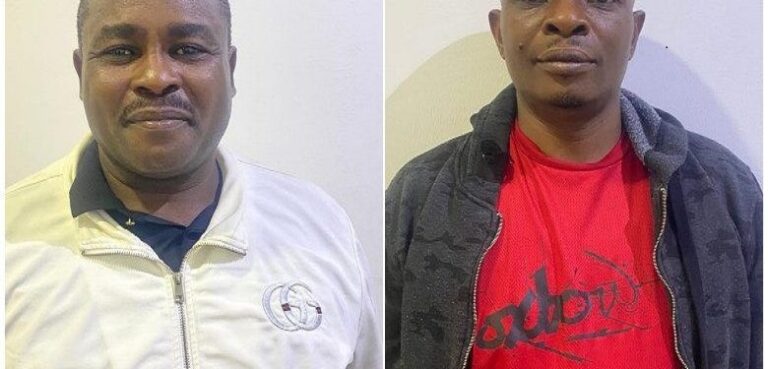
The anti-narcotic agency said that the traffickers – Onoh Ebere, 49, and 47-year-old Christian Ifeanyi Ogbuji – were intercepted at the Abuja airport on Wednesday, May 10 upon their arrival from Uganda via Addis Ababa, onboard Ethiopian Airlines flight ET 951.

Christian Ifeanyi Ogbuji. Picture Credit NDLEA
Onoh Ebere. Picture credit: NDLEA

Babafemi added that even though both suspects had businesses they manage in Nigeria, their primary source of income had been drug trafficking.

“They both travelled to Uganda and from there crossed over to Addis Ababa, Ethiopia, where they picked the consignments before returning to Abuja with Lagos as their final destination. After days in the excretion room, Ebere Onoh excreted a total of 100 pellets weighing 2.137kg, while Christian Ifeanyi Ogbuji expelled 93 pellets hidden in his stomach with a gross weight of 1.986kg,” the NDLEA said.

Meanwhile, NDLEA operatives have raided two notorious drug joints – the Zaro bunk in Bama Road, Sabongari, and the Sani Abacha indoor stadium, both in the Kano metropolis – where a total of 160 suspects were arrested with different quantities of illicit substances.

The agency said two suspects –  Abubakar Sallau, 55, and 25-year-old Nazifi Abdullahi – were arrested on Saturday, May 13, along the Kano-Maiduguri road, with 5,000 pills of Tramadol 200mg.

Over 80 officers on trial, dismissed for extortion – NIS

The Nigerian Immigration Service (NIS) said it has tried and dismissed over 80 officers for receiving illegal fees to issue or renew passports.

The public relations officer (PRO) of the NIS, Tony Akuneme, said this on Sunday during an interview with the News Agency of Nigeria (NAN) on Sunday, May 14.

“We have tried as much as possible to eliminate third parties so that if you really want, you can process the application of your passport from the comfort of your room on your laptop, android phones and you can pay online.

“You don’t really need anybody whether immigration officers or agents, who we usually call touts. They have upgraded and become agents. They are still third parties,” Akuneme said.

He noted that the disciplinary measures were part of efforts by the NIS to reform its operations in the country, and urged Nigerians to desist from patronising third parties when applying for passports.

“We have continued to punish NIS officers and men who try to assist people for a fee. You can assist people genuinely but not extorting from them. We are committed to curbing corruption and other illicit acts in the service.

“Don’t patronise agents; fill your forms yourself. We have officers watching and these agents know they are being watched. When they take money from you, tell us. If we don’t take action, tell the world,” he said.

In 2022, The ICIR reported the widespread corruption, racketeering and misconduct within the NIS.

The report revealed how Nigerians attempting to secure international passports at the Immigration offices were forced to pay certain illegal fees by officials.

Akuneme also said that security around the country’s borders was part of the Service’s agenda under the current Comptroller-General, Isah Jere.

The ICIR also reported that only 86 out of 1,500 borders were under the supervision of the Nigerian government, which could affect the outcome of the forthcoming 2023 elections.

SERAP writes World Bank, demands suspension of Buhari’s $800m loan request

THE Socio-Economic Rights and Accountability Project (SERAP) has called on the World Bank to suspend any disbursement of the $800 million loan being requested by the President Muhammadu Buhari administration.

The ICIR had reported that Buhari had earlier this week submitted a letter to the Nigerian senate requesting an approval for the loan.

The President had in the letter stated that the money,  when approved, would be used to alleviate the negative impacts of fuel subsidy removal, which his government has refused to remove but left alone for the next administration.

Buhari claimed the loan facility was intended to be used to support poor Nigerians, and would be disbursed to poor households across the country.

He also claimed that the facility was an extension of the unconditional cash transfer being implemented by the Federal government.

The President stated that the funds, when approved, would be sent to the bank accounts of the identified beneficiaries.

He also said the Federal Executive Council (FEC) had approved his request for obtaining the loan, noting that he was waiting for the approval of the Senate before going ahead with processing the loan.

However, SERAP, in a letter dated May 13, 2023 to the World Bank president, David Malpass, urged the the bank to seek clarification from the incoming administration on the use of the loan, as Buhari’s term ends in May 2023.

The SERAP letter, signed by its deputy director, Kolawole Oluwadare, urged the bank to comply with its own Articles of Agreement and not sacrifice international standards in the rush to release the loan.

The organization expressed concern that the government was seeking to spend the loan when it has barely two weeks to leave office, and when the project objectives and intended purposes for which the loan is meant for remain unclear.

While expressing concerns about the crippling debt burden on Nigeria and its disproportionate negative impact on poor Nigerians, SERAP appealed to the World Bank not to close its eyes to the important transparency, accountability, and human rights issues related to the loan.

SERAP noted the lack of transparency and accountability in the spending of the loans the Federal government had obtained so far.

It argued that the bank has a responsibility to ensure that the Federal government is transparent and accountable to Nigerians in any discussion to obtain loans, credits or grants from the bank, and how it spends any approved loans, credits, or grants.

“The Bank’s power to provide loans is coupled with a fiduciary responsibility to ensure that the spending of such funds by the government meets international standards of transparency and accountability, including those entrenched in article 5 of the UN Convention against Corruption.

“The World Bank should also seek transparency and accountability commitments if the incoming government decides to use the loan to implement the National Social Safety Net Programme because the spending on the programme has been mostly shrouded in secrecy,” the letter read.

SERAP urged the World Bank to insist on accessing information on the spending by the government on the National Social Safety Net Programme since 2015, and to ensure the publication of the details of such spending in any future engagements with the incoming government.

It also highlighted Article 1 of the World Bank Articles of Agreement, which states that the Bank is to assist in the reconstruction and development of member countries.

The organization argued that the Bank should be guided in all its decisions by the purposes stated in the Articles of Agreement.

SERAP also cited Article 3 Section 4(vii) of the World Bank Articles of Agreement, which states that loans made or guaranteed by the bank shall be for the purpose of specific projects of reconstruction or development.

According to the organization, Article 3 Section 5(b), states that the bank shall make arrangements to ensure that the proceeds of any loan are used only for the purposes for which the loan was granted.

Experts have expressed concerns about Nigeria’s rising debts, which currently stands at N46.25 trillion or $103.1 billion in December 2022, according to the Debt Management Office (DMO).

The DMO, while giving the breakdown, stated that there was an increase of over N7 trillion from what the country owed in 2021.

Nigeria’s debts hit N68.95 following the recent Senate approval for Buhari to securitize the N22.7 trillion owed to the Central Bank of Nigeria (CBN).

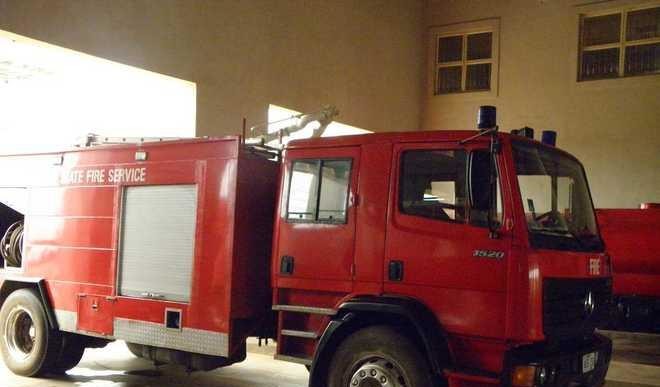
Fire guts popular fabrics market in Ibadan

0

FIRE has gutted a section of the Agbeni market, one of the popular fabric markets in Ibadan, Oyo state.

The Oyo State Fire Service confirmed this to newsmen on Sunday, May 14.

According to the General Manager of the Fire Service, Yemi Akinyemi, said that the agency received a distress call at 4:37am from one Sunday Ogundele, a security officer at Access Bank that the market was on fire.

Ogundele said firefighters had been able to put the inferno under control.

He said, “As I speak with you, our men are still battling with the job, we are grateful to the Central Bank of Nigeria that allows us to use their water supply.

“Everything is under control. They are still going to CBN to replenish.”

He said that the cause of the fire was unknown, and authorities had launched an investigation into the incident.

The incident is not the first of its kind to occur in the state as there had been several reports of fire outbreaks in markets across Oyo State.


READ ALSO:


The most notable of these incidents occurred in 2020 when the Akesan market in Ibadan was destroyed by fire, causing millions of naira in damages.

In August the same year, the Dugbe market, also located in Ibadan, suffered a similar fate.

In April this year, fire gutted the Bodija popular plank market in the state. Properties worth millions of naira were also lost to the inferno.


We are using public relations, enlightenment to fight transnational crimes – Immigration Service

THE Nigerian Immigration Service (NIS) says it has been using public relations and enlightenment to fight transnational crimes.

The NIS added that it is also engaging traditional rulers in various states to impede transborder crimes across the country.

This was disclosed by the agency’s public relations officer, Tony Akuneme, on Sunday, May 14, in Abuja.

Akuneme claimed that the NIS had met with local traditional leaders in border communities to reduce transnational crimes.

He added that the NIS had also met some traditional rulers like the Alake of Egba in Abeokuta and the Shehu of Borno, among others.

The idea, he explained, was to engage the border communities to make them know they have a stake in securing these borders.

“For me, it’s an extra mile. Apart from the regular policing of the borders by officers, we have also gone into public relations and then enlightenment.

“This is so, just to make sure that people don’t think it’s not their business but that everybody is involved in the issue of securing our borders,” he said. 

Akuneme said that Nigeria had wide boundaries, and using technology and human resources was vital.

He continued by stating that the service had implemented MIDAS technology, being used to keep an eye on the activity at the borders.

MIDAS is being supported by other nations working with the NIS to ensure the borders were secure and under control.

However, The ICIR can confirm that the NIS is yet to complete the project four years after its approval. The electronic border surveillance systems project has been footdragging, thus, contributing to the influx of people from the unmanned areas.

In a recent report, The ICIR looked at how the Federal Executive Council (FEC) in 2019  approved N52 billion to purchase E-border surveillance systems for the country.

The project was part of efforts to ensure effective monitoring of the nation’s borders through technology. 

Once fully implemented, the system will monitor and provide real-time information from major border posts in the country, but the project is yet to take off fully.

Ultimately, it was an effort to check the age-long porous border crisis bedevilling the country for years due to inadequate manpower.

Poor border axis management has reportedly been a persistent issue that has worsened Nigeria’s security. 

It has also severely hindered economic operations in border settlements.