AFAC’s cinema grants welcome submissions of short and medium-length narrative films in production and post-production and feature narratives that are in development, production, or post-production phases.
The program will provide annual grants up to USD 10,000 for development grants, up to USD 50,000 for production grants for feature-length and USD 20,000 for short and medium-length, and up to USD 25,000 for post-production grants for feature-length, and USD 10,000 for short and medium-length films.
Filmmakers, directors, and producers whose projects are related to Arab culture can apply for this program.
The deadline for the submission of applications is July 4, 2023. Interested applicants can apply here.
THE Media Foundation for West Africa (MFWA) is calling for entries for the 7th edition of the West Africa Media Excellence Conference and Awards (WAMECA).
WAMECA 2023 is slated for October 19, 2023, to October 21, 2023, in Accra, Ghana, and will focus on the theme: Media and Democracy in Africa.
The Awards are opened to journalists from print, electronic and online media in Anglophone, Francophone, and Lusophone countries in West Africa.
An applicant must be West African, working with and for a media organisations based in the sub-region.
An entry for the Awards must have been published or broadcasted between the period January 1, 2022, to December 31, 2022.
WAMECA 2023 will honour outstanding works of journalism in West Africa in the following categories:
Human Rights Reporting, Investigative Reporting, Anti-Corruption Reporting, Environmental Reporting
Health Reporting, Telecoms and ICTs Reporting, Business, and SMEs Reporting, Migration Reporting, Women Empowerment Reporting and Oil and Gas Reporting.
The deadline for the submission of entries is June 30, 2023. Finalists for WAMECA 2023 Awards will be announced on October 3, 2023. Interested applicants can apply here.
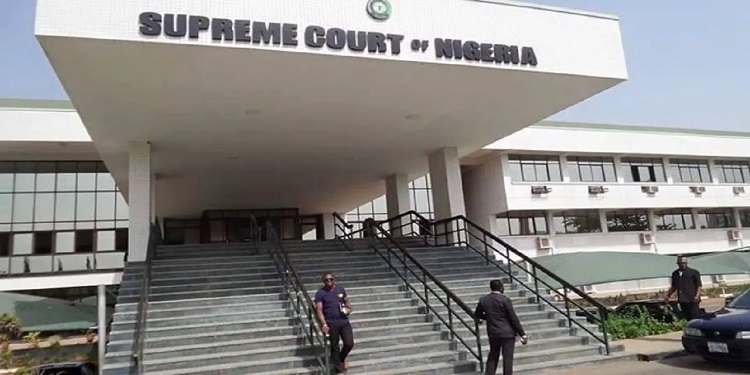
THE Supreme Court will, on Tuesday, May 9, deliver judgment on the Osun State governorship election petition.
The Apex Court has scheduled the judgment for 2:00 pm.
All Progressives Congress (APC) candidate, former governor Adegboyega Oyetola is attempting to overturn the Court of Appeal’s March 25 ruling which upheld the Peoples Democratic Party (PDP) flagbearer Governor Ademola Adeleke’s victory in the governorship election.
The Court of Appeal, Abuja Division, had on March 24 upheld Adeleke’s election as Osun State governor.
In a unanimous ruling delivered by Justice Mohammed Lawal, the appellate court determined that Adeleke’s appeal, which he filed to contest the nullification of his election by the Tribunal, was meritorious.
Delivering judgment in the appeal filed by Adeleke, a three-member panel of justices held that the election tribunal erred when it ruled that the first and second respondents (Gboyega Oyetola and the APC) proved their allegation of over-voting.
According to the judges, Adeleke is the state’s duly elected governor.
Regarding forgery, the judgment stated that the tribunal is obliged to take cognisance of the decision that exonerated Adeleke of forgery and resolved the case against the respondent.
The judgement thereby set aside the tribunal judgment and awarded a cost of N500,000 against Oyetola and the APC.
The Osun Governorship Election Petition Tribunal had earlier ruled in favour of Oyetola on January 27.
Two out of the three-member panel held that Oyetola was able to prove that there was over-voting in some of the polling units during the gubernatorial poll.
Adeleke rejected the judgment, describing it as a miscarriage of justice and an unfair interpretation against the will of the majority of voters.
Adeleke headed to court and prayed to the appellate court for “an order setting aside the whole decision of the tribunal”.
He also sought an order “striking out the petition for want of competence and jurisdiction or, in the alternative, an order dismissing the petition on the merit”.
A FEDERAL High Court in Abuja has granted Media Rights Agenda (MRA) leave to sue the National Broadcasting Commission (NBC) in two separate cases.
The case concerns the Commission’s failure to grant the organisation’s requests for information on the scope of independence reportedly given by President Muhammadu Buhari and details of the 302 broadcasting stations it said it sanctioned in four months after campaigns for the 2023 elections began in September 2022.
Justice Nkeonye Evelyn Maha granted MRA leave to apply to the court to compel NBC to make available the information requested by the MRA.
The decision was taken after hearing arguments from the organisation’s lawyers in two separate exparte motions in which it complained that the Commission had failed to respond to two different applications for information.
The first request was dated February 17, 2023, and signed by Maimuna Momoh, a Programme Officer at MRA; the second letter was dated February 20, 2023, and signed by Monday Arunsi, MRA’s Legal Officer.
The first filed on March 20 by MRA lawyer, Tale Alabi, has the NBC and the Attorney-General of the Federation as respondents.
MRA sought an order granting it leave to apply for a review pursuant to the Freedom of Information Act, 2011 and for the court to direct the NBC to make available to the organisation the information it requested by its letter, dated February 17, 2023,
The MRA requested a list of the 302 stations sanctioned by NBC between September 28, 2022, and January 31, 2023.
MRA wants details of the names and locations of the stations, and for each, the name of the individual or entity which made the complaint against the station leading to the NBC sanction, and the date of the complaint and details of the complaint or allegation made against each station.
In addition, the MRA wants copies of all correspondence by NBC to the stations against which the complaints were made, informing them of the complaints or allegations made against them, and copies of all correspondence from all the stations against which complaints were made in response to the allegations against them.
MRA also asked for a list of all the broadcast stations against which the NBC received complaints of any type, pursuant to the Nigeria Broadcasting Code, between September 28, 2022, and January 31, 2023, which the Commission investigated and absolved of any wrongdoing; and details of the sanctions imposed by the NBC on each of the stations, including the amount of the fine imposed on each of the stations.
The second lawsuit came from a statement by NBC Director General Malam Balarabe Shehu Ilelah, where he said the Buhari had approved the Commission’s independence from any political interference in the performance of its regulatory duties, particularly concerning the granting and revocation of broadcasting licences, during a press conference he held in Abuja on February 9, 2023.
In the suit, filed on March 20 by Bula Zakayo Kelle against the NBC and the Attorney-General of the Federation, MRA sought leave of the court to apply for judicial review pursuant to the FOI Act, among other things, for an order compelling the NBC to make available to MRA the information it requested in its letter dated February 20.
In the petition, the MRA sought to know whether the power of the Minister of Information under Section 6 of the NBC Act to give the Commission directives about the exercise by the Commission of its functions has been abolished and, if so, whether there are plans to amend Section 6 of the Act accordingly.
Also, MRA asked whether the NBC now has the final authority for the issuance of broadcast licences as against the extant practice under Section 2(b) of the NBC Act, which requires the Commission to merely recommend applications through the Minister of Information to the President for the grant of radio and television licences; if the NBC is now vested with final authority to issue radio and television licences; and whether there are plans to amend Section 2(b) of the NBC Act accordingly.
In addition, MRA sought to know what additional NBC Act provisions are being considered for amendment in light of the President’s approval of the Commission’s independence. MRA also demanded a copy of the communication from the President through which the Commission was informed of the President’s acceptance of the NBC’s independence.
Justice Maha permitted MRA to apply for the reliefs requested by the organisation after hearing the arguments made by MRA’s solicitors in the two cases, which were heard separately on May 4.
She also instructed the solicitors to file their motions on notice within seven days.
The judge adjourned further hearing in both suits to June 21.
THE Presidential Election Petition Court (PEPC), also referred to as presidential election tribunal, officially commenced hearing today, Monday, May 8.
The tribunal will hear petitions against the result declared by the Independent National Electoral Commission (INEC) against after the February 25 presidential election.
Justice Haruna Simon Tsammani will lead the panel of Justices. Others on the panel are Justice Moses Ugo, Justice Bolaji-Yusuf, Justice Stephen Adah and Justice Abbah Mohammed.
The Tribunal will look at petitions from the Action Alliance (AA), Action Peoples Party (APP), Labour Party (LP), Allied Peoples Movement (APM) and Peoples Democratic Party (PDP).
In his inaugural speech, Justice Tsammani assured parties that justice will be done.
He urged counsels to cooperate with the Tribunal to ensure that the petitions are decided speedily.
“I want to appeal to everyone in this matter not to make sensational comments that could set the country on fire.
“We, on our part, too, will ensure that justice is given to the one who deserves it,” he said.
Justice Tsammani stated that the court would hear the first three petitions today (Monday) and adjourn to Wednesday, May 10.
The fourth and fifth petitions filed by the APM and PDP will be heard on Tuesday, May 9, before the tribunal adjourns to Thursday, May 11.
He requested the Bar’s assistance in being fair to everyone and added that the Bench was aware of the significance of the matters it was considering.
Justice Tsammani urged attorneys for the various petitioners to refrain from frivolous objections to save time. He also admonished them against inciting controversy.
In their separate responses, lawyers for the parties reassured the court of their readiness and willingness to make the panel’s task more manageable.
INEC had, on Wednesday, March 1, declared the candidate of APC, Bola Tinubu, winner of the presidential election.
INEC chairman Mahmood Yakubu announced that Tinubu won with 8,794,726 votes, followed by Atiku Abubakar of the Peoples Democratic Party (PDP) with 6,984,520 votes. Peter Obi of the Labour Party (LP) followed closely with 6,101,533 votes, according to the result released by INEC.
The man, Justice Tsammani
Born on November 23, 1959, Justice Tsammani hails from Tafawa Balewa LGA of Bauchi State.
He obtained his LL.B degree from the Ahmadu Bello University, Zaria in 1982, and attended the Nigerian Law School, Lagos for his BL in 1983.
Justice Tsammani was appointed a Judge of the High Court of Bauchi State on September 27, 1998 and later elevated to the Court of Appeal on July 16, 2010.
He served as the chairman of the three-man panel that granted Obi and Atiku’s motions to serve Tinubu their petitions by substituted means.
He also presided on the VAT case between the Rivers State government and the Federal Government.
Justice Tsammani prepared the judgment in Ajimobi v Balogun, affirming the election of Kola Balogun as Senator representing Oyo South Senatorial District in 2019.
He is ranked 12th on the Seniority list of the Court of Appeal.
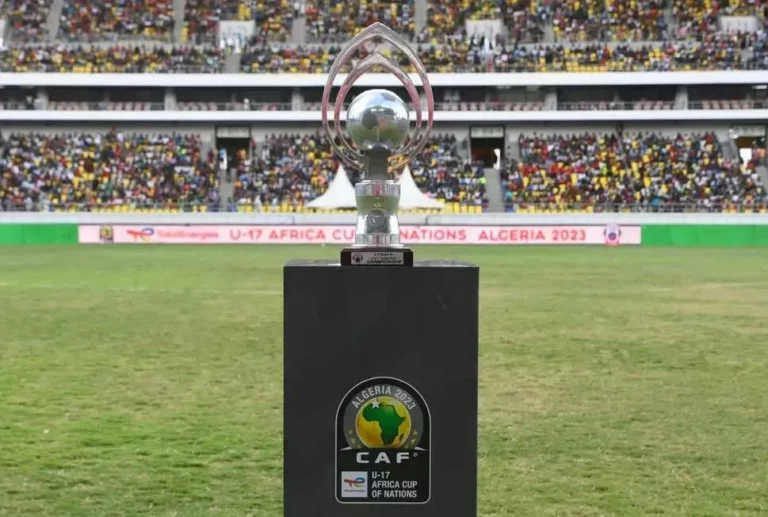
AFTER the completion of group matches on Sunday, May 7, eight teams are set to slug it out in the quarter-finals stage of the 2023 UN-17 African Cup of Nations (AFCON) taking place in Algeria.
Among the eight teams that will play in the quarter-finals, a new champion will emerge after the fall of the title holders Cameroon, who lost to Burkina Faso 2-1 in the last group C matches. They finished at the bottom of the group with no point.
The standing in the groups of the U-17 AFCON Cup in Algeria
In the quarter-finals fixtures slated to kick off on Wednesday, May 10, at the Nelson Mandela Stadium in Algiers, Senegal who topped Group A will take on South Africa, one of the best two third-placed teams.
Also, after the match between both teams, it is going to be a North African derby in Constantine on the same Wednesday, when hosts Algeria slug it out against Morocco.
Then, the following day, on Thursday, May 11, Annaba will play host to the third quarter-final where two-time champions Mali continue their quest for a third title when they take on Congo, the other of the best two third-placed teams.
In Algiers, the last quarter-final duel will witness a clash between Group B runners-up Nigeria and second-placed finishers from Group C, Burkina Faso.
Winners from the quarter-finals will earn a ticket to this year’s FIFA UN-17 World Cup coming up in November.
Quarter Final fixtures
May 10: Senegal vs South Africa – Nelson Mandela Stadium, Algiers – 5:00 pm
SEVERAL children in Sadaba and Kundu communities in Kwali Area Council of Nigeria’s capital, Abuja, have withdrawn from school since storms blew off the roofs of the only public primary school in the villages in 2014 and 2020.
The wind affected Kundu school more as about five roofing sheets were left on one of the twin blocks of three classrooms and an office.
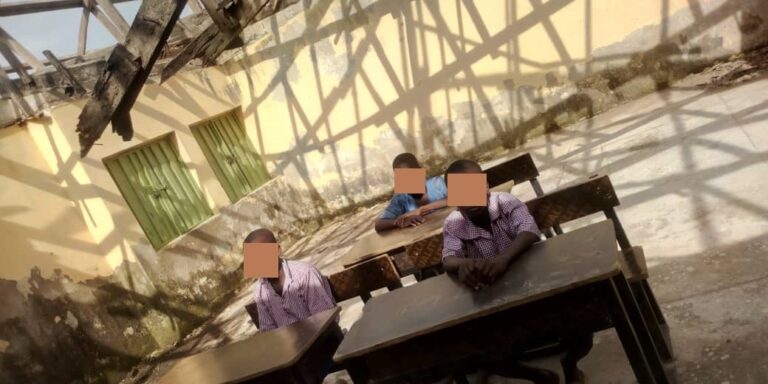
Since 2020, the school’s pupils in primary one to three have had no roof over them.
The ICIR reporter visited the school on Thursday, 27 April, and saw the block without a roof spattered with human faeces and other wastes. Children were still on holiday at the time.
The reporter was also at the school in the first week of May, after schools had resumed, and the classrooms had been swept by the children.
He saw the pupils sit in the unroofed classrooms under the scorching sun.
More than 60 per cent of pupils in the affected block no longer attend school, the community leaders told The ICIR.
“Our pupils are scorched and drenched daily by the sun and rain. We have faced these for almost three years,” said one of the school teachers, Usman Aliyu.
“They roll on the ground inside the dust while playing. If you see them returning from school, you will think they are from the farm because they always look too dirty,” he added.
Rafters and other woods used for the roofing hang dangerously in each classroom within the block.
There are also harmful objects like nails and broken wood, which could cause serious harm.
More than half of the chairs and tables in the block have rusted and unusable after much exposure to sunshine and rain.
“There was no space to keep them. Most of them spoilt in the sun and rain”, said Gimba Ruzoma, the school’s assistant headteacher.
The ICIR noted that the building walls are decrepit and could cave at any time.
A wooden signpost in the school indicates that the Universal Basic Education Commission (UBEC) constructed the second block used by pupils in primary four to six. The distressed block belongs to the Federal Capital Territory Universal Basic Commission (FCTUBEB) and the Kwali Area Council.
The three-classroom block built by UBEC in 2015 at the Kundu LEA primary school in 2015. Photo: The ICIR/Marcus Fatunmole
The ICIR observed that pupils’ enrolment differs at Kundu’s newly-built Islamic Learning Centre, which has a big mosque.
The villagers built the centre within a few months. Children receive only Islamic knowledge in an alluring atmosphere at the centre.
The centre has more children than the primary school, according to the villagers.
The newly-built Islamic Learning Centre and a mosque built by the Kundu community Photo: The ICIR/Marcus Fatunmole
Parents speak about school condition
A parent, Mohammed Ibrahim, explained that all six male teachers in the school struggle to teach, and they do so out of their love for the children and the community. “Some teachers posted here have found a way to work their posting out of the village,” he claimed.
Ibrahim did not entirely blame the teachers who refused to stay.
The only road leading to the community is untarred, and commercial motorbike operators charge each passenger between N600 and N700 from the Gwagwalada-Kwali Road to which the village road links. It takes a motorbike about 25 minutes to get to the community.
Only a few vehicles, mainly used for agriculture, ply the rough road.
The locality lacks major basic amenities such as electricity, pipe-borne water, and modern means of communication. Homes in Kundu are mostly made of mud.
However, Ibrahim rued the rate at which many children of school age have quit school and go with their parents to the farm, the predominant job in the community.
Some of the children seen by The ICIR in the community who have quit school are Tekembe Moses, Tijani Abdulkareem, Mariam Mohammed and Mallah Ahmed.
“The experience is harrowing. We live as if we are not in the nation’s capital. If we Abuja people can suffer this fate, how much more will those in remote communities in faraway states suffer if they find themselves in our shoes?” another parent, Adamu Sani, said.
Sani spoke on behalf of the community leader Bello Magaji, who neither understood nor could communicate in English.
He said the village chief had done all he could to convince the government to rebuild the school without success. Sani estimated the village’s population to be over 3,000 and children of primary school age above 300.
Kundu community leader, Bello Magaji, (3rd right) flanked by the parents and leaders in Kundu community. Photo: The ICIR/Marcus Fatunmole
Similar scenario in Sadaba school
Six years after the government abandoned the Sadaba school, it built a new block of three classrooms in 2020 and left the old block unrepaired.
Residents who spoke with The ICIR in the community said the new three-classroom block could only accommodate a few of the village’s children wishing to go to school.
Sunday Alfa hails from the village. He told The ICIR, “You can see the building is already collapsing. Pupils can no longer stay inside. We are appealing to the government to come and renovate the building.”
He lamented that the village’s monarch, who was at the forefront of the campaign to get the government to rehabilitate the school died earlier this year, and a new leader had yet to emerge.
The government founded the school in 2009, meaning the wind blew its roof off five years later.
Sunday Alfa
Background
In 2020, The ICIR was in Kundu to investigate illegal miners milking the FCT of billions in revenues. The ICIR saw the schools in a dilapidated state at the time. Three years later, the organisation sought to know if there had been any positive change. The situation has remained the same.
We’re not aware of schools conditions, Council – FCTUBEB
The ICIR contacted the Chairman, FCTUBEB, Hassan Sule, on Wednesday, April 26, over the state of the schools. He said nobody informed him about their conditions.
He expressed shock at the incidents and promised to contact the heads of the Local Education Authority at the Kwali Area Council.
The chairman also promised to get back to this organisation but has yet to.
When contacted, Andrew Moses, personal assistant to the Executive Secretary of the Kwali Local Education Authority, said nobody reported the incidents to his boss.
The reporter told him the communities claimed they did so severally without any response. He promised to confirm with his principal and get back to the reporter. He has yet to provide feedback.
There are many such schools in Abuja – UBEC
The ICIR contacted the Universal Basic Education Commission (UBEC) on the fate of the schools.
The deputy director of physical planning, Nura Ibrahim, an architect, said the responsibility of primary education resided with the states and local governments.
According to him, UBEC is an intervention body which supports states and would not be forced to build any school for states.
“What we normally do is to intervene. The responsibility for basic education in Nigeria is not for the Federal Government but for the state and the local government. At the federal level, we intervene wherever we see a need for that because we realise that the state cannot play that role alone.
“Wherever you see a UBEC project, it is just our intervention to see that education does not collapse.”
Speaking on the state of the Kundu school, he said it is a common phenomenon across Nigeria, especially the FCT (Abuja).
“If you go to the local communities (in the FCT), you will see them studying in classes under trees, shades and so on.”
He, however, challenged communities to always support public facilities in their locality. He said communities should not wait for the government to fix minor problems they observe in public institutions such as schools, and hospitals, among others, to enable them to serve those communities uninterruptedly.
The old block of three classrooms at Sadaba community in Kwali Area Council of FCT, destroyed by wind in 2014 and has since been abandoned by the government. Photo: The ICIR/Marcus Fatunmole
Leaving schools in ruins negates the Nigerian Constitution, UN Charter, others
The ICIR reports that the government’s failure to provide functional schools for Kundu and Sadaba conflicts with the Nigerian Constitution and international conventions.
Chapter Two, Paragraph 18 (1) of the Nigerian Constitution (1999 as amended) says the government shall direct its policies towards ensuring equal and adequate educational opportunities at all levels.
Paragraph 18 (3) of the same chapter notes that “Government shall strive to eradicate illiteracy, and to this end, government shall as and when practicable provide (a) free, compulsory and universal primary education.”
Similarly, Part Two, Section 15 (1) of the Nigerian Child Act (2003) speaks to a child’s right to free, compulsory and universal primary education.
Paragraph One of the Section states, “Every child has the right to free, compulsory and universal basic education, and it shall be the duty of the government in Nigeria to provide such education.”
The FCT was the first territory in Nigeria where the Act became operational.
The new and old blocks of classrooms at LEA primary school in Kundu, Kwali Area Council FCT. Photo: The ICIR/Marcus Fatunmole
The UN says the treaty has become the most widely ratified human rights treaty in history and has helped transform children’s lives globally.
Article 28 (1) of the Convention clearly states that “States Parties (countries) recognise the right of the child to education, and with a view to achieving this right progressively and on the basis of equal opportunity, they shall, in particular: (a) Make primary education compulsory and available free to all.”
Besides, Section 2 of the UBEC Act (2004) states that basic education should be compulsory and free.
“Every Government in Nigeria shall provide free, compulsory and universal basic education for every child of primary and junior secondary, school age.”
The ICIR reported how the Nigerian government makes basic education free, but officials in the FCT charge hidden fees, discouraging many parents from enrolling their children.
Even if education is completely free, The ICIR reports that many children in Kundu and Sadaba may not benefit because they do not have functional classrooms to receive lessons.
Out-of-school children in Kundu and Sadaba contribute to 20 million Nigerian children not attending school – the highest worldwide.
Nigeria faces multiple socioeconomic crises, namely insecurity, unemployment, poverty, and overpopulation, worsened by illiteracy.
In November 2022, The ICIRreported how 133 million Nigerians lived in multidimensional poverty, representing 63 per cent of the population.
A new school built by the Federal Capital Territory (FCT) Community and Social Development Project (CSDP) – a World Bank finance-assisted project – in Sadaba community to replace the old block of classrooms destroyed by wind. Photo: The ICIR/Marcus Fatunmole
UNICEF harps on the need to promote child rights in Nigeria
The United Nations Children Fund (UNICEF) is one of the organisations urging Nigeria to promote child’s rights, including education.
UNICEF says despite laws clearly stating the rights of the child, not much has been done by tiers of government in Nigeria to make the children enjoy such rights.
At a recent workshop for journalists and university lecturers in Enugu State, UNICEF appealed to tertiary institutions to include child’s rights in their curriculum as one of the best ways to raise more advocates for the rights.
UNICEF Chief of Field Office, Enugu, Juliet Chiluwe, commended the Nnamdi Azikiwe University (NAU), Awka, Anambra State, as the first tertiary institution in Nigeria to endorse child rights curriculum as a general studies course and making it compulsory for its Mass Communication students.
According to her, a broad range of abuse against children emanates from ignorance of what constitutes a child’s right.
NIGERIA’S Golden Eaglets will slug it out against Burkina Faso in the quarter-finals of the ongoing 2023 U-17 African Cup of Nations (AFCON) in Algeria on Thursday, May 11.
Burkina Faso, on Sunday, May 7, came from behind to defeat the defending champions Cameroon 2-1 in the last of Group C matches. Following the defeat, Cameroon has crashed out of the tournament as they finished the bottom of the group with zero points.
Burkina Faso finished second in the group behind Senegal to set up a clash with Nigeria.
Also, South Africa progressed to the quarter-finals as one of the best two third-placed teams by virtue of scoring more goals.
Other teams that qualified for the next round include Senegal who will face South Africa while it will be a North African battle between Morocco and the host, Algeria. These matches would be played on Wednesday, May 10.
Mali will face Congo in the other quarter-final clash on Thursday, May 11.
NIGERIA’s hope of ending subsidy payments on petroleum import will brighten on May 22 when President Muhammadu Buhari is scheduled to inaugurate the 650,000 barrels per day Dangote refinery in Lagos.
The Nigerian National Petroleum Company Limited (NNPCLtd), has been the sole importer of petrol, which economic watchers say has fuelled corruption in Nigeria’s oil sector.
An energy expert, Najim Animasaun, was optimistic the subsidy regime would end if the Dangote refinery performed optimally with almost 51 million litres daily production.
“Possibly, with this development subsidy will go,” Animasaun told The ICIR.
The scheduled commissioning of the Dangote refinery was confirmed on Sunday, May 7 in a series of tweets from Bashir Ahmad, Special Assistant to the President on Digital Communications.
According to Ahmad, “Efforts by the Federal Government to make Nigeria self-sufficient in local refining of crude oil to save the scarce foreign exchange used in the importation of petroleum products have received a boost as the 650,000 barrels per day Dangote Refinery, the world’s largest single-train refinery, is set for inauguration on May 22nd, 2023, by President Muhammadu Buhari.”
On August 4, 2021, the (NNPCLtd.)acquired 20 per cent stake in Dangote’s oil refinery for $2.76 billion, as confirmed by the immediate past minister of state for Petroleum Resources, Timpre Sylva.
The ICIR reports that the integrated refinery project located in the Lekki free trade zone area of Lagos State will, indeed, be a big relief to both the Federal government, which is spending almost N6 trillion on fuel imports this year.
The refinery project cost an estimated $19 billion to build.
The integrated refinery and petrochemical project is expected to generate 9,500 direct and 25,000 indirect jobs.
Nigeria, Africa’s biggest crude oil exporter, imports virtually all its fuel needs due to moribund state refineries, which has prompted NNPCLtd’s interest in Dangote’s oil refinery.
A thread from NMDPA saying the refinery project is 97 per cent
In March 2021, the Nigerian government approved $1.5 billion of spending on the modernisation of its own Port Harcourt oil refinery and awarded a contract to Italy’s Tecnimont (MTCM.MI).
Sylva said 15 per cent of the contract sum had been paid, and work had started in Port Harcourt. He added that the cabinet also approved contract awards for the upgrade of the Warri and Kaduna refineries to Saipem SpA (SPMI.MI) and Saipem Contracting Ltd for $1.484 billion.
The pump price of petrol is not expected to drop significantly even if Nigeria starts refining crude oil locally as price would still be determined by the cost of crude oil.
Oil industry watchers said the absence of shipping cost would, however, impact positively on price, though they are not expecting the cost of labour to be too different from international standards since local refineries will be paying their expatriate employees.
Experts said an option for the Federal government to affect pump price at lower prices would be for it to sell crude to local refineries at a discounted rate for local consumption and production only.
Until all that happens, Nigerians are again being sensitised on what to expect in the next few weeks on petrol pump prices.
“There is likely to be subsidy removal as scheduled, and petrol prices will go up to N600 per litre,” a development economist, Kelvin Emmanuel, told The ICIR.
NIGERIAN Afrobeat superstar, Tiwatope Savage, professionally known as Tiwa Savage, thrilled guests as she performed ‘Keys to the Kingdom’ from Beyoncé’s ‘Lion King: The Gift’ album at a concert held to mark the coronation of new British monarch King Charles III.
The coronation which was held on Saturday, May 6 at Westminster Abbey was followed by a concert on Sunday, May 7 at the Windsor Castle.
Tiwa Savage stepped out gorgeously in a green dress as she gave an astonishing performance.
Tiwa Savage’s appearance at Windsor Castle
The Queen of Afrobeat and multiple award-wining singer and songwriter is the first and only Nigerian to perform at a foreign royal coronation/event.
Tiwa Savage Performing “Keys to the Kingdom” at the coronation concert
The BBC-organised coronation event featured performances by Katty Perry, Lionel Richie, Andrea Bocelli, Bryn Terfel, Paloma Faith, Olly Murs, Steve Winwood, among others.
Her performance sparked a lot of positive reactions from people in Nigeria and all over the world on different social media platforms.
Fan’s reactions to Tiwa’s performance
Meanwhile, 23 years old, Divine Ikubor, popularly known as Rema, has made it to the Guinness World Records with his hit song ‘Calm Down’.
Rema marks entry on the Guinness world records
The song made history as the first No. 1 on the Official Middle East and North Africa (MENA) chart (the world’s regional streaming chart).
Upon the launch of the MENA Chart by the International Federation of the Phonographic Industry on November 29, 2022, Rema’s ‘Calm Down’ debuted at No. 1.
Nigerian artists are gaining international recognition after taking Afrobeats to a global level.