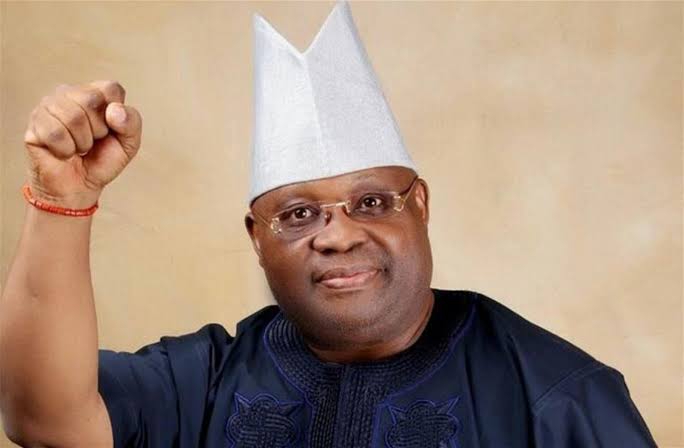
THE Supreme Court has affirmed the election of Ademola Adeleke as the governor ofOsun State.
In a judgment delivered on Tuesday, May 9, a five-member panel of the apex court upheld the decision of the Court of Appeal to reinstate Adeleke, of the Peoples Democratic Party (PDP), as the governor of Osun State, following the earlier reversal of his victory by the election petition tribunal.
The Supreme Court, in the lead judgment written and delivered by Justice Emmanuel Agim, ruled that the appellants, former Osun State governor Gboyega Oyetola and the All Progressives Congress (APC), failed to present any tangible evidence to support their claims of excessive voting and improper voter accreditation in the Osun State governorship election.
Justice Agim ruled that the appellants’ evidence, which omitted data from the 744 disputed polling units’ Bimodal Voter Accreditation System (BVAS) equipment, could not be used as the primary repository for information about the accredited voters in the areas.
The court held that the appellants relied on a secondary, insufficient, and inadmissible method of proof by failing to present the genuine voter accreditation data from the BVAS.
The Supreme Court further held that the forensic expert who presented the appellants’ evidence was a member of the APC and an associate of Oyetola, who had a vested interest in his analysis.
The apex court maintained that the appellants had failed to establish the basis for their appeal.
Oyetola had approached the Supreme Court after the Court of Appeal overturned his victory at the Osun State Governorship Election Petition Tribunal and declared Adeleke the duly elected governor.
The Court of Appeal, Abuja Division, had on March 24 upheld Adeleke’s election as Osun State governor.
In a unanimous ruling delivered by Justice Mohammed Lawal, the appellate court determined that Adeleke’s appeal, which he filed to contest the nullification of his election by the Tribunal, was meritorious.
Delivering judgment in the appeal filed by Adeleke, a three-member panel of justices held that the election tribunal erred when it ruled that Oyetola and the APC proved their allegation of over-voting.
Ruling on allegations of forgery against Adeleke, the Court of Appeal held that the Tribunal is obliged to take cognisance of the decision that exonerated Adeleke of forgery, and as a result, resolved the case against the respondent.
The Court of Appeal thereby set aside the Tribunal’s judgment and awarded a cost of N500,000 against Oyetola and the APC.
The Osun Governorship Election Petition Tribunal had earlier ruled in favour of Oyetola on January 27.
Two out of the three-member panel held that Oyetola could prove that there was over-voting in some of the polling units during the gubernatorial poll.
Adeleke rejected the judgment, describing it as a miscarriage of justice and an unfair interpretation against the will of the majority of voters.
The PDP candidate headed to Court of Appeal and prayed for “an order setting aside the whole decision of the tribunal”.
THOMSON Reuters Foundation (TRF) is inviting applications for its hybrid (zoom and in-person) journalism training themed ‘Reporting on Human Trafficking and Labor Exploitation – A Solutions Approach’.
The programme is slated to run from May 21, 2023, to May 26, 2023.
The five-day training which will be led by expert journalists, will provide a deep dive into the complex topic from a solutions journalism angle.
The program aims at empowering participants with the knowledge and skills to produce engaging and impactful reporting through solutions journalism and data visualisation, and connecting them to experts working on these issues.
Selected journalists will conclude the course by presenting story pitches to compete for one-on-one mentoring and a story grant to publish their stories.
A limited budget for domestic travel support is available. Interested applicants requiring financial support to travel to Mumbai should indicate this in their application.
India-based journalists interested in covering human trafficking can apply for this hybrid media training in Mumbai.
The deadline for the submission of application is May 15, 2023. Interested applicants can apply here.
THE Wits Centre for Journalism’s African Investigative Journalism Conference (AIJC), is inviting applications for its grants.
The grant is intended for journalists to investigate health issues in seven African countries: Zimbabwe, Botswana, Namibia, Tanzania, Lesotho, Swaziland, and South Africa.
The grants are supported by the Bill and Melinda Gates Foundation.
The grants are intended to enable and encourage knowledge and awareness of health issues among journalists, to encourage the exposure of health issues, and to give journalists the time and resources to do in-depth, investigative reporting.
Grants from US$1,000 to US$3,000 will be awarded.
Journalists or teams of journalists can apply for an investigative journalism grant.
The deadline for the submission of applications is May 15, 2023. Interested applicants can apply here.
CONTROVERSY is trailing the advice offered to Area Court judges without law degrees in Nasarawa state by the State House of Assembly.
On Thursday, May 4, the Assembly asked judges without law degrees to obtain the required credentials within ten years or risk expulsion from the Bench.
The Speaker of Nasarawa State House Assembly, Ibrahim Abdullahi, during a plenary session in Lafia, the state capital, said if the law for appointment/employment of judicial officers is to be implemented, it will lead to the sack of some staff of the judiciary. To avoid such a development, he said the law needed to be amended.
Abdullahi spoke when the House deliberated on the report of its Standing Committee on Judiciary, Ethics and Privileges on a ‘Bill For a Law to Amend the Nasarawa State Area Courts Law 2022 and For Other Matters Related Therewith’.
“The principal law provides that for one to be a Judge of the Upper Area Court, one must be a legal practitioner with at least four years post-call.
“And for one to be a Judge of an Area Court, you must be a legal practitioner with at least three years post-call.
“The Committee strongly recommends that a window period of 10 years be granted to the affected staff to enrol into a degree programme of Law to be called to Bar for them to fit in,” Abdullahi stated.
The announcement shocked many who thought that to be a Judge in any court; one must have a law degree.
The question on many lips was – Did the advice by the Assembly imply that some judges in Nigeria lacked legal education?
The House of Assembly’s advice to the area court judges has generated a lot of controversy on Twitter, with many commenting on the issue.
Judges in Nasarawa State have been warned to obtain law degrees or lose their jobs.
Nigeria is an unimaginable place. A judge without a law degree or having attended law school ?
However, checks by The ICIR show that certain categories of judges in Nigeria does not require a law degree.
A Human Rights Lawyer, Frank Tietie, in a chat with The ICIR, said it is indeed possible to be a Judge in a court in Nigeria without being a lawyer, having a law degree or being qualified to practice law.
According to him, however, such types of judges are only allowed to head an inferior court.
“Well, you must understand that yes, it is possible to be a judge in a court in Nigeria without being a lawyer, that is, without having a law degree or being qualified to practice law, by a call to the Nigerian Bar after attending the mandatory vocational training at the Law School.
“Now there are certain courts in Nigeria that are created by the warrant of the Chief Judge of any of the 36 states and the Federal Capital Territory (FCT) and such courts, for example, Customary Court, which are also equated in Northern Nigeria by Sharia Court, can actually be manned by persons that appear to the Chief Judge that they are well versed in either the custom of the people of the locality or they are well versed in certain Islamic laws, particularly of the Maliki School and in that case it means that the Chief Judge merely appointed them and those courts are given the jurisdiction that is attached to them also created by the Chief Judge’s warrant,” the lawyer said.
Tietie added that many such inferior courts exist across Southern and Northern Nigeria that deals with “matters that have to do with customs or Islamic law.”
He said the recent directive by the Nasarawa State House of Assembly that all such judges must now have law degrees is not new.
“It has been a development that has been on in many states, particularly in Southern Nigeria, Delta State, for example, in the recent past has made it mandatory that persons who manned such inferior courts, whether Area Courts or Sharia Court, must have law degrees.
“To answer your question, certain persons who do not possess law degrees and do not have the license to practice law can actually be appointed as judges but only judges of inferior courts like Sharia courts and Customary Court.”
Also speaking on the issue, another legal practitioner, Abiola Kolawole, agreed with Tietie that an individual without a law degree could become a judge.
He said, “It is possible that an individual with no law degree can be a judge in a Sharia Court, Area Court and Customary Court. But they can’t be a judge in a court of record.”
Court of Records in Nigeria are Magistrate Court, High Court, Federal High Court, National Industrial Court, Court of Appeal and Supreme Court.
He added that to be a Judge in any Court of Record, in addition to other qualifications, one must be called to the Nigerian Bar.
“For the Court of Records, it’s not enough that you have a law degree. You must be called to the Nigerian Bar, which must be approved by the Council of Legal Education,” Kolawole added.
A Court of Record is a court that keeps a record of the proceedings for a potential appeal. A court reporter or court clerk records oral proceedings.
On the other hand, the credentials of the members, president or judges of the Area or Customary Court differ from state to state depending on the specific customary laws in each jurisdiction. These courts are created by individual states and only have locals as their subject matter.
In criminal and civil proceedings, the judges in these courts use local laws and customs, and the penalties or rulings are fair and reasonable.
THE Director-General of the World Trade Organisation (WTO) and Nigeria’s former Coordinating Minister of the Economy, Ngozi Okonjo-Iweala, has cried out that trade growth within Africa is being hindered by a high tariff, which she put at 435 per cent.
Okonjo-Iweala condemned the high tariff, and the general high cost of doing business in Africa as detrimental to the continent’s transitioning into the African Continental Free Trade Area Agreement (AfCTA).
The WTO chief spoke on May 5 in Nairobi, Kenya, at a high-level trade integration meeting themed, ‘Unleashing the Continent’s Potential in a Changing World.’
She mentioned the high tariff as one of the reasons for the low trade volume among African countries, which stands between 13 and 18 per cent, while other blocs like the European Union have achieved 60 per cent internal trade activities.
“Cost of trading within and outside Africa is too high with tariff hanging on 435 per cent and 350 per cent respectively. If this is not addressed, it will be difficult to actually use a good implementation of AfCTA,” she said.
Okonjo-Iweala further said that some countries depended on the tariff as a significant source of revenue, expressing worry that the development posed a challenge to AfCTA implementation.
She stressed that the AfCTA should, apart from the high tariff, address other concerns of barriers of trade such as delay of trucks in communities, and customs procedures that delay issuance of African Union passports to aid the movement of people, and should as well facilitate ease of doing business.
According to Okonjo-Iweala, “the World was suffering multiple shocks, ranging from the aftermath of the COVID-19 pandemic to the Russia-Ukraine crisis, which she pointed out had caused the global supply chain to exhibit signs of vulnerability and had intensified the need to strengthen regional trade and integration.”
An economist and former Director-General of the Lagos Chamber of Commerce and Industry, Muda Yusuf, said African leaders should, indeed, look at intra-African trade and remove bottlenecks against trade.
Yusuf observed that weak trading among most African countries had contributed to poor economic development of the continent.
“Intra-African trade is weak. We have the ECOWAS protocol and trade liberalisation but some of these are violated. We have a lot of non-tariff barriers, and movement restriction is dragging down trade facilitation,” Yusuf told The ICIR.
FOREIGN banks operating as representative offices in Nigeria are to pay N15 million for licensing fees, the Central Bank of Nigeria (CBN) has directed in revised guidelines issued to all banks and other financial institutions.
Titled ‘Guidelines for the Regulation of Representative Offices of Foreign Banks in Nigeria,’ the document was issued on Friday, May 5 and signed by the CBN’s director of Financial Policy and Regulation Department, Muhammed Musa.
It stated that a representative office in the country should pay a non-refundable application fee of N5 million and a non-refundable licensing fee of N10 million.
“Consequently, all already approved/existing representative offices of foreign banks operating in Nigeria are required to ensure strict compliance with the guidelines within six months from the date of this circular,” the CBN said.
A foreign bank is an entity licensed under any foreign law and whose registered head office is outside of Nigeria.
The ICIR recalls that the apex bank had, in a circular dated October 12, 2022, signed by its director of Financial Policy and Regulation Department, Chibuzo Efobi, issued an exposure draft to solicit public comments on proposed regulations.
According to the CBN, a representative office of a foreign bank is a liaison office licensed by the CBN, whose sole object is to market the products and services of its parent company as well as serve as a liaison between the parent and a local bank, other financial institutions, private companies and the general public.
A representative office of a foreign bank serves the vital purpose of showcasing the brand and services of its parent company.
It can also stimulate foreign direct investment in the host country by connecting the capital to various investment opportunities.
“It is in view of these that the Central Bank of Nigeria issues this guideline to specify the requirements for the licensing and operations of approved representative offices of foreign banks in Nigeria,” the CBN stated.
The guidelines, it explained, apply to a bank licensed under any foreign law, whose registered head office is outside Nigeria; and any financial institution licensed under foreign rule, whose primary business includes the receipt of deposits, granting of loans and provision of current and savings accounts.
They also apply to any foreign-owned operating bank/financial holding company that is foreign-based, that owns controlling interest in one or more banks or institutions whose primary business includes the receipt of deposits, granting of loans and provision of current and savings accounts.
One of the guidelines bars representative offices from carrying out banking business or any other regulated activity in Nigeria.
It also restricts approved offices from providing services designated in Nigeria as banking business, and any commercial or trading activity that may lead to issuing invoices for services rendered.
“Any CBN-regulated entity found to be assisting, supporting, harbouring or facilitating the presence andoperations of an unlicensed international financial institution in Nigeria shall be liable to severe sanctions, including suspension or revocation of their banking licence,” the CBN also stated.
THE last time the National Women’s Basketball League, called the Zenith Women Basketball League, was held in Nigeria was in 2019; since then, players have been begging to return to the court, leaving some female basketballers to untold hardship in the game of basketball.
The last edition, won by debutant Air Warrior, witnessed teams like First Bank, Dolphins, Sunshine Angels, Ekiti Angels, Oluyole Babes and Ogun Babes who played among themselves in Lagos, while in Akure, Delta Force, IGP Queens, MFM Queens, Coal City Queens of Enugu and First Deep Waters, fought for the eight slots into the national conference phase.
Also in Zaria, Taraba Hurricanes, Kebbi Angels, Adamawa Angels, Zamfara Babes, Exousia Angels, GT-2000, Nigeria Army Amazon and AHIP slugged it out among themselves, and in Abuja; Nigeria Customs, Benue Princes, Plateau Rocks, Nasarawa Amazons, Blackgold Queens, Air Warriors Babes and FCT Wing played each other.
Aside from the scene of some organised private championships for women’s basketball games, many of the above-mentioned teams have been forced to exit. At the same time, some have been left in the shadow of themselves, except MFM Queens and First Bank, which were involved in some tournaments last year.
The leadership of the Nigeria Basketball Federation (NBBF) has been replete with crisis. In 2022, the crisis was triggered after two elections, one by the federation’s president Musa Kida and another by Mark Idoche, held in two different places.
The former’s election was in Benin, Edo state, while the latter was in Abuja. This leadership tussle degenerated into a two-year ban on basketball activities ordered by the federal government.
The ban left the hapless Nigeria’s female basketball team, D’Tigress, to suffer like the grass; it is always at the receiving end of the battle between two elephants, as they were denied to compete in Sydney 2022 World Cup after they deployed their arsenal to qualify for the tournament. The International Basketball Federation (FIBA) replaced them with Mali.
However, two months later, the federal government lifted the ban.
Also, the female basketballers could not feature at the African U18 championship in Madagascar, and the 2022 Women’s Basketball World Cup played in Australia in September and October. This has left a sour taste in the mouths of players and coaches.
‘Bring back our women league’
In a cross-interview with basketball coaches, they shared the same sentiments of how the lack of a basketball league has caused a decline in women’s participation in basketball.
According to the coach of Zamfara Babes, Usman Rabiu, he said that lack of a women’s basketball league has affected the performance of the female basketball players in Nigeria, adding that many of them have switched to the game of football.
Coach of Zamfara Babes, Usman Rabiu
“Of course, there has been a decline in the game of female basketball; as I am speaking to you, some of the basketball players are switching to other games because they don’t want to stay idle, they are not only doing it for the fact they want money, but they have to be physically fit. You see that there is a huge difference between female footballers and female basketball players in their successes and our own successes. There are some girls that start playing football, and between two years, they are something else; now, because of what is happening, the female basketball players have switched to playing football,” he told The ICIR.
He stressed that playing in the league gives the players the opportunity to get scholarships and also eke out a living.
“2019 was the last time we had the league, and since then, we have not been in the league; one of the advantages of playing in the league is that it takes the girls out of the street, and the little stipend they get is what they use to feed themselves, their parents and siblings. Also, it promotes them to get more scholarships to schools, so statistically, for the past three years compared to other years that they have not been active, they have minimal admission into colleges and institutions in Nigeria and abroad,” Rabiu explained.
He noted that the NBBF leadership’s inability to organise a league for women has snarled the progress, urging them to try to ensure the league is held in 2023.
“The people that say they want to become the president, let them not fight to become the president (only), let them also organise a championship to boost the girls”, the Zamfara babes coach added.
The coach of Kada Angels, Simpson Morrison, said the lull has led to the retiring of some players, “It is unfortunate for selfish reasons that I will put because, for me, the actors are not even looking at the players; everyone is driven by self-interest, and so far, not having a league since 2019 has retired some; it has sent some into marriages and other things, and some has stopped playing. So, I don’t know if we have anything to tell these players, some of them will live not to forgive us this four years space, from 2019 till date”.
Coach of Kada Angels, Simpson Morrison
Morrison added, “We have a serious decline, and right now, all we are doing is re-shuffling players; this player will leave teams A and B; next time, you will see the person in the same team. So, there is no more improvement because no one understands the direction, we don’t have a league, and nothing is happening, so for them, what are they playing for.”
On the way forward, the Kada Angels coach said it’s “to have people on board now to run the affairs of basketball, so there is no need again for a blame game; come with a programme and put something up, and let people begin to play.”
The Mountain of Fire Ministries, MFM Queen’s coach, Ochuko Owolabi, said the focus should be on leagues, not tournaments.
“What everybody wants is a league for the girls to play, not just 3-day tournaments like what individuals are doing; that is okay; at least, it is better than nothing; we want a league. Now, it is not necessarily about the money; players are eager, and they want to play, so that is just what we are saying”, Owolabi stated.
Players express their concerns
Joy Ebiega, who played for First Bank in 2019, said that not playing in the league for over three years has made many basketball players rusty.
“It has been tough; it has made players rusty because there is no game, and it seems that basketball is going down because of no competition to play frequently either at the state or zonal level, there is no competition”, she said.
Captain of First Bank female basketball team, Joy Ebiega
She added that “A lot of people have even stopped playing when you are not playing consistently like how you used to play before. Definitely, your style of playing will drop. Personally, I have been training, but you have been training, and there is no competition; it does not make any difference; you don’t know if you are improving or not. If you want to compete at an international level, you also have to play games. In Nigeria, players are getting rusty by the day.”
Beatrice Amgbabuba, who played for the Dolphins in 2019, said things are going downhill as no team would pay for their services when there was no league.
“Many things have changed; it has not been easy, all our lives have been in a basketball league, but now, most teams are not paying anything; it has really affected us; we are not receiving anything from any team again; they said we should go home,” she said.
Grace Ezebilo, who played for the debutant MFM Queens that lost in the finals in 2019, revealed that she had to travel to Cotonou owing to a lack of league, “ I travelled to Cotonou for two years; I only returned last year for Christmas, so everybody is looking for something elsewhere, and when you come back here, most of our good players have gone, most tall girls have gone. There is nothing profitable about playing here,” Ezebilo said.
Also, a basketball journalist, Queen Moseph, told The ICIR the lack of a league is causing a talent drain, “…our best legs now play in Benin Republic because nothing is happening; that is what some girls are doing, while some others are hoping that they will have a tournament. I hope something comes”.
Zenith Basketball League will resume – NBBF
Speaking with a member of the NBBF media team, Maxwell Kumoye , he explained that the pandemic forced the league to stop in 2020, while in 2021 and 2022, there were issues around the federation elections, but he promised that the female basketball league would resume in 2023.
“There was a league that ended in 2019, but there was an issue of COVID-19 in 2020, so we have no league as a result of that restriction, 2021, when the restriction was partially lifted, there were issues of election and Olympics, it disturbed the flow, that same 2021, we had a sports festival, so there was a loaded calendar, the calendar did not open the way for us to have a league at that time, so the partial restriction cannot allow the league to run effectively,” Kumoye told The ICIR.
“In 2022, an election was conducted in Benin, but there was a faction that was trying to make a claim to the leadership, so there was this tussle that prevented the federation from running the league. The federation just got the go-ahead to run the association in August; how many months are left to start running the league, not that the federation is not doing anything?
“But I can assure you that in 2023, the Zenith Basketball League will go on, it has been on for 17 years, and the sponsor is willing to support it, so there will be a female league come 2023”.
THE National Working Committee (NWC) of the All Progressives Congress (APC) has zoned the leadership positions of the 10th Assembly.
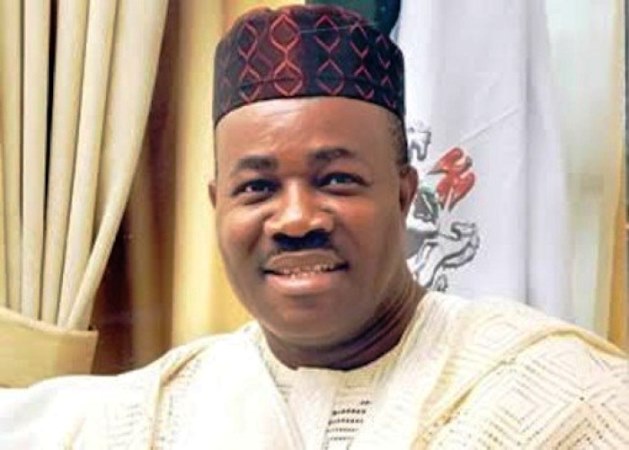
The NWC committee nominated Godswill Akpabio, Akwa Ibom, South-South, as the Senate President and Abass Tajudeen, Kaduna, North-West, as the Speaker of the House of Representatives.
This was disclosed by the National Publicity Secretary of the APC, Felix Morka, on Monday, May 8.
In the same vein, the NWC nominated Barau Jibrin from Kano, North-West, as Deputy Senate President and Ben Kalu, Abia, South-East, as Deputy Speaker.
The endorsement of the zoning formula for the 10th National Assembly followed a meeting held by the NWC on Monday to discuss the results of discussions and meetings with Bola Tinubu, the President-elect, and other stakeholders.
“The National Working Committee of the All Progressives Congress (APC) met today, Monday, May 8, 2023 to consider reports of consultations and meetings held with the President-Elect, His Excellency, Asiwaju Bola Ahmed Tinubu, other Party leaders and stakeholders on zoning arrangement for 10th National Assembly leadership positions.
“The NWC noted with respect the outcome of the meetings held between the President-Elect and the leadership of the NWC. The NWC called for further and better consultation with necessary stakeholders in order to assure the support of the aspirants to the National Assembly leadership positions and members of the Party nationwide,” Morka said.
The party urged its leaders, members, and all Nigerians to continue to work for the peace and progress of the country during and beyond the current period of leadership transition.
Meanwhile, the South-East Senate caucus has advised the President-elect, Bola Tinubu, to zone the position of Senate President to the region.
The South-East senators warned that Tinubu should be “conscious of the grave implications of zoning and endorsing a candidate for the position of Senate President from the South-South without any regard for the South-East as such a move will serve as a recipe for an injustice which will culminate to restiveness”.
Senator Ifeanyi Uba, who addressed newsmen on behalf of the Caucus, stated that the South-East senators are pleading with the incoming President to be aware of the current situation in Nigeria and ensure that the nation continues to prosper based on equality, unity, and justice.
THE Association of Nigerian Electricity Distributors (ANED) has expressed worries on the unstable power supply across the country, which they observed has dropped to 4,000 megawatts in the past three weeks.
The group said Nigeria needs to generate about 33,000mw to have reliable electricity supply.
ANED’s Executive Director, Research and Advocacy, Sunday Oduntan, said this in Yola on April 5 at a stakeholders’ workshop, which the association organised in collaboration with the MacArthur Foundation.
The theme of the workshop was, ‘Building consumer awareness and strengthening the customer service capacity of electricity distribution companies.’
Oduntan disclosed that the nation had not enjoyed more than 4,000mw of power supply for the past three weeks, while calling for increased investment in the power sector to address the problem.
He added, “In Nigeria, they say we have a population of 210 million and about 32 million households are connected to the grid. Nigeria has a heavy deficit. The rule of thumb all over the world on the production of electricity says you do 1,000mw per one million population for people to have uninterrupted electricity.
Executive Director, Association of Nigerian Electricity Distributors: Oduntan Sunday
“So, with 32 million people having access to electricity, meaning they are connected to an electricity source, you need to generate 32,000mw. Today in Nigeria, what we produce is 4,000mw. In the last three weeks, we have never done 4,000mw. So, we need 32,000mw to ensure stable electricity supply to every household connected to the grid.”
Oduntan said the Federal government had taken steps to ensure improvement in power supply since the unbundling of the Power Holding Company of Nigeria in 2013, but added that the problem remained that of cost recovery and profitability of investment on the part of the DisCos.
He regarded the power sector in the country today as different from that of 2013, saying, “What we collect till today as DisCos has never been up to the energy sent out. So, we have never been able to match the energy we receive with cash.”
The grant aims to tell visual stories about and by photojournalists from historically underrepresented communities.
The organisers are inviting photojournalists to submit proposals for stories that focus on and explore the systemic and underreported issues in their communities, including but not limited to racial justice, climate change, environmental justice, gender equality, and human rights.
Eyewitness Photojournalism Grant is extended to photojournalists worldwide, with a preference for journalists working within their own local communities.
Grants of $3,000 will be awarded to three applicants to support their visual reporting projects.
As part of this year’s program, recipients will also have the opportunity to be mentored by other visual and photojournalists.
The organiser says that they are seeking news media partners to collaborate with it on the distribution of selected work.
The deadline for the submission of applications is June 30, 2023. Interested applicants can apply here.