Home Blog Page 931

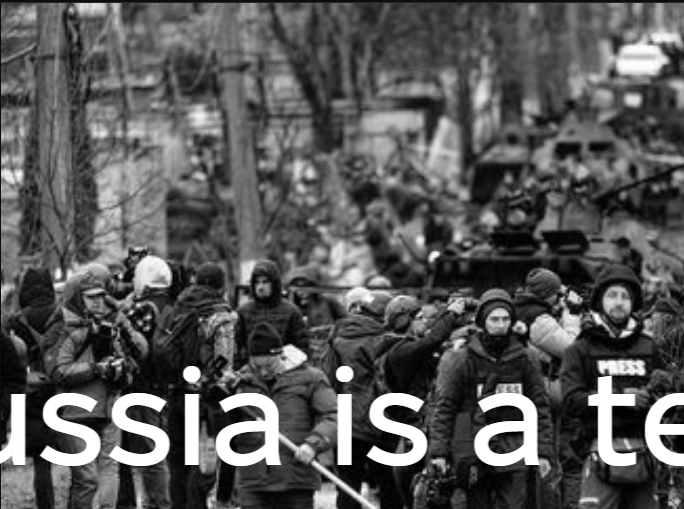
Registration open for Bucha journalism conference

THE Media Development Foundation and Ukrainska Pravda are inviting applications for the Bucha Journalism Conference.

The programme is slated for May 19, 2023, in Bucha, Ukraine.

The conference will honour the memory of the victims of the Bucha mass killings and reflect on the role of the media in times of war.

Through panel discussions on topics such as documenting war crimes, ethical aspects of war coverage, and challenges faced by both local and international media bureaus in Ukraine, the conference will foster a deeper understanding of the complexities and responsibilities associated with reporting in conflict zones.

Journalists, media experts and scholars worldwide can attend this event.

Registration is ongoing and interested applicants can apply here.

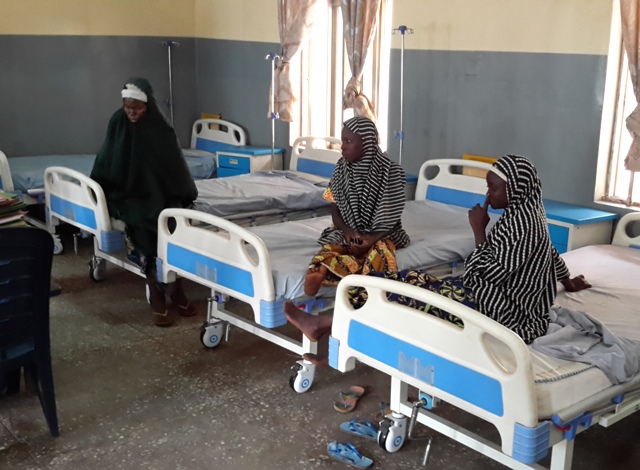
E-motive reduces severe bleeding after childbirth — Study

POSTPARTUM haemorrhage (PPH) remains a leading cause of maternal mortality globally as it affects an estimated 14 million women each year, resulting in around 70,000 deaths – mostly in low and middle-income countries. 

This figure is equivalent to one death every six minutes.

However, a study published on Tuesday, May 9, evaluated a series of interventions aimed at controlling postpartum hemorrhage and found a significant 60 per cent decrease in excessive bleeding.

The study which brought a new solution, known as E-MOTIVE, could provide a major solution in reducing deaths from childbirth-related bleeding, according to the study published by researchers from the World Health Organization (WHO) and the University of Birmingham. 

According to WHO, Postpartum haemorrhage (PPH) is the loss of more than 500 mL of blood within 24 hours after birth.

The Director of Sexual and Reproductive Health and Research at WHO, Pascale Allotey, said the impact of Postpartum haemorrhage around the world is tragic.

“Postpartum haemorrhage is scary, not always predictable, but absolutely treatable. Nonetheless, its impacts around the world are tragic.

“No woman should fear for her life when giving birth. Effective solutions to tackle postpartum bleeding need to be available and accessible so that all women can experience a safe birth and a healthy future with their families.”

The study involved over 200,000 women in four countries, of which Nigeria is inclusive.

A total of 80 secondary-level hospitals across the four countries Kenya, Nigeria, South Africa, and Tanzania, in which the patients underwent vaginal delivery, were randomly assigned to the intervention group or the usual-care group.

The WHO researchers highlighted three key challenges that contributed to maternal complications across the world.

“The first challenge is that postpartum hemorrhage is often undetected or detected late; thus lifesaving treatment is not promptly initiated. 

“The second challenge is delayed or inconsistent use of interventions for the management of postpartum hemorrhage. 

“The third challenge is that despite the availability of clear recommendations regarding postpartum hemorrhage and their wide dissemination, uptake is poor at the point of care.”

The researchers found that objectively measuring blood loss using a simple, low-cost collection device called a ‘drape’ and bundling together WHO-recommended treatments – rather than offering them sequentially – resulted in dramatic improvements in outcomes for women. 

The incidence of severe postpartum hemorrhage, defined as losing over a liter of blood after childbirth, decreased by 60 per cent, significantly reducing the risk of maternal mortality.

Additionally, there was a significant decrease in the frequency of blood transfusions required for managing bleeding, which is of particular importance in low-income countries where the availability and cost of blood are limited.

A researcher, Arri Coomarasamy, who led the trial said, “The new approach to treating postpartum haemorrhage could radically improve women’s chances of surviving childbirth globally, helping them get the treatment they need when they need it.

“Time is of the essence when responding to postpartum bleeding, so interventions that eliminate delays in diagnosis or treatment should be game-changers for maternal health.”

The recommended E-MOTIVE package includes early and accurate detection of PPH using a blood-collection drape and an immediate treatment bundle which includes uterine massage, medicines to contract the womb and stop the bleeding, intravenous fluid administration, an examination and, when needed, escalation to advanced care.

The research, according to WHO, responds to one of the top research priorities identified by more than 130 experts from over 50 countries at the first Global Summit on PPH convened by WHO and HRP in March 2023.

What does data say about Maternal Mortality in Nigeria?

According to a report by the World Health Organization, Nigeria’s estimated maternal mortality ratio was over 800 maternal deaths per 100,000 live births, with approximately 58,000 maternal deaths, in 2015.

The report stressed that a Nigerian woman has a one in 22 lifetime risk of dying during pregnancy, childbirth or postpartum/post-abortion; whereas in the most developed countries, the lifetime risk is one in 4,900.


READ ALSO:


In a recent 2023 news report, the United Nations Children’s Fund (UNICEF) said a new global maternal mortality report showed that 82,000 women in Nigeria die from pregnancy and childbirth-related complications every year.

UNICEF health chief in Nigeria Eduardo Celades disclosed the figure while presenting a report titled, ‘Trends in maternal mortality 2000 to 2020,’ during a media dialogue on COVID-19 and routine immunisation organised by the UNICEF Nigeria Office.

He said the figure translated to 225 deaths from maternal mortality every day, noting that the number of women dying from pregnancy-related causes in the country was very high.

Buhari began with ear problem, ending with tooth treatment in London  – Shehu Sani

A FORMER Senator who represented Kaduna Central in the Eight National Assembly, Shehu Sani, has accused President Muhammadu Buhari of abandoning Nigerian hospitals with their challenges and opting to seek care for his medical problems from the beginning of his administration till the end in the United Kingdom (UK).

In a tweet on Wednesday, May 10, the politician, activist and writer said, “The President’s tenure began with the ear treatment in London, and it’s ending with the tooth treatment in London. He is leaving behind a history of billions spent on the Villa Clinic, strikes by health workers, impending strikes by resident doctors and an exodus of health professionals.”

Screenshot of Senator Shehu Sani’s tweet accusing President Muhammadu Buhari of abandoning Nigeria’s health sector for the UK, where he has treated himself severally since he assumed office on May 29, 2015.

Sani reacted to a statement issued by the Special Adviser to the President on Media and Publicity, Femi Adesina, around midnight of Tuesday, May 9, where he said the President would spend an additional week in London to treat his tooth.

The ICIR reported how Buhari travelled to London on May 3 to attend King Charles’ coronation.

In his Tuesday statement, Adesina said, “President Muhammadu Buhari will be in London, United Kingdom, for an additional week, at the behest of his dentist, who has started attending to him.

“The specialist requires to see the President in another five days for a procedure already commenced.”

The ICIR reports that true to Sani’s claims, the National Association of Resident Doctors of Nigeria (NARD) recently threatened to strike next week over unmet demands, including the poor state of Nigerian hospitals.  

In 2018, The ICIR reported how President Buhari beat former President Umar Yar’Adua’s medical tourism record after spending 172 days outside Nigeria to attend to his health in the UK.

Many Nigerians and the World Health Organization are already scared over the brain drain of health professionals in Nigeria, arising from poor pay, insecurity and poor health infrastructures.

In one of its many reports on the brain drain, The ICIR revealed in 2021 how 9,000 doctors left Nigeria for the UK and other countries in two years.

The State House Clinic, which officials like Buhari could use, has also not been very functional.

In 2017, Buhari’s wife, Aisha, decried the poor state of the clinic, despite gulping billions in annual budgets. 

Speaking with The ICIR Wednesday morning, the President of Nigeria Dental Association, Adeyemi Tope, a doctor, said treating a tooth problem could require an emergency that would make the President remain in the UK.

“There are dental emergencies that can occur to an individual. Depending on where that emergency occurs and where the person is, it may be best to seek the nearest dental care. 

“This is because toothache is likely to be worse than the pain women experience when giving birth. Imagine he has an emergency toothache over there in London; it may not be fair for us Nigerian dentists to say that he should wait until he returns because we want to treat him.”

The ICIR reports that President Buhari will return to Nigeria few days to the end of his government, on May 29.

Transcorp delivers post-privatisation deals, as Otedola fights on

AMID the fuss over Femi Otedola’s divestment from the Transnational Corporation Plc (Transcorp), the company was, on Monday, May 8 at a meeting of the National Council of Privatisation in Abuja issued a discharge certificate for fulfilling its post-privatisation obligations for the Ughelli power plant in Delta state.

With the fulfilment, “Transcorp Power will no longer be subjected to post-privatisation monitoring,” the company said on Monday.

Vice President Yemi Osinbajo, who graced that occasion and presented the discharge certificate to Transcorp’s chairman, Tony Elumelu, said the “post-privatisation monitoring is an important aspect of the Federal Government’s privatisation programme.”

Otedola had on April 28 sold his stake in Transcorp in a top-secret deal 15 days after sparking interest in the company’s shares.

The unfolding drama saw Elumelu mop up more of Transcorp’s shares to raise his stake through HH Capital Limited to 25.58 per cent of the company’s total shares, The ICIR reported.

While the dust race by these billionaire rivals appeared not to have settled, Otedola, on Tuesday, May 9, reportedly opened up on the dealing.

“I offered to buy Transcorp Plc for N250 billion, but unfortunately, my offer was rejected,” Otedola said. “My goal was to maximise the company’s potential as a Nigerian conglomerate with a market cap of, at least, N2 trillion instead of the current N40 billion, but it seems some shareholders have a different vision.”

His plan on Transcorp might have been aborted, but some analysts view Otedola as a shrewd player with a penchant for acquiring viable stocks.

“The trend of his investment activity in the Nigerian capital market does appear that there is credence to the assertion people hold that he always cashes in and cashes out,” David Adonri, a capital market operator, said.

In December 2021, he acquired 2.5 per cent additional shares in FBN Holdings Plc to lift his total stake in the stock to 7.57 per cent, or 2.717 billion units, placing him as the single largest shareholder of FBN Holdings and well ahead of his then closest rival, Tunde Hassan-Odukale, chairman of First Bank of Nigeria Limited.

“He is more or less a trader. But we need some of those characteristics to bring the funds and help the stocks in the capital market appreciate,” an investment and portfolio analyst, Abel Ezekiel, said.

Meanwhile, with Otedola exiting, Elumelu seems to be consolidating on the Transcorp brand. Part of the post-privatisation deals he has achieved in quick turns is the commissioning of a 240mw Afam 3-Fast Power Plant, in Afam, Port Harcourt, on Tuesday, May 9.

Also, at the commissioning, the vice president hinted that the National Council on Privatisation (NCP) had chosen Transcorp Power as the preferred bidder for the Abuja Electricity Distribution Company, which the United Bank for Africa (UBA) had revealed a plan to sell to recover a $122m debt the company owed it.

Transcorp needs to maximise its capacity

Analysts who spoke with The ICIR believed that Transcorp was not yet maximising its potential as a conglomerate.

“Transcorp is a company with an excellent foundation and bright prosper; it does not need to do anything extraordinary to raise its profile,” Adonri, the executive vice chairman of Highcap Securities Limited, asserted.

He said, “If you look at the industry where it operates, it has a huge supply gap. I mean the energy and power industry in the natural business environment. Transcorp should be fully mobilised to explore the supply gap in products and services. The business future is very secure and bright.”

The chairman of the Progressive Shareholders Association of Nigeria (PSAN), Boniface Okezie, said Elumelu’s activity as an issuer in the capital market had been felt, but argued Transcorp should be in the direction of shares that are trading above N5 and paying dividends like N30,000 and N50,000, and not N2,000 or N5,000.

“The company has a lot of prosperity and things going for it, looking at its conglomerate – oil and gas, tourism, energy and power. So, their stock is supposed to boost and be investors’ next destination regarding market price and dividend payout,” Okezie added.

When in 2008 Transcorp offered its shares subscription at about N7, it rose to almost N15 that year before the meltdown, but it is now selling at below N2, Ezekiel said.

A publicly quoted conglomerate on the Nigerian Exchange Limited (NGX) with a diversified shareholder base of approximately 300,000, Transcorp has portfolio investments in the power, hospitality, and oil and gas sectors which comprises Transcorp Hilton Abuja, Transcorp Hotels Calabar, Transcorp Power, Transafam Power, and Transcorp Energy.

Elumelu has used his influence to add some assets to the company, Ezekiel said, but “this must be reflected in its performance on the Nigerian stock exchange.”

He added, “The company’s shares are not well priced considering the asset quality. How can a subsidiary be trading higher than a parent company?” Ezekiel pointed out.

A check by The ICIR showed that the share price of Transcorp Hotel stood at N7.45 relative to Transcorp’s N1.96 at the close of trading on Tuesday, May 9.

According to Ezekiel, these are the issues Otedola has brought to the fore. Transcorp cannot pay a 3k or 5k dividend like the insurance company, he said.

“These are peanuts. They are not good for the level of Transcorp trading in the asset it is parading,” he said.

However, the acquisition by Otedola has provided liquidity for the market. Some people who bought at N1.4 and sold at N3.12 could have used the proceeds to acquire new shares to benefit the market and investors.

Transcorp needs to be higher than other companies Elumelu has created and traded like multinational companies such as Nestle, Total Mobile and others. Ezekiel added. “This is nothing more than a slap on the face of investors.”

Transcorp Group emerges preffered bidder for Abuja DisCo

TRANSCORP Group has emerged the preferred bidder for the Abuja Electricity Distribution Company (AEDC). 

The Vice President of Nigeria, Yemi Osinbajo, disclosed this today while inaugurating the 240-watt Afam 3 power plant in Rivers state.

Osinbajo said that when the National Council on Privatisation (NCP) met, it formally approved Transcorp Power Consortium as the preferred bidder for the Abuja Disco.

He said, “I can say the last few days belong to Transcorp Power because at the meeting of the National Council on Privatisation, the meeting approved Transcorp Power Consortium as the preferred bidder of the acquisition of the Abuja Electricity Distribution Company.

“Only yesterday, the NCP formally delisted Transcorp Power Plc, formerly known as Ughelly Power Plc, from routine monitoring and evaluation by the Bureau for Public Enterprise (BPE), indicating yet another successful power investment.”

The vice-president lamented that a major problem of the country’s privatisation process, which started in 2005-2006, had been inadequate private investments and real cash injections.

Lauding the Transcorp Group, Osinbajo said, “From the time we started, indigenous firms such as Transcorp Power and Heirs Holding have been making significant investments such as this 100 per cent acquisition of installed capacity Afam Power Plc and Afam Three Fast Power Limited, jointly referred to as Afam GenCo. The acquisition cost is N105.3 trillion.”

The United Bank of Africa (UBA) had in December 2021 taken over the AEDC over the inability of its major stakeholder, Kann Consortium, to service the $122 million debt it owed the bank.

Kann Consortium had secured a loan in 2013 from the UBA to acquire the Abuja Electricity Distribution Company (AEDC), making it hold a 60 per cent stake in the DisCo.

However, in April 2023, the bank said it would be selling the AEDC to recover the $122 million debt.

Osinbajo further promised that the Federal government would continue to support investors to invest in Nigeria’s power sector.

He stressed that such support would lessen government’s spending on the sector and improve payment assurance to power sector value-chain players comprising generation, distribution and transmission companies.

Transcorp said in a statement it issued Tuesday after the commissioning of the new 240-watt turbine that with the already existing power plant residing in Afam, the commissioning brings the cumulative generating capacity of the plant to 1,000mw.

Osinbajo, at today’s event, urged gas producers and suppliers to have a fundamental rethink about supply security and proffer ways to ensure gas supply can improve and meet the gap and growing demand in Nigeria.

Hailing serial power investors and the entire Transcorp team for “yet another power sector investment”, the vice-president said, “I am confident that we have all that is required to create one of the best power markets. I am also confident that it will happen within our lifetime.”

The minister of Power, represented by the Permanent Secretary; Temitope Fashedemi, applauded the Transcorp Group for what he called its positive contributions to improving electricity generation in Nigeria.

“Afam Plc was taken over from the Ministry of Power with a capacity of 70mw. What I hear today is that already, capacity exceeding 100mw is being recovered from the plant,” he said.

He further expressed appreciation to the Transcorp team: “I would like to commend Tony Elumelu for driving investment in the Nigerian power sector across the value chain. Your team has bern to me the best in the sector so far.”

Over 106 court decisions yet to be implemented by ECOWAS states

MORE than 106 decisions reached by the Economic Community of West African States (ECOWAS) Court (representing 70 per cent), are yet to be implemented by the Member States, the President of the Court Edward Amoako Asante has said.

Asante added that 11 court rulings against ECOWAS have not been complied with.

He disclosed this on Tuesday, May 9, during the first regular session of the 5th Economic Community of West African States (ECOWAS) Parliament taking place in Abuja, Nigeria.

Asante condemned the non-compliance with the judgments of the Court but expressed optimism that the parliamentary session would present measures that will help raise the level of enforcement of the Court’s judgments.

The President pointed out that the Court has contributed significantly to strengthening some of the foundations of democracy, such as respect for human rights and protection of freedom of expression, by holding member states accountable for their obligations under international treaties.

Asante said that the recent democratic transitions in the three member states of Burkina Faso, Guinea and Mali eloquently demonstrated the fragility of democracy in the region and underscored the need for collective vigilance and coherent measures to protect it.

Meanwhile, the Speaker of the ECOWAS Parliament Sidie Tunis, expressed concern about the spread of terrorist activity in the Sahel, which had resulted in the deaths of innocent people, and slowed the pace of transition processes in Mali, Guinea and Burkina Faso.

“First, we have a responsibility to promote peace in our region, which can only be achieved by maintaining the structures and respecting the policies and protocols that we already have.

“Second, collective and immediate action is needed to address the challenges we face, including poverty, inequality, climate change and more,” Tunis said.

The Speaker added that ECOWAS will closely follow developments in Sierra Leone and Liberia as they prepare for the presidential and parliamentary elections in June and October, respectively.

On his part, the Chairman of the ECOWAS Commission Omar Touray, used the opportunity to congratulate Nigeria’s President-elect Bola Tinubu and express his commitment to work closely with him on all matters affecting the region.

Touray also praised Nigeria for its political maturity, which enabled the country’s presidential and parliamentary elections to be held peacefully.

“I would like to commend the government and people of Nigeria for their political maturity which made it possible to hold peaceful presidential and legislative elections.

“I take this opportunity to warmly congratulate the President-elect, His Excellency Mr. Bola Ahmed Tinubu, and to reiterate to him the Community’s full willingness to work closely with him on issues affecting our region,” he said

The first ordinary session of the 5th Legislature which began on May 8th will end on May 26th, 2023.

Nigeria’s Golden Eaglets 90 minutes away from earning 6th World Cup ticket

0

AS the quarter-finals of the ongoing 2023 U-17 Africa Cup of Nations begin today, Wednesday, May 10, Nigeria’s Golden Eaglets are a match away from earning a ticket to feature in this year’s FIFA UN-17 World Cup billed to commence in November.

A victory against their opponents, Burkina Faso on Thursday, May 11, in Algiers will secure a spot for the Golden Eaglets among the countries that will participate in the World Cup.

Apart from the host nation of each FIFA World Cup tournament that qualifies automatically, the remaining teams qualify through competitions organised by the six regional confederations.

The six regional confederation are Asian Football Confederation (AFC), Confederation of Africa Football (CAF), Confederation of North, Central America and Caribbean Association Football (CONCACAF), and South American Football Confederation (CONMEBOL).

Other are the Oceania Football Confederation (OFC), and the Union of European Football Associations (UEFA).

For Africa, four countries are to represent the continent during the FIFA World Cup and currently, eight teams are battling for the four slots at this ongoing AFCON tournament in Algeria.

‘No game will be easy’ – Golden Eaglets’ Coach Ugbade

Ahead of the quarter-final match, the Golden Eaglets’ Head Coach Nduka Ugbade admits that playing against Burkina Faso who defeated the defending champion Cameroon in the group stage will be a herculean task.

“The quarter-final matches will be very hard nuts to crack because that is the step that earns you the World Cup ticket. None of the four games will be easy. Our interest is Burkina Faso and we are working hard towards achieving success,” he said.

However, he said the team is well-prepared for the match.

“We had an interesting match with South Africa and it has prepared us well for further challenges in the competition. We learned a lot playing Zambia, Morocco, and South Africa – all strong teams – in the group phase and that was a good furnace for us to be a better squad.”

Nigeria will take on Burkina Faso at the Nelson Mandela Stadium, in Algiers, at 8:00 pm on Thursday.

Most MDAs not remitting withholding tax to FG – PwC official

FISCAL Policy Partner and Africa Tax Leader at Pricewaterhouse Coopers (PwC),Taiwo Oyedele, said most ministries, departments and agencies (MDAs) of the Federal government have not been remitting their withholding taxes to the government.

Withholding tax is basically an advance payment of income to be applied as tax credit to settle the income tax liability of the years of assessments to which the income that suffered the deduction relates.

Oyedele, who spoke on Arise Television Business Morning show programme today, regretted that such non-remittance was dealing a blow on the nation’s scarce resources, as its economic managers resorted to borrowing and overburdening those already in the tax net.

He called on the National Assembly to sanction heads of government agencies that were not effecting such remittances, which come mostly from government contracts and related businesses.

Oyedele, who spoke against the backdrop of the recently released Federal government’s 2023 Tax and Fiscal Policy, said the development could hurt businesses on the back of current economic hardship and high cost of ease of doing business.

He said, “It seems government is comfortable with the easier solution as regards hike in tax. However, a report from the Auditor-General of the Federation showed most MDAs are not complying with tax payments. They are not remitting withholding taxes that they collect to the government.”

The tax expert pointed out that the increases in tax in the fiscal framework were done without sufficient consultation with the industry professionals.

To him, without sufficient consultation with relevant business stakeholders, the success of the new fiscal regime would be hampered.

He also stressed the importance of tax harmonisation, insisting that the Federal Inland Revenue Service (FIRS) should be saddled with effecting such process.

The Federal government had introduced new Fiscal Policy Measures (FPM) for 2023, in a circular dated April 20, 2023.

The circular, signed by the minister of Finance, Budget and National Planning, Zainab Ahmed, was titled, ‘Approval For The Implementation Of The 2023 Fiscal Policy Measures And Tariff Amendments.’

The introduced additional excise duty ranged from 20 per cent to 100 per cent on alcoholic beverages, tobacco, wines and spirits.

In the new policy, Nigeria will begin to tax single use plastic, while five per cent telecommunication tax had been approved.

The taxes will take effect on June 1, 2023, immediately after the end of the Muhammadu Buhari administration.

The document read in part, “This is to confirm that His Excellency, Mr. President, has approved the implementation of the 2023 Fiscal Policy Measures made up of Supplementary Protection Measures (SPM) for the implementation of the ECOWAS Common External Tariff (CET) 2022 – 2026 and revised excise duty rates on alcoholic beverages, cigarettes and tobacco products, as well as introduction of excise duty on single use plastics (SUPs).

Super Falcons’ star on the verge of creating second FIFA World Cup history

0

CAPTAIN of the Super Falcons, Onome Ebi, is on track to surpass Christie Pearce, the former captain of the United States Women’s National Team, as the oldest participant in the history of the FIFA Women’s World Cup. 

On Monday, May 8, the well-travelled footballer turned 40 and is looking forward to breaking a global record this summer. Ebi has already made history as the first male or female African football player to compete in five World Cup competitions (2003, 2007, 2011, 2015 and 2019).


READ ALSO:
Victorious Super Falcons detained at Abuja airport by NCDC over COVID-19 tests

Angry man berates Super Falcons in Austria for representing a ‘terrorist govt’

Super Falcons Protest Non-Payment Of Allowances

Nigeria’s Oshoala is first African woman to win golden boot in Spain


Australia and New Zealand will co-host the ninth edition of the FIFA Women’s World Cup which is scheduled to take place from July 20 to August 20.

The Falcons, who are placed in Group B with the Olympic champions Canada, co-hosts Australia, and the Republic of Ireland, will attempt to improve on their performance from the previous competition, in which they were eliminated by France in the round of 16.

If Ebi features for coach Randy Waldrum led team, the World Cup will be a record-equaling competition for her as she will be the oldest player to compete.

At the 2015 FIFA Women’s World Cup, Pearce who was 40 years and 11 days old played for the United States against Japan, coming on as a substitute in the 86th minute.

Nigeria will take on The Les Rouges of Canada in their opening game on July 21, 2023, and Ebi would be 40 years and 73 days by that time, thus surpassing Pearce’s eight-year record.

Ebi will play her sixth Women’s World Cup in 2023, making her the first African to reach the milestone. She made her Super Falcons debut in 2003, and since then, the defender has played more than 100 matches and won four WAFCON championships.

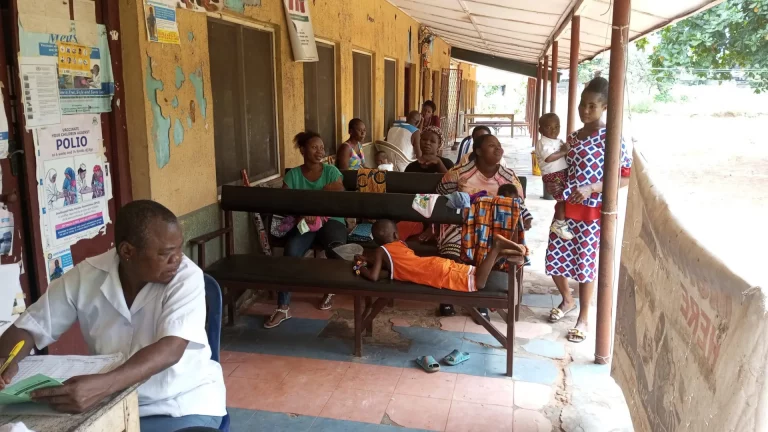
Nigeria ranks second worst country in maternal, child deaths in latest WHO report

A report by the World Health Organization (WHO) has ranked Nigeria as the country with the second highest number of maternal, neonatal and child deaths worldwide.

The report made public on Tuesday, May 9, shows Nigeria trailing India as the two leading nations where mothers and their babies are most likely to die.

Eight other countries with high maternal, neonatal and stillbirths are Pakistan, the Democratic Republic of the Congo, Ethiopia, Bangladesh, China, Indonesia, Afghanistan, and the United Republic of Tanzania.

The report shows that progress in improving mothers’ and babies’ survival has stagnated since 2015, with around 290,000 maternal deaths occurring yearly.

At least 1.9 million stillbirths occur, and 2.3 million newborns die.

The report titled ‘Improving maternal and newborn health and survival and reducing stillbirth: Progress Report 2023′, shows that in India, 788 women and children died ‘per thousands’ in 2020, while Nigeria trailed with 540.

In that year, India accounted for 17 per cent of global maternal, neonatal deaths and stillbirths, while Nigeria’s represented 12 per cent.

More women died in Nigeria from pregnancy-related issues than in India and any other country that year. Nigeria lost 82 women ‘per thousands’. 

Apart from India, which had 24 and was the country with the second highest number of maternal deaths, maternal mortality in Nigeria was more than in the remaining seven countries combined (71).

Stillbirths were highest in India (297), Pakistan (207)and Nigeria (181), neonatal deaths were also highest in the three countries – India (468), Nigeria (277) and Pakistan (257).

The report estimates there were a combined 4.5 million maternal, neonatal deaths and stillbirths in 2020.

“Sub-Saharan Africa and Central and Southern Asia are the regions experiencing the largest numbers of deaths, although across all regions, there is variation regarding the pace at which countries are progressing in their efforts to achieve the global 2030 targets. 

“The top 10 countries with the highest-burden account for 60 per cent of global maternal deaths, stillbirths, and newborn deaths, and 51 per cent of the world’s live births.”

The report notes that global progress in reducing maternal and newborn deaths and stillbirths has slowed during the last decade. 

Speaking on the report, WHO said that based on current trends, more than 60 countries might miss the maternal, newborn and stillborn mortality reduction targets in the Sustainable Development Goals by 2030. 

It blamed the crisis on the COVID-19 pandemic, rising poverty, worsening humanitarian and lack of funding by some countries.

Speaking on the report, the Director of the Technical Division at the United Nations Population Fund (UNFPA), Julitta Onabanjo, a doctor, said the death of any woman or young girl during pregnancy or childbirth is a violation of their human rights. 

Screenshot of WHO report naming Nigeria as the second country with the worst maternal, neonatal deaths and stillbirths globally

“It also reflects the urgent need to scale up access to quality sexual and reproductive health services as part of universal health coverage and primary health care, especially in communities where maternal mortality rates have stagnated or even risen during recent years. 

“We must take a human rights and gender transformative approach to address maternal and newborn mortality, and it is vital that we stamp out the underlying factors which give rise to poor maternal health outcomes like socio-economic inequalities, discrimination, poverty and injustice” she added.

In 2017, The ICIR reported how chaotic maternal health policies in Nigeria hurt women.

On May 5, The ICIR also reported UNFPA advising the country to engage 70,000 more midwives to tackle its maternal and child deaths.

Multiple reports published by The ICIR, including here and here show the depth of Nigeria’s maternal and child deaths crisis.