Home Blog Page 953

FCMB reports 1,368% rise in fraud cases in Q1

FCMB Group Plc posted a 1,368.47 per cent rise in fraud and forgery related matters in the first quarter (Q1) of this year, the bank’s financial statement for the period ended March 31 has shown.

According to the report, fraud and forgery expenses amounted to N329.16 million in Q1, compared to N22.42 million posted in Q1 of 2022.

Findings by The ICIR showed that fraud and forgery expense in the review period was much higher than the N123.08 million the bank reported for the full year ended December 31, 2022, which rose from N89.86 million in December 31, 2021.

“Existing controls have been strengthened to address the identified lapses and the Group continues to collaborate with other stakeholders, including regulators to curb the spate of fraud, including cyber risk exposures, which has escalated in recent times across the industry because of remote operations, increased automation and migration of customers to alternate channels,” FCMB Group stated.

A public affairs commentator and finance expert, Bala Zakka, told The ICIR that fraud and forgery expense is a term used by banks in their financial statement to report cases already confirmed and yet to be ascertained.

“Once it is a fraud case, it has already been confirmed and the loss must have happened. But forgery is a case of probability until forensic investigation is conducted to ascertain its truth. But once it is true, it is then transferred completely to fraud cases,” Zakka said.

He explained that in a forgery situation where investigation is conducted and it was discovered that it was not real that the expense income can be returned.

He said, “Generally, when you put fraud and forgery in a financial statement, you make provisions for their recording, and at that the items are already regarded as losses.

“Companies make provision for all their expenses before arriving at profit before tax (PBT), whether real fraud or not because whatever is reported as PBT is what they must pay compulsory tax on.

“Every other thing the company needs to take care of is put under expenses,” Zakka further explained.

He, however, noted that fraud and forgery are issues inherent within a company’s system, which are most likely perpetrated by outsiders with the connivance of insiders.

A lecturer at the University of Lagos, Abi Noruwa, said fraud and forgery cases can be like corruption or concealment of information.

Noruwa said, “Forgery is a term that accountants used to express misplacement of funds, not well utilised or anything that is outside of bad debt.”

He added that fraud and forgery are misappropriation by staff of the banks with the involvement of outsiders.

In its latest report on fraud and forgeries in the Nigerian banking industry, Fitc Nigeria Limited, a technology-driven firm, revealed that a total of 19,314 cases of fraud were reported in the third quarter of 2022, which amounted to N9.62 billion.

Banks ought to improve their internal control measures to proactively prevent fraud, Fitc recommended.
‘Nigerians indirectly paying for CBN’s unregulated lending to FG through high inflation’

NIGERIAN’S are indirectly paying for the Central Bank of Nigeria’s (CBN’s) unregulated over-lending to the Federal Government through raging inflation, says an economist,  Adetilewa Adebajo.

The CBN has through the lending window, officially called Ways and Means Advances, lent the Federal government the sum of N23.7 trillion, which the borrower is struggling to repay.

Adebajo, the chief executive officer of CFG Advisory, said the lending had been pushing up Nigeria’s inflation rate and making cost of lending to banks go higher.

The economist, discussing the economic challenges before the incoming administration of Bola Tinubu Wednesday on Arise Television, stressed the importance of institutional reforms of the CBN, Ministry of Finance and the Ministry of Industry, Trade and Investment to drive economic growth.

He said, “There has to be alignment of monetary and fiscal policies. Lack of it was the greatest undoing of the current administration.

“Right now, the economy is not attracting enough capital inflow because of how poorly it has been managed. There is an underperformancce of capacity even when Nigeria remains Africa’s largest economy.”

On the danger the Federal government’s massive borrowings from the CBN constituted to the economy, Adebajo maintained that the inability to repay was responsible for rising inflation, rising cost of borrowing, and crowding out of the private sector from business.

The Federal government had at some point sought to securitise the debts, but economic experts condemned the move as unwise economically.

Adebajo advised the Federal government to adopt options within the Debt Management Office (DMO) Act to refinance N23.7 trillion of Nigeria’s total debts, instead of securitising it.

He proposed a resolution trust, a special purpose vehicle (SPV) backed by legislation within the current DMO Act and framework for refinancing of the nation’s burgeoning debts, as against securitising the ways and means debt financing on the CBN balance sheet.

He suggested that the Federal government should, as a matter of urgency, stop financing the country’s debts through ways and means, which he described as “illegal.”

The economist advised the President-elect to ensure proper coordination of the economic team, saying Tinubu himself should, in fact, take charge of the process.

He expressed concern that the CBN had, as an institution, become weak, pointing out that its Governor violated the CBN Act without any consequences.

“The institution has been weakened, and its integrity needs to be restored,” he asserted.

Adebajo said Nigeria was a $1 trillion economy underperforming because of productivity and human capacity not impacting the economy. “Once the economy is growing at 7.5 per cent annually, it would solve job creation problems,” he posited.

He said the next President’s focus should be structural reforms, concessioning, and opening up of different aspects of the economy.

“For instance, the government does not need to be running airports and too many other things,” he said.

The ICIR had reported how the apex bank had been violating Section 38 of the Act governing it by overlending the sum of $49.2 billion to the Federal government through Ways and Means.

Section 38(2)of the CBN Act 2007 provides that lending to the government should not exceed five per cent of the previous year’s actual revenue.

The ICIR checks showed that with respect to revenue accruals, lending to the Federal government should not have exceeded $450 million, but had spiked to $49.2 billion, through CBN’s Ways and Means.

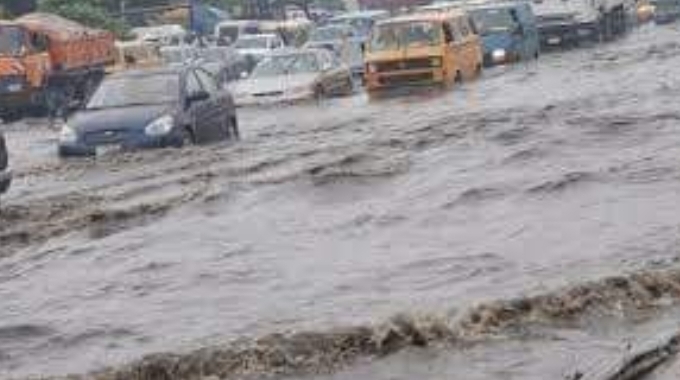
Flooding: Climate expert highlights worrisome trends in Nigeria

A CLIMATE expert, Olumide Idowu, has highlighted some factors responsible for flooding in Nigeria.

Idowu, who’s the founder/CEO International Climate Change Development Initiative said a lot of communities and citizens are facing the impact of climate change and flood risk in the country as a result of negligence on the part of government and residents.

He disclosed this on Wednesday, April 26, during a Twitter Space on the theme: ‘Flooding: Analysing Nigerian Government Preparedness’, organised by The ICIR.

“The issue of climate change is just a statement that helps us to understand that the weather or the climate is changing, then the flood aspect of it is the impact climate change is causing . And if you look critically, the only trend notable remains the amount of precipitation, changing rainfall patterns – which leads to more intense and frequent flooding.

“This actually depends on the duration, intensity, frequency, fluctuations and rainfall but the bottom line here is where there’s conversation on climate change then we start talking about what are the impacts and the effects.

“Another attribute that we need to look at is the trend in the global rise of temperature which has also led to sea level rise which we see in the South-West of Nigeria.”

Idowu attributed the causes of flooding to urbanisation, water engineering, improper waste disposal and unauthorised construction of waterways in the country.

According to him, roads and major cities lack the right drainage, a situation which he blamed on government negligence.

He added: “It’s also very important that we also talk about an uncoordinated town planning outlook because when you look at the risk impacts and look at how people are preparing, there’s a need for planning. So the major thing among them is the drainage system. And many roads in major cities lack the right drainage capacity because of citizen impact or the government impact which has resorted to a lot of overflow and that’s why you see a lot of overflow from the sea level through the community that’s closer to the seaport.”

Idowu also noted that Nigeria needs to build capacity to contain the flow of water, adding that the kind of drainages in some flood probe areas are not adequate.

“It’s also very important to note that no matter how you push those water, they will find a way back. In some parts of Nigeria the drainage channels remain waterlogged because a lot of land has been used to build houses even the normal pathway for drainage systems has been taken away and this tells us a story of collective negligence from the people and from the government.”

Speaking on indiscriminate disposal of waste, he explained that it is one of the activities that contributes to blocked drainage systems in the country .

He also said that the government’s failure to pay attention to some activities in many communities is another major factor that contributes to flooding.

“When people see that rain is coming, they put their waste into the drainage system and that’s why you see a blockage of drainage system and you see all these developers building houses everywhere and in small places causing a lot of havoc to the people,” he added.

Lagdo Dam not entirely responsible for 2022 flooding — NEMA

THE National Emergency Management Agency (NEMA) has said the Lagbo Dam in Cameroon was not entirely responsible for the flooding that ravaged many parts of Nigeria in 2022.

He said most of the water that caused flooding was not from the Lagbo Dam, adding that the contribution from the dam to Nigeria was only in some parts where the water from the river passed.

NEMA spokesman Manzo Ezekiel disclosed this on Wednesday, April 26, during a Twitter Space on the theme: ‘Flooding: Analysing Nigerian Government Preparedness’, organised by The ICIR.

Ezekiel said there was serious flooding in Lagos and Jigawa where Lagdo water didn’t flow through, adding that the heavy rainfall in 2022 was the major cause.

He said: “The flood that happened last year didn’t happen only along the River Benue belt. We have a flood that happened somewhere in Jigawa which is not lying along the Benue. So we can’t blame the flood of last year entirely on the release of water from Lagdo Dam.

“By the way, in the past, almost every year the Lagdo Dam authority has been releasing excess water and it’s in our interest that they release the excess water because if the dam in Lagdo should break the devastating effect down the river will be worse than the thing we have witnessed. We also have floods that happened in parts of the country like Lagos too and not because of Lagdo.,,

Ezekiel added that NEMA is currently working to mitigate the risk effect of flood this year based on the predictions that were released by the Nigeria Meteorological Agency (NiMet) and Nigeria Hydrological Services Agency (NHSA).

“To manage the flood, it has to be on a continual basis because certain things that you do this year to avert or mitigate the occurrence of flood this year if done next year, it may aggravate the occurrence of flood next year.

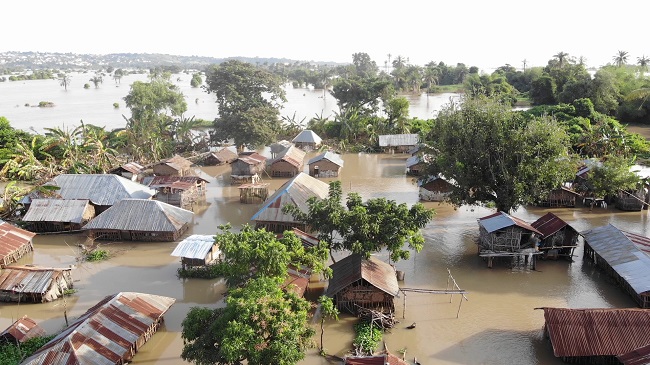
Flooded area
Flooded area

“So the forecasts that we are working with this year are based on the predictions that were released by NiMet and the annual flood outlook that was issued by the Nigeria Hydrological Services Agency. These are the two agencies of government with the mandate of forecasting releasing vital information concerning the rain pattern and the water content of the soil for the year.”

He also reiterated that Nigeria could witness a worse incident of flood in some parts of of the country this year as NiMet already forecasted average and above rainfall in some states.

“So what we witnessed last year could be worse because in some parts of the country, it has been forecasted that they will witness average and above average rainfall. I am talking about places like coastal areas particularly around rivers, Bayelsa, Akwa ibom, Delta and Cross River.

“The amount of expected rainfall on this side of the country is going to be as high as 2,700mm or even above and this is the amount of rainfall that some parts of the country record over a period of three years. Now we are expecting this amount of rainfall in just one year along these coastal areas.”

Ezekiel added that people living around places where high rainfall has been forecasted must be aware and begin to plan ahead to avoid trouble.

He added that: “We have other parts of the country that have been forecasted to have average and below rainfall. I am talking about states like Yobe, Jigawa, Kano, Bauchi, Kaduna and the FCT.”

The ICIR reported that in 2022, Nigeria experienced the worst flooding in over a decade.

The country has been recording seasonal flooding, which occurs during the rainy season that starts in April and runs till October, but in some years, continues until the end of November.

Apart from the reported deaths, more than 3.3 million persons are estimated to have been affected nationwide, and 1,427,370 persons displaced.

According to the National Emergency Management Agency (NEMA), floods impacted 35 states in Nigeria. The highest number of affected individuals were recorded in Anambra, Jigawa, and Bayelsa states.

In Bayelsa State specifically, the government reported that approximately 700,000 individuals were displaced from 300 communities and villages across five out of eight local government areas due to flooding caused by heavy rainfall.


PSC dismisses three officers, demotes five others

0

THE Police Service Commission (PSC) approved the dismissal of three police officers and demotion of five others on Wednesday, April 26.

A statement released by Head, Press and Public Relations of the PSC, Okechukwu Ani, said the approval was given during the 20th Plenary Meeting of the Commission, in Abuja.

The three officers dismissed were Assistant Superintendents of Police (ASPs) while the five others demoted were an Assistant Commissioner of Police, Chief Superintendent, two Superintendents and one Assistant Superintendent .

“The Commission also approved the punishment of severe reprimand to an Assistant Commissioner of Police, a Chief Superintendent of Police, four Superintendents, two Deputy Superintendents and 12 Assistant Superintendents,” the statement noted.

One superintendent and five assistant superintendents were also reprimanded.

The Plenary also approved the promotion of 109 senior staff.


READ ALSO:


The statement added that disciplinary matters in the Police Force will be given urgent attention.

“The Chairman also called on the Police to ensure that they work within the established laws guiding their operations. He assured them that henceforth disciplinary matters will be handled with dispatch so that Officers who are found wanting will serve their punishments while those who are exonerated are cleared to continue with their career progression without hindrance,” the statement said.

In October 2022 the PSC approved the dismissal of seven senior officers, and reduced the ranks of 10 others for gross misconduct.

Flooding: 23 communities on danger list in Ogun, Lagos

THE Ogun State government has warned that 23 communities in the state and border towns in Lagos are likey to experience severe flooding this year.

Commissioner for Environment, Ola Oresanya, gave the warning on Wednesday, April 26, at a press briefing on the state’s Annual Flood Alert.

Affected communities are Onikoko, Sokori and Arakanga areas in Abeokuta, Owa and Yemule riverbanks in Ijebu-Ode, Eruwuru in Sagamu, Ebute Kimobi in Ijebu East, Isaka Owode in Ado Odo Ota, Owode, Igijo, Ilaro and Ijoko.

The communities will experience the first flash floods due to heavy rainfall between April and July, according to the commissioner.

The second season of downpours between September and November will have a prolonged impact on wetlands such as Alagbole, Akute, Isheri, Warewa, Oke-Afa, Mowe, Ibafo, Kara, Onihale, Ebute Kimobi, and Riverside Estate. 

The commissioner said these areas would witness coastal flooding due to the tidal lock of the Ogun River by Lagos Lagoon from a natural rise in sea level, coupled with the possible release of excessive water from the Oyan dam.

He urged residents of these areas to prepare to relocate temporally when necessary.

 Oresanya recalled the unprecedented 2022 flooding in Nigeria, where over 600 lives were lost, and about 2.4 million people were displaced.

In February,The ICIR reported that 32 states, including Ogun and Lagos, are at flood risk in 2023.

In his Wednesday briefing, the Ogun commissioner commended the leadership of the state Governor Dapo Abiodun for ensuring “environmental best practices”, which he said led to the little impact the 2022 floods had on the state.

He appealed to residents to desist from any act capable of inhibiting the free flow of water.

“Residents are advised to avoid dumping waste into drains, streams or rivers and patronise the reliable means provided by the Ogun State Waste Management Authority (OGWAMA) and the Private Sector Participants (PSP). 

“Residents are advised to desist from the temptation of buildings on run-off routes and placement of temporary structures and containers or extension of business premises on top of drains in markets and public places. Also, there’s a need for caution on other man-made problems such as the illegal dredging of sand along the stream courses, especially in developed environments, uncontrolled agricultural practices, building on floodplains of streams/rivers and non-adherence to travel advice during rainfall.” 

 Besides, the commissioner advised communities in flood-prone areas to avoid drinking water from unprotected wells and boreholes to avoid outbreak of diseases due to possible contaminations of the wells.  

“In realisation of the inter boundary impact of flooding, we wish to reassure residents of the state that we have effective collaboration with the management of Ogun-Osun River Basin Development Authority (OORBDA) and the neighbouring States of Lagos and Oyo, especially as it relates to the release of water from Oyan Dam. The residents will be duly informed ahead of time whenever OORBDA wishes to release the detained water beyond the daily thresholds for safety reasons.” 

While appreciating the Presidential Committee for the Development of a Comprehensive Plan of Action for Preventing Flood Disaster for touring the state and the “positive impact” of the Nigeria Erosion and Watershed Management Project (NEWMAP) intervention projects in the state, Oresanya called for more funding support to implement remediation of most of the gully challenges in the state.


Waldo Proffitt Award honors excellence in environmental journalism

THE Zimmerman School of Advertising & Mass Communications at the University of South Florida invites entries for the 2023 Waldo Proffitt Award for Excellence in Environmental Journalism in Florida.

The award recognises distinguished examples of reporting and commentary about environmental issues in Florida.

The Waldo Proffitt Award was established in 1998 by friends of Waldo Proffitt, a former editor of the Sarasota Herald-Tribune. The award is made possible by the Waldo Proffitt Scholarship Fund of the Community Foundation of Sarasota County, Inc.

The $1,000 award will be given for outstanding achievement in a story or series of stories, commentary, or editorials in 2022.

Entries by an individual or team may include distinguished local reporting of breaking news, distinguished investigative reporting presented as a single story or series, distinguished explanatory reporting that illuminates a significant and complex subject presented as a single story or series, distinguished commentary or editorial writing, or a combination of these forms.

Works must have been published or aired in 2022 by a Florida newspaper, TV news station, radio station, or digital news site.

Print and broadcast journalists and news organisations are eligible for an award.

The deadline for the submission of entries is May 5, 2023. Interested applicants can apply here.

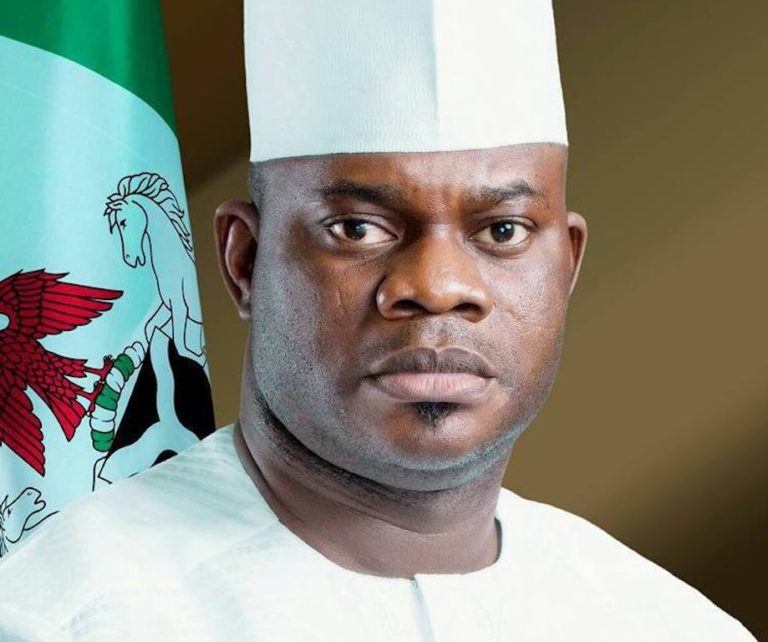
Asset forfeiture: Court strikes out EFCC’s suit against Yahaya Bello

0

A FEDERAL High Court in Lagos on Wednesday overturned an interim forfeiture order that the Economic and Financial Crimes Commission (EFCC) got to confiscate 14 assets reportedly belonging to Kogi State Governor Yahaya Bello.

Justice Nicholas Oweibo struck out the suit on the grounds that Section 308 of the 1999 Constitution forbids the institution of any criminal or civil proceeding against a serving governor or the President.

The court further ordered the EFCC to publish the ruling in two national publications so that interested parties might respond and argue that it should not be deemed absolute.

The interim forfeiture order was sought to be vacated, but Bello filed a notice of intention to resist and an application after the preservation order was published.

Bello based his appeal on the argument that the listed property was not obtained via the commission of an illegal act because it was acquired before he was elected governor of Kogi State and could not have been proceeds of public funds.

He added that the EFCC cannot file any civil or criminal charges against him because of Section 308 of the Constitution.

The governor also argued that the EFCC’s lawsuit was filed illegally on the grounds that the anti-graft agency was blatantly disobeying a state high court ruling prohibiting it from looking into any accounts of the Kogi State Government until the Motion on Notice was decided.

He claimed that the Commission made false statements to obtain the interim forfeiture order.

Bello added that because the disputed properties were purchased before he was elected governor of Kogi State, the Proceeds of Crime Act could not be applied retroactively. 

He claimed that the Supreme Court was hearing arguments over the legality of the Proceeds of Crime Act 2022.

Regarding jurisdiction, he said the individual concerned is based in Lokoja, and the properties named are in Abuja, Kogi, and the United Arab Emirates (UAE).

He added that the suit should have been filed in either Abuja or Kogi State. Therefore, he requested that the lawsuit be dismissed for lack of jurisdiction.

In response, Rotimi Oyedepo, SAN, the attorney for the EFCC, stated that the applicant had not presented any evidence to the court to persuade it to overturn the decision.

He claimed that, in contrast to the applicant’s claims, neither the Kogi State High Court nor any other Nigerian court had prevented the EFCC from performing its constitutionally mandated tasks.

In his ruling, Justice Nicholas Oweibo ruled that the court lacked jurisdiction to hear the case because Section 308 of the Constitution shields a sitting governor from civil or criminal prosecution.

The court had, on February 22, made an interim forfeiture order following an ex parte motion to confiscate 14 properties and firms in Lagos, Abuja, and the United Arab Emirates, as well as N400 million recovered from one Aminu Falala.

When the matter came up, counsel for the Kogi governor, Abdulwahab Mohammed, moved his application, praying that the interim order be vacated.

Mohammed, while moving the application, stated that about the third quarter of 2021, the EFCC approached the court to freeze Kogi State’s account in Sterling Bank with N20 billion salary bailout loan allegedly hidden in it.

He said that when the Kogi State government called Sterling Bank, the bank denied that such an account existed and that they challenged the freezing order made by Justice Tijjani Ringim.

Mohammed said instead of apologising, the EFCC issued a press release stating that the money had been returned to the Central Bank of Nigeria.

The SAN said that following that incident, the Kogi State government approached a state high court, which then restrained the EFCC from going after the state until the determination of the substantive suit.

Mohammed said the order of the Kogi State High Court restraining EFCC from taking any step against the state government was still subsisting.

“The EFCC, in flagrant disregard of the said order of the Kogi State High Court and a pending appeal, arrested one Ali Bello, an associate of the Kogi State governor, on November 29, 2022.

“The EFCC, in flagrant disobedience of the subsisting order of the High Court of Kogi State, interrogated the said Alli Bello and coerced him to oblige them with information pertaining to most of the properties listed in the order of this honourable Court made on the 22nd of February, 2023.

“The said Ali Bello, aggrieved by his illegal arrest and forced interrogation, filed a fundamental rights enforcement application at the High Court of Kogi State against the EFCC.

“That the High Court of Kogi State, in a judgment delivered on January 12, 2023, granted all the reliefs sought by the applicant and made an order declaring his arrest, detention and interrogation illegal and unconstitutional and further made an order of perpetual injunction restraining the EFCC from further arresting, detaining, harassing and intimidating the said Ali Bello.

“He, therefore, urged Justice Oweibo to reverse the freezing orders and return the properties to the governor.

The ICIR reported in December 2022 that the EFCC arraigned Ali Bello, identified as a nephew of Yahaya Bello, governor of Kogi State, before a Federal High Court in Abuja, alongside one Dauda Suleiman, on a 10-count charge of alleged misappropriation and money laundering before Justice James Omotosho.

The Commission stated that the pair, along with one Abdulsalami Hudu, a cashier at the Kogi State House of Assembly who is now at large, took N10.2 billion for personal use out of the state’s coffers.

However, the accused entered a “not guilty” plea to the accusations.

Malnutrition cases worsening in Borno, says MSF

0

THE Médecins Sans Frontières/Doctors Without Borders (MSF), an international medical organisation, has raised the alarm over rising cases of malnutrition in Borno State.  

In a statement mailed to The ICIR on Wednesday, April 26, the organisation said its facilities received more malnourished children since January 2023 than in previous times.

The alarm followed a similar outcry by the MSF in March, where it said that internally-displaced persons (IDPs) claimed the Nigerian government abandoned them.

On Wednesday, the organisation said the number of admissions of malnourished IDP children since the start of 2023 was the highest its teams in Borno State had recorded for the period preceding the annual ‘hunger gap’. 

MSF described the annual hunger gap as when food stocks from the previous harvest traditionally run out and malnutrition levels peak.

Poor funding has impeded the efforts to contain the problem, as MSF argued that only 16 per cent of the funds requested by the nutrition cluster was available. 

The organisation noted that a bigger crisis looms if tiers of government and other stakeholders do nothing to save the situation. 

“The team at MSF’s Nilefa Kiji therapeutic feeding centre in Maiduguri have seen a surge in admissions for both moderate and severe acute malnutrition. In January, around 75 children were admitted every week for severe malnutrition – around three times the average for the same period in the past five years. By early April, the weekly figure had risen to close to 150, twice that of the same time last year.”

MSF medical coordinator Htet Aung Kyihe said a massive increase in malnourished children called for malnutrition prevention and treatment activities to be scaled up immediately to avoid a catastrophe.

 According to Kyi, the current trajectory has been unprecedented since 2017, when MSF began interventions in the state.

 “The number of weekly admissions is two to three times higher than at the same period over the past five years – and it’s still rising. 

“Last year, we sounded the alarm in June when admissions skyrocketed at the start of the hunger gap, but this year, we are already seeing alarming numbers while we are still weeks away from the pre-harvest shortage period. The clock is ticking for action if we want to avoid a catastrophe,” added Kyi.

 The organisation explained that the number of patients it had treated for severe malnutrition exploded in 2022, with over 8,000 children hospitalised for intensive nutrition care. 

MSF project coordinator in Maiduguri, Gabriele Santi, said food aid alone would not be enough to save the situation, adding that authorities and aid organisations needed to immediately ramp up malnutrition-related activities and increase bed capacity in intensive therapeutic feedings centres.

“From early January to April 20 2023, 1,283 malnourished children were admitted for intensive hospital care at the MSF feeding centre – about 120 per cent more than from the same period last year.

“Next to this nutrition emergency in Maiduguri, MSF teams are also responding to large-scale health and malnutrition crises elsewhere in northwest Nigeria, working in 32 outpatient therapeutic feeding centres and ten inpatient therapeutic feeding centres in Kano, Katsina, Kebbi, Sokoto and Zamfara states. Last year MSF treated 147,860 children with severe acute malnutrition across northwest Nigeria.”

Media workshop focuses on marine pollution reporting

Internews’ Earth Journalism Network, with support from the Paul M. Angell Foundation, is offering a virtual media workshop covering marine pollution.

The workshop seeks to deepen journalists’ knowledge of the various sources of marine pollution and governance measures aimed at combating them.

During the workshop, journalists will learn about the sources of marine pollution; experts will lead sessions on ocean governance, international treaties, and other regulatory measures to curb marine pollution; and participants will discuss storytelling techniques.

The three-day virtual workshop will be held June 20, 21, and 22, 2023.

Participants who attend all three days of the workshop will be eligible to apply for a story grant to produce journalistic work following the workshop.

Applications are open to journalists working in any medium (online, print, television, radio) and other expert media practitioners with professional reporting experience and a history of covering environmental issues.

The organiser says they encourage applications from freelance reporters and staff from all types of media organisations – international, national, local, and community-based.

The deadline for the submission of the application is May 15, 2023. Interested applicants can apply here.