AFTER the leaked audio conversation allegedly between Peter Obi, the Labour Party (LP) presidential candidate for the 2023 presidential election, and David Oyedepo, the founder of Living Faith Church (Winners Chapel), The ICIR has observed conflicting rebuttals from Obi’s team.
A Nigerian media platform, Peoples Gazette, had published an exclusive report and audio conversation alleging that Obi solicited the support of Oyedepo to get votes from Christians in South-West ahead of the March 25 presidential election.
“Daddy, I need you to speak to your people in the South-West and Kwara, the Christians in the South-West and Kwara,” Obi said in the audio reportedly obtained by The Gazette.
“This is a religious war,” the audio quoted Obi to have told Oyedepo.
The leaked phone conversation, which was published on April 1, caused a stir among Nigerians, with a large number of people expressing outrage over what they perceived as Peter Obi’s undisclosed religio-political agenda. Some people also doubted the leak, arguing that it was created with Artificial Intelligence (AI).
Peter Obi, who secured third place in the recently concluded presidential election, has consistently presented himself as an open-minded candidate who was running not on the basis of his ethnic or religious background, but on his commitment to promoting national progress.
While some Nigerians are speculating that the leaked audio may have been generated using AI that can be used to mimic human voices, others have pointed out some inconsistencies in the conversation as evidence that the audio is not authentic.
For instance, some Twitter users argued that the audio must have been created by AI tools like Microsoft AI tools such as Vall-E and Eleven Labs.
However, an analysis using Deepware, an AI tool used to detect alterations in audios and videos doesn’t reveal any alteration in the audio but the effectiveness of the software is still under question.
In addition, some individuals raised doubts as to why the recording began before Oyedepo answered the call, as well as why Obi stated Onitsha as his polling location instead of Agulu, his place of origin.
But findings showed that Obi was actually in Onitsha two days to the March 25 presidential election, lending further credence to the audio’s potential authenticity.
I've just arrived in Onitsha for several engagements, including my meeting with the United Nations Team visiting Nigeria.- PO pic.twitter.com/5yFa8ZYDH0
Controversial rebuttals: Private audio conversation or deepfake ?
Rather than debunking the purported leaked audio, the spokesman for the Labour Party Presidential Campaign Council (PCC), Kenneth Okonkwo, quickly weighed in and said Obi was simply asking Oyedepo to help him pass a message to voters.
Okonkwo, who described the audio as “a private conversation between the duo”, said Obi was merely asking Oyedepo to mobilise support for him ahead of the election.
His statement read, “Our attention has been drawn to the publication of this audio tape of private conversation between Peter Obi and Bishop Oyedepo. It is not surprising that these political criminals are trying to spin the conversation as if Obi was making a religious statement.
“Firstly, the context of the conversation was aptly put by Bishop Oyedepo when he said, “All Nigerians have equal stake in this nation; nobody has the right to claim that he is dashing something to someone.”
“Peter Obi was simply urging the Bishop to help him push this message of equal stake of all Nigerians in the Nigerian project to his people and the christiandom because the politicians of the other party is carrying on this campaign as if it is a religious war.
“To drive home this point, he informed him that he visited the traditional ruler of Offa, the Olofa of Offa, who is a Muslim, but who advised Obi to get the support of Oyedepo and be assured of his own support. No politician has ever visited the Olofa of Offa. It is clear to everybody that the APC political party that has a Presidential Candidate, Vice Presidential Candidate, Senate President, Speaker of the House of Representatives, Deputy Speaker of the House of Representatives, National Chairman of the Party all from one religion at a time the CJN is a Muslim is the Party that has declared religious war on Nigerians, and we must all rise up together to fight this unconstitutional act of religious intolerance of other religions by APC.
“I went around with Obi on campaign train and never saw him discriminate against any religion. Of course, he can’t because his Vice is a Muslim, unlike APC. I resigned from APC because of their religious intolerance. Nigerians should disregard any insinuation of religious bigots about this tape.”
Following his rebuttal, many Nigerians who were doubting the authenticity of the audio saw Okonkwo’s rebuttal as confirmation of the viral leaked audio.
Despite the fact that Okonkwo has spoken in defence of Obi on numerous occasions, his rebuttal appeared to be met with resistance from some Labour Party supporters, prompting the campaign team to disassociate itself from Okonkwo’s position on the matter.
Contrary to Okonkwo’s position, another spokesperson for the Peter Obi, Datti Baba-Ahmed Presidential Campaign Council, Ndi Kato, in an interview with Arise TV, explicitly debunked the conversation describing it as “doctored”.
Kato’s position was supported by a statement signed by the Head of the Obi-Datti Media Office, Diran Onifade, on Sunday, the team described the leaked audio as a deep fake and a plot by the APC to smear Obi’s reputation.
Part of the statement read, “While we are toeing the constitutional path to retrieve our mandate, those who have truncated the wishes of the majority of Nigerians have recoursed to mischief and endless subterfuge to continue to hold on to what they know does not belong to them.
“From the show of shame in Portharcourt to the drama in the Ibom Air aircraft, both of which they contrived, they have now moved to the circulation of a deep fake audio file aimed at promoting religious tension in the country.”
Oyedepo denies involvement
Reacting to the allegation today while addressing the congregation at his church’s headquarters in Ogun State, Oyedepo distanced himself from the purported leaked audio.
Oyedepo said he never spoke to any group of people on behalf of any politician.
His words, “Nobody had ever told me what to say in this world. No. I have never campaigned for anybody or speak on anybody’s behalf and I will not do that till I go to heaven.
“There is no (political) party in this country that didn’t come to me for prayers and for advice. I advised them, some, they didn’t take. Those who chose to take it, they see results; those who said no, they are going about it (laughs). If you still come again, I will still tell you, it doesn’t change.”
Note: This report was updated to reflect Ndi Kato’s position.
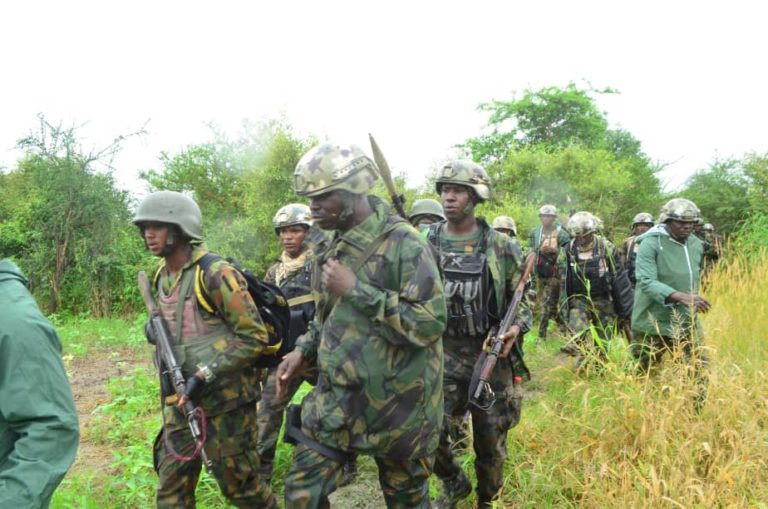
TROOPS and special forces of the Nigerian Army have killed 11 suspected bandits in Birnin Gwari local government area of the state, according to the Kaduna state government.
The state commissioner for Internal Security and Home Affairs, Samuel Aruwan, stated this in a statement he released Sunday, April 2.
The troops also recovered two AK-47 rifles, two AK-47 magazines, and 57 rounds of ammunition, while six motorcycles belonging to the bandits were destroyed in the face-off.
Aruwan explained that the special forces advanced to several identified locations, and cleared bandit camps in Bagoma, Rema, Bugai, Dagara, Sabon Layi, Gagumi, Kakangi, Katakaki and Randagi.
“In the course of these operations, the forces made contact with bandits at Kakangi and Katakaki. A fierce gun battle followed, after which the criminals were subdued by the troops’ aggressive firepower. Eleven bandits were confirmed neutralized, as others fled,” the statement read.
Governor Nasir El-Rufai expressed his satisfaction at the emphatic outing by the security forces, and praised the leadership of the Major General T. A. Lagbaja, General Officer Commanding One Division and Force Commander of the Operation Whirl Punch, according to Aruwan.
“The Governor lauded the troops for their consistent and spirited efforts, as he urged them to build on the momentum of this notable success,” he added.
THE Benue state government has chided the All Progressives Congress (APC) for allegedly attempting to undermine the authority of the incumbent governor Samuel Ortom before the May 29, 2023 handover date.
The government accused the APC of making “spurious” allegations relating to financial transactions and governance against Ortom.
The ICIR had reported how the governor-elect and candidate of the APC, Hyacinth Alia, warned the Benue Investment and Property Company (BIPC) Limited against financial transactions with the incumbent governor.
In a statement the Special Adviser to the Governor on Media and Publicity, Terver Akase, issued, he accused the APC of asking government agencies and some permanent secretaries to stop obeying Ortom’s directives.
Akase said this was in addition to the “false, inciting and misleading press statements” issued by the party against the present administration.
“It is absurd and disturbing that the Benue State leadership of APC has waged a war of attrition on a legitimate government whose tenure is yet to end. They are in a hurry and have resorted to arm-twisting tactics using falsehood to disparage and blackmail the current administration.
“We wish to remind the APC that Governor Ortom remains the duly elected Governor of Benue State and has the constitutional authority to direct government agencies and make approvals while carrying out any other business of government till May 28, 2023,” he said.
Akase urged the party to desist from trying to sabotage the present administration.
He also debunked the “speculation” of the APC about the construction of the civil airport approved for the state by the Ministry of Aviation, saying the state government had not signed a contract with anyone.
“It was also a figment of the imagination of the Benue APC Chairman and his co-travellers when they claimed that the state government was involved in some unspecified contractual engagements of various sums, which they curiously could not substantiate.
“As a functional and responsive government, the Ortom administration reserves the right to employ and appoint qualified Benue indigenes into positions where vacancies exist; and that’s precisely what this administration has done with the employment of Benue sons and daughters through the Teaching Service Board (TSB) and the State Universal Basic Education (SUBEB),” he added.
Akase said Ortom had set up a transition committee, and would work with the governor-elect to nominate people to serve as committee members.
“The APC ought to separate political campaigns from the real issues of governance and stop exhibiting ignorance,” Akase urged.
THE Rivers State Police Command has given reasons why it arrested three lawyers working for the state chapter of the All Progressives Congress (APC) to file proceedings at the election petition tribunal.
The spokesperson for the Command, Grace Iringe-Koko, confirmed the arrest in a press statement she released on Sunday, April 2.
The statement was titled, ‘Re-arrest of lawyers handling APC election petition.’
Iringe-Koko disclosed that five APC support staff working with the legal team to challenge the outcome of the state’s March 18, 2023, governorship election were also arrested alongside the lawyers.
She added that the police made the arrest early on Saturday morning in a hotel in Port Harcourt.
The statement, explaining the reason behind the arrest, read, “On 31/3/23 at about 11.20 a.m., information was received that some lodgers occupying three rooms in a popular hotel were seen carrying packages in and out of the rooms and printing what seems like INEC documents (including results).
“A video recording of the activities in one of the rooms was forwarded by the informant to the Police Commissioner.
“The information neither disclosed the identity of the lodgers nor who they were working for.
“As a responsible law enforcement agency, the police needed to act on the intelligence. Thus, based on the report, the police approached the court to obtain a search warrant.”
The police said the warrant was dutifully executed on April 1 at about 7.02am.
“During the search, eight persons were arrested, and several documents, laptops and printers were recovered.
“The arrested persons and exhibits were taken to the Surveillance Centre and transferred to the State Criminal Investigation Department.
“An Assistant Commissioner of Police was tasked to lead the investigation team,” the statement added.
The police said it was in the process of profiling those arrested that it was discovered that three of the arrested persons were lawyers.
The statement said the state APC chairman and its governorship candidate in the last election showed up at the station to inform the police that the lawyers were hired by the party to prepare their papers for filing at the election tribunal.
“Accordingly, the lawyers were promptly released on self-recognizance, while the other five persons were released to a reliable surety,” the statement further said.
The Police Command assured that the most appropriate and professional thing would be done once the investigation was completed.
The police urged members of the public to continue to furnish the police with useful information and report every suspicious movement around them.
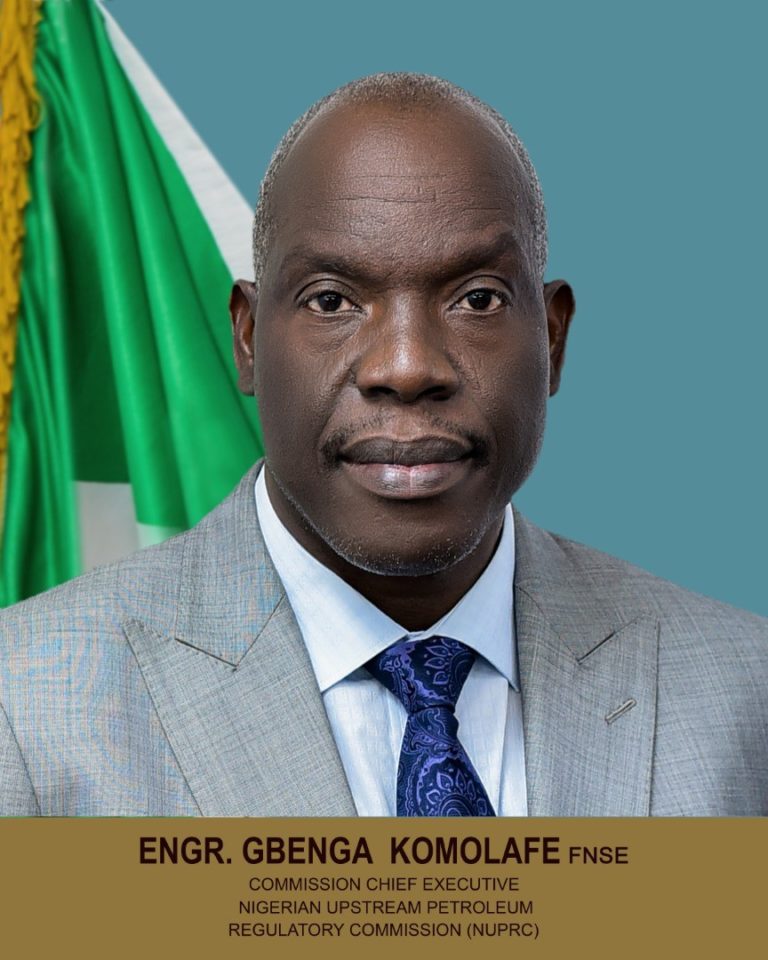
THE Nigerian Upstream Petroleum Regulatory Commission (NUPRC) has explained that President Muhammadu Buhari approved the amendment of the bid round calendar for 2022/23 as a measure to sustain transparency in the oil and gas sector.
The NUPRC chief executive, Gbenga Komolafe, said in a statement he issued on April 1 that the approval was aimed at accommodating the concerns expressed by both local and international investors over the closeness of the schedule to the terminal date of the present administration in the country.
Komolafe also stated that the move was geared towards boosting confidence in the transparency and continuity of the 2022/2023 Deep Offshore Oil Block Mini-bid Round process.
“Following the approval by President Buhari in his capacity as the Petroleum Resources Minister, the NUPRC has revised the Deep Offshore Oil block Bid Round Schedule by extending the deadline for the submission of Technical/Commercial bids to May 19, 2023, as well as the timeline for concluding activities of contract negotiations and signing between July 3 and 28, 2023,” the statement read.
According to Komolafe, the 2022/23 Deep Offshore Oil block Mini-bid Round was progressing in line with the bid round schedule, which has been published as part of the Bid Round Guidelines.
He said, “The outstanding activities for the conclusion of the exercise include the Technical/Commercial Bid Submission and the Ministerial Consent/Contract Negotiation and Signing.
“The Technical/Commercial bid submission involves Data access, purchase, evaluation, bid preparation and submission; bid evaluation and publication of results as well as commercial bid conference and announcement of winners.”
He reiterated the Commission’s full commitment to conducting the bid round in a manner that guarantees the achievement of the objectives of the exercise, pointing out that participation would be both robust and beneficial to key stakeholders.
THE National Chairman of the New Nigeria Peoples Party (NNPP), ProfessorRufai Alkali, has resigned as the party’s head.
Alkali made this known in a letter titled ‘Letter of stepping aside from the post of National Chairman, New Nigeria Peoples Party, NNPP’ and addressed to the National Secretary of the party.
He noted that his decision to quit was to give room for fresh hands to come in and build on the successes of the party.
The letter, which was dated, Thursday, March 31, read, “Following keenly the events before, during and after the recent general elections held on 25th February and 18th March 2023, it is my humble view that our party, the NNPP, has a great future and potential to emerge as the leading political force that is capable of winning the Presidential and all other elections in 2027.
“To achieve this, we must think ahead and plan ahead. And the time is now. Our great party, the New Nigeria People’s Party, will require major and fundamental structural and systemic changes and reorganization at all levels of the party in order to strengthen its base, improve its operational capabilities, and generally enhance its competitive advantage over and above all the other 17 political parties on the INEC nominal roll.
“Since, we as a party, all believe in and aspire to bring in a better Nigeria though the astute leadership of our Leader, His Excellency, Senator Rabiu Musa Kwankwaso, I believe, no sacrifice is too much from each and every one of us.
“I am convinced, this change must start from me. This is precisely why I have decided, with all sense of responsibility, to step aside from the office of the National Chairman of our party to give room for fresh hands to take over and build upon and improve on our modest contributions. I wish, I have done more.”
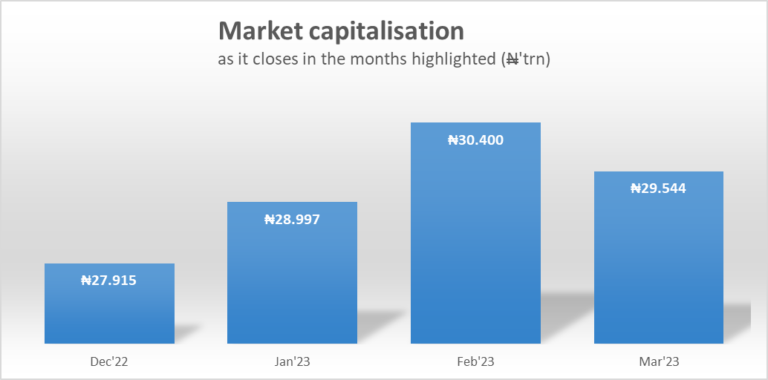
NIGERIA’S stock market recorded a negative performance in the month of March as a N856.97 billion loss to investors brought the total market value below the N30 trillion mark.
Total market value, also known as market capitalisation, dropped to N29.54 trillion on March 31, after it opened at N30.40 trillion on March 1.
The All-Share Index (ASI) also fell by 2.82 per cent to 54,232.34 basis points (bps), from 55,806.26bps in the review March.
The oil & gas, and banking and insurance indices contributed to the negative performance recorded in the month of March.
Notably, the oil & gas index fell by 9.65 per cent to 510.83bps; the banking index dropped by 2.95 per cent to 452.97pbs; while the insurance index declined by 1.14 per cent to 177.51bps.
A look at the stocks table for the banking sector showed that Stanbic IBTC shares dipped by N4.1 to N37.60; Zenith Bank, by 0.65k to N25.85; and United Bank for Africa, by 0.35k to N8.35.
On the oil & gas sector, Seplat Energy lost N175 to close at N1,150; while Conoil lost N8.85 to close at N38. Also, on the insurance sector, AXA Mansard Insurance’s shares dropped by 0.1k to N1.90, while AIICO Assurance fell by 0.02k to 0.58k.
Although the capital market was at a loss in March, it, however, returned a 5.81 per cent or N1.63 trillion to investors in the first quarter (Q1).
In January, investors gained N1.08 trillion after the market opened at N27.915 trillion, and they pocketed N1.40 trillion in February after the market opened at N28.997 trillion, despite the jitters that followed the 2023 general elections.
Nigeria’s electoral umpire, the Independent National Electoral Commission (INEC), had conducted presidential/senatorial elections on February 23 and governorship/state house of assembly elections on March 11.
Elections in Africa portend a risk of conflict, protests, policy uncertainty and ultimately a lack of clarity around investments within the region, the Chief Executive Officer of the Nigeria Stock Exchange (NGX), Temi Popoola, had said during the 2022 Market Recap and 2023 Outlook, held on January 25.
“The February general elections in Nigeria could prove pivotal in redefining the nation’s investment narrative following its recently challenged spell,” he said, but expressed optimism that 2023 was likely to be the dawn of a new day for the equities market and the broader Nigerian economy.
During an election period, people show less interest in taking investment risk, Abel Ezekiel, an investment and portfolio analyst, told The ICIR.
Ezekiel attributed the Q1 positive performance to the position investors took towards companies’ fourth quarter earners, especially those that did “reasonably well” in previous quarters.
He was also of the view that the Central Bank of Nigeria’s (CBN) cashless policy could have contributed in raising investment appetite in stocks.
As the market repositions for the new trading quarter and gradually transits into the dividend earning season, analysts at Cowry Asset Management, in their weekly financial market review and outlook for March 31, expect the current trend of positive sentiments and uptrend to continue in the week to come.
THE Benue State governor-elect, Hyacinth Alia, has warned the Benue Investment and Property Company (BIPC) Limited against financial transactions with the incumbent governor, Samuel Ortom.
In a letter notifying the BIPC’s management of his emergence as governor-elect, the Catholic priest turned governor said the company “should not take/collect, be it loan, overdraft, bond or whatever form form of loan”, which may exceed May 29, 2023, the day Ortom will officially hand over to him.
However, the Peoples Democratic Party (PDP) accused Alia and the All Progressives Congress (APC) of “truncating” the administration of Ortom before the due date for handover.
Alia’s letter
The state PDP Publicity Secretary, Bemgba Iortyom, in a press statement on Saturday, April 1, described Alia’s letter to BIPC as “most shocking and an extreme form of impunity and immaturity.”
Iortyom noted that Ortom reserved “the right to engage in contractual obligations and that his administration discharges its lawful duty.”
Parts of the statement read, “Perhaps, Alia and APC need reminding that Governor Ortom remains the Governor of Benue State till May 29th, 2023 and there cannot within this period be two governors of the state.
“Similarly, the Federal Executive Council under President Buhari on Thursday, March 30th, 2023 approved the sum of N95.8 billion for a road linking Ekiti and Ondo. This is besides the approval of 2.24 billion for the construction of 150-room capacity female hostel at the Nigerian College of Aviation Technology, Zaria, Kaduna State.”
PDP advised Alia and the APC to nominate persons to serve on the transition committee set up by Ortom.
“By so doing, they will be engaging themselves meaningfully on the task they seek to be mandated to discharge come May 29th, 2023,” Iortyom said.
IN conclusion, this two-part investigation looks at how surface and small-scale mining leaves a legacy of ruin in Ebonyi, Plateau, and Nasaarawa states.
Nigeria also has many artisanal and small-scale mines that provide a livelihood for thousands of people, mostly mining gold, gemstones, and cassiterite (a tin oxide mineral). This segment of the extractives industry employs an estimated 400,000 and 500,000 people in the country.
However, this activity is poorly regulated by the government. Most of these miners operate outside the formal regulatory regime without licenses or permits. As a result, communities suffer from environmental degradation and negative health consequences. These mining sites are rarely properly closed or remediated, creating hazards for communities long after miners have moved on.
Aerial view of surface mine sites in Ebonyi state. Photo: Nelson Apochi.
In Ebonyi state, the landscape is punctuated with pockets of abandoned mining pits. Two kids while away time in one of them near the town of Ihotor-Ameka, singing as they run in circles and then collapse on a heap on the muddy soil, giggling.
A resident, Okeh Gloria, recalls the day in 2019 when her third child, 2-year-old Sylvanus, was in pain and fighting for his life. His eyes had rolled back in his head, his mouth closed. His muscles tightened, and he struggled to breathe. Gloria and her husband were distraught.
Jittery, Gloria squeezed his jaws open and poured palm oil down his throat. She had seen many others in the community use this remedy and thought it might help. But Sylvanus’s conditioned only worsened.
“I cried and prayed when I saw him convulsing. I could not believe what I was seeing,” says Gloria. Sylvanus was later rushed to hospital, where he stayed for six days before he regained consciousness and began his journey to recovery. The family had to pay N50,000 for his treatment.
The couple suspected heavy metal poisoning as the cause of their child’s sickness. Ihotor-Ameka has huge deposits of minerals, notably lead and zinc, and is littered with mining pits from both abandoned and active artisanal and small-scale mines.
When the pits are flooded after heavy rains, the miners pump the water into the surrounding environment, including rivers and streams. The risk of water and soil pollution with heavy metals is high.
“Although we could not explain it, we knew the reason for his ailment cannot be dissociated from our environment,” Gloria says. Several weeks after her son became sick, other residents began to show similar symptoms.
“My neighbour’s son was sick and convulsing,” she says. “Two days later, he died. He was only 3 years old.”
Water samples collected from the area and tested at the Institute for Agricultural Research, Zaria and the National Research Institute for Chemical Technology (NARICT) had lead (Pb) concentration of nearly 408 parts per million (ppm); for reference, a U.S Environmental Protection Agency (EPA) rule requires systems to monitor drinking water if lead concentrations exceed 0.015ppm.
Heavy metals can harm the body even in small doses. Lead exposure can be especially dangerous for children, causing damage to the brain and nervous system, stunted growth and development, behavioral and learning challenges, and hearing and speech problems. Seizures and convulsions are among the more severe neurological symptoms associated with lead overexposure.
Diagnostic capacity is a challenge in Nigeria, including testing for heavy metal poisoning. People come down with strange illnesses that often are left undiagnosed, even after evaluations by experienced physicians.
Butthis is not news. In 2010, the World Health Organization (WHO) reported a high incidence of convulsions and death in young children due to lead poisoning in five mining villages in Zamfara State. The number of children affected continues to grow.
Many blame the informal and unregulated activities of artisanal and small-scale miners (ASM), who make up 85 per cent of miners in Nigeria’s extractive industry, according to the National Bureau of Statistics (NBS).Artisanal and small-scale mining differs from medium and large-scale mining. There is limited available information on production, revenues, operations, and location of their activities.
“The havoc that these artisanal and small-scale miners cause is often overlooked because they don’t necessarily carry heavy machinery to the site,” says David Bade, a farmer whose land is threatened by abandoned mining pits in Yelwa community, Kokona LGA, Nasarawa State.
“They came in droves, took over our farmlands and started digging for tourmaline, a gemstone,” he adds. “Several months later, they vacated the site and moved elsewhere.”
Bade says he has noticed a sharp decrease in his harvest because his farmland is no longer fertile. As lead deposits are common in the area, it is also possible that the miners may have kicked up lead-contaminated soil and dust in their search for gemstones.
“Before, I used to harvest up to 300 bags of maize; now I rarely get up to half of that. I have also been attacked by snakes and other reptiles that hide in the holes. I have lost two of my dogs to snake attacks.”
This is not unexpected, says Ibrahim Yahaya, an official of Nasarawa State Ministry of Environment and Natural Resources. “Mining can severely alter the soil and reduce its fertility. When miners dig into the earth for these minerals, they inadvertently dump the excavated materials on the topsoil. This is called over-burden and it makes it more difficult for crops to access nutrients,” he says.
How large companies enable informal mining
Artisanal and small-scale miners operate as part of a broader mining ecosystem in Nigeria. With limited access to capital, they are often financed by sponsoring companies that take a large cut of their profits. The sponsors have mastered the art of profiteering from Nigeria’s weak mining regulations and enforcement. In the states visited, the number of artisanal and small-scale miners continues to grow due to the availability of a ready buyer.
Some larger mining companies have reportedly given artisanal miners access to concessions that they are not actively mining. A Nigerian Extractive Industries Transparency Initiative (NEITI) audit report covering activities in the extractive sector from 2007 to 2010 found that only 30 per cent of the companies holding mining titles were engaged in active quarrying, mining, and exploration.
In Ebonyi State, most big mining companies with or without licenses grant access to their mining site to artisanal miners, often members of the local community. The company pays a negotiated fee to the landowner and local authorities but retains exclusive rights to the mined commodity. One source noted that many of these companies are Chinese.
“They send scouts to the community to negotiate with individual landowners who believe they have mineral resources underneath their properties. Afterwards, they agree on fees to be paid to the landowner and local authorities in the area, often the traditional heads,” says Chikezie, a miner in Ameka.
The government has signalled intentions to formalise the sector, improve revenue collection, and increase the contribution of solid minerals to the country’s gross domestic product (GDP). But progress has been slow and uneven, complicated by a lack of geological information and limited government capacity. Mine closure and remediation do not appear to have featured heavily in discussions about formalisation.
One small-scale granite miner in Umuogharu, Ezza North Local Government Area of Ebonyi State, who declined to give her name for security reasons, said the state government is aware of their informal mining activities.
“We pay the necessary levies and go about our activities,” she says, adding that discussions on abandoned mines and proper mining site closure were rare in their interactions with the state government.
In Wamba community, Nasarawa State, large mining corporations and the locals agreed on a sharing formula for the proceeds from mining activities.
One of the locals, Kasim Usman said, “When they (mining company) came in 2019, we agreed that a certain percentage of the mineral resources mined would be given to the community. One-third is paid to the local government as royalty, one-third is paid to the owner of the land owner where the resources were mined, and one-third is paid to the community.”
Aerial view of surface mines sites in Plateau state. Photo: Nelson Apochi
Neither the mining companies nor the artisanal miners take responsibility for the proper closure and reclamation of mining sites. They simply move on to another location. The exploitative behavior of these large scale companies is often theroot cause of community corruption and violence, and it results in a huge loss of revenue to the government. In turn, poor revenue from the sector make budgetary allocations and funding for reclamation of abandoned mines difficult for the government.
Lives lost, livelihoods affected in Plateau, Nasarawa, others
In Plateau state, years of complaints by mining communities about the wreckage caused by abandoned mining pits have fallen on deaf ears. Belied by its beautiful scenery, abandoned mining pits in Jos city are now potential death traps for residents of the area.
Tin was discovered in Jos plateau at the turn of the 20th century, and colonial mining began soon thereafter. These tin mines were largely abandoned following the 1972 nationalization policy, which broke the monopoly of foreign interests, particularly of British firms. Decades later, tin mining communities are still struggling with the negative effects of mining on human health and the environment.
Today, informal artisanal and small-scale miners operating on meagre profit margins work in these abandoned mines. This carries a unique set of risks and dangers.
In December 2019, an inactive mining pit in Zawan community, Jos South LGA, collapsed, killing six people who were illegally prospecting for tin and other minerals. Eyewitnesses said that more than 50 people were in the pit before it collapsed.
In Sabon-Barki, Jos South LGA, residents are fearful when it rains because of how abandoned mining sites channel floodwaters. In April 2021, a 4-year-old girl was swept away after a heavy downpour.
“She was returning from school alongside her brother when the flood carried her from Dadin Kowa to Muchogopyeng,” says Belinda Yusuf, a resident of the area.
In Keffi, Nasarawa state, the Five-Star Mining Company allegedly vacated its mining project without reclamation after an outcry by residents of the area over the incessant blasting of rocks.The abandoned site sits behind Keffi Secondary School.
“Each time they blasted the rocks, strong vibrations reverberated throughout the entire area,” says local resident, Garakuwa Zubairu. “Our buildings began to crack from the foundation.” He said residents complained to the company and asked them to reduce the blasting activity, but to no avail. The company maintained that it was licensed by the federal government to carry out its activities. They brought their complaints to state government authorities, who inspected the site and directed the company to stop work. The company then vacated the site without doing reclamation work.
“We are afraid that our children might tip over into the mining pit,” Zubairu says.
Checks at the Corporate Affairs Commission (CAC), showed that the company was incorporated on January 6, 1993. The company is headquartered in Calabar with Janet Okok, Effiong Effiong, George Effiong, and Nkoyo Effiong on the board of directors.
Slow progress on reclamation
Government remediation efforts dates back to 1955, when the federal government reclaimed abandoned mining sites managed by Northern Regional Government at the time. Reclamation of several other abandoned sites followed in 1980.
In 2017, the Ministry of Mines and Steel Development (MMSD), which oversees the solid minerals subsector in Nigeria, said it would spend N1.67tr to reclaim more than 1,600 abandoned mine sites across the country.
A totalof 32 mining sites were reclaimed between 2007 and 2019 at a cost of N2.39 billion, or about N75 million per mine – less than the amount originally projected. (In 2014, a ministry official named Salim Adebgoyega, had put the reclamation cost per abandoned mine at N80m to N100m , depending on the size of the site.)
Progress has been much slower than expected. The ministry initially projected that 100 sites would be reclaimed annually between 2007 and 2020.An inventory of abandoned mines and quarries commissioned by the ministry in 2017 to evaluate the environmental and social risks associated with past mining activities is yet to be released officially. The Environmental Protection and Rehabilitation Fund (EPRF) called for in the 2007 Nigeria Mining Act is not fully operational.
The ministry did not respond to a Freedom of Information Act (FOIA) request submitted on September 29, 2021, asking for specific details about progress on mine remediation and closure – including a list of all abandoned mining sites identified by the ministry, reclaimed abandoned mining sites, the cost of the reclamation of the sites, and the status of the EPRF. The ministry acknowledged receipt of the request and asked for ample time to compile the required information, adding that the process of revalidating abandoned mines and quarries was ongoing.
The government has allocated significant funds to the reclamation of abandoned mines but has achieved little in terms of value for money.
One of the reclaimed sites in Barkin Ladi area of Plateau state, is still prone to flooding and ecological problems years after the purported reclamation in 2017. Residents who spoke were critical of the work done.
Product mined in Nasarawa State. Photo: Neslon Apochi
“We cannot farm on these sites. The land is not fertile. No bioremediation was carried out,” says Dafum Chung, a resident. “They just came to sand-fill the site and went away. Although the gully erosion subsided, the problem of flooding is still persistent.”
He adds, “I used to farm close to my house until flooding and erosion caused by mining destroyed my farmland. Although I have relocated to another area to continue my farming, my friends who still farm there are always complaining of poor harvest.”
The Ministry of Mines and Steel Development acknowledged receipt of a FOIA request for procurement records, including budgetary allocations and lists of contractors engaged but request was not fulfilled by publication time.
Can communities sue?
Nigeria has a federal system of governance, but states have limited power. Mining is on the exclusive legislation list – a list of issues over which the federal government has exclusive legislative powers. This means states cannot advance their own legislation governing mining-related issues, including mine closure. State governments cannot enforce federal legislation.
“You really cannot blame the state governments,” says Nigeria country director at Global Rights, Abiodun Baiyewu. “The federal government is quick to remind you that the benefits of the minerals primarily belong to the commonwealth at the federal level. It was not until 2017 that benefits started to trickle down to the local communities. Even so, the benefits have been negligible because the government still earns so little from solid minerals due to massive hemorrhages in revenue.”
However, one potential avenue for states to regulate their mining sectors remains unexplored. Section 19 of the Mineral and Mining Act of 2007 provides for a state-level governance apparatus for mining, known as Mineral Resources and Environmental Committee (MIREMCO). To date, this apparatus is yet to be fully explored.
Communities that have been negatively impacted by abandoned mines have limited avenues for recourse, including through national legal systems. A programme manager at the Civil Society Legislative Advocacy Centre, Chinedu Bassey, argues that several international human rights instruments to which Nigeria is a signatory are yet to be properly legislated in the country. These include the UN Guiding Principles on Business and Human Rights (UNGPs). Ten years after endorsing them, Nigeria is yet to develop a national action plan to implement the principles, which allow aggrieved communities to seek redress in court.
The chief executive of Connected Development (CODE), a nongovernmental organisation that works to empower marginalised communities in Nigeria, Hamzat Lawal, says the real question is whether the Nigerian justice system is reliable. “If we’re being realistic, these communities do not have the resources to pursue a case against the government, and while that reflects the weakness of our judicial institution, it also shows the extent of failure of leadership in the country,” he says.
Regardless of the challenges, human rights lawyer and activist Inibehe Effiong believes that mining communities can sue the government or businesses if they can provide evidence and proof beyond a reasonable doubt of their culpability.
A farmer. Photo Nelson Apochi.
Effiong is right. There are quite a few justiciable clauses to rely upon. Beyond the Mineral and Mining Act of 2007, Section 17 (2d) of Nigeria’s constitution states that a community’s natural resources must not be exploited except for the good of the community.
Some international avenues are also available, particularly if a multinational mining company has violated the rights of communities through inadequate mine closure. For instance, communities could file a grievance with the National Contact Points (NCPs) that are responsible business conduct in the company’s home country or they could request a UN Special Rapporteur investigation.
These avenues are rarely explored, however, due to lack of information and low literacy levels amongst residents of these communities. Communities can only seek redress if they are aware of their rights and are empowered with the information they need to demand justice, accountability and transparency from government entities and other stakeholders in the extractive industries.
For this to happen, knowledge and participatory dialogue platforms are important, says Baiyewu.
“Let’s start with providing a basic knowledge of what mining entails, the likely impacts, and the rights of mining host communities,” she says. “Mining host communities need to access information on how to air their grievances, and ensure ease of access to the relevant agencies of government.”
Lawal has a similar view. Rather than sue the government, he says, leaders of mining communities would do better to learn how to engage the government as partners.
“It’s the first step in the right direction, and it disarms a government that is quick to defend itself against its own citizens.”
This report was supported by Result for Development (R4D) under its Leveraging Transparency to Reduce Corruption (LTRC) project.
SOCIO-ECONOMIC Rights and Accountability Project (SERAP) has said it would sue the Federal Government and the National Broadcasting Commission (NBC) over the N5 million fine imposed on a media organisation, Channels Television.
SERAP disclosed this via its official Twitter handle on Saturday, April 1.
“We’re suing the Buhari administration and NBC over the arbitrary and unlawful fine of N5 million imposed on Channels TV for a recent interview with Datti Baba-Ahmed, vice presidential candidate of the Labour Party (LP),” the statement read.
In a letter addressed to Channels TV and dated March 27, the NBC stated that there had been a breach of the broadcasting code during an interview the television station had with Baba-Ahmed on Wednesday, March 22.
The Director-General of the Commission, Balarabe Ilelah, who signed the letter, said the interview was capable of inciting public disorder.
Nigeria’s president-elect Bola Ahmed Tinubu had petitioned the Commission to sanction Channels TV over the controversial interview with Baba-Ahmed.
During the interview, Baba-Ahmed had described the emergence of the president-elect as “unconstitutional”, adding that swearing him in would amount to a violation of the constitution.








![Abandoned mines: small-scale, artisanal mining leaves legacy of ruin in Ebonyi, Enugu, Plateau, Nasarawa [2]](https://www.icirnigeria.org/wp-content/uploads/2023/04/Ok-nasarawa-3-768x432.jpg "Abandoned mines: small-scale, artisanal mining leaves legacy of ruin in Ebonyi, Enugu, Plateau, Nasarawa [2]")


