

By Ibukun Emiola
SMALL-SCALE Women Farmers Organization in Nigeria (SWOFON) has called for data-driven agricultural policies, timely interventions, improved access to land and productive resources for smallholder women farmers.
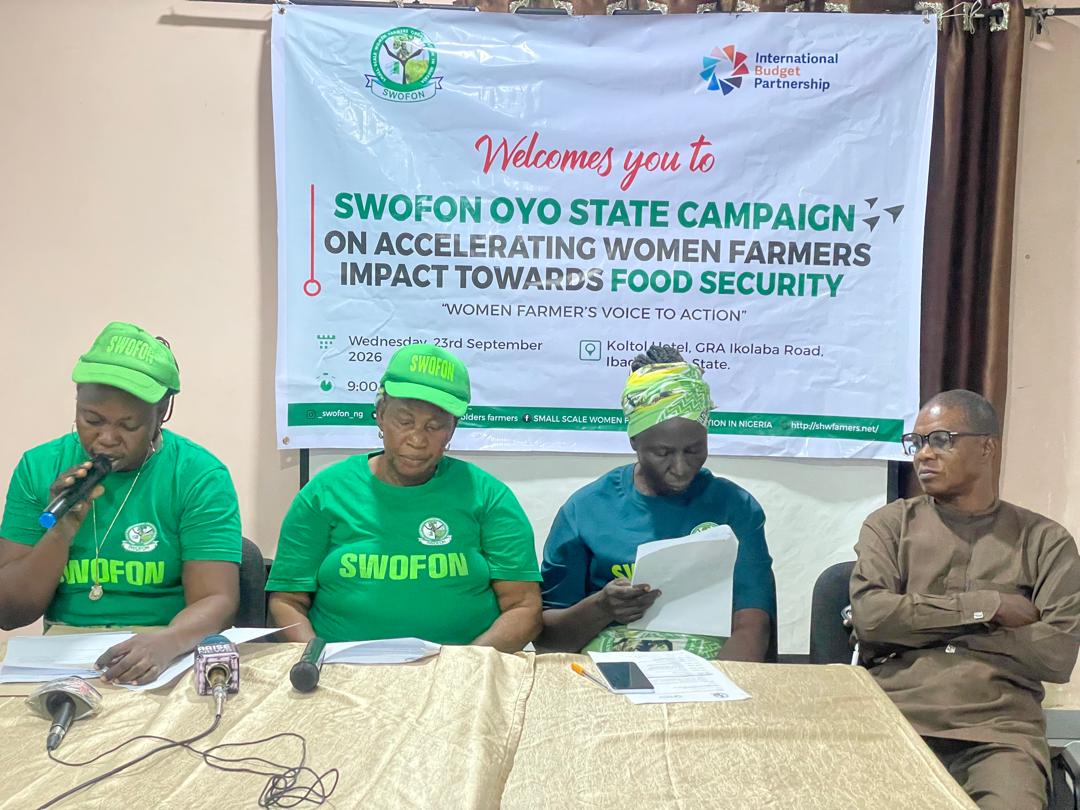
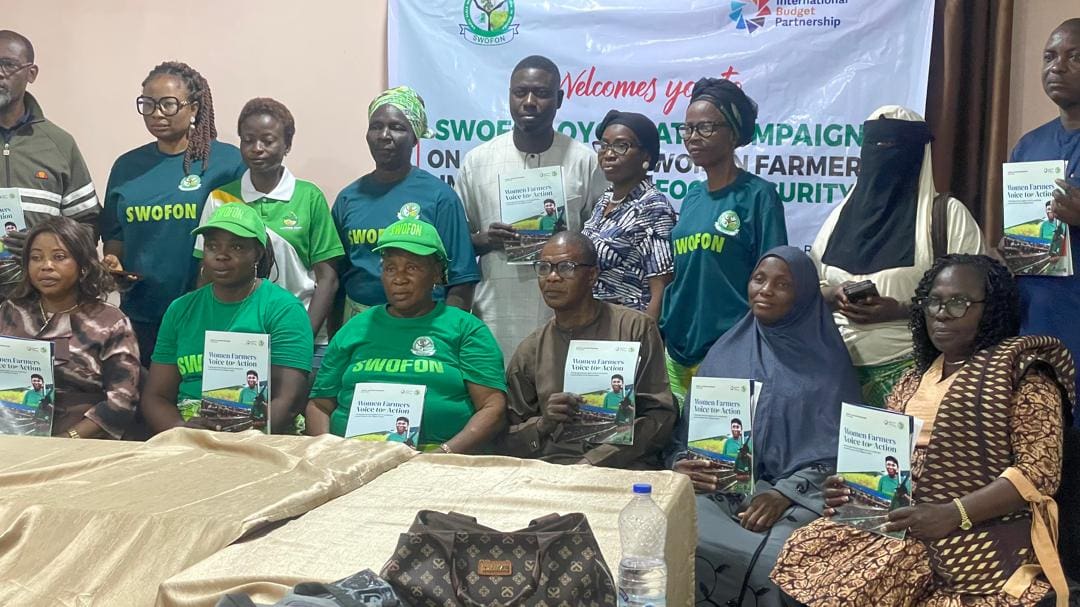
The group made the call during the launch of its Policy Brief and media briefing on the challenges facing smallholder women farmers in Ibadan, Oyo State, on Wednesday.
The State Coordinator of SWOFON, Atinuke Akinbade emphasised the role of women farmers in food security, adding that challenges such as access to land, finance, affordable farm inputs and markets were essential to their survival.
“This campaign gives us the opportunity to share the experience and needs of women farmers and present key findings and recommendations of SWOFON policy brief.
“It is also a platform for the government and stakeholders to listen to our voices and take action,” Akinbade said.
Presenting the policy brief, Jide Bamgbose, a doctorate holder and policy advocate at the Justice Development and Peace Commission, said the document identified weaknesses in budget allocation and implementation.
He also noted the absence of traceable budget lines as major barriers to translating Oyo women farmers’ demands into tangible agricultural support.
Bamgbose said, “The brief, by the Small-Scale Women Farmers Organisation in Nigeria (SWOFON) and International Budget Partnership (IBP), stated that Oyo recorded the lowest agricultural capital budget execution among five states assessed between 2021 and 2025.
“Oyo’s agricultural budget averaged 3.27 per cent during the period, while only 17.5 per cent of approved agricultural capital spending was executed. Oyo women farmers submitted the most extensive Charter of Demands, containing 18 demands, but the demands had not been traced to specific appropriations.”
He noted that, unlike Oyo, Jigawa State had embedded women farmers’ participation in its budget formulation process, with the Charter priorities linked to specific budget lines and a dedicated gender budget segment.
“Jigawa recorded 65.9 per cent agricultural capital execution during the period, compared with Oyo’s 17.5 per cent,” Bamgbose said.
According to him, the brief recommended that Oyo should select three to five priority demands annually, cost them and link them to specific budget lines.
“It also called for quarterly publication of releases, expenditure, procurement, physical delivery and beneficiary data,” he said.
Similarly, the representative of all the Civil Society Organisations at the event, Oluwabukola Olatunji, stressed the need for the government to move beyond budgetary provisions for women farmers to ensure effective implementation of allocations.
She also called for targeted palliatives for practising farmers, particularly amid the effects of climate change, rising production costs and unstable market prices.
In her address, a SWOFON member, Adebukola Adekola, urged the federal and state ministries of agriculture to provide timely interventions, saying delays could reduce the impact of support to farmers.
She called for interventions that are need-based and targeted at genuine practising farmers rather than political beneficiaries.
An official from the state Ministry of Environment, Atinuke Akinbobola, urged SWOFON to develop comprehensive records of its members, including the number of farmers and farm sizes, to strengthen evidence-based advocacy.
She emphasised the need for climate smart farming.
Another speaker at the event, Balikis Abdulateef, who was from the Federal Ministry of Agriculture said accurate data would enable the organisation to present concrete evidence to policymakers when demanding interventions.
She noted that the Federal Government had provided numerous interventions for SWOFON, adding that the women must utilise the training provided for them in practice to improve food production.
Also, Abimbola Agbaje, from the Oyo State Ministry of Agriculture, said discussions were ongoing on policy and legal reforms to improve women’s access to agricultural land.
“On post-harvest losses, we urge farmers to embrace value addition and identify markets before production. We are promoting a ‘grow to sell’ approach, encouraging farmers to select crops based on market demand rather than simply following prevailing planting trends,” Agbaje said.
Other participants also advocated greater youth involvement in agricultural advocacy, including through social media, while calling for training in advocacy, data collection and agricultural production.
They identified access to land as a major challenge, noting that socio-cultural practices could restrict women’s access to family land and inheritance.
They also advocated collective access to processing facilities and partnerships with private organisations and civil society organisations to provide inputs, equipment and training. (NAN)