
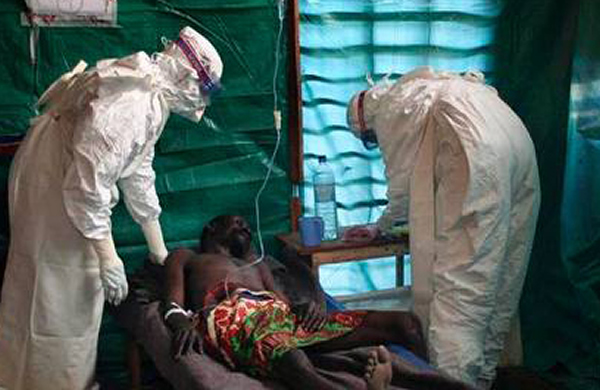

THE World Health Organization (WHO) says the Bundibugyo Ebola outbreak has become the largest ever recorded, with more than 1,400 confirmed cases and more than 400 deaths across affected areas.
The WHO Regional Director for Africa, Mohamed Janabi, a doctor, said this on Friday during an online media conference on Ebola in Democratic Republic of Congo (DRC) and Uganda.
Janabi described the outbreak as one of Africa’s most serious public health emergencies this year, urging sustained global support to contain the virus.
According to him, in spite of rising infections, WHO reported encouraging progress through improved surveillance, stronger contact tracing, earlier case detection, and increasing recoveries.
This, he said, are helping interrupt transmission in affected communities.
He said that the transmission persisted in a small number of hotspots, with weekly infections reaching their highest levels since the outbreak began, underscoring the need for intensified response efforts.
Janabi noted that the current outbreak has surpassed all previous Bundibugyo Ebola outbreaks combined, exceeding Uganda’s 2007 outbreak and the DRC’s 2012 outbreak.
“Contact tracing has improved significantly, rising from 25 to 83 per cent in the Democratic Republic of Congo, while Uganda has achieved 100 per cent follow-up of identified contacts.
“Better surveillance has increased case detection, explaining that higher reported infections partly reflect improved community trust and stronger health systems. Earlier detection enables patients to receive treatment sooner, improves monitoring of contacts, and helps health workers interrupt transmission before additional infections occur,” he said.
He warned that a recent imported Ebola case in Uganda demonstrates the continued threat of cross-border transmission as long as infections persist in the eastern DRC.
He called for stronger collaboration between neighboring countries through timely information sharing, coordinated preparedness, and joint surveillance to prevent further international spread.
He commended the governments of Uganda and DRC, frontline health workers, Africa CDC, and development partners for sustaining response efforts under difficult conditions.
Janabi announced the enrollment of first patients into a WHO-supported clinical trial evaluating potential treatments specifically targeting the Bundibugyo Ebola virus.
He described the trial as a major scientific milestone that could improve patient care during the current outbreak while strengthening future Ebola responses.
He urged governments to expand treatment capacity, accelerate laboratory testing, rapidly investigate suspected cases, and ensure health workers receive adequate protection and support.
He also appealed for sustained financial support, noting that response efforts require resources, speed, and partnerships rather than commitment alone.
Similarly the Director-General, Ministry of Health in Uganda, Charles Olaro, said that the country reported 20 confirmed Ebola cases as of July 2, including 15 imported infections and five Ugandan nationals identified during institutional quarantine.
Olaro said no community transmission has been recorded in Uganda, with surveillance systems remaining fully activated to detect and contain new infections.
“Uganda has monitored 836 identified contacts, while several have completed the mandatory 21-day follow-up period without developing Ebola symptoms,” he said.
He said experience from previous outbreaks had enhanced Uganda’s preparedness by improving surveillance, community engagement, laboratory capacity and emergency response coordination.
“Uganda and the DRC continue sharing surveillance information through a formal cross-border response mechanism to strengthen regional outbreak containment. Laboratory testing capacity in DRC has expanded dramatically, increasing from fewer than 30 daily samples to more than 2,000.
“More than 200 patients have recovered and been discharged from treatment centres, reflecting improvements in clinical care and earlier diagnosis.”
He added that epidemiological trends remain concerning, projecting that confirmed cases could approach 1,500 if transmission continues in affected hotspots.
According to Olaro, the outbreak can still be contained through sustained funding, regional solidarity, scientific innovation, and continued cooperation among governments, communities, and international partners.
The latest figures come nearly two months after the WHO declared the Bundibugyo Ebola outbreak in the DRC and Uganda a Public Health Emergency of International Concern (PHEIC) on May 16, 2026, citing rising deaths, infections among health workers, and confirmed cross-border transmission.
The outbreak was first detected in early May after health authorities reported a rapidly spreading illness with a high fatality rate in the Mongbwalu Health Zone of Ituri Province in eastern DRC. Laboratory tests conducted by the Institut National de Recherche Biomédicale (INRB) confirmed Bundibugyo virus disease on May 15, prompting the DRC to declare its 17th Ebola outbreak since 1976.

Mustapha Usman is an investigative journalist with the International Centre for Investigative Reporting. You can easily reach him via: musman@icirnigeria.com. He tweets @UsmanMustapha_M