
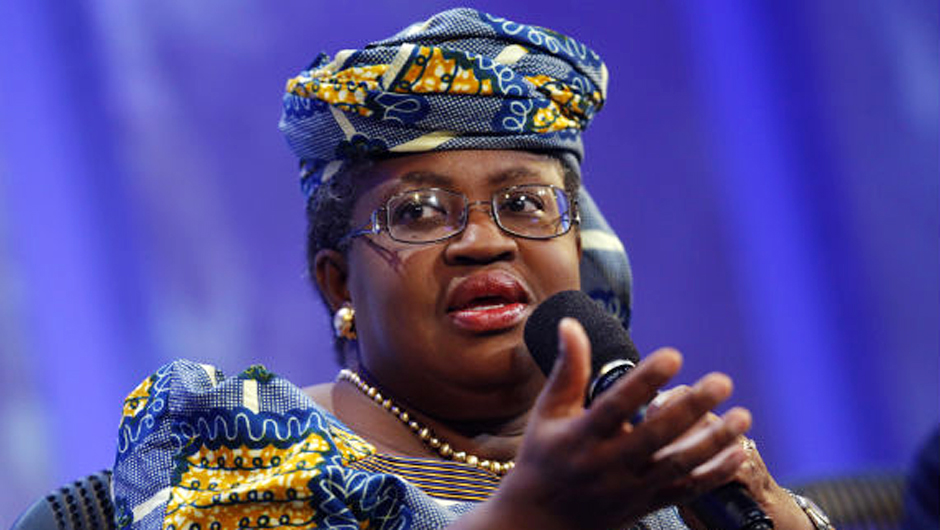
THE Director-General of the World Trade Organisation (WTO), and Nigeria’s former Coordinating Minister of the Economy, Ngozi Okonjo-Iweala, has urged member countries to guard against retaliating Donald Trump’s trade tariff threats.
United States President Donald Trump delivered his first international speech of his second term, appearing via livestream before the World Economic Forum in Davos, Switzerland, last Thursday.
Trump’s remarks, however, took a combative approach to international trade diplomacy, as he once again threatened tariffs against foreign competitors — and even allies like the European Union (EU) and Canada.
“My message to every business in the world is very simple: Come make your product in America, and we will give you among the lowest taxes of any nation on earth,” Trump said.
“But if you don’t make your product in America, which is your prerogative, then very simply you will have to pay a tariff. Differing amounts, but a tariff,” he added.
When prodded for reactions on the sidelines of the just concluded World Economic Forum at Davos in Switzerland, Okonjo-Iweala said, there are WTO ways of handling such trade tariff concerns, adding, “Fragmentation and protectionism won’t promote trade integration among member countries.”
She stressed the importance of integrating global trade and warned that protectionism and fragmental are not better options.
“Over the past five years, trade has been facing challenges and there has been increasing protectionism measures, and that has been a course for concern. When you look at the numbers, global trade has been largely resilient. However, $30.4 trillion is higher than the pre-pandemic peak period.
“Second, our latest numbers showed that 80 per cent of trade is going on under WTO terms, any disintegration won’t favour member countries,” she added.
Commenting further on the dangers of fragmentation, the WTO DG said, “There’s cause to worry and we’re seeing increasing fragmentation and protectionism.
“We have done some work and seen that if we break into geo-political trading blocs, we may end up with a 6.4 per cent loss on global real gross domestic products (GDP) in longer terms.
She likened the possible loss impact of global real GDP of 6.4 per cent to losing the size of the economies of Japan and Korea put together.
“Let’s chill, let’s not get too over excited, and let’s not do a tit-for-tat. Let’s not hear something from one member and immediately apply counter-tariffs. We don’t want to see the increase in fragmentations, “she stressed.
Speaking further on Canada’s position on possible retaliation on Trump’s tariff threats, the WTO director-general said, “Politicians need to defend themselves among their populations so I am not surprised to hear Canada’s stance on possible retaliation.
“I do believe that we have responsible members of which Canada is one. The EU and the US are also trying to follow our laid down path.
“I have seen the EU trying to follow a path and China has also complained against the EU. We have told them to keep following our path and there’s a tough discussion going on with the EU and China currently, following our prescribed conditions,” she added.
The ICIR reports that the overall objective of the WTO is to help its members use trade as a means to raise living standards, create jobs, and improve people’s lives.
The WTO operates the global system of trade rules, helps developing economies build their trade capacity, and seeks to create a more inclusive trading system.
Since the signing of the Marrakesh Agreement Establishing the WTO on 15 April 1994, global trade has surged, reaching over US$ 30.4 trillion in 2023, a fivefold increase since 1995, according to data from the global trade organisation.
The ICIR reported that Ngozi Okonjo-Iweala, has cried out that trade growth within Africa is being hindered by a high tariff, which she put at 435 per cent.
Okonjo-Iweala condemned the high tariff, and the general high cost of doing business in Africa as detrimental to the continent’s transitioning into the African Continental Free Trade Area Agreement (AfCTA).

Harrison Edeh is a journalist with the International Centre for Investigative Reporting, always determined to drive advocacy for good governance through holding public officials and businesses accountable.